

Abstract
Background: In low- and middle-income countries, mortality in intensive care units (ICUs) is higher than in high-income countries. In Bolivia, updated information on ICU mortality for adult and pediatric populations is lacking. Objective: To synthesize available evidence on ICU mortality in Bolivia and estimate, through meta-analysis, the pooled proportion of overall mortality. Materials and methods: Systematic review with meta-analysis of observational studies in Bolivian ICUs reporting mortality in adult and pediatric patients. Searches were performed in PubMed/MEDLINE, Scopus, Web of Science, LILACS, SciELO, and Google Scholar up to December 2024. Mortality proportions were estimated using random-effects models with 95% confidence intervals (CI). Heterogeneity (I²), publication bias, and leave-one-out sensitivity analyses were assessed. Results: Six studies were included (1,382 patients, 126 deaths). Pooled overall mortality was 4.9% (95% CI: 1.4–15.5; I²=96.2%). Pediatric ICU mortality was 2.3% (95% CI: 1.3–3.9; I²=0%), and adult ICU mortality was 15.7% (95% CI: 2.9–53.6; I²=98.1%). Conclusions: ICU mortality in Bolivia differs between pediatric and adult populations. The overall estimate is influenced by the predominance of pediatric studies and heterogeneity. Additional multicenter, homogeneous national studies are needed.
Keywords
Bolivia, Intensive care, Meta-analysis, Mortality, Intensive care units
INTRODUCTION
In low- and middle-income countries (LMICs), mortality in intensive care units (ICUs) is usually higher than in high-income countries, where multicenter cohorts have reported mortality rates among critically ill patients ranging from 15% to 25% (1-7). These differences have been associated with resource availability, timeliness of admission, organization of services, and implementation of evidence-based strategies, such as sepsis bundles, protective ventilation, and quality improvement programs (8-10). Nevertheless, even in settings with greater development of critical care, unfavorable outcomes persist in high-risk subgroups, such as patients with severe sepsis, acute respiratory distress syndrome (ARDS), or refractory shock (11,12,13).
In Latin America, the organization of intensive care is heterogeneous and faces structural limitations in timely access, bed availability, specialized staffing, and adherence to clinical guidelines (14-17). Regional studies have documented high mortality rates in conditions such as sepsis, septic shock, and ARDS, as well as important differences between public and private institutions and between referral hospitals and peripheral centers (18). These gaps became more evident during the COVID-19 pandemic, with high occupancy and mortality rates among critically ill patients in several countries in the region (19-22).
In Bolivia, information on ICU mortality is limited and fragmented. Available evidence comes mainly from local hospital series, with small sample sizes, heterogeneous methodologies, and specific populations, making it difficult to obtain an integrated national view of the problem (23-29). The country faces structural constraints in critical care capacity and unequal distribution of resources across regions and levels of complexity, reinforcing the need for contextualized and comparable estimates. In this context, a national synthesis of ICU mortality in the adult and pediatric population is relevant for health planning, resource allocation, and the design of strategies to improve quality of care (30).
Therefore, the objective of this study was to systematically synthesize the available evidence on ICU mortality in Bolivia and to estimate, through meta-analysis, the pooled proportion of overall mortality and of mortality in selected subgroups, exploring heterogeneity among studies and clinical settings.
METHODS
Study design
A systematic review and meta-analysis of observational studies that described the clinical course and mortality of critically ill patients treated in intensive care units (ICUs) in Bolivia was conducted. The primary outcome was ICU mortality.
Eligibility criteria
We included studies conducted in Bolivia that reported mortality in adult patients (≥18 years) or pediatric patients admitted to medical, surgical, or mixed ICUs, in public, private, or social security hospitals, with no restriction on admission diagnosis. Cohort and descriptive observational studies with original data and more than 10 patients were eligible. Clinical trials, reviews, editorials, letters, case reports, and studies without sufficient data to estimate the mortality proportion were excluded. Studies had to report, at a minimum, the number of ICU admissions and the number of deaths, or data that allowed these proportions to be derived.
Search strategy
A systematic search was conducted in PubMed/MEDLINE, Scopus, Web of Science, LILACS, SciELO, and Google Scholar up to December 2024. The strategy combined MeSH and free-text terms in English and Spanish related to intensive care, mortality, and Bolivia. The base strategy was: ("Intensive Care Units"[MeSH] OR "Critical Care"[MeSH] OR "intensive care"[tiab] OR "critical care"[tiab] OR ICU[tiab] OR UCI[tiab] OR UTI[tiab] OR "unidad de terapia intensiva"[tiab] OR "unidad de cuidados intensivos"[tiab]) AND ("Mortality"[MeSH] OR mortality[tiab] OR death*[tiab] OR mortalidad[tiab] OR fallecimiento*[tiab]) AND (Bolivia[tiab] OR Bolivian*[tiab]). The strategy was adapted to the syntax of each database. The search was complemented by manual review of references and a search of national and gray literature in institutional repositories and official sources, although this did not yield additional studies.
Study selection and data extraction
Two reviewers independently assessed titles and abstracts, and then full texts to confirm eligibility. Discrepancies were resolved by consensus or with a third reviewer. The following data were extracted: author, year, city/region, type of ICU, design, sample size, baseline characteristics (age, sex, main diagnosis, severity), and outcomes (admissions, ICU deaths, and others if available). When data were incomplete or ambiguous, an attempt was made to contact the authors; if this was not possible, prudent estimates were applied and reported explicitly.
Methodological quality assessment
Methodological quality was assessed according to the design of each study. Cohort studies were assessed using the Newcastle-Ottawa Scale for cohort studies (selection, comparability, and outcome). Descriptive or cross-sectional observational studies were assessed using an adaptation of the Newcastle-Ottawa Scale for cross-sectional studies (representativeness, sample size, outcome measurement, and clarity of reporting). The assessment was performed independently by two reviewers; discrepancies were resolved by consensus.
STATISTICAL ANALYSIS
A meta-analysis of proportions was performed to estimate pooled ICU mortality and, when possible, mortality in subgroups (e.g., by ICU type). Given the expected heterogeneity, random-effects models with 95% confidence intervals (CIs) were used. Heterogeneity was assessed using the I² statistic and Cochran's Q test, with high I² values interpreted as significant variability beyond chance (31). The robustness of the estimates was explored using leave-one-out sensitivity analysis. Publication bias was examined visually using funnel plots and, when the number of studies allowed, using complementary statistical tests. All analyses were performed in R, with p<0.05 considered significant. No variance-stabilizing transformations (Freeman-Tukey or arcsine) or meta-regression were applied, owing to the small number of studies and the lack of homogeneous covariates; this decision was considered a methodological limitation.
RESULTS
Initially, 58 records were identified through searches of electronic databases and other sources. After removal of duplicates and review of titles and abstracts, 20 articles were evaluated in full text. Finally, 6 studies (4 pediatric, 2 adult) with 1,382 patients met the eligibility criteria, provided ICU mortality data in Bolivia, and were included. The process of identification, selection, and inclusion of studies is summarized in the flow diagram (Figure 1).
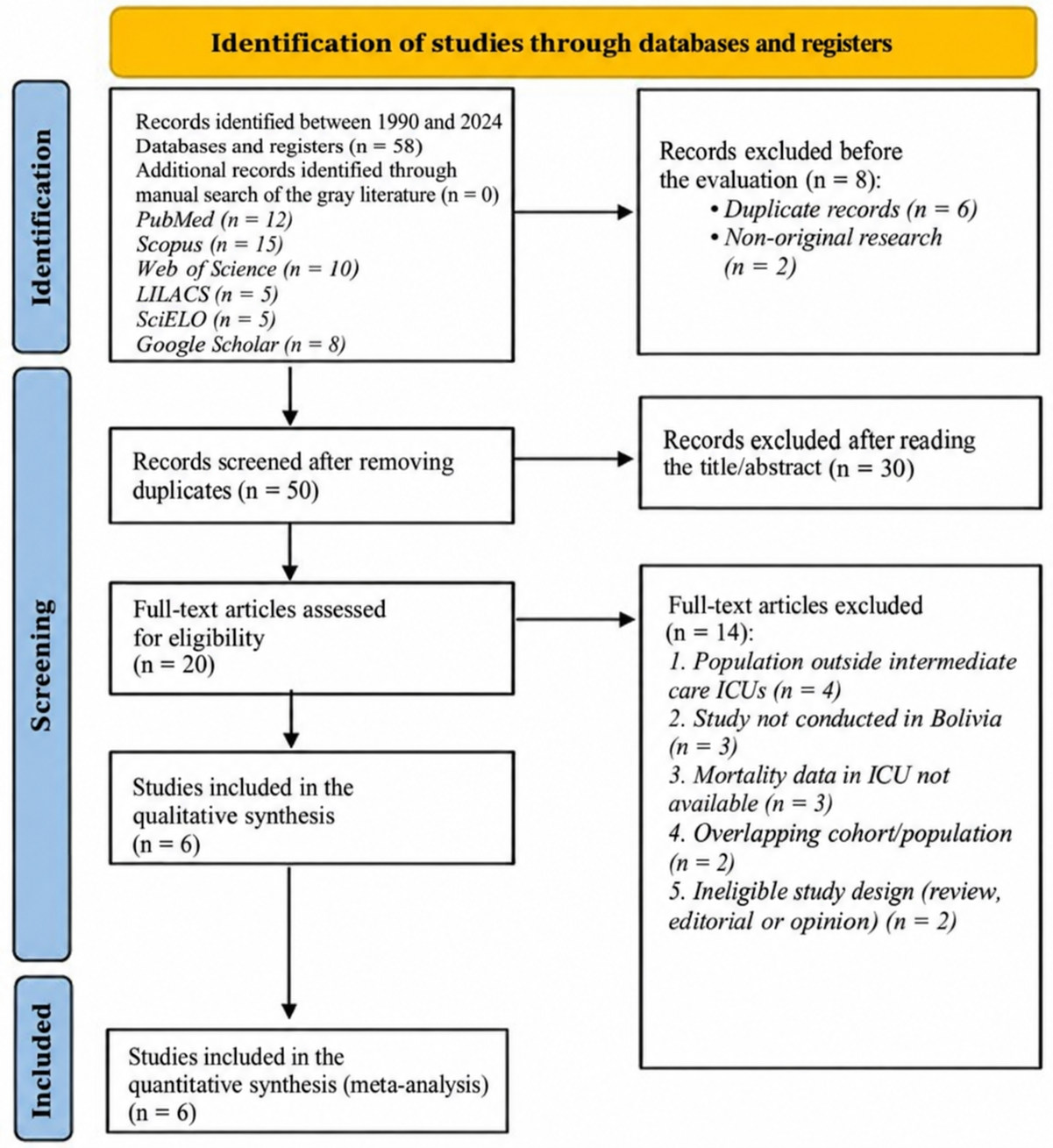
In total, the 6 studies provided data on 1382 critically ill patients admitted to the ICUs of referral hospitals in La Paz and Cochabamba, with 126 deaths recorded during the ICU stay. 4 studies were conducted in pediatric ICUs and 2 in adult ICUs, covering various pathologies (sepsis and septic shock, nosocomial infections caused by Acinetobacter, acute poisonings, trauma, and mixed critically ill patients). The main methodological and clinical characteristics of the included studies are presented in Table 1 (Supplementary Material).
The methodological quality assessment was performed according to the design of each study. Cohort studies were assessed with the Newcastle-Ottawa Scale for cohorts, whereas descriptive or cross-sectional observational studies were assessed with an adaptation for cross-sectional studies. Overall, the studies showed variable methodological quality, mainly owing to limitations in comparability, their single-center nature, and the absence of adjustment for confounding factors. The detailed results are presented in Table 2.
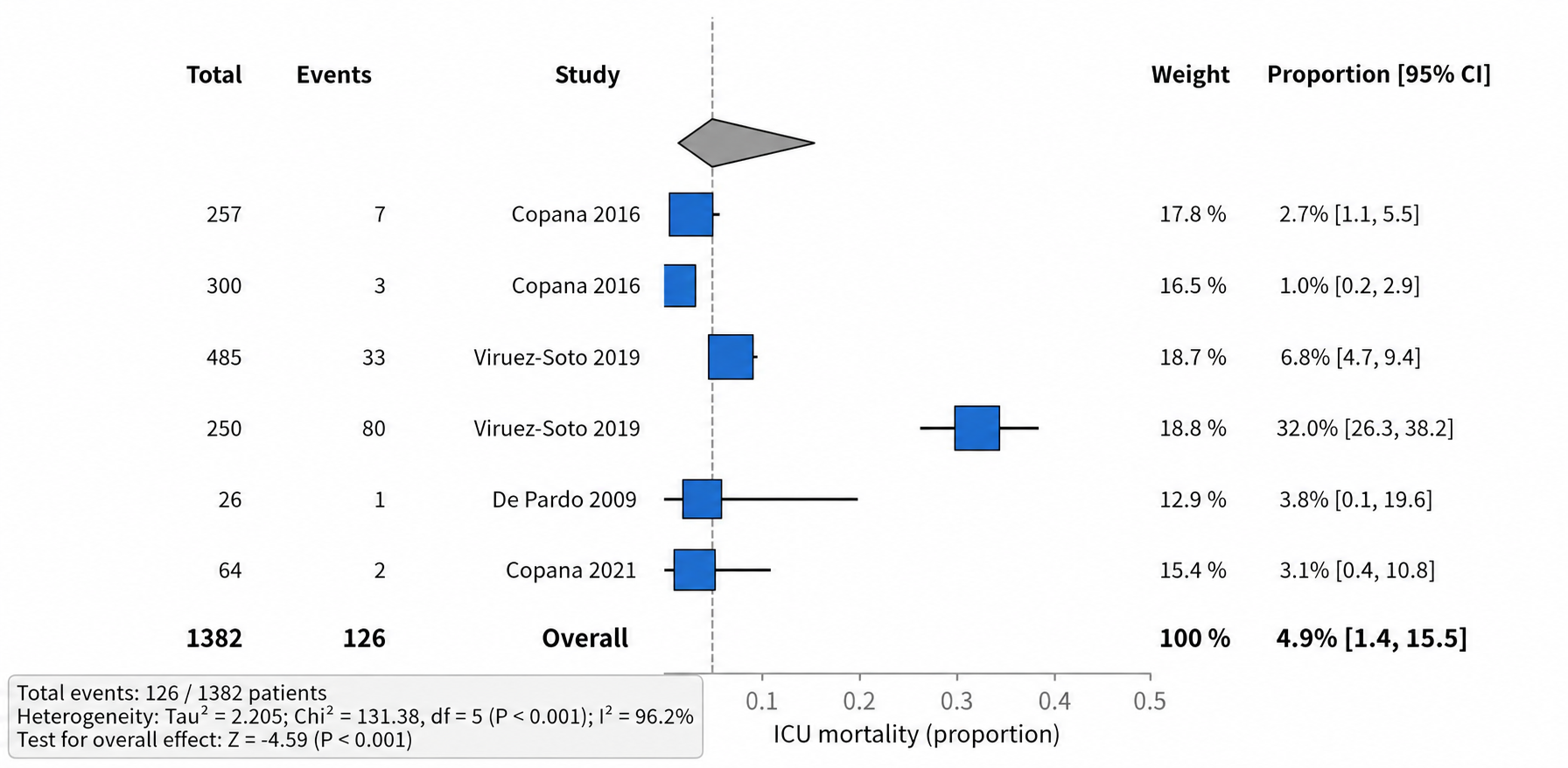
In the pooled analysis of the 6 studies, the overall ICU mortality was 4.9% (95% confidence interval 1.4-15.5), estimated using a random-effects model (Figure 2). Statistical heterogeneity among the studies was very high (I² = 96.2%).
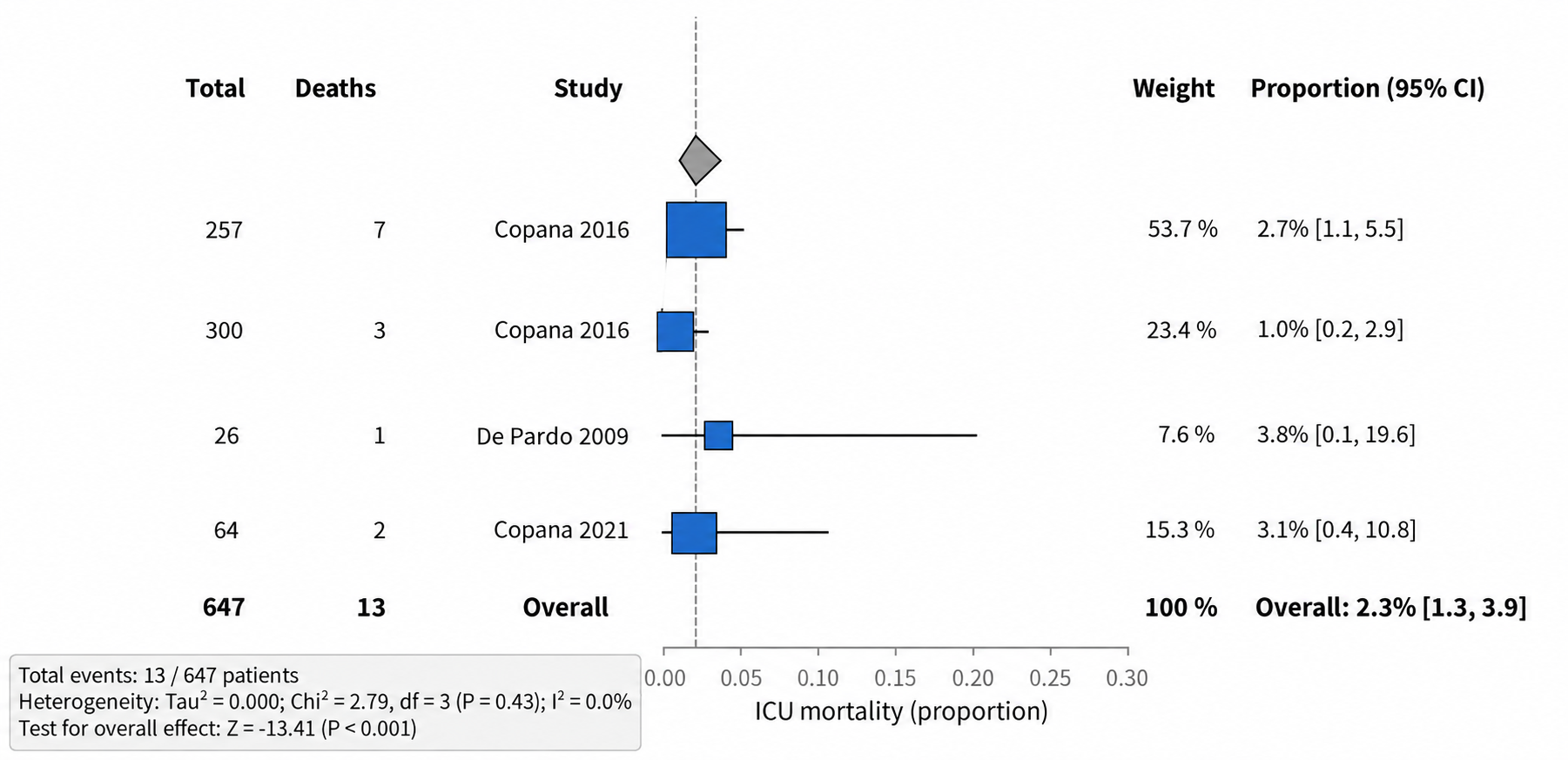
4 studies were conducted in pediatric intensive care units, with a total of 647 critically ill patients and 13 deaths recorded in the ICU. The pooled mortality in this subgroup was 2.3% (95% confidence interval 1.3-3.9), using a random-effects model (Figure 3). Statistical heterogeneity among the pediatric studies was very low (I² = 0%).
2 of the included studies were conducted in adult intensive care units, with a total of 735 critically ill patients and 113 deaths during the ICU stay. The pooled mortality in this subgroup was 15.7% (95% confidence interval 2.9-53.6), estimated using a random-effects model (Figure 4). Statistical heterogeneity among these studies was extremely high (I² = 98.1%).
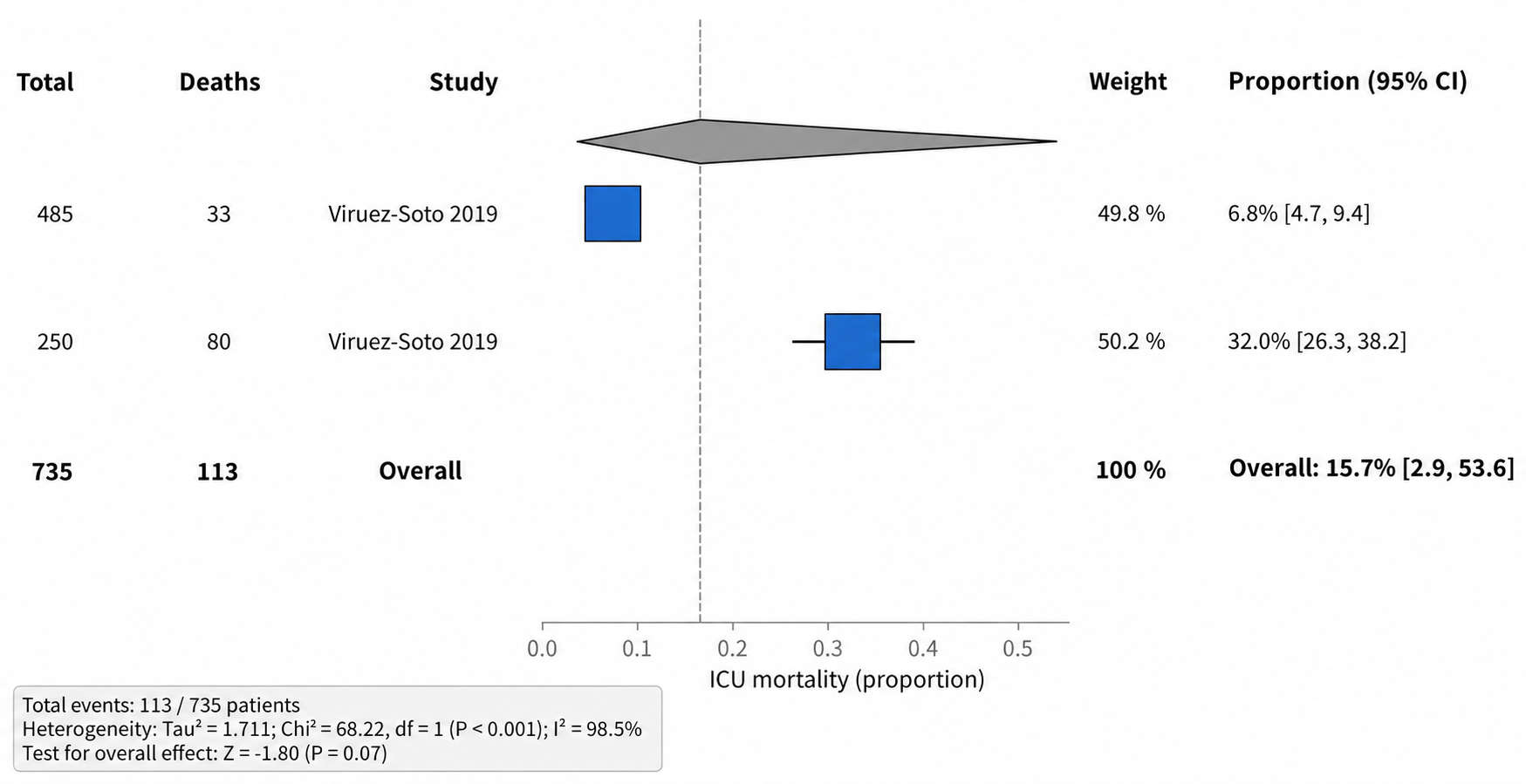
In general, mortality in adult ICUs was clearly higher than that observed in pediatric ICUs, consistent with older age, the presence of comorbidities, and the complexity of the pathologies treated in adult units.
The robustness of the overall ICU mortality estimate was assessed using a leave-one-out sensitivity analysis. Sequential exclusion of each individual study did not substantially modify the pooled mortality or the width of the confidence intervals, suggesting that the overall results do not depend on a single study and are relatively stable with respect to the influence of individual studies (Figure 5).
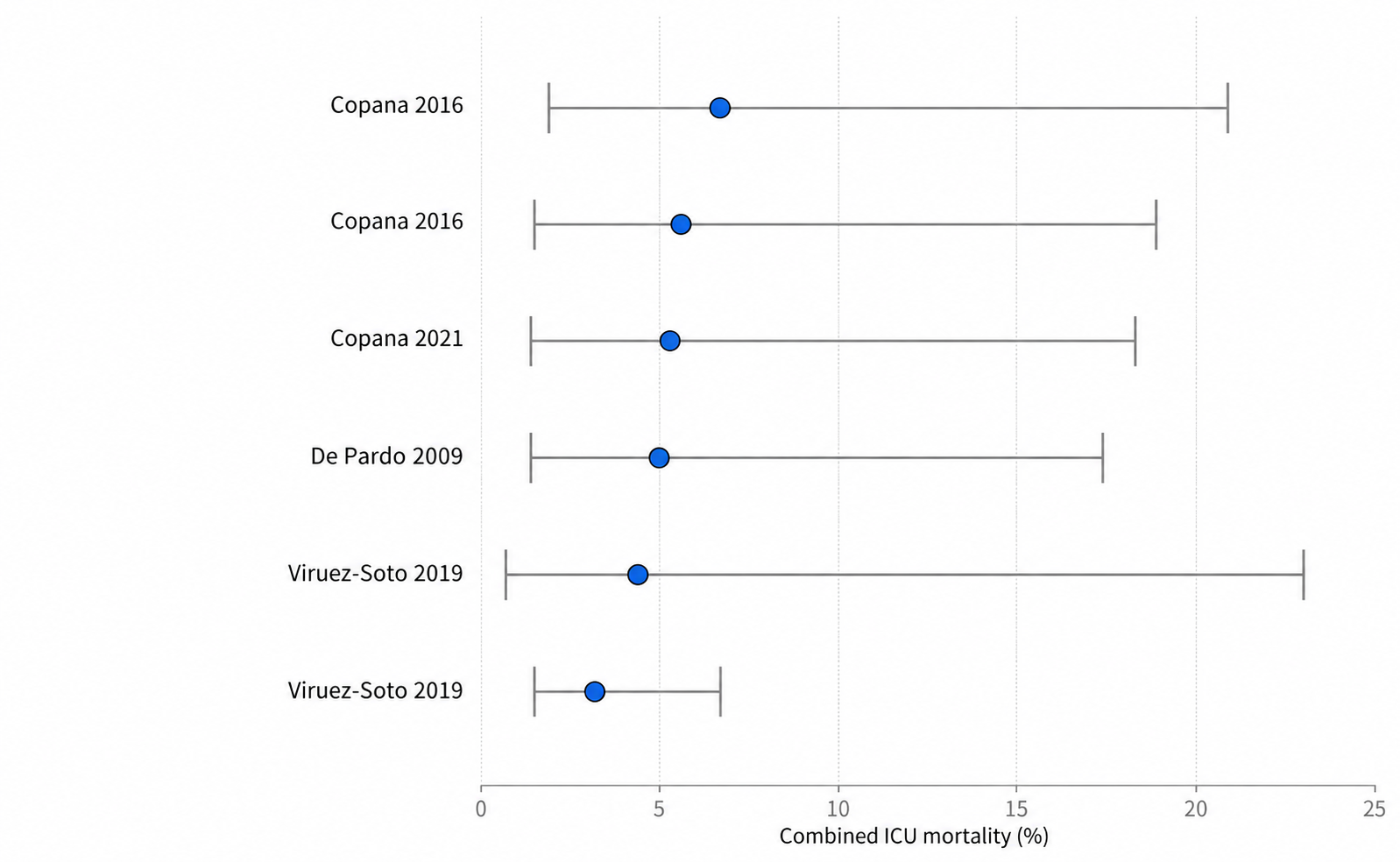
Possible publication bias was explored using a funnel plot from the meta-analysis of overall ICU mortality. Although the small number of studies limits interpretation, visual inspection did not show marked asymmetry suggestive of significant publication bias.
DISCUSSION
This meta-analysis of 6 studies in Bolivian ICUs shows a relatively low overall mortality (5%), with a marked contrast between the pediatric population (2-4%) and the adult population (15%), and very high heterogeneity. To our knowledge, it constitutes the first quantitative synthesis of mortality in Bolivian ICUs, highlighting strengths in pediatrics and important gaps in adults (31-33).
Mortality in Bolivian pediatric ICUs falls within the low range reported in high-income countries (2-5%), in which the sustained reduction in mortality has been associated with improvements in the organization of critical care, timely access to mechanical ventilation, advanced hemodynamic support, and standardization of evidence-based practices (34,35). In Latin America, multicenter series have historically reported pediatric mortality rates of 7-15%, with considerable variability according to complexity and resources (36). In this context, the Bolivian figures are comparatively favorable; the consistency of the estimates (I²≈0%) suggests that, at least in the services analyzed, there are genuine capacities to provide pediatric intensive care meeting international standards (37). This finding is relevant in a middle-income country with structural limitations. The low mortality could be related to appropriate patient selection, centralization of complex cases in trained centers, implementation of sepsis protocols and protective ventilation, and a lower burden of chronic comorbidities among children; however, the lack of homogeneous data on severity, comorbidities, and adherence to bundles limits the establishment of firm causal relationships.
The estimate in adults (15%) should be interpreted with caution, given its wide confidence interval and extreme heterogeneity (I²>90%), which reflect the small number of studies and clinical and methodological differences (type of patients, severity, hospital profiles, altitude, resources, and recruitment period), limiting its usefulness as a single summary (38-39). In Latin America, adult ICUs report mortality rates of 20-40%, higher in septic shock, ARDS, or multiple organ failure (38-39). The somewhat lower mortality in this meta-analysis could be influenced by the small sample size, characteristics of the included centers, and possible underrepresentation of hospitals with fewer resources; in addition, the initial periods of the COVID-19 pandemic could have contributed disproportionately to mortality in a particular adult study (39).
The high global heterogeneity is related to clinical diversity (adults and pediatric patients) and the small number of studies in Bolivia; therefore, the pooled estimate should not be interpreted as a generalizable measure, but rather as a synthesis of limited scope, where subgroup-stratified analyses offer a more prudent and clinically relevant interpretation. The leave-one-out sensitivity analysis showed stability of the estimates, without one dominant study distorting the quantitative synthesis. The assessment of publication bias is limited by the small number of observational and single-center studies; unpublished studies may exist, especially in centers with lower academic capacity or less favorable results (39), so the absence of marked asymmetry does not prove their nonexistence.
The certainty of the evidence is limited because it derives exclusively from observational studies with inconsistency, imprecision, and clinical heterogeneity, which restricts confidence in the overall estimate and its applicability for guiding broad health policies. Among the methodological limitations, variance-stabilizing transformations and meta-regression were not applied because of the small number of studies and the lack of homogeneous covariates; therefore, the high heterogeneity should be interpreted with caution.
These findings have implications for the organization of critical care in Bolivia. In pediatrics, the low mortality suggests good practices that should be identified and scaled up, such as sepsis protocols, protective ventilation, and trained teams (34-36). In adults, the higher mortality and heterogeneity highlight the need to strengthen diagnostic and therapeutic capacities, improve timely referral, and move toward more standardized care models, in line with regional initiatives that have reduced mortality (39). The creation of national and regional ICU networks, with robust information systems, audits, and continuous improvement, has been key in other countries to decrease mortality and reduce inequities (39); our results support advancing in this direction, adapted to the Bolivian context.
The potential role of altitude as a confounding factor should be considered, particularly in high-altitude centers, where lower inspired oxygen pressure may influence oxygenation and the physiological response to critical stress; however, the included evidence did not permit separate analysis of this factor.
This study provides the first quantitative estimate of mortality in Bolivian ICUs, integrates scattered information, explicitly differentiates between pediatric and adult ICUs, and applies sensitivity analyses that support the stability of the estimates, contextualizing the results in the international and Latin American literature (34-39). Its limitations include the small number of studies and centers, the predominance of observational and single-center designs, possible selection bias, lack of homogeneous data on severity and comorbidities, and high heterogeneity, especially in adults, which necessitates cautious interpretation of the estimates and consideration of this meta-analysis as a starting point. In addition, the protocol was not prospectively registered, which could limit methodological traceability and increase the risk of reporting bias, although transparency was maintained in the procedures.
CONCLUSION
Despite these limitations, the results represent a first step toward making the situation of critically ill patients in Bolivia visible and provide a basis for future multicenter research, national registries, and policies aimed at improving the survival and recovery of patients and their families.
References
- 1 Vincent JL, Marshall JC, Namendys-Silva SA, François B, Martin-Loeches I, Lipman J, et al. Assessment of the worldwide burden of critical illness: the intensive care over nations (ICON) audit. Lancet Respir Med. 2014 May;2(5):380-6. doi: 10.1016/S2213-2600(14)70061-X
- 2 Salluh JI, Soares M. ICU severity of illness scores: APACHE, SAPS and MPM. Curr Opin Crit Care. 2014 Oct;20(5):557-65. doi: 10.1097/MCC.0000000000000135.. PMID: 25137401.
- 3 Rhodes A, Evans LE, Alhazzani W, Levy MM, et al. Campaña Sobreviviendo a la Sepsis: guías internacionales para el manejo de la sepsis y el shock séptico 2016. Intensive Care Med [Internet]. 2017 [citado 15 mar 2025];43(3):304-377. Disponible en: https://doi.org/10.1007/s00134-017-4683-6
- 4 Esteban A, Ferguson ND, Meade MO, et al. Evolución de la ventilación mecánica en respuesta a la investigación clínica. Am J Respir Crit Care Med [Internet]. 2008 [citado 05 mar 2025];177(2):170-177. Disponible en: https://doi.org/10.1164/rccm.200706-893OC
- 5 Meara JG, Leather AJ, Hagander L, Alkire BC, Alonso N, Ameh EA, et al. Global Surgery 2030: evidence and solutions for achieving health, welfare, and economic development. Lancet. 2015 Aug 8;386(9993):569-624. doi: 10.1016/S0140-6736(15)60160-X..
- 6 Adhikari NKJ, Fowler RA, Bhagwanjee S, Rubenfeld GD. Cuidados críticos y la carga global de la enfermedad crítica en adultos. Lancet [Internet]. 2010 [citado 12 mar 2025];376(9749):1339-1346. Disponible en: https://doi.org/10.1016/S0140-6736(10)60446-1
- 7 Murthy S, Leligdowicz A, Adhikari NKJ. Capacidad de las unidades de cuidados intensivos en países de bajos ingresos: revisión sistemática. PLoS One [Internet]. 2015 [citado 07 mar 2025];10(1):e0116949. Disponible en: https://doi.org/10.1371/journal.pone.0116949
- 8 Sakr Y, Jaschinski U, Wittebole X, Szakmany T, Lipman J, Ñamendys-Silva SA, et al. Sepsis in Intensive Care Unit Patients: Worldwide Data From the Intensive Care over Nations Audit. Open Forum Infect Dis. 2018 Nov 19;5(12):ofy313. doi: 10.1093/ofid/ofy313..
- 9 Salluh JIF, Soares M, Keegan MT. Understanding intensive care unit benchmarking. Intensive Care Med. 2017 Nov;43(11):1703-1707. doi: 10.1007/s00134-017-4760-x..
- 10 Arabi Y, Fowler R, Hayden FG. Manejo en cuidados críticos de adultos con infección respiratoria viral grave adquirida en la comunidad. Intensive Care Med [Internet]. 2020 [citado 13 mar 2025];46(2):315-328. Disponible en: https://doi.org/10.1007/s00134-020-05943-5
- 11 Knaus WA, Draper EA, Wagner DP, Zimmerman JE. APACHE II: un sistema de clasificación de la gravedad de la enfermedad. Crit Care Med [Internet]. 1985 [citado 02 ene 2024];13(10):818-829. Disponible en: https://doi.org/10.1097/00003246-198510000-00009
- 12 Moreno RP, Metnitz PGH, Almeida E, et al. SAPS 3: de la evaluación del paciente a la evaluación de la unidad de cuidados intensivos. Parte 2. Intensive Care Med [Internet]. 2005 [citado 01 mar 2025];31(10):1345-1355. Disponible en: https://doi.org/10.1007/s00134-005-2763-5
- 13 Singer M, Deutschman CS, Seymour CW, et al. Terceras definiciones de consenso internacional para sepsis y shock séptico (Sepsis-3). JAMA [Internet]. 2016 [citado 04 mar 2025];315(8):801-810. Disponible en: https://doi.org/10.1001/jama.2016.0287
- 14 Ferrer R, Artigas A, Levy MM, Blanco J, González-Díaz G, Garnacho-Montero J, et al; Edusepsis Study Group. Improvement in process of care and outcome after a multicenter severe sepsis educational program in Spain. JAMA. 2008 May 21;299(19):2294-303. doi: 10.1001/jama.299.19.2294..
- 15 Aguiar LMM, Martins GS, Valduga R, Gerez AP, Carmo ECD, Cunha KDC, et al. Profile of adult intensive care units in Brazil: systematic review of observational studies. Rev Bras Ter Intensiva. 2021 Oct-Dec;33(4):624-634. doi: 10.5935/0103-507X.20210088..
- 16 Estenssoro E, Alegría L, Murias G, Friedman G, Castro R, Nin Vaeza N, et al; Latin-American Intensive Care Network (LIVEN). Organizational Issues, Structure, and Processes of Care in 257 ICUs in Latin America: A Study From the Latin America Intensive Care Network. Crit Care Med. 2017 Aug;45(8):1325-1336. doi: 10.1097/CCM.0000000000002413..
- 17 Vincent JL, Rello J, Marshall J, Silva E, Anzueto A, Martin CD, et al. EPIC II Group of Investigators. International study of the prevalence and outcomes of infection in intensive care units. JAMA. 2009 Dec 2;302(21):2323-9. doi: 10.1001/jama.2009.1754..
- 18 Fernández Sarmiento, jaime. (2022). Consenso Latinoamericano de manejo de Sepsis en niños: Task Force de la Sociedad Latinoamericana de Cuidados Intensivos Pediátricos (SLACIP). Acta Pediátrica De México, 43(1), 51-69. https://doi.org/10.18233/apm.v43i1.2480
- 19 Slater A, Shann F, Pearson G; Paediatric Index of Mortality (PIM) Study Group. PIM2: a revised version of the Paediatric Index of Mortality. Intensive Care Med. 2003 Feb;29(2):278-85. doi: 10.1007/s00134-002-1601-2..
- 20 Pollack MM, Holubkov R, Funai T, Dean JM, Berger JT, Wessel DL, et al: Kennedy Shriver National Institute of Child Health and Human Development Collaborative Pediatric Critical Care Research Network. The Pediatric Risk of Mortality Score: Update 2015. Pediatr Crit Care Med. 2016 Jan;17(1):2-9. doi: 10.1097/PCC.0000000000000558..
- 21 Vincent JL, Opal SM, Marshall JC, Tracey KJ. Sepsis definitions: time for change. Lancet. 2013 Mar 2;381(9868):774-5. doi: 10.1016/S0140-6736(12)61815-7..
- 22 Miranda M, Nadel S. Pediatric Sepsis: a Summary of Current Definitions and Management Recommendations. Curr Pediatr Rep. 2023;11(2):29-39. doi: 10.1007/s40124-023-00286-3..
- 23 Zimmerman JE, Kramer AA, Knaus WA. Changes in hospital mortality for United States intensive care unit admissions from 1988 to 2012. Crit Care. 2013 Apr 27;17(2):R81. doi: 10.1186/cc12695..
- 24 Sakr Y, Moreira CL, Rhodes A, Ferguson ND, Kleinpell R, Pickkers P, et al; Extended Prevalence of Infection in Intensive Care Study Investigators. The impact of hospital and ICU organizational factors on outcome in critically ill patients: results from the Extended Prevalence of Infection in Intensive Care study. Crit Care Med. 2015 Mar;43(3):519-26. doi: 10.1097/CCM.0000000000000754..
- 25 Wunsch H, Angus DC, Harrison DA, Linde-Zwirble WT, Rowan KM. Comparison of medical admissions to intensive care units in the United States and United Kingdom. Am J Respir Crit Care Med. 2011 Jun 15;183(12):1666-73. doi: 10.1164/rccm.201012-1961OC..
- 26 Phua J, Faruq MO, Kulkarni AP, Redjeki IS, Detleuxay K, Mendsaikhan N, et al; Asian Analysis of Bed Capacity in Critical Care (ABC) Study Investigators, and the Asian Critical Care Clinical Trials Group. Critical Care Bed Capacity in Asian Countries and Regions. Crit Care Med. 2020 May;48(5):654-662. doi: 10.1097/CCM.0000000000004222..
- 27 Baker T, Schell CO, Lugazia E, Blixt J, Mulungu M, Castegren M, et al. Vital Signs Directed Therapy: Improving Care in an Intensive Care Unit in a Low-Income Country. PLoS One. 2015 Dec 22;10(12):e0144801. doi: 10.1371/journal.pone.0144801..
- 28 Dünser MW, Festic E, Dondorp A, Kissoon N, Ganbat T, Kwizera A, et al; Global Intensive Care Working Group of European Society of Intensive Care Medicine. Recommendations for sepsis management in resource-limited settings. Intensive Care Med. 2012 Apr;38(4):557-74. doi: 10.1007/s00134-012-2468-5..
- 29 Schultz MJ, Dunser MW, Dondorp AM, Adhikari NK, Iyer S, Kwizera A, et al; Global Intensive Care Working Group of the European Society of Intensive Care Medicine. Current challenges in the management of sepsis in ICUs in resource-poor settings and suggestions for the future. Intensive Care Med. 2017 May;43(5):612-624. doi: 10.1007/s00134-017-4750-z..
- 30 Copana Olmos R, Guzman Rivera G. Factores de riesgo asociados a infecciones por Acinetobacter baumannii en una unidad de cuidados intensivos pediátricos. Gac Med Bol [Internet]. 2022 [citado 16 dic 2025];39(1):6-9. Disponible en: https://www.gacetamedicaboliviana.com/index.php/gmb/article/view/255
- 31 Copana Olmos R, Díaz Villalobos W, Cossio Alba N. Déficit de base y depuración del lactato en el paciente pediátrico con sepsis. Gac Med Bol [Internet]. 2022 [citado 16 dic 2025];39(2):79-82. Disponible en: https://www.gacetamedicaboliviana.com/index.php/gmb/article/view/276
- 32 Viruez-Soto JA, et al. Cuidado intensivo en un centro de trauma. Cuadernos [Internet]. 2019 [citado 16 dic 2025];(1):28-32. Disponible en: http://www.scielo.org.bo/pdf/chc/v60nEspecial/v60nEspecial_a05.pdf
- 33 Viruez-Soto JA, et al. Depuración del lactato a gran altitud. Cuadernos [Internet]. 2019 [citado 16 dic 2025];60(1):32-36. Disponible en: http://www.scielo.org.bo/pdf/chc/v60n1/v60n1_a05.pdf
- 34 De Pardo Ghetti E, Monroy Delgadillo M, Copali D. Sustancias folclóricas como causa de intoxicación por sustancia desconocida en terapia intensiva del Hospital Pediátrico Manuel Asencio Villarroel (2003-2008). Gac Med Bol [Internet]. 2009 [citado 16 dic 2025];32(2):32-36.
- 35 Copana R, Díaz W, Martínez A, et al. SIRS y qSOFA como predictores de mortalidad en sepsis pediátrica. Gac Med Bol [Internet]. 2022 [citado 16 dic 2025];44(2):154-161. Disponible en: https://www.gacetamedicaboliviana.com/index.php/gmb/article/view/48
- 36 Fowler RA, Adhikari NK, Bhagwanjee S. Clinical review: critical care in the global context--disparities in burden of illness, access, and economics. Crit Care. 2008;12(5):225. doi: 10.1186/cc6984..
- 37 Arias Lopez MP, Fernández AL, Ratto ME, Saligari L, Serrate AS, Ko IJ, Troster E, et al; ValidarPIM2 Latin American Group. Pediatric Index of Mortality 2 as a predictor of death risk in children admitted to pediatric intensive care units in Latin America: A prospective, multicenter study. J Crit Care. 2015 Dec;30(6):1324-30. doi: 10.1016/j.jcrc.2015.08.001..
- 38 Rosenthal VD, Yin R, Valderrama-Beltran SL, Gualtero SM, Linares CY, Aguirre-Avalos G, Mijangos-Méndez JC, et al. Multinational Prospective Cohort Study of Mortality Risk Factors in 198 ICUs of 12 Latin American Countries over 24 Years: The Effects of Healthcare-Associated Infections. J Epidemiol Glob Health. 2022 Dec;12(4):504-515. doi: 10.1007/s44197-022-00069-x..
- 39 Machado FR, Cavalcanti AB, Bozza FA, Ferreira EM, Angotti Carrara FS, Sousa JL, et al; SPREAD Investigators; Latin American Sepsis Institute Network. The epidemiology of sepsis in Brazilian intensive care units (the Sepsis PREvalence Assessment Database, SPREAD): an observational study. Lancet Infect Dis. 2017 Nov;17(11):1180-1189. doi: 10.1016/S1473-3099(17)30322-5..
Declarations
Funding
No financing.
Conflict of interest
None.
Authorship contributions
Drafting – original draft: Rommer Alex Ortega Martinez, Roly Misael Ramos Zenteno, Carmen Laura Garcés Hazou, Alejandro Pardo Ledezma, Natalia Andrea Cuadros Pariente, Niciel Poma Cruz, Julio Cesar Orozco Crespo.
Writing–review and editing: Rommer Alex Ortega Martinez, Roly Misael Ramos Zenteno, Carmen Laura Garcés Hazou, Alejandro Pardo Ledezma, Natalia Andrea Cuadros Pariente, Niciel Poma Cruz, Julio Cesar Orozco Crespo.