
Abstract
Forensic auditing represents a relevant tool for the prevention and detection of financial fraud and the strengthening of control processes within organizations; however, in Colombia there are still conceptual, training, technological and methodological challenges that limited its implementation and development. In this context, the research aimed to analyze the trends related to the implementation of forensic auditing in Colombia, considering its evolution, main methodologies, tools and contributions to the prevention and detection of fraud. Methodologically, the study was developed under the positivist paradigm, with a quantitative approach, empirical-analytical method and descriptive type of research, through a systematic review of literature based on the Kitchenham protocol. The population was constituted by scientific production related to forensic auditing, after applying criteria of inclusion, exclusion and quality studies retrieved through Redalyc, Google Scholar, DOAJ and ScienceDirect, 50 articles published between 2020 and 2025 were selected; for the collection and organization of the information, a data extraction matrix was used. The results showed trends towards a preventive approach, integration with internal control and risk management, and the incorporation of emerging technologies such as artificial intelligence. It was concluded that forensic auditing advanced towards preventive, technological, and interdisciplinary approaches to strengthen fraud detection and organizational control.
Keywords
forensic audit, financial fraud, internal control, artificial intelligence, risk management
INTRODUCTION
Forensic auditing is a resource that allows investigating corporate crimes and fraud, since it examines documents, events, or financial circumstances to detect possible responsible parties or those involved, and thus establish whether any fraud or crime has been committed, in addition to verifying the existence of sufficient evidence for a judicial proceeding, using technical-scientific methods [1].
In turn, it has become established as a fundamental tool for the prevention, detection, and investigation of financial fraud, providing technical evidence that supports judicial proceedings and organizational decisions. Its application combines accounting, financial, legal, and investigative knowledge aimed at ensuring transparency and accountability across the various economic sectors. In this regard, the growing complexity of financial crimes has driven the need to strengthen control mechanisms and to incorporate new forensic technologies adapted to contemporary technological and regulatory environments [2].
On the other hand, this discipline is recognized as a valuable tool for lawyers, police forces, the prosecution, and the judicial system, since it offers a clear perspective on actions that violate regulations. By providing support in various fields, this audit has a multidisciplinary team that includes specialists in computer science, law, and graphology [3].
The analysis of trends in the implementation of forensic auditing makes it possible to identify the theoretical and practical advances that have guided its evolution, as well as the challenges it faces in the face of the digitalization of accounting processes, the use of data analysis tools, and the globalization of markets [4]
In this sense, this research will use a systematic literature review and seeks to rigorously examine the most relevant scientific studies on the topic; furthermore, this study aims to contribute to knowledge in the accounting and auditing field by examining trends in the use of forensic auditing in Colombia as a key tool for the detection, prevention, and management of financial frauds. Through the analysis of both national and international scientific literature, the aim is to identify the most significant advances, as well as the existing challenges and gaps in the application of this discipline in the Colombian context, in order to strengthen transparency, professional ethics, and the effectiveness of fiscal and accounting control systems.
Finally, the document is divided into four main parts: the first deals with the research problem, including its object of study, formulation, and objectives; the second presents the referential framework, which encompasses the background and theoretical basis; the third sets out the methodology used for the systematic review; and the fourth presents the analysis of results, in which the trends, methodologies, conceptual evolution, and benefits of forensic auditing in Colombia are developed. In this way, the study provides a relevant input for the academic, professional, and regulatory strengthening of forensic auditing in the country.
THEORETICAL FRAMEWORK
The theoretical framework allows analyzing the main trends in this discipline, offering its conceptual basis that allows understanding its development and application in the national context.
Forensic Audit
Forensic auditing is a specialized discipline that requires expert knowledge of accounting theory, auditing, and research methods; where it constitutes an important branch of investigative accounting, used in the reconstruction of financial events, fraud investigations, calculations of economic damages, and returns on financial projections[5].
Characteristics and Objectives of Forensic Audit
This discipline has the following particular characteristics and objectives: Among its characteristics, its multidisciplinary approach stands out, as it combines knowledge from accounting, finance, law, computer science, and criminology to obtain sufficient evidence that demonstrates the existence of possible economic crimes; on the other hand, it is characterized by its capacity to investigate and detect financial irregularities and economic crimes, and its usefulness to provide valid evidence before the justice system [6].
Regarding its objectives, it is to find the history of a particular event that may or may not be the basis for initiating criminal and even fiscal proceedings [7]. Likewise, it primarily seeks the prevention and detection of fraud, the fight against corruption, asset recovery, and the protection of the reputation of organizations [8].
Application of Forensic Auditing
Forensic auditing, in addition to being applied in companies, can be applied in civil proceedings, the tax area, criminal cases, and family cases, among other scenarios involving the embezzlement of funds or that fall within fraud. This makes it possible to identify the scope of this practice and the imperative need to continue developing it [9].
Advantages of Forensic Audit
This specialized discipline has certain advantages, since it not only facilitates the detection and prevention of fraud through advanced techniques such as data analysis, interviews, and interrogations, but also strengthens corporate governance, promotes business ethics, and ensures the long-term sustainability of organizations. In addition, forensic auditing helps to identify weaknesses in internal controls and improves regulatory compliance programs, thereby optimizing risk management and the protection of resources. This audit provides compelling evidence for use in legal and judicial proceedings, increasing effectiveness in the pursuit of fraud [10].
Differences Between Traditional Auditing and Forensic Auditing
It is important to distinguish forensic auditing from traditional auditing because, although traditional audits are necessary, they are often insufficient to detect fraud due to their limited capacity to identify complex and sophisticated irregularities. For this reason, forensic auditing has emerged as an essential tool that combines legal, accounting, and investigative knowledge to prevent, identify, and pursue fraudulent activities. This specialized approach is intended to determine, document, and present clear and compelling evidence related to financial irregularities, which can be used in judicial proceedings. Thus, forensic auditing addresses the limitations of traditional audits by offering greater depth and rigor in fraud investigation [11].
Forensic Audit Typologies
According to [12], forensic auditing is based on 2 fundamental approaches that facilitate decisions on the action plan to be followed in an organization to address fraud. These approaches are described below:
Preventive forensic audit: This approach provides assurance or advice to organizations regarding their capacity to prevent, identify, and respond quickly to potential fraud. In addition, it can include support for creating anti-fraud programs and controls, systems that detect early warning signs, and mechanisms to manage complaints. This approach is proactive because it involves making decisions and taking actions in the present to prevent future fraud.
Deductive or detective forensic audit: Its purpose is to discover and thoroughly analyze the existence of financial fraud, determining aspects such as the magnitude of the fraud, its direct and indirect consequences, and the possible participation of perpetrators, accomplices, or accessories after the fact. In many cases, the findings obtained in a forensic audit with an investigative approach are referred to judicial authorities, who are responsible for evaluating evidence, issuing a judgment, and handing down the corresponding sentence. This type of audit is considered reactive because it responds to fraudulent events that occurred in the past, seeking to clarify them and establish responsibilities.
Theories in Forensic Auditing
Contemporary forensic auditing in Colombia integrates key concepts such as audit risk, fraud, and materiality. In this process, the auditor applies methods such as discriminant analysis to identify anomalous events, focusing on determining when a misstatement in the financial statements is material and represents significant risks. This approach facilitates fraud detection through strategic planning that allows possible irregularities to be identified from the initial stages, ensuring that reports are reliable for use in legal and sanctioning proceedings [13].
Accounting and Judicial Expert Report
Accounting expert examination is closely related to forensic auditing, which combines various criminalistics investigation techniques with accounting, legal, financial, and business knowledge. This discipline is essential in the fight against public corruption, as it allows the accountant to act as an auxiliary of justice by preparing expert reports based on the International Standards on Auditing (NIAS) and International Financial Reporting Standards (NIIF), especially as these are attestation standards. The success of the expert examination depends not only on technical and regulatory mastery but also on professional ethics and morality. In Colombia, the practice of accounting expert examination is regulated by the Criminal Code, the Code of Criminal Procedure, the General Code of Procedure, and specific standards of the accounting profession, such as Law 43 of 1990, Law 314 of 2009, and Decrees 2420 of 2014 and 302 of 2015 [14].
Systematic Review
A systematic review refers to a system for finding all the information, evaluating it, and summarizing the results; however, this presentation may be narrative, qualitative, or quantitative. In addition, this review requires a rigorous and explicit method for identifying, critically evaluating, and synthesizing the evidence obtained. In contrast, in a narrative review, the search may not be rigorous or necessarily explicit; that is, the search date, the search engines used, and the keywords used need not be specified [15].
Among its main benefits is that it allows the available information on a specific topic to be organized clearly and systematically, answering specific clinical questions. These reviews condense the scientific evidence into a single quantitative result and are considered the most reliable source. In addition, they facilitate interpretation by gathering and synthesizing numerous studies with varied results into a single publication that represents the best accessible evidence [16].
Conducting a systematic review involves a series of ordered steps: clearly formulating the research question; establishing inclusion and exclusion criteria; designing a comprehensive search strategy; selecting suitable studies; assessing the quality or risk of bias of the articles; and extracting and synthesizing the relevant data, either narratively or through a meta-analysis if possible. Finally, the results must be presented according to international standards that ensure transparency of the process [17].
METHODS
For this systematic review, the protocol proposed by Kitchenham was adopted, as it is widely recognized in scientific research for its methodological rigor. This methodology facilitates the organization of available knowledge, the detection of research trends such as financial fraud, corruption, and money laundering, and the identification of theoretical or methodological gaps in the field of forensic auditing.
Based on the compilation and structured analysis, a coherent classification scheme can be constructed that groups research studies, methodologies, scope, and contributions, thus establishing a valid conceptual framework [18].
Research Questions
The objective of this research is to compile and analyze existing scientific information related to trends in forensic auditing in the Colombian context. To guide the development of the study, the following research questions were formulated:
RQ1: What are the main trends identified in the implementation of forensic auditing in Colombia?
RQ2: What methodologies and techniques stand out in studies on forensic auditing in Colombia?
RQ3: How has the concept of forensic auditing evolved in Colombia?
RQ4: What are the main benefits of implementing forensic auditing in Colombia?
These questions were structured based on an adaptation of the PICO model (Population, Intervention, Comparison, and Outcomes), which allows the identification of the central elements of a systematic review: population, intervention, comparison, and outcomes [19]. Table 1 presents each of these criteria in detail.
Criterion | Description |
|---|---|
Population | Articles related to trends in the implementation of forensic auditing in the Colombian context. |
Intervention | Identification and systematization of knowledge on trends in forensic auditing. |
Comparison | Not applicable, because the research does not include a comparative approach; the study is descriptive in nature and does not seek to contrast interventions or groups. |
Results | Trends, methodologies, benefits, and evolution of the concept of forensic audit. |
Search
The proposed search strategy involved exploring general terms related to forensic auditing and its implementation in the Colombian context. The search was conducted in specialized academic and professional databases.
To expand search coverage, search terms were combined with synonyms and related descriptors to cover the largest number of documents relevant to the systematic review. Table 2 presents the terms, synonyms, and filters used.
Table 2. Terms and synonyms used to compose the search string
Term | Synonyms |
|---|---|
Forensic audit | Legal audit |
Forensic audit | Forensic financial audit Forensic accounting investigation |
The search process using the main term was conducted in the databases mentioned in Table 3, focusing on fields such as title, keywords, abstract, and full text.
Table 3. Main term and databases
Term | Database |
|---|---|
Forensic audit | Redalyc |
Forensic audit | Google Scholar DOAJ |
Forensic audit | ScienceDirect |
Subsequently, search equations were constructed by combining the main term with its synonyms for application in each database. Table 4 shows examples of the strings used.
Table 4. Search string
Main term | Search string |
|---|---|
Forensic audit | ("Auditoría forense" OR "Forensic audit" OR "Auditoría investigativa" OR "Auditoría legal" OR "Auditoría financiera forense" OR "Investigación contable forense") AND ("Colombia" OR "República de Colombia") AND (publication year >= 2020) |
Selection
During the search stage, all studies identified in the aforementioned databases underwent an exhaustive process of review, evaluation, and filtering to establish coherence with the object of study. To this end, the titles, keywords, abstracts, methodological approaches, and main results of each publication were carefully analyzed.
In this regard, inclusion and exclusion criteria were established for the respective selection process. The inclusion criteria comprised scientific articles published between 2020 and 2025, related to trends in the implementation of forensic auditing in the Colombian context, with full-text access and from verifiable academic sources.
The exclusion criteria included articles unrelated to the object of study, duplicate publications, and articles that were not available in full text and lacked scientific support.
The selection process was carried out in the 4 databases (Redalyc, Google Scholar, DOAJ, and ScienceDirect) through 3 main stages:
Removal of duplicate articles.
Removal of non-downloadable articles.
Application of inclusion and exclusion criteria.
Because the systematic review was conducted across multiple information sources, the dates on which each database was consulted were recorded to ensure traceability of the process, as presented in Table 5.
Table 5. Dates of consultation of the databases
Database | Search date |
|---|---|
DOAJ | 2/03/2026 |
ScienceDirect | 6/03/2026 |
Google Scholar | 16/03/2026 |
Redalyc | 20/03/2026 |
To guarantee transparency and traceability of the selection process, the Rayyan AI tool was used; it is designed to facilitate and optimize the systematic review process of scientific literature. The platform enables organizing, filtering, classifying, and evaluating various academic articles in an agile, collaborative, and precise manner through functions such as screening, automatic duplicate detection, and efficient management of inclusion and exclusion criteria [20].
Subsequently, the selected articles were exported to Zotero to organize the references, store the full texts, and manage the information in a structured and systematic manner.
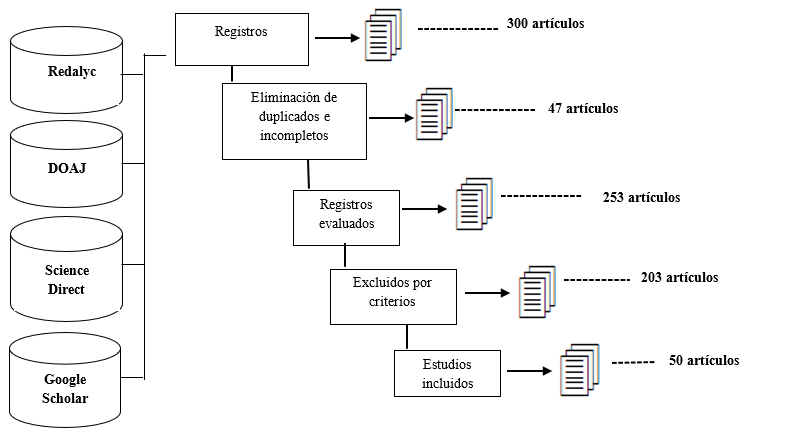
The search yielded a total of 300 scientific articles. After removing 47 duplicate and incomplete documents, 253 articles remained for the screening phase. Subsequently, 203 were excluded for not meeting the established criteria, allowing the selection of 50 articles for inclusion in the systematic review. Figure 1 presents the detailed process of search, filtering, and selection of the studies.
Quality Assessment
The evaluation of the included studies was based on a detailed review, considering 7 fundamental aspects: the origin of the sources, the relevance of the information, the purpose of the study, the objectives of the research, the context of the study, objectivity in the methodology, and the rigorous handling of the data. These elements enabled a comprehensive evaluation of the quality of each study, ensuring that the information used was adequate for analyzing current trends in forensic auditing in Colombia.
This process was supported by three important bases of quality management: adequate planning of the information search, orderly organization of the evidence found, and careful control of the data collected. Consequently, the results were obtained through a clear and structured methodology.
In addition, the 50 selected documents were read and individually analyzed to verify compliance with the established methodological criteria. This process yielded a set of solid primary sources, which served as the basis for identifying and characterizing current trends in the implementation of forensic auditing in Colombia. The documents were organized in a bibliographic database, ensuring traceability and consistency in the analysis of the information. Table 6 presents the studies included in the systematic review, classified according to their year of publication, which facilitates observation of the evolution of forensic auditing.
Table 6. Studies included in the systematic review
Year | Quantity | Authors |
|---|---|---|
2020 | 8 | [21], [22], [23], [5], [1], [9], [3], [24] |
2021 | 4 | [25], [8], [6], [26] |
2022 | 8 | [27], [28], [29], [30], [14], [31], [32], [33] |
2023 | 10 | [13], [34], [35], [36], [4], [37], [38], [39], [40], [41] |
2024 | 11 | [26], [42], [10], [43], [44], [45], [46], [47], [2], [48], [49], [7] |
2025 | 9 | [50], [51], [11], [52], [53], [54], [55], [56], [57] |
Total | 50 | [empty cell] |
RESULTS AND DISCUSSION
To fulfill the second specific objective, which focused on systematically organizing the information obtained, a structured analysis of the reviewed literature is presented below. This systematization is based on the research questions (RQ1 – RQ4), which allows the classification and organization of the evidence found regarding current trends, methodologies, evolution, and the main benefits of implementing forensic auditing in Colombia.
Current Trends in the Implementation of Forensic Auditing in Colombia
The analysis of the studies included in the systematic review enables the identification of several relevant trends in the implementation of forensic auditing in Colombia.
First, forensic auditing in Colombia is recognized as a tool that has transcended its traditional role as judicial support to become a preventive mechanism within organizations, aimed at anticipating risks associated with financial fraud and strengthening internal control systems. This approach indicates that entities seek not only to detect irregularities but also to prevent them through permanent investigative practices [37].
Similarly, a growing focus on fraud detection and prevention is evident, which consolidates forensic auditing as a fundamental tool in the fight against financial crimes. This trend not only enables the identification of irregularities but also allows risks to be managed and mitigated in advance, strengthening organizational control systems. [50]. Accordingly, some authors highlight that forensic auditing strengthens the professional practice of the public accountant, who assumes a more active role in the detection, investigation, and documentation of financial irregularities within organizations [47].
Similarly, greater implementation is observed in the public sector, especially in the fight against corruption and the misuse of State resources. This situation reflects the need to strengthen control and oversight mechanisms in government entities, where risks associated with embezzlement of funds, fraudulent practices, and lack of transparency in administrative management have historically arisen [27].
Another significant trend is the integration of forensic auditing with internal control systems and risk management, which enables a more comprehensive and effective evaluation of possible irregularities within organizations; this integration implies that forensic auditing does not act in isolation but relies on existing control mechanisms to identify weaknesses, procedural failures, and critical points where fraud or significant errors may arise, thereby safeguarding the integrity and stability of SMEs (Small and Medium-sized Enterprises) in a complex business environment [26], [42].
In the Colombian context, this trend is closely related to the strengthening of administration, prevention, and risk management systems aimed at regulatory compliance and the mitigation of financial crimes. In this scenario, mechanisms such as SARLAFT (Money Laundering and Terrorist Financing Risk Management System) and SAGRILAFT (Self-Control and Comprehensive Risk Management System for Money Laundering and Terrorist Financing) demonstrate how forensic auditing is integrated into organizational processes as a control tool that makes it possible to structure methodologies for the identification, measurement, control, and monitoring of risks associated with money laundering and terrorist financing, thereby strengthening the culture of compliance and institutional transparency [52].
In the study of money laundering prevention mechanisms in Colombia, SARLAFT is presented as a fundamental tool within forensic auditing, since it enables financial institutions to establish internal controls aimed at identifying unusual and suspicious transactions through risk matrices and transactional profiles defined [8], [55]. Forensic auditing, as an essential tool for preventing corporate fraud, is directly related to the preventive and self-control approach promoted by SAGRILAFT in organizations [2].
From the methodological perspective of forensic auditing, SAGRILAFT is related to the need to incorporate risk identification, analysis, and control processes supported by digital and documentary evidence, an aspect that is key to detecting computer fraud and covert operations within organizations [26].
From an evidentiary standpoint, the application of standards such as NIA 240 and NIA 500 within forensic auditing strengthens the control and monitoring processes of SARLAFT and SAGRILAFT, ensuring that the evidence obtained is sufficient and competent to support findings related to financial crimes [40].
Judicial accounting expertise is linked to SARLAFT and SAGRILAFT by providing evidentiary support in investigations related to corruption and financial crimes, demonstrating how forensic auditing transcends the preventive sphere toward the judicial [14].
Likewise, the incorporation of emerging technologies, particularly artificial intelligence (AI), stands out as a current trend and a key element in the evolution of forensic auditing. These tools make it possible to analyze large volumes of information quickly and to detect patterns or irregularities that indicate possible fraud. In addition, they facilitate the automatic identification of red flags, optimizing the auditor's working time and allowing the auditor to focus on more strategic tasks and decision-making; this incorporation of AI strengthens the preventive approach and transforms forensic auditing into a more efficient and precise discipline, contributing significantly to the fight against fraud and corruption in increasingly complex environments [34].
Forensic auditing in fraud detection is distinguished by its ability to go beyond superficial analysis of financial data, as forensic auditors have the necessary training to identify accounting anomalies, suspicious conduct, and unusual patterns. In this context, evidence indicates significant growth and strengthening in academic studies and in the training of professionals specialized in forensic auditing, who assume responsibilities or risks incurred in the auditing process, reflecting greater interest in developing theoretical and practical knowledge that strengthens its application in various environments. This progress, together with the expansion of training programs and research output, indicates that forensic auditing is undergoing a process of consolidation as a discipline in the country, gaining increasing recognition in academic and professional spheres [28].
Finally, a trend toward the adoption of international standards such as the NIA (International Standards on Auditing) is identified, specifically NIA 315, which is a key instrument for analyzing the organizational environment, internal control systems, and factors related to financial irregularities; in turn, forensic auditing complements the application of NIA 315 by strengthening evidence collection and facilitating the early detection of frauds with legal implications [51].
Methodologies and Techniques for Forensic Auditing in Colombia
Forensic auditing in Colombia is characterized by the use of multidisciplinary methodologies and techniques that integrate accounting, financial, legal, and technological knowledge to detect, investigate, and document fraud effectively.
Data Analysis and Advanced Techniques
First, the application of advanced data analysis techniques stands out, as these techniques make it possible to examine large volumes of financial information to identify unusual patterns, inconsistencies, and possible irregularities. These techniques include trend analysis, data mining, and asset tracking, tools that facilitate the detection of fraudulent schemes even in complex contexts [11], [58].
Interrogations or Interviews
Additionally, techniques such as interviews and interrogations are employed, which are essential in forensic auditing because they are used to obtain information directly from individuals involved in the company. These techniques demand specific skills to ensure that the responses obtained are both useful and truthful for the investigation. Therefore, the forensic auditor's skill in both formulating appropriate questions and creating an environment conducive to honesty is fundamental to achieving success in interviews, as their effectiveness can reveal inconsistencies in statements, thus contributing to the identification of fraud [10].
Use of Artificial Intelligence
Likewise, the incorporation of emerging technologies such as artificial intelligence (AI) is evident; these technologies optimize audit processes by automating information analysis and identifying warning signs. These tools increase efficiency, reduce review times, and improve accuracy in fraud detection [44], [50].
Technical and Soft Skills of the Forensic Auditor
In addition, forensic auditing requires the development of technical and soft skills, which complement each other to achieve effective and rigorous investigations. Technical skills encompass mastery of accounting and auditing standards, such as International Standards on Auditing (ISA) and International Financial Reporting Standards (IFRS), as well as the ability to perform detailed financial analyses and use specialized software to detect, investigate, and document fraud. On the other hand, soft skills, such as effective communication, critical thinking, and problem-solving, are essential for interpreting complex information, identifying unusual behavioral patterns, and presenting findings clearly and understandably to different stakeholders, and they also contribute to the prevention of future fraudulent acts [10], [28].
Documentary and financial analysis
Similarly, the methodologies used include documentary and financial analysis, which entails a detailed review of contracts, invoices, financial statements, and other accounting records. This process allows for the verification of the truthfulness of the information, the detection of inconsistencies, and the gathering of solid evidence to support the findings [14], [59].
Overall, the methodologies and techniques of forensic auditing in Colombia demonstrate a comprehensive approach that combines technological tools, quantitative analysis, and investigative skills, strengthening auditors' capacity to detect fraud, gather valid evidence, and contribute effectively to legal and organizational control processes [11].
Evolution of the Concept of Forensic Audit in Colombia
The concept of forensic auditing in Colombia has undergone a progressive evolution that reflects changes in the country's economic, technological, and regulatory environment. In its early stages, this discipline was conceived mainly as a mechanism to support the justice system, focused on obtaining accounting evidence for judicial proceedings related to fraud and financial crimes. Under this initial approach, its scope was limited and its application was restricted to the phase after the occurrence of the events, with an eminently reactive nature [29].
Subsequently, forensic auditing began to be integrated into internal control systems, especially in the public sector, where its importance as a tool for strengthening transparency and preventing acts of corruption was recognized. This change marked a transition toward a more preventive approach, in which forensic auditing not only seeks to identify irregularities but also to anticipate their occurrence through risk analysis and the implementation of appropriate controls [27].
With the adoption of international auditing standards, particularly those aimed at fraud risk assessment, the concept has acquired greater technical and methodological rigor. The incorporation of systematic approaches made it possible to improve the quality of audit processes, facilitating the identification of risks and the obtaining of reliable evidence. However, this progress has also generated questions about the sufficiency of these standards to meet the specific needs of the forensic field [51].
In a more recent stage, forensic auditing has evolved toward the incorporation of digital technologies, with forensic computing standing out as an essential component in the collection and analysis of evidence. This change has been especially relevant in the post-pandemic context, where digital transactions and operations have increased the complexity of fraud, requiring new tools and approaches for its detection [21].
At the same time, the concept has acquired an ethical and formative dimension, being recognized as a key competence in the training of public accountants. In this sense, forensic auditing not only involves technical knowledge, but also a commitment to professional ethics and social responsibility, which are fundamental aspects for addressing the challenges of corporate crime in the Latin American context [22].
Finally, forensic auditing in Colombia has been associated with the use of emerging technologies such as artificial intelligence, enabling a shift from a reactive to a predictive approach. This transformation positions forensic auditing as a strategic tool within organizational management, capable of anticipating risks and strengthening decision-making. In summary, its evolution reflects a transition toward a comprehensive, preventive, and technologically advanced approach, in line with the demands of the current environment [44]. The incorporation of data analytics and artificial intelligence into forensic auditing strengthens the continuous monitoring processes required by SARLAFT and SAGRILAFT, enabling the detection of anomalous patterns in large volumes of financial information [21], [34].
Furthermore, the assessment of fraud risk and its relationship with accounting materiality provides technical foundations that strengthen the risk measurement stage within SARLAFT and SAGRILAFT, allowing the prioritization of critical operations and areas for monitoring [13].
Additionally, contemporary trends in forensic auditing show increasing integration with data analytics tools, process automation, and continuous monitoring, enabling stronger early detection of anomalies and prevention of financial crimes in increasingly complex digital environments [34], [56].
Main Benefits of Implementing Forensic Auditing in Colombia
One of the most relevant benefits is its preventive capacity against fraud. Through the identification of warning signs and risk analysis, forensic auditing makes it possible to anticipate possible irregularities before they materialize, thus reducing economic losses and strengthening business management. This approach is especially useful in the private sector, where early detection of fraud can make a difference in the sustainability of organizations [52].
Another fundamental contribution is the generation of evidence with technical and scientific validity, which facilitates its use in judicial proceedings. Forensic auditing ensures that the information collected complies with rigorous standards, enabling investigations and legal decisions to be supported robustly. This contributes to strengthening the judicial system and the proper punishment of financial crimes [60].
In the technological field, the implementation of tools such as artificial intelligence and data analytics has made it possible to significantly improve the efficiency of audit processes. These technologies facilitate the analysis of large volumes of information in less time, optimizing the detection of irregular patterns and reducing operational costs. As a result, forensic auditing is positioned as a modern discipline adapted to the challenges of digital transformation [34].
Finally, forensic auditing fosters an organizational culture grounded in ethics and social responsibility, thereby strengthening trust between organizations and their stakeholders. This benefit transcends the technical domain and directly affects management quality and institutional reputation. Taken together, these contributions indicate that forensic auditing not only enables detection but also contributes to the development of more transparent, efficient, and sustainable organizations in the Colombian context [35].
CONCLUSIONS
In conclusion, the systematization of the research findings makes it possible to demonstrate the profound transformation that forensic auditing has undergone, consolidating it as a strategic, dynamic, and preventive discipline within the organizational and financial environment in Colombia.
First, implementation trends indicate that the integration of international regulatory frameworks and risk management systems with advanced technological tools, such as data analytics and artificial intelligence, is indispensable for anticipating the sophistication of contemporary financial crimes.
Second, regarding the methodologies and techniques used, it is evident that effective research requires a multidisciplinary approach in which accounting and financial knowledge is integrated with skills specific to forensic investigation, such as conducting interviews and critically analyzing information. Likewise, the evolution of this discipline reflects a significant change in its approach, since forensic auditing is no longer understood solely as a tool used when conflicts or judicial proceedings arise, but also as a preventive mechanism that contributes to strengthening internal control, adapting to technological advances, and greater participation by public accountants in the prevention and detection of economic crimes.
Finally, the benefits of forensic auditing go beyond compliance with legal aspects or obtaining evidence, as they also contribute to preventing losses, improving processes through digital transformation, and strengthening organizations. In this sense, forensic auditing is not limited to detecting irregularities or collecting evidence; rather, it becomes an important tool for strengthening business management, fostering economic stability, and promoting an organizational culture based on ethics, transparency, and responsibility.
Limitations, implications, and future research directions Lorem
Despite the contributions of this systematic literature review, several limitations must be acknowledged. First, the analysis was restricted to articles published in English and Spanish and indexed in 4 major academic databases (IEEE Xplore, ACM Digital Library, Scopus, and ScienceDirect). Although these sources guarantee high-quality, peer-reviewed content, relevant studies published in other languages or indexed in alternative databases may have been excluded. Second, the review focused on a 5-year publication window that, although it ensured the inclusion of recent and relevant research, may have limited consideration of foundational or earlier studies related to interface metaphors and human-machine interaction in industrial contexts. Furthermore, the diversity of methodological approaches among the selected studies made direct quantitative comparisons difficult. From a practical perspective, the findings of this review have important implications for both industry and academia. For practitioners, the results emphasize that business competitiveness in Industry 4.0 environments depends not only on technological adoption but also on effective human-machine interface design. Interface metaphors play a crucial role in supporting usability, operator understanding, and decision-making, suggesting that organizations should integrate human-centered design principles into their digital transformation strategies. For policymakers and managers, these findings highlight the need to invest in training programs that combine technical skills with competencies in interface design and interaction. In terms of theoretical implications, this study contributes to the literature by linking interface metaphors to business competitiveness, an area that has received little explicit attention in previous research. By framing interface metaphors as a mediating factor between advanced technologies and organizational performance, this review extends existing debates on Industry 4.0 beyond purely technological or operational perspectives. Future research should address the identified gaps through empirical and longitudinal studies that evaluate the direct impact of specific interface metaphors on productivity, innovation, and competitive performance across different sectors. Comparative studies across industries and organizational contexts could provide deeper insight into how interface design influences user adoption and acceptance. In addition, future work should explore emerging technologies such as augmented reality, digital twins, and adaptive interfaces, examining how new forms of interface metaphors can enhance human-machine collaboration and support sustainable competitiveness in Industry 4.0 environments.
References
- 1 A. Cassiani, J. Heredia, y E. Lopez, «La Importancia de la auditoría forense en la investigación de fraudes», Pensam. Repub., vol. 12, pp. 23-31, ene. 2020, doi: 10.21017/pen.repub.. 2020.n12.a62.
- 2 S. Sánchez-Manzaba, M. Orellana-Intriago, V. Romero-Vega, y G. García-Gutiérrez, «La auditoría forense como herramienta esencial para prevenir el fraude corporativo», 593 Digit. Publ. CEIT, vol. 9, n.o 6, pp. 1307-1320, nov. 2024, doi: 10.33386/593dp.2024.6.2759..
- 3 R. A. Acosta-Ramírez y L. F. Guardiola-Plazas, «Influencia de la Auditoría forense en la detección del fraude en Colombia», Reflex. Contab. Cúcuta, vol. 2, n.o 2, pp. 87-101, ene. 2020, doi: 10.22463/26655543.2900..
- 4 D. D. Quimi-Chilán y L. P. Velez, «Auditoría forense en América Latina: una revisión sistemática de literatura científica durante el periodo 2012-2022», CONFIN Habana, vol. 18, n.o 1, 2023, [En línea]. Disponible en: file:///C:/Users/HP%20FD1255/OneDrive/Desktop/2073-6061-cofin-18-01-e11.pdf
- 5 H. A. Palma y X. Castrellón Calderón, «El Contador Financiero en la Auditoría Forense», Rev. FAECO Sapiens, vol. 4, n.o 1, pp. 58-71, dic. 2020, doi: 10.48204/j.faeco.v4n1a5..
- 6 W. J. T. Álava, «Auditoría Financiera-Forense», Rev. Univ. Soc., pp. 267-276, 2021, [En línea]. Disponible en: http://scielo.sld.cu/pdf/rus/v13n4/2218-3620-rus-13-04-267.pdf
- 7 C. M. Erazo Portilla, Reina Zambrano, Jasmina Andrea**, Bedoya Flores, Mirna Carolina****, y Cifuentes Quiñonez, Luz Marina***, «Auditoría forense y su impacto en las organizaciones públicas del Ecuador», Rev. Cienc. Soc., 2024, doi: 10.31876/rcs.. v30i.42279.
- 8 L. Gallego Cossio, L. Hernandez Aros, J. L. Ordóñez Parra, y G. T. Alvarez Prada, «Propuesta de auditoría forense para organizaciones de la economía solidaria», Rev. Econ. Política, pp. 118-138, ene. 2021, doi: 10.25097/rep.. n33.2021.07.
- 9 R. C. Gómez, M. C. R. Malbarez, y S. P. Ceballos, «Proyección de la contabilidad y la auditoría forense ante el fraude financiero», 2020, [En línea]. Disponible en: http://scielo.sld.cu/pdf/cofin/v15n1/2073-6061-cofin-15-01-e03.pdf
- 10 J. H. Almeida Blacio, «El Rol de la Auditoría Forense en la Detección de Fraudes Corporativos», Rev. Científica Zambos, vol. 3, n.o 2, pp. 74-96, may 2024, doi: 10.69484/rcz/v3/n2/18..
- 11 E. R. Becerra Paguay, I. D. R. Santafé Enderica, y G. I. Becerra Santafé, «La auditoría forense como herramienta para la detección del fraude financiero en empresas», Cienc. Lat. Rev. Científica Multidiscip., vol. 9, n.o 3, pp. 7049-7098, jul. 2025, doi: 10.37811/cl_rcm.. v9i3.18343.
- 12 D. E. Álvarez-Pincay, S. P. Tóala-Bozada, Z. M. Delgado-Gutierrez, J. F. Peñafiel-Loor, A. D. J. Lucio-Pillasagua, y M. K. Moreira-Cañarte, «La auditoría forense aplicada a la investigación penal», Dominio Las Cienc., vol. 5, n.o 1, p. 695, mar. 2019, doi: 10.23857/dc.. v5i1.885.
- 13 V. R. Encalada Encarnación, «Auditoría forense: riesgo de auditoría, fraude y materialidad», Suma Negocios, vol. 14, n.o 31, pp. 122-135, dic. 2023, doi: 10.14349/sumneg/2023.V14.. N31.A4.
- 14 K. R. Restrepo y L. R. Piñeros, «Peritaje contable judicial: papel y contribución en la mitigación de la corrupción pública en Colombia», Rev. Colomb. Contab., pp. 1-23, 2022, doi: 10.56241/asf.. v10n20.260.
- 15 J. M. Jiménez Ávila et al., «Revisión sistemática: el más alto nivel de evidencia», Ortho-Tips, vol. 17, n.o 4, pp. 217-221, 2021, doi: 10.35366/102220..
- 16 M. Á. Villasis-Keever, M. E. Rendón-Macías, H. García, M. G. Miranda-Novales, y A. Escamilla-Núñez, «La revisión sistemática y el metaanálisis como herramientas de apoyo para la clínica y la investigación», Rev. Alerg. México, vol. 67, n.o 1, pp. 62-72, ene. 2020, doi: 10.29262/ram.. v67i1.733.
- 17 J. E. Hernandez de la Cruz y K. A. Castillo Castillo, «Uso de la revisión sistemática y su importancia en la construcción de la investigación», ago. 2025, doi: 10.5281/ZENODO.16543303..
- 18 M. R. Q. Barros, «Prácticas en auditoría forense para la detección de lavado de activos en compañías de seguros. Una revisión de alcance», Imaginario Soc., vol. 9, pp. 22-35, dic. 2025, [En línea]. Disponible en: http://revistaimaginariosocial. com/index.php/es/index
- 19 M. Sánchez-Martín, M. Pedreño Plana, A. I. Ponce Gea, y F. Navarro-Mateu, «And, at first, it was the research question… The PICO, PECO, SPIDER and FINER formats [Y, al principio, fue la pregunta de investigación … Los formatos PICO, PECO, SPIDER y FINER]», ESPIRAL Cuad. Profr., vol. 16, n.o 32, pp. 126-136, mar. 2023, doi: 10.25115/ecp.. v16i32.9102.
- 20 T. Fütterer, D. G. Campos, T. Gfrörer, R. Lavelle-Hill, K. Murayama, y R. Scherer, «AI tools for systematic literature reviews and meta-analyses in educational psychology: An overview and a practical guide», Learn. Individ. Differ., vol. 126, p. 102849, feb. 2026, doi: 10.1016/j.lindif.2025.102849..
- 21 Universidad del Sinu, Colombia et al., «Informática forense y auditoría forense: Nuevas perspectivas en tiempos de COVID-19», Espacios, vol. 41, n.o 42, nov. 2020, doi: 10.48082/espacios-a20v41n42p32..
- 22 E. T. G. Gómez y M. S. Escudero, «UNA APROXIMACIÓN A LA AUDITORÍA FORENSE EN LA FORMACIÓN DEL CONTADOR PÚBLICO», Rev. Ágora, jun. 2020, [En línea]. Disponible en: https://ojs.tdea.edu.co/index.php/agora/article/download/786/895
- 23 M. L. Subair, R. T. Salman, A. F. Abolarin, A. T. Abdullahi, y A. S. Othman, «BOARD CHARACTERISTICS AND THE LIKELIHOOD OF FINANCIAL STATEMENT FRAUD», Copernic. J. Finance Account., vol. 9, n.o 1, p. 57, jul. 2020, doi: 10.12775/CJFA.2020.003..
- 24 A. C. Clavería-Navarrete, «The external accounting audit as a tool to detect financial problems in companies», vol. 5, n.o 09, 2020.
- 25 J. C. C. Intriago, V. A. Quiñonez, y P. S. García, «Auditoría Forense: Caracterización de la Producción Investigativa en América Latina / Forensic Audit: Characterization of Investigative Production in Latin America», Braz. J. Bus., vol. 3, n.o 5, pp. 4119-4130, dic. 2021, doi: 10.34140/bjbv3n5-042..
- 26 G. A. D. Varela, «La auditoría forense como fundamento metodológico en la detección de casos de fraudes informáticos», Gest. Investig. Desarro., 2021, [En línea]. Disponible en: file:///C:/Users/HP%20FD1255/Downloads/Dialnet-LaAuditoriaForenseComoFundamentoMetodologicoEnLaDe-8737229%20(3).pdf
- 27 O. C. Castellanos Polo, J. A. Velásquez Ochoa, G. I. Arboleda Posada, y J. O. Suaza Arcila, «La auditoría forense ¿Un instrumento esencial de control interno en las entidades públicas?», Adm. Desarro., vol. 52, n.o 1, pp. 95-112, jun. 2022, doi: 10.22431/25005227.vol52n1.6..
- 28 Y. A. Cobaleda Bernal, «Los riesgos del auditor en el proceso de auditoría», Gest. Segur. Salud En El Trab., vol. 4, n.o 5, pp. 5-9, mar. 2022, doi: 10.15765/gsst.v4i5.3046..
- 29 M. Ochoa Diez, E. Sepúlveda Arcila, J. Ramírez Oquendo, y M. Velásquez Pérez, «auditoría forense desde una revisión conceptual, metodológica y empírica», Rev. Visión Contab., n.o 25, pp. 153-168, jun. 2022, doi: 10.24142/rvc.n25a8..
- 30 R. F. Hurtado-Guevara y C. I. Casanova-Villalba, «La Auditoría Forense como Herramienta para la Detección de Fraudes Financieros en Ecuador», Rev. Científica Zambos, vol. 1, n.o 1, pp. 33-50, ene. 2022, doi: 10.69484/rcz/v1/n1/52..
- 31 G. Martínez Prats y J. D. García López, «AUDITORIA FORENSE: LA TÉCNICA PARA EVITAR FRAUDES EN LAS EMPRESAS», Rev. Investig. Académica Sin Front. Div. Cienc. Económicas Soc., n.o 37, p. 11, mar. 2022, doi: 10.46589/rdiasf.vi37.451..
- 32 V. Molina-Gómez y M. Mendoza-Saltos, «La auditoría forense y su aporte en la investigación del fraude financiero», 593 Digit. Publ. CEIT, vol. 7, n.o 6-2, pp. 397-414, dic. 2022, doi: 10.33386/593dp.2022.6-2.1580..
- 33 J. R. Ramirez Gálvez, «Estrategias de la planeación en la auditoria», Rev. Torreón Univ., vol. 11, n.o 30, pp. 15-24, feb. 2022, doi: 10.5377/rtu.v11i30.13381..
- 34 Javier Rodríguez Salinas, «Auditoría forense en la era de la inteligencia artificial, un enfoque vanguardista para combatir el fraude financiero», Punto Vista, vol. 14, n.o 21, dic. 2023, doi: 10.15765/pdv.v14i21.4051..
- 35 W. Pirela Espina, «Delito corporativo y la ética profesional del contador público en América Latina», Rev. Colomb. Cienc. Adm., vol. 5, n.o 1, pp. 1-16, may 2023, doi: 10.52948/rcca.v5i1.789..
- 36 N. Hendri y S. U. Sari, «Sistematic Literature Review: The Strategy For Preventing Government Financial Report Fraud», JAK J. Akunt. Kaji. Ilm. Akunt., vol. 10, n.o 2, pp. 323-336, jul. 2023, doi: 10.30656/jak.v10i2.6599..
- 37 F. Angulo-Rangel, R. L. Rodríguez-Márquez, y L. Figueroa-Royero, «Auditoría forense: detención del fraude financiero en organizaciones Latinoamericanas», Misión Juríd., vol. 16, n.o 25, pp. 277-289, dic. 2023, doi: 10.25058/1794600X.2264..
- 38 A. R. Galeano y A. L. Martínez, «Importancia y Eficacia de la Auditoría forense en Colombia», Tecnológico de Antioquia Institución Universitaria, Tesis de pregrado, 2023. [En línea]. Disponible en: https://dspace.tdea.edu.co/server/api/core/bitstreams/66e6e867-3942-4327-ac7d-17d3bf310378/content
- 39 R. N. Almashaqbeh, H. Alshurafat, y H. Al Amosh, «The Impact of Professionalism Theory Constructs on the Applicability of Forensic Accounting Services: Evidence from Jordan», Int. J. Financ. Stud., vol. 11, n.o 4, p. 141, dic. 2023, doi: 10.3390/ijfs11040141..
- 40 M. D. P. Ugalde Herrera, «Obtener la evidencia en una Auditoria Forense ¿Es suficiente la NIA-240, NIA-500?», Cienc. Lat. Rev. Científica Multidiscip., vol. 7, n.o 3, pp. 3057-3077, jun. 2023, doi: 10.37811/cl_rcm.v7i3.6392..
- 41 A. Faccia, J. McDonald, y B. George, «NLP Sentiment Analysis and Accounting Transparency: A New Era of Financial Record Keeping», Computers, vol. 13, n.o 1, p. 5, dic. 2023, doi: 10.3390/computers13010005..
- 42 M. T. Peñarreta-Angamarca, M. M. Torres-Palacios, y V. P. Moreno-Narváez, «Efectividad de la auditoría financiera en la prevención del fraude en pequeñas y medianas empresas [Analysis of the Effectiveness of financial and tax auditing in fraud prevention]», Rev. Multidiscip. Perspect. Investig., vol. 4, n.o especial, pp. 26-35, feb. 2024, doi: 10.62574/rmpi.v4iespecial.106..
- 43 Á. E. Duchitanga-Plasencia y P. E. Zapata-Sánchez, «La auditoría forense: un análisis integral desde una perspectiva conceptual y metodológica», Rev. Metrop. Cienc. Apl., vol. 7, n.o 2, pp. 129-141, may 2024, doi: 10.62452/jpjbrs16..
- 44 J. A. Salgado Castillo, «Impacto de la inteligencia artificial en la práctica contable», Rev. Fac. Cienc. Económicas, vol. 32, n.o 1, pp. 7-11, jul. 2024, doi: 10.18359/rfce.7472..
- 45 G. Y. Vásquez Tacuri y C. I. Narváez-Zurita, «Auditoría forense en el contexto latinoamericano: comparación de prácticas y normativas», Gestio Prod. Rev. Electrónica Cienc. Gerenciales, vol. 6, n.o 1, pp. 546-561, ene. 2024, doi: 10.35381/gep.v6i1.114..
- 46 Universidad Nacional de Asunción, Paraguay y M. Á. Alegre Brítez, «Auditoría forense y ética empresarial: una reflexión sobre la responsabilidad social corporativa», Rev. Análisis Difus. Perspect. Educ. Empres., vol. 4, n.o 7, pp. 54-58, abr. 2024, doi: 10.56216/radee012024abr.a04..
- 47 N. Y. Moreira Mero, D. K. Lucas Pinargote, y L. G. Correa Cando, «La Auditoría Forense en la Era Digital: Retos y Estrategias de Adaptación en Latinoamérica: Forensic Auditing in the Digital Age: Challenges and Adaptation Strategies in Latin America.», Rev. Científica Multidiscip. G-Nerando, vol. 5, n.o 2, dic. 2024, doi: 10.60100/rcmg.v5i2.376..
- 48 J. M. Jaramillo-Armijos, J. M. Jaramillo-Armijos, y M. M. Torres-Palacios, «La auditoría de cumplimiento tributario como herramienta de detección y prevención de riesgos fiscales», Rev. Metrop. Cienc. Apl., vol. 7, n.o 2, pp. 110-119, may 2024, doi: 10.62452/tcg30j71..
- 49 D. Albacura, «Efectividad de la auditoría financiera forense en el control de fraude en Riobamba», Ecuacientífica, vol. 2, n.o 4, pp. 48-61, jul. 2024, doi: 10.56519/cwcgwq09..
- 50 R.-A. Șova y A. F. Popa, «Red Flags in Accounting: The Role of Warning Signals in Forensic Investigation», CECCAR Bus. Rev., vol. 6, n.o 10, pp. 10-22, oct. 2025, doi: 10.37945/cbr.2025.10.02..
- 51 C. A. Campiño Palacios, L. J. Florez Clavijo, y J. F. Hernández Ortiz, «La Eficacia de la NIA 315 en la Identificación y Evaluación de Riesgos de Fraude Contable en el Sector Empresarial», Reflex. Contab. Cúcuta, vol. 8, n.o 2, pp. 35-47, jul. 2025, doi: 10.22463/26655543.5100..
- 52 A. T. Y. Chate y J. T. H. García, «La Auditoría Forense como instrumento para prevenir y detectar el fraude financiero en Colombia: Situación actual y perspectivas Forensic Audit as an instrument to prevent and detect financial fraud in Colombia: Current situation and perspectives», 2025, [En línea]. Disponible en: https://fupvirtual.edu.co/repositorio/files/original/c8f786d5f8d98d0aba29dc1c2c5faace293edab5.pdf
- 53 M. M. Guaman Calvopiña, «Sistémica contable forense», Contab. Audit., n.o 61, pp. 15-40, jul. 2025, doi: 10.56503/Contabilidad_y_Auditoria/Nro.61(31)/3316..
- 54 K. Pérez, J. Calderón, y A. Sarco Santo, «La Auditoria Forense y su papel en la detección del fraude contable en Panamá», Rev. Semilla Científica, n.o 7, pp. 187-203, may 2025, doi: 10.37594/sc.v1i7.1760..
- 55 J. F. Moreira-Maldonado y J. B. Solís-Muñoz, «Auditoría forense como herramienta de investigación criminal del lavado de dinero y activos [Forensic auditing as a tool for criminal investigation of money and asset laundering]», Rev. Multidiscip. Perspect. Investig., vol. 5, n.o economica, pp. 560-574, ago. 2025, doi: 10.62574/rmpi.v5ieconomica.422..
- 56 R. L. Olaya Cum, «Aplicación de analítica de datos en auditoría forense: revisión bibliográfica sobre detección de fraudes financieros», Rev. Enfoques, vol. 9, n.o 36, pp. 348-368, oct. 2025, doi: 10.33996/revistaenfoques.v9i36.218..
- 57 A. A. Ibarra Soto, E. F. Carrasquilla De La Cruz, y A. M. Carrasquilla Duarte, «Proceso de auditoría forense: contabilidad y finanzas en la República de Panamá.», Rev. FAECO Sapiens, vol. 8, n.o 2, pp. 190-219, jul. 2025, doi: 10.48204/j.faeco.v8n2.a7752..
- 58 J. D. Maravilla González, «Integración de la inteligencia artificial en la contabilidad forense: Herramientas y eficacia en la detección de fraudes: Integration of artificial intelligence in forensic accounting: Tools and effectiveness in fraud detection», LATAM Rev. Latinoam. Cienc. Soc. Humanidades, vol. 5, n.o 4, ago. 2024, doi: 10.56712/latam.v5i4.2460..
- 59 Á. E. Duchitanga-Plasencia y P. E. Zapata-Sánchez, «La auditoría forense: un análisis integral desde una perspectiva conceptual y metodológica», Rev. Metrop. Cienc. Apl., vol. 7, n.o 2, pp. 129-141, may 2024, doi: 10.62452/jpjbrs16..
- 60 V. R. Encalada Encarnación, «Auditoría forense: riesgo de auditoría, fraude y materialidad», Suma Negocios, vol. 14, n.o 31, p. 122, oct. 2023, doi: 10.14349/sumneg/2023.V14.N31.A4..
Declarations
Funding
No financing.
Conflict of interest
None.
Authorship contributions
Drafting – original draft: Danna Alexandra Rosales Cañizares, Sara Elizabeth Yela Eraso.
Writing–review and editing: Danna Alexandra Rosales Cañizares, Sara Elizabeth Yela Eraso.