

Abstract
Introduction: Leptospirosis is a zoonosis of worldwide distribution caused by the bacterium Leptospira interrogans that is acquired by direct or indirect contact with the urine of infected animals, soils or contaminated water sources and is endemic to tropical countries with environmental, climatic, labor and socioeconomic characteristics that favor its transmission. Objective: To design a clinical algorithm for the suspicion of human leptospirosis at the Hermanos Cruz polyclinic, based on scientific literature and clinical epidemiology. Methodological design: A development and innovation research was carried out for the design of an algorithm for the suspicion of human leptospirosis at the Hermanos Cruz polyclinic during the period from 2023 to 2024, municipality and province of Pinar del Rio. Conclusions: The design of the algorithm favors physicians working in PHC, in the form of a flow chart for diagnosis, evaluation and management, constituting an alternative to the scarcity of diagnostic tests and a way of doing secondary prevention in health.
Keywords
disease prevention, leptospirosis/prevention & control, health promotion, risk factors, Descriptive epidemiology
INTRODUCTION
Throughout history, numerous diseases that negatively influence human survival have been described. Among them, leptospirosis deserves special mention as the zoonosis with the greatest international spread and the greatest economic and social damage. 1
In 1883, Landouzy was the first to recognize and describe human leptospirosis as a distinct clinical entity. Three years later, Weil observed several patients with fever, jaundice, hemorrhages, and hepatic or renal failure. Since then, this form of leptospirosis has been known as Weil's disease, characterized by high severity and mortality. In 1917, the pathogenic organism was isolated. In Cuba, as early as 1868, Doctor Francisco Navarro y Valdés suspected leptospirosis, stating that the severe fever of warm countries was not yellow fever but an icterohemorrhagic disease, preceded by fever, which affected some individuals living in swampy places at certain times of the year. 2-4
Leptospirosis is a zoonosis of worldwide distribution, presents epidemic, endemic and sporadic outbreak transmission patterns, it is endemic in many tropical and subtropical countries. The disease is endemic in Oceania, Asia and South America, but in recent years the number of cases has increased in Europe, North America and Africa, being considered a global and re-emerging disease. Rates of human leptospirosis vary by region, from 0.5 per 100,000 inhabitants in Europe to 95 per 100,000 inhabitants in Africa. According to the Leptospirosis Burden Epidemiology Group (LERG), it is estimated that there are approximately 1.03 million cases worldwide each year, resulting in 58,900 deaths. However, in many areas there is an over-reporting of the event due to the presence of other febrile, jaundiced and ictero-hemorrhagic syndromes that make diagnosis difficult.5
The World Health Organization (WHO) reports an incidence of human leptospirosis ranging from 1 case per year in temperate climates to 10-20 cases in humid tropical climates, in both cases per 100,000 inhabitants, this climatic condition being characteristic in Central America, South America and the Caribbean.6 In Latin America, outbreaks have been registered in different countries such as Brazil, Nicaragua and the Cooperative Republic of Guyana. However, there is no clear record of cases due to the variation in epidemiological surveillance systems, since the beginning of the implementation of mandatory notification in different countries such as El Salvador, Honduras and the Dominican Republic is not clearly known; unlike Chile and Argentina who have been reporting since 2002, and in Colombia since 2007.5,7-9
In Cuba, despite the implementation of the National Program for Prevention and Control of Leptospirosis in 1981 and its improvement in 1998, this zoonosis remains a frequent cause of admission to healthcare institutions. The country has worked continuously to improve human health and therefore compares favorably with other countries regarding this disease. However, despite profound socioeconomic and cultural transformations, ecological conditions that perpetuate this problem persist.10, 11
According to data from the Statistical Yearbook of Cuba 2024, there were 75 deaths from leptospirosis, corresponding to a crude rate of 0.8 per 100,000 inhabitants for both sexes. 12 The province of Pinar del Río reports six confirmed deaths from the disease, including two cases at the Hermanos Cruz polyclinic 13. The region maintains a downward trend in both morbidity and mortality 13, despite the diagnosis of suspected cases in all municipalities.
Transmission of leptospirosis can be direct, via sexual intercourse (poorly substantiated) or the transplacental route (almost exclusive to animals), or indirect, through blood and urine of infected and diseased animals that contaminate soils, water, and animals, allowing the entry of bacteria through intact mucous membranes—conjunctival, oral, and nasal—when inhaling droplets or aerosols of fluids containing the bacteria, or through broken skin. 1,5-8
Transmission to humans occurs through direct contact with blood, urine, tissues, and infected organs of animals, or through exposure to an environment contaminated by leptospira. Human-to-human transmission occurs through sexual intercourse. However, when infection occurs in a pregnant woman, fetal infection can occur via the transplacental route, leading to abortions, prematurity, and, very rarely, congenital forms of the disease. Humans are accidental hosts, and only under very special conditions can they contribute to maintaining an epidemic outbreak. 13,14
Rodent control and prevention of contamination by urine from infected animals in areas where humans live, work, or play also help minimize the risk of transmitting this disease. The true reservoirs of infection are animals with prolonged leptospiruria, which themselves manifest the disease, with murids (rats and mice) serving as clear examples. 15
Leptospirosis can present asymptomatically. From 15 to 40 % of infected individuals do not exhibit symptoms or signs compatible with the disease. In symptomatic cases, clinical manifestations range from mild to severe and fatal. More than 90 % of symptomatic patients experience the mild, generally anicteric variant, and 5 to 15 % present with the severe form with jaundice, known as Weil's syndrome.15-18
The diagnosis of leptospirosis consists of a high clinical presumption, given by acute fever, chills, malaise, generalized osteomyalgia, headache, nausea and vomiting. There are multiple laboratory tests useful to confirm the diagnosis: serology is the most common diagnostic method used in the world. Diagnostic methods in the laboratory can be divided into: direct (isolation, culture and molecular techniques) and indirect or serological.18-21
Currently, new rapid serological techniques are available for leptospirosis screening; these allow more precise and effective clinical and therapeutic decision-making. In addition to reducing the waiting time for laboratory response, these systems show acceptable sensitivity, specificity, and concordance compared with the reference method, although they provide a presumptive diagnosis that requires confirmation by a conventional method.22-24
Treatment of leptospirosis depends on several factors, including patient severity and age, and the antibiotics of choice are penicillins and tetracyclines 25-27, which can be administered as monotherapy or in combination; other antibiotics that may be used include cephalosporin and erythromycin. Studies have investigated other alternative medications; for example, Intacglobín, a generic blood-derived medication containing polyvalent immunoglobulins of the IgA, IgM, and IgG classes, is capable of generating immunity against Leptospira antibodies and also provides a treatment to reduce or eliminate the signs and symptoms of this disease.28
Home admission of cases with a good prognosis, identification of new risk factors, dispensarization of exposed personnel, chemoprophylaxis with doxycycline, and revitalization of anti-leptospirosis vaccination are novel components of current strategies to confront leptospirosis.29,30
The use of clinical algorithms for the diagnosis and management of infectious diseases of public health importance is not new. The WHO proposes syndromic management of sexually transmitted infections (STIs) based on diagnostic algorithms for settings where laboratory diagnosis is not viable. Algorithms have also been developed for tuberculosis to facilitate the identification of infected persons during contact investigation, and for childhood infectious diseases.31, 32
Leptospirosis is an infectious disease of zoonotic origin that represents a public health problem in Cuba, particularly in rural and humid areas. Its nonspecific clinical presentation makes early diagnosis difficult, which can lead to serious complications if timely treatment is not initiated. At the Hermanos Cruz Polyclinic, a clinical tool is required to guide diagnostic suspicion and decision-making in a standardized manner, given the high incidence of suspected cases and the prevalence of confirmed cases and deaths from the disease.
The development of a clinical algorithm allows the standardization of the initial approach, improves diagnostic timeliness, and strengthens the resolutive capacity of the family physician. This research proposes the development and validation of a clinical algorithm for the identification and management of patients with suspected leptospirosis at the Hermanos Cruz Polyclinic, based on medical criteria and scientific evidence, with the aim of improving the quality of care at the institution.
Leptospirosis is a re-emerging zoonosis of worldwide distribution, with a higher incidence in tropical and subtropical regions. Early diagnosis at the primary health care level represents a challenge because of its nonspecific clinical presentation, which can mimic multiple acute febrile diseases. The absence of standardized diagnostic tools at the Hermanos Cruz Polyclinic leads to delays in identification, late referral, and increased morbidity and mortality.
What clinical, epidemiological, and basic laboratory variables enable the development of an effective diagnostic algorithm for the early suspicion of leptospirosis at the Hermanos Cruz Polyclinic?
This research aims to design a clinical algorithm for the suspicion of human leptospirosis at the Hermanos Cruz Polyclinic, based on scientific literature and clinical epidemiology.
Research Hypothesis
The systematic integration of clinical, epidemiological, and basic laboratory variables into a structured clinical algorithm for the suspicion of leptospirosis will significantly improve the sensitivity and specificity for the early identification of suspected leptospirosis cases at the polyclinic, compared with unstructured clinical criteria.
METHODS
A development and innovation study was conducted for the design of an algorithm for the suspicion of human leptospirosis at the Hermanos Cruz Polyclinic during the period from 2023 to 2024, in the municipality and province of Pinar del Rio.
The theoretical methods included:
- Historical and logical analysis to determine the historical evolution of the health problem and its essential trends.
- Modeling in the construction of the theoretical framework and in the development of the algorithm for the suspicion of human leptospirosis at the Hermanos Cruz Polyclinic in Pinar del Río.
- The systemic structural-functional method for the construction of the clinical decision algorithm, based on the relationships established among descriptive statistics, epidemiology, and clinical practice in the research conducted in stage I.
- The methods of analysis and synthesis, and induction and deduction, used in constructing the theoretical foundations of the object and the proposal, as well as in processing and interpreting the results.
The empirical methods included:
- Document analysis, used to compile, organize, and identify data derived from information sources such as normative documents and the consulted bibliography.
- Clinical observation and interpretation that leads to valid conclusions as the basic objective of epidemiology, clinical practice, and clinical laboratory findings applied in the initial study in medical practice.
- The interview with patients to determine clinical manifestations, the presence of risk factors, and the source of infection.
The steps for the construction of the algorithm were:
- Selection of the health problem, which was grounded in the introduction and theoretical framework of the thesis being presented.
- Selection of the nominal working group that collaborated in the development of the algorithm, comprising 10 professionals with extensive experience in teaching, care, research, and health administration, most with years of work experience in APS.
Characteristics | Characteristics | No. | % |
|---|---|---|---|
Characteristics | Characteristics | No. | % |
Specialty | Second Grade | 9 | 90 |
Specialty | 2 specialties | 3 | 30 |
Scientific degree | Master's | 8 | 80 |
Scientific degree | Doctor of Science | 3 | 30 |
Scientific category | Aggregate | 6 | 60 |
Scientific category | Auxiliary | 1 | 10 |
Scientific category | Title | 3 | 30 |
Teaching category | Assistant | 1 | 10 |
Teaching category | Auxiliary | 6 | 60 |
Teaching category | Title | 3 | 30 |
Years of experience in APS work | 5-15 | 1 | 10 |
Years of experience in APS work | 15-30 | 6 | 60 |
Years of experience in APS work | >3O | 3 | 30 |
Source: Own elaboration by the author
- Definition of the algorithm content and selection of the type of flowchart for its graphical representation.
- Identification of the clinical epidemiological elements to be taken into account for the development of the algorithm obtained in the research.
- Description of the steps of the clinical decision algorithm in cases of suspected human leptospirosis, in an orderly and sequential manner.
Graphical representation of the algorithm through a flowchart with the symbology developed by ANSI, of panoramic type, which shows in a single plane the totality of the sequence of actions that constitute the process.
- Construction of the algorithm by integrating clinical, epidemiological, and basic clinical laboratory variables into a consensus decision-making model.
From an ethical point of view, this research respected the ethical principles set forth in the Declaration of Helsinki and its subsequent revisions, created with the aim of establishing ethical control of research by the World Medical Association (WMA) at its meeting held in Helsinki in 1964. Its essential objective is scientific, with no environmental impacts or predictable risks.
Clinical algorithm for suspected leptospirosis at the Hermanos Cruz Polyclinic
Algorithm Foundation
The following definition of algorithm is assumed: ordered and finite set of operations that allows finding the solution to a problem. 31 The use of structured clinical algorithms in APS in the current context is a tool to standardize medical care and a diagnostic alternative given the scarce complementary tests and the decision-making in difficult-to-access places where Family Medicine specialists work. To develop the algorithm, an exhaustive review of provincial, national, and international literature on the subject was carried out, the National Program for the Prevention and Control of Human Leptospirosis (2nd Version)49 was analyzed, where it was evidenced that the current program does not have an algorithm aimed at APS and especially at polyclinics that guides the family physician.
One epidemiological study was conducted with clinical variables that allowed characterizing the suspicion of leptospirosis during 3 years in the selected sample of patients belonging to and treated at the polyclinic. The variables of epidemiology, clinical features, and nonspecific but indicative clinical laboratory findings were linked as predictive and decision-making sciences in medical care, achieving a predictive model in the algorithm.
Techniques such as the nominal group, brainstorming, and modeling were used; different working sessions were held for its development. The modified Faine criteria (Faine scale)103 were taken as a theoretical reference to diagnose leptospirosis according to epidemiological (parts A+B) and biological (parts C) criteria, making adjustments to the criteria based on results from the previous epidemiological-clinical study, together with the behaviors established by protocols for nonspecific febrile syndrome and leptospirosis in the country applied to APS and hospital care, contextualized to the Hermanos Cruz Polyclinic and allowing their usefulness and effectiveness in the timely management of suspected leptospirosis. As a predictive model: it analyzes historical and real-time patterns to anticipate health events, such as disease progression.
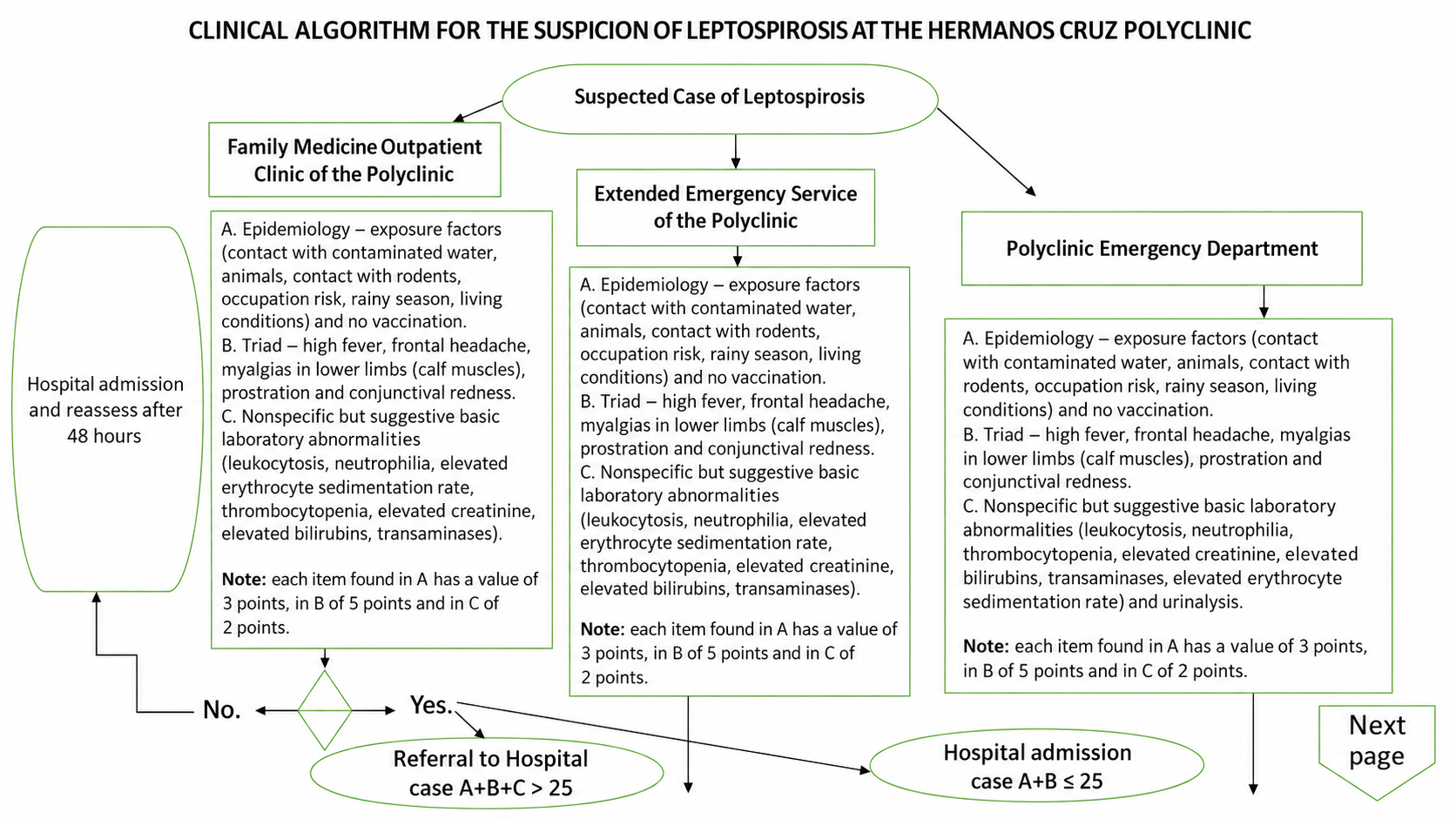

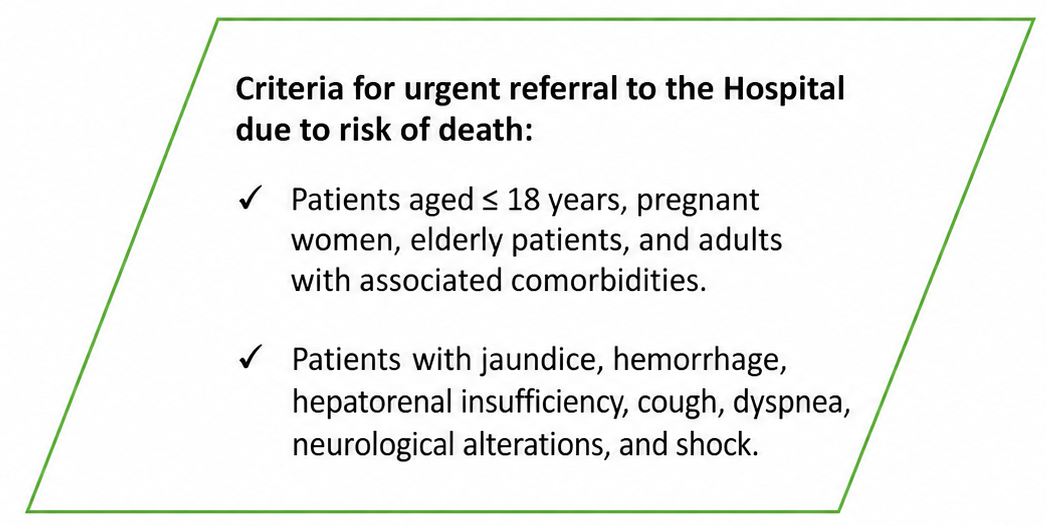
Source. Author's own elaboration.
Main achievements in medical care with the proposed implementation of the algorithm developed by the author.
Early detection and prevention: proactive identification of individuals at risk of developing disease, allowing interventions before the disease progresses.
Improvement of clinical outcomes: greater diagnostic accuracy and personalized treatment plans, which reduces mortality and complications.
Reduction of readmissions and medical errors: identification of patients at high risk of death and automatic alert on warning signs of the disease, improving patient safety.
Operational efficiency and resource optimization: forecasting care demand to manage staff and resources in critical areas such as ICUs, reducing costs and care burden.
Personalized patient care: personalization of diagnosis and treatments based on the person's unique profile, rather than a unique approach for all.
DISCUSSION
Cases of leptospirosis are increasing: according to WHO, as of 2017, more than 500000 cases are reported each year. The highest incidence occurs in regions of South and Southeast Asia, Oceania, the Caribbean, sub-Saharan Africa, and parts of Latin America, where up to 36000 annual cases are recorded. Outbreaks are reported in Guyana, Nicaragua, Brazil, and other Latin American countries; with seroprevalences in some Latin American countries such as Brazil 45 %, Colombia 61 %, Mexico 10 %, Venezuela 42 %. In Peru, very low seroprevalences occur between 2,6 and 1,3 %, and these cases increase their incidence during rainy seasons.33
Although the National Institute of Health reports that leptospirosis records in Colombia from 2007 to 2019 have decreased, it is clear that the most affected group is between 30 and 34 years old; the disease occurs more frequently in men than in women.33-35
Based on the aforementioned international literature, the author argues that human leptospirosis has constituted a universal health problem over the last 25 years, presenting in the form of isolated cases or epidemic outbreaks.
Cuba presents a high risk of transmission of leptospirosis: the disease constitutes the 34th leading cause of death, with 60 deaths in 2019, and a crude mortality rate of 0,4 per 100 000 inhabitants in both sexes in 52 municipalities.36
In the province of Pinar del Río, the trend in the number of patients has been toward a decrease in recent years. The municipalities with the highest morbidity due to suspected leptospirosis in recent years 13 are Minas de Matahambres, San Luis, Sandino, and Consolación del Sur, mostly associated with agricultural work linked to rice cultivation, in addition to other factors such as increased rainfall, high rodent infestation rates, and the increase in raising and/or living with animals in homes (pigs, dogs, cattle, etc.). A similar pattern is evident in the Hermanos Cruz health area owing to its territorial expansion; it has rural areas where rice is planted and livestock work is done, and there is a high rodent index in cities and the countryside.
Leptospirosis can be diagnosed by ELISA, microscopic agglutination test (MAT), serological test, darkfield microscopy (DFM) and polymerase chain reaction (PCR). The most commonly used techniques for diagnosis are serological tests, the MAT test; however, this test is expensive, it needs a collection of strains to be used as an antigen17,28,48
In Cuba, diagnosis is performed using antibody detection methods and conventional serological techniques, such as microscopic agglutination (MAT) of known serogroups and hemagglutination. Culture is the diagnostic method par excellence. Advanced methods for rapid diagnosis are also used, such as dipstick, lateral flow, and Dri-Dot tests, which are not confirmatory tests; they only provide rapid guidance to the attending physician. DNA hybridization techniques (including PCR) are used to diagnose cases that, due to their interest, warrant it .34
The author considers that the availability of techniques in APS is limited and that laboratory personnel require frequent training in the use of these techniques.
The National Program for the Prevention and Control of Human Leptospirosis (2nd Version) 49, Cuba (1998), defines a suspected case of human leptospirosis as any person with a syndrome or clinical symptoms compatible with leptospirosis, without epidemiological evidence of exposure, and whose laboratory diagnostic result is pending.
The author considers that this definition is incomplete because it does not include exposure to a source of infection and exposure to risk factors as epidemiological elements. It is not possible to speak of suspected leptospirosis in humans solely on the basis of clinical manifestations, due to variations in presentations, nor of probable cases, given the scarce diagnostic means available in APS. In the polyclinic, two operational groups should be employed: suspected case and confirmed case of human leptospirosis.
However, Cedeño and colleagues suggest that leptospirosis should be suspected in patients presenting with symptoms such as fever, severe headache, prostration, myalgias, and conjunctival injection, or in patients with signs of aseptic meningitis, adult respiratory distress syndrome, renal failure, or jaundice. Information should be obtained from the patient about age, sex, occupation, and exposure history (place, date, conditions of contact with animals or with contaminated environments).50
Finally, the research author contextualizes the suspected case of human leptospirosis based on the clinical-epidemiological foundations set out in section 1 as follows: a patient with fever (>38°C) of nonspecific cause in the last 3 weeks plus 2 or more of the following symptoms or signs: headache, myalgia, arthralgia, diarrhea, vomiting, back pain, chills, or photophobia, plus signs of multiorgan manifestation if there is progression of the disease. A suggestive epidemiological history includes exposure to floods, mud, or contact with stagnant water (wells, lakes, and rivers), history of vaccination, and presence of occupational risk.
According to classical decision theory (Luce and Raiffa, 1958), a decision problem can be classified as individual decision-making or group decision-making (GDM). GDM is a problem in which experts attempt to achieve a common solution by considering the opinions or preferences of all those involved; however, some decisions may not be accepted as satisfactory by some experts. To avoid these disagreements, a consensus process is required, in which experts discuss and modify their preferences to reach a level of agreement before making the decision. 51
Consensus is defined as an agreement in which experts align their positions to make a decision. The concept of consensus has been defined and studied in different ways in the literature: consensus is defined as a group opinion, and it refers to the approaches, models, tools, and procedures in which experts align their positions to make a group decision (Zhang et al. 2019).52
In the medical field, an algorithm is defined as a logical and sequential process used to solve problems or make clinical decisions. These algorithms can be presented as flowcharts, tables, or formulas and are essential tools for standardizing medical care and improving decision-making.53
The author adopts the aforementioned theory as a theoretical basis for the development of a clinical decision algorithm or medical consensus as a tool to standardize medical care and improve decision-making in the face of a health problem.
Medical algorithms are applied in various areas of healthcare, for example, in the following:55
Diagnosis: They help identify diseases based on symptoms and test results.
Treatment: They guide the selection of appropriate therapies for specific conditions.
Prognosis: The probable course of a disease is estimated.
Prevention: They identify risk factors and suggest preventive measures.
There are various types of algorithms in medicine: 56
Clinical decision algorithms: They are used to make diagnostic or therapeutic decisions.
Computational algorithms: They are implemented in computer systems to support medical decision-making.
Artificial intelligence algorithms: They employ machine learning techniques to analyze large volumes of medical data.
The use of algorithms in the medical field offers multiple advantages: 57-58
Standardization: They promote uniformity in medical care.
Precision: they improve the accuracy of diagnoses and treatments.
Efficiency: they optimize the use of resources and time.
Education: they serve as educational tools for health professionals.
Symbols
The symbols used to represent flowcharts have different meanings. Their standardization was carried out in 1985 by the International Organization for Standardization (ISO) and the American National Standards Institute (ANSI), resulting in a universal interpretation. 59
In this regard, various organizations have established different symbol systems for representing flow diagrams, the most recognized being those mentioned below:
- The American Society of Mechanical Engineers (ASME, in English).
- The American National Standards Institute (ANSI).
- The International Organization for Standardization (ISO, for its acronym in English).
- The German Institute for Standardization (DIN for its acronym in English). 69
The most common symbols used in flowcharts are presented (figure1). It is clarified that there are more than 30 standardized symbols for creating flowcharts and each organization selects those it considers appropriate. 6
Source: Guide for the preparation of flow diagrams. MIDEPLAN. 200965-69
The author defines a clinical decision algorithm for suspected human leptospirosis as a logical and sequential process used for clinical decision-making and the course of action to follow in the event of suspected leptospirosis in patients treated at the Hermanos Cruz polyclinic, based on epidemiology, clinical features, and basic nonspecific clinical laboratory findings suggestive of the disease. The author considers that it allows an efficient, timely, and equitable clinical-epidemiological diagnosis and, in turn, becomes a health prevention tool.
Epidemiology is the study of the frequency and distribution of health events and their determinants in human populations, and the application of this study to the prevention and control of health problems. The term “Clinical Epidemiology” comes from two disciplines that are very closely related and inseparable: clinical medicine and epidemiology. It is clinical because it seeks answers to “clinical questions” and serves as a guide for clinical decision-making with the best “evidence” or the “available evidence.” It is “epidemiology” because many of the methods used have been created by epidemiologists. 60,61
Clinical Epidemiology is a discipline established worldwide from 1970 onward, considered a science of the “art of medicine,” as proposed by Dr. David L. Sackett, who saw in applying the principles of epidemiology to provide clarity about diseases in patient care, also toward diagnostic behavior and therapeutic management. By applying biostatistics, he realized that he could improve the precision and skill of diagnosis and prognosis, the effectiveness of follow-up, and the efficiency of updating, as well as the art of teaching others to do it. At the same time, other internal medicine specialists such as Peter Tugell and R. Brian Haynes supported the practice and created the departments of Clinical Epidemiology and Biostatistics at Mc. Master and at other universities in Europe and the USA.61,62
This fact triggers a great advance in Evidence-Based Medicine, which refers to the application of Clinical Epidemiology to patient care. It involves using methods and strategies to pose or formulate specific clinical questions, find the best available research evidence related to the clinical questions, critically appraise the information and evaluate whether it is sufficiently robust to make clinical decisions at the patient's bedside, and finally, use that information for decision-making in health management.70-72
Clinical epidemiology is the science that makes predictions about individual patients by counting clinical events in similar patients, using sound scientific methods for studies of patient groups to ensure that predictions are accurate. The objective of clinical epidemiology is to develop and apply methods of clinical observation that will lead to valid conclusions, avoiding misinterpretations due to systematic error and chance. Clinical epidemiology constitutes an important approach to the information that clinicians require to make appropriate decisions in patient care.62
The author adopts the definition of clinical epidemiology proposed by Fletcher RH and Fletcher S 72 in their book; likewise, he considers that it can be applied in other clinical specialties not only by specialists in Internal Medicine.
Fields of action of clinical epidemiology: 61-63
1-Identify the causes of health problems
2-Detect and diagnose diseases and their risk factors
3-Prevent, treat, mitigate and rehabilitate health problems
4-Predict the course of the disease
5-Measure the burden of disease, quality of life, and the impact of innovations on health services
6-Systematically summarize the research evidence
7-Increase the quality of care and improve outcomes
Clinical epidemiology studies the validity of diagnostic tests, the efficacy, efficiency, and effectiveness of treatments, the prognoses of diseases, costs, evaluates medical technologies, and also addresses aspects of quality of medical care, as well as other health problems that affect sick people, who generally receive care in clinical or surgical areas. To do so, it uses tools typical of clinical practice, biostatistics, and epidemiology, and from that perspective it makes clinical decisions and conducts experimental research. 61
The author, after conducting a critical review of the scientific literature on clinical epidemiology, considers that it is methodologically linked to studies of:
Pharmacoeconomics
Health technology assessment
Clinical Practice Guidelines
Biomarkers
Qualitative research
The author considers that clinical epidemiology provides methods for evaluating the usefulness of signs and symptoms in diagnosis. Concepts such as sensitivity, specificity, and positive predictive value are fundamental; nevertheless, owing to the limited availability of diagnostic tests for APS, these concepts are not used to construct reliable algorithms. The integration of clinical and epidemiological elements enables the development of practical tools for the primary health care level.
In 1988, the WHO defined health prevention as those "measures aimed not only at preventing the appearance of the disease, such as the reduction of risk factors, but also at halting its advance and attenuating its consequences once established". In this way, it is understood as those measures aimed at preventing and halting the advance of a disease, as well as alleviating or attenuating its effects once it has begun. 64-67
The algorithm design provides physicians working in the APS with a flowchart for diagnosis, evaluation, and management, offering an alternative in the face of scarce diagnostic tests and a means of performing secondary prevention in health.
REFERENCIAS BLIOGRAFICAS
Hernández Cabezas M, Mauri Pérez JL, Vargas Yzquierdo J, Hernández- Cabezas M. Leptospirosis humana: un abordaje epidemiológico desde los factores ambientales. Rev Cubana Med Gen Integr [Internet]. 2017 Mar [citado 2022 Abr 14]; 33(1):129-138. Disponible en: http://scielo.sld.cu/scielo.php?script=sci_arttext&pid=S0864-21252017000100011&lng=es.
Cabello Cabrera A, Ortiz Rodríguez L, Carrazana Santos Y, Mesa Reyes Y, Prieto García Y, García Gonzalez Y. Programa educativo para prevenir la leptospirosis en una zona rural de Jibacoa, Manicaragua, Cuba .EDUMECENTRO [Internet]. 2023 [citado 2025 Oct 13] ; 15: .Disponible en:http://scielo.sld.cu/scielo.php?script=sci_arttext&pid=S2077-28742023000100102&lng=es.
Ramírez Rodríguez M, Verdasquera Corcho D, Sanabria Ramos G , Cabezas Alfonso H, Martínez -Vizcaíno N, Mena -Ramírez M. Manifestaciones tendenciales del conocimiento sobre participación comunitaria en líderes para la prevención de la leptospirosis. AMC [Internet]. 2017 Abr [citado 2022 Abr 14] ; 21( 2 ): 237-245. Disponible en: http://scielo.sld.cu/scielo.php?script=sci_arttext&pid=S1025-02552017000200008&lng=es.
Chibas Muñoz EE, Herrera Ortega SM, Pérez Mola K , Baños Rabilero EM , Creagh Bandera E. Caracterización clínico -epidemiológica de pacientes con diagnóstico de leptospirosis humana. 16 de Abril [Internet]. 2021 [citado 31/01/2024]; 60(281): [Aprox. 5p.]. Disponible en: https://.medigraphic.com/pdfs/abril/abr-2021/abr21281f.pdf
Aranzazu Ceballos AD, Apraez Henao L , Ortiz Marín DC. Leptospirosis en pediatría, un diagnóstico a tener en cuenta. Rev. niño.infectol. [Internet]. 2020 Dic [citado 2025 Dic 29] ;37(6):728-738.Disponible en: http://.scielo.cl/scielo.php?script=sci_arttext&pid=S0716-10182020000600728&lng=es.http://dx.doi.org/10.4067/sd716-10182020000600728.
Organización Panamericana de la Salud. Leptospirosis - Notas Descriptivas. Leptospirosis- notas Descr.2017;19.https://.paho.org/hq/index.php?option=com_docman&vie=donload&alias=39729-leptospirosis-abril-2017-729&category_slug=hoja-informativas-4768&Itemid=270&lang=es
Pineda Burgos B, Romero Rodríguez P, García González E, Flores López E, Hernández Ruiz P, Olivar Valladolid G et al. Seroprevalencia de anticuerpos anti-Leptospira spp. en estudiantes de Medicina Veterinaria y Zootecnia de la Costa Grande de Guerrero, México. Rev Cubana MedTrop [Internet]. 2020 Ago [citado 2021 Ago 02] ; 72( 2 ): e466. Disponible en: http://scieloprueba.sld.cu/scielo.php?script=sci_arttext&pid=S0375-07602020000200007&lng=es. Epub 20-Oct-2020.
Zambrano Gavilanes MP, Lazo Pérez L, Guerrero Santana MV, Villavicencio Moreir TI, Vera Loor LE, Vera Mejía RR et al .Seroprevalencia de anticuerpos contra Leptospiraspp. en cerdos criados en Portoviejo, Ecuador. Rev Cubana MedTrop [Internet]. 2020 Dic [citado 2021 Ago 02] ; 72( 3 ): e540. Disponible en: http://scieloprueba.sld.cu/scielo.php?script=sci_arttext&pid=S0375-07602020000300001&lng=es. Epub 08-Feb-2021.
Raul Bautista B,María Bulla D . Leptospirosis: enfermedad de importancia en salud pública. rev. colombiana cienc. anim. Recia [online]. 2019, vol.11, n.2 [cited 2025-09-19], pp.108-118. Disponible en:http://.scielo.org.co/scielo.php?script=sci_arttext&pid=S202742972019000200108&lng=en&nrm=iso>. Epub May 09, 2020. ISSN 2027-4297. https://doi.org/10.24188/recia.v11.n2.2019.727.
Obregón Fuentes AM. Avances de laboratorio sobre la leptospirosis humana en Cuba, 1989-2016. Rev Cubana MedTrop [Internet]. 2017 Dic [citado 2022 Abr 14] ; 69( 3 ): 1-18. Disponible en: http://scielo.sld.cu/scielo.php?script=sci_arttext&pid=S0375-07602017000300013&lng=es.
Cabezas Alfonso H, Mederos Blanco A , Fernández Barroso Y , Cabezas Maya L. Ensayo comparativo entre Ag inactivado macroaglutinante y Ags vivos microaglutinantes en el diagnóstico de leptospirosis. Rev Ciencias Médicas [Internet]. 2017 Feb [citado 2021 Ago 02] ; 21( 1 ): 54-61. Disponible en: http://scieloprueba.sld.cu/scielo.php?script=sci_arttext&pid=S1561-31942017000100010&lng=es.
Cuba. Ministerio de Salud Pública. Anuario Estadístico de Salud. La Habana: MINSAP; 2024 Edición 2025 [citado 02 Oct 2025]. Disponible en: http://bvscuba.sld.cu/anuario–estadistico-de-cuba//
Cuba. Ministerio de Salud Pública. Dirección Provincial de Estadísticas. Cuadro de salud Provincial. Mortalidad 2024. Pinar del Rio: Centro Provincial de Higiene y Epidemiología; 2024.
de la Rodríguez CH, Barreto García G, García Casas T, Vázquez Montes de Oca R. Animales domésticos como reservorios de la Leptospirosis en Camagüey, papel de los cerdos. Revista de Producción Animal [Internet]. 2017 [Citado 2021 Ago 02].; 29(3), 43-46. Disponible en: http://scieloprueba.sld.cu/scielo.php?script=sci_arttext&pid=S222479202017000300007&lng=es&tlng=es.
Carranza Zamora AJ ,Chang Fonseca D , Gutiérrez López Y. Leptospirosis y enfermedad de eil. RMS [Internet]. 2020 mar [citado 17/01/2024]; 5(3): [Aprox. 12p.]. Disponible en: https://.medigraphic.com/pdfs/sinergia/rms-2020/rms203c.pdf
Abreu Ugarte JE. Primeros pasos en la inmunoprofilaxis contra la leptospirosis en Cuba. Rev Cubana Hig Epidemiol [Internet]. 2022 [citado 18/02/2024]; 59: [Aprox. 14p.+]. Disponible en: http://scielo.sld.cu/pdf/hie/v59/1561-3003-hie-59-e1172.pdf
Obregón Fuentes AM, Fernández Molina C, Martínez Motas I, Llop Hernández A, Rodríguez González I, Rodríguez Silveira J et al. Sistemas serológicos rápidos utilizados para la pesquisa de leptospirosis humana en Cuba. Rev Cubana MedTrop [Internet]. 2011 Dic [citado 2020 Jun 23] ; 63( 3 ): 239-245. Disponible en: http://scielo.sld.cu/scielo.php?script=sci_arttext&pid=S0375-07602011000300007&lng=es.
Díaz Alfonso H, Acosta Falero Y, Lorenzo Díaz JC, Lazo Herrera LA, Ordóñez Álvarez LY. Caracterización clínica, epidemiológica y terapéutica de pacientes hospitalizados con leptospirosis humana. Rev. Cubana Tecnol . Salud [Internet]. 2018 [citado 2018 Jun 29];9(2):[aprox.9p.].Disponible en: http://.revtecnologia.sld.cu/index.php/tec/article/vie/1112
Barreto Argilagos G , Rodríguez Torrens HC, García Casas T, Vázquez Montes de Oca R. Comportamiento de la leptospirosis en reactores positivos porcinos y humanos durante un decenio en la provincia Camagüey. Rev Salud Anim. [Internet]. 2020 Ago [citado 2021 Ago 02];42(2):e03.Disponible en:http://scieloprueba.sld.cu/scielo.php?script=sci_arttext&pid=S0253-570X2020000200009&lng=es. Epub 01-Ago-2020.
Mesa Coello L, Machado Díaz B, Llerena González MM, Díaz Muñoz Y, Estupiñan Martínez OR. Caracterización del grupo riesgo de leptospirosis en un consultorio médico de la familia. Acta Médica [Internet]. 2014 [citado 2020 Jun 23];8(3):[aprox. 6 p.]. Disponible en: http://.revactamedicacentro.sld.cu/index.php/amc/article/vie/149
Vicente Peña, O, et al. Diagnóstico y tratamiento en medicina interna. La Habana: Editorial Ciencias Médicas, Cuba, 2012
Izquierdo Vásquez JV, Bravo Roche G, Robles Urgilez M, Robles Urgilez A. Leptospirosis factores de riesgo, diagnóstico y manejo actualizado. jah[Internet]. 2023[citado 10 de abril de 2025]; 6(2):14. Disponible en: https://jah-journal.com/index.php/jah/article/vie/180
Bautista BR, Bulla DM, López HA, Díaz AM, Pulido MO . Leptospirosis: enfermedad de importancia en salud pública. rev. colombiana cienc. anim. Recia Centro [Internet]. 2019 [citado 2025 Jun 23];11(2),108-118.Epub May 09, 2020. Disponible en: https://doi.org/10.24188/recia.v11.n2.2019.727.
Thibeaux R, Girault D, Bierque E, Soupé-Gilbert ME, Rettinger A, Douyère A, et al. Biodiversity of Environmental Leptospira: Improving Identification and Revisiting the Diagnosis. Front Microbiol [Internet]. 2018 [access: 17/08/2024];9:816. Available from: https://.frontiersin.org/article/10.3389/fmicb.2018.00816
Duany Badell L, Achón García M, Varen Álvarez A, Badell Taquechel E, Morales Pérez N, Bolaños Valladares T. Aspectos clínicos y epidemiológicos de pacientes con leptospirosis en Cienfuegos. 2001 - 2010. Medisur [Internet]. 2014 Ago [citado 2020 Jun 23] ; 12( 4 ): 601-608. Disponible en: http://scielo.sld.cu/scielo.php?script=sci_arttext&pid=S1727-897X2014000400005&lng=es.
Vera Reyna M, Vázquez Fiffe N, Tudela Nápoles T, Mendoza Ramírez M, Delgado Delgado ME. Nivel de conocimientos clínico-epidemiológicos de la leptospirosis en estudiantes. Rev. inf. cient. [Internet]. 2018 Jun [citado 2021 Ago 02] ; 97( 3 ): 566-573. Disponible en: http://scieloprueba.sld.cu/scielo.php?script=sci_arttext&pid=S1028-99332018000300566&lng=es.
Field Cortazares J, Coria Lorenzo JJ, Domingo Martínez D. Leptospirosis en una adolescente de 13 años de edad: informe de un caso y revisión de la literatura. Rev Enferm Infecc Pediatr 2021;33(136):1878-81.http://dx.doi.org/10.4067/S0716-10182020000600728.
Hernández Rodríguez P, Pabón Ludy C, Rodríguez Martha F. Leptospirosis, una zoonosis que impacta a la salud: diagnóstico, tratamiento y nuevas alternativas de control. Rev Cubana Med Trop [Internet]. 2021 Abr [citado 2022 Abr 14] ; 73( 1 ): e509. Disponible en: http://scielo.sld.cu/scielo.php?script=sci_arttext&pid=S0375-07602021000100015&lng=es. Epub 01-Abr-2021.
Basile G. Epidemiología de la leptospirosis en República Dominicana: entre el urbanismo inequitativo, alta letalidad desigual y sistemas de respuesta ineficaces [Internet]. Buenos Aires: CLACSO; 2017 [citado 3 May 2021]. Disponible en: http://.mdm.org.ar/informes/43/17-10-12_Epidemiologia-de-la-Leptospirosis-en-Republica-Dominicana.pdf
Barrreto Argilagos G, de la C. Rodríguez Torrens H, García Casas T , Vázquez Montes de Oca R. Sugerencias para un diagnóstico más actual de la Leptospirosis. Revista de Producción Animal. [Internet]. 2017 [citado 3 May 2021];29(3), 55-57. Disponible en: http://scieloprueba.sld.cu/scielo.php?script=sci_arttext&pid=S2224-79202017000300009&lng=es&tlng=es.
Ferrá Torres TM .Algoritmo para el diagnóstico precoz del cáncer cervicouterino en mujeres con condilomas acuminados.Camagüey .Tesis en opción al título de doctor en Ciencias Médicas.Instituto Superior De Ciencias Médicas ¨CARLOS J. FINLAY¨ CAMAGÜEY, Facultad de Ciencias Médicas,Camagüey,2009
Tsui KH, Lee SH, Chen CL. Uso de algoritmos clínicos para mejorar el funcionamiento de las prácticas médicas en pacientes sometidos a nefrectomía adical. Siicsalud [Internet]. 2004 [citado 28 ago 2024]. Disponible en: https://.siicsalud.com/des/expertoimpreso.php/67330
Ariza Suárez AC, Berdugo Parra CA. Actualización de la leptospirosis bovina en Colombia. Conex Agropecu.2017;7(1):57-77.].[citado 2024 Nov 9].Disponibleen:https://revista.jdc.edu.co/index.php/conexagro/article/vie/572/582
Álvarez Toste M, Gámez Sánchez D, Romero Placeres M, et al .Aspectos básicos [Internet].La Habana: Editorial de Ciencias Médicas; La Habana ,2021 . Disponible en: https://.bvscuba.sld.cu/libro/higiene/-y-epidemiologia-aspectos básicos.
González Torres AL, Monroy Díaz AL, Di Filippo G . Factores asociados a la infección por leptospira: una revisión de literatura. Cienc y Salud Virtual. [Internet]. 2018 [2025 Dic 18] ;10(2):63-72. ]Disponible en: https://doi.org/10.22519/21455333.1166
Cuba. Ministerio de Salud Pública. Dirección Nacional de Estadísticas. Anuario Estadístico de Salud 2020. 49ed. La Habana: Minsap; 2020. Disponible en: https://temas.sld.cu/estadisticassalud
Hernández CM, Pérez JL, Vargas YJ, Hernández CM. Leptospirosis humana: un abordaje epidemiológico desde los factores ambientales. Rev Cuba Med Gen Integr. 2017; 33(1):129-138.[citado 28 ago 2024]. Disponible en : http://.revmgi.sld.cu/index.php/mgi/article/vie/263
Torres Castro M, Hernández Betancourt S, Agudelo Flórez P, Arroyave Sierra E, Zavala Castro J, Puerto FI. Revisión actual de la epidemiología de la leptospirosis. Rev Med Inst Mex Seguro Soc. 2016; 54(5):620-5.[citado 28 ago 2024]Disponible en : http://.medigraphic.com/pdfs/imss/im-2016/im165k.pdf
Romero Viivas CM, Falconar AK. Leptospiraspp. y leptospirosis human. Revision. Salud Uninorte. 2016; 32(1):123-43.[citado 28 ago 2024]. Disponible en : http://.scielo.org.co/pdf/sun/v32n1/v32n1a11.pdf
García Portela, R; García Otero M; García Otero M. Aspectos a tener en cuenta en la patogénesis de la leptospirosis humana. Rev de Ciencias Médicas de Pinar del Río [Internet] 2015 Dic [citado 2025 Abril 10]; 19(6) . Disponible en: http://scielo.sld.cu/scielo.php?script=sci _arttext&pid=S1561-31942015000600026&Ing=es.
Izquierdo Vásquez JV, Bravo Roche G, Robles Urgilez M, Robles Urgilez A. Leptospirosis factores de riesgo, diagnóstico y manejo actualizado. jah[Internet]. 2023[citado 10 de abril de 2025]; 6(2):14. Disponible en: https://jah-journal.com/index.php/jah/article/vie/180
Farreras Valenti P, Rozman C. Leptospirosis. Medicina Interna. Vol 2. XVIII ed. Barcelona,España: Elsevier España, S.L;2016. p.2165-2167
Carranza Zamora AJ, Chang Fonseca D, Gutierrez López Y. Leptospirosis y enfermedad de eil .RMS [Internet]. 2020 [citado 10 de abril de 2025]; 5 (3). Disponible en: http://revistamedicasinergia.com
Sun A H, Liu X X, Yan J. Leptospirosis is an invasive infectious and systemic inflammatory
disease. Biomed J. 2020; 43(1): 24-31. doi: 10.1016/j.bj.2019.12.002:
Basile G. Epidemiología de la leptospirosis en República Dominicana: entre el urbanismo inequitativo, alta letalidad desigual y sistemas de respuesta ineficaces [Internet]. Buenos Aires: CLACSO; 2017 [citado 3 May 2021]. Disponible en: http://.mdm.org.ar/informes/43/17
Ramírez Rodríguez M, Cabezas Alfonso H, Rieumont Emilia R, Hernández Rodríguez IM, Martínez Figueredo R. Participación comunitaria en la prevención de la leptospirosis humana. Rev Ciencias Médicas [Internet]. 2015 Oct [citado 2025 Sep 19] ; 19( 5 ): 891-910. Disponible en: http://scieloprueba.sld.cu/scielo.php?script=sci_arttext&pid=S1561-31942015000500013&lng=es.
Rodríguez Puga R, García González GS. Evaluación de la calidad médica asistencial a pacientes hospitalizados con sospecha clínica de leptospirosis. Rev Cub Sal Públ [Internet]. 2023 Sep [citado 2025 Sep 19] ; 49( 3 ): e15887. Disponible en: http://scieloprueba.sld.cu/scielo.php?script=sci_arttext&pid=S0864-34662023000300009&lng=es. Epub 01-Sep-2023.
Gómez Martín MC, Rodríguez Benjumeda LM, Eguilior Mestre MC, Lozano Domínguez MC, Luque Márquez R, Jódar Sánchez F et al. Epidemiología de la leptospirosis en los humedales del sur de España. Gaceta Sanitaria [internet]. 2023 [citado 10 Abril 2025]; 37: 102288. Disponible en : https://.scielosp.org/pdf/gs/2023.v37/102288/es
Programa Nacional de Prevención y Control de Leptospirosis Humana (2da Versión),La Habana, Cuba, 1998
Cedeño Chacón G, Gómez Cerquera JM, Chica Polania MV, Polo Arce V, Perdomo Flórez , Tafurt Cardona Y. Epidemiología de la Leptospirosis en el departamento del Huila, Colombia. 2011-2017. Rev Médica Risaralda [Internet]. 2021 Jun 13;27(1):10-20. Disponible en: http://.scielo.org.co/scielo.php?scr ipt=sci _ a r t tex t& pi-d=S0122-06672021000100010&lng=en&nrm=iso&tl-ng=es
Vidal Ledo MJ, Martinez Calvo S, Armenteros Vera I .La vigilancia en salud. Educ Med Superior. [Internet]. 2021. [cited 2025Oct 19]; 35(3):.Disponible en: http://scielo.sld.cu/scielo.php?script=sci_arttext&pid=S0864-21412021000300020&lng=es.
La atención primaria en Cuba: el equipo del médico de la familia y el policlínico. Rev Cub Sal Públ [Internet]. 1996 Dic [citado 2025 Sep 19] ; 22( 2 ): 4-5. Disponible en: http://scielo.sld.cu/scielo.php?script=sci_arttext&pid=S0864-34661996000200003&lng=es.
Rosas Prieto AM, Narciso Zarate V, Cuba Fuentes MS. Atributos de la Atención Primaria de Salud (A.P.S): Una visión desde la Medicina Familiar. Acta méd. peruana [Internet]. 2013 Ene [citado 2025 Sep 19] ; 30( 1 ): 42-47. Disponible en: http://.scielo.org.pe/scielo.php?script=sci_arttext&pid=S1728-59172013000100008&lng=es.
Giral DA, Hernández CA , Martínez FH . Algoritmos para Toma de Decisiones en Redes Inalámbricas Cognitivas: una Revisión. Información Tecnológica [Internet]. 2019 [citado 2025 Sep 19] ; 30( 6 ): 387-401. Disponible en: http://dx.doig.org/10.4067/S0718-07642019000600387
Arias Capote JC, Hidalgo Mesa CJ, Hidalgo Cepero HE. Utilidad de las guías, protocolos y algoritmos en la práctica clínica. Rev cubana med [Internet]. 2019 Mar [citado 28 ago 2025]; 58(1): e980. Disponible en: http://scielo.sld.cu/scielo.php?script=sci_arttext&pid=S003475232019000100005&lng=es.
Caballero MT, Polack FP. Algorithms in clinical decision-making: a tool for standardization. Arch Argent Pediatr. 2017;115(6):e404–10.
Guía para la elaboración de diagramas de flujo. MIDEPLAN [Internet]. 2009 [citado 9 mar 2023].Disponible
en:https://theily.files.ordpress.com/2009/09/guia-elaboracion-diagramas-flujo-2009.pd
Santos LM dos, Nunes K de J, Silva CSG e, Kusahara DM, Rodrigues E da C, Avelar AFM. Elaboration and validation of an algorithm for treating peripheral intravenous infiltration and extravasation in children. Rev Latino-Am Enfermagem [Internet]. 2021;29 (Rev. Latino-Am. Enfermagem, 2021 29). Disponible en: https://doi.org/10.1590/1518-8345.4314.3435
Ciria González, CB.Algoritmo para el control del sangrado posexodoncia en los pacientes cardiópatas tratados con antitrombóticos.La Habana,Tesis presentada en opción al grado científico de Doctor en Ciencias Estomatológicas.Universidad de Ciencias Médicas de La Habana ,Facultad de Estomatología,La Habana,2022
Martinez Calvo S, RamirezAdalia M. El método clínico, el método epidemiológico y la Epidemiologia Clínica.Rev Cubana Salud Pública.[Internet].2012 Dic[citado 2025 Sep 19];38(4):615-621.Disponible en: http://.scielo.sld.cu/scielo.php?script=sci_arttext&pid=S0864-34662012000400012&lng=es.
Ramis Andalia R M. Origen e intencionalidad de la epidemiología clínica. Rev Cub Sal Públ [Internet]. 2005 Sep [citado 2025 Oct 18] ; 31( 3 ). Disponible en: http://scieloprueba.sld.cu/scielo.php?script=sci_arttext&pid=S0864-3466005000300009&lng=es.
Gómez Viera N . Epidemiología clínica. Rev cubana med [Internet]. 1997 Ago [citado 2025 Oct 15] ; 36( 2 ). Disponible en: http://scielo.sld.cu/scielo.php?script=sci_arttext&pid=S0034-7523997000200001&lng=es.
Fletcher RH, Fletcher S. Epidemiología clínica: aspectos fundamentales. 4ª ed. Madrid: Elsevier; 2006.
Sackett DL, Haynes RB, Guyatt GH, Tugell P. Epidemiología clínica: Ciencia básica para la medicina clínica. 2ª ed. Madrid: Elsevier; 2004.
Ruiz AM, Morillo LEZ. Epidemiologia Clinica Investigación clínica aplicada. 1era ed. Colombia: Panamericana, 2004
Navia B.MP Medicina basada en evidencia apreciación crítica de la literatura médica parte I. Rev. Cuad, Vol62 No.2, 2021
Gil-Girbau M, Pons Vigués M, Rubio Valera M, Murrugarra G, Masluk B, Rodríguez Martín B et al . Modelos teóricos de promoción de la salud en la práctica habitual en atención primaria de salud. GacSanit [Internet]. 2021 Feb [citado 2025 Abr 21] ; 35( 1 ): 48-59. Disponible en:http://scielo.isciii.es/scielo.php?script=sci_arttext&pid=S021391112021000100048&lng=es
Cárdenas Suárez LE, Carpio Vaca GA, Humala Rojas JX, Verdugo Calle LM. Promoción y prevención de salud en la sociedad. Tesla rev.cient. [Internet]. 2022 [citado 21 de abril de 2025];9789(8788).Disponible en: https://tesla.puertomaderoeditorial.com.ar/index.php/tesla/article/vie/21
Olivero IV. Los niveles de prevención y su relación con el Proceso Salud-Enfermedad: Proceso Salud-Enfermedad-Prevención. ICSA [Internet]. 2024 [citado 21 de abril de 2025];12(24):73-7.Disponible en: https://repository.uaeh.edu.mx/revistas/index.php/ICSA/article/vie/10856
Declarations
Funding
No financing.
Conflict of interest
None.
Authorship contributions
Drafting – original draft: Lázaro Yoan Ordoñez Álvarez.
Writing–review and editing: Lázaro Yoan Ordoñez Álvarez.