
Abstract
The purpose of this work is to promote healthy practices regarding the use of cell phones in the classroom so that students learn to incorporate this device as a tool that promotes self-regulated learning. To achieve this objective, different informative, playful and reflective activities related to the theme are diagrammed. To evaluate the results of the plan, it was decided to apply two pre- and post-intervention tests: one ad hoc "The cellular device as a learning tool" and the other called "Self-efficacy Inventory for Study". It is expected that after carrying out the plan, students will be able to notice the positive impact of cell phone use on their academic performance and an increase in their perception of self-efficacy regarding the performance of their tasks. In this way, it is concluded that cell phones are part of the new ways of learning and teaching in the educational field. For this reason, it is considered that it is no longer possible to deny their presence in the classroom since more and more students choose to learn through their cell phones.
Keywords
Cell Phone Use, Self-Regulated Learning, Self-Efficacy
INTRODUCTION
The growth of technology at present is a fact that is evident to any person regardless of the generation to which they belong. The development of new technological devices aimed at improving the quality of life of individuals is a reality that affects us all, whether we are part of the group that designs and strategically researches each device or whether we are the users who receive these discoveries.
This is how technology has managed to manifest itself in different areas such as family, work, or education. Regarding this final degree project, we will take the educational field as the area of impact of technology, proposing the use of cell phones as mediators of the teaching-learning process in first-year students at IPEM José María Paz.
In order to address this phenomenon, two fundamental aspects were taken into account.
First, the population with which it is chosen to work is part of that generation that was born knowing how to use technological devices. That is, they are “digital natives” (1). Second, the use of cell phones for completing tasks or as a study tool in this institution is already part of the repertoire of students’ usual behaviors, so the purpose of the plan is based on students acquiring healthy practices regarding their use to enhance their academic performance.
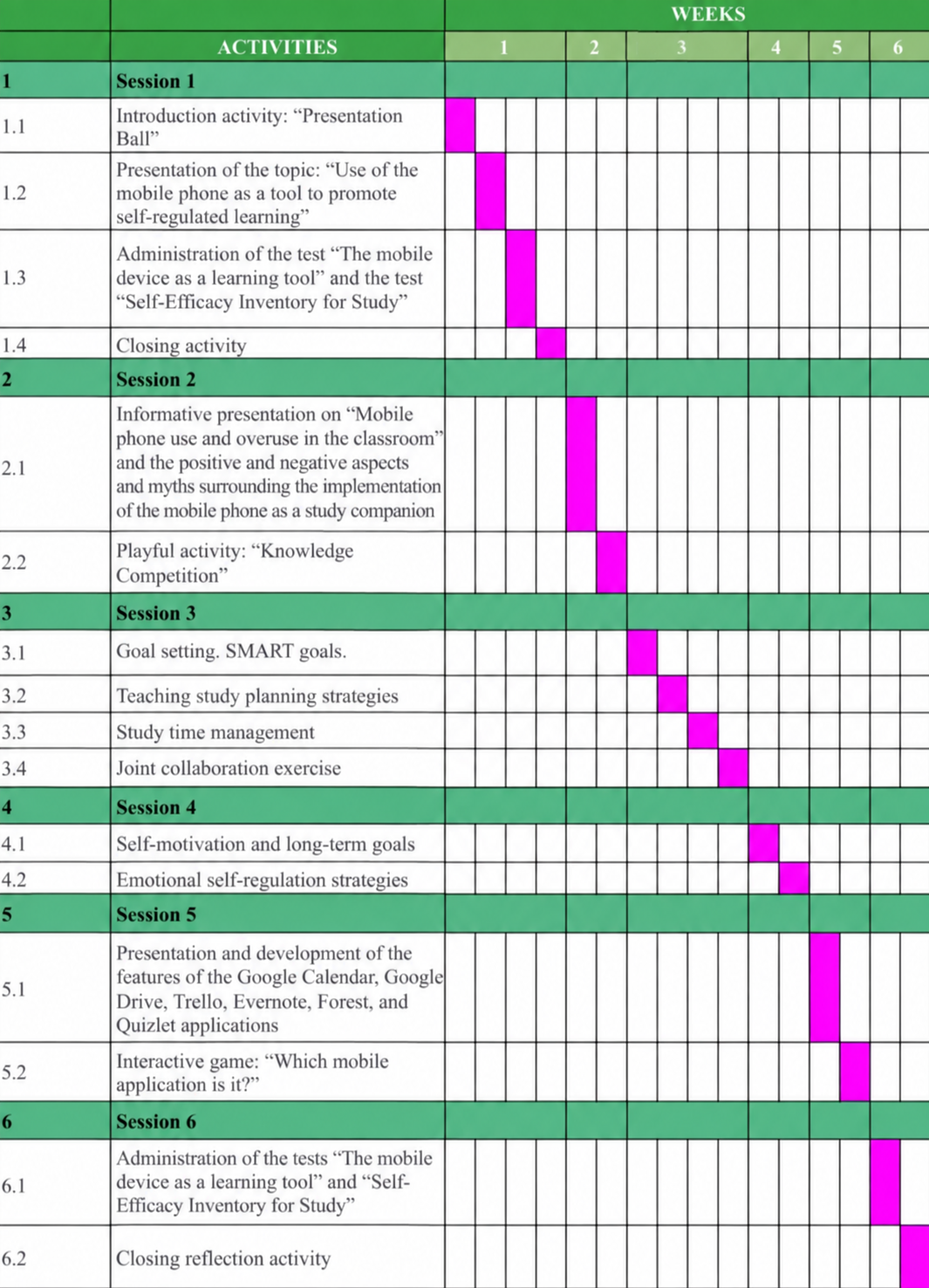
Taking these reasons into account, an intervention plan is proposed whose core is the promotion of good practices regarding the use of cell phones in classrooms and making such use beneficial for students by incorporating this device as a tool that fosters self-regulated learning. For this reason, 6 meetings of approximately an hour and a half each were scheduled.
Regarding the contents of the meetings, they were designed taking into account the specific objectives to which this work responds. There are recreational, informative, and also reflective activities. The combination of these types of activities is justified when it comes to including students as active participants and not mere recipients of information.
Thus, the creation of this action plan is considered of interest to the field of Educational Psychology. This subdiscipline has the duty to study those events that arise in classrooms and affect both students and teaching staff.(2) The use of cell phones as a mediator and facilitator of learning is an aspect that merits investigation.
Delimitation of the strategic line
Within the institutional framework of the Bachelor's Degree in Psychology program at Universidad Siglo XXI, this final degree project will be developed, opting for the thematic axis “Vulnerability and Risk Behaviors Today”.
When speaking of vulnerability, this term should not be confused with poverty. Vulnerability refers to the impact that certain personal, economic, or social events have on people's lives, while poverty indicates the insufficiency of economic income that one subject has to cover basic needs such as housing and food. This parallel drawn between vulnerability and poverty is due to the lack of conceptual precision, since their use is recent.(3)
Even so, a conceptual approach can be established regarding the definition of “vulnerability,” asserting that it has a multidimensional character since it affects subjects individually or collectively. In this sense, vulnerability becomes present when there are circumstances of fragility or defenselessness in the face of changes in the environment. To exemplify the aforementioned, it is possible to mention institutional abandonment by the State, internal weakness when facing necessary changes, and insecurity that discourages the possibility of taking charge of the future in order to achieve better levels of well-being.(4)
If the internal weakness experienced by adolescents when facing the changes involved in this stage is taken into account, it can be stated that they are more susceptible to situations of vulnerability than at other stages. This is based on the fact that it is a stage marked by changes that occur rapidly and unexpectedly. These changes include physical metamorphosis and the variability of their emotions in response to it, the importance that the peer group begins to acquire, separation from the family environment, and the beginning of introduction into the adult world.(5)
When considering adolescence as a stage of greater vulnerability, it is necessary to highlight the existence of risk factors and protective factors. Risk factors are defined as those personal, family, and social characteristics that increase the likelihood of engaging in risky behaviors (6) and that, in turn, affect those adolescents who are in less favorable contexts, such as situations of poverty, maltreatment, and substance abuse, which directly impacts their mental health.
In contrast, protective factors are characterized by reducing the risk of becoming involved in conflictive situations.(6) Within the latter, social relationships as a support network and access to quality education and healthcare can be found.(7)
If the contributions made from a social-psychological approach are taken into consideration, when discussing risk behaviors, these must be analyzed within the society in which they manifest, focusing mainly on which values are those promoted by said social system. A behavior that is understood as risky within a society may not be directly linked to this characteristic in another, since it forms part of those values or behaviors that said population promotes.(5)
In this way, risk behaviors are considered as those acts that are biologically, psychologically and/or socially harmful and that individuals perform voluntarily or involuntarily. Therefore, in adolescence there is an increase in this type of behavior due to the different events that the boy or girl must face until reaching adulthood, such as changes in sexual and reproductive functions, social position, and the internal contradictions experienced in response to this.(8)
Thus, it can be stated that adolescence is a stage marked by transitions that tend to be abrupt or delayed, which directly impacts the subject's psyche. Faced with these inevitable transitions, the adolescent begins to experience and engage in behaviors related to denied mortality, which can be conceptualized as that sensation of impossibility of being harmed; moreover, adolescents become susceptible to influence in order to belong to the “group” and identify with ideals opposed to those of their parents as an act of rebellion against authority.(8) These and other characteristics lead to the crisis of childhood identity that opens the way to the formation of adult identity.(9)
It is important to mention that the function fulfilled by risk behaviors does not always have a negative connotation. Some authors propose that such acts can be functional for achieving autonomy and enabling transformations in current norms. What is relevant regarding the functionality of these behaviors is being able to identify when engaging in them may cause significant harm in the life of the adolescent or another individual.(8)
A behavior that is currently potentially risky is cell phone use. Although the primary purpose of their creation was to make it easier for individuals to stay in contact despite distance, inappropriate use can lead to dependence. From this perspective, it is essential to identify whether a behavior has become addictive. To make this distinction, it must be considered whether the individual's experience regarding cell phone use is being guided by anxiety and loss of control, producing a pleasure/guilt reaction.(6)
An adolescent who engages in excessive mobile phone use, becoming addicted to these devices, will manifest negative consequences such as a possible addiction. This will begin to hinder the different areas of their life, such as family or school. Thus, addiction occurs when the device is used as a means of escaping reality or when the individual begins to repeat behaviors that initially generated well-being and pleasure but that began to be driven by loss of control.(6)
For the reasons set out above, it can be concluded that mobile phone abuse is a widespread risk behavior among the digital native generation. This generation, as already mentioned in this section, has more possibilities of acquiring this addiction due to the adolescent period they are going through and the exhaustive knowledge they possess about mobile devices. Thus, if mobile phone abuse occurs, it can trigger a loss of social skills, generating relational illiteracy and facilitating the creation of fictitious social relationships.(6)
Synthesis on the institution
IPEM José María Paz is located in the town of Saldán, in the province of Córdoba, 18 km from the city, on Vélez Sársfield Street at number 647. During the last survey conducted in 2019, the institution had 644 students and 97 teachers, divided into two shifts: morning and afternoon. As a secondary school, students can choose between the two specializations offered by the institution: Economics and Organizational Management or Tourism, Hospitality and Transport. Within the teaching staff, different educational agents can be found, such as the principal, the vice-principal, the course coordinators, the secretary of the institution, the teachers, the technical assistants, the preceptors, the librarian, and the staff of the kiosk and of P.A.I.C.O.R.(10)
Regarding graduate profiles, those who choose the Economics and Management of Organizations orientation will be able to plan and organize the stages that occur in a production and commercialization process, as well as understand the basic concepts related to companies that produce and commercialize. On the other hand, those who choose the Tourism orientation will be able to recognize the impact of tourism on the global, national, and local reality and must value and preserve the resources that sustain tourism activity.(10)
Until it became what is known today as IPEM José María Paz, different transformations took place. The most notable include the transition from being considered a private school to obtaining accreditation as a provincial institution, which was achieved during the Angeloz government in Córdoba, the achievement of its own building structure, the incorporation of state programs, and the construction of a state-of-the-art computer laboratory.(10)
This school arose from the initiative of the local residents themselves, since young people had to attend nearby institutions when they completed primary school because the town of Saldán did not have a secondary school. That is, the objectives that drove the creation of IPEM 193 were to prevent the dispersion of young people and, in turn, to prevent school dropout after 6th grade had been completed.(10)
In the last survey, it was identified that the families that make up the educational community, in a high percentage, did not have stable employment, thus dedicating themselves to different occupations such as laborers, construction assistants, odd jobs, and domestic service. In turn, this survey reported that the student population is composed of 75% inhabitants of Saldán and 25% inhabitants of nearby localities, both belonging to a lower-middle class.(10)
Regarding the vision, mission, and values that guide the school, the vision can be identified as students having the necessary tools to develop critical and reflective thinking that allows them to enter the labor market and/or higher education. The mission of IPEM is oriented toward building citizens guided by personal and social effort and commitment. Its focus is on the social commitment of its students and the recognition of values instilled in them. Finally, the values disseminated are tolerance, cooperation, participation, solidarity, freedom of expression, and respect for others, which will lay the foundations for the exercise of good citizenship practices.(10)
Identification of the problem
In the interview conducted with principal Susana Giojalas of IPEM José María Paz, she states that the student body gives more importance to information from mobile phones than to the teacher's word. This is a matter of concern, since she fears that “they may not be able to find their path”.(10)
Taking into consideration the principal's statements, at present it is not possible to deny the presence of technology. Technological tools are part of adolescents' daily lives and mediate processes such as learning, work, and affects. In this regard, 60% of adolescents who use ICT do not have supervision, and 45% make maladaptive use of them.(11)
In this way, it can be stated that technological phenomena have grown exponentially in recent years. Thus, 99 % of adolescents between 17 and 18 years of age own a mobile phone. A significant fact is that 29 % of them had not even asked to have it, but rather it was a gift from their parents or a family member.(12)
At this point, it is worth mentioning that the so-called Generation Z, made up of those born between 1994 and 2010, to which the students of IPEM José María Paz belong, coexists naturally and spontaneously with TIC from birth. TIC were incorporated by these young people as a practically essential element in the learning and socialization process. As a result of the aforementioned, the famous digital divide between children and parents began with their appearance and then spread between adolescents and their teachers.(11)
Regarding cell phone functionalities, the ability to communicate with others despite distance and internet access can be considered useful. The latter is highly valued by the adolescent population, since it allows them to access any type of information available online. However, it also has negative aspects, such as dependence on the cell phone, leading to states of irritation and stress when its use is prevented or Internet is not available.
Consequently, it is important to highlight what makes adolescents feel attracted to cell phones: the perception of their own autonomy derives from the use of this tool.(12) Thus, they can contact their friends, create new social ties outside the family environment, obtain information of interest to them, and create their own space of intimacy.
Based on what has been explained above, the inappropriate use of cell phones in the classroom among the students of IPEM José María Paz will be the issue that this study seeks to address. To achieve this, it is considered necessary to include this device as a complement for study, promoting healthy practices regarding its use.
Objectives
General objective
Promote healthy practices regarding mobile phone use in the classroom among first-year students at IPEM José María Paz so that they learn to incorporate this device as a tool that fosters self-regulated learning.
Specific objectives
Raise awareness among students about the difference between use and overuse of cell phones as mediators of the learning process.
Promote self-regulated learning strategies to increase students' perception of self-efficacy.
Provide tools that allow the integration of mobile phones as a study complement for students, fostering self-regulated learning.
Justification
“mLearging” or mobile learning is currently the modality most chosen by students to search for information and bring about the acquisition of knowledge. This is demonstrated by a study carried out with students in which 100% of the sample considers the elements provided by mobile learning to be important (13). These data make it possible to support the hypothesis that mobile devices, especially the cell phone, have been introduced into the teaching-learning process, causing “an educational revolution” (14).
In turn, it is pertinent to mention that mobile learning or “mLearning” not only supports traditional learning, but also offers new ways of acquiring knowledge. Mobile phones, in particular, have become an increasingly common device, since it helps students stay connected and up to date with information.(15)
On the other hand, because the cell phone is a small, portable, and easy-to-use device, it facilitates searching for information anywhere and at any time. In addition, it allows students to complete and submit their assignments while they are performing other activities. This was corroborated during a study conducted with students, in which the result was reached that 82% of students use the cell phone for this purpose.(14)
However, if there is no control over cell phone use in the classroom, this use can turn into abuse of the mobile device, thereby generating risky behavior. Therefore, intensive use of mobile devices entails psychological consequences such as abstraction from reality or loss of the sense of reality, sociological consequences such as cyberbullying, excessive physical distancing, or an increase in virtual communication as opposed to a decrease in face-to-face communication, and academic consequences such as a source of distraction and loss of attention on the part of students.(15)
Another aspect to highlight is that students who make greater use of mobile devices are those with lower grades, presupposing that they use the cell phone for recreational and not academic purposes. This finding is the result of one study conducted with students, in which it is concluded that adolescents who have greater mastery of technological tools (such as the cell phone) do not take advantage of their potential to achieve academic goals.
Therefore, it is advisable to emphasize the benefits and risks involved in including the mobile device as a mediator of the teaching-learning process. This makes it possible to minimize negative impacts and take advantage of the benefits to achieve new ways of learning. The challenge will then be to foster a change regarding the use of mobile devices for learning among first-year students at IPEM José María Paz.
Taking into account the above, it is considered important to develop an intervention plan based on self-regulated learning. The applicability of this plan is considered optimal since it is necessary to re-educate students regarding the use of cell phones in the classroom so that they begin to use them as a support tool for learning. In turn, a plan based on self-regulated learning increases the level of awareness, promotes psychological well-being, and improves students' decision-making capacity and behavior, in this case, regarding the use of mobile devices in the educational setting.(16)
Regarding self-regulated learning, it should be noted that the student who practices it is considered an active participant in their own learning process; therefore, during the appropriation of knowledge, they exercise control over their own thoughts, affects, and behaviors (16). It also implies awareness of unforeseen events that may arise and the use of different tools to achieve their goals (16).
In the Argentine Republic, there is National Education Law No. 26206, which establishes the regulatory framework for the country's education system. This Law aims to guarantee the right to education and promote comprehensive and equitable education for all Argentine citizens.
In relation to the use of Information and Communication Technologies (ICTs), this Law recognizes the importance of incorporating these tools into educational processes. It seeks to promote the integration of ICTs in teaching and learning, in order to enhance opportunities for access to knowledge, information, and communication.
Article 30, item F of the Law establishes that the incorporation and use of ICT in secondary education must be promoted. Furthermore, this Law recognizes the need to train teachers in the pedagogical use of ICT, providing them with the necessary tools and training to effectively integrate these technologies into the teaching-learning process.
Law 26206 also establishes that the State must guarantee access to ICT in all schools, both in urban and rural areas, in order to reduce the digital divide and ensure equal opportunities in access to education. Likewise, it seeks to promote the production and use of digital educational content that aligns with pedagogical principles and students' needs.
Consequently, based on the foregoing, the proposed intervention plan is considered an efficient option to promote safe, responsible, respectful, and healthy learning environments. This can be achieved by giving adolescents the possibility of incorporating the cell phone as a “study companion,” turning them into drivers of their own learning process. In turn, offering them the tools that allow them to learn to regulate the use of devices in the classroom, take advantage of the benefits of mobile learning or mLearning, and foster awareness regarding cell phone abuse.
DEVELOPMENT
Theoretical framework and background
The implementation of mobile learning or mLearning in classrooms is changing the way of learning and teaching, offering a new way to acquire knowledge and transforming the educational field. The purpose of mLearning is to take advantage of the benefits and advantages offered by this type of learning as a mediator of the teaching-learning process (17).
Mobile Learning or mobile learning refers to the type of teaching-learning mediated by mobile devices, such as mobile phones, which enables learning at any time and place. It can be considered an advance in the educational field where knowledge construction, learning problem solving, and skill development are carried out autonomously through mobile devices.(18)
The advantages offered by the implementation of mobile learning include the use of different applications that facilitate learning and studying. Among these are Google Calendar for class scheduling, Wordreference, which allows the creation of a personalized dictionary, and TRELLO or Google Drive, which make it possible to maintain optimal academic organization. These benefits can turn mobile devices into a “study companion” for students if they learn to use them.(17)
In turn, students who consider mobile devices as support for learning tend to be those currently between 12 and 18 years old and part of the “digital natives” generation. These adolescents have been in contact with cell phones since birth. For this reason, the cell phone is part of their daily lives, and its use is essential for keeping in contact with others, accessing instant information, generating content on social networks, and acquiring new knowledge.(1)
Given the globalization of mobile phones and the importance these devices have acquired among the aforementioned generation of digital natives, it is not possible to exclude mobile learning from classrooms. The challenge is to incorporate this new way of learning through a pedagogical proposal that benefits students.(1)
In this sense, certain attributes should be taken into account when evaluating the application of mLearning:
First, individual independence, since the cell phone has become the object that fosters adolescent autonomy, bringing adolescents closer to the adult world. Thus, the student begins to acquire the possibility of seeking information and incorporating knowledge without the need to turn to their parents or teachers.(1)
Second, the creation of a personal space should be considered. The cell phone is a personal object where each person stores their own information, which enables adolescents to create a space separate from that of their parents. Each mobile device belongs to its owner, and the fact that the teaching-learning process is mediated by the cell phone generates more direct and fluid communication between the teacher and the student or among the peer group.(1)
Third, the cell phone offers media convergence in a single device. On the same device, there are different functionalities and tools that allow users to make calls, send text or voice messages, access multimedia content, and use applications such as the calculator, reminders, and virtual books. All these functionalities could allow students to experience new didactic methodologies, fostering creativity throughout their learning by accessing discussion forums or sharing their assignments, ideas, and practical work with classmates and teachers on a virtual platform.(1)
From this perspective, the mobile phone could be introduced as another component of the learning process if it is used consciously and rationally. In turn, the main task would focus on demonstrating to students that the use of mobile devices can be an effective strategy for knowledge construction.(18)
Although an awareness-raising process regarding cell phone use must be carried out with students, the considerable resistance of some school institutions to integrating cell phones as another educational tool must also be kept in mind. Several schools still prohibit their use in the classroom and are unaware of their educational potential.(18)
It is in this context that contributions from Educational Psychology can help construct a tetralemma among the dilemmas posed. This subdiscipline is responsible for studying human learning processes. As far as schools are concerned, it attempts to formulate strategies to improve educational activities related to classroom management and assessment. In turn, it aims to investigate new ways of learning and teaching that arise in the educational field (2).
Among the positive characteristics of using the mobile phone as an educational mediator, the following can be highlighted: 1) it encourages creativity and offers flexibility when searching for content and interacting socially; 2) it enhances collaborative and meaningful student-centered learning, fostering didactic interaction; 3) it allows access to multimedia educational content; 4) communication between students and the institution is more fluid; 5) it connects the classroom with society, which can trigger social projects or awareness campaigns driven by students; 6) it motivates students to participate in virtual learning communities or debates for educational purposes.(18)
By contrast, the negative aspects that can be mentioned are primarily related to the perspectives of teaching staff and students' families. These groups show considerable resistance to the use of cell phones in the classroom, since they perceive them only as a means of communication and entertainment. They also believe that it is a source of distraction and loss of concentration on the tasks they consider more important. Furthermore, they highlight the difficulty of controlling students' use of them and the ease of accessing inappropriate content, engaging in sexting or cyberbullying.(18)
In accordance with the above, educational institutions believe that the use of mobile phones in the classroom promotes poor writing skills in students due to the influence of abbreviations used when writing messages. Furthermore, they state that in many cases it turns students into mobile phone addicts, which generates emotional instability, violence, isolation, abandonment of studies, and withdrawal from the social environment.(18)
As a result of the negative aspects, certain myths are generated that circulate in society, where the use of cell phones in the classroom is associated with certain situations. Among these, it can be mentioned that it is believed that the mLearning modality is not as effective as learning with a teacher; that this new paradigm is limited when it comes to students with learning difficulties; that endorsing the use of cell phones in the educational setting hinders control in the classroom.
What has been described so far raises new questions about the cognitive, emotional, and social effects of including cell phone use in classrooms. Furthermore, it enables debate on which cognitive tools are necessary for the safe handling of devices in the educational setting, which strategies are appropriate for information selection and decision-making regarding time management, and finally, how to develop pedagogical planning schemes that help students achieve academic goals.(19)
A theory that can contribute to resolving these questions as well as cooperate in reducing the presence of myths, mitigating negative aspects and enhancing the positive ones regarding mLearning is the theory of self-regulated learning. Students who self-regulate their learning give a predominant role to those learning strategies that allow them to enhance academic success. These students, if they must replace a strategy with another that is more effective, do so without major difficulties.
The theory of self-regulated learning has its origins in the decade of the 60s, formulated by Bandura, and is therefore framed within the paradigm of complexity. Initially, the discussion began with “self-control,” and later this expression was modified to begin referring to “self-regulation.”
This theory aims to make significant contributions to current education. Its main objectives are to ensure that the student develops his or her own autonomy with respect to how he or she learns and that these developed competencies are useful in other areas of life. From this perspective, the student is considered as an active subject and builder of his or her learning, which makes it easier for him or her to regulate his or her cognitive, metacognitive, affective, and behavioral skills.(19)
Thus, students of this type have a series of characteristics that differentiate them from students who do not practice self-regulated learning. These are: they possess the capacity to acquire, retrieve, and apply previously acquired and stored knowledge; they make optimal use of cognitive strategies; they are capable of controlling their mental processes by guiding them toward clear goals; they set learning goals; they are distinguished by their intrinsic motivation; they have the ability to adapt to diverse environments; and they distinguish themselves from others by planning their time.
However, another notable aspect of self-regulated learning theory is that self-regulation can be taught; that is, no student is excluded under this approach. Moreover, its acquisition is gradual, and goal formulation plays a prominent role, since goals are influenced by cognitive processes such as self-schemas, self-efficacy, and the value attributed to academic success.(16)
At this point, the construct of “SMART goals” becomes relevant. To create these goals, certain characteristics must be taken into account:
First, they must be specific, since their specificity will serve as a guide to determine whether or not the proposed goal has been achieved. To ensure this specificity, the following questions must be taken into account: who participates in the goal, what is to be achieved, where it will be achieved, what limitations could arise, and why this goal is to be carried out.
Second, it must be quantifiable: the intention is to measure the progress made with respect to the proposed goal. This characteristic must address how much and how quickly.
Third, it must be an attainable goal. This refers to the feasibility of carrying out the proposed goal, that is, the real possibilities of achieving it.
Fourth, it must be relevant. At this point, the desire of the person formulating the goal begins to play an important role. This means that its creation must be oriented toward what matters to us.
Fifth, they must be of limited duration. In this way, it is possible to specify the timeframe in which work will be undertaken to achieve the goal (Scott, 2014).
This concept of SMART goals provides students with an outline of how to formulate their own learning goals, taking into account their skills and objectives. At this point, it should be noted that, when engaged in a learning process, it would be advisable for these goals to be combined with the qualities of performance goals. Performance goals are those that allow students to focus on the learning process itself, developing and enhancing positive habits, forming a fruitful study routine, and not focusing solely on the result.(20)
Thus, the use of mobile phones in the classroom setting could form part of the strategies that students decide to employ to ensure their academic success. At the same time, it allows students to become their own guide in acquiring knowledge or modifying already acquired knowledge.
On the other hand, if emphasis is placed on self-regulated learning, it is necessary to focus on a key concept that underpins this approach: motivation. This construct, from the perspective of self-regulated learning, is related to task valuation, self-efficacy beliefs, resource management strategies, and the regulation of effort by students.(16)
Regarding motivation, two types can be distinguished: intrinsic motivation, which is based on those actions carried out because of an interest in the activity itself, and, on the other hand, extrinsic motivation, whose characteristic is that the individual performs a specific action to satisfy other matters not related to the activity itself but rather to the fulfillment of other goals. To exemplify the above, it can be assumed that a student with intrinsic motivation applies mLearning because they consider that the acquisition and construction of knowledge through the use of mobile devices enriches their education. In contrast, another student with an extrinsic motivational orientation only uses the cell phone to achieve recognition from their peers.
Regarding the assessment of tasks, this is linked to the concept of motivation, since when students positively assess the assigned tasks, they may tend to become more involved in their own learning and use effective strategies to achieve their goals. In this same sense, if tasks are interesting, important, and useful for students, they may be more inclined to understand what they learn. The foregoing poses a challenge for teachers regarding mobile learning. We already know that this learning is valued by students, so it will be the teaching staff who must understand that, if they design their activities mediated by mobile phones, it will be beneficial for learners as long as they have a useful perception of the activity.
Self-efficacy beliefs are also linked to motivation. These beliefs are based on students' perceptions of their own ability to perform the tasks proposed in the classroom. They are relevant because the perception we have of our own abilities influences the tasks we choose, the goals we set for ourselves, and the planning, effort, and persistence of actions directed toward that goal.
In this way, each individual has a certain perception of their own self-efficacy, and this affects the way in which each subject achieves their learning achievements. If an individual has a high level of self-concept, the student is expected to pursue success persistently, actively, and in a motivated manner. Conversely, if the student has a low self-concept, this will directly trigger avoidance of responsibilities, which can lead to failure and frustration. A high perception of self-efficacy is achieved through the acquisition of success in certain tasks, through observing a successful other, and by receiving encouragement and confidence from individuals with experiences of success.(21)
In this case, since the mobile phone is a device with which students maintain a marked closeness, it could be thought that by including it in the teaching-learning process, self-efficacy beliefs regarding the way of learning and studying would be high in students, given that they know its functionalities. Thus, if the mobile phone is a mediator between the student and the task, perhaps the student may experience a greater sense of security when carrying it out, increasing the chances of success. The student possesses a cognitive capacity regarding the use of the mobile phone that cannot be wasted. As a subject born in the technological era, he/she enjoys an a priori know-how.(18)
Another construct taken into account when discussing motivation is that of resource management strategies. These include the organization of time and study environment; effort regulation, peer learning, and help seeking.
Time management refers to the fact that the student who self-regulates their learning possesses the ability to schedule and plan study times. As for environment management, it implies that the student knows the place where they experience greater concentration. In turn, effort regulation refers to the student's ability to remain carrying out their tasks despite any distractions they may have. Such ability becomes important when discussing the inclusion of cell phones in the classroom, since the student faces greater probabilities of distraction but chooses to ignore them in order to continue with the proposed task.
On the other hand, peer learning and help seeking tend to be related to students' predisposition to consult a classmate or the teacher about any difficulty that arises at the time of carrying out tasks. In this case, it could be thought that by adding the cell phone as a “study partner,” the student will expand their network of people to consult in order to clarify their doubts by accessing the mobile device to resolve them.
Taking into account what has been mentioned above, it can be stated that the mobile phone functions as a connector and facilitator of tasks. Thus, students can resort to group video calls in order to explain study topics to each other, create mnemonics, make concept maps, or simulate oral exams by questioning each other as a technique for reviewing and assessing content.
Another aspect that must be included within resource management is the emotional self-regulation of students. In this sense, learning relaxation techniques becomes relevant because in the school context demands are already more present, and students must face different obstacles to achieve successful academic performance. Thus, the impact of emotions triggered in the educational setting is linked to the type of motivation the student has, the different learning strategies they possess, the available cognitive resources, and the academic achievements attained.(22)
To conclude, it is important to mention that the use of mobile devices in the classroom functions as a task facilitator and that, although they can increase motivation and foster knowledge acquisition, they do not solve these problems at their root. This is grounded in the fact that there are students who possess certain metacognitive difficulties that hinder the use of technological tools. Furthermore, it is essential to focus on the expansion and growth of mobile devices, since this opens the way to the challenge of developing guides and learning strategies that promote the optimal use of cell phones through self-regulated learning in students.(19)
Thus, the cell phone alone does not generate improvement in the teaching-learning process. In order to incorporate it, three fundamental aspects must be taken into account: the teacher as enabler, access to content that can be studied and worked on from the mobile device, and fundamentally, the development of psychological and pedagogical interventions that enable the creation of safe and reliable learning environments.(23,24)
In summary, it is considered that what has been presented so far demonstrates the complexity of self-regulated learning and its connection with the use of cellphones in the classroom setting. It is important to highlight that the application of self-regulated learning for training in the good use of cellphones for educational purposes is based on said methodology providing students with the necessary tools and resources to learn to make use of technology, and not on the cellphone controlling their learning process by absorbing their attention without a coherent direction and exerting a negative impact on their educational and personal trajectory (25).
Action plan
The scheduled action plan consists of five weekly meetings that will take place on Thursdays between 10:00h and 11:30h. The meetings will be conducted in the institution's hall, and class hours will be used for their development. In turn, the human resources involved will be the psychologist in charge, who will lead the course of the planned activities, and the preceptor of the institution's first-year students will be required to maintain order and organization among the student body. Below, an explanation is provided of what each meeting consists of:
Meeting I: presentation of the workshop and administration of tests.
Activity 1: introduction activity “Presenter Ball”.
Activity objective: to get to know the students and for them to get to know the workshop coordinator.
Duration: 20 minutes.
Type of activity: recreational.
Resources: an inflatable ball of different colors will be used.
This game requires all the students present, together with the coordinator of the intervention plan, to sit on the floor in a circle. In this way, the coordinator will introduce herself and then throw the ball on the floor toward a student, who must answer at least the following questions:
What is his/her name.
What he/she likes to be called.
What is your age.
Whether they own a cell phone and whether they bring it to school.
After answering, they must throw the ball to another classmate, who must also answer them, and so on until the ball is thrown to the last student.
Activity 2: general presentation of the topic to be addressed “Use of the cell phone as a tool that fosters self-regulated learning”.
Activity objective: to introduce students to the topics that will be addressed.
Duration: 30 minutes.
Type of activity: informative.
Resources: the presentation will be delivered through the Canva platform: https://www.canva.com/design/DAFk5m20H1s/cRMuLcs7I2-3HFWAIEJQwA/edit?utm_content=DAFk5m20H1s&utm_campaign=designshare&utm_medium=link2&utm_source=sharebutton, for which a projector and a computer are required.https://www.canva.com/design/DAFk5m20H1s/cRMuLcs7I2-3HFWAIEJQwA/edit?utm_content=DAFk5m20H1s&utm_campaign=designshare&utm_medium=link2&utm_source=sharebutton
The topic of the following sessions will be presented, in general terms, mediated by trigger questions through a Canva design. This is expected to generate a climate of debate, fostering questions.
Activity 3: administration of the tests “The Cellular Device as a Learning Tool” and “Self-Efficacy for Studying Inventory”.
Objective of the activity: to assess students' perception of the mobile device and self-efficacy regarding study prior to the intervention.
Duration: 30 minutes.
Type of activity: evaluative.
Resources: Google Forms will be used so that they can answer the tests by accessing the corresponding links through their cell phones.
The tests will be administered: first, to assess students' perception regarding the use of mobile phones as mediators of the teaching-learning process, and second, to assess students' perception of self-efficacy regarding their own learning process. In order for them to respond, access links will be sent previously to their email addresses.
Activity 4: Closing activity.
Activity objective: to learn about the students' expectations.
Duration: 15 minutes.
Activity type: reflective.
Before concluding, those who wish to do so will be asked to share verbally with the rest of the participants how they are leaving the meeting and what they expect from the following sessions.
Meeting II: “Use or Excessive Use?”
Activity 1: Informative presentation on “Use and Overuse of the Cell Phone in the Classroom” and on the positive and negative aspects and the myths surrounding the implementation of the cell phone as a study companion.
Activity objective: to raise students' awareness of the difference between use and overuse.
Duration: 40 minutes.
Activity type: informational.
Resources: A Canva design will be used: https://www.canva.com/design/DAFlps05dkk/QY8qdi1RP9OG-yOWyOxU5w/edit?utm_co ntent=DAFlps05dkk&utm_campaign=designshare&utm_medium=link2&utm_source=shar ebutton for the presentation; a projector and a computer will be needed.
A presentation will be given consisting of two parts: one on the use and excessive use of mobile phones, and another on the positive and negative aspects and the myths surrounding the implementation of this device as a study companion. It aims to provide accurate information and to encourage discussion among students based on their different points of view.
Activity 2: “Knowledge Competition”
Activity objective: to determine what information the students acquired.
Duration: 20 minutes.
Activity type: recreational.
Resources: The Kahoot platform will be used to hold a question-and-answer game on the topics developed; this will also require the projector and the computer. The winner's prize will be a free breakfast per day for 5 days at the school's catrina.
The Kahoot game is proposed as a knowledge competition on the content covered in this session. The game consists of a series of questions that the student must answer in order to accumulate points. The winner will receive a prize.
Meeting III: “Plan Your Academic Success”
Activity 1: Setting SMART goals.
Activity objective: to enable students to design their own goals.
Duration: 20 minutes.
Activity type: informative.
Resources: a whiteboard and colored markers will be used.
To begin, the importance of setting clear and realistic goals will be explained to students, as well as the need to plan study and manage time effectively. To this end, the concept of SMART goals will be written on the board, and it will be explained how these goals can help them achieve academic success. Then, the components of SMART goals will be listed on the board: specific, measurable, attainable, relevant, and time-limited.
Activity 2: Teaching study planning strategies.
Activity objective: to provide students with effective study tools.
Duration: 20 minutes.
Activity type: informative.
Resources: a whiteboard and colored markers will be used.
The different study planning strategies will be written on the board in a table format: active study techniques (making concept maps or teaching others), memorization techniques (spaced repetition, keyword association, elaboration, and the creation of mnemonics), and self-assessment and review techniques. As these strategies are explained, some volunteers will be asked to complete the table on the board.
Activity 3: Study time management.
Activity objective: to promote strategies related to planning study time.
Duration: 20 minutes.
Type of activity: informative.
Resources: wall clock.
The concept of time management will be introduced. To do this, a wall clock will be placed and students will be asked what they think a clock has to do with planning academic success. Once the discussion has been facilitated, it will be demonstrated how good time management can help students to organize their daily activities efficiently. The focus will be on prioritizing tasks, creating a study schedule, and establishing regular study times.
Activity 4: Joint collaboration exercise.
Objective of the activity: to ensure that students apply the material covered during the session.
Duration: 20 minutes.
Type of activity: elaborative.
Resources: cardstock and pens.
Students will be asked to choose a specific academic goal, a study-planning strategy, and a time-management tool that they believe are most useful for their learning process, and to link the chosen concepts with the subject they consider most difficult. They will be given colored poster boards and pens so that they can write these down. The idea underlying this activity is the importance of enabling students to imagine a favorable future scenario by applying study techniques that allow them to achieve academic success. After completing the previous task, those who wish will be asked to share what they have done with the rest of the class.
Meeting IV: “Plan your academic success”
Activity 1: Self-motivation and long-term goals.
Activity objective: To enable students to identify their level of motivation and to reflect on the long-term goals they would like to fulfill.
Duration: 50 minutes.
Activity type: recreational/informative.
Resources: crossword puzzle sheets and pens.
The activity will begin by giving students a photocopy containing a crossword puzzle. The central concept will be “motivation.” Students will be asked for a volunteer to begin by reading the first sentence to complete the task. The idea is for the group to discuss this sentence, discover the correct word to place in the crossword puzzle, and repeat this process with each sentence and word until the crossword puzzle is completed. As the activity progresses, the discussion will focus on what is meant by intrinsic motivation, its importance for learning, and how to maintain it over time. It will be emphasized that it stems from personal interests, the satisfaction of achieving goals, and the enjoyment of the learning process. Then, students are invited to reflect on what they wish to achieve academically within a given period of time and to identify the strengths that will enable them to achieve it. Finally, each student is given a piece of poster board and 3 markers to create an “Achievement Map.” On this map, they will be asked to place their goals in the form of destinations and their strengths as resources and skills that will help them reach those destinations.
Activity 2: Emotional self-regulation strategies.
Activity objective: To identify emotional symptoms prior to exams and to provide strategies for coping with and reducing them.
Duration: 30 minutes.
Activity type: informative/relaxation/reflective.
Resources: a whiteboard and markers are required.
Students are asked to share their personal experiences by identifying the symptoms related to study anxiety. These will be written on the board so that together we can identify which symptom is the most predominant. Then, they are invited to participate in a mindfulness practice. First, students will be instructed to sit in a comfortable position and close their eyes. They will be guided in an attempt to focus on their breathing, feeling how the air enters and leaves their body. They will be asked that after the third exhalation of air, they focus their attention on the different parts of their body, from head to feet, identifying the physical sensations they experience in each part, observing and accepting what arises. They are told that if judgments appear, they should not deny them, but rather identify them and let them go in order to refocus attention on the practice. When the practice is completed, it ends with two deep diaphragmatic breaths, and they are told that when they feel ready, they should open their eyes. Finally, those who wish are asked to share their experience regarding what was done, and they are invited to take brief pauses during their study sessions to practice mindfulness exercises in order to become aware of their body or simply rest their mind before continuing.
Meeting V: “Getting to know mobile applications for my study”
Activity 1: Presentation and development of the features of the applications Google Calendar, Google Drive, Trello, Evernot, Forest and Quizlet.
Activity objective: to ensure that students acquire knowledge about the uses of applications to support their learning.
Duration: 50 minutes.
Type of activity: recreational/informative.
Resources: a large colored physical die will be used, with the name of any of the virtual applications on each of its faces. In addition, a projector and a computer will be required to show the functionalities of each application through a Canva presentation.
The die will be rolled by a student. After it lands and shows the chosen face of the die, the students will be asked whether they know that application, what they know about it, whether they use it and how often. After this discussion, the application will be projected and its uses for learning will be shown. This process will be repeated until all six applications have been presented.
Activity 2: “Which mobile application is it?”
Activity objective: to consolidate the information provided during the meeting.
Duration: 30 minutes.
Type of activity: recreational.
Resources: 6 physical cards of different colors will have been created, showing the name of each application.
Six volunteers chosen from among the students are proposed. A volunteer will begin by selecting a card and placing it on their forehead without seeing it. Their classmates must be able to see the name of the application assigned to the volunteer and begin giving them information about that app so that the volunteer can guess it. This process will be carried out with each of the volunteers and the cards.
Meeting VI: Closing of the intervention
Activity 1: Administration of the tests “The mobile device as a learning tool” and “Self-Efficacy for Study Inventory”.
Activity objective: To evaluate students' perception of the mobile device and self-efficacy in relation to study after the intervention.
Duration: 30 minutes.
Type of activity: evaluative.
Resources: The same Google Forms provided during the first meeting will be used so that students can complete them again on their cell phones after the intervention has been carried out.
Post-intervention tests will be administered: first, to evaluate students' perception of the use of cell phones as mediators of the teaching-learning process; second, to evaluate students' perception of self-efficacy regarding their own learning process. After responding, students will be told that the pre-post administration allows us to evaluate whether the intervention produced any significant change.
Activity 2: Closing activity.
Activity objective: To determine whether the intervention met the expectations generated at the beginning of the action plan.
Duration: 30 minutes.
Type of activity: reflective.
In this final stage, a space for reflection on the 6 meetings that took place is proposed. Students are asked to define the process in a single word and to highlight what was most useful to them and what they would improve about the meetings held. This will allow us to improve future action plans.
Resources and Budget
It is considered that the proposed action plan is framed within the professional fees published in the area of Educational Psychology as of July 2023. Taking into account the value assigned by the College of Psychologists of Córdoba to the coordination of workshops in this area, the cost per hour would be $6584.00 (six thousand five hundred eighty-four pesos).
On the other hand, the advantage of this proposal is that the materials used are not very expensive: cardstock sheets (approximately $160.00 each), photocopies (approximately $15.00 each), markers ($3000.00 for 8 units), pencils ($1300.00 for 30 units), an inflatable ball ($2000.00), a colored die ($2000.00), a whiteboard, a projector, and a computer. With respect to these last three material resources, the school's whiteboard and projector will be used, and the plan coordinator will provide the computer.
Taking into consideration the above, this action plan entails a duration of approximately 7 hours and 30 minutes, so the cost of the meetings would be around $49,400.00 (forty-nine thousand four hundred pesos) plus $22,550.00 (twenty-two thousand five hundred and fifty pesos) that correspond to the material resources used, which gives a total of $71,950.00 (seventy-one thousand nine hundred and fifty pesos).
Monitoring and evaluation
As with any action plan, monitoring and evaluating the plan requires the use of tools that allow for assessment of the effectiveness of the proposed activities. In other words, it must be assessed whether the plan responds to the resolution of the demand and, in addition, to the objectives set out.
In this intervention project, during the first and last meetings, two questionnaires are administered to the students to evaluate their perception of the use of mobile phones as a mediator of the teaching-learning process and their perception of self-efficacy regarding their own learning process. In the first case, an ad hoc test was developed; in the second, the Self-Efficacy for Study Inventory (Pérez & Delgado, 2006) was used. These tests serve as pre- and post-evaluation, as they will be administered at the beginning and at the end of the action plan.
In this way, the aim is to evaluate whether the intervention has been effective. In the case of the application of the test to evaluate students' perception regarding the use of the cell phone as a mediator of the teaching-learning process, a frequency analysis of the responses will be carried out. This analysis examines the distribution of responses for each question and allows the identification of patterns or trends in the responses.
The use of a frequency table is considered a good strategy, as it allows certain trends to be understood and predicted. This is useful for visualizing students' trends regarding the implementation of the cell phone before the intervention plan and after its application.
On the other hand, evaluating the process is another of the tools that allow us to verify whether the plan is working or not. In this case, as can be seen in the description of the activities, as the sessions progress, a part of them is dedicated to providing the space in which students can express how they are experiencing the sessions. These spaces allow for feedback between the students and the coordinator. Thus, some of the questions proposed to them are: what they take away from the session, what expectations they had at the beginning, whether these were met at the end, which of the strategies provided they find useful, and they are also invited to make constructive contributions regarding those aspects that they consider should be improved for future implementations.
RESULTS
Returning to the objectives set forth for this intervention plan, what is intended to be achieved through its implementation is that students in the first year of secondary school can incorporate into their behavioral repertoire healthy practices regarding the use of mobile phones as a mediator of their learning process. It is expected that after the intervention, they will have acquired the relevant knowledge about certain mobile applications that promote self-regulated learning.
Also, it is presumed that the development of these activities will make students aware of the risks involved in cellphone abuse in the classroom, as well as help them identify the benefits of optimal use. Along these lines, it is estimated that there will be an increase in healthy practices regarding cellphone use in the classroom after students are able to notice the positive impact it has on self-regulated learning.
Regarding self-regulated learning, the aim is that the incorporation of the mobile device motivates students to develop cognitive and metacognitive strategies to improve their academic performance. At this point, an increase in the perception of self-efficacy regarding performance of the different tasks proposed in class is also expected. In turn, it is anticipated that the acquisition of self-regulated learning will be a resource that they can maintain throughout their trajectory through secondary school and even transfer it to other areas of training.
Regarding the limitations of the proposed action plan, resistance to the implementation of cell phones in classrooms can be identified on the part of the institution's teaching staff and the students' parents. The erroneous beliefs held by these groups, such as that the approval of cell phones in classrooms diminishes the value of the teacher's word, that these devices function as means of distraction rather than learning, and the impossibility of controlling their use in classrooms, act as a barrier when carrying out the intervention.
CONCLUSIONS
According to the theoretical framework presented in this work on the implementation of mobile devices as mediating tools for learning, it can mainly be concluded that these devices are part of the new ways of learning and teaching that are emerging within the educational sphere and outside it. In this way, it is considered that it is no longer possible to deny their presence in classrooms since more and more students choose to learn through their cell phones.
Mobile learning is a paradigm that is booming and that, as its benefits in students' academic performance become known and verified, it is beginning to be incorporated by educational institutions. In turn, the use of mobile devices in the classroom is very useful for promoting self-regulated learning in students.
Thus, self-regulated learning can become a skill when studying or carrying out academic activities if it is mediated by mobile phone use. At this point, mobile phones are considered a motivating tool for students to become more interested in and involved in their studies.
On the other hand, the inclusion of the mobile device to foster self-regulated learning has an effect when it comes to students' perception of self-efficacy regarding their academic performance. This is not a minor detail, since it is a reason to dismantle the myths surrounding the cell phone as a mediator of the learning process.
For these reasons, the intervention plan presented is considered a plausible solution to the demand presented by IPEM José María Paz. Although the target population for this plan is the first-year students of that institution, the activities designed are applicable to subsequent years and can also be transferred to other institutions. Therefore, replicability is considered a strength of the developed plan.
To conclude, both the theoretical articulations and the contributions made in this work are believed to be useful for the progress of Educational Psychology. This subdiscipline is responsible for studying the ways in which learning is carried out in different educational institutions, as well as the changes involved in the teaching-learning process. Since the cellphone is a new tool incorporated into classrooms for learning and self-regulated learning is a practice that favors the actors involved in this process, it is considered appropriate that, from the area of Educational Psychology, the effects of this “educational revolution” continue to be studied.
References
- 1 Sanz CV, Cukierman UR, Zangara MA, González AH, Santángelo HN, Rozenhauz JC, Ibáñez E. Integración de la tecnología móvil a los entornos virtuales de enseñanza y aprendizaje. En: II Congreso de Tecnología en Educación y Educación en Tecnología; 2007.
- 2 Fernández DMM, Justiniano LMS, Díaz ADR. Psicología educativa. Infinite Study; 2021.
- 3 Pizarro Hofer R. La vulnerabilidad social y sus desafíos: una mirada desde América Latina. Santiago de Chile: CEPAL; 2001.
- 4 Márquez E, Anzola M. Representación del pensamiento en adolescentes excluidos: poder para vencer la vulnerabilidad social. Educere. 2008;12(40):89-99.
- 5 Borrás Santisteban T. Adolescencia: definición, vulnerabilidad y oportunidad. Correo Científico Médico. 2014;18(1):5-7.
- 6 Odriozola EE. Factores de riesgo y factores de protección en la adicción a las nuevas tecnologías y redes sociales en jóvenes y adolescentes. Revista Española de Drogodependencias. 2012;4:435-448.
- 7 Sibalde Vanderley IC, Sibalde Vanderley M, Da Silva Santana AD, Scorsolini-Comin F, Brandão Neto W, Meirelles Monteiro EML. Factores relacionados con la resiliencia de adolescentes en contextos de vulnerabilidad social: revisión integradora. Enfermería Global. 2020;19(59):582-625.
- 8 Rosabal García E, Romero Muñoz N, Gaquín Ramírez K, Hernández Mérida RA. Conductas de riesgo en los adolescentes. Revista Cubana de Medicina Militar. 2015;44(2):218-229.
- 9 Erikson E. El ciclo vital completado. Buenos Aires: Paidós; 1982.
- 10 Universidad Siglo 21. I.P.E.M. N° 193 José María Paz. Cátedra Seminario Final de Psicología. Carrera Licenciatura en Psicología. Córdoba: Universidad Siglo 21; 2019.
- 11 López AD, Sánchez JJM, Ruiz ABM. Uso desadaptativo de las TIC en adolescentes: perfiles, supervisión y estrés tecnológico. Comunicar: Revista Científica Iberoamericana de Comunicación y Educación. 2020;(64):29-38.
- 12 Chóliz Montañés M, Villanueva Silvestre V, Chóliz MC. Ellas, ellos y su móvil: uso, abuso (¿y dependencia?) del teléfono móvil en la adolescencia.
- 13 García Martínez OM. Uso pedagógico del celular en el aula.
- 14 Ramos-Elizondo A, Herrera-Bernal J, Ramírez-Montoya M. Developing cognitive skills with mobile learning: a case study. Comunicar. 2010;(34):201-209.
- 15 Calpa ACS, Delgado DGM. Influencia del smartphone en los procesos de aprendizaje y enseñanza. Suma de Negocios. 2017;8(17):11-18.
- 16 Lamas Rojas H. Aprendizaje autorregulado, motivación y rendimiento académico. Liberabit. 2008;14(14):15-20.
- 17 Pérez D. Aprendizaje móvil: el m-learning llega a nuestras aulas. Revista Digital INESEM. 2019.
- 18 Bernal MI. El teléfono celular como mediador en el proceso de enseñanza-aprendizaje. Omnia. 2014;20(3):9-22.
- 19 Huizar MV, De la Torre YG. Aprendizaje autorregulado: las tecnologías de información y comunicación (TIC) y la lectura en la educación superior. Red de Investigación Educativa. 2020;12(2):31-45.
- 20 Scott SJ. Metas "SMART" en palabras simples. Babelcube Inc.; 2014.
- 21 Chaves Barboza E, Rodríguez Miranda L. Aprendizaje autorregulado en la teoría sociocognitiva: marco conceptual y posibles líneas de investigación.
- 22 González MLG, Hernández PM. Estrés y adolescencia: estrategias de afrontamiento y autorregulación en el contexto escolar. Studium: Revista de Humanidades. 2009;(15):327-344.
- 23 Palacio MEM, Álvarez JAB, Dorantes MDCR. Evaluación del aprendizaje autorregulado en estudiantes de bachillerato mexicanos. Aula Abierta. 2010;38(1):59-70.
- 24 Vicente-Escudero JL, Saura-Garre P, López-Soler C, Martínez A, Alcántara M. Adicción al móvil e internet en adolescentes y su relación con problemas psicopatológicos y variables protectoras. Escritos de Psicología (Internet). 2019;12(2):103-112.
- 25 Argentina. Ley 26.206 de Educación Nacional. Buenos Aires: Honorable Congreso de la Nación Argentina; 2006.
Declarations
Funding
The authors did not receive funding for the development of this research.
Conflict of interest
The authors declare that there is no conflict of interest.
Authorship contributions
Conceptualization: María Luz López, Fernanda Ghio.
Data curation: María Luz López, Fernanda Ghio.
Formal analysis: María Luz López, Fernanda Ghio.
Writing – original draft: María Luz López, Fernanda Ghio.
Writing – review and editing: María Luz López, Fernanda Ghio.