

Abstract
Acceptance of renewable energy in the home depends on how people value their dwelling, what they know about the available options and the benefits they expect. This quantitative, cross-sectional and exploratory study described responses to a five-item instrument, with one item per dimension: dwelling conditions for daily activities, declared knowledge of renewable options, cost-conditioned acceptance, expected comfort improvement and expected energy savings. The preliminary cut of the survey of project FZ-EX-0003 of the Factoriza UAS platform was analyzed, with 28 people living in a dwelling in northwestern Mexico, out of a target of 100. Descriptive statistics and an exploratory factor analysis with parallel analysis were computed; internal consistency could not be estimated because each dimension has a single item. Means ranged from 3.89 to 4.43; expected savings and cost-conditioned acceptance were highest, and dwelling conditions were lowest and most dispersed. Sampling adequacy was .564, and the two-factor solution showed a Heywood case, so it is not interpreted. The results describe a favorable disposition centered on economic benefits and guide the expansion of the instrument, particularly its habitability dimension.
Keywords
renewable energy, housing habitability, social acceptance, northwestern Mexico
INTRODUCTION
The transition toward renewable energy sources in the residential sector depends not only on technical availability and the cost of equipment but also on households' willingness to adopt them. In the dwelling, this willingness is tied to how people value their own dwelling, to what they know about the available options, and to the benefits they expect to obtain, whether economic, environmental, or comfort-related. A systematic review of 146 studies identified 127 factors associated with the adoption of photovoltaic systems in households and grouped them into eight categories: economic, environmental, social, personal, demographic, technical, regulatory, and market (Shakeel et al., 2023).
Northwestern Mexico offers a particular context for this question. Hot dry climates predominate in the region, and there the cooling of spaces has become one of the main residential energy demands (Galindo-Borbón et al., 2024; Treviño Hernández and Hernández Rejón, 2026). In Sonora, the analysis of 180 dwelling models showed that low-cost housing in the region does not usually consider solar protection on its facades, and the authors warned that electricity tariff subsidies, which can cover a majority share of the bill, are not sustainable in the long term (Galindo-Borbón et al., 2024). In Culiacán, the residents of a social housing development described their houses as very hot (Barraza-Bracamontes et al., 2022). Housing habitability, energy expenditure, and the possibility of resorting to renewable sources are therefore closely linked issues in the region.
In Mexico, research on the social acceptance of solar energy is still recent. A study with data from seven cities, including Hermosillo, Mexicali, and Tijuana, found that younger people with higher schooling were more willing to support solar energy initiatives, and highlighted the role of public financial incentives in building trust and favoring adoption (Andrade-Arias et al., 2025). The authors also noted that public awareness and perceptions of these technologies have been little studied in the country.
The FZ-EX-0003 project of the Factoriza UAS platform set out to explore the relationship between housing habitability and the acceptance of renewable energy in northwestern Mexico. To this end, a brief five-item instrument was applied, each item corresponding to a different dimension: dwelling conditions for daily activities, declared knowledge of renewable options, cost-conditioned acceptance, expected comfort improvement, and expected energy savings. This article presents the results of the first preliminary data cut of the survey. The general objective is to describe the responses of the people surveyed and to examine in a preliminary manner how the instrument performs. The specific objectives are to describe the distribution of the responses to each item, to explore its internal structure, and to identify the adjustments that the instrument requires before the final cut.
DEVELOPMENT
Housing habitability and energy
Housing habitability combines its physical conditions, its capacity to accommodate the daily activities of its occupants, and the assessment those occupants make of it. A systematic review of the factors associated with residential satisfaction highlighted, among categories that interact with one another, the quality of architectural design, environmental sustainability, and socioeconomic conditions (Saleem and Alchalabi , 2025). In Mexico, housing policy in the first decades of this century favored the mass production of social interest housing, with small dwellings, developments far from urban centers, and insufficient services (Hernández Ilizaliturri et al., 2025), conditions that affect both habitability and household energy consumption.
In warm climates, the relationship between the dwelling and energy runs through thermal comfort. In social interest dwellings in Hermosillo, Espinoza Gallego et al. (2014) found a negative and significant relationship between the thermal environment of the dwelling and the psychological well-being of its occupants in summer, but not in winter. This work, prior to the five-year period prioritized by the search, is included because it is the most direct regional antecedent of the link between the thermal conditions of the dwelling and the well-being of those who inhabit it. Treviño Hernández and Hernández Rejón (2026) defined energy poverty as the inability to maintain adequate thermal conditions due to economic or technical limitations, and noted that in warm climates thermal comfort is the most demanding residential energy service.
Household resources also shape the strategies households use to cope with heat. In the Netherlands, a study with 514 adults aged 50 or older after a heat wave found that people of lower socioeconomic position adopted more protective behaviors, but resorted above all to low-cost measures (van de Kamp et al., 2026). Renewable energy in the dwelling, by contrast, usually requires an initial investment, which makes its cost a central condition of its acceptance.
Factors associated with the acceptance of renewable energy in the home
The literature on the adoption of photovoltaic systems in households has identified a wide variety of factors, and the review by Shakeel et al. (2023) offered guidelines for practice, identified knowledge gaps, and proposed lines of research based on its classification into eight categories. Among these factors, economic ones and those related to knowledge of the technology occupy a prominent place in recent studies. In a study based on the value-based adoption model, perceived financial risk played a substantial role in the formation of the perceived value of photovoltaic systems, economic and environmental benefits were significantly related to that value, and perceived value was positively related to adoption intention; familiarity with the service, in turn, moderated the relationship between perceived risk of harm and value (Ho et al., 2025).
In the Chinese context, a study of the photovoltaic poverty alleviation program in villages of the Wuhan region found that neighbors were the most influential reference for those who adopted the technology, that local interactions, such as demonstrations and conversations with previous users, increased knowledge and reduced fears, and that uncertainty about the arrival of the promised government subsidies prevented many residents from adopting the systems (Chen et al., 2021). These results show that knowledge of and trust in economic support are related to the decision to adopt the technology, beyond its nominal cost.
In Mexico, a study of small and medium-sized commercial and service enterprises in the Aguascalientes metropolitan area found that business characteristics, property ownership, equipment and opinions on renewable energy were associated with the probability of adopting solar panels, and that, although adoption appeared profitable in some cases, structural barriers and adoption gaps could persist for certain user groups (Hancevic and Sandoval, 2023). In the seven-city study, younger people and those with more schooling showed a greater willingness to support solar energy, and active promotion by authorities was presented as a way to build trust (Andrade-Arias et al., 2025).
Envelope efficiency and renewable energy
The acceptance of renewable energy is not the only way to reduce the energy expenditure of the dwelling in warm climates. Galindo-Borbón et al. (2024) estimated that complying with the minimum level of the Mexican residential envelope standard, through strategies such as horizontal solar shading of windows, insulation of some walls and improved glazing, would reduce electricity consumption for air conditioning by around one quarter, with an increase in construction cost of less than 2 %. This result is a reminder that dwelling efficiency and renewable generation are complementary strategies: an envelope that gains less heat reduces the demand that renewable energy would have to cover.
From the perspective of habitability, both strategies are related to occupant comfort. The project instrument includes the expectation that renewable energy will improve dwelling comfort, which assumes that people associate energy generation with the possibility of better climate control in their spaces. This association is plausible in a region where thermal comfort is the most demanding residential energy service (Treviño Hernández and Hernández Rejón, 2026), but examining it requires knowing the equipment of households and their electricity expenditure, information that the cut does not include.
Knowledge, trust and public support
The studies reviewed agree that acceptance of renewable energy in the home is not limited to a calculation of costs and benefits. In the Chinese case, technology demonstrations, conversations with previous users, and meetings with village leaders increased residents' knowledge and reduced their fears, while uncertainty about the promised subsidies slowed adoption (Chen et al., 2021). In Mexico, active promotion by the authorities and public financial incentives have been identified as ways to build trust (Andrade-Arias et al., 2025), and in the commercial sector, opinions about renewable energy were among the factors associated with the adoption of solar panels ( Hancevic and Sandoval, 2023).
These results suggest that an instrument on the acceptance of renewable energy in the dwelling should distinguish, at least, knowledge of the available options, trust in public support and in providers, expectations of economic benefit and comfort, and willingness to bear the cost. The project instrument captures several of these facets, each with one item, but it does not include trust or distinguish willingness to bear real costs from willingness conditioned on an affordable cost.
Measuring acceptance at the initial stage of an instrument
The internal consistency of a dimension is estimated with coefficients such as Cronbach's alpha (Cronbach, 1951) and McDonald's omega (McDonald, 1999/2013), which require the dimension to consist of several items. A single-item dimension does not allow that estimation, and its reliability can only be examined by other means, such as stability across administrations. The internal structure of a set of items is explored with exploratory factor analysis, whose current recommendations call for first verifying the adequacy of the data, also item by item, deciding the number of factors with procedures such as parallel analysis, and treating reference values as guidelines rather than rules (Ferrando et al., 2022; Goretzko et al., 2021; Lorenzo-Seva and Ferrando, 2021). With five items, the possibility of identifying more than one factor is very limited, and the solutions may show estimation problems.
METHODOLOGY
Design
A quantitative, non-experimental, cross-sectional study with a descriptive and exploratory scope was conducted. The data correspond to survey LEV-0049, "FZ-EX-0003 · Habitability and renewable energy", of project FZ-EX-0003 of the Factoriza UAS platform, and to the frozen dataset DST-0039, with a cutoff date of 9 October 2026. The survey constitutes an independent sample and is the only one in the project.
Population, sample, and data cut
The population was defined as people living in a dwelling in northwestern Mexico. According to the Factoriza registry, 64 people opened the questionnaire and 28 completed it; no cases were excluded for quality control, so 28 cases were analyzed (Table 2).
The cut analyzed is preliminary: it brings together 28 cases out of a target of 100, and the survey remained open, in field status, as of the cut date. With 28 cases for 5 items, the ratio is 5.6 cases per item; even so, the absolute size of the sample is small for the factor analysis of items (Ferrando et al., 2022; Goretzko et al., 2021), so that analysis is presented as exploratory.
Instrument
A five-item instrument was applied with a five-point response format, from Strongly disagree (1) to Strongly agree (5). Each item corresponds to a different dimension: Conditions for daily activities (R1), Declared knowledge of renewable options (R2), Cost-conditioned acceptance (R3), Expected comfort improvement (R4) and Expected energy savings (R5). No item is worded in the reverse direction, and a higher score indicates a more favorable assessment in each case. Table 1 presents the code, the dimension, the text and the direction of each item.
Code | Dimension | Item | Reverse |
|---|---|---|---|
R1 | Conditions for daily activities | The dwelling I live in offers adequate conditions to carry out my daily activities. | No |
R2 | Declared knowledge of renewable options | I know of at least one renewable energy option that could be used in my dwelling. | No |
R3 | Cost-conditioned acceptance | I would be willing to use renewable energy in my dwelling if the total cost were affordable for me. | No |
R4 | Expected comfort improvement | I consider that the use of renewable energy could improve the comfort of my dwelling. | No |
R5 | Expected energy savings | I believe that using renewable energy in my dwelling could reduce its energy expenses. | No |
Note. Five-point response scale (Strongly disagree, Disagree, Neither agree nor disagree, Agree, Strongly agree). The instrument does not include reverse-scored items, and each dimension consists of a single item. Source: Factoriza UAS, project FZ-EX-0003, survey LEV-0049, dataset DST-0039.
Procedure
Responses were collected through the survey questionnaire managed in Factoriza UAS, which records express online informed consent before the first item and does not collect identifying data. Factoriza froze dataset DST-0039 with a cryptographic fingerprint and produced the descriptive analyses of the items (run RUN-00227). Because no dimension has more than one item, the package does not include internal consistency analysis or within-dimension correlations. The complementary analyses were run using the data file and the item dictionary exported by the platform.
Data analysis
In a first stage, Factoriza UAS calculated the mean, standard deviation, skewness, kurtosis, percentages of response at the extreme values and the corrected item-total correlation for each item. In a second stage, the program analisis_psicometrico.py, version 1.0, was run in Python 3.13.16 (Python Software Foundation, 2026), with NumPy 2.5.3 (Harris et al., 2020), SciPy 1.18.1 (Virtanen et al., 2020) and pandas 3.0.5. The program applies fixed, declared procedures, with no manual intervention in the calculations.
The program attempted to estimate Cronbach's alpha (Cronbach, 1951) and McDonald's total omega (McDonald, 1999/2013) per dimension, but did not calculate them because no dimension reaches the three items the program requires; it also did not calculate correlations between dimensions, which require at least two items per dimension. It ran the exploratory factor analysis of the five items on the Pearson correlation matrix, preceded by the overall and per-item Kaiser-Meyer-Olkin sampling adequacy measure (Lorenzo-Seva and Ferrando, 2021) and by Bartlett's test of sphericity, with the number of factors determined by parallel analysis with 100 simulations, minimum residual extraction and oblimin rotation. The reference values of the psychometric indices are treated as guidelines and not as decision rules (Ferrando et al., 2022). No item was eliminated, and no confirmatory factor analysis was run.
Ethical considerations
Participation was voluntary and anonymous. Factoriza UAS records express online informed consent and does not collect names, emails or other identifying data.
Declaration on the use of artificial intelligence
During the preparation of this manuscript, three tools were used: the Factoriza UAS platform, for data management and descriptive analyses; a Python analysis program with fixed, validated procedures, for the exploratory factor analysis; and the Claude Opus language model (Anthropic), to run that program, for assisted literature search, for drafting a draft and for assembling the document from the results. The authors reviewed, corrected and approved the entire text, verified every reference and assume full responsibility for the content of the article.
RESULTS
Sample composition
Indicator | Value |
|---|---|
People who opened the questionnaire | 64 |
Completed questionnaires | 28 |
Cases excluded for quality control | 0 |
Analyzed cases | 28 |
Items | 5 |
Note. Survey "FZ-EX-0003 · Habitability and renewable energy" (LEV-0049); population: people living in a dwelling in northwestern Mexico; territory: northwestern Mexico. Dataset DST-0039, fingerprint 9e85fed399ea8cc9. Source: Factoriza UAS. Preliminary data cut: n = 28 of a target of 100, with the survey open.
Habitability and acceptance of renewable energy
Table 3 and Figure 1 present the descriptive statistics. All five means were above the midpoint of the scale, between 3.89 and 4.43, and all five items showed negative skewness, indicating responses concentrated at the high values. The expectation that renewable energy could reduce the dwelling's energy expenses obtained the highest mean and the lowest dispersion (R5: M = 4.43, SD = 0.79), followed by willingness to use it if the total cost were affordable (R3: M = 4.32, SD = 0.86). Declared knowledge of at least one renewable option for the dwelling obtained a mean of 4.04 (R2: SD = 0.96), and the expectation that it would improve the dwelling's comfort, a mean of 3.96 (R4: SD = 1.07).
The rating of the dwelling as a space with adequate conditions for daily activities obtained the lowest mean and the highest dispersion of the instrument (R1: M = 3.89, SD = 1.23). Thus, respondents rated their current dwelling with less agreement than the expected benefits of renewable energy. Across the five items, declared knowledge had the highest item-total correlation (R2: .760), followed by expected comfort improvement (R4: .711), cost-conditioned acceptance (R3: .610) and dwelling conditions (R1: .548), while expected savings had the lowest (R5: .312).
Item | M | SD | Skew. | Kurt. | Floor | Ceiling | r i-t |
|---|---|---|---|---|---|---|---|
R1 | 3.89 | 1.23 | -1.08 | 0.40 | 7% | 39% | .548 |
R2 | 4.04 | 0.96 | -0.61 | -0.62 | 7% | 39% | .760 |
R3 | 4.32 | 0.86 | -1.07 | 0.35 | 4% | 54% | .610 |
R4 | 3.96 | 1.07 | -0.51 | -1.09 | 11% | 43% | .711 |
R5 | 4.43 | 0.79 | -0.96 | -0.65 | 18% | 61% | .312 |
Note. N = 28. Floor and ceiling indicate the percentage of responses at the minimum and maximum values. Skew. = skewness; Kurt. = kurtosis; r i-t = item-total correlation; labels abbreviated for readability. The item-total correlation is corrected: it excludes the item itself from the total. Since each dimension has a single item, the total corresponds to the sum of the five items of the instrument. RUN-00227 execution of Factoriza UAS. Preliminary data cut: n = 28 of a target of 100, with the survey open.
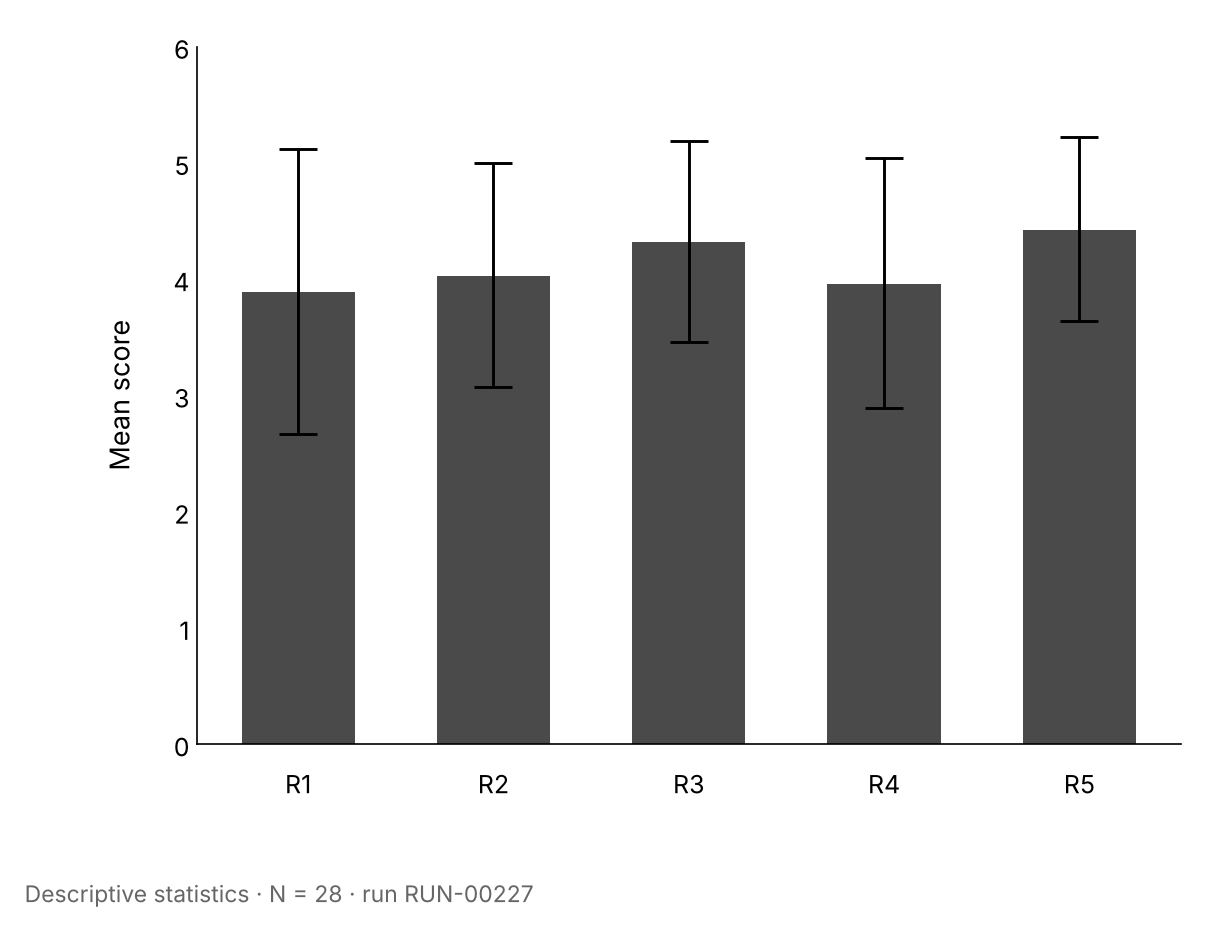
Figure 1. Mean scores per item with one-standard-deviation bars.
Note. N = 28. Scale from 1 to 5. Factoriza UAS run RUN-00227. Preliminary data cut: n = 28 of a target of 100, with the survey open.Internal structure
The overall sampling adequacy measure was .564, below the .60 reference usually cited as a guideline (Ferrando et al., 2022; Lorenzo-Seva and Ferrando, 2021), and Bartlett's test of sphericity rejected the hypothesis of an identity matrix, χ²(10) = 65.78, p < .001. Expected savings showed the lowest individual adequacy (R5: .385), below .50, while the remaining items ranged between .517 (R2) and .680 (R3). Parallel analysis suggested retaining two factors (Figure 2), which together explained 67.70 % of the variance, 41.39 % the first and 26.31 % the second (Table 4), with a correlation between factors of .329.
Factor | Sum of squared loadings | % of variance | Cumulative % |
|---|---|---|---|
1 | 2.07 | 41.39 | 41.39 |
2 | 1.32 | 26.31 | 67.70 |
Note. KMO = .564; Bartlett's test of sphericity: χ²(10) = 65.78, p < .001. Number of factors by parallel analysis: 2. Source: own elaboration with analisis_psicometrico.py 1.0 (Python 3.13.16), dataset DST-0039_FZ_EX_0003. Preliminary data cut: n = 28 of a target of 100, with the survey open.
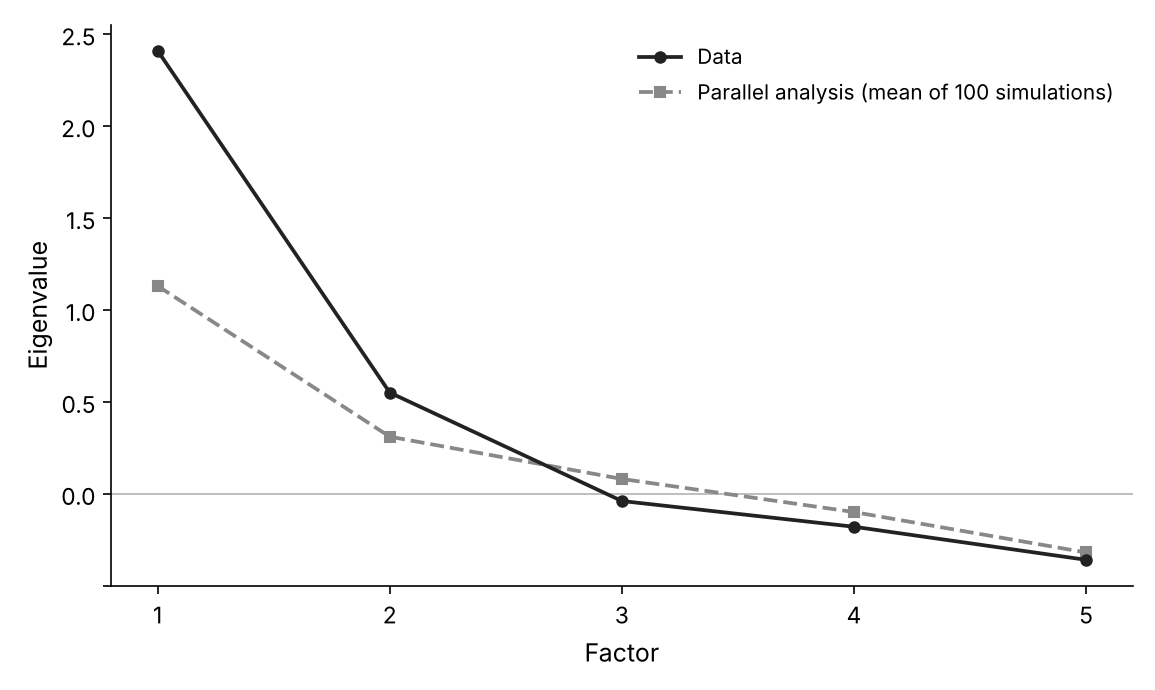
Figure 2. Scree plot with parallel analysis.
Note. Eigenvalues of the reduced data matrix versus the mean of 100 simulated matrices of the same size (seed 2026). Source: own elaboration with analisis_psicometrico.py 1.0 (Python 3.13.16), dataset DST-0039_FZ_EX_0003. Preliminary data cut: n = 28 of a target of 100, with the survey open.Factor | ||||
|---|---|---|---|---|
Item | 1 | 2 | h² | MSA |
R1 | .753 | -.045 | .547 | .555 |
R2 | 1.026 | -.019 | 1.041 | .517 |
R3 | .299 | .604 | .573 | .680 |
R4 | .509 | .459 | .623 | .668 |
R5 | -.151 | .812 | .601 | .385 |
Note. Pattern matrix. Extraction by minimum residual and oblimin rotation (γ = 0) on the Pearson correlation matrix; 28 complete cases. h² = communality; MSA = measure of sampling adequacy per item. All loadings are shown. Source: own elaboration with analisis_psicometrico.py 1.0 (Python 3.13.16), dataset DST-0039_FZ_EX_0003. The dimension column, which coincides with the item, and the observations column are omitted; the program flagged a Heywood case in R2 (communality greater than 1), a cross-loading in R4 and a low MSA in R5. Because of the Heywood case, the solution is not admissible and is presented only as documentation. Preliminary data cut: n = 28 of a target of 100, with the survey still open.
Discussion of results
The purpose of this study was to describe the responses to a brief instrument on habitability and acceptance of renewable energy in the dwelling in northwestern Mexico and to examine its preliminary performance. The results describe a favorable disposition toward renewable energy, centered on its economic benefits and conditioned on its cost, and a less favorable and more dispersed assessment of the dwelling itself. With 28 cases of a target of 100, these results are provisional.
The most salient feature of the cut is the primacy of economic aspects. Expected savings and cost-conditioned acceptance obtained the highest means, whereas expected comfort improvement obtained a lower mean. This pattern is consistent with the literature that places economic factors among the main factors associated with the adoption of photovoltaic systems in households (Shakeel et al., 2023), with the role of perceived financial risk in the value attributed to these systems (Ho et al., 2025) and with the importance of public financial incentives in the Mexican context (Andrade-Arias et al., 2025). The wording of the item on acceptance, which conditions it on an affordable total cost, captures precisely that condition; its high mean indicates disposition, but it does not inform about acceptance at the actual costs of the equipment. In a region with subsidized electricity tariffs (Galindo-Borbón et al., 2024), the perceived economic benefit of renewable energy could also depend on each household's tariff scheme, an aspect that the instrument does not record.
The lower assessment of one's own dwelling is relevant to the project's objective. Dwelling conditions for daily activities obtained the lowest mean and the greatest dispersion, which suggests that the people surveyed differ in the habitability of their dwellings more than in their disposition toward renewable energy. In the region, low-cost housing has been described as hot and without solar protection (Barraza-Bracamontes et al., 2022; Galindo-Borbón et al., 2024), and the thermal environment of the dwelling has been related to the well-being of its occupants in summer (Espinoza Gallego et al., 2014). A single item, however, is not enough to describe habitability, and the relationship between habitability and acceptance of renewable energy cannot be examined with the current instrument.
Declared knowledge of renewable options obtained a high mean and the highest correlation with the total of the items. The literature shows that knowledge of and familiarity with the technology are related to its adoption, and that they are strengthened through local interactions such as demonstrations and conversations with previous users (Chen et al., 2021; Ho et al., 2025). The item, however, measures declared and unverified knowledge, and declared acceptance may not translate into effective adoption, as shown by the persistence of structural barriers and adoption gaps in the Mexican case ( Hancevic and Sandoval, 2023).
The concentration of responses at high values also merits attention. The five means exceeded the midpoint of the scale and all items showed negative skewness, so that the cut describes a group of people with a favorable disposition toward renewable energy. That disposition may reflect the actual opinion of the respondents, but also the characteristics of those who completed the questionnaire, who in this cut were 28 of the 64 people who opened it. The Mexican literature shows that the disposition to support solar energy varies with age and schooling (Andrade-Arias et al., 2025), variables that the cut does not record, so it is not possible to know whether the surveyed group differs from the population of the region in them.
For public policy, the results suggest that the declared disposition of households is not the main obstacle, but rather the conditions under which that disposition would translate into adoption. The reviewed literature points to trust in public support, accessible information and financial incentives as relevant conditions (Andrade-Arias et al., 2025; Chen et al., 2021), and the regional literature indicates that improving the dwelling envelope reduces cooling demand at a moderate cost (Galindo-Borbón et al., 2024). A program combining both strategies would address both the habitability and the energy expenditure of households, but its design requires information that the present cut does not provide, such as the type of dwelling, electricity expenditure and tenure, on which the possibility of installing equipment depends.
Regarding the functioning of the instrument, the cut allows three observations. The first is that the structure of one item per dimension prevents estimating the internal consistency of each dimension, which requires several items (Cronbach, 1951; McDonald, 1999/2013), and leaves each construct at the mercy of the wording of a single statement. The second is that global sampling adequacy was below the reference guideline and that expected savings, with the lowest dispersion of the instrument, had low individual adequacy, which is consistent with the concentration of its responses at high values. The third is that the factor solution presented a Heywood case, so that the grouping of the items into two factors, one associated with knowledge and the dwelling and the other with economic benefits, can only be read as a hypothesis to be examined with an expanded instrument and a larger sample (Ferrando et al., 2022; Goretzko et al., 2021).
CONCLUSIONS
The study met its objective within the scope permitted by a preliminary data cut of 28 cases and a five-item instrument. The people surveyed showed a favorable disposition toward renewable energy in their dwelling, with the highest means in expected energy savings and in acceptance conditioned on an affordable cost, and a less favorable and more dispersed assessment of the conditions of their dwelling for daily activities. Sampling adequacy was .564 and the two-factor solution presented a Heywood case, so it provides no evidence on the structure of the instrument.
The limitations are substantial. The sample of 28 cases, against the target of 100 and with the survey still open, produces unstable estimates. The population was defined as the people living in a dwelling in northwestern Mexico, with no record of the place of application or the selection procedure, so the results do not generalize to the region. Each dimension consists of a single item, which prevents estimating its internal consistency and limits the content validity of each construct. The study did not measure the characteristics of the people surveyed or of their dwellings, nor their electricity tariff or current use of renewable energy. The items measure stated dispositions and expectations, not adoption behaviors. The cross-sectional design does not allow establishing the direction of the relationships. No confirmatory factor analysis was performed.
These results give rise to decisions for the authors. The first is to expand the instrument so that each dimension has several items, particularly housing habitability, which is currently measured with a single statement. The second is to incorporate items or questions that distinguish acceptance at real costs from acceptance conditioned on an affordable cost, and to record the electricity tariff, the availability of air conditioning and home ownership. The third is to document the place of application, the selection procedure and the origin of the items. None of these decisions was made in the present analysis, which retains the five items.
As future lines, it is proposed to complete the survey with the expanded instrument; to estimate the internal consistency of each dimension and repeat the exploratory factor analysis; to confirm the structure in an independent sample through confirmatory factor analysis, and, once the validity evidence has been established, to examine the relationship between housing habitability, energy expenditure and the acceptance of renewable energy in the cities of the northwest. That line would allow linking the study of habitability with the residential energy transition in a region where thermal comfort depends to a large extent on electricity consumption.
References
- 1 Andrade-Arias, A. S., Kabir, G., Mirmohammadsadeghi, M., Gunasekaran, A., y Elizondo-Noriega, A. (2025). Exploring public perspectives on solar energy adoption in Mexico. Renewable and Sustainable Energy Reviews, 212, Artículo 115410. https://doi.org/10.1016/j.rser.2025.115410
- 2 Barraza-Bracamontes, C., Íñiguez-Ayón, Y. P., Íñiguez-Sepúlveda, C. D., y Bojórquez-Morales, G. (2022). Habitabilidad de la vivienda social. Caso: Fraccionamiento Urbi Villa del Cedro, Culiacán, Sinaloa. Revista de Ciencias Tecnológicas, 5(4), 387–406. https://doi.org/10.37636/recit.v54387406
- 3 Chen, C.-f., Li, J., Shuai, J., Nelson, H., Walzem, A., y Cheng, J. (2021). Linking social-psychological factors with policy expectation: Using local voices to understand solar PV poverty alleviation in Wuhan, China. Energy Policy, 151, Artículo 112160. https://doi.org/10.1016/j.enpol.2021.112160
- 4 Cronbach, L. J. (1951). Coefficient alpha and the internal structure of tests. Psychometrika, 16(3), 297–334. https://doi.org/10.1007/BF02310555
- 5 Espinoza Gallego, N. B., González Lomelí, D., Ochoa de la Torre, J. M., y Corral Verdugo, V. (2014). Ambiente térmico y bienestar psicológico en viviendas de interés social en clima cálido seco. Psicumex, 4(2), 4–23. https://doi.org/10.36793/psicumex.v4i2.273
- 6 Ferrando, P. J., Lorenzo-Seva, U., Hernández-Dorado, A., y Muñiz, J. (2022). Decalogue for the factor analysis of test items. Psicothema, 34(1), 7–17. https://doi.org/10.7334/psicothema2021.456
- 7 Galindo-Borbón, C., Borbón-Almada, A., Ochoa-de-la-Torre, J. M., y Marincic-Lovriha, I. (2024). Análisis costo-beneficio de estrategias para eficiencia energética en vivienda, aplicando la normatividad vigente en el Noroeste de México. Revista Hábitat Sustentable, 14(2), 32–47. https://doi.org/10.22320/07190700.2024.14.02.03
- 8 Goretzko, D., Pham, T. T. H., y Bühner, M. (2021). Exploratory factor analysis: Current use, methodological developments and recommendations for good practice. Current Psychology, 40(7), 3510–3521. https://doi.org/10.1007/s12144-019-00300-2
- 9 Hancevic, P. I., y Sandoval, H. H. (2023). Solar panel adoption among Mexican small and medium-sized commercial and service businesses. Energy Economics, 126, Artículo 106979. https://doi.org/10.1016/j.eneco.2023.106979
- 10 Harris, C. R., Millman, K. J., van der Walt, S. J., Gommers, R., Virtanen, P., Cournapeau, D., Wieser, E., Taylor, J., Berg, S., Smith, N. J., Kern, R., Picus, M., Hoyer, S., van Kerkwijk, M. H., Brett, M., Haldane, A., Fernández del Río, J., Wiebe, M., Peterson, P., . . . Oliphant, T. E. (2020). Array programming with NumPy. Nature, 585(7825), 357–362. https://doi.org/10.1038/s41586-020-2649-2
- 11 Hernández Ilizaliturri, A. A., Graciano Casas, L., y Haces Atondo, G. (2025). La efectividad de la política de vivienda social en México. Ciencias Administrativas Teoría y Praxis, 21(1), 62–82. https://doi.org/10.46443/catyp.v21i1.467
- 12 Ho, C.-W., Kuo, C.-C., y Chang, H.-C. (2025). A deep dive into the factors affecting household solar photovoltaic adoption: An extended perspective of the value-based adoption model. Evaluation and Program Planning, 108, Artículo 102514. https://doi.org/10.1016/j.evalprogplan.2024.102514
- 13 Lorenzo-Seva, U., y Ferrando, P. J. (2021). MSA: The forgotten index for identifying inappropriate items before computing exploratory item factor analysis. Methodology, 17(4), 296–306. https://doi.org/10.5964/meth.7185
- 14 McDonald, R. P. (2013). Test theory: A unified treatment. Psychology Press. https://doi.org/10.4324/9781410601087 (Obra original publicada en 1999)
- 15 Python Software Foundation. (2026). Python (Versión 3.13.16) [Software]. https://www.python.org/
- 16 Saleem, S., y Alchalabi, O. (2025). An in-depth analysis of factors impacting housing satisfaction: A systematic review and post-occupancy evaluation. International Journal of Sustainable Development and Planning, 20(1), 119–131. https://doi.org/10.18280/ijsdp.200113
- 17 Shakeel, S. R., Yousaf, H., Irfan, M., y Rajala, A. (2023). Solar PV adoption at household level: Insights based on a systematic literature review. Energy Strategy Reviews, 50, Artículo 101178. https://doi.org/10.1016/j.esr.2023.101178
- 18 Treviño Hernández, R., y Hernández Rejón, E. M. (2026). Análisis documental de la temperatura en las viviendas en México: Implicaciones sociales, energéticas y de salud. Vivienda y Comunidades Sustentables, 10(20), 33–42. https://doi.org/10.32870/rvcs.v0i20.338
- 19 van de Kamp, E., Schneider, F., Daanen, H., y Huynen, M. (2026). Comparing heatwave experiences, behaviors, and risk perceptions across high-risk populations in the Netherlands: A cross-sectional survey study. The Journal of Climate Change and Health, 29, Artículo 100689. https://doi.org/10.1016/j.joclim.2026.100689
- 20 Virtanen, P., Gommers, R., Oliphant, T. E., Haberland, M., Reddy, T., Cournapeau, D., Burovski, E., Peterson, P., Weckesser, W., Bright, J., van der Walt, S. J., Brett, M., Wilson, J., Millman, K. J., Mayorov, N., Nelson, A. R. J., Jones, E., Kern, R., Larson, E., . . . Vázquez-Baeza, Y. (2020). SciPy 1.0: Fundamental algorithms for scientific computing in Python. Nature Methods, 17(3), 261–272. https://doi.org/10.1038/s41592-019-0686-2
Declarations
Funding
The authors received no funding for the development of this research.
Conflict of interest
The authors declare that there is no conflict of interest.
Authorship contributions
Conceptualization: Daniela Sinaloa Arellano Martínez
Data curation: Pedro Antonio Valdez Lizárraga
Formal analysis: Víctor Manuel Martínez García
Investigation: Daniela Sinaloa Arellano Martínez
Methodology: Yennifer Díaz Romero
Project administration: Pedro Antonio Valdez Lizárraga
Software: Pedro Antonio Valdez Lizárraga
Supervision: Víctor Manuel Martínez García
Validation: Víctor Manuel Martínez García
Visualization: Yennifer Díaz Romero
Writing – original draft: Daniela Sinaloa Arellano Martínez
Writing – review and editing: Yennifer Díaz Romero