

Abstract
Hurricanes test the habitability of dwellings in coastal cities of the Mexican Pacific. Using the preliminary data cut from the survey of project FZ-EX-0001 on the Factoriza UAS platform, this study described the initial behaviour of a five-item instrument with two dimensions, Perceived habitability and protection and Willingness to modify the dwelling, among residents of Mazatlán. With a cross-sectional design, 8 cases out of a target of 100 were analysed while data collection remained open. Descriptive statistics, Cronbach’s alpha, McDonald’s omega total and an exploratory factor analysis were estimated. The habitability and protection dimension showed high internal consistency (α = .909; ω = .930), and the factor analysis, with KMO = .832, suggested one factor explaining 74.09% of the variance, with a negative loading of the willingness-to-modify item. Respondents considered that their dwelling remained habitable after recent hurricanes but were more reserved about its preparedness for future events, and those who perceived it as less protective were more willing to modify it. With 1.6 cases per item, the results are promising but do not yet constitute conclusive validity evidence.
Keywords
hurricanes, perceived habitability, housing, disaster resilience
INTRODUCTION
Tropical cyclones are part of the housing experience of coastal cities on the Mexican Pacific. Their passage tests the structure of dwellings, urban services and the capacity of households to recover, and leaves in their inhabitants an assessment of how protected they felt and how prepared they perceive themselves to be for the next event. In Sinaloa, tropical depression 19-E of September 2018 showed that a low-intensity cyclone can produce a disaster: in Culiacán, around 168 mm of rain in some three hours flooded 120 colonias, and recovery was uneven between households with insurance or resources and those with fragile construction and low incomes (Mancera González, 2021).
Recent Mexican evidence confirms that hurricane risk does not depend on the hazard alone. In the Yucatán Peninsula, an assessment of hurricane wind risk between 1950 and 2020 found that the rise in cyclone frequency, combined with dense populations, increased risk in recent years, and that the highest vulnerability was associated with marginalization (Romero and León-Cruz, 2024). On the Guerrero coast, after hurricane Otis, the municipalities with the greatest socioeconomic vulnerability showed a more limited response capacity (Salgado Hernández, 2026). In both cases, housing appears as a decisive mediation between the hazard and its consequences.
Research on residents' perception of their own housing in the face of hurricanes is, by contrast, scarce in northwestern Mexico. This perception matters for two reasons. The first is that it forms part of habitability: a dwelling that its occupants consider adequate and safe after an extreme event fulfills a protective function that goes beyond its physical resistance. The second is that it is related to households' preparation and adaptation decisions, such as modifying the dwelling to face future events (Zou et al., 2020; Abukhalaf , 2025).
The FZ-EX-0001 project of the Factoriza UAS platform set out to study housing after hurricanes and environmental resilience in Mazatlán, based on the perceived habitability of its inhabitants after extreme weather events. This article reports the results of the first survey with a brief five-item instrument, organized into two dimensions, in a preliminary data cut of very small size. Its scope is therefore the initial review of the instrument, not the estimation of population parameters or the physical assessment of dwellings.
The general objective was to describe the initial behavior of an instrument of perceived habitability and protection of housing against hurricanes in the preliminary data cut of its survey with inhabitants of Mazatlán. The specific objectives were, first, to describe the distribution of responses to each item; second, to estimate the internal consistency of the perceived habitability and protection dimension using the alpha and omega coefficients; third, to explore the internal structure of the five items with an exploratory factor analysis, insofar as the sample size allows; and fourth, to describe the relationship between perceived protection and willingness to modify the dwelling. The project package does not record hypotheses, so the study has a descriptive and exploratory scope.
DEVELOPMENT
Housing in the face of extreme weather events
Housing is the first line of protection for households facing a hurricane. Its performance depends on materials, construction quality, location and maintenance, and its failures have consequences that persist long after the event. In Puerto Rico, two years after Hurricane Maria, two thirds of the older adults interviewed had suffered damage to their housing, and loss configurations combining damage, displacement and other deprivations were associated with worse mental health than housing damage alone (Kim et al., 2026). In San Juan households affected by the same hurricane, indoor environment risks persisted after apparent structural recovery and over time came to depend more on psychological and respiratory distress than on structural damage (Rivera-Mariani et al., 2025).
These findings suggest that habitability after a hurricane is not limited to the physical integrity of the housing. It includes the possibility of continuing to inhabit it, the sense of safety it provides and the confidence that it will withstand future events. The perceived habitability and protection dimension of the instrument captures these aspects through four items: that the housing remained adequate for habitation after recent hurricanes (R1), that its physical structure made the resident feel safe (R2), that it is prepared to withstand future hurricanes (R3) and that its materials are adequate to face them (R4).
Risk perception and hurricane experience
Risk perception of hurricanes is shaped by direct experience and by indirect sources. In Texas, recent flood experience raised storm risk perception and was related to all forms of indirect experience, while expert and social media influences were positively associated with that perception and political influence negatively (Grover et al., 2025). In New Jersey families affected by Hurricane Sandy, local ecological knowledge and place-linked intergenerational memory shaped pre-event risk perception, and inaccurate perceptions were accompanied by traumatic memories and lower self-efficacy during recovery (Lynch et al., 2023).
The relationship between housing conditions and risk perception has received less attention. In a survey of 816 residents of five Florida cities, Abukhalaf (2025) found that, of the physical characteristics examined, only the need for repairs and the location of the housing on the ground floor were associated with differences in hurricane risk perception, and that this perception had a weak relationship with preparedness intentions. The author concluded that identifying the housing conditions linked to risk perception can guide preparedness campaigns and building regulations.
Willingness to modify the dwelling
Modifying the housing to better withstand hurricanes is one of the forms of household adaptation. In a survey of homeowners in North Carolina, the probability of having reinforced or of planning to reinforce the housing against wind and flooding was higher when they considered that the cost and effort were not excessive, that they understood how the measure worked, that it would add value to the housing and that it would protect lives and property (Zou et al., 2020). The authors warned that the results for one protective action, such as preparing an emergency kit, do not necessarily generalize to others, such as installing structural protections.
The willingness to modify the dwelling dimension of the instrument consists of a single item (R5): the desire to make modifications to the dwelling in order to feel safer in the face of future hurricanes. From the perspective of habitability, this willingness can be expected to be inversely related to perceived protection: those who consider their dwelling to be safe would have fewer reasons to modify it. That relationship, however, is not equivalent to adaptive capacity, because the intention to modify also depends on household resources and on housing tenure. Under a cross-sectional design, any relationship between the two dimensions must be understood as an association.
Perceived habitability and resilience
The project title refers to environmental resilience, a concept that in the disaster literature encompasses the capacity of households and communities to withstand an event, recover and adapt. The instrument applied does not measure resilience in that broad sense, but rather two of its components from the resident's perspective: the protection that their housing offered and would offer them, and their willingness to adapt it. The evidence from Guerrero on the relationship between socioeconomic vulnerability and response capacity (Salgado Hernández, 2026) and that from Culiacán on unequal recovery among households (Mancera González, 2021) indicate that these components must be interpreted together with the socioeconomic conditions of households, which the present survey did not record.
METHODOLOGY
Design
A quantitative, non-experimental, cross-sectional study with a descriptive and exploratory scope was conducted. The data correspond to survey LEV-0047, “Mazatlán · Post-hurricane housing and environmental resilience”, from project FZ-EX-0001 of the Factoriza UAS platform, and to the frozen dataset DST-0038, with a cutoff date of 9 October 2026. The survey constitutes an independent sample and is the only one in the project.
Population, sample and data cut
The population of the survey was defined as any inhabitant of Mazatlán. The selection was not probabilistic. According to the Factoriza record, 19 people opened the questionnaire and 8 completed it; no cases were excluded for quality control, so 8 cases were analyzed (Table 2).
The data cut analyzed is preliminary: it brings together 8 cases out of a target of 100, and the survey remained open, in field status, as of the cutoff date. With 8 cases for 5 items, the ratio is 1.6 cases per item, far from what the methodological literature considers adequate for item factor analysis, whose first condition is to verify the adequacy of the data and of the sample (Ferrando et al., 2022; Goretzko et al., 2021).
Instrument
We administered the instrument "Perceptions about housing and hurricanes in Mazatlán", consisting of five items with a five-point response format, from Strongly disagree (1) to Strongly agree (5), organized into two dimensions: Perceived habitability and protection (R1 to R4) and Willingness to modify the dwelling (R5). No item is worded in the reverse direction. A higher score indicates greater perceived habitability and protection and greater willingness to modify the dwelling. Table 1 presents the code, the dimension, the text, and the direction of each item.
Code | Dimension | Item | Reverse |
|---|---|---|---|
R1 | Perceived habitability and protection | After the recent hurricanes in Mazatlán, my housing remained suitable for habitation. | No |
R2 | Perceived habitability and protection | The physical structure of my housing made me feel safe after the recent hurricanes. | No |
R3 | Perceived habitability and protection | I consider my housing to be prepared to withstand future hurricanes. | No |
R4 | Perceived habitability and protection | I consider the materials used in my housing to be adequate for facing hurricanes in Mazatlán. | No |
R5 | Willingness to modify the dwelling | I would like to make modifications to my housing to feel safer in the face of future hurricanes. | No |
Note. Instrument “Perceptions about housing and hurricanes in Mazatlán.” 5-point response scale (Strongly disagree, Disagree, Neither agree nor disagree, Agree, Strongly agree). The instrument does not include reverse items. Source: Factoriza UAS, project FZ-EX-0001, survey LEV-0047, dataset DST-0038.
Procedure
Responses were collected through the survey questionnaire managed in Factoriza UAS, which records express online informed consent before the first item and does not collect identifying data. Factoriza froze the DST-0038 dataset with a cryptographic fingerprint and produced the descriptive statistics, internal consistency, and correlations among the items of the perceived habitability and protection dimension (runs RUN-00224 to RUN-00226). The complementary analyses were run with the data file and the item dictionary exported by the platform.
Data analysis
In a first stage, Factoriza UAS calculated the mean, standard deviation, skewness, kurtosis, percentages of responses at extreme values, and the corrected item-total correlation of each item; the internal consistency of the perceived habitability and protection dimension using Cronbach's alpha (Cronbach, 1951), with the corrected item-total correlation and alpha if the item is deleted, and the correlations among its items, which the package documentation identifies as Spearman correlations, with 95% confidence intervals via Fisher's transformation. In a second stage, the program analisis_psicometrico.py, version 1.0, was run in Python 3.13.16 (Python Software Foundation, 2026), with NumPy 2.5.3 (Harris et al., 2020), SciPy 1.18.1 (Virtanen et al., 2020), and pandas 3.0.5. The program applies fixed, declared procedures, with no manual intervention in the calculations.
The program estimated McDonald's omega total (McDonald, 1999/2013) for the habitability and protection dimension from a one-factor model; the single-item dimension does not allow the calculation of internal consistency coefficients. It also performed an exploratory factor analysis of the five items on the Pearson correlation matrix, preceded by the global Kaiser-Meyer-Olkin measure of sampling adequacy (Kaiser, 1974) and by item (Lorenzo-Seva and Ferrando, 2021) and by Bartlett's (1950) test of sphericity. The number of factors was determined by parallel analysis (Horn, 1965) with 100 simulations and seed 2026, and extraction was by minimum residual. The program does not calculate the correlation between dimensions when one of them has a single item, so the relationship between perceived protection and willingness to modify the dwelling is described with the corrected item-total correlation of R5 reported by Factoriza.
The reference values for interpreting the psychometric indices are treated as guidelines and not as decision rules (Ferrando et al., 2022). No item was eliminated; the program flags problematic items and leaves the decision to the authors. No confirmatory factor analysis was run, which is proposed as future work.
Ethical considerations
Participation was voluntary and anonymous. Factoriza UAS records express online informed consent and does not collect names, emails, or other identifying data.
Declaration on the use of artificial intelligence
During the preparation of this manuscript, the Factoriza UAS platform was used for data management and for descriptive statistics, internal consistency and inter-item correlations; a Python analysis program with fixed and validated procedures, for omega and exploratory factor analysis; and the Claude Opus language model (Anthropic), to run that program, assist in the literature search, draft the manuscript and assemble the document from the results. The authors reviewed, corrected and approved the entire text, verified every reference and assume full responsibility for the content of the article.
RESULTS
Sample composition
Indicator | Value |
|---|---|
People who opened the questionnaire | 19 |
Completed questionnaires | 8 |
Cases excluded for quality control | 0 |
Cases analyzed | 8 |
Items | 5 |
Note. Survey “Mazatlán · Post-hurricane housing and environmental resilience” (LEV-0047); population: any inhabitant of Mazatlán; territory: Mazatlán, Sinaloa. Dataset DST-0038, fingerprint 582d2d6cce15d63f. Source: Factoriza UAS. Preliminary data cut: n = 8 of a target of 100, with the survey open.
Descriptive statistics
Table 3 and Figure 1 present the descriptive statistics. The highest mean corresponded to the dwelling remaining suitable for habitation after recent hurricanes (R1: M = 4.50, SD = 0.53); all responses to this item fell at values 4 and 5, with 50 % at each. The other three habitability and protection items had the same mean and a wider spread: the safety offered by the physical structure of the dwelling (R2: M = 3.63, SD = 0.92), the preparation of the dwelling to withstand future hurricanes (R3: M = 3.63, SD = 1.06) and the suitability of its materials to face them (R4: M = 3.63, SD = 0.92). The willingness to modify the dwelling to feel safer in the face of future hurricanes obtained an agreement mean (R5: M = 3.88, SD = 0.99), with 25 % of responses at the maximum value.
The profile suggests a distinction between past experience and future expectation. Respondents agreed that their housing remained habitable after recent hurricanes, but showed more reservations when assessing its structural safety, its preparation for future events and the suitability of its materials, and expressed, on average, willingness to modify the dwelling.
Item | M | SD | Skewness | Kurtosis | Floor | Ceiling |
|---|---|---|---|---|---|---|
R1 | 4.50 | 0.53 | 0.00 | -2.80 | 50% | 50% |
R2 | 3.63 | 0.92 | -0.49 | 0.42 | 13% | 13% |
R3 | 3.63 | 1.06 | 0.04 | -0.94 | 13% | 25% |
R4 | 3.63 | 0.92 | -0.49 | 0.42 | 13% | 13% |
R5 | 3.88 | 0.99 | -0.86 | 0.84 | 13% | 25% |
Note. N = 8. Floor and ceiling indicate the percentage of responses at the minimum and maximum values. For readability, the corrected item-total correlation column calculated over the five items is omitted; its values are R1 = .809, R2 = .606, R3 = .794, R4 = .729, and R5 = -.770. For R5, that value is equivalent to its correlation with the sum of the four items of perceived habitability and protection. Factoriza UAS run RUN-00224. Preliminary data cut: n = 8 out of a target of 100, with the survey open.

Figure 1. Mean scores per item with one-standard-deviation error bars.
Note. N = 8. Scale from 1 to 5. Factoriza UAS run RUN-00224. Preliminary data cut: n = 8 out of a target of 100, with the survey open.Internal consistency
Table 4 presents the item analysis for the perceived habitability and protection dimension, calculated by Factoriza, and Table 5 presents the coefficients from the complementary program. The dimension obtained α = .909 in both calculations and ω = .930. All items had high corrected item-total correlations: R3, preparedness for future hurricanes, was the most consistent with the rest (.905), followed by R1 (.860), R4 (.825), and R2 (.738). Eliminating any of them would not raise alpha above the value for the complete dimension.
The correlations between the items of the dimension were positive and high. The highest was that of R1 with R3 (.906, 95% CI [.556, .983], p = .002), followed by that of R3 with R4 (.855, 95% CI [.377, .973], p = .007). Five of the six correlations had confidence intervals that excluded zero; the exception was that of R2 with R4 (.692, 95% CI [-.025, .939], p = .057). The width of all the intervals reflects the small sample size.
Item | Corrected item-total r | α if item deleted |
|---|---|---|
R1 | .860 | .898 |
R2 | .738 | .902 |
R3 | .905 | .845 |
R4 | .825 | .870 |
Note. N = 8. The corrected item-total correlation excludes the item itself from the dimension total. Cronbach's α for the full dimension = .909 with 4 items (RUN-00225 execution). The willingness to modify the dwelling dimension consists of a single item (R5), so it does not support this analysis. Source: Factoriza UAS. Preliminary data cut: n = 8 out of a target of 100, with the survey open.
Dimension | Items | n | α | ω | Observation |
|---|---|---|---|---|---|
Perceived habitability and protection | 4 | 8 | .909 | .930 | |
Willingness to modify the dwelling | 1 | n/a | n/a | n/a | Fewer than three items |
Note. α = Cronbach's alpha; ω = McDonald's omega total from a one-factor model using minimum residual, without reverse-scoring items. Complete cases per dimension. Source: own elaboration with analisis_psicometrico.py 1.0 (Python 3.13.16), dataset DST-0038_FZ_EX_0001. Preliminary data cut: n = 8 out of a target of 100, with the survey still open.
Internal structure
The data were adequate for factor analysis according to the reference guidelines: the overall Kaiser-Meyer-Olkin measure was .832 (Kaiser, 1974), item-level adequacy ranged from .750 to .929, and Bartlett's test of sphericity was significant, χ²(10) = 20.89, p = .022. Parallel analysis suggested one factor (Figure 2), which explained 74.09 % of the variance (Table 6). With 1.6 cases per item, however, these indices are highly unstable, and the solution is presented to document the behavior of the items.
The four habitability and protection items loaded highly and positively on the factor (Table 7): R3 = .960, R1 = .886, R4 = .858 and R2 = .797. R5, willingness to modify the dwelling, loaded on the same factor with the opposite sign (-.792), so the program flagged it for review by the authors. This sign is consistent with the content of the item: the factor represents perceived protection, and willingness to modify the dwelling lies at its opposite pole.
Factor | Sum of squared loadings | % of variance | Cumulative % |
|---|---|---|---|
1 | 3.70 | 74.09 | 74.09 |
Note. KMO = .832; Bartlett's test of sphericity: χ²(10) = 20.89, p = .022. Number of factors by parallel analysis: 1. Source: own elaboration with analisis_psicometrico.py 1.0 (Python 3.13.16), dataset DST-0038_FZ_EX_0001. With 1.6 cases per item, the solution is presented to document the behavior of the items and does not constitute conclusive evidence on the dimensionality of the instrument. Preliminary data cut: n = 8 out of a target of 100, with the survey open.
Factor | ||||
|---|---|---|---|---|
Item | 1 | h² | MSA | Observation |
R1 | .886 | .785 | .805 | |
R2 | .797 | .634 | .908 | |
R3 | .960 | .922 | .750 | |
R4 | .858 | .735 | .829 | |
R5 | -.792 | .627 | .929 | opposite sign |
Note. Pattern matrix. Extraction by minimum residual and oblimin rotation (γ = 0) on the Pearson correlation matrix; 8 complete cases. h² = communality; MSA = measure of sampling adequacy per item. All loadings are shown. Source: own elaboration with analisis_psicometrico.py 1.0 (Python 3.13.16), dataset DST-0038_FZ_EX_0001. With a single factor, no rotation is applied. For legibility, the dimension column is omitted: R1 to R4 belong to Perceived habitability and protection and R5 to Willingness to modify the dwelling. Preliminary data cut: n = 8 of a target of 100, with the survey open.
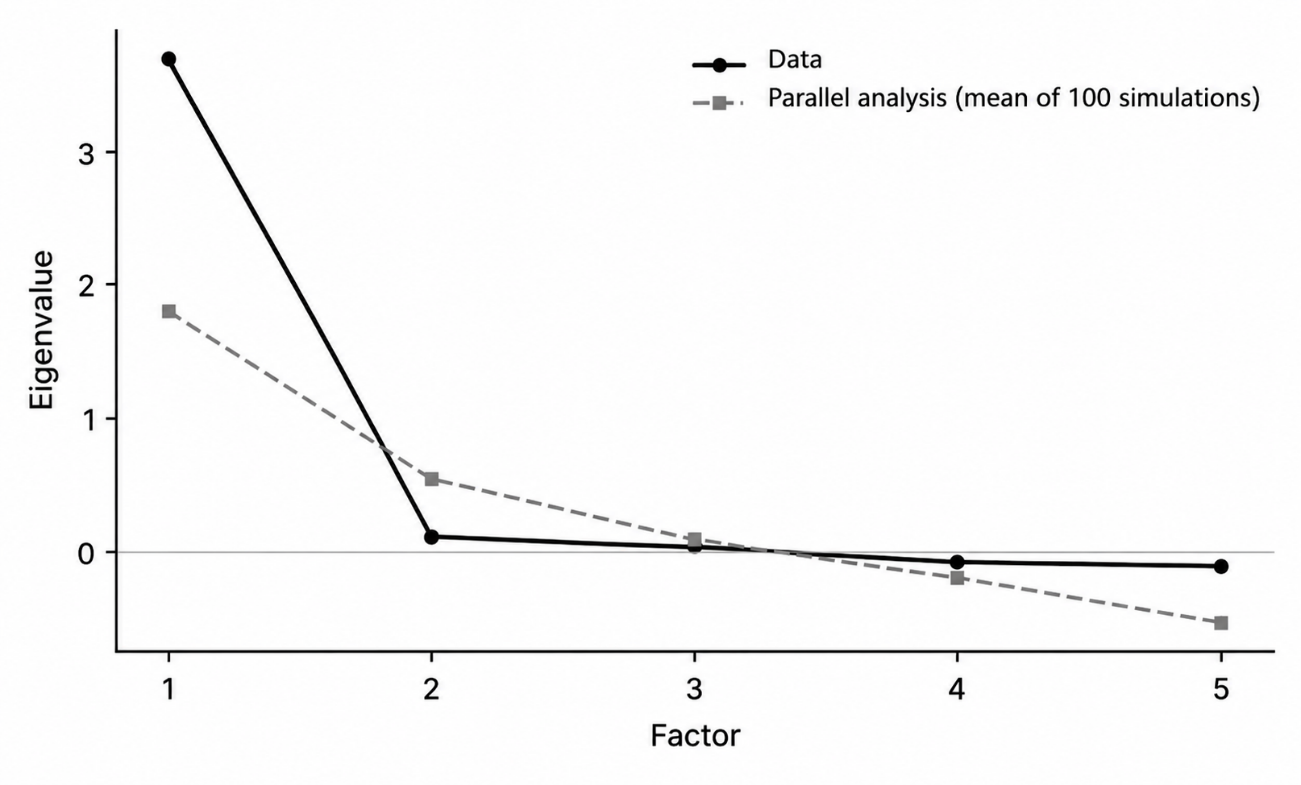
Figure 2. Scree plot with parallel analysis.
Note. Eigenvalues of the reduced data matrix versus the mean of 100 simulated matrices of the same size (seed 2026). Source: own elaboration with analisis_psicometrico.py 1.0 (Python 3.13.16), dataset DST-0038_FZ_EX_0001. Preliminary data cut: n = 8 of a target of 100, with the survey open.Relationship between perceived protection and willingness to modify the dwelling
The corrected item-total correlation of R5, which in this instrument is equivalent to its correlation with the sum of the four items of habitability and protection, was -.770 (note to Table 3). That is, in this data cut, people who perceived their housing as more habitable and protective expressed less willingness to modify it, and those who perceived it as less prepared expressed more. Factoriza does not report the confidence interval of this correlation, and with 8 cases the estimate is very imprecise.
Discussion of results
The purpose of this study was to describe the initial behavior of an instrument of perceived habitability and protection of housing against hurricanes with inhabitants of Mazatlán. Unlike what usually occurs in such small data cuts, the habitability and protection dimension showed high internal consistency (α = .909; ω = .930), high correlations among its items and a one-factor solution with high loadings. These results are encouraging, but should be read with caution: with 8 cases, the consistency coefficients and loadings are very unstable, and the simulation literature on alpha and omega coefficients has been developed with much larger samples ( Malkewitz et al., 2023).
The high consistency of the dimension can be read in two ways. On the one hand, the four items share an evident content, the protection that the housing offers against hurricanes, and it is to be expected that they be closely related. On the other hand, the wording of the items is very similar, and in small samples similarities in wording can inflate the correlations. In the data cut matrix, case 4 answered the maximum value on the four protection items and case 8 low values on R3 and R4, so a few cases with extreme profiles may sustain a good part of the covariation. The quality of the responses must be reviewed before the final analysis (Ward and Meade, 2023).
The difference between the mean of R1 and that of the other three protection items suggests that people distinguish between the habitability that their housing retained after recent events and the protection they expect from it against future events. This distinction is consistent with the literature that associates risk perception with direct and indirect experience of events (Grover et al., 2025) and with the observation that the memory of previous events shapes risk perception of the next one (Lynch et al., 2023). It also indicates that R1, with very reduced variation, provides little discrimination capacity in this data cut.
The negative relationship between perceived protection and willingness to modify the dwelling is the result of greatest substantive interest. It is consistent with the idea that the intention to reinforce the housing depends on the perception of its vulnerability, and with the evidence that the adoption of structural measures depends on how owners value their cost, effort and efficacy (Zou et al., 2020). Nevertheless, willingness to modify the dwelling is not equivalent to the capacity to do so: Mexican evidence shows that socioeconomic vulnerability limits the response capacity of households (Salgado Hernández, 2026), and evidence from Florida shows that risk perception has a weak relationship with preparedness intentions ( Abukhalaf , 2025). The instrument does not record home ownership or household resources, so it does not allow distinguishing between the intention and the possibility of adapting the housing.
Finally, the instrument measures perceived habitability and not the physical performance of the dwellings. Perceived safety and effective safety may differ, as suggested by the indoor environment risks that persisted after the apparent structural recovery of households in Puerto Rico (Rivera-Mariani et al., 2025). Therefore, the results of this instrument must be complemented with technical assessments of the dwellings.
CONCLUSIONS
The study met its objective within the scope allowed by a preliminary data cut of 8 cases. In its survey, the perceived habitability and protection dimension of the instrument of project FZ-EX-0001 showed high internal consistency (α = .909; ω = .930) and, in the exploratory factor analysis, a one-factor solution with high loadings of its four items and a negative loading of the willingness to modify the dwelling. Respondents considered that their housing remained habitable after the recent hurricanes, but showed more reservations about its preparedness for future events, and the willingness to modify it was higher among those who perceived it as less protective. The results are promising, but with 8 cases they do not yet provide conclusive validity evidence.
The limitations are substantial. The sample of 8 cases, against a target of 100, with 1.6 cases per item, makes all statistics very unstable; the survey was still open and not everyone who opened the questionnaire completed it. The population was defined without an age criterion, the selection was not probabilistic, and no information is available on the respondents, their housing or the damage suffered. The willingness to modify the dwelling dimension has only one item, which prevents estimating its consistency. The instrument does not measure resilience in the broad sense referred to in the project title, nor the physical performance of the dwellings. The cross-sectional design prevents establishing dependency relationships, and no confirmatory factor analysis was performed.
These results give rise to decisions for the authors. The first is to expand the willingness to modify the dwelling dimension with at least two more items, so as to estimate its consistency and its relationship with perceived protection. The second is to assess whether R1 retains discriminatory capacity or whether it should be reformulated. The third is to set an age criterion for the population and to record tenure and type of housing, materials, damage suffered and household resources. The fourth is to identify the hurricanes to which the items refer. The fifth is to confirm the correlation coefficient that Factoriza applied between items. None of these decisions was made in the present analysis, which retains the five original items.
As future lines, it is proposed to complete the survey up to the planned target, to repeat the exploratory factor analysis with a sufficient number of cases and then to evaluate the resulting structure by means of confirmatory factor analysis in an independent sample. Combining this instrument with technical assessments of the dwellings and with socioeconomic indicators would make it possible to contrast perceived protection with physical and social vulnerability, and to direct housing reinforcement programs in Mazatlán toward households that, perceiving themselves as unprotected, lack the resources to adapt.
References
- 1 Abukhalaf, A. H. I. (2025). Exploring the relationship between housing conditions and risk perception in a disaster context. PLOS ONE, 20(10), Artículo e0310665. https://doi.org/10.1371/journal.pone.0310665
- 2 Bartlett, M. S. (1950). Tests of significance in factor analysis. British Journal of Statistical Psychology, 3(2), 77–85. https://doi.org/10.1111/j.2044-8317.1950.tb00285.x
- 3 Cronbach, L. J. (1951). Coefficient alpha and the internal structure of tests. Psychometrika, 16(3), 297–334. https://doi.org/10.1007/BF02310555
- 4 Ferrando, P. J., Lorenzo-Seva, U., Hernández-Dorado, A., y Muñiz, J. (2022). Decalogue for the factor analysis of test items. Psicothema, 34(1), 7–17. https://doi.org/10.7334/psicothema2021.456
- 5 Goretzko, D., Pham, T. T. H., y Bühner, M. (2021). Exploratory factor analysis: Current use, methodological developments and recommendations for good practice. Current Psychology, 40(7), 3510–3521. https://doi.org/10.1007/s12144-019-00300-2
- 6 Grover, H., Vedlitz, A., Brody, S., Atoba, K. O., Goldsmith, C., y Dvir, R. (2025). Indirect experiences and storm risk perceptions: Case study - Texas, United States. Science of the Total Environment, 1001, Artículo 180491. https://doi.org/10.1016/j.scitotenv.2025.180491
- 7 Harris, C. R., Millman, K. J., van der Walt, S. J., Gommers, R., Virtanen, P., Cournapeau, D., Wieser, E., Taylor, J., Berg, S., Smith, N. J., Kern, R., Picus, M., Hoyer, S., van Kerkwijk, M. H., Brett, M., Haldane, A., Fernández del Río, J., Wiebe, M., Peterson, P., . . . Oliphant, T. E. (2020). Array programming with NumPy. Nature, 585(7825), 357–362. https://doi.org/10.1038/s41586-020-2649-2
- 8 Horn, J. L. (1965). A rationale and test for the number of factors in factor analysis. Psychometrika, 30(2), 179–185. https://doi.org/10.1007/BF02289447
- 9 Kaiser, H. F. (1974). An index of factorial simplicity. Psychometrika, 39(1), 31–36. https://doi.org/10.1007/BF02291575
- 10 Kim, K., Burnette, D., y Kim, S. (2026). Multidimensional losses and mental health of older adults in Puerto Rico in the aftermath of Hurricane María. Journal of Applied Gerontology, 45(10), 1885–1893. https://doi.org/10.1177/07334648261426731
- 11 Lorenzo-Seva, U., y Ferrando, P. J. (2021). MSA: The forgotten index for identifying inappropriate items before computing exploratory item factor analysis. Methodology, 17(4), 296–306. https://doi.org/10.5964/meth.7185
- 12 Lynch, K. A., Abramson, D. M., y Merdjanoff, A. A. (2023). The influence of risk perception on disaster recovery: A case study of New Jersey families impacted by Hurricane Sandy. International Journal of Disaster Risk Reduction, 100, Artículo 104220. https://doi.org/10.1016/j.ijdrr.2023.104220
- 13 Malkewitz, C. P., Schwall, P., Meesters, C., y Hardt, J. (2023). Estimating reliability: A comparison of Cronbach’s α, McDonald’s ωt and the greatest lower bound. Social Sciences & Humanities Open, 7(1), Artículo 100368. https://doi.org/10.1016/j.ssaho.2022.100368
- 14 Mancera González, O. (2021). El ciclón que nadie vio: Riesgos que potenciaron un desastre en el noroeste de México. Revista de Estudios Latinoamericanos sobre Reducción del Riesgo de Desastres, 5(1), 110–125. https://www.revistareder.com/ojs/index.php/reder/article/view/66
- 15 McDonald, R. P. (2013). Test theory: A unified treatment. Psychology Press. https://doi.org/10.4324/9781410601087 (Obra original publicada en 1999)
- 16 Python Software Foundation. (2026). Python (Versión 3.13.16) [Software]. https://www.python.org/
- 17 Rivera-Mariani, F. E., Srour, H., Godoy-Vitorino, F., Bolaños-Rosero, B., Vélez-Torres, L. N., Maestre, J. P., Kinney, K., y Cavallin, H. (2025). Indoor dust, immune activation, and household exposure risk after Hurricane Maria: A two-year pilot prospective cohort study in Puerto Rico. Journal of Exposure Science & Environmental Epidemiology, 36(3), 521–530. https://doi.org/10.1038/s41370-025-00835-6
- 18 Romero, D., y León-Cruz, J. F. (2024). Spatiotemporal changes in hurricane-force wind risk assessment in the Yucatan Peninsula, Mexico. Natural Hazards, 120(5), 4675–4698. https://doi.org/10.1007/s11069-023-06397-w
- 19 Salgado Hernández, M. del C. (2026). Vulnerabilidad socioeconómica y capacidad de respuesta ante el huracán Otis en la costa de Guerrero, México. Revista de Estudios Latinoamericanos sobre Reducción del Riesgo de Desastres, 10(2), 165–181. https://doi.org/10.55467/reder.v10i2.239
- 20 Virtanen, P., Gommers, R., Oliphant, T. E., Haberland, M., Reddy, T., Cournapeau, D., Burovski, E., Peterson, P., Weckesser, W., Bright, J., van der Walt, S. J., Brett, M., Wilson, J., Millman, K. J., Mayorov, N., Nelson, A. R. J., Jones, E., Kern, R., Larson, E., . . . Vázquez-Baeza, Y. (2020). SciPy 1.0: Fundamental algorithms for scientific computing in Python. Nature Methods, 17(3), 261–272. https://doi.org/10.1038/s41592-019-0686-2
- 21 Ward, M. K., y Meade, A. W. (2023). Dealing with careless responding in survey data: Prevention, identification, and recommended best practices. Annual Review of Psychology, 74, 577–596. https://doi.org/10.1146/annurev-psych-040422-045007
- 22 Zou, Y., Stock, A., Davidson, R., Nozick, L., Trainor, J., y Kruse, J. (2020). Perceived attributes of hurricane-related retrofits and their effect on household adoption. Natural Hazards, 104(1), 201–224. https://doi.org/10.1007/s11069-020-04165-8
Declarations
Funding
The authors received no funding for the development of this research.
Conflict of interest
The authors declare that there is no conflict of interest.
Authorship contributions
Conceptualization: Beedxe Castellanos Gómez
Data curation: Pedro Antonio Valdez Lizárraga
Formal analysis: Víctor Manuel Martínez García
Investigation: Leslie Michel Beltran López
Methodology: Yennifer Díaz Romero
Project administration: Pedro Antonio Valdez Lizárraga
Software: Pedro Antonio Valdez Lizárraga
Supervision: Víctor Manuel Martínez García
Validation: Víctor Manuel Martínez García
Visualization: Yennifer Díaz Romero
Writing – original draft: Leslie Michel Beltran López
Writing – review and editing: Yennifer Díaz Romero