

Abstract
Introduction: Artificial intelligence is increasingly applied to implant dentistry and prosthodontics, but the volume and structure of this literature have not been mapped. Methods: A bibliometric analysis of the Scopus-indexed literature was performed using a TITLE-ABS-KEY query combining artificial intelligence, machine learning, and deep learning terms with dental implant and prosthodontic terms, restricted to 2018-2026. Results: The query retrieved 1,115 documents published between 2018 and 2026 across 430 sources and 72 countries. Annual production grew from 9 documents in 2018 to 432 in 2026 (an annual growth rate of 62.2%), and the corpus accumulated 14,314 citations (mean 12.8; h-index 55), with 34.5% of documents uncited. Conclusions: The field grew steadily from 2018 and accelerated after 2023, was led by China, India, and the United States, and concentrated in prosthetic and implant dentistry journals.
Keywords
bibliometrics, artificial intelligence, dental implants, prosthodontics, Scopus
INTRODUCTION
Artificial intelligence has been applied across clinical dentistry for more than a decade, and its earliest dental applications were concentrated in the diagnostic and image-analysis tasks that convolutional neural networks perform well.(1,2) The umbrella reviews that now synthesize this literature describe a field that has matured from isolated proof-of-concept studies into a body of work spanning diagnosis, treatment planning, and prognosis, with a growing share directed at the restorative and surgical specialties.(3,4)
This maturation has been driven by the convergence of increasingly capable models, larger and more accessible imaging datasets, and a clinical need for standardized, reproducible decision support in procedures that are technically demanding and costly.
The economic stakes are substantial, because dental implant therapy is a high-volume, high-cost procedure whose planning and follow-up involve repeated imaging and clinical judgment, and any tool that improves the consistency of those judgments has immediate value to practitioners, payers, and patients alike.
The global volume of implant placement, measured in the tens of millions of new fixtures placed annually worldwide, provides a scale of demand that has attracted sustained research investment, and the long follow-up required to assess implant outcomes has made predictive modeling a natural complement to clinical follow-up. The confluence of these factors together explains why implant dentistry, rather than a less standardized area of dentistry, has attracted a disproportionate share of artificial-intelligence research effort.
Within this broader field, implant dentistry and prosthodontics have received particular attention because they involve precisely quantifiable outcomes, such as implant survival, marginal bone loss, and prosthetic fit, that are well suited to machine-learning prediction.(5,6) The subspecialty also benefits from a rich radiographic record, since implant planning and follow-up generate large volumes of two-dimensional and three-dimensional imaging that can be mined for model development, and from well-defined clinical workflows that make the translation of a model into a decision-support tool comparatively direct.(7,8)
The standardized nature of implant therapy, in which the same steps of planning, placement, restoration, and follow-up are repeated across successive patients, provides a structure that is especially amenable to automation and to the definition of clearly labeled outcomes for supervised learning, and this standardization is itself one reason why the field's data are more tractable than those of less structured areas of dentistry. As a result, implant dentistry has become one of the most active sites of artificial-intelligence research in the dental field, and its literature now spans detection, classification, planning, and prognosis.
The state of knowledge is now substantial. Reviews have documented applications that range from automated detection of dental implants on radiographs and classification of implant systems to computer-assisted surgical planning and the prediction of implant failure.(7,9,10)
The accuracy of these systems has been evaluated against clinician benchmarks in several domains, with studies reporting that artificial-intelligence-assisted implant planning and radiographic quantification can approach expert performance while remaining heterogeneous in methodology and reporting.(11-13)
Treatment-planning support, in which models optimize implant selection and position, has been a particular focus, and comparative evaluations have begun to test the ability of both specialized and general-purpose models to support these decisions.(14,15) Prognostic models that predict implant failure and peri-implant bone loss have likewise accumulated a substantial evidence base.(16,17) Yet the field's own research output has not been systematically measured, and its volume, growth, and geographic structure remain undescribed.
The gap is bibliometric. Earlier bibliometric studies have mapped highly cited implant research and the prosthodontic literature over decades, describing the most productive authors, institutions, and topics of those broader fields.(18,19)
Single-topic analyses have described specific techniques, such as the socket shield procedure, using artificial-intelligence-assisted bibliometric methods, and bibliometric treatments of artificial intelligence in dentistry have touched on implant and prosthodontic applications as one theme among many.(3,20)
However, no study has yet quantified the combined artificial-intelligence literature of implant dentistry and prosthodontics in a single Scopus-defined corpus with a fixed extraction date, which is what would allow its growth trajectory, contributing sources, countries, and citation structure to be characterized precisely and reproducibly. Such a mapping is needed because the field has grown to a size at which narrative reviews can no longer enumerate its contents, and a quantitative description is required to guide synthesis and to identify where the evidence is concentrated. The objective of this study was to characterize the Scopus-indexed literature on artificial intelligence in implant dentistry and prosthodontics between 2018 and 2026 by quantifying its annual production and growth, identifying its leading sources and countries, and describing its citation impact.
METHODS
Study design
A bibliometric analysis was performed on a Scopus-only corpus, following the recommendation that bibliometric studies restrict retrieval to a single database to avoid double-counting and to permit reproducibility. The single-database restriction means that the results describe the Scopus-indexed literature specifically rather than the totality of published work on the topic, and it is a deliberate trade-off that favors reproducibility over completeness.
The study was observational, retrospective, and descriptive, and no human participants or patient records were involved, so no ethical approval was required. The unit of analysis was the individual indexed document, and all indicators were computed at the corpus level rather than at the level of individual authors or institutions, which avoids the interpretive problems associated with whole-counting authorship and with attributing documents to the many co-authors of large collaborative studies. This corpus-level approach is appropriate for a study whose aim is to describe a field's output rather than to rank the individual researchers or institutions within it.
Search strategy
The Scopus search interface was queried with the expression TITLE-ABS-KEY(("artificial intelligence" OR "machine learning" OR "deep learning") AND ("dental implant" OR prosthodont OR "dental prosthes")) AND PUBYEAR > 2017 AND PUBYEAR < 2027. The artificial-intelligence terms were joined by OR within one clause, the implant and prosthodontic terms were joined by OR within a second clause, and the two clauses were combined with AND and applied to the title, abstract, and keyword fields. The three artificial-intelligence terms were chosen to capture the field's evolving terminology, from the early use of "machine learning" and "deep learning" through to the broader "artificial intelligence" umbrella, and their union ensures that the corpus is not biased toward any single generation of methods. The publication-year clause restricted the window to 2018 through 2026, matching the study window, and the absence of a document-type or language restriction was deliberate, because the objective was to map the whole literature rather than a filtered subset.
The wildcard in "dental implant" captured the singular and plural forms, and the prosthodontic and dental prosthesis terms ensured that both the specialty and its clinical products were covered, so that a study of implant-supported prostheses was retrieved whether it used the term "implant", "prosthodontic", or "dental prosthesis".
The search returned 1,115 unique documents after one duplicate identified by electronic identifier was removed. The deduplication step compared electronic identifiers across records and retained the first occurrence of any identifier that appeared more than once. All document types returned by the query were retained, including articles, reviews, conference papers, and editorials, and no language restriction was applied, so that non-English implant and prosthodontic literature was not systematically excluded.
Data analysis
The export was read into Python 3.11 and analyzed with pandas. Annual production was tabulated by year of publication, and the compound annual growth rate was computed from the first and last years with nonzero production using the geometric-mean formula, supplemented by year-over-year percentage changes so that both the average trajectory and the recent deceleration or acceleration could be described.
The year-over-year percentages were computed for each pair of consecutive years and reported where they marked a change in trajectory, because a single compound rate can obscure an inflection point in the growth curve.
The leading sources and countries were ranked by document count, with countries extracted from the affiliation field of each record by taking the country token of each listed affiliation and aggregating across the corpus, so that a document with authors from multiple countries contributed to each of those countries, a whole-counting convention that is standard in bibliometric country analysis and is transparent even though it slightly favors countries that participate in large international collaborations.
Citation impact was summarized by the total number of citations, the mean and median citations per document, the proportion of uncited documents, and the h-index of the corpus, defined as the largest number of documents that each received at least that number of citations.
The median was reported alongside the mean because citation distributions are heavily right-skewed, and the mean alone would overstate the citation count of a typical document. Author keywords and cited references were not present in the export, so keyword co-occurrence and co-citation analyses were not performed, and this limitation is reported in the Discussion.
The indicators are descriptive, and no inferential statistics were required, because the aim was to characterize the corpus rather than to test hypotheses, and the study makes no claim about the statistical significance of differences between groups or over time. The choice of the geometric mean for the compound growth rate, rather than a linear trend fit, reflects the multiplicative character of research growth, in which each year's output is a multiple of the previous year's rather than a fixed increment, and the year-over-year percentages were reported precisely so that the reader can reconstruct the trajectory from the tabulated annual counts.
RESULTS
Annual production and growth
A total of 1,115 documents were published between 2,018 and 2,026, and production rose in every year of the window (Table 1). The corpus began with 9 documents in 2018 and reached 432 documents in 2026, a compound annual growth rate of 62.2% over the period (Figure 1). Production was 10 in 2019, 21 in 2020, 40 in 2021, 59 in 2022, and 81 in 2023, which shows that the field grew steadily through its first five years before the inflection that followed.
The year-over-year increases during this early phase ranged from 11.1% between 2018 and 2019 to 110.0% between 2019 and 2020, and the field doubled in size roughly every two years, a pace consistent with a slowly maturing research front rather than a sudden breakthrough. The later phase was markedly faster, with increases of 109.9% from 2023 to 2024 and 72.4% from 2024 to 2025, and the most recent year's increase of 47.4% suggests that the acceleration may be beginning to moderate somewhat even as the absolute annual volume continues to grow.
The most rapid year-over-year acceleration was observed from 2023 to 2024, when production climbed from 81 to 170 documents, a 109.9% increase, and the largest absolute increment was recorded from 2025 to 2026, when 139 additional documents were added. The growth curve therefore had two phases, a slow early phase through 2022 and an accelerated phase from 2023 onward, and the 2026 output alone accounted for more than one third of the entire corpus.
The early phase corresponded to a period in which the field was dominated by a small number of research groups publishing methodological studies, whereas the later phase corresponds to broader adoption, in which the availability of pretrained models and commercial software allowed many more centers to contribute descriptive and validation studies without developing their own models from scratch. The smallest annual increment was observed in the earliest year of the window, when production rose by just a single document, from 9 in 2018 to 10 in 2019.
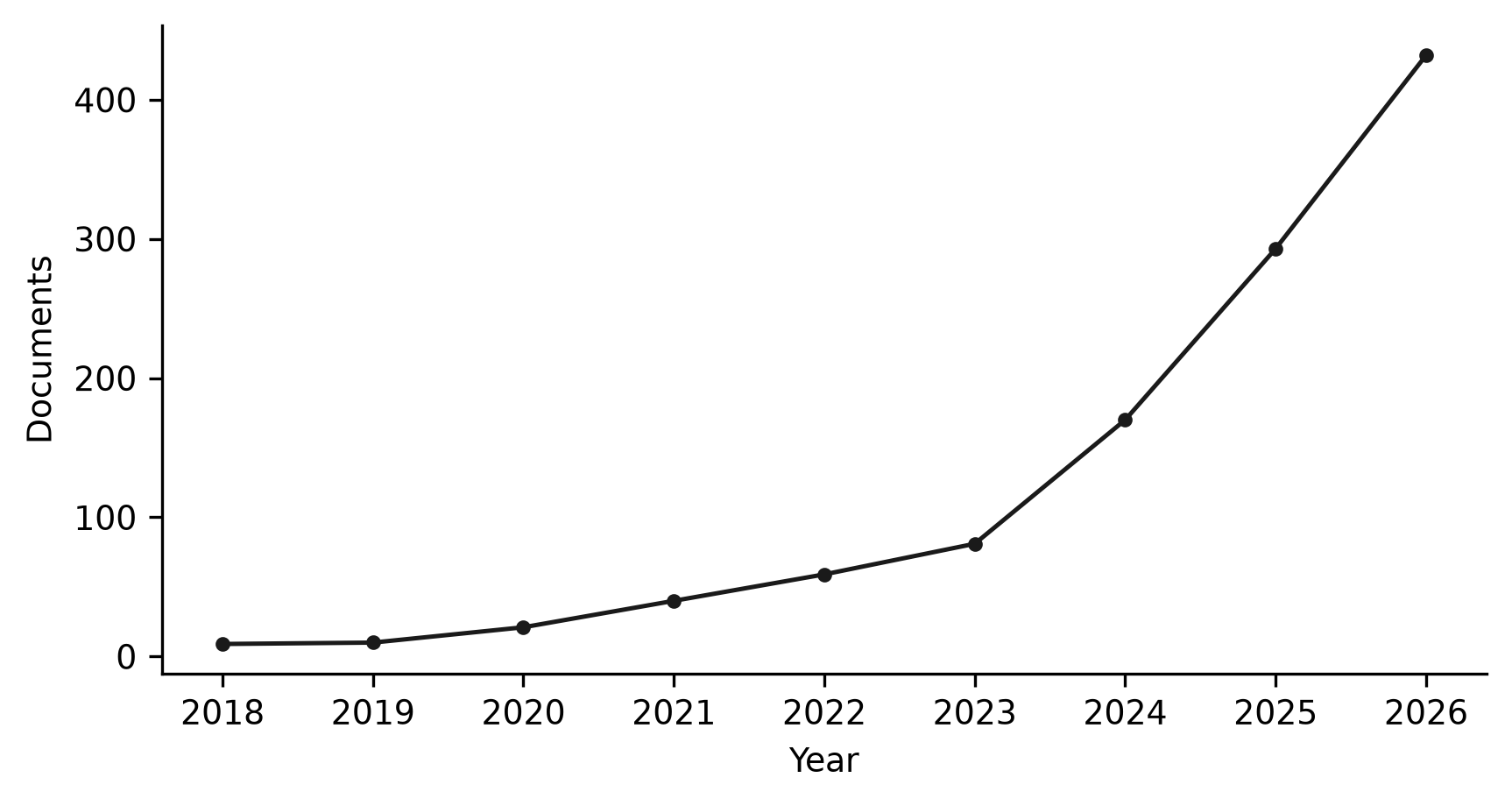
Figure 1. Annual production of documents on artificial intelligence in implant dentistry and prosthodontics.
Source: Scopus.Year | Documents |
|---|---|
2018 | 9 |
2019 | 10 |
2020 | 21 |
2021 | 40 |
2022 | 59 |
2023 | 81 |
2024 | 170 |
2025 | 293 |
2026 | 432 |
Source: Scopus
Sources and countries
The literature was distributed across 430 distinct sources, and the leading source was the Journal of Prosthetic Dentistry with 91 documents, followed by the Journal of Dentistry with 66 and BMC Oral Health with 40 (Table 2).
The prosthetic and implant specialty journals were prominent among the top sources, with the Journal of Prosthodontics contributing 22 documents and Clinical Oral Implants Research contributing 16, which reflects the clinical orientation of the field rather than a predominantly engineering or computational one.
The distribution across 430 sources means that the average source contributed fewer than three documents, and the three leading sources together accounted for 197 documents, only 17.7% of the corpus, which indicates that the field was dispersed rather than concentrated in a small number of journals.
This dispersion is a feature of a field whose output is spread across specialist prosthetic journals, general dental journals, and also imaging and engineering venues, and it implies that any evidence synthesis must search broadly rather than relying on a small set of core journals, a consideration that is directly relevant to the design of future systematic reviews in the area.
The presence of general dental and open-access journals such as Scientific Reports, Diagnostics, and Applied Sciences among the top ten reflects the fact that a share of the output is published outside the prosthetic specialty, while the Chinese Journal of Stomatology, with 17 documents, indicates a substantial non-English component. The remaining sources in the top ten, including the International Dental Journal and the Journal of Prosthodontics, complete a profile in which the specialty's core journals coexist with a broader set of general and imaging venues, and no single journal accounted for more than 8.2% of the corpus. This balanced distribution is unlike the pattern in the generative artificial-intelligence literature of dentistry, where a single open-access journal dominated, and it reflects the more established publication ecosystem of the implant and prosthodontic specialties.
The 72 contributing countries were led by China with 192 documents, India with 134, and the United States with 115, followed by Turkey with 78 and South Korea with 59 (Table 3). Saudi Arabia, Italy, Germany, Iran, and Japan completed the top ten with 54, 36, 33, 29, and 29 documents, respectively, and the smallest contribution among the top ten was 29 documents from Iran and Japan.
The top three countries together accounted for 441 documents, or 39.6% of the corpus, which indicates a moderate concentration of output in the leading countries, and the presence of four Asian countries among the top five reflects the geographic center of gravity of the field in East and South Asia.
This geographic pattern is consistent with the broader bibliometric literature on dental artificial intelligence, which has repeatedly found China and India among the most productive countries, and it reflects both the size of those countries' research workforces and the strength of their dental and engineering research infrastructure. The distribution of countries across 72 distinct contributors means that a long tail of countries contributed only small numbers of documents each, a pattern that is consistent with a field whose participation is broad but whose volume is concentrated.
Source | Documents |
|---|---|
Journal of Prosthetic Dentistry | 91 |
Journal of Dentistry | 66 |
BMC Oral Health | 40 |
Scientific Reports | 24 |
Journal of Prosthodontics | 22 |
Diagnostics | 20 |
Applied Sciences Switzerland | 18 |
Chinese Journal of Stomatology | 17 |
Clinical Oral Implants Research | 16 |
International Dental Journal | 15 |
Note: BMC = BioMed Central. Source: Scopus
Country | Documents |
|---|---|
China | 192 |
India | 134 |
United States | 115 |
Turkey | 78 |
South Korea | 59 |
Saudi Arabia | 54 |
Italy | 36 |
Germany | 33 |
Iran | 29 |
Japan | 29 |
Source: Scopus
Citation impact
Citation impact was substantial and unevenly distributed. The corpus accumulated 14,314 citations, a mean of 12.84 and a median of 2 citations per document, and an h-index of 55, while 34.50% of documents remained uncited. The distribution was right-skewed, with 340 documents receiving ten or more citations, 71 receiving fifty or more, and 24 reaching one hundred, while the most-cited single document accumulated 251 citations.
The mean exceeded the median by a factor of six, which confirms that a small minority of highly cited documents carried the citation load while the typical document attracted little attention, and the h-index of 55 indicates that 55 documents had each been cited at least 55 times.
The citation profile is consistent with a field in which early methodological contributions and high-profile reviews serve as the shared reference points for a much larger body of derivative work, and it implies that the field's knowledge is organized around a relatively small canon of foundational papers that subsequent studies cite as their points of departure for further work. The most-cited single document, with 251 citations, and the 24 documents that reached one hundred citations together constitute this canon, and their concentration at the very top of the citation distribution mirrors the pattern observed in the broader dental artificial-intelligence literature, in which a small set of review and methodological papers dominate the citation record.
The proportion of uncited documents, at 34.5%, was lower than that observed in younger fields, which is consistent with a literature that has had several years in which to accumulate citations, and it indicates that roughly two thirds of the corpus had entered the citation network at the time of extraction. This is a meaningful difference from the generative artificial-intelligence literature of dentistry, in which nearly half of documents remained uncited, and it reflects both the greater age of the implant and prosthodontic field and its stronger integration into a cumulative research tradition in which later studies cite earlier ones. The smallest secondary datum of the citation profile was the median of 2 citation per document, which indicates that the typical document in this literature had been cited only twice.
DISCUSSION
The principal finding is that the artificial-intelligence literature of implant dentistry and prosthodontics grew steadily from 2018 and accelerated sharply after 2023, reaching 1,115 documents by 2026 with an annual growth rate of 62.2%. This trajectory differs from the pattern observed in the generative artificial-intelligence literature of dentistry, which began only in 2022 and grew more explosively, and it reflects the fact that implant and prosthodontic applications were among the earliest targets of dental machine learning, so that the field had already established a baseline of research before the recent surge.
The two-phase growth, with a slow early period through 2022 followed by an inflection after 2023, corresponds to the transition from a small number of proof-of-concept studies to a broader research front, and the inflection coincides with the wider adoption of deep-learning tooling and the entry of large language models into the dental literature. The finding was consistent with the reviews that describe implant dentistry as one of the most mature domains of dental artificial intelligence.(5,9)
The two-phase growth is also consistent with the broader bibliometric observation that dental artificial intelligence as a whole experienced a marked acceleration in the early 2020s, and it situates the implant and prosthodontic literature as one of the leading subspecialties within that larger wave.(3,18)
The source and country pattern was likewise consistent with the clinical orientation of the field. In contrast to the generative literature, in which open-access megajournals and education journals dominated, the leading sources here were the Journal of Prosthetic Dentistry and the Journal of Dentistry, both established clinical journals, and the presence of Clinical Oral Implants Research and the Journal of Prosthodontics among the top ten reflects the subspecialty's core venues.(6,10)
The concentration of the field in clinical prosthetic and implant journals, rather than in computer-science or imaging venues, indicates that the research is being produced and consumed primarily by clinicians and prosthodontists, which is a favorable condition for translation because the findings are published where practitioners will read them. Similarly, the country ranking, led by China, India, and the United States, matches the distribution reported in earlier bibliometric studies of dental implant research and of artificial intelligence in dentistry generally, in which the same three countries typically lead.(3,18)
The prominence of India and Turkey, which outranked several Western European countries, was observed in the broader dental artificial-intelligence literature as well and reflects the high volume of descriptive evaluation studies from those settings.(2) The strong position of South Korea, a major center of implant manufacturing and digital dentistry, is consistent with the industrial and technological infrastructure that drives much of the field's innovation.
In turn, the comparison with the generative artificial-intelligence literature of dentistry is instructive, because that younger field is led by Turkey and concentrated in education journals, whereas this field is led by China and concentrated in clinical prosthetic journals, a difference that reflects the two fields' different origins: the implant literature grew out of a clinical and industrial need for better diagnosis and planning, whereas the generative literature grew out of a consumer-facing technology whose first dental applications were educational and communicative.
The mechanisms underlying the growth are identifiable in the content of the literature itself. The earliest studies were dominated by radiographic detection and classification tasks, which required the availability of public or institutional datasets and which were therefore concentrated in a small number of centers; the later expansion coincided with the publication of standardized datasets and the development of commercial planning software, which lowered the barrier to entry.(21,22)
The application of artificial intelligence to implant survival and peri-implant disease prediction added a prognostic dimension that further broadened the field,(16,17,23) and the recent introduction of large language models into treatment planning and patient communication introduced a second, faster-growing strand within the same corpus.(15,24) The robotics and digital-workflow literature, though smaller, represents a third strand that connects the field to the wider engineering of surgical and restorative systems.(25,26)
The successive waves of detection, planning, prognosis, and generative tools are therefore not competing directions but sequential layers of a single field, each building on the data infrastructure and evaluation habits established by the one before, which explains both the sustained growth and the increasing breadth of applications documented in the reviews.
The clinical validation studies that have begun to appear represent a further step toward maturity, because they test whether models developed in one setting retain their performance in another, and their emergence signals that the field is beginning to close the gap between development and deployment that has characterized earlier stages of dental artificial intelligence.(27,28) The ethical and legal analyses that have accompanied these technical developments, addressing accountability and oversight, are a further sign that the field is maturing beyond its technical origins.(4)
Taken together, these strands indicate that the implant and prosthodontic literature is not merely accumulating more studies but is moving along the translational pathway from method development through validation to the governance questions that accompany clinical use, a trajectory that the bibliometric indicators can describe in volume but whose qualitative direction must be read from the content of the studies themselves.
The study has several strengths that support its interpretation. The corpus was retrieved from a single database with a fixed, reproducible query and a documented extraction date, which makes the study transparent and repeatable, and the deduplication and whole-counting conventions are standard in bibliometric work.
The combination of annual, source, country, and citation indicators provides a multi-dimensional description of the field that goes beyond a simple document count, and the absence of any author-level ranking avoids the interpretive problems that attend to attributing multi-author documents to individuals. These strengths, together with the explicit statement of limitations below, frame the conclusions that follow.
The study has limitations that follow from its design, and each suggests a remedy. The query combined artificial-intelligence terms with implant and prosthodontic terms, but the boundary between these specialties and adjacent fields such as periodontology is not sharp, so some peri-implant literature may have been captured while some relevant prosthodontic work may have been missed; a sensitivity analysis with alternative query formulations would bound this uncertainty.
The export did not include author keywords or cited references, so the thematic and co-citation structure of the field could not be analyzed, which limits the study to volume, geography, and citation rather than intellectual organization, and a dedicated export with the complete view would enable those network analyses. The citation metrics are biased downward for the most recent documents, so the reported h-index and mean understate the eventual impact of the 2024-2026 cohort, and the 34.5% of uncited documents overstates the share of work that will remain uncited.
The absence of author keywords and cited references further means that the study cannot distinguish the thematic subfields, such as detection versus planning versus prognosis, from one another quantitatively, even though the qualitative reviews indicate that these subfields have different evidence profiles. Finally, the study is confined to Scopus, and documents indexed only in other databases were not captured, which may under-represent some regional journals and non-English-language literature despite the absence of a language restriction in the query.
The practical implication is that implant dentistry and prosthodontics now have a sufficiently large and mature artificial-intelligence literature to support evidence synthesis and clinical translation. The concentration of output in clinical journals, the steady rather than explosive growth, and the substantial h-index all indicate a field that is consolidating rather than merely expanding, and the next step is to move from descriptive evaluation to the validation and implementation studies that the systematic reviews have called for.(11,27,29)
The recommendations that follow from this description are specific: authors should adopt standardized reporting for model development and validation, editors should require subgroup and external validation before publishing diagnostic claims, and the field should prioritize the replication of the most-cited findings rather than the production of further single-center accuracy studies.(28,30)
For the implant and prosthodontic community specifically, these recommendations translate into a small set of concrete practices: deposit model code and, where possible, weights and datasets; report the population and imaging protocol on which a model was developed; and validate against an independent sample before claiming clinical utility. Because the field's infrastructure, in the form of journals, datasets, and industrial partners, is already in place, these practices can be adopted without new institutions.
Because the field's leading journals are read by practicing prosthodontists and implant surgeons, the translation from bibliometric growth to clinical uptake can occur within the existing publication ecosystem, provided that the reporting and validation standards are raised in the same venues where the volume is concentrated. The field's steady, rather than explosive, growth further suggests that it has the institutional foundations, in the form of established journals, training programs, and long-standing industrial partnerships, to absorb and regulate new methods as they appear, which is a favorable condition for the responsible and orderly adoption of artificial intelligence in clinical implant dentistry.
The presence of a substantial non-English component, represented by the Chinese Journal of Stomatology among the leading sources, also indicates that the field's knowledge is not confined to English-language venues, and that future syntheses should account for the Chinese-language literature, which a Scopus-based but language-unrestricted search can partially capture.
CONCLUSIONS
The artificial-intelligence literature of implant dentistry and prosthodontics grew steadily from 9 documents in 2018 to reach a final total of 1,115 documents by 2026, at an annual growth rate of 62.2% over the whole period. The field was led by China, India, and the United States and was concentrated in prosthetic and implant dentistry journals, with a citation impact that was substantial but unevenly distributed across a small canon of foundational papers. The field's two-phase growth, with a slow early period through 2022 and an acceleration after 2023, marks its transition from a specialist methodology to a broad research front, and the field has by now reached a stage of consolidation that supports evidence synthesis and clinical translation, with validation and governance questions now accompanying its technical development rather than lagging behind it.
References
- 1 Di Cosola M, Ballini A, Prencipe FA, De Tullio F, Fabrocini A, Cupelli P, et al. Artificial intelligence in dentistry: a narrative review of applications, challenges, and future directions. Minerva Dent Oral Sci. 2025;74(5):337-348. doi: 10.23736/s2724-6329.25.05217-9
- 2 Lee SJ, Poon J, Jindarojanakul A, Huang CC, Viera O, Cheong CW, et al. Artificial intelligence in dentistry: Exploring emerging applications and future prospects. Journal of Dentistry. 2025;155:105648. doi: 10.1016/j.jdent.2025.105648
- 3 Al-Hadi MAA, Ahmed SMA, Eddy SS, Nurmalasari A, Sengupta K, Hariyani N. Artificial intelligence application in dentistry: umbrella systematic review. Dent J. 2026;59(3):300-314. doi: 10.20473/j.djmkg.v59.i3.p300-314
- 4 Garcia Contino T. Artificial Intelligence in Dentistry: Toward a New Architecture of Clinical Knowledge. SAP Artificial Intelligence in Dentistry. 2025;1:12. doi: 10.62486/aid2025100
- 5 Revilla-León M, Gómez-Polo M, Vyas S, Barmak BA, Galluci GO, Att W, et al. Artificial intelligence applications in implant dentistry: A systematic review. The Journal of Prosthetic Dentistry. 2023;129(2):293-300. doi: 10.1016/j.prosdent.2021.05.008
- 6 Emami M, Shirani M. Application and performance of artificial intelligence in implant dentistry: An umbrella review. Dentistry Review. 2025;5(3):100159. doi: 10.1016/j.dentre.2025.100159
- 7 Bonfanti-Gris M, Ruales E, Salido M, Martinez-Rus F, Özcan M, Pradies G. Artificial intelligence for dental implant classification and peri-implant pathology identification in 2D radiographs: A systematic review. Journal of Dentistry. 2025;153:105533. doi: 10.1016/j.jdent.2024.105533
- 8 Khanzadeh H, Azizigermi S, Mokhlesi A, Gheisari R, Çakmak G, Molinero‐Mourelle P, et al. Artificial intelligence in radiographic quantification and severity assessment of peri‐implant marginal bone loss: A systematic review. Journal of Prosthodontics. 2026:jopr.70245. doi: 10.1111/jopr.70245
- 9 Wu Z, Yu X, Wang F, Xu C. Application of artificial intelligence in dental implant prognosis: A scoping review. Journal of Dentistry. 2024;144:104924. doi: 10.1016/j.jdent.2024.104924
- 10 Alqutaibi AY, Algabri R, Ibrahim WI, Alhajj MN, Elawady D. Dental implant planning using artificial intelligence: A systematic review and meta-analysis. The Journal of Prosthetic Dentistry. 2025;134(5):1619-1629. doi: 10.1016/j.prosdent.2024.03.032
- 11 Khanna SS, Saleem MA, J P, Shetty UA, Rai S, Dewan H, et al. Accuracy and evidence certainty of artificial intelligence models predicting dental implant outcomes: A systematic review and meta-analysis. Dentistry Review. 2026;6(3):100434. doi: 10.1016/j.dentre.2026.100434
- 12 Alfaraj A, Limones Á, Ahmad S, Aljubairah F, Albalaw S, Albesher M, et al. Harnessing AI in prosthodontics and implant dentistry: An umbrella review of systematic evidence. Journal of Prosthodontics. 2026;35(2):127-142. doi: 10.1111/jopr.70091
- 13 Alessandro D. Accuracy of artificial intelligence�assisted implant planning and guidance: a systematic review and meta-analysis of implant placement deviations. ADS. 2026;17(1):196. doi: 10.59987/ads/2026.1.196-202
- 14 Khaohoen A, Yoda N, Rungsiyakull P, Rungsiyakull C, Taichi T. Can artificial intelligence optimize treatment planning and outcome prediction in fixed tooth- and implant-supported prosthodontics? A scoping review. BMC Oral Health. 2025;26(1):104. doi: 10.1186/s12903-025-07300-8
- 15 Zaman G, Khan RS, Spacey A, Ucer C, Wright S. The Use of Artificial Intelligence in Planning Dental Implant Procedures: A Systematic Review. Dentistry Journal. 2026;14(5):248. doi: 10.3390/dj14050248
- 16 Hwang I, Ahn SH, Kim S, Kim T. Prediction and risk factor analysis of dental implant failure using Cox regression and machine learning. Journal of Periodontology. 2026;97(8):1703-1713. doi: 10.1002/jper.70112
- 17 Mao YC, Chen CA, Lin YJ, Chang YJ, Wei ST, Chen SL, et al. Automated assessment of peri-implant disease severity by deep learning and image processing in periapical radiographs. Journal of Dental Sciences. 2025;21(2):963-972. doi: 10.1016/j.jds.2025.08.015
- 18 Ho YS, Grigoriadis A, Christidis N, Grigoriadis J. Highly Cited Dental Implant Research: A Bibliometric Analysis of Publication Patterns and Research Themes. Healthcare. 2026;14(10):1301. doi: 10.3390/healthcare14101301
- 19 Ho YS, Kumar A, Christidis N, Grigoriadis A. Three Decades of Prosthodontic Oral Rehabilitation: A Bibliometric Analysis of Materials, Implants, and Digital Workflows. International Journal of Dentistry. 2026;2026(1):7409615. doi: 10.1155/ijod/7409615
- 20 Fang Q, Ramachandran RA, Koseoglu M, Kan J, Sukotjo C. Socket shield technique in implant dentistry: An AI-based bibliometric analysis. The Journal of Prosthetic Dentistry. 2025;134(3):632-642. doi: 10.1016/j.prosdent.2025.05.014
- 21 Kang JS, Kim YT, Chaurasia A, Lee JH. State-of-the-art deep learning for dental implant detection: a standardized benchmark for clinical practice. J Periodontal Implant Sci. 2026;56:e34. doi: 10.5051/jpis.2601900095
- 22 Esen A, Üstün M. Deep Learning-Based Identification of Dental Implant Systems from Two-Dimensional Radiographs. Diagnostics. 2026;16(17):2877. doi: 10.3390/diagnostics16172877
- 23 Patil S, Licari FW, Bhandi S, Venkataiah VS. AI detection of peri-implantitis on 2D radiographs: a systematic review and diagnostic accuracy assessment. Odontology. 2026. doi: 10.1007/s10266-026-01412-5
- 24 Işık AD, Yerliyurt K. Comparative efficacy of six contemporary large language models in prosthodontic patient education: a multi-parameter blinded assessment. BMC Oral Health. 2026;26(1):1442. doi: 10.1186/s12903-026-08705-9
- 25 Dawood EA, Abumaylih R, Elgarba BM, Fontenele RC, Jacobs R. Advances in artificial intelligence enhanced robotics for dental implant placement: A scoping review. Journal of Dentistry. 2026;169:106628. doi: 10.1016/j.jdent.2026.106628
- 26 Fu JH, Joda T. Digital Treatment Planning, Robotics, and Artificial Intelligence for Implant Therapy. Clin Implant Dent Rel Res. 2025;27(6):e70114. doi: 10.1111/cid.70114
- 27 Acerra A, Aliberti A, Amato A, Eccellente A, Santurro A, Giordano F. Artificial Intelligence in Implant Dentistry: Clinical Validity, Diagnostic Performance, Surgical Planning, and Medico-Legal Implications—A Narrative Review. Dentistry Journal. 2026;14(7):389. doi: 10.3390/dj14070389
- 28 Kheder W, Leblouba M, Rego R, Hamdoon Z. Multicentre validation and clinical interpretation of an explainable gradient-boosting model for dental-implant survival/failure prediction. Journal of Dentistry. 2025;163:106166. doi: 10.1016/j.jdent.2025.106166
- 29 Shomurodov K, Mirkhusanova R, Cahyanto A, Shomurodova GK, Abdukhalik-Zade NS, Rashidov RAU, et al. Systematic review on artificial intelligence for alveolar bone density and dimensional assessment in implant dentistry. Discov Artif Intell. 2026. doi: 10.1007/s44163-026-01883-z
- 30 Chen F, Chen H, Hai D, Yang Y, Xu P, Yang D, et al. AI-assisted preoperative surgical planning for dental implant. J Transl Med. 2025;24(1):104. doi: 10.1186/s12967-025-07584-y
Declarations
Funding
No financing
Conflict of interest
None
Authorship contributions
Drafting – original draft: Greta Cordovi Vallongo, Youris Samón Mayan.
Writing–review and editing: Greta Cordovi Vallongo, Youris Samón Mayan.