

Abstract
Urban buses carry the largest share of public transport trips in Latin American cities, and diesel buses concentrate the emissions that urban transport contributes. This narrative review integrates the dispersed literature on bus fleet electrification in the region and grounds it in the two most advanced cases, Santiago and Bogotá. The synthesis builds a conceptual framework with five enabling conditions, policy anchors and targets, financing and total cost of ownership, technology energy and charging infrastructure, procurement and concession models, and operational integration, which jointly determine the environmental, health and equity outcomes of the transition. The evidence indicates that electrification advances only where mandates are accompanied by financing that closes the capital cost gap, by charging and grid capacity, and by contracts that distribute technology risk. Santiago and Bogotá show that early policy commitment and manufacturer-led procurement can scale fleets rapidly, while ex post measurement of air quality, health and equity gains remains limited. The framework yields verifiable propositions to guide policy design and future research in other Latin American cities.
Keywords
electric buses, public transport, Latin America, electromobility, urban mobility, decarbonization
INTRODUCTION
Buses carry the largest share of public transport trips in Latin American cities, and diesel buses concentrate the local air pollutants and greenhouse gases that urban transport contributes. Passenger transport is a priority in the regional deep decarbonization pathways, which treat the switch to clean electricity as a central strategy for the sector.( 1)
Because public transport systems in the region move high ridership volumes while carrying persistent sustainability deficits, the electrification of their bus fleets determines whether decarbonization reaches the majority of urban travelers.( 2)
The choice of bus technology is therefore not a marginal procurement decision but a structural component of the region's climate and public health strategy, with consequences that extend well beyond the depot.
Evidence on bus fleet electrification has grown rapidly but remains dispersed across engineering, policy and environmental studies.
Reviews of charging, operations and planning( 3) and of transition and circularity integration( 4) treat the technical and economic dimensions largely in isolation from the institutional conditions that explain where electrification actually advances.
Research on total cost of ownership has matured in the same period,( 5) yet its applications concentrate on Europe, North America and Asia rather than on the fiscal realities of Latin American cities.
The literature on bus rapid transit shows that Latin American systems suffer overcrowding, unreliable service, fare evasion and weak maintenance as a result of institutional and financial constraints,( 6) and these same constraints shape how electric buses are financed, procured and operated. Concepts that are usually studied separately, policy, finance, technology, procurement, operations and outcomes, therefore need to be integrated into a single account if the regional experience is to become transferable.
Santiago and Bogotá are the two cases in which the regional experience is most advanced and most documented.
Santiago's early experiments with shared electric mobility( 7) and its subsequent measurement of energy consumption with disaggregated fleet data( 8) precede Bogotá's electrification of one of the largest mass transit systems in the world,(9) analyzed as evidence of a Latin American transition toward sustainable public transport.( 10)
The two cities differ in a way that makes them complementary rather than competing references: Santiago offers an operational and energy baseline built from measured consumption, while Bogotá offers scale and corridor-level evidence on pollutant exposure.( 11)
Together they provide a natural laboratory for identifying the conditions under which fleet electrification scales and for separating the transferable lessons from the local specificities. The selection of these two cities is deliberate rather than convenient: both operate large formal bus systems, both have adopted explicit electrification mandates, and both have generated the kind of measured evidence that allows a framework to be grounded in data rather than asserted from examples.
The objective of this review is to build a conceptual framework of the conditions that shape bus fleet electrification in Latin American cities and to ground it in the documented experience of Santiago and Bogotá, extracting lessons that other cities can test. Three questions guide the synthesis: which policy, financial, technological, procurement and operational conditions accompany the deployment of electric bus fleets in the two cities; which environmental, health and social outcomes the literature reports; and which verifiable propositions the resulting framework yields for other cities in the region.
DEVELOPMENT
The framework integrates six components that move from the conditions that enable electrification to the outcomes it produces. The order of the components is not arbitrary; each reflects the point at which a real deployment can stall. Five enabling components, policy anchors, financing, technology and charging, procurement, and operations, jointly determine the sixth, the environmental, health and equity outcomes of the transition (Figure 1). The synthesis table condenses this progression axis by axis (Table 1), and a second table maps the evidence available for Santiago and Bogotá across the same components (Table 2).
1. Policy anchors and targets
Policy anchors and targets are the national and local mandates, electromobility strategies and vehicle emission standards that reduce technology uncertainty and signal long-term commitment to operators and investors.
The comparative evidence situates Latin American electrification within broader policy trajectories.
Pabst et al.( 12) analyzed the evolution of the bus market in Europe and Latin America and concluded that the conceptual framework used to explain European transitions must be extended with new dimensions to account for Latin American adoption rates, testing the argument through a social embedding analysis of the Brazilian and Mexican cases.
Junior et al.( 13) traced the institutional framework behind the advance of electromobility in South America, while Kraemer et al.( 14) showed that Brazil remains at an early stage of development despite the existence of laws, regulations and incentives.
Consoni et al.( 15) reviewed public policy and battery-electric bus deployment in Latin America through the Brazilian lens and identified the policy instruments that have, and have not, translated into fleet growth.
The two case cities illustrate the anchoring role of explicit targets. For Chile, Arancibia et al.( 16) built scenario-based pathways for electric vehicle adoption and linked them to economic and environmental outcomes, and Mella-Lira( 17) documented citizen perceptions and institutional gaps that condition a just transition.
For Colombia, Lopez-Arboleda et al.( 18) assessed electromobility promotion with a system dynamics approach. Complementing these national signals, Serrato et al.( 19) evaluated the improvement of electric vehicle and emission standards in a Latin American city, and Bastos et al.( 20) showed that international cooperation missions accelerate battery-electric bus adoption.
The institutional constraints that Hidalgo et al.( 6) linked to the operational decline of Latin American bus rapid transit apply with equal force to electrification, since the same authorities and contracts mediate both agendas. A recurrent gap in this axis is the absence of evidence linking specific instruments to observed fleet growth: the studies establish that mandates matter, but few isolate their marginal contribution relative to finance and technology, and fewer still measure whether citizen acceptance follows or constrains the policy signal.
Santiago anchors this component through the scenario pathways for electric vehicle adoption developed for Chile,( 16) and Bogotá through the system dynamics assessment of electromobility promotion in Colombia.( 18) In both cities the national signal precedes local deployment, which supports the sequencing the framework proposes and locates the anchor outside the transport authority alone.
2. Financing and total cost of ownership
Financing and total cost of ownership are the instruments and cost structures that close the gap between higher capital expenditure and lower operating and energy costs over the vehicle life.
The investment literature locates the binding constraint on the demand side. Arowolo et al.( 21) framed the challenge as a question of where the money comes from, because governments are financially constrained, and complemented it with a power-transport coupling analysis of developing countries.( 22)
Callegari et al.( 23) argued that battery-electric buses in emerging markets require financing architectures consistent with a just energy transition. Rodrigues et al.( 24) used participatory system dynamics to show how subsidy efficiency, rather than subsidy volume, conditions bus electrification, and the same group forecast battery-electric bus costs with a system dynamics perspective.( 25)
Cardoso( 26) evaluated the financial viability of electric propulsion projects in public transport, and Pérez-Prada et al.( 27) estimated the cost-effectiveness of clean bus technologies in Latin America.
The cost evidence converges on a total-cost logic. Systematic reviews of total cost of ownership research( 5) and of the economic efficiency of electric versus diesel buses( 28) report that operating savings can offset capital costs under adequate utilization, while Carbone et al.( 29) combined economic and environmental assessment across powertrain technologies.
Say et al.( 30,31) showed that infrastructure investment, not the vehicle alone, determines when electrification becomes economic. Giagnorio et al.( 32) tempered this optimism by estimating that electric buses are not welfare improving when higher supply costs exceed the lower external costs, a result that depends on subsidy levels.
Fantin et al.( 33) modeled a solar-supported electric bus rapid transit as a scalable economic design, and Ngoc et al.( 34) found that fleet leasing outperforms traditional ownership for compliance with mandatory electric bus programs.
The axis therefore converges on the capital cost gap but diverges on its severity: model-based assessments report favorable totals once operating savings are counted, while welfare estimates that include infrastructure and subsidy costs reach more cautious conclusions. Ex post evidence from deployed Latin American fleets remains the missing link between these two readings.
Santiago illustrates the financing path through its early shared mobility experiments,(7) and Bogotá through the regional evidence on the cost-effectiveness of clean bus technologies.(27) Neither city closed the capital cost gap from fare revenue alone, a constraint the framework treats as structural rather than incidental to the two cases.
3. Technology, energy and charging infrastructure
Technology, energy and charging infrastructure are the battery sizing, charging strategy and grid conditions that determine vehicle performance, energy cost and the carbon intensity of the fleet.
Case evidence from Chile quantifies the charging and energy requirements. Concha et al.( 35) estimated that an initial deployment of ten battery-electric buses in Chillán would require installed depot charging power between 300 and 450 kilowatts and an annual delivered energy of 1,149.75 megawatt-hours, depending on whether overnight charging is complemented by opportunity charging.
Huertas et al.( 36) measured the real energy consumption of electric and diesel buses operating in Chile, and Basso et al.( 8) estimated energy consumption in Santiago from disaggregated fleet data, providing the empirical baseline that many planning models lack.
The broader literature frames these requirements within grid and infrastructure constraints. Silvestri et al.( 3) reviewed charging, operations and planning across the electrification literature, and Rodrigues et al.( 37) evaluated the viability of battery-electric buses in Brazilian bus rapid transit with a multicriteria approach that links technology choice to daily operation cost.
Xylia et al.( 38) reviewed methods for estimating charging infrastructure demand. Clairand et al.( 39) examined how electric buses interact with power systems, warning that their high load and time constraints differ from private electric vehicles.
Martínez-Gómez et al.( 40) identified the lack of infrastructure, high implementation costs and unclear regulatory frameworks as the main obstacles to charging deployment in Latin America. Xiao et al.( 41) analyzed battery-electric buses under different charging rates, and Matus Acuña et al.( 42) linked electromobility futures to power grid and urban planning in Chile.
Calderón Márquez et al.( 43) connected the transport transition to the broader challenge of universal electrification in Latin America and the Caribbean, where the carbon benefit of electric buses depends on the electricity mix. A gap in this axis is the scarcity of empirical grid impact studies for deployed Latin American fleets, most of the evidence remains prospective and therefore sensitive to assumptions about the electricity system that will supply the buses.
Santiago anchors the empirical end of this component through measured energy consumption,( 8,36) and Bogotá anchors the infrastructure end through the charging deployment methods developed for the city.( 40)
The two cases therefore bracket the axis from vehicle performance to network capacity, which is the span the framework must hold together.
4. Procurement and concession models
Procurement and concession models are the tender, contract and operator arrangements that allocate technology and financial risk and determine how fleets scale and which firms participate.
The regional literature treats procurement as a transmission mechanism for the other conditions.
Lobo et al.( 44) connected electric bus adoption to public policies, the technological maturity of cities and the capacity of small businesses, showing that adoption depends on local firms being able to absorb the technology.
Gonçalves da Silva e Silva et al.( 45) developed a methodology to introduce electric bus fleets in Rio de Janeiro, which shows how tender design must anticipate charging and operational constraints.
Doliveira et al.( 46) documented the expansion and electrification of the public transport system in Curitiba, a city whose bus rapid transit experience is a regional reference.( 6)
Contract design shapes who bears the technology risk. Ngoc et al.( 34) compared traditional ownership with a fleet leasing model and concluded that leasing raises compliance with mandatory electrification, a finding directly relevant to Latin American cities where operators are fragmented and undercapitalized.
Giagnorio et al.( 32) showed that the welfare effects of introducing electric buses depend on how contracts set pricing, frequency and public subsidies.
Sadrani et al.( 47) ranked the barriers to bus electrification separately for developed and developing countries and found that institutional and financial barriers weigh more heavily in the latter.
Subramani( 7) described the early Chilean arrangements for shared electric mobility, the seed from which Santiago's later fleet programs grew.
The comparative evidence on procurement nevertheless remains thin: the studies describe individual tenders and programs but do not yet identify which contract features explain the observed differences in pace across Latin American cities. Santiago's manufacturer-led programs grew out of its early pilots,( 7) whereas Bogotá's electrification of a large mass transit system( 9) required renegotiating operator arrangements at scale.
The two cities thus represent different procurement paths to the same end, a divergence the framework records without ranking. The supply side of procurement receives less attention than it warrants.
Pabst et al.( 12) located the regional bus market within a global value chain increasingly shaped by Asian manufacturers, and Bastos et al.( 20) showed that international cooperation missions carry technology choices with them. The implication for the framework is that procurement decisions are partly determined upstream, by which manufacturers enter a given market, a condition that local tenders only partially control.
5. Operational integration and fleet management
Operational integration and fleet management are the scheduling, range management, depot retrofit and mixed-fleet coordination that sustain reliable service during the transition.
Operational planning must reconcile limited range and charging windows with existing schedules.
Concha et al.( 35) derived an operational baseline from route lengths, service frequencies and fleet data before sizing charging demand, showing that integration begins with the schedule rather than the vehicle.
Huertas et al.( 36) demonstrated that real-world consumption differs from nominal specifications, which matters for range assurance and depot planning.
Silvestri et al.( 3) synthesized the planning literature on charging, operations and fleet replacement, and Hussain et al.( 4) added the circularity dimension of battery life and end-of-life management to the operational picture.
Mixed diesel and electric fleets raise integration costs during the transition. Gonçalves da Silva e Silva et al.( 45) treated fleet replacement as a staged problem in which diesel and electric buses must be scheduled jointly.
Xiao et al.( 41) showed how charging rate choices interact with operating patterns to determine total cost and energy performance.
The human side of integration appears in the acceptance literature, Ganga et al.( 48) unpacked public acceptance of electric buses in a Brazilian city and found that user expectations about reliability and comfort condition the perceived success of the technology. Operational integration thus links the technical and social conditions of the framework.
The literature converges on the sequencing point, the schedule must precede the vehicle, but provides little ex post measurement of reliability or maintenance in electrified Latin American depots, a gap that limits confidence in the planning models that currently guide investment.
Santiago contributes the operational baseline through real consumption records,( 36) and Bogotá contributes the transition evidence on service within a large system.( 10) Operational integration is where the two cases are least comparable and most instructive, because it depends on local route structure and depot geography that no general model can assume away.
6. Environmental, health and equity outcomes
Environmental, health and equity outcomes are the avoided emissions, air quality and health co-benefits and the distributional consequences that result from the transition, contingent on the electricity mix.
Life cycle and emissions studies quantify the climate benefit. Ferreira and Pereira( 49) estimated that full electrification of the municipal fleet of Belo Horizonte could avoid 125,414 tonnes of carbon dioxide per year, with a sensitivity of plus or minus ten percent, together with 7.8 tonnes of methane and 7.4 tonnes of nitrous oxide annually.
Fariña Martínez et al.( 50) applied the ISO 14064 methodology to estimate the carbon dioxide equivalent reduction from replacing fossil buses in Chillán. L
eichter et al.( 51) compared diesel, biodiesel and electric scenarios in a life cycle assessment, and Jakub et al.( 52) and Razy-Yanuv et al.( 53) reached similar conclusions for other contexts.
A Chilean study identified the fabrication and use stages as critical for the global warming impact of electric city buses,( 54) a finding that shows the benefit depends on the grid mix.
Air quality and health evidence is thinner but consistent in direction. Romero et al.( 11) compared ultrafine particle exposure on electric, gas and diesel buses in the mass transit system of Bogotá, and Zhong et al.( 55) estimated air quality and health co-benefits of bus electrification in a metropolitan setting outside the region.
Miraftabzadeh et al.( 56) compared decarbonization options for local public transport, while Barragán-Escandón et al.( 57) applied multicriteria methods to select electric buses for Cuenca, Ecuador, and Ndhlovu et al.( 58) reviewed the decarbonization potential of electric public transport.
The equity dimension remains the least developed: Callegari et al.( 23) and Mella-Lira( 17) call for a just transition, Velasco et al.( 2) integrated social indicators into a sustainability index for the region, and Guzmán Oros et al.( 59) measured the user experience that conditions whether the transition is perceived as an improvement.
Across this axis the findings converge on a clear climate benefit that is conditional on the grid, and diverge on how much of that benefit is realized in health and equity terms once implementation, exposure and access are taken into account. Bogotá anchors the exposure evidence through ultrafine particle measurements on transit buses,( 11) and Santiago anchors the climate evidence through the global warming assessment of electric city buses.(54)
Neither city yet anchors the health and equity outcomes, which the framework marks as the least evidenced component and the clearest research priority.
Together the six components form the framework. Policy and procurement set the rules, financing and technology set the means, operations set the reliability, and outcomes set the return that justifies further investment (Figure 1). The framework is layered rather than linear: the five enabling conditions form a lower layer of institutional and physical preconditions, and the outcomes form an upper layer that only becomes available once the lower layer is in place. The feedback arrow in the figure captures the argument that realized benefits justify the next round of investment, so that electrification becomes self-reinforcing only after the initial conditions are met. This layering is what distinguishes the framework from a simple list of success factors, each component occupies a causal position in the sequence rather than a presence that can be skipped. Table 1 condenses this progression with the key findings and representative studies, and Table 2 contrasts Santiago and Bogotá across the same components (Table 1) (Table 2).
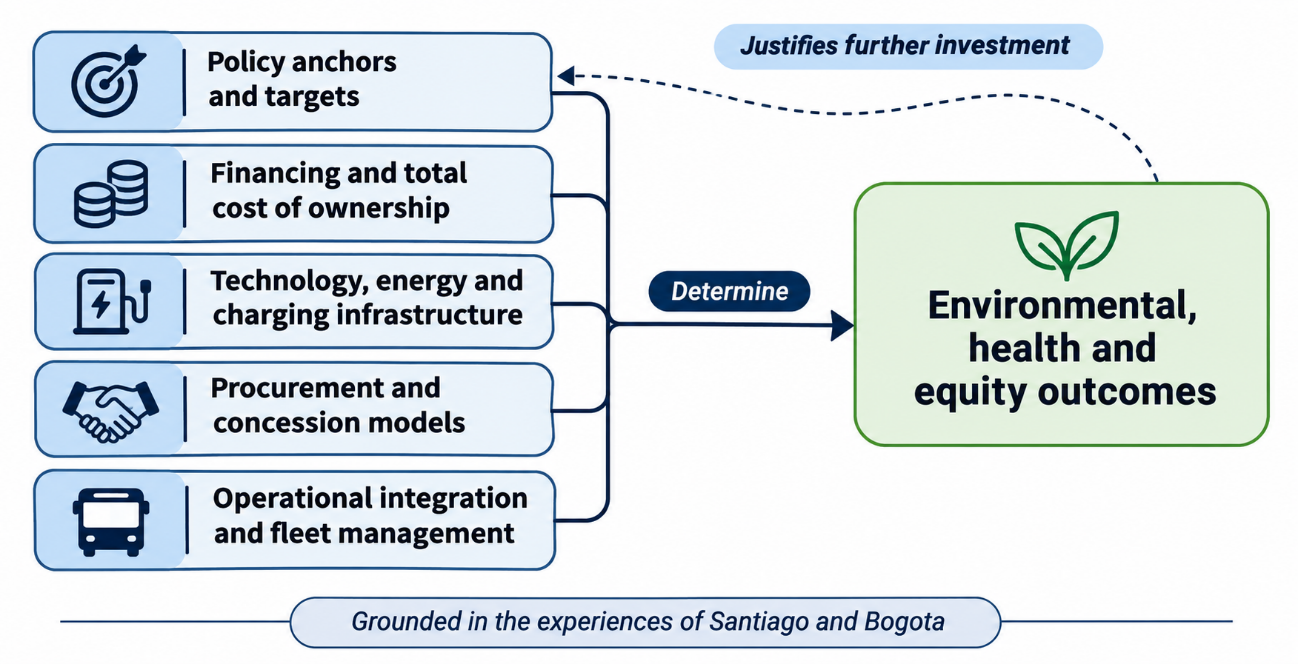
Figure 1. Conceptual framework for bus fleet electrification in Latin American cities.
Component | Key finding | Representative studies |
|---|---|---|
Policy anchors and targets | Electrification advances where national and local mandates reduce technology uncertainty | Pabst et al. 2026; Consoni et al. 2025; Lopez-Arboleda et al. 2023 |
Financing and total cost of ownership | Capital cost gaps require subsidies, concessional finance and efficient subsidy design | Arowolo et al. 2026; Rodrigues et al. 2025; Say et al. 2024 |
Technology, energy and charging | Depot charging demand and grid capacity condition cost and carbon benefit | Concha et al. 2026; Clairand et al. 2019; Xiao et al. 2024 |
Procurement and concession models | Tender and leasing design allocates technology risk and shapes scaling | Lobo et al. 2025; Ngoc et al. 2025; Sadrani et al. 2024 |
Operational integration and fleet management | Schedule, range and mixed-fleet coordination sustain reliability | Concha et al. 2026; Silvestri et al. 2026; Huertas et al. 2024 |
Environmental, health and equity outcomes | Climate benefit is clear and grid-dependent; health and equity evidence is thinner | Ferreira and Pereira 2026; Romero et al. 2024; Mella-Lira 2026 |
Component | Santiago evidence | Bogotá evidence |
|---|---|---|
Policy anchors and targets | Scenario pathways for electric vehicle adoption; institutional gap analysis | System dynamics assessment of electromobility promotion |
Financing and total cost of ownership | Early shared mobility experiments as a seed for fleet programs | Cost-effectiveness of clean bus technologies in the regional context |
Technology, energy and charging | Disaggregated energy consumption estimation and real consumption data | Charging infrastructure deployment methodologies |
Procurement and concession models | Manufacturer-led fleet programs following early pilots | Electrification of a large mass transit system |
Operational integration and fleet management | Real consumption data support range and depot planning | Transition evidence toward sustainable public transport |
Environmental, health and equity outcomes | Global warming assessment of electric city buses | Ultrafine particle comparisons on electric and diesel buses |
DISCUSSION
This review set out to integrate the dispersed concepts of bus fleet electrification into a single framework grounded in the Santiago and Bogotá experience. The synthesis converges on one central proposition: fleet electrification is not a technological substitution but a sequence of institutional and financial decisions in which each enabling condition constrains the next. Policy targets without financing remain declarative, financing without charging and grid capacity buys vehicles that underperform, and procurement contracts that concentrate risk on fragmented operators stall the transition regardless of the technology on offer.
Stated more sharply, the vehicle is the least binding constraint in the entire sequence, and the places where Latin American deployments have stalled are almost always upstream of it.
This synthesis extends prior models rather than replacing them. Hidalgo et al.( 6) located the decline of Latin American bus rapid transit in institutional and financial constraints, and this review shows that the same constraints reappear as the determinants of electrification. Bataille et al.( 1) placed passenger transport within economy-wide decarbonization pathways for the region and identified the switch to clean electricity as the central strategy; the framework developed here specifies the intermediate conditions through which that switch reaches the bus fleet. Velasco et al.( 2) proposed a multidimensional sustainability index for Latin American public transport that treats governance and social outcomes as separate dimensions, and the six components of this review map onto that structure while emphasizing the causal sequence among them.
Sadrani et al.( 47) similarly found that barriers operate differently in developing countries, where finance and institutions dominate, a result this synthesis reproduces. Prior reviews of narrower scope reach compatible conclusions that the framework assembles into a single sequence.
The total cost of ownership literature( 5,28) establishes the cost logic but not the institutional conditions that make the logic relevant, and the charging infrastructure literature( 38,39) establishes the physical requirements but not the contracts that would pay for them. Reviews framed around a just transition( 23,58) add the equity condition that the technical and economic reviews omit.
The contribution of this framework is to arrange these partial results into the order in which they must be satisfied.
The two cases diverge in instructive ways. Santiago's trajectory proceeded from early shared-mobility experiments( 7) toward fleet programs whose energy performance is now measured with disaggregated data( 8) and real consumption records.( 36)
Bogotá's trajectory is documented primarily as the electrification of a very large mass transit system( 9) within a broader Latin American transition,( 10) with air quality evidence emerging from ultrafine particle measurements.( 11)
The divergence between the two cities is less about ambition than about the evidence each has produced: Santiago offers an operational and energy baseline, Bogotá offers scale and exposure data, and neither yet offers robust ex post estimates of health or equity effects. This asymmetry, rather than any failure of policy, explains why the two cases are complementary anchors for the framework.
The Brazilian and Andean cases broaden the geographic base of the framework beyond the two anchors. Curitiba's expansion and electrification of its public transport system( 46) and the methodology developed for Rio de Janeiro( 45) show that cities with strong bus rapid transit institutions repurpose them for electrification rather than starting from scratch. Belo Horizonte's environmental and social analysis( 49) and the charging and emissions estimates for Chillán( 35,50) extend the outcome and infrastructure components to mid-sized cities, where the same framework applies at smaller scale and with less fiscal room.
Cuenca's multicriteria bus selection( 57) makes technology choice explicit where procurement is treated as a decision rather than a formality. These cases confirm that the framework generalizes beyond Santiago and Bogotá while preserving the local conditions that each component is designed to measure.
The synthesis also accommodates findings that contradict an optimistic reading of electrification.
Giagnorio et al.( 32) found that electric buses are not welfare improving when supply costs exceed external cost savings, which cautions against treating electrification as self-financing. A Chilean life cycle assessment identified the fabrication stage as a critical contributor to the global warming impact of electric city buses,( 54) tempering the use-phase optimism of studies such as that of Ferreira and Pereira.( 49)
These divergences are reconciled by the grid and financing components of the framework: the environmental and economic returns are parameters set elsewhere, not properties of the vehicle itself.
The social and governance consequences of the framework follow from its layering. Because the five enabling conditions are institutional as much as technical, the distribution of benefits depends on who is included when the conditions are set. A procurement process that leaves small operators outside reproduces exclusion even with clean vehicles,( 44) and a tariff design that raises fares to pay for electrification transfers the cost to the users the transition is meant to benefit.( 32)
User experience evidence from the region shows that perceived travel quality, including tension during the trip, conditions whether a new fleet is experienced as an improvement.( 59)
Equity is therefore treated not as a separate add-on but as an outcome that the design of the five enabling conditions determines in advance.
Several verifiable propositions follow. First, cities with stable mandates and independent financing instruments will electrify faster than cities with equally ambitious targets but fragmented budgets. Second, the welfare balance of electrification improves as charging rates and depot design lower supply costs.( 31,41)
Third, manufacturer-led procurement and fleet leasing will concentrate in cities where operators are small and undercapitalized.( 34,44)
Fourth, measured air quality and health co-benefits will remain rare until corridor-level monitoring is embedded in electrification contracts.( 11,55)
Each proposition can be tested against the next wave of Latin American deployments, including the Brazilian and Ecuadorian cases already emerging in the literature.( 14,57)
A fifth proposition follows from the equity gap: the distribution of benefits will remain unmeasured until affordability, access and corridor-level exposure are written into the monitoring of electrified systems, because none of the current instruments requires them.
Read as a sequence, the framework is operational rather than descriptive. Each component can be read as a checkpoint, the existence of a mandate, the presence of a financing instrument that lowers the capital cost, the availability of depot charging and grid capacity, the allocation of risk in the concession contract, and the plan for scheduling and depot retrofit.
A city that fails a checkpoint is unlikely to realize the outcomes the final component promises, regardless of how many vehicles it acquires. Reading the framework as a checklist in this way makes it useful for policy design ex ante and for evaluation ex post, and it exposes the point at which most deployments stall, which is typically between the financing and the charging checkpoints.
The practical implication is that policy should be sequenced rather than bundled. Mandates and targets establish the signal,( 12,13) financing instruments close the capital gap,( 5,24) charging and grid planning remove the physical bottleneck,( 39,40) and procurement design distributes the residual risk.( 32,46)
Sequencing in this order avoids the situation, common in the region, in which vehicles are acquired before the depot, the tariff or the contract that will sustain them is ready. Translated into guidance, the lessons from the two cities are specific. Begin with the target and the financing instrument together, because a target without money produces declarations and money without a target produces pilots that do not scale.( 12,24)
Size the depot and the grid before ordering vehicles, using measured rather than nominal consumption.( 35,36) Write the charging and grid requirements into the concession, so that the operator and the utility share the risk instead of leaving it to the public budget.( 32,40)
Commit at the outset to measuring exposure and access on the electrified corridors, so that the health and equity case can be made with evidence rather than promise.( 11,55)
Each of these steps corresponds to one component of the framework, and none of them depends on the others being perfect. Partial progress across all six components is more robust than perfection in one, a conclusion that follows directly from the layered structure of the framework.
The literature concentrates on successful or advanced cases, so publication bias toward Santiago, Bogotá and Brazilian cities may overstate the typical trajectory; comparative work on cities that stalled would correct this. Finally, the outcome evidence rests on modeled rather than measured health and equity effects, and the proposition that monitoring should be contractual responds directly to that gap.
The search window and terms favored English-language journals indexed in the sources consulted, so institutional reports and local evaluations in Spanish and Portuguese may be underrepresented, and the synthesis reflects a single reviewer's organization of the argument matrix rather than an independent double reading. Repeating the matrix construction with a second reviewer and adding institutional documents would test the robustness of the six components.
CONCLUSIONS
The review integrates the conditions of bus fleet electrification in Latin America into a framework of five enabling components, policy anchors, financing, technology and charging, procurement and operations, which jointly determine the environmental, health and equity outcomes of the transition. Santiago and Bogotá anchor the framework from complementary angles: Santiago contributes the operational and energy baseline that makes planning credible, while Bogotá contributes the scale and the exposure evidence that make the transition visible. The central lesson is that electrification advances where mandates, money, charging capacity and contract design move together, and stalls where any one of them is missing.
The framework yields an agenda for both policy and research. Policymakers in other Latin American cities can use the six components as a sequencing checklist, addressing financing and charging before vehicles are procured and embedding air quality monitoring in electrification contracts so that health and equity gains become measurable rather than assumed. Researchers can test the framework's propositions against the next deployments in Brazil, Ecuador and intermediate cities, correcting the bias toward celebrated cases and supplying the ex post outcome evidence that the region still lacks. Until that evidence exists, the transferable lessons from Santiago and Bogotá remain conditional, which is precisely what the framework is designed to make explicit.
References
- 1 Bataille C, Waisman H, Briand Y, Svensson J, Vogt-Schilb A, Jaramillo M, et al. Net-zero deep decarbonization pathways in Latin America: Challenges and opportunities. Energy Strategy Reviews. 2020;30:100510. doi: 10.1016/j.esr.2020.100510
- 2 Velasco A, Gerike R. A composite index for the evaluation of sustainability in Latin American public transport systems. Transportation Research Part A: Policy and Practice. 2024;179:103939. doi: 10.1016/j.tra.2023.103939
- 3 Silvestri F, Mahdi Miraftabzdeh S, Longo M, Zaninelli D. Bus fleet electrification: A comprehensive review of charging, operations, planning and sustainability. Transportation Research Part D: Transport and Environment. 2026;160:105584. doi: 10.1016/j.trd.2026.105584
- 4 Hussain SN, Hewage K, Zahid M, Sadiq R. Green mobility with battery electric buses: a review of transition and circularity integration. Travel Behaviour and Society. 2026;45:101300. doi: 10.1016/j.tbs.2026.101300
- 5 al Irsyad MI, Inayah I, Nugraheni RD, Pandyaswargo AH, Supriatna NK, Purwanto AJ, et al. Research trends in the total cost of ownership for electric vehicles: A systematic literature review. Energy for Sustainable Development. 2025;87:101746. doi: 10.1016/j.esd.2025.101746
- 6 Hidalgo D, Giesen R, Muñoz JC. Bus Rapid Transit: End of trend in Latin America?. Data & Policy. 2024;6:e2. doi: 10.1017/dap.2023.44
- 7 Subramani P. Charging up Chile: Enabling Shared, Electric Mobility in an Emerging Market. In: Lecture Notes in Mobility. Springer International Publishing; 2015. p. 249-271. doi: 10.1007/978-3-319-12244-1_15
- 8 Basso F, Feijoo F, Pezoa R, Varas M, Vidal B. The impact of electromobility in public transport: An estimation of energy consumption using disaggregated data in Santiago, Chile. Energy. 2024;286:129550. doi: 10.1016/j.energy.2023.129550
- 9 Serrato JC, Salas JM, Velasco A, Prada G, Villamizar L, Cadena LC, et al. Electrifying one of the world's largest mass transit systems, Bogotá city. IET Conf Proc. 2022;2022(3):1153-1157. doi: 10.1049/icp.2022.0896
- 10 Bonilla JA. Transition to sustainable public transport in Latin America: Evidence from Bogotá. Transportation Research Part D: Transport and Environment. 2025;149:105015. doi: 10.1016/j.trd.2025.105015
- 11 Romero DAV, Grados CVD. Ultrafine Particles on Electric, Gas, and Diesel Buses in the Mass Transit Buses of Bogotá, Colombia. Transportation Research Record: Journal of the Transportation Research Board. 2024;2678(8):46-56. doi: 10.1177/03611981231213081
- 12 Pabst G, Szklo A, Schaeffer R. National electromobility policies and socio-technical transitions: A comparative analysis of Europe and Latin America. Innovation: The European Journal of Social Science Research. 2026;39(4):1803-1831. doi: 10.1080/13511610.2025.2599241
- 13 Junior EL, Barassa E, Consoni F, Navarro A, Bermúdez Rodríguez T, Filho AO. INSTITUTIONAL FRAMEWORK AND THE ADVANCE OF ELECTROMOBILITY: THE CASE OF SOUTH AMERICA. IJATM. 2022;22(3):1. doi: 10.1504/ijatm.2022.10048729
- 14 Kraemer RAS, Lodetti PZ, Silva ACD, Cardoso BB, Vicente I, Martins MAI, et al. Regulatory Challenges in the Electromobility Sector: An Analysis of Electric Buses in Brazil. Energies. 2023;16(8):3510. doi: 10.3390/en16083510
- 15 Consoni FL, Bermúdez-Rodríguez T, Andrade V, Bastos P. Public policy and battery-electric bus deployment in Latin America: A critical review through the Brazilian lens. Energy for Sustainable Development. 2025;88:101801. doi: 10.1016/j.esd.2025.101801
- 16 Arancibia C, Jensen M, Riffo Sandoval R, Pradenas L. Policy pathways to electric vehicle adoption in Chile, a scenario-based analysis of economic and environmental outcomes. Management of Environmental Quality: An International Journal. 2026;37(7):2120-2144. doi: 10.1108/meq-09-2025-0635
- 17 Mella-Lira B. Towards a just transition in electromobility: citizen perceptions, institutional gaps, and policy implications from Chile. Transportation Research Interdisciplinary Perspectives. 2026;40:102247. doi: 10.1016/j.trip.2026.102247
- 18 Lopez-Arboleda E, Sarmiento AT, Cardenas LM. Policy assessment for electromobility promotion in Colombia: A system dynamics approach. Transportation Research Part D: Transport and Environment. 2023;121:103799. doi: 10.1016/j.trd.2023.103799
- 19 Serrato DA, Tibaquirá JE, López JC, Castillo JC, Giraldo M, Quirama LF. Evaluating electric vehicle and emission standards improvement in a Latin American city. Green Energy and Intelligent Transportation. 2025;4(6):100284. doi: 10.1016/j.geits.2025.100284
- 20 Bastos P, Andrade V, Consoni FL. Driving public transit decarbonization: the role of international cooperation missions on battery-electric bus adoption in Latin America. Transportation Research Interdisciplinary Perspectives. 2025;34:101678. doi: 10.1016/j.trip.2025.101678
- 21 Arowolo W, Perez Y. Electric mobility investment in developing countries: Emerging patterns from cross-country analysis. Transportation Research Interdisciplinary Perspectives. 2026;35:101764. doi: 10.1016/j.trip.2025.101764
- 22 Arowolo W, Diallo M, Perez Y. Electric mobility investments: Insights from power-transport coupling from developing countries. The Electricity Journal. 2025;38(2):107473. doi: 10.1016/j.tej.2025.107473
- 23 Callegari C, Oliveira R, Cunha BSL, Cruz T, Fiorini AC, Schaeffer R, et al. Battery electric buses in emerging markets and developing economies: A pathway for a just energy transition. Energy for Sustainable Development. 2025;85:101678. doi: 10.1016/j.esd.2025.101678
- 24 Rodrigues ALP, Cipcigan L, Potoglou D, Dattero D, Wells P, Regina da Cal Seixas S. Impacts of subsidy efficiency on bus electrification: A participatory system dynamic modeling. Transport Policy. 2025;167:210-221. doi: 10.1016/j.tranpol.2025.03.031
- 25 Rodrigues ALP, Wells P, Cipcigan L, da Cal Seixas SR. Forecasting the costs of battery electric buses: A system dynamics model perspective. Research in Transportation Business & Management. 2024;57:101223. doi: 10.1016/j.rtbm.2024.101223
- 26 Filipe Leonardo Cardoso S. Financial evaluation of electric propulsion projects in public transport. Case Studies on Transport Policy. 2022;10(1):32-40. doi: 10.1016/j.cstp.2021.10.005
- 27 Pérez-Prada F, Alves BB, Sethi K, Barrés DP, Qiu Y. Clean Bus Technologies and the Cost-Effectiveness of Emissions Reductions in Latin America. Transportation Research Record: Journal of the Transportation Research Board. 2019;2673(8):136-144. doi: 10.1177/0361198119828684
- 28 Jagiełło A. Economic Efficiency of Sustainable Public Transport: A Literature Review on Electric and Diesel Buses. Energies. 2025;18(6):1352. doi: 10.3390/en18061352
- 29 Carbone C, Sanzò N, Dorsini R, Nigliaccio G, Di Florio G, Cigolotti V, et al. An economic and environmental assessment of different bus powertrain technologies in public transportation. Cleaner Environmental Systems. 2025;16:100250. doi: 10.1016/j.cesys.2024.100250
- 30 Say K, Csereklyei Z, Brown FG, Wang C. The economics of public transport electrification: A case study from Victoria, Australia. Energy Economics. 2023;120:106599. doi: 10.1016/j.eneco.2023.106599
- 31 Say K, Brown FG, Csereklyei Z. The economics of public transport electrification: When does infrastructure investment matter?. Applied Energy. 2024;360:122809. doi: 10.1016/j.apenergy.2024.122809
- 32 Giagnorio M, Börjesson M, D'Alfonso T. Introducing electric buses in urban areas: Effects on welfare, pricing, frequency, and public subsidies. Transportation Research Part A: Policy and Practice. 2024;185:104103. doi: 10.1016/j.tra.2024.104103
- 33 Fantin CA, Rivera M, Farah B, Lima RL, Bonaldo JP. Electric bus rapid transit supported by solar generation: A scalable economic model for zero-emission urban transit. Energy Policy. 2026;209:114981. doi: 10.1016/j.enpol.2025.114981
- 34 Ngoc AM, Nishiuchi H, Shiomi Y, Hoan L. Pursuing higher compliance for the mandatory electric bus program in Vietnam: Should we keep a traditional business model or promote a fleet leasing model?. Research in Transportation Business & Management. 2025;60:101327. doi: 10.1016/j.rtbm.2025.101327
- 35 Concha E, Espinosa E, Ramírez G, Restrepo SE, Lizana Fuentes R, León R, et al. Operational Baseline and Charging–Demand Sizing for Integrating Electric Buses into Public Transport in Chillán and Chillán Viejo Cities, Chile. Systems. 2026;14(5):519. doi: 10.3390/systems14050519
- 36 Huertas JI, Serrano-Guevara OS, Quezada F, Vasquez F. Real energy consumption of electric and diesel buses operating in Chile. 2024 International Symposium on Electromobility (ISEM). 2024:1-5. doi: 10.1109/isem62699.2024.10786595
- 37 Rodrigues GS, Reis JGMD, Orynycz O, Tucki K, Machado ST, Raymundo H. A Study on the Viability of Adopting Battery Electric Vehicles in Bus Rapid Transit in Brazil Using the AHP Method. Energies. 2023;16(13):4858. doi: 10.3390/en16134858
- 38 Xylia M, Olsson E, Macura B, Nykvist B. Estimating charging infrastructure demand for electric vehicles: a systematic review. Energy Strategy Reviews. 2025;59:101753. doi: 10.1016/j.esr.2025.101753
- 39 Clairand JM, Guerra-Terán P, Serrano-Guerrero X, González-Rodríguez M, Escrivá-Escrivá G. Electric Vehicles for Public Transportation in Power Systems: A Review of Methodologies. Energies. 2019;12(16):3114. doi: 10.3390/en12163114
- 40 Martínez-Gómez J, Espinoza VS. Challenges and Opportunities for Electric Vehicle Charging Stations in Latin America. WEVJ. 2024;15(12):583. doi: 10.3390/wevj15120583
- 41 Xiao G, Xiao Y, Shu Y, Ni A, Jiang Z. Technical and economic analysis of battery electric buses with different charging rates. Transportation Research Part D: Transport and Environment. 2024;132:104254. doi: 10.1016/j.trd.2024.104254
- 42 Matus Acuña M, Bustos-Turu G, Cox Oettinger T, Zamora Zapata M, Calderón-Muñoz W, Buitrago-Villada MDP, et al. Assessing Sustainable Electromobility Futures in a Multi-Model Platform with Grid and Urban Planning: A Case Study in Chile. J sustain dev energy water environ syst. 2026;14(3):1-28. doi: 10.13044/j.sdewes.d14.0723
- 43 Calderón Márquez AJ, Simões AF, Smyth B, Pereira da Cunha M. Achieving energy transition and universal electrification in Latin America and the Caribbean: A policy analysis. Energy Research & Social Science. 2025;130:104435. doi: 10.1016/j.erss.2025.104435
- 44 Lobo RCG, Denes-Santos D, Ricardo FJ. Electric bus adoption for sustainable urban mobility: Public policies, technological maturity of cities, and small business innovation. Research in Transportation Business & Management. 2025;62:101463. doi: 10.1016/j.rtbm.2025.101463
- 45 Gonçalves da Silva e Silva C, Pecorelli Peres LA. Introducing Electric Bus Fleets in Rio de Janeiro City Methodology and Analysis. IEEE Latin Am Trans. 2022;20(8):2087-2095. doi: 10.1109/tla.2022.9853229
- 46 Doliveira SLD, Cunha SKD, Massuga F. EXPANSION AND ELECTRIFICATION OF THE PUBLIC TRANSPORT SYSTEM IN CURITIBA, PR. RBGI. 2023;11(1). doi: 10.18226/23190639.v11n1.05
- 47 Sadrani M, Mirqasemi R, Tirachini A, Antoniou C. Barriers to electrification of bus systems: A fuzzy multi-criteria analysis in developed and developing countries. Energy Conversion and Management. 2024;314:118700. doi: 10.1016/j.enconman.2024.118700
- 48 Ganga GMD, Avanzi RD, Ramos G, Callefi MH, Godinho Filho M, Lizarelli FL, et al. Unpacking the public acceptance of autonomous electric buses: Insights from a medium-sized Brazilian city. Cities. 2025;160:105817. doi: 10.1016/j.cities.2025.105817
- 49 Ferreira WL, Pereira RG. Environmental and social analysis of the use of electric buses in Belo Horizonte, Brazil. Clean Techn Environ Policy. 2026;28(3):78. doi: 10.1007/s10098-026-03429-4
- 50 Fariña Martínez Y, Espinosa E, Ramírez G, Restrepo SE, Lizana Fuentes R, León R, et al. Estimation and Analysis of the Reduction in CO2 Equivalent from the Replacement of Public Transport Buses with Electric Ones in the Cities of Chillán and Chillán Viejo. Sustainability. 2026;18(4):2077. doi: 10.3390/su18042077
- 51 Leichter M, Lerman L, Maciel V, Passuello A. Environmental Assessment of Urban Public Transport's Shift from Conventional to Electric Buses: A Case Study. J sustain dev energy water environ syst. 2022;10(4):1-18. doi: 10.13044/j.sdewes.d10.0418
- 52 Jakub S, Adrian L, Mieczysław B, Ewelina B, Katarzyna Z. Life cycle assessment study on the public transport bus fleet electrification in the context of sustainable urban development strategy. Science of The Total Environment. 2022;824:153872. doi: 10.1016/j.scitotenv.2022.153872
- 53 Razy-Yanuv E, Meron N. Early transition to cleaner bus fleets: Benefits, costs, and policy evaluation of alternatives from a life cycle perspective. Cleaner Environmental Systems. 2024;12:100172. doi: 10.1016/j.cesys.2024.100172
- 54 G. VV. Global warming impact of electric city buses in Chile: Critical stages of their fabrication and use. In: Computer Aided Chemical Engineering. Elsevier; 2022. p. 223-228. doi: 10.1016/b978-0-323-95879-0.50038-2
- 55 Zhong J, Gojamgunde T, Hall J, Hang Y, Bartington SE, Stocker J, et al. Air quality and health co-benefits of bus electrification: evidence from a UK metropolitan area. Environment International. 2026;208:110066. doi: 10.1016/j.envint.2026.110066
- 56 Miraftabzadeh SM, Saldarini A, Cattaneo L, El Ajami S, Longo M, Foiadelli F. Comparative analysis of decarbonization of local public transportation: A real case study. Heliyon. 2024;10(3):e25778. doi: 10.1016/j.heliyon.2024.e25778
- 57 Barragán-Escandón A, Armijos-Cárdenas H, Armijos-García A, Zalamea-León E, Serrano-Guerrero X. Comparative Analysis of Electric Buses as a Sustainable Transport Mode Using Multicriteria Decision-Making Methods. WEVJ. 2025;16(5):263. doi: 10.3390/wevj16050263
- 58 Ndhlovu E, Mhlanga D, Duri B. Decarbonising urban transport: an overview of electric vehicles, public transport, and sustainable infrastructure in achieving net-zero emissions. Discov glob soc. 2025;3(1):53. doi: 10.1007/s44282-025-00201-9
- 59 Guzmán Oros GC, Martínez García VM, Romero YD, Valdez Lizárraga PA, Reyes Machain JDJ, Morán Sánchez SA. User experience of urban public transport in Mazatlán: A preliminary review of a scale. SAP Transport, Mobility & Society. 2026;5:300. doi: 10.62486/tms2026300
Declarations
Funding
No financing
Conflict of interest
None
Authorship contributions
Drafting – original draft: Rolando Eslava Zapata, Ronald Yesid Palencia Buelvas.
Writing–review and editing: Rolando Eslava Zapata, Ronald Yesid Palencia Buelvas.