

Abstract
The Mazatlán malecón is a coastal public space valued by local residents and, at the same time, a setting for experiences of insecurity. This study examined, using a preliminary data cut from the pilot survey of project FZ-HAB-0003 on the Factoriza UAS platform, the initial psychometric properties of a ten-item scale with two dimensions, Bond with the malecón and Fear on the malecón, and the association between them. With a cross-sectional design, 14 cases out of a target of 100 were analysed while data collection remained open. Descriptive statistics, Cronbach’s alpha and McDonald’s omega total, an exploratory factor analysis with minimum residual extraction, oblimin rotation and parallel analysis, and the Spearman correlation between dimensions were estimated. Internal consistency was high (α = .848 and ω = .870 for Bond; α = .812 and ω = .839 for Fear), but sampling adequacy was very low (KMO = .283). Parallel analysis suggested two factors that accounted for 66.67% of the variance and did not reproduce the intended dimensions: bond items clustered with two fear items loading in the opposite direction, while vigilance, fear of robbery and night-time insecurity defined the second factor. The correlation between dimensions was ρ = -.367, 95% CI [-.759, .222]. The findings do not yet provide sufficient structural validity evidence and point to specific revisions of the instrument before data collection is closed.
Keywords
place attachment, fear of crime, coastal public space, psychometric evidence
INTRODUCTION
Coastal public space occupies a singular place in the life of coastal cities. It brings together residents' everyday recreation, tourist activity, commerce and mobility, so its quality depends not only on infrastructure but also on how people value it, move through it and feel it as their own or as foreign. In Mazatlán, Sinaloa, the malecón serves this function in emblematic fashion: it is an extensive seaside promenade linking residential, tourist and nightlife areas, and for many residents it is a setting for memory, encounter and physical activity. The habitability of such a space therefore involves two experiences that can coexist in the same person: the affective bond with the place and the perception that the place may be unsafe.
Research on place attachment has shown that bonds between people and meaningful environments are related to subjective well-being, social trust and civic participation (Kamani Fard and Paydar, 2024). At the same time, the literature on fear of crime documents that perceived insecurity restricts access to and use of public space, with particular intensity among women and in environments with greater physical and social deterioration (Navarrete-Hernandez et al., 2021, 2023). Both traditions have advanced in parallel and have only occasionally been examined jointly. Available studies suggest that perceived safety is positively associated with place identity (Chang et al., 2023) and with attachment to the residential area (Li et al., 2025), and that neighborhood victimization is associated with weaker attachment, a relationship that is attenuated when frequent interactions between neighbors exist (Zahnow and Tsai, 2021). However, almost all of this evidence refers to the residential neighborhood and not to public spaces on a metropolitan scale with a strong tourist presence.
The Mexican context adds a specific dimension to the problem. The National Survey of Urban Public Safety reports quarterly that most of the adult population in the urban areas surveyed considers it unsafe to live in their city, and that the street is among the places where the most people report feeling unsafe (Instituto Nacional de Estadística y Geografía [INEGI], 2026a). Mazatlán and Culiacán are among the urban areas that the survey measures individually, and in the most recent report Mazatlán recorded a statistically significant difference with respect to the same period of the previous year (INEGI, 2026b). National research has also shown that fear of crime in Mexico has emotional, cognitive and behavioral components related to municipal inequality (Clément and Piaser, 2021), and that in coastal tourist cities such as Acapulco, the perceived presence of antisocial behavior in the environment is the most relevant predictor of perceived insecurity and of changes in everyday activities (Triana Sánchez, 2021).
In the specific case of Mazatlán, recent evidence comes mainly from qualitative studies with a gender perspective. Cruz-Coria (2024) documented, through written testimonies, collective narratives, and participatory mapping with young women residents, that the unequal distribution of security devices in the tourist city privatizes public space, and that some stretches of the malecón are perceived as dark, with selective lighting, and have been turned by renovations into a fast-traffic roadway with few crossings. In the historic center, Cruz Coria (2024) identified that the nightlife model oriented toward tourism produces an unequal urban space that conditions the way women residents move through tourist and non-tourist areas. These findings show that the malecón is a valued place and, at the same time, a setting of experiences of insecurity. However, as far as the search conducted reaches, there is no brief quantitative instrument that allows jointly estimating the bond with the malecón and the fear associated with its use in the resident population.
This gap has practical and methodological consequences. From a practical point of view, planning decisions on lighting, pedestrian crossings, vigilance, or scheduling of activities on the waterfront require information on how those who use it habitually experience it, and not only on recorded crime incidence. From a methodological point of view, the joint measurement of two affective constructs requires gathering evidence on the internal structure of the instrument and on the consistency of its scores before using them to estimate relationships between them. An instrument whose structure does not correspond to the intended dimensions can produce artificial correlations or, conversely, conceal real associations; hence the psychometric examination precedes any substantive interpretation.
The FZ-HAB-0003 project of the Factoriza UAS platform set out to study place attachment and perceived insecurity on the malecón of Mazatlán by means of a ten-item scale organized into two dimensions: Bond with the malecón and Fear on the malecón. This article reports the results of the first pilot survey, whose data cut is preliminary and of small size. For that reason, the work does not aim to establish conclusions about the population, but to document the initial behavior of the instrument and guide its revision before completing the survey.
Consequently, the general objective of this study was to examine, in a preliminary data cut of the pilot survey, the initial psychometric properties of a scale of place attachment and perceived insecurity, and the association between both dimensions in residents of Mazatlán who visit the malecón. The specific objectives were, first, to describe the distribution of responses to each item; second, to estimate the internal consistency of each dimension using the alpha and omega coefficients; third, to explore the internal structure of the set of items by means of exploratory factor analysis, and fourth, to estimate the relationship between the scores of both dimensions. The project did not declare hypotheses, so the study is proposed with a descriptive and exploratory scope.
DEVELOPMENT
Place attachment: definition and dimensions
Place attachment is generally understood as the cognitive and affective bond that a person or a group establishes with a meaningful environment. Scannell and Gifford (2010) proposed organizing the diversity of definitions into a tripartite framework that distinguishes the person who bonds (individual or collective), the psychological process through which this occurs (affective, cognitive and behavioral) and the place to which the person bonds, with its physical and social components. This framework is a classic reference used here because it offers the conceptual vocabulary with which recent literature continues to define the construct. Lewicka (2011), in a review of four decades of research, documented the heterogeneity of definitions and instruments and the concentration of studies on the place of residence, and noted the need to address other scales and the processes through which the bond is formed.
The measurement of place attachment remains a developing field. Boley et al. (2021) warned that the variety of scales and items makes it difficult to compare results across communities and accumulate evidence, and presented a short six-item scale, three on place identity and three on place dependence, whose measurement invariance they supported in samples of residents and visitors from four countries. Erdoğdu (2025), when developing a scale for adolescents, obtained through exploratory factor analysis, supported by parallel analysis, a structure of three subscales—cognitive, emotional and behavioral—that corresponds to the process dimensions of the tripartite framework. In the Chinese-language literature, Xiang et al. (2022) studied the attachment of residents of a historic neighborhood in Yining, Xinjiang, and grouped its components into emotional, social and material bonds, which shows that the content of the dimensions varies according to the type of place and population.
For the present study, these contributions have two implications. The first is that the items of the Bond with the malecón dimension combine contents of personal importance (R1), pride (R2), integration into daily life (R3), anticipated loss (R4) and indifference (R5, reverse), that is, they mix affective, identity and behavioral components that have been separated in other scales. The second is that the analysis of the internal structure must be interpreted in light of the place studied: a publicly and touristically used seaside promenade is not equivalent to the residential neighborhood, which has been the predominant object of research. The review by Kamani Fard and Paydar (2024) on place attachment in urban environments points out, precisely, that the scale of the place and its function are related to the intensity of the bond, and that the social interaction that the place facilitates contributes to forming it.
Perceived insecurity and fear of crime in public space
Perceived insecurity and fear of crime have been conceptualized as experiences with emotional, cognitive, and behavioral components. In Mexico, Clément and Piaser (2021) constructed a fear-of-crime index with these three dimensions, which distinguish the feeling of insecurity, risk assessment, and avoidance or protective behaviors. This distinction is pertinent to the scale studied, whose Fear on the malecón dimension includes items on night-time insecurity (R6), avoidance of areas (R7), fear of a specific crime (R8), calmness in family company (R9, reverse), and vigilance over belongings (R10). The heterogeneity of these contents anticipates that the dimension might not behave as a homogeneous block.
Recent research has emphasized the situated nature of fear of crime. Song et al. (2023), in a survey of residents of communities in Guangzhou, found that fear of robbery varies significantly according to the type of place, with higher values at transport stations and wholesale markets and lower values in leisure spaces. In the same city, Gu and Chen (2024) observed that perceived social and physical disorder in the community is associated with greater fear of crime, whereas formal social control is associated with less fear. In Barcelona, Pérez-Tejera et al. (2022) found that perceived safety in public parks was related to sex and years of residence in the neighborhood, but not to recorded crimes, which confirms that perceived insecurity is not a direct reflection of crime incidence.
The design of space and its conditions of night-time use are also part of this experience. In an image-based randomized trial, Navarrete-Hernandez et al. (2021) showed that the removal of blind walls raised perceived safety, with larger differences among women, and in a neighborhood of Santiago de Chile they documented that perceptions of insecurity are concentrated in specific places and that simulated regeneration of public space was accompanied by greater perceived safety (Navarrete-Hernandez et al., 2023). On a riverfront of New Belgrade, Rakonjac et al. (2022) observed that lighting is related to the distribution of users, to their sense of safety, and to the duration and frequency of night-time use. In Mexico, Ortiz-Brunel et al. (2025) found in parks of Jalisco that men had a higher probability of feeling safe than women and that users of linear parks were more likely to feel safe than those of parks with controlled access.
A gender perspective runs through much of the Mexican evidence. Almanza Avendaño et al. (2022) described, in a city near the northern border, how street harassment is experienced as part of a continuum of threats that includes disappearance and femicide, and how this restricts the mobility of young women. Garfias Royo et al. (2023), in Corregidora, Querétaro, identified lighting, narrow access points, and the condition of sidewalks as infrastructure elements linked to perceived vulnerability, and proposed transferring to urban planning a burden of self-protection that currently falls on women themselves. These studies guide the interpretation of the avoidance and vigilance items, which may reflect coping strategies rather than fear in the strict sense.
Place attachment and perceived insecurity: a relationship under discussion
The relationship between place attachment and perceived insecurity is not unambiguous. On the one hand, perceived safety appears as a positive correlate of attachment: in Guangzhou, the sense of safety was positively associated with place identity, although social ties were the strongest predictor (Chang et al., 2023), and in a large sample of Japanese cities, perceived safety from crime was positively associated with attachment to the place of residence (Li et al., 2025). On the other hand, the experience of victimization in the neighborhood was associated with weaker attachment, although frequent interaction with neighbors attenuated that relationship (Zahnow and Tsai, 2021), which indicates that the bond can persist despite negative experiences when the place retains its social value.
For a space such as the malecón, this discussion suggests three possible scenarios: that attachment and fear are negatively associated, as two poles of the same valuation of the place; that they are independent, so that a person can feel a strong bond with the malecón and, at the same time, take precautions when walking along it; or that their relationship depends on conditions such as the time of day, the stretch walked, or gender. The design of the instrument studied, with two separate dimensions, implicitly assumes the second scenario, and examining its internal structure allows assessing whether the data are compatible with that separation. Given the cross-sectional nature of the study, any relationship observed will be interpreted as an association and not as a relationship of dependence between the variables.
The malecón of Mazatlán as coastal public space
The malecón of Mazatlán brings together the features that the literature associates with the complexity of coastal public space: it is linear and extensive, its character changes from one stretch to another, it concentrates residential, tourist, and sports uses, and its nighttime use is conditioned by lighting and by commercial activity. Qualitative studies conducted in the city show that waterfront renovations and the unequal distribution of security devices shape different experiences for residents and tourists, and for men and women (Cruz-Coria, 2024; Cruz Coria, 2024). Added to this is a state context in which the perception of urban insecurity is subject to periodic statistical monitoring (INEGI, 2026a, 2026b).
Within this framework, the habitability of the malecón cannot be reduced to its facilities. It also encompasses the degree to which residents recognize it as part of their lives and the extent to which its use is conditioned by fear. A brief instrument, with documented evidence of validity and internal consistency, would make it possible to monitor both dimensions and relate them to characteristics of the space, such as the section, the time of day, or the lighting. This study is the first step in that process: the empirical review of the instrument with data from the pilot survey, with the cautions imposed by its size.
METHODOLOGY
Design
A quantitative, non-experimental, cross-sectional study with a descriptive and exploratory scope was conducted, aimed at gathering preliminary evidence on the internal structure and consistency of an instrument and on the association between its dimensions. The data correspond to survey LEV-0008, "Piloto malecón · Apego e inseguridad", of project FZ-HAB-0003 of the Factoriza UAS platform, and to the frozen dataset DST-0013, with a cutoff date of 9 October 2026. The survey is an independent sample and the only one in the project, so data from other surveys were not combined.
Population, sample and data cut
The survey population was defined as persons aged 18 years or older who reside in Mazatlán and visit the malecón. The territory corresponds to the malecón of Mazatlán, Sinaloa, in sections selected by the project lead. According to the Factoriza record, 18 persons opened the questionnaire and 14 completed it; no cases were excluded for quality control, so 14 cases were analyzed (Table 2).
The data cut analyzed is preliminary: it brings together 14 cases out of a target of 100, and the survey remained open, in field status, as of the cutoff date. This condition is central to interpreting all the results. The ratio of 1.4 cases per item is far below what a stable item factor analysis requires, and the adequacy of the data and of the sample is the first condition that the methodological literature calls for verifying (Ferrando et al., 2022; Goretzko et al., 2021), so the internal structure analyses are presented as a preliminary exploration intended to review the instrument, not as conclusive evidence about its dimensionality. Factoriza did not record sociodemographic variables in this dataset.
Instrument
The Scale of attachment to the malecón and perceived insecurity was applied, consisting of ten items with a five-point response format, from Strongly disagree (1) to Strongly agree (5). The items are organized into two dimensions of five items each: Bond with the malecón (R1 to R5) and Fear on the malecón (R6 to R10). Two items are worded in the reverse direction, R5 ("The malecón is a matter of indifference to me") and R9 ("I feel calm when visiting the malecón with my family"), and are recoded in the data matrix, so that in both dimensions a higher score indicates more bond or more fear, respectively. Table 1 presents the code, the dimension, the text, and the direction of each item.
Code | Dimension | Item | Reverse |
|---|---|---|---|
R1 | Bond with the malecón | The malecón is an important place for me | No |
R2 | Bond with the malecón | I feel proud of the Mazatlán malecón | No |
R3 | Bond with the malecón | Visiting the malecón is part of my life | No |
R4 | Bond with the malecón | I would miss the malecón if I left Mazatlán | No |
R5 | Bond with the malecón | The malecón is a matter of indifference to me | Yes |
R6 | Fear on the malecón | I feel unsafe walking along the malecón at night | No |
R7 | Fear on the malecón | I avoid certain areas of the malecón | No |
R8 | Fear on the malecón | I fear being mugged on the malecón | No |
R9 | Fear on the malecón | I feel calm when visiting the malecón with my family | Yes |
R10 | Fear on the malecón | I am alert to my belongings when I walk along the malecón | No |
Note. 5-point response scale (Strongly disagree, Disagree, Neither agree nor disagree, Agree, Strongly agree). Reverse items are already recoded in the delivered matrix. Source: Factoriza UAS, project FZ-HAB-0003, survey LEV-0008, dataset DST-0013.
Procedure
Responses were collected through the survey questionnaire managed in Factoriza UAS, which records express online informed consent before the first item and does not collect identifying data. Factoriza froze the DST-0013 dataset with a cryptographic fingerprint, generated the matrix with the reverse-scored items recoded, and produced the descriptive statistics and internal consistency analyses (runs RUN-00061 to RUN-00065). Using the data file and the item dictionary exported by the platform, the complementary analyses described in the following section were run.
Data analysis
The analyses were carried out in two stages. In the first, Factoriza UAS calculated, for each item, the mean, standard deviation, skewness, kurtosis and the percentages of responses at the extreme values, as well as the internal consistency of each dimension using Cronbach's alpha (Cronbach, 1951), with the corrected item-total correlation and alpha if the item is deleted. In the second, the complementary analyses were run with the program analisis_psicometrico.py, version 1.0, in Python 3.13.16 (Python Software Foundation, 2026), with the libraries NumPy 2.5.3 (Harris et al., 2020), SciPy 1.18.1 (Virtanen et al., 2020) and pandas 3.0.5. The program applies fixed, declared procedures, with no manual intervention in the calculations.
In this second stage, McDonald's omega total (McDonald, 1999/2013) was estimated for each dimension from a one-factor model, without reversing items, as a complement to alpha, which assumes equivalent loadings across items. Internal structure was explored through exploratory factor analysis on the Pearson correlation matrix of the 10 items and the 14 complete cases, after estimating the Kaiser-Meyer-Olkin measure of sampling adequacy (Kaiser, 1974) and Bartlett's test of sphericity (Bartlett, 1950); both are cited from their original source because they are the methodological references for these indices. The number of factors was determined through parallel analysis (Horn, 1965) with 100 simulations and seed 2026; extraction was by minimum residual and rotation was oblimin, which allows correlation between factors. The full pattern matrix loadings, communalities, item-level sampling adequacy and explained variance are reported. Relationships between dimensions were estimated with Spearman's coefficient between the mean scores of each dimension, with a 95% confidence interval based on Fisher's transformation and the standard error of Bonett and Wright (2000).
The reference values used to interpret the indices, such as the .30 threshold for considering a loading relevant, the .50 threshold for item sampling adequacy or the .60 threshold for the overall Kaiser-Meyer-Olkin index, are treated as orientative references from the literature and not as decision rules (Ferrando et al., 2022; Kaiser, 1974). The program does not automatically remove items: it flags those with insufficient loading, cross-loading, opposite sign or low sampling adequacy, and leaves the decision to the authors. No confirmatory factor analysis was run, because with a preliminary data cut of this size and with the same sample as the exploratory analysis it would not be defensible; it is proposed as future work with the final data cut or with an independent sample.
Ethical considerations
Participation was voluntary and anonymous. Factoriza UAS records each participant's express online informed consent and does not collect names, emails or other identifying data, and the analyses were performed on the frozen matrix with no possibility of linking responses to individuals.
Statement on the use of artificial intelligence
During the preparation of this manuscript, the following were used: the Factoriza UAS platform, for data management and descriptive statistics and internal consistency analyses; a Python analysis program with fixed and validated procedures, for omega, exploratory factor analysis and correlations between dimensions; and the Claude Opus language model (Anthropic), to run that program, assist in the literature search, draft a preliminary version and assemble the document from the results. The authors reviewed, corrected and approved the entire text, verified every reference and assume full responsibility for the content of the article.
RESULTS
Sample composition
Indicator | Value |
|---|---|
People who opened the questionnaire | 18 |
Completed questionnaires | 14 |
Cases excluded due to quality control | 0 |
Cases analyzed | 14 |
Items | 10 |
Note. Survey “Pilot malecón · Attachment and insecurity” (LEV-0008); population: persons aged 18 years or older who reside in Mazatlán and visit the malecón; territory: malecón of Mazatlán, Sinaloa, in sections selected by the project lead. Dataset DST-0013, fingerprint f0eda0fef3858529. Source: Factoriza UAS. Preliminary data cut: n = 14 of a target of 100, with the survey open.
Descriptive statistics
Table 3 and Figure 1 present the descriptive statistics for the items. In the Bond with the malecón dimension, the highest means were for R4, “I would miss the malecón if I left Mazatlán” (M = 3.93, SD = 1.00), and R1, “The malecón is an important place for me” (M = 3.86, SD = 0.95), while the lowest was for R2, concerning pride in the malecón (M = 3.14, SD = 0.95). In the Fear on the malecón dimension, the highest mean was for R10, which refers to vigilance over belongings (M = 3.43, SD = 0.76), and the lowest was for R6, feeling unsafe when walking at night (M = 2.57, SD = 1.09). R9, tranquility when visiting the malecón with the family in its recoded version, showed the greatest dispersion in the set (SD = 1.25).
In descriptive terms, the bond scores fell above the midpoint of the scale and the fear scores around it, with the exception of R10. Skewness ranged from -0.93 (R7) to 0.32 (R1). The kurtosis of R1 (-1.99) and of R2 (1.63) indicates distributions far from normal in both directions, although with 14 cases these indices are unstable. In R1, Factoriza recorded 50 % of responses at the floor and 36 % at the ceiling, which describes a polarized distribution. The table note indicates a pending verification of how Factoriza defines the floor and the ceiling.
Item | M | SD | Skewness | Kurtosis | Floor | Ceiling |
|---|---|---|---|---|---|---|
R1 | 3.86 | 0.95 | 0.32 | -1.99 | 50% | 36% |
R2 | 3.14 | 0.95 | -0.32 | 1.63 | 7% | 7% |
R3 | 3.57 | 0.85 | 0.18 | -0.30 | 7% | 14% |
R4 | 3.93 | 1.00 | -0.38 | -0.95 | 7% | 36% |
R5 | 3.21 | 0.97 | 0.09 | -1.03 | 29% | 7% |
R6 | 2.57 | 1.09 | -0.21 | -1.12 | 21% | 21% |
R7 | 2.93 | 1.00 | -0.93 | 0.33 | 14% | 29% |
R8 | 3.00 | 0.88 | -0.80 | 0.71 | 7% | 29% |
R9 | 2.79 | 1.25 | -0.08 | -0.75 | 21% | 7% |
R10 | 3.43 | 0.76 | 0.28 | 0.29 | 7% | 7% |
Note. N = 14. Floor and ceiling indicate the percentage of responses at the minimum and maximum values. The item-total correlation column across the ten items is omitted because it combines two dimensions; the item-total correlation by dimension is presented in Table 4. RUN-00061 run of Factoriza UAS. Preliminary data cut: n = 14 of a target of 100, with the survey open.

Figure 1. Mean scores by item with one-standard-deviation error bars.
Note. N = 14. Scale from 1 to 5; reverse items R5 and R9 are shown recoded. RUN-00061 run of Factoriza UAS. Preliminary data cut: n = 14 of a target of 100, with the survey open.Internal consistency
Table 4 brings together the item analysis that Factoriza calculated for each dimension, and Table 5 presents the internal consistency coefficients. The Cronbach's alpha calculated by the complementary program matched that of Factoriza in both dimensions: .848 for Bond with the malecón and .812 for Fear on the malecón. The omega total was .870 and .839, respectively. No dimension presented items with a negative correlation with respect to the rest of its dimension, so the omega is considered interpretable in both cases.
The item-by-item analysis qualifies these overall coefficients. In Bond with the malecón, R2, "I feel proud of the malecón in Mazatlán," showed the lowest corrected item-total correlation (.340), and its elimination would raise the dimension's alpha to .896, above the value for the full scale. The remaining items in the dimension presented corrected correlations between .573 (R4) and .837 (R5). In Fear on the malecón, R6, "I feel unsafe walking along the malecón at night," had the lowest corrected correlation (.412) and its elimination would raise alpha to .835, also above the value for the full dimension; R8, "I fear being mugged on the malecón," presented the highest (.870). These results identify R2 and R6 as the items least coherent with their dimension in this data cut.
Dimension | Item | Corrected item-total r | α if item deleted |
|---|---|---|---|
Bond with the malecón | R1 | .794 | .779 |
Bond with the malecón | R2 | .340 | .896 |
Bond with the malecón | R3 | .806 | .782 |
Bond with the malecón | R4 | .573 | .841 |
Bond with the malecón | R5 | .837 | .765 |
Fear on the malecón | R6 | .412 | .835 |
Fear on the malecón | R7 | .527 | .797 |
Fear on the malecón | R8 | .870 | .704 |
Fear on the malecón | R9 | .745 | .728 |
Fear on the malecón | R10 | .557 | .793 |
Note. N = 14. The corrected item-total correlation excludes the item itself from its dimension total. Cronbach's α for the full dimension: Bond with the malecón = .848 (5 items; RUN-00062 run); Fear on the malecón = .812 (5 items; RUN-00064 run). Source: Factoriza UAS, Tables 4 and 6 of the package, combined without modifying values. Preliminary data cut: n = 14 of a target of 100, with the survey open.
Dimension | Items | n | α | ω | Observation |
|---|---|---|---|---|---|
Bond with the malecón | 5 | 14 | .848 | .870 | |
Fear on the malecón | 5 | 14 | .812 | .839 |
Note. α = Cronbach's alpha; ω = McDonald's omega total from a one-factor minimum residual model, without reversing items. Complete cases by dimension. Source: own elaboration with analisis_psicometrico.py 1.0 (Python 3.13.16), dataset DST-0013_FZ_HAB_0003. Preliminary data cut: n = 14 of a target of 100, with the survey open.
Exploratory factor analysis
The overall Kaiser-Meyer-Olkin measure of sampling adequacy was .283, far below the guideline reference of .60 and below the value of .50, under which Kaiser (1974) rated adequacy as unacceptable, whereas Bartlett's test of sphericity rejected the hypothesis of an identity matrix, χ²(45) = 161.88, p < .001 (Table 7). The discrepancy between the two indicators is to be expected with such a small sample: correlations of appreciable magnitude exist, but the partial correlations are also appreciable, and the matrix lends itself poorly to a stable factor solution. At the item level, an index that is useful for identifying inadequate items before interpreting a factor solution (Lorenzo-Seva and Ferrando, 2021), only R1 reached a sampling adequacy above .50 (.843); the remaining nine items ranged between .123 (R2) and .401 (R6), as Table 6 shows.
The parallel analysis indicated the retention of two factors (Figure 2). The plot shows that the first eigenvalue of the data clearly exceeds the simulated one, whereas the second exceeds it by a narrow margin, which indicates that the decision on the second factor is fragile and could change with more cases. The two factors together explained 66.67 % of the variance: 45.22 % the first, with a sum of squared loadings of 4.52, and 21.45 % the second, with 2.15 (Table 7). The correlation between factors estimated by the oblimin rotation was -.243.
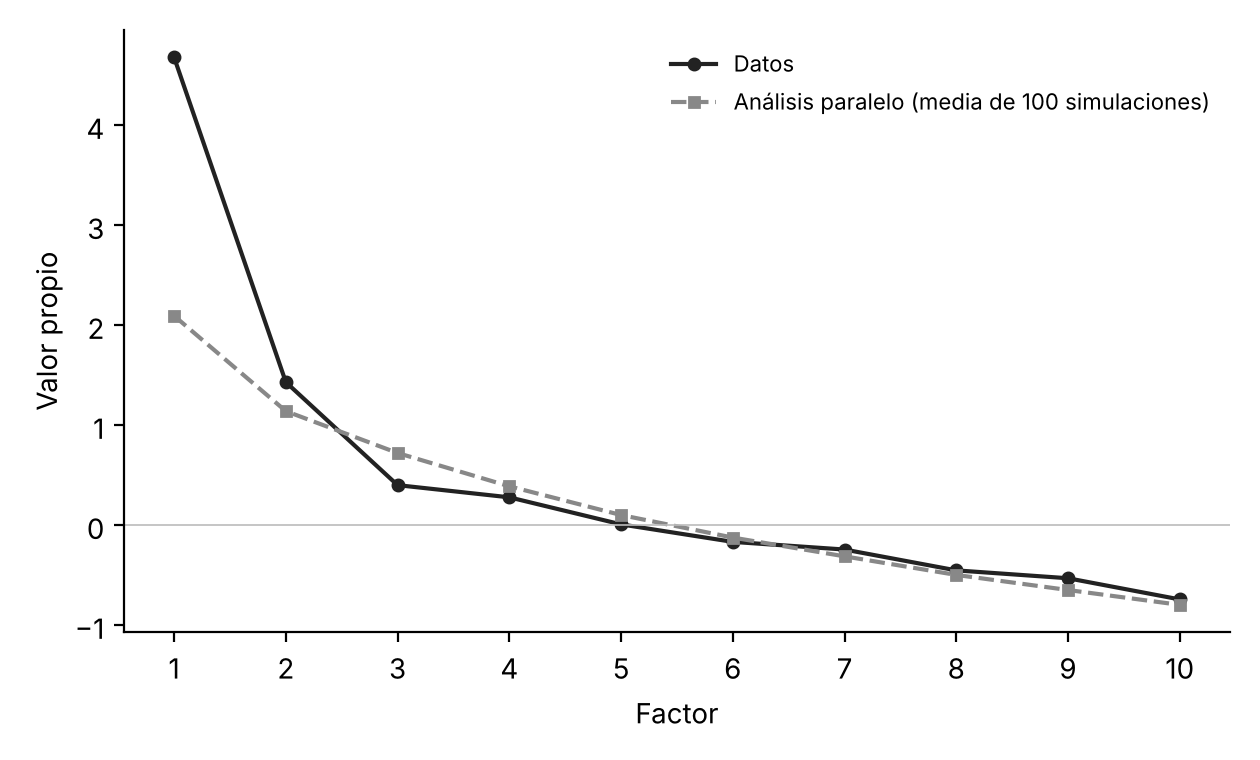
Figure 2. Scree plot with parallel analysis.
Note. Eigenvalues of the reduced data matrix versus the mean of 100 simulated matrices of the same size (seed 2026). Source: own elaboration with analisis_psicometrico.py 1.0 (Python 3.13.16), dataset DST-0013_FZ_HAB_0003. Preliminary data cut: n = 14 of a target of 100, with the survey open.The pattern matrix (Table 6) did not reproduce the expected separation between the two dimensions. The first factor grouped the five bond items with high positive loadings, from .509 (R2) to .963 (R5), but also two fear items with negative loadings: R7, "I avoid certain areas of the malecón" (-.707), and R9, the recoded calmness with family (-.806). It is, therefore, a bipolar factor in which the bond with the malecón is opposed to avoidance and to the lack of calmness. The second factor was defined by R10, "I am alert to my belongings" (.977), R8, "I fear being mugged" (.714), and R6, "I feel unsafe walking at night" (.508), that is, by the contents of vigilance, fear of a specific crime and night-time insecurity.
The program flagged several items that require a decision by the authors. R2 (.509 and .409), R4 (.672 and .307), R8 (-.488 and .714) and R9 (-.806 and .361) showed cross-loadings; R7 and R9 loaded with the opposite sign to that of their dimension on their main factor, and all items except R1 showed low sampling adequacy. In addition, four items reached communalities above .90 (R5, R8, R9 and R10), values that with 14 cases should be read as a symptom of overfitting rather than as evidence of exceptionally representative items. No item was eliminated; the analysis is reported with the ten original items.
Factor | ||||||
|---|---|---|---|---|---|---|
Item | Dimension | 1 | 2 | h² | MSA | Observation |
R1 | Bond with the malecón | .840 | .076 | .680 | .843 | |
R2 | Bond with the malecón | .509 | .409 | .325 | .123 | cross-loading; low MSA |
R3 | Bond with the malecón | .876 | .063 | .745 | .300 | low MSA |
R4 | Bond with the malecón | .672 | .307 | .445 | .184 | cross-loading; low MSA |
R5 | Bond with the malecón | .963 | -.018 | .935 | .345 | low MSA |
R6 | Fear on the malecón | .022 | .508 | .253 | .401 | low MSA |
R7 | Fear on the malecón | -.707 | .060 | .524 | .255 | opposite sign; low MSA |
R8 | Fear on the malecón | -.488 | .714 | .918 | .291 | cross-loading; low MSA |
R9 | Fear on the malecón | -.806 | .361 | .922 | .335 | cross-loading; opposite sign; low MSA |
R10 | Fear on the malecón | .089 | .977 | .920 | .155 | low MSA |
Note. Pattern matrix. Minimum residual extraction and oblimin rotation (γ = 0) on the Pearson correlation matrix; 14 complete cases. h² = communality; MSA = measure of sampling adequacy per item. All loadings are shown. Source: own elaboration with analisis_psicometrico.py 1.0 (Python 3.13.16), dataset DST-0013_FZ_HAB_0003. Preliminary data cut: n = 14 of a target of 100, with the survey open. Given the ratio of 1.4 cases per item, the solution is unstable and is presented only as a preliminary exploration.
Factor | Sum of squared loadings | % of variance | % cumulative |
|---|---|---|---|
1 | 4.52 | 45.22 | 45.22 |
2 | 2.15 | 21.45 | 66.67 |
Note. KMO = .283; Bartlett's test of sphericity: χ²(45) = 161.88, p < .001. Number of factors by parallel analysis: 2. Source: own elaboration with analisis_psicometrico.py 1.0 (Python 3.13.16), dataset DST-0013_FZ_HAB_0003. Preliminary data cut: n = 14 of a target of 100, with the survey still open.
Relationship between the dimensions
The Spearman correlation between the mean scores of Bond with the malecón and Fear on the malecón was negative and of moderate magnitude, ρ = -.367, with a 95% confidence interval of [-.759, .222] and p = .197, with 14 cases (Table 8). The interval includes zero and ranges from a strong negative association to a weak positive one, so the data from this cut do not allow precise estimation of either the sign or the magnitude of the relationship. Moreover, since the factor analysis showed that two fear items group with the bond items, the mean score of the fear dimension does not represent a homogeneous construct, and the correlation between dimensions must be interpreted with that caveat.
Pair of dimensions | n | ρ | IC 95 % | p |
|---|---|---|---|---|
Bond with the malecón and Fear on the malecón | 14 | -.367 | [-.759, .222] | .197 |
Note. Spearman's ρ between the mean scores of each dimension (cases with all items of both). Interval by Fisher transformation with the Bonett and Wright standard error. Cross-sectional design: associations, not effects. Source: own elaboration with analisis_psicometrico.py 1.0 (Python 3.13.16), dataset DST-0013_FZ_HAB_0003. Preliminary data cut: n = 14 of a target of 100, with the survey still open.
Discussion of results
The purpose of this study was to examine, in the preliminary data cut of the pilot survey, the initial behavior of a brief scale of attachment to the malecón and perceived insecurity. The main finding is a divergence between the internal consistency indicators and the evidence of internal structure. Both dimensions reached high alpha and omega coefficients, but the exploratory factor analysis did not reproduce the two expected dimensions, and the sampling adequacy indices indicated that the correlation matrix is poorly suited to analysis. This divergence illustrates a well-established principle: internal consistency is not in itself evidence of unidimensionality or of structural validity. Simulation studies also show that alpha and omega tend to behave similarly under usual conditions (Malkewitz et al., 2023), and in this case both were estimated with a number of cases far below the smallest of the scenarios simulated in that literature, so they must be read as provisional values.
The configuration of the first factor admits a substantive reading that must be tested against further data. That avoidance of areas (R7) and the lack of peace of mind when visiting with family (R9) oppose the bond with the malecón is consistent with studies that associate perceived safety with stronger attachment (Chang et al., 2023; Li et al., 2025) and with evidence that negative experiences in the place are related to a weaker bond (Zahnow and Tsai, 2021). In particular, R9 alludes to an experience of shared enjoyment of the place, closer to the affective benefits of attachment than to fear in the strict sense, so its location in the bond factor may reflect its content and not a measurement error. This interpretation is tentative and poses a content decision for the authors: whether R9 and R7 should remain in the fear dimension, be worded differently, or be relocated.
The second factor, made up of vigilance over belongings, fear of robbery and night-time insecurity, approximates the cognitive and emotional components of fear of crime described by Clément and Piaser (2021), whereas avoidance of areas would correspond to its behavioral component. The separation between these contents suggests that the Fear on the malecón dimension, as worded, combines facets that might require different subscales or a more homogeneous selection of items. The literature on the situated character of fear of crime reinforces this reading: fear varies according to the type of place and its conditions (Song et al., 2023; Gu and Chen, 2024), and on the malecón the night-time experience, lighting and the stretch walked could differentiate responses that the scale groups into a single score (Cruz-Coria, 2024; Rakonjac et al., 2022).
The behavior of R2 deserves particular attention. Pride in the malecón showed the lowest item-total correlation in its dimension, the lowest sampling adequacy of the set and a cross-loading. One possible explanation is that civic pride in an emblematic space can be sustained independently of personal bond; scales that distinguish place identity and place dependence (Boley et al., 2021) or cognitive, emotional and behavioral components (Erdoğdu, 2025) offer frameworks for reviewing whether this item belongs to a different facet of the construct. Something similar occurs with R6 in the fear dimension, whose elimination would raise alpha, which indicates that night-time insecurity does not covary in the same way with the rest of the fear contents in this sample.
As for the relationship between dimensions, the observed correlation was negative, in the direction suggested by part of the literature, but its confidence interval includes zero and is too wide to support a conclusion. With the survey target of 100 cases, the estimate would gain precision, although the magnitude of the association will also depend on how the composition of the fear dimension is resolved. The cross-sectional design prevents, in any case, establishing the direction of a possible relationship: a stronger bond could be accompanied by less fear, but it is also plausible that those who perceive the malecón as safe visit it more and develop a more intense bond. Finally, the review of the data matrix must consider the quality of the responses, given that invariant response patterns can inflate or distort correlations in small samples (Ward and Meade, 2023).
CONCLUSIONS
The study met its objective in the terms that a preliminary data cut allows. In the pilot survey of project FZ-HAB-0003, with 14 cases out of a target of 100, the two dimensions of the scale of attachment to the malecón and perceived insecurity showed high internal consistency coefficients, but the exploratory factor analysis did not reproduce the expected two-dimension structure: the bond items grouped with two fear items of opposite sign, and the contents of vigilance, fear of robbery and night-time insecurity defined a second factor. The relationship between the scores of both dimensions was negative, but its confidence interval included zero. Overall, the results do not yet provide sufficient evidence of structural validity to use the dimension scores in substantive analyses, but they do offer useful information for revising the instrument.
The main limitations derive from the size and the nature of the data cut. The sample of 14 cases, with 1.4 cases per item and an overall sampling adequacy index of .283, makes the loadings, communalities and the decision on the number of factors unstable; the survey was still open at the date of the data cut and no information is available on the sampling procedure or on the sociodemographic characteristics of the participants, which prevents assessing representativeness. The internal consistency coefficients, estimated with so few cases, are provisional. The cross-sectional design prevents establishing dependency relationships between the bond and fear, and the instrument does not distinguish the time of day or the section of the malecón, conditions that the literature links to perceived insecurity. Finally, no confirmatory factor analysis was performed, which will require a larger or independent sample.
These results give rise to decisions for the authors before closing the survey. The first concerns the content of the fear dimension: R7 and R9 grouped with the bond, and their wording or their placement should be revised in light of the conceptual framework. The second concerns R2 and R6, which showed the lowest coherence with their dimension. The third concerns the quality of the responses in the data cut. None of these decisions was made in the present analysis, which retains the ten original items, and all of them should be based on content criteria and not only on the indices of a data cut of 14 cases.
Future work should complete the survey up to the target set and repeat the exploratory factor analysis with the final data cut; then assess the resulting structure by means of confirmatory factor analysis in an independent sample; incorporate sociodemographic, visit-frequency, time-of-day and section variables that make it possible to examine whether the relationship between attachment and fear differs by gender, time or area of the malecón; and complement the measurement with the qualitative perspective that already exists on the city. A brief instrument with documented validity evidence would make it possible to monitor the habitability of the malecón from the experience of those who use it, and would provide information for decisions on lighting, pedestrian crossings and the scheduling of activities in the main coastal public space of Mazatlán.
References
- 1 Almanza Avendaño, A. M., Romero-Mendoza, M., y Gómez San Luis, A. H. (2022). From harassment to disappearance: Young women’s feelings of insecurity in public spaces. PLOS ONE, 17(9), Artículo e0272933. https://doi.org/10.1371/journal.pone.0272933
- 2 Bartlett, M. S. (1950). Tests of significance in factor analysis. British Journal of Statistical Psychology, 3(2), 77–85. https://doi.org/10.1111/j.2044-8317.1950.tb00285.x
- 3 Boley, B. B., Strzelecka, M., Yeager, E. P., Ribeiro, M. A., Aleshinloye, K. D., Woosnam, K. M., y Mimbs, B. P. (2021). Measuring place attachment with the Abbreviated Place Attachment Scale (APAS). Journal of Environmental Psychology, 74, Artículo 101577. https://doi.org/10.1016/j.jenvp.2021.101577
- 4 Bonett, D. G., y Wright, T. A. (2000). Sample size requirements for estimating Pearson, Kendall and Spearman correlations. Psychometrika, 65(1), 23–28. https://doi.org/10.1007/BF02294183
- 5 Chang, J., Lin, Z., Vojnovic, I., Qi, J., Wu, R., y Xie, D. (2023). Social environments still matter: The role of physical and social environments in place attachment in a transitional city, Guangzhou, China. Landscape and Urban Planning, 232, Artículo 104680. https://doi.org/10.1016/j.landurbplan.2022.104680
- 6 Clément, M., y Piaser, L. (2021). Do inequalities predict fear of crime? Empirical evidence from Mexico. World Development, 140, Artículo 105354. https://doi.org/10.1016/j.worlddev.2020.105354
- 7 Cronbach, L. J. (1951). Coefficient alpha and the internal structure of tests. Psychometrika, 16(3), 297–334. https://doi.org/10.1007/BF02310555
- 8 Cruz Coria, E. (2024). Turismo, ocio nocturno y violencia contra las mujeres: una mirada a la Plazuela Machado de la ciudad de Mazatlán, México. PASOS. Revista de Turismo y Patrimonio Cultural, 22(4), 641–656. https://doi.org/10.25145/j.pasos.2024.22.042
- 9 Cruz-Coria, E. (2024). Habitar la ciudad turística: violencias contra las mujeres en los espacios públicos de Mazatlán, México. Ciudad y Territorio Estudios Territoriales, 56(219), 265–284. https://doi.org/10.37230/CyTET.2024.219.14
- 10 Erdoğdu, M. Y. (2025). Development of a Place Attachment Scale for Adolescents (PASA) and determination of its psychometric qualities. BMC Psychology, 13(1), Artículo 120. https://doi.org/10.1186/s40359-025-02448-y
- 11 Ferrando, P. J., Lorenzo-Seva, U., Hernández-Dorado, A., y Muñiz, J. (2022). Decalogue for the factor analysis of test items. Psicothema, 34(1), 7–17. https://doi.org/10.7334/psicothema2021.456
- 12 Garfias Royo, M., Parikh, P., Walker, J., y Belur, J. (2023). The response to violence against women and fear of violence and the coping strategies of women in Corregidora, Mexico. Cities, 132, Artículo 104113. https://doi.org/10.1016/j.cities.2022.104113
- 13 Goretzko, D., Pham, T. T. H., y Bühner, M. (2021). Exploratory factor analysis: Current use, methodological developments and recommendations for good practice. Current Psychology, 40(7), 3510–3521. https://doi.org/10.1007/s12144-019-00300-2
- 14 Gu, J., y Chen, J. (2024). 社区环境感知对居民犯罪恐惧感的影响——以广州市为例 [La influencia de la percepción del entorno comunitario en el miedo al delito de los residentes: el caso de Guangzhou]. 地理科学 [Scientia Geographica Sinica], 44(10), 1801–1808. https://doi.org/10.13249/j.cnki.sgs.20230590
- 15 Harris, C. R., Millman, K. J., van der Walt, S. J., Gommers, R., Virtanen, P., Cournapeau, D., Wieser, E., Taylor, J., Berg, S., Smith, N. J., Kern, R., Picus, M., Hoyer, S., van Kerkwijk, M. H., Brett, M., Haldane, A., Fernández del Río, J., Wiebe, M., Peterson, P., . . . Oliphant, T. E. (2020). Array programming with NumPy. Nature, 585(7825), 357–362. https://doi.org/10.1038/s41586-020-2649-2
- 16 Horn, J. L. (1965). A rationale and test for the number of factors in factor analysis. Psychometrika, 30(2), 179–185. https://doi.org/10.1007/BF02289447
- 17 Instituto Nacional de Estadística y Geografía. (2026a). Encuesta Nacional de Seguridad Pública Urbana (ENSU): Comunicado de prensa 40/26. https://www.inegi.org.mx/contenidos/saladeprensa/boletines/2026/ensu/ENSU2026_07_CP.pdf
- 18 Instituto Nacional de Estadística y Geografía. (2026b). Encuesta Nacional de Seguridad Pública Urbana (ENSU): Reporte de resultados 27/26. https://www.inegi.org.mx/contenidos/saladeprensa/boletines/2026/ensu/ENSU2026_07_RR.pdf
- 19 Kaiser, H. F. (1974). An index of factorial simplicity. Psychometrika, 39(1), 31–36. https://doi.org/10.1007/BF02291575
- 20 Kamani Fard, A., y Paydar, M. (2024). Place attachment and related aspects in the urban setting. Urban Science, 8(3), Artículo 135. https://doi.org/10.3390/urbansci8030135
- 21 Lewicka, M. (2011). Place attachment: How far have we come in the last 40 years? Journal of Environmental Psychology, 31(3), 207–230. https://doi.org/10.1016/j.jenvp.2010.10.001
- 22 Li, J., Koohsari, M. J., Kaczynski, A. T., Tanimoto, R., Watanabe, R., Nakaya, T., Luo, Y., Zhao, J., Yasunaga, A., Oka, K., y Hanibuchi, T. (2025). The built environment and place attachment: Insights from Japanese cities. Preventive Medicine Reports, 50, Artículo 102969. https://doi.org/10.1016/j.pmedr.2025.102969
- 23 Lorenzo-Seva, U., y Ferrando, P. J. (2021). MSA: The forgotten index for identifying inappropriate items before computing exploratory item factor analysis. Methodology, 17(4), 296–306. https://doi.org/10.5964/meth.7185
- 24 Malkewitz, C. P., Schwall, P., Meesters, C., y Hardt, J. (2023). Estimating reliability: A comparison of Cronbach’s α, McDonald’s ωt and the greatest lower bound. Social Sciences & Humanities Open, 7(1), Artículo 100368. https://doi.org/10.1016/j.ssaho.2022.100368
- 25 McDonald, R. P. (2013). Test theory: A unified treatment. Psychology Press. https://doi.org/10.4324/9781410601087 (Obra original publicada en 1999)
- 26 Navarrete-Hernandez, P., Luneke, A., Truffello, R., y Fuentes, L. (2023). Planning for fear of crime reduction: Assessing the impact of public space regeneration on safety perceptions in deprived neighborhoods. Landscape and Urban Planning, 237, Artículo 104809. https://doi.org/10.1016/j.landurbplan.2023.104809
- 27 Navarrete-Hernandez, P., Vetro, A., y Concha, P. (2021). Building safer public spaces: Exploring gender difference in the perception of safety in public space through urban design interventions. Landscape and Urban Planning, 214, Artículo 104180. https://doi.org/10.1016/j.landurbplan.2021.104180
- 28 Ortiz-Brunel, J., Jáuregui-Ulloa, E. E., Comfort, A., Juárez-Rodríguez, P., Lee, R. E., López y Taylor, J., Pérez-Maravilla, J. M., Zarate, I., y Lévesque, L. (2025). Users’ safety perceptions from crime in relation to park type and user gender in Mexico. Journal of Healthy Eating and Active Living, 5(1), 86–96. https://pmc.ncbi.nlm.nih.gov/articles/PMC11887921/
- 29 Pérez-Tejera, F., Anguera, M. T., Guàrdia-Olmos, J., Dalmau-Bueno, A., y Valera, S. (2022). Examining perceived safety and park use in public open spaces: The case of Barcelona. Journal of Environmental Psychology, 81, Artículo 101823. https://doi.org/10.1016/j.jenvp.2022.101823
- 30 Python Software Foundation. (2026). Python (Versión 3.13.16) [Software]. https://www.python.org/
- 31 Rakonjac, I., Zorić, A., Rakonjac, I., Milošević, J., Marić, J., y Furundžić, D. (2022). Increasing the livability of open public spaces during nighttime: The importance of lighting in waterfront areas. Sustainability, 14(10), Artículo 6058. https://doi.org/10.3390/su14106058
- 32 Scannell, L., y Gifford, R. (2010). Defining place attachment: A tripartite organizing framework. Journal of Environmental Psychology, 30(1), 1–10. https://doi.org/10.1016/j.jenvp.2009.09.006
- 33 Song, G., Li, J., Zhang, C., y Gu, J. (2023). Residents’ location-based fear of theft and their impact factors in Guangzhou, China. International Journal of Environmental Research and Public Health, 20(1), Artículo 638. https://doi.org/10.3390/ijerph20010638
- 34 Triana Sánchez, J. L. (2021). Percepción de inseguridad, temor al delito y medidas de autoprotección: el caso de Acapulco, Guerrero. Nóesis. Revista de Ciencias Sociales y Humanidades, 30(60), 166–190. https://doi.org/10.20983/noesis.2021.2.9
- 35 Virtanen, P., Gommers, R., Oliphant, T. E., Haberland, M., Reddy, T., Cournapeau, D., Burovski, E., Peterson, P., Weckesser, W., Bright, J., van der Walt, S. J., Brett, M., Wilson, J., Millman, K. J., Mayorov, N., Nelson, A. R. J., Jones, E., Kern, R., Larson, E., . . . Vázquez-Baeza, Y. (2020). SciPy 1.0: Fundamental algorithms for scientific computing in Python. Nature Methods, 17(3), 261–272. https://doi.org/10.1038/s41592-019-0686-2
- 36 Ward, M. K., y Meade, A. W. (2023). Dealing with careless responding in survey data: Prevention, identification, and recommended best practices. Annual Review of Psychology, 74, 577–596. https://doi.org/10.1146/annurev-psych-040422-045007
- 37 Xiang, L., Ye, Y., Pan, J., y Wang, Z. (2022). 基于生活世界的历史街区居民地方依恋研究——以新疆伊宁前进街为例 [El apego al lugar de los residentes de barrios históricos desde la perspectiva del mundo de la vida: el caso de la calle Qianjin en Xinjiang]. 北京大学学报(自然科学版) [Acta Scientiarum Naturalium Universitatis Pekinensis], 58(3), 488–502. https://doi.org/10.13209/j.0479-8023.2022.010
- 38 Zahnow, R., y Tsai, A. (2021). Crime victimization, place attachment, and the moderating role of neighborhood social ties and neighboring behavior. Environment and Behavior, 53(1), 40–68. https://doi.org/10.1177/0013916519875175
Declarations
Funding
The authors received no funding for the development of this research.
Conflict of interest
The authors declare that there is no conflict of interest.
Authorship contributions
Conceptualization: Patrón Gandara Teresa
Data curation: Pedro Antonio Valdez Lizárraga
Formal analysis: Víctor Manuel Martínez García
Investigation: Patrón Gandara Teresa
Methodology: Yennifer Díaz Romero
Project administration: Pedro Antonio Valdez Lizárraga
Software: Pedro Antonio Valdez Lizárraga
Supervision: Víctor Manuel Martínez García
Validation: Víctor Manuel Martínez García
Visualization: Yennifer Díaz Romero
Writing – original draft: Patrón Gandara Teresa
Writing – review and editing: Yennifer Díaz Romero