

Abstract
Floods affect the habitability of exposed dwellings not only through material damage but also through the worry they cause and through reliance on neighbourly and institutional support. Using the preliminary data cut from the pilot survey of project FZ-HAB-0016 on the Factoriza UAS platform, this study described the initial behaviour of a fifteen-item scale with three dimensions, Worry about floods, Housing resistance to heavy rain and Neighbour support during floods, administered in Escuinapa and El Rosario, Sinaloa, Mexico. With a cross-sectional design, 6 cases out of a target of 100 were analysed while data collection remained open. Descriptive statistics, Cronbach’s alpha, McDonald’s omega total and Spearman correlations between dimensions were estimated, and an exploratory factor analysis was attempted. Internal consistency was α = .843 and ω = .870 for Worry, α = .739 and ω = .757 for Support, and α = .727 and ω = .772 for Housing resistance, excluding R6, which showed no variance. The factor analysis was not interpretable: sampling adequacy and Bartlett’s test could not be computed and the solution showed Heywood cases. Correlations between dimensions had confidence intervals that included zero. Items R4 and R12 were the least consistent with their dimensions. The findings do not yet provide structural validity evidence and point to specific revisions of the instrument before data collection is completed.
Keywords
flood risk, psychosocial vulnerability, housing, social capital
INTRODUCTION
Floods are among the hydro-meteorological hazards that most frequently affect human settlements, and their consequences do not end with material damage. For households living in exposed areas, the rainy season is also a period of uncertainty, of monitoring the sky and the watercourse, of preparing the home, and of depending on help from neighbors and authorities. Recent research has documented that living with a persistent risk of flooding is itself a stressor, regardless of having experienced a previous flood (Fothergill et al., 2021), and that concern about future floods can persist for more than a decade after the event (Twiddy et al., 2022). The habitability of an exposed home therefore includes its physical capacity to withstand rain, but also the psychological and social experience of those who inhabit it.
This broad conception of habitability is supported by the literature on vulnerability. In settlements of the Global South, the review by Hussainzad and Gou (2024) identified floods as the most frequently mentioned climate risk and poor housing conditions as the most frequent vulnerability. Studies with affected populations have shown that housing type and perceived safety in the face of floods are associated with anxiety, and material losses with depression (Rahman et al., 2025), and that poverty, food insecurity, and loss of basic infrastructure accompany changes in emotional distress among low-income women after a flood (Nöthling et al., 2024). At the same time, social capital, understood as networks, trust, and norms of reciprocity among people and groups, consistently emerges as a resource for preparedness, response, and recovery (Zhao et al., 2025; Pazhuhan et al., 2023).
In Mexico, inequality in the face of disaster risks has been documented as a matter of justice and human rights. Gran Castro (2025) analyzed recommendations from the National Human Rights Commission and showed that injustice in disasters results from the interaction among the type of hazard, vulnerability factors, and the actions or omissions of the institutions responsible for risk management; among the cases reviewed are housing deprivation after a hurricane and the floods that affected dozens of communities. In the northwest of the country, Marín-Monroy et al. (2021) found in Los Cabos, Baja California Sur, differences between households' perception and the actual impacts of tropical cyclones, and in Monterrey Chavez-Rodriguez (2024) described how residents of flood-prone neighborhoods construct daily practices to coexist with risk, involving place attachment and community organization.
Sinaloa has significant exposure conditions. In Culiacán, Mancera-González and Rivas-Ochoa (2025) concluded that the city lacks a current flood plan and an updated risk atlas, and that economic and sociocultural factors are related to the population living in flood-prone areas. Ibarra and Salazar Yanes (2024) estimated household-level economic losses due to flooding in 3 cities in the state and attributed vulnerability to deficient urban planning, malfunctioning drainage, and waste accumulation. In the southern part of the state, the municipalities of Escuinapa and Rosario are located on the coastal plain, and in October 2018 Hurricane Willa was located about 20 kilometers off the coast, in the vicinity of Escuinapa, as a category 3 hurricane and with forecasts of torrential rains for Sinaloa (Comisión Nacional del Agua [Conagua], 2018). Despite this, research on the psychosocial experience of exposed households in this region is scarce and has focused on the state's larger cities.
Added to this scarcity of studies is a measurement problem. To monitor the habitability of exposed housing from the perspective of its inhabitants, a brief instrument is required that jointly captures concern about flooding, the perception of the resistance of the dwelling, and the support expected from neighbors and institutions. Before using its scores to estimate relationships among these dimensions or to compare territories, it is essential to gather evidence on the consistency of the scores and on the internal structure of the instrument, and such evidence depends critically on sample size.
The FZ-HAB-0016 project of the Factoriza UAS platform set out to study habitability and psychosocial vulnerability to flooding in Escuinapa and Rosario through a fifteen-item scale organized into three dimensions: Concern about flooding, Resistance of housing to rainfall, and Support among neighbors during flooding. This article reports the results of the first pilot survey, whose preliminary data cut is of a very small size. Therefore, its scope is the initial review of the instrument and not the estimation of population parameters.
Consequently, the general objective was to describe the initial behavior of a habitability and psychosocial vulnerability to flooding scale in the preliminary stage of its pilot survey in Escuinapa and El Rosario, Sinaloa. The specific objectives were, first, to describe the distribution of responses to each item; second, to estimate the internal consistency of each dimension using alpha and omega coefficients; third, to assess the feasibility of an analysis of the internal structure with the available sample size; and fourth, to explore the relationship between the scores of the three dimensions. The project did not declare hypotheses; therefore, the study has a descriptive and exploratory scope.
Habitability, Housing and Flood Risk
The habitability of housing exposed to flooding depends on the interaction between the hazard, the physical characteristics of the housing and its surroundings, and the social capacities of households. In settlements with insufficient infrastructure, the combination of precarious housing, limited basic services, and location in low-lying areas produces direct and indirect threats to the population (Hussainzad & Gou, 2024). The review by Bhanye (2025) on community adaptation to flooding in informal settlements of the Global South documented structural measures, such as drainage and plot reorganization, together with non-structural measures, such as early warning systems and community mapping, and concluded that their long-term effectiveness depends on their integration into formal risk management frameworks and on an equitable allocation of resources.
In the Sinaloan context, the available studies emphasize the urban and territorial component of exposure. Ibarra and Salazar Yanes (2024) indicated that floods in the state are related to deficient urban planning and drainage failures, and that household losses include the decrease in housing value, so they proposed a socio-environmental justice approach. Mancera-González and Rivas-Ochoa (2025), using an ethnographic approach in vulnerable neighborhoods of Culiacán affected by two tropical cyclones, showed that the population's permanence in flood-prone areas responds to economic and sociocultural factors. The Resistance of housing to rainfall dimension of the instrument studied captures precisely this facet: whether the housing resists rainfall (R6), whether water enters it (R7, inverse), whether it is located on high ground (R8), whether it offers a safe place for the family (R9), and whether it protects belongings from moisture (R10).
It is worth noting that these items combine attributes of a different nature. The location of the dwelling on high ground is a condition of the site, whereas water ingress or the protection of belongings describe the performance of the construction, and the existence of a safe place alludes to an appropriation of domestic space in the face of the threat. This heterogeneity is not in itself a defect, but it anticipates that the dimension could behave as an index of conditions rather than as a reflective scale of a single latent attribute, a distinction that has consequences for the interpretation of internal consistency.
Psychosocial dimension: concern and distress in the face of floods
The literature on flood risk perception has distinguished cognitive components, such as perceived probability and severity, and affective components, such as worry. The classic review by Bubeck et al. (2012), cited here as the most widely used reference in this field, showed that risk perception alone is weakly related to the adoption of mitigation measures, and that the assessment of coping capacity plays a more consistent role. Recent studies with exposed rural populations have treated worry as an explicit dimension of risk perception, along with preparedness, knowledge, and experience, and have found that housing quality and exposure are related to these dimensions (Savari et al., 2025).
In the area of mental health, Fothergill et al. (2021) documented, through interviews with residents of an area of persistent risk, anticipatory anxiety about future floods, low self-efficacy, and feelings of helplessness, with greater anxiety among those who did not accept the risk. Twiddy et al. (2022) found that residents affected by a flood remained more concerned about future floods than unaffected residents more than a decade later, and that many experienced anxiety when storms were forecast. In low-income contexts, Rahman et al. (2025) associated temporary housing and low perceived safety regarding floods with higher levels of anxiety, and Nöthling et al. (2024) observed that loss of access to basic services accompanied increases in emotional distress and anxiety after a flood. On the northern border of Mexico, Freimund et al. (2022) found that previous experience with floods corresponded with the degree of concern about future floods and that women felt less prepared than men.
The Flood Worry dimension of the instrument integrates these contents: worry that the home will flood during the season (R1), difficulty sleeping when it rains heavily (R2), perception of danger to the family (R3), calmness at the announcement of a storm (R4, reverse), and distress when recalling past floods (R5). The inclusion of an item referring to the memory of previous events introduces an experiential component that, according to the reviewed literature, is associated with current worry, but that is only applicable to those who have experienced a flood.
Social capital and neighborhood support in the face of flooding
Social capital has become established as a central component of community resilience to disasters. A recent systematic review identified five mechanisms through which social capital fosters such resilience: social learning, collective action, preparedness, information communication, and civic responsibility (Zhao et al., 2025). The distinction between bonding, bridging, and linking capital is useful for the present study: in flood-prone rural areas of Bangladesh, Azad and Pritchard (2023) observed that bonding capital predominates at the onset of flooding to protect people and property, bridging capital becomes relevant during the crisis, and linking capital with institutions is decisive in recovery, with all three forms mutually reinforcing each other.
Empirical evidence also shows that the relationship between social capital and resilience depends on the residential context. In flood-prone coastal communities in northern Iran, Pazhuhan et al. (2023) found that bonding capital is notably related to resilience capacity and that respect among neighbors and the availability of public spaces are among the most relevant criteria. In seven flood-prone communities in Nanjing, Chen et al. (2024) identified social cohesion and collective efficacy as the most representative components of social capital, with differences according to the type of housing complex. In the Chinese-language literature, Li et al. (2024) evaluated the social resilience of an urban community affected by the 2021 floods in Henan Province based on resources, organizational management, and culture, and recommended strengthening residents' self-organization and community governance.
The dimension Support among neighbors in the face of floods of the instrument combines these forms of social capital: expected help from neighbors (R11) and mutual warning before storms (R12) correspond to bonding capital; the perception that each family faces floods alone (R13, reverse) expresses its absence; knowledge of where to go in case of evacuation (R14) is related to preparedness, and attention from authorities to the neighborhood (R15) corresponds to linking capital with institutions. This mixed composition, as in the housing dimension, anticipates that the dimension may bring together contents that do not covary in the same way.
Justice in the Face of Risk and Southern Sinaloa
The justice approach to disasters allows psychosocial vulnerability to be placed in its structural context. Gran Castro (2025) showed that the rights violations associated with disasters in Mexico combine threat, vulnerability, and the action of institutions, so that the authorities' attention to flood-prone neighborhoods is not a fact unrelated to habitability, but one of its conditions. Along these lines, the R15 item introduces the institutional dimension of risk into the scale, and its behavior with respect to the other support items will make it possible to assess whether trust in the authorities is part of the same construct as neighborhood support or constitutes a different facet.
The south of Sinaloa, with Escuinapa and Rosario on the coastal plain, constitutes an appropriate setting for studying these relationships. The proximity of Hurricane Willa to Escuinapa in 2018 (Conagua, 2018) and the documentation of the social construction of risk in other cities of the state (Mancera-González and Rivas-Ochoa, 2025) suggest that flood experience and associated concern are part of the daily life of many households. Measuring that experience validly requires, however, a gradual process of building evidence, which begins with the review of the instrument in a pilot survey such as that reported below.
METHODOLOGY
Design
A quantitative, non-experimental, cross-sectional study was carried out with a descriptive and exploratory scope. The data correspond to the survey LEV-0021, "Southern pilot of Sinaloa · Floods and housing", from the FZ-HAB-0016 project of the Factoriza UAS platform, and to the frozen dataset DST-0011, with a cut-off date of June 9, 2026. The survey constitutes an independent sample and is the only one of the project, so data from other surveys were not combined.
Population, sample, and data cutoff
The survey population was defined as persons aged 18 years or older living in households exposed to flooding in southern Sinaloa. The territory corresponds to Escuinapa and El Rosario, Sinaloa, within an exposure area delimited by the project lead. According to the Factoriza log, 14 persons opened the questionnaire and 6 completed it; no cases were excluded due to quality control, so 6 cases were analyzed (Table 2).
The analyzed cut is preliminary: it brings together 6 cases out of a target of 100, and the survey remained open, in field status, as of the cut-off date. This condition limits the scope of all the results. With 6 cases for 15 items, the ratio is 0.4 cases per item, far below that required by any internal structure analysis; the adequacy of the data and of the sample is the first condition that the methodological literature asks to verify in item factor analysis (Ferrando et al., 2022; Goretzko et al., 2021). Nor was it possible to distinguish in the cut the proportion of participants from each municipality or their sociodemographic characteristics.
Instrument
A 15-item scale with a 5-point response format was applied, from Strongly disagree (1) to Strongly agree (5), organized into 3 dimensions of 5 items each: Concern about flooding (R1 to R5), Resistance of the home to rain (R6 to R10), and Support among neighbors during floods (R11 to R15). 3 items are worded in the reverse direction, R4 ("I feel calm when a storm is announced"), R7 ("Rainwater enters my home") and R13 ("In my neighborhood, each family faces floods alone"), and are recoded in the data matrix. After recoding, a higher score indicates more concern, more perceived resistance of the home, and more neighbor support, respectively. Table 1 presents the code, dimension, text, and direction of each item.
Code | Dimension | Reagent | Inverse |
|---|---|---|---|
R1 | Concern about flooding | I am concerned that my home will flood during this rainy season | No |
R2 | Concern about flooding | When it rains heavily, I find it difficult to sleep. | No |
R3 | Concern about flooding | I feel that my family is in danger when it rains heavily | No |
R4 | Concern about flooding | I feel calm when a storm is forecast | Yes |
R5 | Concern about flooding | Remembering past floods makes me feel distressed | No |
R6 | Housing resistance to rainfall | My home withstands heavy rains | No |
R7 | Housing resistance to rainfall | Rainwater enters my home | Yes |
R8 | Resistance of housing to rain | My home is on high ground in the neighborhood | No |
R9 | Housing resistance to rainfall | My family has a safe place inside the home during rains | No |
R10 | Housing resistance to rainfall | My family's belongings are protected from moisture | No |
R11 | Support among neighbors during floods | My neighbors would help me if my home were flooded | No |
R12 | Support among neighbors during floods | In my neighborhood, we alert each other when a storm approaches | No |
R13 | Support among neighbors during floods | In my neighborhood, each family faces flooding alone | Yes |
R14 | Support among neighbors during floods | I know where to go if I have to leave my home due to a flood | No |
R15 | Support among neighbors during floods | The authorities respond to my neighborhood when it floods | No |
Note. 5-point response scale (Strongly disagree, Disagree, Neither agree nor disagree, Agree, Strongly agree). Reverse-coded items are already recoded in the provided matrix. Source: Factoriza UAS, project FZ-HAB-0016, survey LEV-0021, dataset DST-0011.
Procedure
Responses were collected through the survey questionnaire managed in Factoriza UAS, which records express online informed consent before the first item and does not collect identifying data. Factoriza froze the DST-0011 dataset with a cryptographic fingerprint, generated the matrix with reverse-scored items recoded, and produced the descriptive and internal consistency analyses (runs RUN-00047 to RUN-00053). Using the data file and the item dictionary exported by the platform, the complementary analyses described below were run.
Data analysis
In a first stage, Factoriza UAS calculated the mean, standard deviation, skewness, kurtosis, and response percentages at the extreme values of each item, as well as the internal consistency of each dimension using Cronbach's alpha (Cronbach, 1951), with the corrected item-total correlation and alpha if the item is deleted. In a second stage, the program analisis_psicometrico.py, version 1.0, was run in Python 3.13.16 (Python Software Foundation, 2026), with NumPy 2.5.3 (Harris et al., 2020), SciPy 1.18.1 (Virtanen et al., 2020), and pandas 3.0.5. The program applies fixed and declared procedures, without manual intervention in the calculations, and excludes from all analyses items without variation.
The program estimated McDonald's total omega (McDonald, 1999/2013) for each dimension from a one-factor model, without inverting reactants, as a complement to alpha, which assumes equivalent charges between reactants. He also attempted exploratory factor analysis of all items with variation, preceded by the Kaiser-Meyer-Olkin sample adequacy measure (Kaiser, 1974), reagent adequacy (Lorenzo-Seva & Ferrando, 2021) and Bartlett's sphericity test (Bartlett, 1950), with number of factors by parallel analysis, extraction by minimal residual, and oblimin rotation; the classical indices are cited in their original source because they are the methodological reference for each procedure. Finally, he estimated the relationship between the mean scores of the dimensions with the Spearman coefficient and its 95% confidence interval, using the Fisher transformation with the standard error of Bonett and Wright (2000).
The reference values for interpreting the indices are treated as guidelines from the literature and not as decision rules (Ferrando et al., 2022). No item was eliminated by the analysis's decision; the program flags problematic items and leaves the decision to the authors. No confirmatory factor analysis was performed, which is proposed as future work with the final wave or with 1 independent sample.
Ethical considerations
Participation was voluntary and anonymous. Factoriza UAS records each participant's express online informed consent and does not collect names, addresses, emails, or other identifying data, which is especially relevant in a population that may have experienced material losses or traumatic experiences.
Declaration on the use of artificial intelligence
During the preparation of this manuscript, the Factoriza UAS platform was used for data management and descriptive and internal consistency analyses; a Python analysis program with fixed and validated procedures for omega, exploratory factor analysis, and correlations between dimensions; and the Claude Opus language model (Anthropic), to run that program, assisted literature search, writing a draft, and assembling the document from the results. The authors reviewed, corrected, and approved the entirety of the text, verified each reference, and assume full responsibility for the content of the article.
RESULTS
Sample composition
Indicator | Value |
|---|---|
People who opened the questionnaire | 14 |
Completed questionnaires | 6 |
Cases excluded by quality control | 0 |
Cases analyzed | 6 |
Items | 15 |
Note. Survey “Southern Sinaloa Pilot · Floods and Housing” (LEV-0021); population: persons aged 18 years or older living in dwellings exposed to flooding in southern Sinaloa; territory: Escuinapa and El Rosario, Sinaloa, within an exposure area defined by the project lead. Dataset DST-0011, fingerprint 57d0a66e5e1a868e. Source: Factoriza UAS. Preliminary data cut: n = 6 of a target of 100, with the survey open.
Descriptive statistics
Table 3 and Figure 1 present the descriptive statistics. In Concern about flooding, the highest mean corresponded to R1, concern that the home will flood during the season (M = 3.17, SD = 1.33), and the lowest to R2, difficulty sleeping when it rains heavily (M = 2.17, SD = 0.98). In Housing resistance to rain, R6, “My home withstands heavy rains,” obtained the same response in all six cases (M = 4.00, SD = 0.00), whereas R9, the safe place inside the home, and R10, the protection of belongings, reached means of 3.83 (SD = 0.98 and 0.75), and R8, location on high ground, had the lowest in the dimension (M = 2.83, SD = 0.75). In Support among neighbors in the event of flooding, the highest mean was that of R12, mutual warning before storms (M = 3.50, SD = 0.55), and the lowest was that of R15, response from authorities (M = 2.83, SD = 1.17); R14, knowing where to go in case of evacuation, showed the greatest dispersion in the set (SD = 1.47).
In descriptive terms, worry scores were around or below the midpoint of the scale, those for housing resistance were above it, and those for neighborhood support were around it. The absence of variation in R6 prevents calculating its skewness, its kurtosis, and its correlation with the rest of its dimension, and is itself a finding: in this sample, all participants reported agreeing that their housing withstands heavy rains, which coexists with intermediate means for water ingress and terrain location. With six cases, the skewness and kurtosis indices, which range from -1.44 (R9) to 0.89 (R13) and from -3.33 (R12) to 3.60 (R9), lack stability and should not be interpreted as a description of the population.
Item | M | OF | Skewness | Kurtosis | Floor effect | Ceiling effect |
|---|---|---|---|---|---|---|
R1 | 3.17 | 1.33 | -1.21 | -0.46 | 17% | 67% |
R2 | 2.17 | 0.98 | -0.46 | -2.39 | 33% | 50% |
R3 | 2.67 | 1.37 | -0.52 | -1.88 | 33% | 33% |
R4 | 3.00 | 0.89 | 0.00 | -1.88 | 33% | 33% |
R5 | 2.67 | 1.03 | -0.67 | 0.59 | 17% | 17% |
R6 | 4.00 | 0.00 | — | — | 100% | 100% |
R7 | 3.67 | 1.03 | -0.67 | 0.59 | 17% | 17% |
R8 | 2.83 | 0.75 | 0.31 | -0.10 | 33% | 17% |
R9 | 3.83 | 0.98 | -1.44 | 3.60 | 17% | 17% |
R10 | 3.83 | 0.75 | 0.31 | -0.10 | 33% | 17% |
R11 | 3.17 | 0.75 | -0.31 | -0.10 | 17% | 33% |
R12 | 3.50 | 0.55 | 0.00 | -3.33 | 50% | 50% |
R13 | 3.00 | 1.26 | 0.89 | -0.78 | 50% | 17% |
R14 | 3.17 | 1.47 | -0.42 | -0.86 | 17% | 17% |
R15 | 2.83 | 1.17 | -0.67 | -0.45 | 17% | 33% |
Note. N = 6. Floor and ceiling indicate the percentage of responses at the minimum and maximum values. The dash indicates a statistic not calculable due to lack of variation. The item-total correlation column for the fifteen items is omitted because it combines three dimensions; the item-total correlation by dimension is presented in Table 4. RUN-00047 execution by Factoriza UAS. Preliminary cut: n = 6 out of a target of 100, with the survey open.
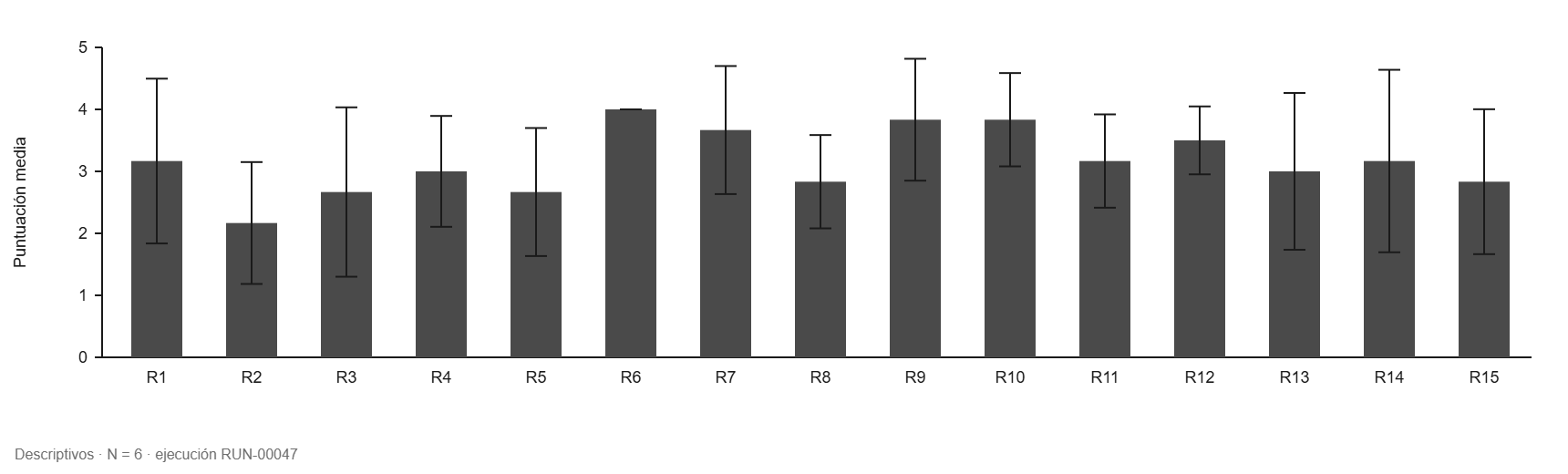
Figure 1. Mean scores per item with one-standard-deviation bars.
Note. N = 6. Scale from 1 to 5; reverse-scored items R4, R7, and R13 are shown recoded. RUN-00047 execution by Factoriza UAS. Preliminary cut: n = 6 out of a target of 100, with data collection still open.Internal consistency
Table 4 brings together the item analysis by dimension calculated by Factoriza, and Table 5 presents the alpha and omega coefficients from the complementary program. In Concern about flooding, alpha coincided in both calculations (.843) and omega was .870. In Support among neighbors in the face of flooding, alpha also coincided (.739) and omega was .757. In Housing resistance to rain, Factoriza reported an alpha of .682 with the 5 items, including R6 without variation, whereas the program, which excludes items without variation, estimated an alpha of .727 and an omega of .772 with 4 items. Both values are consistent with each other, because .727 is exactly the alpha if R6, as reported by Factoriza, is eliminated.
The item-by-item analysis identifies, in each dimension, an item that is poorly coherent with the rest. In Concern about flooding, R4, calmness when a storm is announced in its recoded version, presented a corrected item-total correlation of .214, and its removal would raise the dimension's alpha to .901; in contrast, R2 reached the highest correlation (.957). In Support among neighbors in the event of flooding, R12, neighbors warning each other about storms, showed a corrected correlation of .049, and its removal would raise alpha to .797, while R15, attention from the authorities, presented the highest (.768). In Housing resistance to rain, R8, location on high ground, had the highest correlation (.856), and its removal would reduce alpha to .437, which indicates that the consistency of this dimension rests largely on a single item.
Dimension | Item | Corrected item–total r | α if the item is removed |
|---|---|---|---|
Concern about flooding | R1 | .676 | .807 |
Concern about flooding | R2 | .957 | .737 |
Concern about flooding | R3 | .862 | .744 |
Concern about flooding | R4 | .214 | .901 |
Concern about flooding | R5 | .621 | .819 |
Housing resistance to rainfall | R6 | — | .727 |
Housing resistance to rainfall | R7 | .490 | .615 |
Housing resistance to rainfall | R8 | .856 | .437 |
Housing resistance to rainfall | R9 | .427 | .646 |
Housing resistance to rainfall | R10 | .393 | .649 |
Support among neighbors during floods | R11 | .424 | .725 |
Support among neighbors during floods | R12 | .049 | .797 |
Support among neighbors during floods | R13 | .733 | .588 |
Support among neighbors during floods | R14 | .556 | .686 |
Support among neighbors during floods | R15 | .768 | .577 |
Note. N = 6. The corrected item-total correlation excludes the item itself from its dimension total; the dash indicates that it is not calculable because R6 shows no variation. Cronbach's α for the complete dimension, with 5 items each: Concern about flooding = .843 (execution RUN-00048); Housing resistance to rain = .682 (RUN-00050); Support among neighbors during flooding = .739 (RUN-00052). Source: Factoriza UAS, Tables 4, 6, and 8 of the package, compiled without modifying values. Preliminary cutoff: n = 6 out of a target of 100, with data collection open.
Dimension | Reagents | n | α | ω |
|---|---|---|---|---|
Concern about flooding | 5 | 6 | .843 | .870 |
Housing resistance to rainfall | 4 | 6 | .727 | .772 |
Support among neighbors during floods | 5 | 6 | .739 | .757 |
Note. α = Cronbach's alpha; ω = McDonald's total omega from a single-factor model by minimum residual, without reverse-scoring items. Complete cases per dimension. Source: own elaboration with analisis_psicometrico.py 1.0 (Python 3.13.16), dataset DST-0011_FZ_HAB_0016. R6 is not included in the dimension Resistencia de la vivienda ante lluvias because it showed no variation; therefore, the number of items and α differ from those in Factoriza. Preliminary cutoff: n = 6 out of a target of 100, with data collection open.
Internal structure
The planned exploratory factor analysis could not be estimated interpretably with this cut, and for that reason its results are not presented in tables. After excluding R6 due to lack of variation, the program worked with 14 items and 6 complete cases. With fewer cases than items, the correlation matrix is not invertible, so the overall Kaiser-Meyer-Olkin measure of sampling adequacy, the item-level adequacy, and Bartlett's test of sphericity could not be computed. Although parallel analysis suggested 3 factors and the program completed the extraction, the solution presented communalities greater than 1 for R2 (1.016) and R7 (1.025), that is, Heywood cases, which indicate an improper solution. These results, which are recorded in the reproducibility appendix, do not provide evidence on the dimensionality of the instrument and should not be cited as such.
Relationship between dimensions
Pair of dimensions | n | ρ | IC 95 % | p |
|---|---|---|---|---|
Concern about flooding and housing resistance to rainfall | 6 | -.309 | [-.901, .685] | .551 |
Concern about flooding and support among neighbors during floods | 6 | .232 | [-.721, .882] | .658 |
Housing resistance to rainfall and support among neighbors during floods | 6 | .725 | [-.340, .975] | .103 |
Note. Spearman's ρ between the mean scores for each dimension (cases with all items from both). Interval via Fisher transformation with the Bonett and Wright standard error. Cross-sectional design: associations, not effects. Source: own elaboration with analisis_psicometrico.py 1.0 (Python 3.13.16), dataset DST-0011_FZ_HAB_0016. Preliminary cut: n = 6 out of a target of 100, with data collection ongoing.
DISCUSSION
The purpose of this study was to describe the initial behavior of a scale of habitability and psychosocial vulnerability to floods in the preliminary phase of its pilot survey. The first result, and the most important for the authors, is methodological: with six cases it is not possible to gather evidence of internal structure, and the consistency coefficients obtained should be understood as a first reading of the behavior of the items and not as estimates of the instrument's reliability. The simulation literature on alpha and omega coefficients has been developed with samples much larger than that of this preliminary phase (Malkewitz et al., 2023), and the literature guiding item factor analysis places sample adequacy as a prerequisite for any interpretation (Ferrando et al., 2022; Goretzko et al., 2021).
With that caveat, the cut offers useful signals for reviewing the instrument. The lack of variation in R6 suggests that the general statement that housing withstands heavy rains may generate socially desirable or poorly discriminating responses, especially when it coexists with more specific items, such as water entry or terrain location, which did show dispersion. From the perspective of vulnerability, in which housing precariousness is the most frequently reiterated factor (Hussainzad y Gou, 2024), items that describe observable conditions are more informative than global assessments. The strong dependence of this dimension's alpha on R8 reinforces the idea that the dimension behaves more as a set of housing conditions than as a homogeneous scale.
In the worry dimension, R4's behavior merits attention. Feeling calm at the announcement of a storm, worded in reverse, was the item least consistent with its dimension. A possible explanation is that the reported calm reflects confidence in preparedness or in warnings, and not only the absence of worry, consistent with the distinction between risk perception and appraisal of coping capacity (Bubeck et al., 2012). Another is that reverse wording generated comprehension difficulties. The items referring to insomnia and the feeling of danger to the family, by contrast, showed high consistency, which aligns with the description of anticipatory anxiety about storms in exposed populations (Fothergill et al., 2021; Twiddy et al., 2022).
In the neighborhood support dimension, mutual warning in the event of storms (R12) was the least consistent item, whereas attention from the authorities (R15) was the most consistent with the total. This pattern is compatible with the distinction between bonding capital and linking capital (Azad and Pritchard, 2023): warning among neighbors could be a widespread and weakly differentiating practice, whereas the perception of institutional attention and of concrete support in the event of flooding would vary more across households. The positive and high, although imprecise, relationship between perceived housing resistance and neighborhood support is compatible with evidence linking social capital to adaptive capacity (Pazhuhan et al., 2023; Zhao et al., 2025), but with six cases it cannot be distinguished from a sampling coincidence, and the cross-sectional design would in any case prevent establishing its direction.
Finally, the review of the instrument should consider that some items presuppose experiences that not all people have, such as remembering past floods (R5) or the need to evacuate (R14). The literature indicates that previous flood experience is related to current concern (Freimund et al., 2022; Twiddy et al., 2022), so recording whether the household has been flooded and when would make it possible to separate experience from concern and better describe the psychosocial vulnerability of households in Escuinapa and El Rosario.
CONCLUSIONS
The study fulfilled its objective within the scope permitted by a preliminary set of 6 cases. The habitability and psychosocial vulnerability to flooding scale of the FZ-HAB-0016 project showed, in its pilot survey in Escuinapa and El Rosario, internal consistency coefficients from .843 to .870 for Flood Concern, from .739 to .757 for Support Among Neighbors, and from .727 to .772 for Housing Resistance with 4 items, but these values are provisional. Exploratory factor analysis could not be estimated in an interpretable manner, and the correlations between dimensions had confidence intervals that included zero. The results do not yet provide evidence of structural validity and serve mainly to identify the items that should be reviewed before continuing the survey.
The limitations are substantial and must be stated without qualification. The sample of 6 cases, against a target of 100, with 0.4 cases per item, prevents estimation of the internal structure and makes all statistics unstable; data collection was still open at the cut-off date, and a high proportion of the individuals who opened the questionnaire did not complete it. No information is available on the sampling procedure, the delimitation of the exposure area, the distribution by municipality, or the sociodemographic characteristics of the participants, so representativeness cannot be assessed. R6 showed no variation and was excluded from the complementary analyses. The cross-sectional design prevents establishing dependency relationships among the dimensions, and no confirmatory factor analysis was performed.
These results give rise to decisions for the authors. The first is to review the wording of R6, whose general formulation did not discriminate among participants, and to consider more specific items on housing performance. The second is to review R4 in Concern and R12 in Support among neighbors, which showed the lowest coherence with their dimension. The third is to assess whether the housing dimension should be treated as an index of conditions rather than as a reflective scale. The fourth, procedural, is to examine the causes of the high proportion of incomplete questionnaires. None of these decisions was made in the present analysis, which retains the 15 original items.
Future lines of research include completing the survey up to the planned target, incorporating variables on prior flood experience, length of residence, municipality, and housing characteristics, and repeating the exploratory factor analysis with the final cut, to then evaluate the resulting structure through confirmatory factor analysis in one independent sample. An instrument with documented validity evidence would make it possible to monitor the habitability of exposed housing in southern Sinaloa from the experience of its inhabitants and to provide information for local risk management, drainage planning, and psychosocial and community support programs during the rainy season.
References
- 1 Azad, M. J., y Pritchard, B. (2023). Bonding, bridging, linking social capital as mutually reinforcing elements in adaptive capacity development to flood hazard: Insights from rural Bangladesh. Climate Risk Management, 40, Artículo 100498. https://doi.org/10.1016/j.crm.2023.100498
- 2 Bartlett, M. S. (1950). Tests of significance in factor analysis. British Journal of Statistical Psychology, 3(2), 77–85. https://doi.org/10.1111/j.2044-8317.1950.tb00285.x
- 3 Bhanye, J. (2025). A review study on community-based flood adaptation in informal settlements in the Global South. Discover Sustainability, 6, Artículo 595. https://doi.org/10.1007/s43621-025-01449-6
- 4 Bonett, D. G., y Wright, T. A. (2000). Sample size requirements for estimating Pearson, Kendall and Spearman correlations. Psychometrika, 65(1), 23–28. https://doi.org/10.1007/BF02294183
- 5 Bubeck, P., Botzen, W. J. W., y Aerts, J. C. J. H. (2012). A review of risk perceptions and other factors that influence flood mitigation behavior. Risk Analysis, 32(9), 1481–1495. https://doi.org/10.1111/j.1539-6924.2011.01783.x
- 6 Chavez-Rodriguez, L. (2024). ‘We live with the floods’: Intersectional Risk Theory in the analysis of household’s flood risk in Monterrey, Mexico. Journal of Risk Research, 27(9), 1119–1132. https://doi.org/10.1080/13669877.2024.2387333
- 7 Chen, Y., Liu, H., Lin, S., Wang, Y., Zhang, Q., y Feng, L. (2024). The impact of social capital on community resilience: A comparative study of seven flood-prone communities in Nanjing, China. Land, 13(8), Artículo 1145. https://doi.org/10.3390/land13081145
- 8 Comisión Nacional del Agua. (2018). Willa se localizó a 20 kilómetros de la línea de costa, en las inmediaciones de Escuinapa, Sinaloa (Comunicado de prensa 615-18). Servicio Meteorológico Nacional. https://www.gob.mx/cms/uploads/attachment/file/404026/Comunicado_de_Prensa_615-18.pdf
- 9 Cronbach, L. J. (1951). Coefficient alpha and the internal structure of tests. Psychometrika, 16(3), 297–334. https://doi.org/10.1007/BF02310555
- 10 Ferrando, P. J., Lorenzo-Seva, U., Hernández-Dorado, A., y Muñiz, J. (2022). Decalogue for the factor analysis of test items. Psicothema, 34(1), 7–17. https://doi.org/10.7334/psicothema2021.456
- 11 Fothergill, L. J., Disney, A. S., y Wilson, E. E. (2021). A qualitative exploration of the psychological impacts of living with the uncertainty of persistent flood risk. Public Health, 198, 141–145. https://doi.org/10.1016/j.puhe.2021.07.016
- 12 Freimund, C. A., Garfin, G. M., Norman, L. M., Fisher, L. A., y Buizer, J. L. (2022). Flood resilience in paired US–Mexico border cities: A study of binational risk perceptions. Natural Hazards, 112(2), 1247–1271. https://doi.org/10.1007/s11069-022-05225-x
- 13 Goretzko, D., Pham, T. T. H., y Bühner, M. (2021). Exploratory factor analysis: Current use, methodological developments and recommendations for good practice. Current Psychology, 40(7), 3510–3521. https://doi.org/10.1007/s12144-019-00300-2
- 14 Gran Castro, J. A. (2025). Injusticia y transgresión de los derechos humanos ante riesgos de desastre en México. Revista de Estudios Latinoamericanos sobre Reducción del Riesgo de Desastres REDER, 9(2), 7–22. https://doi.org/10.55467/reder.v9i2.192
- 15 Harris, C. R., Millman, K. J., van der Walt, S. J., Gommers, R., Virtanen, P., Cournapeau, D., Wieser, E., Taylor, J., Berg, S., Smith, N. J., Kern, R., Picus, M., Hoyer, S., van Kerkwijk, M. H., Brett, M., Haldane, A., Fernández del Río, J., Wiebe, M., Peterson, P., . . . Oliphant, T. E. (2020). Array programming with NumPy. Nature, 585(7825), 357–362. https://doi.org/10.1038/s41586-020-2649-2
- 16 Hussainzad, E. A., y Gou, Z. (2024). Climate risk and vulnerability assessment in informal settlements of the Global South: A critical review. Land, 13(9), Artículo 1357. https://doi.org/10.3390/land13091357
- 17 Ibarra, C. I., y Salazar Yanes, J. C. (2024). Estimación de afectaciones económicas causadas por inundaciones a nivel hogar en Sinaloa, México. Acta Universitaria, 34, 1–19. https://doi.org/10.15174/au.2024.4005
- 18 Kaiser, H. F. (1974). An index of factorial simplicity. Psychometrika, 39(1), 31–36. https://doi.org/10.1007/BF02291575
- 19 Li, M., Liu, D., y Sun, F. (2024). 城市社区洪涝灾害社会韧性评价与提升策略研究——以焦作市韩愈路社区为例 [Evaluación y estrategias de mejora de la resiliencia social de las comunidades urbanas ante inundaciones: el caso de la comunidad de Hanyu Road, en Jiaozuo]. 河南科学 [Henan Science], 42(11), 1662–1670. https://files.sciengine.com/pdfs/1004-3918/A8312A4131B94406BDC4CA4DFD3207BA.pdf
- 20 Lorenzo-Seva, U., y Ferrando, P. J. (2021). MSA: The forgotten index for identifying inappropriate items before computing exploratory item factor analysis. Methodology, 17(4), 296–306. https://doi.org/10.5964/meth.7185
- 21 Malkewitz, C. P., Schwall, P., Meesters, C., y Hardt, J. (2023). Estimating reliability: A comparison of Cronbach’s α, McDonald’s ωt and the greatest lower bound. Social Sciences & Humanities Open, 7(1), Artículo 100368. https://doi.org/10.1016/j.ssaho.2022.100368
- 22 Mancera-González, O., y Rivas-Ochoa, K. A. (2025). Ciudad de los tres ríos. La construcción social del riesgo de inundación en Culiacán, Sinaloa. Alteridades, 35(69), 97–109. https://doi.org/10.24275/jnih5287
- 23 Marín-Monroy, E. A., Hernández-Trejo, V., Ojeda-Ruiz de la Peña, M. A., Romero-Vadillo, E., y Ivanova-Boncheva, A. (2021). Perceptions and consequences of socioenvironmental vulnerability due to tropical cyclones in Los Cabos, Mexico. Sustainability, 13(12), Artículo 6787. https://doi.org/10.3390/su13126787
- 24 McDonald, R. P. (2013). Test theory: A unified treatment. Psychology Press. https://doi.org/10.4324/9781410601087 (Obra original publicada en 1999)
- 25 Nöthling, J., Gibbs, A., Washington, L., Gigaba, S. G., Willan, S., Abrahams, N., y Jewkes, R. (2024). Change in emotional distress, anxiety, depression and PTSD from pre- to post-flood exposure in women residing in low-income settings in South Africa. Archives of Women’s Mental Health, 27(2), 201–218. https://doi.org/10.1007/s00737-023-01384-3
- 26 Pazhuhan, M., Amirzadeh, M., Värnik, R., Pietrzykowski, M., Lopez-Carr, D., y Azadi, H. (2023). The impact of social capital on the resilience of flood-prone communities: The case study of northern Iran. Environmental Development, 48, Artículo 100902. https://doi.org/10.1016/j.envdev.2023.100902
- 27 Python Software Foundation. (2026). Python (Versión 3.13.16) [Software]. https://www.python.org/
- 28 Rahman, M. M., Shobuj, I. A., Hossain, M. T., Alam, E., Islam, M. K., y Hossain, M. K. (2025). Flood impact on men’s mental health: Evidence from flood-prone areas of Bangladesh. Frontiers in Public Health, 13, Artículo 1529558. https://doi.org/10.3389/fpubh.2025.1529558
- 29 Savari, M., Jafari, A., y Sheheytavi, A. (2025). Determining factors affecting flood risk perception among local communities in Iran. Scientific Reports, 15(1), Artículo 4076. https://doi.org/10.1038/s41598-025-88673-2
- 30 Twiddy, M., Trump, B., y Ramsden, S. (2022). Understanding the long-term impact of flooding on the wellbeing of residents: A mixed methods study. PLOS ONE, 17(9), Artículo e0274890. https://doi.org/10.1371/journal.pone.0274890
- 31 Virtanen, P., Gommers, R., Oliphant, T. E., Haberland, M., Reddy, T., Cournapeau, D., Burovski, E., Peterson, P., Weckesser, W., Bright, J., van der Walt, S. J., Brett, M., Wilson, J., Millman, K. J., Mayorov, N., Nelson, A. R. J., Jones, E., Kern, R., Larson, E., . . . Vázquez-Baeza, Y. (2020). SciPy 1.0: Fundamental algorithms for scientific computing in Python. Nature Methods, 17(3), 261–272. https://doi.org/10.1038/s41592-019-0686-2
- 32 Zhao, G., Xu, H., Zhao, F., Feng, L., Lu, Y., y Zhang, Y. (2025). How does social capital facilitate community disaster resilience? A systematic review. Frontiers in Environmental Science, 12, Artículo 1496813. https://doi.org/10.3389/fenvs.2024.1496813
Declarations
Funding
The authors received no funding for the development of this research.
Conflict of interest
The authors declare that there is no conflict of interest.
Authorship contributions
Conceptualization: José Ángel Bustamante Sandoval
Data curation: Pedro Antonio Valdez Lizárraga
Formal analysis: Víctor Manuel Martínez García
Research: José Ángel Bustamante Sandoval
Methodology: Yennifer Díaz Romero
Project administration: Pedro Antonio Valdez Lizárraga
Software: Pedro Antonio Valdez Lizárraga
Supervision: Víctor Manuel Martínez García
Validation: Víctor Manuel Martínez García
Visualization: Yennifer Díaz Romero
Writing – original draft: José Ángel Bustamante Sandoval
Writing – review and editing: Yennifer Díaz Romero