

Abstract
Introduction: Annual foot examination reduces diabetic foot ulcers and amputations, yet coverage is low across Latin America and has not been quantified nationally in Argentina. Methods: This cross-sectional analysis used the 2018 National Survey of Risk Factors of Argentina, restricted to adults aged 18 years and over with self-reported diabetes. The outcome was a foot examination by a health professional in the last 12 months. Weighted prevalence and design-based 95% confidence intervals were estimated with survey expansion factors and 200 bootstrap replicates; crude and adjusted odds ratios were obtained by weighted logistic regression adjusting for sex and age. Results: Among 3,908 adults with diabetes, 31% (95% CI 28.50-33.50) reported a foot examination in the last 12 months. After adjustment, education, health coverage and region were not associated with the outcome, whereas women had lower odds than men (OR 0.67; 95% CI 0.53-0.85) and older age increased the odds (OR 1.24 per 10 years; 95% CI 1.14-1.35). Conclusions: Foot examination coverage among adults with diabetes in Argentina is low and, contrary to expectation, does not differ by education, health coverage or region after adjustment; the shortfall is broadly distributed, with women and younger adults least examined.
Keywords
diabetes mellitus, diabetic foot, physical examination, self care, health surveys, Argentina
INTRODUCTION
Diabetes mellitus ranks among the leading causes of morbidity and premature mortality worldwide, and its prevalence continues to rise, particularly in low-income and middle-income countries, where most of the affected population lives.(1) Among the most feared and costly consequences of the disease is pathology of the foot, which progresses from peripheral neuropathy and deformity to ulceration, infection and lower-extremity amputation.(2) Foot ulceration precedes the large majority of diabetes-related amputations, and a history of ulceration or amputation is itself the strongest predictor of a subsequent event.(3,4) The incidence of diabetes-related amputations remains high and geographically unequal, and it is widely regarded as an indicator of the failure of preventive foot care rather than of the underlying disease.(5,6) Because most of these lesions can be avoided when risk is detected early, clinical practice guidelines recommend that every person with diabetes undergo a structured examination of the feet at least once a year.(3,7,8) In the Americas, the rise in cardiometabolic risk factors over recent decades has been documented by pooled analyses of national surveys, which show slow or stalled improvement in several countries of the region.(9,10)
The rationale for this recommendation rests on strong pathophysiological and intervention evidence. Loss of protective sensation and peripheral arterial disease convert trivial mechanical injuries into chronic wounds, and once ulceration is established the pathway to infection and amputation is short.(2,4) Structured programmes that detect the at-risk foot and assign preventive measures have repeatedly been shown to lower the incidence of ulceration and major amputation, which makes the examination itself a high-yield intervention.(3,4) Because the examination is simple and can be performed in any setting, the gap between the recommended annual screening and its observed coverage is best understood as a failure of care organisation rather than of technical capacity.(11)
The annual foot examination therefore functions as a sentinel process measure of the quality of diabetes care, and its omission is a modifiable contributor to preventable amputations.(4) Population surveys nonetheless document large shortfalls in coverage. In a pooled analysis of nine national health surveys in Latin America and the Caribbean, fewer than half of adults with self-reported diabetes reported a foot examination in the preceding year in every country, and the proportion fell as low as 12% in Ecuador.(12) A nationwide Brazilian survey found that 52.1% of adults with diabetes had never had their feet examined by a health professional.(13) Outside the region, analyses of the United States Behavioural Risk Factor Surveillance System show that annual foot examination remains incomplete and unevenly distributed across population groups defined by mental health and health behaviour.(14) Disparities by socioeconomic position, ethnicity and place of residence are a recurrent theme of this literature.(15,16)
Argentina carries a substantial burden of diabetes and of its vascular complications. In the fourth National Survey of Risk Factors (Encuesta Nacional de Factores de Riesgo, ENFR), conducted in 2018, 12.7% of adults reported a diagnosis of diabetes or elevated blood glucose.(17) The prevalence of diabetes follows a socioeconomic gradient that has widened over successive survey waves,(18) and access to care is shaped by a fragmented health system in which contributory social insurance, private prepaid schemes and a public network coexist without a unified pathway for the person with diabetes.(19) The contributory social insurance sector, financed through payroll contributions, covers the majority of formally employed workers and their families, whereas the public sector serves the uninsured and the poor and private prepaid schemes cover a smaller, higher-income segment.(19) This tripartite structure produces different incentives and different degrees of continuity for preventive care, and it is the natural axis along which to test whether financing arrangements translate into differences in foot screening.(19) Urban social environments and educational attainment modify the distribution of several cardiometabolic risk factors across Argentine provinces,(20,21) and vascular complications are common in the clinical population with diabetes in the country and in comparable settings of the region.(22) Foot disease is no exception: diabetic foot among people on dialysis has been described in Argentine series, which indicates that the end stage of the complication is already visible in the local health system.(23)
What remains unmeasured is the preventive step that should precede those complications. The Argentine ENFR includes a specific item on foot examination in the last 12 months within its diabetes module, but the published reports have not used this variable to describe coverage or its social patterning.(17) This omission is notable because the item mirrors the indicators used in the pooled regional analyses, so an Argentine estimate would complete the regional picture without any additional data collection.(12) National estimates are needed because the pooled regional evidence excluded Argentina,(12) because the configuration of the Argentine health system differs from that of its neighbours, and because the response of a fragmented system to a preventive recommendation cannot be assumed from studies conducted under other financing arrangements. For the podiatric and diabetes care community, a national denominator of screening coverage is the first step toward benchmarking services and toward evaluating the effect of the foot care programmes that regional scientific societies are currently promoting.(24) This study therefore aimed to estimate the proportion of adults with diabetes in Argentina who report a foot examination by a health professional in the last 12 months and to examine how this outcome is associated with education, health coverage and region, adjusting for sex and age.
METHODS
This cross-sectional study analysed the fourth ENFR, a nationally representative household survey conducted by the Instituto Nacional de Estadística y Censos (INDEC) together with the Ministry of Health of Argentina between September and December 2018. The survey was organised in three steps: a self-reported interview on behavioural and biological risk factors, a physical examination in a subsample, and biochemical measurements in a further subsample. The present analysis used only the self-reported module of the first step, which contains the diabetes and foot examination items. The survey employed a probabilistic, multistage, stratified sample of dwellings in urban localities of 5,000 or more inhabitants and is representative of adults aged 18 years and over residing in those localities, with provinces and large agglomerates as the main estimation domains. The sample was allocated across provinces and agglomerates to guarantee estimates with acceptable precision in each estimation domain, dwellings were selected in successive stages, and one eligible adult was then selected within each household for the individual interview.(25) The sampling design, expansion factors and estimation of sampling errors are described in the official technical note,(25) and the definitive results have been published elsewhere.(17) The manuscript follows the Strengthening the Reporting of Observational Studies in Epidemiology (STROBE) recommendations.(26)
The microdata of the ENFR 2018 were obtained from the open repository of INDEC.(27) The ENFR 2018 is the most recent edition of the survey whose microdata are publicly downloadable; the fifth edition, fielded in 2023, had not released open microdata at the time of access, so the 2018 edition was used. The Argentine survey belongs to a family of harmonised national health surveys in Latin America whose comparability has been described in a dedicated data resource profile.(28) The ENFR has been fielded in successive editions since 2005 and follows the WHO STEPwise approach to surveillance of non-communicable disease risk factors, which is why its diabetes module, including the foot examination item, is comparable across waves and with neighbouring countries.(17)
The analytical sample comprised all adults with self-reported diabetes, defined as an affirmative answer to the question of whether a doctor, nurse or other health professional had ever told the respondent that they had diabetes or high blood sugar. Respondents who answered that they did not know or did not answer this item were excluded. Among respondents with diabetes, those who did not know or did not answer the foot examination item were excluded from the outcome analyses; this removed 16 of the 3,924 adults with diabetes, leaving an analytical sample of 3,908 for the outcome models.
The outcome was self-reported foot examination, defined as an affirmative answer to the question of whether, in the last 12 months, a health professional had examined the respondent's feet to detect wounds or irritations. The three exposures of interest were education, health coverage and region. Education was grouped into three categories: incomplete primary education, incomplete secondary education, and complete secondary education or more. Health coverage distinguished respondents affiliated to a contributory social insurance scheme, a prepaid plan or an emergency service from those with public coverage only. Region corresponded to the six INDEC statistical regions: Metropolitana, Pampeana, Noroeste, Noreste, Cuyo and Patagonica. Sex and age in completed years were treated as covariates, with age expressed in 10-year units in the regression models. Education, coverage and region were selected as the exposures because they represent the three standard axes of inequality in the Argentine health literature and because each is actionable by a different policy instrument: schooling, financing and territorial organisation of services.(18,20) The outcome and exposure items were taken verbatim from the survey questionnaire and are coded in the official record dictionary of the ENFR 2018.(27)
All estimates accounted for the complex survey design. Point estimates were obtained with the expansion factor of the first step of the survey. Design-based variances were estimated with the 200 bootstrap replicate weights supplied by INDEC, applying the variance formula of one over 200 times the sum of squared deviations of each replicate estimate from the point estimate.(25) The weighted prevalence of foot examination was computed overall and by sex, age group, education, health coverage and region, with 95% confidence intervals obtained on the logit scale and back-transformed, which avoids intervals that extend beyond zero or one in sparse strata.(25) Associations were quantified with weighted logistic regression fitted by iteratively reweighted least squares. Crude odds ratios were estimated for each exposure separately, and adjusted odds ratios were obtained from a single model that included education, health coverage, region, sex and age expressed per 10 years, with age centred on the sample mean. Wald-based 95% confidence intervals and p-values were derived from the bootstrap variance of each coefficient, using the same replicate procedure. Two-sided tests used a significance level of 0.05. No covariate values were missing. The 16 respondents with a missing outcome were excluded rather than imputed because the fraction was small and the outcome is binary, so imputation would have been unlikely to change the estimates materially. Analyses were performed in Python 3.14 with pandas and numpy, and figures were drawn with matplotlib; the complete analysis script and the metric files it generates are available with the underlying data. The analysis script was executed twice from scratch and produced identical metric files, which confirms the reproducibility of every figure reported here.
RESULTS
Characteristics of adults with diabetes
A total of 3,924 adults with self-reported diabetes were included, representing 3.55 million adults nationwide after weighting (Table 1). Women predominated, and the two oldest age groups accounted for more than half of the sample, which is consistent with the increasing prevalence of diabetes with age. Most participants reported contributory, prepaid or emergency coverage rather than public coverage alone, and just over half had not completed secondary education. The largest regional share corresponded to the Metropolitana region, followed by the Pampeana region; the remaining four regions contributed smaller fractions of the sample. This distribution reflects the underlying population weights of the survey rather than any differential sampling of people with diabetes across regions.
Variable | Category | n | % |
|---|---|---|---|
Sex | Men | 1529 | 43.6 |
Sex | Women | 2395 | 56.4 |
Age group | 18-24 | 192 | 7.1 |
Age group | 25-34 | 414 | 10.5 |
Age group | 35-49 | 881 | 25.8 |
Age group | 50-64 | 1208 | 29.7 |
Age group | 65 and over | 1229 | 26.9 |
Education | Incomplete primary | 562 | 13.2 |
Education | Incomplete secondary | 1579 | 40.3 |
Education | Complete secondary or more | 1783 | 46.5 |
Health coverage | Obra social, prepaid or emergency service | 2965 | 72.7 |
Health coverage | Public coverage only | 959 | 27.3 |
Region | Metropolitana | 441 | 37.4 |
Region | Pampeana | 1309 | 32.0 |
Region | Noroeste | 689 | 10.2 |
Region | Noreste | 515 | 7.4 |
Region | Cuyo | 382 | 7.3 |
Region | Patagonica | 588 | 5.7 |
Prevalence of foot examination by sex and age
Foot examination in the last 12 months was reported by 31% of adults with diabetes (95% CI 28.50-33.50), which corresponds to roughly one in three affected adults (Table 2). The prevalence was higher in men than in women, and it rose steadily with age, from the youngest to the oldest age group (Table 2). These two gradients were confirmed in the regression models: women had 0.67 times the odds of men (95% CI 0.53-0.85), and each additional 10 years of age increased the odds by 1.24 (95% CI 1.14-1.35) (Table 3).
Group | Category | n | % (95% CI) |
|---|---|---|---|
Overall | 3908 | 31.0 (28.5-33.5) | |
Sex | Men | 1523 | 36.9 (32.9-41.1) |
Sex | Women | 2385 | 26.3 (23.5-29.3) |
Age group | 18-24 | 188 | 20.9 (11.8-34.1) |
Age group | 25-34 | 413 | 15.2 (10.0-22.3) |
Age group | 35-49 | 877 | 24.0 (19.4-29.4) |
Age group | 50-64 | 1203 | 37.2 (32.6-42.1) |
Age group | 65 and over | 1227 | 39.4 (34.8-44.1) |
Education | Incomplete primary | 558 | 37.4 (30.3-45.1) |
Education | Incomplete secondary | 1574 | 31.2 (27.4-35.2) |
Education | Complete secondary or more | 1776 | 29.0 (25.4-32.9) |
Health coverage | Obra social, prepaid or emergency service | 2959 | 32.6 (29.8-35.5) |
Health coverage | Public coverage only | 949 | 26.5 (21.9-31.7) |
Region | Metropolitana | 435 | 30.5 (25.2-36.4) |
Region | Pampeana | 1301 | 33.6 (29.8-37.7) |
Region | Noroeste | 687 | 27.7 (23.6-32.2) |
Region | Noreste | 515 | 23.9 (19.6-28.8) |
Region | Cuyo | 382 | 34.2 (27.5-41.6) |
Region | Patagonica | 588 | 29.7 (25.2-34.7) |
Note: CI = confidence interval.
Foot examination by education, health coverage and region
The crude prevalence of foot examination was highest in the least educated group and lowest in the group with complete secondary education or more, whereas coverage was higher among adults with contributory, prepaid or emergency coverage than among those with public coverage only (Table 2; Figure 1). Within each educational category, the grouped bars showed a gap favouring contributory, prepaid or emergency coverage, and that gap narrowed among those with complete secondary education or more (Figure 1). By contrast, the regional pattern was flatter, with the lowest crude prevalence in the Noreste region and the highest in Cuyo and Pampeana (Figure 2).
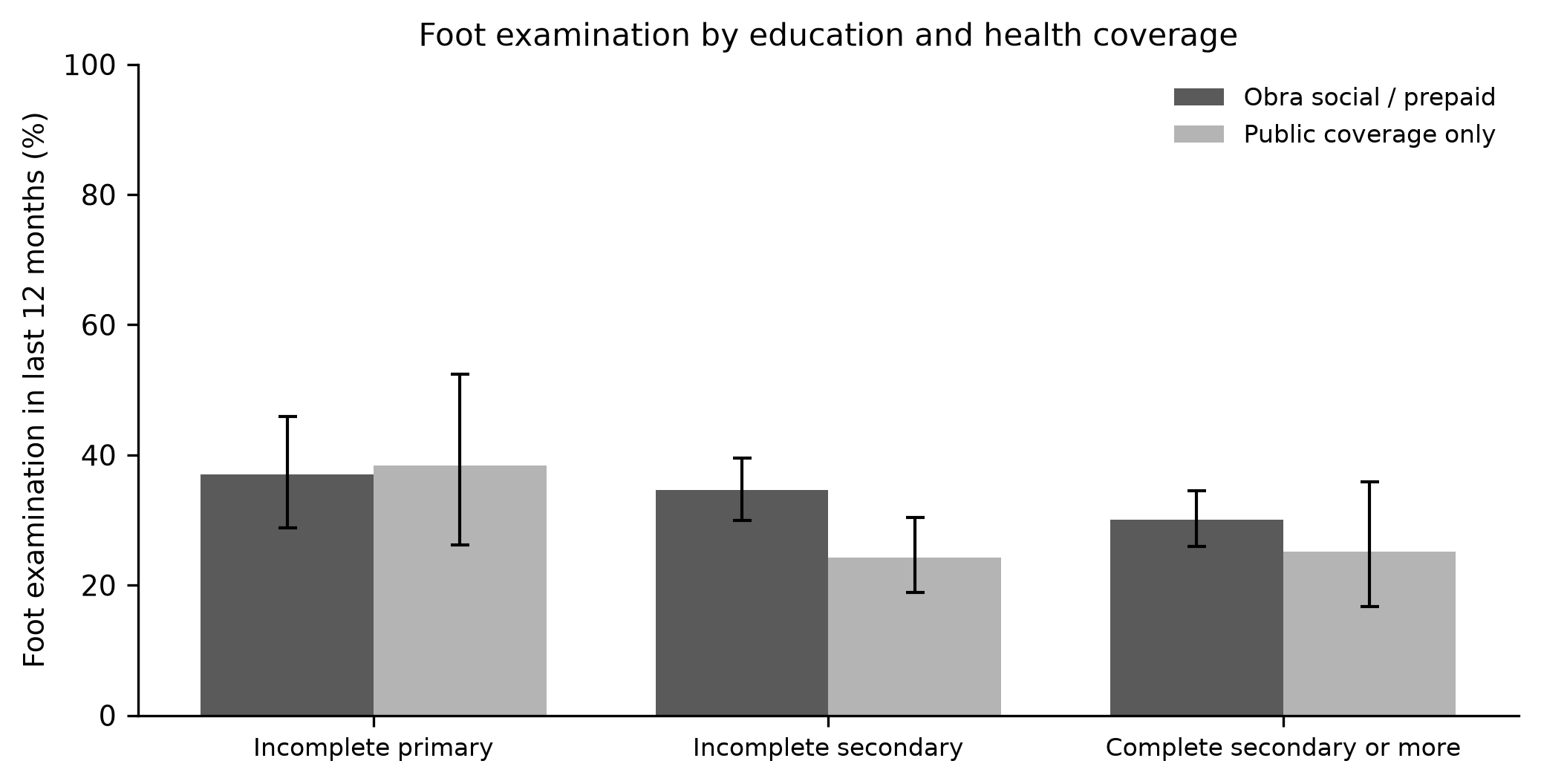
Figure 1. Foot examination in the last 12 months by education and health coverage.
Note: Bars show weighted prevalence; error bars indicate 95% confidence intervals.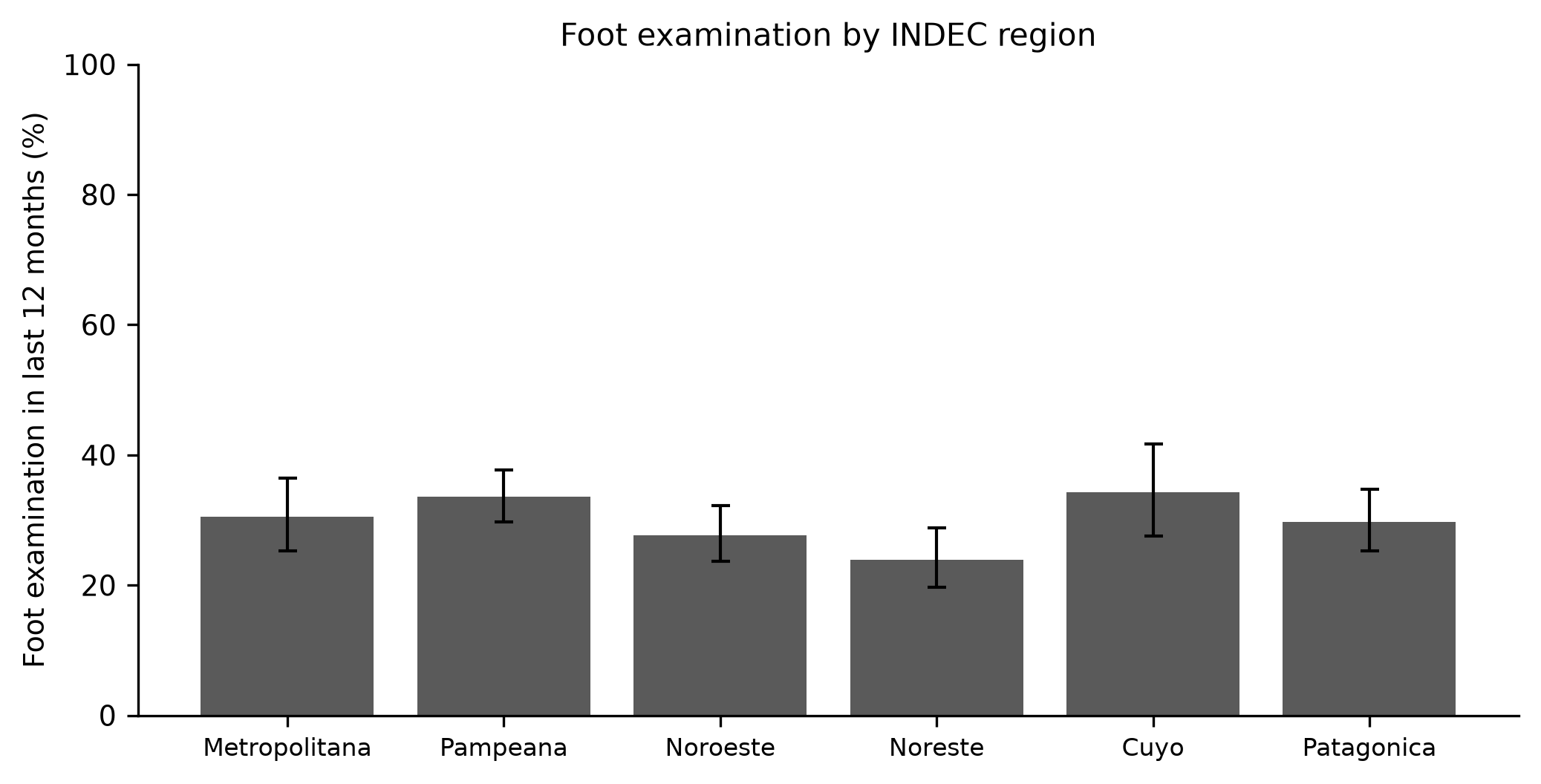
Figure 2. Foot examination in the last 12 months by INDEC region.
Note: Bars show weighted prevalence; error bars indicate 95% confidence intervals.In the crude models, incomplete primary education showed higher odds than complete secondary education or more (OR 1.46; 95% CI 1-2.15), contributory, prepaid or emergency coverage showed higher odds than public coverage (OR 1.34; 95% CI 1.01-1.78), and the Noreste region showed the lowest odds relative to the Metropolitana region (OR 0.72; 95% CI 0.49-1.04) (Table 3). These crude differences largely disappeared after mutual adjustment and adjustment for sex and age (Table 3). Education showed no independent association, with adjusted odds ratios of 1.10 (95% CI 0.74-1.65) for incomplete primary education and 0.96 (95% CI 0.74-1.26) for incomplete secondary education, both relative to complete secondary education or more. The crude advantage of contributory, prepaid or emergency coverage over public coverage also vanished after adjustment (OR 0.99; 95% CI 0.73-1.33). Compared with the Metropolitana region, no region differed significantly; the Noreste region showed the lowest adjusted odds (OR 0.77; 95% CI 0.52-1.13).
Variable | Category | Crude OR (95% CI) | p | Adjusted OR (95% CI) | p |
|---|---|---|---|---|---|
Education | Incomplete primary (vs complete secondary or more) | 1.46 (1.00-2.15) | 0.053 | 1.10 (0.74-1.65) | 0.629 |
Education | Incomplete secondary (vs complete secondary or more) | 1.11 (0.87-1.42) | 0.416 | 0.96 (0.74-1.26) | 0.792 |
Health coverage | Obra social, prepaid or emergency (vs public only) | 1.34 (1.01-1.78) | 0.043 | 0.99 (0.73-1.33) | 0.927 |
Region | Pampeana (vs Metropolitana) | 1.15 (0.83-1.61) | 0.396 | 1.18 (0.85-1.66) | 0.325 |
Region | Noroeste (vs Metropolitana) | 0.87 (0.62-1.23) | 0.432 | 0.96 (0.67-1.37) | 0.819 |
Region | Noreste (vs Metropolitana) | 0.72 (0.49-1.04) | 0.079 | 0.77 (0.52-1.13) | 0.178 |
Region | Cuyo (vs Metropolitana) | 1.19 (0.79-1.78) | 0.412 | 1.22 (0.78-1.92) | 0.378 |
Region | Patagonica (vs Metropolitana) | 0.96 (0.67-1.39) | 0.845 | 1.06 (0.72-1.55) | 0.779 |
Sex | Women (vs men) | 0.61 (0.49-0.77) | <0.001 | 0.67 (0.53-0.85) | 0.001 |
Age | Per 10 years | 1.26 (1.17-1.37) | <0.001 | 1.24 (1.14-1.35) | <0.001 |
Note: Adjusted model includes education, health coverage, region, sex and age (10-year units).
DISCUSSION
The expectation that foot examination would be more frequent among adults with greater education, contributory coverage and wealthier regions was not confirmed. Only three in ten adults with diabetes in Argentina reported a foot examination in the last 12 months, and after mutual adjustment for education, health coverage, region, sex and age, none of the three exposures remained associated with the outcome. The shortfall was not concentrated in a single disadvantaged group but was broadly distributed, with lower coverage among women and younger adults as the only independent correlates.
The observed coverage places Argentina within the low end of the Latin American range, well below the coverage that guidelines envision. Carrillo-Larco et al.(12) reported that foot examination in the preceding year remained below 50% in every one of the nine Latin American and Caribbean countries they pooled, with values from 12% in Ecuador upward; the Argentine estimate falls within that interval and far below the near-universal target implied by annual screening recommendations.(3,8) The twelve-month recall window is the appropriate metric because the recommendations specify examination at least annually; the observed 31% therefore means that the guideline interval is not being met for roughly seven of every ten adults with diabetes, rather than merely that recall is imperfect. The Brazilian figure is not directly comparable because it measured ever having had the feet examined rather than examination in the last year, yet the 52.1% who had never been examined conveys the same message of systematic under-screening.(13) The methodological heterogeneity of prevalence estimates across surveys has been highlighted as a source of apparent international variation,(29) which cautions against reading small differences between countries as meaningful.
These deficits carry concrete clinical consequences. Diabetes-related lower-extremity amputation rates in the Americas remain substantial, and hospitalisation for diabetes-related foot complications has been rising in settings comparable to Argentina.(5,6) Within Argentina, diabetic foot among people on dialysis has been described in clinical series,(23) and vascular complications are prevalent in the treated diabetic population of the country.(22) The one-in-three screening coverage observed here is therefore not a statistical curiosity but a plausible upstream contributor to a visible downstream burden of ulceration and limb loss.
The absence of an educational gradient after adjustment contrasts with the broader literature on diabetes self-care, in which lower education consistently predicts poorer foot care practices.(16,30) The crude pattern in these data was actually inverse, with the least educated group showing the highest coverage; this reversal is explained by confounding through age, because older adults with diabetes have completed fewer years of schooling and simultaneously have more contact with health services. Once age was held constant, education contributed nothing. Gagliardino et al.(30) observed that structured education improves foot-related outcomes, which suggests that the flat gradient here reflects an under-provision of examinations to all groups rather than a behavioural failure specific to the least educated. The inversion of the crude gradient is itself informative: it shows that unadjusted comparisons of preventive coverage by schooling can be seriously misleading when age is not accounted for, a caution that applies to descriptive reports from other surveys in the region.(28) The same phenomenon has been documented for other preventive practices in Argentina, where socioeconomic gradients in chronic disease risk are steeper than gradients in the uptake of specific examinations.(31,32)
Health coverage reproduced the same logic. Adults with contributory, prepaid or emergency coverage showed a crude advantage over those with public coverage only, but the association vanished after adjustment, indicating that the two coverage groups differ in age and sex composition rather than in the likelihood of receiving a foot examination once those characteristics are equalised. This finding is consistent with evidence that recommended diabetes care processes are met incompletely in both the public and the social security subsystems of Argentina and of Central and South America more generally.(11,19) The fragmentation of the Argentine system, in which continuity of diabetes care depends on the particular provider, may homogenise the deficit across coverage types rather than protect any single group.(19)
The regional contrast was also muted. The Noreste region displayed the lowest crude and adjusted odds, and Cuyo and Pampeana the highest, but the confidence intervals overlapped widely and no regional difference was statistically significant. This contrasts with the marked geographic inequalities documented for the prevalence of diabetes and of other cardiometabolic risk factors across Argentine provinces(18,20) and with regional disparities in amputation and foot care reported elsewhere in the Americas.(5,6) A screening shortfall that is spatially flat may indicate that the barrier operates at the level of the health system as a whole, rather than in the resources of particular provinces. The trends in cardiometabolic risk factors observed across the Americas suggest that national averages can remain stable while important subnational and sex-specific differences persist,(9,10) which reinforces the value of decomposing coverage by social axes even when the resulting contrasts are null.
Sex and age emerged as the only independent correlates, and both merit attention. Women had approximately one third lower odds of a foot examination than men, a difference that persisted after adjustment and that has been reported for other risk factors and care processes in Latin America.(33) The gradient with age, an increase of about one quarter in the odds per additional decade, mirrors the pooled regional finding that older adults and those on medication are more likely to receive examinations.(12) Greater contact with the health system among older adults is the most plausible explanation, and it implies that younger adults with diabetes, who have the longest lifetime exposure to the risk of foot complications, are precisely those least likely to be screened. This inversion of the usual preventive logic, in which those at the longest horizon of risk receive the least surveillance, has been observed for other screening practices in the region.(11) The lower coverage in women is harder to explain from these data alone, but it is consistent with the sex-stratified patterns of diabetes-related care and of cardiometabolic risk factor control described across Latin America.(9,33) Whether women attend different types of providers, receive less emphasis on foot screening during consultations, or are less often asked about foot symptoms cannot be resolved with the survey, and it warrants a dedicated qualitative inquiry.
The comparison with the United States is instructive in a second respect. An analysis of the Behavioural Risk Factor Surveillance System found that poor mental health days and physical inactivity were associated with lower odds of annual foot examination, independently of sociodemographic characteristics.(14) The present models did not include mental health or behavioural variables, so the possibility that these individual-level factors modulate coverage in Argentina cannot be excluded. If they operate as strongly as they do elsewhere, they would sit beneath, rather than instead of, the structural axes examined here, and future waves of the ENFR could test this by incorporating its mental health items into models of foot examination.
Several mechanisms may account for the uniformly low coverage. Patient-level barriers such as limited understanding of the purpose of foot screening and the perception that examination is unnecessary in the absence of symptoms have been documented in qualitative studies in various countries.(34-36) Provider-level factors, including competing demands in short consultations and insufficient training, are equally relevant.(35) In Latin America, foot screening is delivered by a heterogeneous mix of physicians, nurses and, where available, podiatrists, and the absence of a clearly assigned professional responsible for the annual examination is repeatedly identified as a barrier.(24,35) Regional initiatives have begun to organise foot care programmes and to raise awareness of diabetes-related amputations,(24) and bibliometric evidence indicates that Latin American research on the diabetic foot is growing and increasingly focused on prevention.(37) Quality of life among people with type 2 diabetes in Latin America remains compromised by complications and by the burden of self-care,(38) and community-level prevalence studies in Argentina confirm that diabetes and its risk factors are already established in small urban populations outside the largest cities.(39) These efforts and observations have not yet translated into near-universal annual screening, and the persistence of a low and socially flat coverage suggests that the deficit is systemic and will respond only to deliberate reorganisation of diabetes care rather than to marginal adjustments.
The null associations reported here should not be read as evidence that social factors are irrelevant to the diabetic foot. Rather, they show that the screening shortfall is so large and so universal that it dwarfs the social patterning seen for other care processes in the same population.(18,21) A finding of no gradient has policy value of its own: it directs intervention away from targeting a single vulnerable group and toward strengthening the routine examination for every person with diabetes, regardless of schooling, coverage or province.
This study has several strengths. It is, to our knowledge, the first nationally representative estimate of foot examination coverage in Argentina, and it was derived from official microdata with design-based variance estimated from 200 bootstrap replicates, which protects the confidence intervals against the underestimation that would result from treating the survey as a simple random sample. The exposure variables are standard and were defined with the official record dictionary, and the analysis was restricted to the self-reported diabetes population that is the target of the recommendation under study. The use of the official expansion and replicate weights, rather than approximate design adjustments, means that the confidence intervals reflect the true sampling variability of a multistage survey, and the weighted population of 3.55 million adults with diabetes aligns closely with the prevalence published in the official report,(17) which supports the internal consistency of the estimates.
Study Limitations and Practical Implications
The outcome is self-reported and therefore subject to recall error and to social desirability, and the wording of the question, which refers to examination to detect wounds or irritations, may under-capture examinations performed in asymptomatic people; a validation study against clinical records would clarify this. The design is cross-sectional, so the associations cannot be interpreted causally, and the ENFR 2018 predates the fifth survey edition and the changes in service delivery that followed the COVID-19 pandemic, which disrupted routine diabetes care across many health systems.(40) The survey represents urban localities of 5,000 or more inhabitants, so the findings do not extend to smaller rural populations, where coverage may be lower still.(20) Regional estimates carry wide confidence intervals because the number of adults with diabetes in some regions is modest, and residual confounding by diabetes duration, treatment intensity and the presence of complications cannot be excluded because those variables were not modelled. The survey does not distinguish type 1 from type 2 diabetes, whose screening needs differ, so sensitivity to this distinction could not be explored. Educational attainment is also a coarse proxy for the health literacy that actually conditions self-care, and its grouping into three broad categories may conceal heterogeneity within the complete-secondary group.(30)
For practice and policy, the main implication is that efforts to increase foot examination should target the entire population of adults with diabetes rather than a single socioeconomic or geographic group, with particular attention to women and to younger adults, among whom coverage was lowest. Embedding a structured foot examination into every routine diabetes contact, as recommended by international guidelines,(3,7,8) and monitoring it as a process indicator would allow the health system to detect early whether the universal shortfall is closing. The flat social gradient also means that quality improvement can be designed once and deployed nationwide, without the need for complex targeting rules. For the clinician, the message is equally direct: the foot examination cannot be assumed to have happened because the person is insured, educated or urban, and it must be verified and documented at every diabetes visit. Repeated measurement in the fifth ENFR, once its microdata are released, would establish whether the coverage reported here has changed, and linkage of the survey to administrative records on amputations would convert this process measure into a validated predictor of the outcome it is meant to prevent.
CONCLUSIONS
The proportion of adults with diabetes in Argentina who reported a foot examination in the last 12 months was low, at approximately three in ten. Foot examination was not independently associated with education, health coverage or region after adjustment for sex and age. The shortfall was broadly distributed across population groups, with women and younger adults least examined, which points to a systemic gap in preventive foot care rather than to a gradient confined to specific social groups.
References
- 1 Genitsaridi I, Salpea P, Salim A, Sajjadi SF, Tomic D, James S, et al. 11th edition of the IDF Diabetes Atlas: global, regional, and national diabetes prevalence estimates for 2024 and projections for 2050. The Lancet Diabetes & Endocrinology. 2026;14(2):149-156. doi: 10.1016/s2213-8587(25)00299-2
- 2 Haile KE, Asgedom YS, Azeze GA, Amsalu AA, Gebrekidan AY, Kassie GA. Diabetic foot: A systematic review and meta-analysis on its prevalence and associated factors among patients with diabetes mellitus in a sub-Saharan Africa. Diabetes Research and Clinical Practice. 2025;220:111975. doi: 10.1016/j.diabres.2024.111975
- 3 Bus SA, Sacco ICN, Monteiro‐Soares M, Raspovic A, Paton J, Rasmussen A, et al. Guidelines on the prevention of foot ulcers in persons with diabetes (IWGDF 2023 update). Diabetes Metabolism Res. 2024;40(3):e3651. doi: 10.1002/dmrr.3651
- 4 Gallagher KA, Mills JL, Armstrong DG, Conte MS, Kirsner RS, Minc SD, et al. Current Status and Principles for the Treatment and Prevention of Diabetic Foot Ulcers in the Cardiovascular Patient Population: A Scientific Statement From the American Heart Association. Circulation. 2024;149(4):E232-E253. doi: 10.1161/cir.0000000000001192
- 5 Rosien L, van Dijk PR, Oskam J, Pierie MEN, Groenier KH, Gans ROB, et al. Lower Extremity Amputation Rates in People With Diabetes Mellitus: A Retrospective Population Based Cohort Study in Zwolle Region, The Netherlands. European Journal of Vascular and Endovascular Surgery. 2023;66(2):229-236. doi: 10.1016/j.ejvs.2023.05.030
- 6 Zhang Y, Cramb SM, McPhail SM, Pacella R, van Netten JJ, Kinnear EM, et al. The incidence of and risk factors for hospitalisations and amputations for people with diabetes‐related foot ulcers in Queensland, 2011–19: an observational cohort study. Medical Journal of Australia. 2025;223(3):149-158. doi: 10.5694/mja2.52703
- 7 Schaper NC, van Netten JJ, Apelqvist J, Bus SA, Fitridge R, Game F, et al. Practical guidelines on the prevention and management of diabetes‐related foot disease (IWGDF 2023 update). Diabetes Metabolism Res. 2024;40(3):e3657. doi: 10.1002/dmrr.3657
- 8 American Diabetes Association Professional Practice Committee for Diabetes*, Bajaj M, McCoy RG, Balapattabi K, Bannuru RR, Bellini NJ, et al. 12. Retinopathy, Neuropathy, and Foot Care: Standards of Care in Diabetes—2026. Diabetes Care. 2026;49(Supplement_1):S261-S276. doi: 10.2337/dc26-s012
- 9 Miranda JJ, Carrillo-Larco RM, Ferreccio C, Hambleton IR, Lotufo PA, Nieto-MartSínez R, et al. Trends in cardiometabolic risk factors in the Americas between 1980 and 2014: a pooled analysis of population-based surveys. The Lancet Global Health. 2020;8(1):e123-e133. doi: 10.1016/s2214-109x (19)30484-x
- 10 Miranda JJ, Herrera VM, Chirinos JA, Gómez LF, Perel P, Pichardo R, et al. Major Cardiovascular Risk Factors in Latin America: A Comparison with the United States. The Latin American Consortium of Studies in Obesity (LASO). PLoS ONE. 2013;8(1):e54056. doi: 10.1371/journal.pone.0054056
- 11 Mudaliar U, Kim WC, Kirk K, Rouse C, Narayan KMV, Ali M. Are recommended standards for diabetes care met in Central and South America? A systematic review. Diabetes Research and Clinical Practice. 2013;100(3):306-329. doi: 10.1016/j.diabres.2013.01.010
- 12 Carrillo-Larco RM, Guzman-Vilca WC, Varghese JS, Pasquel FJ, Caixeta R, Antini C, et al. Compliance with eye and foot preventive care in people with self-reported diabetes in Latin America and the Caribbean: Pooled, cross-sectional analysis of nine national surveys. Primary Care Diabetes. 2024;18(3):374-379. doi: 10.1016/j.pcd.2024.03.001
- 13 Bramante CN, Rizzato JS, Nakamura IB, Galvão TF, Silva MT. Racial Disparities in Foot Examination among People with Diabetes in Brazil: A Nationwide Survey, 2019. Ethnicity & Disease. 2024;34(4):221-229. doi: 10.18865/ethndis-2023-50
- 14 Robling K, McPherson K, Nolan D, Greiner B, Hartwell M. Disparities in diabetic foot examinations: a cross-sectional analysis of the behavioural risk factor surveillance system. Prim Health Care Res Dev. 2025;26:e33. doi: 10.1017/s1463423624000392
- 15 Clayton EO, Njoku-Austin C, Scott DM, Cain JD, Hogan MV. Racial and Ethnic Disparities in the Management of Diabetic Feet. Curr Rev Musculoskelet Med. 2023;16(11):550-556. doi: 10.1007/s12178-023-09867-7
- 16 Kilic M, Olgun N, Dündar M, Celik Advan S, Kücük FZ, Okcuoglu S, et al. Prevalence, risk level and risk factors of diabetic foot ulcer among adult individuals with diabetes in the Southeastern Anatolia Region of Turkiye. Journal of Tissue Viability. 2025;34(1):100839. doi: 10.1016/j.jtv.2024.12.003
- 17 Instituto Nacional de Estadistica y Censos (INDEC). 4 Encuesta Nacional de Factores de Riesgo: resultados definitivos 2018 [Internet]. 2019. Available from: https://www.indec.gob.ar/ftp/cuadros/publicaciones/enfr_2018_resultados_definitivos.pdf
- 18 Rojas-Roque C, Hernández-Vásquez A, Azañedo D, Bendezu-Quispe G. Socioeconomic Inequalities in the Prevalence of Diabetes in Argentina: A Repeated Cross-Sectional Study in Urban Women and Men. IJERPH. 2022;19(15):8888. doi: 10.3390/ijerph19158888
- 19 Rubinstein A, Gutierrez L, Beratarrechea A, Irazola VE. Increased Prevalence of Diabetes in Argentina Is Due to Easier Health Care Access Rather than to an Actual Increase in Prevalence. PLoS ONE. 2014;9(4):e92245. doi: 10.1371/journal.pone.0092245
- 20 Tumas N, Rodríguez López S, Bilal U, Ortigoza AF, Diez Roux AV. Urban social determinants of non-communicable diseases risk factors in Argentina. Health & Place. 2022;77:102611. doi: 10.1016/j.healthplace.2021.102611
- 21 Rodríguez López S, Bilal U, Ortigoza AF, Diez-Roux AV. Educational inequalities, urbanicity and levels of non-communicable diseases risk factors: evaluating trends in Argentina (2005–2013). BMC Public Health. 2021;21(1):1572. doi: 10.1186/s12889-021-11617-8
- 22 Chen-Ku CH, Gonzalez-Galvez G, Vásquez M, Fuente G, Nakazone MA, Silva Giordano AI, et al. Vascular Complications in Patients with Type 2 Diabetes: Prevalence and Comorbidities in 6 Countries of Latin America (A Cohort of the Discover Study Program). Endocrine Practice. 2019;25(10):994-1002. doi: 10.4158/ep-2018-0473
- 23 Spinelli MB, Cafruni VM, Lucero Viviani N, Parise AC, Rodriguez C, Satera N, et al. Prevalence of diabetic foot in patients with diabetes mellitus undergoing dialysis treatment in a tertiary-level hospital in Argentina. Revista Española de Cirugía Ortopédica y Traumatología. 2026;70(1):8-12. doi: 10.1016/j.recot.2025.04.018
- 24 Campillo-Vilorio N, Aragón-Sánchez J. Latin American initiatives to improve foot care in people with diabetes: the effort to reduce diabetes-related lower extremity amputations. Diabetes Research and Clinical Practice. 2025;226:112385. doi: 10.1016/j.diabres.2025.112385
- 25 Instituto Nacional de Estadistica y Censos (INDEC). 4 Encuesta Nacional de Factores de Riesgo: factores de expansion, estimacion y calculo de los errores de muestreo. Nota tecnica N 2 [Internet]. 2020. Available from: https://www.indec.gob.ar/ftp/cuadros/menusuperior/enfr/nota_tecnica_enfr_2018.pdf
- 26 von Elm E, Altman DG, Egger M, Pocock SJ, Gøtzsche PC, Vandenbroucke JP. The Strengthening the Reporting of Observational Studies in Epidemiology (STROBE) statement: guidelines for reporting observational studies. The Lancet. 2007;370(9596):1453-1457. doi: 10.1016/s0140-6736(07)61602-x
- 27 Instituto Nacional de Estadistica y Censos (INDEC). Cuarta Encuesta Nacional de Factores de Riesgo: base de datos usuario 2018 [Internet]. 2020. Available from: https://www.indec.gob.ar/ftp/cuadros/menusuperior/enfr/enfr2018_baseusuario.zip
- 28 Moore K, Lazo M, Ortigoza A, Quistberg DA, Sanchez B, Acharya B, et al. Data Resource Profile: Harmonized health survey data for 240 cities across 11 countries in Latin America: the SALURBAL project. International Journal of Epidemiology. 2024;54(1):dyae171. doi: 10.1093/ije/dyae171
- 29 Bowling FL, Burdett L, Foley K, Hodge S, Davies M, Ahmad N. A critical literature review highlighting the methodological differences within epidemiological studies: Pedal Amputations in England. The Foot. 2024;60:102081. doi: 10.1016/j.foot.2024.102081
- 30 Gagliardino JJ, Aschner P, Baik SH, Chan J, Chantelot JM, Ilkova H, et al. Patients’ education, and its impact on care outcomes, resource consumption and working conditions: Data from the International Diabetes Management Practices Study (IDMPS). Diabetes & Metabolism. 2012;38(2):128-134. doi: 10.1016/j.diabet.2011.09.002
- 31 Viego V, Temporelli K. Socioeconomic Status and Self-Reported Chronic Diseases among Argentina's Adult Population: Results Based on Multivariate Probability Models. Journal of Public Health Research. 2017;6(1):jphr.2017.883. doi: 10.4081/jphr.2017.883
- 32 Asteazaran S, Gagliardino JJ, Elgart JF. Health inequalities and the impact on the prevalence of cardiovascular risk factors and chronic complications in Argentina: a study on national risk factors surveys. Medwave. 2017;17(09):e7083-e7083. doi: 10.5867/medwave.2017.09.7083
- 33 Linetzky B, De Maio F, Ferrante D, Konfino J, Boissonnet C. Sex-stratified socio-economic gradients in physical inactivity, obesity, and diabetes: evidence of short-term changes in Argentina. Int J Public Health. 2013;58(2):277-284. doi: 10.1007/s00038-012-0371-z
- 34 R. M. Perceptions and Experiences of Foot Care among People with Type 2 Diabetes Mellitus: A Qualitative Study. J Liaquat Uni Med Health Sci. 2026;2026-June:159-164. doi: 10.22442/jlumhs.2026.01550
- 35 Hellstrand Tang U, Tranberg R, Sundberg L, Scandurra I. How do patients and healthcare professionals experience foot examinations in diabetes care? – A randomised controlled study of digital foot examinations versus traditional foot examinations. BMC Health Serv Res. 2024;24(1):1387. doi: 10.1186/s12913-024-11674-w
- 36 Ahmed I, Fitzpatrick S, Greco E, Handford C, Lin N, Salzmann T, et al. Patient experience and perspectives around preventative foot care among adults with diabetes to inform a regional limb preservation strategy. JVS-Vascular Insights. 2026;4:100502. doi: 10.1016/j.jvsvi.2026.100502
- 37 Martin AM, Verastegui A, De la Torre OA, Sanchez CG, Fabiani MA, Gonzalez-Urquijo M. Research Trends on Diabetic Foot in Latin America: A Bibliometric Analysis (2000-2025). The International Journal of Lower Extremity Wounds. 2025:15347346251380036. doi: 10.1177/15347346251380036
- 38 de la Cruz JPS, Morales DLG, González-Castro TB, Tovilla-Zárate CA, Juárez-Rojop IE, López-Narváez L, et al. Quality of life of Latin-American individuals with type 2 diabetes mellitus: A systematic review. Primary Care Diabetes. 2020;14(4):317-334. doi: 10.1016/j.pcd.2019.09.003
- 39 Sanchez NP, De Loredo S, Recanatesi MF, Gorban de Lapertosa S, Croatto DO, Marchese L, et al. Prevalence of Diabetes Mellitus and Cardiovascular Risk Factors in El Trébol, Argentina: A Population-Based Cross-Sectional Study. Diabetology. 2026;7(3):49. doi: 10.3390/diabetology7030049
- 40 Hartmann-Boyce J, Highton P, Rees K, Onakpoya I, Suklan J, Curtis F, et al. The impact of the COVID-19 pandemic and associated disruptions in health-care provision on clinical outcomes in people with diabetes: a systematic review. The Lancet Diabetes & Endocrinology. 2024;12(2):132-148. doi: 10.1016/s2213-8587(23)00351-0
Declarations
Funding
No financing
Conflict of interest
None
Authorship contributions
Drafting – original draft: Horacio Alen.
Writing–review and editing: Horacio Alen.