

Abstract
Foot health deteriorates with age, yet foot problems receive little attention in the care of older adults with dementia and in long-term care. This narrative review synthesizes the literature published between 2016 and 2025 on the burden of foot and nail problems, their functional consequences and the current approaches to foot care in these populations. Scopus, PubMed, OpenAlex and Crossref were searched and the evidence was organized into five thematic axes. Foot problems affect a large proportion of older adults, and older adults with dementia show poorer foot health than cognitively intact peers. Nail disorders, hyperkeratosis, toe deformities and foot pain are frequent, and they associate with reduced mobility, impaired balance, falls and lower quality of life. Cognitive impairment and the organization of long-term care create specific barriers, because self-care is lost, pain is under-reported, staff training is limited and access to podiatry is scarce. Structured foot care protocols delivered by nurses or care workers, the integration of foot assessment into comprehensive geriatric assessment and footwear interventions improve intermediate outcomes, although their effect on falls remains inconsistent. Studies are needed that measure foot problems in dementia specifically, test routine foot care models in care homes and evaluate pain in people who cannot report it.
Keywords
foot diseases, foot deformities, dementia, homes for the aged, nursing homes, podiatry
INTRODUCTION
The feet carry a disproportionate share of the diseases that accumulate with age. Nail disorders, hyperkeratosis, toe deformities and foot pain rank among the most frequent conditions reported by older adults, and they erode mobility, balance and independence.(1,2) Onychomycosis illustrates the point: it is recognized as a condition of special populations that includes older adults,( 3) yet it is rarely sought in the settings where those adults live. Whereas falls and their prevention occupy a central place in geriatric care, the feet themselves are seldom examined in routine assessments, and foot care is rarely embedded in dementia or long-term care pathways.(4,5) This asymmetry between the recognized consequences of poor foot health and the marginal position of foot care is the unresolved problem that frames this review.
The gap is widest where the need is greatest. Older people describe their feet as a neglected part of their body, and nursing and care staff report limited knowledge and low priority for routine foot care.(6,7) Yet the same populations face a high burden of falls: dementia doubles or triples fall risk, and nursing home residents fall far more often than community-dwelling older adults.(8,9) Balance and gait disorders rank among the defining features of late life, and their assessment occupies far more clinical attention than the feet that underpin them.(10) Two strands of evidence thus stand in tension, one showing that foot problems are common and consequential and another showing that foot care is systematically underprovided in the settings where it matters most.
Dementia sharpens this tension. Cognitive decline removes the ability to inspect, wash and trim the feet, and it blunts the capacity to report pain.(11,12) Balance is already impaired in mild cognitive impairment, which means the postural instability that precedes falls emerges early in the disease course.( 13) Foot problems in a person with dementia can therefore progress without complaint until they produce pain, infection or a fall. The number of people living with dementia in long-term care continues to grow, which makes the intersection of these two conditions a pressing but understudied area of geriatric podiatry.( 12,14)
Research on this topic is scattered across podiatry, geriatric medicine, nursing and dermatology journals, and textbook chapters on foot problems, footwear and falls treat the pieces without joining them.(15) No single synthesis brings together the burden, consequences and management of foot health in dementia and long-term care. Recent randomized and controlled studies of structured foot care in nursing homes (16) and scoping reviews of footwear and balance in older adults (17) indicate that effective measures exist but are not systematically implemented. A narrative review is therefore timely to organize the available evidence and to point practice and research toward the areas of greatest need.
The objective of this narrative review is to synthesize the evidence on foot health problems, their functional consequences and current approaches to foot care in older adults with dementia and in long-term care, and to identify the gaps that a clinical and organizational agenda should address. Three questions guide the synthesis: how common and how varied are foot problems in these populations; how do those problems shape mobility, falls and pain; and which models of foot care work, for whom and under what conditions.
METHODS
The work followed the SANRA recommendations for narrative reviews. The search window covered publications from 2016 through 2025. Queries combined terms for the foot and its disorders with terms for older adults, dementia and care settings; representative combinations paired foot care, foot health, foot problems, foot pain, toenail, hallux valgus and podiatry with dementia, Alzheimer disease, cognitive impairment, nursing home, residential aged care and long-term care, using field-restricted syntax in Scopus and equivalent terms in the other databases. Each Scopus query applied title, abstract and keyword fields together with a year filter, so the core of the synthesis stayed within the window. All twenty-three searches completed without failure.
Studies were selected when they reported foot or nail problems, foot pain, footwear or foot care in older adults, in people with dementia or in long-term care. Primary studies were preferred over reviews when a specific finding was cited. Works outside the window were admitted only if they provided essential context, although the final library remained entirely within the window. Fifty-five references were retained, of which forty-two primary and review studies formed the core of the synthesis.
DEVELOPMENT
Forty-two studies formed the core of the synthesis. The pathways linking dementia and long-term care to foot problems and their consequences are summarized in (Figure 1), and the evidence for each axis is consolidated in (Table 1).
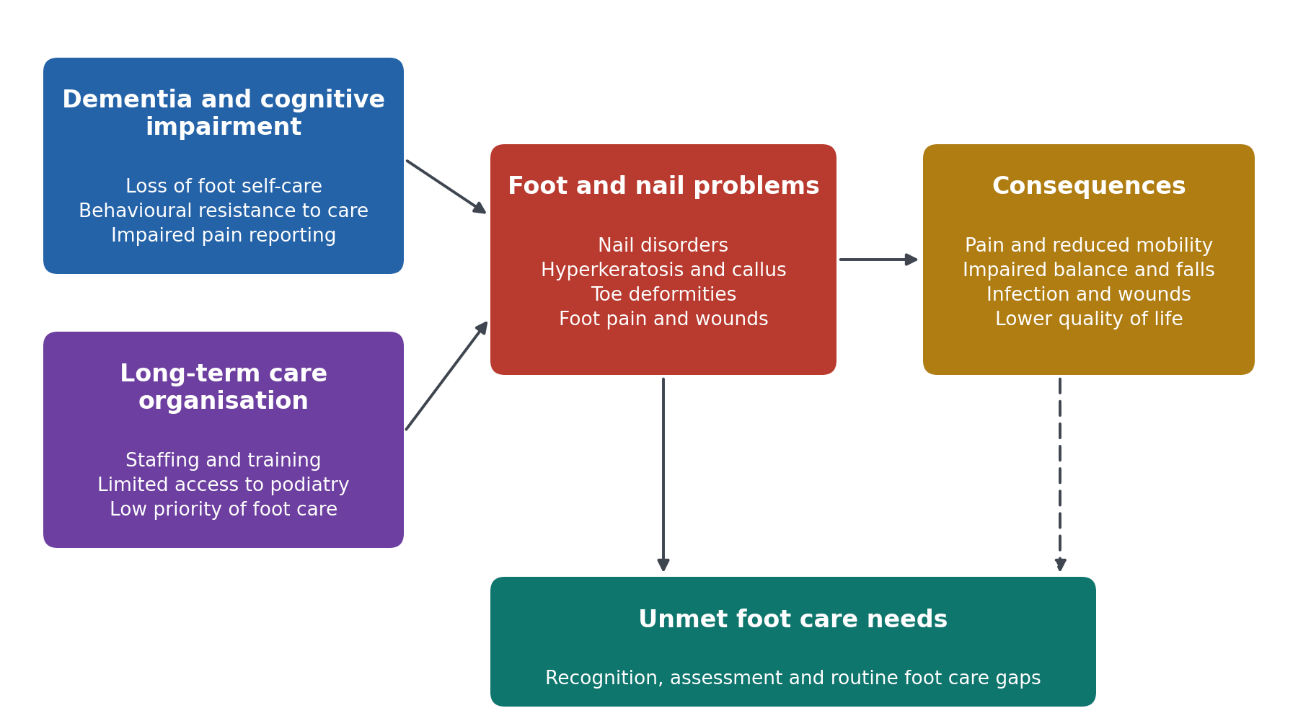
Figure 1. Conceptual framework of the pathways linking dementia and long-term care to foot health problems, their functional consequences and unmet care needs.
Note: Arrows indicate hypothesized pathways synthesized from the reviewed evidence. Source: Own elaboration based on the reviewed literature.Axis | Key findings | Evidence type | Representative studies |
|---|---|---|---|
Burden and types of problems | Nail disorders, hyperkeratosis, toe deformities and foot pain are the most common problems; older adults with Alzheimer disease show poorer foot health | Cross-sectional and point-prevalence surveys | Lopez-Lopez et al., 2018; Keenan et al., 2019; Fujii et al., 2023 |
Mobility, balance and falls | Foot problems and deformities associate with poorer balance, slower gait and higher fall risk; footwear contributes to falls in care homes | Cross-sectional, video-based and meta-analytic studies | Menz et al., 2024; Wylie et al., 2019; Pol et al., 2021 |
Foot pain in dementia | Foot pain is prevalent and reduces quality of life; cognitive impairment complicates its reporting | Cross-sectional and review evidence | Keenan et al., 2019; Zhou et al., 2023 |
Barriers to foot care | Low priority, limited staff training, loss of self-care and scarce podiatry access | Qualitative and cross-sectional studies | Conde et al., 2020; Fujii et al., 2020 |
Models and interventions | Structured foot care protocols and foot assessment within CGA improve foot health and function | Randomized and pre-post trials | Catiker et al., 2021; Iseli et al., 2021 |
Note: CGA = comprehensive geriatric assessment.
Burden and types of foot and nail problems
Foot problems are pervasive in older populations. A point-prevalence survey of acute care patients found that a large majority had at least one foot problem, with nail disorders, dry skin, callus and deformity the leading categories.(18) In a secondary analysis of adults aged over 55 years, self-reported foot and ankle pain affected a substantial proportion of participants and was associated with poorer physical health.(2) Among community-dwelling older individuals, the presence of foot problems correlated with weaker toe grip strength and slower walking speed, which ties the burden of foot disease directly to functional decline.(19) The same conditions also erode quality of life; a retrospective case-control study reported lower scores across domains of foot-specific quality of life in older people with foot problems than in controls.(20)
Dementia adds a further layer of vulnerability. In a descriptive study of individuals with Alzheimer disease, clinical examination revealed a high frequency of nail alterations, hyperkeratosis, hallux valgus and other deformities, together with signs of poor hygiene and neglected care.( 11) The authors interpreted these findings as the visible consequence of lost self-care and reduced attention to the feet, a pattern that distinguishes this population from cognitively intact older adults. Foot examination is therefore proposed as a routine component of geriatric assessment rather than an optional add-on.( 21)
Nail and skin conditions concentrate much of the treatable burden. Onychomycosis is common in older adults and has been addressed specifically in this age group, with topical efinaconazole and oral fosravuconazole both demonstrating efficacy in older patients.(22,23) Painful plantar callus, another frequent complaint, responds to scalpel debridement in older people, although technique influences the balance between relief and recurrence.(24) Ingrown toenails arise from a combination of anatomical and footwear-related factors, and their recurrence reflects predisposing features that podiatry can address.(25) Chronic wounds add a further dimension: in German nursing homes the prevalence of chronic wounds is considerable, and an integrative review confirms that people with dementia carry a high wound burden with frequent lower-limb and foot involvement.(26,27)
The comparability of these estimates is limited by measurement. Case definitions differ across studies, examinations are performed by different professions, and settings range from acute wards to the community, so published figures span a broad interval. What remains stable across this heterogeneity is the gradient: the oldest adults, those in residential care and those with cognitive impairment carry the heaviest burden, and the burden concentrates in conditions that basic podiatry can treat. Because routine foot examination is absent from most geriatric services, that treatable burden stays invisible until it becomes a complication, which is the pattern the point-prevalence and dementia-specific studies document.( 11,18)
The burden is also unevenly distributed by age, sex and footwear. Older women report more foot pain and more deformity than men, partly because of a lifetime of narrow and elevated footwear, and the problems cluster rather than occur in isolation.( 2) A person entering residential care typically presents with several superimposed conditions, thickened and fungal nails, callus over deformed joints, and pain, any one of which is enough to limit walking. This clustering means that single-problem interventions miss the point, and it argues for the whole-foot assessment that comprehensive geriatric assessment is well placed to deliver.( 21)
These conditions matter because their complications compound comorbidity. Thickened fungal nails traumatize adjacent toes, callus over deformed joints can fissure and ulcerate, and the combination of neuropathy, ischaemia and neglect turns minor lesions into wounds, the pathway that makes diabetes a particular concern in long-term care.(26,27) Recognition at the stage of nail and skin change is therefore prevention, and it costs far less than the wound care that follows when these early signs are missed.
Foot problems, mobility, balance and falls
Foot problems are repeatedly associated with instability and falls. Older adults referred to a falls and balance service present with a high prevalence of foot pathology, and many of these problems are potentially modifiable.(28) Structural and functional foot characteristics, including deformity, reduced range of motion and impaired sensation, distinguish older fallers from non-fallers.(29) Foot and ankle problems also predict fear of falling and reduced mobility in community-dwelling older people, which suggests that the foot contributes to falls through both biomechanical and psychological pathways.(30) In longitudinal and cross-sectional analyses, common foot problems correlate with falls and with lower quality of life, reinforcing the clinical relevance of the association.(31)
Specific foot features carry measurable risk. Hallux valgus is linked to a high fall risk in older adults through altered muscle activation and kinematic control,(32) and foot deformity together with impaired plantar sensitivity associates with worse physical function in community-dwelling older people.(33) Plantar sensation itself predicts gait instability in older adults, indicating that sensory loss under the sole is a fall-relevant deficit.(34) These findings converge on the view that the ageing foot is a modifiable determinant of safe mobility rather than a cosmetic concern.
Footwear is the interface between the foot and the ground, and it matters for fall risk. A scoping review concluded that footwear, orthoses and insoles can improve balance in older adults, although the evidence base is heterogeneous.(17) Specific footwear interventions, including nonslip socks, improve balance control and fear of falling in older women,(35) and the broader footwear literature links shoe characteristics to gait and balance performance in older adults.(36) In long-term residential care, video capture of falls shows that inappropriate or unsafe footwear is present in a large share of falls, which makes footwear assessment a concrete target in care homes.(37)
At the service level, podiatry contributes to fall prevention. A systematic review and meta-analysis of podiatry interventions reported a reduction in the rate of falls in older people, although the pooled packages were multifactorial and the specific contribution of foot care is difficult to isolate.(38) The pilot randomized trial of podiatry-led fall prevention in care homes demonstrated that such a service is feasible and suggested benefit, providing the foundation for larger evaluations.(39) Together these studies place foot care within the evidence base for falls prevention in both community and residential settings.
Footwear fit is the most immediately modifiable of these factors. Ill-fitting shoes are common in older adults and concentrate pressure on deformed toes, aggravating callus and ulceration, whereas footwear and insoles that accommodate deformity and improve plantar contact can stabilize stance.(17) The video-capture evidence from residential care links specific footwear, above all slippers and shoes without secure fastening, to the mechanism of observed falls.(37) Footwear therefore sits at the boundary between comfort and safety, and its assessment is among the least expensive fall prevention measures available to care homes.
The biomechanical chain that connects the foot to a fall runs through sensation, strength and posture. Deformity shifts pressure away from the sole's supportive areas, sensory loss removes the feedback that corrects sway, and weakness of the intrinsic foot muscles reduces the ability to grip the ground.(33,34) Each of these deficits is measurable in the clinic, and each responds, at least partially, to the foot care and exercise interventions reviewed below. This is why the foot deserves a place in falls assessment alongside the usual measures of vision, medication and cognition, a view that the falls clinic evidence supports directly.( 28)
Foot pain and its assessment in dementia
Foot pain is one of the most common musculoskeletal complaints of later life. In the over-55 age group, self-reported foot and ankle pain is prevalent, more frequent in women, and associated with poorer general and physical health.( 2) Older people with foot problems report measurable reductions in quality of life, and pain is a central driver of that effect.( 20) Because pain limits walking and discourages activity, it feeds the cycle of immobility and dependency that characterizes frailty.
Cognitive impairment complicates the recognition of foot pain. People with dementia may be unable to describe the location, intensity or duration of pain, and behavioural changes may be the only signal of a painful foot.(11) In community-dwelling older people with cognitive impairment, pain is associated with fall worry, which suggests that untreated pain shapes activity avoidance and contributes to decline.(40) The chronic wound literature makes the same point from a different angle: in people living with dementia, wounds may go undetected and under-treated because self-report is unreliable and observation is required.(27)
The implication is that foot pain in dementia must be sought rather than awaited. Structured observation, caregiver report and validated observational pain scales belong in routine foot assessment for this population, yet foot-specific pain assessment in dementia is scarcely described in the literature. This absence is itself a gap, because pain that is never detected cannot be treated, and untreated foot pain undermines the mobility interventions that depend on weight-bearing activity.
The distribution of foot pain also guides detection. Reported foot and ankle pain rises with age and is more frequent in women, and it tracks closely with poorer physical and general health.( 2) When self-report is intact, asking about the feet identifies a symptom that predicts disability; when it is not, the clinician must rely on observation of gait, facial expression and resistance during washing and dressing. Neither pathway is consistently applied in dementia care, which leaves foot pain among the least recognized symptoms of the condition, a problem compounded by the tendency to attribute behavioural change to the dementia itself rather than to a treatable foot.( 40)
Pain does not respect the boundary between community and institution. Residents of care homes experience foot pain at least as much as their community-dwelling peers, but in the institutional setting pain is easier to miss because the same person sees many staff, none of whom owns the foot assessment.(27) Fear of falling and fall worry, which pain amplifies, further reduce walking and accelerate dependency in people with cognitive impairment.(40) The clinical message is that a painful foot should be assumed until excluded, and that the absence of complaint is not the same as the absence of pain in this population.
Barriers to foot care in dementia and long-term care
The barriers operate at the level of the person, the staff and the system. Older adults themselves perceive their feet as neglected; in qualitative work from Scotland and Portugal, participants described feet as second-class citizens, mentioning difficulty reaching them, fear of damaging them and a sense that clinicians do not ask about them.( 6) Nail care illustrates the same gap: even among nail care providers, practices vary and best-practice standards are unevenly applied, which leaves vulnerable older adults exposed to poor technique and complications.( 41)
Staff knowledge and priority are the second barrier. A survey of Japanese nurses and care workers in home care found limited knowledge and inconsistent foot care practice, with most respondents unsure of how to assess and manage common foot problems.(7) Where training is absent, foot care competes unsuccessfully with tasks perceived as more urgent, and the feet are deferred until a problem is advanced. This is precisely the setting in which simple, teachable routines could prevent harm.
Cognitive impairment is a barrier in its own right. People with diabetes and cognitive impairment have worse foot outcomes, which indicates that cognition, rather than vascular status alone, drives self-care failure and delayed presentation.(42) A self-efficacy programme for older patients with diabetes in long-term care improved foot self-care behaviour, but its reach is limited by the very cognitive and physical constraints it addresses.(43) For people with dementia, the loss of self-care documented in Alzheimer disease makes external, scheduled foot care a necessity rather than a convenience.(11)
Finally, the organization of long-term care places podiatry at the margin. Australian podiatrists describe reablement-oriented practice for older people, yet their integration into aged care services is inconsistent and depends on funding and referral pathways.( 44) Wound care delivery across residential aged care is fragmented, and foot and lower-limb wounds sit at the boundary between nursing and podiatry responsibility.( 27) These structural features explain why foot problems persist in facilities that otherwise provide continuous care. The net effect is a service that reacts to complications instead of anticipating them, at higher cost and lower benefit for the resident.
Reablement thinking offers a partial corrective. Podiatrists working with older people increasingly frame foot care as a means to preserve function rather than a routine task, an orientation that fits the goals of long-term care.( 44) Yet reablement assumes a level of capacity that dementia progressively removes, and it does not by itself resolve staffing or funding. The gap between what podiatry could contribute and what facilities actually commission is therefore organizational rather than clinical, and it persists in community and residential services alike. Nail care exposes the same gap in miniature, because the providers who trim the nails of older adults apply uneven standards and stand outside the clinical team.( 41)
The cognitive barrier is graded rather than all-or-nothing. In diabetes, even mild cognitive impairment worsens foot outcomes, which indicates that the ability to inspect the feet and act on what is found fails before other self-care skills.(42) In Alzheimer disease, the visible neglect of the feet is among the earliest signs of lost self-care, and it worsens as the disease advances.(11) A self-efficacy programme in long-term care improved foot self-care behaviour, but its effect depended on residual capacity, which is exactly the resource dementia removes.(43) The practical consequence is that the level of external, scheduled foot care must rise as cognition falls, a titration that current service models do not make.
Models and interventions of foot care
Structured foot care can change outcomes in nursing homes. A randomized controlled trial of a foot care protocol delivered to nursing home residents reduced foot health problems and improved foot care behaviours compared with usual care.( 16) A before-and-after study of a nurse and care worker-led foot care programme reported improvements in older people's foot conditions, supporting the feasibility of task-shifted delivery.( 45) Regular, protocol-driven care by existing staff can therefore substitute for scarce podiatry time in residential settings.
Foot care also improves function. In frail older adults, a foot care intervention increased lower-limb muscle strength and improved foot pressure distribution in a randomized trial,(46) and a later pre-post study found improved postural control after foot care in the same population.(47) A related intervention designed for frail older adults with and without dementia aimed to improve physical function and prevent falls through foot care, extending the approach to cognitive impairment.(48) Toe grip training in nursing home residents improved physical performance and cognitive measures, suggesting that foot-focused exercise has benefits beyond the foot.(49)
Integration and self-management complete the repertoire. Incorporating foot assessment into the comprehensive geriatric assessment identified treatable foot problems that would otherwise escape attention and supported individualized management plans.(4) A pilot controlled trial of foot care self-management in non-diabetic older adults showed that structured education can improve self-care, with effects that depend on baseline ability.(50) For older adults with cognitive impairment, custom three-dimensional foot orthotics with plantar stimulation improved gait-related outcomes in a pilot study, offering a non-pharmacological option.(51) Day care services provide another delivery channel, where foot care interventions for older adults improved foot condition and comfort.(52) Across these models the pattern is consistent: modest, scheduled interventions produce measurable gains in foot health and function, even though their effects on falls themselves remain uncertain (Table 2).
Implementation is the unresolved question. The trials reviewed here were small, single-site and short, and their effect estimates reflect intermediate outcomes such as foot condition, strength and balance rather than falls, infection or hospital admission. Whether the gains persist once the study ends, and whether they depend on the same staff who are already stretched, is unknown. Day care and orthotic programmes show that alternative channels can reach older adults,(51,52) but none of the models has been tested at scale or in head-to-head comparison. Moving foot care from demonstration to routine will therefore require implementation designs that specify who delivers the care, how it is funded and how it is sustained, questions the current literature leaves open.
The division of labour is part of the design problem. Specialist podiatrists are scarce in aged care, so the realistic workforce is a layered one in which podiatry defines the care plan and audits quality, while trained nurses and care workers deliver the routine care.(16,45) This arrangement matches the staffing of residential facilities and converts foot care from an episodic visit into a continuous activity. Where such layering has been tested, it improved foot health without requiring additional specialist hours, which is the strongest argument for its wider adoption.( 45) The same logic applies to footwear and orthotic provision: the podiatrist selects and fits, while care staff monitor wear and report problems, so that the prescription is not wasted through neglect.
Study | Design | Population and setting | Intervention | Main result |
|---|---|---|---|---|
Wylie et al., 2017 | Pilot RCT | Care home residents | Multifaceted podiatry-led fall prevention | Feasible service; fewer falls in the intervention arm |
Catiker et al., 2021 | RCT | Nursing home older adults | Foot care protocol by staff | Fewer foot health problems and better foot care behaviour |
Yamashita et al., 2019 | RCT | Frail older adults, Japan | Foot care intervention | Greater lower-limb strength and better plantar pressure distribution |
Yamashita et al., 2024 | Pre-post | Frail older adults | Foot care intervention | Improved postural control |
Iseli et al., 2021 | Cross-sectional with CGA | Older adults in geriatric assessment | Foot assessment within CGA | Identified treatable foot problems and informed management |
Note: RCT = randomized controlled trial.
DISCUSSION
The opening contradiction can now be resolved. Where Conde et al.( 6) describe feet as second-class citizens and Fujii et al.( 7) document limited staff competence, López-López et al.( 11) and Wylie et al.( 38) show that foot problems and their care materially influence falls, mobility and quality of life. The two strands are not contradictory after all: foot health is consequential precisely because it is neglected, and the neglect is measurable in the prevalence studies that document advanced, untreated foot disease in older and institutionalized populations.( 18,26)
The five axes point to a common mechanism. Ageing and dementia produce foot problems through loss of self-care, sensory change and deformity, and long-term care fails to compensate because foot care is peripheral to its routines.(11,44) The resulting problems then act on mobility and balance, increasing fall risk and dependence, while pain remains silent in people who cannot report it.(34,40) Each axis reinforces the others, which explains why isolated measures such as a single educational session are insufficient and why scheduled, integrated foot care is the recurring recommendation of the intervention literature.(4,16) The practical corollary is that no single discipline can close the gap alone: podiatry, nursing and geriatric medicine each hold part of the solution, and the absence of an owner for the feet is precisely the organizational failure the review documents.(44)
The findings are not uniform, and the divergences are instructive. The meta-analysis of podiatry interventions reported fewer falls overall,(38) whereas the care home pilot showed a favourable but modest signal and the footwear literature reports heterogeneous effects.(17,39) The differences are explained by population and design rather than by contradiction: multifactorial packages delivered to selected older people at risk perform better than single measures applied to unselected residents, and fall prevention is diluted when the intervention cannot be maintained. This pattern matches the broader falls literature, in which the risk profile of the population determines the size of any benefit.( 9) It also reinforces the conclusion that foot care should be embedded in multifactorial fall prevention rather than promoted as a standalone cure.
The findings align with and extend previous reviews. The meta-analysis of podiatry interventions for falls( 38) and the role of the podiatrist in fall risk assessment( 53) both place the foot within falls prevention, and the present review adds the dementia and long-term care perspective that those syntheses treat only in passing. Scoping reviews of footwear and balance reach the same conclusion:(17) effective components exist, but their implementation in routine care lags behind the evidence. The wound literature arrives at the same point from the opposite direction, showing that dementia delays detection and worsens outcomes.( 27) Unlike these narrower syntheses, this review connects the burden, the functional consequences and the organizational barriers in a single framework, which is its main contribution.
The practical implications follow from the axes. Routine foot assessment should be part of comprehensive geriatric assessment, because it identifies treatable problems cheaply and reliably.(4,21) In nursing homes, foot care protocols delivered by trained nurses and care workers are a realistic alternative to scarce podiatry time, and they have demonstrated benefits on foot health and behaviour.(16,45) Footwear should be assessed for every older person at risk of falling, given the video evidence that unsafe footwear accompanies a large share of falls in residential care.(36,37) For people with dementia, scheduled care must replace self-care, and pain must be sought through observation rather than awaited through report.(11,27)
Operationally, the assessment can be brief and structured. The core is a visual inspection of skin, nails and deformity, a check of footwear fit, and a question to staff or family about pain, mobility and falls, which together map onto the conditions the review identifies as prevalent and modifiable.(18,21) In facilities, a simple monthly foot check by a trained care worker, with referral triggers for podiatry, mirrors the protocol that the randomized trial showed to be effective and avoids the assumption that every resident needs specialist care.(16) For residents with dementia, the same check must be paired with observational pain appraisal, because the person will not volunteer the symptom.(27) These steps are low-cost, and their absence, rather than their difficulty, is what the barrier literature documents.(6,7) What is required, above all, is that someone is made responsible for the feet.
For podiatrists, the implications reframe the clinical role. The podiatrist is the professional best placed to examine the feet of an older person with dementia, to debride painful callus, to treat fungal nails, to manage ingrown toenails and to prescribe footwear and orthoses, and each of these acts has an evidence base in this age group.(17,22,24,25) The review suggests that the greater contribution, however, is systemic: to establish the care plan that others deliver, to train care staff, and to audit the outcomes, rather than to absorb every visit personally.(16,44) A podiatry service configured in this way reaches more residents and concentrates specialist time on the complex cases that genuinely require it.
The organizational level requires attention as well. Long-term care providers can draw on models of provider care that define clear roles and referral pathways,( 5) and the uptake of allied health services in residential aged care shows that podiatry can be integrated when funding and policy permit.( 54) Prediction tools for falls in podiatry practices exist,( 55) which suggests that the foot could anchor individualized fall prevention rather than remain an afterthought. Nonetheless, the review shows that these components are rarely combined, and the synthesis table makes visible how fragmented the current evidence remains across settings. Podiatry, in this reading, is not an optional extra for older people but a standing requirement, and its absence deserves the same seriousness as the absence of medication review or continence care.
Several limitations temper these conclusions. The synthesis is narrative and non-systematic, restricted to four databases and to publications in English and Spanish, so relevant work in other languages may be missing. Many of the underlying studies are cross-sectional, which precludes causal claims about the direction of the association between foot problems and falls; the association is consistent but its mechanisms require prospective designs. Self-reported foot pain underestimates pain in dementia, and observational pain measures are rarely applied to the feet specifically, so the true burden of foot pain in this population remains uncertain. Publication bias may favour positive intervention findings. Each limitation carries a remedy: a prospectively registered systematic review, multisite longitudinal cohorts, validated foot-specific pain tools for dementia and trials that measure falls as a primary outcome. The concentration of the evidence in high-income countries further limits transfer to lower-resource settings, where the same problems exist but podiatry is scarcer still.
The research agenda is concrete. Studies should measure the prevalence and trajectory of foot problems specifically in people with dementia across care settings, using standardized clinical examination rather than self-report. Trials in care homes should test scheduled foot care against usual care with falls, pain and quality of life as outcomes, and should be sized to detect differences in falls rather than relying on intermediate endpoints. Implementation research should identify the staffing, training and funding arrangements that allow routine foot care to persist after the study team leaves. Finally, the development and validation of observational instruments for foot pain in dementia would close the largest gap identified by this review, because reliable pain measurement is the precondition for evaluating every other intervention.
CONCLUSIONS
The synthesis confirms that foot problems are common and consequential in older adults with dementia and in long-term care, and that they remain a neglected dimension of geriatric care. Foot problems associate with reduced mobility, impaired balance, falls, silent pain and lower quality of life, and the burden is compounded by dementia and by the organization of long-term care. Structured foot care protocols, foot assessment within comprehensive geriatric assessment and footwear interventions improve intermediate outcomes, although their effect on falls requires confirmation. Closing the gap calls for routine foot assessment, scheduled care that replaces lost self-care and pain assessment that does not depend on the ability to report it. For the clinical team, the smallest change with the largest return is to ask about the feet, to look at them and to arrange the care that the person can no longer provide.
References
- 1 Menz HB. Foot problems. Pathy's Principles and Practice of Geriatric Medicine. 2022:1007-1017. doi: 10.1002/9781119484288.ch80
- 2 Keenan A, Drake C, Conaghan PG, Tennant A. The prevalence and impact of self‐reported foot and ankle pain in the over 55 age group: a secondary data analysis from a large community sample. Journal of Foot and Ankle Research. 2019;12(1):53. doi: 10.1186/s13047-019-0363-9
- 3 Gupta AK, Liddy A, Wang T, Cooper EA. Onychomycosis in special populations. Future Microbiology. 2025;20(12):833-847. doi: 10.1080/17460913.2025.2543702
- 4 Iseli RK, Duncan G, Lee EK, Lewis E, Maier AB. Incorporating foot assessment in the comprehensive geriatric assessment. BMC Geriatr. 2021;21(1):223. doi: 10.1186/s12877-021-02164-3
- 5 Hamel C, Garritty C, Hersi M, Butler C, Esmaeilisaraji L, Rice D, et al. Models of provider care in long-term care: A rapid scoping review. PLoS ONE. 2021;16(7):e0254527. doi: 10.1371/journal.pone.0254527
- 6 Conde M, Hendry GJ, Woodburn J, Skelton DA. ´Feet are second class citizens': exploring the perceptions of Scottish and Portuguese older adults about feet, falls and exercise‐ a qualitative study. Journal of Foot and Ankle Research. 2020;13(1):66. doi: 10.1186/s13047-020-00434-8
- 7 Fujii K, Komoda T, Maekawa A, Nishikawa M. Foot care knowledge and practices among Japanese nurses and care workers in home care and adult service center: a cross- sectional study. BMC Nurs. 2020;19(1):75. doi: 10.1186/s12912-020-00467-1
- 8 Octary T, Sung C, Chen R, Chiang K, Lee C, Arifin H, et al. Global Prevalence, Incidence, and Factors Influencing Falls in Older Adults With Dementia: Implications for Nursing and Healthy Aging. J of Nursing Scholarship. 2025;57(4):678-694. doi: 10.1111/jnu.70012
- 9 Saunders S, D'Amore C, Hao Q, El-Moneim NA, Richardson J, Kuspinar A, et al. Risk Factors for Falls in Community-Dwelling Older Adults: An Umbrella Review. Journal of the American Medical Directors Association. 2025;26(9):105765. doi: 10.1016/j.jamda.2025.105765
- 10 Manckoundia P, Mourey F, Larosa F, Renoncourt T. Balance and Gait Disorders in the Aged Population. Causes, Assessment and Management: A Literature Review. CIA. 2025;Volume 20:1945-1962. doi: 10.2147/cia.s531235
- 11 López-López D, Grela-Fariña M, Losa-Iglesias M, Calvo-Lobo C, Rodríguez-Sanz D, Palomo-López P, et al. Clinical Aspects of Foot Health in Individuals with Alzheimer’s Disease. IJERPH. 2018;15(2):286. doi: 10.3390/ijerph15020286
- 12 Kasprzak S, Schmidt CB, Burchell GL, Sikkes SAM, Scherder EJA. A Narrative Review of Physical Performance Changes in Dementia: Differences between Community and Nursing Home Setting. Journal of the American Medical Directors Association. 2025;26(7):105614. doi: 10.1016/j.jamda.2025.105614
- 13 Qi L, Zhou M, Mao M, Yang J. The static balance ability on soft and hard support surfaces in older adults with mild cognitive impairment. PLoS ONE. 2023;18(12):e0295569. doi: 10.1371/journal.pone.0295569
- 14 Yang X, Yuan S, Cai Q, Hu Y. Risk for diabetic foot and related factors among middle-old and oldest-old residents in long-term care facilities. Geriatric Nursing. 2025;66:103619. doi: 10.1016/j.gerinurse.2025.103619
- 15 Menz HB. Foot Problems, Footwear, and Falls. In: Falls in Older People. Cambridge University Press; 2021. p. 119-129. doi: 10.1017/9781108594455.007
- 16 Çatıker A, Zincir H, Seviğ EÜ. The effect of foot care protocol applied to older people on foot health problems and foot care behaviours: a randomised controlled trial in a nursing home. Scandinavian Caring Sciences. 2021;35(4):1278-1289. doi: 10.1111/scs.12949
- 17 Nor Azhar A, Bergin SM, Munteanu SE, Menz HB. Footwear, Orthoses, and Insoles and Their Effects on Balance in Older Adults: A Scoping Review. Gerontology. 2024;70(8):801-811. doi: 10.1159/000539591
- 18 Foot Problems in Patients in Acute Care: A Point-Prevalence Study. Journal of Wound, Ostomy & Continence Nursing. 2020;47(5):E14-E14. doi: 10.1097/won.0000000000000708
- 19 Fujii K, Maekawa A, Komoda T, Kawabe N, Nishimura R, Sakakibara Y, et al. Foot Problems and Their Associations with Toe Grip Strength and Walking Speed in Community-Dwelling Older Individuals Using Day Services: A Cross-Sectional Study. Nursing Reports. 2023;13(2):697-720. doi: 10.3390/nursrep13020062
- 20 López López L, Andreo García MV, López-López D, Losa Iglesias ME, Hernández IC, Becerro de Bengoa Vallejo R, et al. Alterations in the Quality of Life in Older People With Foot Problems: A Retrospective Case-Control Study. Advances in Skin & Wound Care. 2025;38(10):556-559. doi: 10.1097/asw.0000000000000369
- 21 James K, Orkaby AR, Schwartz AW. Foot Examination for Older Adults. The American Journal of Medicine. 2021;134(1):30-35. doi: 10.1016/j.amjmed.2020.07.010
- 22 Lipner SR, Gupta AK, Joseph WS, Elewski B, Guenin E, Vlahovic TC. Efficacy and Safety of Efinaconazole 10% Topical Solution for Treatment of Onychomycosis in Older Adults: A Post Hoc Analysis of Two Phase 3 Randomised Trials. Mycoses. 2025;68(5):e70069. doi: 10.1111/myc.70069
- 23 Okubo A, Hanada M, Kodama S, Taniguchi N, Miyazaki Y. Long‐term follow‐up study of the efficacy of fosravuconazole in the treatment of onychomycosis in elderly patients. The Journal of Dermatology. 2024;51(8):1091-1097. doi: 10.1111/1346-8138.17254
- 24 Garcia CA, Soler FC. Effectiveness of Three Scalpel Debridement Techniques on Painful Callus in Older People. Journal of the American Podiatric Medical Association. 2020;110(4):1-6. doi: 10.7547/17-183
- 25 Ozdemir Cetinkaya P, Özkesici Kurt B, Aksu A, Aydin SN, Kaya HE, Altunay IK. Evaluation of predisposing factors in patients with ingrown toenails: a prospective, case-control study. Arch Dermatol Res. 2024;317(1):23. doi: 10.1007/s00403-024-03510-2
- 26 Raeder K, Jachan DE, Müller‐Werdan U, Lahmann NA. Prevalence and risk factors of chronic wounds in nursing homes in Germany. International Wound Journal. 2020;17(5):1128-1134. doi: 10.1111/iwj.13486
- 27 Sefcik JS, McLaurin EJ, Bass EJ, DiMaria‐Ghalili RA. Chronic wounds in persons living with dementia: An integrative review. Int J Older People Nursing. 2022;17(3):e12447. doi: 10.1111/opn.12447
- 28 White J, Maier AB, Iacobaccio L, Iseli R. Foot Problems in Older Adults Presenting to a Falls and Balance Clinic. Gerontology. 2024;70(7):732-740. doi: 10.1159/000539160
- 29 Pol F, Forghany S, Hosseini SM, Taheri A, Menz HB. Structural and functional foot and ankle characteristics associated with falls in older people. Gait & Posture. 2021;88:78-83. doi: 10.1016/j.gaitpost.2021.05.012
- 30 Pol F, Khajooei Z, Hosseini SM, Taheri A, Forghany S, Menz HB. Foot and ankle characteristics associated with fear of falling and mobility in community‐dwelling older people: a cross‐sectional study. Journal of Foot and Ankle Research. 2022;15(1):86. doi: 10.1186/s13047-022-00593-w
- 31 Jalali M, Mojgani P, Saeedi H, Azadinia F, Niksolat M, Ghorbani F. The relationship between common foot problems with falls and quality of life in older people. Int J Older People Nursing. 2021;16(6):e12402. doi: 10.1111/opn.12402
- 32 Liu Y, Chen J, Liu R, Chen C, Wan X, Yu W, et al. High risk of falling in elderly with hallux valgus evaluated by muscle and kinematic synergistic analysis. Gait & Posture. 2025;118:33-38. doi: 10.1016/j.gaitpost.2025.01.025
- 33 Santos AD, Prado-Rico JM, Cirino NTDO, Perracini MR. Are foot deformity and plantar sensitivity impairment associated with physical function of community-dwelling older adults?. Brazilian Journal of Physical Therapy. 2021;25(6):846-853. doi: 10.1016/j.bjpt.2021.07.002
- 34 Franz JR, Shelton AD, Takahashi KZ, Allen JL. Plantar sensation associates with gait instability in older adults. J NeuroEngineering Rehabil. 2025;22(1):11. doi: 10.1186/s12984-025-01555-6
- 35 Razmjouie F, Ghoochani BZ, Ghahremani L, Asadollahi A. Effectiveness of Nonslip Socks on Balance Control, Fear of Falling, and Prevention of Falls in Older Women at Home: A Parallel Randomized Controlled Trial. Journal of the American Podiatric Medical Association. 2025;115(5). doi: 10.7547/23-173
- 36 Mercer VS. Effects of Footwear on Balance and Gait Performance and Falls Risk in Older Adults. Topics in Geriatric Rehabilitation. 2025;41(4):253-266. doi: 10.1097/tgr.0000000000000485
- 37 Menz HB, Bergin SM, McClelland JA, Munteanu SE. Footwear and Falls in Long-Term Residential Aged Care Facilities: An Analysis of Video Capture Data. Gerontology. 2024;70(6):611-619. doi: 10.1159/000538731
- 38 Wylie G, Torrens C, Campbell P, Frost H, Gordon AL, Menz HB, et al. Podiatry interventions to prevent falls in older people: a systematic review and meta-analysis. Age and Ageing. 2019;48(3):327-336. doi: 10.1093/ageing/afy189
- 39 Wylie G, Menz HB, McFarlane S, Ogston S, Sullivan F, Williams B, et al. Podiatry intervention versus usual care to prevent falls in care homes: pilot randomised controlled trial (the PIRFECT study). BMC Geriatr. 2017;17(1):143. doi: 10.1186/s12877-017-0541-1
- 40 Zhou Y, Choi NG, Sadak T, Ghosh N, Phelan EA. Association Between Pain and Fall Worry Among Community-Dwelling Older People With Cognitive Impairment in the United States. Innov Aging. 2023;7(10):igad100. doi: 10.1093/geroni/igad100
- 41 Taylor-Thompson K, Budde-Lang J, Carpenter J. Common and Best Nail Practices Among Nail Care Providers. Journal of Wound, Ostomy & Continence Nursing. 2021;48(5):447-452. doi: 10.1097/won.0000000000000804
- 42 Girgis C, Behme S, Holmes C, Priesand S, Reynolds EL, Park J, et al. Cognitive impairment is associated with poor diabetic foot ulcer outcomes. Primary Care Diabetes. 2025;19(5):527-532. doi: 10.1016/j.pcd.2025.07.008
- 43 Sharoni SKA, Abdul Rahman H, Minhat HS, Shariff Ghazali S, Azman Ong MH. A self-efficacy education programme on foot self-care behaviour among older patients with diabetes in a public long-term care institution, Malaysia: a Quasi-experimental Pilot Study. BMJ Open. 2017;7(6):e014393. doi: 10.1136/bmjopen-2016-014393
- 44 Mulquiny L, Oakman J. Australian podiatrists’ understanding and current practices of reablement for older people: a qualitative exploratory study. Journal of Foot and Ankle Research. 2022;15(1):82. doi: 10.1186/s13047-022-00578-9
- 45 Fujii K, Stolt M, Komoda T, Nishikawa M. Effects of Nurse and Care Worker-led Foot-Care Program on Older People’s Foot Conditions: Before and After Intervention Study. SAGE Open Nursing. 2021;7:23779608211058492. doi: 10.1177/23779608211058492
- 46 Yamashita T, Yamashita K, Rinoie C, Takase Y, Sato M, Yamada K, et al. Improvements in lower-limb muscle strength and foot pressure distribution with foot care in frail elderly adults: a randomized controlled trial from Japan. BMC Geriatr. 2019;19(1):83. doi: 10.1186/s12877-019-1097-z
- 47 Yamashita T, Yamashita K, Sato M, Ata S. Improvement of postural control in the frail older adults through foot care: A pre- and post-intervention study. Med Eng Phys. 2024;125(1):104115. doi: 10.1016/j.medengphy.2024.104115
- 48 Yamashita T, Yamashita K, Takase Y. Foot care to improve physical function and prevent falling of frail elderly adults with and without dementia. 2019 41st Annual International Conference of the IEEE Engineering in Medicine and Biology Society (EMBC). 2019:321-324. doi: 10.1109/embc.2019.8857767
- 49 Tsuyuguchi R, Kurose S, Seto T, Takao N, Fujii A, Tsutsumi H, et al. The effects of toe grip training on physical performance and cognitive function of nursing home residents. J Physiol Anthropol. 2019;38(1):11. doi: 10.1186/s40101-019-0202-5
- 50 O’Connor JJ, Deroche CB, Wipke-Tevis DD. Foot Care Self-Management in Non-Diabetic Older Adults: A Pilot Controlled Trial. West J Nurs Res. 2021;43(8):751-761. doi: 10.1177/0193945920962712
- 51 Brognara L, Mafla-España MA, Gil-Molina I, Castillo-Verdejo Y, Cauli O. The Effects of 3D Custom Foot Orthotics with Mechanical Plantar Stimulation in Older Individuals with Cognitive Impairment: A Pilot Study. Brain Sciences. 2022;12(12):1669. doi: 10.3390/brainsci12121669
- 52 Fujii K. Effect of foot care interventions for older adults using day care services. Nursing Open. 2019;6(4):1372-1380. doi: 10.1002/nop2.333
- 53 Rosenblatt NJ, Girgis C, Avalos M, Fleischer AE, Crews RT. The Role of the Podiatrist in Assessing and Reducing Fall Risk. Clinics in Podiatric Medicine and Surgery. 2020;37(2):327-369. doi: 10.1016/j.cpm.2019.12.005
- 54 Caughey GE, Collier L, Cations M, Wesselingh S, Inacio MC. Evaluation of Uptake of COVID-19 Temporary Allied Health Services for Residential Aged Care in Australia. Journal of the American Medical Directors Association. 2023;24(6):917-919.e1. doi: 10.1016/j.jamda.2023.02.019
- 55 van Gulick DJJ, Perry SIB, van der Leeden M, van Beek JGM, Lucas C, Stuiver MM. A Prediction Model for Falls in Community-Dwelling Older Adults in Podiatry Practices. Gerontology. 2022;68(11):1214-1223. doi: 10.1159/000520962
Declarations
Funding
No financing
Conflict of interest
None
Authorship contributions
Drafting – original draft: Verónica Daniela Larrosa Valls, Fiorella Luz De La Cruz Espinoza, Dhamelis Anaya Rios.
Writing–review and editing: Verónica Daniela Larrosa Valls, Fiorella Luz De La Cruz Espinoza, Dhamelis Anaya Rios.