

Abstract
Introduction: Ankle and foot injuries are frequent in emergency departments, but their contribution to injury-related visits in Mexican public hospitals has not been quantified from national administrative data. Methods: Cross-sectional analysis of the 2024 Registro de Urgencias of the Mexican Ministry of Health. Injury-related visits were records with a principal diagnosis in ICD-10 chapter XIX (S00-T98), and ankle and foot injuries were those in block S90-S99. Proportions with 95% Wilson confidence intervals were estimated by age, sex, reason for attention and state of residence. Results: The registry contained 7,989,731 urgency records, of which 1,273,708 were injury-related. Ankle and foot injuries totalled 96,846 visits, representing 7.6% of injury-related visits (95% CI 7.56-7.65) and 1.21% of all records. The share was 8.6% in children aged 5 to 14 years and 4.6% at 65 years or older, 6.7% in males and 9.0% in females, and ranged from 4.6% in Morelos to 11.5% in Aguascalientes across states. Conclusions: Ankle and foot injuries account for a measurable and geographically variable share of injury-related emergency visits, concentrated in childhood, adolescence and women, with sprains and strains as the leading subtype.
Keywords
ankle injuries, foot injuries, emergency service hospital, Mexico, registries, cross-sectional studies
INTRODUCTION
Injuries are among the most frequent reasons for attendance at emergency departments, and their composition by body region informs triage, imaging and referral decisions across health systems. Within injury-related visits, ankle and foot injuries occupy a prominent place because they arise from falls, sports, traffic events and occupational activities that affect people of almost every age, and because they carry functional consequences for walking and weight bearing. The economic and clinical weight of these injuries is considerable: imaging, immobilisation, follow-up and rehabilitation are frequently required, and a proportion of patients develop persistent symptoms or chronic instability that limits work and daily activity. In the United States, ankle sprains alone represent a stable and substantial national burden of emergency care that has been tracked over more than a decade.(1) Dedicated reviews describe ankle and foot injuries as a recurrent emergency department problem that requires a systematic radiographic approach and careful exclusion of subtle fractures.(2) Single-centre series show that foot and ankle trauma accounts for a considerable proportion of trauma presentations and generates sustained demand for imaging and follow-up.(3) Administrative registries offer a way to measure this burden at population level, and their use is expanding in Latin America.(4) The International Classification of Diseases identifies a specific block for injuries to the ankle and foot (S90-S99), which makes these conditions amenable to standardised description when the principal diagnosis is recorded in emergency data. In Mexico, emergency departments also receive a large number of injury visits, and published surveillance has concentrated on road traffic injuries and their severity in urban settings.(5)
The epidemiology of ankle and foot injuries has been characterised in selected populations, and several patterns are consistent across studies. Ankle sprains are the most frequent acute ankle injury, with mechanisms that include inversion, plantarflexion and external rotation during sport and daily activity.(6,7) The anatomical spectrum is broad, ranging from superficial contusions and open wounds to fractures, dislocations and, less commonly, nerve, vessel, crushing and amputation injuries, each with different management and prognosis. Sprains and strains of the ankle and foot are consistently the most frequent subtype in emergency series, a pattern that has direct implications for imaging use and rehabilitation.(1,2) Sex differences in the presentation of lateral ankle sprains and in their representation in the research literature have been documented, which makes female-specific estimates informative for prevention.(8) Sport-specific analyses indicate that women sustain a notable share of foot and ankle injuries in disciplines such as soccer, basketball and American football,(9-11) and lower extremity injuries presenting to emergency departments in young athletes have been described with national surveillance data.(12,13) In Mexico, existing studies have examined alcohol and substance use in traffic-related injuries attended in emergency departments,(14,15) road traffic injuries in cyclists,(16) and outcome measurement instruments for traumatic foot and ankle injuries in Mexican-American populations.(17) These studies are informative but are limited to specific cities, mechanisms or instruments, and none of them describes the ankle and foot as a distinct block within the national emergency caseload. Moreover, the Registro de Urgencias has been published as open data for several years, yet its potential for describing body-region injury patterns in podiatry has not been exploited. The specific contribution of ankle and foot injuries across age, sex, mechanism and state has not been quantified from national administrative data, which limits the capacity of the health system to plan prevention and to allocate podiatric and orthopaedic resources.
Quantifying this share at national level is a prerequisite for planning podiatric and orthopaedic services, for designing prevention programmes aimed at the most affected groups and regions, and for monitoring change over time as the registry grows. Such evidence is directly relevant to podiatry, which encompasses the prevention and care of foot and ankle trauma in children, athletes and older adults. This study aimed to quantify the proportion of injury-related emergency department visits attributable to ankle and foot injuries in Mexican public hospitals and to describe their distribution by age, sex, reason for attention and state of residence, using the most recent complete year of the national urgency registry.
METHODS
Design
A cross-sectional descriptive study was conducted with administrative records of the national urgency registry of Mexico. It is a secondary analysis of routinely collected data, in which the unit of analysis is the urgency care episode and the objective is descriptive rather than causal. The study is reported following the Strengthening the Reporting of Observational Studies in Epidemiology statement,( 18) which is appropriate for a cross-sectional design based on registry data.
Setting
The study used the Registro de Urgencias maintained by the Dirección General de Información en Salud of the Mexican Ministry of Health. The registry compiles urgency care episodes reported by public health facilities across the country, including hospitals of the state health services, facilities of the IMSS-Bienestar programme and other public institutions, and it is published as open data without login requirements. Each record is linked to the reporting unit through its unique health establishment code, and the patient's entity and municipality of residence are recorded separately. Orthopaedic trauma registries of this kind are increasingly recognised as sources of epidemiological information in Latin America, although their coverage and coding depend on institutional reporting.( 4) The analysis covered the year 2024, the most recent complete year available at the time of the study. A single year was chosen to obtain a cross-sectional description of the current caseload rather than a trend, and because the coding of the registry was consistent across that period. The data are distributed as compressed plain-text files, one per reporting year, which can be read directly with standard tools.
Participants
All emergency department visit records contained in the 2024 urgency registry were eligible. Records with a principal diagnosis coded within ICD-10 chapter XIX (S00-T98), which groups injuries, poisoning and certain other consequences of external causes, were classified as injury-related visits and constituted the study population. Records with a principal diagnosis outside chapter XIX were excluded from the denominator of injury-related visits. Within the injury-related population, records with a principal diagnosis in the S90-S99 block were classified as ankle and foot injuries, and all other injury records served as the reference group. No record-level exclusions were applied for missing values; unspecified categories were handled at the analysis stage. Records with an age coded as ignored were excluded only from the age-stratified estimates, and records with unspecified or ignored sex, reason or state were excluded from the corresponding stratified estimates while remaining in the overall denominator.
Variables
The outcome was an ankle or foot injury, defined as a principal diagnosis within the ICD-10 block S90-S99, whose official heading is injuries to the ankle and foot. This block groups the ten three-character categories from S90 to S99 and excludes malleolar fractures, which belong to the lower leg block. Covariables were age, sex, reason for attention and state of residence, chosen because they are recorded consistently in the registry and because they correspond to the main axes along which the burden of these injuries is expected to vary. Age was recorded in the registry together with a unit indicator that distinguishes hours, days, months and years; it was converted to years, dividing by 8760 for hours, 365.25 for days and 12 for months, and grouped as 0-4, 5-14, 15-24, 25-44, 45-64 and 65 years or older. Sex was recorded with a catalogue that includes male, female, intersex, unspecified and ignored values; it was analysed as male and female, and records with the remaining values were excluded from the sex-stratified analysis. The reason for attention was the registry variable that classifies each episode as accidents, poisoning and violence, medical, gynaeco-obstetric, paediatric or unspecified, decoded with the corresponding catalogue; it was used as a coarse proxy for mechanism because the registry does not record finer external-cause codes. State of residence was taken from the patient's reported entity of residence, with the 32 federal entities identified by their official catalogue, and records with not-applicable or ignored values were excluded from the state-stratified analysis. The anatomical subtype of ankle and foot injuries was derived from the three-character ICD-10 category within S90-S99, from S90 superficial injuries to S99 other and unspecified injuries, using the version of the classification that accompanies the registry.
Data sources
The open data files of the urgency registry were downloaded from the open data portal of the Dirección General de Información en Salud.( 19) The 2024 file was used for the analysis.( 20) The urgency table is a pipe-delimited file that records the principal diagnosis coded with ICD-10, together with age and its unit, sex, reason for attention and state of residence. The principal diagnosis field uses four-character ICD-10 codes without the decimal point, and the registry catalogues map each code to its block and chapter. The file was processed in chunks with only the required columns, and the subset of injury-related records was retained for the analysis. The descriptor document and the accompanying catalogues, which define each field and its valid values, were downloaded together with the data and used to decode the age unit, the reason for attention, the federal entity of residence and the sex category.
Bias
Classification bias is possible because the principal diagnosis is assigned during routine care rather than for research purposes, and the registry captures only the principal affection without a separate field for external cause. The block S90-S99 does not include malleolar fractures, which are coded within S82, so ankle fractures are incompletely captured by this definition and the subtype distribution underestimates fractures relative to soft-tissue injuries. The reason for attention is recorded in broad categories and does not distinguish falls, traffic or sport mechanisms, which limits the granularity of the mechanism description. State refers to the patient's residence and not to the attending facility, so cross-border care and inter-state referral are not reflected, and differences between states may partly reflect reporting coverage. Selection bias is limited because the registry is a census of reporting public facilities, but facilities with incomplete reporting may be under-represented. Records with unspecified categories were retained as separate categories in the tables and were excluded from the corresponding stratified denominators.
Study size
No sampling was performed. All records of the 2024 urgency registry were included, comprising 7,989,731 urgency records and 1,273,708 injury-related visits. Because the entire registry was analysed, the precision of the estimates is determined by the size of the administrative population rather than by a planned sample.
Statistical analysis
Proportions were estimated with 95% Wilson confidence intervals, overall and stratified by age group, sex, reason for attention and state of residence. The Wilson interval was chosen because it performs well for proportions near the boundaries and for very large denominators, which is the case in administrative data. Anatomical subtypes were described with counts and percentages of all ankle and foot injuries, and the composition of ankle and foot injuries by age and sex was also computed. A sensitivity analysis re-estimated the overall share after excluding care-complication codes (T80-T88) from the injury denominator to test the robustness of the operational definition of injury. The analysis was executed twice and the resulting metric file was compared to confirm reproducibility. Shares are reported with one decimal and confidence intervals with two decimals, and figures were produced in grayscale at 300 dots per inch. No hypothesis tests were planned because the objective was descriptive, and no causal interpretation is intended.
Ethical considerations
The study used publicly available, de-identified administrative records of the Mexican Ministry of Health. No individual-level identifying data were accessed, the records contain no patient names or identifiers, and no ethics approval was required for this secondary analysis of open data.
RESULTS
Participants
A total of 7,989,731 urgency records were registered during 2024. Of these, 1,273,708 records had a principal diagnosis within ICD-10 chapter XIX and were included as injury-related visits, equivalent to 15.94% of all urgency records. Among injury-related visits, 96,846 records, corresponding to a share of 7.6% (95% CI 7.56-7.65), were ankle and foot injuries. Ankle and foot injuries represented 1.21% of all urgency records in the registry. The injury-related population constituted the reference group for the stratified estimates described below, and each stratum retained its own injury denominator.
Descriptive data
The share of ankle and foot injuries among injury-related visits varied by age. It was 3.5% in children younger than five years, rose to 8.6% in the 5-14 age group and 8.6% in the 15-24 age group, remained near 8.3% between 25 and 44 years, and declined progressively to 4.6% at 65 years or older (Table 1) (Figure 1). The absolute number of ankle and foot injuries was largest in the 25-44 group and smallest at 65 years or older (Table 1). With respect to sex, the share was 6.7% in males and 9.0% in females (Table 1).
Group | Injury visits (n) | Ankle-foot visits (n) | Share % | 95% CI |
|---|---|---|---|---|
0-4 | 115930 | 4027 | 3.5 | 3.4-3.6 |
5-14 | 215679 | 18524 | 8.6 | 8.5-8.7 |
15-24 | 272192 | 23335 | 8.6 | 8.5-8.7 |
25-44 | 350378 | 28968 | 8.3 | 8.2-8.4 |
45-64 | 215422 | 17176 | 8.0 | 7.9-8.1 |
65+ | 100398 | 4587 | 4.6 | 4.4-4.7 |
Male | 756384 | 50412 | 6.7 | 6.6-6.7 |
Female | 516992 | 46416 | 9.0 | 8.9-9.1 |
Note: CI = confidence interval. Source: Prepared by the author based on the 2024 Emergency Registry, General Directorate of Health Information, Ministry of Health of Mexico.
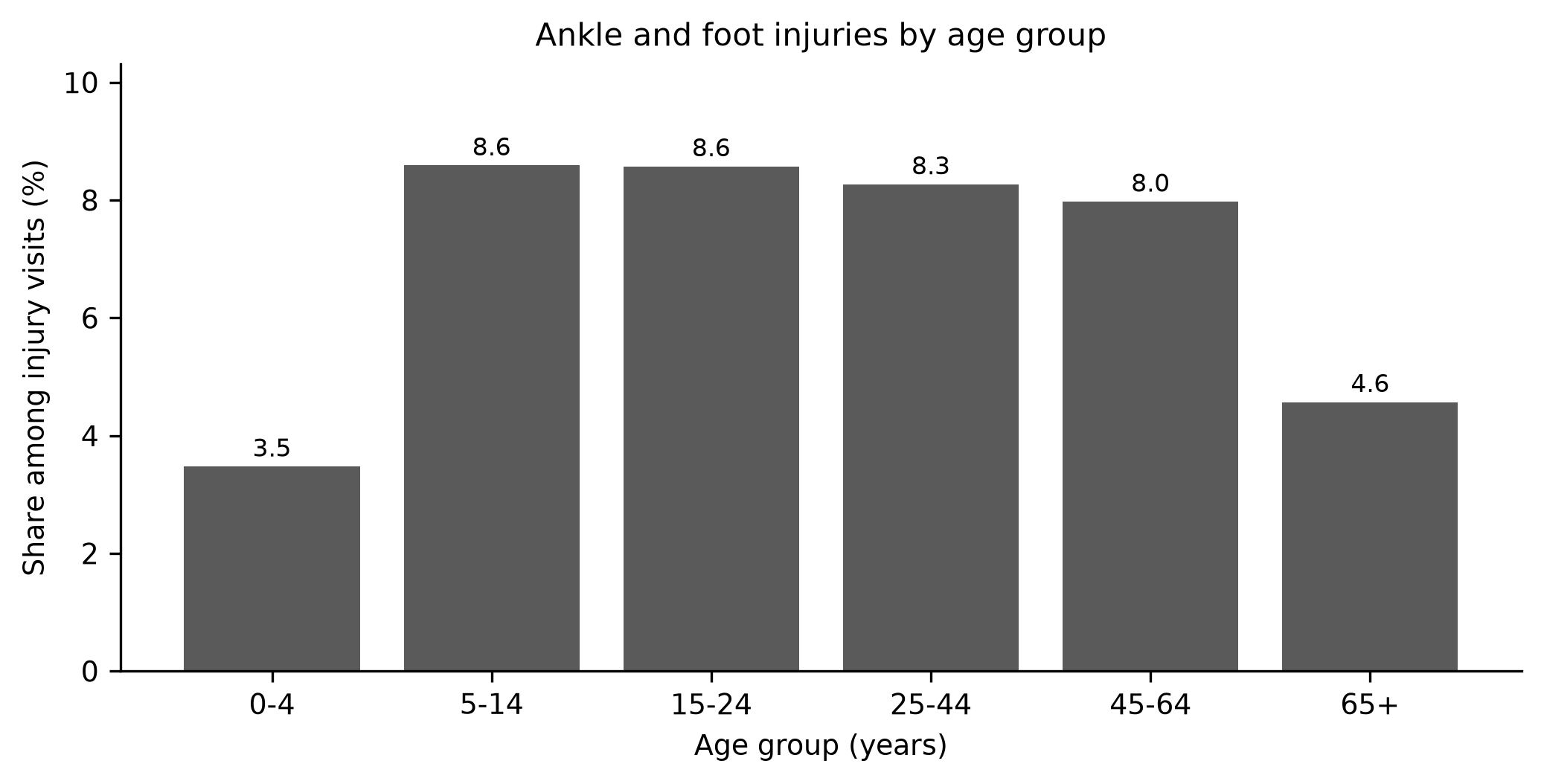
Figure 1. Share of ankle and foot injuries among injury-related emergency department visits by age group, Mexico, 2024.
Note: Share expressed as a percentage of injury-related visits in each age group. Source: Own elaboration.By reason for attention, the share of ankle and foot injuries among injury-related visits was 7.5% among attentions classified as accidents, poisoning and violence, 8.0% among medical attentions, 6.1% among paediatric attentions and 2.0% among gynaeco-obstetric attentions (Table 2). The category of accidents, poisoning and violence carried the largest number of ankle and foot injuries, and the unspecified category had the highest share but the smallest denominator (Table 2).
Reason for attention | Injury visits (n) | Ankle-foot visits (n) | Share % | 95% CI |
|---|---|---|---|---|
Accidents, poisoning and violence | 713250 | 53302 | 7.5 | 7.4-7.5 |
Medical | 477038 | 38163 | 8.0 | 7.9-8.1 |
Gynaeco-obstetric | 5266 | 103 | 2.0 | 1.6-2.4 |
Paediatric | 66416 | 4024 | 6.1 | 5.9-6.2 |
Unspecified | 11738 | 1254 | 10.7 | 10.1-11.3 |
Note: CI = confidence interval. Source: Prepared by the author based on the 2024 Emergency Registry, General Directorate of Health Information, Ministry of Health of Mexico.
In terms of composition, the 96,846 ankle and foot injuries were concentrated in the 25-44 age group, which contributed 29.9% of the total, followed by the 15-24 group with 24.1%. Males contributed 52.0% and females 47.9% of all ankle and foot injuries.
Main results
Dislocation, sprain and strain of the joints and ligaments at the ankle and foot (S93) was the most frequent subtype, with 38,880 visits, equivalent to 40.1% of all ankle and foot injuries. Superficial injuries (S90) accounted for 23.9%, open wounds (S91) for 17.0% and fractures of the foot excluding the ankle (S92) for 14.0% (Table 3). Other and unspecified injuries (S99) contributed 3.5%. Together, the four largest subtypes accounted for the great majority of all ankle and foot injuries (Table 3). The remaining subtypes were rare: nerve, blood vessel, muscle and tendon, crushing and amputation injuries together accounted for less than two percent of the total, with traumatic amputations (S98) numbering 401 visits (Table 3).
ICD-10 block | Description | Ankle-foot visits (n) | % of ankle-foot injuries |
|---|---|---|---|
S90 | Superficial injury of ankle and foot | 23166 | 23.9 |
S91 | Open wound of ankle and foot | 16464 | 17.0 |
S92 | Fracture of foot, except ankle | 13582 | 14.0 |
S93 | Dislocation, sprain and strain of joints and ligaments at ankle and foot level | 38880 | 40.1 |
S94 | Injury of nerves at ankle and foot level | 144 | 0.1 |
S95 | Injury of blood vessels at ankle and foot level | 57 | 0.1 |
S96 | Injury of muscle and tendon at ankle and foot level | 278 | 0.3 |
S97 | Crushing injury of ankle and foot | 496 | 0.5 |
S98 | Traumatic amputation of ankle and foot | 401 | 0.4 |
S99 | Other and unspecified injuries of ankle and foot | 3378 | 3.5 |
Note: ICD-10 = International Classification of Diseases, 10th revision. Source: Prepared by the author based on the 2024 Emergency Registry, General Directorate of Health Information, Ministry of Health of Mexico.
By state of residence, the share ranged from 4.6% in Morelos to 11.5% in Aguascalientes (Table 4) (Figure 2). The highest values were concentrated in Aguascalientes, Chihuahua and Colima, and the lowest in Guerrero, Morelos and Oaxaca. The states of Guanajuato and Mexico contributed the largest numbers of ankle and foot injuries, consistent with their larger injury populations (Table 4).
State | Injury visits (n) | Ankle-foot visits (n) | Share % | 95% CI |
|---|---|---|---|---|
Aguascalientes | 30020 | 3451 | 11.5 | 11.1-11.9 |
Baja California | 24955 | 2016 | 8.1 | 7.7-8.4 |
Baja California Sur | 3636 | 362 | 10.0 | 9.0-11.0 |
Campeche | 10941 | 961 | 8.8 | 8.3-9.3 |
Coahuila | 15917 | 1054 | 6.6 | 6.2-7.0 |
Colima | 18591 | 2011 | 10.8 | 10.4-11.3 |
Chiapas | 40495 | 2347 | 5.8 | 5.6-6.0 |
Chihuahua | 30532 | 3337 | 10.9 | 10.6-11.3 |
Ciudad de Mexico | 94451 | 8715 | 9.2 | 9.0-9.4 |
Durango | 21624 | 1815 | 8.4 | 8.0-8.8 |
Guanajuato | 163851 | 11690 | 7.1 | 7.0-7.3 |
Guerrero | 30579 | 1465 | 4.8 | 4.6-5.0 |
Hidalgo | 30722 | 2214 | 7.2 | 6.9-7.5 |
Jalisco | 90504 | 7430 | 8.2 | 8.0-8.4 |
Mexico | 143123 | 10870 | 7.6 | 7.5-7.7 |
Michoacan | 28044 | 2027 | 7.2 | 6.9-7.5 |
Morelos | 28587 | 1322 | 4.6 | 4.4-4.9 |
Nayarit | 14917 | 1069 | 7.2 | 6.8-7.6 |
Nuevo Leon | 24144 | 2266 | 9.4 | 9.0-9.8 |
Oaxaca | 23220 | 1238 | 5.3 | 5.0-5.6 |
Puebla | 56862 | 3315 | 5.8 | 5.6-6.0 |
Queretaro | 25025 | 1934 | 7.7 | 7.4-8.1 |
Quintana Roo | 12912 | 942 | 7.3 | 6.9-7.8 |
San Luis Potosi | 22666 | 1469 | 6.5 | 6.2-6.8 |
Sinaloa | 31005 | 2512 | 8.1 | 7.8-8.4 |
Sonora | 34256 | 2594 | 7.6 | 7.3-7.9 |
Tabasco | 36898 | 2385 | 6.5 | 6.2-6.7 |
Tamaulipas | 24182 | 2281 | 9.4 | 9.1-9.8 |
Tlaxcala | 15043 | 913 | 6.1 | 5.7-6.5 |
Veracruz | 61192 | 3899 | 6.4 | 6.2-6.6 |
Yucatan | 13184 | 986 | 7.5 | 7.0-7.9 |
Zacatecas | 26540 | 2444 | 9.2 | 8.9-9.6 |
Note: CI = confidence interval. Source: Prepared by the author based on the 2024 Emergency Registry, General Directorate of Health Information, Ministry of Health of Mexico.
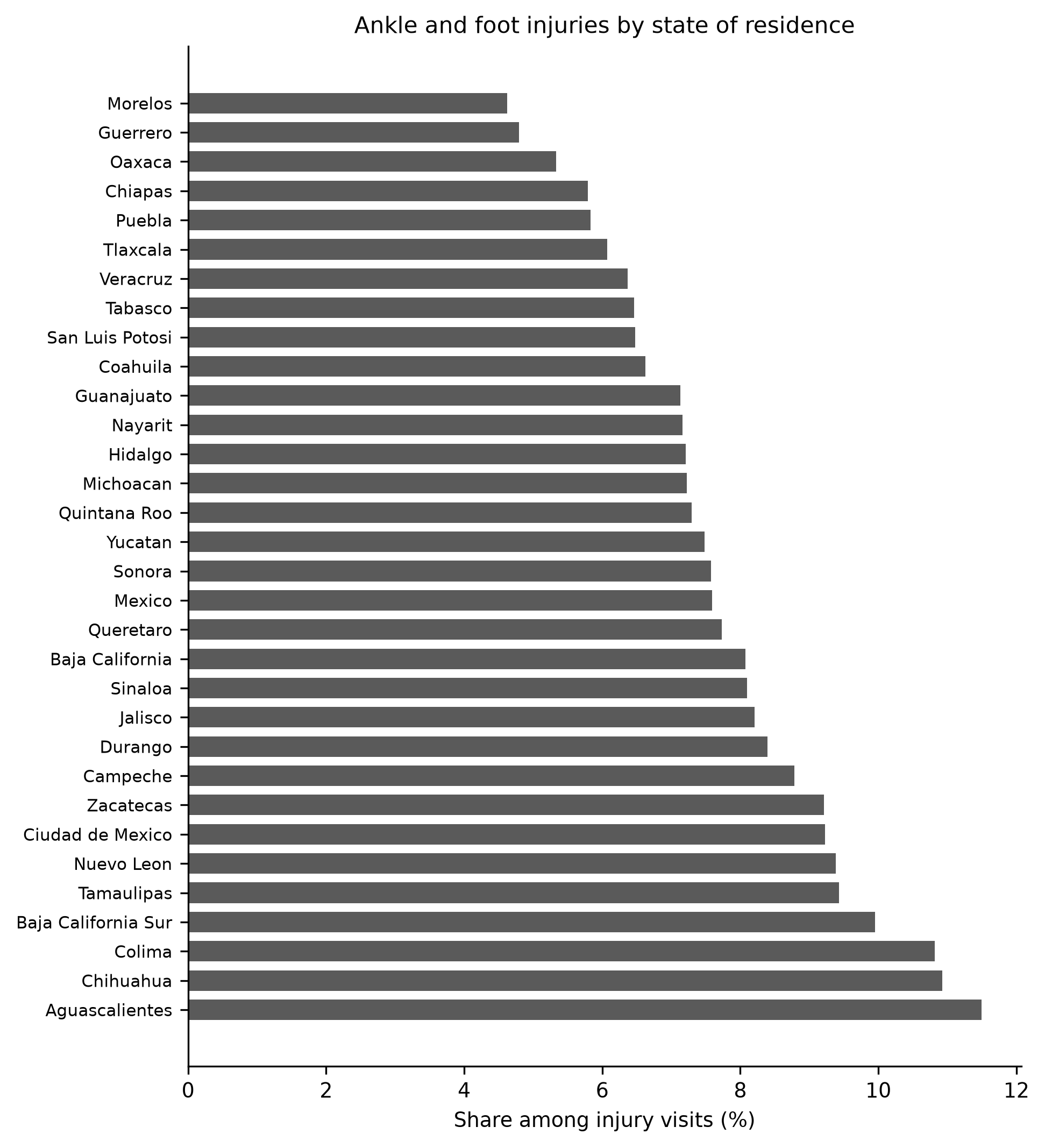
Figure 2. Share of ankle and foot injuries among injury-related emergency department visits by state of residence, Mexico, 2024.
Note: States ordered from the lowest to the highest share. Source: Own elaboration.Other analyses
When care-complication codes (T80-T88) were excluded from the injury denominator, 15,559 records were removed and the overall share of ankle and foot injuries remained at 7.70% (95% CI 7.65-7.74), a value consistent with the primary estimate.
DISCUSSION
Key results
In this national registry of Mexican public hospital emergency departments, ankle and foot injuries represented a modest but consistent share of injury-related visits. The burden was concentrated in children, adolescents and women, sprains and strains of the ankle and foot were the dominant subtype, and the share differed more than twofold between the states with the lowest and highest values. These patterns provide, for the first time at national level, a quantitative description of the demand that ankle and foot injuries place on the public emergency system, and the estimate was robust to the exclusion of care-complication codes from the injury definition. The findings also show that a small number of subtypes account for most of the burden, which has direct consequences for how emergency and podiatric services organise their response.
Interpretation and comparison with other studies
The overall share of 7.6% is consistent with the prominence of foot and ankle trauma reported in trauma-centre series, where these injuries form a recurrent and resource-intensive group.(2,3) National estimates from the United States place ankle sprains among the most common musculoskeletal emergency presentations,( 1) and the present data extend this observation to a middle-income setting with a public health system. The comparison is not exact because the studies differ in setting, case definition and denominator, but the direction and order of magnitude coincide. Directly comparable national shares are scarce, partly because many countries do not publish emergency diagnosis data at the level of the ICD-10 block, which is itself an argument for making such registries available as open data. When expressed against all urgency records rather than against injuries alone, ankle and foot injuries account for slightly more than one percent of emergency visits, a magnitude that is relevant for capacity planning in radiology, orthopaedics and rehabilitation.
The concentration among adolescents and young adults mirrors sport-related injury surveillance, in which lower extremity and foot and ankle injuries predominate in school-aged and young athletes.(10-12) The lower share in children younger than five years and in older adults suggests that the age pattern is driven by exposure to falls, play and sport in the intermediate age groups rather than by a uniform risk across the life course.(13) Fifth metatarsal and other foot fractures are known to shift in pattern and management with age,(21) and this may also contribute to the age gradient observed here. In paediatric emergency departments, foot and hand tendon injuries show their own age distribution, which supports treating children as a distinct subgroup.(22,23) The low share at 65 years or older should not be read as a low absolute burden, because older adults generate a large number of injury visits, and falls remain a relevant mechanism in this group.(13) The mechanisms that underlie these injuries can only be inferred indirectly from the present data, because the registry records the reason for attention rather than the external cause. Sport and recreation are the dominant contexts in the adolescent and young adult groups, as shown by video and surveillance analyses of ankle sprain mechanisms in football and of lower extremity injuries in school sport.(6,7,10) Falls and traffic events become relatively more important at the extremes of age, and the product-related injury literature indicates that recreational devices add a further, changing mechanism in emergency settings.(24) The low share in children younger than five years is consistent with the different injury profile of early childhood, in which falls and head injuries are relatively more frequent than lower extremity sprains, and with paediatric series in which ankle injuries rise only at school age.(23) The decline at 65 years or older does not imply fewer ankle and foot injuries in absolute terms, because the injury population itself grows with age; rather, other injuries such as hip and head trauma become relatively more common in this group. These age differences underline the value of reporting both the share and the absolute counts, which convey complementary information.
The higher share in women agrees with sex-stratified analyses of foot and ankle injuries in several sports and with the documented under-representation of women in lateral ankle sprain research, which makes female-specific estimates valuable for prevention and treatment planning.(8,9) Several explanations are plausible. Women participate increasingly in sports that load the lower limb, anatomical and hormonal factors influence ligament behaviour, and footwear differences may contribute.( 9) The registry does not permit these hypotheses to be tested, but the sex difference is large enough to be clinically meaningful. Taken together, the age and sex gradients indicate that school-aged and young women are the group in which ankle and foot injuries are most concentrated relative to their injury burden, a pattern that points to school sport, footwear and neuromuscular training as plausible targets for prevention. These are precisely the interventions for which structured prevention programmes have been proposed in the sports injury literature, and their reach could be extended through podiatric and school health services.
The predominance of sprains and strains (S93) is consistent with clinical guidance that identifies lateral ankle sprains as the leading acute ankle injury,(25,26) and with the deltoid and syndesmotic ligament injuries that share the same block.(27) Supination trauma is a recurrent mechanism of these injuries and is associated with avulsion fractures of the foot.(28,29) The small contribution of nerve, vessel, crushing and amputation injuries reflects the lower frequency of these severe patterns in an emergency population, while traumatic amputations of the ankle and foot remain clinically relevant given their functional consequences.(29) Midfoot injuries such as Lisfranc fracture-dislocations are uncommon but carry disproportionate morbidity when missed.(30) Because the S90-S99 block excludes malleolar fractures coded in S82, the true proportion of ankle fractures is higher than the foot fractures reported here, a point that should be kept in mind when interpreting the subtype distribution.
The reason-for-attention distribution shows that most ankle and foot injuries were attended under the accidents, poisoning and violence category, in line with the external-cause profile of injury visits in Mexican emergency departments,(5,16) while the notable share recorded under medical and paediatric attentions indicates heterogeneous coding across facilities.(22) This heterogeneity is a known characteristic of routine administrative data and cautions against using the reason-for-attention field alone as a precise measure of injury mechanism. The low share in the gynaeco-obstetric category is expected, because ankle and foot injuries are rarely the principal problem in obstetric emergencies, and it serves as an internal check that the coding distinguishes clinically meaningful groups. Product-related injuries also emerge as a distinct category in emergency surveillance,( 24) although the registry does not permit that level of detail. The geographic variation, from 4.6% to 11.5%, parallels regional heterogeneity described for road traffic and other injuries in Mexico.(15,31) Part of this variation may reflect differences in reporting coverage, in the mix of rural and urban facilities, and in the population structure of each state, and the present data cannot separate these components. Body-region analyses of emergency injury data in other settings report similarly informative geographic and demographic patterns.( 32) Registry-based studies of this kind in Latin America are feasible and reproducible, although their coverage and coding depend on institutional reporting.( 4)
The findings also carry implications for the organisation of emergency and podiatric services. Because sprains and strains dominate the case mix, a large proportion of these visits could be managed with early functional treatment and return to activity rather than prolonged immobilisation, which aligns with current clinical guidance.(25) Emergency triage could reserve advanced imaging for the minority of cases with suspected fracture or severe injury, supported by decision rules and point-of-care tools.(33,34) The concentration in school-aged and young women argues for school-based prevention and for footwear and training advice delivered in primary care and sports settings rather than exclusively in hospitals. The interstate variation, in turn, suggests that a single national prevention strategy may be less efficient than programmes adapted to the states with the highest shares, and that podiatric referral pathways should be strengthened where the absolute burden is largest.
Foot and ankle trauma generates substantial downstream demand for radiography and computed tomography in emergency departments,(35,36) and decision rules and point-of-care tools are used to triage these patients before definitive imaging.(33,34,37) Treatment and rehabilitation costs associated with ankle sprains are considerable,(38,39) and validated outcome instruments for foot and ankle injuries have been adapted for Mexican-American populations,(17) which reinforces the value of describing the burden at national level.
The main strengths of this study are its national coverage, its large denominator of almost eight million urgency records, and the use of an official administrative registry that is freely downloadable and reproducible. The operational definition based on the ICD-10 block S90-S99 is transparent and transferable to other health systems that code diagnoses with the same classification, and it aligns with the block heading used in the classification itself. The analysis was executed twice with identical results, and the sensitivity analysis showed that the estimate was robust to the exclusion of care-complication codes. These features distinguish the present estimates from single-centre series, which are informative but cannot describe geographic and demographic variation at national level.
Limitations
The main limitation is classification. The principal diagnosis assigned during routine care may misclassify some injuries, and the block S90-S99 does not include malleolar fractures, which are coded within S82, so ankle fractures are incompletely captured by definition. This means that the estimate reported here reflects injuries to the ankle and foot as defined by the ICD-10 block and underestimates the full clinical spectrum of ankle trauma.
The registry records the reason for attention in broad categories and does not capture the specific external cause, which limits the description of mechanism. State was based on residence rather than on the attending facility, and differences between states may partly reflect reporting coverage rather than true incidence. The cross-sectional design with a single year does not allow trends or causal inference, and the private sector is not represented in the registry. The registry also lacks data on the clinical outcome of the visit, such as admission, surgical treatment or functional recovery, so the analysis describes demand rather than severity or prognosis. Each of these limitations points to a specific recommendation: future work should validate diagnosis coding against clinical records, incorporate external-cause codes, use facility-level linkage, extend the analysis to several years, and include private facilities where data become available.
Generalisability
The findings describe public hospitals that report to the national urgency registry and should be generalised cautiously to private facilities, which are not part of the registry and may serve a population with a different injury profile. Within the public system, the results are representative of emergency demand for ankle and foot injuries in Mexico and provide a reference for other Latin American health systems that maintain administrative urgency registries. The mixture of urban and rural facilities in the registry supports the transfer of the age, sex and subtype patterns to other regions of the country. For podiatric practice, the concentration of sprains and strains in adolescents and women and the marked interstate variation identify groups and regions where prevention, footwear advice and early rehabilitation may be directed. The method can be applied to subsequent years of the registry to monitor whether these patterns change over time and to evaluate the effect of prevention programmes.
CONCLUSIONS
Ankle and foot injuries represented a consistent and quantifiable share of injury-related emergency visits in Mexican public hospitals during 2024. Their share varied by age, being highest in children, adolescents and young adults, and by sex, being higher in women than in men. Sprains and strains of the ankle and foot were the leading anatomical subtype, followed by superficial injuries, open wounds and foot fractures. The share varied more than twofold between states, which identifies geographic areas where prevention and podiatric care may be reinforced.
References
- 1 Tyler JR, Sandler AB, Albagli A, Gilat R, Scanaliato JP, Parnes N. The National Epidemiology of Ankle Sprains in the United States: Updates From 2010 to 2024. Orthopedics. 2025;48(6):371-377. doi: 10.3928/01477447-20251021-01
- 2 Pal D, Raniga SB, Mittal AK, Ahuja A, Panwar J, Kumaravel M. Ankle and Foot Injuries in the Emergency Department: Checklist-based Approach to Radiographs. RadioGraphics. 2024;44(12):e240104. doi: 10.1148/rg.240104
- 3 Mascio A, Greco T, Comisi C, Cinelli V, De Gasperis N, Candelli M, et al. Foot and Ankle Trauma: Epidemiology Before, During, and Post COVID-19 Pandemic in a Level I Trauma Center: A 5-Year Experience and Data Analysis. JCM. 2024;13(24):7585. doi: 10.3390/jcm13247585
- 4 Padilla-Rojas LG, López-Cervantes RE, Álvarez-Rengifo CA, Medina-Monje C, Hernández-Arenas Á, Leal J, et al. The state of orthopaedic trauma-related registries in Latin America: benefits, barriers, and bearings. OTA International. 2025;8(4S):e414. doi: 10.1097/oi9.0000000000000414
- 5 Gómez-García L, Hidalgo-Solórzano E, Pérez-Núñez R, Jacobo-Zepeda VF, Ascencio-Tene RG, Lunnen JC, et al. Factors associated with the severity of road traffic injuries from emergency department based surveillance system in two Mexican cities. BMC Emerg Med. 2022;22(1):20. doi: 10.1186/s12873-022-00576-x
- 6 Buckthorpe M, Verhagen E, D'Hooghe P, Osti L, Di Paolo S, Della Villa F. Systematic video analysis of ankle sprain injuries in elite male football (soccer): Injury mechanisms, situational patterns, biomechanics and neurocognitive errors study: A study on 140 consecutive players. Knee surg sports traumatol arthrosc. 2025;33(11):4035-4049. doi: 10.1002/ksa.70049
- 7 O’Cain CM, Spratley EM, Arbogast KB, Lessley DJ, Evans WB, Cormier JM, et al. Injury Scenarios of Ankle Sprains in the National Football League: External Rotation and Eversion Mechanisms. Am J Sports Med. 2025;53(6):1281-1290. doi: 10.1177/03635465251329181
- 8 Katz NB, Silver JK, McInnis KC. Gender/sex differences: Representation of women in lateral ankle sprain research. PM&R. 2025;17(8):952-960. doi: 10.1002/pmrj.13349
- 9 Balachandran U, Jain C, Tanghe KK, Mulcahey MK, Fantry A, Gianakos AL, et al. A sport-specific assessment of foot and ankle injuries in female patients: An analysis of national injury trends from 2014 to 2023. Sports Orthopaedics and Traumatology. 2025;41(4):365-372. doi: 10.1016/j.orthtr.2025.05.007
- 10 Yu J, Yendluri A, Javier JV, Shah SS, Yu J, Bienstock DM, et al. Female high school soccer injuries presenting to US emergency departments: A 10-year analysis of national injury data. Journal of Orthopaedics. 2025;69:324-328. doi: 10.1016/j.jor.2025.08.017
- 11 Yendluri A, Chiang JJ, Nietsch KS, Obana KK, Trofa DP, Kelly JD, et al. Epidemiology and Sex-Specific Analysis of Basketball-Related Lower Extremity Fractures: A 10-Year Analysis of National Injury Data. Sports Health: A Multidisciplinary Approach. 2024;16(6):1021-1028. doi: 10.1177/19417381231223479
- 12 Chun AG, Snyder EM, Obana KK, Ashinsky BG, Parisien RL, Bottiglieri TS, et al. Youth Soccer Lower Extremity Injuries Presenting to US Emergency Departments Are Decreasing: A 10‐Year Analysis of National Injury Data. Arthroscopy, Sports Medicine, and Rehabil. 2025;7(3):101140. doi: 10.1016/j.asmr.2025.101140
- 13 Mikhail D, Sugimoto D, Schultz C, Radel L, Soma D, Ulman S, et al. Injury epidemiology in young female American football athletes: a 10-year analysis using NEISS data. The Physician and Sportsmedicine. 2025;53(6):441-447. doi: 10.1080/00913847.2025.2548761
- 14 Borges G, Orozco R. Alcohol and cannabis use in traffic-related injuries in Mexico City. Inj Prev. 2023;29(3):207-212. doi: 10.1136/ip-2022-044782
- 15 Borges G, Orozco R, Hernández-Becerril Z, Ortega BE, Flores J, Benitez-King G, et al. Alcohol, drugs, and road traffic injuries in an emergency department in Mexico City. Injury. 2023;54(2):481-489. doi: 10.1016/j.injury.2022.12.019
- 16 Muro-Báez VA, Mendoza-García ME, Vera-López JD, Pérez-Núñez R. Analysis of road traffic injuries in Mexican cyclists. GMM. 2023;153(6):588-595. doi: 10.24875/gmm.m18000052
- 17 Zelle BA, Francisco BS, Bossmann JP, Fajardo RJ, Bhandari M. Spanish Translation, Cross-Cultural Adaptation, and Validation of the American Academy of Orthopaedic Surgeons Foot and Ankle Outcomes Questionnaire in Mexican-Americans With Traumatic Foot and Ankle Injuries. Journal of Orthopaedic Trauma. 2017;31(5):e158-e162. doi: 10.1097/bot.0000000000000789
- 18 von Elm E, Altman DG, Egger M, Pocock SJ, Gøtzsche PC, Vandenbroucke JP. The Strengthening the Reporting of Observational Studies in Epidemiology (STROBE) statement: guidelines for reporting observational studies. The Lancet. 2007;370(9596):1453-1457. doi: 10.1016/s0140-6736(07)61602-x
- 19 Direccion General de Informacion en Salud, Secretaria de Salud de Mexico. Urgencias: Datos Abiertos. Registro de Urgencias medicas de la Secretaria de Salud [Internet]. 2025 [cited 2026 Oct 28]. Available from: http://www.dgis.salud.gob.mx/contenidos/basesdedatos/Datos_Abiertos_gobmx.html
- 20 Direccion General de Informacion en Salud, Secretaria de Salud de Mexico. Registros de Urgencias 2024. Base de datos de urgencias (datos abiertos) [Internet]. 2025 [cited 2026 Oct 28]. Available from: http://www.dgis.salud.gob.mx/contenidos/basesdedatos/da_urgencias_gobmx.html
- 21 Kadiyala ML, Kingery MT, Walls R, Ganta A, Konda SR, Egol KA. Effect of patient age on fifth metatarsal fracture pattern, management, and outcomes. The Journal of Foot and Ankle Surgery. 2025;64(2):126-130. doi: 10.1053/j.jfas.2024.09.001
- 22 Mori T, Nomura O, Kishibe S. Characteristics of pediatric hand and foot tendon injuries in a Japanese pediatric emergency department. Pediatrics International. 2025;67(1):e15862. doi: 10.1111/ped.15862
- 23 Smith KM, Zimmerman E, Trotter Z, Wai S. Diagnostic Accuracy of Point-of-Care Ultrasound for Acute Pediatric Ankle Injuries. Pediatric Emergency Care. 2025;41(10):e140-e145. doi: 10.1097/pec.0000000000003439
- 24 Zakeri BS, Fox-Good CG, Nair M, Jaworski HM, Froehle AW. Orthopedic injuries due to hoverboard use, reported in the NEISS database, 2015–2022. Injury. 2024;55(11):111769. doi: 10.1016/j.injury.2024.111769
- 25 Bsoul N, Ning L, Cai L, Mazmanyan D, Porter D. Evidence-based clinical practice guidelines for the management of acute ankle injuries according to: a PRISMA systematic review and quality appraisal with AGREE II. BMC Musculoskelet Disord. 2024;25(1):523. doi: 10.1186/s12891-024-07655-z
- 26 Kocsis K, Stubnya B, Váncsa S, Kói T, Kovács N, Hergár L, et al. Diagnostic accuracy of ultrasonography in acute lateral ankle ligament injury: A systematic review and meta-analysis. Injury. 2024;55:111730. doi: 10.1016/j.injury.2024.111730
- 27 Koris J, Calder JDF, Dalmau‐Pastor M, Fernandez MA, Ramasamy A. Deltoid ligament injuries: A review of the anatomy, diagnosis and treatments. Knee surg sports traumatol arthrosc. 2024;32(12):3052-3064. doi: 10.1002/ksa.12274
- 28 Kilper A, Milani TL, Schütz L, Langenhan R, Reimers N, Lederer AK, et al. Ankle injury due to supination trauma: Potential factors worsening patient outcome. Journal of Orthopaedics. 2025;59:123-127. doi: 10.1016/j.jor.2024.10.060
- 29 Cornelissen MP, Peeters CMM, Doornberg JN, van Driel PBAA, Munnik-Hagewoud R, Zuurmond RG. Outcome of avulsion fractures in the foot after supination trauma: A systematic review. Eur J Trauma Emerg Surg. 2025;51(1):316. doi: 10.1007/s00068-025-02932-5
- 30 Sanghvi PA, Abid R, VanBibber HD, Burkhart RJ, Moyal AJ, Adelstein JM, et al. Epidemiology and management of adult Lisfranc injuries in the United States: a 10-year analysis of 21,964 cases. Arch Orthop Trauma Surg. 2025;145(1):421. doi: 10.1007/s00402-025-06042-0
- 31 Borges G, Orozco R, Pérez-Núñez R, Pechansky F. Substance use and type of Road Traffic Injury in Mexico City. J of Prevention. 2024;45(2):323-337. doi: 10.1007/s10935-024-00769-z
- 32 Escalante Freitez MF. Orofacial injuries from powered scooters in United States emergency departments: a serial cross-sectional analysis of national estimates. SAP Dentistry. 2025;3:161. doi: 10.62486/dent2025161
- 33 McDermott A, Repanshek Z, Koyfman A, Long B. High risk and low incidence diseases: Lisfranc injury. The American Journal of Emergency Medicine. 2024;85:172-178. doi: 10.1016/j.ajem.2024.09.019
- 34 DOĞAN B, KOMUT S, KOMUT E, KAVAK N, GÜNEŞ O, KARAHAN AT. Diagnostic accuracy and potential triage utility of the Shetty test in foot and ankle trauma: a cross-sectional study. Turkish Journal of Medical Sciences. 2025;55(4):887-892. doi: 10.55730/1300-0144.6041
- 35 Ghoshal S, King AH, Pang M, Hood CM, Sodickson AD, Gee MS, et al. Trends in computed tomography utilization among emergency department patients with foot and ankle trauma. The Journal of Foot and Ankle Surgery. 2025;64(5):613-618. doi: 10.1053/j.jfas.2025.04.007
- 36 Kalantar SH, Bagheri N, Milan N, Mehni SM, Oskouie IM, Alinia T, et al. Evaluation of treatment planning discrepancies: CT versus plain radiographic findings in patients with foot and ankle trauma. BMC Res Notes. 2024;17(1):238. doi: 10.1186/s13104-024-06902-9
- 37 Frezals LV, Delafontaine A, Scoubeau H, Sontou R, Moorthamers S, Plumacker A, et al. Diagnostic value of FAST ankle ultrasound compared to standard radiography for fracture detection in the emergency department by non-radiologist physicians: a monocentric prospective diagnostic cohort study. Eur J Trauma Emerg Surg. 2025;51(1):107. doi: 10.1007/s00068-025-02772-3
- 38 Ramdin C, Lister J, Shiau S, Domider M, Nelson LS. Opioid utilization patterns and predictors for emergency department visits related to ankle sprains between 2016 and 2021: A National Analysis Utilizing Neural Networks. The American Journal of Emergency Medicine. 2025;98:371-373. doi: 10.1016/j.ajem.2025.09.030
- 39 Figueroa-García J, Granados-García VM, Hernández-Rivera JCH, Rojano-Mejía D. Cost-Effectiveness Analysis of Adding Telerehabilitation to Standard Care for Ankle Sprains Compared with Standard Care Alone. Telemedicine Reports. 2025;6(1):120-127. doi: 10.1089/tmr.2025.0010
Declarations
Funding
No financing
Conflict of interest
None
Authorship contributions
Drafting – original draft: Avryl Paredes Celis, Brenda Vanesa Báez Escaza.
Writing–review and editing: Avryl Paredes Celis, Brenda Vanesa Báez Escaza.