

Abstract
Introduction: Diabetic foot complications are a leading cause of hospitalization and lower-limb amputation in Latin America, yet nationwide hospital data for Ecuador are scarce. Methods: We analyzed the open hospital discharge register of the Ecuadorian Instituto Nacional de Estadistica y Censos (Camas y Egresos Hospitalarios) for 2022 to 2024, selecting discharges whose principal ICD-10 diagnosis indicated a diabetic foot complication (E10-E14.5, L97 or R02). We estimated annual counts, crude rates per 100,000 inhabitants, and the distribution by province of residence, hospital sector and class, sex, age, in-hospital death and length of stay. Results: The register recorded 14,613 diabetic foot discharges in three years: 4,666 in 2022, 5,139 in 2023 and 4,808 in 2024, with crude rates of 26.34, 28.81 and 26.76 per 100,000. In 2024, 65% of discharges were men, the median age was 63 years and 89.30% occurred in public hospitals. In-hospital case fatality was 1.40% (95% CI 1.10-1.70). The highest province rates were observed in Manabi and Canar. Conclusions: Diabetic foot discharges in Ecuador are concentrated in public general hospitals and in coastal provinces, with a stable national rate near 27 per 100,000 and a male predominance. The register identifies foot complications but not amputations, because procedure codes are not recorded.
Keywords
diabetic foot, diabetes mellitus, hospital discharge, epidemiology, Ecuador, lower extremity
INTRODUCTION
Diabetes mellitus is among the fastest growing chronic conditions in Latin America, and the International Diabetes Federation projects a continued increase in the number of affected adults across the region in the coming decades.( 1) The complications of diabetes, rather than the metabolic diagnosis itself, drive most of its clinical and economic cost, and none do so more consistently than the complications of the foot. Zhang et al.( 2) synthesized 19 studies and estimated a global prevalence of diabetic foot ulceration of 6.3%, with wide variation across settings and income levels. The burden falls disproportionately on low- and middle-income countries, where foot complications tend to present later, infections are more advanced and amputation rates remain higher than in high-income settings.( 2) Armstrong, Boulton and Bus( 3) estimated that between 19% and 34% of people with diabetes will develop a foot ulcer during their lifetime, and that recurrence reaches roughly 40% within one year of healing and 65% within five years. A foot ulcer is therefore not a single event but the beginning of a recurrent cycle of tissue breakdown, infection and health care contact, and this cycle is what ultimately fills hospital beds and operating rooms.
The pathway from ulcer to amputation explains why foot disease consumes so many hospital resources. Neuropathy, deformity and peripheral arterial disease converge on a foot that loses protective sensation and perfusion, and minor trauma then progresses to ulceration, infection and gangrene.(3) A diabetic foot ulcer that becomes infected is the immediate antecedent of most nontraumatic lower-limb amputations, and ulceration precedes the large majority of amputations in people with diabetes.(4) This sequence turns a preventable outpatient problem into a surgical inpatient problem, with long lengths of stay and high readmission rates.(5) Because the progression is gradual and detectable, systematic foot examination and early treatment can interrupt it, which is why the hospital load of the condition is regarded as a marker of how well prevention has worked upstream.
In Latin America the hospital burden of this pathway is documented but unevenly quantified. A multicenter survey of centers and hospitals across the region found that diabetic foot infections present with advanced tissue involvement and a microbiology that differs from high-income reference patterns.(6) In Brazil, admissions for diabetic foot complications concentrate in older patients with low socioeconomic status,(7) and the direct medical cost of diabetic foot disease is comparable to that of other major complications of diabetes.(8) General outcomes and the risk of minor and major amputations have also been characterized from Brazilian hospital data, which allows the Ecuadorian results to be placed against a regional reference.(9) In Mexico, mortality after major amputation remains elevated years after surgery, and in Chile the amputation index tracks metabolic control indicators, which links hospital outcomes to the quality of outpatient diabetes care.(10,11)
Ecuador combines a large burden of diabetes with a fragmented health system, and this combination shapes the hospital phase of foot disease. The public network of the Ministry of Public Health and the social security institute provide most inpatient care, with a smaller private sector that also reports discharges to the national statistics office.( 12) The national register of hospital discharges is therefore well suited to describe the problem across providers, but it has not previously been used for this purpose. The absence of a national description matters for planning, because the hospital is where late presentations of diabetic foot become visible and where the consequences of gaps in primary prevention are paid. Quantifying these discharges and their geographic and institutional distribution is therefore a prerequisite for allocating resources where they are actually consumed.
For Ecuador the evidence is thinner and mostly local. Community-based research in rural Ecuador documented a high burden of diabetes-related foot disorders and limited access to specialized care.(13) Studies in primary care settings have described incomplete recording of foot care in medical records, suboptimal self-care among people with type 2 diabetes and low compliance with annual foot examination across Latin American cohorts that included Ecuadorian patients.(14-16) At the hospital level, one series identified the clinical variables that predict amputation among Ecuadorian patients with diabetic foot.(17) These studies describe single centers or specific populations; none has quantified the national frequency of diabetic foot hospital discharges or mapped their distribution across the country's provinces and hospital types. A national denominator is needed precisely because the existing hospital evidence is drawn from large referral centers, whose case mix is unlikely to represent the smaller public and private facilities that also treat these patients.
The objective of this study was to describe the frequency, temporal trend and distribution by province of residence and hospital characteristics of hospital discharges with a principal diagnosis of diabetic foot complications in Ecuador between 2022 and 2024, using the open national hospital discharge register, and thereby to provide a reproducible national baseline for surveillance and planning.
METHODS
This was an observational, cross-sectional register-based study with a three-year temporal component, conducted and reported according to the RECORD extension of the STROBE statement for studies using routinely collected health data.(18,19) The data source was the Registro Estadístico de Camas y Egresos Hospitalarios of the Instituto Nacional de Estadística y Censos of Ecuador, an annual census of hospital discharges collected from public and private health establishments that provide inpatient care. Each annual file contains one record per discharge with patient attributes, establishment attributes and the principal diagnosis coded in the International Classification of Diseases, tenth revision.( 12) The register is compiled by the national statistics office from forms completed by reporting establishments, and the 2022 to 2024 editions include roughly 1.1 million discharges per year, which provides stable denominators for national and provincial estimates. We used the open data files corresponding to the discharge years 2022, 2023 and 2024. Population projections by year and by province, used as denominators for crude rates, were taken from the INEC statistical yearbook of hospital statistics.( 20)
The unit of analysis was the hospital discharge. The primary outcome was a discharge whose principal diagnosis indicated a diabetic foot complication. The outcome was defined as any of the following ICD-10 codes recorded in the principal diagnosis field: E10.5, E11.5, E12.5, E13.5 or E14.5 (diabetes mellitus with peripheral circulatory complications), L97 (ulcer of lower limb, not elsewhere classified) or R02 (gangrene, not elsewhere classified). The code E10-E14.5 corresponds to diabetes with peripheral circulatory complications and is the most specific diabetic foot code in the classification, because it captures the ischemic and gangrenous presentations of the diabetic foot. The codes L97 and R02 capture lower-limb ulceration and gangrene that may be recorded as the principal diagnosis without an explicit diabetes code. Discharges coded only as diabetes with other specified complications (E10-E14.6) or with multiple complications (E10-E14.7) were not counted, because those categories are not specific to the lower limb. The inclusion of L97 and R02 alongside the diabetes codes reflects the coding reality of hospital discharge data, in which a foot ulcer or gangrene is sometimes recorded as the principal diagnosis without a diabetes code, even when the patient has diabetes. The subgroup E10-E14.5 was analyzed separately as a secondary outcome, and the analysis is reported both with and without the ulcer and gangrene codes so that the reader can see how much the broader definition adds.
A structural feature of the register constrains the interpretation of the amputation question. The register stores a single principal diagnosis per discharge and does not record surgical procedure codes. Lower-limb amputations therefore cannot be identified directly from this source. The E10-E14.5 subgroup is reported as the population with the severe ischemic presentation that most often precedes amputation, but it is not an amputation count, and no amputation figure is imputed from it.
For each selected discharge the following attributes were extracted: year of discharge, province of residence, hospital sector, hospital class, sex, age, in-hospital death and length of stay. Hospital sector was classified by the register as public, private for-profit or private non-profit. Hospital class refers to the level and type of the establishment, such as general hospital, basic hospital or specialty hospital. Age was analyzed only for records whose age was expressed in completed years. In-hospital death was defined as any discharge whose condition at discharge began with deceased. Discharges of patients residing abroad were retained in national totals but excluded from the province-level rates, because no population denominator applies to them.
Completeness and coding practice deserve emphasis because they condition the interpretation of every register-based estimate. The principal diagnosis field was complete in the analyzed records, and the categorical fields used here, namely province, sector, class, sex and discharge condition, showed no missing values in the selected subset. The register records the principal diagnosis as the main condition treated during the stay, following the coding convention of the national statistics office, but the system does not validate clinical codes against medical records at the individual level. This means that the accuracy of the E10-E14.5, L97 and R02 codes depends on the coding quality of each reporting facility, a limitation that is shared by all administrative hospital statistics and is addressed further in the discussion.
All quantities were summarized descriptively; no causal modeling was attempted. Annual crude rates per 100,000 inhabitants were computed with the INEC population projection of each year, and 95% confidence intervals were obtained from the Poisson distribution. Province-specific rates for 2024 used the 2024 provincial population projections. Proportions were reported with 95% Wilson confidence intervals. The difference in in-hospital case fatality between men and women was tested with a chi-square test, two-sided at a significance level of 0.05. Age and length of stay were summarized as medians with interquartile ranges because their distributions were markedly right-skewed. As a robustness check, the restricted definition limited to the E10-E14.5 codes was reported alongside the primary definition to show how much of the result depends on the inclusion of ulcer and gangrene codes.
RESULTS
Nationwide frequency and trend
Between 2022 and 2024 the register recorded 14,613 hospital discharges with a principal diagnosis of diabetic foot complications, distributed as 4,666 in 2022, 5,139 in 2023 and 4,808 in 2024 (Table 1). Expressed per population, the crude rate was 26.34 per 100,000 inhabitants in 2022, 28.81 in 2023 and 26.76 in 2024, with a 95% confidence interval of 26.01-27.52 in the final year (Figure 1). The rate therefore rose between 2022 and 2023 and returned toward the 2022 level in 2024, a variation of less than 3 discharges per 100,000 across the period. The register as a whole contained 1,130,603 discharges in 2022, 1,170,813 in 2023 and 1,132,667 in 2024, so the diabetic foot discharges represented 0.41%, 0.44% and 0.42% of all discharges in the three successive years. The specific subgroup E10-E14.5, diabetes mellitus with peripheral circulatory complications, accounted for 13,261 of the 14,613 discharges (90.70%), and this proportion was similar in each individual year.
Measure | 2022 | 2023 | 2024 |
|---|---|---|---|
Diabetic foot discharges, n | 4666 | 5139 | 4808 |
Crude rate per 100,000 | 26.34 | 28.81 | 26.76 |
Rate 95% CI | 25.59-27.10 | 28.03-29.60 | 26.01-27.52 |
Share of all discharges, % | 0.41 | 0.44 | 0.42 |
E10-E14.5 subgroup, n | 4241 | 4646 | 4374 |
Note: CI = confidence interval. Diabetic foot complications defined as a principal diagnosis of E10-E14.5, L97 or R02.
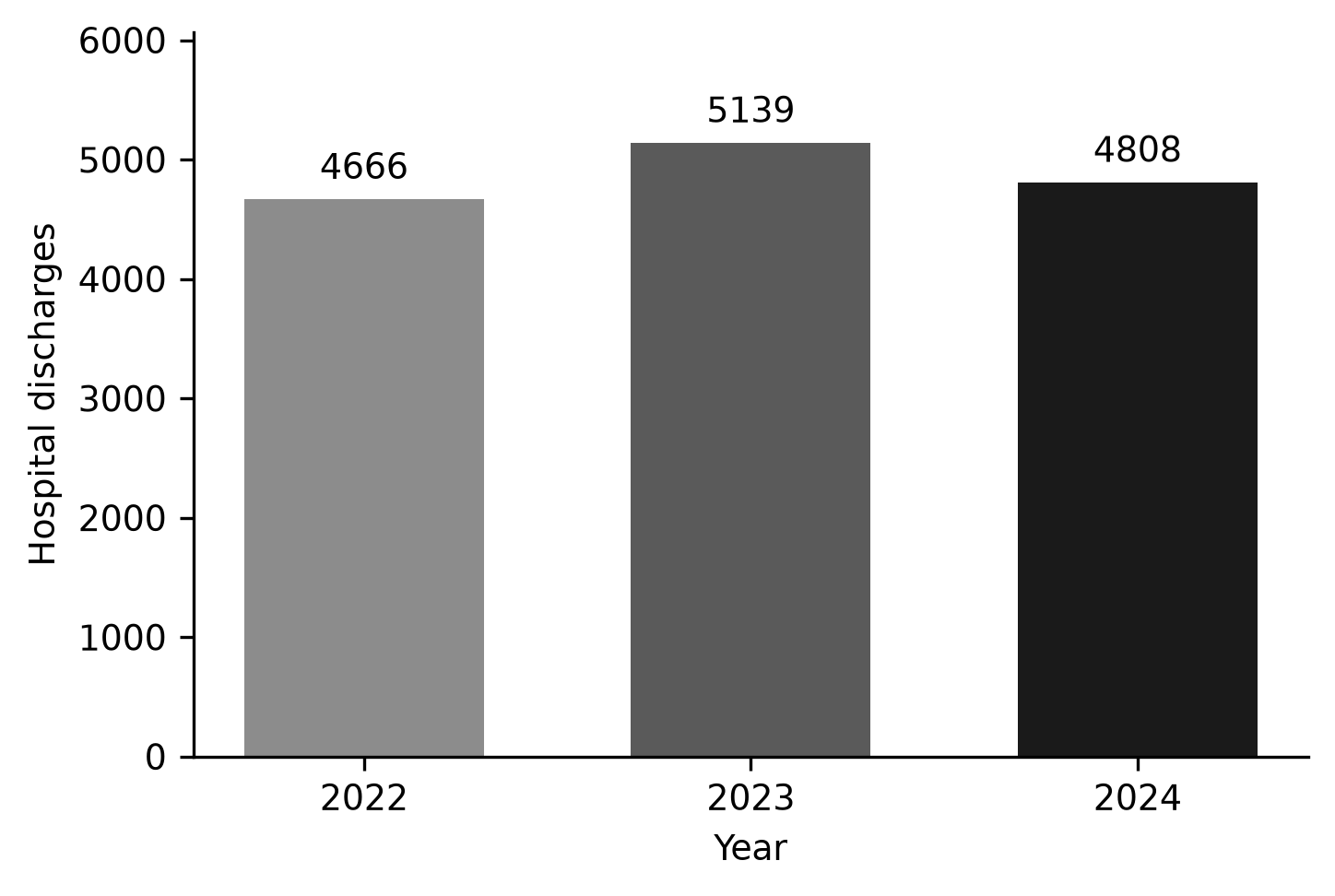
Figure 1. Annual number of hospital discharges for diabetic foot complications in Ecuador, 2022-2024.
Note: Bars show the absolute number of discharges with a principal diagnosis of E10-E14.5, L97 or R02.Provincial distribution
The distribution by province of residence in 2024 was markedly uneven (Table 2). Guayas, the most populous province, concentrated 1,695 discharges and a rate of 35.80 per 100,000. Manabi recorded 823 discharges and the highest provincial rate, 48.40 per 100,000, followed by Cañar with 44.60 per 100,000 and El Oro with 43.40 per 100,000. Los Rios reached 37.70 per 100,000. In contrast, Pichincha, the province that contains Quito, recorded 325 discharges and a rate of 9.90 per 100,000, and several Andean provinces, including Imbabura and Bolivar, fell below 11 per 100,000. The gap between the highest and lowest provincial rates exceeded tenfold. In-hospital deaths also concentrated in the same coastal provinces, with 31 deaths in Guayas, while the highest case fatality values appeared in the smaller provinces of Carchi and Sucumbios rather than in the provinces with the most discharges.
Province | Discharges, n | Population | Rate per 100,000 | In-hospital deaths | Case fatality, % |
|---|---|---|---|---|---|
Guayas | 1695 | 4739771 | 35.8 | 31 | 1.8 |
Manabí | 823 | 1699434 | 48.4 | 4 | 0.5 |
Los Ríos | 365 | 968660 | 37.7 | 6 | 1.6 |
El Oro | 325 | 748627 | 43.4 | 7 | 2.2 |
Pichincha | 325 | 3272265 | 9.9 | 2 | 0.6 |
Santo Domingo de los Tsáchilas | 161 | 523524 | 30.8 | 3 | 1.9 |
Esmeraldas | 142 | 601626 | 23.6 | 2 | 1.4 |
Santa Elena | 128 | 403478 | 31.7 | 4 | 3.1 |
Azuay | 119 | 831220 | 14.3 | 0 | 0.0 |
Cañar | 106 | 237470 | 44.6 | 1 | 0.9 |
Tungurahua | 86 | 579082 | 14.9 | 1 | 1.2 |
Loja | 81 | 497438 | 16.3 | 1 | 1.2 |
Chimborazo | 74 | 488857 | 15.1 | 1 | 1.4 |
Cotopaxi | 72 | 489147 | 14.7 | 0 | 0.0 |
Sucumbíos | 58 | 205253 | 28.3 | 2 | 3.4 |
Morona Santiago | 57 | 206327 | 27.6 | 0 | 0.0 |
Orellana | 48 | 192831 | 24.9 | 0 | 0.0 |
Zamora Chinchipe | 24 | 117650 | 20.4 | 0 | 0.0 |
Pastaza | 23 | 119032 | 19.3 | 0 | 0.0 |
Carchi | 23 | 177813 | 12.9 | 1 | 4.3 |
Napo | 22 | 138541 | 15.9 | 0 | 0.0 |
Imbabura | 21 | 494035 | 4.3 | 0 | 0.0 |
Bolívar | 21 | 204410 | 10.3 | 0 | 0.0 |
Galápagos | 9 | 30082 | 29.9 | 0 | 0.0 |
Note: Rate per 100,000 inhabitants using the 2024 INEC population projections. Provinces ordered by number of discharges.
Hospital sector and class
Hospital care for diabetic foot was overwhelmingly public (Table 3). The public sector accounted for 4,295 discharges (89.30%), private for-profit facilities for 479 (10%) and private non-profit facilities for 34 (0.70%). By hospital class, general hospitals concentrated 3,488 discharges, basic hospitals 805 and specialty hospitals 394. Together these three classes accounted for almost all of the selected discharges, while oncology, pediatric and other specialized establishments contributed negligible numbers. The private sector, although it reports to the register, handled only about one in ten diabetic foot discharges, which indicates that this complication is managed predominantly within the public network.
Hospital characteristic | Discharges, n | Percentage |
|---|---|---|
Public sector | 4295 | 89.3 |
Private for-profit | 479 | 10.0 |
Private non-profit | 34 | 0.7 |
Hospital class | ||
General hospital | 3488 | 72.5 |
Basic hospital | 805 | 16.7 |
Specialty hospital | 394 | 8.2 |
Oncology hospital | 58 | 1.2 |
Day establishments providing hospital admission | 42 | 0.9 |
Geriatric | 8 | 0.2 |
Infectious diseases | 5 | 0.1 |
Pediatric | 4 | 0.1 |
General clinic, no specialty | 2 | 0.0 |
Other specialized clinics | 2 | 0.0 |
Note: Percentages computed over the 4,808 discharges of 2024.
Patient characteristics and in-hospital outcomes
Men accounted for 3,126 of the 4,808 discharges in 2024 (65%) (Table 4). The median age was 63 years, with an interquartile range of 55 to 71 years. The largest age group was 60 to 69 years, with 1,521 discharges, followed by 45 to 59 years with 1,465; discharges below age 45 and above age 79 were the least frequent. The two age groups between 45 and 69 years together contributed almost two thirds of the discharges, while one in thirteen discharges occurred before age 45. In-hospital death occurred in 66 discharges, a case fatality of 1.40% (95% CI 1.10-1.70). Case fatality was 2% in women and 1% in men, a difference that was statistically significant (p = 0.005). The median length of stay was 8 days, with an interquartile range of 4 to 13 days, and the distribution extended well beyond 30 days in a minority of discharges.
Characteristic | Value |
|---|---|
Men, n (%) | 3126 (65.0) |
Women, n (%) | 1682 (35.0) |
Median age, years [IQR] | 63.0 [55.0-71.0] |
Age 0-44, n (%) | 372 (7.7) |
Age 45-59, n (%) | 1465 (30.5) |
Age 60-69, n (%) | 1521 (31.6) |
Age 70-79, n (%) | 1082 (22.5) |
Age 80+, n (%) | 367 (7.6) |
In-hospital deaths, n (case fatality, %) | 66 (1.4) |
Case fatality 95% CI | 1.1-1.7 |
Median length of stay, days [IQR] | 8.0 [4.0-13.0] |
Note: IQR = interquartile range; CI = confidence interval.
Sensitivity analysis
Restricting the definition to the specific code for diabetes with peripheral circulatory complications alone yielded 4,241 discharges in 2022, 4,646 in 2023 and 4,374 in 2024 (Table 1). The primary definition therefore added only a small number of discharges coded as lower-limb ulcer or gangrene without a diabetes code, and the national rate and the demographic and geographic patterns were driven almost entirely by the E10-E14.5 code. No diabetic foot discharge was recorded for patients residing abroad in 2024, so the province table covers the full national total.
DISCUSSION
Contrary to what amputation-centered hospital reports from the region might suggest, discharges with a principal diagnosis of diabetic foot complications represented a small and stable share of hospital activity in Ecuador, near 0.4% of all discharges, with a crude rate close to 27 per 100,000 inhabitants. This reading places the burden in perspective: more than 14,000 discharges in three years is a large absolute load for a condition that is largely preventable through early foot examination and ulcer care, even if its relative weight among all hospitalizations appears modest.
The crude rate is lower than the hospitalization rates for diabetes-related foot disease reported from settings with more granular administrative data. Australia recorded sustained hospital demand for diabetic foot disease driven by recurrent ulceration,(21) and United States cohorts described rising incident hospitalizations for diabetes-related foot ulcers.(22) Canada likewise reported temporal trends in foot complication and amputation rates that exceed the Ecuadorian discharge rate.(23) The divergence is explained by measurement rather than by a true difference in disease burden. The Ecuadorian register codes a single principal diagnosis per discharge, so admissions in which diabetes was a secondary condition to a surgical or vascular problem were not captured by our definition. Analyses from the United States and elsewhere that count lower-extremity amputations rely on procedure codes and therefore detect events that this register cannot see.(24-26) This contrasts with the present data and cautions against comparing amputation rates directly with diagnosis-only discharge counts. Two further measurement differences reinforce the point. First, registers that allow multiple diagnoses capture diabetic foot when it is a coexisting condition, whereas the single-diagnosis structure used here captures only the episode in which the foot was the main reason for admission. Second, discharge counts are episode-based rather than person-based, so a patient admitted twice contributes twice; this inflates counts relative to incidence measures but does not bias the year-to-year or province comparisons, because the same convention applies throughout. The comparability of the Ecuadorian register with those of neighboring countries is therefore imperfect in principle but still useful in practice. Chile and Brazil, for example, publish hospital discharge statistics with ICD-10 coded principal diagnoses, and their published analyses of diabetic foot and amputation provide the closest regional benchmarks even though each country applies its own coding and coverage rules.(7,11) The direction of any residual bias would be toward underestimation here, because a single principal diagnosis cannot represent the full extent of a multi-morbid condition.
The male predominance of 65% is consistent with regional and international series. A Brazilian profile of admissions for diabetic foot complications and a study of lower-limb amputations in people with diabetes both found a similar excess of men.(7,27) A five-year analysis of amputations among people with diabetes reported the same sex gradient.(28) Rangel et al.(4) attributed the higher amputation and mortality burden of men to delayed presentation and more advanced arterial disease, and the same mechanism is plausible in Ecuador, where men also seek preventive care less often.(16) The median age of 63 years matches the profile of infected foot complications reported across Latin American centers (6) and the age structure of diabetic foot admissions in Brazil.(7) The concentration of events in the sixth and seventh decades is also what the meta-analysis of foot ulcer risk factors predicts, because ulceration rises steeply with diabetes duration and accumulated exposure to hyperglycemia.(29)
In-hospital case fatality of 1.4% is low relative to single-center amputation series, which report 30-day and longer-term mortality severalfold higher because they restrict the denominator to operated patients.(10,27) The register includes the full spectrum of foot complications, most of which are nonfatal admissions, which dilutes case fatality. Nationwide amputation cohorts in Romania and West Africa also report higher short-term mortality after amputation than the present all-comer discharge figure,(30,31) and hospital series identify infection severity as the main driver of major amputation and death.(32) The higher case fatality in women, 2.0% versus 1.0%, has no single explanation in the literature and could reflect older age and greater comorbidity at admission among women; the register offers no severity adjustment to test this reading. What remains open is whether the sex difference persists after accounting for age and comorbidity, which severity-adjusted studies in other populations have not resolved consistently.(33) A further caveat is that case fatality computed from a principal diagnosis reflects the immediate outcome of the coded episode and not the long-term mortality of the underlying condition, which is known to be considerably higher after a foot ulcer or amputation.(4)
The geographic distribution shows a coastal concentration. Manabi, Cañar and El Oro exceeded 43 per 100,000, while Pichincha and several Andean provinces remained below 15 per 100,000. This gradient is not explained by population size alone and echoes the socioeconomic and geographic disparities in amputation described in the United States and in analyses of access to care for diabetic foot disease.(34-36) A meta-analysis of diabetic foot ulcers and their associated factors found that deprivation, poor glycemic control and older age cluster with higher complication rates,(29) and socioeconomic modeling has linked area-level disadvantage to diabetes-related amputation risk.(37) Even so, the register lacks individual socioeconomic and clinical covariates, so the provincial differences must be read as signals for health service planning rather than as causal attributions.
The present results also connect with the smaller Ecuadorian hospital literature. The clinical predictors of amputation identified in an Ecuadorian second-level hospital overlap with the risk profile seen here, namely male sex, advanced age and peripheral vascular involvement, which supports the external consistency of both sources.(17) The association between hospitalization for diabetes mellitus and diabetic foot amputation reported from Brazilian data indicates that the volume of diabetes admissions and the volume of amputations move together, a relationship that the E10-E14.5 dominance in this register makes biologically plausible.(38) Likewise, the observation that nontraumatic lower-extremity amputation carries longer hospital stays and distinct care profiles than amputation in people without diabetes reinforces the resource argument for treating the diabetic foot as a specific hospital entity.(5)
The concentration of 89% of discharges in public general hospitals reflects the structure of the Ecuadorian health system, in which the Ministry of Public Health and the social security system absorb most inpatient care. Multidisciplinary foot programs and structured clinical pathways have reduced amputations and improved outcomes in Chile and Colombia, and the same logic applies to the public general hospitals that here carry most of the load.(39,40) The finding that the E10-E14.5 subgroup accounts for 91% of selected discharges indicates a predominantly ischemic or neuroischemic presentation, a profile that requires integrated vascular and podiatric management rather than ulcer care alone.(3,9)
The resource implications follow from where the load falls. Because diabetic foot care is expensive wherever it is provided, cost-of-illness studies in Brazil have shown that the hospital phase dominates the direct cost of the disease,(8) and population analyses of lower-extremity amputation in other middle-income settings point to prolonged inpatient stays and high subsequent mortality as the main cost drivers.(41) The median stay of 8 days observed here, with a tail beyond 30 days, is consistent with a condition that occupies beds for longer than the average medical admission. Directing structured prevention and multidisciplinary limb salvage toward the public general hospitals and coastal provinces identified in this study would therefore target both the clinical and the economic center of the problem.
International guidance frames the same conclusion in preventive terms. The recurrence rates documented by Armstrong and colleagues imply that a healed ulcer is a chronic condition rather than a resolved episode, and that organized follow-up, offloading and vascular assessment are the interventions with the strongest evidence for keeping patients out of hospital.(3) The systematic review of foot ulcer risk factors reinforces the importance of glycemic control and structured screening, which are precisely the elements that primary care studies in Ecuador have found to be incomplete.(14,29) This reading is that the discharge counts reported here are not a fixed attribute of the population but a modifiable outcome of how primary prevention, offloading and vascular access are organized.
The placement of the burden in the public tier also carries a specific recommendation about the referral chain. Because most discharges arise in public general and basic hospitals, the primary care services that feed those hospitals are the natural place to install structured foot screening, risk stratification and early referral, rather than concentrating specialized podiatric care in a few tertiary centers. The Ecuadorian primary care studies that found incomplete documentation and low self-care suggest that the upstream capacity exists on paper but is not yet producing the expected early detection.(14,15) Closing that gap would shift the point of intervention earlier in the pathway and, if the international experience transfers, reduce the surgical phase of the disease.(39)
The strengths of this analysis rest on the source itself. The register is a nationwide census rather than a sample, it spans three complete years with a stable variable structure, and it covers public and private providers alike, which supports the province and hospital type comparisons. The definition of the outcome is reproducible and rests on explicit ICD-10 codes, and the analysis is deterministic. These features make the study a suitable baseline against which future editions of the register, and the effect of preventive programs, can be evaluated.
Several limitations temper these findings. First, and most decisive, the register records only the principal diagnosis and contains no procedure codes, so lower-limb amputations cannot be isolated; linkage of this discharge register with surgical or procedure records would be required to measure amputations directly. Second, because secondary diagnoses are absent, discharges in which diabetic foot was a coexisting condition were missed, which probably underestimates the true hospital burden of the condition. Third, the completeness and coding quality of the register may vary across facilities, particularly small private establishments, and could distort province comparisons; coding audits would quantify this. Fourth, the outcome is limited to in-hospital death and provides no post-discharge survival, so case fatality here is not comparable to 30-day or one-year mortality. Fifth, the design is cross-sectional within each year and describes discharges rather than incident episodes, so the same patient can contribute more than once and no causal inference is possible from these associations. Each of these gaps points to a specific remedy, namely record linkage for amputations, coding audits for data quality, cohort follow-up for post-discharge outcomes, clinical linkage for severity adjustment and person-level linkage to study readmissions.
For health planning, the findings direct attention to public general hospitals and to coastal provinces, where prevention programs, early foot screening in primary care and multidisciplinary foot clinics would reach the largest share of preventable admissions. The stability of the rate over three years suggests that current preventive efforts have not yet reduced the flow of hospital discharges, a benchmark that future editions of the register can monitor with the same definition. Because the register is updated annually and is openly available, the indicator proposed here, the crude rate of discharges with a principal diagnosis of E10-E14.5, L97 or R02, can be recomputed each year at negligible cost and used to judge whether organized foot care is changing the trajectory of the disease.
CONCLUSIONS
In Ecuador, hospital discharges with a principal diagnosis of diabetic foot complications remained stable near 27 per 100,000 inhabitants between 2022 and 2024, exceeded 14,000 episodes in three years and were dominated by diabetes with peripheral circulatory complications. These discharges distributed unevenly, with the highest rates in coastal provinces and a concentration in public general hospitals, and they affected men more than women at a median age of 63 years with a low in-hospital case fatality. The register identifies foot complications but not amputations, because procedure codes are not recorded; closing that gap through record linkage would allow the amputation burden of Ecuadorian hospitals to be measured directly.
References
- 1 Sun H, Saeedi P, Karuranga S, Pinkepank M, Ogurtsova K, Duncan BB, et al. IDF Diabetes Atlas: Global, regional and country-level diabetes prevalence estimates for 2021 and projections for 2045. Diabetes Research and Clinical Practice. 2022;183:109119. doi: 10.1016/j.diabres.2021.109119
- 2 Zhang P, Lu J, Jing Y, Tang S, Zhu D, Bi Y. Global epidemiology of diabetic foot ulceration: a systematic review and meta-analysis. Annals of Medicine. 2017;49(2):106-116. doi: 10.1080/07853890.2016.1231932
- 3 Armstrong DG, Boulton AJM, Bus SA. Diabetic Foot Ulcers and Their Recurrence. N Engl J Med. 2017;376(24):2367-2375. doi: 10.1056/nejmra1615439
- 4 Costa RHR, Cardoso NA, Procópio RJ, Navarro TP, Dardik A, de Loiola Cisneros L. Diabetic foot ulcer carries high amputation and mortality rates, particularly in the presence of advanced age, peripheral artery disease and anemia. Diabetes & Metabolic Syndrome: Clinical Research & Reviews. 2017;11:S583-S587. doi: 10.1016/j.dsx.2017.04.008
- 5 Rodrigues FFL, Alves D, Teixeira CRS, Arrelias CCA, Torquato MTCG, Santos MA, et al. The hospitalization profiles of patients with or without diabetes treated for nontraumatic lower extremity amputation in Ribeirão Preto, São Paulo State, Brazil, 2001–2008. Journal of Vascular Nursing. 2017;35(2):64-69. doi: 10.1016/j.jvn.2016.10.002
- 6 Carro GV, Saurral R, Salvador Sagüez F, Witman EL. Diabetic Foot Infections: Bacterial Isolates From the Centers and Hospitals of Latin American Countries. The International Journal of Lower Extremity Wounds. 2022;21(4):562-573. doi: 10.1177/1534734620976305
- 7 REIS JMCD, WANZELLER RRM, MEIRELES WM, ANDRADE MCD, GOMES VHGA, ARRAIS JAA, et al. Demographic and socioeconomic profiles of patients admitted with diabetic foot complications in a tertiary hospital in Belem - Para. Rev Col Bras Cir. 2020;47:e20202606. doi: 10.1590/0100-6991e-20202606
- 8 Toscano C, Sugita T, Rosa M, Pedrosa H, Rosa R, Bahia L. Annual Direct Medical Costs of Diabetic Foot Disease in Brazil: A Cost of Illness Study. IJERPH. 2018;15(1):89. doi: 10.3390/ijerph15010089
- 9 Leite JO, Costa LO, Fonseca WM, Souza DU, Goncalves BC, Gomes GB, et al. General outcomes and risk factors for minor and major amputations in Brazil. Vascular. 2018;26(3):291-300. doi: 10.1177/1708538117736677
- 10 Garza-Cantú AA, López-Betancourt G, Plata-Álvarez H, E. Martínez-Escalante J, Elena Romero-Ibargüengoitia M, E. Corral-Guerrero M, et al. Pie diabético en México: factores de riesgo para mortalidad posterior a una amputación mayor, a 5 años, en un hospital de salud pública de segundo nivel. CIRU. 2021;89(3). doi: 10.24875/ciru.20000209
- 11 Kuschel F, Orellana I, Valdés M. Asociación entre el índice de amputación por pie diabético y los indicadores de atención y manejo de diabetes mellitus tipo 2 en los Centros de Salud del Servicio Metropolitano Oriente, entre 2014 y 2018. Rev méd Chile. 2022;150(7):912-918. doi: 10.4067/s0034-98872022000700912
- 12 Instituto Nacional de Estadistica y Censos (INEC), Ecuador. Registro Estadistico de Camas y Egresos Hospitalarios: datos abiertos 2022-2024 [Internet]. 2025. Available from: https://www.ecuadorencifras.gob.ec/camas-y-egresos-hospitalarios/
- 13 Del Brutto OH, Mera RM, King NR, Zambrano M, Sullivan LJ. The burden of diabetes-related foot disorders in community-dwellers living in rural Ecuador: Results of the Atahualpa Project. The Foot. 2016;28:26-29. doi: 10.1016/j.foot.2016.05.003
- 14 Pereira Olmos H, Pesse Sorensen K, Cruz Mariño A, De Armas Toro HJ, Machuca Espinoza JX, Quishpe Narváez E. Calidad de la información en las historias clínicas de personas con diabetes mellitus tipo 2 sobre el cuidado de los pies en centros de atención primaria de salud de Ecuador. Atención Primaria Práctica. 2024;6(4):100213. doi: 10.1016/j.appr.2024.100213
- 15 Espíndola Lara MB, Borja Cabrera AR, Ortiz Martínez CA, Navarrete Tinajero DN, Viteri López AM, Egas Medina FP, et al. Self-care in patients with type 2 diabetes mellitus, in primary health care to avoiddiabetic foot. Salud, Ciencia y Tecnología. 2024;4:470. doi: 10.56294/saludcyt2024770
- 16 Carrillo-Larco RM, Guzman-Vilca WC, Varghese JS, Pasquel FJ, Caixeta R, Antini C, et al. Compliance with eye and foot preventive care in people with self-reported diabetes in Latin America and the Caribbean: Pooled, cross-sectional analysis of nine national surveys. Primary Care Diabetes. 2024;18(3):374-379. doi: 10.1016/j.pcd.2024.03.001
- 17 Valdés-Dupeyron O, Meza-Saltos RF, Ponce-Pacheco ÁG, Cedeño-Macías JS, Espinales-Casanova L, Ramos-Delgado EG, et al. Variables predictivas de amputación en pacientes con pie diabético en un hospital de segundo nivel de Ecuador. RMA. 2023;51(1). doi: 10.24875/rma.22000038
- 18 Benchimol EI, Smeeth L, Guttmann A, Harron K, Moher D, Petersen I, et al. The REporting of studies Conducted using Observational Routinely-collected health Data (RECORD) Statement. PLoS Med. 2015;12(10):e1001885. doi: 10.1371/journal.pmed.1001885
- 19 von Elm E, Altman DG, Egger M, Pocock SJ, Gøtzsche PC, Vandenbroucke JP. The Strengthening the Reporting of Observational Studies in Epidemiology (STROBE) statement: guidelines for reporting observational studies. The Lancet. 2007;370(9596):1453-1457. doi: 10.1016/s0140-6736(07)61602-x
- 20 Instituto Nacional de Estadistica y Censos (INEC), Ecuador. Anuario de Estadisticas de Salud: Camas y Egresos Hospitalarios 2024 (tabulados de series y proyecciones de poblacion) [Internet]. 2025. Available from: https://www.ecuadorencifras.gob.ec/documentos/web-inec/Estadisticas_Sociales/Camas_Egresos_Hospitalarios/2024/Tabulados_series_ECEH_2024.xlsx
- 21 Quigley M, Morton JI, Lazzarini PA, Zoungas S, Shaw JE, Magliano DJ. Trends in diabetes-related foot disease hospitalizations and amputations in Australia, 2010 to 2019. Diabetes Research and Clinical Practice. 2022;194:110189. doi: 10.1016/j.diabres.2022.110189
- 22 Hamilton EJ, Davis WA, Siru R, Baba M, Norman PE, Davis TME. Temporal Trends in Incident Hospitalization for Diabetes-Related Foot Ulcer in Type 2 Diabetes: The Fremantle Diabetes Study. Diabetes Care. 2021;44(3):722-730. doi: 10.2337/dc20-1743
- 23 Kim AY, Hanley J, Fuhrer R, de Mestral C. Temporal Trends in the Rates of Foot Complications and Lower Extremity Amputation Related to Type 1 and Type 2 Diabetes in Adults in Selected Canadian Provinces. Canadian Journal of Diabetes. 2025;49(4):249-255.e3. doi: 10.1016/j.jcjd.2025.03.003
- 24 Reilly MA, Cohen IC, Watson SL, Minc SD, Ho KJ, Feinglass J. A population health analysis of trends in lower extremity amputation secondary to diabetes and peripheral artery disease, 2016–2023. Diabetes Research and Clinical Practice. 2025;230:112963. doi: 10.1016/j.diabres.2025.112963
- 25 Chatha KK, Walsh B, La Fontaine J, Bowen ME, Meneghini L. Lower-Extremity Amputation Trends Among People With Diabetes in a Large Urban Environment. Diabetes Care. 2021;44(5):e91-e92. doi: 10.2337/dc20-2491
- 26 Kougias P, Sharath SE, Ferguson C, Natarajan S, Medvedovsky S, Orlov D, et al. Turning Tides. Annals of Surgery. 2025;282(3):429-438. doi: 10.1097/sla.0000000000006813
- 27 Walicka M, Raczyńska M, Marcinkowska K, Lisicka I, Czaicki A, Wierzba W, et al. Amputations of Lower Limb in Subjects with Diabetes Mellitus: Reasons and 30-Day Mortality. Journal of Diabetes Research. 2021;2021:1-8. doi: 10.1155/2021/8866126
- 28 Rusu E, Catrina EL, Brezean I, Georgescu AM, Vișinescu A, Georgescu DAV, et al. Lower Extremity Amputations Among Patients with Diabetes Mellitus: A Five-Year Analysis in a Clinical Hospital in Bucharest, Romania. Medicina. 2024;60(12):2001. doi: 10.3390/medicina60122001
- 29 Wondmeneh TG, Ebrahim OA. Systematic review and meta-analysis of diabetic foot ulcers and associated factors among adults in Ethiopia. Arch Public Health. 2025;83(1):309. doi: 10.1186/s13690-025-01816-9
- 30 Rusu E, Coman H, Coșoreanu A, Militaru AM, Popescu-Vâlceanu HC, Teodoru I, et al. Incidence of Lower Extremity Amputation in Romania: A Nationwide 5-Year Cohort Study, 2015–2019. Medicina. 2023;59(7):1199. doi: 10.3390/medicina59071199
- 31 Tchankoni MK, Togan RM, Abalo GA, Adoli LK, Walla A, Dosseh DE, et al. Epidemiology of Non-Traumatic Lower Extremities Amputations in West Africa: Nationwide Data from Togo. European Journal of Vascular and Endovascular Surgery. 2024;67(6):959-968. doi: 10.1016/j.ejvs.2024.01.088
- 32 Reyna T, Flores M, Quiñonez E, Mendoza JA, Corzo VF, Ortiz C, et al. Factors Associated With Major Lower Extremity Amputations in Diabetic Foot Infections at a County Hospital in Guatemala. Journal of Surgical Research. 2024;302:100-105. doi: 10.1016/j.jss.2024.07.033
- 33 Xu T, Hu L, Xie B, Huang G, Yu X, Mo F, et al. Analysis of clinical characteristics in patients with diabetic foot ulcers undergoing amputation and establishment of a nomogram prediction model. Sci Rep. 2024;14(1):27934. doi: 10.1038/s41598-024-78215-7
- 34 Kassavin D, Mota L, Ostertag-Hill CA, Kassavin M, Himmelstein DU, Woolhandler S, et al. Amputation Rates and Associated Social Determinants of Health in the Most Populous US Counties. JAMA Surg. 2024;159(1):69. doi: 10.1001/jamasurg.2023.5517
- 35 Ramadan OI, Yang L, Shultz K, Genovese E, Damrauer SM, Wang GJ, et al. Racial, Socioeconomic, and Geographic Disparities in Preamputation Vascular Care for Patients With Chronic Limb-Threatening Ischemia. Circ: Cardiovascular Quality and Outcomes. 2025;18(1):e010931. doi: 10.1161/circoutcomes.124.010931
- 36 Soonarane YK, Pollard G, Knack B, Hope M, Clark D, Naidu S, et al. Inequity of healthcare access for patients with diabetic foot disease: a retrospective study in south-east Queensland. BMJ Open. 2024;14(1):e074155. doi: 10.1136/bmjopen-2023-074155
- 37 Schmittling KA. Risk assessment modeling for diabetes-related lower extremity amputation using socioeconomic and behavioral health indicators. Journal of Diabetes and its Complications. 2025;39(10):109153. doi: 10.1016/j.jdiacomp.2025.109153
- 38 Barbosa Marques AD, Sales da Silva LM, Magalhães Moreira TM, Martins Torres RA. Asociação entre internação hospitalar por diabetes mellitus e amputação de pé diabético. eglobal. 2018;17(3):238. doi: 10.6018/eglobal.17.3.286181
- 39 Guzmán VM, Olivares Quiroga CA, Chinga Andreani AJ, Iribarren Brown OA. Impacto del manejo multidisciplinario del pie diabético. Rev Cir. 2023;75(3). doi: 10.35687/s2452-454920230031762
- 40 Guayan Ardila IC, Ramírez Espinosa CM, Vernot PP, Hernández YC, Vaca-González JJ. Clinical-surgical treatment of diabetic foot ulcers in a colombian hospital. Obesity Medicine. 2021;21:100308. doi: 10.1016/j.obmed.2020.100308
- 41 Alfatafta M, Alsubahi N, Alfatafta H, Atallah H, Alshawabka A, McGarry A, et al. Health implications of lower extremity amputations in Jordan: A retrospective analysis of demographic patterns and causes. PLoS One. 2025;20(7):e0329149. doi: 10.1371/journal.pone.0329149
Declarations
Funding
No financing
Conflict of interest
None
Authorship contributions
Drafting – original draft: Arianna Maité Céspedes Rómulo, Alfredo Carlos Rodríguez-Portelles.
Writing–review and editing: Arianna Maité Céspedes Rómulo, Alfredo Carlos Rodríguez-Portelles.