

Abstract
Introduction: Diabetic foot complications are a frequent cause of hospitalization and lower-limb amputation in people with diabetes, but hospital-level trends in Mexican Ministry of Health facilities remain poorly described. Methods: Retrospective analysis of the open hospital discharge databases of the Secretaria de Salud network, 2015 to 2023. Diabetic foot was defined by a principal diagnosis of diabetes with peripheral circulatory complications (ICD-10 E10.5-E14.5) and amputations by CIE-9-MC procedure codes. Results: A total of 148,263 diabetic foot hospitalizations were identified among 23,003,374 discharges, with a median length of stay of 5 days and an in-hospital mortality of 2.20% (95% CI 2.10-2.20). Hospitalizations increased 5.10% between 2015 and 2023, and diabetes-related major amputations rose 39.70%. Length of stay and mortality differed across states. Conclusions: Diabetic foot hospitalizations in Mexican Ministry of Health hospitals remained stable while major amputations increased and mortality declined, with marked differences between states.
Keywords
diabetic foot, amputation, hospitalization, diabetes mellitus, Mexico, public hospitals
INTRODUCTION
Diabetes mellitus places Mexico among the ten countries with the largest number of adults living with the disease, a burden that has grown with the epidemiological and nutritional transition of the past two decades and that now reaches every region of the country, including rural and Indigenous communities.(1)
The disease concentrates its social cost in the working-age and older population, and its complications, rather than the glycemic diagnosis itself, are what convert a prevalent chronic condition into a cause of hospitalization, disability and premature death. The complications of diabetes represent an economic and clinical toll that exceeds the burden of the disease itself, and foot complications are among the most disabling and costly of them, with direct costs that rival those of several common cancers.(2,3) An estimated 19% to 34% of people with diabetes will develop a foot ulcer during their lifetime, foot ulceration precedes the majority of non-traumatic lower-limb amputations worldwide, and diabetes is the leading cause of non-traumatic amputation in adults.(3)
Once established, a diabetic foot ulcer marks a patient at elevated risk of infection, re-ulceration and death; recurrence of ulceration reaches roughly 40% within one year and 65% within five years after healing, and a meta-analysis of more than eight thousand patients showed that foot ulceration carries an excess of cardiovascular-related mortality and morbidity beyond the risk conferred by diabetes alone.(3,4)
Infection is the immediate driver of this severity: diabetes increases susceptibility to severe infection through impaired leukocyte function, peripheral neuropathy and microangiopathy, and infected ulcers frequently progress to osteomyelitis and limb loss.(5) T
he bacteriology of these ulcers also shapes their course, and methicillin-resistant Staphylococcus aureus together with other resistant organisms is common in Mexican cohorts from the northeast and center of the country and is associated with worse limb outcomes.(6-8)
In the Mexican public sector, diabetic complications represent a substantial share of preventable hospital admissions, as documented in the Mexican Institute of Social Security, the largest social security institution in the country.(9)
The Mexican health system is fragmented among social security institutions and the Ministry of Health, which serves the population without social security and therefore concentrates the most vulnerable patients; hospitalizations in this network are recorded in the open discharge databases of the Direccion General de Informacion en Salud. Lower-extremity amputation rates in people with diabetes are used internationally as an indicator of the performance of health systems, because they reflect the quality of prevention, glycemic control and organized foot care, and they vary several-fold between countries of comparable income level.(10)
In Latin America, amputation studies conducted in Brazil and Central America report volumes and severity comparable to those of middle-income countries elsewhere, which situates Mexico within a regional pattern of high limb-loss burden.(11,12)
These regional studies converge in identifying delayed referral and advanced infection as the main determinants of limb loss, which makes the hospital record the appropriate place to measure the endpoint of a preventable sequence. Single-center studies in Mexico have characterized infected diabetic foot ulcers in tertiary hospitals and the clinical profile of patients who undergo lower-limb amputation, but such series cannot describe the population-level behavior of the condition.(13,14)
Evidence on how hospitalizations for diabetic foot complications, their amputations, their length of stay and their in-hospital mortality have evolved over time and across states in the Ministry of Health network is lacking, and the open discharge records that would allow such a description have not been exploited for this purpose.
Filling this gap matters for planning, because the Ministry of Health cannot allocate wound-care teams, vascular services or prevention programs without knowing where the burden concentrates and whether it is growing. The objective of this study was to describe the evolution of hospitalizations for diabetic foot complications and diabetes-related lower-limb amputations, and the length of stay and in-hospital mortality of these hospitalizations, in Mexican Ministry of Health hospitals between 2015 and 2023.
METHODS
Design
A retrospective observational study of routinely collected hospital discharge records was conducted and reported following the RECORD statement for studies using administrative data, which extends the STROBE recommendations to the specific characteristics of routine health databases.(15) The unit of analysis was the hospital discharge, and the study period covered the calendar years 2015 to 2023, which were the most recent years with comparable open records available within the 2024 publication window of the target volume. The study was ecological in the sense that outcomes were aggregated by year and by state, without individual-level linkage between episodes, and it was descriptive rather than causal in its design.
Data. Discharges of the hospital network of the Secretaría de Salud, the Mexican Ministry of Health, were obtained from the open databases of the Direccion General de Información en Salud, subsystem of hospital discharges, for the years 2015 to 2023.(16)
Each annual package contains three relational tables: a discharge table with one row per episode, a comorbidity table with up to eight secondary diagnoses per episode, and a procedure table with the medical and surgical procedures performed during the episode; the three tables are linked by a discharge identifier.
The discharge table records the principal diagnosis, the initial diagnosis, the days of stay, age, sex, the state of usual residence and the discharge motive, and the procedure table records the CIE-9-MC procedure codes. The editions are not uniform across years: the fields are delimited with commas in the 2015 to 2019 editions and with pipes from 2020 onward, the file names and internal folder structure change between years, and the raw text uses more than one encoding, differences that were reconciled before analysis so that the same columns were read consistently across all nine editions.
The published packages are accompanied by descriptor documents that list every variable and by catalogs of the International Classification of Diseases, tenth revision, and of procedures, ninth revision clinical modification, which were used to verify the meaning of every code employed in the definitions. The diagnosis codes follow the tenth revision throughout the period, and the procedure codes follow the ninth revision clinical modification, so the case definitions remained stable across years.
The annual discharge tables contain between two and three million records per year, and the total of all discharges was used as the denominator context for the national estimates, which situates the absolute counts in the scale of the network and confirms that diabetic foot episodes represent a small but clinically demanding fraction of all hospital activity. Records with invalid or unknown state codes were retained for the national estimates and excluded only from the state tabulations, and no other records were removed.
The completeness of the discharge register, which covers the whole network of the Ministry of Health, is a strength of this source relative to surveys or single-hospital series, because it avoids the selection that arises when only a few referral centers contribute cases and because it captures the totality of episodes within the defined network.
Definitions
A diabetic foot hospitalization was defined as a discharge whose principal diagnosis was diabetes mellitus with peripheral circulatory complications, the ICD-10 category that corresponds to diabetic foot angiopathy and ulceration, codes E10.5, E11.5, E12.5, E13.5 and E14.5, recorded as E105, E115, E125, E135 and E145. This category was chosen because it is the code most consistently used for diabetic foot in Mexican hospital coding and because it identifies the limb-threatening manifestation of diabetes rather than diabetes in general. Diabetes was defined as any principal or comorbidity diagnosis within the E10-E14 range, which covers all diabetes types, including type 1, type 2 and malnutrition-related and unspecified forms.
Lower-limb amputations were identified with CIE-9-MC procedure codes and classified as minor, covering toe, foot and ankle procedures 84.11 through 84.14, or major, covering below-knee through hip procedures 84.15 through 84.19; code 84.10 was treated as unspecified. The distinction between minor and major procedures follows the anatomical level of the amputation and separates procedures that preserve the limb or part of the foot from those that remove it above the ankle, a distinction that reflects different clinical severity and different implications for mobility and functional independence. In-hospital mortality was defined by a discharge motive of death, and length of stay by the recorded number of days between admission and discharge.
Variables
The principal diagnosis was taken from the discharge table, and the comorbidity codes from the comorbidity table; both were compared against the tenth revision catalog to confirm that the four-character codes corresponded to the intended categories. Age was recorded in completed years at discharge, with the value 999 reserved for ignored records, and sex was coded as 1 for men and 2 for women. State was the state of usual residence, coded according to the official catalog of the 32 federal entities, with the additional codes 88 for not applicable and 99 for ignored.
The discharge motive followed a catalog in which 1 indicated cure, 2 improvement, 3 voluntary discharge, 4 transfer, 5 death, 6 escape, 7 other and 9 not specified; only category 5 counted as in-hospital death. Length of stay was the integer number of days between the admission and discharge dates recorded in the discharge table, and days of stay equal to zero, which occur in short-stay services, were retained as valid values.
Outcomes
The primary outcomes were the annual number of diabetic foot hospitalizations, the annual number of minor and major diabetes-related amputations, the length of stay and the in-hospital mortality of diabetic foot hospitalizations. Amputations were attributed to diabetes when the discharge carried any diabetes diagnosis, irrespective of the position of the diabetic foot code, so that amputations coded under a non-foot principal diagnosis were not lost; this decision reflects the clinical reality that a patient admitted for another acute condition may still undergo a diabetes-driven amputation during the same episode.
Secondary outcomes were the age and sex distribution of the hospitalizations and the state-level counts, mortality and length of stay. The combination of a count-based primary outcome with a severity outcome in the form of the amputation level was intended to separate the volume of disease from its clinical severity, a distinction that a count alone would conceal.
Analysis
Frequencies and percentages were computed by year and by state. Length of stay and age were summarized as medians with interquartile ranges because of their right skew, and age was additionally reported with its interquartile range. In-hospital mortality was reported with exact 95% confidence intervals obtained with the Clopper-Pearson method, which is appropriate for proportions near the boundary of zero. Changes between 2015 and 2023 were expressed as relative percentages computed from the absolute counts.
A sensitivity analysis broadened the case definition from the principal diagnosis to any diagnosis position, principal or comorbidity, to assess the robustness of the primary estimate. Age coded as 999 and sex coded as 9 were treated as missing and were not imputed, and discharges with these codes were excluded only from the corresponding descriptive tabulation. No hypothesis tests were pre-specified because the analysis was descriptive and population-complete rather than sample-based, and the reported confidence intervals are descriptive rather than inferential; the absence of sampling therefore makes the counts exact rather than estimated, and the confidence intervals reflect only the uncertainty attached to the mortality proportion as a summary of the observed period.
The annual series was plotted to display the trajectory of hospitalizations and amputations together, because a figure conveys the interruption of 2020 and the divergence of the two amputation levels more directly than a table alone. The plot uses a grayscale scheme so that the three series remain distinguishable when printed in black and white, in accordance with the journal's presentation standards. The extraction pipeline was fully deterministic and was executed twice, producing identical metric files, which confirmed reproducibility. All analyses were performed with Python using the pandas, numpy and scipy libraries, and the figure was produced with matplotlib at 300 dpi in grayscale.
Ethics
The study used public, anonymized administrative records without individual identifiers, so no ethics approval or informed consent was required. The data contain no names, addresses or other personal identifiers, and the analyses were performed only at the aggregate level of year and state.
RESULTS
Between 2015 and 2023, 23,003,374 hospital discharges were recorded in the Ministry of Health network, of which 148,263 carried a principal diagnosis of diabetic foot complications; the broader definition that also accepted comorbidity positions identified 170,247, a difference that reflects episodes in which the foot complication accompanied another principal condition (Table 1). The median age was 58 years (P25-P75, 49-66), 95,158 of the discharges (64.20%) corresponded to men and 53,090 (35.80%) to women, and the median length of stay was 5 days (P25-P75, 2-9). A total of 3,206 discharges (2.20%; 95% CI 2.10-2.20) ended in death.
The annual number of diabetic foot hospitalizations was 17,868 in 2015 and 18,771 in 2023, an increase of 5.10% (Table 2) (Figure 1). The highest annual count was recorded in 2016 (18,380) and the series was interrupted by a decline to 11,839 in 2020, the year of the coronavirus disease 2019 pandemic, after which the volume returned to 18,771 in 2023. In-hospital mortality decreased from 2.60% in 2015 to 1.70% in 2023, while the median length of stay remained at 5 days in 2015 and 5 days in 2023; the only year in which the median length of stay fell to 4 days was 2022.
Diabetes-related minor amputations rose from 6,116 to 6,512, a change of 6.50%, and major amputations from 3,528 to 4,930, a change of 39.70% (Table 2). The faster growth of major relative to minor procedures narrowed the gap between the two levels over the period, and the number of unspecified amputations also rose from 512 to 779. Across states, the largest number of diabetic foot hospitalizations was recorded in Veracruz (15,918) and the smallest in Aguascalientes (1,015); in-hospital mortality was highest in Baja California (5.2%) and the median length of stay ranged between three and six days (Table 3).
Year | DF hospitalizations | Minor amputations | Major amputations | Unspecified amputations | Median LOS (days) | In-hospital mortality (%) |
|---|---|---|---|---|---|---|
2015 | 17868 | 6116 | 3528 | 512 | 5.0 | 2.6 |
2016 | 18380 | 6092 | 3621 | 557 | 5.0 | 2.7 |
2017 | 16234 | 5404 | 3516 | 506 | 5.0 | 2.4 |
2018 | 16551 | 5399 | 3550 | 434 | 5.0 | 1.9 |
2019 | 17302 | 5575 | 3773 | 515 | 5.0 | 2.1 |
2020 | 11839 | 3819 | 3173 | 594 | 5.0 | 2.2 |
2021 | 13493 | 4302 | 4071 | 765 | 5.0 | 2.0 |
2022 | 17825 | 6016 | 4844 | 893 | 4.0 | 1.8 |
2023 | 18771 | 6512 | 4930 | 779 | 5.0 | 1.7 |
Note: DF = diabetic foot; LOS = length of stay. Source: Own elaboration from DGIS open hospital discharge databases (SAEH), 2015-2023.
State | DF hospitalizations | In-hospital mortality (%) | Median LOS (days) |
|---|---|---|---|
Veracruz | 15918 | 1.6 | 5.0 |
State of Mexico | 13956 | 2.0 | 4.0 |
Guanajuato | 9275 | 2.1 | 4.0 |
Tamaulipas | 8242 | 1.9 | 5.0 |
Puebla | 6431 | 2.0 | 5.0 |
Guerrero | 6262 | 2.1 | 5.0 |
Jalisco | 6104 | 2.9 | 5.0 |
Michoacan | 5529 | 3.9 | 5.0 |
Oaxaca | 5422 | 1.4 | 5.0 |
Tabasco | 5335 | 1.0 | 5.0 |
Mexico City | 4549 | 4.0 | 6.0 |
Yucatan | 4546 | 1.3 | 5.0 |
Chiapas | 4407 | 2.0 | 6.0 |
Sonora | 4062 | 2.2 | 5.0 |
San Luis Potosi | 3762 | 1.9 | 4.0 |
Sinaloa | 3529 | 4.7 | 6.0 |
Hidalgo | 3106 | 3.1 | 4.0 |
Quintana Roo | 3028 | 1.1 | 5.0 |
Nuevo Leon | 2871 | 2.0 | 3.0 |
Chihuahua | 2773 | 2.2 | 5.0 |
Coahuila | 2603 | 1.7 | 5.0 |
Durango | 2535 | 2.2 | 4.0 |
Morelos | 2334 | 2.7 | 6.0 |
Campeche | 2148 | 0.7 | 6.0 |
Baja California | 2018 | 5.2 | 5.0 |
Queretaro | 1837 | 2.7 | 4.0 |
Nayarit | 1577 | 1.0 | 4.0 |
Zacatecas | 1562 | 1.7 | 5.0 |
Tlaxcala | 1546 | 2.1 | 5.0 |
Baja California Sur | 1332 | 1.2 | 5.0 |
Colima | 1105 | 1.1 | 5.0 |
Aguascalientes | 1015 | 2.7 | 4.0 |
Note: LOS = length of stay. Source: Own elaboration from DGIS open hospital discharge databases (SAEH), 2015-2023.
Characteristic | Value |
|---|---|
Diabetic foot hospitalizations, principal diagnosis | 148,263 |
Diabetic foot hospitalizations, any diagnosis position | 170,247 |
Age (years), median (P25-P75) | 58 (49-66) |
Male sex, n (%) | 95,158 (64.20%) |
Female sex, n (%) | 53,090 (35.80%) |
Median length of stay (days) | 5 |
In-hospital deaths, n | 3,206 |
In-hospital mortality, % (95% CI) | 2.20 (2.10-2.20) |
Note: CI = confidence interval. Source: Own elaboration from DGIS open hospital discharge databases (SAEH), 2015-2023.
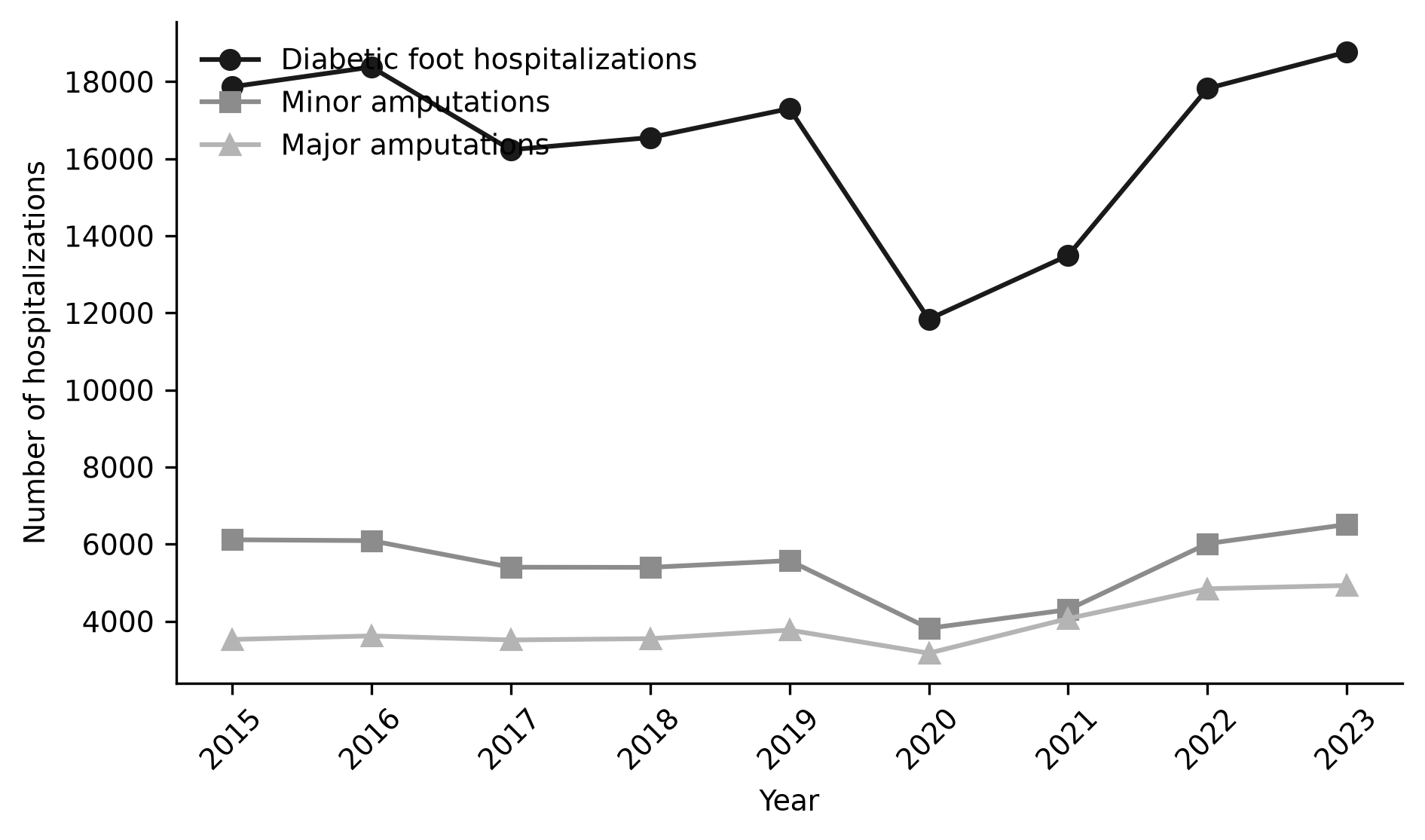
Figure 1. Annual diabetic foot hospitalizations and diabetes-related lower-limb amputations, 2015-2023.
Note: The black line indicates diabetic foot hospitalizations; the gray lines indicate minor and major amputations. Source: Own elaboration from DGIS open hospital discharge databases (SAEH), 2015-2023.DISCUSSION
The principal finding was a stable volume of diabetic foot hospitalizations in Mexican Ministry of Health hospitals over nine years, accompanied by a disproportionate rise in major amputations and a steady decline in in-hospital mortality. The stability of hospitalizations coexisted with an increase of nearly forty percent in major amputations, which indicates that the case mix treated in these hospitals became more severe rather than more numerous, and that the decline in mortality occurred while a larger share of patients underwent major procedures.
This pattern, in which the volume of disease did not grow but its severity did, is the central observation of the study and differs from the expectation that organized prevention would reduce limb loss over time. It also implies that monitoring the volume of admissions alone is insufficient and that the level of amputation must be tracked alongside the number of admissions if the performance of the network is to be judged correctly.
The contrast between a stable numerator of hospitalizations and a rising severity of the procedures performed within them suggests a gradual shift toward later presentation, a shift that would be invisible to an analysis that counted only admissions. The demonstration that these patterns can be extracted entirely from open public records is a secondary contribution, because it offers a reproducible and low-cost instrument that the Ministry of Health and researchers can reuse without proprietary software or restricted data access.
The recovery of the series after the 2020 trough, with hospitalizations returning to their pre-pandemic level by 2023, indicates that the interruption was transient and that the underlying demand for diabetic foot care was not permanently reduced; the same cannot be said of the level of amputation, which continued to rise after the pandemic year, suggesting that the backlog of advanced cases persisted well beyond the acute disruption of services.
The pandemic therefore acted as a natural experiment that separated the volume of admissions, which was suppressed and then restored, from the severity of the disease, which kept worsening, and this separation strengthens the causal reading of the divergence between the two series. Although the study is descriptive and cannot prove causality, the temporal sequence is consistent with the mechanism of delayed presentation and interrupted limb salvage, and it would be difficult to explain the divergence otherwise.
These results agree with analyses of administrative discharge data in other public health systems. A thirteen-year study of lower-limb amputations in Brazil's public health system likewise found amputations to be a stable, high-volume event concentrated in older adults and recommended discharge databases as an instrument for monitoring limb loss.(11) The value of amputation rates as a performance indicator has been established internationally, with several-fold variation between countries that reflects differences in prevention and the organization of foot care rather than differences in the underlying prevalence of diabetes.(10) In Mexico, preventable diabetic hospitalizations have been quantified as a major burden within the Mexican Institute of Social Security, a finding consistent with the volumes observed here in the Ministry of Health network.(9)
Canadian surveillance has likewise described temporal and regional variation in diabetic foot ulcer epidemiology using administrative data, supporting the feasibility of this approach for monitoring.(17) Trend analyses in the United States and in West Africa similarly relied on hospital and national registers to monitor limb loss over time and to target prevention toward high-risk groups.(18,19) A meta-analysis of lower-extremity amputation incidence confirmed that peripheral arterial disease, infection and ulcer severity are the dominant risk factors across settings, which reinforces the interpretation that severity, not volume, drives major procedures.(20)
The demographic profile of the cohort, with a median age in the sixth decade and a clear predominance of men, matches the profile reported in Mexican and international series, in which diabetic foot hospitalizations concentrate in middle-aged and older men.(14,21) The stability of the national total across the nine years, despite the growth of the diabetic population, is itself informative: it suggests that the network absorbed a rising demand without a proportional increase in recorded episodes, an observation that would merit confirmation with population denominators.
The similarity of the age and sex structure with that of other cohorts also supports the internal validity of the case definition, because a definition that selected arbitrary discharges would not reproduce the expected demographic gradient. In this respect the results reinforce the general finding that administrative data, when the codes are verified against the official catalogs, yield coherent epidemiological patterns that can guide surveillance, and they add Mexico to the set of countries in which this approach has proved feasible and informative.
The decline in in-hospital mortality, from close to three percent at the start of the period to below two percent at the end, is consistent with improvements in the hospital management of diabetic foot infections reported in other health systems, and it suggests that the quality of inpatient care in the Ministry of Health network has not deteriorated even as the severity of the treated cases rose. This improvement is all the more notable because it occurred in a network with limited resources, and it indicates that the barriers to better outcomes lie primarily before admission, in detection and referral, rather than within the hospital episode itself. The same interpretation follows from the demographic profile of the cohort, which shows that hospitalization for diabetic foot is not a rare event concentrated in the very old but a recurrent burden of the sixth decade of life, precisely the age at which preventive interventions have the largest potential return.
Instead of the declines reported in high-income settings, major amputations increased in this population. Denmark has documented a continuous reduction in amputation incidence among people with diabetes over four decades,(22) and New Zealand reported a decline in major limb amputation between 2010 and 2021 together with stable short-term outcomes.(23,24) The pandemic offers part of the explanation for the divergence: the drop in hospitalizations in 2020 and the subsequent rise in major amputations are consistent with the disruption of elective foot care and the postponement of limb-preserving procedures reported in other systems, where similar patterns were observed during the same period.(25)
Delayed care seeking has also been described among Indigenous people with diabetic foot complications in Mexico, who reach hospitals with advanced disease and social suffering after long delays.(26) The clinical severity at admission, rather than the volume of cases, therefore appears to drive the rise in major procedures, a mechanism consistent with studies of amputation risk factors in Mexican and Central American populations(12,14) and with inpatient risk models developed in other settings.(21,27)
The underlying pathophysiology also supports this reading, because the progression from neuropathy to ulceration, infection and ischemia follows a sequence in which each untreated stage makes the next more likely and more proximal to the limb-threatening end.(5) A further contributor may be the limited availability of revascularization in the Ministry of Health network, which constrains limb salvage and leaves amputation as the definitive procedure for patients who present with critical ischemia; the wide variation in mortality between states, from below one percent in some entities to above five percent in others, is compatible with this interpretation.
Unlike the social security institutions, which concentrate specialized vascular services, the Ministry of Health network is organized around general hospitals in which the window for limb salvage is narrower, a structural difference that may explain part of the gap with the declines observed in Denmark and New Zealand. The state-level variation in mortality, which reached its highest value in Baja California, points to differences in the timeliness of referral and the availability of vascular and surgical care rather than to differences in the underlying burden alone. In a health system in which the Ministry of Health serves the population without social security, these gradients acquire particular importance because the same states with the highest mortality are often those with the most dispersed rural populations and the thinnest specialist coverage. Reducing these gradients will require additional surgeons and wound-care teams together with the primary-care infrastructure to identify at-risk feet before ulceration, since every amputation avoided downstream depends on an examination that happens upstream.
This study has limitations that condition its interpretation. Administrative codes can misclassify the reason for admission, and restriction to the principal diagnosis may undercount diabetic foot events, a methodological concern documented in epidemiological studies of amputations in England;(28) the sensitivity analysis with any diagnosis position returned a higher count and should be weighed against the primary definition.
The structure of the files changed between editions, so residual coding drift over time cannot be fully excluded despite the reconciliation of formats and the use of the official catalogs. Counts were not adjusted by state population, so the state differences partly reflect the size and coverage of each state's hospital network rather than the incidence of disease, and population-based studies with denominators would resolve this.(29)
The aggregate design does not permit adjustment for patient-level confounders such as glycemic control, comorbidity burden or the timing of referral, and the results describe only the Ministry of Health network, so they cannot be generalized to the social security institutions. The absence of a comparison with population data also prevents the calculation of rates per hundred thousand inhabitants, which would be the measure most comparable across states and countries. Discharges with unknown state of residence were excluded from the state tabulation, and the records are unlinked episodes, so readmissions and repeated amputations in the same person could not be distinguished. Because the databases record episodes rather than people, the present figures should be read as volumes of care rather than as counts of affected individuals.
The records also lack the clinical detail that would allow the classification of ulcers by the Wagner or WIfI systems, so the severity inferred here rests on the level of amputation rather than on direct staging of the lesion. Future studies should link records at the person level, apply state population denominators and validate the E10.5-E14.5 definition against clinical chart review.
The rising ratio of major to minor amputations supports earlier detection and structured foot care in the Ministry of Health network, where multidisciplinary clinics reduce amputations and their costs(30) and systematic screening identifies foot complications before they threaten the limb.(31) Screening should target the population at highest risk, namely middle-aged men with long-standing diabetes, because they concentrate the majority of the hospitalizations documented here and stand to gain the most from earlier intervention.
The decline in mortality is encouraging, but mortality after ulceration and amputation remains high in the long term,(32,33) the cardiovascular risk attached to foot ulceration argues for integrated cardiometabolic follow-up,(4) and the heavy use of inpatient care after amputation reported in other systems indicates that the burden extends well beyond the index episode.(34) Complications also erode quality of life progressively, which strengthens the case for prevention over salvage.(35)
The persistent differences between states, together with the gradient by remoteness reported elsewhere,(36) indicate that the organization of diabetic foot services, rather than the epidemiology of diabetes alone, shapes outcomes and can be improved with the measures recommended by international guidelines.(37) A monitoring strategy built on the open discharge databases analyzed here, tracking hospitalizations, the level of amputation, length of stay and mortality by state and year, would allow the Ministry of Health to evaluate these improvements over time and to direct resources toward the states with the highest mortality and the largest volume of episodes.
The states identified here as carrying the largest burden and the highest mortality could serve as the first targets of such a strategy, and the indicators defined in this study could be reproduced annually at negligible cost. Integrated with existing diabetes registries, these indicators would close the loop between prevention in primary care and outcomes in the hospital network. The continuity of the source over time is an additional asset, because it permits the comparison of the pre-pandemic, pandemic and post-pandemic periods within a single coherent series, something that isolated cross-sectional samples cannot provide.
CONCLUSIONS
Between 2015 and 2023, hospitalizations for diabetic foot complications in Mexican Ministry of Health hospitals remained stable while diabetes-related major amputations increased and in-hospital mortality declined. Length of stay and mortality differed across states. These patterns justify earlier detection and multidisciplinary foot care within the public hospital network.
References
- 1 International Diabetes Federation. IDF Diabetes Atlas, 10th edition [Internet]. 2021. Available from: https://diabetesatlas.org/
- 2 The Lancet Diabetes & Endocrinology. Diabetes-related complications: a toll too high. The Lancet Diabetes & Endocrinology. 2024;12(9):601. doi: 10.1016/s2213-8587(24)00246-8
- 3 Armstrong DG, Boulton AJM, Bus SA. Diabetic Foot Ulcers and Their Recurrence. N Engl J Med. 2017;376(24):2367-2375. doi: 10.1056/nejmra1615439
- 4 Chin BZ, Lee P, Sia CH, Hong CC. Diabetic foot ulcer is associated with cardiovascular-related mortality and morbidity – a systematic review and meta-analysis of 8062 patients. Endocrine. 2024;84(3):852-863. doi: 10.1007/s12020-024-03696-5
- 5 Holt RIG, Cockram CS, Ma RCW, Luk AOY. Diabetes and infection: review of the epidemiology, mechanisms and principles of treatment. Diabetologia. 2024;67(7):1168-1180. doi: 10.1007/s00125-024-06102-x
- 6 Cervantes-García E, García-González R, Reséndiz-Albor A, Salazar-Schettino PM. Infections of Diabetic Foot Ulcers With Methicillin-Resistant Staphylococcus aureus. The International Journal of Lower Extremity Wounds. 2015;14(1):44-49. doi: 10.1177/1534734614564053
- 7 Sánchez-Sánchez M, Cruz-Pulido WL, Bladinieres-Cámara E, Alcalá-Durán R, Rivera-Sánchez G, Bocanegra-García V. Bacterial Prevalence and Antibiotic Resistance in Clinical Isolates of Diabetic Foot Ulcers in the Northeast of Tamaulipas, Mexico. The International Journal of Lower Extremity Wounds. 2017;16(2):129-134. doi: 10.1177/1534734617705254
- 8 Hinojosa CA, Boyer‐Duck E, Anaya‐Ayala JE, Nunez‐Salgado A, Laparra‐Escareno H, Torres‐Machorro A, et al. Impact of the bacteriology of diabetic foot ulcers in limb loss. Wound Repair Regeneration. 2016;24(5):923-927. doi: 10.1111/wrr.12462
- 9 Lugo-Palacios DG, Cairns J, Masetto C. Measuring the burden of preventable diabetic hospitalisations in the Mexican Institute of Social Security (IMSS). BMC Health Serv Res. 2016;16(1):333. doi: 10.1186/s12913-016-1593-1
- 10 Carinci F, Massi Benedetti M, Klazinga NS, Uccioli L. Lower extremity amputation rates in people with diabetes as an indicator of health systems performance. A critical appraisal of the data collection 2000–2011 by the Organization for Economic Cooperation and Development (OECD). Acta Diabetol. 2016;53(5):825-832. doi: 10.1007/s00592-016-0879-4
- 11 Portela FSO, Louzada ACS, da Silva MFA, Teivelis MP, Kuzniec S, Wolosker N. Editor's Choice – Analysis of Lower Limb Amputations in Brazil’s Public Health System over 13 Years. European Journal of Vascular and Endovascular Surgery. 2024;68(1):91-98. doi: 10.1016/j.ejvs.2024.02.028
- 12 Reyna T, Flores M, Quiñonez E, Mendoza JA, Corzo VF, Ortiz C, et al. Factors Associated With Major Lower Extremity Amputations in Diabetic Foot Infections at a County Hospital in Guatemala. Journal of Surgical Research. 2024;302:100-105. doi: 10.1016/j.jss.2024.07.033
- 13 Cervantes-García E, Salazar-Schettino PM. Clinical and surgical characteristics of infected diabetic foot ulcers in a tertiary hospital of Mexico. Diabetic Foot & Ankle. 2017;8(1):1367210. doi: 10.1080/2000625x.2017.1367210
- 14 Facultad de Farmacia. Universidad Autónoma del Estado de Morelos. México., Parra Acosta JC, Ávila Jiménez L, Monroy Noyola A, Gómez Galicia DL, Álvarez Escobedo D, et al. Evaluation of clinical aspects related to lower limb amputation among individuals living with type 2 diabetes mellitus in Mexico. RFMH. 2023;23(4). doi: 10.25176/rfmh.v23i4.5980
- 15 Benchimol EI, Smeeth L, Guttmann A, Harron K, Moher D, Petersen I, et al. The REporting of studies Conducted using Observational Routinely-collected health Data (RECORD) Statement. PLoS Med. 2015;12(10):e1001885. doi: 10.1371/journal.pmed.1001885
- 16 Direccion General de Informacion en Salud, Secretaria de Salud de Mexico. Bases de datos abiertas de egresos hospitalarios de la Secretaria de Salud (SAEH), 2015-2023 [Internet]. 2024. Available from: http://www.dgis.salud.gob.mx/contenidos/basesdedatos/da_egresoshosp_gobmx.html
- 17 Park YJ, Ma B, Jia J, Parsons L. Temporal and regional trends in Canada for the epidemiology and management of diabetic foot ulcers. J Wound Care. 2024;33(11):856-864. doi: 10.12968/jowc.2024.0048
- 18 Kempe K, Homco J, Nsa W, Wetherill M, Jelley M, Lesselroth B, et al. Analysis of Oklahoma amputation trends and identification of risk factors to target areas for limb preservation interventions. Journal of Vascular Surgery. 2024;80(2):515-526. doi: 10.1016/j.jvs.2024.03.446
- 19 Tchankoni MK, Togan RM, Abalo GA, Adoli LK, Walla A, Dosseh DE, et al. Epidemiology of Non-Traumatic Lower Extremities Amputations in West Africa: Nationwide Data from Togo. European Journal of Vascular and Endovascular Surgery. 2024;67(6):959-968. doi: 10.1016/j.ejvs.2024.01.088
- 20 Luo Y, Liu C, Li C, Jin M, Pi L, Jin Z. The incidence of lower extremity amputation and its associated risk factors in patients with diabetic foot ulcers: A meta‐analysis. International Wound Journal. 2024;21(7):e14931. doi: 10.1111/iwj.14931
- 21 Che D, Jiang Z, Xiang X, Zhao L, Liu X, Zhou B, et al. Predictors of amputation in patients with diabetic foot ulcers: a multi-centre retrospective cohort study. Endocrine. 2024;85(1):181-189. doi: 10.1007/s12020-024-03704-8
- 22 Svendsen OL. Incidence rates of amputations in patients with diabetes in Denmark have been decreasing continuously for the last four decades, but further reduction is still needed. Diabet Med. 2024;41(11):e15413. doi: 10.1111/dme.15413
- 23 Hart O, Bernau O, Khashram M. The Incidence and Outcomes of Major Limb Amputation in New Zealand from 2010 to 2021. JCM. 2024;13(13):3872. doi: 10.3390/jcm13133872
- 24 Garrett M, Gray S. Audit of diabetes-related lower extremity amputations in the Northern Region of New Zealand 2013–2016. NZMJ. 2024;137(1598):44-54. doi: 10.26635/6965.6045
- 25 Falbo KJ, Walker NR, Wacek AL, Cave JE, Sauerbrey MD, Gravely AA, et al. Impact of the COVID‐19 pandemic on the rate of lower limb amputation in Veterans. PM&R. 2024;16(9):973-980. doi: 10.1002/pmrj.13130
- 26 Montesi L, Ramírez-Rojas MG, Elizarrarás-Rivas J. Health Care Delays and Social Suffering Among Indigenous People with Diabetic Foot Complications in Mexico. Medical Anthropology. 2024;43(5):411-427. doi: 10.1080/01459740.2024.2364241
- 27 Xu S, Herrera A, Schechter C, Tabassum H, Milosavljevic J, Lopez Fanas R, et al. The Risk of and Associated Demographic and Laboratory Variables for Amputations for Inpatients with Diabetic Foot Ulcers. Endocrine Practice. 2024;30(8):758-764. doi: 10.1016/j.eprac.2024.04.019
- 28 Bowling FL, Burdett L, Foley K, Hodge S, Davies M, Ahmad N. A critical literature review highlighting the methodological differences within epidemiological studies: Pedal Amputations in England. The Foot. 2024;60:102081. doi: 10.1016/j.foot.2024.102081
- 29 Ramstrand S, Carlberg M, Jarl G, Johannesson A, Hiyoshi A, Jansson S. Exploring potential risk factors for lower limb amputation in people with diabetes—A national observational cohort study in Sweden. Journal of Foot and Ankle Research. 2024;17(3):e70005. doi: 10.1002/jfa2.70005
- 30 Pérez-Montes de Oca A, Ricou Ríos L, López Seguí F, Alonso N. Economic impact of introducing a multidisciplinary diabetic foot clinic in a tertiary hospital. Medicina Clínica. 2024;163(1):40-45. doi: 10.1016/j.medcli.2024.01.029
- 31 Staniszewska A, Jones A, Rudd S, de Vocht F, Hinchliffe R. Effectiveness of screening for foot complications in people with diabetes – A systematic review. Journal of Diabetes and its Complications. 2024;38(11):108865. doi: 10.1016/j.jdiacomp.2024.108865
- 32 Heald A, Lu W, Robinson A, Schofield H, Rashid H, Dunn G, et al. Mortality in people with a diabetes foot ulcer: An update from the Salford podiatry clinic follow‐up study. Diabet Med. 2024;41(7):e15328. doi: 10.1111/dme.15328
- 33 Mokoala TC, Sididzha V, Molefe ED, Luvhengo TE. Life expectancy of patients with diabetic foot sepsis post-lower extremity amputation at a regional hospital in a South African setting. A retrospective cohort study. The Surgeon. 2024;22(2):e109-e114. doi: 10.1016/j.surge.2023.11.009
- 34 Guilcher SJT, Mayo AL, Swayze S, de Mestral C, Viana R, Payne MW, et al. Patterns of inpatient acute care and emergency department utilization within one year post-initial amputation among individuals with dysvascular major lower extremity amputation in Ontario, Canada: A population-based retrospective cohort study. PLoS ONE. 2024;19(7):e0305381. doi: 10.1371/journal.pone.0305381
- 35 Lui JNM, Lau ESH, Yang A, Wu H, Fu A, Lau V, et al. Temporal associations of diabetes‐related complications with health‐related quality of life decrements in Chinese patients with type 2 diabetes: A prospective study among 19 322 adults—Joint Asia Diabetes Evaluation (JADE) register (2007–2018). Journal of Diabetes. 2024;16(6):e13503. doi: 10.1111/1753-0407.13503
- 36 Alahakoon C, Thanigaimani S, Singh TP, Drovandi A, Charles J, Fernando M, et al. Association of remoteness and ethnicity with major amputation following minor amputation to treat diabetes-related foot disease. PLoS ONE. 2024;19(7):e0302186. doi: 10.1371/journal.pone.0302186
- 37 Schaper NC, van Netten JJ, Apelqvist J, Bus SA, Hinchliffe RJ, Lipsky BA, et al. Practical Guidelines on the prevention and management of diabetic foot disease (IWGDF 2019 update). Diabetes Metabolism Res. 2020;36(S1):e3266. doi: 10.1002/dmrr.3266
Declarations
Funding
No financing
Conflict of interest
None
Authorship contributions
Drafting – original draft: Nancy Lorely Granados Mercado, Dulce Aleli Modesto de la Rosa.
Writing–review and editing: Nancy Lorely Granados Mercado, Dulce Aleli Modesto de la Rosa.