
Abstract
Introduction: Foot disease imposes a growing burden on the National Health Service, yet recent trends in the podiatry workforce that delivers foot care are poorly quantified. Methods: An ecological time series of the NHS Hospital and Community Health Services workforce statistics was analysed. Annual full-time equivalent counts of podiatrists, six comparator allied health professions and total staff were extracted for September 2015 to February 2024 and for seven NHS England regions. Linear and log-linear interaction models were fitted. Results: Podiatry full-time equivalents fell from 2,394.20 in 2015 to 1,872.60 in 2024 (−21.8%), a linear trend of −65.80 full-time equivalents per year (95% CI −90.5 to −41.0; p <0.001), while total hospital and community staff increased by 34.0% and the combined comparator professions by 1.1%. The interaction difference was −2.70 percentage points per year (95% CI −4.4 to −1.1; p = 0.003). All seven regions declined, from −4.7% in the South West to −34.5% in the Midlands, with a non-significant regional interaction (p = 0.052). Conclusions: The podiatry workforce of the English National Health Service contracted over a decade of overall workforce growth, diverging from other allied health professions and declining in every region.
Keywords
podiatry, health workforce, National Health Service, allied health personnel, time series
INTRODUCTION
Foot disorders place a substantial and rising burden on the National Health Service in England. Diabetes-related foot disease accounts for a large share of lower-limb amputations, and people who present with a first diabetes-related foot ulcer have high rates of hospital admission and mortality that have persisted over time.(1,2) Because most major amputations are preceded by ulceration, the prevention and early management of foot disease are central to reducing limb loss. The complications of diabetes, including foot ulceration and amputation, have been described as a toll that remains too high despite improvements in glycaemic control.(3) The direct costs of diabetic foot ulcer care are considerable, spanning wound care products, specialist clinics, inpatient treatment and limb salvage.(4) Beyond diabetes, chronic foot pain is common in older people and restricts mobility, independence and quality of life.(5) The prevalence of diabetes in England has risen over recent decades, which enlarges the population at risk of foot ulceration and therefore the volume of preventive foot care that services must deliver.(2,3) As the population ages, the demand for foot health services is expected to rise further, and modelling has shown that foot health deteriorates after older people are discharged from podiatry services.(6)
The National Health Service delivers podiatry through community clinics, high-risk foot services and multidisciplinary diabetic foot teams. The demand for these services is driven by the ageing of the population and by the volume of diabetes-related foot disease, both of which have increased pressure on community and specialist foot care, and foot health inequities mean that the burden is not evenly distributed across the population.(7)
Podiatrists deliver much of this care within the National Health Service, providing prevention, wound management, offloading, vascular assessment and musculoskeletal foot care, and they work within multidisciplinary teams that coordinate the management of complex foot disease. Podiatry involvement in limb salvage programmes has been associated with economic value through the avoidance of major amputation.(8) Podiatrists are also central to the multidisciplinary management of diabetes-related foot disease and to the detection and management of peripheral arterial disease in people with diabetes, where a national survey has documented the breadth of podiatry practice.(9) The professional scope has widened over the past decade through independent prescribing and extended clinical roles, developments that were expected to increase service capacity and reduce pressure on medical colleagues.(10,11)
Despite this expanding role, workforce supply has remained a recurring concern. Reports describe a podiatry workforce crisis in parts of the United Kingdom, illustrated by a novel recruitment project in Glasgow, and comparable health systems have described the podiatry profession as in crisis or under strain in New Zealand and Australia.(12-14) These concerns matter because a workforce that cannot keep pace with demand may delay the very preventive care that podiatry is designed to provide. Burnout has been documented among podiatrists in the United Kingdom and elsewhere, and the wider National Health Service workforce has been reported to be under severe strain from shortages and workload.(15,16) Workforce planning for allied health professions has repeatedly been identified as less developed than planning for medicine and nursing, and career motivation and placement supply for these professions remain unevenly understood.(17-20) The NHS Long Term Workforce Plan has set out ambitions for the growth of the health workforce, including allied health professions, yet such ambitions require profession-specific data on current trends to be translated into training and recruitment targets.(21)
Quantitative evidence on the size of the podiatry workforce has largely relied on cross-sectional registrations or single-year workforce snapshots. Studies in Australia have quantified the podiatry workforce and its geographic distribution, and comparable work in England modelled the deterioration of foot health after discharge from podiatry services, but a recent decade-long quantification of the English National Health Service podiatry workforce alongside comparable professions is not available.(6,14,22)
What remains unclear is how the podiatry workforce of the English National Health Service has actually changed over a full recent decade, and whether podiatry has moved in line with, or diverged from, other allied health professions and from one region to another. The objective of this study was to quantify the change in podiatry full-time equivalents in the English National Health Service between 2015 and 2024, and to compare that change with six comparator allied health professions and across the seven NHS England regions. Three hypotheses were tested. H1: podiatry full-time equivalents declined between 2015 and 2024. H2: the change in podiatry was less favourable than the change in the combined comparator allied health professions. H3: the change in podiatry full-time equivalents differed across NHS England regions.
METHODS
Study design and setting
An ecological time series of routinely collected administrative workforce data was conducted for the Hospital and Community Health Services of the National Health Service in England between September 2015 and September 2024. The unit of observation was the annual September census of the English National Health Service, disaggregated where required into the seven NHS England regions that constitute the geographic structure of the service: East of England, London, Midlands, North East and Yorkshire, North West, South East and South West. Reporting followed the STROBE statement and the RECORD extension for studies conducted using routinely collected health data.(23,24)
Data source
Workforce counts were obtained from the NHS England Hospital and Community Health Service workforce statistics, December 2024 release, specifically the Area of Work, Job Role tables file and its Source - Most detailed AoW worksheet.(25)
Variables
The primary outcome was the annual full-time equivalent count of podiatrists, defined as the secondary area of work Chiropody/Podiatry within the Scientific, therapeutic & technical staff staff group. Six comparator professions were selected because they are registered allied health professions identifiable in the same area-of-work classification: physiotherapy, occupational therapy, speech and language therapy, dietetics, orthoptics and prosthetics and orthotics. Orthoptics was recorded as Orthoptics/Optics from 2009 to 2023 and as Orthoptics in 2024, and the two labels were merged into a single series because the counts were continuous across the rename.
For each profession, England totals were obtained by summing the seven NHS England regions, namely East of England, London, Midlands, North East and Yorkshire, North West, South East and South West. Full-time equivalents were used rather than headcount because the published area-of-work time series reports detail in full-time equivalents, which also account for changes in part-time working. The September census was used because it is the annual reference point of the National Health Service workforce statistics and the only month for which the area-of-work detail is published consistently across the whole series. Full-time equivalents are defined by the source as the proportion of a full-time post occupied by each member of staff. Total Hospital and Community Health Services full-time equivalents and the total Scientific, therapeutic & technical staff full-time equivalents were extracted as denominators and contextual comparators. The area-of-work classification is hierarchical, with the primary area of work Clinical Support containing the secondary area of work Chiropody/Podiatry, and each comparator profession identified by a single secondary area of work. The staff group Scientific, therapeutic & technical staff was used as the denominator for the share calculation because it contains the therapy professions under study. No exclusions of staff or organisations were applied beyond those already imposed by the source publication.
Statistical analysis
Each hypothesis was operationalized with a predefined variable, measure and decision rule. H1 was tested with an ordinary least squares regression of annual podiatry full-time equivalents on calendar year; the slope expressed the average change in full-time equivalents per year, reported with its 95% confidence interval and exact p value, and H1 was accepted if the slope was negative and its 95% confidence interval excluded zero. H2 was tested with a log-linear model of full-time equivalents on year, a podiatry-versus-comparator group indicator and their interaction; the interaction expressed the difference in annual percentage change between podiatry and the combined comparator professions, and H2 was accepted if the interaction was negative and its 95% confidence interval excluded zero.
The log transformation was used for H2 because the comparator group total was several times larger than the podiatry total, so relative rather than absolute change was the appropriate scale. H3 was tested by adding region and year-by-region interaction terms to a log-linear model of podiatry full-time equivalents; H3 was accepted if the joint interaction test reached p less than 0.05, with region-specific percentage changes described. Two-sided tests and a significance level of 0.05 were used throughout.
The ecological design means that population growth and changes in service configuration could confound the comparison between professions and regions. To reduce confounding by the overall growth of the workforce, the comparisons were expressed as relative changes and, for H2, the comparator professions were combined into a single reference trajectory estimated from the same source and period. Population denominators were not applied because the research question concerned the size of the workforce itself, and population estimates would not alter the relative comparison between professions within the same geography.
For H1, the slope was estimated on the unadjusted annual England totals because the census is complete rather than sampled, so no additional covariate adjustment was required for the primary trend, and the annual series declined approximately linearly over the study period, which supported the linear specification. For H2, the combined comparator total was computed as the sum of the six professions, and the interaction model allowed the comparator group to serve as the reference trajectory against which podiatry was judged; the log scale was retained because relative change is the meaningful scale when the professions differ several-fold in size.
For H3, the model included main effects for year and region in addition to the interaction terms, and the joint test compared the full model against the model without interactions. Confidence intervals were derived from the regression standard errors, and no imputation was required because every profession and region was present at every census point. As a sensitivity check, the conclusions of H1 and H2 were re-expressed using the simple percentage change between the 2015 and 2024 censuses rather than the regression slope.
Ethics
The study used fully anonymized, aggregated, publicly available administrative counts and therefore required no research ethics approval or individual consent. No patient-identifiable data were accessed, and no data linkage with individual-level records was performed.
RESULTS
Between September 2015 and September 2024 total Hospital and Community Health Services full-time equivalents in England increased from 1,014,217.70 to 1,359,357.90, a rise of 34.0%. The Scientific, therapeutic & technical staff group, which contains the therapy professions, increased from 127,921.20 to 174,922.90 (36.7%), and the combined comparator professions rose from 32,939 to 33,303.30 full-time equivalents. Podiatry moved against this trend, and its share of the Scientific, therapeutic & technical staff group fell from 1.9% to 1.1%.
H1
Between September 2015 and September 2024, podiatry full-time equivalents in England fell from 2,394.20 to 1,872.60, an absolute change of −521.60 full-time equivalents and a relative change of −21.8% (Figure 1). The series declined in every year except a brief plateau in 2020 and 2021, reached its lowest recorded value in 2023, and recovered slightly in 2024 (Table 1). The linear trend was estimated at −65.80 full-time equivalents per year (95% CI −90.5 to −41.0; p <0.001) (Table 2). On a relative scale, the average annual change was −3.1%. The decline predated the study window, with 2,794.20 full-time equivalents recorded in 2009, so the 2015-2024 reduction was part of a longer trajectory rather than a recent interruption.
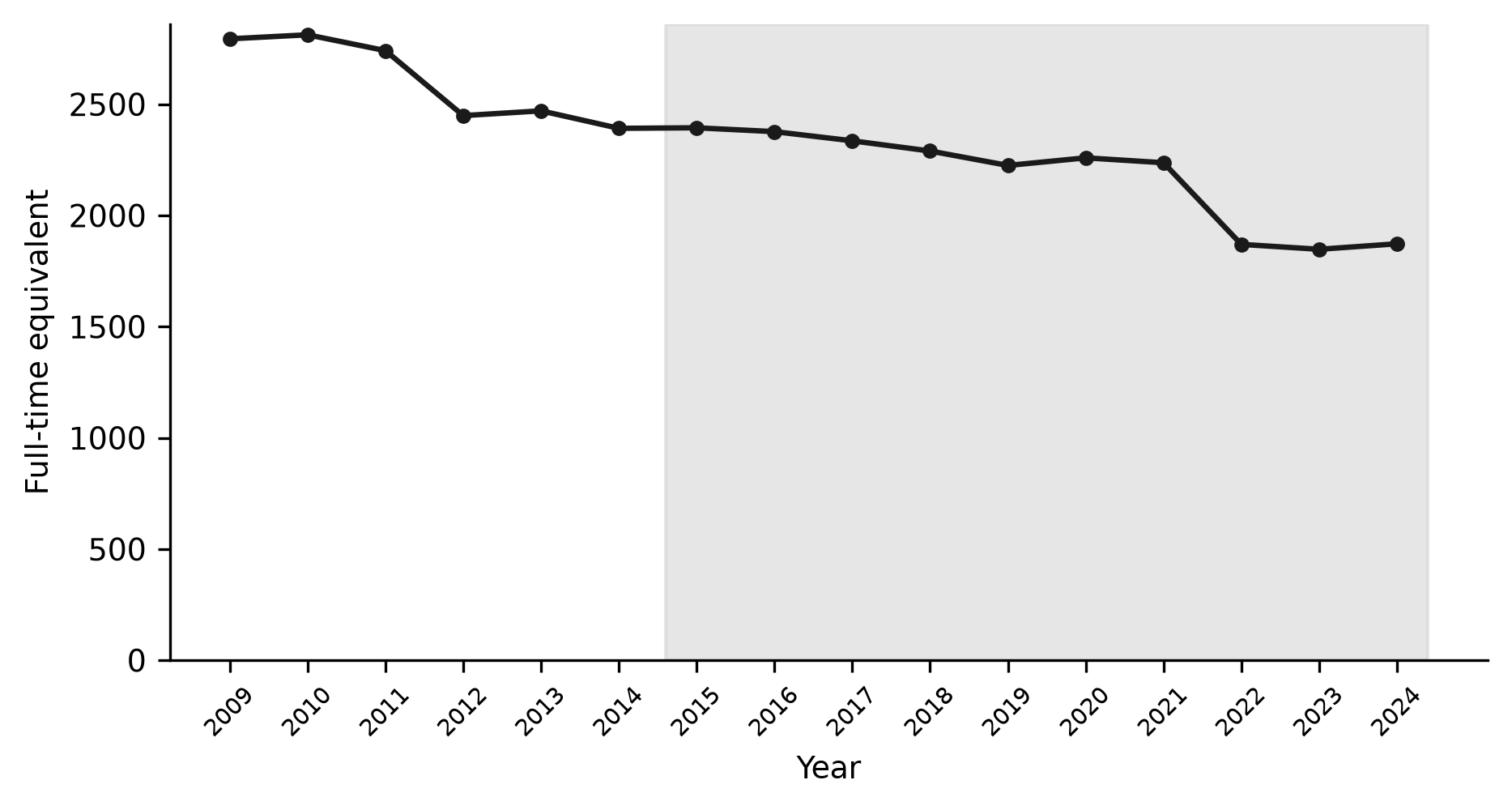
Figure 1. Podiatry full-time equivalents in the English National Health Service, 2009-2024.
Note: Annual September census. The shaded area marks the 2015-2024 study period. Source: Elaboration from NHS England HCHS workforce statistics, December 2024 release.Year | FTE |
|---|---|
2015 | 2394.2 |
2016 | 2376.8 |
2017 | 2335.6 |
2018 | 2289.7 |
2019 | 2224.8 |
2020 | 2259.1 |
2021 | 2237.1 |
2022 | 1869.9 |
2023 | 1847.9 |
2024 | 1872.6 |
Note: FTE = full-time equivalent. England totals sum the seven NHS England regions. Source: Elaboration from NHS England HCHS workforce statistics, December 2024 release.
Estimate | Value |
|---|---|
Podiatry FTE, September 2015 | 2394.2 |
Podiatry FTE, September 2024 | 1872.6 |
Absolute change (FTE) | -521.6 |
Relative change (%) | -21.8 |
Linear trend (FTE per year) | -65.8 |
95% CI (FTE per year) | -90.5 to -41.0 |
p value | <0.001 |
Note: CI = confidence interval. Trend estimated by ordinary least squares of annual FTE on year. Source: Elaboration from NHS England HCHS workforce statistics, December 2024 release.
H2
The podiatry total decreased by −21.8%, whereas the combined full-time equivalents of the six comparator professions increased by 1.1% (Table 3). The comparator group was larger than podiatry at both censuses, and physiotherapy was the largest comparator profession throughout the period. The comparator professions changed heterogeneously. Physiotherapy increased by 3.5%, dietetics by 15.6%, speech and language therapy by 5.2% and orthoptics by 1.6%, whereas occupational therapy decreased by −10.2% and prosthetics and orthotics by −5.9% (Figure 2). Dietetics recorded the largest relative increase and occupational therapy the largest relative decrease among the comparator professions, and podiatry decreased more than any comparator. The log-linear interaction model estimated a between-group difference in annual change of −2.70 percentage points per year (95% CI −4.4 to −1.1; p = 0.003). In the sensitivity analysis expressed as a simple percentage change, podiatry decreased by −21.8% while the combined comparator professions increased by 1.1%, a conclusion consistent with the interaction model.
Profession | FTE 2015 | FTE 2024 | Change (%) |
|---|---|---|---|
Podiatry | 2394.2 | 1872.6 | -21.8 |
Physiotherapy | 14453.0 | 14960.6 | 3.5 |
Occupational therapy | 9214.1 | 8274.6 | -10.2 |
Speech and language therapy | 4635.6 | 4875.0 | 5.2 |
Dietetics | 3564.9 | 4121.5 | 15.6 |
Orthoptics | 840.7 | 854.5 | 1.6 |
Prosthetics and orthotics | 230.7 | 217.0 | -5.9 |
Combined other AHPs | 32939.0 | 33303.3 | 1.1 |
Note: AHP = allied health professions. Combined other AHPs excludes podiatry. Source: Elaboration from NHS England HCHS workforce statistics, December 2024 release.
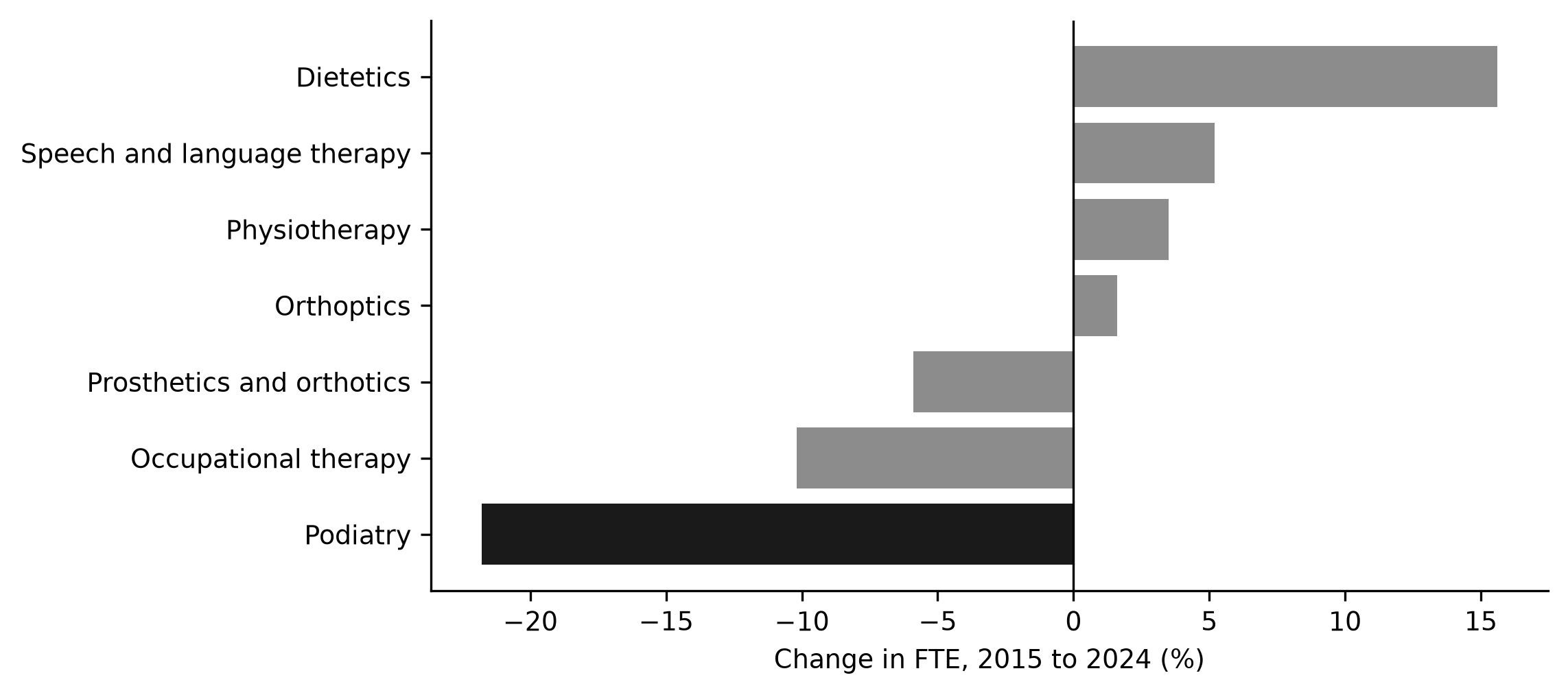
Figure 2. Change in full-time equivalents by allied health profession, 2015-2024.
Note: Percentage change between September 2015 and September 2024. Bars ordered from smallest to largest change. Source: Elaboration from NHS England HCHS workforce statistics, December 2024 release.H3
All seven NHS England regions recorded fewer podiatry full-time equivalents in 2024 than in 2015 (Table 4). The North West held the largest podiatry workforce in 2015 and North East and Yorkshire the largest in 2024, while the South West held the smallest in both years. The relative change ranged from −4.7% in the South West to −34.5% in the Midlands, with reductions of −24.8% in the North West, −28.9% in the East of England, −22.2% in London, −17.6% in the South East and −12.9% in North East and Yorkshire (Figure 3). The year-by-region interaction was not statistically significant (p = 0.052).
Region | FTE 2015 | FTE 2024 | Change (%) |
|---|---|---|---|
East of England | 169.0 | 120.1 | -28.9 |
London | 306.9 | 238.7 | -22.2 |
Midlands | 443.9 | 290.8 | -34.5 |
North East and Yorkshire | 515.4 | 448.8 | -12.9 |
North West | 537.2 | 404.1 | -24.8 |
South East | 247.7 | 204.2 | -17.6 |
South West | 174.1 | 165.9 | -4.7 |
Note: Percentage change between September 2015 and September 2024. Source: Elaboration from NHS England HCHS workforce statistics, December 2024 release.
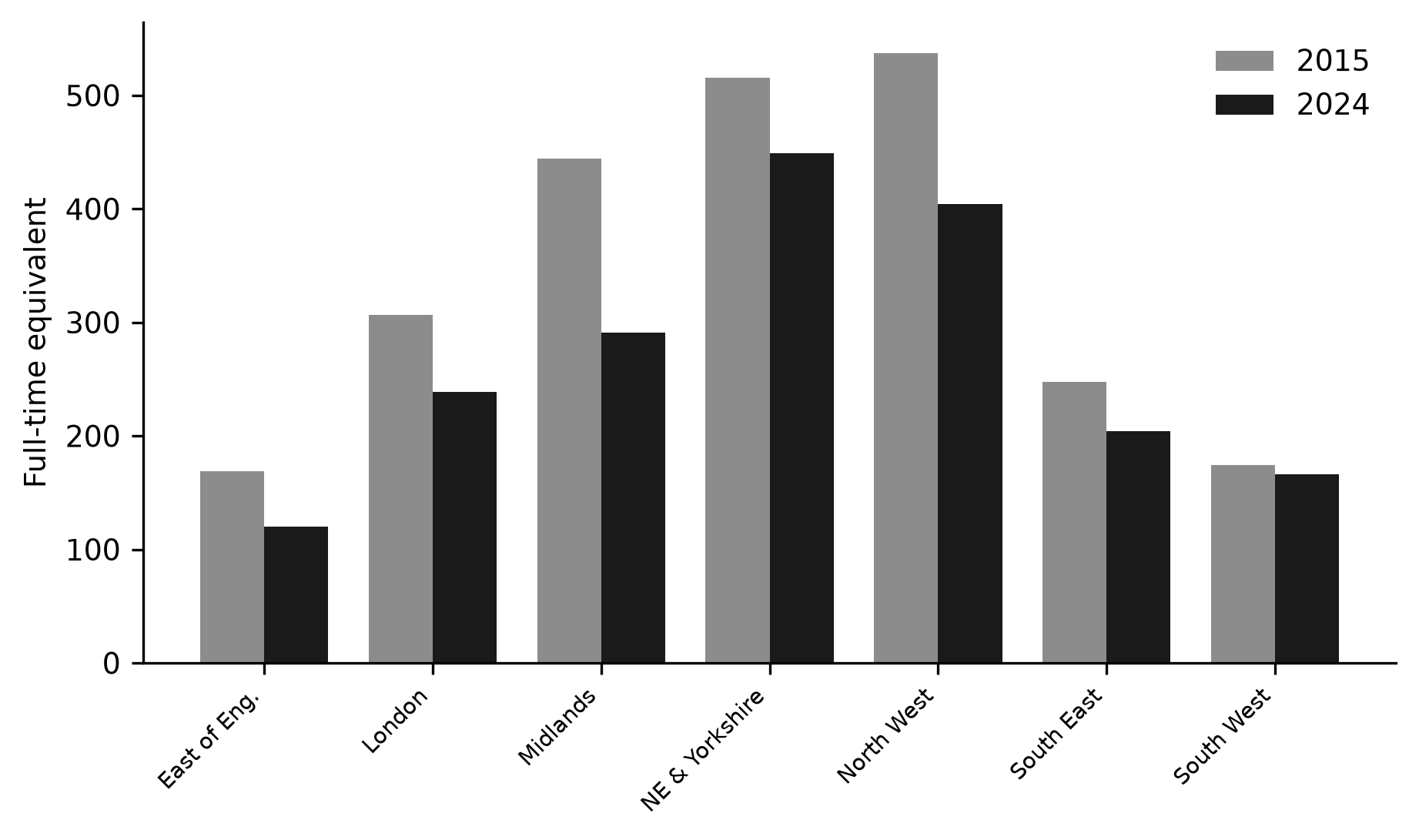
Figure 3. Podiatry full-time equivalents by NHS England region, 2015 and 2024.
Note: FTE = full-time equivalent. Source: Elaboration from NHS England HCHS workforce statistics, December 2024 release.DISCUSSION
The main finding of this study is that the podiatry workforce of the English National Health Service contracted by roughly one fifth over a decade in which the wider hospital and community workforce grew by one third. The divergence was specific to podiatry among the therapy professions examined, and the contraction occurred in every English region. In absolute terms, more than five hundred full-time equivalent podiatry posts disappeared from the Hospital and Community Health Services between 2015 and 2024.
The observed decline is consistent with accounts of a podiatry workforce crisis in Glasgow and with a profession described as in crisis in New Zealand.(12,13) Burnout and low job satisfaction have been documented among United Kingdom podiatrists and may contribute to attrition, and workplace characteristics have been linked to burnout in national surveys.(15) Recruitment also appears constrained, with student surveys describing financial and career barriers to entering the profession, and retention difficulties have been described in rural settings in Australia and New Zealand.(26-28) In line with these accounts, career motivation for allied health professions has been described as unevenly understood, which complicates recruitment planning and the design of student placements.(19,20)
Contrary to expectations from the international literature, the Australian podiatry workforce has been described as growing, and the distribution of registered podiatrists, physiotherapists and occupational therapists in Australia shows a different balance of supply.(14,22) These differences may reflect distinct funding, training and service delivery models rather than a universal decline in the profession. In England, workforce redesign policies have historically shifted the boundaries of generalist podiatry practice, and the profession's scope has expanded through independent prescribing, which changed the expectations placed on the workforce and may have redistributed activity across roles.(11,29,30) The evolution of professional practice has been proposed as both an opportunity and a barrier to change, and this tension may have contributed to the divergence from professions with a more stable service model.(10)
The divergence between podiatry and the comparator professions is notable because allied health professions in England have generally been prioritised for expansion. Physiotherapy and dietetics grew over the study period, and even occupational therapy, which declined, did so at less than half the podiatry rate, which suggests that the factors driving the podiatry contraction were not shared equally across the therapy professions. The prosthetic and orthotic workforce, a further comparator, has also been reported to face an uncertain future, indicating that some smaller allied health professions may be vulnerable even when the wider group grows.(31) Workforce planning for allied health professions has repeatedly been weaker than for medicine and nursing, and planning assumptions have historically shifted between under-supply and over-supply, with earlier analyses warning of both.(17,18,32,33) Consistent with this, the contrasting trajectories within a single staff group suggest that aggregate allied health profession targets may conceal profession-specific decline, and that satisfaction, wages and retention, which are associated with staying in the National Health Service, warrant profession-specific attention.(34,35)
Several mechanisms may explain the contraction. The supply of newly qualified podiatrists depends on a small number of training programmes, and placement supply has been identified as a constraint on allied health profession growth.(19,20) At the same time, the reconfiguration of community services and the extension of prescribing and extended roles may have redistributed podiatry activity across providers.(10,29) If some services were transferred to providers outside the Hospital and Community Health Services, the published counts would fall even when total activity did not. The brief plateau in 2020 and 2021 followed by a further fall in 2022 is also consistent with a delayed effect of the COVID-19 pandemic on recruitment and retention, a pattern that appeared in the comparator professions as well. Whereas the comparator professions recovered after 2022, podiatry did not, which suggests that the pandemic disruption was superimposed on a longer-running podiatry-specific decline.
The clinical implications of a contracting podiatry workforce are most direct in diabetes-related foot care, where podiatrists provide the offloading, wound management and risk stratification that underpin limb salvage. A reduced workforce may lengthen intervals between foot checks, delay access to high-risk foot clinics and shift work onto other members of the multidisciplinary team, with potential consequences for ulcer healing and major amputation.(1,9) The economic case for podiatry in limb salvage has been made explicitly, which makes the observed contraction difficult to reconcile with the expected return on podiatry staffing.(8) For musculoskeletal and biomechanical podiatry, the same staffing constraint may extend waiting times for assessment, orthoses and rehabilitation, although the present data do not measure activity or waiting times directly. Service commissioners who rely on podiatry to deliver preventive foot care will therefore need to weigh the observed staffing trajectory against the rising demand from an ageing population and a growing population with diabetes.
For podiatry education and the professional body, the findings reinforce the case for stable student intake, adequate clinical placement capacity and support for newly qualified podiatrists, because a decade of decline cannot be reversed quickly once training pipelines have contracted.(20,26) The motivations and barriers described among podiatry students suggest that recruitment messages and financial support may need to be profession-specific rather than generic to allied health professions.(19) Independent prescribing and extended roles have increased the clinical contribution of podiatrists, and a shrinking workforce would place these expanded responsibilities on fewer individuals, with implications for burnout and retention that national surveys have already flagged.(15,30)
The scale of the reduction deserves emphasis. A loss of one fifth of the podiatry workforce over nine years is a large change for a profession of this size, and it is not explained by an overall contraction of the health service, which grew substantially. In the wider workforce planning literature, such sustained divergence between a profession and its comparators has been interpreted as a signal of structural rather than cyclical change.(32,33) The present data cannot distinguish cyclical from structural causes, but the monotonic decline before, during and after the pandemic is more consistent with a structural contraction than with a temporary disruption.
Regional differences in the magnitude of contraction, although not statistically significant in the interaction test, echo the regional variation reported for the community nursing and support workforce in England.(36) Geographic inequities in foot health have been described, and the uneven distribution of allied health professions is a recognised challenge in other settings, including the rural-urban divide reported for surgical and allied workforces.(7,37,38) The absence of a significant interaction indicates that the decline was broadly national rather than driven by a small number of regions, and that regional monitoring should not assume that local variation explains the national trend. The largest relative declines in the Midlands and the East of England, and the smallest in the South West, further show that the geography of the contraction was not uniform even though the overall trend was national. From a policy perspective, this means that measures confined to the most affected regions would be unlikely to reverse a contraction that is occurring across the country.
The findings are likely to be informative beyond England. Comparable declines and workforce crises have been reported in New Zealand, and the Australian experience shows that growth is possible when training and funding models differ.(13,14) The methods used here, based on publicly available workforce statistics, could be applied to other health systems that publish profession-level workforce series, and the hypothesis-driven design offers a template for monitoring allied health professions over time.
The strengths of this study include the use of a complete national census rather than a sample, a ten-year annual series, a predefined hypothesis-testing framework and region-level disaggregation. The analysis was restricted to a single, stable definition of podiatry, which reduces the risk of misclassification, and the same definition was applied uniformly across all years and regions. The use of full-time equivalents accounts for changes in part-time working, and the comparator group was drawn from the same classification and source, so the comparison between podiatry and the other professions is internally consistent. The use of a single source file for all professions and years also avoids the inconsistencies that can arise when combining data from multiple publications. The results were reproducible from a publicly available file, and the pre-registration of the three decision rules reduced the risk of selective reporting.
Limitations
Several limitations apply. First, the analysis used full-time equivalents rather than headcount, so changes in part-time working could influence the estimates, and headcount series for this level of area-of-work detail are not published over the same period. Second, the area-of-work classification changed over time, notably the renaming of orthoptics in 2024, although the podiatry definition remained stable across the whole series and the merge was applied before analysis; any residual reclassification of staff between areas of work would nonetheless introduce measurement error. Third, the study is ecological, and no causal inference about the drivers of the decline can be drawn from an observational series of aggregate counts. Fourth, the counts cover the Hospital and Community Health Services and exclude podiatrists working in primary care, independent practice or social care, where some services may have shifted without being captured, which could overstate the reduction in total podiatry activity if care moved out of the Hospital and Community Health Services. Fifth, regional boundaries were applied retrospectively using current NHS England regions, which may smooth or conceal historical variation at the level of former organisations. Sixth, the source reports workforce counts but not activity, waiting times or case-mix, so the analysis cannot establish whether the same volume of care was delivered with fewer staff. Seventh, the region-by-year interaction test involved seven regions observed at ten censuses, so the absence of a significant interaction should be interpreted as limited statistical power rather than as proof of identical regional trajectories. Each limitation suggests a direction for future work: linkage of headcount and full-time equivalents, validation of the classification against professional register data, and analysis of service-level determinants of the decline.
For workforce planning, the findings imply that the podiatry training pipeline and retention require monitoring comparable with that applied to other professions. The divergence between podiatry and its comparator professions suggests that aggregate allied health profession targets may conceal profession-specific decline, and that podiatry-specific planning and placement supply are warranted.(17,20) Commissioners and professional bodies may use these estimates as a baseline against which to judge the effect of future training and retention initiatives. As the population ages and the burden of foot disease rises, a contracting podiatry workforce may constrain the capacity of the National Health Service to deliver preventive and limb-saving foot care, with consequences for ulcer healing, amputation rates and the cost of diabetic foot disease.(1,4-6) For research, the availability of a single published file covering the full decade allows this analysis to be repeated as new releases appear, and future work could extend the series with headcount data, professional register counts and primary care workforce statistics to characterise the full podiatry labour market rather than the hospital and community segment alone. For ongoing monitoring, the December 2024 release that underpins this analysis is part of a continuing monthly and annual statistical series, so the same extraction can be repeated in future years to determine whether the stabilisation observed in 2024 was sustained or whether the decline resumed. Such repeated measurement would be valuable because a single ten-year window cannot distinguish a plateau from a temporary pause.
CONCLUSIONS
Podiatry full-time equivalents in the English National Health Service declined between 2015 and 2024. The decline contrasted with the trajectory of the combined comparator allied health professions, which increased over the same period. The contraction occurred across all seven NHS England regions, with no statistically significant regional interaction.
References
- 1 Holman N, Yelland AC, Young B, Valabhji J, Jeffcoate W, Game F. Mortality rates in people presenting with a new diabetes-related foot ulcer: a cohort study with implications for management. Diabetologia. 2024;67(12):2691-2701. doi: 10.1007/s00125-024-06262-w
- 2 Røikjer J, Werkman NCC, Ejskjaer N, van den Bergh JPW, Vestergaard P, Schaper NC, et al. Incidence, hospitalization and mortality and their changes over time in people with a first ever diabetic foot ulcer. Diabet Med. 2022;39(4):e14725. doi: 10.1111/dme.14725
- 3 The Lancet Diabetes & Endocrinology. Diabetes-related complications: a toll too high. The Lancet Diabetes & Endocrinology. 2024;12(9):601. doi: 10.1016/s2213-8587(24)00246-8
- 4 Cullen K, Jones M, Sheehan C, Game F, Vedhara K, Fitzsimmons D. Development of a resource-use measure to capture costs of diabetic foot ulcers to the United Kingdom National Health Service, patients and society. Journal of Research in Nursing. 2023;28(8):565-578. doi: 10.1177/17449871231208108
- 5 Menz HB. Chronic foot pain in older people. Maturitas. 2016;91:110-114. doi: 10.1016/j.maturitas.2016.06.011
- 6 Campbell JA. Modelling deterioration of foot health in older people following discharge from NHS podiatry services. The Foot. 2007;17(2):76-83. doi: 10.1016/j.foot.2006.10.005
- 7 Almeida J, Brocklehurst J, Sharples A. Intersectionality, vulnerability and foot health inequity. Journal of Foot and Ankle Research. 2023;16(1):73. doi: 10.1186/s13047-023-00647-7
- 8 Patel N, Tan TW, Weinkauf C, Rice AH, Rottman AM, Pappalardo J, et al. Economic value of podiatry service in limb salvage alliance. Journal of Vascular Surgery. 2022;75(1):296-300. doi: 10.1016/j.jvs.2021.07.126
- 9 Normahani P, Mustafa C, Standfield NJ, Duguid C, Fox M, Jaffer U. Management of peripheral arterial disease in diabetes: a national survey of podiatry practice in the United Kingdom. Journal of Foot and Ankle Research. 2018;11(1):29. doi: 10.1186/s13047-018-0270-5
- 10 Harrison‐Blount M, Nester C, Williams A. The changing landscape of professional practice in podiatry, lessons to be learned from other professions about the barriers to change – a narrative review. Journal of Foot and Ankle Research. 2019;12(1):23. doi: 10.1186/s13047-019-0333-2
- 11 Fitzpatrick MT, Borthwick AM. A decade of independent prescribing in the UK: a review of progress. Journal of Foot and Ankle Research. 2022;15(1):35. doi: 10.1186/s13047-022-00541-8
- 12 Price P, Higgins P, Lambert D, Dickson DM, Barn R. The PRE‐registration podiatry: Accessible recruitment and employment (PREPARE) project: A commentary on the novel approach to the podiatry workforce crisis in Glasgow. Journal of Foot and Ankle Research. 2024;17(4):e70014. doi: 10.1002/jfa2.70014
- 13 Carroll M, Jepson H, Molyneux P, Brenton‐Rule A. The New Zealand podiatry profession – a workforce in crisis?. Journal of Foot and Ankle Research. 2020;13(1):62. doi: 10.1186/s13047-020-00430-y
- 14 Couch A, Haines T, O'Sullivan B, Menz HB, Williams CM. Australian podiatry workforce: findings from the PAIGE cross‐sectional study of Australian podiatrists. Journal of Foot and Ankle Research. 2023;16(1):46. doi: 10.1186/s13047-023-00646-8
- 15 Bonanno DR, Couch A, Haines T, Menz HB, O'Sullivan BG, Williams CM. Burnout in podiatrists associated with individual characteristics, workplace and job satisfaction: A national survey. Journal of Foot and Ankle Research. 2024;17(2):e12003. doi: 10.1002/jfa2.12003
- 16 Deakin M. NHS workforce shortages and staff burnout are taking a toll. BMJ. 2022;377:o945. doi: 10.1136/bmj.o945
- 17 Anderson M, O'Neill C, Macleod Clark J, Street A, Woods M, Johnston-Webber C, et al. Securing a sustainable and fit-for-purpose UK health and care workforce. The Lancet. 2021;397(10288):1992-2011. doi: 10.1016/s0140-6736(21)00231-2
- 18 Whitford D, Smith T, Newbury J. The South Australian Allied Health Workforce survey: helping to fill the evidence gap in primary health workforce planning. Australian Journal of Primary Health. 2012;18(3):234-241. doi: 10.1071/py11027
- 19 University of Winchester, UK, Wallis L, Locke R, University of Winchester, UK, Ryall S, University of Winchester, UK, et al. Motivations for choosing an allied health profession career: findings from a scoping review. IJPBLHSC. 2023;11(1):1-17. doi: 10.18552/ijpblhsc.v11i1.751
- 20 St. John-Matthews J, Hobbs C, Chapman P, Marsden D, Allarton R, Booth A, et al. Ensuring an Essential Supply of Allied Health Professions (AHP) Placements: Using Crowdsourcing to Develop a National Call to Action. IJPBL. 2021;9(2):49-62. doi: 10.18552/ijpblhsc.v9i2.732
- 21 NHS England. NHS Long Term Workforce Plan [Internet]. 2023. Available from: https://www.england.nhs.uk/publication/nhs-long-term-workforce-plan/
- 22 Yisma E, Versace VL, Jones M, Walsh S, Jones S, May E, et al. The distribution of registered occupational therapists, physiotherapists, and podiatrists in Australia. PLoS ONE. 2023;18(9):e0291962. doi: 10.1371/journal.pone.0291962
- 23 von Elm E, Altman DG, Egger M, Pocock SJ, Gøtzsche PC, Vandenbroucke JP. The Strengthening the Reporting of Observational Studies in Epidemiology (STROBE) statement: guidelines for reporting observational studies. The Lancet. 2007;370(9596):1453-1457. doi: 10.1016/s0140-6736(07)61602-x
- 24 Benchimol EI, Smeeth L, Guttmann A, Harron K, Moher D, Petersen I, et al. The REporting of studies Conducted using Observational Routinely-collected health Data (RECORD) Statement. PLoS Med. 2015;12(10):e1001885. doi: 10.1371/journal.pmed.1001885
- 25 NHS England Digital. NHS Hospital and Community Health Service workforce statistics, December 2024: Area of Work, Job Role tables [Internet]. 2024. Available from: https://files.digital.nhs.uk/32/87C49C/HCHS%20staff%20in%20NHS%20Trusts%20and%20core%20orgs%20December%202024%20-%20Area%20of%20Work%2C%20Job%20Role%20tables.xlsx
- 26 Wallis L, Faulkner J, Locke R, Harden B, Cowley EE. Motivations, sources of influence and barriers to being a podiatrist: a national questionnaire of student views. Journal of Foot and Ankle Research. 2022;15(1):41. doi: 10.1186/s13047-022-00551-6
- 27 Couch A, Menz HB, O'Sullivan B, Haines T, Williams CM. Describing the factors related to rural podiatry work and retention in the podiatry workforce: a national survey. Journal of Foot and Ankle Research. 2023;16(1):4. doi: 10.1186/s13047-023-00603-5
- 28 Couch, White, O'Sullivan, Haines, Menz, Williams. What recently graduated podiatrists think of rural work, and how services are responding: a qualitative study. RRH. 2022;22(1):6930. doi: 10.22605/rrh6930
- 29 Stressing SJ, Borthwick AM. The impact of workforce redesign policies on role boundaries in ‘generalist’ podiatry practice: expert views within the professional body. Journal of Foot and Ankle Research. 2014;7(1):52. doi: 10.1186/s13047-014-0052-7
- 30 Bristow I, Bowen C, Wilson N, Borthwick A. Independent prescribing in the UK: insights from the Department of Health Allied Health Professions Medicines Project team. Journal of Foot and Ankle Research. 2023;16(1):41. doi: 10.1186/s13047-023-00641-z
- 31 Eddison N, Healy A, Leone E, Jackson C, Pluckrose B, Chockalingam N. The UK prosthetic and orthotic workforce: current status and implications for the future. Hum Resour Health. 2024;22(1):3. doi: 10.1186/s12960-023-00882-w
- 32 Charlesworth A, Lafond S. Shifting from Undersupply to Oversupply: Does NHS Workforce Planning Need a Paradigm Shift?. Economic Affairs. 2017;37(1):36-52. doi: 10.1111/ecaf.12218
- 33 Stubbings L, Scott JM. NHS workforce issues: implications for future practice. Journal of Health Organization and Management. 2004;18(3):179-194. doi: 10.1108/14777260410548428
- 34 Bimpong KAA, Khan A, Slight R, Tolley CL, Slight SP. Relationship between labour force satisfaction, wages and retention within the UK National Health Service: a systematic review of the literature. BMJ Open. 2020;10(7):e034919. doi: 10.1136/bmjopen-2019-034919
- 35 Chisholm M, Russell D, Humphreys J. Measuring rural allied health workforce turnover and retention: What are the patterns, determinants and costs?. Australian J Rural Health. 2011;19(2):81-88. doi: 10.1111/j.1440-1584.2011.01188.x
- 36 Parkinson B, Cullum N, Sutton M, Checkland K, Bower P, Bramwell D, et al. Regional Variation in the Community Nursing and Support Workforce in England: A Longitudinal Analysis 2010–2021. Journal of Nursing Management. 2024;2024(1):7513374. doi: 10.1155/2024/7513374
- 37 Yisma E, Gillam M, Versace VL, Jones S, Walsh S, May E, et al. Geographical distribution of 3 allied health professions in South Australia: A summary of access and disadvantage. Australian J Rural Health. 2021;29(5):721-728. doi: 10.1111/ajr.12816
- 38 Fu MC, Buerba RA, Gruskay J, Grauer JN. Longitudinal Urban-Rural Discrepancies in the US Orthopaedic Surgeon Workforce. Clinical Orthopaedics & Related Research. 2013;471(10):3074-3081. doi: 10.1007/s11999-013-3131-3
Declarations
Funding
No financing
Conflict of interest
None
Authorship contributions
Drafting – original draft: Sigrid Braumüller, Francesca Colombo.
Writing–review and editing: Sigrid Braumüller, Francesca Colombo.