

Abstract
Introduction: Peripheral neuropathy reduces plantar sensory input and may compromise standing balance and increase falls in older adults. Methods: Cross-sectional analysis of pooled National Health and Nutrition Examination Survey data. Impaired standing balance on the modified Romberg test was analyzed in adults aged 60 years and over from NHANES 2001-2004; self-reported falling problems in the past 12 months were analyzed in adults aged 60 years and over from NHANES 1999-2004. Peripheral neuropathy was defined as one or more insensate plantar sites on 10-g monofilament testing. Survey-weighted logistic regression was adjusted for age, sex, race/ethnicity and diabetes. Results: Among 2,410 participants with balance data, impaired standing balance affected 70.7% of those with neuropathy versus 57.6% of those without (adjusted odds ratio 1.50, 95% CI 1.12-2.00). Among 4,177 participants with falls data, falling problems were reported by 13.7% versus 5.8% (adjusted odds ratio 2.24, 95% CI 1.68-2.99). Conclusions: Monofilament-detected peripheral neuropathy was associated with impaired standing balance and self-reported falls in older adults.
Keywords
peripheral neuropathy, monofilament, postural balance, accidental falls, aged, cross-sectional studies
INTRODUCTION
Peripheral neuropathy is common in later life and increases with age and with its principal cause, diabetes. A population-based estimate placed early peripheral neuropathy signs in one of every five community-dwelling adults aged 60 years and over, and the burden rises steeply when only people with diabetes are considered.(1) In the National Health and Nutrition Examination Survey (NHANES) of 1999-2000, lower extremity peripheral neuropathy on monofilament testing affected nearly one third of adults aged 40 years and over with diabetes.(2) The condition has several origins in this age group, diabetes being the most frequent, but the functional consequence is similar across causes: the loss of protective plantar sensation leaves the foot unable to report pressure and surface contact to the postural control system. The 10-g Semmes-Weinstein monofilament is the standard instrument for detecting that loss, and it is already embedded in routine foot care, which makes it an attractive candidate for risk stratification. Despite this, plantar sensation is not part of most general fall risk assessments, which focus instead on gait, strength, vision and medication use. The neuropathy of older adults is not a single disease: it arises from diabetes, chemotherapy, renal failure, alcohol and vitamin deficiencies, and it also appears without an identifiable cause. Whatever the origin, the sensory deficit it produces is the same, and it is that shared deficit, rather than the underlying disease, that matters for balance. Foot problems in general, from deformity to impaired sensation, are frequent findings in older adults referred for falls and balance assessment.(3) The clinical relevance of these questions grows as populations age, since the number of adults living with both diabetes and neuropathy will increase in the coming decades.
Falls are a leading cause of injury, hospitalization and loss of independence in older adults, and their prevention is now a global clinical priority with published international guidelines.(4) About one in three community-dwelling adults aged 65 years and over falls each year, and falls rank among the leading causes of injury death in this age group.(4) Sensory input from the plantar surface contributes directly to postural control, so its degradation is a plausible pathway toward instability and falls. In clinical samples, balance impairment is consistently more frequent in people with peripheral neuropathy than in those without, particularly in type 2 diabetes.(5,6) Monofilament-detected neuropathy has been associated with falls and fractures in older adults,(7) and with impaired stepping responses that normally protect against a fall.(8) Failure of the modified Romberg test and greater postural sway separate people with sensory neuropathy from unaffected individuals.(9) Most existing evidence comes from specialist clinics and from diabetes cohorts, where the prevalence and severity of neuropathy are higher than in the general older population, so the magnitude of the association in the community is uncertain. In national surveillance, the modified Romberg test has already served to describe the burden of vestibular and balance dysfunction in the United States adult population.(10) What remains less well established is whether these associations persist in a representative, community-dwelling older population, and whether they survive adjustment for age, sex, race and ethnicity, and diabetes, which are the confounders most likely to distort the neuropathy balance and neuropathy falls relationships.
To address that gap, this study drew on a national survey in which monofilament testing, objective balance testing and falls questions were administered under a single standardized protocol. The analysis combined the survey cycles in which these measures overlapped, applied the examination sample weights to preserve population inference, and adjusted the estimates for the main confounders. The objective was to estimate the association between monofilament-detected peripheral neuropathy and impaired standing balance and self-reported falls in adults aged 60 years and over in the United States. The hypothesis was that neuropathy would be positively associated with both outcomes after adjustment for age, sex, race and ethnicity, and diabetes.
METHODS
Design and data source
This was a cross-sectional analysis of public-use data from NHANES, a continuous survey conducted by the National Center for Health Statistics of the Centers for Disease Control and Prevention.(11) NHANES uses a complex, multistage probability design in which counties are selected first, followed by households and then persons, with stratification and clustering at the primary sampling unit level and oversampling of selected age, racial and ethnic, and low-income subgroups. The design supports nationally representative estimates for the civilian, noninstitutionalized population of the United States, provided that the sample weights and the design variables are incorporated into the analysis.
The balance outcome was examined in the 2001-2002 and 2003-2004 cycles, in which the modified Romberg balance examination was administered to the full sample of adults aged 40 years and over. In the 1999-2000 cycle the balance examination was restricted to a half sample of adults aged 40 to 69 years, which is why the balance outcome could not be analyzed in that cycle for adults aged 60 years and over; the 2001-2002 and 2003-2004 cycles administered the examination to the full sample aged 40 years and over and therefore support the balance analysis in the target age group. The falls outcome was examined in the 1999-2000, 2001-2002 and 2003-2004 cycles, in which the balance questionnaire was administered to adults aged 40 years and over. The lower extremity examination, which includes the monofilament test, was administered in all three cycles, as were the demographic and diabetes questionnaires. The relevant public-use components were the demographics file, the lower extremity disease file, the balance examination file, the balance questionnaire and the diabetes questionnaire. The files were downloaded as SAS transport files from the NHANES website without login, and the analysis was restricted to participants aged 60 years and over. The reporting of this study follows the Strengthening the Reporting of Observational Studies in Epidemiology (STROBE) recommendations.
Participants
The balance sample comprised adults aged 60 years and over from NHANES 2001-2004 with complete monofilament data and a determinate modified Romberg result. The falls sample comprised adults aged 60 years and over from NHANES 1999-2004 with complete monofilament data and a valid response to the falling problem question. Participants with any foot amputation, with monofilament information classified as insufficient, or with a zero examination weight were excluded from both samples. No other exclusion criteria were applied, so the samples reflect the general older population examined in the mobile examination center rather than a clinical referral group. The lower extremity and balance examinations were both conducted in the mobile examination center, and the balance questionnaire was administered in the same setting, so all three measures originate from a single standardized visit.
Statistical analysis
All estimates accounted for the survey design. The combined examination weight was the two-year mobile examination center weight divided by the number of pooled cycles, two for the balance analysis and three for the falls analysis, as recommended when combining NHANES cycles.(10) This division preserves the scale of a single-cycle weight while allowing the cycles to be analyzed together. The masked variance pseudo-stratum and pseudo-primary sampling unit variables were used to obtain cluster-robust standard errors, since these masked units are unique across the pooled cycles and recover the design effect without disclosing the sampled counties. Weighted prevalence with 95% confidence intervals was estimated by survey linearization, in which the variance of each weighted proportion was derived from the sum of the squared cluster-level contributions of the primary sampling units.
Associations were estimated with survey-weighted logistic regression. Each model was fitted with a binomial family and the combined examination weights as frequency weights, and standard errors were obtained with a cluster-robust sandwich estimator at the primary sampling unit level. Two models were fitted for each outcome, one unadjusted and one adjusted for age as a continuous variable, sex, race and ethnicity, and diabetes. Results are reported as odds ratios with 95% confidence intervals and two-sided p values, with a significance level of 0.05. Because neither outcome is rare, the odds ratios overstate the corresponding prevalence ratios, and they are interpreted as measures of relative odds rather than relative risk. Participants with missing covariate values were excluded from the adjusted models by complete-case analysis.
Two sensitivity analyses were specified in advance. The balance model was repeated with failure of condition 4 as the outcome among participants who passed conditions 1 to 3, which isolates the most challenging balance condition and avoids conflating failure of an easy condition with failure of the proprioceptive challenge of interest. The falls model was repeated with a broader outcome that combined dizziness, balance and falling problems, to test whether the association was specific to falls rather than to nonspecific complaints. The analytic dataset was constructed by merging the component files on the participant identifier, and all variables were checked for out-of-range values; participants with inconsistent exposure or outcome data were handled as described for each sample. The analysis script was executed twice and produced identical results, as a reproducibility check.
Variables
Peripheral neuropathy was defined as one or more insensate plantar sites on either foot on the 5.07/10-g Semmes-Weinstein monofilament test. The monofilament was applied to three sites per foot, the first metatarsal head, the fifth metatarsal head and the hallux. The examiner applied the filament perpendicular to the skin until it buckled and asked the participant to report whether the touch was felt; responses were recorded as correct, incorrect or unable to determine. A site was considered sensate when the first application was correctly perceived or when two of three applications were correct; otherwise the site was insensate, and the foot-level count of insensate sites ranged from zero to three.(2) This definition captures absent or markedly reduced large-fiber sensation at the plantar surface. The 10-g threshold corresponds to the level at which protective sensation is considered lost, the same threshold used to define the foot at risk of ulceration in diabetes care.
Impaired standing balance was defined as failure to pass at least one of the four conditions of the modified Romberg test of standing balance on firm and compliant support surfaces.(10) The four conditions were standing with feet together on a firm surface with eyes open, the same position with eyes closed, standing on a foam surface with eyes open, and standing on a foam surface with eyes closed. Each condition consisted of two 15-second trials, a condition was considered failed when both trials were failed, and the test was ended when a condition was failed. Participants were screened for dizziness and for conditions that made standing unsafe, and the test was not performed on those who could not stand without assistance. In the sensitivity analysis the outcome was failure of condition 4 alone, the condition that most depends on vestibular and proprioceptive input, and the balance test was compared with published normative data for fall risk in older adults.(12) Self-reported falls were defined as a reported falling problem in the past 12 months, obtained from a questionnaire in which participants first reported any dizziness, balance or falling problem and then specified the problem; the broader sensitivity outcome was any reported dizziness, balance or falling problem in the same period. Balance outcomes of this kind are complemented in clinical settings by validated scales, and both the normative modified Romberg and multi-item instruments such as the Mini-BESTest have been applied in diabetic populations.(13,14)
Covariates were age in years, sex, race and ethnicity as non-Hispanic White, non-Hispanic Black, Hispanic and other, and self-reported diabetes, defined as a previous diagnosis of diabetes by a doctor, with borderline diabetes classified as no diabetes. These covariates were selected because each is associated both with the presence of neuropathy and with balance or falls, and because they are measured consistently across the pooled cycles.
Ethics
The data are fully anonymized and publicly available for unrestricted download, and no new contact with human subjects was required. No ethics approval or informed consent was sought for this secondary analysis of de-identified public-use data.
RESULTS
In adults aged 60 years and over, peripheral neuropathy was associated with 1.50 times higher odds of impaired standing balance (95% CI 1.12-2.00; p = 0.006). The unadjusted estimate stood at 1.77 (95% CI 1.38-2.28; p = <0.001). A total of 2,410 participants formed the balance sample and 4,177 the falls sample (Table 1). Peripheral neuropathy was present in 20.4% of the balance sample and 22.0% of the falls sample.
The weighted prevalence of impaired standing balance reached 70.7% (95% CI 66.15-75.15) among participants with neuropathy and stood at 57.6% (95% CI 54.33-60.80) among those without (Table 2; Figure 1). The overall prevalence of impaired standing balance was 60.2%. In the balance sample, weighted mean age reached 72.05 years with neuropathy and 69.72 without, women represented 37.6% of the neuropathy group and 59.3% of the comparison group, and diabetes affected 26.6% versus 11.3% (Table 1).
Falling problems in the past 12 months followed the same direction. The weighted prevalence stood at 13.7% (95% CI 10.96-16.44) among participants with neuropathy and 5.8% (95% CI 4.84-6.83) among those without (Table 2). The overall prevalence was 7.6%. The adjusted odds ratio was 2.24 (95% CI 1.68-2.99; p = <0.001), from an unadjusted estimate of 2.57 (95% CI 1.92-3.44; p = <0.001). In the falls sample, weighted mean age reached 72.70 years with neuropathy and 69.73 without, women represented 44.1% of the neuropathy group and 59.2% of the comparison group, and diabetes affected 24.0% versus 12.6% (Table 1). In both samples the racial and ethnic distribution was predominantly non-Hispanic White, with smaller proportions of non-Hispanic Black, Hispanic and other groups (Table 1). Neuropathy was more prevalent among men than among women in both samples.
Restricting the outcome to condition 4 of the modified Romberg test preserved the association, among the 2,228 participants who passed the first three conditions (adjusted odds ratio 1.40; 95% CI 1.05-1.86; p = 0.021). To a lesser extent, the association with any dizziness, balance or falling problem was attenuated (adjusted odds ratio 1.26; 95% CI 1.00-1.58; p = 0.051), against an overall prevalence of 29.1% for that broader outcome.
The unadjusted and adjusted estimates for both outcomes are summarized in (Table 3). Of the 3,378 adults aged 60 years and over with an examination weight in NHANES 2001-2004, 2,836 had valid monofilament data and 2,410 also had a determinate balance result. In NHANES 1999-2004, 4,984 adults aged 60 years and over had an examination weight, 4,181 had valid monofilament data and 4,177 had a valid falls response.
Characteristic | Balance, PN | Balance, no PN | Falls, PN | Falls, no PN |
|---|---|---|---|---|
Unweighted n | 528 | 1882 | 1023 | 3154 |
Age, years, weighted mean | 72.0 | 69.7 | 72.7 | 69.7 |
Female, % | 37.6 | 59.3 | 44.1 | 59.2 |
Non-Hispanic White, % | 83.5 | 84.2 | 81.0 | 83.4 |
Non-Hispanic Black, % | 7.5 | 7.5 | 9.2 | 7.0 |
Hispanic, % | 6.5 | 4.8 | 7.2 | 6.2 |
Other race/ethnicity, % | 2.5 | 3.5 | 2.6 | 3.4 |
Diabetes, % | 26.6 | 11.3 | 24.0 | 12.6 |
Note: Weighted percentages. PN = peripheral neuropathy; balance sample from NHANES 2001-2004; falls sample from NHANES 1999-2004. Source: Own elaboration from NHANES 1999-2004.
Outcome | Group | Weighted prevalence, % | 95% CI |
|---|---|---|---|
Impaired standing balance | Peripheral neuropathy | 70.7 | 66.2-75.1 |
Impaired standing balance | No neuropathy | 57.6 | 54.3-60.8 |
Falling problem, past 12 months | Peripheral neuropathy | 13.7 | 11.0-16.4 |
Falling problem, past 12 months | No neuropathy | 5.8 | 4.8-6.8 |
Note: CI = confidence interval. Source: Own elaboration from NHANES 1999-2004.
Outcome | Model | OR | 95% CI | p |
|---|---|---|---|---|
Impaired standing balance | Crude | 1.77 | 1.38-2.28 | <0.001 |
Impaired standing balance | Adjusted | 1.50 | 1.12-2.00 | 0.006 |
Falling problem, past 12 months | Crude | 2.57 | 1.92-3.44 | <0.001 |
Falling problem, past 12 months | Adjusted | 2.24 | 1.68-2.99 | <0.001 |
Note: Adjusted for age, sex, race/ethnicity and diabetes. OR = odds ratio; CI = confidence interval. Source: Own elaboration from NHANES 1999-2004.
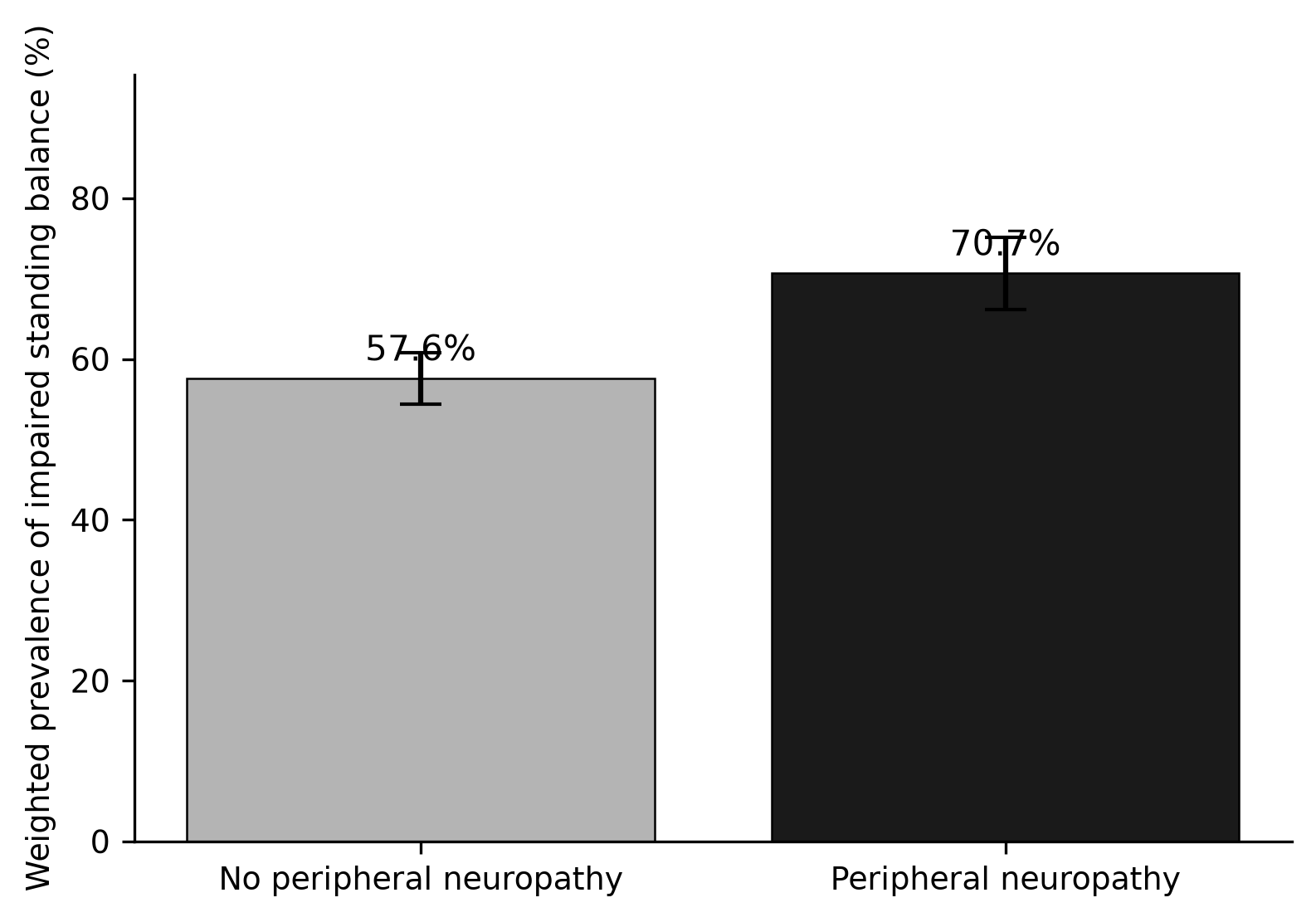
Figure 1. Weighted prevalence of impaired standing balance by peripheral neuropathy status, NHANES 2001-2004.
Note: Error bars indicate 95% confidence intervals. Source: Own elaboration from NHANES 2001-2004.DISCUSSION
The finding that monofilament-detected neuropathy accompanies impaired standing balance in a representative sample of community-dwelling older adults implies that a simple, low-cost plantar sensation test can flag individuals at risk of postural instability. Below that value lies a broader implication for fall prevention, in which foot-level sensory screening could complement the usual assessment of strength, vision and medications. A clinician who finds an insensate plantar site is therefore looking at more than a dermatologic detail; the finding carries information about how safely that patient stands and moves.
This balance association is consistent with studies of clinical populations. Failure of the Romberg test and increased postural sway have been described in patients with pure sensory neuropathy, in whom the foam-surface and eyes-closed conditions best expose the deficit.(9) Adults with diabetic peripheral neuropathy show worse balance and gait than those with diabetes alone,(5,15) and plantar sensation correlates with static balance in type 2 diabetes with and without neuropathy.(6) Peripheral neuropathy also accompanies worse balance in Parkinson disease,(16) and combined sensory and hearing loss compounds balance impairment in older primary care patients.(17) At the same time, sensory feedback from the foot supports postural control, and its loss obliges the nervous system to reweight the remaining visual and vestibular cues.(18,19) The present population estimates extend those observations beyond referral clinics and demonstrate that the association survives adjustment for age, sex, race and ethnicity, and diabetes. The fact that the association also appeared for condition 4 alone, the foam-surface eyes-closed task that most depends on somatosensory input, is mechanistically expected and strengthens the interpretation that the observed instability arises specifically from the loss of plantar sensation.
The high overall prevalence of balance impairment observed here, 60.2%, deserves a note of interpretation. The definition counted any failed Romberg condition, including the simplest eyes-open task, so it captures the full spectrum of instability rather than only the severe vestibular deficit that the foam-surface conditions detect. This breadth is appropriate for a screening question about plantar sensation, but it means the prevalence cannot be compared directly with studies that restricted balance impairment to condition 4. The condition 4 sensitivity estimate, an adjusted odds ratio of 1.40, was consistent with the primary result and points to the same underlying association. The prevalence figure is also consistent with the high burden of balance dysfunction documented in national surveillance of the same population.(10)
The result should also be read alongside evidence that the deficit is not immutable. Older women with diabetes but without overt neuropathy amplify body sway yet remain able to improve postural stability when attention is directed elsewhere,(20) and balance and strength training improve postural control in people with neuropathy.(21,22) Those observations suggest that the association reported here reflects a modifiable sensory deficit rather than a fixed structural impairment, and that rehabilitation rather than resignation is the appropriate response.
The modified Romberg test is a screening instrument rather than a continuous measure of postural control, and this is both a strength and a limit. Its pass/fail scoring is simple enough for surveillance and clinical use, but it cannot resolve whether neuropathy worsens sway amplitude or its variability. Instrumented posturography and wearable sensors measure those features continuously and have linked them to neuropathy and fall risk in diabetic populations,(23) while time series analysis of postural tests can separate neuropathic from non-neuropathic sway.(24) The convergence of the categorical Romberg result with those continuous measures supports the interpretation that the association reflects a graded sensory deficit rather than an artifact of scoring.
The falls result is likewise concordant with earlier work. Monofilament-detected neuropathy was associated with falls and fractures in older adults,(7) and neuropathy independently predicted falls through impaired stepping in a case-cohort design.(8) Neuropathy linked to rheumatoid arthritis and chemotherapy-induced neuropathy have both been associated with fall risk,(25,26) and self-reported neuropathy correlated with postural sway and falls in aging female cancer survivors.(27) In type 2 diabetes, neuropathy is among the factors most consistently associated with falling,(28) and balance, gait and fall occurrence differ between diabetic adults with and without neuropathy.(29) Wearable-sensor studies detect greater postural instability and fall risk in diabetic foot neuropathy as well.(23) The stronger association with falling problems than with any dizziness or balance complaint suggests that the plantar deficit is specific to the fall pathway rather than to dizziness in general.
The present analysis benefits from an objective exposure. Self-reported neuropathy, used in several of the studies cited above, underestimates the condition because early sensory loss is often asymptomatic, and participants may not connect a numb foot with a diagnosis.(27) The monofilament detects insensate sites that participants do not report, and this objective ascertainment is one likely reason the association with falls appears larger here than in studies that relied on self-report.
The magnitude of the falls association, an adjusted odds ratio of 2.24, exceeded that for balance. A plausible reading is that a fall requires the combination of sensory loss with a challenge that exceeds the remaining compensatory capacity, so neuropathy marks a subgroup that fails precisely when the environment or a concurrent task exceeds those reserves. Some discordance exists in the literature, however. Hypoglycemia, rather than neuropathy alone, has been emphasized as a fall risk in insulin-treated diabetes,(30) and fear of falling in diabetic older adults reflects psychological as well as sensory contributions.(31) The moderate attenuation of the balance association after adjustment for diabetes in the present analysis is consistent with the view that part of the risk travels through diabetic pathology beyond the sensory loss itself.
The public health implication of the falls estimate is considerable when projected to the population. Peripheral neuropathy affected roughly one fifth of the falls sample, and the twofold higher odds of a falling problem translate into a meaningful number of older adults whose fall risk could be reduced by targeting plantar sensation. Fall risk assessment that ignores the feet therefore overlooks a measurable and treatable contributor, and the monofilament offers a way to close that gap at negligible cost within existing foot care pathways.
In practice, the monofilament is already carried by most foot care providers, and adding a single balance question or a brief standing test to the visit requires no new equipment. An insensate site could then trigger referral to balance rehabilitation or to a falls clinic, which is the pathway suggested by the multifactorial programs shown to reduce falls in diabetic neuropathy.(32) For podiatry practice specifically, the finding elevates the monofilament from a wound-risk tool to a balance and fall risk tool, connecting routine foot examination to falls prevention. The addition of plantar sensation to fall risk screening has no contraindications and a negligible time cost, so the barrier to adoption is not technical but cultural, requiring clinicians to see the foot as part of the balance system rather than as an isolated structure.
Mechanisms plausibly connect plantar sensory loss to instability. Cutaneous receptors of the sole signal pressure distribution and contact with the support surface, and their degradation widens postural sway and delays corrective responses.(33,34) These deficits appear before overt neuropathy is diagnosed, since older adults with diabetes but no clinical neuropathy already show reduced sensory function and worse balance.(35) Balance depends on proprioceptive and cutaneous inputs that older adults reweight when one channel fails.(19,36) Plantar stimulation and textured surfaces that restore tactile cues can reduce sway and improve standing balance, which supports the causal relevance of the sensory channel.(37,38) Time series analysis of postural tests can even identify neuropathy from the sway signal alone.(24) Together these mechanisms make the foot a sensor as much as a support.
The design itself deserves comment. A secondary analysis of a national survey trades experimental control for representativeness, and the conclusions are accordingly about association rather than causation. At the same time, the standardized national protocol removes the examiner variability that burdens many small clinic-based studies, and the sample is free of the referral bias that can inflate effect estimates when cases are drawn from specialty clinics.
The strengths of this study include a nationally representative design, objective monofilament and balance testing performed under a standardized protocol, survey weights that preserve population inference, and adjustment for the main confounders of the associations. The neuropathy and comparison groups differed in age, sex and diabetes, and the attenuation from the crude to the adjusted estimates confirms that these confounders were operating as expected, which lends internal consistency to the analysis. The consistency of the primary and sensitivity estimates for balance, and the gradient from the specific falling problem outcome to the broader dizziness outcome, argue against a single source of bias. The analysis of two separate outcomes in overlapping cycles also reduces the chance that a measurement artifact of one component explains the findings.
The results apply to community-dwelling older adults in the United States, whose racial and ethnic composition in these cycles was predominantly non-Hispanic White. The associations may differ in populations with a higher prevalence of diabetes-related neuropathy or with different fall epidemiology, and the exclusion of institutionalized adults removes the group at the very highest risk. Generalization to other settings should therefore take into account the local distribution of diabetes and the organization of foot care and fall prevention services.
Several limitations warrant mention. The design is cross-sectional, so reverse causation and residual confounding cannot be excluded; prospective cohorts with repeated sensory and balance measures would clarify the direction of the association. The falls outcome was self-reported and captured falling problems rather than injurious falls; linkage to administrative records or prospective fall diaries would strengthen the outcome. The balance examination was available for two cycles rather than three, which reduced precision and limited the analysis of the oldest age groups; future cycles or pooled designs with consistent balance protocols would extend the age range. The monofilament detects large-fiber sensory loss and may miss small-fiber neuropathy; more sensitive instruments would better define the exposure. Diabetes was self-reported, and undiagnosed diabetes may have been misclassified; objective glycemic measures would reduce that bias. The exposure and outcomes were measured at a single examination, so within-person fluctuation in balance performance could misclassify some participants; repeated testing would reduce that noise. The falling problem question does not distinguish single from recurrent falls; fall frequency data would refine risk estimation. The survey also excluded institutionalized adults, among whom neuropathy and falls are most prevalent; separate studies in residential care would complete the picture.
From a clinical standpoint, plantar sensation testing with a monofilament is inexpensive and already routine in foot care, and its result could be incorporated into multifactorial fall risk assessment. Balance and strength training improve postural control in people with peripheral neuropathy,(21,22) combined strength and balance training outperforms aerobic training for balance and symptoms in diabetic neuropathy,(39) and local vibration has shown promise in the same population.(40) Multifactorial rehabilitation reduces fall risk in older adults with diabetic neuropathy,(32) and Tai Chi and resistance exercise offer complementary approaches.(41,42) Insole-based and tactile interventions remain less established but point in the same direction.(38,43) These strategies converge on the message that preserving or compensating for plantar sensory input is a modifiable target in fall prevention.
CONCLUSIONS
Monofilament-detected peripheral neuropathy was associated with impaired standing balance and with self-reported falls in adults aged 60 years and over, independently of age, sex, race and ethnicity, and diabetes. The findings were robust to alternative definitions of both outcomes, since the balance association persisted in the sensitivity analysis restricted to the most challenging balance condition, and the falls association was stronger than the association with nonspecific dizziness complaints. These findings support the inclusion of plantar sensation testing in fall risk assessment for older adults, since an insensate foot identifies a subgroup that stands less stably and falls more often and that could be directed toward balance rehabilitation.
References
- 1 Bronge W, Lindholm B, Elmståhl S, Siennicki-Lantz A. Epidemiology and Functional Impact of Early Peripheral Neuropathy Signs in Older Adults from a General Population. Gerontology. 2024;70(3):257-268. doi: 10.1159/000535620
- 2 Gregg EW, Sorlie P, Paulose-Ram R, Gu Q, Eberhardt MS, Wolz M, et al. Prevalence of Lower-Extremity Disease in the U.S. Adult Population ≥40 Years of Age With and Without Diabetes. Diabetes Care. 2004;27(7):1591-1597. doi: 10.2337/diacare.27.7.1591
- 3 White J, Maier AB, Iacobaccio L, Iseli R. Foot Problems in Older Adults Presenting to a Falls and Balance Clinic. Gerontology. 2024;70(7):732-740. doi: 10.1159/000539160
- 4 Montero-Odasso M, van der Velde N, Martin FC, Petrovic M, Tan MP, Ryg J, et al. World guidelines for falls prevention and management for older adults: a global initiative. Age and Ageing. 2022;51(9):afac205. doi: 10.1093/ageing/afac205
- 5 Nogueira LRN, Nogueira CM, da Silva AE, Luvizutto GJ, de Sousa LAPS. Balance evaluation in individuals with type 2 diabetes mellitus with and without peripheral neuropathy. Journal of Bodywork and Movement Therapies. 2024;40:534-539. doi: 10.1016/j.jbmt.2024.05.010
- 6 Tütün Yümin E. Plantar Sensation and Balance in Patients with Type 2 Diabetes Mellitus with and without Peripheral Neuropathy. ACC. 2021;60(2):191-200. doi: 10.20471/acc.2021.60.02.04
- 7 Hicks CW, Wang D, Daya N, Juraschek SP, Matsushita K, Windham BG, et al. The association of peripheral neuropathy detected by monofilament testing with risk of falls and fractures in older adults. J American Geriatrics Society. 2023;71(6):1902-1909. doi: 10.1111/jgs.18338
- 8 Kohle F, Stark C, Klünter H, Wernicke D, Wunderlich G, Fink GR, et al. Peripheral neuropathy, an independent risk factor for falls in the elderly, impairs stepping as a postural control mechanism: A case‐cohort study. J Peripheral Nervous Sys. 2024;29(4):453-463. doi: 10.1111/jns.12656
- 9 Anagnostou E, Kouvli M, Karagianni E, Gamvroula A, Kalamatianos T, Stranjalis G, et al. Romberg's test revisited: Changes in classical and advanced sway metrics in patients with pure sensory neuropathy. Neurophysiologie Clinique. 2024;54(5):102999. doi: 10.1016/j.neucli.2024.102999
- 10 Agrawal Y, Carey JP, Della Santina CC, Schubert MC, Minor LB. Disorders of Balance and Vestibular Function in US Adults. Arch Intern Med. 2009;169(10):938. doi: 10.1001/archinternmed.2009.66
- 11 Centers for Disease Control and Prevention, National Center for Health Statistics. National Health and Nutrition Examination Survey 1999-2004: examination, questionnaire and laboratory data [Internet]. 2024. Available from: https://wwwn.cdc.gov/nchs/nhanes/continuousnhanes/default.aspx
- 12 Sania Zahra, Misbah Waris, Qurat ul Ain, Yasha Sajjad. Normative data of modified romberg balance test for risk of fall in elderly population from Pakistan. J Pak Med Assoc. 2022;73(3):515-519. doi: 10.47391/jpma.6238
- 13 Phyu SN, Peungsuwan P, Puntumetakul R, Chatchawan U. Reliability and Validity of Mini-Balance Evaluation System Test in Type 2 Diabetic Patients with Peripheral Neuropathy. IJERPH. 2022;19(11):6944. doi: 10.3390/ijerph19116944
- 14 Lopatin T, Ko M, Brown E, Goble D, Haworth J. Balance Testing for Patients With Type 2 Diabetes. J Diabetes Sci Technol. 2022;16(6):1582-1583. doi: 10.1177/19322968221121679
- 15 Korkusuz S, Seçkinoğulları B, Yürük ZÖ, Uluğ N, Kibar S. Balance and gait in individuals with diabetic peripheral neuropathy. Neurological Research. 2024;46(1):14-22. doi: 10.1080/01616412.2023.2257445
- 16 Corrà MF, Vila-Chã N, Sardoeira A, Hansen C, Sousa AP, Reis I, et al. Peripheral neuropathy in Parkinson’s disease: prevalence and functional impact on gait and balance. Brain. 2023;146(1):225-236. doi: 10.1093/brain/awac026
- 17 Mold JW, Lawler FH, Liao X, Bard DE. Associations between hearing loss, peripheral neuropathy, balance, and survival in older primary care patients. J American Geriatrics Society. 2024;72(11):3427-3436. doi: 10.1111/jgs.19142
- 18 Reisi A, Hashemi-Oskouei A, Ashtiani MN, Bahrpeyma F. Role of sensory feedback in postural control of the patients with diabetic neuropathy. Int J Diabetes Dev Ctries. 2024;44(1):77-83. doi: 10.1007/s13410-023-01200-9
- 19 Liu Z, Wang Q, Sun W, Song Q. Balancing sensory inputs: somatosensory reweighting from proprioception to tactile sensation in maintaining postural stability among older adults with sensory deficits. Front Public Health. 2023;11:1165010. doi: 10.3389/fpubh.2023.1165010
- 20 Rodrigues ST, Delacosta TC, Barbieri FA, Paschoalino GP, Gotardi GC, Barela JA, et al. Diabetic older women without peripheral neuropathy amplify body sway but are capable of improving postural stability during a saccadic gaze task. Human Movement Science. 2023;92:103153. doi: 10.1016/j.humov.2023.103153
- 21 Alissa N, Shipper A, Zilliox L, Westlake K. A Systematic Review of the Effect of Physical Rehabilitation on Balance in People with Diabetic Peripheral Neuropathy Who are at Risk of Falling. CIA. 2024;Volume 19:1325-1339. doi: 10.2147/cia.s459492
- 22 Jimenez-Mazuelas MJ, Gonzalez-Perez de Villar N, De Casas-Albendea S, Martinez-Gimeno L, Jimenez-Gonzalez S, Angulo-Carrere MT. Somatosensory and dynamic balance improvement in older adults with diabetic peripheral neuropathy through sensorimotor exercise: A multisite randomized controlled trial. Journal of Bodywork and Movement Therapies. 2024;40:2062-2073. doi: 10.1016/j.jbmt.2024.10.041
- 23 Brognara L, Sempere-Bigorra M, Mazzotti A, Artioli E, Julián-Rochina I, Cauli O. Wearable sensors-based postural analysis and fall risk assessment among patients with diabetic foot neuropathy. Journal of Tissue Viability. 2023;32(4):516-526. doi: 10.1016/j.jtv.2023.10.002
- 24 Villegas CM, Curinao JL, Aqueveque DC, Guerrero-Henríquez J, Matamala MV. Identifying neuropathies through time series analysis of postural tests. Gait & Posture. 2023;99:24-34. doi: 10.1016/j.gaitpost.2022.09.090
- 25 de Araújo Pereira F, de Almeida Lourenço M, de Assis MR. Evaluation of peripheral neuropathy in lower limbs of patients with rheumatoid arthritis and its relation to fall risk. Adv Rheumatol. 2022;62(1):9. doi: 10.1186/s42358-022-00238-3
- 26 Hines RB, Schoborg C, Sumner T, Thiesfeldt DL, Zhang S. The associations of oxaliplatin-induced peripheral neuropathy, sociodemographic characteristics, and clinical characteristics with time to fall in older adults with colorectal cancer. American Journal of Epidemiology. 2024;193(9):1271-1280. doi: 10.1093/aje/kwae067
- 27 Fino PC, Horak FB, El-Gohary M, Guidarelli C, Medysky ME, Nagle SJ, et al. Postural sway, falls, and self-reported neuropathy in aging female cancer survivors. Gait & Posture. 2019;69:136-142. doi: 10.1016/j.gaitpost.2019.01.025
- 28 Gravesande J, Richardson J. Identifying non-pharmacological risk factors for falling in older adults with type 2 diabetes mellitus: a systematic review. Disability and Rehabilitation. 2017;39(15):1459-1465. doi: 10.1080/09638288.2016.1199741
- 29 Tavares NMB, Silva JM, Silva MDMD, Silva LDT, Souza JND, Ithamar L, et al. Balance, Gait, Functionality and Fall Occurrence in Adults and Older Adults with Type 2 Diabetes Mellitus and Associated Peripheral Neuropathy. Clinics and Practice. 2024;14(5):2044-2055. doi: 10.3390/clinpract14050161
- 30 Shah VN, Wu M, Foster N, Dhaliwal R, Al Mukaddam M. Severe hypoglycemia is associated with high risk for falls in adults with type 1 diabetes. Arch Osteoporos. 2018;13(1):66. doi: 10.1007/s11657-018-0475-z
- 31 Hewston P, Deshpande N. Fear of Falling and Balance Confidence in Older Adults With Type 2 Diabetes Mellitus: A Scoping Review. Canadian Journal of Diabetes. 2018;42(6):664-670. doi: 10.1016/j.jcjd.2018.02.009
- 32 Gupta G, Maiya GA, Bhat SN, Hande HM. Effect of Multifactorial Balance Rehabilitation Program on Risk of Falls and Functional Fitness in Older Adults with Diabetic Peripheral Neuropathy. CAS. 2023;16(3):240-247. doi: 10.2174/1874609816666230306150844
- 33 Song Q, Zhang X, Mao M, Sun W, Zhang C, Chen Y, et al. Relationship of proprioception, cutaneous sensitivity, and muscle strength with the balance control among older adults. Journal of Sport and Health Science. 2021;10(5):585-593. doi: 10.1016/j.jshs.2021.07.005
- 34 Korchi K, Noé F, Bru N, Monce M, Cabianca-Martin O, Paillard T. Influence of plantar cutaneous sensitivity on daily fluctuations of postural control and gait in institutionalized older adults: a hierarchical cluster analysis. Chronobiology International. 2019;36(6):870-882. doi: 10.1080/07420528.2019.1594869
- 35 Deshpande N, Hewston P, Aldred A. Sensory Functions, Balance, and Mobility in Older Adults With Type 2 Diabetes Without Overt Diabetic Peripheral Neuropathy: A Brief Report. J Appl Gerontol. 2017;36(8):1032-1044. doi: 10.1177/0733464815602341
- 36 Matsuno S, Yoshiike T, Yoshimura A, Morita S, Fujii Y, Honma M, et al. Contribution of Somatosensory and Parietal Association Areas in Improving Standing Postural Stability Through Standing Plantar Perception Training in Community-Dwelling Older Adults. Journal of Aging and Physical Activity. 2021;29(5):761-770. doi: 10.1123/japa.2020-0130
- 37 Asgari N, Yeowell G, Sadeghi-Demneh E. A comparison of the efficacy of textured insoles on balance performance in older people with versus without plantar callosities. Gait & Posture. 2022;94:217-221. doi: 10.1016/j.gaitpost.2022.03.022
- 38 Alaee SJ, Barati K, Hajiaghaei B, Ghomian B, Moradi S, Poorpirali M. Immediate effect of textured insoles on the balance in patients with diabetic neuropathy. J of Diabetes Invest. 2023;14(3):435-440. doi: 10.1111/jdi.13950
- 39 Haleem F, Saeed A, Kundi M, Jalal A, Bilal M, Jalal M. Combined effects of strength and balance training versus aerobic training on balance, neuropathy symptoms and quality of life in patients with diabetic peripheral neuropathy. Physiotherapy Res Intl. 2024;29(3):e2103. doi: 10.1002/pri.2103
- 40 Fateh HR, Nakhostin Ansari N, Nakhostin-Ansari A, Sabziparvar M, Naybandi S, Naghdi S, et al. The effects of local calf vibration on balance, blood flow, and nerve conductivity in patients with diabetic peripheral neuropathy: a pilot study. Physiotherapy Theory and Practice. 2024;40(7):1397-1403. doi: 10.1080/09593985.2023.2173992
- 41 Mao W, Wang T, Sun M, Zhang F, Li L. Effects of Tai Chi on Postural Control in People with Peripheral Neuropathy: A Systematic Review with Meta-Analysis. Healthcare. 2023;11(11):1559. doi: 10.3390/healthcare11111559
- 42 Armat MR, Mortazavi H, Akbari H, Baghizade S. The Effect of Resistance Exercises Using an Elastic Band on Balance and Fear of Falling in Older Adults With Diabetic Peripheral Neuropathy: A 16-week Randomized Controlled Trial. Archives of Physical Medicine and Rehabilitation. 2024;105(4):733-741. doi: 10.1016/j.apmr.2023.11.017
- 43 Ma CZH, Lam WK, Chang BC, Lee WCC. Can Insoles Be Used to Improve Static and Dynamic Balance of Community-Dwelling Older Adults? A Systematic Review on Recent Advances and Future Perspectives. Journal of Aging and Physical Activity. 2020;28(6):971-986. doi: 10.1123/japa.2019-0293
Declarations
Funding
No financing
Conflict of interest
None
Authorship contributions
Drafting – original draft: Esmeralda Cortes López, María del Pilar Vargas Escamilla, Monzerrath Cruz Morales.
Writing–review and editing: Esmeralda Cortes López, María del Pilar Vargas Escamilla, Monzerrath Cruz Morales.