

Abstract
Introduction: Fluoroquinolones are associated with tendon injury, but the disproportionality of tendon rupture relative to other antibiotics in spontaneous reporting remains incompletely quantified. Methods: A case/non-case analysis of the FDA Adverse Event Reporting System was performed through the openFDA interface using reports received from 2004 to 2024. Reporting odds ratios and proportional reporting ratios with 95% confidence intervals were computed for tendon rupture and tendinitis, comparing fluoroquinolones with other antibiotics, with subgroup analyses by sex, age and seriousness. Results: Fluoroquinolones were recorded in 1,916 tendon rupture and 3,238 tendinitis reports, versus 300 and 518 for other antibiotics. The reporting odds ratio was 22.49 (95% CI 19.91-25.40) for tendon rupture and 22.18 (95% CI 20.22-24.34) for tendinitis. The signal was highest in adults aged 65 years or older (26.10) and similar between the sexes; the median age of cases was 63 years and 94.4% were serious. Conclusions: Tendon rupture and tendinitis are disproportionately reported with fluoroquinolones compared with other antibiotics, particularly in older adults, reinforcing the restriction of these agents in patients at risk.
Keywords
fluoroquinolones, Achilles tendon, tendon injuries, pharmacovigilance, adverse drug reaction reporting systems, disproportionality analysis
INTRODUCTION
Fluoroquinolones remain among the most widely prescribed antimicrobials worldwide because of their broad spectrum, oral bioavailability and reliable tissue penetration, properties that have made them first-line options for urinary, respiratory and gastrointestinal infections for more than three decades.(1) Their musculoskeletal toxicity has nevertheless been recognized since the first descriptions of tendinopathy in the 1980s, and it is now established that tendon rupture can occur within days of exposure, that the Achilles tendon is the site most frequently affected and that the injury can be bilateral and disabling.(2,3) Successive regulatory actions have progressively narrowed the indications for these drugs: the United States Food and Drug Administration added a boxed warning for tendon damage in 2008 and strengthened it in 2016, while the European Commission restricted systemic fluoroquinolones in 2019 in response to persistent reports of disabling and potentially permanent musculoskeletal effects.(4,5) Despite these measures, the drugs continue to be prescribed when the benefit is judged to outweigh the risk, and the exposed population remains large because fluoroquinolones are still needed for complicated urinary tract infections, hospital-acquired pneumonia and other infections in which alternatives are limited.(5) The clinical burden is considerable for podiatric practice because rupture of the Achilles tendon typically requires surgery, immobilization and prolonged rehabilitation, and individual cases have been documented after even short courses of levofloxacin prescribed for Helicobacter pylori eradication, which illustrates that the risk is not confined to prolonged treatment.(3,6)
Observational research has moved from case reports to robust estimates of the association. A self-controlled case series estimated that third-generation fluoroquinolones raised the risk of Achilles tendon rupture several-fold within the first month of exposure, with the excess concentrated in older patients.(7) Population-based case-control studies reported odds ratios of a similar or larger magnitude, and showed that the risk increased further when corticosteroids were used concomitantly, an interaction that is clinically important because both drugs are frequently coprescribed in respiratory disease.(8,9) A systematic review with meta-analysis concluded that fluoroquinolone exposure raises the risk of Achilles tendon complications, with differences in magnitude among molecules.(10) The biological basis is also well described: fluoroquinolones reduce tenocyte viability and proteoglycan synthesis, activate matrix metalloproteinases and generate oxidative stress, changes that weaken the collagen matrix and predispose the tendon to rupture under physiological load.(11,12) Imaging studies describe a tendinopathic pattern of thickening, intratendinous signal change and partial tears in exposed patients, which supports a drug-induced rather than a purely mechanical process and places tendinitis and rupture on a single pathological continuum.(13) In parallel, spontaneous reporting databases such as the FDA Adverse Event Reporting System have been used to detect and characterize class-specific safety signals with formal disproportionality methods, an approach that is well suited to rare and delayed adverse events that trials are underpowered to detect.(14,15) The boxed warning in the United States also mandates that patients be counselled about the early signs of tendon pain, swelling and rupture, which has made early recognition part of routine antimicrobial stewardship.(4)
Most pharmacovigilance studies of this association have examined single agents or single outcomes, and few have directly compared the disproportionality of tendon events between fluoroquinolones and other antibiotics within the same reporting system while characterizing the patients most affected. The comparison against other antibiotics, rather than against the whole database, is relevant because it isolates the incremental signal of the fluoroquinolone class from the background rate of tendon events among antibiotic users. The answers to these questions are relevant for clinicians who must weigh the risk of a rare but disabling musculoskeletal complication against the benefit of a familiar and effective antibiotic. This study sought to answer two questions. P1: Are tendon rupture and tendinitis disproportionately reported with fluoroquinolones compared with other antibiotics in the FDA Adverse Event Reporting System? P2: Which patient groups, defined by sex, age and seriousness, are most affected?
METHODS
Study design and data source
A retrospective case/non-case analysis was conducted within the FDA Adverse Event Reporting System (FAERS), the spontaneous reporting database maintained by the United States Food and Drug Administration.(16) FAERS receives individual case safety reports from healthcare professionals, consumers and manufacturers worldwide, and it is released in public quarterly data files that are updated continuously; the database supports hypothesis-generating signal detection but not the estimation of incidence, because the population exposed to each drug is unknown.(14)
Each report may list several drugs and several reactions, and each contains structured fields for patient age, sex, seriousness, reporter country and receipt date, which allow both disproportionality estimation and patient subgroup description. Individual reports were retrieved through the openFDA drug adverse events, which exposes the structured FAERS fields without authentication and returns aggregated counts for a given query.(17) The analysis included all reports with a recorded receipt date between 1 January 2004 and 21 January 2024, a window chosen to cover the public FAERS period and to respect the requirement of using data published up to 2024; it yielded 18,710,763 reports. Reports were counted at the level of the individual case safety report, and the analysis operated on aggregated counts returned by the interface; this report-level unit is standard for disproportionality studies of FAERS because a single case may list several drugs and reactions.(14) The study followed the reporting recommendations for observational studies of routinely collected health data, combining the STROBE statement with the RECORD extension.
Exposure definition
Fluoroquinolone exposure was defined at the report level as the presence of at least one drug whose openfda generic name contained any of 20 fluoroquinolone base names: ciprofloxacin, levofloxacin, moxifloxacin, ofloxacin, gemifloxacin, norfloxacin, delafloxacin, lomefloxacin, gatifloxacin, enoxacin, fleroxacin, pefloxacin, sparfloxacin, besifloxacin, nadifloxacin, finafloxacin, trovafloxacin, prulifloxacin, nemonoxacin and ozenoxacin. The drug role recorded in the report was not restricted, so that both primary suspect and concomitant medications contributed to the exposure definition; this choice is conservative because it captures all reports in which a fluoroquinolone appeared in the medication list. The comparator group comprised reports with at least one of 45 prespecified non-fluoroquinolone systemic antibiotics, including penicillins, cephalosporins, macrolides, tetracyclines, aminoglycosides, carbapenems, glycopeptides, oxazolidinones, lipopeptides, nitroimidazoles, folate antagonists and nitrofurans, and with no fluoroquinolone, so that the two groups were mutually exclusive. This operational definition identified 162,538 fluoroquinolone reports and 565,868 comparator reports.
Outcome definition
The primary outcome was tendon rupture, defined as the MedDRA preferred term "Tendon rupture" recorded in the reaction field. The secondary outcome was tendinitis, defined as the MedDRA preferred term "Tendinitis". Because FAERS codes reactions at the preferred term level, the term "Tendon rupture" does not separate the Achilles tendon from other tendons, and it was therefore used as the operational definition of the outcome; the inability to attribute the rupture to the Achilles tendon specifically is acknowledged in the Discussion.
Statistical analysis
Disproportionality was quantified with the reporting odds ratio and the proportional reporting ratio, two complementary measures derived from the two-by-two table of fluoroquinolone and comparator reports with and without the outcome.(18) Both measures are standard in pharmacovigilance signal detection and offer the advantage of being computable without exposure denominators. Because the two groups are mutually exclusive at the report level, the two-by-two table is internally consistent and the measures are not inflated by reports classified in both groups. The reporting odds ratio was calculated as ad divided by bc and the proportional reporting ratio as a over the sum of a and b, divided by c over the sum of c and d, where a is the number of fluoroquinolone reports with the outcome, b the number of fluoroquinolone reports without it, c the number of comparator reports with the outcome and d the number of comparator reports without it. Confidence intervals at 95% were obtained from the standard error of the natural logarithm of each measure, and the Yates-corrected chi-square statistic was reported for the overall tables. Estimates were interpreted primarily through their confidence intervals rather than through p values alone. A signal was defined as a lower 95% confidence limit of the reporting odds ratio above 1.(19) The measures were computed overall, for each individual fluoroquinolone against the same comparator, and in two sensitivity analyses: one restricted to fluoroquinolone-only reports without any co-listed comparator antibiotic, and one comparing fluoroquinolones with all other reports in the database. Statistical tests were two-sided with an alpha of 0.05.
Subgroup and descriptive analyses
Disproportionality was re-estimated within strata of sex, age and seriousness, which correspond to the patient groups addressed by P2. Age strata were defined from the onset age field as 18 to 44 years, 45 to 64 years and 65 years or older, and reports without a recorded onset age were excluded from the age-stratified analyses. Seriousness was taken from the FAERS serious field, which identifies reports of death, life-threatening events, hospitalization, disability or other medically important conditions. The characteristics of fluoroquinolone-associated tendon rupture reports were described with the proportion of each sex, the median age with interquartile range, the proportion of serious reports, the most frequent fluoroquinolone and the leading reporter countries.
Ethical considerations
The study used de-identified, publicly available spontaneous reports, so institutional review board approval and informed consent were not required.
RESULTS
Fluoroquinolones showed a disproportionate signal for tendon rupture and tendinitis
Between 2004 and 2024 the database contained 11,455 reports of tendon rupture and 14,456 reports of tendinitis. Among 162,538 fluoroquinolone reports and 565,868 comparator reports, tendon rupture was recorded in 1,916 and 300 reports, respectively (Table 1). The reporting odds ratio was 22.49 (95% CI 19.91-25.40) and the proportional reporting ratio was 22.23 (95% CI 19.69-25.11). The Yates-corrected chi-square was 5,272.65, which far exceeds the conventional threshold for a signal.
Regarding tendinitis, 3,238 fluoroquinolone reports and 518 comparator reports were identified. These counts corresponded to a reporting odds ratio of 22.18 (95% CI 20.22-24.34) and a proportional reporting ratio of 21.76 (95% CI 19.84-23.87). The signal was therefore present for both inflammatory and ruptured tendon events, with confidence intervals that overlapped almost entirely between the two outcomes. Tendinitis was recorded in a larger number of reports than tendon rupture among fluoroquinolone users.
By individual agent (Figure 1), the reporting odds ratio for tendon rupture was 26.38 (95% CI 23.25-29.93) for ciprofloxacin and 24.42 (95% CI 21.32-27.97) for levofloxacin, the two agents with the largest case counts. The estimate was 14.45 (95% CI 10.70-19.51) for ofloxacin and 4.94 (95% CI 3.60-6.78) for moxifloxacin. Delafloxacin showed an estimate of 16.83, although its confidence interval was wide (4.16-68.03) because few reports were available. Gemifloxacin and norfloxacin contributed no reports in the study window and therefore appear without an estimate. The aggregate of the remaining fluoroquinolones did not reach the signal threshold, with a reporting odds ratio of 0.72 (95% CI 0.10-5.10).
Reporting of fluoroquinolone-associated tendon rupture varied over time (Figure 2). The annual count rose after 2008, peaked at 180 reports in 2011, rose again in 2018 and 2019, and remained below 100 reports in most years after 2020.
In the sensitivity analyses, the reporting odds ratio was 33.43 (95% CI 29.56-37.79) when fluoroquinolone-only reports were considered, and 23.18 (95% CI 22.07-24.35) when fluoroquinolones were compared with all other reports in the database. Both sensitivity estimates remained above the signal threshold. The overall reporting odds ratio for tendon rupture was 22.49.
Outcome | Fluoroquinolone cases (a) | Fluoroquinolone non-cases (b) | Comparator cases (c) | Comparator non-cases (d) | ROR (95% CI) | PRR (95% CI) | Chi-square (Yates) |
|---|---|---|---|---|---|---|---|
Tendon rupture | 1916 | 160622 | 300 | 565568 | 22.49(19.91-25.40) | 22.23(19.69-25.11) | 5272.6 |
Tendinitis | 3238 | 159300 | 518 | 565350 | 22.18(20.22-24.34) | 21.76(19.84-23.87) | 8887.8 |
Note: ROR = reporting odds ratio; PRR = proportional reporting ratio; CI = confidence interval. Chi-square is Yates-corrected. Source: FAERS via the openFDA drug/event API, 2004-2024.
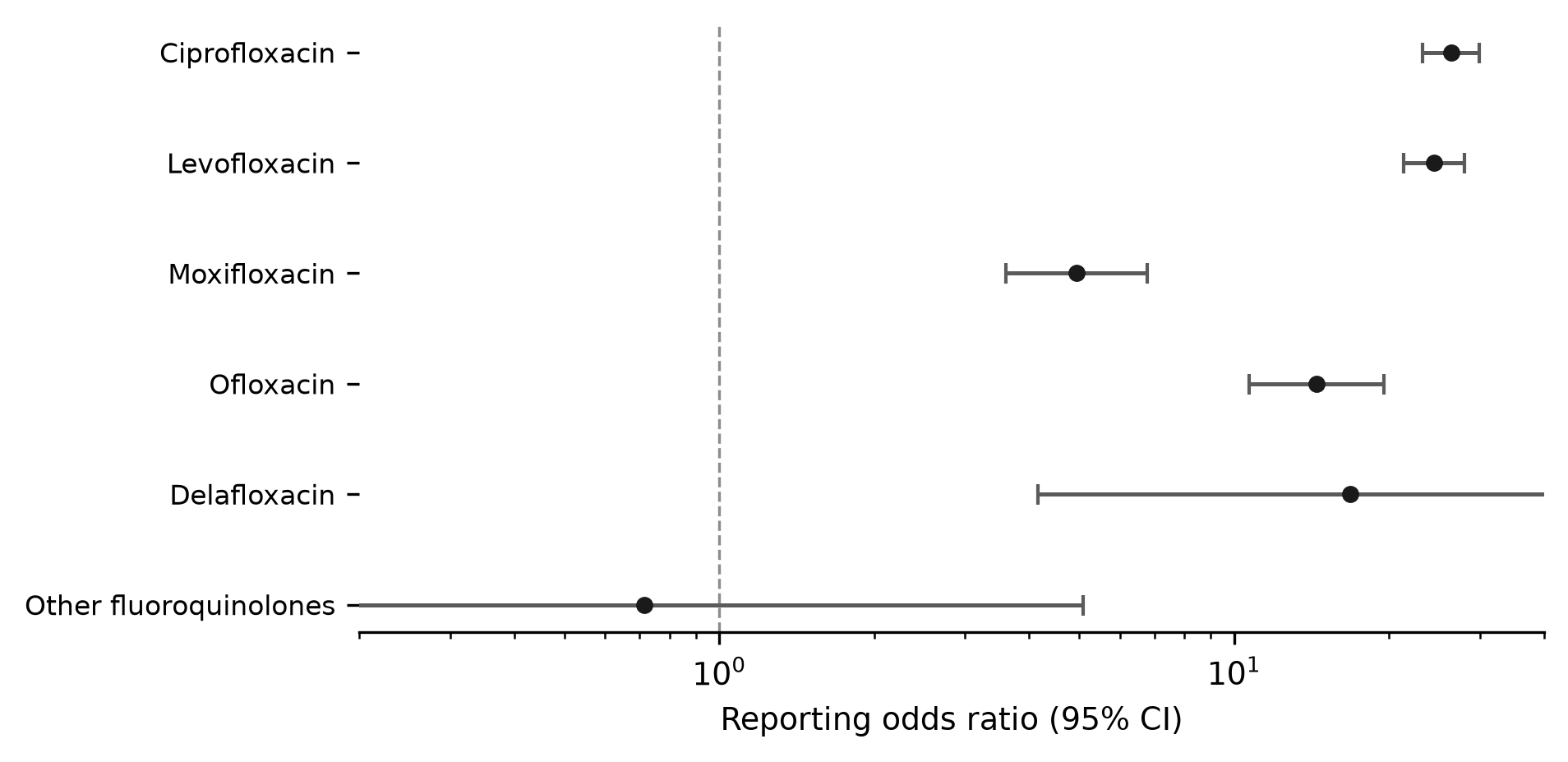
Figure 1. Reporting odds ratios with 95% confidence intervals for tendon rupture by individual fluoroquinolone.
Note: The vertical dashed line marks the null value of 1. The horizontal axis is logarithmic. Source: FAERS via the openFDA drug/event API, 2004-2024.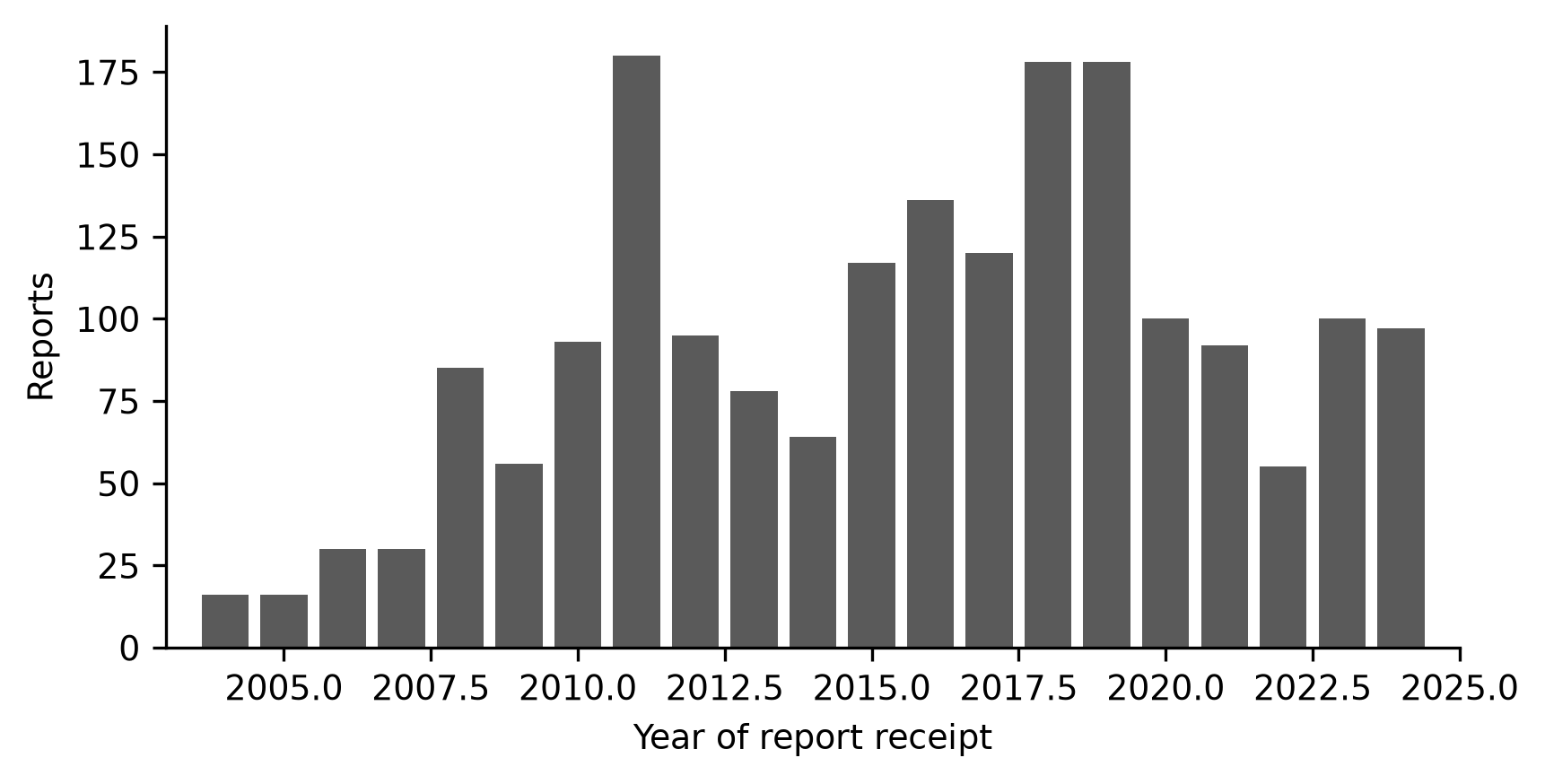
Figure 2. Annual number of fluoroquinolone-associated tendon rupture reports received between 2004 and 2024.
Note: Counts refer to reports that mentioned a fluoroquinolone and the preferred term Tendon rupture. Source: FAERS via the openFDA drug/event API, 2004-2024.The signal was strongest in older adults and similar between the sexes
By sex (Table 2), the reporting odds ratio for tendon rupture was 22.50 (95% CI 18.85-26.85) in males and 21.46 (95% CI 18.01-25.58) in females. The two estimates overlapped, and no material difference between the sexes was identified.
By age group, the estimate was 26.10 (95% CI 20.73-32.87) in adults aged 65 years or older, 16.56 (95% CI 13.37-20.50) in those aged 45 to 64 years and 23.91 (95% CI 16.57-34.51) in those aged 18 to 44 years. The point estimate was therefore highest in the oldest stratum.
The seriousness-stratified analysis showed a reporting odds ratio of 21.18 (95% CI 18.69-24.00) among serious reports and 30.60 (95% CI 18.10-51.75) among non-serious reports. The signal persisted in both strata.
Serious outcomes were documented in 94.4% of fluoroquinolone-associated tendon rupture reports (Table 3). The median age of fluoroquinolone-associated cases was 63 years (interquartile range 51-74), which was higher than the 59 years (interquartile range 47-69) of comparator cases. Males represented 51.9% of fluoroquinolone-associated cases. Ciprofloxacin was the most frequent agent, present in 64.9% of cases, and the United States was the most frequent reporter country with 53.0% of cases, followed by the United Kingdom with 213 reports and Germany with 138 reports. The highest age-stratum reporting odds ratio was 26.10.
Subgroup | Fluoroquinolone cases (a) | Fluoroquinolone non-cases (b) | Comparator cases (c) | Comparator non-cases (d) | ROR (95% CI) | PRR (95% CI) |
|---|---|---|---|---|---|---|
Male | 929 | 64356 | 142 | 221328 | 22.50(18.85-26.85) | 22.19(18.60-26.47) |
Female | 861 | 80809 | 146 | 294121 | 21.46(18.01-25.58) | 21.25(17.83-25.32) |
18-44 years | 213 | 24357 | 33 | 90226 | 23.91(16.57-34.51) | 23.71(16.44-34.20) |
45-64 years | 508 | 37979 | 101 | 125012 | 16.56(13.37-20.50) | 16.35(13.21-20.24) |
65 years or older | 680 | 48134 | 81 | 149665 | 26.10(20.73-32.87) | 25.75(20.46-32.42) |
Serious | 1808 | 134769 | 284 | 448344 | 21.18(18.69-24.00) | 20.91(18.46-23.70) |
Non-serious | 108 | 25853 | 16 | 117218 | 30.60(18.10-51.75) | 30.48(18.03-51.52) |
Note: ROR = reporting odds ratio; PRR = proportional reporting ratio; CI = confidence interval. Age strata exclude reports without recorded onset age. Source: FAERS via the openFDA drug/event API, 2004-2024.
Characteristic | Fluoroquinolone cases (n = 1916) | Comparator cases (n = 300) |
|---|---|---|
Female sex | 861 (48.10%) | 146 (50.69%) |
Male sex | 929 (51.90%) | 142 (49.31%) |
Median age (IQR) in years | 63.0 (51.0-74.0) | 59.0 (47.0-69.0) |
Serious outcome | 1808 (94.36%) | 284 (94.67%) |
Note: IQR = interquartile range. Sex percentages are computed among reports with sex recorded; seriousness percentages among reports with the seriousness field recorded. Source: FAERS via the openFDA drug/event API, 2004-2024.
DISCUSSION
This analysis asked whether tendon rupture and tendinitis were disproportionately reported with fluoroquinolones compared with other antibiotics, and which patient groups were most affected. Both outcomes returned a clear and consistent signal, with the strongest estimates in older adults, and the magnitude, precision and internal consistency of the estimates allow a direct answer to both questions.
Regarding P1, tendon rupture was reported far more often than expected among fluoroquinolones relative to other antibiotics, and the lower confidence limit remained well above the null, which satisfies the conventional criteria for a statistical signal in spontaneous reporting.(19) The direction and the order of magnitude are consistent with observational studies, although the relative measures of a spontaneous reporting database cannot be read as incidence risk ratios. A self-controlled case series estimated a several-fold increase in Achilles tendon rupture with third-generation fluoroquinolones within the first month of exposure,(7) and population-based case-control studies reported odds ratios of a similar order, with the highest estimates in patients who also received corticosteroids.(8,9) The larger values observed here reflect the known tendency of disproportionality analyses to exaggerate relative risk through selective reporting and notoriety bias, particularly once a safety warning has been issued for the exposure.(14,20)
The choice of other antibiotics as the comparator deserves emphasis. A comparison against all other reports in the database, which is the conventional denominator in case/non-case analyses, would mix antibiotics with drugs that have no plausible tendon effect and would dilute the specificity of the contrast.(20) By restricting the comparator to non-fluoroquinolone antibiotics and by requiring the groups to be mutually exclusive, the present analysis isolates the incremental signal attributable to the fluoroquinolone class. The sensitivity analysis against the full database confirmed that the signal was not an artefact of this comparator choice, because the estimate changed little when all other drugs were used as the reference.
The per-agent gradient was informative. Ciprofloxacin and levofloxacin carried the largest reporting odds ratios and the most cases, whereas moxifloxacin showed a materially lower estimate. A molecule-stratified systematic review reached a compatible conclusion, reporting that the risk of Achilles tendon complications differs across fluoroquinolones.(10) A meta-analysis of oral fluoroquinolones likewise found a pooled risk for Achilles tendon rupture whose direction matches the present signal.(21) Ofloxacin and delafloxacin showed intermediate and imprecise estimates, respectively, which is consistent with their lower reporting volume. Individual case reports continue to describe the typical presentation, including spontaneous rupture of the Achilles tendon after levofloxacin used for Helicobacter pylori eradication.(6) The plausibility of a class effect with variable intensity is supported by experimental work showing that ciprofloxacin reduces tenocyte viability and proteoglycan synthesis, and that fluoroquinolones promote matrix metalloproteinase activity and oxidative damage in tendon tissue.(11,12) Imaging studies describe a tendinopathic pattern of thickening and intratendinous signal change in exposed patients, which reinforces a drug-induced process rather than a purely mechanical rupture.(13)
The secondary outcome of tendinitis showed a signal of almost identical magnitude, which is biologically coherent because tendinopathy and rupture are considered stages of the same drug-induced process rather than independent events.(12) The similarity also argues against the possibility that the rupture signal reflects only a reporting artefact, since the two outcomes are coded separately in MedDRA and would not be expected to move together under selective reporting. A review of the long-term toxicity of fluoroquinolones places tendinopathy among the most disabling persistent effects of the class, alongside peripheral neuropathy and aortic complications, which is consistent with the severity profile observed here.(22)
The consistency of the findings across the primary outcome, the secondary outcome, the individual agents and both sensitivity analyses is a notable feature of the results. If the association were driven by a coding error or by a single well-publicized product, the signal would be expected to be unstable across these specifications; instead, the confidence intervals of every estimable comparison excluded the null. This internal coherence increases confidence that the disproportionality reflects a real class effect rather than a chance finding, a criterion that has been emphasized in guidance on signal detection.(18,19)
At the molecular level, the tendinopathy is not a single insult but a cascade. Fluoroquinolones interfere with magnesium-dependent enzymes of the extracellular matrix and induce matrix metalloproteinases that degrade type I collagen, the main structural protein of tendon.(12) In vitro models show reduced tenocyte viability and proteoglycan synthesis after ciprofloxacin exposure, and experimental data describe a dose-dependent weakening of the tendon.(11) These changes lower the threshold for rupture under physiological load, which explains why the Achilles tendon, the tendon that bears the highest loads during gait, is preferentially affected.(13) The predilection for older adults follows from the same logic, because the aged tendon already has diminished collagen and repair capacity.(23)
Earlier pharmacovigilance work in FAERS has examined other fluoroquinolone toxicities, such as psychiatric and aortic events, and has repeatedly shown that this class generates signals across organ systems.(5,15) The present analysis complements that literature by focusing on the tendon, the adverse reaction that most directly concerns podiatric practice. It also extends the methodological precedent of FAERS-based disproportionality studies of single drugs to a whole-class comparison, which is closer to the clinical decision between an antibiotic class and its alternatives.(24,25)
With respect to P2, the signal was strongest in adults aged 65 years or older, whereas the younger adult strata showed lower, although still elevated, estimates. This gradient mirrors epidemiological data showing that advancing age and prior corticosteroid exposure are the main effect modifiers of fluoroquinolone-associated tendon rupture.(8,26) Studies restricted to adolescents have reported tendon injury with fluoroquinolones but at a low absolute frequency, which is compatible with the smaller burden observed in the younger strata here.(27) The higher reporting odds ratio in older adults is biologically coherent because ageing tendons have reduced collagen turnover, lower cellularity and impaired repair capacity, all of which could amplify the toxic effect of the drug on tenocytes.(12,23)
The sex-stratified analysis showed similar reporting odds ratios in males and females, and the descriptive data indicated a nearly balanced distribution of cases. This differs from the general epidemiology of spontaneous Achilles tendon rupture, in which men predominate, and suggests that the drug effect does not depend materially on sex.(8) Serious outcomes dominated the case series, with more than nine of every ten fluoroquinolone-associated tendon rupture reports coded as serious, and the signal persisted when the analysis was restricted to serious reports. The high seriousness is consistent with the clinical literature, which describes hospitalization, surgical repair and prolonged disability after fluoroquinolone-related tendon rupture.(3,28) Claims-based studies in cardiovascular cohorts have documented that tendon rupture and tendinopathy are common and costly among older adults exposed to these agents, which is concordant with the age distribution observed here.(29)
For podiatric practice, the implications are direct. Clinicians who evaluate acute Achilles pain, a painful nodule or a suspected rupture should take a recent medication history, because the association can appear within days of a short course and may otherwise be attributed to sport or mechanical overload.(3,6) The restriction of fluoroquinolones in older adults, in patients receiving corticosteroids and in those with pre-existing tendinopathy follows from the subgroup results and from the observational literature on effect modification.(26,30) When a fluoroquinolone cannot be avoided, patients should be counselled to stop the drug at the first sign of tendon pain and to unload the tendon until the symptom resolves.(1,31)
The regulatory trajectory offers a plausible explanation for the temporal pattern observed. Reports increased after 2008, when the United States Food and Drug Administration added a boxed warning for tendon damage, and rose again around 2018 and 2019, a period of renewed safety communications in Europe and the United Kingdom.(2,4) The subsequent decline in reporting after 2020 coincides with prescribing restrictions and guidance to reserve fluoroquinolones for infections without safer alternatives, which reduced exposure and, with it, the pool of reports.(1,32) Several reporting phenomena could nonetheless distort the estimate, including the Weber effect, in which a surge of reports follows a new warning and then decays, and notoriety bias, which exaggerates counts for an exposure that has received public attention.(20) The persistence of the signal across two decades, across individual agents and in the fluoroquinolone-only sensitivity analysis suggests, however, that reporting bias alone does not explain the association.(19) With respect to the broader safety profile, pharmacovigilance analyses of the same database have documented disproportionality for other fluoroquinolone-associated effects such as psychiatric events, which reinforces the value of FAERS for class-wide surveillance.(5,15) The measures applied here belong to the same family of tools used in recent FAERS-based safety evaluations of other drug classes.(24,25)
A further consideration is that spontaneous reporting captures only a fraction of the true burden, so the number of reports presented here is an underestimate of the events that actually occur.(14) The signal should therefore be read as evidence of a reporting relationship rather than as a measure of absolute risk. Longitudinal studies with denominators estimate the absolute risk of tendon rupture as uncommon, on the order of a few cases per ten thousand fluoroquinolone courses, which explains why an association that is strong in relative terms can still be overlooked in routine practice.(7,9)
From a stewardship perspective, the results reinforce the principle that the choice of an antibiotic should weigh microbiological activity alongside the profile of rare but disabling adverse effects. Regulatory guidance already advises against fluoroquinolones for uncomplicated cystitis, acute sinusitis and acute bronchitis, conditions for which equally effective and safer alternatives exist.(1,4) The disproportionate tendon signal documented here provides an additional empirical argument for that guidance, and it supports the discussion of tendon symptoms whenever a fluoroquinolone is prescribed.(31)
The external comparability of the signal is supported by studies outside the spontaneous reporting setting. A nationwide cohort in Taiwan found a positive association between fluoroquinolone exposure and tendon disorders across age groups,(23) and an analysis of United States administrative claims documented a substantial prevalence of tendon rupture and tendinopathy among patients with cardiovascular disease who receive antibiotics.(29) The convergence of pharmacovigilance, cohort and claims evidence across different designs and populations is the pattern expected for a genuine drug effect, and it distinguishes fluoroquinolone tendinopathy from isolated case-report signals.(12)
The reporting geography is also relevant. More than half of the fluoroquinolone-associated cases originated in the United States, which reflects the origin of FAERS and the larger prescribing volume in that country rather than a higher biological risk, so the signal is most directly generalizable to settings with similar prescribing patterns.(16) The absence of reports for gemifloxacin and norfloxacin in the study window likely reflects their limited or discontinued use rather than a true absence of risk, and the missing estimates for these agents should not be read as evidence of safety.
This study has several strengths. It used the full FAERS database over two decades, a large and explicitly defined comparator of non-fluoroquinolone antibiotics, two complementary measures of disproportionality and sensitivity analyses that confirmed the signal under different assumptions. The outcome definition relied on standardized MedDRA preferred terms rather than on free text, which reduces misclassification, and the exposure definitions were prespecified and exhaustive for the class. The operational definitions were reproducible, and the analysis was computed from code that can be rerun against the public interface, which favours transparency and independent verification.
The main limitations arise from the nature of spontaneous reporting. FAERS cannot provide exposure denominators or event rates, so the reporting odds ratio and the proportional reporting ratio reflect reporting propensity rather than incidence, and no causal or absolute risk can be derived.(14) Reporting is influenced by publicity and notoriety, and duplicate or incomplete reports cannot be fully excluded.(20) The MedDRA preferred term "Tendon rupture" does not identify the Achilles tendon specifically, so the outcome includes ruptures of other tendons, and the drug lists captured only generic names present in the openfda field, which may miss misspelled or poorly coded products. Age and sex were missing in a proportion of cases, and the subgroup analyses were unadjusted for comedication such as corticosteroids, which are known to modify the risk.(26,30) Confounding by indication is also possible, because fluoroquinolones are often prescribed for severe infections in frail patients who may be at higher baseline risk of tendon injury; the restriction of the comparator to other antibiotics mitigates but does not eliminate this concern. Future work should therefore validate the signal against longitudinal databases with denominators, and should examine route of administration, dose and corticosteroid co-exposure.
What remains open is the transition from a robust reporting signal to a precise estimate of absolute risk and of the residual risk of individual molecules in older adults. The per-agent differences should be read with similar caution, because they may reflect prescribing volume and reporting intensity as much as intrinsic toxicity, and only comparative studies with denominators can resolve that question. Until such estimates are available, the disproportionate reporting documented here supports the existing recommendation to avoid fluoroquinolones when a safer alternative exists, particularly in patients aged 65 years or older, and to counsel exposed patients to stop the drug at the first sign of tendon pain.(22,31)
CONCLUSIONS
Tendon rupture and tendinitis were disproportionately reported with fluoroquinolones compared with other antibiotics, with reporting odds ratios above 22 and consistent results across sensitivity analyses. The signal was strongest in adults aged 65 years or older and similar between the sexes, with ciprofloxacin as the most frequent agent and serious outcomes in the large majority of cases.
References
- 1 Baggio D, R Ananda-Rajah M. Fluoroquinolone antibiotics and adverse events. Aust Prescr. 2021;44(5):161-164. doi: 10.18773/austprescr.2021.035
- 2 MHRA issues further update on fluoroquinolone safety. DTB. 2024;62(6):83-83. doi: 10.1136/dtb.2024.000021
- 3 Alison LM. Achilles tendon ruptures related to fluoroquinolone use – How can we manage these patients? A case series. The Foot. 2024;61:102131. doi: 10.1016/j.foot.2024.102131
- 4 Prescribing changes following fluoroquinolone safety warning. DTB. 2024;62(7):100-100. doi: 10.1136/dtb.2024.000035
- 5 Barberán J, de la Cuerda A, Tejeda González MI, López Aparicio A, Monfort Vinuesa C, Ramos Sánchez A, et al. Safety of fluoroquinolones. Rev Esp Quimioter. 2024;37(2):127-133. doi: 10.37201/req/143.2023
- 6 Şeker A, Durmuş NŞ. Acute Achille Tendon Rupture After Treatment of Levofloxacin for Helicobacter pylori Eradication: A Case Report. Journal of the American Podiatric Medical Association. 2024;114(6). doi: 10.7547/24-033
- 7 Chinen T, Sasabuchi Y, Matsui H, Yasunaga H. Association Between Third-Generation Fluoroquinolones and Achilles Tendon Rupture: A Self-Controlled Case Series Analysis. Ann Fam Med. 2021;19(3):212-216. doi: 10.1370/afm.2673
- 8 Nyyssönen T, Lantto I, Lüthje P, Selander T, Kröger H. Drug treatments associated with Achilles tendon rupture. A case‐control study involving 1118 Achilles tendon ruptures. Scandinavian Med Sci Sports. 2018;28(12):2625-2629. doi: 10.1111/sms.13281
- 9 Morales DR, Slattery J, Pacurariu A, Pinheiro L, McGettigan P, Kurz X. Relative and Absolute Risk of Tendon Rupture with Fluoroquinolone and Concomitant Fluoroquinolone/Corticosteroid Therapy: Population-Based Nested Case–Control Study. Clin Drug Investig. 2019;39(2):205-213. doi: 10.1007/s40261-018-0729-y
- 10 Sangiorgio A, Sirone M, Adravanti FM, Testa EA, Riegger M, Filardo G. Achilles tendon complications of fluoroquinolone treatment: a molecule-stratified systematic review and meta-analysis. EFORT Open Reviews. 2024;9(7):581-588. doi: 10.1530/eor-23-0181
- 11 James S, Schuijers J, Daffy J, Cook J, Samiric T. Ciprofloxacin reduces tenocyte viability and proteoglycan synthesis in short-term explant cultures of equine tendon. PeerJ. 2021;9:e12003. doi: 10.7717/peerj.12003
- 12 Bolon B. Mini-Review: Toxic Tendinopathy. Toxicol Pathol. 2017;45(7):834-837. doi: 10.1177/0192623317711614
- 13 Lang TR, Cook J, Rio E, Gaida JE. What tendon pathology is seen on imaging in people who have taken fluoroquinolones? A systematic review. Fundamemntal Clinical Pharma. 2017;31(1):4-16. doi: 10.1111/fcp.12228
- 14 Sakaeda T, Tamon A, Kadoyama K, Okuno Y. Data Mining of the Public Version of the FDA Adverse Event Reporting System. Int J Med Sci. 2013;10(7):796-803. doi: 10.7150/ijms.6048
- 15 Xie WL, Ge ML, Chen D, Chen GQ, Mei YX, Lai YJ. Psychiatric disorders associated with fluoroquinolones: a pharmacovigilance analysis of the FDA adverse event reporting system database. Front Pharmacol. 2024;15:1435923. doi: 10.3389/fphar.2024.1435923
- 16 U.S. Food and Drug Administration. FDA Adverse Event Reporting System (FAERS) quarterly data extract files [Internet]. 2024. Available from: https://fis.fda.gov/extensions/FPD-QDE-FAERS/FPD-QDE-FAERS.html
- 17 U.S. Food and Drug Administration. openFDA: drug adverse events application programming interface [Internet]. 2024. Available from: https://open.fda.gov/apis/drug/event/
- 18 Bate A, Evans SJW. Quantitative signal detection using spontaneous ADR reporting. Pharmacoepidemiology and Drug. 2009;18(6):427-436. doi: 10.1002/pds.1742
- 19 Slattery J, Alvarez Y, Hidalgo A. Choosing Thresholds for Statistical Signal Detection with the Proportional Reporting Ratio. Drug Saf. 2013;36(8):687-692. doi: 10.1007/s40264-013-0075-1
- 20 Zink RC, HUANG Q, ZHANG LY, BAO WJ. Statistical and graphical approaches for disproportionality analysis of spontaneously-reported adverse events in pharmacovigilance. Chinese Journal of Natural Medicines. 2013;11(3):314-320. doi: 10.1016/s1875-5364(13)60035-7
- 21 Rasmussen PV, Strange JE, Holt A. Oral fluoroquinolones and the risk of Achilles tendon rupture. Journal of Sport and Health Science. 2024;13(6):749-750. doi: 10.1016/j.jshs.2024.04.001
- 22 Hussen NHA, Qadir SH, Rahman HS, Hamalaw YY, Kareem PSS, Hamza BA. Long-term toxicity of fluoroquinolones: a comprehensive review. Drug and Chemical Toxicology. 2024;47(5):795-806. doi: 10.1080/01480545.2023.2240036
- 23 Chang CK, Chien WC, Hsu WF, Chiao HY, Chung CH, Tzeng YS, et al. Positive Association Between Fluoroquinolone Exposure and Tendon Disorders: A Nationwide Population-Based Cohort Study in Taiwan. Front Pharmacol. 2022;13:814333. doi: 10.3389/fphar.2022.814333
- 24 Yang C, Zhao W, Chen H, Yao Y, Zhang J. Cardiac adverse events associated with lacosamide: a disproportionality analysis of the FAERS database. Sci Rep. 2024;14(1):16202. doi: 10.1038/s41598-024-67209-0
- 25 Zhou J, Zheng Y, Xu B, Long S, Zhu LE, Liu Y, et al. Exploration of the potential association between GLP-1 receptor agonists and suicidal or self-injurious behaviors: a pharmacovigilance study based on the FDA Adverse Event Reporting System database. BMC Med. 2024;22(1):65. doi: 10.1186/s12916-024-03274-6
- 26 Persson R, Jick S. Clinical implications of the association between fluoroquinolones and tendon rupture: The magnitude of the effect with and without corticosteroids. Brit J Clinical Pharma. 2019;85(5):949-959. doi: 10.1111/bcp.13879
- 27 Ross RK, Kinlaw AC, Herzog MM, Jonsson Funk M, Gerber JS. Fluoroquinolone Antibiotics and Tendon Injury in Adolescents. Pediatrics. 2021;147(6):e2020033316. doi: 10.1542/peds.2020-033316
- 28 Godoy-Santos AL, Bruschini H, Cury J, Srougi M, de Cesar-Netto C, Fonseca LF, et al. Fluoroquinolones and the Risk of Achilles Tendon Disorders: Update on a Neglected Complication. Urology. 2018;113:20-25. doi: 10.1016/j.urology.2017.10.017
- 29 Gillard KK, Bloedon L, Grady-Benson JC, Edwards A, Fahy S, Sasiela WJ, et al. Prevalence of Tendon Rupture and Tendinopathies Among Patients with Atherosclerotic Cardiovascular Disease Derived From United States Administrative Claims Data. Cardiol Ther. 2024;13(3):575-591. doi: 10.1007/s40119-024-00374-5
- 30 Morales DR, Flynn R, Kurz X. Addendum to: Relative and Absolute Risk of Tendon Rupture with Fluoroquinolone and Concomitant Fluoroquinolone/Corticosteroid Therapy: Population-Based Nested Case–Control Study. Clin Drug Investig. 2019;39(6):591-594. doi: 10.1007/s40261-019-00792-7
- 31 Mitrani-Gold FS, Ju S, Drysdale M, Schultze A, Mu G, Logie J. Risk of collagen-related disorders and neurological events among patients with uncomplicated urinary tract infection following short treatment with fluoroquinolones: a cohort study. Antimicrob Agents Chemother. 2024;68(12):e00690-24. doi: 10.1128/aac.00690-24
- 32 Bove C, Baldock RA, Champigneulle O, Martin L, Bennett CL. Fluoroquinolones: old drugs, putative new toxicities. Expert Opinion on Drug Safety. 2022;21(11):1365-1378. doi: 10.1080/14740338.2022.2147924
Declarations
Funding
No financing
Conflict of interest
None
Authorship contributions
Drafting – original draft: Claudia Diaz-de la Rosa, Luis Enrique Jiménez-Franco, Roxana Toledo del Llano, Emilio Vega-Cardulis, Ofelia Cardulis-Cárdenas.
Writing–review and editing: Claudia Diaz-de la Rosa, Luis Enrique Jiménez-Franco, Roxana Toledo del Llano, Emilio Vega-Cardulis, Ofelia Cardulis-Cárdenas.