

Abstract
Private, semi-private, invitation-only, and encrypted digital communities have become important settings for social interaction, but methodological and ethical guidance for researching these spaces remains fragmented. This narrative review examines how netnographic and digital ethnographic research has addressed access, gatekeeping, consent, researcher positionality, participation, data capture, quotation, anonymisation, and platform-specific constraints in access-controlled digital environments. Relevant empirical, methodological, and ethical literature published between 2020 and 2026 was reviewed across major academic databases and scholarly discovery platforms. Sixteen core studies were examined in depth, with additional literature used to contextualise methodological and ethical debates. The analysis focused on how researchers gain access to restricted communities, negotiate consent, manage their visibility and participation, collect and represent participant-generated data, and respond to the technical and social characteristics of different platforms. The literature shows that access to private and semi-private digital communities is usually negotiated rather than simply granted. Administrators, moderators, and other gatekeepers often play an important role in facilitating or restricting research access, while individual consent may be difficult to obtain in large, fragmented, or rapidly changing communities. Both disclosed participation and covert observation are described, although covert approaches raise important ethical and interpretive concerns. Anonymisation is widely used, but practices vary considerably and include pseudonymisation, alphanumeric coding, paraphrasing, and avoidance of verbatim quotation. These strategies can reduce identifiability but may also affect the preservation of participants’ original meaning. Platform affordances further influence what researchers can observe, record, retain, and report. Overall, ethical decision-making in restricted digital environments appears highly context-dependent and cannot be reduced to a simple public-private distinction. The review proposes a staged decision framework linking access, disclosure, consent, data capture, anonymisation, and quotation practices to the characteristics of each digital community. Greater transparency and consistency in reporting these decisions could strengthen methodological and ethical practice in netnographic research.
Keywords
netnography, digital ethnography, private online communities, access control, research ethics, informed consent, anonymisation, digital platforms
INTRODUCTION
Digital sociality has been migrating from open platforms into bounded, membership-mediated and encrypted spaces, a shift that has been described as a new geography of unsearchable small conversations.(1) This relocation matters for research because the methodological settlement of the past two decades was built on the assumption that online interaction is, by default, observable.
That assumption no longer holds where entry requires an account, an invitation, the approval of an administrator or a decryption key.(1) End-to-end encryption compounds the problem by protecting users and, simultaneously, placing both harmful content and ordinary sociality beyond routine scholarly observation, producing what has been termed environmental opacity.(2) The consequence is a widening mismatch between the spaces where social life is increasingly organised and the spaces that researchers are equipped to study.
Netnography and its cognate traditions, including digital, online, virtual and internet ethnography, have long claimed that the study of mediated sociality requires sustained, relationally grounded immersion rather than the extraction of traces.(3) Yet the field's own vocabulary has proliferated to the point of confusion, with terminological branding sometimes substituting for methodological argument.(4)
Within access-controlled settings, this conceptual unsettledness becomes concrete: the ethnographer must first become a member, must decide whether members know they are being studied, must determine what counts as data once conversations are ephemeral or encrypted, and must judge whether quotation can be published at all without exposing individuals to searchability.(3,5)
Access is therefore not a preliminary hurdle to be cleared before research begins, but a constitutive feature of the object of study, shaping which interactions are visible, which voices are absent and which analytic claims are defensible.(6)
The governance landscape around this fieldwork is itself uneven. A scoping review of ethical guidance for online health research found no guidance documents aimed specifically at health researchers, with the most frequently cited sources originating in broader disciplinary and methodological bodies, and observed that ambiguity persists over which online spaces should count as public or private.(7)
Ethical frameworks built on confidentiality, anonymity, informed consent and non-maleficence are widely invoked but require substantial adaptation before they travel into a WhatsApp group or a Discord server whose membership changes daily.(8) Meanwhile, access barriers are increasing rather than receding, and much of the most consequential social interaction increasingly occurs where no researcher is present.(1)
This review therefore asks how researchers design, conduct and report netnographic or digital ethnographic fieldwork in private, semi-private, invitation-only, access-controlled or encrypted online communities, and what methodological and ethical challenges arise across platforms such as WhatsApp, Telegram, Discord, private Facebook groups and closed forums.
METHODS
Conceptual framework
The review was organised around the intersection of four domains: access regime; researcher positionality and entry; ethical governance; and methodological practice, with platform affordances treated as a cross-cutting constraint. Access regime was conceptualised not as a binary distinction between public and private but as a graded property determined by the barriers that stand between content and a potential audience. This approach is consistent with arguments that the public-private divide should be understood as a spectrum, in which increasing barriers to access position a setting closer to the private end.(9) Such barriers may include platform-level account requirements, group admission procedures, invitation-based access, and technical protections such as encryption.(1,9)
The remaining domains were treated as interdependent rather than sequential. Researcher positionality encompasses recruitment, gatekeeping, insider or outsider status, decisions regarding observation or participation, disclosure of the researcher’s identity, and the ongoing negotiation of access. Ethical governance includes informed consent in individual, community, and processual forms; privacy, anonymity, and confidentiality; non-maleficence and justice; community expectations; institutional ethics oversight; and data protection requirements. Methodological practice includes observation and participation, fieldnotes, data capture, multimodal material, quotation, member checking, reflexivity, and audit trails.
Platform affordances, including encryption, disappearing messages, moderation tools, archiving and searchability, as well as interface and application programming restrictions, were considered conditions that influence what researchers can observe, retain, analyse, and report. They were therefore treated as methodologically and ethically relevant rather than as purely technical characteristics.(2,5)
Search strategy and information sources
A structured literature search was conducted to identify relevant empirical, methodological, and ethical publications addressing research in private, semi-private, invitation-only, closed, or encrypted digital communities. The search covered major academic databases and scholarly discovery platforms and focused primarily on literature published between 2020 and 2026.
Search terms combined concepts related to digital ethnographic research, restricted or access-controlled online communities, commonly studied communication platforms, and methodological or ethical issues. These included terms related to consent, privacy, anonymity, confidentiality, gatekeeping, recruitment, researcher positionality, reflexivity, participation, and data capture. No formal language exclusion criterion was applied, although the retrieved literature was predominantly in English.
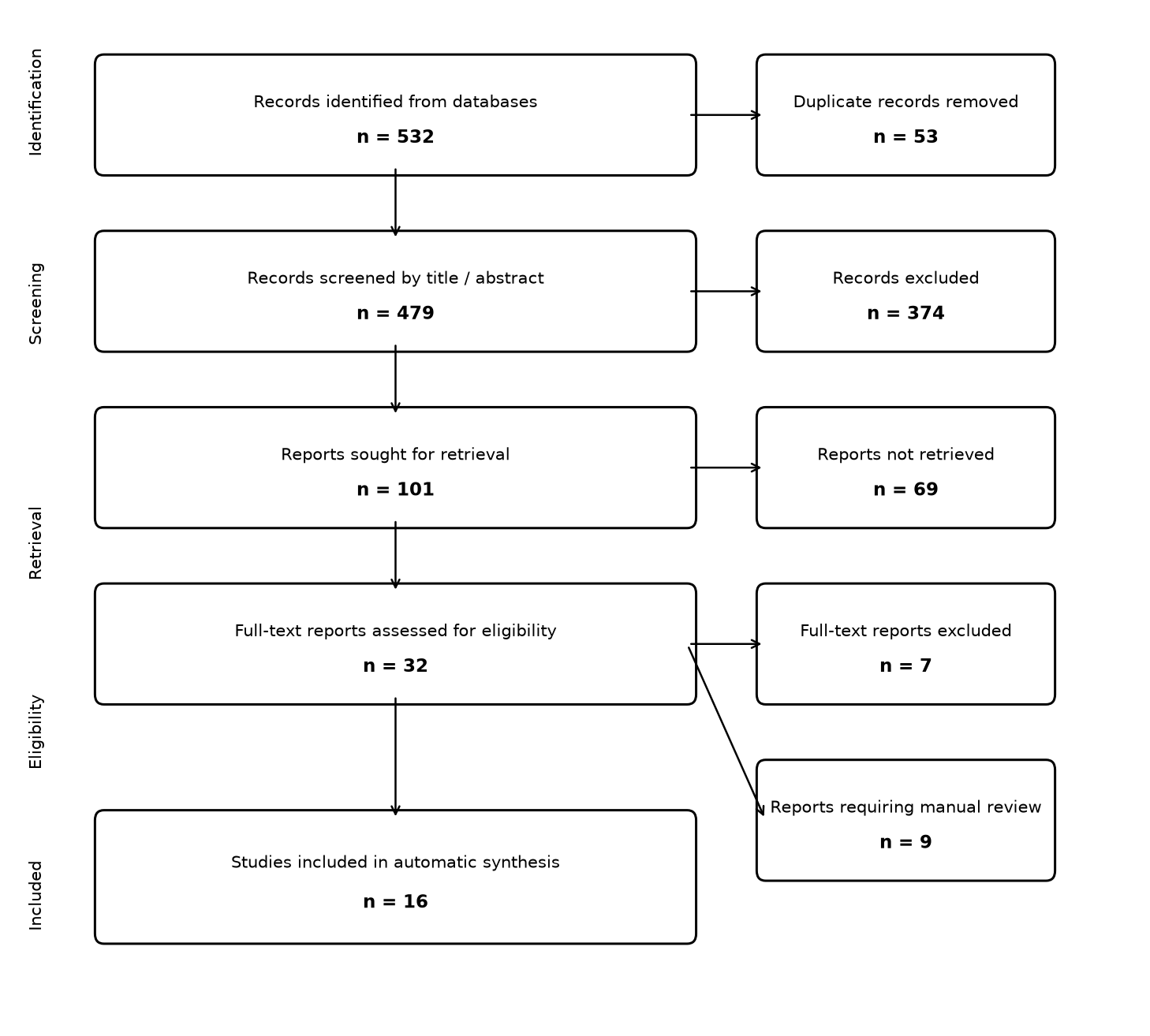
The search and supplementary literature identification process yielded 532 records. After duplicate removal, 479 records remained for initial screening. Potentially relevant publications were then examined in greater detail, and 32 reports were assessed at full text. Sixteen studies were ultimately retained as the core literature informing the narrative synthesis. Additional publications were used selectively to provide conceptual, methodological, and ethical context but were not treated as part of the core body of evidence.
The literature identification and selection process is summarised in Figure 1.
Literature selection
Publications were considered relevant when they substantively addressed fieldwork, methodological practice, or ethical decision-making in private or semi-private digital environments. The review considered empirical studies using digital ethnographic approaches, methodological analyses, ethical discussions, and review-level publications where these directly informed the research questions.
Studies focused exclusively on open digital platforms were not prioritised unless they provided an explicit comparison with closed or access-controlled environments. Publications concerned primarily with technical development, computational analysis, marketing, platform design, or content analysis without meaningful methodological or ethical reflection were excluded from the core synthesis. Non-peer-reviewed material was used only when it provided relevant contextual or professional guidance.
The purpose of this selection process was not to produce an exhaustive inventory of all publications on digital communities, but to assemble a focused body of literature capable of addressing how access, consent, researcher participation, data handling, and representation are negotiated in restricted digital environments.
Data extraction and analytical approach
Information was extracted on the platform or digital environment studied, access regime, geographic context, participant population, researcher role, entry and gatekeeping procedures, consent practices, ethical oversight, data capture methods, anonymisation, quotation practices, community expectations, and reported methodological or ethical challenges.
The analysis was organised around the conceptual framework described above. Particular attention was given to the relationship between access conditions and researcher behaviour, the role of administrators and moderators as gatekeepers, approaches to informed consent, decisions concerning disclosed or covert participation, and strategies used to protect participant identity while preserving contextual meaning.
Methodological and ethical quality was considered narratively rather than through a single numerical appraisal score. The analysis focused on the transparency with which studies described access negotiation, consent procedures, researcher positionality, confidentiality, data handling, and limitations. Because the literature included different study designs and forms of methodological evidence, findings were compared thematically rather than pooled quantitatively.
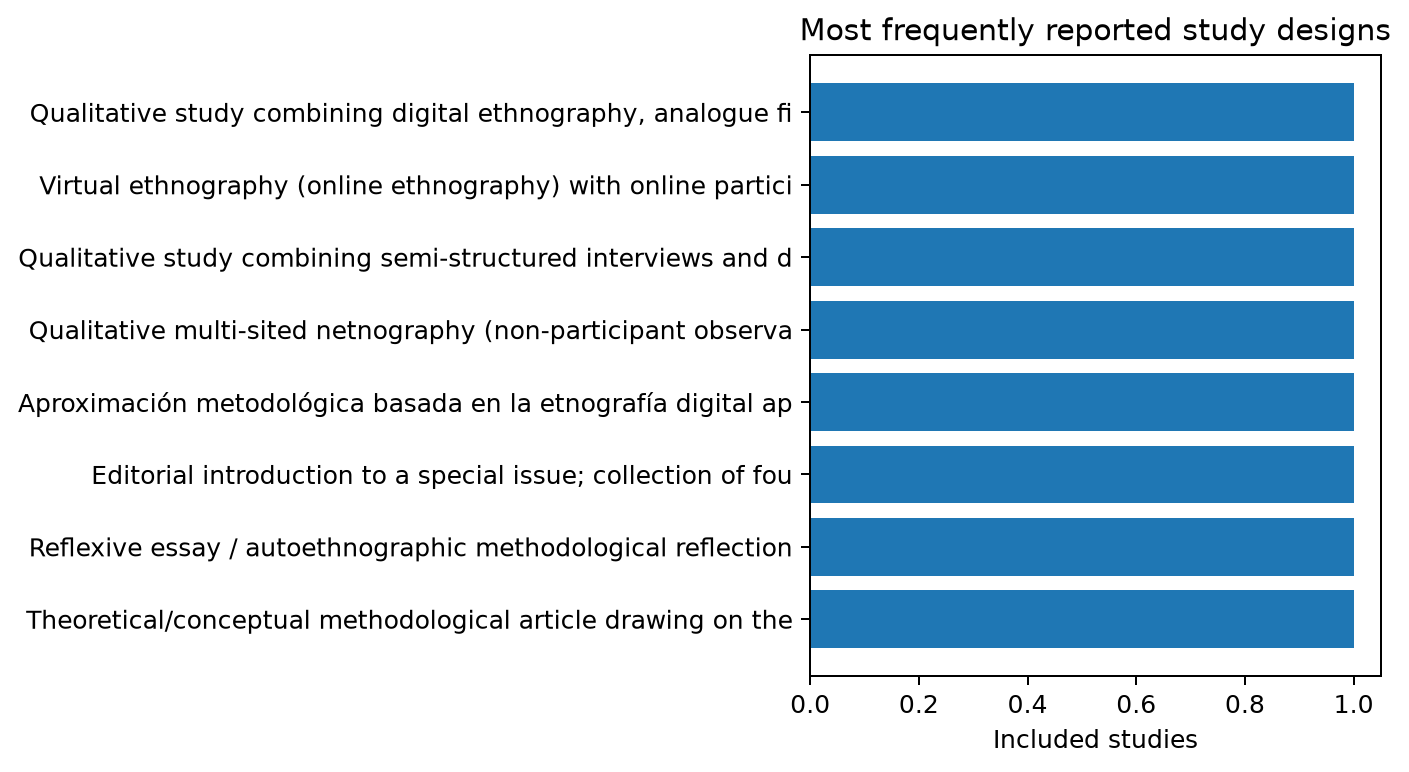
The distribution of the principal study designs represented in the core literature is shown in Figure 2.
RESULTS
Access regimes and negotiated entry
The included studies document a wide range of access regimes, from semi-private Facebook groups with formal admission procedures to private Discord servers, invitation-mediated Telegram channels, closed WhatsApp groups and encrypted or heavily moderated extremist spaces.
The most frequently reported arrangement was the closed or semi-private Facebook group, studied in contexts as different as HIV and AIDS sociability,(10) agoraphobia self-help,(11) and a women-only gaming community.(12)
Alongside these, researchers worked inside a private fandom Discord server pseudonymously named The Lagoon,(13) within WhatsApp groups for mosque-based activism (14) and domestic workers' organising,(15) and within Telegram channels and groups operated by Russophone queer networks and Italian assisted-reproduction communities.(5,16) One multi-site Danish study deliberately spanned private Facebook groups, Discord servers, Dropbox repositories, dedicated forums and mainstream platforms in a single design.(17)
Entry was consistently described as an active accomplishment rather than a passive gain. Where access was mediated by administrators, researchers navigated a sequence of procedural hurdles: in a closed Brazilian HIV and AIDS group, entry involved completing a form, obtaining approval from moderators, securing authorisation from administrators, and accepting a fixed invitation message that granted existing members an opportunity to opt out.(10)
A women-only gaming community set explicit membership criteria, admitting only women and rejecting profiles without photographs or created in the same week as the application, so that the researcher's own admittance depended on criteria developed for an entirely different purpose.(12)
Researchers studying QAnon communities selected field sites by messaging users directly and asking about platform preferences, and further constrained the sample by excluding groups with fewer than ten thousand members, illustrating how access decisions and sampling decisions become entangled.(9)
In a study of Brazilian migrants in Germany, the decision boundary was drawn the other way: secret, invitation-only Facebook groups were deliberately excluded from the dataset.(18)
The mechanics of observation were closely tied to platform affordances. Telegram functioned as a continuous, daily environment in which interaction approximated co-presence, whereas Facebook groups retained an intermittent, emotion-centred character and ForumFree operated as a consultable archive of thematic threads.(5)
A year-long virtual ethnography inside a mosque-affiliated WhatsApp group required the researchers to join the group as members and to observe conversations repeatedly across the study period, collecting 3,411 messages of which 624 posts were selected for analysis.(14) A study of domestic workers' organising combined participant observation in a union's Facebook assemblies with observation of an autonomous WhatsApp group of 50 workers over five months, a period that the authors identify as a constraint on what could be observed.(15) Where field sites were anonymous or extreme, long-term lurking was the dominant mode of presence: the QAnon study immersed itself in Gab, Telegram, 4chan, 8kun and MeWe,(9) while the Danish multi-site study spent six months observing social and digital media for approximately three hours per day, producing twenty pages of observation notes and roughly three hundred screenshots.(17)
A multi-sited netnography of Italian assisted-reproduction communities relied on covert non-participant observation across ForumFree, semi-private Facebook groups and Telegram, a design choice that the authors justify on the grounds that the environments were publicly accessible or formally accessible.(5)
The limits of access were also documented. Where researchers could not reach the underlying user base, samples were described as invariably non-probabilistic, so that the reach of any given piece of content across a user population could not be certified from the set of observed groups.(2)
Automated collection through scraping or browser-user interfaces was reported as technically feasible but fragile: it exposes researchers to the possibility of account deactivation under platform filters and yields sparse metadata, often limited to author, content and publication date.(2)
By contrast, one study constructed an explicitly identified research profile in the researcher's real name, joined 43 migrant Facebook groups and five groups of private interest through that profile, and used an automated browser-based collection method that granted access only to what any individual platform user could see.(18) In the included studies, access in bounded communities is best understood as a negotiated, platform-contingent and unevenly documented relationship, and the transparency with which it is reported varies widely across the included set.
Consent, privacy, and the negotiation of presence
Consent emerged as the least standardised and most contested dimension of the included literature. Several studies state plainly that obtaining informed consent from everyone was impossible. In large Facebook groups and on websites with unknown numbers of users, the Danish researchers concluded that it was often impossible to ask every member, including lurkers, for consent, and that established ethical principles seemed insufficient for the dilemmas encountered.(17)
The migrant Facebook study likewise judged informed consent from all users in a large-scale collection to be unattainable, arguing that consent procedures alone do little to protect participants and that researchers carry a shared responsibility for privacy and anonymity.(18) The volatility of WhatsApp discussion groups, with users constantly joining and leaving and groups created and dissolved abruptly, was identified as a structural obstacle to consent models premised on a stable participant population.(2)
Where consent was feasible, it was assembled from multiple sources and stabilised through institutional review. In the closed HIV and AIDS group, the study proceeded under approval from a research ethics committee under Brazilian Resolution No. 510/2016 and anonymised participants with fictitious names.(10)
The multi-sited netnography of Italian assisted-reproduction communities obtained formal approval from a university ethics committee in consultation with the institution's data protection officer, and included only environments that were publicly accessible or formally accessible.(5) The Danish multi-site study secured approval from the Danish Data Protection Agency and the Danish State Attorney, obtained informed consent from the school and interview participants, anonymised sites, users and names, and incorporated Association of Internet Researchers guidelines.(17)
In a private fandom Discord server, informed consent was obtained from a strong majority of members, and members who could not be accounted for were excluded from data gathering altogether, effectively making consent a precondition of inclusion in the dataset.(13) The QAnon study, working with a combination of participant observation under the researcher's real identity and semi-structured interviews conducted by video call, email and direct message, argued that researchers should make their presence known rather than lurk, on the grounds that this gives participants a right of refusal and improves immersion.(9)
Alongside institutional approval, the included studies describe a repertoire of protective practices. The Danish researchers reported systematic criminal activity encountered during fieldwork to the relevant authorities, and joined an authorisation and consent framework with continual reflexive balancing of potential harm against research value.(17)
The QAnon study recommended reporting direct threats to authorities while treating vague violent rhetoric as something the researcher has a responsibility to expose to wider audiences.(9) Anonymisation and the treatment of quotations were handled in markedly different ways. The migrant Facebook study did not treat posts as public, did not reproduce posts word for word, and presented the empirical paper to group managers for critique as a compliance measure that partially compensated for the impossibility of universal consent.(18)
The assisted-reproduction netnography combined anonymisation with fabrication-based rewording of collected material, while acknowledging that covert observation precluded access to tacit knowledge and ambivalences that participants might not express explicitly.(5) The QAnon study took the opposing view on rewriting, arguing that reconstructing or fabricating data introduces bias, privileges the researcher's position and may reproduce harmful ideas, and recommending instead that data be used in its original form with direct informed consent from the producer of the content.(9)
Other contributions used alphanumeric codes for interview excerpts and withheld identifying details beyond the names of public activists,(16) anonymised sites, users and names in a multi-site study of closed groups,(17) and deliberately declined to name the community or its members in a closed women's gaming group.(12)
At the level of guidance rather than fieldwork, a scoping review of ethical guidance for online health research charted three organisational documents and 24 research papers, finding that anonymity was the most frequently included principle, followed by perceptions of privacy, while consent and potential researcher harm were considered less often.(7)
The same review found no guidance specific to health researchers, and observed that ethical decision making was framed throughout in relation to the sensitivity of the research topic and the vulnerability of the population.(7) Conceptual work in the included set adds two further cautions: that anonymity evaporates as soon as data is published online, that the increasing authentication of online life makes almost anyone potentially unmaskable, and that researchers should be wary of developing fake personas to understand real people.(3)
Taken together, the consent literature in this review describes an unresolved movement away from the consent form as the single regulatory moment and towards plural, situated and processual arrangements, without converging on a shared procedural standard.(2)
Researcher positionality, participation, and data practices
Positionality was treated in the included studies as both an analytic resource and a source of distortion. The author of the Russophone queer media study described embeddedness in the studied communities since 2022 as providing access to intimate community knowledge while simultaneously requiring reflexivity about how that embeddedness shaped interpretation, and mitigated potential bias through extensive triangulation of interviews, observational data and media coverage.(16)
The assisted-reproduction netnography built continuous reflexivity on researcher positionality into the design, while acknowledging that the covert stance restricted the depth of meaning available.(5) Conceptual work in the included set pushes this further, arguing that generating meaningful data in digital ethnography necessitates reflexive decisions about participation and self-presentation that other forms of qualitative digital research do not require, and that qualitative analysis conducted through digital platforms is not by default digital ethnography, because content and discourse analysis neither permit nor require the extended researcher co-presence that ethnographic epistemology demands.(3)
Participation itself was described as a spectrum rather than a binary. One reflexive essay identifies three archetypal figures that digital ethnographers inhabit, the networked field-weaver, the eager participant-lurker and the expert fabricator, and argues, among other things, that the construction of the field as a network depends as much on cutting away outbranching connections as on forging them.(19)
The same essay observes that the recurring question of what the researcher actually did during fieldwork becomes awkward to answer in digital settings, and that the problematic status of participation is tied to platform design, with interaction ranging from non-use to intensive active presence.(19)
Empirical studies confirm this unevenness: in the private Discord server, a few members posted daily, some posted several times a week and many were largely inactive except for lurking, so that the relations constituting the community were messy and unevenly distributed, and some members reported feeling supported or inspired without being active in posting at all.(13) Similar patterns of silent readership and content fatigue were reported in the mosque-affiliated WhatsApp group, where informants also noted subtle frictions with offline mosque administrators over the orientation and intensity of da'wa programming.(14)
In the closed HIV and AIDS group, political disputes about the dismantling of public health provision disrupted the group's internal balance and generated conflict within sociability, making conflict management part of the fieldwork rather than an external irritant.(10)
Data practices varied from manual and archival to computational, and the included studies were notably candid about their costs. One virtual ethnography accessed the field on average twice a week for sessions of three to five hours, wrote field diaries after each incursion, copied posts and comments into structured text files, and coded them in NVivo with triangulation of data, theory and researchers across a long fieldwork period.(10)
The WhatsApp study recorded 3,411 messages and analysed 624 posts through inductive coding, combined with six in-depth informant interviews and source triangulation across three informant clusters.(14) The Russophone queer study combined systematic observation of more than fifty thematic Telegram channels with 35 interviews, critical discourse analysis and computational channel statistics, using triangulation to offset the limits of its computational sample.(16)
The migrant Facebook study paired topic modelling with qualitative content analysis and 30 interviews so that the qualitative components could validate the computational findings, and stored textual data in a file shared only between the two authors and accessed through a closed network.(18) The Danish multi-site study approached its material as a network constituting the field site, combining digital ethnography, analogue fieldwork at a vocational school and interviews.(17)
The limits of these practices were reported with equal clarity. The Danish researchers stated that the link between analogue and digital practices was uncertain and that they could not know whether the users encountered online were the same people encountered at the vocational school, an epistemological uncertainty that no amount of data volume resolves.(17)
The agoraphobia study found that tangential identities could not be identified systematically but depended on what participants chose to disclose in their own narratives, leaving some identities impossible to distinguish, and that the relative scarcity of such groups frustrated more ambitious sampling and cross-group comparison.(11)
The assisted-reproduction netnography noted that its textual focus excluded multimodal dimensions of digital expression such as images, videos, voice messages and memes, that its platform choice excluded other emerging spaces, and that observed communities reflected digitally literate, self-selected individuals, introducing a bias that excluded male partners, LGBTQ+ people, people with disabilities and those with limited digital access.(5)
Conceptual work in the included set extends this concern to populations whose circumstances make sustained digital presence difficult, including people who are incarcerated, elderly, unhoused or living in deep poverty, for whom digital forms of research are less possible or applicable.(3) Finally, the confessional literature gathered in an editorial introduction argues that digital ethnographic work is a messy, personal and highly contextual enterprise in which deadlocks, rejections and failures occur even for researchers with interactional proficiency and insider positioning.(4)
Across the included studies, three interpretive patterns were observed rather than tested propositions.
First, where greater barriers stood between a community and a potential audience, research relationships were more often constructed through gatekeepers, and study samples were more often shaped by admission criteria designed for other purposes.(9,12)
Second, intimacy and volatility tended to travel together: real-time messaging environments such as Telegram and WhatsApp approximated continuous co-presence and generated large volumes of interaction, but they also dissolved and reconstituted quickly, destabilising consent, sampling and retention.(2,5,15)
Third, in the more anonymous or hostile environments represented in the included studies, researchers more often reported tension between disclosure and access, and a greater reliance on lurking, screenshots and retrospective anonymisation rather than interactive consent.(9,17)
No included study provides a controlled comparison across access regimes; these patterns are therefore interpretive syntheses from a small, heterogeneous set rather than tested propositions. These patterns are summarised in Table 1, with the principal evidentiary gaps set out in Table 2.
Theme | Core studies contributing | Access regimes represented | Principal methodological issues | Principal ethical issues |
|---|---|---|---|---|
Access regimes and negotiated entry | Multiple core studies across closed Facebook groups, private Discord, Telegram channels and groups, WhatsApp groups, mixed multi-site designs and anonymous platforms | Gatekeeper-mediated membership; invitation-only and secret groups; semi-private groups; encrypted and anonymous spaces | Procedural entry via forms, moderators and administrators; sampling shaped by admission criteria; platform-contingent observation rhythms; non-probabilistic samples; scraping fragility | Whether entry should be disclosed; exclusion of non-consenting members from datasets; boundary between formally accessible and genuinely private settings |
Consent, privacy and the negotiation of presence | Multiple core studies including empirical fieldwork, conceptual analysis and one scoping review of guidance | Closed and semi-private groups; private servers; encrypted messaging; anonymous extremist platforms | Consent assembled from gatekeeper approval, community-level permission and opt-out mechanisms; consent impossible in large or volatile groups | Divergence between disclosure and covert observation; anonymisation versus data fabrication or rewording; post-publication searchability; uneven reporting |
Researcher positionality, participation and data practices | Multiple core studies, including reflexive and autoethnographic contributions | Private servers; WhatsApp and Telegram groups; closed Facebook groups; multi-site digital and analogue designs | Lurking-to-participation spectrum; field diaries, structured logs and screenshots; qualitative validation of computational findings; triangulation and reflexivity as quality strategies | Insider entanglement; epistemic costs of covert observation; textual bias excluding multimodal expression; exclusion of non-digitally present populations |
Evidence gap | Basis in the included studies | Implication for future fieldwork |
|---|---|---|
No agreed procedural standard for consent in large, fragmented or volatile groups | Universal consent reported as unattainable in large groups and complicated by constant membership change in messaging groups | Consent should be reported as a process with explicit justification of what was and was not attainable |
Little empirical guidance specific to end-to-end encrypted fieldwork | Encryption is analysed conceptually as environmental opacity, but no included study reports a full ethnographic protocol conducted inside an encrypted space | Methodological work on encryption-specific access, retention and reporting is needed |
Uneven reporting of access negotiation | Entry procedures are described in detail in some studies and barely mentioned in others | Access negotiation should be a mandatory element of ethnographic reporting in bounded communities |
Few within-study comparisons across access regimes | Most studies occupy a single regime, with occasional multi-site designs spanning public and private settings | Comparative designs could clarify how affordances, rather than platforms alone, shape ethics and method |
Dominance of textual data | One study explicitly notes that its textual focus excluded images, video, voice messages and memes | Multimodal capture and analysis protocols are required for messaging-based communities |
Limited treatment of researcher harm and emotional labour | Addressed mainly in confessional and conceptual contributions rather than systematically in empirical studies | Researcher welfare should be treated as a design parameter with institutional support |
DISCUSSION
Among the included studies, a central finding, that access in bounded digital communities is negotiated rather than granted, converges strongly with supporting work that has begun to formalise the ethics of entry.
A methodological contribution developed from a project on hateful youth sociality proposes an ethical decision flowchart for researching small, hard-to-reach online groups, arguing for an approach that is simultaneously situated and structured, with step-by-step assessment applied to disclosure, intrusiveness, harm and the public or private character of a space.(1)
That argument aligns with the included finding that the public–private distinction is better treated as a spectrum determined by access barriers, and it supplies the procedural scaffolding that most of the included fieldwork studies lack.(9)
A staged, multi-platform online ethnographic protocol developed in the Hong Kong drug-related field similarly sequences low-intrusion public mapping before ethically managed engagement in semi-private spaces and only then direct interaction, verification and consent, treating hashtags, platform recommendations and symbolic codes as field signs rather than merely as recruitment devices.(20)
Both contributions address a gap this review identifies empirically: access negotiation is conducted thoughtfully in practice but is rarely reported with enough structure to be reusable.
The first is a methodological assessment tool rather than an empirical study of private communities, and the second is a protocol article; they are therefore used here as comparative methodological resources rather than as direct evidence about access-controlled fieldwork.
On consent and the negotiation of presence, the supporting literature sharpens rather than settles the tensions found in the core set.
Research within a closed forum for people experiencing suicidal thoughts concluded that the conventional health research framework based on confidentiality, anonymity, informed consent and non-maleficence must be adjusted for a context in which technologies and regulations are constantly changing, and identified access, evolving online environments, consent and anonymity as the central dilemmas.(8)
A systematic review of 62 LGBTQ-focused online ethnographic studies proposes a human-centred framework organised around informed consent, respect and trust, privacy and confidentiality, and data security and reuse, and identifies methodological gaps across sampling, data collection, researcher positionality and rigour.(21)
A trauma-informed digital ethnography of a harm-reduction recovery group across Zoom, Discord and Facebook goes further, treating trauma-informed principles as a methodological design that shapes decisions about access, visibility, consent, participation and analysis across platforms with distinct affordances, and arguing that this enhances rather than merely constrains methodological validity.(22)
These supporting sources vary in comparability: the closed-forum study is a direct comparator because it concerns a bounded setting; the LGBTQ-focused review spans public, semi-public and private online contexts and is therefore an indirect comparator for access-controlled fieldwork; the trauma-informed study examines platforms that can host bounded communities and is a closer comparator, although it does not focus on invitation-only or encrypted spaces.
These positions are consistent with the included finding that consent in bounded communities is assembled from multiple sources and stabilised by institutional review, and they extend it by linking consent design to the vulnerability of the population rather than to the technical characteristics of the platform alone.(7)
The included studies' findings on positionality and data practices resonate with work conducted in comparable but non-overlapping field sites. An autoethnographic case study of a closed Facebook grief support group for bereaved parents, written from the position of a researcher who is also a member, reports that hopes and expectations within the community, questions of anonymity and informed consent, and the emotional demands of sensitive research together constitute a complex balancing act, and argues for ethical pluralism, cross-cultural awareness and case-sensitive flexibility.(23)
Research in an online LGBT+ subtitling group identifies access, informed consent, data management and relationship management as the four ethical issues requiring the greatest effort, concluding that these issues are not new but demand nuanced reading and creative application of existing guidelines.(6)
A discourse-oriented digital ethnography of a WhatsApp group formed with young male forced migrants shows how the researcher's presence becomes entangled in participants' self-representation and strategic alignment, making identity work in digital research co-constructed rather than observed from outside.(24)
Two case studies of VRChat and WhatsApp propose emergent relationality as an analytic for the mutual shaping of ethnographers, platforms and publics, and for understanding how positionality and hybrid media environments condition what can be accessed, articulated and made public.(25)
These accounts corroborate the included studies' treatment of positionality as an analytic resource with distorting potential, and they reinforce the review's conclusion that reflexive disclosure about the researcher's own entanglement is currently the main safeguard available. They are largely direct or close comparators, although the VRChat case is drawn from a public virtual world as well as WhatsApp.
Platform-specific constraints described in the supporting literature also parallel the review's evidence. Private chat groups of food delivery workers studied across five countries through participant observation, 68 interviews and digital ethnography were found to afford communities of practice, resistance and mutualism, affordances that participants enacted rather than received, demonstrating how much socially significant action occurs in spaces that researchers can only enter as members.(26)
A digital ethnography of a WhatsApp group in Nigeria's EndSARS movement argues that the platform's semi-public character pushed activism towards one-to-one practices and produced a distinct category of private activists, an observation that captures precisely the volatility and intimacy the review identifies in messaging environments.(27) A netnography of WhatsApp-based environmental activism reports rapid information dissemination alongside information overload, limited responsiveness, constraints on in-depth discussion and technical barriers such as unstable connectivity.(28)
Studies of Telegram communities of people in social withdrawal report very large message corpora, around 90,000 messages in one non-participant netnography and 91,000 messages comprising some 411,000 words in another, which illustrates the data-management burden of messaging platforms and reinforces the included studies' cautions about capture, retention and multimodal exclusion.(29,30)
Methodological reflection on WeChat in research with Chinese outbound tourists likewise emphasises rapport-building, fragmented-time data collection and researcher wellbeing, while insisting on reflection about the embedded culture of the platform.(31) Several supporting studies in this group are indirect comparators because they concern public or semi-public activism or platform use rather than bounded private communities.
The EndSARS WhatsApp study examines a semi-public activist group, the environmental activism netnography concerns a mobilisation group whose access regime is not framed as invitation-only, and the WeChat tourism study addresses a consumer-facing platform rather than a private community. Their convergence with the included findings is therefore contextual and indicative rather than a direct corroboration.
The divergences are as informative as the convergences. The included set is heavily pragmatic: researchers negotiate access, assemble consent, anonymise, and proceed. The supporting literature is more prescriptive, offering decision tools, staged protocols, trauma-informed frameworks and human-centred designs.(1,20-22)
At the level of guidance, the review's included scoping review found that anonymity was the most frequently included principle across existing documents, while consent and researcher harm received less attention, and that the most cited guidance came from general methodological bodies rather than discipline-specific ones.(7)
This creates a double mismatch: guidance emphasises anonymity, whereas fieldwork in bounded communities is dominated by access and consent dilemmas; and guidance is generic, whereas the practical difficulties reported in the evidence are strongly platform-specific.
The review's included conceptual work on disclosure, data reconstruction and searchability, together with the supporting literature on trauma-informed and human-centred designs, suggests that these mismatches are increasingly recognised but not yet resolved.(3,9,22)
A further constraint qualifies all comparative claims. Sixty-nine of the 101 reports sought for retrieval could not be obtained, and nine reports remained uncertain after full-text assessment; only 16 records entered the core evidence base.
This attrition could have removed eligible studies, and because availability may correlate with platform, language, institutional access and indexing, the comparative claims made here across access regimes are provisional and may reflect availability bias. The synthesis therefore does not generalise from the included set to the wider literature; it reports patterns observed within a small, heterogeneous and geographically concentrated evidence base. No included study provides a controlled comparison across access regimes.
For research ethics governance, the implications are threefold. First, since gatekeepers function as de facto ethics intermediaries in access-controlled communities, their role in shaping who is included and excluded from datasets should be documented rather than treated as an administrative detail.(10,13)
Second, because consent in these settings is assembled from multiple, partial sources, ethics review should evaluate the adequacy of the overall arrangement rather than the presence or absence of a consent form, a position consistent with the argument that research ethics should not be reduced to a checklist.(2)
Third, review bodies themselves may need internet-specific expertise: the recommendation that institutional review boards require training in internet research and ask questions adapted to the complexities of digital space is directly supported by the variability of practice documented in this review.(9)
At the same time, the review cautions against over-reading its own prescriptive potential, since the included evidence base is small, heterogeneous and concentrated in a limited number of national and linguistic contexts.
Practical decision framework for responsible netnographic fieldwork
The framework below is an interpretive synthesis drawing on the core evidence and on the supporting literature discussed above; it is not validated by this systematic review. Its overall logic is informed by supporting methodological work on situated and structured ethical assessment and staged multi-platform protocols, but the specific steps below are grounded in core evidence unless otherwise noted.
It synthesises practices that the included studies report as workable and marks those that remain contested. It is organised as a sequence of decisions whose intensity should be calibrated to the access regime rather than applied uniformly.
Its first step is the pre-entry mapping of the access regime: identifying the specific barriers that stand between content and audience, whether platform-level account requirements, group-level admission procedures, invitation chains or encryption, and locating the setting on the access-barrier spectrum rather than classifying it as simply public or private.(9)
The second step is the negotiation and documentation of entry. Because admission is frequently mediated by administrators and moderators who set their own criteria, researchers should record the terms on which access was granted, the criteria that shaped the resulting sample, and the extent to which offline authorities were involved, since these conditions directly determine which voices appear in the data.(10,12,14)
The third step is the decision about presence. Disclosed participation offers participants a right of refusal and supports immersion, while covert observation may be defensible when disclosure would close the field or alter behaviour, but it carries acknowledged epistemic costs and should be justified in writing rather than assumed.(2,5,9) Researchers should also assume that anonymity is provisional, since identifiable details can be recovered after publication.(3)
The fourth step is consent design. Where a stable membership permits it, individual consent can be obtained and non-consenting members excluded from the dataset; where it does not, consent should be assembled from community-level or gatekeeper authorisation, clearly signposted invitations with an opt-out, and transparency towards group managers, with the shortfall explicitly reported.(10,13,18)
The fifth step concerns data capture. Capture should be minimal and purposeful, structured into logs that separate observation notes from verbatim material, and sensitive to what the chosen method cannot see, including multimodal content and interactions occurring outside the observed threads; automated scraping should be weighed against its technical fragility and its exposure of researchers to account-level sanctions.(2,5,10,14)
The sixth step governs quotation and anonymisation. The evidence supports non-reproduction of verbatim text where searchable strings could identify a community, pseudonymisation and alphanumeric coding of excerpts, and withholding of community names and member characteristics; it also records a genuine disagreement about rewording, with some researchers using fabrication-based rewording and others warning that reconstruction introduces bias and may reproduce harmful meaning.(5,9,12,16,18) Where rewording is used, the transformation should be documented so that readers can judge the distance between what was said and what is reported.
The seventh step addresses exit, aftercare and documentation: serious harm encountered in the field may need to be reported to authorities; relationships with communities and gatekeepers typically outlast the project; and reporting should state how access was negotiated, how consent was assembled, how many members were excluded or unreachable, and what the researcher's role in the field actually was.(7,9,17,18)
CONCLUSIONS
This review shows that research in private and semi-private digital communities is shaped by the way access, consent, researcher visibility, data capture, and representation are negotiated within each setting. Across the included studies, access emerged as a social and methodological process rather than a simple technical condition, with administrators, moderators, and invitation structures influencing who and what becomes available for study. Consent was similarly context-dependent and often relied on combinations of gatekeeper approval, community-level permission, participant notification, opt-out procedures, and institutional oversight rather than on a single universal model.
The findings also indicate that research quality depends largely on transparent and reflexive methodological practice. Clear reporting of access negotiation, sustained engagement, triangulation, structured data capture, researcher positionality, and careful decisions about quotation and anonymisation are essential for evaluating the credibility and ethical adequacy of studies conducted in restricted digital environments.
Important gaps remain. Empirical guidance for end-to-end encrypted environments is limited, comparisons across different access regimes are uncommon, multimodal data are often underused, and researcher wellbeing receives relatively little methodological attention. These limitations restrict the extent to which current practices can be generalised across platforms and communities.
The decision framework proposed in this review offers a structured basis for considering access, consent, disclosure, data capture, and representation in bounded digital settings. It should be regarded as a practical synthesis rather than a validated instrument. Further research is needed to test and refine these principles across diverse platforms, populations, and forms of digital participation.
References
- 1 Demant J, Moretti A. Intrusiveness and the Public-private Divide in Netnography: A Situated, Structured Approach for Ethical Research in the Context of Closed, Group-based, or Hidden Social Media Behaviour. International Journal of Qualitative Methods. 2024;23. doi: 10.1177/16094069241257937..
- 2 Chagas V, Da-Costa G. WhatsApp and transparency: an analysis on the effects of digital platforms’ opacity in political communication research agendas in Brazil. El Profesional de la información. 2023. doi: 10.3145/epi.2023.mar.23..
- 3 Forberg P, Schilt K. What is ethnographic about digital ethnography? A sociological perspective. Frontiers in Sociology. 2023;8. doi: 10.3389/fsoc.2023.1156776..
- 4 Abidin C, De Seta G. Private messages from the field: Confessions on digital ethnography and its discomforts. Journal of Digital Social Research. 2020;2(1):1-19. doi: 10.33621/jdsr.v2i1.35..
- 5 Decataldo A, Andreoni E. Being (a) patient—navigating desire through online communities in assisted reproductive technology. Frontiers in Sociology. 2026;10. doi: 10.3389/fsoc.2025.1683860..
- 6 Huang B, Cadwell P, Sasamoto R. Challenging ethical issues of online ethnography: reflections from researching in an online translator community. The Translator. 2023;29(2):157-174. doi: 10.1080/13556509.2023.2188700..
- 7 Harris J, Germain J, McCoy E, Schofield R. Ethical guidance for conducting health research with online communities: A scoping review of existing guidance. PLOS ONE. 2024;19(5):e0302924. doi: 10.1371/journal.pone.0302924..
- 8 Sørensen JB, Thomassen JL, Meyrowitsch DW, Kingod NR, Konradsen F, Ploug T. Ethical dilemmas in conducting qualitative, public health research on social media: using a study on Facebook as a case. Scandinavian Journal of Public Health. 2024;52(8):1013-1018. doi: 10.1177/14034948231219725..
- 9 Cera M. Digital ethnography: ethics through the case of QAnon. Frontiers in Sociology. 2023;8. doi: 10.3389/fsoc.2023.1119531..
- 10 Melo LPD, Cortez LCDA, Santos RDP. Is the chronicity of HIV/AIDS fragile? Biomedicine, politics and sociability in an online social network. Revista Latino-Americana de Enfermagem. 2020;28. doi: 10.1590/1518-8345.4006.3298..
- 11 Jover Leal A, Grau Muñoz A. Oportunidades metodológicas de la etnografía digital en el estudio de la salud y el malestar. El caso de las comunidades virtuales de atención de personas agorafóbicas. Empiria. Revista de metodología de ciencias sociales. 2026. doi: 10.5944/empiria.66.2026.47372..
- 12 Moura C, Messias J. Women in control: a study on body and gender from a brazilian gamer community. AoIR Selected Papers of Internet Research. 2026. doi: 10.5210/spir.v2024i0.15259..
- 13 Margheim NA. Beyond hateware: affect, networks, and collaborative ecosystems in a fandom discord server. AoIR Selected Papers of Internet Research. 2026. doi: 10.5210/spir.v2024i0.15238..
- 14 Abdurrahman MS, Syifaa Sutarjo MA, Rohimakumulloh MAA, Salma AN. Reconfiguring Mosque-Based Civic Networks: Religious Messaging, Emotional Appeal, and Social Intimacy in Hijrah Movement of ‘Kopdar Masjid BDG Raya’ WhatsApp Group. Ilmu Dakwah: Academic Journal for Homiletic Studies. 2025;19(2):333-356. doi: 10.15575/idajhs.v19i2.39553..
- 15 Casas V. Trabajadoras domésticas remuneradas del Área Metropolitana de Buenos Aires: experiencias de organización y reconocimiento mediadas por plataformas sociodigitales. Revista de Estudios Sociales. 2024. doi: 10.7440/res89.2024.09..
- 16 Tarasenko E. More than Digital Escapism? The Transformation of Russophone Queer Communities and Media under Censorship and War (2019–2025). Slovo. 2026;37(1). doi: 10.14324/111.444.0954-6839.2186..
- 17 Rasmussen PKB, Søndergaard DM. Sexualized, platformed female bodies in male online practices. MedieKultur: Journal of media and communication research. 2022;37(71):073-097. doi: 10.7146/mediekultur.v37i71.125300..
- 18 Dedecek Gertz H. Collecting migrants' Facebook posts: Accounting for ethical measures in a text-as-data approach. Frontiers in Sociology. 2023;7. doi: 10.3389/fsoc.2022.932908..
- 19 De Seta G. Three lies of digital ethnography. Journal of Digital Social Research. 2020;2(1):77-97. doi: 10.33621/jdsr.v2i1.24..
- 20 Chan GH, Lee GKW, Lo TW. Online Ethnography: A Research Methodology for Reaching Hard-to-Reach Groups in the Contemporary Era. International Journal of Qualitative Methods. 2026;25. doi: 10.1177/16094069261473438..
- 21 Wang S, Wang NC, Lee WC. Methodological and Ethical Considerations in LGBTQ-Focused Online Ethnographic Research: A Systematic Review and a Human-Centered Framework. International Journal of Qualitative Methods. 2026;25. doi: 10.1177/16094069251411167..
- 22 Diaz MA, Lopez K. Trauma-Informed Digital Ethnography: Insights from An Ethnography on the Satanic Temple Sober Faction. Journal of Contemporary Ethnography. 2026. doi: 10.1177/08912416261476440..
- 23 Hård af Segerstad Y. On the complexities of studying sensitive communities online as a researcher–participant. Journal of Information, Communication and Ethics in Society. 2021;19(3):409-423. doi: 10.1108/jices-01-2021-0011..
- 24 Poppi FIM. Liminalis voces: Migrant identity construction and positionality in a Balkan Route digital messaging research group. Ethnicities. 2025;25(6):956-976. doi: 10.1177/14687968251362253..
- 25 Mwesigwa D, DeVeaux C, Vaghela P. To Tango or to Disentangle? Making Ethnography Public in the Digital Age CSCW040. Proceedings of the ACM on Human-Computer Interaction. 2026;10(2):1-23. doi: 10.1145/3788076..
- 26 Bonini T, Treré E, Yu Z, Singh S, Cargnelutti D, López-Ferrández FJ. Cooperative affordances: How instant messaging apps afford learning, resistance and solidarity among food delivery workers. Convergence: The International Journal of Research into New Media Technologies. 2023;30(1):554-571. doi: 10.1177/13548565231153505..
- 27 Udenze S. “It’s a way to rally my inner circles and get them involved”: The Dynamics of Private Activism on WhatsApp in Nigeria. Journal of Communication Inquiry. 2025;50(4):498-516. doi: 10.1177/01968599251329299..
- 28 Shahreza M, Basit A. WhatsApp and green activism: a netnography of mobilisation and engagement. Jurnal Studi Komunikasi (Indonesian Journal of Communications Studies). 2025;9(2):359-370. doi: 10.25139/jsk.v9i2.10253..
- 29 Esposito V, Addeo F. Hikikomori 2.0: A Mixed Method Investigation to Reconceptualization the Social Withdrawal in the Digital Age. Societies. 2025;15(9):260. doi: 10.3390/soc15090260..
- 30 ESPOSITO V. A Complex Interplay: An Exploratory Netnographic Analysis of Hikikomori Socialization Strategies. Revista de Cercetare si Interventie Sociala. 2025. doi: 10.33788/rcis.88.4..
- 31 Ma Y, Cai W. Social media in ethnographic research: critical reflections on using WeChat in researching Chinese outbound tourists. Current Issues in Tourism. 2023;26(20):3275-3287. doi: 10.1080/13683500.2023.2175203..
Declarations
Funding
No financing.
Conflict of interest
None.
Authorship contributions
Drafting – original draft: Yolier Izquierdo Cuellar.
Writing–review and editing: Yolier Izquierdo Cuellar.