
Abstract
TikTok generated a significant impact in the way people communicate today, mainly in the teen public. In terms of users reached and downloads made, the importance of Tik Tok in the world of social networks is remarkable and it has positioned itself as an ideal communication tool for sharing, interacting and creating various types of content, even in the field of policy. This work highlights both the relevance of this platform and its key role in the development of electoral campaigns and institutional communication in this field. Some accounts used by politicians and government institutions in Argentina between October 2022 and April 2023 were selected to describe and analyze the tactics used in this regard. From the analysis obtained, the proposal arises to take advantage of the use of TikTok to reach the young public, demonstrating throughout the investigation, how political communication -in its form and content- get benefits from the rules of this social network, where it prevails interaction with users.
Keywords
Tiktok, Political Communications, Communications Strategies, Social Media
INTRODUCTION
The following work is a scientific manuscript proposed within the Public and Institutional Relations degree program at Universidad Siglo 21 on a current and strategic topic: “TikTok, a digital communication tool for election campaigns.” This study proposes exploring a new social network as a digital communication strategy to position political figures and institutions among young audiences in Argentina in a creative and approachable way.
In recent years, society has experienced digital transformation and rapid growth in Internet users. With a single click, we have been able to learn about realities in other parts of the world, understand issues that concern us, or simply connect with other people.
In this new era of communication, social networks play a leading role in people's daily lives. In his book The Culture of Connectivity, José Van Dijck cites Kaplan and Haenlein, who in 2010 defined social media as “a group of Internet-based applications that build on the ideological and technological foundations of Web 2.0 and allow the creation and exchange of user-generated content.”(1)
Today, from the moment people wake up until they go to bed, they almost unconsciously browse their mobile devices in an effort to satisfy the need to stay informed. Social networks enable real-time dialogue and often exceed the communication flow of traditional media, although they are also prone to substantial misinformation, generating rumors or inaccurate information for users.
According to the latest digital report from social media consultancy We Are Social, in collaboration with Meltwager, which highlights global trends related to social media, the Internet, mobile devices, and e-commerce, people spend more than 2 and a half hours per day on social networks, 40 minutes more than they spend watching television. In Argentina, during the most recent year analyzed, TikTok was the most downloaded application and had 1.5 million users in the country, who spent 11.4 hours per month browsing videos on the application.(2)
Numerous studies have addressed the presence of political leaders on social networks. “Web 2.0 has changed the way politics is conducted,”(3) placing the user in a leading role and taking the user into account throughout the planning process for message development.
Web 2.0 is a social networking platform that involves different fields of knowledge. It encourages citizen participation, and civil society no longer only receives or searches for information but also becomes a producer and disseminator of content.(4) In the political sphere, public figures and organizations use these new possibilities to interact with citizens within the digital sphere, evolving from a unidirectional format to a bidirectional format.
Regarding political communication through traditional media such as television and radio, the receiver ultimately becomes vulnerable and unable to react to the stimuli these media produce, while progressively losing interest. Conversely, newer political campaigns have increasingly been based on a direct flow of information with voters.
“These followers are not guided by public policies or leaders' arguments, but are mobilized by feelings associated with the personal, non-ideological attributes of public figures. Thus, politicians make strategic use of their families, bodies, tastes, and consumption habits. This is the shift from public opinion to public emotion.”(5)
In this new scenario, where social networks are capable of influencing and persuading audiences, political leaders and public institutions have chosen to adapt their discourse to the formats specific to each social network. These platforms are powerful communication tools that, when used effectively, can add significant value to a political campaign in terms of image and reach.
In an electoral context, political communication must be planned so that candidates can express their proposals appropriately. However, defining political communication is complex because it is a multidisciplinary field of study.
Some concepts related to the topic are presented below:
This discipline began “at the origins of civilization, when the social life of communities depended on leaders and thinkers with strong skills in rhetoric, eloquence, and other abilities for communicating their ideas and purposes.”(6)
Yanes (7) understands it as “the exchange of messages among the components of the political system, that is, among all members of a society. If human beings are political by nature, political communication concerns everyone.”
According to Canel (8), political communication is “the field of study comprising the activity of certain people and institutions (politicians, communicators, journalists, and citizens) in which information, ideas, and attitudes concerning public affairs are exchanged. In other words, Political Communication is the exchange of signs, signals, or symbols of any kind between natural or social persons through which political decision-making is articulated, as well as the implementation of those decisions in the community.”
For his part, Castells (9) notes that political communication is not limited to election campaigns; it is a constant and fundamental dimension practiced by governments, leaders, and non-governmental actors alike.
With regard to the TikTok phenomenon, the political sector had to innovate in its formats in order to reach new audiences. This platform grew exponentially during the COVID-19 pandemic, an event that forced people to stay at home and spend more time consuming digital products, creating a turning point in all areas of society, especially in the way the political sphere communicates.
Research on the use of TikTok in political communication is still ongoing. Sánchez Castillo (10) analyzes the use of this platform by major European leaders and concludes that it should be included in digital communication strategies. The author also argues that TikTok requires a particular staging and personal exposure, something that many people are unwilling to negotiate.
A major case in Latin America was Ecuador's 2021 election campaign, in which Xavier Hervas, a candidate for Izquierda Democrática who was almost unknown to the public, achieved a strong performance and placed fourth among prominent political opponents by using TikTok in his political communication strategy. He became known as “the TikToker candidate,” positioning himself among young voters aged 16 to 30 who rejected politics.(11)
Xavier's advisers knew that he needed to be presented as someone who broke with the paradigms of politics in Ecuador, so they used TikTok to bring him closer to young people and make him appear empathetic to their concerns. The media also contributed to this process because they considered the candidate's way of communicating through trends and dances novel.
In Argentina, Horacio Rodríguez Larreta, then Head of Government of the Autonomous City of Buenos Aires, joined TikTok in October 2020, becoming one of the first politicians to establish a presence on the social network. His account generated considerable attention because he addressed young people, generating conversation and coverage in the country's leading media outlets.
So, what is TikTok?
TikTok is one of the world's most popular applications because of its ability to allow users to create and share short videos with effects, filters, and background music. Its success is largely due to its capacity to create viral trends and attract a young and diverse audience, primarily Generation Z, understood here as people born between 1995 and 2000.
The origins of the platform date back to 2016, when the Chinese company ByteDance launched an application called Douyin in China. Users, mostly young people, created and shared videos up to 15 seconds long featuring special effects, music, and other editing elements.
Within a short time, Douyin became a highly popular application in China, and the company identified an opportunity for international expansion by launching TikTok in 2017. The platform became popular worldwide, especially among young people, because it used creative, entertaining, and easy-to-consume content.(12)
This phenomenon has been accompanied by the evolution of a society centered on images and on the idea that everything must first appeal visually. To such an extent, the platform has been surpassing the major search engine Google for traditional searches despite high levels of misinformation.
One reason young people prefer TikTok to other search engines is that the platform uses a recommendation algorithm tailored to each user's particular interests. In addition, because videos last between 15 and 60 seconds, the platform makes it possible to maintain attention across many types of content and on a home page that continuously displays videos related to users' tastes and preferences. In this way, young people can discover videos they find interesting and entertaining without actively searching for them.(13) TikTok's algorithm also encourages video viewing through likes, comments, and shares, making it a powerful virality tool for content creators. According to McLachlan (13), the use of hashtags on this platform is important for positioning content within specific topics or tags and achieving greater reach.
Some governments around the world have considered banning TikTok, mainly because of concerns about national security and data privacy. Because the platform is owned by the Chinese company ByteDance mentioned above, there have been concerns that it collects users' personal data and could be used for espionage or cyberattacks. For these reasons, countries such as India and Pakistan have prohibited the use of TikTok in their territories. In the United States, the application had already been restricted for several months on government devices and at many universities.
The Chinese platform reinvented political communication, whose main purpose is to strategically project the image of a politically connected person or institution through persuasive messages and narratives for a diverse audience.
This innovation makes it possible to connect government leaders with sectors of the population that cannot be reached through traditional media.
Political communication must undoubtedly adapt to new times and learn to communicate on each platform while taking its particular characteristics into account, attempting not to merely redistribute generic content but to create new content adapted to the preferences of the same audience and to the platform's code.
Argentine politicians who use TikTok:
In Argentina, some politicians and government institutions have chosen to use this social network to inform the community about their activities and daily tasks, with the main objective of remaining close to their voters and potential voters.
Below are some of the most relevant and highest-reach profiles of Argentine politicians and government institutions on the platform (Table 1).
User | Number of Followers on TikTok |
|---|---|
Javier MileiJavier Milei | 1 M |
Horacio Rodríguez LarretaHoracio Rodríguez Larreta | 309,5 K |
Policía del ChacoPolicía del Chaco | 388 K |
Gobierno de la Ciudad de Buenos AiresGovernment of the City of Buenos Aires | 345,9 K |
Patricia BullrichPatricia Bullrich | 182,4 K |
Trenes ArgentinosTrenes Argentinos | 87,1 K |
Municipalidad de CórdobaMunicipality of Córdoba | 34,3 K |
Provincia de Buenos AiresProvince of Buenos Aires | 26,4 K |
Axel KicillofAxel Kicillof | 16,8 K |
Emmanuel FerrarioEmmanuel Ferrario | 11,3 K |
How do digital communication strategies implemented via TikTok by politicians and government institutions in Argentina between October 2022 and April 2023 influence users?
General objective:
To analyze the forms and impact of digital communication strategies used by Argentine politicians and government institutions on TikTok between October 2022 and April 2023 among young people aged 15 to 35 years.
Specific objectives:
To describe the impact generated by digital communication campaigns adopted by politicians and government institutions on TikTok.
To identify the formats and types of content used by politicians and government institutions on TikTok.
To evaluate the effectiveness of TikTok use as a strategy by politicians and government institutions.
METHODS
Design
This research used a mixed-methods (quantitative-qualitative) descriptive approach, selecting 10 TikTok profiles belonging to Argentine politicians and government institutions. Their posts and content between October 2022 and April 2023 were analyzed in order to understand the digital strategy of these profiles and why they reach young people.
The characteristics analyzed were: number of followers, number of posts, total views, topics, message tone, and digital resources used.
In addition, the impact generated by politicians who use TikTok was investigated using a sample of 120 people aged 15 to 35 years in order to understand the level of acceptance or rejection of their use of the platform.
Participants
10 TikTok profiles belonging to Argentine politicians and government institutions that use the platform as a communication medium. Selection was non-probabilistic and purposive.
120 people participated through an online survey using non-probability purposive sampling.
Instruments
Analysis grid.
Digital resources from the TikTok platform (TikTok profiles).
Questionnaire.
Data analysis
Data analysis was performed using a mixed approach:
Use of statistical and numerical measurement data. Quantitative type.
Analysis and description of characteristics of posts and content. Qualitative type.
Table 2. Methodological Data Sheet
Methodological Data Sheet | |
|---|---|
Scope | Descriptive. |
Approach | Mixed. |
Technique | Content analysis. Survey. |
Instrument | Digital resources (TikTok profiles). Structured questionnaire. |
Population | TikTok profiles of Argentine politicians and government institutions. TikTok users |
Sample selection | Non-probability. Purposive. |
Sample | Posts from 10 politicians and government institutions with TikTok accounts. 120 people interviewed. |
RESULTS
We begin by describing the impact generated by politicians and government institutions among the TikTok audience. For this purpose, 120 people aged 15 to 35 years were surveyed, including 71.7 % women and 28.3 % men. Regarding age range, 20 % of respondents were aged 15 to 20 years and classified as Generation Alpha, 54.2 % were aged 21 to 29 years and belonged to Generation Z, and 25.8 % were aged 30 to 35 years and classified as Millennials.
The first question concerned respondents' interest in politics, serving as an introduction to the topic and allowing a comparison of whether the political content they view on TikTok is consumed consciously because they are interested in politics or simply because it appears through the application's algorithm (Figure 1).
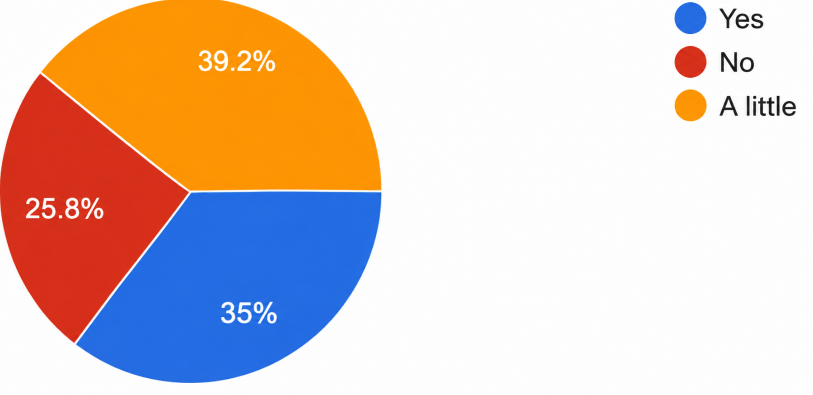
A total of 70 % of respondents use TikTok and, among these, 64.2 % view content from politicians or government institutions on the platform.
Regarding the political figures most frequently viewed on TikTok, 46.7 % reported that they do not watch any. Javier Milei was the most frequently viewed individual, at 36.7 %. He was followed by leading figures of the national PRO party, including Horacio Rodríguez Larreta at 25.8 % and Patricia Bullrich at 22.5 %. Next, at 10.8 %, was the Governor of the Province of Buenos Aires, Axel Kicillof. Finally, respondents also viewed content from other figures, such as Yerba Buena council candidate María Laura Paz Posse and San Juan candidates José Luis Gioja and Fabián Gramajo, who were running for governor and deputy governor, respectively.
When respondents were asked what attracted their attention in politicians' TikTok content, 38.3 % reported paying attention to the use of memes and GIFs in videos, while 35.8 % were attracted by viral challenges. The use of dances (14.2 %), music (14.2 %), filters, and effects (9.2 %) were also resources considered when preferring content from politicians or government institutions. Some respondents expressed interest in the dissemination of proposals, interviews, and edits of statements made in the media or in speeches that could be repurposed in videos.
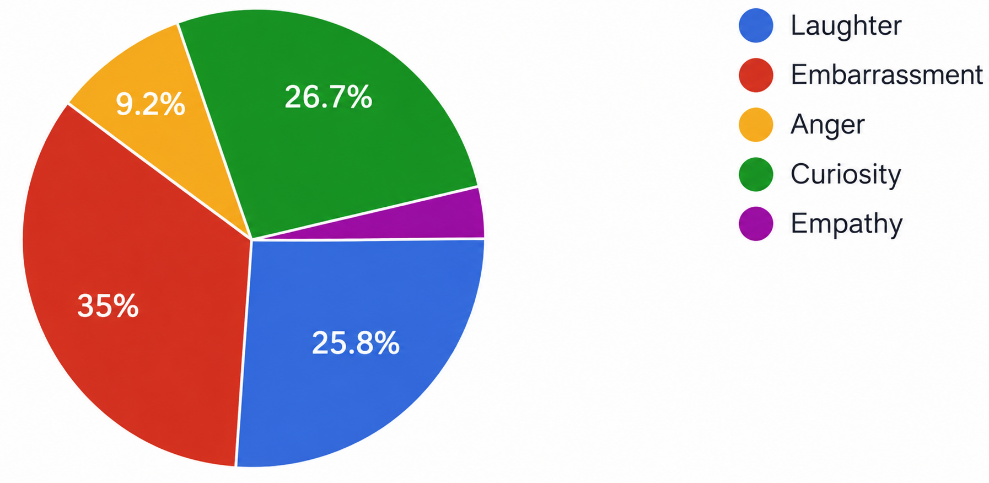
Focusing on the responses regarding what political content on TikTok generates among users, various options reported by respondents were identified (Figure 2).
Regarding the question “Would you vote for a politician because of the content they publish on TikTok?”, 65 % stated that they would not, while 27.5 % stated that they might. A total of 7.5 % stated that they would vote for a politician simply because the person creates content on TikTok.
Finally, in response to the question “Do you think politicians should be on TikTok?”, 68.3 % agreed, while 31.7 % opposed politicians' use of the platform. Comments from some respondents justifying their chosen answer are presented below (Table 3).
Table 3. Do you think politicians should be on TikTok?
Justification | |
|---|---|
[empty cell] | “I believe that today it is another tool for reaching other audiences, such as young people, so that they can see politicians' proposals without the need to publish content that adds nothing, but rather helps young people become interested in politics.” |
Agree | “It is a way of gaining visibility from another platform. Since young people do not watch television, TikTok is the new informational and recreational platform. I am not going to vote for a politician just because I saw them on TikTok. If I vote for them, it is because I at least agree with their proposals. TikTok is still just another platform.” |
[empty cell] | “Each person is free to do whatever they want. Depending on the content produced by the politician, my perception of them would change and I would form an opinion based on it.” |
[empty cell] | “I believe they should be there, but providing quality content (government plan, proposals), not doing viral challenges or dancing. They are trying to reach a young audience, but in the wrong way. People will end up voting based on empathy rather than on the proposals that politician actually has.” |
[empty cell] | Justification |
[empty cell] | “I do not think TikTok is a social network that can be exploited for politics. The only way it can work is if the videos are not about political activities, but rather recreational activities, interesting facts, etc.” |
Disagree | “It is a platform with a very particular language that borders on the bizarre if it is not implemented correctly. Therefore, if TikTok is used, the strategy must be well designed so that it is neither ridiculous nor boring.” |
[empty cell] | “For me, TikTok is a place for entertainment, not for politicians to promote their campaigns.” |
[empty cell] | “I think it is unprofessional to promote politics on a platform like TikTok.” |
As mentioned above, in order to identify the most frequently used elements and the types of content contributing to video virality on TikTok, 10 profiles belonging to Argentine political figures and government institutions were analyzed. A content analysis grid was used for this purpose, covering a 6-month period (October 2022-April 2023), and the following was observed:
TikTok followers:
Regarding the number of followers, Javier Milei ranked first with more than 1 million followers. Horacio Rodríguez Larreta ranked second with more than 500 thousand followers, followed by the Policía del Chaco account (418.3K). The Gobierno de la Ciudad de Buenos Aires ranked 4th with 365.2K. Patricia Bullrich, another national leader of the Propuesta Republicana (PRO) party, appeared among the most followed accounts, reaching 185.1K followers. She was followed in the ranking by Trenes Argentinos (89.3K) and Municipalidad de Córdoba (37.2K). Finally, the Provincia de Buenos Aires account (26.6K) exceeded that of then Peronist governor Axel Kicillof (18K), while Emmanuel Ferrario, Deputy Head of Government of the City of Buenos Aires, ranked last with more than 11 thousand TikTok followers.
Number of posts:
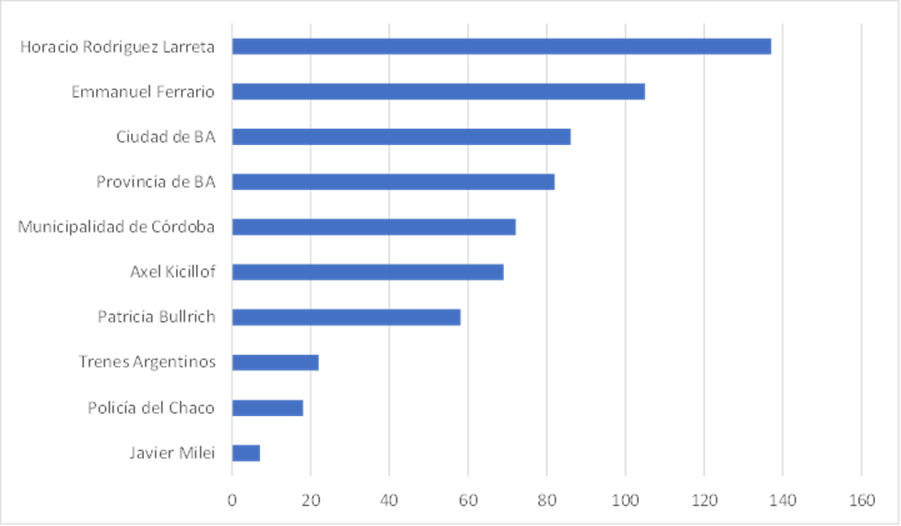
Regarding this analysis variable, with a posting frequency of 3 to 5 posts per week, the highest positions were held by Horacio Rodríguez Larreta, Emmanuel Ferrario, and the City of Buenos Aires.
Although Axel Kicillof had a total of 69 posts, he was the only profile that did not cover the entire selected date range because the Governor created the account on December 29, 2022.
The users with the fewest published videos were Trenes Argentinos (22), Policía del Chaco (18), and political leader Javier Milei (7). The latter had a low posting frequency, between 1 and 3 posts per month.
The complete information is shown below (Figure 3).
Total views:
The number of video views was taken into account in order to compare it with the other variables. An important factor to highlight is that content seeking a response from users shows the best statistics and becomes viral quickly.
The total number of views for each selected profile is shown below (Table 4).
Table 4. Total Views between October 2022 and April 2023
User | Total views |
Government of the City of Buenos Aires | 145 806 578 |
Policía del Chaco | 23 436 100 |
Javier Milei | 18 813 400 |
Horacio Rodríguez Larreta | 15 062 425 |
Patricia Bullrich | 9 455 969 |
Trenes Argentinos | 6 693 700 |
Axel Kicillof | 5 426 258 |
Emmanuel Ferrario | 4 120 917 |
Municipality of Córdoba | 1 719 705 |
Province of Buenos Aires | 961 786 |
Topics and content:
A distinction was found among the selected profiles in terms of the figures involved, since those who currently hold political office, such as Horacio Rodríguez Larreta and Axel Kicillof, discuss matters related to their administration (security, health, education, culture, etc.), while also adding content about their personal and family lives. Topics that are important to young people are also present, such as inclusion, the environment, and human rights. Clips from interviews in traditional media are not left aside either and, with appropriate use of filters or memes, they are communicated in the most relatable way possible.
In the case of Emmanuel Ferrario, for example, his pet was seen accompanying him in various activities, receiving many positive comments. He is also the only profile that uses interviews to speak with prominent members of the community, producing educational and explanatory content with the aim of generating empathy through the art of storytelling.
Regarding Patricia Bullrich, the analysis showed that the videos address security, youth, personal life, and innovation and technology. They show content involving the security forces and, for example, her stance against roadblocks. She was also seen walking through the streets and receiving support from people encouraging her to occupy the presidency.
Regarding Javier Milei, the political leader interacts with a Community Manager who asks him about various topics such as the economy, the dollar, security, and proposals in the event that he reaches the presidency.
With regard to the Government of the City of Buenos Aires account, young people are used to speak on camera about various topics such as culture, gastronomy, education, sports, youth, and technology, while also showing the activities offered by the city to residents and visiting tourists. Something similar occurs with the Municipality of Córdoba, where culture, tourism, and the environment are used as topics to publicize the city's activities.
The Policía del Chaco account focuses on more specific topics related to the work carried out on a daily basis, such as administration, security, innovation, and technology. It shows robberies and how offenders are apprehended, using resources intended to increase virality, such as trending songs, memes, and GIFs, among others. The same occurs with Trenes Argentinos, which provides the public with information on administration, tourism, security, and railcar innovation.
Most accounts tend to interact with people who comment on their videos, generating positive feedback and helping them improve their positioning on the platform.
Message tone:
Similarities were found in accounts such as those of Horacio Rodríguez Larreta and Axel Kicillof, where the message is friendly and humorous. Irony is sometimes used to talk about an opponent and their policies, but the content also encourages reflection on topics that are important to users. Emmanuel Ferrario also publishes reflective content and adds educational videos in which he is shown speaking to the camera in selfie format and creatively explaining new laws and resolutions of the City of Buenos Aires, as well as topics such as education, employment, human rights, youth, and the environment.
Patricia Bullrich uses a more ironic and humorous message tone, since she makes use of songs and trends that, on the one hand, receive positive comments and, on the other, prompt comments stating that the content ultimately makes her look ridiculous.
Regarding Javier Milei, he differs from those mentioned above, since the message is ironic but also has an aggressive tone because he uses inappropriate words and a forceful tone that can generate support and rejection at the same time.
Finally, it was observed that the predominant content on the accounts of the Government of the City of Buenos Aires, the Province of Buenos Aires, Trenes Argentinos, the Municipality of Córdoba, and Policía del Chaco has a friendly, educational, and reflective tone.
Digital resources used:
This final section is important because it provides a more detailed overview of what it means to be on TikTok and to take advantage of all the resources offered by the platform.
Most of the accounts analyzed share the use of tools such as viral challenges and challenges. Memes, GIFs, bloopers, trending music, and responses to users are also used to generate constant feedback with followers.
The only account that uses few digital resources is Javier Milei's, where only basic subtitles were observed in the published videos.
DISCUSSION
At the conclusion of this scientific manuscript, the aim is to answer the research question in order to understand and analyze how the communication strategies deployed by Argentine politicians and government institutions influence TikTok users.
The limitations identified in the research process are related to the small sample size, which prevents generalization of the results obtained. Analyzing a larger sample of cases would allow greater precision in the results and would provide a more comprehensive perspective for the overall research. It is also essential to clarify that the initial objectives were modified as the research process progressed, becoming more specific as the study advanced.
It is important to specify several issues related to the first objective of the research in order to describe the impact generated by the digital communication campaigns adopted by politicians and government institutions on TikTok, even though the information was presented in the Results section.
Social media are an excellent political tool through which users create and exchange increasingly dynamic and entertaining content.(1) According to the research literature, the pandemic accelerated the use of these types of strategic tools, strongly positioning them within the field of political communication.
We have seen that politicians have been able to reach people and, in some cases, even win elections, as in the case of Xavier Hervas in Ecuador, who used TikTok to seek the youth vote. This represents a turning point today, in which political figures and their teams should not underestimate young users who are active on the platform, since they should not be persuaded with funny videos or dances, but rather with messages and proposals that are attractive to this type of audience. This will generate dissemination to other platforms because TikTok makes it easy to download a video and have it appear on other networks such as Instagram, Facebook, or Twitter.
Whether or not politics generates interest is not a determining factor in consuming this type of content on TikTok because, as mentioned above, the algorithm itself positions content according to its creativity and use of digital resources, thereby attracting users' attention and making these videos go viral in the “For You” section.
Previously, Sarasqueta stated that followers are not guided by public policies or leaders' arguments, but rather are mobilized by feelings associated with politicians' personal attributes, such as their personal lives, tastes, and preferences.(5) Therefore, we agree that it is necessary to understand this need among users, who ask to see the “behind the scenes” of an activity, a speech, or simply what a public official does during the working day.
We can infer that the impact caused by the presence of the political sector on TikTok is divided between those who think it causes embarrassment and those who also find it intriguing. This allows the new social media phenomenon to attract different campaign teams to establish themselves in this environment, although, unfortunately, some do not take into account the fine line between appearing ridiculous and successfully making a message go viral in a consistent manner.
This research agrees with most of the respondents' opinions regarding how powerful the Chinese application can be in reaching young audiences with creative proposals and encouraging them to participate in spaces from which they often feel excluded. In addition, one favorable outcome of this study was understanding the importance of considering profiles of millennials (born between 1981 and 1994) and centennials (born between 1995 and 2010) with experience using the platform in question when forming the communication teams of political figures, since they tend to better understand the language and characteristics of the social network and may therefore achieve better performance on it.
The second objective sought to identify the types of formats and content used by politicians and government institutions on TikTok, leading to the following conclusions:
The political figure with the most followers is Javier Milei, who has more than 1 million followers on the Chinese platform, and his videos also have more than 18 million views. It is important to pause at this point in the analysis. The mistake is often made of assuming that a larger number of posts or followers means that content performs better, but the present research shows that this is not the case. Javier Milei is the profile with the lowest number of posts (only 7) during the period analyzed. The reasons why this phenomenon occurs may be attributed to many factors, such as discussing controversial topics including dollarizing the economy or disparaging President Alberto Fernández. The most striking aspect here is that the account does not follow any of the platform's formats, such as the use of superimposed text or GIFs, for example.
Another fact to take into account is that the Government of the City of Buenos Aires is the profile with the highest number of views because it uses paid promotion on TikTok. Although the content itself is more attractive to people, it also uses an agenda that invites participation in cultural, gastronomic, and technology events. Another advantage is that it provides the opportunity for even greater humanization by inviting young citizens to speak about these topics, thereby generating empathy with the content.
Regarding the formats and content that stand out on TikTok, similarities were found in the use of trends and resources that help humanize the political figure. In addition, proposals and topics of interest to young people, such as the environment, technology, health, and education, are disseminated.
Confirming Sánchez Castillo's theory, which states that TikTok should be included in digital communication strategy, it can be added that proper use of the platform is required, generating creative content with resources such as memes, GIFs, viral challenges, music, among others.(10)
In general, politicians and government institutions on TikTok aim to initiate and build a direct connection with younger people. The language used is more informal and relaxed, and the use of the platform's own codes is a determining factor in generating interest among the audience involved.
So, is the strategy of using TikTok effective for politicians and government institutions?
Regarding the final objective, it is concluded that, in addressing the current electoral challenge, TikTok is an excellent digital communication tool that may benefit a person or institution depending on the type of content published. Reach and whether the platform can contribute to political communication are also relevant.
According to the present research, 68.3 % of respondents voted in favor of politicians being present on the TikTok platform. This provides an indication of public acceptance regarding the use of new communication tools and of the need for content to be specifically conceived and planned for them, thereby achieving efficient and effective communication through messages and proposals that help young people become interested in current political realities.
However, given that the use of TikTok in politics is still a relatively new practice, further studies within this channel remain necessary to obtain results leading to a reliable diagnosis of the digital political communication paradigm, such as identifying factors that influence users when casting their vote. Likewise, the use and application of Artificial Intelligence (AI) for developing voter profiles and analyzing the information provided by the TikTok platform should be investigated. Consequently, based on these new technological tools, a communication plan aligned with new trends should be prepared.
Regarding the strengths of this research, it can be emphasized that, despite having limited information and time, the sample allowed us to develop a general understanding of the use of TikTok in the political sphere and to understand the proper functioning of these innovative communication tools. In addition, another major strength was the ability to connect several concepts developed throughout this degree program.
CONCLUSIONS
In conclusion, we can state with certainty that innovation in communication originates with a public figure who interacts directly with their audience, enabling users to connect with the message. Furthermore, because communication is constantly evolving, those responsible for it must be able to adapt to these changes and join the new digital wave that brings audiences into direct contact, creating communities that generate constant feedback with the content.
Finally, it is important to highlight the importance of Public Relations in identifying and understanding how effective communication strategies can improve reputation, build trust, and promote good relationships with stakeholders. Furthermore, in the era of digital communication, the ability to modify public relations tactics in response to a constantly changing environment is essential for any person or organization to maintain long-term success.
References
- 1 Van Dijck J. La cultura de la conectividad: una historia crítica de las redes sociales. 2016. Available from: http://catedradatos.com.ar/media/La-cultura-de-la-conectividad_-Jose-Van-Dijck.pdf
- 2 We Are Social. Digital 2023 Argentina: the essential guide to the latest connected behaviours. 2023. Available from: https://indd.adobe.com/view/f67d8a4c-7ad3-4ed6-85c7-bbd5d25fa99c?allowFullscreen=true&wmode=opaque
- 3 García-Estévez N. Presencia de las redes sociales y medios de comunicación: representación y participación periodística en el nuevo contexto social. Sevilla: Universidad de Sevilla; 2013. Available from: https://idus.us.es/handle/11441/15976
- 4 Cebrián M. La Web 2.0 como red social de comunicación e información. Estud Mensaje Periodístico. 2008;14:345-61. Available from: https://dialnet.unirioja.es/servlet/articulo?codigo=2898201
- 5 Sarasqueta G. Técnicas de la comunicación política ante la era de la infoxicación y la interrupción: del storytelling al storydoing. Comun Hombre. 2021;17:73–84. Available from: https://doi.org/10.32466/eufv-cyh.2021.17.648.73-84
- 6 Isla L. Desarrollo de la Comunicación Política. Razón y Palabra. 2002;27. Available from: http://www.razonypalabra.org.mx/anteriores/n27/lisla.html#15a
- 7 Yanes R. La comunicación política y los nuevos medios de comunicación personalizada. Ámbitos. 2007;16:355-66. Available from: https://www.redalyc.org/pdf/168/16801620.pd
- 8 Canel MJ. Técnicas y estrategias para la sociedad de la información. Madrid: Tecnos; 1999. Available from: https://es.scribd.com/document/211387893/Comunicacion-Politica-CANEL
- 9 Castells M. Comunicación y poder. México: Siglo XXI Editores; 2013. Available from: https://play.google.com/books/reader?id=rvKkDwAAQBAJ&pg=GBS.PT447.w.0.5.22_314&hl=es
- 10 Sánchez Castillo S. La construcción del liderazgo político y la identidad escenográfica en TikTok. In: Sierra Sánchez J, Barrientos A, editors. Cosmovisión de la comunicación en redes sociales en la era postdigital. Valencia: Universidad de Valencia; 2021. p. 197–210.
- 11 Manetto F. Javier Hervas, el candidato que quiere romper el esquema tradicional y movilizar a los jóvenes. El País. 2021 Feb 6. Available from: https://elpais.com/internacional/2021-02-06/xavier-hervas-el-candidato-que-quiere-romper-el-esquema-tradicional-y-movilizar-a-los-jovenes.html
- 12 Bastero M. Historia de TikTok: claves, curiosidades y evolución de la red social a la que todos quieren imitar. Marketing 4 Ecommerce. 2021 Sep 23. Available from: https://marketing4ecommerce.net/historia-de-tiktok-que-es/
- 13 McLachlan S. Cómo usar TikTok: los principiantes empiezan aquí. Hootsuite. 2021 Dec 15. Available from: https://blog.hootsuite.com/es/como-usar-tiktok/
Declarations
Funding
None.
Conflict of interest
The authors declare that there is no conflict of interest.
Authorship contributions
Conceptualization: María Milagros Bustos Marcos, Carolina Cerruti.
Data curation: María Milagros Bustos Marcos, Carolina Cerruti.
Formal analysis: María Milagros Bustos Marcos, Carolina Cerruti.
Investigation: María Milagros Bustos Marcos, Carolina Cerruti.
Methodology: María Milagros Bustos Marcos, Carolina Cerruti.
Project administration: María Milagros Bustos Marcos, Carolina Cerruti.
Software: María Milagros Bustos Marcos, Carolina Cerruti.
Supervision: María Milagros Bustos Marcos, Carolina Cerruti.
Validation: María Milagros Bustos Marcos, Carolina Cerruti.
Visualization: María Milagros Bustos Marcos, Carolina Cerruti.
Writing - original draft: María Milagros Bustos Marcos, Carolina Cerruti.
Writing - review and editing: María Milagros Bustos Marcos, Carolina Cerruti.