

Abstract
Digital personalization has revolutionized how companies interact with customers. This change ranges from internal processes to user experiences. Customer retention, driven by digital personalization, has become essential to success as consumer expectations evolve alongside technology. Therefore, the main objective of this study in 2022 is to investigate the relationship between digital personalization in services and customer retention in multiple banking in Tarapoto. In methodological terms, this study is based on an applied approach, uses quantitative methods, focuses on correlation and follows a non-experimental design subject to the help of two questionnaires to measure the variables in a sample of 384 clients of the Commercial Bank of Tarapoto. Regarding the main result, it is observed after the application of the correlation analysis that there is a significant relationship between the digital personalization variable and customer retention, this demonstrates the great importance of digital personalization, because it plays a crucial role in the contemporary world. It is essential for brands to distinguish themselves from others, because one strategy to achieve this is by personalizing the products and services they provide, which establishes an emotional bond between the customer and the brand. In conclusion, regarding the behavior of the digital personalization variable, it is shown that it is at a poor level due to the fact that the variable does not cover various fields, from product recommendation in electronic commerce to the adaptation of content on social networks. transforming the way companies relate to their audiences in the digital age. At the same time, regarding the results of the customer retention variable, it is observed that it is at a low level, this is due to the fact that there is no high customer retention since it reduces the costs of acquiring new customers and increases revenues. long term. Therefore, retention is key to the profitability and sustained growth of any institution or company.
Keywords
Digital Personalization, Customer Retention, Personalized Offers, Device Adaptation, Cross-Platform
INTRODUCTION
The digital revolution has generated significant changes in consumer behavior and in their expectations toward financial institutions worldwide. Technology has facilitated interaction between customers and banks, allowing service to be more direct and personalized. However, this brings a challenge: ensuring that digital services are aligned with the individual needs and desires of each customer. Digital personalization has gained relevance as a crucial tool for maintaining and improving customer retention.(1)
Toloba (2) mentions that facing the challenge of finding a balance between personalization, privacy, and security is a challenge of monumental proportions for financial institutions globally. These entities must ensure that the pursuit of personalization does not endanger customers' privacy or the integrity of their data. The connection between digital personalization and customer retention is an undeniable fact worldwide (3,4,5,6,7,8,9).
According to one recent international study, 75 % of consumers in several countries consider that a personalized experience is essential for their banking satisfaction. The reason is evident: a tailored experience can make customers feel appreciated, understood, and more inclined to continue using banking services.(10,11,12,13,14,15) However, it is crucial to keep in mind that, according to data provided by a leading cybersecurity organization, 68 % of consumers worldwide stated that they would switch banks immediately if their personal data were compromised due to poor information management. Therefore, proper data management becomes a fundamental pillar, since an error in this aspect could generate distrust and, as a result, a significant decrease in customer retention globally.(3)
With regard to digital development, Latin America is at an intermediate level with an index of 49.92 on a scale from 0 to 100.(16,17,18) This places it above the region of Africa, which has an index of 35.05, and Asia-Pacific, with an index of 49.16. However, Latin America shows a lag compared with Eastern Europe, which has an index of 52.90, as well as with Western Europe and North America, which have much higher indices of 71.06 and 80.85, respectively. Latin America, as part of the emerging economies, experiences moderate growth in terms of digitalization compared with other regions of the developed world.(4)
In Peru, the financial environment has undergone a significant transformation in recent years, in which the banking sector has followed the path of digitalization to adapt to an increasingly interconnected market. Although this technological transition has expanded access to banking services for numerous Peruvian citizens, it has also underscored the need to provide more personalized attention. National financial institutions, seeking to differentiate themselves in a competitive market, have begun to invest in digital personalization tools and strategies.(5)
Within the context of Tarapoto, banking entities face a duality characteristic of a growing city. There is a growing demand for digital financial services, in line with global and national trends.(19,20,21,22) Conversely, the local idiosyncrasy and cultural particularities may influence the perception of personalization. It is here that a crucial relationship is identified between the provision of personalized digital services and customer loyalty. A system that fails to adapt to the specific needs of the Tarapoto user could be perceived as alien or impersonal. Connectivity, infrastructure, and digital financial education problems in Tarapoto may be factors that hinder effective personalization.(23,24,25,26,27,28) Although a deficiency in personalization or low retention cannot be explicitly asserted, it is evident that inadequate adaptation can have consequences for customer perception and satisfaction. It is essential that banks in Tarapoto understand and adapt to the particularities of their clientele. If these challenges are not addressed, the banking sector could not only lose customers, but also the opportunity to strengthen ties with the community and contribute to the city's economic development. In this context, it is imperative that banking entities invest in understanding the needs and expectations of their customers in order to offer a service that is not only digital and personalized, but also contextualized and relevant.(29,30,31,32,33,34,35)
What is the relationship between digital personalization and customer retention in Multiple Banking in Tarapoto, period 2022?
Objective
To determine the relationship between digital personalization in services and customer retention in multiple banking in Tarapoto, period 2022.
METHODS
Scope and conditions of the research
Research context
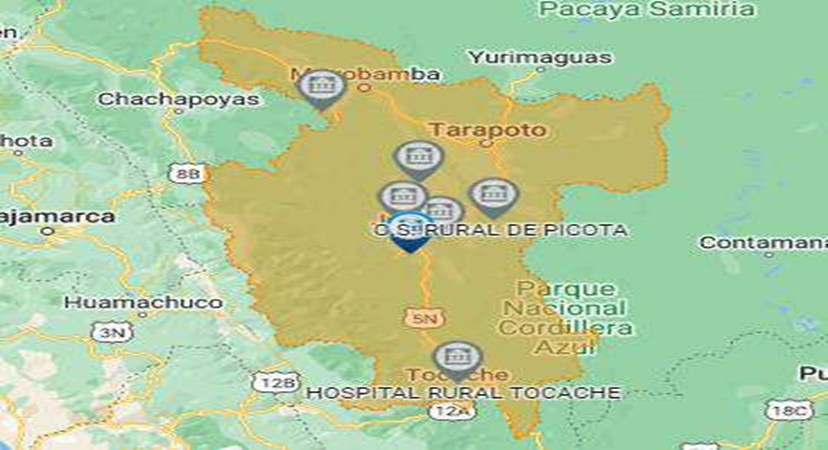
The San Martín Region is located in the northern sector of Peru, bordering to the north with the regions of Amazonas and Loreto, to the east with Colombia, to the south with Huánuco, and to the west with La Libertad. Due to its location, it occupies a key place in the Peruvian Amazon, standing out for its broad biodiversity and its relevance for environmental protection and sustainable progress in the national Amazonian area. San Martín is located in the northern zone of Peru, in the heart of the Amazon rainforest. It lies between the coordinates 5° 37' and 8° 45' south latitude, and 75° 54' and 77° 27' west longitude. It borders to the north with Amazonas and Loreto, to the east with Colombia, to the south with Huánuco, and to the west with La Libertad. Thanks to its location in the heart of the Amazon, it is characterized by its rich biological diversity and plays a crucial role in the protection of the jungle and its surrounding ecosystems.
Execution period
The research was conducted during the months of January–April of the present year.
Authorizations and permits
Not applicable.
Environmental control and biosafety protocols
Not applicable.
Application of international ethical principles
In any research, 3 key principles must be followed: respect, justice, and beneficence. According to these criteria, it is vital that participants can decide whether they want to participate and are fully informed of the risks and benefits of their participation. Therefore, in this study, full adherence to these principles was guaranteed. This means fully respecting each individual's choice regarding their inclusion in the research and providing detailed and clear information about the process. It is argued that the advantages of the results obtained outweigh any possible risk, since the technological area concerned can obtain an adequate diagnosis. Furthermore, we have used APA 7 standards to give credit to all cited authors, ensuring recognition of their contributions without compromising the content of the study.
System of variables
Independent variable: digital personalization
Empirical variable 1: content customization; relevant content, personalized offers, adaptable recommendations
Empirical variable 2: device adaptation; responsive design, multiplatform, omnichannel experience
Empirical variable 3: intelligent interaction; virtual assistants, chatbots, instant messaging
Dependent variable: customer retention
Empirical variable 1: satisfaction; met expectations, perceived value, recommendation
Empirical variable 2: loyalty; repurchase, preference, immunity
Empirical variable 3: emotional bond, trust, attachment, identification
Specific objective No. 1: To describe the level of the multiple person in Tarapoto for the period 2022. | Specific objective No. 1: To describe the level of the multiple person in Tarapoto for the period 2022. | Digital application in banking services |
Abstract variable | Concrete variable | Medium of measurement unit record |
Personalization digital | Relevant content Personalized offers, adaptable recommendations, responsive design, multiplatform Omnichannel experience, virtual assistants, chatbots, instant messaging | Ordinal questionnaire |
Figure 2. Description of variables by specific objective 2
Specific objective No. 2: Describe the level of customer retention in multiple banking in Tarapoto, period 2022. | Specific objective No. 2: Describe the level of customer retention in multiple banking in Tarapoto, period 2022. | Specific objective No. 2: Describe the level of customer retention in multiple banking in Tarapoto, period 2022. | Specific objective No. 2: Describe the level of customer retention in multiple banking in Tarapoto, period 2022. |
|---|---|---|---|
Abstract variable | Concrete variable | Recording medium | Unit of measurement |
Customer retention | Expectations met Perceived value Recommendation Repurchase Preference Immunity Trust Attachment Identification | Questionnaire | Ordinal |
Figure 3. Description of variables by specific objective 3
Specific objective No. 3: Establish the relationship between content customization and customer retention in multiple banking in Tarapoto, period 2022. | Specific objective No. 3: Establish the relationship between content customization and customer retention in multiple banking in Tarapoto, period 2022. | Specific objective No. 3: Establish the relationship between content customization and customer retention in multiple banking in Tarapoto, period 2022. | Specific objective No. 3: Establish the relationship between content customization and customer retention in multiple banking in Tarapoto, period 2022. |
|---|---|---|---|
Abstract variable | Concrete variable | Recording medium | Unit of measurement |
Content customization | Relevant content Personalized offers Adaptable recommendations | Questionnaire | Ordinal |
Figure 4. Description of variables by specific objective 4
Specific objective No. 4: Analyze the relationship between device adaptation and customer retention in multiple banking in Tarapoto, period 2022. | Specific objective No. 4: Analyze the relationship between device adaptation and customer retention in multiple banking in Tarapoto, period 2022. | Specific objective No. 4: Analyze the relationship between device adaptation and customer retention in multiple banking in Tarapoto, period 2022. | Specific objective No. 4: Analyze the relationship between device adaptation and customer retention in multiple banking in Tarapoto, period 2022. |
|---|---|---|---|
Abstract variable | Concrete variable | Recording medium | Unit of measurement |
Device adaptation | Responsive design Cross-platform Omnichannel experience | Questionnaire | Ordinal |
Figure 5. Description of variables by specific objective 5
Specific objective No. 5: Evaluate the relationship between intelligent interaction and customer retention in multiple banking in Tarapoto, period 2022. | Specific objective No. 5: Evaluate the relationship between intelligent interaction and customer retention in multiple banking in Tarapoto, period 2022. | Specific objective No. 5: Evaluate the relationship between intelligent interaction and customer retention in multiple banking in Tarapoto, period 2022. | Specific objective No. 5: Evaluate the relationship between intelligent interaction and customer retention in multiple banking in Tarapoto, period 2022. |
|---|---|---|---|
Abstract variable | Concrete variable | Recording medium | Unit of measurement |
Intelligent interaction | Virtual assistants Chatbots Instant messaging | Questionnaire | Ordinal |
Research procedures
Cisneros et al. (6) highlight that, in both quantitative and qualitative research, the survey is the most prevalent technique compared with other methodologies. This is applicable in both online and offline environments and is usually supported by a well-structured and automated questionnaire to ensure the efficient management of large volumes of data almost in real time. Therefore, in this study, the survey technique was used, with a questionnaire as the instrument for collecting information. To measure the study variables, 2 separate questionnaires were created. The questionnaire related to digital personalization consisted of 27 statements or items, distributed across 3 dimensions and 9 indicators. Each statement presented 5 response options on a Likert-type scale (Strongly disagree, Disagree, Neutral, Agree, and Strongly agree). In addition, the customer retention questionnaire was composed of 27 statements or items, covering 3 dimensions and 9 indicators. Each item also had 5 response options. The data collected through these questionnaires were recorded in Microsoft Excel spreadsheets for descriptive statistical analyses. These analyses included the creation of frequency tables and bar charts to present the results obtained. These tools were used to evaluate the dimensions and variables, and the visual results were included in the results section of the report.
Specific objective 1
In this case, data collection was carried out through the questionnaires, and the findings were processed using Microsoft Excel for descriptive statistical analyses, through which the level of digital personalization in multiple banking services in Tarapoto was determined for the 2022 period.
Specific objective 2
In this case, data collection was carried out through the questionnaires, and the findings were processed using Microsoft Excel, through which the customer retention level of the multiple banking sector in Tarapoto was determined for the 2022 period.
Specific objective 3
In this case, data collection was carried out through questionnaires, and the findings were processed using a program called SPSS, through which the connection between content customization and customer retention in multiple banking in Tarapoto for the 2022 period was determined.
Specific objective 4
In this case, data collection was carried out through the questionnaires, and the findings were processed using a program called SPSS, through which the relationship between device adaptation and customer retention in multiple banking in Tarapoto for the 2022 period was determined.
Specific objective 5
In this case, data collection was carried out through questionnaires, and the findings were processed using a program called SPSS, through which the relationship between intelligent interaction and customer retention in multiple banking in Tarapoto, period 2022, was found.
Type and level of research
Jiménez (7) indicates that quantitative research remains fundamental in research studies that require a systematic, detailed, and evident approach, with various criteria for evaluating its contribution to the academic world, and that the relevance of the quantitative approach lies in its capacity to adopt a distinct perspective; therefore, this research study will be quantitative.
In addition, it has been of an applied type. Mamani (8) indicates that applied research is distinguished by its focus on the use, implementation, and real results of knowledge; that is, directed toward a specific practical purpose that leads to the invention of new devices, products, and methods.
This analysis is situated at a correlational level; according to Rivero et al. (9), this refers to establishing the level of connection or link between 2 or more factors or categories in a specific context. These analyses can establish relationships between 2 or more factors, depending on the depth and complexity of the study.
Population and sample
Population
According to Condori (10), it refers to the components or aspects that can be examined in the specific context in which the research is carried out. In this particular study, the population consisted of 384 customers of multiple banks in the city of Tarapoto, such as BBVA, BCP, Interbank, Scotiabank, and Banbif.
Inclusion criteria
Customers of Multiple Banking in Tarapoto
Exclusion Criteria
Multiple Banking clients who do not belong to the San Martín region
Sample
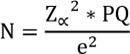
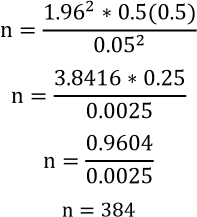
In other words, as indicated by Condori (10), the sample is a group of people who share the same general characteristics as the total population and that serves as a significant representation of that population. In this specific research study, the sample is composed of 384 customers of multiple banking in Tarapoto, the formula that was applied for the calculation of the sample is detailed below:
Where:
n: sample
Z: Z value at 95 % confidence (1,96)
q: odds of failure
p: proportion of probability of success (0,50)
e: maximum error of the estimator (0,05)
Analytical, sampling, and experimental design
The present research study will have a non-experimental, cross-sectional, correlational design, according to Mamani (8); in other words, its main objective is to determine the relationship or association between two or more factors measured in a single group or in several groups at a single point in time. On some occasions, this type of analysis can be extended to identify cause-and-effect relationships.
RESULTS
General result
Before the Pearson correlation was performed, a data normality test was conducted, which indicated a normal distribution of the data; therefore, the corresponding parametric test was applied.
Table 2. General correlation test
Customer retention | ||
|---|---|---|
Digital personalization | C. Pearson | 0.741** |
[empty cell] | Sig. | 0,000 |
Interpretation
Regarding the general objective, the Pearson correlation test was applied to measure the relationship between the study variables. Likewise, a relationship between the variables was indeed identified, with a value of 0.741, and it was also significant, with a value of 0.000. Therefore, the research hypothesis was accepted, which states the existence of a significant relationship between digital personalization and customer retention.
Specific result 1
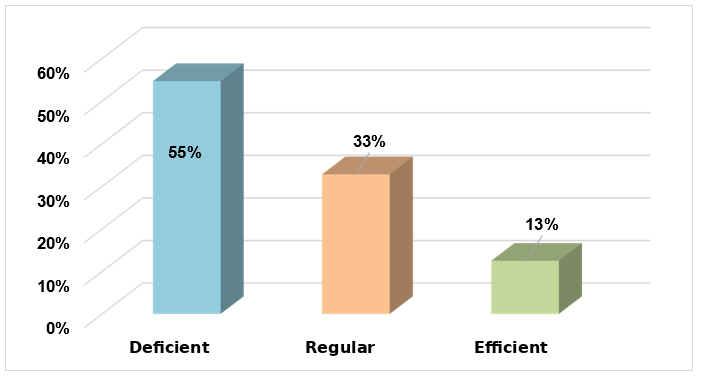
Table 3. Descriptive analysis of digital personalization
Rating | Range from | Up to | Freq. | % |
|---|---|---|---|---|
Deficient | 27 | 62 | 210 | 55 |
Regular | 63 | 98 | 126 | 33 |
Efficient | 99 | 135 | 48 | 13 |
Total | [empty cell] | [empty cell] | 384 | 100 |
Interpretation
The table shows the behavior of the digital personalization variable, where it is observed that 55% of customers stated that it is at a deficient level, 33% at a regular level, and only 13% at an efficient level.
Specific result 2
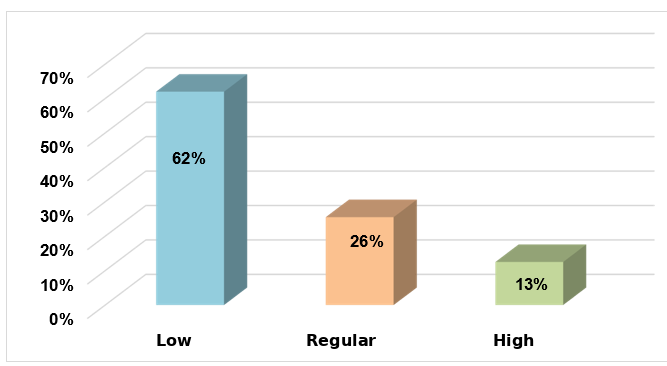
Table 4. Descriptive analysis of customer retention
Rating | Range from | Up to | Freq. | % |
|---|---|---|---|---|
Low | 27 | 62 | 238 | 62 |
Regular | 63 | 98 | 98 | 26 |
High | 99 | 135 | 48 | 13 |
Total | [empty cell] | [empty cell] | 384 | 100 |
Interpretation
The table shows that 62% of customers mentioned that they are at a low level regarding customer retention, 26% at a regular level, and only 13% at a high level.
Specific result 3
Figure 8. Correlation between content customization and customer retention
Customer retention | ||
|---|---|---|
Content customization | C. Pearson | 0.689** |
[empty cell] | Sig. | 0.000 |
Interpretation
To determine the relationship between the content customization dimension and the customer retention variable, a significant relationship is observed between them, which allows specific research hypothesis 3 to be accepted, since the correlation value is 0.689.
Specific result 4
Customer retention | ||
|---|---|---|
Device adaptation | C. Pearson | 0.663** |
[empty cell] | Sig. | 0,000 |
Interpretation
The table shows that, according to the correlation analysis performed, there is a significant relationship between the device adaptation dimension and the customer retention variable, with a value of 0.663; therefore, specific hypothesis 4 is accepted.
Specific result 5
Customer retention | ||
|---|---|---|
Intelligent interaction | C. Pearson | 0.853** |
[empty cell] | Sig. | 0,000 |
Interpretation
It is very important to point out that when performing the correlation analysis between the intelligent interaction dimension and the customer retention variable, it is observed that there is a significant relationship with a value of 0.853, thus accepting specific hypothesis 5.
DISCUSSION
It is important to note that the concept of digital personalization is subject to the author Vargas (5), who mentions that digital personalization attempts to establish a link between the company and the customer. Essentially, this strategy aspires to view people as individual beings, rather than mere consumers represented by an economic figure. Furthermore, it is the process of adapting a user's online experience based on their behaviors, preferences, interests, and demographic data through advanced technologies and algorithms; digital platforms and services can offer content, advertising, products, and recommendations specific to each individual user.(36,37,38,39,40,41,42)
When comparing the results of the variable's behavior, it is observed that it is at a deficient level, and when these are compared with Coloma (11), he states that the findings reveal that most participants have a bank account or two at different institutions. Likewise, 96 % have a mobile phone with internet connection and 92 % have used online banking services. These data suggest that Ecuador has a favorable environment for introducing a fully digital bank.(43,44,45,46,47,48,49) A large part of the population is already familiar with online banking services and has internet access. Although only 57 % are willing to use a bank without physical offices, this figure is likely to increase if a social media campaign is launched that highlights the security and reliability of the service.(50,51,52,53,54,55,56)
Likewise, regarding the customer retention variable, the concept refers to the business strategy focused on retaining customers who are already using a company's products or services instead of losing them to competitors or other alternatives. This entails implementing actions and policies aimed at building lasting relationships with existing customers, fostering their loyalty, and ensuring that they continue to purchase the company's products or services on an ongoing basis.(12) Regarding the results of this variable, it is observed that it is at a low level, and these results, when compared with Chávez et al.(13), mention that the data suggest that the work of supervisors is not viewed favorably by customers due to problems such as lack of inventory and inattention. Supervisors, being the direct responsible parties, should address these issues. In summary, the proposed marketing approach seeks to ensure adequate inventory to satisfy the customer and prevent them from turning to the competition. It is relevant to add that this project is feasible because it promises to be profitable and sustainable, with an investment recovery in the following three years after its implementation.(57,58,59,60,61,62,63)
Regarding the analysis of the behavior of the relationships between the dimensions of the digital personalization variable and the customer retention variable, it is observed that the intelligent interaction dimension obtained the highest correlation index, and when these results were compared with Suarez (14), the hypothesis test results, using Spearman's Rho, indicated a correlation coefficient of 0,481 and a Sig. (Bilateral) = 0,001 for the general hypothesis, which leads to rejecting the null hypothesis and accepting the alternative. For the first three specific hypotheses, the correlation coefficients were 0,452, 0,484, and 0,570, respectively, all with a Sig. (Bilateral) = 0,000, resulting in the rejection of the null hypotheses and acceptance of the alternatives. For the last specific hypothesis, the coefficient was 0,407 with a Sig. (Bilateral) = 0,000, which also confirmed the rejection of the null hypothesis and acceptance of the alternative. In conclusion, a relationship between loyalty strategies and customer retention is evidenced.(64,65,66,67,68,69,70)
Likewise, Pérez (15), the findings revealed that the typical profile of a digital banking user is a young person, since this population adapts more rapidly to technological innovations. In summary, through adequate financial education, people can appropriately use the digital tools that banks provide, thus favoring effective financial inclusion, especially when digital banking in Peru is on the rise.(71,72,73,74,75)
Lastly, Lodeiros (16) aimed to explore the connection between service quality in digital banking platforms, the level of user satisfaction, and their brand engagement behavior (CEB). An empirical analysis was carried out with users of these platforms. Through data analysis, descriptive statistics were obtained and Spearman's correlation was determined among the aforementioned variables. This inquiry provides insight into the preferences of users of different banking platforms in Latin America. Moreover, it reveals that not all platforms have the same relevance for users and confirms a strong relationship among user satisfaction, digital service quality, and CEB. Finally, it became evident that banking customers often use several digital platforms simultaneously, highlighting the need to comprehensively analyze the service quality of all the digital tools that a bank provides (76,77,78).
CONCLUSIONS
After applying the correlation analysis, it is observed that there is a significant relationship between the digital personalization variable and customer retention; this demonstrates the great importance of digital personalization, because it plays a crucial role in the contemporary world, since it is essential for brands to distinguish themselves from others, because a strategy to achieve this is by personalizing the products and services they offer, which establishes an emotional bond between the customer and the brand.
Regarding the behavior of the digital personalization variable, it is shown that it is at a deficient level because the variable does not cover various fields, from product recommendation in e-commerce to content adaptation on social media, transforming the way companies relate to their audiences in the digital era.
At the same time, regarding the results of the customer retention variable, it is observed that it is at a low level, because there is no high customer retention, since this reduces the costs of acquiring new customers and increases long-term revenues. Therefore, retention is key to the profitability and sustained growth of any institution or company.
Regarding the result of measuring the correlation between the content customization dimension, it was possible to identify that there is a significant relationship between the dimension and the customer retention variable; this means that the better the content customization, the better the customer retention.
Likewise, regarding the relationship of the device adaptation dimension, it is demonstrated that there is indeed a significant relationship with the customer retention variable; this demonstrates that the better multiple banking customers adapt to the device, the better customer retention will be.
Lastly, regarding the results of the intelligent interaction dimension, it is observed that there is a significant relationship with the customer retention variable; this demonstrates that the better the intelligent interaction of customers of multiple banking in Tarapoto, the better the customer acquisition.
RECOMMENDATIONS
It is important for multiple banking in Tarapoto to emphasize digital personalization, since this strategy aspires to view people as individual beings, rather than mere consumers represented by an economic figure. Moreover, it allows adapting to a user's online experience based on their behaviors, preferences, interests, and demographic data; through advanced technologies and algorithms, digital platforms and services can offer content, advertising, products, and recommendations specific to each individual user.
Regarding customers, multiple banking in Tarapoto must carry out actions and policies that seek to build lasting relationships with existing customers, fostering their loyalty and ensuring that they continue to purchase products or services from the company on a continuous basis.
It is important to note that multiple banking that improves content customization, that is, that relevant content is presented, personalized offers are provided, and above all that adaptable recommendations exist, that is, personalized suggestions for customers that are continuously adjusted based on the behavior, interactions, preferences, and/or feedback of these users.
As for device adaptation, the multiple banking sector of Tarapoto must be concerned with implementing the Responsive Design strategy, which focuses on web design and development; at the same time, it must be concerned with improving cross-platform support, that is, software, applications, or content designed to run on multiple operating systems or devices without requiring specific modifications for each of them.
Likewise, multiple banking must engage in intelligent interactions, that is, improve virtual assistants, chatbots, and instant messaging, since these interactions can provide more enriching and contextual experiences for users, anticipating their needs, understanding their intentions, and responding in a more human and natural way.
Lastly, it is necessary that multiple banking thoroughly review how its customers are doing, whether they are satisfied or whether expectations are being met, and, above all, the perceived value they have toward the company; it is therefore necessary; customer retention is incredibly important to grow a sustainable business in a highly competitive environment; marketing specialists are increasingly convinced that it is much more profitable to do
that customers never find themselves on the company's exit path, which leads to more and more retention strategies being implemented.
References
- 1 Catalá C. La reestructuración y digitalización del sector bancario. Universitat Politècnica de València; 2019. https://riunet.upv.es/bitstream/handle/10251/125186/Catal%C3%A1%20-%20La%20reestructuraci%C3%B3n%20y%20digitalizaci%C3%B3n%20del%20sector%20bancario.pdf?sequence=2&isAllowed=y
- 2 Toloba C, Del Río J. La perspectiva de la digitalización de la banca española: riesgos y oportunidades. Rev Estab Financ. 2020;38:79-97. https://www.bde.es/f/webbde/GAP/Secciones/Publicaciones/InformesBoletinesRevistas/RevistaEstabilidadFinanciera/20/mayo/es/Digitalizacion.pdf
- 3 Calle H, Montenegro A. La empatía como factor de calidad en los servicios bancarios del Ecuador. Digit Publ CEIT. 2020;5(5):219-232. https://dialnet.unirioja.es/servlet/articulo?codigo=7898243
- 4 Vargas A. La inclusión financiera en el Perú. Gestión Tercer Milenio. 2021. https://revistasinvestigacion.unmsm.edu.pe/index.php/administrativas/article/view/20591/16750
- 5 Vargas A. La banca digital: innovación tecnológica en la inclusión financiera en el Perú. Rev Ind Data. 2021;24(2):99-120. http://www.scielo.org.pe/pdf/idata/v24n2/1810-9993-idata-24-02-99.pdf
- 6 Cisneros A, Guevara A, Urdánigo J, Garcés J. Técnicas e instrumentos para la recolección de datos que apoyan la investigación científica en tiempo de pandemia. Dominio Cienc. 2021;8(1):21. https://dominiodelasciencias.com/ojs/index.php/es/article/view/2546/5714
- 7 Jiménez L. Impacto de la investigación cuantitativa en la actualidad. Convergent Tech. 2020;4(1):10. https://revista.sudamericano.edu.ec/index.php/convergence/article/view/35/2
- 8 Mamani Y. Introducción a la metodología de la investigación en salud. 2021. https://www.researchgate.net/publication/353246749_INTRODUCCION_A_LA_METODOLOGIA_DE_LA_INVESTIGACION_2021
- 9 Rivero M, Meneses J, García J, Aníbal R, Zevallos E. Metodología de la investigación. Huánuco: Editorial Universitaria; 2021. https://www.unheval.edu.pe/webs/repositoriounheval/descargar?file=9b7f24db17daad5b380d51233e8349d07d7b03f2069a97f4b7249d90e92d76ea5837fe8ad52e68de29d6523d57b06571cb22e6d81b5316168f0ca86c9dc7271cc079b18260f594b67f6439607302749608
- 10 Condori P. Universo, población y muestra. Aacademica; 2020. https://www.aacademica.org/cporfirio/18
- 11 Coloma S. Banca digital y su aplicación en el sistema bancario ecuatoriano. Universidad San Francisco de Quito; 2018. https://repositorio.usfq.edu.ec/bitstream/23000/7436/1/139191.pdf
- 12 Abarca Y, Barreto U, Barreto O, Diaz J. Fidelización y retención de clientes en una empresa líder de telecomunicaciones en Perú. Rev Venez Gerencia. 2022;27(98):1-16. https://doi.org/10.52080/rvgluz.27.98.22
- 13 Chavez E, Valdiviezo A, Valle F. Marketing estratégico para la retención de clientes en la Comercializadora Coronel Touma Cocorto S.A. en el cantón Durán. Observatorio Econ Latinoam. 2019. https://www.eumed.net/rev/oel/2019/04/marketing-retencion-clientes.html
- 14 Suárez A, Rodríguez M. Estrategias de fidelización y retención de clientes en América Móvil Perú S.A.C. Lima-2021. 2021. https://repositorio.ucv.edu.pe/bitstream/handle/20.500.12692/65452/Suarez_GA-Rodriguez_TMA-SD.pdf?sequence=1
- 15 Pérez A. La banca digital y su influencia en el desarrollo de inclusión financiera en el sector bancario en el Perú 2020. 2022. https://repositorio.upn.edu.pe/bitstream/handle/11537/31236/Perez-Barrera-Anthony-Jhunior.pdf
- 16 Lodeiros M. Un estudio exploratorio sobre la calidad de servicio, la satisfacción y el customer engagement behaviour en plataformas digitales de la banca electrónica peruana. Rev Ibér Sist Tecnol Inf. 2020;64-77. https://dialnet.unirioja.es/servlet/articulo?codigo=8586067
- 17 Aguero S, Adrianzen G, Chumacero I, Delgado R. Uso de los sistemas de recomendación en la gestión de contenido para apuestas. Universidad Científica del Sur; 2019. https://repositorio.cientifica.edu.pe/bitstream/handle/20.500.12805/683/TB-Aguero_Chumacero_Delgado.pdf?sequence=1&isAllowed=y
- 18 Andino G. Experiencia del cliente y determinantes de la adopción de la banca omnicanal en Honduras. J Manag Bus Stud. 2022;4(2). https://revistas.uautonoma.cl/index.php/jmabs/article/view/1892/1402
- 19 Anyosa E, Martinez J. Estrategias de fidelización y su relación con la retención de los clientes de la empresa Plásticos Perú Alfa S.R.L. en el año 2021. Universidad Tecnológica del Perú; 2021. https://repositorio.utp.edu.pe/bitstream/handle/20.500.12867/6105/E.Anyola_J.Martinez_Tesis_Titulo_Profesional_2021.pdf?sequence=5&isAllowed=y
- 20 Araujo B, Su A. Factores que determinan la captación y fidelización de la población bancarizada en el uso de medios digitales en el sector peruano bancario. Pontificia Universidad Católica del Perú; 2020. https://tesis.pucp.edu.pe/repositorio/bitstream/handle/20.500.12404/20926/ARAUJO_MESIAS_SU_VALENZUELA%20%281%29.pdf?sequence=1&isAllowed=y
- 21 Arias C. Análisis del sector informal y discusiones sobre la regulación del trabajo en plataformas digitales en el Ecuador. CEPAL; 2020. https://repositorio.cepal.org/server/api/core/bitstreams/62f60e1b-04e2-4389-9a41-313e20b7e34a/content
- 22 Asante K, Mambu Bayoh A. Innovation and customer retention in the Ghanaian telecommunication industry. Int J Innov. 2017;5(2):13. https://www.researchgate.net/publication/318073885_Innovation_and_Customer_Retention_in_the_Ghanaian_telecommunication_industry
- 23 Bajaña F. Filtro burbuja: ¿cuál es el costo de la personalización digital? Rev Chil Derecho Tecnol. 2021;10(1). https://www.scielo.cl/pdf/rchdt/v10n1/0719-2584-rchdt-10-1-00029.pdf
- 24 Basuki A, Syah A, Churiyah M, Gunawan A. Innovation in digital personalized learning based on gamification for learning in SMA during and post COVID-19 pandemic. Salud Cienc Tecnol. 2022. https://revista.saludcyt.ar/ojs/index.php/sct/article/view/240/566
- 25 Bron B, Mar O. Sistema de recomendaciones para la toma de decisiones: estado del arte. Rev Cient Multidiscip. 2021;6(1):16. https://revistas.unesum.edu.ec/index.php/unesumciencias/article/view/289/554
- 26 Bustos M, Urdiales I. Rediseño y sistematización de las plataformas digitales de la Universidad del Azuay para la comunicación entre su comunidad. Universidad del Azuay; 2023. https://www.bing.com/search?q=Redise%C3%B1o+y+sistematizacion+de+las+plataformas+digitales+de+la+universidad+del+Azuay
- 27 Caldas S. El poder del diseño gráfico para generar emociones. Esaay Gráfica. 2021;9(17):37-45. https://revistes.uab.cat/grafica/article/view/v9-n17-vieira/187-pdf-es
- 28 Cardenas S. Nivel de estrés de la madre adolescente y vínculo afectivo del recién nacido del Hospital Ramón Egoavil Pando de Villa Rica, 2019. Universidad Nacional Daniel Alcides Carrión; 2019. http://repositorio.undac.edu.pe/bitstream/undac/2351/1/T026_47561823_T.pdf
- 29 Choca I, López K, Freire D. Marketing relacional para fidelizar a los clientes de Baratodo S.A. en la ciudad de Guayaquil. Rev Observatorio Econ Latinoam. 2019;1(1):19. https://www.eumed.net/rev/oel/2019/01/marketing-relacional-baratodosa.html
- 30 Da Silva F, Nuñez G. La era de las plataformas digitales y el desarrollo de los mercados de datos en un contexto de libre competencia. 2021. https://repositorio.cepal.org/server/api/core/bitstreams/0c2536f0-bacc-491b-81ff-330298b959f2/content
- 31 Domínguez S, Medina J. Propuestas de marketing digital para promover la captación de clientes del BCP-Talara 2021. 2021. https://repositorio.ucv.edu.pe/bitstream/handle/20.500.12692/77357/Dominguez_RSM-Medina_AJC-SD.pdf?sequence=1&isAllowed=y
- 32 Foro Económico Mundial. Acelerando los pagos digitales en América Latina y el Caribe. 2022. https://www3.weforum.org/docs/WEF_Accelerating_digital_payments_SP_2022.pdf
- 33 García F, Molina N, Mundina J. Influencia de la satisfacción y el valor percibido sobre el word of mouth en los usuarios de centros deportivos. Rev Euroam Cienc Deporte. 2018;8(1):7. https://revistas.um.es/sportk/article/view/362291/257671
- 34 García T. La técnica de la personalización y la experiencia de compra de los consumidores: el caso Mae. 2019. https://repositorio.comillas.edu/xmlui/bitstream/handle/11531/27260/TFG%20-%20Garcia-Lozano%20Aranda%2c%20Teresa.pdf?sequence=1&isAllowed=y
- 35 Geetika J, Justin P, Archana S. Hyper-personalization, co-creation, digital clienteling and transformation. J Bus Res. 2021. https://www.researchgate.net/publication/346648940_Hyper-personalization_co-creation_digital_clienteling_and_transformation
- 36 Geetika J, Sapna R, Mohd N, KR C. Hyper-personalization-fashion sustainability through digital clienteling. Res J Text Appar. 2018;22(4). doi:10.1108/RJTA-02-2018-0017
- 37 Guallar J, Martínez E. Filtro burbuja y gestión personal de algoritmos. Anu ThinkEPI. 2023;17(1):5. https://thinkepi.profesionaldelainformacion.com/index.php/ThinkEPI/article/view/91586/66345
- 38 Gutiérrez M. Propuesta de valor percibida y satisfacción del cliente en la empresa Ferremix Huancayo 2021. 2022. https://repositorio.continental.edu.pe/bitstream/20.500.12394/12022/2/IV_FCE_318_TE_Gutierrez_Paucar_2022.pdf
- 39 Hanaysha J. Customer retention and the mediating role of perceived value in retail industry. World J Entrep Manag Sustain Dev. 2018;14(1):2-24. https://www.emerald.com/insight/content/doi/10.1108/WJEMSD-06-2017-0035/full/html
- 40 Hernández M, Llull L. Definición de un proceso ingenieril para el desarrollo de un chatbot a partir de buenas prácticas establecidas. Rev Cub Transform Digit. 2021;3(2):90-109. https://rctd.uic.cu/rctd/article/view/139/62
- 41 Huamán M, Soto M. Lealtad de marca. 2019. https://repositorio.upeu.edu.pe/bitstream/handle/20.500.12840/2529/Medaly_Trabajo_Bachillerato_2019.pdf?sequence=1&isAllowed=y
- 42 Huamán C, Medina C. Transformación digital en la administración pública: desafíos para una gobernanza activa en el Perú. Rev Investig Comun Desarro. 2022;13(2):93-105. http://www.scielo.org.pe/pdf/comunica/v13n2/2219-7168-comunica-1302-93.pdf
- 43 Karen A. Marketing digital y retención de clientes en la empresa W. Ángeles. 2019. https://repositorio.ucv.edu.pe/bitstream/handle/20.500.12692/46721/Angeles_OKD-SD.pdf?sequence=1&isAllowed=y
- 44 Kitsios F, Giatsidis I, Kamariotou M. Digital transformation and strategy in the banking sector: evaluating the acceptance rate of e-services. J Open Innov. 2021;7(1):14. https://pdf.sciencedirectassets.com/782866/1-s2.0-S2199853121X73003/1-s2.0-S2199853122009738/main.pdf
- 45 Laplana P. Definición de una aplicación multiplataforma en dispositivos móviles para eventos accesibles. 2019. https://earchivo.uc3m.es/bitstream/handle/10016/29604/TFG_Paula_Laplana_Martin.pdf?sequence=1&isAllowed=y
- 46 Lesmes J, Mesa K, Niño N. Estrategia de fidelización de clientes del Banco Agrario para los beneficiarios del programa Jóvenes en Acción. 2021. https://repository.universidadean.edu.co/bitstream/handle/10882/10648/NinoNatali2021.pdf?sequence=1&isAllowed=y
- 47 Lezama M. Gestión integral de la cadena de suministros, retos y tendencias. Colegio de Ciencias y Artes de Tabasco; 2022. https://www.researchgate.net/publication/369997876_GESTION_INTEGRAL_DE_LA_CADENA_DE_SUMINISTRO_RETOS_Y_TENDENCIAS
- 48 Lucas M. Implementación de una plataforma de mensajería instantánea en la carrera de ingeniería de sistemas computacionales de la Universidad Estatal del Sur de Manabí. 2017. https://repositorio.unesum.edu.ec/bitstream/53000/979/1/UNESUM-ECUCOMPR-17.pdf
- 49 Martínez M, González N, Guerra P. Relación de la lealtad y la confianza en los usuarios de servicios móviles en tiempos de pandemia. Vinculatégica. 2023;9(1):16. https://www.researchgate.net/publication/368446143_Relacion_de_la_lealtad_y_confianza_en_los_usuarios_de_servicios_moviles_en_tiempos_de_pandemia
- 50 Marulanda C, Peñaranda D, Cordero M, Solano E. Estrategias comerciales para evitar la fuga de clientes del Banco Bilbao Vizcaya Argentaria BBVA de la sucursal Ocaña. Mundo Fesc. 2018;15(1). https://www.fesc.edu.co/Revistas/OJS/index.php/mundofesc/article/view/291/453
- 51 Milozzi S, Marmo J. Revisión sistemática sobre la relación entre apego y regulación emocional. Unemi. 2022;6(11):17. https://ojs.unemi.edu.ec/index.php/faso-unemi/article/view/1443/1452
- 52 Miroslava J, Maza L, Torres P, Barba L, Rodríguez G. Experiencia afectiva del usuario en ambientes con inteligencia artificial, sensores biométricos y recursos digitales accesibles: una revisión sistemática de literatura. Rev Ibér Sist Tecnol Inf. 2019;35(12):19-53. doi:10.17013/risti.35.35-53
- 53 Montero R, Delgado N. Interoperabilidad: un camino para el bienestar financiero. 2023. https://www.bcrp.gob.pe/docs/Publicaciones/Revista-Moneda/moneda-194/moneda-194.pdf
- 54 Nalanda W, Waghmare K. A study of impact of personalized digital marketing banking products on customer satisfaction. IJFANS. 2022;11(11):565-75. https://www.ijfans.org/uploads/paper/b6581ab20c60624841ca799962bcd3d6.pdf
- 55 Nunura C. Marketing digital en pandemia COVID-19 y su influencia sobre las ventas en Transportes El Dorado, Tumbes, Perú, 2022. 2023. http://repositorio.untumbes.edu.pe/bitstream/handle/20.500.12874/64109/TESIS%20-%20NUNURA%20GONZALES.pdf
- 56 Papanicolau J, Jordan S, Ross A, La Torre C. Las preferencias del consumidor y su importancia en la adquisición de productos en el periodo de pandemia en Lima Metropolitana 2021. Rev Ind Data. 2022;25(2):8. http://www.scielo.org.pe/pdf/idata/v25n2/1810-9993-idata-25-02-187.pdf
- 57 Parlakkiliç A. Evaluating the effects of responsive design on the usability of academic websites in the pandemic. Springer. 2022;27(1):16. https://link.springer.com/article/10.1007/s10639-021-10650-9
- 58 Patricio C, Hernan P, Over A. Nueva metodología PIP orientada a las buenas prácticas para el desarrollo de software. Ciencia Latina. 2022;6(4):9. https://ciencialatina.org/index.php/cienciala/article/view/2998/4748
- 59 Paulino D, Correia A, Borroso J, Paredes H. Cognitive personalization for online microtask labor platforms: a systematic literature review. Springer. 2022. https://link.springer.com/article/10.1007/s11257-023-09383-w
- 60 Peña E. Digitalización y satisfacción del cliente del Banco de Crédito del Perú, Tarapoto - 2021. 2021. https://repositorio.ucv.edu.pe/bitstream/handle/20.500.12692/66753/Peña_LEP-SD.pdf
- 61 Pérez V. Lo esencial no es invisible: atractivo visual como desencadenante en la intención de recompra en juegos Free To Play. 2023. https://repositorio.uchile.cl/bitstream/handle/2250/195495/Tesis-Valentina-Andrea-Perez-Encina.pdf
- 62 Persano H. Teoría del apego. 2018. file:///C:/Users/Administrator/Downloads/La_Teoria_del_Apego.pdf
- 63 Pierrend S. La fidelización del cliente y retención del cliente: tendencia que se exige hoy en día. Gestión Tercer Milenio. 2020. https://revistasinvestigacion.unmsm.edu.pe/index.php/administrativas/article/view/18935/15876
- 64 Pírez C, Peluffo G, Barrios P, Pujadas M. Inmunizaciones como estrategia de salud pública. Arch Pediatr Urug. 2021;92(1):5. http://www.scielo.edu.uy/pdf/adp/v92nnspe1/1688-1249-adp-92-nspe1-e802.pdf
- 65 Pizarro G. Marketing digital y la captación de clientes en restaurantes de la Huacachina en Ica, 2021. 2021. https://repositorio.ucv.edu.pe/bitstream/handle/20.500.12692/90880/Pizarro_OGR-SD.pdf
- 66 Rather R, Tehseen S, Hussain S. Promoting customer brand engagement and brand loyalty through customer brand identification and value congruity. Span J Mark ESIC. 2018;22(3):1-20. https://www.emerald.com/insight/content/doi/10.1108/SJME-06-2018-0030/full/html
- 67 Riegger A, Klein J, Merfeld K, Henkel S. Technology-enabled personalization in retail stores: understanding drivers and barriers. J Bus Res. 2021;1(1):16. https://pdf.sciencedirectassets.com/271680/1-s2.0-S0148296320X00142/1-s2.0-S0148296320306214/main.pdf
- 68 Ríos N. Evaluación de impacto y satisfacción en usuarios del proyecto de electrificación rural SFV, centro poblado Villa el Triunfo, Moyobamba 2018. 2020. https://repositorio.ucv.edu.pe/bitstream/handle/20.500.12692/40054/Rios_SNP.pdf?sequence=3&isAllowed=y
- 69 Ripollés A. Servicios móviles de mensajería instantánea y Covid-19: oportunidades y limitaciones para la comunicación institucional. Anuario ThinkEPI. 2020;14(1). https://www.researchgate.net/publication/346108445_Servicios_moviles_de_mensajeria_instantanea_y_Covid-19_oportunidades_y_limitaciones_para_la_comunicacion_institucional
- 70 Rodas J. Identificación de perfiles académicos para la asignación óptima de docentes en el distributivo académico de la Universidad Estatal de Milagro a través de la transformación digital. 2023. https://repositorio.unemi.edu.ec/bitstream/123456789/7068/1/Rene%20Carbo%20V%C3%A9lez.pdf
- 71 Rubí A. Elaboración de perfiles y personalización de ofertas y precios en la contratación de consumidores. Rev Educ Derecho. 2021;1(1):24. https://dialnet.unirioja.es/servlet/articulo?codigo=8103853
- 72 Rubio J, Neira T, Molina D, Vidal C. Proyecto UBOT: asistente virtual para entornos virtuales de aprendizaje. Inf Tecnol. 2022;33(4):85-94. https://www.scielo.cl/pdf/infotec/v33n4/0718-0764-infotec-33-04-85.pdf
- 73 Salamea P, Álvarez D. Estudio de la cultura financiera de la ciudad de Cuenca. Cuenca; 2020. https://dialnet.unirioja.es/servlet/articulo?codigo=7518078
- 74 Sánchez Y. Experiencia omnicanal para el cliente en el sector servicios. 2020. https://repository.unimilitar.edu.co/bitstream/handle/10654/36155/SánchezContrerasYenniAlexandra2020.pdf?sequence=1&isAllowed=y
- 75 Uribe V. Propuesta de asistente virtual inteligente para servicio al cliente basado en inteligencia artificial para PYMES de Medellín. 2021. https://repository.eia.edu.co/server/api/core/bitstreams/a33e9737-d463-4acb-b5b6-d6b16ccb887c/content
- 76 Vappereau J. La teoría de la identificación según Freud. Rev Hosp Niños B Aires. 2012;54(246):155-65. http://revistapediatria.com.ar/wp-content/uploads/2012/09/155-165-Freud-Vappereau.pdf
- 77 Viet Nga L, Thanh Huong L, Quynh N, Nguyen N, Hoang T, Ngoe Huy D, et al. Identificación de perfiles académicos para la asignación óptima de docentes en el distributivo académico de la Universidad Estatal de Milagro a través de la transformación digital. Int J Qual Res. 2021;15(3):13. https://www.proquest.com/openview/10d7f93912f2c6f95f32a07f683e81eb/1?pq-origsite=gscholar&cbl=5154742
- 78 Villegas M. Contenidos digitales: aporte a la definición del concepto. Rev Kepes. 2020;17(22):257-79. doi:10.17151/kepes.2020.17.22.10
Declarations
Funding
None.
Conflict of interest
The authors declare no conflict of interest.
Authorship contributions
Conceptualization: Kleydhin Hipolito Saavedra Chávez, Dina Sadi Castillo-Malca, Lady Diana Arévalo-Alva.
Data curation: Kleydhin Hipolito Saavedra Chávez, Dina Sadi Castillo-Malca, Lady Diana Arévalo-Alva.
Formal analysis: Kleydhin Hipolito Saavedra Chávez, Dina Sadi Castillo-Malca, Lady Diana Arévalo-Alva.
Writing – original draft: Kleydhin Hipolito Saavedra Chávez, Dina Sadi Castillo-Malca, Lady Diana Arévalo-Alva.
Writing – review and editing: Kleydhin Hipolito Saavedra Chávez, Dina Sadi Castillo-Malca, Lady Diana Arévalo-Alva.