
Abstract
The implementation of ICT, “Information and Communication Technologies” is currently considered a valuable tool to which every social subject must have access as a right to be effectively inserted in today's information and communication society, this is an imperative reality because the management of ICT implies the opening of doors to development in all areas, including that of educational institutions. Teachers should be open to the incorporation of ICT in the classroom, considering them as a bridge that improves the connection between them and their students, ICT as tools in our classroom practice allow the development of innovative classes, access to new information quickly, ensure a different attention from students to the proposals and content presented, facilitate autonomy and development of critical thinking among many other positive aspects. In the present intervention project under the implementation of the workshop modality, the use of these tools is proposed as a hopeful way out to solve the problems of school disinterest and desertion experienced at I.P.E.M N°193, they are offered to the teachers members of the institution in order to train them in their use and encourage their incorporation into their practice, managing to update them with the acquisition of new and innovative tools, as well as to improve the communication process with their students.
Keywords
ICTs, Educational Innovation, Teacher Training, School Dropout, Critical Thinking, Critical Thinking
INTRODUCTION
As part of the Final Seminar course corresponding to the Bachelor's Degree in Education program, the following intervention plan is developed and presented.
The “Innovative Learning Models” will be used as a strategic line to carry out this task, with the aim of providing the necessary tools to respond to the need raised by the institute I.P.E.M N°193 “José María Paz”.
The institution has recently shown a serious lack of interest among students regarding the class proposals presented by teachers, a problem that originates from various causes and leads to low performance in classroom learning, which requires profound changes for its approach.
Among them is the greater incorporation of new technologies in the classroom context, since it has been proven that the use of technological means, breaking with the classic models of the blackboard and the teacher as a presenter of content, allows for the generation of meaningful learning situations.
Considering that teachers do not make adequate use of the technological tools available to them, the objective of this intervention focuses on explaining the importance of ICT to the third-year teachers of I.P.E.M N° 193, thus encouraging their incorporation as an innovative and interesting resource to develop their classroom practice, in order to promote students' interest in and appreciation of the proposed topics.
It is expected that the implementation of these new methodologies will allow teachers to improve their classroom practices and, at the same time, generate processes of feedback and construction in their students, increasing their belonging to their group.
Strategic thematic line
The strategic line from which the following intervention plan is addressed is “Innovative Learning Models.” It is considered relevant within the current knowledge society due to the positive impact that technological tools have on learning.
In the face of these innovative models, Information and Communication Technologies (ICTs) emerge, understood as a valuable support tool for teachers, according to Rodríguez et al.(1). Their use and incorporation allow us to address class topics as well as renew our teaching practice, obtaining better results from learners and, consequently, favoring academic outcomes.
However, in order to incorporate a greater number of technology-mediated didactic resources into classrooms, teachers must first be trained so that they are prepared to integrate ICT into their daily practice, adopting a constructivist paradigm that allows students to be protagonists of their own learning and to participate in the creation of their knowledge.(2)
As Alejandro Murillo (3) mentions, the current demand for technological learning acquired by education professionals implies a profound and highly important transformation in the teaching-learning approach, which entails substantially modifying “the materials, methods, contents, or contexts” that we use in the development of education as a practice.
On the other hand, to guarantee the right to education, it is necessary to understand that, in the school setting, the teacher has a transcendental role, since their task consists of managing the particularities of the educational ecosystem. However, their role does not end there, as they must also carry out innovative, efficient, and effective actions, with the aim of producing and achieving meaningful learning in their students.
In this sense, it is essential to think about the construction of knowledge from its development context, taking into account the physical, social, and cultural environment. This will make it possible to achieve a broad and contextual view of both educational proposals and the student and their needs and concerns, considering the latter as a subject who is part of a society, one that determines them and influences the ways in which they develop their knowledge.
Synthesis of the organization/institution
The Instituto Provincial de Enseñanza Media “I.P.E.M Nº193 José María Paz” is located on Vélez Sarsfield Street N° 647, between Suipacha and Lima Streets, in the center of the town of Saldán, belonging to the province of Córdoba.
In the building facilities, the Adult Primary Education Center (C.E.N.P.A), the Adult Secondary Education Center (C.E.N.M.A N°216), and the Regional Development Education Center (C.E.D.E.R) operate during the afternoon shift. None of these programs is linked to the others (Universidad Siglo 21, 2019, pp. 96-98).
The institution operates with a total school enrollment of 644 students and 97 teachers, distributed across the morning shift and afternoon shift. It has an orientation in Economics and Management of Organizations and a specialization in Tourism.(3)
With regard to the organization of the staff that manages the tasks and operation of the institution, we can say that it is composed as follows in order of hierarchy: director, vice-director, course coordinators (2), secretary, technical assistants (2), preceptors (8), network administrator and librarians (2).
Institutional history
The following is a brief overview of the origins of the school institution. I.P.E.M N°193 arose from a need of the community to prevent young people from departing to Córdoba or La Calera in order to be able to complete their studies, since the town of Saldan did not have a secondary-level school.
On the initiative of the Municipality, the institution was founded in 1965 with the functional objective of providing the community's young people with the necessary preparation so that they could contribute to local commerce.
Initially, it did not have its own building and shared facilities as a private institution at the “Nogal Histórico” school. It began operating in the afternoon shift while its establishment as a public school was being processed, since it did not have authorization to operate as such, nor did it operate with a complete cycle; this was achieved 2 years after its founding, in 1967.
Little by little, they organized themselves institutionally and also grew in values, an aspect considered fundamental for the institution; for this reason, the institution stands out for its participation in activities that prioritize cultural and community matters, such as the student folklore competition, which has been held since 1972 and seeks to revalue bonds of brotherhood, friendship, and camaraderie in the community and with other institutions. The folklore competition is fundamental for the institution because, in addition, the Institutional Educational Project (PEI) is built around it. (3)
In 1976, the institution began to manage its position as an integral part of the province of Córdoba, ceased to be privately managed, and began to depend on the General Directorate of Secondary Education. Thus, in 1988 it sought to build its own building as a priority, and the school cooperative also emerged with the support of the parents.
In 1993, the creation of the CBU (Unified Basic Cycle) took place, with a duration of 3 years, and that of the CE (Specialization Cycle), with an orientation in Economics and Management of Organizations and a specialty in Tourism, Hospitality, and Transport, under the terms of Federal Education Law No. 24195.
In 1995, the school continued operating, but now in its own facilities located on the plot at Suipacha, Lima Quito, and Vélez Sarsfield streets. Between 2003 and 2005, following the construction process, the building improvements were completed.
As the years passed, the institute itself was updated and adapted in accordance with the demands of society and the education system at the national and provincial levels. This entailed the incorporation of various educational and management programs, such as the scholarship system, the Centro de Actividades Juveniles (CAJ), and Conectar la Igualdad, among others. It also incorporated inclusion, as a fundamental demand, through work with Educational Needs Derived from Disability (NEDD), respecting the framework established in Law No. 26.206 (2006). (3)
Since its inception, the institution has identified itself with the values of respect, a sense of belonging, and honesty, promoting commitment and critical and participatory thinking in its students and managing to generate coexistence among students on the basis of respect and self-knowledge. (3)
Physical structure
Regarding the distribution of the institution's physical space, it is organized as follows: a total of 12 classrooms intended for teaching classes; equipped bathroom facilities, 2 of which are intended for student use and 2 for teaching and non-teaching staff.
The institution also has a restroom equipped for people with disabilities; a room where the administrative activities of the Directorate, Vice Directorate, Secretariat, Archive, and Reception are carried out, equipped with suitable furniture for such purposes; a multimedia room and another computer laboratory; a library; an office for the course coordinator; a teachers' room and another for preceptors; a dining room and kitchen; a courtyard; 2 sports courts; and a parking lot.
Likewise, the institution is equipped with appliances that contribute to and facilitate the educational environment, such as televisions, computers, heaters, fans, music equipment, a printer, and a photocopier. (3)
Organizational structure
Next, the following graph outlines the organizational distribution of the teaching staff and institutional actors according to their hierarchy.
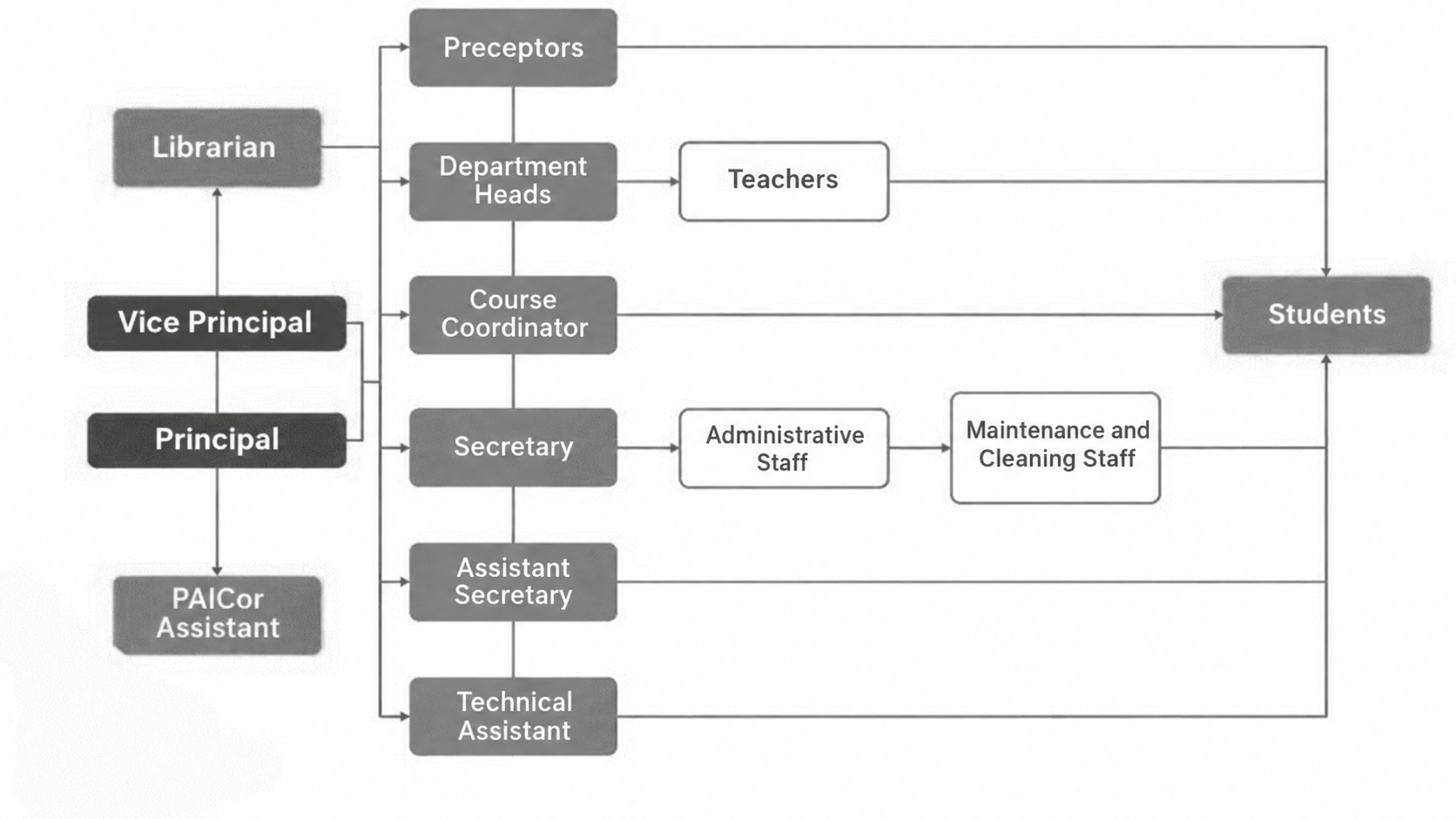
Vision
Since its beginnings, the institution has set as its main objective the creation of a space for exchange framed within education based on values, fostering personal fulfillment, integration into sociocultural life and the labor world, as well as continuation into higher education. From the school sphere, students are provided with learning tools that prepare them for everyday life and that also modify their structures of thought and values as subjects capable of improving the world they inhabit (3).
Mission
I.P.E.M aims, from its position in the educational space, to provide its students with the necessary tools to develop critical thinking and problem-solving through comprehensive and ongoing education. (3)
This implies that the knowledge learned and acquired throughout their training is significant and of great importance for their social and occupational integration and in all aspects of their daily life as active members of a community.
Values
The values expressed as priorities by the institution are tolerance, cooperation, participation, freedom to express and experience ideas, and solidarity, which are promoted with the aim of generating a favorable space for the development of interpersonal relationships. In turn, the goal is to learn more each day and teach better, since this has a direct impact on the improvement of educational quality, with students, teachers, and families being the main actors when it comes to participating and generating cooperative work.(3)
Delimitation of problem/need
In the context of the secondary-level educational institution that operates at I.P.E.M N° 193 “José María Paz”, it is proposed to work on the problem that arises from the lack of interest of students regarding the class proposals presented by teachers, which leads to low performance in classroom learning.
When focusing on and thinking about school disinterest, it is important to address it as a complex problem that cannot be simplified through reductionisms. It originates from multiple and diverse causes of social, cultural, contextual, economic origin, among others; these very important aspects directly determine the development of students and their performance in school life, but also outside the classroom they inevitably and directly shape them.
The growing lack of interest that young people show toward school education influences and permeates them to such an extent that it even comes to affect their self-perception, generating self-esteem conflicts. If attention is focused on the school context, what gives rise to this apathy of young people toward school later becomes academic deficit, and consequently, it makes evident the lack of competencies as being among its main consequences.
In this regard, to address the problematic situation underlying school disinterest, the proposal prepared by Huertas Montes (4), entitled “Effects of an educational program based on the use of ICTs on academic performance and motivation of students in the subject of technology in secondary education”, was taken as a background for informative reading.
The aforementioned document used a quasi-experimental methodology, adopting a pretest-posttest design with a control group, developing and applying the design of an educational intervention program for teaching the subject Technology in Secondary Education, and using tools corresponding to ICTs. Its purpose was to establish a relationship between the selected groups, comparing those in which the program was applied as opposed to those that did not receive this type of learning.
In this way, it became possible to observe its scope and influence on students' academic performance and motivation, resulting in students with better grades and greater motivation; therefore, the conclusion is reached that the application of an ICT-based educational program significantly improves school performance (4).
In turn, Martínez (5), in his proposal entitled “Education with ICT for the Knowledge Society,” made reference to the inclusion of ICT in the educational sphere, considering teacher training, expected impacts, and areas of application. The authors concluded on the importance of fostering research and the development of “creative techno-pedagogical lines derived from practice and comprehensive teacher training,” thereby increasing innovation and knowledge about the best way to include new technologies in classrooms.
Saiz (6) present their contributions in the text “Mediatizations and Schooling Processes: On the Lack of Interest That Secondary School Students Show Today,” where they identify certain characteristics that shed light on and lead to a greater understanding of the origins of this school disinterest. These aspects were presented through an interview directed at students from an institution in Córdoba, Argentina.
According to what was observed by the authors, the group's demand points to the way in which knowledge should be presented in school; some examples can be mentioned as follows: through the use of images, incorporating music, or with some motivating resource that involves a more active bodily activity. Observing the proposals, we can think that making an educational activity a creative, entertaining, and interesting product is not difficult or impossible; we can all achieve it, and this does not necessarily imply the use of technological means, but rather depends on the focus on which we place our attention.
This must be able to generate situations with a playful component that break with already existing structures that have not proven useful; it is necessary to break classic models and old structures, leave the classroom and the blackboard, go beyond books and the model of the teacher as a presenter of content, incorporating other elements and tools that can generate meaningful learning situations
It is of great importance to turn the school into a space of interaction, a place where the teacher can act as a guide and mediator in the theoretical-practical development of students. In this space, texts occupy an important place, but the context and the activities developed around them are also preponderant. All these aspects pertain to the teacher's task and are not foreign to the teacher.
As a result of this intervention process, the aim will be to identify and highlight the positive aspects of applying ICT in the learning process, since it is possible to observe in the aforementioned background a growing increase in motivation and interest on the part of students, fostering creativity, the development of critical thinking, and decision-making, as well as their improved problem-solving capacity in the face of the conflicts and resistance generated by new learning. In turn, the use of technologies strengthens camaraderie through group work, and individually the student develops strengthened self-esteem and autonomy in the learning process.
According to the contributions of Murillo (7), these new strategies favor learning by producing a positive effect on the students' process, while allowing teachers to use novel techniques that capture learners' attention, contributing to the construction of new knowledge and fostering their curiosity.
The viability of this study is based on the fact that the information provided by the institution allows a specific analysis, and that the problem detected can be addressed through a concrete and precise intervention plan that fosters the use of technology among the teachers of the I.P.E.M. in order to improve educational practices in the institution under study.
OBJECTIVES
General objective
Train the third-year teachers of I.P.E.M N°193 in the importance of the use of ICT, as well as encourage the incorporation of ICT as an innovative and interesting resource to develop their classroom practice, thereby promoting students' interest in and appreciation of the proposed topics.
Specific objectives
Briefly introduce a definition of ICT and its importance as a tool in our teacher training and daily pedagogical practice.
Present the technological tools that will be used in the training: a multimedia tool referring to the production of audio and its online dissemination (podcast), and another visual-graphic tool, as is the case of the infographic.
Develop and structure the teaching competencies necessary for interaction with TIC.
1. To explore and experiment in the field of graphic designs with the application of pictograms and audio as a trial for the subsequent implementation of ICT tools.
Justification
Student disinterest in school is a problem that affects all educational institutions at all social and cultural levels. The cause of this phenomenon, which generates resistance and blockages in young people, is not a whim typical of age and conflicts typical of adolescence. It originates in multiple factors such as family, social, economic, cultural, and often its origin is also individual, due to personal or peer conflicts and even generated by the institution itself, which fails to capture the needs of students.
The school, as an institution that shapes knowledge, must be an inspiring source and a positive influence for students, becoming a place of socialization and learning, not only at the educational level but also in the personal development of the adolescent.(8)
On the other hand, within the educational system another problem underlies that progresses inevitably: school dropout, a problem that strongly affects the educational system and arises as a direct consequence of lack of interest in school.
Given the problem proposed by the institution I.P.E.M N°193 “José María Paz”, the development of a plan aimed especially at the teachers of that institution is proposed, with tools designed from an innovative model. In this way, the aim is to promote a change in the organization, practices, and also in the attitudes of adults to achieve a positive relationship, in order to prevent the phenomenon of school dropout among young people.
The issue of disinterest and apathy shown in the classroom by students toward the various activities proposed in the subjects, a scenario that is constituted within the school environment in general, is not a current topic; however, nowadays it manifests itself more frequently, generating discomfort and serious tensions among the actors involved. This phenomenon is quite unfavorable for our teaching practices, since it leads to an impoverishment of learning objectives and a feeling or sense of frustration.
“What has happened for students to have gradually acquired an attitude linked to apathy and lack of motivation in relation to the activities and also to the relationships that occur there?” (6)
Chaves Montero (9) addresses in his study titled “Implementation of ICT as Educational Resources in Classrooms” the advantages of incorporating social networks and ICT into teaching-learning processes. All of this implies a new hopeful and positive outlook on these changes that are as profound as they are necessary.
In recent decades the educational system has undergone various transitional changes: it moved from a behaviorist educational model with the teacher as the main figure and the student limited to being a mere recipient of notes and/or imposed reference manuals, to a new perspective that currently understands that this model no longer responds to the needs that the student presents.
Today, the possibility is raised of thinking of the teacher as a guide who provides students with tools that allow them to learn more autonomously; that is, the teacher is no longer an “expert” and now fulfills the role of facilitator of learning. However, to achieve this, teachers must prepare and train in their profession, renew and rethink themselves, and reflect on their practice, but above all, they must focus attention not only on the knowledge they must impart but also on the actors involved who demand that knowledge from them, namely, the students.
As also postulated by other authors such as Villa Sánchez (10), Hung (11), and Saiz (6), ICTs call for the existence of “a new configuration of the didactic and methodological process (…) in which knowledge does not have to fall to the teacher and the student's role is not that of a mere receiver of information”.(12)
Based on the foregoing,1 it is proposed to think of new ways of learning and teaching, with a learner distanced from a passive role, who becomes actively involved and is a producer of their own knowledge. For this reason, we must guarantee a conducive space in which their opinions are heard, taken into account, and valued, giving rise to debate with their peers and to questioning what they do not consider correct or what does not convince them, thus demonstrating their capacity to produce supported critical judgments elaborated from their intellectual capacities and their perceptions, concerns, and fears, as well as from their subjectivity and ways of seeing the world. In this way, knowledge and learning will take on greater importance for them.
Theoretical Framework
First, it is appropriate to state that there is no consensus definition of the term “competencies,” much less a unified perspective regarding what can be understood by competencies in education. To approach the concept, we return to the definition of competency proposed by Agudín (10):
“We understand competencies as part and final product of an educational process. Thus, a competency will be its construction, and its performance will be the application of knowledge to execute a task or to construct an object; that is, a practical result of knowing. This notion of learning leads us to the constructivist conception of learning.”
Competency-based learning helps students develop practical skills that enable them to improve their performance as individuals inserted into a society that demands their active participation as members, developing their critical thinking in decision-making, the resolution of practical problems that daily life entails, their performance, and labor market insertion, among others. From any point of view, the acquisition of competencies and their management is always positive, since they contribute substantially to increasing opportunities, whether in the workplace or in all areas of their lives.
From the perspective of didactics and on the basis of cognitive theories with a constructivist conception of knowledge, these theories propose that the subject is an active constructor of meanings because he or she questions and challenges the reality that surrounds him or her. Thanks to this constructivist interaction, he or she appropriates the world, and it becomes represented in his or her mind, producing learning and knowledge. Thus, the subject who learns is active, observes, inquires, contrasts, and resolves conflicts or problematic situations in diverse and alternative ways, while the teacher, in his or her role, facilitates the achievement of these competencies.
It is very important that intervention projects be centered on these processes of learning production, emphasizing metalinguistic knowledge, starting from proposals that are meaningful for students. In this framework, reading and writing are important as part of the cultural heritage of every community, since literacy opens the necessary doors to turn its members into transformative agents of their social environment.
The acquisition of competencies leads to equity and to the development of a fairer and more equitable society; it is a right and an obligation to which every human being must have access. However, profound and deliberate changes are required to achieve equality rather than the unwanted effect of exclusion, which is also a consequence of new technologies when appropriate conditions are not in place. As Hung (11) argues:
“The incorporation of technologies into daily life, science, culture, social interactions, and educational contexts is growing. Thus, there is a need to renew methodological and didactic models in schools to anticipate a major difficulty when incorporating ICTs: the exclusion generated by them.”
In this regard, the proposal by UNESCO (13) is of interest, as it sets out a series of standards linked to the competencies in the use of ICT that teachers should possess. According to UNESCO, teachers should be:
Competent in the use of ICT.
Searchers, analyzers, and evaluators of information.
Problem solvers and decision makers.
Creative and effective users of productivity tools.
Communicators, collaborators, publishers, and producers.
Informed, responsible citizens capable of contributing to society.(13)
Under these equity principles, their meaning is discussed in relation to the needs of an increasingly complex, information-rich, and knowledge-based society, which requires both teachers and students to use technologies effectively as an indispensable requirement for living, learning, and working in today's world. From this perspective, it is proposed that the educational context should help students, with the teacher's mediation, to acquire the necessary capacities to become.
In the words of Saiz (6), this implies: “Being, from experiencing, developing and acting both from their rational capacities, as well as from their emotional, sensitive and sensory aspects.”
Among the technological tools that can be used to achieve the proposed objective, a multimedia resource involving the production of audio and its online dissemination (podcast) and a visual-graphic tool, such as the infographic, have been selected for this intervention.
The podcast is defined by Solano Fernández (14) as “a pre-recorded collection of audio files that can be automatically downloaded from a computer.” Although the term derives from Apple's iPod audio device and has been known since 2000 through Dave Winner, podcasts can also be played on other audio players.
In the educational field, podcasts constitute a didactic medium that can be created through a planning process by either a teacher or a student, providing significant benefits that are easily adaptable to diverse contexts.
As for infographics, these are defined by Leturia (15) as “a combination of words and visual elements that explain the events described in the article and place the story or its protagonists in a specific context.” In education, they can be used as resources to tell a story or to provide information more effectively, answering the what, who, when, where, how, and by whom, in order to objectively show what is meant to be conveyed.
In this regard, Leturia (15) details the importance of being simple and economical with the elements, taking into account factors such as proportion, perspective, texture, and shapes. The Piktochart tool is useful for designing attractive infographics; to use it, an account must be created and either an existing template chosen or a blank template used as a starting point.
Work Plan
To make better use of technological resources at I.P.E.M. Nº 193 José María Paz, improve educational practices, and motivate students to be more active in their learning, the following activities are presented:
Workshop 1: “Thinking about a new perspective for our classroom practice: ICT incorporated as a valuable tool”
Objective
To introduce clearly and precisely a definition of ICT and everything this concept encompasses (devices, functions, characteristics, and types); to present its importance as a tool in the teacher training of the personnel to be trained and in daily pedagogical practice through a presentation using PowerPoint and the projector. Finally, to develop a production activity applying resources (infographic and podcast) in the successive workshops.
Responsible: Balberdi Ana, advisor of the intervention plan.
Location: Multimedia room.
Time: 240 minutes.
Start: (15 min.)
Formal presentation by the advisor, welcoming the teaching staff and administrators of the oriented cycle (morning shift) from I.P.E.M N°193, in the institution's multimedia room.
Explanation of the questions that teachers should take into account when presenting, working on, and evaluating the activities to be developed with students by means of a Padlet, for more focused reading comprehension:
To present ICT as a novel resource to bring into the classroom, establishing alternative ways of communicating, disseminating, circulating, and storing knowledge in the classroom.
To highlight the importance of their application for strengthening teaching practice by incorporating these new tools.
To facilitate the teaching task and foster students' autonomous learning.
To guide teachers in the production of more dynamic and engaging activities and classes.
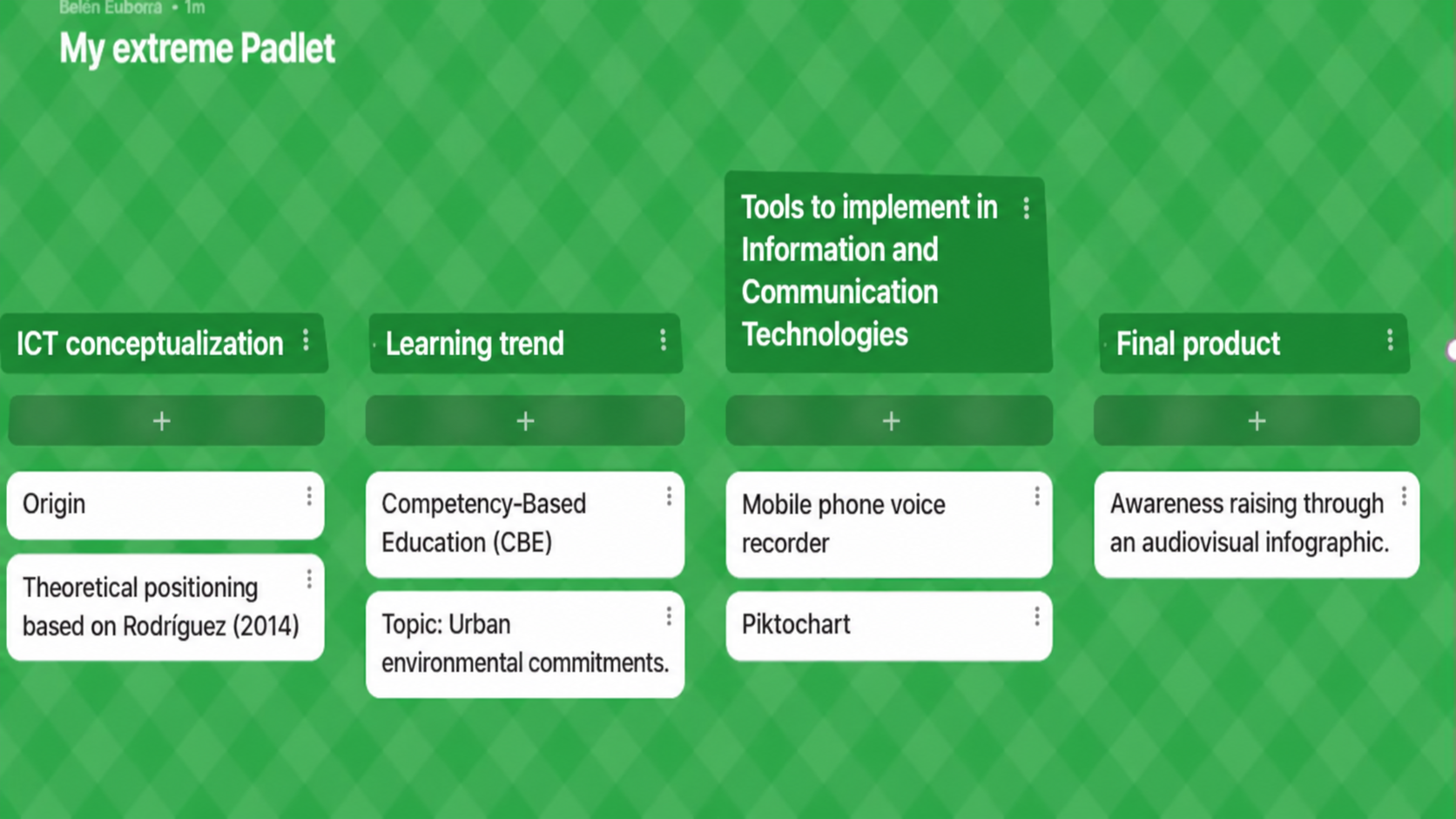
Source: https://padlet.com/belubalberdi/mi-padlet-extremo-zrv2suk0lpg6nk3dhttps://padlet.com/belubalberdi/mi-padlet-extremo-zrv2suk0lpg6nk3d
DEVELOPMENT: The advisor, in her role as trainer, will present to the teaching staff of the I.P.E.M. who attend the workshop the problematic school situation underlying the institution and that gave rise to this training; for this purpose, she will use the General Assessment Plan 2017 and the P.E.I. document prepared by the institution. The presentation will be delivered via PowerPoint, reflecting with the teachers on the causes of the high rates of grade repetition and dropout, and inquiring into the actions they carry out to make their educational practices more stimulating.

Source: https://siglo21.instructure.com/courses/18578/pages/plan-de-intervencion-modulo-0#org1https://siglo21.instructure.com/courses/18578/pages/plan-de-intervencion-modulo-0#org1
As the opening activity, an awareness-raising session will be conducted on daily teaching practices and the need to improve them. To this end, the advisor will use a brainstorming session, through which key words will be proposed in relation to the reading of module zero corresponding to I.P.E.M N°193 “José María Paz,” encouraging teacher participation as a dynamic activity to begin and activate the attention of the participants (50 min).
Introduction to the concept of ICT at a global level and to symbolic/graphic representation using the mobile phone, in order to highlight the importance of its incorporation into the classroom as an innovative resource (15 min).
For the presentation of the concept, the advisor will use the contributions of Rodríguez et al. (2014). Using a WhatsApp audio as a resource, the advisor will send it to the teachers via Bluetooth so that they work in the form of a debate. The use and incorporation of these allow us to address class topics and renew our training practice, obtaining better results from learners and, consequently, favoring academic results (130 minutes).
Presentation of the proposed activities
Prior to the work on production activities with the I.P.E.M teachers, the advisor will provide a theoretical development of the concept of infographics and a presentation of a model, as well as the playback of a podcast as an illustration of the topic; the main characteristics for its creation will be given (I think this is what they are asking of you: to mention the activities) (30 min).
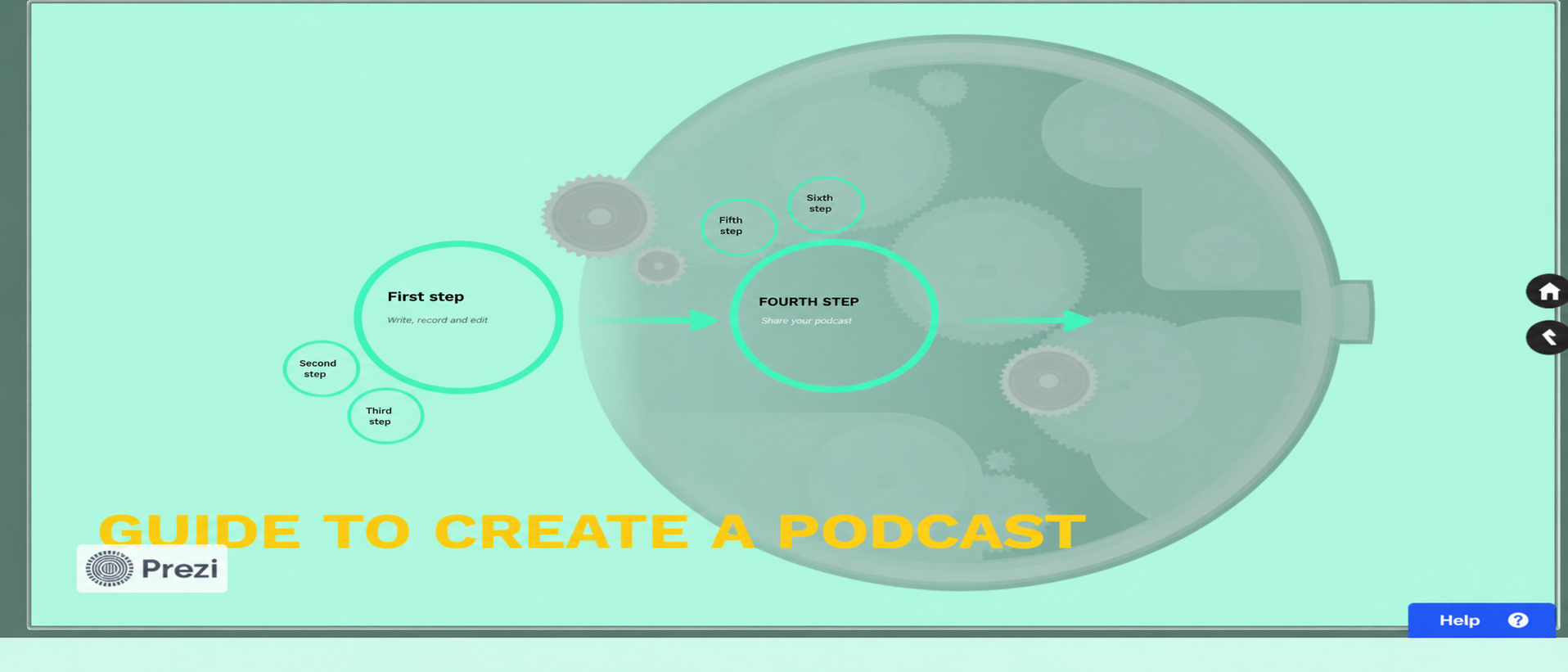
Source: https://prezi.com/p/edit/yb04jvjmitwj/https://prezi.com/p/edit/yb04jvjmitwj/
Closing: after completing the development of the theoretical part and the activities for producing the competencies, the audios produced in the previous activity and the sketch prepared through group discussion will be used as elements for the task.

Source: https://es.unesco.org/news/competencias-digitales-son-esenciales-empleo-y-inclusion-socialhttps://es.unesco.org/news/competencias-digitales-son-esenciales-empleo-y-inclusion-social
Workshop 2
Objective
To present the technological tools that will be used in the training: a multimedia resource related to the production of audios and their online dissemination (podcast), and a visual-graphic resource, as in the case of the infographic.
Person responsible: intervention plan advisor Balberdi Ana.
Location: multimedia room.
Time: 240 minutes.
INTRODUCTION
The session will begin with a dynamic presentation of the proposed activities, focusing on the concepts of “infographic” and “podcast” (30 min).
Development: the debate technique will be used to propose strategies related to the capabilities mentioned by UNESCO (25 min).
Next, the procedures for working with the web tool Piktochart (16) through the use of netbook and projector resources will be presented. In her role as training teacher, the advisor will explain the main functions of the tool, thus allowing the trained teachers to carry out the proposed task as a production activity (45 min) (17).
Considering the concepts of the ICT tools already presented by the advisor, the teachers will begin the workshop activities; first, they must produce a series of audio recordings based on the guiding document Urban Environmental Commitments, which will subsequently be used in the production of a podcast. To complete the task, they will use their cell phones and the recorder function (35 min.) (18).
On the other hand, in a second stage of the activity, they must select information and images using the netbooks and prepare a sketch or draft with them. This will then serve as base material to be captured in an infographic (45 min.) (19).

Building on the simulation previously developed by the teachers, an activity prior to the closing activity will be presented to them: they must apply the tool presented to their proposed situation (30 minutes) (20).
Closing: the work produced during the session will be shared, along with a reflection on what was learned (30 minutes).
Workshop 3: How to think about and structure competencies including ICT? Objective:
Develop and structure the teaching competencies necessary for interaction with ICTs, efficiently incorporating what has been learned throughout the previous workshops.
Provide the teachers of I.P.E.M N°193 with essential support resources and materials to facilitate the implementation of ICT in the classroom.
Person responsible: intervention plan advisor Balberdi Ana.
Location: multimedia room.
Time: 240 minutes.
Start: in this teacher learning instance, having a knowledge base in ICT tools (worked on in Workshops 1 and 2), they will demonstrate their use and application, appreciating their positive value. For her part, the advisor will provide the necessary elements to contribute to the construction and planning of their classes, taking ICTs as an innovative tool of applied technology that allows improving, producing and
develop learning in our students and simultaneously capture their attention.
To begin the session, the advisor will present a reading on the importance and predominant role of the podcast for students. Ada Funes. (January 22, 2020) What is a podcast: Definition and functioning. https://www.elespanol.com/como/podcast-definicion-funcionamiento/461204772_0.htmlhttps://www.elespanol.com/como/podcast-definicion-funcionamiento/461204772_0.html
DEVELOPMENT
The teachers of I.P.E.M N°193, organized into groups, must determine and select the guidelines for assembling an infographic and including the podcast, defining the main basic criteria (topic, subtopics, selection of a class content) to be considered in preparing the audiovisual material they must present (30 minutes).(21)
The advisor will explain to the attendees of the Workshop that, in order to develop the activity and the finished product, they should take into account the area in which they work as teachers at the I.P.E.M. (30 minutes).
The advisor will present a new ICT tool: Piktochart. To deliver the presentation, she will use a projector and a netbook as support equipment; she will clearly and precisely explain its features, use, and possible applications, and will also show a practical example of its use. This information will help consolidate the teachers' understanding and facilitate the subsequent completion of the task proposed as a production activity (30 minutes).
After the theoretical development has been completed, the advisor will give the guidelines for the production activity to the teachers: they will be asked to capture, through the use of the Piktochart app, the main points of the quadrimestral collaborative sequence of interest by using images and inserting audio as an explanation in accordance with an explanatory tutorial, in addition to a video (https://youtu.be/-lFX2X7n51Y)
For the development of the activity, participants must position themselves within the socio-critical paradigm (110 minutes).
Educar Chile [Pictochart tutorial] (April 30, 2021).
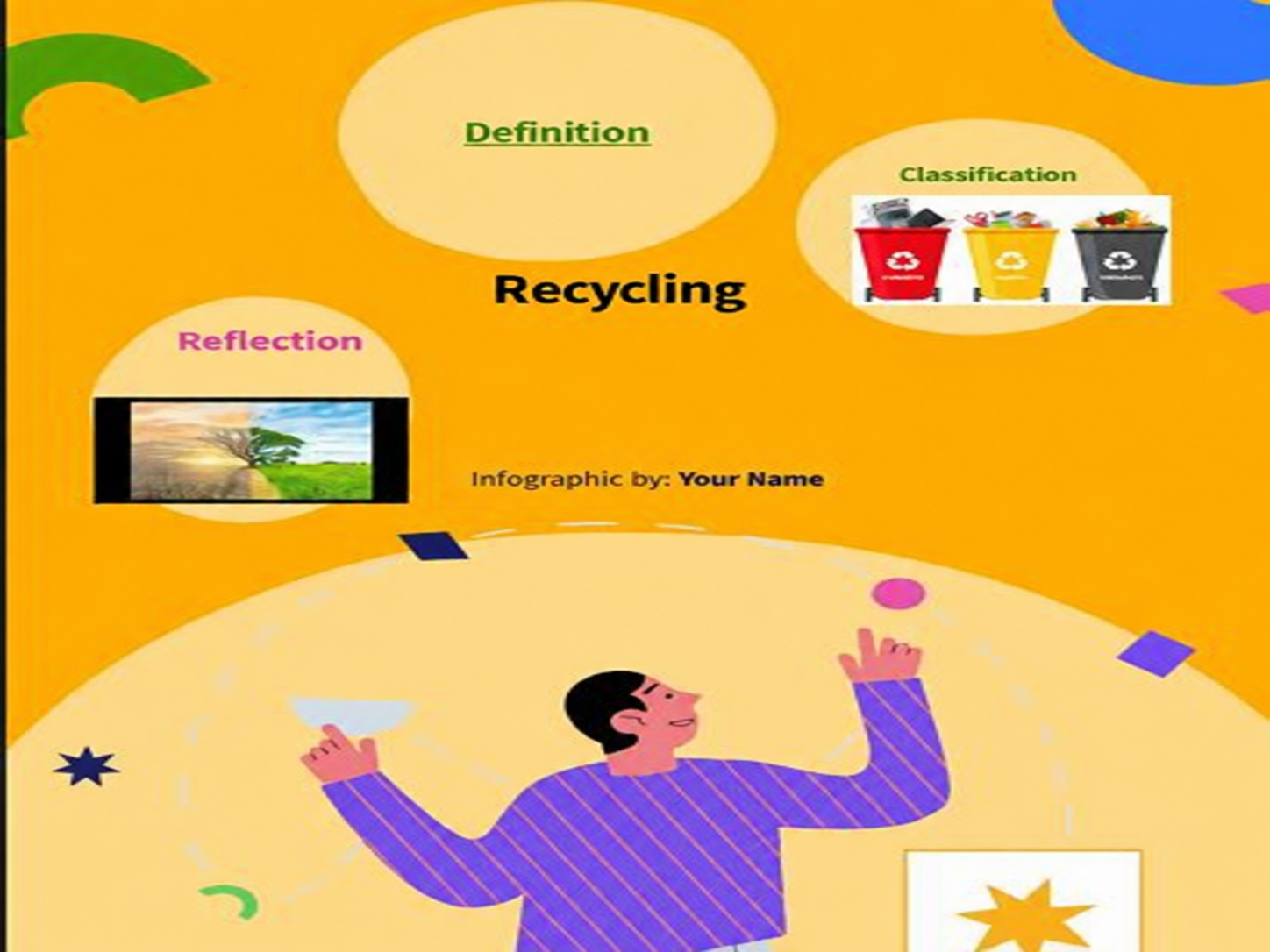
Source: https://create.piktochart.com/beta/teams/29389298/saved/61821105https://create.piktochart.com/beta/teams/29389298/saved/61821105
Closing: The presentation will be carried out as a group, choosing the final format, which must include the follow-up guide comprising the following criteria: Task assignment and creation of obligations (20 minutes). Workshop 4: Innovating our practice to strengthen communication with students
Objective
Explore how ICT can enrich, improve, and diversify teaching strategies, enabling the creation of new interactive educational materials, access to updated information, the development of digital skills in the classroom, and effective communication with students.
(To explore and experiment in the field of graphic design through the application of pictograms and audio as practice for the implementation of a class.)
Responsible: Intervention plan advisor Balberdi Ana. Location: Multimedia room.
Time: 240 minutes. Start:
The advisor will invite the ICT manager to inform and explain to the teachers of I.P.E.M N°193 about the technological possibilities available to them at the institution, the functions and characteristics of the school server, and accessibility for uploading material to the server (30 minutes).
DEVELOPMENT
The advisor will present the rubric-based assessment model to the I.P.E.M teachers, using a Prezi resource for the presentation, explaining the benefits of its use as a facilitator of assessment processes. The model will be taken from: Ideas para el aula [14 March 2021]. (60 min)
To evaluate the level of capacity achieved according to the production carried out and the performance of each group during the workshop conducted at I.P.E.M, a rubric will be applied, which the teachers themselves will create as a practice activity, evaluating their colleagues' production in completing tasks from their different areas (100 minutes).
Closing: Each group will present in turn, within a stipulated time of no more than 10 min, a presentation as a final socialization of the outputs of the last workshop (50 minutes).
Using Piktochart, they must create an infographic that can incorporate sound on a topic of their choice from the shared PDF on urban issues.
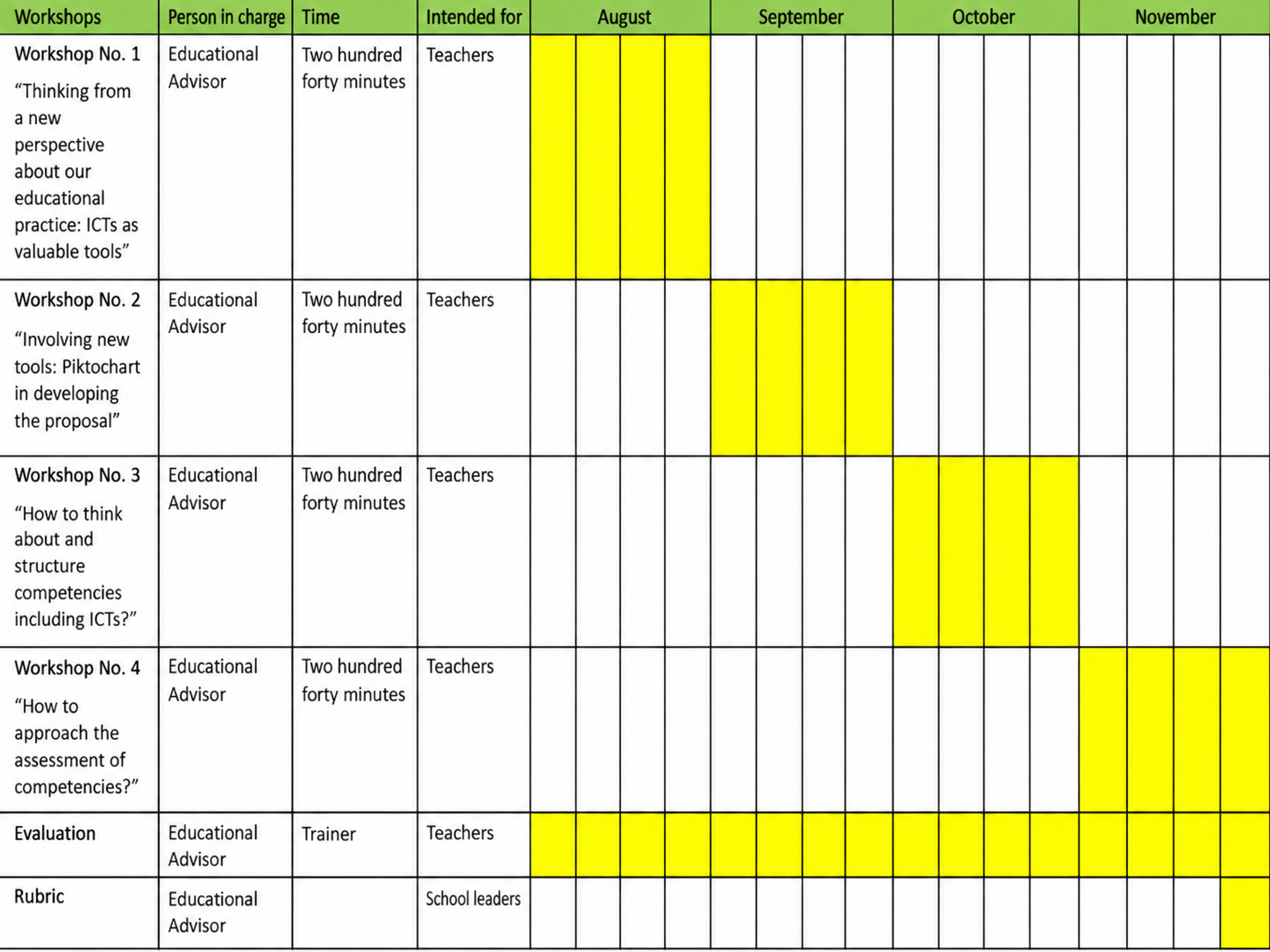
Workshop number and name | OBJECTIVES | Actions | Application dates | Time |
|---|---|---|---|---|
Workshop No. 1: “Thinking about a new perspective for our educational practice: ICTs as valuable tools” | Briefly introduce a definition of ICT and its importance as a tool in our teacher training and daily pedagogical practice. | Presentation of a school situation by means of a Padlet in the multimedia room. Awareness-raising about their daily practices by analyzing a PowerPoint on the general assessment plan for 2.017 of I.P.E.M N°197. Introduction to and reflection on the topic of ICT through Prezi, presenting a podcast. Socialization of the work by preparing a script to simulate the conditions under which a podcast is produced, with the main criteria established by the area's teachers for conducting formative assessment | 01 August_31 August 2023 | 15 minutes. 105 minutes. 90 minutes. 30 minutes . |
Workshop No. 2 “Involving new tools: Piktochart in the preparation of the proposal” | Present the technological tools that will be used in the training, a multimedia resource that refers to the production of audios and their online dissemination (podcast), and another of a visual-graphic type, as is the case with the infographic. | Team simulation on the problem posed to apply the competency-based work approach. Produce a series of audio recordings related to urban environmental commitments to be applied in the development of a podcast. Infographic draft related to the contents of the chosen topic. Tutorial on the use of infographics | September 1 _ September 30 | 30 minutes. 110 minutes. 95 minutes. |
Workshop No. 3 “How to think about and structure competencies including ICT?” | Develop and structure the teaching competencies necessary for interaction with ICTs. | Web reading on the importance of offering podcasts to students. Debate and determine guidelines for creating an infographic and including the podcast. Procedures for working with the Piktochart web tool. | October 1_October 31 | 30 minutes. 155 minutes. 55 minutes. |
Workshop No. 4 “How to approach the assessment of competencies?” | Explore and experiment in the field of graphic designs with the application of pictograms and audio as one trial for the subsequent implementation of ICT tools. | The evaluation model is shown. Evaluate the production of their colleagues. Presentation as a final socialization. | 1 November _ 30 November | 30 minutes 90 minutes 100 minutes |
Human Resources
Professional in the field of Computer Science.
Teachers belonging to the Oriented Cycle of I.P.E.M N° 193 “José María Paz”.
Materials/Technical
Twelve netbooks, each designated for an area referent of the third year.
A projector.
A screen with a tripod.
8 cardstocks, 2 markers, 10 white sheets.
Each teacher's cell phone. Content Resources.
Content resources
Institutional PEI.
Evaluation of the 2017 management plan.
Competency-based learning: a proposal for the assessment of competencies - Aurelio Villa Sánchez.
UNESCO Standards on ICT Competencies for Teachers, Final Version 3.0.
Budget
Honoraria for the training instructor; the municipality of Saldan will be requested to pay them.
Basic teaching hour with 12 years of seniority = 3 796.
960 hours worked. Final fees 36 411.
Evaluation
The activities proposed during the workshop, developed by the teachers of I.P.E.M N°193, as well as the role and positioning of the advisor in her practice as a trainer, are not exempt from this instance. Evaluation also entails learning, and there are different criteria for addressing it; when contextualized within the workshop, the selected evaluation seeks to identify and recognize the level of difficulty and the achievements attained during the implementation and development of the approach, in relation to the use of TIC resources—podcast and Piktochart—by the trained teachers. The selected criterion will be that of formative and summative evaluation, applied at the start and end of the training, using the rubric instrument attached in Figure 2. If we adopt the perspective of the authors studied in this intervention project, we will draw on the contributions of Philippe Perrenoud regarding formative evaluation.
Formative assessment is an educational assessment approach centered on learning processes; its objective is to improve the teaching and learning process. In contrast, summative assessment is used to measure the level of achievement or the final result of learning. Formative assessment is carried out continuously throughout the entire process.
As a pedagogue, Philippe Perrenoud made important contributions to the topic of formative assessment, highlighting its importance as a very useful tool for supporting student learning and improving the quality of teaching.
Perrenoud argues that formative assessment should focus on the development of students' competencies. According to his approach, assessment should be much more than a measurement of knowledge and should focus on evaluating students' ability to apply that knowledge in real situations.
The author introduces the term authentic assessment; this involves assessing in real situations and contexts, similar to those encountered outside the classroom. The approach is based on the idea that students learn better by facing authentic challenges and are assessed according to their performance when confronted with those challenges.
Upon completion of the workshop (semester) and after the socialization of the content, a form with the rubric for their evaluation will be sent to the professionals via Google.
Table 2. Proposed rubric for teacher evaluation
Evaluation criteria | Not achieved | Partially achieved | Achieved |
|---|---|---|---|
Assertive communication within the class group | [empty cell] | [empty cell] | [empty cell] |
Activities aligned with the methodology proposed by the trainer | [empty cell] | [empty cell] | [empty cell] |
Characteristics of oratory are observed | [empty cell] | [empty cell] | [empty cell] |
Knowledge of the construction and production of the activity | [empty cell] | [empty cell] | [empty cell] |
RESULTS
It is expected that the implementation of these new methodologies will enable teachers to improve their classroom practices by appropriating a valuable and enriching methodological guide that helps them detect signs of their students' lack of interest and find innovative solutions to reverse the situation efficiently and effectively, thus being able to reflect on their classroom practices and to generate feedback and construction processes.
By generating these profound changes in their practice, they will be able to convey a different perspective to their students; this will be reflected in better peer relationships and in feelings of affinity with and belonging to their group through the development of basic competencies and reflective thinking.
Through ICTs and their daily use, students express the emotions generated by the situations of daily life that they experience and that substantially mark them. Within the school setting, ICTs and their implementation foster the appropriation of cognitive strategies and tools that contribute to the development of young people's critical and affective thinking; this will allow them to resolve, in the near future, the conflicts that the surrounding reality poses as challenges and will also become a source of new knowledge useful for their adult lives. The possibilities for achieving new learning are infinite and can in the future be translated into employment that involves the use of ICTs, whether through the creation of content or multimedia languages, the use of graphic tools, or the creation of web pages, blogs, etc. Developing technology is present, but so are orality, writing, and reflection; the place where these capacities and skills are acquired is the school setting. Therefore, we must take advantage of ICTs and use them as a valuable resource.
CONCLUSIONS
Information and Communication Technologies (ICTs) have revolutionized the way we interact, communicate, and access information. These technological tools have had a significant impact on all aspects of our lives, from the personal sphere to the business and social spheres.
First, ICTs have transformed the way we communicate. Social networks, instant messaging applications, and videoconferences allow us to connect with people from all over the world quickly and efficiently. Distance is no longer a barrier to communication, and we can share ideas, information, and experiences in real time.
Moreover, ICTs have democratized access to information. The Internet provides us with a vast repository of knowledge within our reach. We can search for any information we need, learn new topics, access online courses, and stay informed about the latest advances in any field. This has led to an increase in education and digital literacy.
However, it is also important to take into account some challenges associated with ICTs. The digital divide remains a reality, with disparities in access to technology and connectivity among different regions and population groups. Furthermore, privacy and data security are important concerns, since the use of ICTs involves sharing personal and sensitive information.
In conclusion, ICTs have transformed our society profoundly and continue to do so. They have changed the way we communicate, access information, and carry out our daily activities. If used responsibly and ethically, ICTs can improve our quality of life, foster innovation, and promote socioeconomic development. However, it is important to address the associated challenges and ensure that everyone has the opportunity to benefit from these technological tools.
References
- 1 Rodríguez M, De la Calle CV, Malaver MO, Gallego JD, Flórez JC, Henao CE, et al. Aportes de los doctorados de educación en ciencia, tecnología y sociedad desde la sistematización de sus investigaciones doctorales científicas y formativas, 2000-2010. Rev Interam Investig Educ Pedagog RIIEP. 2014;7(1). https://doi.org/10.15332/s1657-107X.2014.0001.04
- 2 Téliz F. Uso didáctico de las TIC en las buenas prácticas de enseñanza de las matemáticas. Cuad Investig Educ. 2015;6(2):13-31. http://www.scielo.edu.uy/pdf/cie/v6n2/v6n2a02.pdf
- 3 Universidad Siglo 21. Módulo 0. Plan de Intervención. I.P.E.M N°193 “José María Paz”. Córdoba: Universidad Siglo 21; 2019. https://siglo21.instructure.com/courses/18578/pages/plan-de-intervencion-modulo-0#org1
- 4 Huertas Montes A, Pantoja Vallejo A. Efectos de un programa educativo basado en el uso de las TIC sobre el rendimiento académico y la motivación del alumnado en la asignatura de tecnología de educación secundaria. Educ XX1. 2016;19(2):229-250. https://www.redalyc.org/pdf/706/70645811009.pdf
- 5 Martínez J, Tapia E. Educación con TIC para la sociedad del conocimiento. Revista Digital Universitaria. 2013;14(1):1-12. http://ru.tic.unam.mx/bitstream/handle/123456789/2101/art16_2013.pdf
- 6 Saiz MC, Maldonado MM. Mediatizaciones y procesos de escolarización: acerca del desinterés que presentan hoy los alumnos en la escuela secundaria. Cuadernos de Educación. 2010;(8). file:///C:/Users/maria/Downloads/gloriaborioli,+Journal+manager,+811-2881-1-CE.pdf
- 7 Murillo J. Investigación iberoamericana sobre enseñanza eficaz. Revista Red de Posgrados en Educación. 2016. https://www.scielo.org.mx/scielo.php?script=sci_arttext&pid=S1405-666662016000200471
- 8 García Guavita CJ. Mirando por la ventana: una caracterización del desinterés escolar, estudio de caso del colegio Ofelia Uribe de Acosta - IED de Bogotá, localidad de Usme. Bogotá: Universidad Santo Tomás; 2017. https://repository.usta.edu.co/bitstream/handle/11634/4104/2017juliogarcia.pdf?sequence=1
- 9 Chaves Montero A. Implementación de las TIC como recursos educativos en las aulas. En: Las TIC como plataforma de teleformación e innovación educativa en las aulas. Sevilla: Egregius; 2018. p.136-145. http://hdl.handle.net/10272/14558
- 10 Villa Sánchez A. Aprendizaje basado en competencias: una propuesta para la evaluación de las competencias genéricas. Bilbao: Universidad de Deusto; 2007.
- 11 Hung ES. Factores asociados al uso de las TIC como herramientas de enseñanza y aprendizaje. Barranquilla: Universidad del Norte; 2015. http://manglar.uninorte.edu.co/bitstream/handle/10584/5704/9789587416336%20eFactores%20asociados%20al%20nivel%20de%20uso%20de%20las%20TIC.pdf
- 12 Riveros VS, Mendoza MI. Consideraciones teóricas del uso de la Internet en educación. Omnia. 2008;14(1):27-46. https://biblat.unam.mx/hevila/OmniaMaracaibo/2008/vol14/no1/2.pdf
- 13 UNESCO. Normas UNESCO sobre Competencias en TIC para Docentes. Versión final 3.0. París: UNESCO; 2007. https://www.campuseducacion.com/blog/wp-content/uploads/2017/02/Normas_UNESCO_sobre_Competencias_en_TIC_para_Docentes.pdf
- 14 Solano Fernández IM, Sánchez Vera MM. Aprendiendo en cualquier lugar: el podcast educativo. Pixel-Bit Rev Medios Educ. 2010;36:125-139. https://www.redalyc.org/pdf/368/36815128010.pdf
- 15 Leturia E. ¿Qué es infografía? Revista Latina de Comunicación Social. 1998;4. https://web.archive.org/web/20180509063846id_/http://www.revistalatinacs.org/z8/latina_art45.pdf
- 16 Educar Chile. Tutorial Pictochart. 30 abr 2021. https://www.youtube.com/watch?v=_QrV5737xJ4
- 17 Funes A. Qué es un podcast: Definición y funcionamiento. 22 ene 2020. https://www.elespanol.com/como/podcast-definicion-funcionamiento/461204772_0.html
- 18 Argentina. Ley Nº 24195. Ley Federal de Educación. Buenos Aires; 1993. https://www.argentina.gob.ar/normativa/nacional/ley-24195-17009
- 19 Argentina. Ley Nº 26206. Ley de Educación Nacional. Buenos Aires; 2006. https://www.argentina.gob.ar/sites/default/files/ley-de-educ-nac-58ac89392ea4c.pdf
- 20 Prezi. Ideas para el aula. Cómo hacer diapositivas bonitas con Prezi. 2021. https://www.youtube.com/watch?v=cUu3F-sZX_s
- 21 Murillo A. Qué es innovación educativa. Rediech. 2017 oct 3;9(17). https://observatorio.tec.mx/edu-news/innovacion-educativa/
Declarations
Funding
The authors did not receive funding for the development of this research.
Conflict of interest
The authors declare that there is no conflict of interest.
Authorship contributions
Conceptualization: Ana Belén Balberdi, Sandra Del Valle Soria.
Data curation: Ana Belén Balberdi, Sandra Del Valle Soria.
Formal analysis: Ana Belén Balberdi, Sandra Del Valle Soria.
Writing – original draft: Ana Belén Balberdi, Sandra Del Valle Soria.
Writing – review and editing: Ana Belén Balberdi, Sandra Del Valle Soria.