Abstract
Technological innovations have transformed the way organizations communicate, and social networks -especially Instagram- have led to the emergence of new opinion leaders: influencers. The purpose of this writing was to know the effects of using influencers-foodie instagramer- as an external communication strategy to position a gastronomic brand. Within this framework, the variables were analyzed from a specific perspective of Public Relations. This work takes the form of a descriptive study, based on a mixed approach with a non-experimental cross-sectional design; using as techniques for data collection the semi-structured interview with the foodie instagramer "Morfando Ando, and the content analysis of the Instagram profiles of both the foodie and three gastronomic brands from Cordoba that used this foodie. The results show that the influencers establish a bridge between the brand and the followers, constituting an effective external communication tool, by mutually empowering each other within the framework of the circular engagement process that is generated between the foodie instagramer, the gastronomic brands and the followers who It represents a challenge for Public Relations to try to maintain engagement with both the brands and the influencer's followers, because there is a fine line between the influencer as a brand and the influencer as a positioner of another brand.
Keywords
Instagram, Foodie, Public Relations, Gastronomic Brand
INTRODUCTION
The following work is framed within the scientific manuscript modality, proposed by the Public and Institutional Relations program at Universidad Siglo 21, within the framework of the strategic topic: “Influencers and new media.” Based on my personal and professional interests, I intend to investigate the effect of using the foodie Instagramer as an external communication strategy from Public Relations for the positioning of a gastronomic brand on the social network Instagram in the province of Córdoba (Argentina).
Humanity is immersed in a globalized world, where limits as such no longer exist and the immediacy and abundance of information are characteristics of this era; social networks and the various forms of digital communication have become objects of study for different areas and academic disciplines that seek to understand the transformations they generate and their impact on social life. We are faced with what Catells (1) called the "network society," in which information is the key ingredient of our social organization, and in which “the flows of messages and images from some networks to others constitute the basic fiber of our social structure.” Levy (2), for his part, defines this phenomenon as cyberculture or digital society, referring to the hyperconnected reality in which we live, where time seems increasingly fleeting when we experience that with a single click we can communicate with someone from another country, regardless of the time difference or the kilometers of distance between us. It is precisely in this context that the present research is framed.
Have you ever wondered how many hours a day you spend connected? According to Mena Roa (3), on average, the global population devotes at least 6 hours 54 min of the day to browsing the Internet, estimating that in 60 seconds around 695 000 stories are published on Instagram and approximately 500 hours of video are shared on YouTube. These data show that the idea of the "global village" proposed by Marshall McLuhan (4) has become a reality. Avilia (5), corroborating this approach, argues that:
(…) thanks to social channels we are "neighbors" of people who live thousands of kilometers away. We experience the phenomenon of fashion and social influence as if we lived in the same societies and even begin to use increasingly similar languages…
Within this line of reasoning, and returning to the topic that was decided to address, it is appropriate to retrieve those works linked to the research problem, which has been studied and investigated by professionals from various disciplines, primarily from Marketing and Advertising. However, when conducting the review of background at the local level, only a single work was found that addressed the use of influencers in the gastronomic sector; in contrast, a significant number of studies were found on the “influencer” phenomenon itself and in relation to other sectors, especially fashion. This reality reveals a knowledge gap that justifies this research, since although there is a precedent that analyzes the gastronomic influencer in the local context, it does not do so from the perspective of Public Relations.
At the national level, particularly noteworthy is the final degree project by María Candela Chiesa (6), titled “Influencer Marketing. A Gastronomic Enhancer?” from Universidad Siglo 21 in the Marketing program, which shares the object of study (gastronomic influencers) and the geographical context.
Second, there is the thesis by Juan Cruz Campero Cuello (7), entitled “The influencer boom! Study of attributes and their impact on marketing indicators” (Universidad Nacional de Córdoba), which, in relation to this work, offers relevant information about the figure of the influencer and the attributes that allow them to impact the public.
On the other hand, the research conducted by María Victoria Ovejero Ferreira (8), entitled “Influencers: effectiveness of their communication strategies in generation “Z” of the city of Córdoba”, which analyzes the impact of Instagram influencers on this generation, constitutes a valuable contribution as background for this research by focusing on the social network Instagram; lastly, but no less significant, the work proposed by Universidad Siglo 21 is highlighted, which constitutes the theoretical foundation of this research: “Influencers and digital communication strategies in the Argentine mobile telephony sector during 2018”, since it provides the specific perspective of Public Relations on this social phenomenon.
Given the lack of a significant number of local studies on the specific object of this research, the search was expanded to the international level, using as selection criteria those works that focused on the use of influencers in the gastronomic sector. It should be noted that a varied body of research on this topic was found, so it was decided to retrieve those that addressed some aspect of the research problem: (a) only those referring to the gastronomic influencer on Instagram; (b) research on the effects of influencers on the positioning of gastronomic brands.
Along these lines, the research conducted in the area of Commercial Administration (Universidad Tecnológica de Antioquia) by Sandra Milena Amaya Henao (9), titled “Impact of Influencers on the promotional strategies of the gastronomic sector of the city of Medellín”, demonstrated that influencers on Instagram are the preferred option for establishments in the sector when promoting their products, since they achieve greater reach in less time and at lower cost than traditional media.
According to the criteria already mentioned, the research conducted by Gina Alejandra Díaz Guevara (10) from the Social Communication program at Universidad Santo Tomás, Bogotá, is highlighted; they analyzed the use of recognized Colombian influencers as a communication strategy for the positioning of two gastronomic brands, concluding that these have a significant communicative impact on consumer decision-making when purchasing a product or service.
Within this framework, in which the studies reviewed as background reveal the gap that exists on the subject at the local level and from Public Relations, this work proposes a theoretical approach to this phenomenon based on the concepts of “external communication” and “opinion leaders” in order to analyze, from a specific Public Relations perspective, the figure of the influencer on Instagram and its impact on the gastronomic sector.
Precisely, from the Public Relations approach—unlike Advertising—sales constitute an indirect goal, aiming at medium- and long-term results; external communications or Outdoor communications are intended to ensure that organizations or brands relate to groups of people who, while not belonging to the institution, are linked to it, seeking a deeper impact on the recipient, where feedback is essential.(5)
Paul Capriotti (11), in this sense, refers to integrated communication, which must be strategically planned in order to achieve profitability, stating that: (...) we find ourselves in a “mediated” society, in which there is a scarcity of personal contact and direct (face-to-face) knowledge of the organization. This means that, increasingly, an indirect or "mediated" knowledge of the company on the part of publics is imposed. For this reason, detailed planning of the various communication resources is essential (…).
Both Avilia and Capriotti agree that external communication should not be left to chance, but rather should be planned strategically according to specific objectives. Given that, through the management of external communication, a brand can improve its positioning, make its products or services known, improve its image and generate engagement.(12) In this context of major technological transformations and traversed by enormous masses of information, a company's external communication becomes a challenge for Public Relations, whose professionals must generate strategies so that the message impacts the audience without going unnoticed on the different communication platforms (Instagram, Facebook, Twitter, Pinterest, YouTube, Snapchat, among others).
Along these lines, we recognize that new platforms are inherent to the reality in which we live and many times “truth” is known through them; everyday life is traversed by digital media, making the act of sharing images or videos of daily life on social networks commonplace. How many times, before starting to eat, is there someone who asks to wait to take a photo of the dish... Vacations, concerts, pets, and moods are reflected in Instagram stories or Twitter characters. It is precisely in this scenario that the figure of the influencer is born, used by disciplines such as Marketing or Public Relations as an effective external communication tool to reach interest groups (stakeholders), due to the reach they have through networks.
To understand the idea of the influencer, we recover the concept of opinion leader, within the framework of communication theory, starting from the recognition that communication plays a primordial role in the life of any human being. In this sense, Wolf Mauro (13) provides a classification of the most cited communication models in Mass Communication Research, helping us understand the influencer phenomenon from the Two-Step flow of communication theory, or two-step flow of communication theory, which includes in said process an intermediary between sender and receiver: the opinion leader.
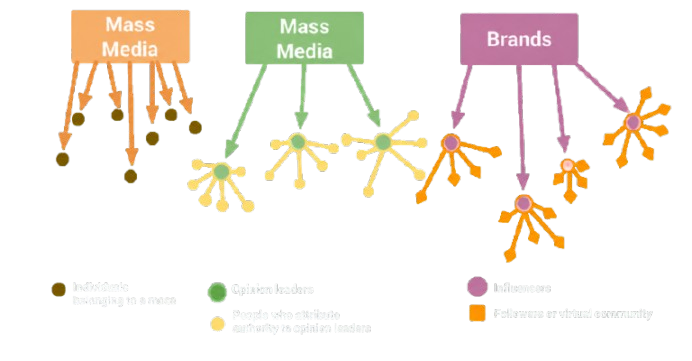
The upper graph shows the evolution of the communication flow over time, observing that, in contemporary times, influencers fulfill the same function as opinion leaders. Influencers, like opinion leaders, act as mediators between information and society. Influencers are personalities who have a community, generally represented by followers, which they are capable of influencing. This capacity for influence, according to the Real Academia Española (14), can be defined as the authority attributed to certain people to make others do what they propose to them. For its part, influencer is an anglicism currently used to designate people with the ability to influence others through social networks.
Santiago Zuccherino (15), a specialist in digital marketing and social media, states that “(...) an influencer is any real or fictitious user whose actions or publications (content) generate an impact (engagement) on the web audience that mobilizes them to take positive or negative actions in response to the former.” In conclusion, they are people who stand out in some field, and therefore a certain authority is attributed to them, whether because they are specialists in a subject, charismatic, or because they generate identification by creating a community over which they can exert influence. Juanjo Ramos (16), a psychologist, blogger, and specialist in digital marketing, warns that when choosing an influencer, it is necessary to keep in mind that their profile is in tune with corporate values, choosing those who identify with the brand and thus know how to convey its values organically. In this way, the number of followers does not guarantee results, since the guarantee will be given by the match with the objectives that the corporation has set for itself.
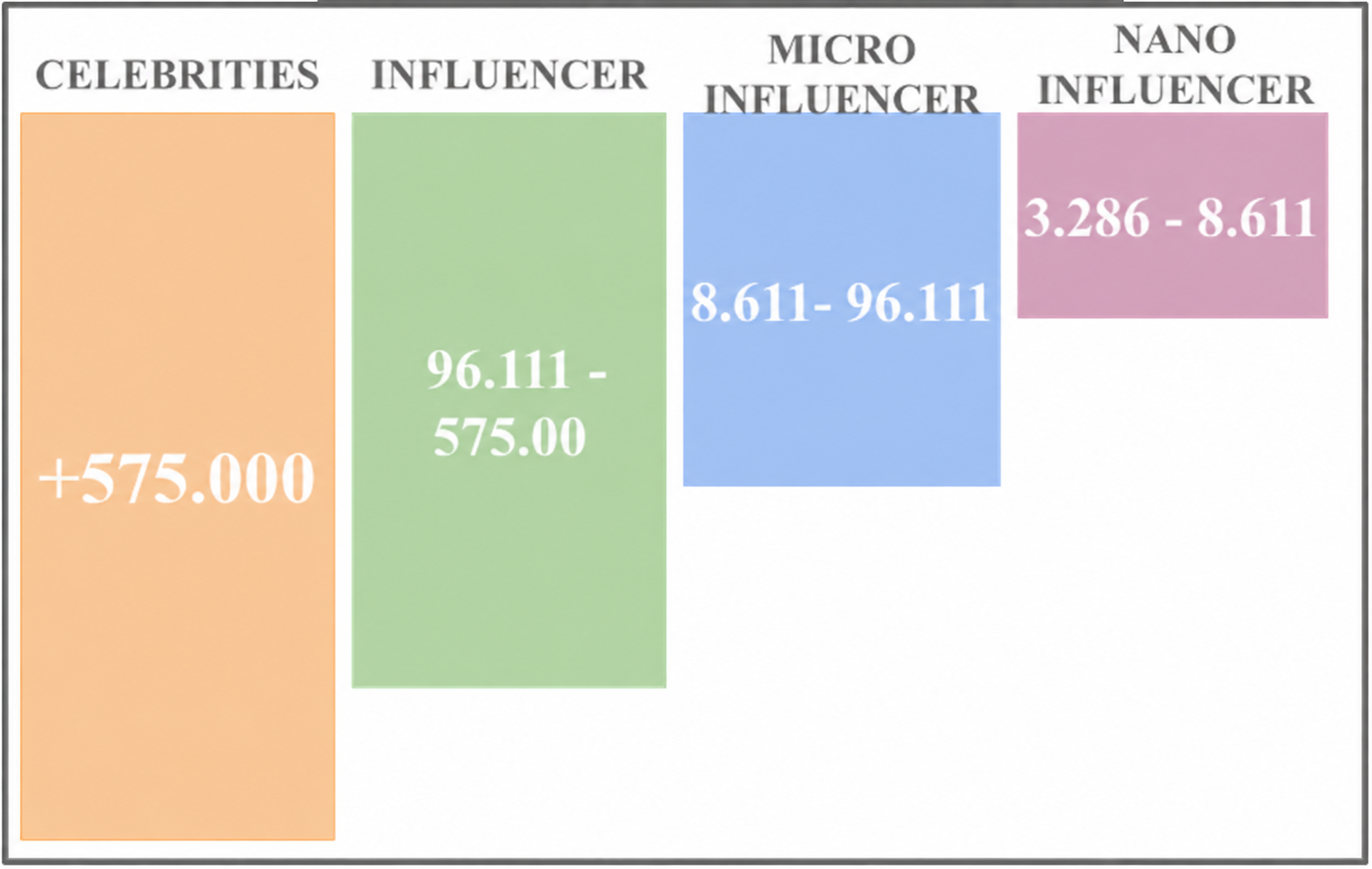
In this regard, the number of followers is not fundamental, especially when the purchase of bots (fake followers) became a common practice. Nevertheless, with respect to the above, a way to classify influencers is according to their follower volume, and although there is no established consensus on this classification, it has been decided to take up, due to the legitimacy of the organization, the classification proposed by La Cámara Argentina de Anunciantes, which groups them as follows:
It is also possible to classify influencers according to the type of content they publish, which is useful for segmenting the target audience. The classification proposed by Javsy López (17) from Grupo emprendedor is used:
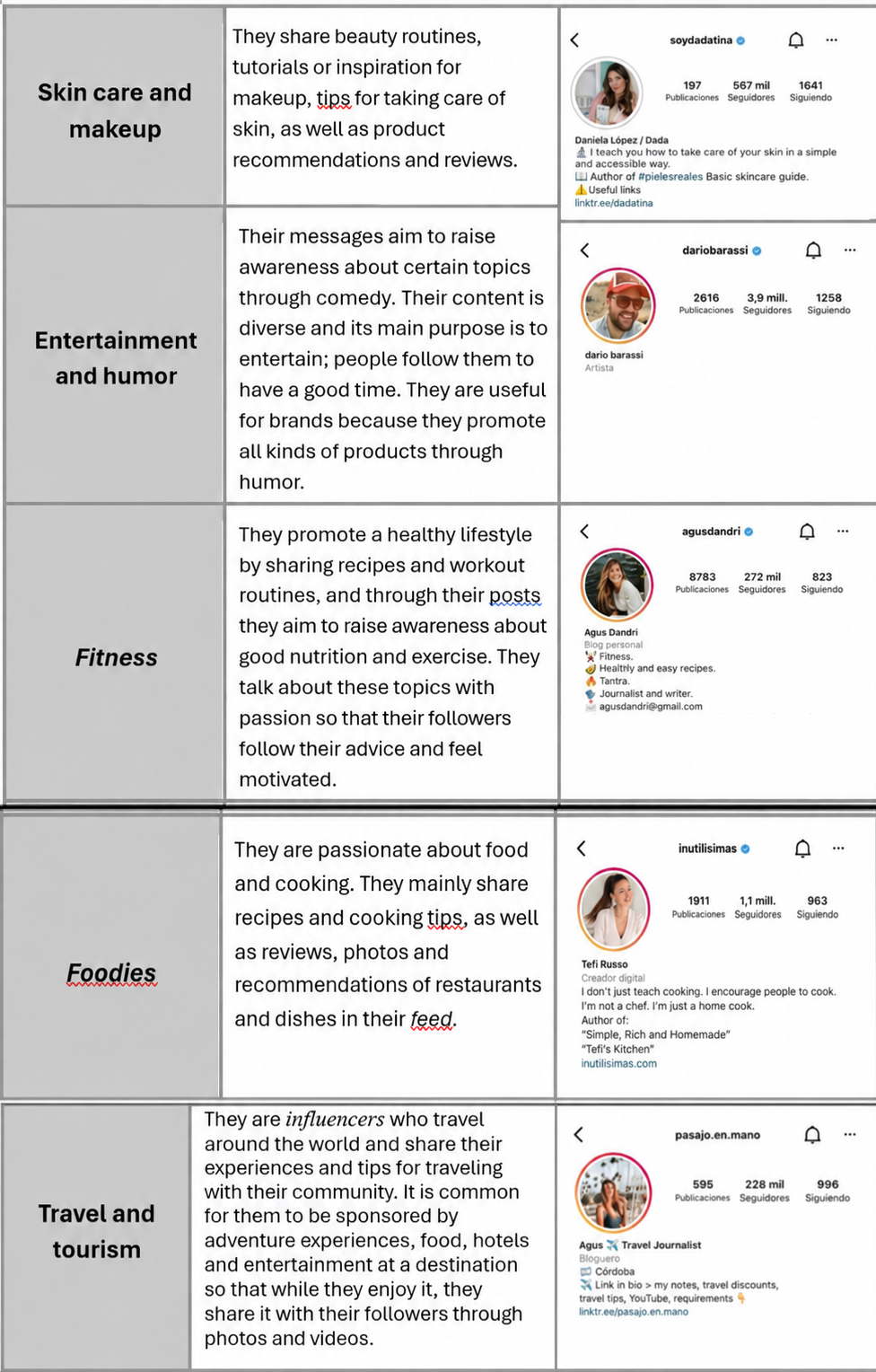
There are also some other categories or subcategories, such as, for example: video game specialists, photography, athletes, cleaning and organization experts, etc. Although they are ordered in this way, belonging to a certain group does not mean that they cannot publish content on another topic, since there are influencers who specialize in fashion but also promote healthy living or share recipes. In reality, there is no rigid classification; these are made based on their analysis.
This study aims to focus mainly on influencers who belong to the “foodies” category, who present themselves as passionate and curious about food. The anglicism foodie was first used by Paul Levy (2) in the book The Official Foodie Handbook, and today it refers to influencers who share, through their social networks, striking and tempting photographs of food, restaurant reviews, and dish recommendations to guide their followers, who attentively await their suggestions. Through social networks, it becomes challenging to convey the aroma, the texture, and above all the flavor of a dish; however, this can be achieved through the photographic resource called foodporn—or food porn—which uses zoom and close-up shots of dishes, generally high in calories, filling the entire screen, as stated by Aurora Segura (18). This concept seeks the best shot of the food to generate pleasure and satisfaction through visual stimulation.
A curious fact shared by Elizabeth Hotson in BBC News (19) is that on Instagram pizza is the most tagged food, with an average of 35 million mentions, more than the tags of Beyoncé and Kim Kardashian combined. Nowadays there is a culture of going out to eat and taking photos of the products and posting them on social networks; the establishment is advertised unconsciously. Many do not even bother to look at the menu but instead choose what they are going to eat based on what they see on the place's Instagram profile.
"Photos must have an appeal that deserves the foodporn label; there are also #quesoporno #yemaporno; what matters is what it radiates."
An Independ study states that young people aged 18 to 35 spend 5 whole days per year searching for food images on Instagram. 30 out of every 100 of them will avoid a restaurant if its presence is weak on this platform, which confirms that food brands can be favored by choosing influencers who have recognition on this social network, since, moreover, it was the preferred social network during the COVID 19 health crisis, becoming a valuable resource for achieving the survival of gastronomic businesses, one of the sectors most affected by the pandemic.
Dotras (20) states that: Instagram's success is telling things with images (...) On Instagram, users always try to put their best face forward. This fact, which may seem banal, provides this network with tremendous engagement potential (the metric that measures the level of commitment that exists between a brand and its users or consumers). Thus, brands (and celebrities) use Instagram to catch the public's eye. Moreover, being a visual platform, the reach of its images is universal (it does not have the limitation of language).
In this sense, and continuing with the classifications, according to the platforms on which influencers operate—it should be clarified that these people have an active presence on multiple social networks—they dominate and specialize in a particular platform, giving rise to denominations such as Instagrammer, YouTuber, Twitter user, etc. to refer to the content-generating user of each space (21). As has been stated, this work takes as its object of study foodies (gastronomic influencers) on the social network Instagram, that is, Instagrammers, who are those influencers who work on this network, whose origins date back to 2010, characterized by being a platform on which photos and short videos can be shared. Its main function is to capture the moment in real time and share it with followers. Within the platform there are different options available to the user for sharing their content. Returning to the definitions provided by Irene Carpintero (22), a technology blogger, they are classified into:
Stories: they cannot have a duration longer than 15 seconds, and their main characteristic is that they disappear after 24 hours, unless they are saved in highlights, folders that appear to users who enter your profile. They can be both photos and videos, and there is a variety of filters to choose from in addition to the possibility of adding music, texts, stickers, etc.
Publication to the feed or post: followers can access the content through the news feed (the home page displayed upon opening the application) without needing to enter the profile of the person who publishes it; therefore, it will be available to anyone who follows the account. They can be individual images or videos or a sequence of these, called a carousel-style post.
Reels are short videos that, like stories, last a maximum of 15 seconds, but they do not disappear after 24 hours; instead, they remain stored in the user's feed or profile and also appear in the news section of followers.
From this perspective, the choice of this social network is explained by the fact that—along with Facebook—it is the most widely used by a wide margin compared to the others, due to its freshness, dynamism, and visibility, which makes it stand out among the millennial public.(16) The purpose of this work, therefore, is to investigate how the use of the influencer—foodie Instagrammer—as an external communication strategy impacts the positioning of a brand in the gastronomic sector on the social network Instagram.
What are the effects of employing influencers—foodie Instagrammers—as an external communication strategy in the gastronomic sector?
Objective
To investigate the effects of using the foodie Instagrammer as an external communication strategy in Public Relations on the positioning of brands in the gastronomic sector in Córdoba (Argentina) through the social network Instagram.
METHODS
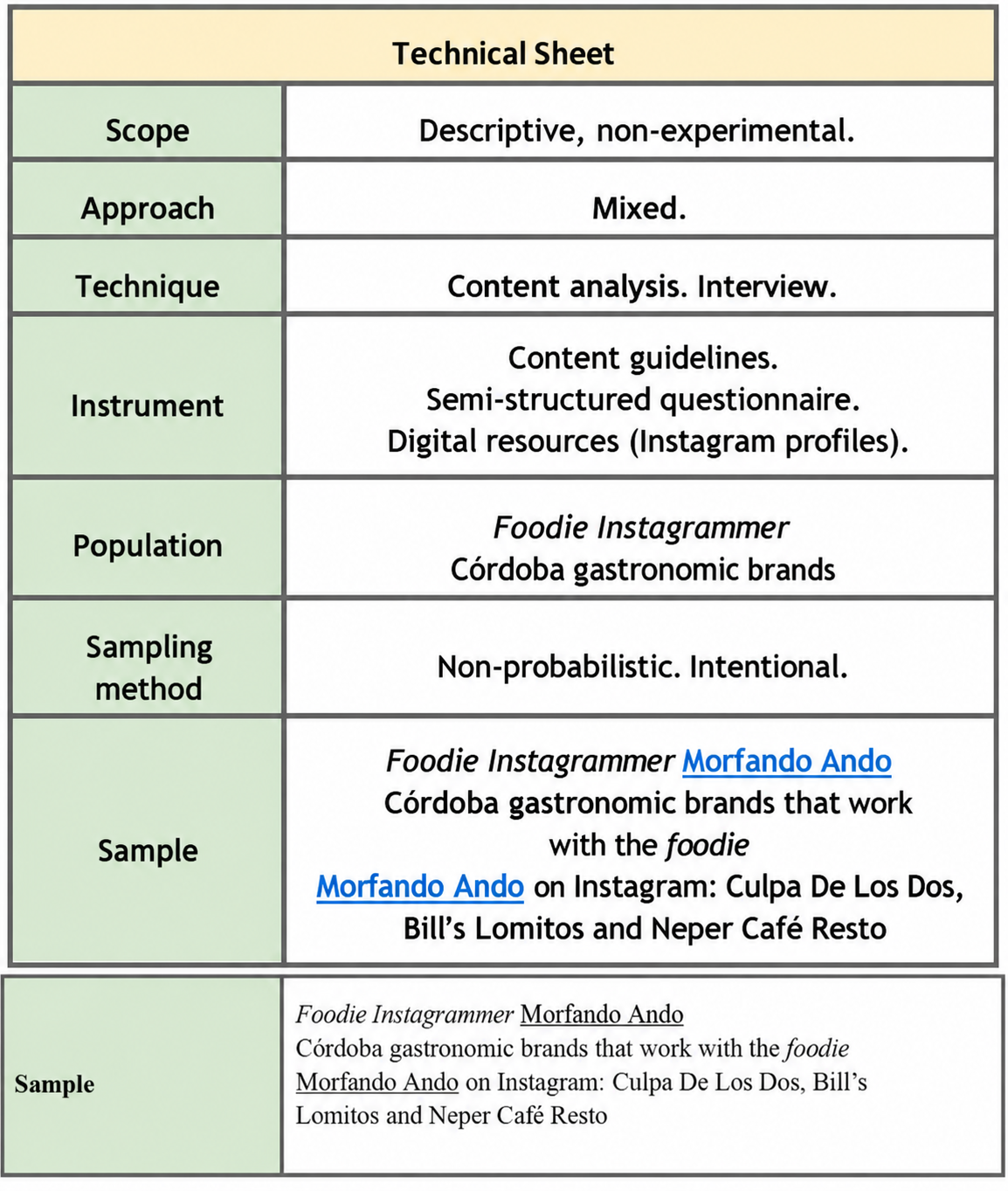
In this study, a mixed (quantitative-qualitative), descriptive,(23) non-experimental, cross-sectional approach was carried out, based on the selection of three Córdoba gastronomic brands that used the foodie Instagrammer “Morfando Ando”, better known as “Córdoba Gourmet”, for the positioning of their brand on the social network Instagram.
From this perspective, this is a case study, which is usually defined as intensive descriptions and analyses of singular entities or of a phenomenon specific to a social entity, relying on inductive reasoning when handling multiple data sources, understanding that a case study “is the empirical investigation of a phenomenon from which one wishes to learn within its real everyday context.”(24)
In this sense, the initial aim was to characterize and define, both quantitatively and qualitatively, the profile of the influencer Morfando Ando. This characterization was achieved through a semi-structured interview (23), conducted with a co-owner of the profile, complemented by content analysis of the Instagram profile itself. Content analysis is understood as the set of methodological instruments whose common factor is hermeneutics based on deduction, that is, inference. It is an effort of interpretation that moves between two poles: the rigor of objectivity and the fruitfulness of subjectivity.(25)
On the other hand, three gastronomic brands from Córdoba were also analyzed —Culpa
De Los Dos, Bill’s Lomos and Neper Café Resto—before and after they used the foodie Instagrammer Morfando Ando as an external communication strategy, taking as a basis for analysis the information provided by both the Instagram profile of Morfando Ando and those of the aforementioned brands. The selection of these brands, among others that used the influence of this profile, was based on the criterion that Morfando Ando was the first influencer used as an external communication strategy.
RESULTS
This section will begin by presenting the results from a mixed analysis (quantitative and qualitative) of the Instagram profile @CordobaGourmet-MorfandoAndo, following the order of the specific objectives set out. Through an interview with the protagonists, it was possible to identify the characteristics that position them as foodie Instagrammers.
This venture is led by Cande and Luli and emerged in 2016, although the scope and dimension it has today were not part of their original plans. The initial idea was simply to showcase the places in Córdoba that they considered valuable from a gastronomic and cultural perspective. In the interview, Cande states: “My family and I are used to eating out a lot, and we saw the potential that Córdoba had in terms of gastronomy, and we simply wanted to showcase it.”
In this context, managing the Instagram profile does not constitute their main source of income, but rather a hobby that they say they enjoy; however, they clarify that it takes time and dedication. Although they do not identify with the term 'influencer', they state that their page—and what they achieved with it—does generate influence, which is corroborated by the comments made by both their followers and the owners of the ventures with which they work.
Regarding their audience, they define it as “young, active, curious, and super loyal” (Interview with Candela), supported by the metrics provided by Instagram, which reveal that out of a total of 107,000 followers, 68.7% are female, while 31.3% are male, and they range in age from 24 to 34 years. As for their place of residence, more than half (64.6%) of the followers are from the province of Córdoba.
Over time, this profile consolidated its status as a foodie Instagrammer, and what began as an initiative linked to personal activities with hobby-like characteristics gradually became professionalized. This professionalization is evidenced by the fact that today brands contact the profile to contract different types of services, which in turn have differentiated fees, whether a feed post, a story, or a giveaway, depending on the reach of the communicative action (measured with Instagram metrics) and the magnitude of the brands. The following data demonstrate the consolidation of this profile as a foodie Instagrammer, whose content is characterized by carousel-style posts (51.71%), which means including several photos and/or videos in a single post.
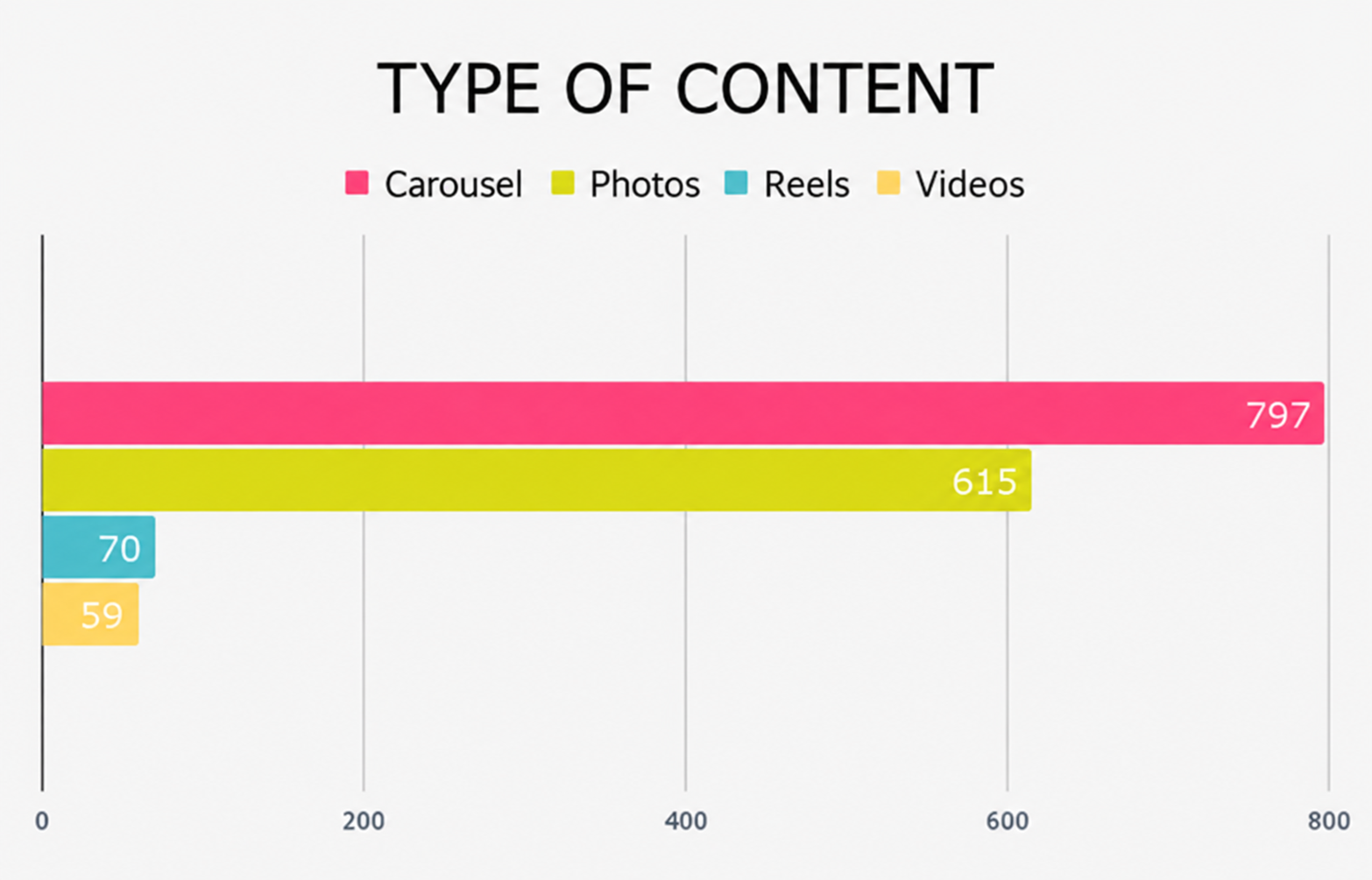
From the average number of comments and “likes,” the reach of the profile and the level of engagement of the followers can be inferred, which confirms this profile's status as a foodie Instagrammer.

With regard to aesthetics, this profile is characterized by a predominance of food images presented in bright colors; their intention, known as foodporn, is to provoke the desire to eat in followers.
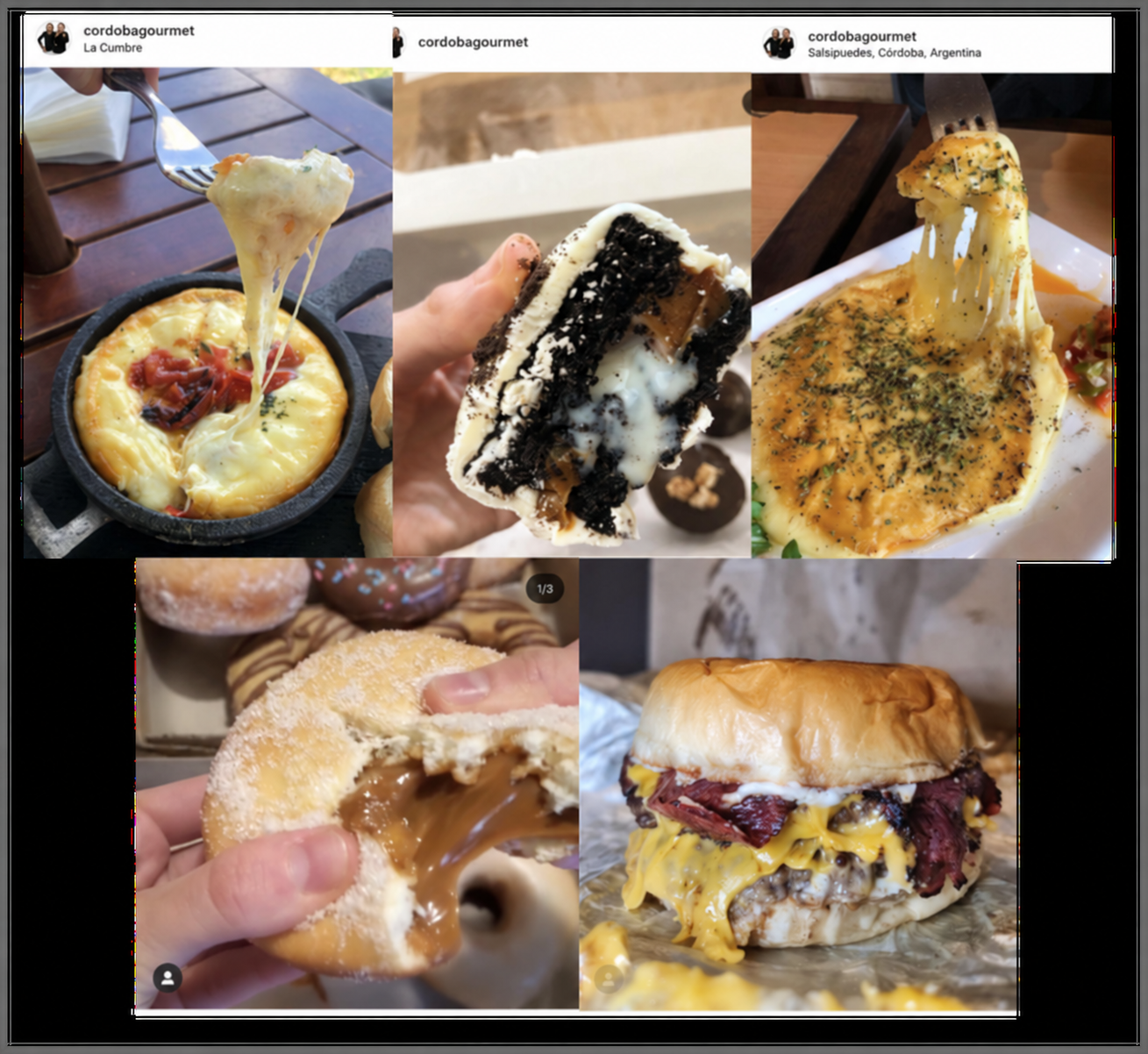
The first characteristic of the profile is that it is a space that arises from the enthusiasm and passion of people who love gastronomy and good food, who decided to share their experiences on social media after verifying the gastronomic potential of Córdoba. Over time, it consolidated itself as a foodie Instagrammer, which drew the attention of gastronomic ventures that began to require its services to position their brands on this social network.
The second evident characteristic is the use of the communication strategy of food porn. This image-based communication strategy is complemented by reviews, comments, and videos in which Luli and Cande, in the first person, make recommendations about the brands and places visited. Interaction with their followers, reflected, as mentioned earlier, in “likes” and comments, reveals the authority granted to them, thus legitimizing their status as foodie Instagrammer.
According to the second objective, it can be said that the communicative relationships of foodie Instagrammers with their followers are established through an interaction that progressively defines, on the part of the followers, those influencer actions that are positively valued with “likes” and comments. In this sense, those that narrate the gastronomic experience live, reporting the genuine reaction to what they are tasting, are identified as chosen actions. Photographs of succulent and tempting dishes are also valued, as well as giveaways that make it possible to verify the loyalty of followers who participate in them. Cande states that giveaways are among the activities preferred by her followers and that they are useful to her “to generate a bond with them and to give them something as a gesture of gratitude” (interview with Cande).
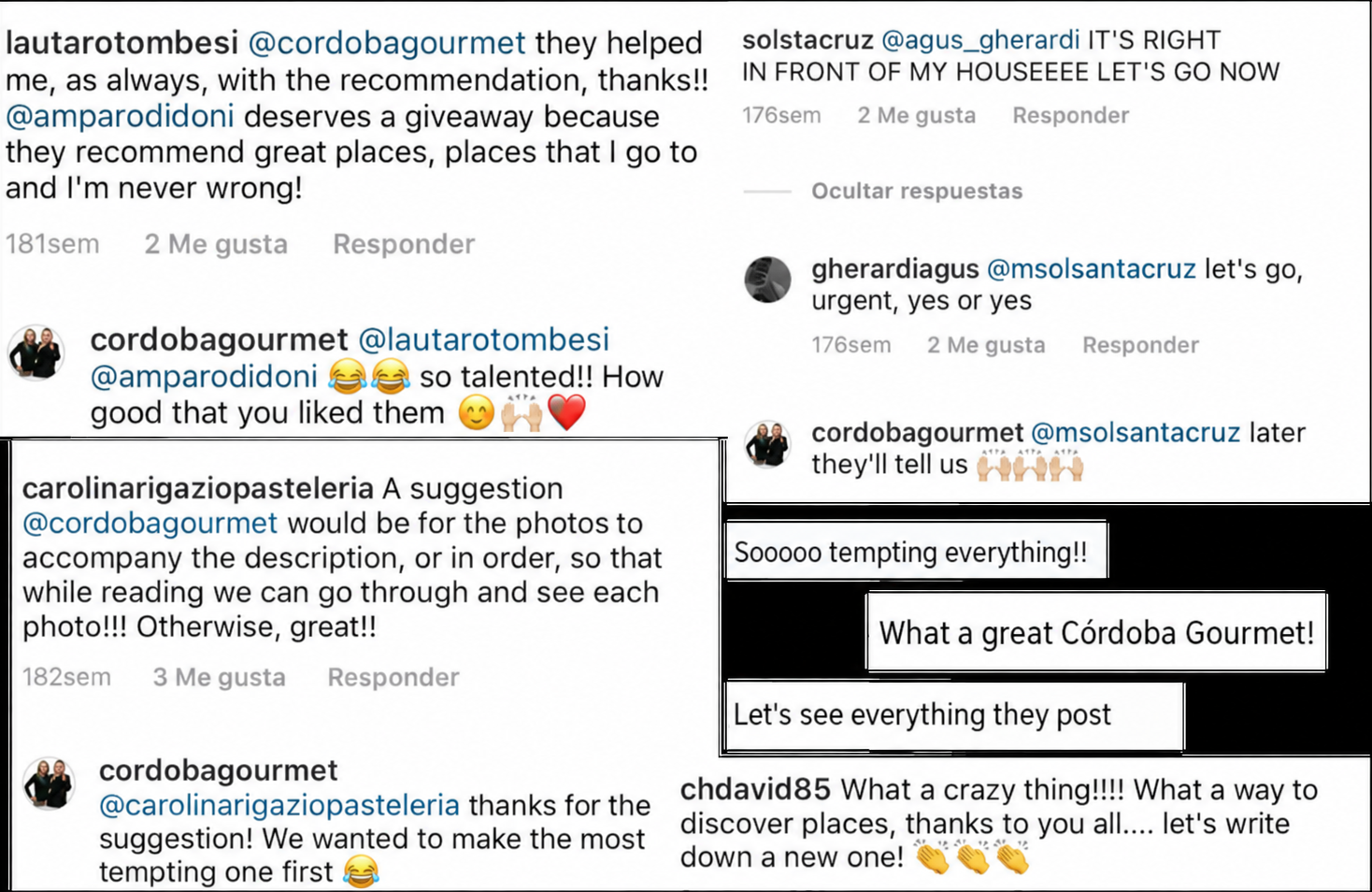
Regarding the communicative relationship with companies, it can only be understood within the framework of the communicative relationship established with the influencer's followers; that is, the same communication criteria established with them are used (foodporn photographs, giveaways, and reaction videos trying the dishes).
It is observed that in the relationship with brands, there is a particularized treatment with each brand, responding to the objectives proposed, whether it is to publicize a new product, accompany aesthetic changes, carry out joint giveaways, or position a recent brand. In this sense, it is an informal relationship—there is no contract regulating it—built from the needs and possibilities of the brands, creating obligations of reciprocity. This contractual informality is an aspect not yet professionalized.

The evaluation of the effectiveness of using the foodie Instagrammer Córdoba Gourmet- Morfando Ando for the gastronomic brands Culpa De Los Dos, Bill’s Lomos, and Neper Café Resto (third objective) is presented based on the quantitative data obtained before and after working with the foodie Instagrammer Córdoba Gourmet.
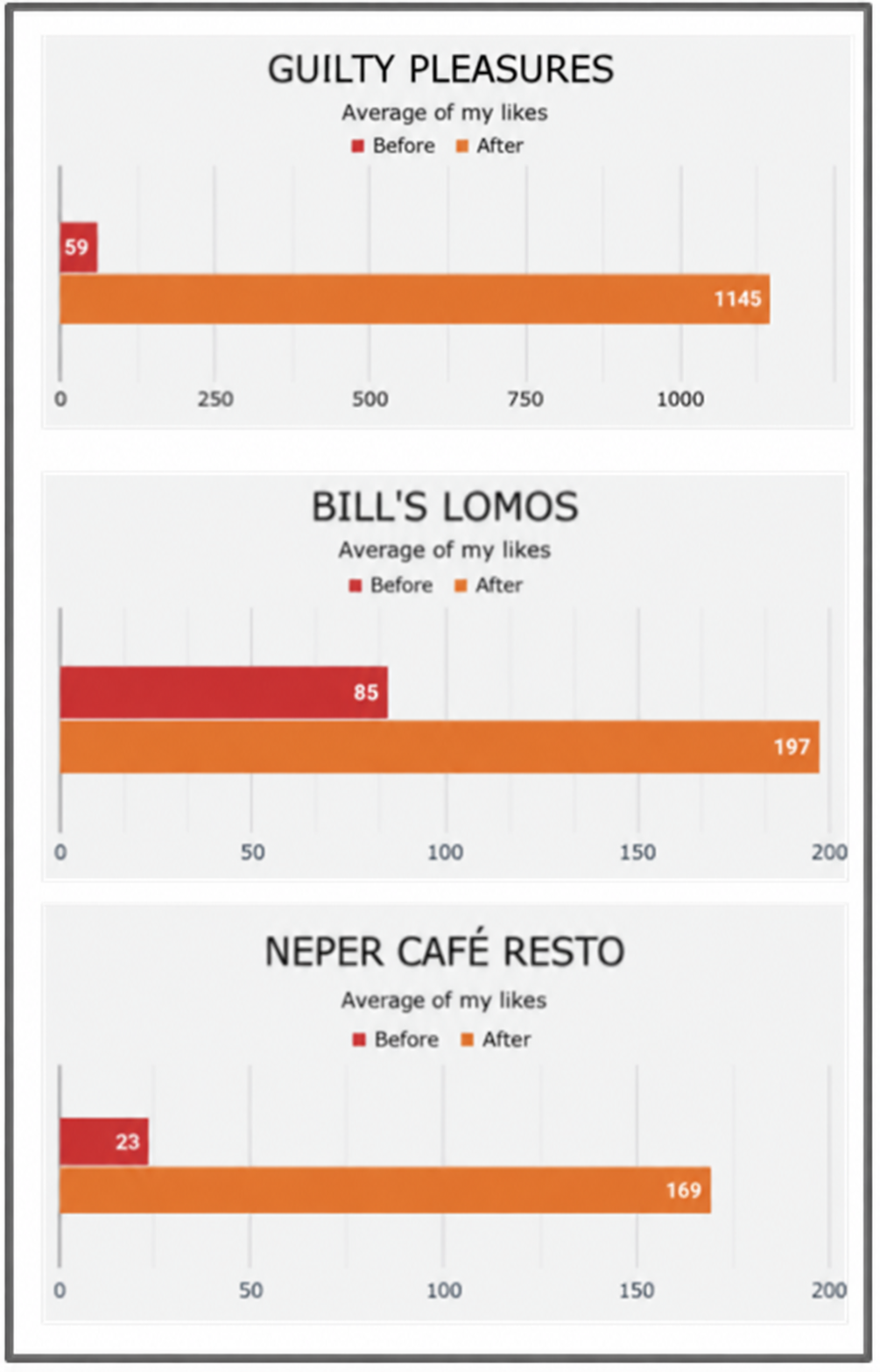

It should be clarified that comments were considered without the raffles, since these can lead to a misleading average, as the same person can comment many times to increase their chances of winning. The same does not occur with “likes,” since these correspond to a single like per person.


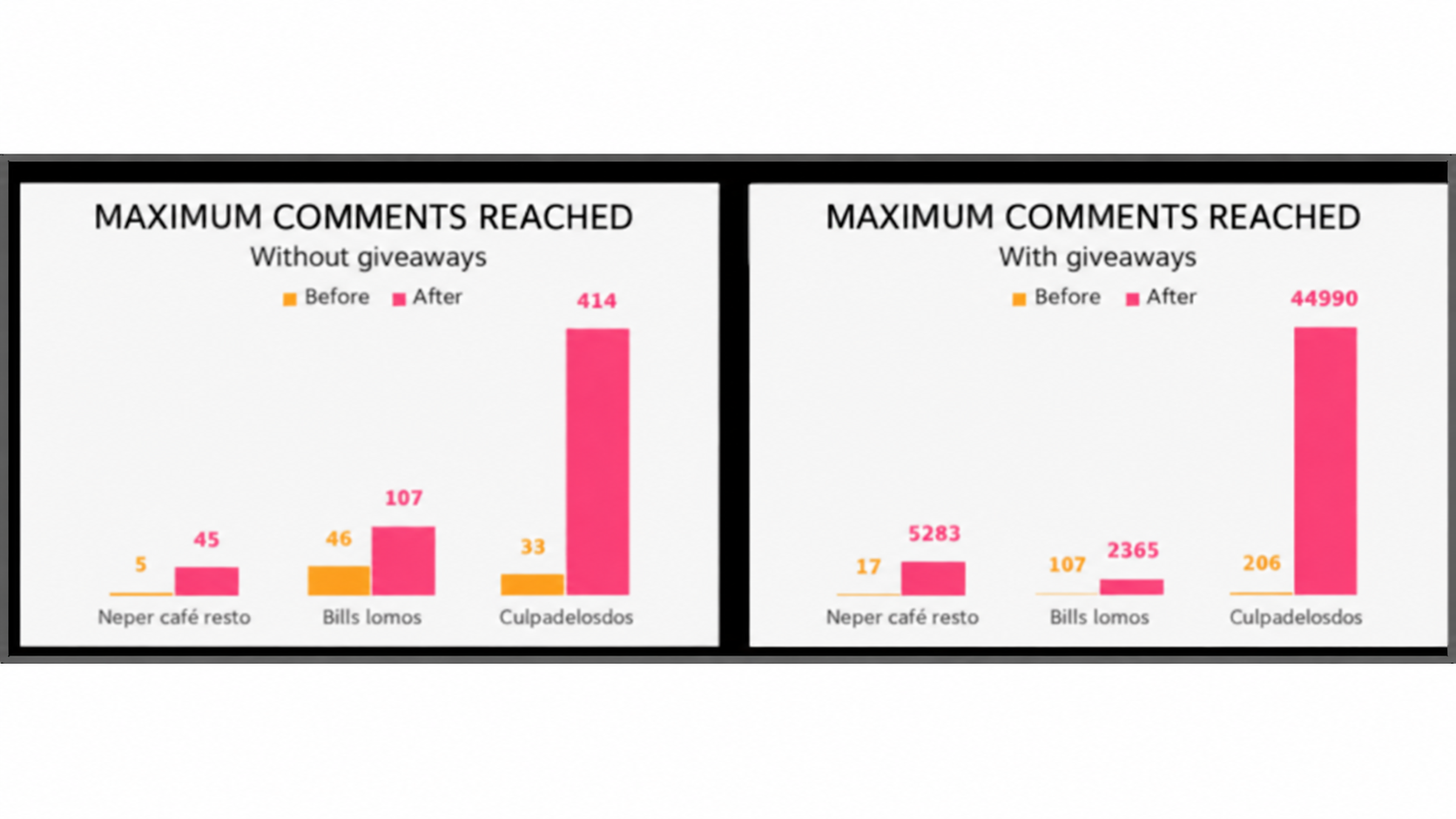
Other data that corroborate the growing importance of the social network Instagram and of Instagram foodies for gastronomic brands are the following:
The number of followers increased after the use of the foodie Instagrammer across the 3 brands, reaching: “Culpa De Los Dos” 96 800 followers, “Bill’s Lomo” 14 400 followers, and “Neper Café Resto” 9482.
Before Morfando Ando, none of the brands had carried out any advertising action with another influencer; however, based on this experience and the positive effects related to the positioning of their brand, these ventures began to advertise with other foodie Instagrammers or influencers from other categories (recognized journalists or actresses).
“Culpa de los dos” made 12 advertising posts with Córdoba foodies and influencers from other fields, such as recognized journalists who tasted its products and shared their experience on Instagram. “Bill's Lomos” also advertised with a local foodie who tours the city in search of the best lomitos. Neper Café Resto, for its part, carried out 5 sponsored posts on its own profile, most of which were collaborations with other brands to conduct joint giveaways.
CONCLUSIONS
This project arises from an interest in understanding the effects of using foodie influencers—Instagrammers—as an external communication strategy to position a gastronomic brand. The importance of this study lies in the specific perspective of Public Relations on the figure of the influencer as an external communication strategy, since most of the studies reviewed on the subject correspond to disciplines such as Advertising and Marketing, whose objectives differ from those of Public Relations, which focuses on building lasting bonds based on feedback from publics.
Along these lines, it is appropriate to revisit the concept of feedback defined by Roberto Avilia (5), who argues that it is the core of the communication structure, where the sender is simultaneously receiver and vice versa, with the message gaining importance when interacting with the environment, influencing not only the behavior of the sender but also that of others. It is at this point that the figure of the influencer is understood as a generator of content (messages) that are permanently fed back and reconfigured through interaction with followers (feedback), which are manifested on the social network Instagram (the object of this analysis) through comments, “likes,” and direct messages.
In relation to the topic presented, specific objectives were formulated with the aim of characterizing the figure of the foodie Instagrammer Córdoba Gourmet- Morfando Ando and the relationships generated between this particular foodie Instagrammer, the followers, and three gastronomic brands from Córdoba that worked with this profile; and finally, to evaluate the effectiveness of the use of the foodie Instagrammer Córdoba Gourmet Morfando Ando in the selected gastronomic brands.
It is important to clarify that the objectives initially proposed varied according to the results, becoming more specific as knowledge about the subject advanced, thus reflecting the dynamic nature of a research problem. There were also conceptual variations, reflected in the theoretical decision to name the gastronomic influencer on the social network Instagram as a foodie Instagrammer, thus linking two concepts already used by scholars of social networks and influencer marketing, giving greater theoretical precision to the object of study.
In this sense, the authors and the reviewed antecedents, especially that of María Candela Chiesa (6), with which the object of study is shared, lead to recognizing the importance of delimiting the influencer phenomenon as a specific object of study within Public Relations, differentiating it from the approach proposed by Marketing and Advertising.
In his final degree project, Chiesa (6) addresses, from the perspective of Marketing, the figure of the gastronomic influencer and defines him as a third party who significantly influences the customer's purchase decision without the customer noticing. Throughout his work, he emphasizes that the objective is mainly to close or increase sales. Moreover, drawing on some of the conclusions reached by Chiesa (6), it is possible to visualize the focus on immediate results (characteristic of Marketing): (a) “It is considered important to highlight the immediacy of the impact of the publications by the influencers themselves” (b) “The repercussion was instantaneous and businesses continued receiving inquiries and customers long after the publication was made” (c) “The benefits or results obtained from the content published by the influencers were formidable and instantaneous”.
In the context of this work, it should be noted that, although short-term effects are motivating and make it possible to visualize the effect of communicative action more immediately, they do not constitute the main purpose of Public Relations, as already mentioned in the introduction (p. 8); Marketing mainly seeks to increase sales in the short term, almost instantaneously, whereas Public Relations pursues objectives such as generating engagement and establishing lasting relationships with publics, which are not achieved overnight.
Regarding the characterization of the foodie Córdoba Gourmet, it is worth noting that its Instagram profile arises from an initiative driven by the passion for food and good eating of its protagonists, coinciding with the spontaneous origin that other authors have mentioned for similar cases, in which the authenticity and spontaneity of the actors lead to gaining followers. That initial spontaneity becomes a responsibility of the influencers they have become, sustaining the bond through the creation of valuable content for their audience.
Cande and Luli gradually recognized their followers' preferences regarding their posts, which allowed them to identify that photographs, videos, and giveaways constituted the settings of greatest interactivity, thus defining the characteristics of this profile and its consolidation as a foodie Instagrammer, as evidenced by the number of followers (107 000), which places them in the influencer category according to the classification cited in the introduction.
Regarding the followers of these foodie Instagrammers, who are young people between 24 and 34 years old, mostly residing in the city of Córdoba, the place of residence of Cande and Luli, a connection can be established with the characteristics of the Capital City of the namesake province, historically considered a university city and home to the first university in Argentina, which concentrates a student population that includes students from other Argentine provinces, from Latin America, and from the rest of the world.
In agreement with the reviewed authors who have worked on this topic, Morfando Ando also uses the resource of foodporn as a visual communication strategy, which, given the number of interactions it provokes, is identified by Cande and Luli as among the most effective strategies for communicating; hence, gastronomic brands choose them for their presentation to their audience. Regarding the posting of videos, Instagram foodie influencers acknowledge that they have progressively understood the power of gestures and spontaneity as an engagement strategy, valued and requested by their followers. This confirms that their consolidation as Instagram foodie influencers constitutes a process of mutual understanding between influencer and followers, which gradually determines the forms and modes of interaction based on feedback, as expressed by Chiesa (6): According to the influencers, the content with the best response from their consumers is “indulgent” and unhealthy food. Other aspects mentioned were good photography, knowing the story behind each business or venture, learning new things; therefore, recipes receive a very good response, and lastly, videos where influencers try products live, in order to see their genuine reaction.
The second objective aimed to characterize the communicative relationships established between the influencer, their followers, and the gastronomic brands with which they are associated. For its part, the bond with the profile's followers is mainly nourished by giveaways and "sincere recommendations" (interview with Cande); a large part of their content consists of videos showing reactions while taking an initial bite of the dish, seeking to meet the audience's demand for authenticity; meanwhile, giveaways are carried out in order to obtain instantaneous effects (increase in comments and followers in a short time).
It is appropriate to cite the conclusion reached by Iglesias Monteagudo (26), who states that a giveaway constitutes the most widely used technique and among those that generate the most engagement; however, it must be taken into consideration that followers may be required to perform some action, such as giving a “like,” commenting, or sharing in order to participate: “This causes these posts to have greater engagement, but it is not ‘natural’ engagement, since commenting or giving a like becomes a requirement.”
In relation to the forms of engagement with gastronomic companies and brands, the latter recognize the potential of this communicative relationship between the influencer and their followers as beneficial for achieving the positioning of their brand on the social network Instagram through said influencer; that is why it is proposed that the influencer-brand relationship is understood within the framework of the communicative relationship established between the influencer and their followers, since both brands and followers value the influencer's authenticity.
As regards the service provided, the owners state that they are not professionalized; however, for the purposes of this work, it is considered that in practice there is a certain degree of growing professionalization, evidenced by the organization and rate classification of such services. This organization establishes criteria on which agreements with brands are defined regarding the type of publication and their fees, depending on the format, the scope, and the size of the brand.
From this perspective, this professionalization strains the fragile balance between spontaneity and genuine commitment to followers and the business agreements established with the brand. It is thought that this tension is precisely the natural setting of public relations practitioners, whose role will be to safeguard that symbolic fragility of engagement. This is summarized in the conclusion put forward by the author Iglesias Monteagudo (26), who states:
Although the influencer may come to live off the income generated by advertising, their Instagram channel should not consist of a high percentage of sponsored posts. If this occurs, naturalness will be lost, and the high volume of advertising may generate rejection among their followers. Furthermore, they should seek to use promotions such as giveaways or gifts that provide added value for their followers.(27)
Under this perspective, it should be clarified that the influencer's effect is conditioned by the brand's actions and whether there is consistency between what the foodie communicates and what the establishment offers. On the other hand, the professionalization process may also threaten the essence of the influencer, that of conveying the message as if it were a friend's recommendation.(28)
Regarding the last objective, which quantitatively measured the effect of using foodies on the selected brands, the results show that the brands that used Córdoba Gourmet increased their number of “likes”, followers, and comments after working with the influencers; these results agree with those of Chiesa (6), who also observed an increase in followers, inquiries, and interactions, thereby reinforcing the results found. It should be added that regarding comments, although Bill 's Lomos had a higher average before partnering with the influencer, this is consistent with the fact that the brand previously had very few posts and a giveaway was among them. On the other hand, after Córdoba Gourmet's intervention, the brands diversified their content, responding to demand from their own followers and paying greater attention to the management of their social media.(29)
This was due, from the perspective that has been developed, to the impact produced by the intersection of publications both on the profile of the Instagram foodies and on the replications by the brands and the followers of both on their own networks. In this sense, this multiplication of brand presence through the amplification of the audience via Córdoba Gourmet generated a circular engagement among the Instagram foodie, their followers, the brand, and its own followers. From this it follows that the linkage between the influencer and the brands grows as they recognize the effect of the Instagram foodie on their returns, both economic and symbolic.(30)
Conversely, on the other hand, Díaz Guevara (10) state that the reach of influencers is very difficult to calculate. However, at present there are various applications and tools provided by the social networks themselves (Instagram metrics), which allow quantitative knowledge of the number of people who viewed a post, commented on it, and there are even formulas to calculate the level of engagement; although it is agreed that it is not an easy task, it is believed that with statistics and technology it is possible to measure the impact of an influencer, and this is precisely what this work sought.(31)
The results of Chiesa (6) indicate that after the influencer's first post, many of the companies had to increase their production and even expand their work team. Whereas in the present research similar results were obtained, where a brand (Bill’s Lomos) ran out of stock after Córdoba Gourmet made the first post, identifying its maximum production and limiting production to 200 lomitos per day.(32)
It should also be mentioned that their results likewise agree with those of this research regarding Instagram being the preferred network of gastronomy enthusiasts. Data taken from Chiesa (6):
65 % of respondents follow 1 to 5 influencers in the sector, 23 % follow between 5 and 10, and 12 % follow more than 10. In turn, the preferred social networks for consuming their content are Instagram (71 %), followed by YouTube (15 %) and Facebook (8 %). Meanwhile, Amaya Henao (9), through their interviews, state that: "...the interviews made it possible to identify that the most used RRSS by them is Instagram, particularly due to the visual impact that they can generate through it".(33)
As a limitation, we can highlight that, being one case study, it cannot be generalized; however, when cross-referencing it with other works, coincidences in the results could be observed. For future research, it is recommended to delve deeper into the other actors that make up the communicative relationship, that is, to analyze in depth the gastronomic brands and the followers. On the other hand, one longitudinal study would be interesting to compare the results in different time periods. In the same sense, it provides valuable evidence to continue studying the influencer from a Public Relations perspective.(34)
In conclusion, it is a challenge for Public Relations to ensure that engagement continues to be sustained both with brands and with the influencer's followers, because there is a fine line between the influencer as a brand and the influencer as a positioner of another brand, seeking to ensure that the influencer does not lose authenticity, which constitutes the basis of their legitimacy. In this sense, it is understood that there are two "products" that must be attended to. The first is what the gastronomic brand wants to sell, but on the other hand there is the influencer, who precedes it; therefore, care must be taken, since when the brand contacts the profile, it does so because it understands the benefits it can obtain from the followers of the foodie Instagrammer. The key lies in ensuring that, on the path to professionalization, the influencer does not lose spontaneity, authenticity, and essence, since it is for these reasons that their audience follows them.(35)
It is crucial to highlight the importance of Public Relations in seeking communication with all publics with which foodies have a connection; it is not advisable to focus solely on the brands with which they work, since this would put the connection with their followers at risk, and a way to avoid this is through active listening to their feedback.(36)
Thus, in conclusion, it is argued that influencers constitute a bridge between the brand and followers and act as an effective external communication tool, as they mutually reinforce each other within the framework of the circular engagement process generated among the foodie Instagrammer, gastronomic brands, and their respective followers, creating an infinite network of technology-mediated connections.
References
- 1 Castells M. La era de la información: economía, sociedad y cultura. Vol. I. La sociedad red. 2ª ed. Madrid: Editorial Alianza; 2000. https://amsafe.org.ar/wp-content/uploads/Castells-LA_SOCIEDAD_RED.pdf
- 2 Levy P. Cibercultura: informe al Consejo de Europa. 1ª ed. Barcelona: Editorial Rubí; 2007. https://antroporecursos.files.wordpress.com/2009/03/levy-p-1997-cibercultura.pdf
- 3 Statista Mena Roa M. ¿Qué sucede en Internet en un minuto? Statista; 2021. https://es.statista.com/grafico/17539/datos-creados-online-en-un-minuto/
- 4 McLuhan M, Powers BR. La aldea global: transformaciones en la vida y los medios de comunicación mundiales en el siglo XXI. 3ª ed. Barcelona: Editorial Gedisa; 1995. https://monoskop.org/images/2/2c/McLuhan_Marshall_Powells_BR_La_aldea_global.pdf
- 5 Avilia Lammertyn R. RR.PP. Estrategias y tácticas de comunicación integradora. 3ª ed. Buenos Aires: Editorial Revista Imagen; 1999.
- 6 Chiesa María C. Marketing de influencers: ¿un potenciador gastronómico? Universidad Siglo 21; 2020.
- 7 Campero J, Lanzinetti Di Pinto G, Martínez V, Martino D. ¡El boom de los influencers! Estudio de su impacto en indicadores de marketing. Universidad Nacional de Córdoba; 2021.
- 8 Ovejero Ferreira MV. Influencers: efectividad de sus estrategias de comunicación en la generación Z de la ciudad de Córdoba. Universidad Siglo 21; 2020.
- 9 Amaya Henao SM, Silva Cortes GA, Quintero Rincón YA. Impacto de los influencers en las estrategias promocionales del sector gastronómico de la ciudad de Medellín. Universidad de Salamanca; 2020.
- 10 Díaz Guevara GA, Galvis Quintero PC. Influencers: una estrategia de comunicación como posicionamiento de marca. Universidad Santo Tomás; 2017.
- 11 Capriotti P. Imagen de empresa. Estrategia para una comunicación integrada. Barcelona: Editorial El Ateneo; 1992. http://www.bidireccional.net
- 12 Moreno Fernández A, Fuentes Lara M. Engagement y redes sociales: análisis bibliométrico desde el ámbito científico de las relaciones públicas. Trípodos. 2019;(45):1138-3305. http://ddfv.ufv.es/bitstream/handle/10641/1934/686-2213-1-PB.pdf
- 13 Wolf M. La investigación de la comunicación de masas. 1ª ed. Buenos Aires: Editorial Paidós Ibérica; 1987. https://catedracoi2.files.wordpress.com/2014/05/wolf-mauro-investigacion-de-la-comunicacion-de-masas.pdf
- 14 Real Academia Española. Diccionario de la lengua española. https://www.rae.es/
- 15 Zuccherino S. Social media marketing: la revolución de negocios y la comunicación digital. 3ª ed. Buenos Aires: Editorial Temas; 2016.
- 16 Ramos J. Marketing de influencers. XinXii; 2019.
- 17 López J. 7 tipos de influencers que pueden ayudar a tu marca. Grupo Emprendedor; 2020. https://www.grupoendor.com/tipos-influencers/
- 18 Segura A. El negocio que se esconde tras el #foodporn. La Vanguardia; 2018. https://www.lavanguardia.com/comer/tendencias/20181017/452392041763/foodporn-food-porn-negocio-instagram-likes-fotos-comida-restaurantes.html
- 19 Hotson E. #FoodPorn en Instagram: qué es exactamente y cómo se convirtió en un negocio. BBC News; 2018. https://www.bbc.com/mundo/vert-cap-45959243
- 20 Dotras A. Social media: herramientas y estrategias empresariales. Madrid: Editorial Ra-Ma; 2016.
- 21 Martínez-Sanz R, González Fernández C. Comunicación de marca en Instagram: ¿una cuestión de género? El rol del influencer de moda. Masculinities and Social Change; 2018. https://www.researchgate.net/publication/328421473_Comunicacion_de_Marca_en_Instagram
- 22 Carpintero I. Instagram tiene cuatro formas de subir videos, ¿en qué se diferencian? Tuexpertoapps.com; 2021. https://www.tuexpertoapps.com/2021/02/03/instagram-cuatro-formas-subir-videos-diferentes/
- 23 Hernández Sampieri R, Fernández Collado C, Baptista Lucio MP. Metodología de la investigación. 6ª ed. México D.F.: McGraw-Hill; 2014.
- 24 López González WO. El estudio de casos: una vertiente para la investigación educativa. Venezuela; 2013. https://www.redalyc.org/pdf/356/35630150004.pdf
- 25 Bardin L. Análisis de contenido. Madrid: Ediciones Akal; 2002.
- 26 Iglesias Monteagudo Y. La eficacia del marketing de influencers en el ámbito gastronómico. Universidad Internacional de La Rioja; 2018.
- 27 Barr A. The official foodie handbook. Olympic Marketing Corp; 2019.
- 28 Daga Martín V. El marketing de influencia: análisis del engagement en el ámbito gastronómico. Zaragoza, España; 2020.
- 29 Fernández Lerna A. Estudio del origen de la figura del influencer y análisis de su poder de influencia en base a sus comunidades. Universidad Pompeu Fabra; 2017.
- 30 Guillan J. Influencers: ¿el camino a una regulación a raíz del COVID-19? Abogados.com.ar; 2020. https://abogados.com.ar/influencers-el-camino-a-una-regulacion-a-raiz-del-covid-19/26316?tech=1#_ftn2
- 31 Infobae. #FoodPorn: la provocación visual que sexualiza las comidas. Infobae; 2017. https://www.infobae.com/tendencias/nutriglam/2017/08/10/foodporn-la-provocacion-visual-que-sexualiza-las-comidas/
- 32 Lavate M. Influencers, los caballitos de batalla del marketing digital. El Economista; 2021. https://eleconomista.com.ar/sociedad-redes/influencers-caballitos-batalla-marketing-digital-n42353
- 33 Rosato N. Nuevas estrategias de comunicación organizacional: los influencers. Universidad Siglo 21; 2020.
- 34 Universidad Siglo 21. Influencers y estrategias de comunicación digital en el sector argentino de telefonía móvil durante 2018. Universidad Siglo 21.
Declarations
Funding
The authors received no funding for the development of this research.
Conflict of interest
The authors declare no conflict of interest.
Authorship contributions
Conceptualization: Francina D'Olivo Bula, Carolina Cerruti.
Data curation: Francina D'Olivo Bula, Carolina Cerruti.
Formal analysis: Francina D'Olivo Bula, Carolina Cerruti.
Writing – original draft: Francina D'Olivo Bula, Carolina Cerruti.
Writing – review and editing: Francina D'Olivo Bula, Carolina Cerruti.