
Abstract
The cyberspace represents a significant and irreversible change in the general lifestyle of our society, specially for teenagers and young adults. Social media has a increasingly preponderant place in the process of socialization between teenagers, in which they design their lives and virtual relationships. Cyberbullying constitutes a form of online intimidation between equals, in which an individual or group of individuals uses and spreads defamatory information intentionally in order to bully or threaten another individual or group. In this research project, the goal is to analyze and show how cyberbullying behind fake profiles in social media affects high schoolers from Colegio Nuestra Señora de Luján in the city of Rosario, focusing in what Mill said about how it’s possible to consider suppressing real facts or arguments as limits of freedom of speech, incorrectly exposing the elements regarding this case, distorting an opinion. Fake profiles are a growing tool used by those who seek to harm others. This scientific paper relays on specific bibliographical references, on the opinion of students, the specialized view of professional educators and the testimonies of students victims of cyberbullying. As this is a recent issue, there weren’t any other previous studies in the chosen region, so this means it’s an opportunity to start the discussion around topics that weren’t taken into consideration before.
Keywords
Ciberbullying, Social Networking, Adolescent, Education
INTRODUCTION
The influence of social networks on adolescents is 1 of the most important social phenomena of recent decades. Young people are a vulnerable group due to their limited capacity for self-regulation and their high susceptibility to peer pressure.(1)
The development and rise of new Information and Social Communication Technologies impact daily social life, generating new practices and rituals of socialization, and therefore new subjectivities marked by the era of fluidity, speed, and the virtual appear. In this framework, new practices and ways of relating are produced and reproduced, such as friendship, kinship, common interests, shared knowledge, entertainment, and hobbies, which are sustained through the use of digital social networks. They are also considered influential in affective and other close relationships, inserting themselves into the complex intertwining of social, institutional, and political relationships. They are also considered influential in new conceptions of the world, which define the basic identity of subjects. Likewise, they intervene and multiply the negative effects of some undesirable bonding and relational modes in social networks.(2)
The social psychologist Serge Moscovici was among the pioneers in developing the Theory of Social Representations in France in 1961. He considers that in every society a system of relations is produced, which generate beliefs, norms, languages, and rituals shared collectively. As occurs with any institution, knowledge and beliefs exist before, during, and after the lives of individuals. For this reason, all these forms of Representations establish permissions and restrictions in human bonding. They are constitutive elements of Society, and have a reality that, although symbolic and mental, is as real as physical reality. Language and information, conveyed by subjects and mass media, appear as a primordial element for the emergence and circulation of Social Representations, progressively penetrating personal and social intersubjectivity. It is highlighted here that collective cognition, arising from individuals' topics of interest, becomes for them everyday reality. It is sustained and transformed through communication processes, becoming intelligible to all, thus loading relationships among people with diverse meanings. Objectification and Anchoring, for Moscovici and other authors, are 2 processes that maintain a dialectical link, allowing Representations to become concrete realities, taking root in common and everyday social thought. This has a determining influence on the attitudes of diverse social actors, generating dispositions and evaluations, negative or positive, regarding the object of the Representations.(2)
Adolescence is a crucial stage in the development of every person; during it, adolescents strive to understand themselves, explore their own identity, and shape their personality.
According to Susana Ferreyra, a graduate in Psychology and Psychopedagogy,(3) in the case of adolescents, "social networks are a resource they have to strengthen their emotional and personal identity. In this way, they seek acceptance and recognition from others through social networks."
The problem arises when they do not perceive the level of acceptance they were expecting, as it affects their self-esteem, they begin to lack self-confidence, they feel insecure about being able to develop with their peers, whether because there is explicit rejection or because some type of indifference occurs, and in the long run it proves very harmful for adolescents because it generates a very deep vulnerability in the long term."
In the decade of 1970, the Norwegian Dr. Dan Olweus initiated the first worldwide research on systematic bullying among young people. The results of his studies were published in a book in Sweden in 1973, and in the
United States in 1978 under the title: “Aggression in the Schools: Bullies and Aggressive Children.”
For Dr. Dan Olweus, mistreatment or abuse among peers is a Victimization Process or conduct of physical and/or psychological persecution lasting over time, carried out by a male or female student against a peer, chosen as the recipient. This action, negative and intentional, places those chosen as victims in positions that are difficult to avoid by their own means. There is a diversity of studies, in different Nations, with diverse social patterns and customs, that have examined this phenomenon, demonstrating that bullying is widespread in almost the entire world and is not a problem of a particular region or culture. Likewise, it does not affect only schools in large cities, but is present beyond the size of the school or its sociocultural environment.
The violence displayed reveals the expansion of human conflict, manifested, among other forms, as political, private, urban, and domestic violence. Recently, the development of the latest Information and Communication Technologies, the expansion of the Internet, and the creation of so-called social networks have made information about facts and events of interest available in real time throughout the world. Previously, information was concentrated; it was transmitted by family members, teachers, and books. School and university were the spheres that concentrated knowledge. Today, these paradigms have been broken, and through the Internet there is universalized and instantaneous access to information and events. ICTs serve as vehicles for the multiple purposes of human communication; they have penetrated practically all spaces and, especially in the last 10 years, have significantly influenced almost all aspects of life, relationships, and communication among people and their institutions. They also make public what was previously private. Likewise, bullying—or, more precisely, cyberbullying—turns the affront, diminishment, and denigration of some against others into something public and universal, aggravating what is already serious in itself.(2)
"A social network is a structure composed of a set of actors—individuals or organizations—linked by interpersonal ties, which can be interpreted as relationships of friendship, kinship, or common interests. Considered in this way, we all belong, in some way or another, to a social network. Nowadays, specifically Internet social networks (RSI) are schemes that allow individuals to address a point of common interest in order to share content in various communication formats and establish interpersonal relationships. Their peculiarity is the possibility of communication through the network of networks".(4)
Adolescents have grown up in a technological world that today occupies a large part of their daily lives, including mobile phones, tablets, computers, etc. Along with new technologies and the Internet, globalized and novel forms of communication emerged, among which social media can be found.
The extension of social life into cyberspace represents a significant and irreversible change in society's way of life in general, particularly that of adolescents and young adults; in fact, more than 90% of them use the Internet and social media to communicate and maintain social relationships.(1)
The growing rise of Information and Communication Technologies (ICT), especially the Internet, provides multiple benefits, including open and immediate access to information and personal interaction through services and applications that are updated daily.
However, despite the benefits provided by the Internet, it also has a negative impact on young people, since it causes addiction to online practices such as games, exhibitionistic behavior known as sexting, and cyberbullying, among others.(5)
In this regard, in a press release on "Safer Internet Day," UNICEF warned about the dangers that cyberbullying represents for 70.6% of young people aged 15 to 24 who are online.
Following Mill, acts such as suppressing true facts or arguments, inaccurately presenting the elements of the case at hand, and misrepresenting or distorting an opinion can be considered limits to freedom of expression.
In turn, other elements, such as offense, reduce and eclipse the search for truth. Lastly, violent or unjust language, even when its premises are true, can generate negative effects in relation to its purpose.
Luengo (6) defines cyberbullying as conduct of harassment among peers in the ICT environment that includes acts of blackmail, blasphemies, and insults from children to other children, and also refers to it as the “use and dissemination of harmful or defamatory information in electronic format through relational media such as email, instant messaging, social networks, text messaging via mobile devices, or the publication of videos or photographs on electronic content dissemination platforms.” Likewise, the author states that cyberbullying derives from the traditional term bullying, as it presents some similar characteristics regarding harassment, conflict, harm, infamies, and expressions of violence from some people toward others who are more harmless. Unlike bullying, it does not occur physically but in a cybernetic manner with the use of ICT.(7)
How do social media influence the construction of identity, interpersonal relationships, and self-esteem among adolescents in the current context of Information and Communication Technologies?
Objective
To analyze the influence of social media on adolescents, considering its impact on the shaping of personal and social identity, relational dynamics, and the possible psychological effects associated with its use, such as digital dependence or cyberbullying.
METHODS
This research will use a mixed-method design, with surveys of students aged 14 to 18 from "Colegio Nuestra Señora de Fátima" and some interviews.
Scope | Descriptive |
|---|---|
Approach | Mixed |
Technique | Survey/Interview |
Instrument | Questionnaire |
Population | Adolescents from the School |
Sample selection | Non-probabilistic purposive |
Sample | 50 students aged 13 to 18 years |
Participants
The study population is composed of male and female students from Colegio Nuestra Señora de Fátima, with an age range between 13 and 18 years. In addition, the opinion of a member of the school's management team will be included in the form of an interview.
Instruments
The surveys were conducted virtually and the interviews in person. The surveys were created in Google Forms and sent to WhatsApp groups belonging to the students of the School, informing them that they would be anonymous and explaining that it was not mandatory to answer them. The selection of participants will be random.
Data analysis
The relevant data collected will be indispensable for the creation of Figures. This information will be contrasted with the opinion of a school administrator.
RESULTS
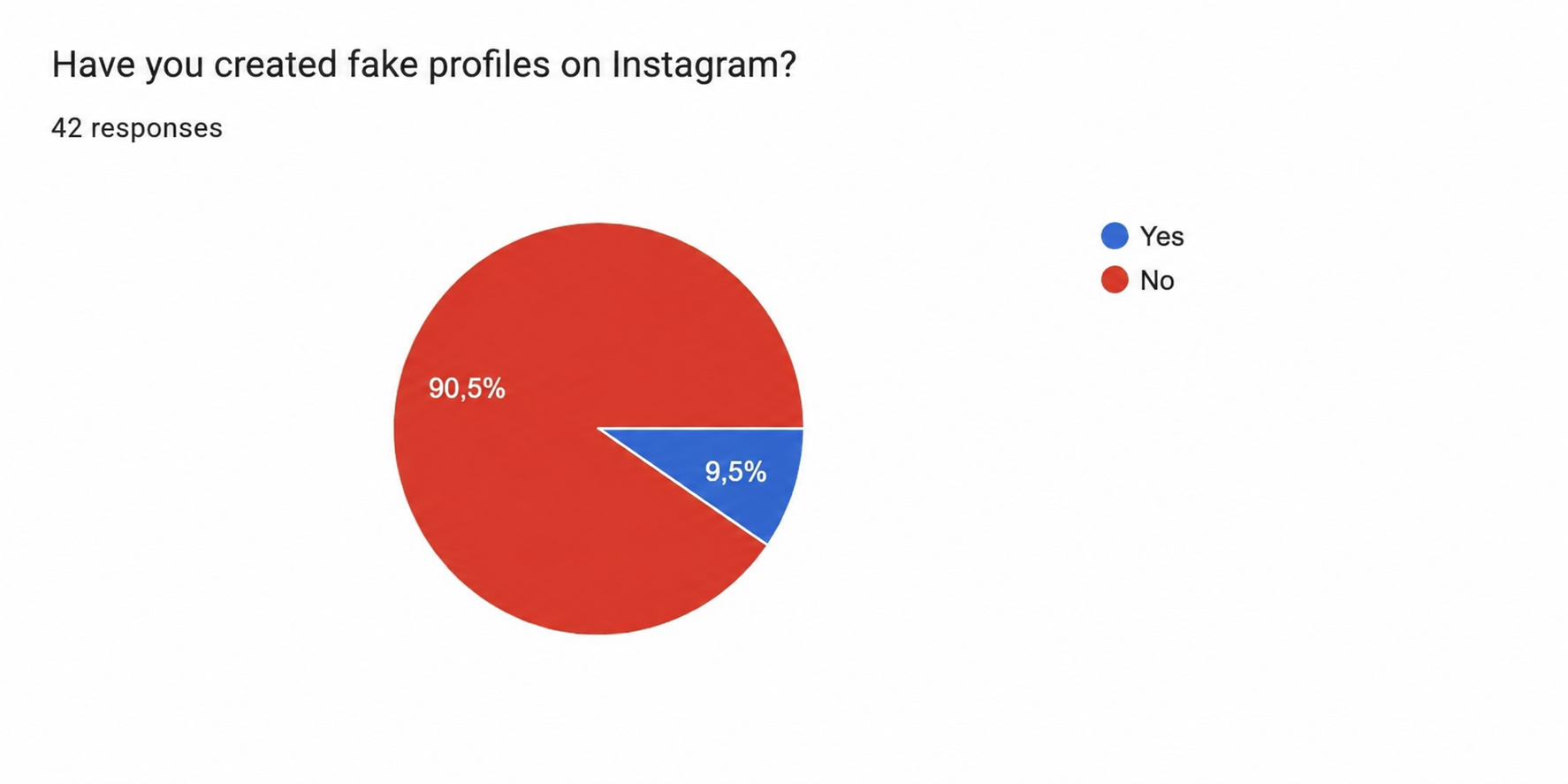
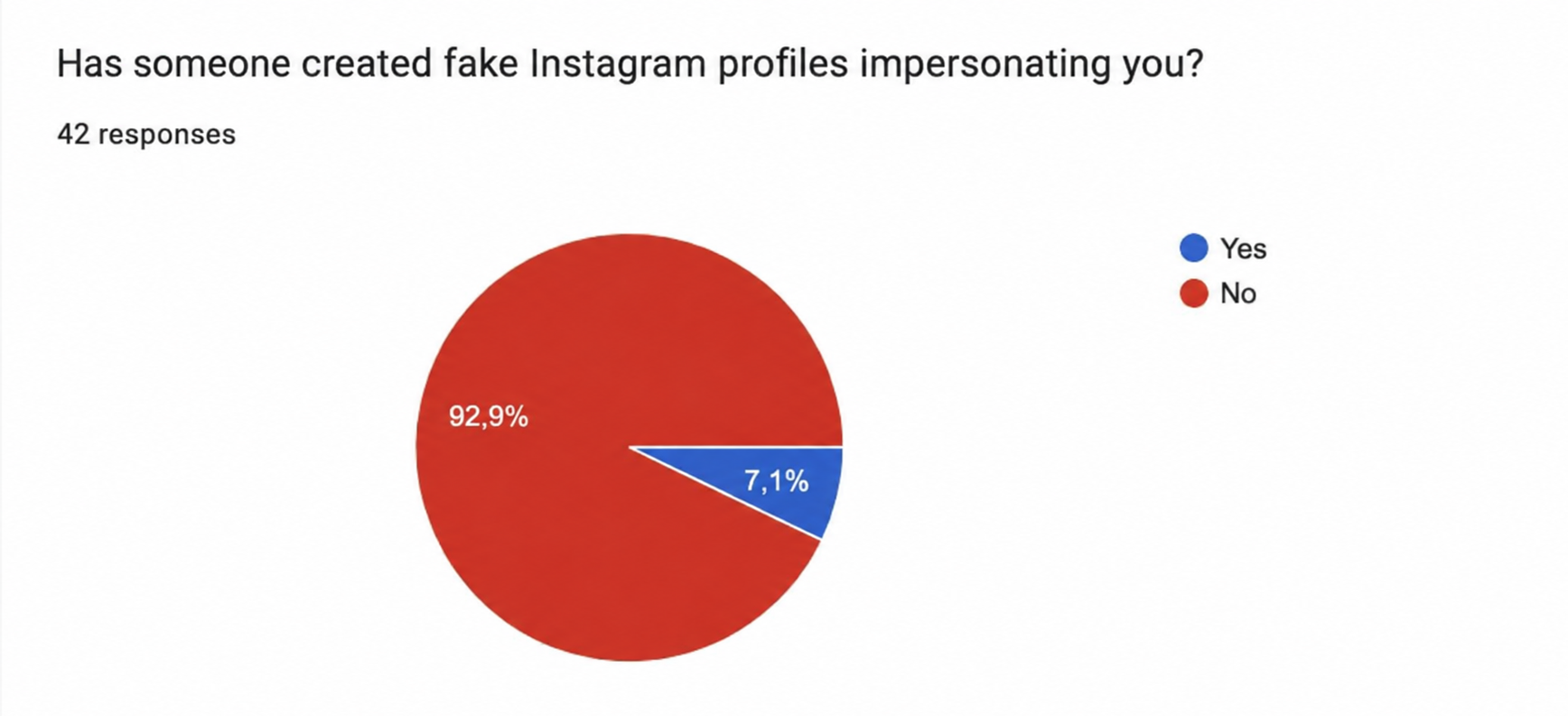
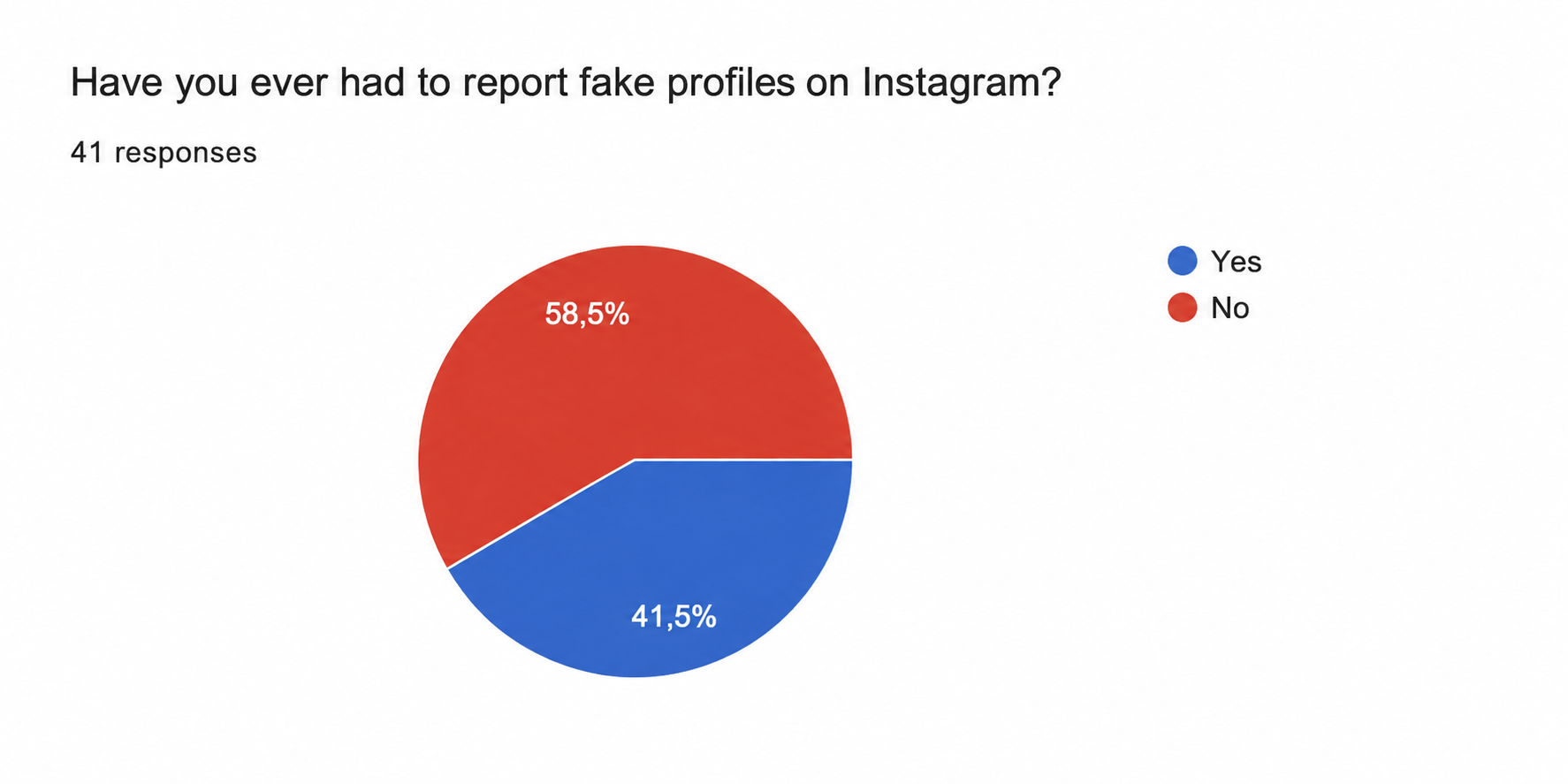
The survey was administered to students at random, since the form link was sent, and the most relevant responses were as follows:
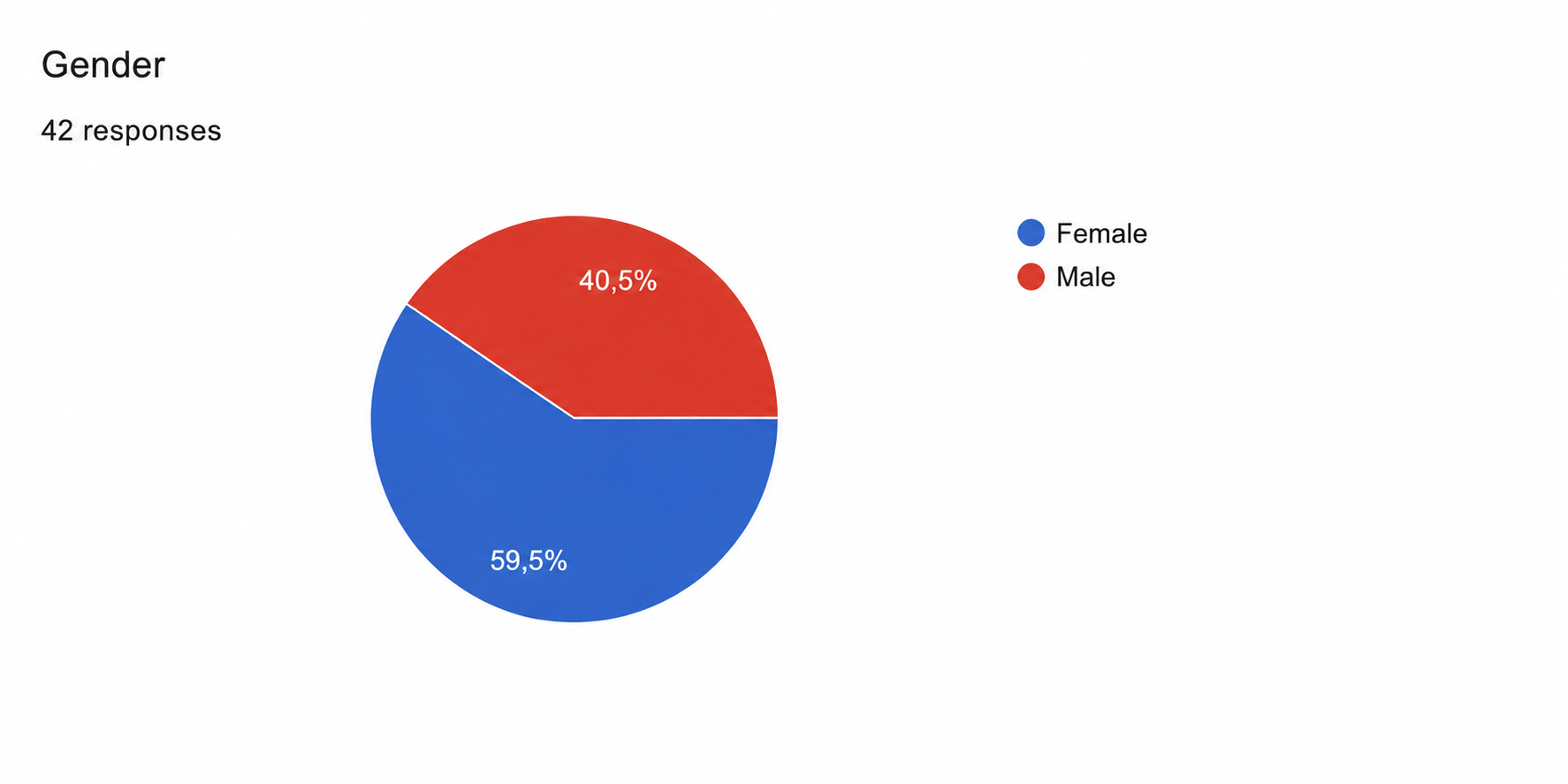
Note: this figure reflects that most students who answered the survey self-perceive as women
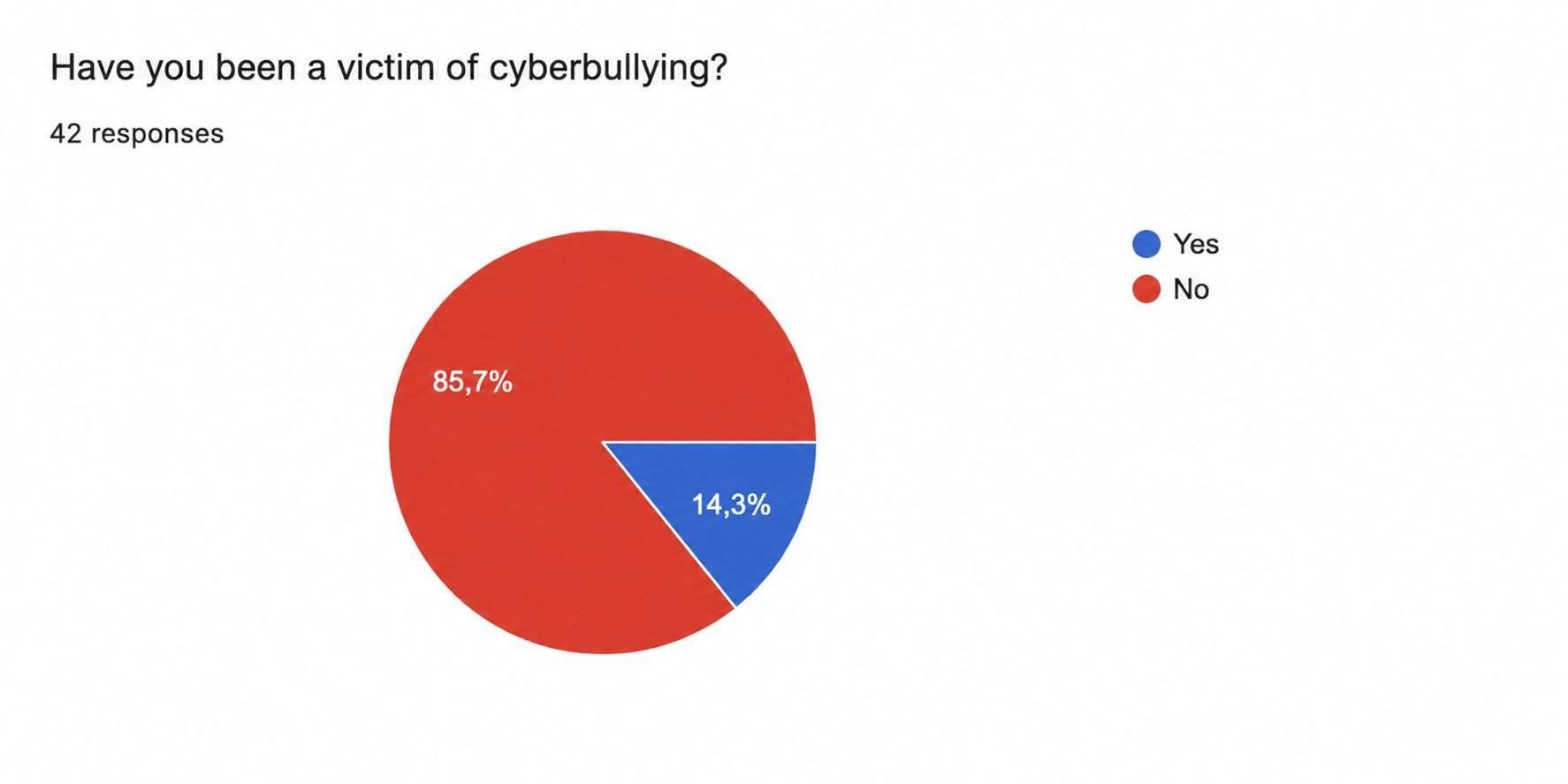
Note: the majority of students were not victims of cyberbullying
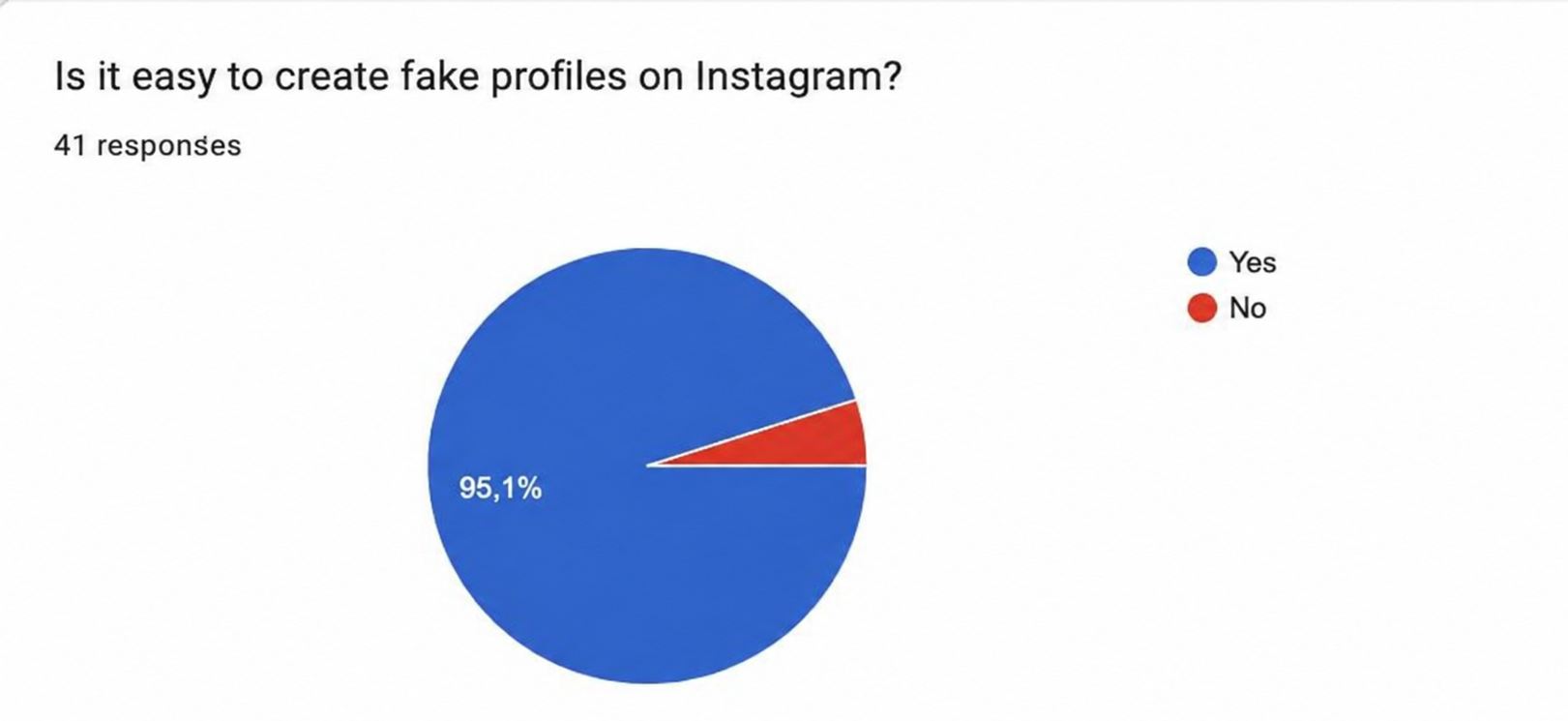
Note: the majority of respondents answered yes
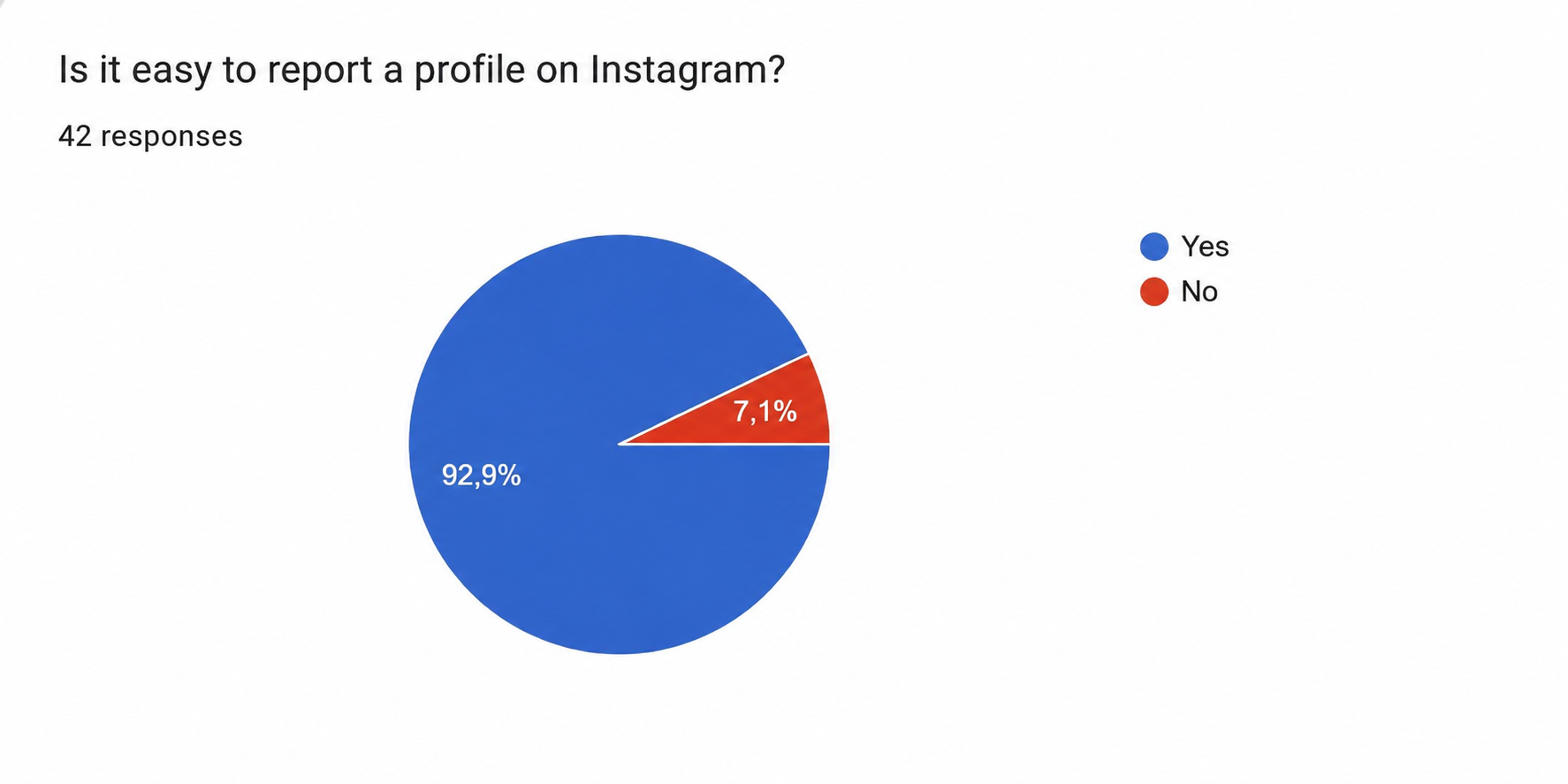
Note: this figure expresses that for the majority it is easy to report a fake profile
Note: 9.5 % of students have created a fake profile on Instagram
Note: in this figure, 7.1% of respondents answered that another person has created a profile with their name, that is, a fake profile
Note: in this figure, 41.5% of respondents answered that they reported fake profiles on Instagram
In addition to the survey, an interview was conducted with a member of the management team of the College, which is presented below:
Interview with a director of the Colegio: Luis Emilio Tessolat.
M: At the school, have there been cases of bullying, and are you aware of harassment on social media?
Administrator: we have had cases of bullying that was also seen on social media; the two go hand in hand. Last year specifically, and in times of the pandemic, especially when we have been in virtual mode.
M: from the school, do they address this topic with the students?
Administrator: yes, we address it with students frequently, especially in subjects such as human and Christian formation, and also in philosophy, where we hold what we call coexistence circles, in which the topic is also addressed. In addition, some teachers have been specifically asked to refer to this topic in their subjects. We also conduct tutoring sessions with students, and the topic also comes up there.
M: What consequences does cyberbullying have in adolescents?
School administrator: The primary consequence is the person's isolation. They have no contact with classmates, they do not want to go to recess, they go to the bathroom during class hours when everyone is in class, because they want to be alone. The second consequence is lack of motivation, not only socially but also when it comes to studying and keeping up with school. Then I would tell you that there arises, I do not know if in third place, but alongside what was expressed above, a kind of existential anguish. It is not a normal anguish, which makes the person question existence itself. What is the meaning of life? At this third step, all the things that have been said to them, that destroying of the person's morale is as if it took its toll and in a certain sense they bought into the idea that they are not good for anything; the latter is a consequence of the former and is very dangerous, especially because of the ramifications it can have, not only because the child does not want to go to school but because they are already questioning life itself.
M: How do you act in the event that a student or students suffer from it?
School administrator: The first thing that is done is to talk about it, to clear up the issue with the class groups so that they know what bullying is about. Give them the information. The second stage is communication; the student knows that, if it happens to them, they can report it to their student representatives, which is very effective; they can report it to their tutor, to a teacher, or also to a school administrator. That is, the second step after information is communication, which is very important, because if communication is achieved with someone who can help the person who is suffering, then help can be sought. In 70 % of cases, the information comes through a student delegate who reports it to us. The third step is to contact the victim, and fourth, we contact the parents of the victim and the perpetrator. This is the most difficult stage because when we have to call the parents of the boy or girl who engages in bullying, they often deny it. This is more or less the communication circuit.
Generally, it has been our experience that when a person suffers bullying, as long as there is nothing unusual, it is resolved after a few conversations. So far, we have not had strikingly violent cases. Then there is a fifth instance, which is when it cannot be resolved within the school setting; there is the possibility of contacting the Ministry of Education, and there is a sector called "Socioeducativo"; it is a team of psychologists who come to the school and summon the parents outside the school setting, but this occurs when all intermediate channels have been exhausted. It is very interesting because I know some of them and I know that they are very good professionals.
M: Has the school participated in bullying prevention programs?
Director: We have not participated, but some professors have indeed participated personally and professionally in some conferences and debates on the topic.
M: Can it be said that cyberbullying affects students' self-esteem? Why?
Administrator: Both bullying and cyberbullying greatly affect students' self-esteem. A person who does not manage to overcome harassment, says nothing, or remains silent generally already has low self-esteem. They often end up picking on people with low self-esteem, the weakest link. When this constant dripping begins to chip away at the individual, while they bully the person over and over again and the person who suffers it does not speak up and, moreover, has low self-esteem and is ashamed to say so because they do not want to be a bother, their self-esteem ultimately becomes even more damaged, and it is difficult for them to recover from that again.
DISCUSSION
The development and rise of new Information and Social Communication Technologies impact everyday social life, generating new practices and rituals of socialization and, consequently, new subjectivities marked by the era of fluidity, speed, and the virtual.(8,9)
Thus, the objective of this research was to study how fake profiles on the social network Instagram can affect the self-assessment of personality in 1st and 2nd year students of "Colegio Nuestra Señora de Luján" in the city of Rosario, province of Santa Fe.(10) This issue was considered important from the outset because, according to the study by the International NGO Bullying Sin Fronteras conducted between January 2021 and March 2022, cases of bullying in the Argentine Republic continue to increase, with 7 out of every 10 children suffering some type of harassment and cyberharassment every day. In Santa Fe Province alone, the percentage of bullying cases reaches 8%.(11,12)
The damage caused by bullying and cyberbullying is such that no fewer than three Nobel Peace Prize laureates—Desmond Tutu, John Hume, and Liu Xiaobo—began in 2016 to ask Bullying Sin Fronteras that, given the striking silence of organizations such as UNESCO, UNICEF, and others, it was necessary to have the courage and energy to carry out a report, with sufficient academic support and clear objectivity, so that universities, governments, educational entities, and media worldwide can use it to produce an X-ray of bullying throughout the world, country by country.(13,14)
Currently, the creation of fake profiles on social networks is emerging as a general problem in which extortion, threats, scams, cyberbullying, etc., are committed. When one creates fake profiles on Facebook or Instagram, pretending to be someone they are not physically, but in which they refer to “their true self,” they generally use photos and false information from other people.(15) Authentic profiles and those of real people are found in large numbers online. In fact, they are the most prevalent on the major social networks on the Internet. However, many people use fake profiles for various reasons.(16)
These reasons are varied. “It is estimated that 40% of new Facebook profiles are fake,” states Martin Thorborg, owner and co-founder of Spamfighter.
The fake account or “fake profile” is the usual method used by those who do not want their real identity to be known. It is like a carnival mask: I pretend to be someone and do not let them truly know who I am. Under the filter of anonymity, the worst feelings emerge, and the internet is often used as a channel for carrying out personal revenge. A short period of time is enough to spread information about and ridicule a person without having to show one's face for it.(17,18)
The systems Instagram has for suspending or deleting fake accounts are very precarious. It is very easy to create fake profiles, and in the surveys conducted, 42% have had to report fake profiles.(19,20) The adolescent who is harassed on Instagram can report a profile, but a single report is not enough; several reports must be made for an account to be deactivated. This not only affects the adolescent's self-esteem but is also exhausting for them to follow the different steps because in the "meantime" and while waiting for a response from Instagram, a long time passes and the harassment persists.(21,22)
When reporting a profile, Instagram offers the following options:
Publishing content that should not be on Instagram.
Pretending to be another person.
It is possible that it belongs to a minor under 13 years of age.
When selecting "Pretend to be someone else," the platform offers only four options:
I.
Someone I know.
A celebrity or public figure.
A company or organization.
That is, Instagram does not consider a "Fake Profile" as an option, in which one anonymous person hides behind a mask to ridicule, attack, and psychologically harass one real person.(23,24)
For the adolescent, it is more difficult to defend themselves against a masked and false bully than against a close peer, with whom they can, in any case, exchange words to defend themselves personally (25,26).
CONCLUSIONS
The conclusion reached is that, although Instagram offers some options to report a fake account, these are very outdated. It is possible to report an account and even block it, but it must be considered that it is very easy to create another fake account to continue the harassment.
As noted by Marcelo Campetella, a lawyer and mediator specializing in computer law, in an interview published in IProfesional, "the systems for preventing the creation of fake accounts are very poor. Just to think that minors under 13 years of age can falsify personal information and manage to have their account on Facebook, when a requirement is at least 13 years of age. The same happens with Twitter or Instagram."
It should be noted, citing Luengo, that when there are insulting images, videos, or comments about an adolescent online, even if he changes schools and towns, he will fear that his new classmates will see what is posted about him. Therefore, he carries constant insecurity and much anguish. He has changed towns, but his aggressors are still online. Furthermore, when his school years end and he marries and has children, his children may come across humiliating photos of their father on the internet. Or his boss. This is a cybercrime, and that image will haunt him for life.
Interest in the protection and development of children and young people and the demand for countries to adopt a series of actions in favor of children and adolescents, reflected in the Convention on the Rights of the Child, approved by the United Nations General Assembly in 1989, the 1st World Summit for Children in 1990, and the International Conference on Population and Development in 1994, in Cairo, have also contributed to considering children and adolescents as 1 particular group in society, with the right to the enjoyment of the highest level of physical and mental health, education, and development, to receive care and, in the case of adolescents, to participate in the identification and solution of their problems.
On the other hand, in Argentina, cyberbullying does not have much definition from the point of view of criminal law, because there is no juvenile criminal justice that addresses this issue. It does in the case of cyberharassment, specifically with respect to the harassment that may occur to adults through social networks, applications, or games. Cyberbullying is not encompassed within criminal matters; the law does not mention it specifically, but it does establish, through other types of crimes, such as threats, specific sanctions. In this sense, we are a step behind.
However, as Luis explained in the interview mentioned above
Emilio Tessolat, cyberbullying can be addressed by the Ministry of Education, specifically through a sector called "Socio-educational," where a team of psychologists goes to the school and summons parents outside the school setting.
When the perpetrator of violence is anonymous, several problems arise. Among them is the complexity of identifying the harasser or stalker. Another is proving where the aggression comes from. Many times, it is impossible. In these cases, the justice system has been developing what is known as digital forensic clinic, which is used more frequently in other types of cybercrimes and not in the case of cyberbullying, which is not classified as a crime in any legislation.
Lastly, in the aforementioned interview with Luis Tessolat, the executive assured that both bullying and cyberbullying greatly affect students' self-esteem. "The person who does not manage to overcome bullying, either says nothing or remains silent; they are generally people who have low self-esteem to begin with. Many times they end up picking on people who have low self-esteem, the weakest link. When the drop that makes a dent begins to fall, while they bully them again and again and the person who suffers it does not say anything and on top of that has low self-esteem and is embarrassed to say it because they do not want to bother, obviously their self-esteem ends up even more damaged and it is difficult for them to recover from that."
References
- 1 Villanueva DN, Feced SC, Calvo BR, Barranco IB. Influencia negativa de las redes sociales en la salud de adolescentes y adultos jóvenes: una revisión bibliográfica. Psicol Salud. 2017;27(2):255-267.
- 2 Amigo PM, Lozano GJL, González RN. Diagnóstico de utilización de redes sociales: factor de riesgo para el adolescente. Revista RIDE. 2018.
- 3 Barlińska J, Szuster A, Winiewski M. Cyberbullying among adolescent bystanders: role of the communication medium, form of violence, and empathy. J Community Appl Soc Psychol. 2013;23(1):37-51.
- 4 Berne S, Frisén A, Kling J. Appearance-related cyberbullying: a qualitative investigation of characteristics, content, reasons and effects. Body Image. 2014;11(4):527-533.
- 5 Doornwaard SM, Moreno MA, van den Eijnden RJ, Vanwesenbeeck I, ter Bogt TF. Young adolescents’ sexual and romantic reference displays on Facebook. J Adolesc Health. 2014;55(4):535-541.
- 6 Durán M, Guerra J. La actitud positiva hacia la presencia de la madre en la red como factor protector: usos y tendencias adictivas de una muestra de estudiantes universitarios españoles a la red social Tuenti. An Psicol. 2015;31(1):26-35.
- 7 Echeburúa E, Corral P. Adicción a las nuevas tecnologías y a las redes sociales en jóvenes: un nuevo reto. Adicciones. 2010;22(2):91-95.
- 8 Fernández JE, Soria A. Actas de Periodismo y Comunicación. 2016;2(1). http://sedici.unlp.edu.ar/bitstream/handle/10915/74438/Documento_completo.pdf
- 9 Gavilan DV. Situación del acoso escolar en alumnos de séptimo grado de un establecimiento de Santa Fe. Santa Fe: Universidad Nacional del Litoral; 2018. https://bibliotecavirtual.unl.edu.ar:8443/bitstream/handle/11185/1166/TFI.pdf
- 10 Griffiths M. Internet addiction: does it really exist? In: Gackenbach J, editor. Psychology and the Internet: Intrapersonal, Interpersonal and Transpersonal. New York: Academic Press; 1998.
- 11 Haeussler I, Milicic N. Confiar en uno mismo. Santiago de Chile: Dolmen; 1996.
- 12 Litt DM, Stock ML. Adolescent alcohol-related risk cognitions: the roles of social norms and social networking sites. Psychol Addict Behav. 2011;25(4):708-713.
- 13 Luengo L. Adicción a Internet: conceptualización y propuesta de intervención. Rev Prof Esp Ter Cognit Conduct. 2004;(2):22-52.
- 14 Machackova H, Cerna A, Sevcikova A, Dedkova L, Daneback K. Effectiveness of coping strategies for victims of cyberbullying. Cyberpsychol J Psychosoc Res Cyberspace. 2013;7(3).
- 15 Madrid López N. La adicción a Internet. Psicología Online. 2000. https://www.psicologia-online.com/la-adiccion-a-internet-824.html
- 16 Mishna F, Cook C, Gadalla T, Daciuk J, Solomon S. Cyber-bullying behaviors among middle and high school students. Am J Orthopsychiatry. 2010;80(3):362-374.
- 17 Moore S, Rosenthal D. Sexuality in adolescence: current trends. London: Routledge; 2006.
- 18 Murgo E. Buenas y malas del desmedido uso de Internet en niños y adolescentes. Universidad; 2019.
- 19 Nguyen T, Guerra Rubio M. El ciberbullying como reto para la educomunicación. Alcance. 2021;10(26):173-197. http://scielo.sld.cu/scielo.php?script=sci_arttext&pid=S2411-99702021000200173
- 20 Olweus D, Limber SP. Bullying in school: evaluation and dissemination of the Olweus Bullying Prevention Program. Am J Orthopsychiatry. 2010;80(1):124-134.
- 21 Pérez DS, Santiago DM. Manual de prácticas clínicas para la atención integral a la salud de la adolescencia. La Habana: MINSAP; 1999.
- 22 Real Academia Española. Diccionario de la lengua española. https://dle.rae.es
- 23 Salmivalli C. Bullying and the peer group: a review. Aggress Violent Behav. 2010;15(2):112-120.
- 24 Sánchez NF. Trastornos de conducta y redes sociales en Internet. Salud Ment. 2013;36(6):521-527.
- 25 Temperini MG, Macedo M. La problemática de los perfiles falsos en Facebook y su relación con el cibercrimen. 2015. http://sedici.unlp.edu.ar/handle/10915/55608
- 26 Tracy N. Internet addiction (online addiction). HealthyPlace. 2021 Dec 15. https://www.healthyplace.com/addictions/internet-addiction/internet-addiction-online-addiction
Declarations
Funding
The authors did not receive funding for the development of this research.
Conflict of interest
The authors declare no conflict of interest.
Authorship contributions
Conceptualization: María de las Mercedes Martínez Ferrero, Soledad Soler Rosario.
Data curation: María de las Mercedes Martínez Ferrero, Soledad Soler Rosario.
Formal analysis: María de las Mercedes Martínez Ferrero, Soledad Soler Rosario.
Writing – original draft: María de las Mercedes Martínez Ferrero, Soledad Soler Rosario.
Writing – review and editing: María de las Mercedes Martínez Ferrero, Soledad Soler Rosario.