

Abstract
Currently, social networks are used for the purchase of goods and services, thus, companies from various sectors consider this trend as an opportunity to reach potential customers through marketing and optimize their positioning in the market. The objective of this study was to determine the influence of the use of social media marketing on the positioning of small and medium-sized companies in the travel agency sector, Tarapoto, 2023. Methodologically, it was framed in an applied research, descriptive-correlational level and non-experimental design, using the survey technique and questionnaires as study instruments for both variables to a sample size of 68 clients of the MSMEs of the travel agency sector, Tarapoto. According to the results, 58,8 % of them placed social media marketing at a high level, while 39,7 % placed it at a regular level, and finally 1,5 % at a low level. With respect to positioning, 58 % placed it at a high level, while 36 % placed it at a regular level, and finally 4 % at a low level. It was concluded that the influence of social media marketing on the positioning of travel agencies was identified, since the correlation index was 0,866, showing a high positive correlation, and the r2 was 0,75, recognizing a considerable influence of the variable on positioning.
Keywords
Positioning, Marketing, Social Media, Mypes, Customers
INTRODUCTION
Nowadays, people use social media to obtain information, interact, and purchase products or services; consequently, companies find opportunities to reach potential customers through social media. In this sense, this marketing is based on the creation of shared content and is designed to drive consumer engagement and increase purchases in order to position companies competitively in the market.(1,2,3,4) This is increasingly relevant as digital visibility acquires strategic importance in terms of regularly achieving better acquisition of the target audience. Therefore, success in this highly competitive environment requires a combination of creativity, innovation, and a customer-centered approach, given that content personalization, effective use of social media, and the implementation of SEO strategies are fundamental to ensuring a relevant and attractive digital presence. Thus, companies that do not evolve and adopt these essential digital practices risk falling behind in a market increasingly dominated by technology and digital interaction.(2,5,6,7)
Internationally, in 2019, micro and small enterprises became interested in applying specific digital strategies because of consumer requirements and a broad presence on social networks; therefore, more than 50% of micro-entrepreneurs began using different digital platforms and websites according to their business area. Likewise, 75% of MSEs on social networks lack clear objectives and results measurement, since they publish without content plans or understanding; this dilutes their image, hinders brand recall, and weakens their positioning against more strategic competitors. As a result, publications are produced without adequate content planning or comprehension of social media marketing dynamics, which dilutes their brand image and weakens their positioning compared with competitors that use more sophisticated strategies. In short, many SMEs are not fully leveraging the potential of social media marketing because of the lack of a comprehensive strategy consistent with business objectives and the needs of their audience; it should be noted that training and knowledge on these topics are crucial for improving their performance in the digital market.(3,8,9,10,11)
Meanwhile, Ponce et al. (4), in the Ecuadorian context, have found that the growing use of social media has opened great opportunities for companies to engage in social media marketing and manage to position their brands. However, many companies still do not know how to adequately take advantage of these platforms and make mistakes that affect their positioning strategies. These include irrelevant content that does not provide value to their followers, accompanied by generic, impersonal messages that could have been written by any brand. This causes users to lose interest and stop following their profiles. In turn, they focus on the quantity of followers instead of quality, without segmenting according to interests; therefore, they have poorly engaged communities that do not translate into real customers. Likewise, many businesses manage their social media without a long-term strategy, posting content at random depending on the situation; this prevents building a solid image and positioning in the consumer's mind, which often leads to disconnection with the audience and lower effectiveness in strengthening the brand. (12, 13, 14, 15)
At the national level, according to the National Institute of Statistics and Informatics, MSEs represented almost more than 90% of Peru's business entities and amount to about 19.3 percent of the country's GDP, generating direct and indirect employment opportunities, therefore, it is necessary to maximize their opportunities in the field of digital marketing and remain competitive in the market. Given its importance, it is vital that these companies maximize their opportunities in the field of digital marketing to maintain their competitiveness, this implies continuous adaptation to emerging digital trends and investment in the development of online marketing strategies. Indeed, digital transformation is not only an option, but a necessity for these companies to maintain their relevance in an increasingly globalized and technologically advanced market. Therefore, the adoption of appropriate digital tools and social media platforms, along with training in digital skills and marketing strategies, is essential. Thus, Peruvian MSEs will be able not only to sustain their presence in the national market, but also explore opportunities for expansion and international reach. (5,16,17,18,19,20)
On the other hand, in Lima, it has been found that 60% of SMEs have social media accounts, but more than half do not use them correctly for their marketing strategies, as they publish generic content very sporadically or simply abandon them; consequently, they fail to attract sufficient followers. At the same time, 75% of social media businesses do not properly define their target audience, as they seek to attract all types of users instead of segmenting and specializing their content around interests aligned with their product/service offering. Likewise, 85% of social media businesses do not have clear objectives or a medium- and long-term strategic plan, as they publish according to the current situation without a guiding strategy, which dilutes their image and hinders brand imprinting and identification by consumers. This absence of a coherent and well-structured strategy dilutes their brand image and hinders their recognition and recall by consumers. These challenges underscore the critical need for digital marketing training and advisory support for SMEs in Lima, in order to improve their online presence and their effectiveness in social media marketing.(6,21,22,23,24)
At the regional level, specifically in San Martín, Linares (7) mentions that positioning was at a regular level with 54.67% according to customer perception. This situation suggests that, although there is a certain degree of recognition and acceptance, there is still significant room to improve the presence and image of companies in the market. This level of positioning may be influenced by various factors, such as the lack of effective marketing strategies, limited understanding of customer needs and preferences, and scarce differentiation in the services or products offered. Furthermore, this regular perception could be related to the lack of innovation and adaptation to current market trends, which limits the ability of these companies to attract and retain customers. Therefore, it is essential that mypes in San Martín invest in improving their positioning through more customer-oriented marketing strategies, a greater understanding of the market, and the implementation of innovations that differentiate them from their competitors; in turn, improving communication and digital presence is fundamental to raising market positioning.(25,26,27,28)
Locally, it can be observed that MYPEs in the travel agency sector of the city of Tarapoto face a series of complications regarding their market positioning, since they cannot differentiate themselves from their competitors in terms of service or product quality; likewise, they may have difficulties offering multiple services and limitations in satisfying customer needs; likewise, they are not aligned with needs and trends; all of this implies that they have difficulties standing out competitively in terms of brand or name, generating the establishment of trust with consumers. This situation prevents them from standing out in terms of brand and name recognition, which in turn hinders the establishment of trusting relationships with consumers. Likewise, these challenges underscore the need for more effective marketing and differentiation strategies to improve their competitiveness and visibility in the market; all of this translates into an inability to establish a distinctive brand and generate trust among consumers.(29,30,31,32)
These problems could possibly be due to inappropriate use of social media marketing, since they may have an inadequate, clear content strategy for their social network, posting unattractive or inconsistent information; this can cause customers to perceive an inconsistency in the messages being conveyed, reducing their trust in the brand. Likewise, if users do not interact with the shared content, in turn, they do not interact with the sector, preventing the construction of a community around it. Finally, inefficient use of web tools and promotion can hinder the conversation between these businesses and their potential customers. If this problem continues, companies of this type may continue to lose opportunities for competitiveness and growth in the market; by not taking adequate advantage of digital marketing, they could fall behind their competitors, lose market share, and experience a decrease in profitability, with negative impacts on their survival and long-term growth. In this way, it could also affect their capacity to generate jobs in the region.
How does the use of social media marketing influence the positioning of Mypes in the travel agency sector, Tarapoto, 2023?
Objective
To determine the influence of the use of social media marketing on the positioning of Mypes in the travel agency sector, Tarapoto, 2023.
METHODS
Scope and conditions of the research
Political location
It was carried out in the district of Tarapoto, which is a city in the department of San Martín located in northern Peru; furthermore, it is considered the capital, as well as an important economic and tourist center of the region.
Geographic location
Tarapoto is among the 14 political divisions that make up the province of San Martín in Peru, and is also the capital city of the province, with an altitude of 333 meters above sea level.
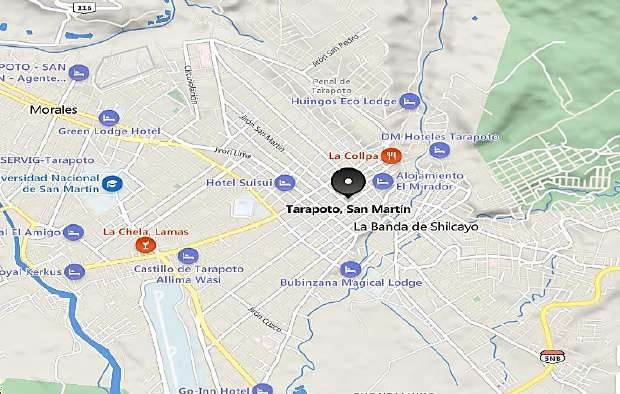
Source: Google Maps
Execution period:
The research was carried out in the period 2023.
Authorizations and permits:
Not applicable.
Environmental control and biosafety protocols:
Not applicable.
Application of international ethical principles
The study considered the principles of ethical quality in research, in accordance with (8): first, the principle of beneficence, whose purpose is to create benefits for the study population by defining problems and identifying their causes or implementing improvement solutions; researchers must take into account that the intervention or action carried out benefited and did not harm the population. Second, the principle of nonmaleficence ensures that collaborators were not harmed directly or indirectly by the researcher's intervention; therefore, precautions were taken in all actions to guarantee health and well-being. Third, the principle of autonomy means that selected participants must know what the research is about and must have the opportunity to decide whether they wish to collaborate in the research; to do so, they must give their informed and voluntary consent, having been informed of the purpose. Finally, the principle of justice requires fair and equitable treatment of all participants; this meant respecting each individual participant and viewing them as equally important in the study, since equal opportunities are important and any form of discrimination in the selection and conduct of studies is avoided.
System of variables
Main variables
Independent variable: social media marketing.
Empirical variable 1: web tools, with the indicators Facebook, YouTube, Instagram, and Twitter.
Empirical variable 2: web promotion, with the indicators promotions by hashtag, promotions by number of comments, and collaborations with influencers.
Empirical variable 3: the C's of social media, with indicators: content, conversations, community, and connections.
Secondary variables
Dependent variable: positioning.
Empirical variable 1: by attributes and benefits, with the indicators differentiated services and unique services.
Empirical variable 2: by price and quality, with the indicators quality service and competitive price.
Empirical variable 3: by service category, with the indicators service advantages and varied services.
Empirical variable 4: by user orientation, with indicators of fulfillment of customer needs and services according to customers' lifestyle.
Empirical variable 5: by use or application, with indicators highlighting service characteristics and preferential attention to customers.
Empirical variable 6: by combination, with the indicators complementary services and collaborative marketing with another sector.
Empirical variable 7: through the name, with the indicators brand recall and brand recommendation.
Empirical variable 8: in relation to competitors, with the indicators market share and leadership in the sector.


Specific objective No. 2: To measure the level of positioning of Mypes in the travel agency sector, Tarapoto, 2023. | Specific objective No. 2: To measure the level of positioning of Mypes in the travel agency sector, Tarapoto, 2023. | Specific objective No. 2: To measure the level of positioning of Mypes in the travel agency sector, Tarapoto, 2023. | Specific objective No. 2: To measure the level of positioning of Mypes in the travel agency sector, Tarapoto, 2023. |
|---|---|---|---|
Abstract variable | Concrete variable | Recording medium | Unit of measure |
Positioning | By attributes and benefits By price and quality By service category By user orientation By use or application; by combination By name In relation to competitors | Questionnaire | Ordinal |
Research Procedures
Data processing for this research began with the formulation of the research problem, focused on the variables of interest: social media marketing and positioning. Then, a review of the scientific literature was carried out to establish the background of the research. Therefore, based on the theoretical foundations that support the measurement of the variables of interest, the data collection instrument was developed.
The study used two questionnaires, the first with 22 items and the second with 32 items; both have five response options, and they were validated by three experts before their administration. After scheduling the administration of the instruments, the data were collected and transferred to Excel spreadsheets and processed using SPSS. Then, the data were analyzed by grouping them into levels and presenting them in frequency tables; thus, a descriptive and inferential analysis was performed to determine the influence.
Specific objective 1
For specific objective 1, a descriptive analysis was performed, so a database was created in Microsoft Excel that allowed systematic organization of the data collected in the questionnaire, which facilitated its subsequent analysis and processing. The transfer of these data to the statistical software SPSS allowed the creation of tables and the calculation of relative and absolute frequencies to identify patterns and trends in the data; likewise, presenting the results in clear and concise tables and graphs facilitated understanding of the findings.
Specific objective 2
For specific objective 1, a descriptive analysis was conducted; therefore, a database was created in Microsoft Excel, which allowed systematic organization of the data collected in the questionnaire, facilitating its subsequent analysis and processing. Transferring these data to the SPSS statistical software allowed the creation of tables and the calculation of relative and absolute frequencies in order to identify patterns and trends in the data; likewise, presenting the results in clear and concise tables and graphs facilitated understanding of the findings.
Specific objective 3
For specific objective 3, a database was created in Microsoft Excel, which enabled systematic organization of the collected data and facilitated its subsequent analysis and processing. An inferential analysis was performed to determine the use of social media marketing and its influence on the positioning of Mypes, using a correlation coefficient based on normality; in addition, the results were presented in clear and concise tables to facilitate interpretation of the results.
Type and level of research
Type of research
The present research was of an applied type, consisting of conducting original studies with the purpose of obtaining new knowledge; however, these studies are mainly focused on achieving a practical and concrete goal or purpose. This type of research focuses on applying the body of existing knowledge, using an appropriate methodology, to achieve a specific objective, which is generally linked to the solution of a practical problem.(9)
Level of research
The level of the present research was descriptive–correlational, as such studies aim to investigate the causes of a specific fact, event, or phenomenon under study. This approach seeks to understand the factors and effects of phenomena; that is, it focuses on explaining why the event occurred, thereby providing more complete explanations of the phenomena studied.(10)
Population and sample
Population
The study population consists of all elements, components, people, things, or events and is not limited by time, space, or quantity; it is a complete collection that matches the characteristics the researcher wishes to study; in short, it is the total group considered relevant for the research (11). Therefore, the population comprised the clients of 19 travel agencies in Tarapoto (12). Likewise, this group can provide valuable information on business practices, social media marketing, and positioning in travel agencies. It should be mentioned that the determination of the population is variable, given that a client does not necessarily use the agency regularly or may even have requested service from more than 1, so those who have shown greater regularity in using the service were selected, which represents a total of 68 clients, established at 3 to 4 per travel agency.
Sample
The study sample can be representative so that the findings can be generalized, this group of cases or individuals are extracted from a study population using various criteria, that is, a research sample is a subset that is selected to obtain relevant and useful information for the study. (11) Therefore, 68 clients of MSEs in the travel agency sector were taken as a study sample, Tarapoto. Being selected due to its greater accessibility and willingness to participate in the research, it also represented a sufficient amount to analyze data, presuming to be relevant.
Likewise, it employed intentional non-probabilistic sampling, also known as purposive or judgment sampling, a sampling technique in which sample elements are deliberately selected by the researcher based on their judgment and knowledge of the study topic. In this type of sampling, selection is not random but is based on specific characteristics that sample subjects must meet to be included in the study.(11) The following research criteria were then established:
Inclusion criteria
Inclusion criterion 1: customers of the Mypes in the city of Tarapoto.
Inclusion criterion 2: clients of the Mypes in the travel agency sector.
Exclusion Criteria
Exclusion criterion 1: those clients of Mypes in the travel agency sector from years prior to 2023.
Exclusion criterion 2: those clients of Mypes from other cities of the province of San Martín.
Analytical, sampling, and experimental design
The research design was framed as non-experimental, given that such studies focus solely on the description and analysis of variables in natural situations; these studies can serve as a basis for experimental design. In sum, this approach is based on observing and measuring variables as they occur naturally without any intervention.(13) In addition, it was cross-sectional, which focused on collecting information from a target population at one single point in time; it serves to identify trends and patterns, but does not allow for the analysis of changes over time. Thus, they are used to determine the prevalence of an outcome of interest in a specific group of people at a specific time.(14)
Likewise, the technique that was used in the research was the survey, which was used when you want to obtain information directly from a specific group of facts or individuals to obtain an understanding of a situation and obtain a complete account of specific characteristics. (15) Similarly, the study instruments were questionnaires, which is a structured data collection tool that addresses a specific objective and metric, so it is relevant to determine in advance the components to be collected and organize the process or program. (11) In this sense, the research used a questionnaire for the social media marketing and positioning variable that will consist of 22 and 32 questions, respectively and a Likert scale from 1 to 5 will be used, where 1 represents "strongly disagree", 2 "disagree", 3 "indifferent", 4 "agree" and 5 "strongly agree", finally, both instruments will be validated by a group of experts.
RESULTS
Descriptive Results
Variable: Social media marketing
Dimension 1: Web tools
Web tools were found to perform at a high level, according to 51,5 per 100 of the surveyed clients, since content on both Facebook and YouTube encourages them to choose the services of these travel agencies and they can find attractive promotions through these media. On the other hand, 45,6 per 100 described the dimension as being at the regular level, and 2,9 per 100 described it as being at the low level.
Table 2. Performance of web tools
Rating | From | Range | Until | Freq. | % |
|---|---|---|---|---|---|
Low | 8 | [empty cell] | 18 | 2 | 2,9 |
Regular | 19 | [empty cell] | 29 | 31 | 45,6 |
High | 30 | [empty cell] | 40 | 35 | 51,5 |
Total | [empty cell] | [empty cell] | [empty cell] | 68 | 100,0 |
Indicator 1. Facebook: The following table reflects a high level of Facebook use, with 80,9 per 100 customers reporting high use; this social network provides relevant information about travel agency services and encourages customers to choose the services they prefer. A further 14,7 per 100 use it at a regular level, and 4,4 per 100 at a low level.
Table 3. Description of Facebook use
Rating | From | Range | Until | Freq. | % |
|---|---|---|---|---|---|
Low | 2 | [empty cell] | 4 | 3 | 4,4 |
Regular | 5 | [empty cell] | 7 | 10 | 14,7 |
High | 8 | [empty cell] | 10 | 55 | 80,9 |
Total | [empty cell] | [empty cell] | [empty cell] | 68 | 100,0 |
Indicator 2. YouTube: Customers rated the use of YouTube as high in 54,4 per 100 cases; the platform is informative and is used to promote the services of travel agencies. 39,7 per 100 customers describe its use as regular, and 5,9 per 100 observed low performance in the use of this platform.
Table 4. Description of YouTube use
Score | From | Range | Up to | Freq. | % |
|---|---|---|---|---|---|
Low | 2 | [empty cell] | 4 | 4 | 5,9 |
Regular | 5 | [empty cell] | 7 | 27 | 39,7 |
High | 8 | [empty cell] | 10 | 37 | 54,4 |
Total | [empty cell] | [empty cell] | [empty cell] | 68 | 100,0 |
Indicator 3. Instagram: clients consider Instagram to be at a high level of use, with 58,8 out of 100 respondents, because they attest to the relevance of the content published on that medium and its effectiveness for promoting their services. 29,4 out of 100 characterized it as being at a regular level, and 11,8 out of 100 considered the indicator to be at a low level of use.
Table 5. Description of Instagram use
Rating | From | Range | Up to | Freq. | % |
|---|---|---|---|---|---|
Low | 2 | [empty cell] | 4 | 8 | 11,8 |
Regular | 5 | [empty cell] | 7 | 20 | 29,4 |
High | 8 | [empty cell] | 10 | 40 | 58,8 |
Total | [empty cell] | [empty cell] | [empty cell] | 68 | 100,0 |
Indicator 4. Twitter: the following table demonstrates high performance in the use of Twitter, where 44,1 out of 100 consider Mypes to be in this category, owing to the communication of promotions carried out on that medium and the usefulness of the shared information.
On the other hand, 36.8 out of every 100 customers indicate a regular level, and 19.1 out of every 100 customers indicate a low level.
Table 6. Description of Twitter use
Rating | From | Range | To | Freq. | % |
|---|---|---|---|---|---|
Low | 2 | [empty cell] | 4 | 13 | 19,1 |
Regular | 5 | [empty cell] | 7 | 25 | 36,8 |
High | 8 | [empty cell] | 10 | 30 | 44,1 |
Total | [empty cell] | [empty cell] | [empty cell] | 68 | 100,0 |
Dimension 2. Web promotion
In the evaluated Mypes, 60.3% of customers rated the performance of web promotion as high, owing to the reach generated by promotions with hashtags and the use of influencers to promote the visibility of companies. In addition, 35.3% rated this dimension as regular, and 4.4% rated it as low.
Table 7. Web promotion performance
Rating | From | Range | Up to | Freq. | % |
|---|---|---|---|---|---|
Low | 6 | [empty cell] | 14 | 3 | 4,4 |
Regular | 15 | [empty cell] | 22 | 24 | 35,3 |
High | 23 | [empty cell] | 30 | 41 | 60,3 |
Total | [empty cell] | [empty cell] | [empty cell] | 68 | 100,0 |
Indicator 5. Hashtag promotions: 63.2% of customers indicate high performance of hashtag promotions in Mypes; they observe that such promotions are eye-catching and raise the visibility of the sector. In addition, 26.5% report a regular level, and 10.3% assign them a low level.
Table 8. Description of promotions by hashtag
Score | From | Range | Up to | Freq. | % |
|---|---|---|---|---|---|
Low | 2 | [empty cell] | 4 | 7 | 10,3 |
Regular | 5 | [empty cell] | 7 | 18 | 26,5 |
High | 8 | [empty cell] | 10 | 43 | 63,2 |
Total | [empty cell] | [empty cell] | [empty cell] | 68 | 100,0 |
Indicator 6. Promotions by number of comments: the following table shows that customers perceived a high level of performance for promotions by number of comments in the evaluated Mypes (55.9%), indicating that comments on social networks help services to be promoted effectively. In contrast, 35.3% indicated a regular level, and 8.8% rated the use of promotions as low level.
Table 9. Description of promotions by number of comments
Rating | From | Range | Up to | Freq. | % |
|---|---|---|---|---|---|
Low | 2 | [empty cell] | 4 | 6 | 8,8 |
Regular | 5 | [empty cell] | 7 | 24 | 35,3 |
High | 8 | [empty cell] | 10 | 38 | 55,9 |
Total | [empty cell] | [empty cell] | [empty cell] | 68 | 100,0 |
Indicator 7. Collaborations with influencers: the following table shows that customers considered collaborations with influencers to have high performance in 69.1% of cases, while they agreed that their participation helps companies be more visible on social networks. In contrast, 25.0% of respondents considered that this indicator develops at a regular level, and 5.9% placed it at a low level.
Table 10. Description of collaborations with influencers
Score | From | Range | Up to | Freq. | % |
|---|---|---|---|---|---|
Low | 2 | [empty cell] | 4 | 4 | 5,9 |
Regular | 5 | [empty cell] | 7 | 17 | 25,0 |
High | 8 | [empty cell] | 10 | 47 | 69,1 |
Total | [empty cell] | [empty cell] | [empty cell] | 68 | 100,0 |
Dimension 3. The C’s of social media
Of the surveyed customers, 55.9% attributed a high level to the social media C’s of the Mypes, given that the content shared on their social networks is entertaining and informative for them; they concluded that the networks are used effectively. In addition, 39.7% rated its performance as regular, and 4.4% indicated that it was low.
Table 11. Performance of the C’s of social media
Rating | From | Range | Up to | Freq. | % |
|---|---|---|---|---|---|
Low | 8 | [empty cell] | 18 | 3 | 4,4 |
Regular | 19 | [empty cell] | 29 | 27 | 39,7 |
High | 30 | [empty cell] | 40 | 38 | 55,9 |
Total | [empty cell] | [empty cell] | [empty cell] | 68 | 100,0 |
Indicator 8. Content: 76.5% of customers stated that the content on the social media of the evaluated Mypes performed at a high level, because their posts encourage participation and are entertaining. On the other hand, 20.6% considered this indicator to be at a regular level, and the remaining 2.9% placed it at a low level.
Table 12. Description of content
Rating | From | Range | Up to | Freq. | % |
|---|---|---|---|---|---|
Low | 2 | [empty cell] | 4 | 2 | 2,9 |
Regular | 5 | [empty cell] | 7 | 14 | 20,6 |
High | 8 | [empty cell] | 10 | 52 | 76,5 |
Total | [empty cell] | [empty cell] | [empty cell] | 68 | 100,0 |
Indicator 9. Conversations: the conversations that Mypes have with their customers on their social networks were rated at a high level by 64.7% of respondents, who indicated the effectiveness of the attention given to the inquiries they make on those platforms. On the other hand, 26.5% described a regular level, and 8.8% described a low level.
Table 13. Description of conversations
Grade | From | Range | Up to | Freq. | % |
|---|---|---|---|---|---|
Low | 2 | [empty cell] | 4 | 6 | 8,8 |
Regular | 5 | [empty cell] | 7 | 18 | 26,5 |
High | 8 | [empty cell] | 10 | 44 | 64,7 |
Total | [empty cell] | [empty cell] | [empty cell] | 68 | 100,0 |
Indicator 10. Community: interaction with the user community was rated as high by 64.7% of customers, who highlighted that Mypes work on building relationships in their networks. On the other hand, 29.4% stated that the indicator performed at a regular level, and 5.9% assigned it a low level.
Table 14. Description of community
Score | From | Range | Up to | Freq. | % |
|---|---|---|---|---|---|
Low | 2 | [empty cell] | 4 | 4 | 5,9 |
Regular | 5 | [empty cell] | 7 | 20 | 29,4 |
High | 8 | [empty cell] | 10 | 44 | 64,7 |
Total | [empty cell] | [empty cell] | [empty cell] | 68 | 100,0 |
Indicator 11. Connections: the connections indicator was established at a high level for 55.9% of clients, who emphasized the campaigns carried out by travel agencies with other organizations in order to expand their reach. 35.3% described this indicator as regular, and 8.8% stated that it performed at a low level.
Table 15. Description of connections
Rating | From | Range | Up to | Freq. | % |
|---|---|---|---|---|---|
Low | 2 | [empty cell] | 4 | 6 | 8,8 |
Regular | 5 | [empty cell] | 7 | 24 | 35,3 |
High | 8 | [empty cell] | 10 | 38 | 55,9 |
Total | [empty cell] | [empty cell] | [empty cell] | 68 | 100,0 |
Positioning Variable
Dimension: By attributes and benefits
Positioning due to attributes and benefits was high according to 50.0% of customers, owing to the perceived added value in its services and the offering of different experiences provided by the sector. 33.8% rated the dimension as regular, and the remaining 16.2% assigned it a low level.
Table 16. Positioning performance by attributes and benefits
Score | From | Range | Up to | Freq. | % |
|---|---|---|---|---|---|
Low | 4 | [empty cell] | 9 | 11 | 16,2 |
Regular | 10 | [empty cell] | 15 | 23 | 33,8 |
High | 16 | [empty cell] | 20 | 34 | 50,0 |
Total | [empty cell] | [empty cell] | [empty cell] | 68 | 100,0 |
Indicator 1. Differentiated services: differentiated services performed at a high level according to 55.9% of customers, since companies offer added value in their services. 30.9% rated the level of service differentiation as regular, and 13.2% as low.
Table 17. Description of differentiated services
Rating | From | Range | Up to | Freq. | % |
|---|---|---|---|---|---|
Low | 2 | [empty cell] | 4 | 9 | 13,2 |
Regular | 5 | [empty cell] | 7 | 21 | 30,9 |
High | 8 | [empty cell] | 10 | 38 | 55,9 |
Total | [empty cell] | [empty cell] | [empty cell] | 68 | 100,0 |
Indicator 2. Unique services: 58.8% of customers considered that the unique services indicator performed at a high level, because the services are seen as innovative in the market. 26.5% rated it at a regular level, and 14.7% described it as low.
Table 18. Description of unique services
Rating | From | Range | Up to | Freq. | % |
|---|---|---|---|---|---|
Low | 2 | [empty cell] | 4 | 10 | 14,7 |
Regular | 5 | [empty cell] | 7 | 18 | 26,5 |
High | 8 | [empty cell] | 10 | 40 | 58,8 |
Total | [empty cell] | [empty cell] | [empty cell] | 68 | 100,0 |
Dimension: By price and quality
Price and quality positioning was perceived at a high level by 47.1% of customers, since there is a satisfaction guarantee for its consumers, in addition to the attractive promotions advertised in the sector. 45.6% rated the dimension as average, and 7.4% assigned it a low level.
Table 19. Positioning performance by price and quality | Table 19. Positioning performance by price and quality | Table 19. Positioning performance by price and quality | Table 19. Positioning performance by price and quality | Table 19. Positioning performance by price and quality | Table 19. Positioning performance by price and quality |
|---|---|---|---|---|---|
Rating | From | Range | Up to | Freq. | % |
Low | 4 | [empty cell] | 9 | 5 | 7,4 |
Regular | 10 | [empty cell] | 15 | 31 | 45,6 |
High | 16 | [empty cell] | 20 | 32 | 47,1 |
Total | [empty cell] | [empty cell] | [empty cell] | 68 | 100,0 |
Indicator 3. Quality service: 54.4% of respondents verified that the quality services of Mypes were at a high level, stating that they are satisfied with the service received. 39.7% indicated a regular level for this indicator, and 5.9% rated it in the low category.
Table 20. Description of service quality | Table 20. Description of service quality | Table 20. Description of service quality | Table 20. Description of service quality | Table 20. Description of service quality | Table 20. Description of service quality |
|---|---|---|---|---|---|
Rating | From | Range | Up to | Frequency | % |
Low | 2 | [empty cell] | 4 | 4 | 5,9 |
Regular | 5 | [empty cell] | 7 | 27 | 39,7 |
High | 8 | [empty cell] | 10 | 37 | 54,4 |
Total | [empty cell] | [empty cell] | [empty cell] | 68 | 100,0 |
Indicator 4. Competitive price: 51.5% verified competitive prices at a high level in the evaluated Mypes, since they find a fair quality-price relationship and attractive promotions. 36.8% stated that their performance in this regard was regular, and 11.8% rated it as low.
Table 21. Description of competitive price | Table 21. Description of competitive price | Table 21. Description of competitive price | Table 21. Description of competitive price | Table 21. Description of competitive price | Table 21. Description of competitive price |
|---|---|---|---|---|---|
Rating | From | Range | Up to | Frequency | % |
Low | 2 | [empty cell] | 4 | 8 | 11,8 |
Regular | 5 | [empty cell] | 7 | 25 | 36,8 |
High | 8 | [empty cell] | 10 | 35 | 51,5 |
Total | [empty cell] | [empty cell] | [empty cell] | 68 | 100,0 |
Dimension: By categories of services
Positioning due to service categories was rated at a high level by 54.4% of customers, owing to the wide range of services offered and the variety of services that allows people to make better decisions at the time of purchase. 39.7% observed a regular level, and 5.9% observed a low level.
Table 22. Positioning performance by service categories | Table 22. Positioning performance by service categories | Table 22. Positioning performance by service categories | Table 22. Positioning performance by service categories | Table 22. Positioning performance by service categories | Table 22. Positioning performance by service categories |
|---|---|---|---|---|---|
Rating | From | Range | Up to | Frequency | % |
Low | 4 | [empty cell] | 9 | 4 | 5,9 |
Regular | 10 | [empty cell] | 15 | 27 | 39,7 |
High | 16 | [empty cell] | 20 | 37 | 54,4 |
Total | [empty cell] | [empty cell] | [empty cell] | 68 | 100,0 |
Indicator 5. Service advantages: service advantages were considered to be at a high level by 58.8% of customers, since services are satisfiers and offer advantages that stand out in the market.
32.4% indicated a regular level in this indicator, and 8.8% indicated a low level.
Table 23. Description of the advantages of the service | Table 23. Description of the advantages of the service | Table 23. Description of the advantages of the service | Table 23. Description of the advantages of the service | Table 23. Description of the advantages of the service | Table 23. Description of the advantages of the service |
|---|---|---|---|---|---|
Rating | From | Range | Up to | Frequency | % |
Low | 2 | [empty cell] | 4 | 6 | 8,8 |
Regular | 5 | [empty cell] | 7 | 22 | 32,4 |
High | 8 | [empty cell] | 10 | 40 | 58,8 |
Total | [empty cell] | [empty cell] | [empty cell] | 68 | 100,0 |
Indicator 6. Varied services: 63.2% of surveyed customers confirmed that there is a high level of varied services in the analyzed sector; the variety is such that it allows them to choose more comfortably among the options available at the time of purchase. 30.9% of customers mentioned that it is at a regular level, and 5.9% attributed a low level to these companies.
Table 24. Description of various services | Table 24. Description of various services | Table 24. Description of various services | Table 24. Description of various services | Table 24. Description of various services | Table 24. Description of various services |
|---|---|---|---|---|---|
Rating | From | Range | Up to | Frequency | % |
Low | 2 | [empty cell] | 4 | 4 | 5,9 |
Regular | 5 | [empty cell] | 7 | 21 | 30,9 |
High | 8 | [empty cell] | 10 | 43 | 63,2 |
Total | [empty cell] | [empty cell] | [empty cell] | 68 | 100,0 |
Dimension: By user orientation
52.9% of customers observed a user-oriented positioning at a high level, since companies understand their customers' needs and manage to adapt to their lifestyles. 39.7% stated that this dimension performed at a regular level, and the remaining 7.4% perceived a low level.
Table 25. Performance by user orientation | Table 25. Performance by user orientation | Table 25. Performance by user orientation | Table 25. Performance by user orientation | Table 25. Performance by user orientation | Table 25. Performance by user orientation |
|---|---|---|---|---|---|
Rating | From | Range | Until | Freq. | % |
Low | 4 | [empty cell] | 9 | 5 | 7,4 |
Regular | 10 | [empty cell] | 15 | 27 | 39,7 |
High | 16 | [empty cell] | 20 | 36 | 52,9 |
Total | [empty cell] | [empty cell] | [empty cell] | 68 | 100,0 |
Indicator 7. Meeting customer needs: customer needs are met at a high level according to 64.7% of respondents, who mentioned that they feel their needs are considered when planning the services offered to them. 26.5% attributed a regular level to the sector in this regard, and 8.8% said it was low.
Table 26. Description of compliance with customer needs | Table 26. Description of compliance with customer needs | Table 26. Description of compliance with customer needs | Table 26. Description of compliance with customer needs | Table 26. Description of compliance with customer needs | Table 26. Description of compliance with customer needs |
|---|---|---|---|---|---|
Rating | From | Range | Up to | Freq. | % |
Low | 2 | [empty cell] | 4 | 6 | 8,8 |
Regular | 5 | [empty cell] | 7 | 18 | 26,5 |
High | 8 | [empty cell] | 10 | 44 | 64,7 |
Total | [empty cell] | [empty cell] | [empty cell] | 68 | 100,0 |
Indicator 8. Services according to clients' lifestyle: 57.4% of clients perceived this indicator at a high level, as they acknowledged the adaptation that Mypes make according to their lifestyle, as well as the consideration of their interests and preferences. 35.3% stated that these activities are carried out to a regular degree, and 7.4% attributed a low level to it.
Table 27. Description of services according to lifestyle | Table 27. Description of services according to lifestyle | Table 27. Description of services according to lifestyle | Table 27. Description of services according to lifestyle | Table 27. Description of services according to lifestyle | Table 27. Description of services according to lifestyle |
|---|---|---|---|---|---|
Rating | From | Range | Until | Freq. | % |
Low | 2 | [empty cell] | 4 | 5 | 7,4 |
Regular | 5 | [empty cell] | 7 | 24 | 35,3 |
High | 8 | [empty cell] | 10 | 39 | 57,4 |
Total | [empty cell] | [empty cell] | [empty cell] | 68 | 100,0 |
Dimension: By use or application
60.3% of customers perceived a high level in positioning by use or application; they agree that Mypes adequately reveal the benefits they offer and continuously strive to improve the experience. 30.9% stated that the level is regular, and 8.8% gave it a low level.
Table 28. Positioning performance by use or application | Table 28. Positioning performance by use or application | Table 28. Positioning performance by use or application | Table 28. Positioning performance by use or application | Table 28. Positioning performance by use or application | Table 28. Positioning performance by use or application |
|---|---|---|---|---|---|
Rating | From | Range | Up to | Freq. | % |
Low | 4 | [empty cell] | 9 | 6 | 8,8 |
Regular | 10 | [empty cell] | 15 | 21 | 30,9 |
High | 16 | [empty cell] | 20 | 41 | 60,3 |
Total | [empty cell] | [empty cell] | [empty cell] | 68 | 100,0 |
Indicator 9. Highlighting the characteristics of the service: 67.6% of customers place Mypes at a high level when verifying that they highlight the characteristics of the service by demonstrating the benefits they offer and their uniqueness. 23.5% indicated that the indicator is at a regular level, and 8.8% placed it at a low level.
Table 29. Description of highlighting service characteristics | Table 29. Description of highlighting service characteristics | Table 29. Description of highlighting service characteristics | Table 29. Description of highlighting service characteristics | Table 29. Description of highlighting service characteristics | Table 29. Description of highlighting service characteristics |
|---|---|---|---|---|---|
Rating | From | Range | Up to | Freq. | % |
Low | 2 | [empty cell] | 4 | 6 | 8,8 |
Regular | 5 | [empty cell] | 7 | 16 | 23,5 |
High | 8 | [empty cell] | 10 | 46 | 67,6 |
Total | [empty cell] | [empty cell] | [empty cell] | 68 | 100,0 |
Indicator 10. Preferential customer service: preferential customer service was found at a high level according to 67.6% of respondents, as companies continuously strive to provide the best service experience. 25.0% stated that the indicator is at a regular level, and 7.4% placed it at a low level.
Table 30. Description of preferential customer service | Table 30. Description of preferential customer service | Table 30. Description of preferential customer service | Table 30. Description of preferential customer service | Table 30. Description of preferential customer service | Table 30. Description of preferential customer service |
|---|---|---|---|---|---|
Rating | From | Range | Up to | Freq. | % |
Low | 2 | [empty cell] | 4 | 5 | 7,4 |
Regular | 5 | [empty cell] | 7 | 17 | 25,0 |
High | 8 | [empty cell] | 10 | 46 | 67,6 |
Total | [empty cell] | [empty cell] | [empty cell] | 68 | 100,0 |
Dimension: By combination
55.9% of customers awarded Mypes a high level of positioning by combination, since they see the services as useful and alliances with other companies from various sectors have been visible. 36.8% considered a regular level in this dimension, and 7.4% a low performance.
Table 31. Positioning performance by combination | Table 31. Positioning performance by combination | Table 31. Positioning performance by combination | Table 31. Positioning performance by combination | Table 31. Positioning performance by combination | Table 31. Positioning performance by combination |
|---|---|---|---|---|---|
Rating | From | Range | Up to | Freq. | % |
Low | 4 | [empty cell] | 9 | 5 | 7,4 |
Regular | 10 | [empty cell] | 15 | 25 | 36,8 |
High | 16 | [empty cell] | 20 | 38 | 55,9 |
Total | [empty cell] | [empty cell] | [empty cell] | 68 | 100,0 |
Indicator 11. Complementary services: complementary services were rated at a high level by 61.8% of clients, given that services are added to enrich their experience. 29.4% indicated a regular level in this regard, and 8.8% rated their performance as low.
Table 32. Description of complementary services | Table 32. Description of complementary services | Table 32. Description of complementary services | Table 32. Description of complementary services | Table 32. Description of complementary services | Table 32. Description of complementary services |
|---|---|---|---|---|---|
Rating | From | Range | Up to | Freq. | % |
Low | 2 | [empty cell] | 4 | 6 | 8,8 |
Regular | 5 | [empty cell] | 7 | 20 | 29,4 |
High | 8 | [empty cell] | 10 | 42 | 61,8 |
Total | [empty cell] | [empty cell] | [empty cell] | 68 | 100,0 |
Indicator 12. Collaborative marketing with another sector: 66.2% of customers agreed on assigning a high level to the collaborative marketing of Mypes, as they perceived alliances with brands from other sectors to be easily recognizable in the market. 25.0% described the indicator at the regular level, and 8.8% at the low level.
Table 33. Description of collaborative marketing with another sector | Table 33. Description of collaborative marketing with another sector | Table 33. Description of collaborative marketing with another sector | Table 33. Description of collaborative marketing with another sector | Table 33. Description of collaborative marketing with another sector | Table 33. Description of collaborative marketing with another sector |
|---|---|---|---|---|---|
Rating | From | Range | Up to | Freq. | % |
Low | 2 | [empty cell] | 4 | 6 | 8,8 |
Regular | 5 | [empty cell] | 7 | 17 | 25,0 |
High | 8 | [empty cell] | 10 | 45 | 66,2 |
Total | [empty cell] | [empty cell] | [empty cell] | 68 | 100,0 |
Dimension: Through the name
67.6% of customers verified that positioning through the name is high, since they would recommend travel agencies to other customers, as well as to their acquaintances and family members. 27.9% said that there was regular performance in this regard, and 4.4% indicated the low level.
Table 34. Positioning performance through the name | Table 34. Positioning performance through the name | Table 34. Positioning performance through the name | Table 34. Positioning performance through the name | Table 34. Positioning performance through the name | Table 34. Positioning performance through the name |
|---|---|---|---|---|---|
Rating | From | Range | Up to | Freq. | % |
Low | 4 | [empty cell] | 9 | 3 | 4,4 |
Regular | 10 | [empty cell] | 15 | 19 | 27,9 |
High | 16 | [empty cell] | 20 | 46 | 67,6 |
Total | [empty cell] | [empty cell] | [empty cell] | 68 | 100,0 |
Indicator 13. Brand recall: 67.6% of customers mentioned that brand recall was at a high level, since brand names are recognizable without effort. On the other hand,
26.5% view performance in this regard as regular, and 5.9% assign it a low level.
Table 35. Description of brand recall | Table 35. Description of brand recall | Table 35. Description of brand recall | Table 35. Description of brand recall | Table 35. Description of brand recall | Table 35. Description of brand recall |
|---|---|---|---|---|---|
Rating | From | Range | Up to | Freq. | % |
Low | 2 | [empty cell] | 4 | 4 | 5,9 |
Regular | 5 | [empty cell] | 7 | 18 | 26,5 |
High | 8 | [empty cell] | 10 | 46 | 67,6 |
Total | [empty cell] | [empty cell] | [empty cell] | 68 | 100,0 |
Indicator 14. Brand recommendation: 76.5% indicated a high level in brand recommendation, detailing that they would recommend it to their family members, friends, and other potential customers. 20.6% placed the Mypes at a regular level, and 2.9% at a low level.
Table 36. Description of brand recommendation | Table 36. Description of brand recommendation | Table 36. Description of brand recommendation | Table 36. Description of brand recommendation | Table 36. Description of brand recommendation | Table 36. Description of brand recommendation |
|---|---|---|---|---|---|
Rating | From | Range | Up to | Freq. | % |
Low | 2 | [empty cell] | 4 | 2 | 2,9 |
Regular | 5 | [empty cell] | 7 | 14 | 20,6 |
High | 8 | [empty cell] | 10 | 52 | 76,5 |
Total | [empty cell] | [empty cell] | [empty cell] | 68 | 100,0 |
Dimension: In relation to competitors
54.4% of surveyed customers attributed a high level to positioning with respect to competitors, since they observe companies with a significant market share, taking into account their experience that has led them to be better. 44.1% described a regular level in this type of positioning, and 1.5% placed the Mypes at a low level.
Table 37. Positioning performance relative to competitors | Table 37. Positioning performance relative to competitors | Table 37. Positioning performance relative to competitors | Table 37. Positioning performance relative to competitors | Table 37. Positioning performance relative to competitors | Table 37. Positioning performance relative to competitors |
|---|---|---|---|---|---|
Rating | From | Range | Up to | Freq. | % |
Low | 4 | [empty cell] | 9 | 1 | 1,5 |
Regular | 10 | [empty cell] | 15 | 30 | 44,1 |
High | 16 | [empty cell] | 20 | 37 | 54,4 |
Total | [empty cell] | [empty cell] | [empty cell] | 68 | 100,0 |
Indicator 15. Market participation: 61.8% of clients explained that the Mypes evaluated have a high level of market participation compared with their larger-sized peers. 36.8% assigned it a regular level, and 1.5% rated the companies at a low level.
Table 38. Description of market participation | Table 38. Description of market participation | Table 38. Description of market participation | Table 38. Description of market participation | Table 38. Description of market participation | Table 38. Description of market participation |
|---|---|---|---|---|---|
Rating | From | Range | Up to | Freq. | % |
Low | 2 | [empty cell] | 4 | 1 | 1,5 |
Regular | 5 | [empty cell] | 7 | 25 | 36,8 |
High | 8 | [empty cell] | 10 | 42 | 61,8 |
Total | [empty cell] | [empty cell] | [empty cell] | 68 | 100,0 |
Indicator 16. Leader in the sector: 63.2% of those surveyed revealed that Mypes are at a high level of leadership in the sector, since they have experience and a prominent presence in the local market. 32.4% assigned them a regular level, and 4.4% described them as having low performance.
Table 39. Description of the leader in the sector | Table 39. Description of the leader in the sector | Table 39. Description of the leader in the sector | Table 39. Description of the leader in the sector | Table 39. Description of the leader in the sector | Table 39. Description of the leader in the sector |
|---|---|---|---|---|---|
Rating | From | Range | Up to | Freq. | % |
Low | 2 | [empty cell] | 4 | 3 | 4,4 |
Regular | 5 | [empty cell] | 7 | 22 | 32,4 |
High | 8 | [empty cell] | 10 | 43 | 63,2 |
Total | [empty cell] | [empty cell] | [empty cell] | 68 | 100,0 |
Specific result 1
According to the results shown, 58.8% of participants acknowledge that the level of social media marketing maintained by Mypes is high, because it tends to be managed adequately on social networks, such as Facebook, Instagram, and YouTube, among others; they also make appropriate use of hashtags. Despite this, 39.7% indicate a regular level since certain details still need improvement, and only 1.5% acknowledge a low level.
Table 40. Level of social media marketing | Table 40. Level of social media marketing | Table 40. Level of social media marketing | Table 40. Level of social media marketing | Table 40. Level of social media marketing | Table 40. Level of social media marketing |
|---|---|---|---|---|---|
Rating | From | Range | Up to | Freq. | % |
Low | 22 | [empty cell] | 50 | 1 | 1,5 |
Regular | 51 | [empty cell] | 79 | 27 | 39,7 |
High | 80 | [empty cell] | 110 | 40 | 58,8 |
Total | [empty cell] | [empty cell] | [empty cell] | 68 | 100,0 |
Specific result 2
According to the results, 58.8% were at a high level because they provide experiences different from what is normally found in the market and frequently offer unique services; in addition, Mypes in the travel agency sector update themselves in order to offer innovative services in the market, thus ensuring that their customers are satisfied; however, 36.8% still acknowledge a regular level since they are not yet fully satisfied, causing them to seek other options different from theirs, while 4.4% acknowledge a low level.
Table 41. Level of positioning | Table 41. Level of positioning | Table 41. Level of positioning | Table 41. Level of positioning | Table 41. Level of positioning | Table 41. Level of positioning |
|---|---|---|---|---|---|
Rating | From | Range | Up to | Freq. | % |
Low | 32 | [empty cell] | 75 | 3 | 4,4 |
Regular | 76 | [empty cell] | 119 | 25 | 36,8 |
High | 120 | [empty cell] | 160 | 40 | 58,8 |
Total | [empty cell] | [empty cell] | [empty cell] | 68 | 100,0 |
Specific result 3
To determine the correlation coefficient, the Kolmogorov–Smirnov normality test was used because the sample is larger than 50 people. The results are shown in the following table:
Table 42. Normality test | Table 42. Normality test | Table 42. Normality test | Table 42. Normality test |
|---|---|---|---|
[empty cell] | Kolmogorov-Smirnova | Kolmogorov-Smirnova | Kolmogorov-Smirnova |
[empty cell] | Statistic | gl | Sig. |
Web tools | 0,162 | 68 | 0,000 |
Web promotion | 0,205 | 68 | 0,000 |
The C's of social media | 0,207 | 68 | 0,000 |
Social media marketing | 0,147 | 68 | 0,001 |
By attributes and benefits | 0,258 | 68 | 0,000 |
By price and quality | 0,213 | 68 | 0,000 |
By service category | 0,274 | 68 | 0,000 |
By user orientation | 0,256 | 68 | 0,000 |
By use or application | 0,284 | 68 | 0,000 |
By combination | 0,269 | 68 | 0,000 |
Through the name | 0,314 | 68 | 0,000 |
Regarding competitors | 0,224 | 68 | 0,000 |
Positioning | 0,219 | 68 | 0,000 |
H0: The variables follow a normal distribution.
H1: The variables do not follow a normal distribution.
Significance: 5 % (0,05)
Decision:
If “p” ≤ α, Ho is rejected and H1 is accepted.
If “p” ≥ α, Ho is not rejected.
According to the inferential analysis, it is recognized at a 5% significance level that they do not follow a normal distribution, using Spearman's rho statistical test.
To answer the following study questions, the point made by Sagaró et al. (16) is relevant, as they emphasize that, in order to indicate causality between two variables, it is a necessary condition that their significant relationship first be found. Only after this process can the causal inference analysis be conducted.
Ho: There is no influence.
H1: There is influence.
According to the evidence shown in the following table, the significant and positive influence of the dimensions of social media marketing on positioning is evident, with a sig. value less than 0.005 and correlation indices that were moderate and high; in addition, the r2 was significant; therefore, it is recognized that there is a considerable influence, thus rejecting Ho and accepting the researcher's hypothesis.
Table 43. Influence of the dimensions of social media marketing use on positioning | Table 43. Influence of the dimensions of social media marketing use on positioning | Table 43. Influence of the dimensions of social media marketing use on positioning |
|---|---|---|
[empty cell] | [empty cell] | Positioning |
Web tools | Correlation index r2 Sig. | 0,771 0,59 0,000 |
[empty cell] | N | 68 |
Web promotion | Correlation index r2 Sig. | 0,651 0,42 0,000 |
[empty cell] | N | 68 |
The C's of social media | Correlation index r2 | 0,804 0,65 |
[empty cell] | Sig. | 0,000 |
[empty cell] | N | 68 |
Overall result
Ho: There is no influence.
H1: There is influence.
According to the evidence shown in the table, the significant and positive influence of social media marketing on positioning is evident, and the sig. value can be observed to be less than 0.005, and the correlation was 0.866; in addition, the r2 was 0.75; therefore, it is recognized that there is a considerable influence, thus rejecting Ho and accepting the researcher's hypothesis.
Table 44. Influence of social media marketing on positioning | Table 44. Influence of social media marketing on positioning | Table 44. Influence of social media marketing on positioning |
|---|---|---|
[empty cell] | [empty cell] | Positioning |
Social media marketing | Correlation index r2 Sig. | 0,866 0,75 0,000 |
[empty cell] | N | 68 |
DISCUSSION
The first specific objective indicates that 58.8% of participants perceive a high level of competence in social media marketing in Mypes, especially on platforms such as Facebook, Instagram, and YouTube; this highlights the growing importance and ability in the use of these tools for marketing. This finding is crucial, as it reflects how Mypes are adopting effective digital strategies to improve their online presence. This aligns with the national study by Bazán et al. (17) in Trujillo, which underscores the public's preference for digital platforms to receive information about hotel offers, with 67% of reservations made through social media. Here, the similarity lies in the recognized effectiveness of digital marketing strategies both in travel agency Mypes and in the hotel sector, emphasizing the importance of online presence for awareness and utilization of services. (33,34,35)
In contrast, the local study by Delgado et al. (18) in Tarapoto revealed a critical aspect: 40.0% rated social media marketing as poor, suggesting an urgent need to improve skills and resources in this area to strengthen positioning. This finding differs from previous studies, indicating variations in the effectiveness of digital marketing depending on the region and specific sector. Similarly, the study by Huamán (19) in Huancayo showed that the use of digital tools on social media was at a moderate level in 64%, suggesting that although there is considerable use of these tools, there is still room to improve and to more effectively integrate digital marketing into brand-building strategies. This result provides a counterpoint to the high effectiveness observed in other studies, highlighting the disparity in the adoption and effectiveness of digital marketing in different contexts. (36,37,38,39)
In turn, the 4Cs model in social media marketing, proposed by Robert Lauterborn, is supported from a theoretical perspective, emphasizing the importance of content, conversation, community, and collaboration. This theoretical framework aligns with the practical findings mentioned above, where relevant content and interaction with the audience play a crucial role in the success of digital marketing. (20) The correlation between this theory and the observed results underscores the relevance of well-executed digital marketing strategies. (40,41,42)
In turn, the aforementioned is supported by the conceptualization demonstrated by Shawky (21), who recognizes that digital marketing focuses on the use of social platforms and networks to promote a product or service; in this way, it contributes to communication and relationships with customers. This strategy consists, at that point, of creating relevant and attractive content for the user, generating high expectations and direct interaction with the customer. Therefore, although there is a general appreciation of the importance and effectiveness of social media marketing, the need for a more strategic and focused implementation to achieve solid brand positioning is also highlighted. This suggests that, while some companies are effectively taking advantage of digital tools, others still need to advance significantly to achieve a notable impact in the market. (43,44,45)
In conclusion, from a research perspective, although there is general appreciation of the importance and effectiveness of social media marketing, the need for a more strategic and focused implementation to achieve solid brand positioning is also evident. This implies that Mypes must not only adopt digital tools but also develop specific skills and strategies that allow them to make the most of these platforms to achieve a significant impact on the market. These findings are crucial for companies seeking to improve their positioning in a highly competitive and digitally oriented market (46,47,48).
Regarding the second specific objective, 58.8% of these companies achieved a high level of positioning, attributed to the offering of unique experiences and innovative services, which suggests an effective strategy for differentiating themselves in the market. This differentiation strategy not only improves their positioning but also increases customer satisfaction, a crucial element in the tourism industry; likewise, constant updating and innovation in their offerings indicate adaptability and a proactive response to changing market trends and demands. This reflects a deep understanding of the importance of remaining relevant and attractive in a highly competitive sector (49).
When comparing these results with the study by García (22) in Piura, where positioning was also rated as high in 90.1%, a generally positive trend in company positioning is observed. This may indicate successful adaptation to market demands and an ability to offer differentiated value propositions. It could also suggest that companies in this region have found specific market niches or have developed more attractive and effective marketing strategies. Furthermore, this result is an indicator of how differences in local culture, consumer preferences, and market competition can influence positioning success, highlighting the importance of contextualizing marketing and positioning strategies according to the unique characteristics of each region.
However, it differed from the study by Huamán (19) in Huancayo, which revealed regular positioning in 52 % of cases, indicating that there are still significant challenges in the effective integration of digital marketing in some regions. This result suggests that, although there is awareness of the importance of digital marketing, execution and strategy may not be aligned with best practices or may not be fully adapted to the needs and expectations of the local market. This could be due to a variety of factors, such as resource limitations, lack of experience or knowledge in digital marketing, or even resistance to change in traditional business practices. It also underscores the need for deeper training and strategic planning in digital marketing, especially in areas where the adoption of new technologies and practices may be slower.
Similarly, Delgado et al.(18) in Tarapoto found deficient positioning in 37.5% of the companies studied, which further highlights the need for significant investment in knowledge and resources for social media marketing to improve positioning. This considerable percentage of deficient positioning suggests that, despite recognizing the importance of digital marketing, many companies still fail to implement it effectively. This could be attributed to a lack of understanding of how digital strategies can be adapted to their specific needs, or to a lack of resources to invest in adequate technology and training. It could also indicate a disconnect between the company's brand perception and consumer expectations. This result underscores the importance of not only investing in digital marketing, but also ensuring that these investments are aligned with a comprehensive, customer-centered strategy.
From a theoretical perspective, the concepts of Olivar (23) regarding achieving value, relevance, and differentiation as part of positioning, as well as Porter's model, which emphasizes differentiation and specialization, explain the importance of companies offering distinctive proposals and attributes, providing a comprehensive understanding of how companies can develop effective positioning strategies that resonate with their customers and stand out in the market. In this regard, the results of the present research would show that more than half of the Mypes would be implementing this strategic orientation effectively.
In conclusion, these results and their theoretical analysis underscore the complexity and importance of positioning in today's market, given that success in positioning depends on a multitude of factors, including service innovation, adaptation to market trends, effectiveness in social media marketing, and understanding both consumer emotions and behaviors. These findings provide valuable insights for companies seeking to improve their positioning in a competitive and constantly changing market (50,51).
In summary, from a researcher's perspective, it is perceived that success in positioning Mypes in a competitive and constantly changing market depends on a combination of factors. These include adaptation to market trends and demands, effective implementation of digital marketing strategies, understanding consumer emotions and behaviors, and the ability to offer unique and differentiated experiences and services. Additionally, a company's ability to integrate these practices effectively will determine its success in positioning.
Referring to the third specific objective, a positive and significant influence of the social media marketing dimensions (web tools, web promotion, and 4Cs) on the positioning of Mypes is revealed, with moderate and high correlations. Since, through social media, Mypes can generate more interaction and engagement with their audiences, this increases brand awareness and consideration. Also, the digital environment leads to reinventing their products/services by adding digital attributes or greater perceived value.
This finding aligns with the international study by Chatterjee et al. (24) in India, which concluded that web tools (r=0.571) and web promotion (r=0.472) have a positive effect on SME positioning. The similarity in the results underscores the relevance of digital tools in strengthening brand positioning, suggesting that SMEs can obtain significant benefits by adopting social media marketing strategies. Furthermore, this study reinforces the idea that SMEs can use social media not only as a communication platform, but also as an effective means to improve their market positioning. This underscores the universality of the impact of digital marketing in different business contexts (52,53).
On the other hand, the study by Bora et al. (25) in Turkey found a positive correlation between web tools and positioning (r=0.450; p=0.000), emphasizing the importance of effectively integrating these tools into business strategies. This result complements the previous findings, highlighting how the appropriate use of web tools can improve not only market positioning but also customers' perception of service quality. Likewise, digital tools are essential not only for a company's visibility but also for building its reputation and customer satisfaction. This result complements and expands the previous findings, underscoring the relevance of digital tools in various geographic and business contexts.
In a more local context, Díaz et al.(26) in Tarapoto observed that both web promotion and social media content had significant and positive effects on positioning (rho=0.333; rho=0.598; p=0.000), reinforcing the idea that social media marketing is a powerful tool for improving the visibility and positioning of SMEs. These results resonate with previous studies, indicating that, despite regional differences, the general trend points toward the value of digital marketing in business positioning. Furthermore, it underscores that SMEs that have not yet exploited the potential of these platforms could be missing valuable opportunities for improvement in visibility and positioning. The consistency in the results obtained in different regions reinforces the idea that social media marketing strategies are essential for business success in the digital era.
From a theoretical perspective, Shawky (21) and Araújo et al.(27) provide valuable contexts. Shawky (21) highlights the importance of web tools as means for exchange, conversation, and collaboration, essential for online interaction and collaboration. Meanwhile, Araújo et al. emphasize that personalized and dynamic web promotion can significantly improve customer loyalty and brand awareness. These theoretical perspectives align with the practical findings of the studies, suggesting that well-executed social media marketing strategies can be crucial to achieving successful positioning.
Therefore, the convergence of these studies and theories clearly illustrates the growing importance of social media marketing in the positioning of SMEs. While the implementation and effectiveness of these strategies may vary according to the region and the specific context of each company, the evidence overwhelmingly suggests that an investment in digital marketing, especially in web tools and online promotion, is essential to improve positioning in the current market. These findings provide a valuable guide for companies seeking to strengthen their positioning in an increasingly digitalized business environment.(54,55)
From the researcher's perception, it is perceived that SMEs can benefit enormously from a well-planned and well-executed social media marketing strategy. Web tools and online promotion not only increase brand visibility and recognition, but also improve interaction and relationships with customers. In turn, adaptability and the capacity to innovate in the use of these digital tools appear to be key factors in successful positioning in today's market. Since, for SMEs seeking to improve their market positioning, leveraging social media marketing tools is essential and, when done strategically and reflectively, can lead to significant and lasting results.(56,57)
Finally, in response to the general objective, a positive and significant influence of social media marketing on the positioning of Mypes is revealed, with a high value of 0.866, because social media tools make it easier for Mypes to collect detailed data and metrics on the behavior and interaction of their audiences. These actionable insights allow them to make better decisions to create optimized content and campaigns that reinforce consideration and awareness of their distinctive value propositions, which is key to the successful positioning of a company in the market. In this regard, the study by González et al.(28) in Ecuador found that social media marketing positively influenced both sales and brand positioning, with a correlation of r=0.795. This study highlights the importance of a well-structured social media marketing plan that includes identifying the buyer persona, creating valuable content, calls to action, and performance measurements. This correlation, consistent with the present study, reinforces the idea that social media marketing, when applied coherently and adapted to the needs of the business, can be a significant driver for growth and strengthening of market position.
On the other hand, the research by Bazán et al.(17) in Trujillo showed a positive impact of digital marketing on a company's positioning, with an extremely high Rho coefficient of 0.984. This indicates that digital platforms are not only preferred by consumers for receiving information about events and offers, but are also crucial for making reservations. This study complements the findings of the present thesis, emphasizing the importance of digital presence in consumer decision-making and brand positioning.
In the context of Tarapoto, the study by Delgado et al. (18) also found a significant and positive relationship between social media marketing and positioning (rho=0.933; p=0.000). This result underscores the need for companies to invest in knowledge and resources for social media marketing to improve their positioning. This finding is consistent with the present research, reinforcing the idea that social media marketing strategies are fundamental to business success in the current digital landscape.
From a theoretical perspective, Mason et al.(29) emphasize the importance of social networks as tools to communicate promotional messages, build relationships, and foster customer loyalty. Meanwhile, Yépez et al.(30) provide a detailed conceptualization of the positioning process, highlighting the need to define a target market, differentiate benefits, and follow strategic principles. These theoretical perspectives are consistent with the findings of the aforementioned studies, demonstrating that a strategic and well-executed approach in social media marketing can be decisive for successful market positioning.
In conclusion, the convergence of these studies and theories illustrates the growing importance and effectiveness of social media marketing in the positioning of companies. The consistency of results obtained in different contexts and regions reinforces the idea that social media marketing strategies are essential for business success in an increasingly digitalized environment. These findings provide guidance for companies seeking to improve their positioning in a competitive and constantly changing market.
In summary, from the researcher's perspective, social media marketing is a necessary tool for companies seeking to improve their market positioning. Its implementation must be strategic, adaptive, and well-integrated into the company's overall marketing plan to achieve the best results. Social networks offer a platform to interact with customers, build relationships, and improve brand perception, and their effective use can be a key differentiator in the current competitive market.
CONCLUSIONS
It was possible to determine the level of social media marketing maintained by Mypes in the travel agency sector in Tarapoto, with 58.8% of them placed at a high level because they have actively adopted marketing strategies on social networks, reflecting a growing recognition of the importance of social networks as key tools for reaching customers, promoting services, and building the brand. This is particularly relevant for building customer relationships, managing reputation, and offering personalized experiences, which may have motivated greater adoption of social media marketing. In turn, social media marketing has become an even more crucial tool in this context to reach customers effectively in a predominantly digital environment.
The level of positioning of Mypes in the travel agency sector in Tarapoto was measured; respondents indicated that 58.8% placed it at a high level. This is because these Mypes have been able not only to satisfy but also to exceed customer expectations in aspects such as service quality, customer experience, and overall value. This could indicate that they have developed distinctive offerings, personalized services, or notable experiences that resonate with their clientele. This includes adaptation to new technologies, responding to expectations of more sustainable or experiential tourism, and the ability to offer high-quality and personalized customer service.
The dimensions of social media marketing in the positioning of companies in the travel agency sector were determined, demonstrating that they significantly influence positioning because the bilateral sig. was less than 0.05; in addition, the correlation indices were high, accompanied by a positive r2. This is because they offer direct and versatile channels for customer interaction, allowing Mypes in the travel agency sector to communicate efficiently, promote their services, and build their brand in an interactive and dynamic environment. In turn, this is due to the capacity of these tools and strategies to build and maintain a solid online presence, interact and build relationships with the audience, and effectively promote their services in a highly competitive market. These activities not only increase the visibility of Mypes but also improve brand perception and strengthen their market positioning.
Finally, the influence of social media marketing on the positioning of travel agency companies was identified, because the correlation index was 0.866, demonstrating a high positive correlation; in addition, the r2 was 0.75, indicating a considerable influence of the variable on positioning. This implies that, although there are other factors that affect a company's positioning, social media marketing is a crucial component and has a significant impact. In an environment where customers increasingly seek information and experiences online, effective digital strategies are not merely complements but fundamental aspects for success and competitiveness in the travel agency sector. Social media, therefore, have become indispensable tools for the strategic positioning and success of these companies in today's market.
Recommendations
Based on the results obtained, it is suggested that the personnel in charge of social media at Mypes in the travel agency sector in Tarapoto continue to strengthen and improve their social media marketing strategies, with a focus on creating relevant and attractive content, as well as on constant interaction with their audience on social media, and staying updated on trends and customer preferences.
Based on the results obtained, it is recommended that the personnel in charge of each company in the travel agency sector in Tarapoto continue to focus on market differentiation to maintain their competitive advantage; additionally, they should analyze and improve their positioning strategies to stand out from the competition, and they should remain attentive to customer needs and preferences to stay competitive and achieve solid and effective positioning in the travel agency sector in Tarapoto.
The results obtained indicate that social media marketing has a significant impact on the positioning of companies in the travel agency sector; therefore, it is suggested that the personnel in charge of social media strengthen their market position through social media marketing strategies, leveraging the dimensions identified in this study, and maintain a constant focus on creating relevant content, audience engagement, and monitoring results to achieve greater success in their positioning.
Finally, it is recommended that the personnel in charge of social media at travel agency companies continue to focus on and strengthen their social media marketing strategy through innovative strategies to maintain an active and attractive presence on social media, interact with the audience, and provide valuable content to consolidate their position in the travel agency market.
References
- 1 Palacios D, Mero M, Alvarez C, Solis V. El social media marketing y su influencia en la demanda de productos artesanales de Montecristi, Ecuador. ECA Sinergia. 2020;11(1):27-43. https://www.redalyc.org/journal/5885/588563772003/html
- 2 Vega J, Romero A, Guzmán G. Marketing digital y las finanzas de las pymes. Revista de Investigación en Tecnologías de la Información (RITI). 2018;6(12). https://dialnet.unirioja.es/servlet/articulo?codigo=7107413
- 3 Cahui L, Fernandez D. Estrategias de marketing digital y su incidencia en el crecimiento sostenible de la micro y pequeña empresa: Análisis de casos. Econ Negoc. 2022;4(2):297-318. http://www.revistas.unjbg.edu.pe/index.php/eyn/article/view/1246
- 4 Ponce J, Palacios D, Solis V, Villafuerte W, Villamarín W, Álvarez C. El marketing digital y su impacto en el posicionamiento de la marca ciudad: Manta-Ecuador. Revista Científica FIPCAEC. 2020;5(5):27-59. https://fipcaec.com/index.php/fipcaec/article/view/184
- 5 Lavanda F, Martínez R, Reyes J. Estrategias de marketing digital en las Mypes y el comportamiento de compra post pandemia en Perú. International Journal of Business and Management Invention. 2021;10(5):11-19. https://www.researchgate.net/publication/352690765
- 6 Argumedo G. Marketing digital y el posicionamiento de mercado en la tienda de ropa Fire Style - Villa El Salvador – 2018 [Tesis]. Lima: Universidad Autónoma del Perú; 2018. https://repositorio.autonoma.edu.pe/handle/20.500.13067/712
- 7 Linares G. Estrategias de marketing sensorial para el posicionamiento de la empresa “Mundo Gráfico Digital” S.A.C. Horizonte Empresarial. 2021;8(2):690-701. https://revistas.uss.edu.pe/index.php/EMP/article/view/2032
- 8 Moscoso L, Díaz L. Aspectos éticos en la investigación cualitativa con niños. Revista Latinoamericana de Bioética. 2018;18(1):51-67. http://www.scielo.org.co/scielo.php?script=sci_arttext&pid=S1657-47022018000100051
- 9 Marotti A, Wood T. What is applied research anyway? Revista de Gestão. 2019;26(4):338-339. https://www.emerald.com/insight/content/doi/10.1108/REGE-10-2019-0128/full/pdf
- 10 Sánchez H, Reyes C, Mejía K. Manual de términos en investigación científica. Lima: Universidad Ricardo Palma; 2018. https://www.urp.edu.pe/pdf/id/13350/n/libro-manual-de-terminos-en-investigacion.pdf
- 11 Castro A, Parra E, Arango I. Glosario para metodología de la investigación. Working Paper ESACE. 2020;1(8):1-38. doi:10.17605/OSF.IO/5ANJB
- 12 MINCETUR. Ámbito del destino turístico reconocido. Lima: Ministerio de Comercio Exterior y Turismo; 2022. https://consultasenlinea.mincetur.gob.pe/safeTravels/destinos/DESTINOS_SAN_MARTIN_MAYO2022.pdf
- 13 Blais A. Comment chercher? Bull Méthodol Sociol. 2021;151(1):63-73. https://journals.sagepub.com/doi/pdf/10.1177/07591063211019946
- 14 Ellis P. Sampling in quantitative research 2: Non-experimental quantitative studies. Wounds UK. 2020;16(1):114-5. https://www.wounds-uk.com/download/wuk_article/8411
- 15 Baimyrzaeva M. Beginners’ guide for applied research process: What is it, and why and how to do it? Univ Central Asia Grad Sch Dev. 2018;1-43. https://www.ucentralasia.org/media/ackcdaec/uca-ippaop4-beginners-guide-for-applied-research-process-eng.pdf
- 16 Sagaró N, Zamora L. Técnicas estadísticas para identificar posibles relaciones bivariadas. Revista Cubana de Anestesiología y Reanimación. 2020;19(2):1-23. https://revanestesia.sld.cu/index.php/anestRean/article/view/603
- 17 Bazán J, Chuquino A. Influencia del marketing digital en el posicionamiento de Huasen Hotel Trujillo año 2021 [Tesis]. Trujillo: Univ Privada Antenor Orrego; 2022. http://repositorio.upao.edu.pe/handle/20.500.12759/9561
- 18 Delgado A, Hernandez T. El marketing digital y el posicionamiento de marca en los clientes de la empresa Chio´s Zapatería, Tarapoto, 2022 [Tesis]. Lima: Universidad César Vallejo; 2023. https://repositorio.ucv.edu.pe/bitstream/handle/20.500.12692/126778/Delgado_NAS-Hernandez_BTV-SD.pdf?sequence=1&isAllowed=y
- 19 Huamán Y. Marketing digital y posicionamiento de la marca Abigail perteneciente a la empresa Inversiones Porta Import S.A.C. en Huancayo, 2019 [Tesis]. Huancayo: Universidad Continental; 2020. https://repositorio.continental.edu.pe/handle/20.500.12394/7521
- 20 More G, Perez A. Marketing digital en redes sociales para el posicionamiento de marca en MYPES del sector textil-confecciones en Lima Metropolitana [Tesis]. Lima: Pontificia Universidad Católica del Perú; 2021. https://tesis.pucp.edu.pe/repositorio/handle/20.500.12404/19281
- 21 Shawky E. The role of trust in understanding the impact of social media marketing on brand equity and brand loyalty. Journal of Relationship Marketing. 2019;19(4):287-308. https://www.tandfonline.com/doi/abs/10.1080/15332667.2019.1705742
- 22 García K. Marketing digital para el posicionamiento de la agencia Tayta Travel Tours en la Región Piura - 2021 [Tesis]. Lima: Universidad César Vallejo; 2021. https://repositorio.ucv.edu.pe/bitstream/handle/20.500.12692/84835/Garcia_JKA-SD.pdf?sequence=1&isAllowed=y
- 23 Olivar N. El proceso de posicionamiento en el marketing: pasos y etapas. RAN - Revista Academia & Negocios. 2021;7(1):55-64. https://revistas.udec.cl/index.php/ran/article/view/3066/3179
- 24 Chatterjee S, Kumar A. Why do small and medium enterprises use social media marketing and what is the impact: Empirical insights from India. Int J Inf Manag. 2020;53:1-13. https://www.sciencedirect.com/science/article/abs/pii/S0268401219316676
- 25 Bora B, Van M, Gurkan K, De Martino M, Okumus F. Effect of social media sharing on destination brand awareness and destination quality. J Vacation Mark. 2020;26(1):33-56. https://journals.sagepub.com/doi/full/10.1177/1356766719858644
- 26 Díaz D, Paico K. Marketing social media y su relación con el posicionamiento de mercadeo en el Gimnasio Prime Fit, Tarapoto 2022 [Tesis]. Lima: Universidad César Vallejo; 2022. https://repositorio.ucv.edu.pe/handle/20.500.12692/110865
- 27 Araújo N, Cardoso L, Filipe A. La Comunicación 2.0 en el Sector Turístico Español: Análisis de las webs oficiales de promoción turística. Int J Mark Commun New Media. 2019;(5):1-21. http://u3isjournal.isvouga.pt/index.php/ijmcnm/article/view/366
- 28 González C, Moreno K. Social media como estrategia de posicionamiento de marca de PYMES textiles de la provincia de Tungurahua. 593 Digit Publ CEIT. 2020;5(3):49-60. https://dialnet.unirioja.es/servlet/articulo?codigo=7898166
- 29 Mason A, Narcum J, Mason K. Social media marketing gains importance after Covid-19. Cogent Business & Management. 2021;8(1):1-17. https://www.tandfonline.com/doi/full/10.1080/23311975.2020.1870797
- 30 Yépez G, Quimis N, Sumba R. El marketing mix como estrategia de posicionamiento en las MIPYMES ecuatorianas. Polo del Conocimiento: Revista Científico-Profesional. 2021;6(3):2045-2069. https://dialnet.unirioja.es/servlet/articulo?codigo=7926929
- 31 Abrego A, Mujica N. Estrategias de marketing digital y de e-commerce para potenciar las ventas competitivas en los entornos virtuales de las empresas de servicios de la ciudad de Panamá en tiempos de covid-19. Rev FAECO Sapiens. 2022;5(1):42-70. http://portal.amelica.org/ameli/journal/221/2212865004/2212865004.pdf
- 32 Akhter M, Mukerji B, Dwivedi Y, Rana N, Islam R. Social media marketing: Comparative effect of advertisement sources. J Retail Consum Serv. 2019;46:58-69. https://www.sciencedirect.com/science/article/abs/pii/S096969891730591X
- 33 Almeida J, Huerta J, Vilchez E. Diagnóstico de la marca de la nutricionista Sandra Sologuren Bryce basado en el modelo “Valor Capital de Marca Basado en el Cliente” (VCMBC) de Kevin Keller en usuarios del servicio durante los años 2019 y 2020 [Tesis]. Lima: Pontificia Universidad Católica del Perú; 2021. https://tesis.pucp.edu.pe/repositorio/handle/20.500.12404/20707
- 34 Appel G, Grewal L, Hadi R, Stephen A. The future of social media in marketing. J Acad Mark Sci. 2020;48(1):79-95. https://link.springer.com/article/10.1007/s11747-019-00695-1
- 35 Carranza J. Marketing digital y el posicionamiento de marca del restobar Bunyar, Huánuco - 2021 [Tesis]. Huánuco: Universidad de Huánuco; 2022. http://200.37.135.58/handle/123456789/3480
- 36 Chahua M. Estrategias de marketing mix y posicionamiento de marca en la Empresa Mashiral Perú, San Juan de Miraflores-2021 [Tesis]. Lima: Universidad Autónoma del Perú; 2022. https://repositorio.autonoma.edu.pe/handle/20.500.13067/1858
- 37 Chen Y, Zenou Y, Zhou J. Competitive pricing strategies in social networks. RAND J Econ. 2018;49(3):672-705. https://onlinelibrary.wiley.com/doi/abs/10.1111/1756-2171.12249
- 38 Diéguez E, Gómez O, Rodríguez Y, Ruiz C. Determinación del atractivo de los servicios complementarios extrahoteleros en destinos turísticos. Ing Ind. 2018;39(2):215-24. http://scielo.sld.cu/scielo.php?pid=S1815-59362018000200215&script=sci_arttext&tlng=pt
- 39 Galarza C. Estrategias de marketing enfocadas en el social media en una empresa hotelera [Tesis]. Ambato: Pontificia Universidad Católica del Ecuador; 2018. https://repositorio.pucesa.edu.ec/handle/123456789/2431
- 40 García I, Miquel S, Navarro M. El uso de Twitter en las marcas de moda. Marcas de lujo frente a marcas low-cost. Cuadernos Info. 2018;42:55-70. https://www.scielo.cl/scielo.php?pid=S0719-367X2018000100055&script=sci_arttext&tlng=pt
- 41 Jaraba I, Nuñez M, Villanueva E. Riesgos estratégicos: un estudio de las medidas de tratamiento implementadas por las grandes empresas privadas de Antioquia. Cuad Contab. 2018;19(47):171-81. http://www.scielo.org.co/scielo.php?script=sci_arttext&pid=S0123-14722018000100171
- 42 Kristiawan Y, Hartoyo H, Suharjo B. Customer Satisfaction: Service Quality or Product Quality (Case Study at Fast Food Restaurant in Jabodetabek). Binus Business Review. 2021;12(2):165-176. https://journal.binus.ac.id/index.php/BBR/article/view/6672
- 43 Li A, Mahoney A, Poling A. Basic research in behaviour analysis. Analysis: Research and Practice. 2018;18(2):117-118. https://psycnet.apa.org/fulltext/2018-27258-001.pdf
- 44 Lorente Á, Hernández Á, Chaparro J. Modelling e-mail marketing effectiveness: An approach based on the theory of hierarchy-of-effects. Cuadernos de Gestión. 2021;21(1):19-27. https://ojs.ehu.eus/index.php/CG/article/view/22332
- 45 Mackay C, Escalante T, Mackay R. Importancia del marketing para el posicionamiento de los emprendimientos en Ecuador. Revista Publicando. 2021;8(31):142-152. https://www.revistapublicando.org/revista/index.php/crv/article/view/2240
- 46 Martínez X, Tymoshchuk O, Piñeiro T, Renó D. Instagram como red de promoción e hipermediación del turismo rural: el caso de Aldeias Históricas. Revista Latina de Comunicación Social. 2019;74(27):1610-1632. https://dialnet.unirioja.es/servlet/articulo?codigo=8241545
- 47 Paixao D, Molteni A, Da Cruz M, Gândara J. O papel dos convention & visitors bureaux no marketing colaborativo de destinos: Uma análise do Curitiba e Região CVB. Revista Hospitalidade. 2020;17(3):25-49. https://www.revhosp.org/hospitalidade/article/view/889
- 48 Panamá C, Erazo J, Narváez C, Mena S. El marketing como estrategia de posicionamiento en empresas de servicios. Dominio de las Ciencias. 2019;5(3):784-802. https://dialnet.unirioja.es/servlet/articulo?codigo=7154267
- 49 Rautela S. Social media for new product launch: A study of social media platforms across the RACE planning framework. International Journal of Interactive Mobile Technologies. 2021;15(5):187-204. https://online-journals.org/index.php/i-jim/article/view/18147
- 50 Ruiz M, Chuque J. Percepción del marketing mix y el posicionamiento de la empresa Yamaha Motor Selva del Perú SA Tarapoto, 2018 [Tesis]. Tarapoto: Universidad Peruana Unión; 2020. https://repositorio.upeu.edu.pe/handle/20.500.12840/3895
- 51 Sanchez F. Evaluación de los factores de competitividad empresarial en el departamento del Vaupés, Colombia. Contextualizaciones Latinoamericanas. 2018;1(18):1-12. http://contexlatin.cucsh.udg.mx/index.php/CL/article/view/7246
- 52 Saqib N. Positioning – a literature review. PSU Research Review. 2021;5(2):141-169. https://www.emerald.com/insight/content/doi/10.1108/PRR-06-2019-0016/full/html
- 53 Saqib N. Typologies and taxonomies of positioning strategies: A systematic literature review. Journal of Management History. 2023;29(4). https://doi.org/10.1108/JMH-10-2022-0055
- 54 Sharma S, Verma H. Social media marketing: Evolution and change. En: Heggde G, Shainesh G, editores. Social Media Marketing: Emerging Concepts and Applications. Singapore: Palgrave Macmillan; 2018. p.19-36. https://link.springer.com/chapter/10.1007/978-981-10-5323-8_2
- 55 Tarsakoo P, Charoensukmongkol P. Dimensions of social media marketing capabilities and their contribution to business performance of firms in Thailand. Journal of Asia Business Studies. 2020;14(4):441-461. https://www.emerald.com/insight/content/doi/10.1108/JABS-07-2018-0204/full/html
- 56 Vicente P, Vinader R. YouTube como plataforma de comunicación para marcas de belleza: creatividad y nuevos formatos publicitarios. Questiones Publicitarias. 2020;3(26):13-23. https://www.raco.cat/index.php/questionespublicitarias/article/download/10.5565-rev-qp.351/467873
- 57 Zirena C, Myreyle E, Cruz G, Zirena P, De la Gala B. Social media influencer: Influencia en la decisión de compra de consumidores millennial, Arequipa, Perú. Revista Venezolana de Gerencia. 2020;25(3):299-315. https://produccioncientificaluz.org/index.php/rvg/article/view/33370
Declarations
Funding
None.
Conflict of interest
The authors declare no conflict of interest.
Authorship contributions
Conceptualization: Celki Mariela Hernandez Quispe, Lorena Teran Cotrina, Seidy Janice Vela Reátegui, Pierre Vidaurre Rojas.
Data curation: Celki Mariela Hernandez Quispe, Lorena Teran Cotrina, Seidy Janice Vela Reátegui, Pierre Vidaurre Rojas.
Formal analysis: Celki Mariela Hernandez Quispe, Lorena Teran Cotrina, Seidy Janice Vela Reátegui, Pierre Vidaurre Rojas.
Writing – original draft: Celki Mariela Hernandez Quispe, Lorena Teran Cotrina, Seidy Janice Vela Reátegui, Pierre Vidaurre Rojas.
Writing – review and editing: Celki Mariela Hernandez Quispe, Lorena Teran Cotrina, Seidy Janice Vela Reátegui, Pierre Vidaurre Rojas.