
Abstract
Introduction: critical care nursing for people with actual or impending organ failure demands advanced clinical reasoning, continuous surveillance and rapid decision‑making. This brief report integrates national and international frameworks that underpin the Portuguese specialist nurse in Medical‑Surgical Nursing – Person in Critical Situation. Objective: to integrate theoretical, regulatory and empirical evidence that underpin advanced nursing practice in the context of intensive care. Method: narrative, integrative synthesis of key documents (2016–2025): the AACN Synergy Model for Patient Care, Society of Critical Care Medicine guidelines for Family‑Centred Care, Meleis’ Transitions Theory and the Portuguese specialist competency regulation. We also drew on recent reviews addressing outcomes sensitive to specialised nursing. Results: convergence emerged across frameworks: (i) alignment between patient characteristics and nurse competencies (synergy) to guide prioritisation; (ii) systematic inclusion of the family in presence, communication, participation and shared decision‑making; and (iii) the experience of critical illness as an individual and family transition requiring clinical and relational support. In Portugal, the specialist nurse operates across the emergency department, intensive and intermediate care, rapid response systems, transport and post‑acute transitions, preventing, identifying and managing organ dysfunction while safeguarding humanisation and safety. Conclusions: the integrated conceptual base substantiates advanced practice roles for Portuguese specialist nurses in risk detection, organ support and shared decision‑making with families. Organisational enablers (clear role differentiation, staffing and protocols) are needed to fully operationalise this model and further quantify nursing‑sensitive outcomes.
Keywords
Critical Care, Organ Failure, Advanced Practice Nursing, Family‑Centred Care, Transitions Theory, Synergy Model
INTRODUCTION
Critical illness represents one of the most complex and uncertain experiences in health care, characterised by abrupt physiological instability, rapid clinical deterioration and the imminent risk of single or multiple organ failure. Under these circunstances, time-sensitive decisions require permanent clinical surveillance, subtle interpretation of evolving pathophysiological signals and rapid, autonomous decision-making supported by advanced reasoning.(1) Technology alone does not ensure safety; the determining factor is the nurse’s competence to interpret clinical information, anticipate deterioration and intervene in a timely manner.
Advanced practice nursing in critical care, therefore, exceeds the merely technical manipulation of life-support technologies. It integrates diagnostic reasoning, prioritisation, complexity management, therapeutic plan and relational competencies such as communication, advocacy and family support. Research consistently demonstrates that early recognition of deterioration and advanced nursing surveillance prevent cardiac arrest and avoidable mortality.( 1 ,2, 3 )
In Portugal, the specialist nurse in Medical-Surgical Nursing – Person in Critical Situation is legally recognised as competent for autonomous intervention in life-threatening physiological instability.(4) This recognition acknowledges the specialist as a clinician with capacity for advanced reasoning and independent clinical judgement. However, although the role is legally defined, the conceptual visibility of the practice remains diffuse. Nurses frequently justify their actions through experience and intuition, rather than through conceptual models that articulate why and how advanced clinical reasoning occurs.
This article undertakes a literature review aimed at examining and synthesising theoretical, regulatory, and empirical evidence underpinning advanced nursing practice in the context of intensive care. The review integrates four complementary frameworks:
(1) the Synergy Model, which articulates the relationship between patient characteristics and nurse competencies;(5) (2) Family-Centred Care guidelines (SCCM), which operationalise communication, participation and shared decision-making in critical illness;(1,5 ,6, 7) (3) Meleis’ Transitions Theory, which frames critical illness as a disruptive transition requiring anticipatory relational support;( 9) and (4) the Portuguese regulation that formalises autonomous decision-making of the specialist nurse.(4) By integrating these frameworks, it becomes possible to demonstrate that advanced critical care nursing is not improvised — it is theory-guided, evidence-supported and legally legitimised.
METHOD
A conceptual narrative synthesis approach was adopted to examine and integrate theoretical, regulatory and empirical evidence underpinning advanced nursing practice in critical care. This methodology was selected because the aim of the review was interpretive rather than aggregative, seeking to compare concepts, map relationships between frameworks and generate an integrated understanding of practice rather than measure effect sizes. The review process was conducted in four iterative stages: systematic identification of sources, screening and eligibility assessment, data extraction and analytical integration.
A structured search was carried out in PubMed, Scopus and CINAHL on 15 September 2025. The search strategy combined controlled vocabulary and free-text terms. The PubMed search string was: ("advanced practice nursing" OR "clinical nurse specialist" OR "nurse practitioner") AND ("critical care" OR "intensive care") AND ("clinical deterioration" OR surveillance OR "rapid response" OR "recognition of deterioration"). Equivalent terms were adapted for Scopus and CINAHL. The date range (2016–2024) was selected to ensure alignment with the most recent global reforms in advanced practice nursing and the introduction of international guidelines on family-centred care(1, 5-6). Publications in English, Portuguese and Spanish were included to reflect languages used in the Portuguese clinical and academic context. Manual citation searching (snowballing) was undertaken to identify additional relevant theoretical or regulatory sources not captured in indexed databases.
Studies were included if they met at least one of the following criteria: (a) presented theoretical or regulatory foundations of advanced nursing practice; (b) provided clinical guidelines or systematic reviews related to surveillance, clinical reasoning or family involvement in critical illness; or (c) reported empirical evidence on nursing-sensitive outcomes such as mortality reduction, improved escalation pathways or prevention of deterioration. Editorial papers lacking conceptual grounding, conference abstracts without full text and documents unrelated to critical care or advanced practice were excluded.
The search generated 432 records. After title and abstract screening, 76 full texts were assessed, resulting in 28 included sources. From these, four frameworks were purposefully selected for conceptual weighting because they demonstrated repeated relevance across included studies and strong alignment with the scope of the review: the Synergy Model (AACN), Family-Centred Care guidelines (SCCM), Meleis’ Transitions Theory and the Portuguese Regulation of Specialist Nurses. Purposeful selection was therefore based not only on eligibility, but on conceptual influence, frequency of citation across extracted evidence and relevance to the role of the specialist nurse in critical care.
Data extraction followed a structured matrix capturing: purpose of the document, key constructs, regulatory implications, relevance to decision-making and surveillance, and impact on patient outcomes. Data were then coded deductively according to three predefined analytical dimensions: (1) alignment with the expected competencies of the specialist nurse; (2) clinical and organisational relevance in critical care; and (3) implications for advanced practice and patient outcomes. Analytical integration occurred through iterative comparison, where convergences, divergences and complementary relationships among frameworks were mapped using a synthesis matrix. Empirical findings demonstrating the impact of advanced practice nurses on deterioration prevention and mortality reduction were cross-referenced with theoretical propositions to strengthen interpretive credibility.
The result of this process was the development of an integrated conceptual interpretation that clarifies how theoretical constructs, regulatory authority, clinical evidence and relational principles collectively inform and legitimise advanced nursing practice in intensive care.
RESULTS AND DISCUSSION
The conceptual narrative synthesis demonstrated that advanced nursing practice in critical care is shaped by the dynamic interaction of clinical reasoning, relational engagement, transitional support and regulatory legitimacy. Instead of functioning as discrete domains, these elements intersect in practice and become particularly visible during episodes of physiological instability, rapid deterioration and high-stakes shared decision-making. The analysis positioned the Synergy Model as the central clinical mechanism structuring how specialist nurses make sense of rapidly evolving patient states. In this synthesis, the model did not merely restate predefined competencies; rather, it clarified how nurses mobilise anticipatory reasoning, prioritise surveillance and adapt decision-making according to the degree of instability, complexity and resilience presented by the patient. This interpretation aligns with empirical evidence demonstrating that advanced surveillance and clinical situational awareness are strongly associated with reductions in preventable deterioration, improved escalation timing and lower mortality.(2,3) The model, therefore, provides a theoretical basis for understanding advanced practice as a form of clinical intelligence rather than an expansion of procedural activity.
The synthesis further demonstrated that advanced practice occurs within a relational and ethical context in which families experience uncertainty, loss of control and emotional vulnerability. The analysis showed that relational care, when interpreted through the SCCM framework, operates as a structured mechanism for relational safety. Instead of reiterating guideline content, the synthesis revealed that the structured components of presence, communication, participation and shared decision-making serve to mediate distress, reduce decisional burden and create shared meaning around prognosis and care goals. In practice, this positions the specialist nurse as a mediator between rapidly changing clinical events and the family’s evolving cognitive and emotional capacity to process them. Evidence suggests that this form of structured relational engagement contributes to reductions in post-intensive-care distress, family trauma and decisional conflict,(6,7) indicating that relational work is not peripheral but fundamental to patient safety and ethical professional accountability.
When examined through Meleis’ Transitions Theory, the relational dimension expanded from structured communication to a deeper interpretive understanding of critical illness as a disruptive transition. The analysis revealed an important conceptual tension: while the SCCM guidelines offer structured behavioural expectations, Transitions Theory frames adaptation as a fluid, individual and meaning-making process.(9) The synthesis therefore suggests that advanced practice requires reflective flexibility, allowing nurses to balance structured relational frameworks with responsiveness to the patient’s and family’s trajectory of adaptation and readiness. This challenges assumptions of theoretical alignment and instead positions advanced practice as a sophisticated negotiation between standardisation and human variability—requiring emotional intelligence, clinical discernment and reflexive judgement.
The regulatory dimension in Portugal emerged as a structural enabler of advanced reasoning. Rather than serving merely as contextual background, the Regulation of Specialist Nurses legitimises autonomous clinical action in life-threatening deterioration and early escalation.(3, 10 ,11, 12) The synthesis showed that legislation aligns with empirical and theoretical evidence regarding the specialist nurse’s role in anticipating deterioration and preventing avoidable physiological compromise. However, a conceptual gap became visible: while regulation articulates competencies related to surveillance and decision-making,(1) it does not yet fully represent relational or transitional expertise identified in theory and guidelines. This gap highlights an opportunity for future refinement of regulatory language to encompass a more comprehensive scope of specialist practice.
The integrated conceptual relationship emerging from the synthesis—represented in figure 1—depicts the Synergy Model as the clinical core through which reasoning and surveillance unfold; the SCCM framework as the relational structure governing communication and participation; Transitions Theory as the meaning-making analytical lens supporting adaptation; and regulation as the enabling boundary legitimising autonomy and responsibility. Together, these findings indicate that advanced nursing practice in critical care is not an extension of medical activity nor an intuitive evolution of experience. Instead, it is a theoretically grounded, evidence-supported and legally recognised professional field distinguished by advanced clinical reasoning, relational mediation and transitional support.
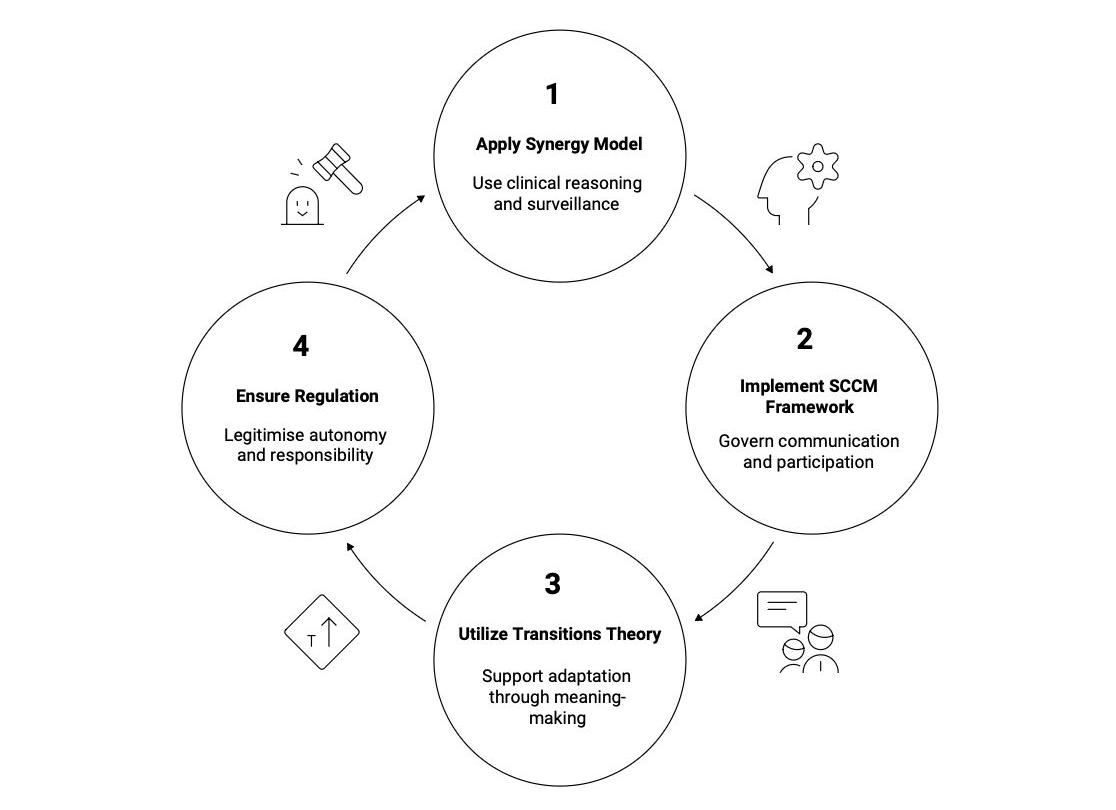
Figure 1. Cicle of adavnced nursing practice in critical care
Critical Reflection and Limitations
Despite offering a structured conceptual interpretation, this synthesis has methodological limitations that must be acknowledged to ensure scientific transparency. First, as a conceptual analysis, the findings are interpretive rather than empirical and therefore require subsequent validation through observational studies, implementation research or measurement of nursing-sensitive outcomes. Second, although the purposeful selection of frameworks enabled depth of analysis, it may have excluded alternative or emerging perspectives such as complexity science, cognitive ergonomics or models of interprofessional decision-making that may further enrich understanding. Third, the regulatory alignment analysed reflects the Portuguese context, which may limit transferability to jurisdictions where nursing autonomy or legal frameworks differ. Finally, although measures were taken to ensure systematic selection and reflexive analysis, narrative synthesis inherently involves interpretive reasoning; therefore, alternative readings remain possible, and future scholarship may refine, expand or challenge aspects of the proposed interpretation.
CONCLUSIONS
This review demonstrates that integrating theoretical, regulatory and empirical evidence provides a coherent conceptual foundation for advanced nursing practice in critical care, positioning it as a deliberate, knowledge-driven and autonomous professional field. The synthesis confirms that advanced practice is defined not by expanded task execution but by the capacity to mobilise complex reasoning, relational competence and context-responsive judgment in time-critical situations. By articulating this theoretical coherence, the review reinforces advanced nursing as a distinct epistemic contribution to healthcare rather than an extension of routine practice. The framework developed here offers a conceptual platform for future empirical validation and policy refinement, supporting the continued maturation and recognition of the discipline.
References
- 1 Jafari Pour F, Watson R, Jafaripour E, Jafarian R. The roles and responsibilities of advanced practice nurses in intensive care units: a scoping review. Enferm Intensiva (Engl Ed). 2024 Oct–Dec;35(4):e31–e40. doi:10.1016/j.enfie.2024.06.002
- 2 Zhang RS, Zhang P, Bailey E, Ho A, Rhee A, Xia Y, et al. Comparing outcomes between advanced practice providers and housestaff teams in the cardiac intensive care unit. JACC Adv. 2024;3(11):101312. doi:10.1016/j.jacadv.2024.101312
- 3 World Health Organization. Critical care workforce policy brief. Geneva: World Health Organization; 2023.
- 4 Ordem dos Enfermeiros. Regulamento do enfermeiro especialista em enfermagem médico-cirúrgica. Lisboa: Ordem dos Enfermeiros; 2019.
- 5 Needham DM, Davidson J, Cohen H, Hopkins RO, Weinert C, Wunsch H, et al. Improving long-term outcomes after critical illness. Lancet. 2019;394(10213):1713–1725. doi:10.1016/S0140-6736(19)32682-5
- 6 Davidson JE, Aslakson RA, Long AC, Puntillo KA, Kross EK, Hart J, et al. Guidelines for family-centred care in the neonatal, paediatric, and adult ICU. Crit Care Med. 2017;45(1):103–128. doi:10.1097/CCM.0000000000002169
- 7 Latour JM, Coombs M. Family-centred care in the intensive care unit: more than just flexible visiting hours. Intensive Crit Care Nurs. 2019;50:1–2. doi:10.1016/j.iccn.2018.10.002
- 8 Duong J, Wang G, Lean G, Slobod D, Goldfarb M. Family-centered interventions and patient outcomes in the adult intensive care unit: a systematic review of randomized controlled trials. J Crit Care. 2024;83:154829. doi:10.1016/j.jcrc.2024.154829
- 9 Meleis AI. Transitions theory: middle range and situation specific theories in nursing research and practice. New York: Springer Publishing Company; 2010.
- 10 Yamaguchi Y, et al. Advanced practice nurse competencies to promote quality care in emergency and critical care settings: an integrative review. Int J Nurs Pract. 2024;30(2):e13205. doi:10.1111/ijn.13205
- 11 Bauernfeind L, et al. The impact of advanced practitioners on patients in acute care: a mini-review. Front Emerg Med. 2024;ACRM:1399779. doi:10.3389/femer.2024.1399779
- 12 Notarnicola I, et al. A systematic review of nursing competencies: addressing the challenges of evolving healthcare systems and demographic changes. Clin Pract. 2025;15(2):56. doi:10.3390/clinpract15020056
Declarations
Funding
The authors did not receive financing for the development of this research.
Conflict of interest
The authors declare that there is no conflict of interest.
Authorship contributions
Conceptualization: Isabel Rabiais, Ricardo Sousa Mestre.
Data curation: Isabel Rabiais, Ricardo Sousa Mestre.
Formal analysis: Isabel Rabiais, Ricardo Sousa Mestre.
Research: Isabel Rabiais, Ricardo Sousa Mestre.
Methodology: Isabel Rabiais.
Project management: Isabel Rabiais, Ricardo Sousa Mestre.
Software: Ricardo Sousa Mestre.
Supervision: Ricardo Sousa Mestre.
Validation: Isabel Rabiais.
Drafting - original draft: Isabel Rabiais, Ricardo Sousa Mestre.
Writing - proofreading and editing: Isabel Rabiais, Ricardo Sousa Mestre.