Abstract
This case study, with a qualitative and quantitative approach, was carried out in the neonatology service of a public hospital in the city of Rosario. Its main objective was to evaluate the knowledge and attitudes towards exclusive breastfeeding (EBF) in first-time adolescent mothers, as well as to survey sociodemographic characteristics and the knowledge of the nursing team that accompanies them. Two instruments were applied: a Likert-type scale to measure attitudes, and the questionnaire by Muñoz et al. (2022) to assess knowledge about breastfeeding. The sample consisted of 132 adolescent mothers between 15 and 19 years of age and 23 nurses from the service. The results showed that a significant proportion of the mothers had insufficient knowledge about breastfeeding, although most of them expressed positive attitudes towards EML, especially in terms of its immunological and affective benefits. The study highlights the importance of the role of the nursing team as a key agent in strengthening the mother-child bond and promoting healthy practices, underscoring the need to implement educational strategies aimed at this population group. Respect for ethical principles was guaranteed, ensuring the confidentiality and voluntariness of the participants.
Keywords
Exclusive Breastfeeding, Adolescent Mothers, Knowledge, Attitudes, Neonatology, Nursing
INTRODUCTION
Exclusive breastfeeding (EBF) is recognized worldwide as the fundamental pillar of nutrition in the first months of life. The World Health Organization (1) and the United Nations Children's Fund (2) recommend maintaining EBF from the first hour of life until at least six months of age, and for as long as the mother wishes to do so,(3) along with other appropriate foods until two years of age or older. This practice not only provides nutritional benefits, but also contributes to the immune, emotional, and cognitive development of the newborn.(4,5,6,7,8) Consequently, its promotion has become a public health priority, as it significantly reduces infant morbidity and mortality worldwide.(9,10,11,12)
In Argentina, although most newborns begin breastfeeding in the first hours of life, the prevalence of EBF declines as the months pass.(13,14,15) According to the Second National Nutrition and Health Survey while 96,9 % of children received breast milk at birth, only 43,7 % continued to be exclusively breastfed at six months.(16) This highlights the existence of social, cultural, economic, and emotional factors that interfere with the continuity of breastfeeding, especially in vulnerable populations such as adolescent mothers.(17,18)
Late adolescents (aged 15 to 19) go through a period of transition characterized by biological, psychological, and social changes that influence how they approach motherhood. This situation can make it difficult to sustain EBF due to various factors such as lack of experience, economic dependence, and the need for social and family support. Added to this are cultural myths, knowledge about breastfeeding, proper breastfeeding techniques, and advertising of milk formulas.(19,20,21)
In this context, the role of the nursing team is central, as it is the first point of contact for support and education for the mother and her family. Several studies show that professional support allows for the early identification of risk factors.(22,23,24)
Neonatal nursing, in particular, is in a strategic position to implement educational actions, provide emotional support, and ensure family-centered practices that promote the mother-child bond.(25,26)
However, recent research in Latin America has shown that there are gaps in the knowledge and practice of health personnel regarding EBF, which has an impact on the quality of care provided.(4) Therefore, it is essential to investigate the level of knowledge of nursing staff regarding breastfeeding in order to design new educational strategies that strengthen their role and improve the support provided to first-time teenage mothers.(27,28)
Considering this issue, this research proposes to analyze the factors that hinder or favor exclusive breastfeeding in late-stage adolescent mothers treated in a neonatal unit at a public hospital in Rosario, as well as to evaluate the level of knowledge of the nursing staff who assist them. This study is part of the need to generate evidence that contributes to the formulation of public policies and training programs that guarantee the right to breastfeeding and promote health equity.(29,30)
What is the level of knowledge of nursing staff and what factors hinder or promote EBF in late first-time adolescents in the neonatal unit of a public hospital in the city of Rosario, from the beginning of March 2022 to the end of February 2023?
Objective
To investigate the level of knowledge of nursing staff and the factors that hinder and/or promote exclusive breastfeeding in late first-time adolescents in the neonatal unit of a public hospital in the city of Rosario.
METHOD
Design
This study adopted a mixed (qualitative and quantitative) approach, which was observational, descriptive, and cross-sectional.
The specific factors influencing LME in the group of late primiparous adolescents were investigated, according to Hernández Sampieri et al.(5).
Study area
The research was carried out in the Neonatology Department of a public hospital in the city of Rosario, which has 24 functional units distributed into sectors according to patient complexity. The healthcare team is made up of 41 nurses with different levels of education (auxiliaries, technicians, and professionals).
The service is organized into:
Intensive care: seven incubators with skin sensors and humidity systems for extremely premature infants.
Intermediate care: six less complex incubators and an isolation area with four units.
Low complexity: seven cribs.
In addition, there is a 24-hour residence for mothers, which provides accommodation and permanent contact with their babies.
Participants
It consisted of two samples:
Sample 1: 132 late teenage first-time mothers.
Sample 2: 41 healthcare nurses with different levels of training (assistants, technicians, and professionals belonging to the neonatology service), of whom those who responded were included, for a total of 23 nurses.
During the period from early March 2022 to February 2023.
Inclusion and exclusion criteria
Mothers: late-stage first-time teenage mothers were included. Multiparous teenage mothers and those with breastfeeding contraindicated due to substance use were excluded.
Nurses: those belonging to the neonatology service and performing care functions (assistants, technicians, and professionals) were included. Those outside the service and those on special or medical leave were excluded.
Techniques and instruments for data collection
For neonatal nursing staff, a survey was used with a structured questionnaire of 30 questions in different formats, T or F, closed questions, multiple choice, and open questions about "Breastfeeding Knowledge," an adapted version of ECoLaE,(6) which measured benefits, techniques, common problems, and management of EBF. The survey took approximately 10-15 minutes to complete, and it was made clear that it could not be answered at different times. Therefore, the time available had to be ensured before starting.
Scores from 0 to 10 points indicated a low level of knowledge; from 11 to 20 points indicated a medium level of knowledge; and 21 points or more indicated a high level of knowledge. The time taken was approximately 10 minutes per questionnaire.
A sociodemographic data sheet was also used to collect information such as age and sex, among other data.
For first-time teenage mothers, semi-structured interviews were used to assess their "Attitudes towards EBF" through five affirmative questions, scoring them on a Likert scale, with 1 point for those who "strongly disagreed," 2 points for those who were "undecided," 3 points for those who "agreed," and 4 points for those who "strongly agreed." The final score ranged from 0 to 10 points for those with a "negative attitude" and 11 to 20 points for those with a "positive attitude."
A questionnaire with open-ended questions was also administered, which were transcribed verbatim on "Knowledge of exclusive breastfeeding."
The results were grouped into "insufficient knowledge" and "sufficient knowledge."
Ethical considerations
All participants were informed that their responses were confidential and were thanked for their valuable collaboration, as their opinion was extremely important for gathering information in the case study; they voluntarily agreed to participate.
The well-being and integrity of the professionals and participants were protected by carrying out the procedure correctly to obtain the maximum possible benefits and minimize harm to each of them.
Data collection did not cause psychological or physical harm and was obtained in complete confidentiality.
The teenage mothers were surveyed at the time of hospital discharge to prevent their responses from being influenced by the hospitalization situation.
Procedures
Initially, for the collection of data for this case study, prior authorization was requested from the ethics committee of the public hospital in the city of Rosario, by means of a note submitted to the reception desk and an informed consent form for all participants, in which the confidentiality and anonymity of the information acquired was guaranteed, allowing them to interrupt their participation whenever they wished, using a private and secure space.
Teenage mothers and nurses present during the aforementioned period were invited to participate, as well as all those who met the criteria.
RESULTS
Analysis and interpretation of the collected material
Analysis of the results identified a number of issues and trends in relation to knowledge and attitudes toward exclusive breastfeeding (EBF) among first-time teenage mothers and the nursing staff who accompany them.
First, the data obtained through the questionnaire administered to the 132 adolescent mothers show an insufficient level of knowledge in most cases. Misinformation about the recommended duration of breastfeeding, correct breastfeeding techniques, and nipple hygiene reveals that most of the participants do not have the appropriate tools to sustain EBF. For example, many of them reported that milk "loses quality" after the first year, or that nipple hygiene should be performed with soap and water at each feeding, reflecting the persistence of myths and outdated practices. These findings are consistent with previous studies that point to the influence of cultural beliefs and lack of education on the continuation of breastfeeding.
Despite these limitations, it was observed that most adolescents maintain positive attitudes toward breastfeeding, recognizing its immunological, nutritional, and emotional benefits. This finding is encouraging, as it indicates that, although technical knowledge is limited, there is a willingness and motivation to breastfeed, which can be enhanced through appropriate educational interventions. However, a strong influence of the family and social environment on the decision to continue or discontinue breastfeeding was also detected. In many cases, grandmothers or partners encouraged the use of milk formulas, contributing to early abandonment of EBF.
With regard to the nursing team, the results of the survey (n=23) show that the majority have an intermediate level of knowledge about breastfeeding. Although they recognize the benefits of EBF and international recommendations, gaps were identified in practical aspects, such as resolving difficulties in latching and manual expression of colostrum. This reinforces the need for regular training to strengthen the educational and support role of healthcare personnel. According to a study, professional development is key to providing evidence-based advice and preventing early cessation of breastfeeding.
A relevant aspect that emerges from the interpretation of the data is the relationship between the socioeconomic and cultural conditions of adolescent girls and the continuity of breastfeeding. Many of them pointed to the need to work, the lack of support from their partners, or the influence of family beliefs as factors that make it difficult to maintain EBF. This situation coincides with the findings of a study, who argues that family dynamics, poverty, and inherited myths constitute significant barriers to breastfeeding.
In summary, the analysis allows us to affirm that the problem does not lie solely in the lack of knowledge of adolescent mothers, but in a network of biopsychosocial factors that influence the decision to breastfeed and the continuation of breastfeeding. The nursing team, although with limitations in their training, is a key agent in promoting EBF, provided that they have training opportunities and institutional resources to support their actions.
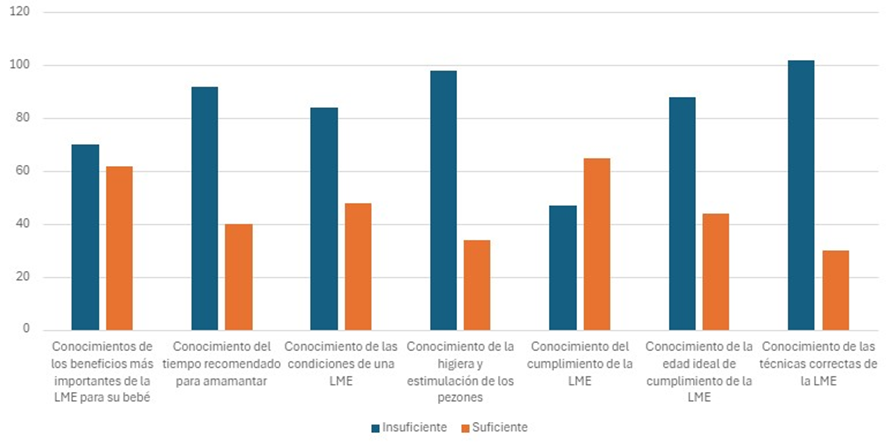
Criterion measured: mothers' knowledge of breastfeeding, assessed using a questionnaire with open-ended questions.
Level of knowledge | n=132 | |||
|---|---|---|---|---|
[empty cell] | Insufficient | Percentage | Sufficient | Percentage |
Knowledge of the most important benefits of EBF for the baby | 70 | 53% | 62 | 47% |
Knowledge of the recommended duration of breastfeeding | 92 | 70% | 40 | 30% |
Knowledge of the conditions for successful EBF | 84 | 64% | 48 | 36% |
Knowledge of nipple hygiene and stimulation | 98 | 74% | 34 | 26% |
Knowledge of compliance with EBF | 47 | 36% | 65 | 49% |
Knowledge of the ideal age for compliance with EBF | 88 | 67% | 44 | 33% |
Knowledge of correct EBF techniques | 102 | 77% | 30 | 23% |
Of the 132 first-time teenage mothers surveyed, it was observed that the majority (53 %) had insufficient knowledge on specific breastfeeding topics, and approximately half (47 %) demonstrated basic knowledge.
EBF contains antibodies that strengthen the newborn's immune system, protecting them from respiratory and gastrointestinal diseases, facilitating bowel movements, preventing colic, promoting maternal recovery after childbirth, and reducing the risk of uterine/breast cancer.(3,7)
Regarding the recommended duration of breastfeeding, most had insufficient knowledge (70 %).
Some verbatim data: "After a year, the milk is no longer good because it becomes watery, the baby is still hungry, and my partner wants me to give him a bottle. I don't know how many times I have to feed him during the day. I don't know if I have to feed him at night too or let him sleep."
With regard to the conditions for EBF, it was observed that most of the knowledge was insufficient (64 %), as it depended largely on the maternal environment (partner, family, economic status).
In response to the question about hygiene and nipple stimulation, some answers were, "I wash my breasts and nipples with soap and water, I put cream on them to keep them soft, I don't bathe for a week, it's bad for me."
Taking into account the information gathered, we noted that in almost all cases (74 %), mothers were unaware of nipple stimulation, and with regard to hygiene, there was a noticeable lack of knowledge. Mothers bathe infrequently, either due to customs or ingrained myths (e.g., quarantine) or due to precarious conditions (e.g., cold water as an impediment).
If mothers had the right information, they would know that bathing daily is sufficient for proper hygiene.
Washing the nipples before and after each feed could remove the natural protection of the glands, causing them to crack or dry out. Nipple stimulation is usually done beforehand and requires effort and consistency. This would facilitate latching on to the breast for effective breastfeeding.
Although the fetus begins sucking practices during its intrauterine life, nipple preparation is necessary to promote breastfeeding.
With regard to compliance with EBF, there was a predominance of sufficient knowledge (58 %) over insufficient knowledge (42 %), with mothers demonstrating an understanding that in order to ensure EBF, they inevitably need the support not only of nursing staff but also of their family environment.
When it came to the ideal age for EBF, the vast majority of mothers (67 %) had insufficient knowledge.
This highlights their lack of knowledge, low educational level, lack of experience in the subject, and the vulnerability to which their social environment exposes them.
The WHO recommends a period of no less than six months and up to two years or more of EBF.(3)
In terms of knowledge of correct techniques, the vast majority "did not know how to latch the baby onto the breast, did not know the maternal positions or the positions in which the baby should be placed for proper emptying of the breast, did not know how to hold the breast to latch the baby, and did not know how to remove the nipple from the baby's mouth to avoid pain and cracks."
The vast majority had problems with breastfeeding techniques (77 %), which is why it is essential for neonatal nursing staff to be knowledgeable about the techniques indicated to ensure that the baby latches onto the mother's breast; This is crucial, as it is known that the baby must take not only the nipple but also a large part of the areola, which requires a wide opening of the mouth and a comfortable position for the mother to make this a successful and rewarding experience for both.(8)
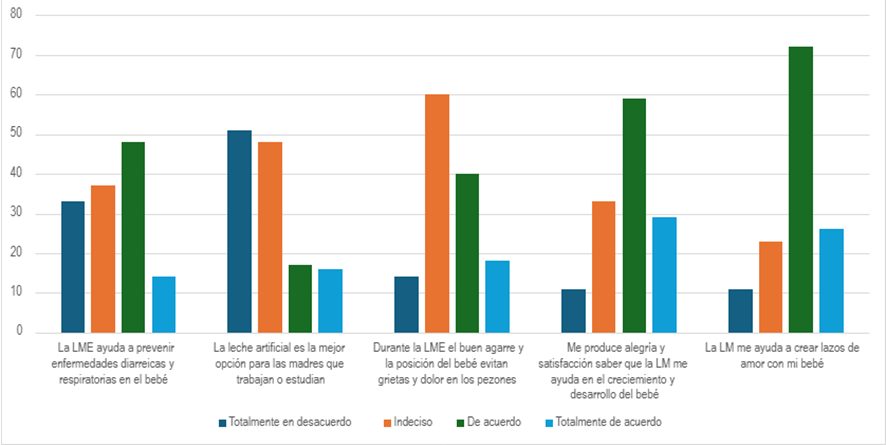
Criterion measured: attitudes towards breastfeeding, assessed using a scale of five statements that evaluated the percentage of "strongly disagree," "undecided," "agree," and "strongly agree."
Attitudes toward EBF | Strongly disagree | % | Undecided | % | Agree | % | Strongly agree | % |
|---|---|---|---|---|---|---|---|---|
EBF helps prevent diarrheal and respiratory diseases in the baby | 33 | 25% | 37 | 28% | 48 | 36% | 14 | 10% |
Formula milk is the best option for mothers who work or study | 51 | 39% | 48 | 36% | 17 | 13% | 16 | 12% |
During EBF, proper latching and positioning of the baby prevent cracked and sore nipples | 14 | 11% | 60 | 45% | 40 | 30% | 18 | 14% |
It brings me joy and satisfaction to know that EBF helps the baby's growth and development | 11 | 8% | 33 | 25% | 59 | 45% | 29 | 22% |
EBF helps me create bonds of love with my baby | 11 | 8% | 23 | 17% | 72 | 55% | 26 | 20% |
Note: the columns with the % symbol refer to the percentage of the total, corresponding to the data in the immediately preceding column
On the one hand, it was observed that, when asked whether EBF helps prevent diarrheal and respiratory diseases in babies, most participants agreed with this statement: 36 % "agreed" and 10 % "strongly agreed," for a total of 46 % favorable opinions. On the other hand, 25 % "strongly disagree" and 28 % are "undecided."
Artificial milk as the best option for mothers who work or study: the predominant response was "strongly disagree" at 39 %, while 36 % were "undecided," mentioning the influence of the media, which advertises the idea that formula milk leads to better health and faster weight gain in babies (this causes mistrust and doubt), added to which, when the baby is discharged, we see the distribution of formula milk by the healthcare provider.
Regarding proper latching and positioning of the baby to avoid cracked and sore nipples, 45 % were "undecided," indicating a clear tendency toward ignorance on the subject.
Joy and satisfaction in knowing that breastfeeding helps the baby's growth: 45 % of mothers said they "agreed" and 22 % said they "strongly agreed." The sum of these figures clearly shows that 67 % ( ) of the mothers surveyed have a positive emotional attitude toward breastfeeding linked to the baby's well-being.
Creating bonds of love with the baby through breastfeeding, 55 % agreed, with most of them considering the emotional bond that is created with the baby during this practice.
In summary, there is evidence of a largely favorable attitude toward breastfeeding, both from the point of view of its health benefits and the emotional bond that is created.
However, there are also doubts or lack of knowledge about practical aspects such as latching on to the breast.
Criterion measured: type of attitude of teenage mothers towards exclusive breastfeeding, positive or negative, in percentage.
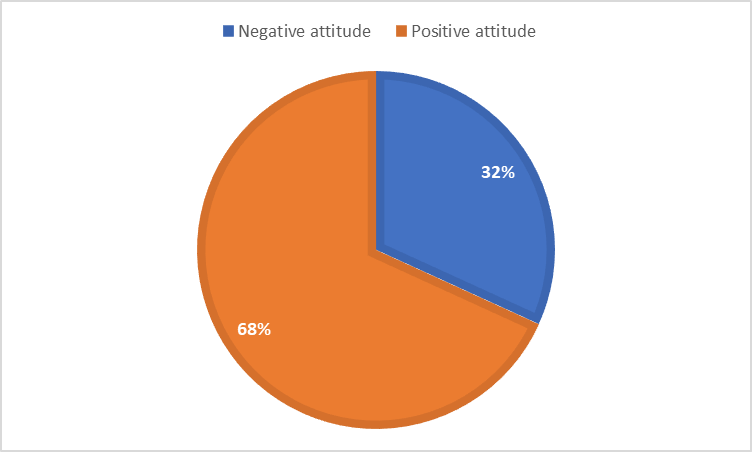
Table3. Distribution of attitudes (positive and negative) towards breastfeeding among first-time teenage mothers in a public hospital in the city of Rosario (n = 132)
Attitude of adolescent mothers toward breastfeeding | Quantity | % |
|---|---|---|
Negative attitude | 42 | 32% |
Positive attitude | 90 | 68% |
Among adolescent mothers with sufficient knowledge, positive attitudes greatly predominated over negative ones.
In contrast, among those with insufficient knowledge, there was a greater contrast in attitudes, revealing a relationship between attitude and knowledge; that is, mothers with greater knowledge about breastfeeding seemed to have a more positive attitude.
Criterion measured: association between the level of knowledge about breastfeeding and the attitudes (positive or negative) of adolescent mothers
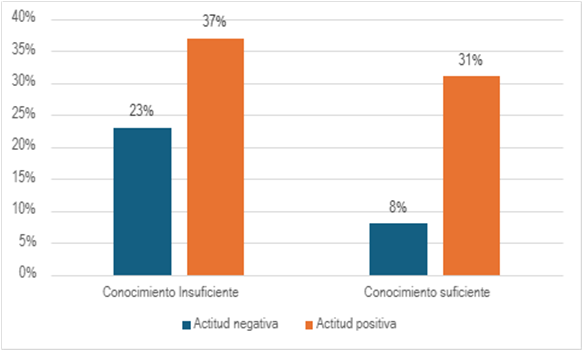
Level of knowledge about EBF among adolescent mothers | Negative attitude | Positive attitude | Total | |||
|---|---|---|---|---|---|---|
[empty cell] | Quantity | Percentage | Quantity | Percentage | Quantity | Percentage |
Insufficient knowledge | 31 | 23% | 49 | 37% | 80 | 61% |
Sufficient knowledge | 11 | 8% | 41 | 31% | 52 | 39% |
Total | 42 | 32% | 90 | 68% | 132 | 100% |
Among adolescent mothers who had sufficient knowledge, there was a much higher prevalence of mothers with a positive attitude than with a negative attitude.
In contrast, among those with insufficient knowledge, there was a greater contrast in attitudes, revealing a relationship between attitude and knowledge; that is, mothers with greater knowledge of breastfeeding seemed to have a more positive attitude.
Criterion measured: gender distribution of nursing staff in the neonatal unit.
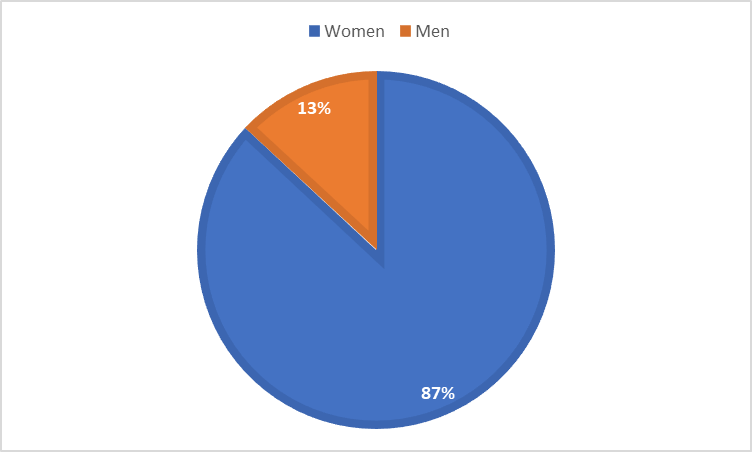
Gender | Absolute value | Relative value |
|---|---|---|
Women | 20 | 87% |
Men | 3 | 13% |
Note: the figure shows the percentages of genders classified according to the data obtained
Of the 23 respondents, 87 % were female, while 13 % were male. More information and greater accuracy regarding their experiences can be obtained in the case of those who were mothers.
Criterion measured: data obtained from a survey of neonatal nursing staff, grouped into 10-year age intervals.
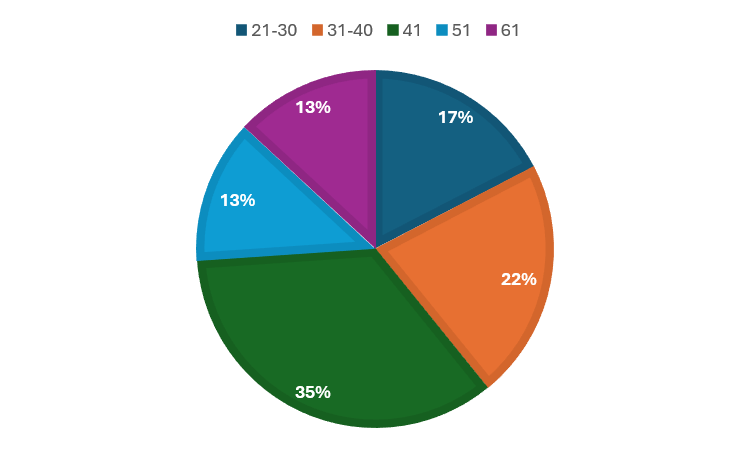
Age of nursing staff | Absolute value | Relative value |
|---|---|---|
21-30 years | 4 | 17% |
31-40 years | 5 | 22% |
41-50 years | 8 | 35% |
51-60 years | 3 | 13% |
61-70 years | 3 | 13% |
Note: the figure represents the percentages of age ranges that were classified according to the data obtained
It can be said that there is diversity in terms of age, but the 21-30 and 31-40 age groups are in the majority compared to the 51-60 and 61-70 age groups. The most abundant age group is 41-50.
Criterion measured: sector or area of work of nursing staff within the hospital, in percentage.
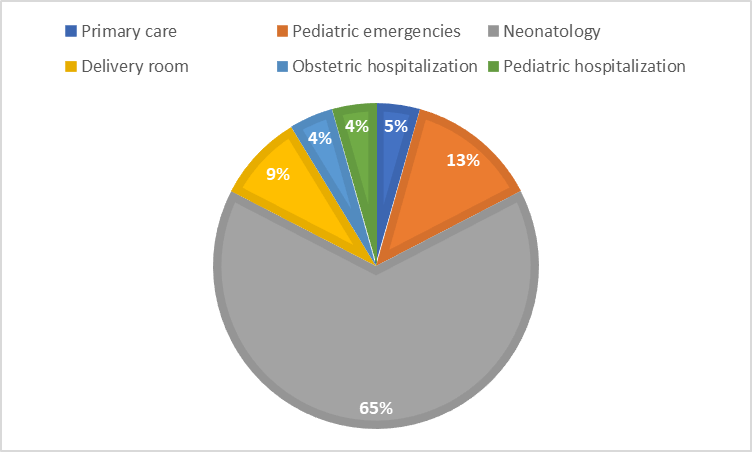
Workplace | Absolute value | Relative value |
|---|---|---|
Primary care | 1 | 4% |
Pediatric emergencies | 3 | 13% |
Neonatology | 15 | 66% |
Delivery room | 2 | 9% |
Obstetric hospitalization | 1 | 4% |
Pediatric hospitalization | 1 | 4% |
The vast majority of individuals belonged to the neonatology department, and a few came from other departments.
Criterion measured: nursing staff's level of knowledge about breastfeeding, assessed using a 30-question questionnaire in different formats, then the percentage of those who answered correctly was taken: 0 to 10 questions, 11 to 20 questions, and 21 to 30 questions.
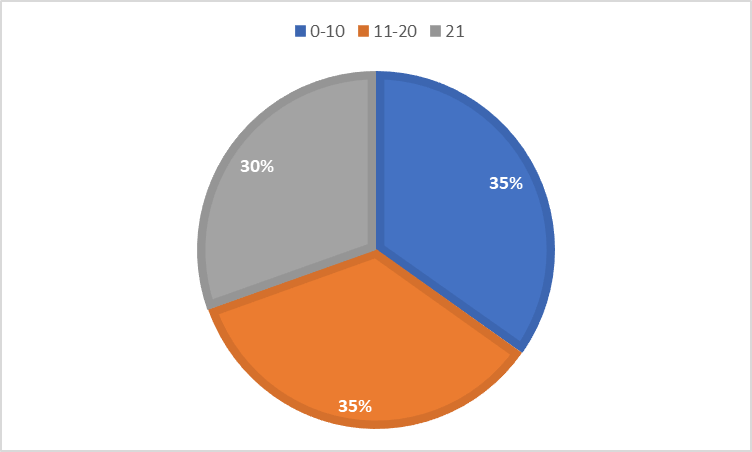
No. of questions answered correctly | Absolute value | Relative value |
|---|---|---|
0-10 | 8 | 35% |
11-20 | 8 | 35% |
21-30 | 7 | 30% |
An even distribution of scores obtained by respondents was observed. Correct answers were 11/20 for an intermediate level and 21/30 for a high level of knowledge.
A low score was obtained by those who answered between 0 and 10 questions correctly, highlighting the need for training on the subject of EBF.
CONCLUSIONS
This study identified that the majority of late-stage first-time teenage mothers had insufficient knowledge about exclusive breastfeeding (EBF), despite generally showing positive attitudes towards this practice. Misconceptions, the influence of the family and social environment, and adverse socioeconomic conditions are determining factors that hinder the maintenance of EBF for the six months recommended by the World Health Organization and the Pan American Health Organization.
Likewise, the analysis of the data confirms that the decision to breastfeed exclusively and to continue doing so does not depend solely on the mother, but on a set of biopsychosocial factors involving social support, family, the health system, the work environment, school, and the cultural context, as established by Ramona Mercer in her theory of "Adoption of the Maternal Role."
On the other hand, the results obtained in relation to knowledge about EBF in nursing show an intermediate level of knowledge, with strengths in recognizing the benefits of breastfeeding, but with gaps in specific support and problem-solving techniques. This situation highlights the need to strengthen the ongoing training of nursing professionals in neonatology so that they can effectively fulfill their educational and support role, as the role of the nurse takes on special relevance in providing emotional support and comfort to late first-time teenage mothers.
In this sense, the role of neonatal nursing staff takes on special relevance as educators in health promotion and prevention, providing emotional support and comfort to this group of first-time teenage mothers.
In relation to the sociodemographic characteristics of neonatal nursing staff, there is a large female presence in the team, of diverse ages, mostly in the 41-50 age range. In terms of the work sector, although they are all nurses in the neonatal sector, the vast majority come from the maternity, postpartum, and pediatrics sectors.
As a suggestion, the findings of this study highlight the importance of implementing educational strategies aimed at both adolescent mothers and the healthcare team, with a view to strengthening knowledge, dispelling myths, and promoting supportive environments that increase the prevalence and duration of exclusive breastfeeding. This study also contributes to the generation of local evidence that can serve as a basis for the design of public policies and institutional programs that guarantee the right to breastfeeding and promote health equity. Therefore, continuing with this type of study, which delves deeper into the subject, can be beneficial.
References
- 1 Organización Mundial de la Salud. Protección, promoción y apoyo a la lactancia materna en los centros que prestan servicios de maternidad y neonatología. 2017. https://iris.who.int/server/api/core/bitstreams/601a8af5-0919-4ffb-a11d-fb534d96ed03/content
- 2 UNICEF. La maternidad precoz puede tener graves consecuencias para las adolescentes. 2024. https://data.unicef.org/topic/child-health/early-childbearing/
- 3 Organización Mundial de la Salud. Invertir en la lactancia materna es invertir en el futuro. 2025. https://www.who.int/campaigns/world-breastfeeding-week/2025
- 4 Muñoz A, Rojas P, Castillo V. Factores sociales que interfieren en la lactancia materna. Rev Latinoam Salud Mater Infant. 2022;20(2):87-96.
- 5 Hernández Sampieri R, Fernández Collado C, Baptista Lucio P. Metodología de la investigación. 6ª ed. México: McGraw-Hill; 2014.
- 6 Lechosa Muñiz C, Cobo Sánchez J, Herrera Castanedo S, Cornejo del Río E, Mateo Sota S, Sáez de Adana Herrero M. ECoLaE: validación de un cuestionario sobre conocimientos y habilidades en lactancia materna para enfermería. Aten Primaria. 2020;52(6). https://doi.org/10.1016/j.aprim.2019.04.006
- 7 Federación Internacional de Ginecología y Obstetricia (FIGO). La hora dorada: la lactancia materna y sus beneficios para toda la vida. 2024. https://www.figo.org/es/blog/la-hora-dorada-la-lactancia-materna-y-sus-beneficios-para-toda-la-vida
- 8 Fondo de las Naciones Unidas para la Infancia (UNICEF). Situación de salud de las adolescentes en la provincia de Santa Fe. 2022. https://www.unicef.org/argentina/media/22821/file/SaludAdolescenciasVF_11JULIO.pdf.pdf
- 9 Álvarez Gallardo L, Baldazar A, Chinea Jiménez B, Flecha M, Gil Castañeda A, Grosso Z. Inmunoterapia con calostro oral. SIBEN; 2023. https://siben.net/wp-content/uploads/2024/06/sibenrecomiendaivinmunoterapiaconcalostrooral.pdf
- 10 Amnistía Internacional. El embarazo no intencional en la adolescencia: apuntes sobre los resultados positivos del Plan ENIA. 2001. https://amnistia.org.ar/wp-content/uploads/delightful-downloads/2024/09/AMNISTIA_PlanEnia-VF.pdf
- 11 Asociación Española de Pediatría. Lactancia materna: guía práctica. 2019. https://www.aeped.es/sites/default/files/guia_de_lactancia_materna.pdf
- 12 Benancio V, Medalit L. Actitudes y conocimientos hacia la lactancia materna en madres adolescentes usuarias de un hospital materno infantil. Rev Peru Cienc Salud. 2022;4(1):21-7. https://doi.org/10.37711/rpcs.2022.4.1.366
- 13 Carrillo A, Gallegos R, Barragán L. Factores maternos que influyen en el abandono de la lactancia exclusiva. Rev Salud Tabasco. 2020;26(1-2):44-7. https://tabasco.gob.mx/sites/default/files/users/ssaludtabasco/44_1.pdf
- 14 CIPPEC. Licencias por maternidad, paternidad y familiares para empleados públicos provinciales. 2019. https://www.cippec.org/grafico/licencias-por-maternidad-paternidad-y-familiares-para-empleados-publicos-provinciales-2019/
- 15 Falke G, Pellegrino J. Salud integral del joven y del adolescente. Medicina preventiva y social. Rev Asoc Med Argent. 2020;133(4):24-9. https://www.ama-med.org.ar/uploads_archivos/2022/Rev-4-2020_pag-24-29_Falke.pdf
- 16 Fondo de las Naciones Unidas para la Infancia (UNICEF). Lactancia materna. 2021. https://www.unicef.org/mexico/lactancia-materna
- 17 Fondo de Población de las Naciones Unidas (UNFPA). El embarazo y la maternidad en la adolescencia en la Argentina. 2019. https://www.argentina.gob.ar/sites/default/files/dt.5_el_embarazo_y_la_maternidad_en_la_adolescencia.pdf
- 18 InfoLEG. Ley N° 20744. Contratos de Trabajo. https://servicios.infoleg.gob.ar/infolegInternet/anexos/25000-29999/25552/norma.htm
- 19 InfoLEG. Ley N° 26.873. Decreto 22/2015. https://servicios.infoleg.gob.ar/infolegInternet/anexos/240000-244999/240799/norma.htm
- 20 Jiménez Cruz FJC. La importancia de la educación continua para el desarrollo profesional de las enfermeras. Rev Cient Salud Desarro Hum. 2022;3(2):111-24. https://doi.org/10.61368/r.s.d.h.v3i2.39
- 21 Lalaguna Mallada P, San Feliciano Martín L, Gómez Papí A. Lactancia materna en el recién nacido prematuro tardío y en el recién nacido término precoz. Rev Lactancia Materna. 2023;1(1):1-16. https://revistas.usal.es/cinco/index.php/lamater/article/view/31140/30334
- 22 Ministerio de Salud (Argentina). ¿Qué es la ley de los 1000 días? s.f. https://www.argentina.gob.ar/salud/1000dias/que-es-la-ley-de-1000-dias
- 23 Ministerio de Salud (Argentina). Espacio amigo de la lactancia. 2024. https://www.argentina.gob.ar/noticias/espacio-amigo-de-la-lactancia-1
- 24 Ministerio de Salud Argentina, UNICEF. Consenso La Primera Hora de Vida. 2020. https://www.unicef.org/argentina/media/16066/file/La%20primera%20hora%20de%20vida.pdf
- 25 Organización Mundial de la Salud. Guía para la aplicación: proteger, promover y apoyar la lactancia materna en los establecimientos que prestan servicios de maternidad y neonatología. 2018. https://iris.who.int/server/api/core/bitstreams/a8b5e234-8370-4225-846e-ca7cdcaf7cbe/content
- 26 Organización Mundial de la Salud. La salud de los adolescentes y los adultos jóvenes. 2024. https://www.who.int/es/news-room/fact-sheets/detail/adolescents-health-risks-and-solutions
- 27 Querido D, Lourenço M, Charepe Z, Caldeira S, Nunes E. Intervenciones de enfermería promotoras de la vinculación con los recién nacidos hospitalizados: revisión scoping. Enferm Glob. 2022;21(66). https://scielo.isciii.es/scielo.php?script=sci_arttext&pid=S1695-61412022000200594
- 28 Reascos Paredes Y, Hidrobo Guzmán J, Bermeo Córdova B, Andrade Hernández E. Preparación de madres primerizas para el cuidado efectivo del recién nacido. Rev Cient Multidisciplinar. 2023;7(2):10297-10315. https://doi.org/10.37811/cl_rcm.v7i2.6120
- 29 Fondo de Población de las Naciones Unidas (UNFPA). Casi la mitad de todos los embarazos son no intencionales: una crisis mundial. 2022. https://argentina.unfpa.org/es/news/casi-la-mitad-de-todos-los-embarazos-son-no-intencionales-una-crisis-mundial-0
- 30 Xavier Ramos MS, Martins CDC, Souza ES, Vieira GO, Gomes-Filho IS, Figueiredo ACMG, et al. Oropharyngeal colostrum immunotherapy and nutrition in preterm newborns: meta-analysis. Rev Saude Publica. 2021;55:59. https://doi.org/10.11606/s1518-8787.2021055003051
Declarations
Funding
None.
Conflict of interest
The authors declare that there is no conflict of interest. AUTHORSHIP CONTRIBUTION Conceptualization: Marcela L. Barrionuevo. Data curation: Marcela L. Barrionuevo. Formal analysis: Marcela L. Barrionuevo. Research: Marcela L. Barrionuevo. Methodology: Marcela L. Barrionuevo. Project management: Marcela L. Barrionuevo. Software: Marcela L. Barrionuevo. Supervision: Marcela L. Barrionuevo. Validation: Marcela L. Barrionuevo. Visualization: Marcela L. Barrionuevo. Writing – original draft: Marcela L. Barrionuevo. Writing – review and editing: Marcela L. Barrionuevo.
Authorship contributions
Drafting – original draft: Marcela L. Barrionuevo.
Writing–review and editing: Marcela L. Barrionuevo.