
Abstract
Nursing is known as one of the most stressful professions due to the high physical, mental, and emotional demands associated with its care activities and the work environment in which it is carried out. Factors such as workload, high patient demand, irregular shifts and constant exposure to emotionally stressful situations contribute to a challenging work environment that can affect the well-being of nursing professionals. The ability to overcome these difficulties is therefore essential, as it not only impacts the health and quality of life of nurses but also the safety of the care received by patients. One of the tools for coping with stress is physical exercise, which has been shown to have an impact on stress levels and improve overall health. However, in the field of nursing, the relationship between stress and physical exercise remains largely unexplored. Due to their work and personal characteristics, nurses face various barriers such as lack of time, multiple jobs, and financial constraints, among other factors that limit their access to self-care strategies. Therefore, the main objective of this research is to describe the relationship between exercise and perceived stress in nursing students and alumni of a private university in Rosario, Argentina, based on a cross-sectional, non-experimental design. The study seeks to identify specific aspects such as perceived stress levels, characterise physical exercise practices among respondents, and establish possible relationships between these variables: the physical and mental health of nursing staff. The results are expected to provide valuable information on how various personal and work-related factors condition the perception of stress and how the implementation of tools such as physical exercise can influence the perception of stress. The results obtained are expected to provide evidence on factors that influence the impact of stress, as well as the impact of physical activity, in order to develop health strategies that promote tools for coping with difficult situations, thereby improving quality of life and professional performance and preventing injuries and disabilities due to physical and emotional injuries.
Keywords
Nursing, Stress, Physical exercise
INTRODUCTION
Stress is one of the most common syndromes in the workplace and affects all healthcare personnel.(1,2,3,4,5) According to data published by the European Foundation for the Improvement of Living and Working Conditions,(1) 44,1 % of doctors and nurses experience stress-related symptoms.(6,7,8,9,10) This situation has a significant impact on the safety of the service provided to patients, on relationships with colleagues, and increases both physical and emotional risks for healthcare personnel.(11,12,13,14)
This problem is particularly relevant in nursing, where staff regularly face situations with a high emotional and physical load, which, if not managed properly, can trigger risks such as workplace accidents and, in many cases, lead to psychiatric disabilities.(15,16,17) This leads to more absences and increases the workload for the remaining nurses, creating a cycle of overload that intensifies the problem.
Problem statement
Research question
What is the relationship between physical exercise and stress levels in nursing students and alumni of the Bachelor of Nursing program at a private university in Rosario?
General objective
To describe the relationship between physical exercise and changes in stress levels in nursing students and graduates of a nursing degree program at a private university in Rosario during the second quarter of 2024.
METHODS
This research project is cross-sectional, non-experimental, and quantitative in nature, as it focuses primarily on the collection of numerical data through a structured survey. The survey consists mainly of closed-ended questions, which allow us to obtain detailed information about the stress levels perceived by nurses and thus characterize the habits of this group. The objective is to describe the relationship that may exist between stress and physical exercise among students and alumni of the nursing degree program in their last two years at a private university in Rosario, Santa Fe. Through this relationship, we seek to identify how exercise can influence the level of stress experienced by nursing staff, a relevant factor due to the demanding characteristics of their field of work. This data collection will allow us to observe the role of various social, economic, personal, and work variables in order to establish relationships and patterns that can provide information on how different levels of stress are expressed, and thus be able to provide assistance for future interventions for stress management in nursing.
The time frame of this study is cross-sectional, as it will be carried out during the second half of 2024, allowing us to collect and analyze data on the current conditions of nursing staff during this period.
Participants
The population sample was non-probabilistic and convenience-based, as accessible participants were selected who were also available, had time to respond to a survey, and had the necessary profile for the research. This sampling approach allowed us to optimize resources and facilitate access to a relevant group of participants in order to obtain information representative of the population.
Using this method, we were able to gather 35 participants, who provided relevant data for analyzing the issue at hand, allowing us to obtain valuable information on stress levels and the professional, personal, social, and economic circumstances of nursing staff, as well as their physical activity.
Techniques and instruments
To collect data for this study, we used a structured survey designed to investigate the relationship between stress and physical activity in nurses. In the first phase, the survey was pilot tested with a control group, which helped identify areas for improvement in the clarity and wording of some questions. The necessary adjustments were made to improve and facilitate understanding of the items and ensure that participants felt comfortable and could respond freely.
This survey was conducted digitally using Google Forms, which was sent online to volunteer participants. This digital format not only facilitated access but also allowed participants to complete the survey according to their availability. Google Forms was configured to restrict each participant to a single response, with no possibility of editing it after submission, thus ensuring the integrity, security, and stability of the data collected.
The survey structure included several sections, beginning with an informed consent form that explained the purposes and objectives of the research to participants. This initial document also guaranteed the right to confidentiality of the personal data collected and obtained consent for voluntary participation. In this way, we ensured an ethical and transparent process in the handling of information, respecting the principles of privacy and protection of the personal data of the respondents in this study.
The survey included a total of 47 questions, of which 13 were open-ended and 34 were Likert-type questions distributed to obtain a comprehensive view of the personal and work habits of nurses and their relationship with stress and physical activity. The closed questions were designed to gather information about the participants' sleep and rest habits, as well as aspects of their physical activity, including questions focused on the frequency of physical activity, the type of exercise they performed, the frequency in days per week, and the number of hours dedicated to this activity, providing data to identify and characterize exercise patterns that would then be related to different personal, social, and work factors.
This section also included questions about work-related aspects, such as the sector in which they work (public, private, or social security), whether they have multiple jobs related to the health sector, the area in which they work, the shift in which they work most frequently, and their length of service in the same job, measured in years, with the aim of understanding how the specific demands of the work environment could influence stress levels and whether or not these were a barrier to exercise.
Questions related to personal circumstances focused on collecting information on age classified by age group, perceived gender, number of people in their care (children, elderly people, people with special needs, family members, among others), and the number of hours of sleep per day. This personal data helps us identify individual factors that could affect the perception of stress and the likelihood of engaging in regular physical activity.
In addition, the survey includes 34 Likert-scale questions focused on assessing perceived stress levels using the Nursing Stress Scale (NSS) translated into Spanish.(2) This scale is designed to measure and identify stressful situations, grouped into seven key areas exclusive to nursing, which are as follows:
Difficulties with patients and their families or caregivers: assesses stress derived from direct contact with patients and their families, including responding to their demands and expectations.
Workload: measures the level of stress related to the volume of work, access to supplies, and pressure to complete various tasks within tight deadlines.
Conflicts with other healthcare professionals: focuses on stress arising from interaction with other members of the healthcare team, such as doctors, other nurses, or supervisors.
Lack of job preparation: explores the stress associated with the perception of insufficient preparation to perform specific tasks or handle complex situations.
Uncertainty in treatment: Measures stress caused by a lack of clarity or certainty in treatment decisions made by medical staff, which can lead to insecurity in daily practice.
Work demands from the patient and their family members or caregivers: examines the pressure generated by the continuous demands and high expectations of patients and their family members toward nursing staff.
Perceived discrimination and workplace bias: addresses the stress associated with experiences of discrimination or bias in the workplace, which can affect the emotional health and well-being of professionals.
These questions provide us with a comprehensive view of the context in which the participating nurses work, giving us valuable information that allows us to identify factors that may influence the relationship between stress and physical exercise. The NSS scale allows us to explore how different areas of the workplace can impact the professional lives of nurses.
Variables
Stress
A person is considered to be under stress when they have to cope with environmental, economic, or cultural demands that they believe exceed their resources, so that they perceive that they cannot respond effectively, generating a psychological or physiological reaction.(3) This variable will be measured using the NSS (Nurse Scale Stress) survey in its Spanish translation, which consists of 34 items related to physical, psychological, and environmental impact.(2) The survey is in Likert format with a total score ranging from 0 to 102. The results will be grouped into three categories: not very stressed, stressed, and very stressed. This will be carried out on students and former students of the Bachelor of Nursing program at a private university in Rosario, Santa Fe.
Physical exercise
For this research project, physical exercise will be defined as an organized and planned activity with the purpose of improving physical condition and enhancing specific skills, such as strength, speed, or flexibility. The intensity of the exercise is measured based on the time spent on the activity and is classified into three levels:
Light activity: less than 30 minutes per day, accumulating up to 150 minutes per week.
Moderate activity: more than 30 minutes per day, with a total of 150 to 300 minutes per week.
Vigorous activity: more than 300 minutes per week.
To measure the aforementioned variable, a survey will be conducted among students and alumni of the university.
RESULTS
In the field of nursing, professionals must deal with a variety of scenarios and an interrelationship of occupational, physical, personal, environmental, economic, and biological factors, which can significantly impact their performance and negatively affect their physical and emotional well-being. Due to the impact of the aforementioned factors on the overall health of staff and the efficiency of nurses, the information obtained from the surveys was organized into the following categories: personal data, work data, and data related to physical activity.
The purpose of this classification is to facilitate a segmented and accurate analysis of the variables, promoting clarity in the identification of problems and patterns related to perceived stress and physical activity habits, which respond to multidimensional factors. This improves the ability to relate various variables in order to understand the dynamics between the work environment and the personal and physical factors that affect the health status of nursing staff.
Interpretation of tables
Personal category
The data in (Table 1 Relationship between personal data) provide information on the personal and social data of the surveyed population, including the age of the participants, their perceived gender, and the people in their care, which may be sons, daughters, parents, relatives, people with no blood ties, or people with special care needs.
It was observed that the age distribution of participants tends to be concentrated in the 26–46 age group, which represents 86 % of the total population. The predominance of this age group suggests that the population is mainly in its productive stage and in full working capacity, demonstrating a stage of life where work, family, social, and economic responsibilities are high, which can increase predisposition to stress and the need for coping mechanisms, one of which could be physical exercise. On the other hand, the 18-25 and 47-65 age groups represent 9 % and 6 % respectively. These percentages, with a decrease at the extremes of the age range, may reflect a decrease in the population with these characteristics in the last two years of the nursing degree program. The 18-25 age group could be of great interest for future interventions, as they are in a stage of transition and adaptation, manifesting stress in different ways. They could be taught healthy stress coping mechanisms, thereby reducing long-term injuries and illnesses such as low back pain, arthralgia, or other harmful behaviors such as smoking, alcoholism, or addiction to psychoactive substances. In addition, psychological tools will be provided to help them cope with job failure, work errors, and patient death, thereby reducing secondary victims and improving the work environment. In this way, we will improve the quality of health of nursing staff and the general population. This will have a positive impact on the healthcare system, as it will reduce the workload of future nurses. On the other hand, the older group may face physical limitations, resistance to change, and less motivation to exercise, resulting in a population that is more prone to injury.
Furthermore, the sample is made up mostly of people who self-identify as female, representing 89 % of the total, while 11 % are male. This difference could have an impact on caregiving roles and is consistent with the global trend in the nursing field, which is a predominantly female profession.(4) This high proportion of women may influence other variables such as stress associated with caring for family members, such as parents, children, or other members of their community, having an impact on multiple jobholding for economic reasons, increasing the risk of stress and injury.
Caring for others is a diligent and constant task that many nurses must take on. A significant portion of the survey respondents have dependents (69 %), who may be children, parents, relatives, acquaintances, or people requiring special care, not necessarily related by blood. Of this population, 37 % report having between 1-2 people in their care: 11 % have between 3-4 and 20 % have more than 5 people in their care. This factor of people in care generates a possible increase in emotional, economic, domestic, and physical demands, as it involves caring for more people who, if they are children or growing children, require the necessary attention for their proper development. Or, in the case of older adults, who require more time for medical check-ups, transportation, and greater physical care. On the other hand, the remaining 31 % of participants did not report having anyone in their care, which could mean a lower emotional and economic burden and, therefore, more time available for self-care and leisure, which could include physical activities.
Finally, in this category of personal data, rest schedules were consulted, with 86 % of respondents reporting sleeping less than 7 hours per night. Of these, 34 % reported sleeping between 1-4 hours and 51 % reported sleeping 5-7 hours. Although these figures are to be expected in the healthcare sector, they are below the 8 hours recommended by the WHO for optimal rest, meaning that a lack of adequate sleep can affect cognitive performance, impairing decision-making, mood, and overall health. Persistent sleep deprivation in nursing could lead to an increase in errors, thereby increasing the risk of patient injuries and reducing patient safety.
It should be noted that 34 % of the population surveyed sleeps less than 4 hours a day, which represents a significant sleep deficit, well below the healthy minimum that affects alertness and attention, which in the long or medium term could have a significant impact on physical and mental health, since sleeping less than 8 hours is associated with mood disorders, obesity, low performance, and an increase in the accident rate, thereby affecting mobility and reducing quality of life.
Dimension | F | Fr | |
|---|---|---|---|
Age (years) | 18 | 3 | 8,6 |
[empty cell] | 2 | 3 | 85,7 |
[empty cell] | 47 | 2 | 5,7 |
Total | [empty cell] | 35 | 100 |
Perceived gender | Male | 4 | 11,4 |
[empty cell] | Female | 3 | 88,6 |
Total | [empty cell] | 35 | 10 |
People in their care | None | 11 | 31,4 |
[empty cell] | 1 | 1 | 37,1 |
[empty cell] | 3 | 4 | 11,4 |
[empty cell] | >5 | 7 | 20,0 |
Total | [empty cell] | 3 | 100 |
Hours of sleep | 1 | 12 | 34,3 |
[empty cell] | 5 | 1 | 51,4 |
[empty cell] | >8 | 5 | 14,3 |
Total | [empty cell] | 3 | 100 |
Note: F = Absolute frequency; Fr = Relative frequency; Total participants: 35 | Note: F = Absolute frequency; Fr = Relative frequency; Total participants: 35 | Note: F = Absolute frequency; Fr = Relative frequency; Total participants: 35 | Note: F = Absolute frequency; Fr = Relative frequency; Total participants: 35 |
Job category
Table 2 (Employment data) shows the data obtained on workload. Respondents answered questions about multiple jobs, the sector in which they work, the area in which they work, their regular work shift, and the number of years they have been working in the same job.
Twenty-nine percent of respondents reported having more than one job in the health sector, indicating a financial need that leads them to take on an additional workload. This practice of multiple jobs is generally common in nursing and the health sector, especially in countries with economies where salaries for healthcare personnel are not adequate to cover the cost of living. Multiple jobs can contribute to a decrease in rest time and self-care.
With regard to the sector in which they work, Argentina has a fragmented and universal healthcare model that includes the public, private, and social security sectors. Most of the respondents work in the private sector (74 %), and in the public sector (26 %). The realities in both sectors are different, and each has its pros and cons, as in the private sector we can find less job stability than in the public sector, which can influence perceived stress. In addition, nurses in the private sector have a higher workload, with fewer days off and lower pay for total hours worked, compared to their colleagues in the public sector, which could lead to an imbalance between personal, family, economic, and work aspects.
Within the work area, the following stand out: hospitalization with 43 %, therapy with 20 %, and emergency room with 17 %. These are known for their high demand for continuous patient care and stressful situations associated with interdisciplinary work, interactions between colleagues, family members, or patient caregivers, where nurses must be able to resolve situations as they arise and fulfill their tasks. These areas also require specific physical, cognitive, and emotional skills, which can be difficult to maintain without adequate rest and stress management. On the other hand, we can see how the remaining 20 % work in high-demand areas such as service management and coordination, infection control, and private care, among others, which are areas of high labor demand and high levels of competitiveness.
With regard to the shift or schedule on which they work, most of the population reports working at night, with 34 % of those surveyed, and 29 % working rotating shifts. These shifts are often associated with disruptions to circadian rhythms, which have a negative impact on health, such as sleep deprivation, sleep disorders, and mental health problems. Night work is a risk factor and a contributor to a lower quality of life, which has been widely documented, influencing increased stress and chronic health problems. The lack of a fixed schedule can regularly hinder a routine of beneficial activities such as exercise, thereby reducing opportunities for adequate rest, increasing levels of exhaustion, and promoting increased stress in the long term.
With regard to staff seniority, 69 % of respondents have been working in the same service for less than five years. This suggests that these staff members are in a process of adaptation, which could imply higher levels of stress due to lack of experience and the need to adapt to the pace, team, and interdisciplinary work of the service. On the other hand, the population also has 1 % with 6-10 years of seniority and 14 % with 11-15 years. The latter could indicate that this part of the surveyed population already has the means and tools, due to their work experience, to know the service and could have better mechanisms for adapting to different situations and stressors.
Table 2. Employment data
Dimension | F | Fr | |
|---|---|---|---|
Multiple employment | Yes | 10 | 28,6 |
[empty cell] | No | 25 | 71,4 |
Total | [empty cell] | 35 | 100 |
Sector in which they work | Public | 9 | 25,7 |
[empty cell] | Private | 26 | 74,3 |
Total | [empty cell] | 35 | 10 |
Area of work | Hospitalization | 15 | 42,9 |
[empty cell] | Therapy | 7 | 20 |
[empty cell] | Emergency | 6 | 17,1 |
[empty cell] | Other | 7 | 20,0 |
Total | [empty cell] | 3 | 100 |
Shift worked | Morning | 4 | 11,4 |
[empty cell] | Afternoon | 9 | 25,7 |
[empty cell] | Evening | 12 | 34,3 |
[empty cell] | Rotating | 10 | 28,6 |
Total | [empty cell] | 35 | 100 |
Seniority (years) | <1 | 1 | 28,6 |
[empty cell] | 1 | 14 | 40 |
[empty cell] | 6 | 6 | 17,1 |
[empty cell] | 11 | 5 | 14,3 |
Total | [empty cell] | 3 | 100 |
Note: F = Absolute frequency; Fr = Relative frequency; Total participants: 35 | Note: F = Absolute frequency; Fr = Relative frequency; Total participants: 35 | Note: F = Absolute frequency; Fr = Relative frequency; Total participants: 35 | Note: F = Absolute frequency; Fr = Relative frequency; Total participants: 35 |
Physical activity category
The data on physical activity shown in table 3 (Physical activity) describe the frequency of exercise by nursing staff measured in days, which gives us a worrying figure, as 43 % of those surveyed do not engage in any physical activity. Physical activity among healthcare workers can be a protective factor against possible musculoskeletal injuries and diseases due to muscle protein reserves and the ability to significantly reduce cardiovascular and metabolic diseases and mental health problems, which are intensified by high levels of stress sustained over time. This trend of low physical activity can create a population at risk, which is vulnerable to injuries or absenteeism due to disability, increasing the demand on the healthcare system and, consequently, on their nursing colleagues. We can also highlight that 49 % of those surveyed exercise between 1-3 days a week, suggesting an effort to stay active. However, this is not enough to fully achieve the benefits of regular exercise.
Expressed in terms of hours, 49 % engage in light physical activity, no participants engage in moderate physical activity, and only 9 % engage in vigorous physical activity. With these data, we can conclude that a large part of the population surveyed does not meet the WHO's physical activity guidelines, which recommend 150 hours of physical activity per week, raising serious concerns about the clear decline in disease prevention among healthcare personnel, who are well aware of the benefits of early disease prevention. Among those surveyed who engage in physical activity, there is a clear preference for aerobic exercise (34 %, including cycling, walking, Zumba, and running), followed by strength training (17 %, including gym and weight training). and finally, we see that a smaller population chooses low-impact exercise (Pilates) or mixed exercises (strength and aerobic exercise) with 9 % and 6 %, respectively.
Table 3. Physical activity
Dimension | F | Fr | |
|---|---|---|---|
Frequency of days on which exercise is performed (days) | 0 | 15 | 4 |
Frequency of days on which exercise is performed (days) | 1 | 1 | 48,6 |
[empty cell] | 4 | 2 | 5,7 |
[empty cell] | Every day | 1 | 2,9 |
Total | [empty cell] | 35 | 100 |
Hours of physical exercise per week | 0 | 15 | 42,9 |
Hours of physical exercise per week | 1 | 1 | 48,6 |
[empty cell] | 4 | 0 | 0 |
[empty cell] | >7 | 3 | 8,6 |
Total | [empty cell] | 35 | 100 |
Type of exercise performed | Aerobic | 12 | 34,3 |
Type of exercise performed | Strength | 6 | 17,1 |
[empty cell] | Mixed | 2 | 5,7 |
[empty cell] | Low impact | 3 | 8,6 |
[empty cell] | None | 12 | 34,3 |
Total | [empty cell] | 35 | 100 |
Note: F = Absolute frequency; Fr = Relative frequency; Total participants: 35 | Note: F = Absolute frequency; Fr = Relative frequency; Total participants: 35 | Note: F = Absolute frequency; Fr = Relative frequency; Total participants: 35 | Note: F = Absolute frequency; Fr = Relative frequency; Total participants: 35 |
The data obtained reflect a population with high risk factors for stress and exhaustion, adding cofactors such as lack of sleep, rotating schedules, and a large population working night shifts, altering circadian rhythms, which negatively affect stress levels. These, combined with low levels of physical activity, create a set of conditions that can increase the risk of physical injury and increased stress, affecting the well-being and overall health of nurses. The results indicate barriers in health determinants when trying to balance work, personal, economic, and self-care demands.
Interpretation of graphs
For the graphical analysis, the presentation of results will be structured into different sections, which will allow for a clearer and more detailed view of the multidimensional situation experienced by nurses, addressing stress levels based on personal aspects such as age, gender, family responsibilities, and hours of sleep; work aspects such as seniority in the sector, work area, work schedule, and multiple jobs. Subsequently, data related to physical activity will be explored, such as frequency, measured in days and hours, and the most frequent types of physical activity performed, and the influence of personal and work aspects on exercise will be analyzed. Finally, the relationship between stress levels and exercise will be presented, evaluating their correlation. This will allow us to gain a holistic understanding of the nursing context and its environment.
Graphs related to stress
Figure 1, perceived stress level in the surveyed population, is categorized into three levels: "Not very stressed," "Stressed," and "Very stressed." The vertical axis represents the percentage of the surveyed population, and the horizontal axis represents the stress levels reported.
The analysis of the graph shows a trend toward higher levels of stress among participants, as 88 % of those surveyed fall into the "Stressed" and "Very stressed" categories. This highlights a significant prevalence of adverse conditions. This contrasts with the percentage of "Not very stressed," which is significantly smaller at only 11 %.
This suggests a trend toward moderate and high levels of stress, which may be directly related to the demands of the profession, such as high levels of responsibility, strenuous workloads, unfavorable building conditions, or demanding situations, among others.
The presence of high stress levels in the majority of the population may be an indicator of the emotional and physical state of nursing professionals, highlighting the need to promote support strategies to mitigate these stress levels.
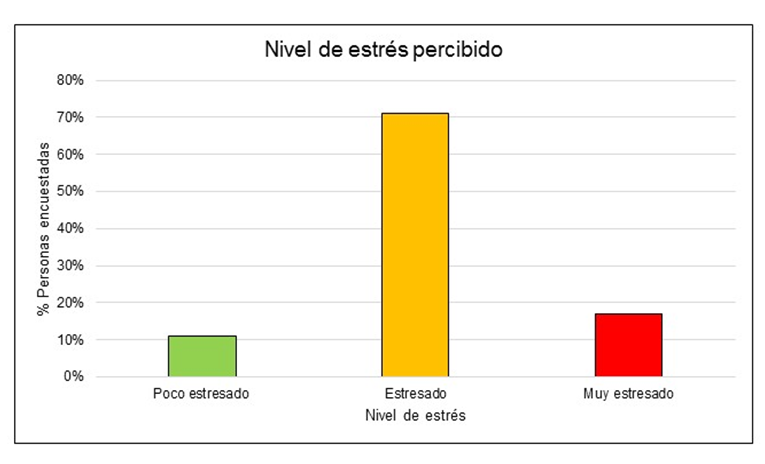
Figure 2 (Relationship between stress and personal aspects) shows the relationship between perceived stress levels and various personal variables of the respondents, such as gender, hours of sleep, number of dependents, and age range, which allows us to analyze in greater depth the impact of each of these factors on the stress experienced by nursing staff.
When analyzing the relationship between stress levels and gender, we can see that a large part of the population is female, as mentioned above. The distribution of stress in this population shows a predominance of the "Stressed" level with 66 %, compared to 14 % who identified themselves as "Very stressed." This prevalence of stress in women can be interpreted as a response to multiple responsibilities associated with their gender role in the workplace, family, and society. On the other hand, when looking at the entire population identified as male, we can see that the distribution of stress would be as follows: 66 % "Stressed" and 33 % "Very stressed," suggesting that, although less represented in the sample, stress is also high, possibly reflecting common work factors for both genders in the healthcare sector.
Continuing with the relationship observed between hours of sleep and stress levels, the participants surveyed who sleep between 5-7 hours have higher stress levels, with 45 % in the "Stressed" and "Very stressed" levels (34 % and 11 %, respectively). This correlation reflects how insufficient sleep can have detrimental effects on mental health, performance, mood, and stress levels. We can see how levels decrease in the population that sleeps more than 8 hours, responding to adequate and healthy rest and thereby reducing risk factors for mental health conditions.
Analyzing the relationship between the number of people in care and stress levels, this graph shows how responsibilities for other people can influence perceived stress. The data indicates that those with 1-2 people in their care have the highest levels of "Stressed" and "Very stressed," with a total of 34 %. Meanwhile, nurses with more than 3 dependents experience a decrease in perceived stress levels, which could suggest that as the number of people increases, new, more robust coping strategies are adopted or a broader support network is available. However, in the case of respondents with more than 5 people in their care, stress levels increase again, which could indicate an increase in the feeling of responsibility. This reflects the complexity between social support and family and social care responsibilities, suggesting that these do not manifest themselves in linear ways, but rather respond to personal and multifactorial situations.
The last table shows the relationship between age and perceived stress levels. The distribution shows that the largest group is 26-45 years old, accounting for 86 % of the total respondents. This stage is usually marked by greater work, family, social, and economic demands, which could explain their high stress levels since, if we take all of them, 73 % are in the "Stressed" category and the remaining 17 % in "Very stressed," contrasting with other age groups such as 18-25 and the older 46-65 age groups, which show lower levels of stress. Young people may have fewer family and work responsibilities, while older adults may have achieved greater emotional and economic stability and developed tools through experience, which could provide greater control and stability in the face of adversity, explaining the lower prevalence of stress in these groups. Since we found that the population most at risk is between 26 and 45 years old, we can create activities for this age group and highlight the importance of promoting stress management resources and strategies.
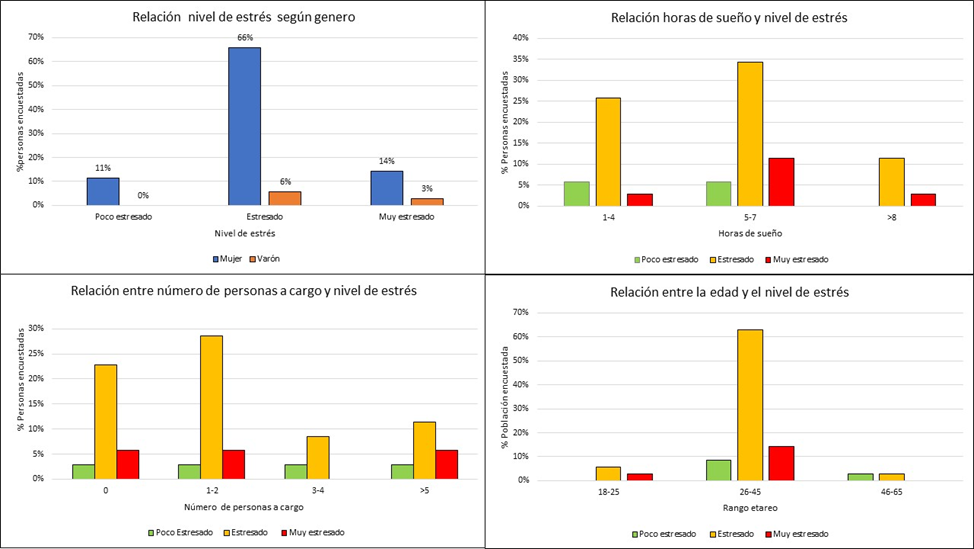
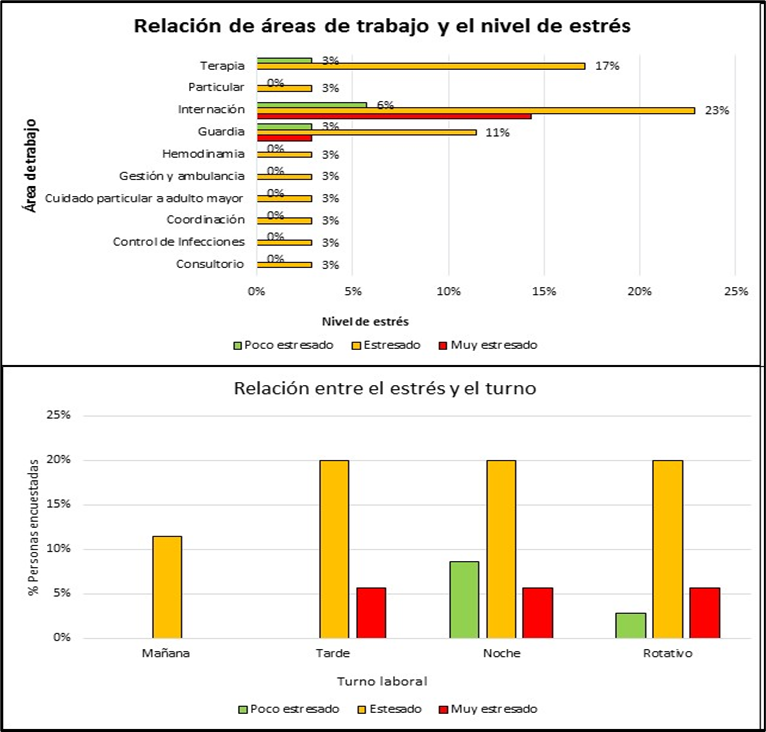
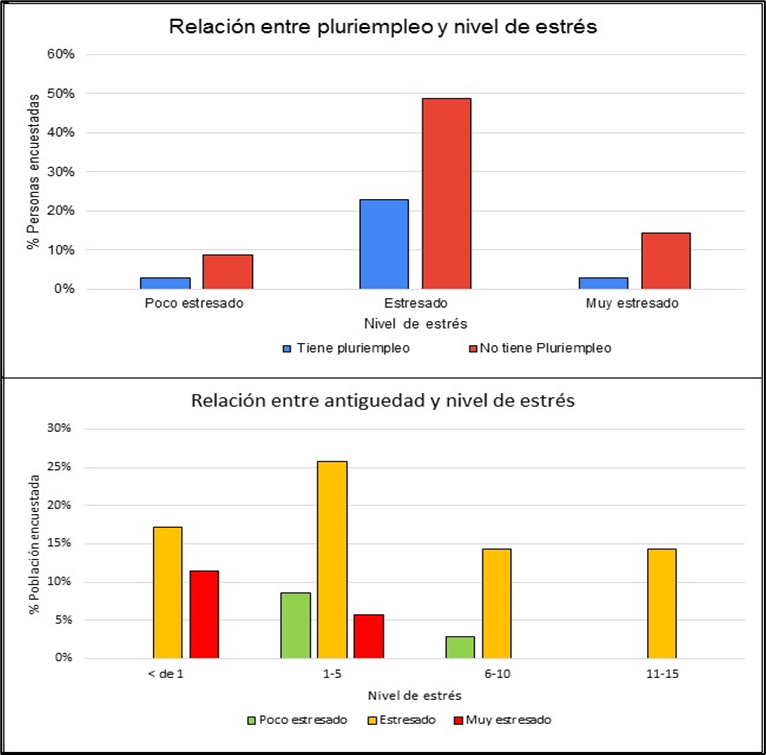
Figure 3 and 4, relationship between stress and work-related factors, provide an analysis of the different factors that affect nursing staff, such as the work area, multiple jobs, work shifts, and seniority. These graphs give us a broad view of the aspects that can influence the perception of stress, which is essential for relating it to risk factors and identifying vulnerable populations in order to carry out possible interventions.
This graph shows us how the work area is a determining factor in perceived stress levels, as respondents working in the inpatient area have the highest stress levels, with 23 % "Stressed" and 14 % "Very stressed." This could be due to the high physical and emotional demands of the sector, the care required by family members, interdisciplinary work, and adapting to constant changes and situations that arise in the service. Next is the emergency department, which also shows high levels of stress, with 11 % reporting "stressed" and 3 % "very stressed." This sector is characterized by a fast pace and high-pressure situations, where the ability to make quick and accurate decisions is crucial. This contrasts with areas such as the doctor's office, where relatively low stress levels are reported, which may be related to less pressure in caring for critical patients. With this information, specific measures of emotional support and assistance could be developed for workers in high-demand sectors.
With regard to multiple jobs, the survey shows how this affects perceived stress levels. Those who have multiple jobs represent almost half of the "Stressed" category and a significant percentage of "Very stressed," in contrast to those who do not have multiple jobs, who report low stress levels.
Analysis of stress distribution by work shift shows that nursing professionals who work afternoon, night, and rotating shifts tend to experience higher levels of stress, with 18 % in the "Very stressed" category. This can be associated with constant schedule changes and interference with sleep patterns, contributing to increased stress. In contrast, morning shifts show comparatively lower stress levels, which could be related to the alignment of this shift with natural sleep-wake cycles. However, stress is not distributed evenly across shifts, which may indicate that perceived levels extend beyond working hours and may be influenced by other factors.
Finally, the relationship between seniority and perceived stress reveals that employees with less than one year of experience and 1-5 years of experience have the highest stress levels (between "Stressed" and "Very stressed"), accounting for 60 % of all respondents. This could be because professionals are in a process of constant adaptation and learning during their first years, which can be a considerable source of stress. As seniority increases (6-10 years), stress levels begin to decrease, suggesting that experience helps people adapt to different situations and environments, contributing to better management of conflicts and stressors in the service. Over the years, there is a tendency for the perception of stress to decrease, highlighting that both lack of experience and long career in nursing can influence the modification of these levels.
In conclusion, the data obtained in this graph highlights the importance of taking a personalized approach to stress management, considering the work area, work schedule, multiple jobs, and seniority as important factors in identifying and supporting nursing professionals who may be more exposed to high levels of stress.
Graphs related to physical exercise
In figure 5, physical activity, the days of physical activity (in days and hours) were categorized along with the types of physical activity performed. The vertical axis represents the percentage of the population surveyed, and the horizontal axis represents the characteristics of the exercise in days and type. This set of graphs gives us a detailed view of the physical activity habits among those surveyed, showing the weekly frequency, the duration of the sessions, and the type of activity performed.
The graph referring to physical activity shows that a large part of the population (43 %) does not engage in any physical activity on any day of the week, which shows a significant sedentary lifestyle among nurses. This high percentage of inactivity represents a health risk, as lack of exercise is linked to numerous physical and mental problems. The most active population is around 49 %, with physical activity 1-3 days a week, indicating a frequency that is not usually sufficient to obtain full health benefits. Only a small minority of the population engages in physical activity 4-6 days or more than 7 days a week, highlighting a lack of regular habits.
The trend continues with regard to hours of physical activity, indicating that a considerable percentage of the population surveyed leads sedentary lifestyles, with few days and hours of physical activity, in most cases not reaching the 150 hours of physical activity recommended by the WHO. This creates a population at risk for physical injuries, multisystem problems, and heart disease. This insufficient physical activity places nursing professionals in a vulnerable position.
Regarding the type of physical activity they engage in, aerobic exercises (walking, running, cycling) are performed by more than 30 % of the population, followed by strength exercises (weight training, gym) at 17 %. A small portion engage in mixed activities (strength and aerobic exercises) and low-impact activities (Pilates). The latter is a useful resource for people with physical limitations or specific conditions.
Finally, 35 % of those surveyed do not engage in any type of physical activity, which highlights a worrying gap in the health care of a population with clear knowledge of the risks of a sedentary lifestyle. This low rate of physical activity among nursing professionals highlights the need to promote self-care practices and healthy habits, not only focused on physical activity but also on various tools that have a positive impact on health, such as leisure, nutritional care, and emotional support, among others, particularly in those with higher stress levels.
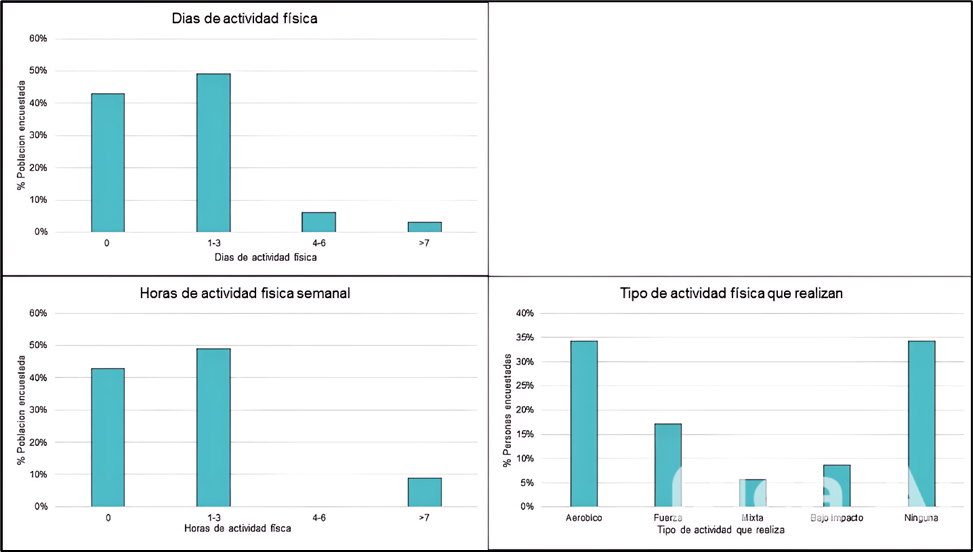
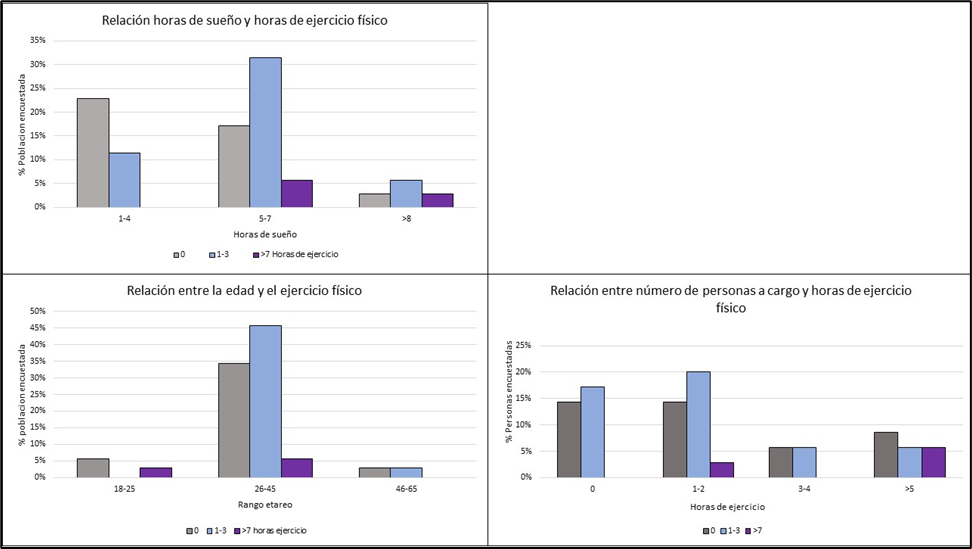
Figure 6 shows the relationship between physical exercise and other characteristics. It analyzes the personal characteristics of the respondents, such as hours of sleep, age, and number of dependents. This analysis allows us to identify patterns that may be linked to the time and willingness necessary to engage in exercise and how these personal factors influence physical activity.
First, with regard to hours of sleep and physical activity, it can be seen that people with a sleep range of 5-7 hours are the largest group (54 %). Within this group, 31 % exercise 1 to 3 hours per week, indicating that moderate sleep is a constant among those who exercise moderately. This pattern suggests that nursing professionals with better sleep habits are more likely to integrate exercise into their daily routine.
In contrast, people who sleep less than 5 hours show a marked tendency to exercise less, which could be related to higher stress levels or time constraints. These factors commonly limit the possibility of regular physical activity. On the other hand, the group that sleeps 8 hours has a significant proportion of people who engage in both light and vigorous activity, which could indicate that this is associated with a better quality of life and greater energy derived from adequate sleep and, therefore, good rest. There is also a clear decrease in the proportion of people who do not exercise at all as the number of hours of sleep increases, with the most sedentary being those who sleep only between 1-4 hours, reaching up to 25 %.
The relationship between age and physical exercise in this graph (figure 6) shows that the group with the highest physical activity is that of 26-45 years old. Since this is the largest population group, we will evaluate it more thoroughly. Taking the entire population of this age group, we can see that 40 % of those surveyed do not engage in physical activity. Fifty-three percent engage in light physical activity, and a small percentage (7 %) engage in vigorous physical activity. This trend toward a higher rate of physical activity than sedentary behavior can be linked to greater awareness of the importance of exercise at this stage of life. In contrast, in the group aged 46 and over, there is a notable decrease in exercise, which could be influenced by factors such as physical limitations and lack of time due to social, economic, or family responsibilities. This suggests a trend toward a sedentary lifestyle in later stages of life, which may require specific interventions to encourage exercise in this group.
The relationship between the number of dependents and hours of physical exercise in the graph suggests that nurses who do not have dependents have higher levels of physical activity, with 17 % exercising between 1-3 hours per week, which could be attributed to more free time. Those with 1-2 dependents show a decrease in the amount of time spent exercising. However, these remain at low levels of activity. In contrast, among those with more than 3 dependents, physical exercise is reduced, suggesting that personal, social, or family responsibilities limit the time and energy they can devote to physical activity.
In conclusion, figure 6, relationship between physical exercise and other characteristics, suggests that personal factors such as sleep hours, age, and caregiving responsibilities greatly influence physical activity among the nurses surveyed. The findings highlight the need to promote policies and programs that can facilitate access to self-care tools.
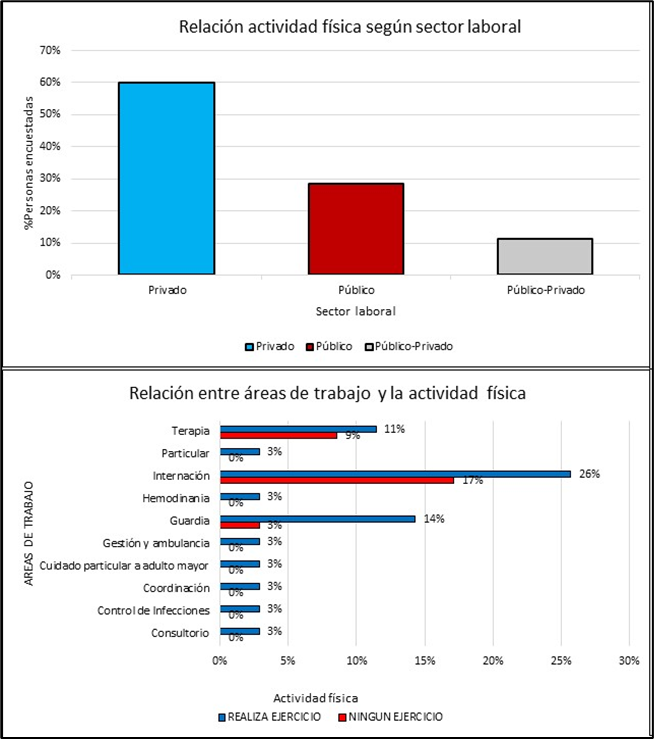
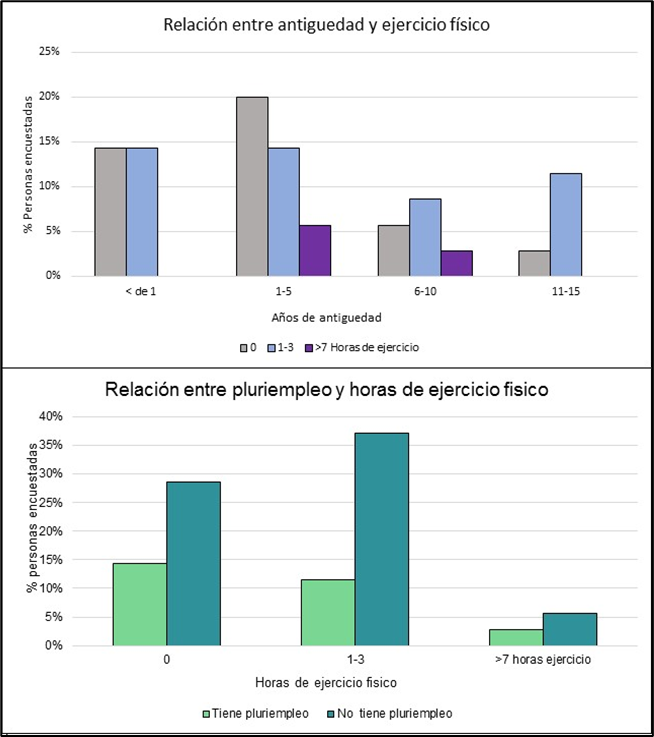
Figures 7 and 8: relationship between physical activity and various work factors show the relationship between physical activity and various work factors among nursing professionals, including seniority, work area, and multiple jobs. The data analysis provided insight into working conditions and their impact on physical activity levels.
In relation to physical activity and the employment sector (public, private, or mixed), it indicates that employees in the private sector tend to have a higher proportion of nurses who engage in physical activity compared to those employed in the public sector or those who work in both sectors (public and private). This could be due to different circumstances such as working hours and working conditions depending on the different health care providers, which could vary between sectors. Those employed in both sectors show lower levels of physical activity, probably due to additional work demands and the workload this entails.
In relation to seniority and physical exercise, it was observed that people with less seniority (less than one year) tend to exercise between 1-3 hours per week. As seniority increases, there is a tendency toward reduced physical activity, especially in the 1-3 year seniority group, where 20 % of participants exercise. However, the population group with 6-10 years of seniority has a small proportion of professionals who exercise more than 7 hours, which could indicate better adaptation to work demands and greater free time management skills. This trend suggests that, although physical activity tends to decrease with seniority, some more experienced workers have managed to adapt and improve their physical activity levels, possibly due to more efficient time management and better work organization, which allows them to devote time to other tasks.
With regard to multiple jobs, it is evident that employees who do not have more than one job exercise more hours than those who do. This may be associated with the lack of time and energy experienced by employees with multiple jobs, who often have an additional burden of financial and work responsibilities. In comparison, we can see that employees with a lower workload can devote their free time to other recreational and self-care activities, such as physical exercise, which is essential for their general well-being and reduces the risk of burnout.
With this set of data from figure 6, we can conclude that the work context, seniority, and multiple jobs have a significant impact on the ability of nursing professionals to integrate various activities into their free time, some related to self-care, such as physical exercise.
Graphs related to stress and physical exercise
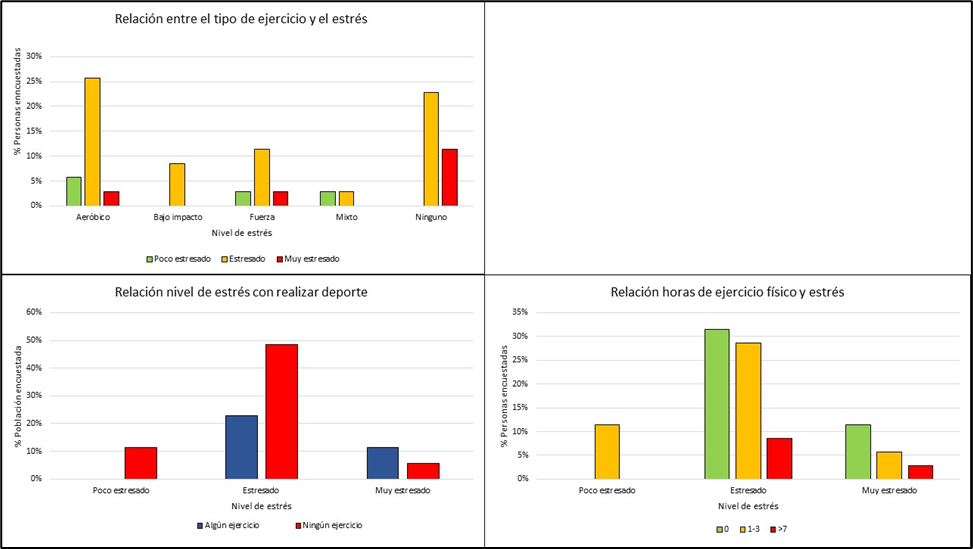
Figure 9: relationship between physical exercise and perceived stress levels explores the relationship between physical exercise and stress levels among respondents, covering variables such as type of physical activity, whether or not they play sports, and hours spent exercising. This analysis seeks to understand the relationship between stress management and the influence of physical exercise on nursing staff.
In relation to the type of exercise and stress, the types of activity were grouped into five categories: aerobic exercise (cycling, walking, Zumba, running), strength (muscle training, gym), low impact (Pilates), mixed (people who report doing strength and aerobic exercises), and those who do not engage in any type of exercise. Respondents who did not exercise had the highest stress levels, with 34 % distributed as follows: "Stressed" (23 %) and "Very stressed" (11 %). Those who engage in mixed exercise had the lowest stress levels, at 6 % (3 % "slightly stressed," 3 % "stressed"). This suggests that aerobic and low-impact exercise may be associated with greater stress reduction. Although aerobic exercise can also help reduce stress, some respondents who engage in it still report high levels of stress, which could be influenced by external factors or the intensity with which the exercise is performed.
In relation to the level of stress and the fact of doing physical activities, 68 % of people who report being "Stressed" do not do any physical activity, while only 32 % of those who are stressed engage in some activity. In percentage terms, the group that does not exercise is mostly represented in the "Stressed" (71 %) and "Very stressed" (17 %) categories. This indicates that the absence of physical activity may be contributing to higher stress levels, which in turn may reduce motivation to exercise.
Regarding the relationship between hours of physical exercise and stress levels, most of the population that exercises 1-3 hours a week falls into the "Stressed" category. This may indicate that a moderate amount of exercise may not be enough to reduce the overall stress levels generated in a demanding work environment such as nursing. However, it was observed that respondents who engage in more than 7 hours of activity tend to have lower stress levels, indicating that investing more time in self-care activities such as exercise could bring greater benefits for stress reduction, although this may also depend on the type of exercise performed.
In conclusion, these results suggest that, although physical exercise can help reduce stress levels, it is not a single solution. The effect of exercise on stress seems to depend on several conditions and factors, such as the amount of physical activity, hours of sleep, or free time, among others, and external factors such as personal circumstances or the work environment. Therefore, a multifactorial approach is essential for the proper management of stress in nursing.
CONCLUSIONS
This research project sought to describe and analyze the relationship between physical exercise and stress among nurses, students, and alumni of the Bachelor of Nursing program at a private university in Rosario, Argentina, during the second semester of 2024. The results obtained highlight the link between stress and tools to cope with it, such as physical exercise, since work and personal factors tend to limit the ability of nursing professionals to take care of their well-being. The results suggest that the implementation of occupational health policies and interventions could have a positive impact on nursing staff, providing tools that include physical activity options, which could affect employee well-being and performance, contributing to reducing and improving patient safety, burnout, and adverse events and, consequently, the consequences for second and third victims.
In terms of perceived stress levels, a large proportion of participants have high levels of stress, which are significantly influenced by personal, work, economic, and sociodemographic factors. In particular, the research shows that the highest stress levels are reported by those who sleep less than 4 hours a day, young adults between 26 and 45 years of age, and people who have recently joined a service, with less than one year's seniority and sustained up to the first 5 years. The impact of these factors highlights the need for specific interventions for these at-risk populations, which, if not addressed, may lead to negative coping mechanisms for stress, such as the use of psychoactive substances, stimulants, tobacco, and alcohol, among others. A multidisciplinary approach is crucial, as the multidimensional characteristics of this issue require it.
In the analysis of their exercise habits, a predominantly sedentary lifestyle prevailed. The results show that most of the respondents engage in low-impact, low-intensity aerobic activities such as walking, running, or cycling, while a smaller percentage engage in strength training or mixed exercises. The number of people who do not engage in any physical activity is noteworthy. The main obstacles to physical activity are considered to be lack of time, financial and family responsibilities, and poor adaptation to the workplace, all of which are common factors in the nursing field. Participants who report between 5 and 7 hours of sleep tend to maintain a more consistent physical activity routine, suggesting that adequate sleep may be associated with better adherence to exercise.
The analysis of the relationship between physical exercise and stress levels showed a correlation, not causality. Although exercise is associated with lower stress levels in many cases, a significant percentage of physically active nurses continued to report high stress levels, suggesting that physical activity alone is not sufficient to alleviate stress entirely. On the other hand, it was observed that those who engage in 1-3 hours of light activity per week do not show a significant reduction in stress. This would indicate that a light amount of exercise is insufficient to cope with the multiple stressors that nursing professionals deal with on a continuous basis. While exercise can act as a stress mitigator, the combination of several elements must be considered to improve the positive impact on health.
The influence of the work environment on participants' exercise and stress was quite noticeable. Factors such as the type of work sector, multiple jobs, work area, and seniority played an important role in physical activity and stress levels. In particular, nurses in the private sector showed a greater predisposition to physical activity, possibly related to more flexible schedules. On the other hand, situations such as working in high-demand areas, night/shift work, or seniority were circumstances that correlated with increased stress levels. In addition to this, professionals with more than 10 years of seniority reported a greater predisposition to physical activity, which could imply a better adaptation to the work rhythm.
The strength of this study lies in its comprehensive examination of the interaction of multidimensional factors between personal and work factors in relation to exercise and stress, providing a comprehensive perspective on the influences on the health and illness of nurses. However, it also has limitations, such as the difficulty of establishing a direct causality of the observed phenomena and the bias in the limited selection of respondents. Self-perception of stress and physical exercise may vary among participants, which represents a major challenge in the accurate interpretation of the data.
This preliminary research aims to lay the foundations for future interventions in the field of nursing, in order to develop more accurate strategies that can more efficiently address vulnerable groups, with the aim of improving stress levels and physical activity among professionals. It would also be beneficial to analyze other aspects that may influence stress, such as social support, whether or not the respondent is the head of the household, the total number of years of work, the type of work, or the resources available in the work environment.
In conclusion, the results of this study highlight the importance of a comprehensive approach to stress and sedentary lifestyles among nursing staff, which not only includes the promotion of exercise but also takes into account various personal and work factors that may determine the daily experience of nurses. The implementation of strategies and specific support, such as promoting more flexible schedules or establishing spaces for stress relief, with the aim of improving the work experience, reducing the workload of nurses, and training professionals with better health for a better quality of life, thereby lowering absenteeism and long-term injuries.
References
- 1 García-Moran MD. El estrés en el ámbito de los profesionales de la salud. Zaragoza: Universidad de Zaragoza; 2016.
- 2 Rosa Más Pons VE. La versión castellana de la escala "The Nursing Stress Scale": proceso de adaptación transcultural. Rev Esp Salud Pública. 1998;72(3):255–65.
- 3 Labrador FJ, Blanco-Arévalo M. Evaluación del estrés laboral y burnout en los servicios de urgencia extrahospitalaria. Int J Clin Health Psychol. 2006;6(2):451–64.
- 4 Wainerman CH, Bisquert G. El nacimiento de una ocupación femenina: La enfermería en Buenos Aires. JSTOR; 1992. https://www.jstor.org/
- 5 Corzo G. Síntomas musculoesqueléticos y estrés laboral en el personal de enfermería de un hospital militar. SciELO; 2009. https://www.scielo.org/
- 6 De Souza CD, Lima da Silva J, Antunes Cortez A, Schumacher C, Moreira DA. Riesgos ergonómicos de lesión por esfuerzo repetitivo del personal de enfermería en el hospital. SciELO; 2011. https://www.scielo.org/
- 7 Garber CE, Blissmer BP, Deschenes MR, Franklin BA, Lamonte MJ, Lee I-M, et al. American College of Sports Medicine position stand: Quantity and quality of exercise for developing and maintaining cardiorespiratory, musculoskeletal, and neuromotor fitness in apparently healthy adults. Med Sci Sports Exerc. 2011;43(7):1334–59.
- 8 Hidalgo CL, Casas GM, Monsalve AS. Consumo de sustancias psicoactivas en profesionales de la salud (médicos y enfermeros) de dos IPS de primer nivel de atención en consulta externa de Bogotá. Bogotá: s.n.; 2012.
- 9 Instituto Nacional de Estadística y Censos (INDEC). Censo Nacional de Población, Hogares y Viviendas 2022. Rosario: INDEC; 2022.
- 10 Lazarus RS, Folkman S. Estrés y procesos cognitivos. Barcelona: Ediciones Martínez Roca; 1986.
- 11 Londoño CA, Zapata NZ, Grajales PJ, Gracia DC. Ejercicio y sistema inmune. SciELO; 2006. https://www.scielo.org/
- 12 Martínez V. Análisis de la formación universitaria en España de los profesionales sanitarios y del deporte para la prescripción de ejercicio físico en el ámbito de la salud. J Sport Health Res. 2023;15(1):1–15.
- 13 Organización Mundial de la Salud. Directrices de la OMS sobre la actividad física y hábitos sedentarios. Ginebra: OMS; 2020.
- 14 Quirós AM, Javier LF. Evaluación del estrés laboral y burnout en los servicios de urgencia extrahospitalaria. Madrid: Universidad Complutense de Madrid; 2006.
- 15 Salazar EJ. Calidad del cuidado de enfermería brindado por profesionales en una ciudad colombiana. Cienc Cuid. 2019;16(1):21–31.
- 16 Sánchez V, Cepeda L, Pastuña C, Gonzalez C. Lesiones musculoesqueléticas asociados a factores de riesgo ergonómicos en profesionales de la salud. Anat Digit. 2024;6(1):45–56.
- 17 Torres MC, García-Ramos T. El trabajo en la sociedad de la información. SciELO; 2012. https://www.scielo.org/
Declarations
Funding
None.
Conflict of interest
None. AUTHORSHIP CONTRIBUTION Conceptualization: Andrés Felipe Garcia A, Adrián De Paul, Liliana Elba Ponti. Data curation: Andrés Felipe Garcia A, Adrián De Paul, Liliana Elba Ponti. Formal analysis: Andrés Felipe Garcia A, Adrián De Paul, Liliana Elba Ponti. Research: Andrés Felipe Garcia A, Adrián De Paul, Liliana Elba Ponti. Methodology: Andrés Felipe Garcia A, Adrián De Paul, Liliana Elba Ponti. Project management: Andrés Felipe Garcia A, Adrián De Paul, Liliana Elba Ponti. Resources: Andrés Felipe Garcia A, Adrián De Paul, Liliana Elba Ponti. Software: Andrés Felipe Garcia A, Adrián De Paul, Liliana Elba Ponti. Supervision: Andrés Felipe Garcia A, Adrián De Paul, Liliana Elba Ponti. Validation: Andrés Felipe Garcia A, Adrián De Paul, Liliana Elba Ponti. Visualization: Andrés Felipe Garcia A, Adrián De Paul, Liliana Elba Ponti. Writing – original draft: Andrés Felipe Garcia A, Adrián De Paul, Liliana Elba Ponti. Writing – review and editing: Andrés Felipe Garcia A, Adrián De Paul, Liliana Elba Ponti.
Authorship contributions
Drafting – original draft: Andrés Felipe Garcia A, Adrián De Paul, Liliana Elba Ponti.
Writing–review and editing: Andrés Felipe Garcia A, Adrián De Paul, Liliana Elba Ponti.