
Abstract
In rural Ecuador, chronic childhood malnutrition (CCM) persists as a public health challenge, especially in communities living in extreme poverty. This study evaluated the impact of nutrition education workshops for pregnant and lactating mothers in a rural area of Esmeraldas province. A quantitative, observational, and longitudinal design with a pre-experimental approach was applied, using validated pretest and posttest questionnaires to measure changes in dietary knowledge and practices. The sample consisted of 267 women selected through non-probability sampling. Data were analyzed using descriptive and inferential statistics in RStudio, employing the McNemar test. The results revealed statistically significant improvements (p < 0,001) in 35 of the 50 questions, especially in topics related to nutrition during pregnancy, breastfeeding, and the prevention of childhood illnesses. Knowledge was strengthened in key areas such as the importance of prenatal checkups, the immunological value of colostrum, and the benefits of exclusive breastfeeding. However, some areas showed no progress, suggesting the need to review methodological approaches and strengthen technical content. In conclusion, the educational workshops proved to be an effective tool for promoting maternal empowerment and preventing ICD during critical stages of child development. It is recommended that their coverage be expanded and their systematic integration into community-based public health strategies.
Keywords
Chronic Childhood Malnutrition, Nutritional Education, Community Workshops, Maternal and Child Health, Educational Intervention, Rural Areas
INTRODUCTION
Chronic child malnutrition (CBN) affects children under five years of age, causing a marked delay in their physical growth and cognitive development, which compromises their integral development and quality of life.(1) The term malnutrition generally refers to deficiencies, excesses, and imbalances in a person's nutrient intake, encompassing three major groups of affectations: malnutrition, encompassing conditions such as wasting, which refers to inadequate body weight about height, poor or stunted growth, which implies smaller than expected height for age, and low weight compared to the corresponding age, micronutrient-related malnutrition includes both deficiencies of essential vitamins or minerals and their excessive consumption and is considered overweight, obesity and chronic non-communicable diseases associated with an unhealthy diet, including cardiovascular disease, diabetes and certain types of cancer.(2) This problem can also compromise the immune system, increasing the probability of contracting preventable diseases and even death from these causes, with long-term implications for the health, educational attainment, and economic opportunities of affected individuals. To identify and monitor chronic malnutrition in this age group, different methods and indicators are used, such as the height/age index proposed by the World Health Organization (WHO) in 202.(3,4)
The first 1 000 days of life are crucial to prevent this condition. During this period, both the pregnant woman and the baby should receive a comprehensive package of health benefits. This includes prenatal check-ups, medical care at birth, regular check-ups, full immunization (including pneumococcal and rotavirus vaccines), and counseling on feeding and breastfeeding.(5) This implies that it is not just a matter of recommending a balanced diet and ensuring a sufficient caloric supply to support adequate growth. Rather, the aim is to refine the provision of essential nutrients during key stages of child development, thus promoting genuine "early nutritional programming." In this regard, the World Health Organization (WHO) emphasizes in its Comprehensive Plan of Action on Maternal, Infant, and Young Child Nutrition the importance of prioritizing interventions that improve both child development and child health globally by 2025.(6,7)
UNICEF's 2022 report reveals that child undernutrition affects 148 million children under 5 years of age with stunting, while 45 million faces severe acute malnutrition and 340 million are deficient in essential micronutrients. Among the leading causes of child undernutrition are several factors, such as lack of sufficient food, adverse socioeconomic conditions, inadequate eating habits, lack of safe drinking water, insufficient health care, and low levels of education of caregivers, highlighting some reasons that include:
Nutritional deficiencies: Resulting from an unbalanced diet or lack of essential nutrients, influenced by poverty, limited access to a variety of foods and lack of knowledge of healthy eating practices.
Socioeconomic factors: Lack of economic resources, together with inequality, hinders access to adequate food and medical services.
Diseases: Pathologies such as diarrhea, respiratory infections and intestinal parasites increase the body's nutritional demands and reduce nutrient absorption.
Limited access to medical care: Lack of accessible, quality health services delays diagnosis and treatment of diseases that affect child nutrition.
Inadequate breastfeeding practices: The absence of promotion and support for exclusive breastfeeding in the first six months contributes to malnutrition in newborns.
Lack of sanitation and hygiene: The lack of drinking water and adequate hygienic conditions increases the risk of infections and diseases that impact nutrition.
Educational deficiencies: Lack of knowledge about the importance of proper nutrition and child care by caregivers intensifies the risk of malnutrition.
Impact of disasters and conflicts: Natural disasters, humanitarian crises and armed conflicts severely affect access to food and health services, aggravating child undernutrition.
Cultural aspects: Cultural traditions and practices related to food and child care can have a negative influence on a balanced diet.
In Ecuador, this problem represents a serious public health concern, as it has a significant impact on the integral development of the affected infants. According to UNICEF data, it affects 20,1 % of children under the age of 2 in the country. This condition has multiple causes, such as inadequate nutrition, recurrent diseases in the first years of life, lack of access to drinking water and health services, as well as lack of sanitation and hygiene, which not only impacts the health and development of children but also the productivity and economic development of the country, representing 4,3 % of Ecuador's gross domestic product (GDP), due to socioeconomic and geographic disparities contribute to a high prevalence of chronic child malnutrition, particularly in rural and marginalized communities. A study conducted in the provinces of Azuay and Nabón identified that the socio-demographic determinants of child undernutrition vary between urban and rural areas, highlighting the need for context-specific interventions.(4,9) According to the study Closing the Nutrient Gap, 48 % of families in Ecuador cannot access a diversified, balanced diet. It is not only about consuming empty calories, such as rice, potatoes, and corn but also about supplementing with fruits and vegetables. This happens because of a lack of nutritional education," says Mario Touchette, representative of the World Food Program (WFP) in Ecuador.
In this sense, in Ecuador, the legal, regulatory framework to combat chronic child malnutrition has been created:
The National Strategy "Ecuador Grows Without Child Malnutrition" establishes key actions such as the provision of a prioritized set of goods and services, including vaccination, prenatal checkups, and health screenings for children, in addition to personalized monitoring of children under five years of age through an intersectoral platform, indicator reports, follow-up alerts, and results-based resource management.(11)
The Technical Secretariat of "Ecuador Grows Without Child Malnutrition" is an autonomous public agency with legal personality, including its assets, and operates with budgetary, financial, administrative, and management independence. It is attached to the Presidency of the Republic of Ecuador. It is responsible for coordinating, monitoring, and supervising both the Strategy and the Strategic Plan to guarantee fiscal sustainability and promote educational and communicational initiatives for behavioral change.(12)
The Intersectoral Strategic Plan for the Prevention and Reduction of Chronic Childhood Malnutrition (ICD) 2021-2025 establishes a national strategy aimed at ensuring that all children, from gestation, have a healthy start in life, free of chronic malnutrition. This plan comprises six fundamental pillars: creating an enabling environment, mobilizing financial resources, coordinating at the territorial level, managing information, strengthening human capital, and optimizing institutional administration, with an emphasis on co-responsibility and transparency.(12)
The Advisory Council for the Prevention and Reduction of the DCI, comprising 20 members from various institutions, serves as a platform for consultation, dialogue, agreement, and coordination among civil society organizations, academia, international agencies, and the private sector. Its purpose is to accompany and evaluate the execution of state policies.(13)
The Intersectoral Committee for the Prevention and Reduction of Childhood Undernutrition, formed by 13 members, is designed as a public space to coordinate and articulate policies, guidelines, and actions that make the implementation of the National Strategy "Ecuador Grows Without Child Undernutrition" and its corresponding Strategic Plan viable.
In the province of Esmeraldas, a region with high rates of poverty and inequality, chronic child malnutrition poses a significant challenge to public health policies, as 22 % of children suffer from mild to moderate malnutrition, according to figures from the Ministry of Public Health's (MSP) malnutrition gazette.(14)
In the year 2023, the Technical Secretary of Ecuador Grows Without Child Malnutrition, Erwin Ronquillo, highlighted that in Esmeraldas, there are more than 87 thousand prenatal and Healthy Child controls and 3 thousand 533 beneficiaries of the 'Future Childhood' Bonus; among pregnant mothers, girls and boys and that it is located as the fourth province with the lowest index of ICD in the country (15,6 %) with 4,5 percentage points less than the national indicator.(15) However, there is a possibility of underreporting of data from sectors and communities with a high level of insecurity that could not be censused due to restrictions on the entry of external inhabitants.
With this background, the academy participates in the implementation and strengthening of policies and work in the territory to contribute to reducing the reported rate of ICD in the city of Esmeraldas in families living in poverty and extreme poverty, being the fourth actor linked to the "REDNI Social Franchise" project in the province of Esmeraldas, and actively contributing to the axis of communication as a key to changing the behavior of society in the areas of health and welfare of pregnant and lactating mothers.
In Ecuador, there is a communication strategy to prevent ICD in children under five years of age, especially in rural areas and indigenous communities, to promote individual changes in society with key actions on prenatal checkups and vaccination, promotion of breastfeeding, and exclusive and complementary feeding, drinking water and hygiene habits, protective environments and child development, as well as family planning and timely registration of children.(16)
Educational workshops have emerged as an effective strategy to address this issue by providing spaces for learning and community empowerment. These initiatives not only promote the adoption of healthy eating practices but also strengthen knowledge about the importance of nutrition in the early years of life.(17)
According to recent studies, the implementation of educational workshops in rural communities has proven to be a key tool to reduce chronic malnutrition rates by involving mothers, caregivers and community leaders in the promotion of proper eating habits,(1,18) and educational interventions have proven to be practical tools by providing knowledge on healthy eating practices, hygiene and child care, these programs can empower communities to improve the nutritional status of their children,(19) with the possibility of reaching a real accompaniment in behavioral change from a sustained logic and that is permanent in the medium and long term.
METHOD
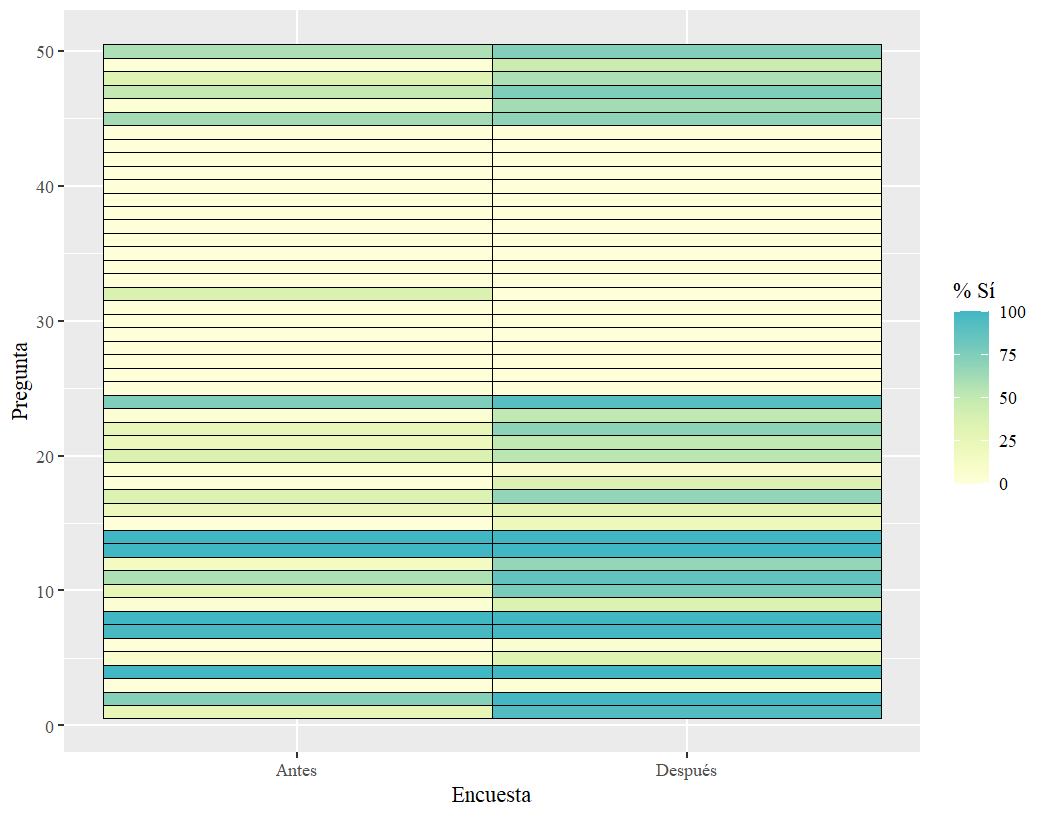
A quantitative, observational, and longitudinal study with a pre-experimental approach was conducted to evaluate the impact of educational nutrition workshops on the knowledge and dietary practices of pregnant and lactating mothers. The population consisted of 267 women who voluntarily participated in the workshops, selected by non-probabilistic sampling, and registered in an anonymized database. For data collection, structured pretest and posttest questionnaires were used, previously validated by experts, which enabled the measurement of changes in nutritional knowledge and eating habits before and after the intervention. The information was systematized in Microsoft Excel and subsequently analyzed using descriptive and inferential statistics in the R programming language, using the RStudio environment. McNemar's test was applied to evaluate significant changes in the paired responses, and the analysis was complemented with heat maps to visualize patterns of improvement. The study complied with fundamental ethical principles, ensuring the confidentiality and anonymity of the participants, as outlined in the Declaration of Helsinki and current national regulations on research involving human subjects.
RESULTS
Based on the descriptive analysis of the data, the heat map shows that before the strategy, most of the participants did not know the importance of responsible care during pregnancy and its influence on the prevention of chronic child malnutrition, except for specific questions (2, 4, 7, 8, 13, 14, 24) where a concrete perception in these areas of knowledge is observed. After implementing the strategies, an apparent change is observed in most questions that previously presented a low percentage of affirmative answers (change from beige to turquoise), indicating the impact of the workshops on nutrition and food practices among the participants.
N° | Question | % "Yes" (Before) | % "Yes" (After) | p-value (McNemar) |
|---|---|---|---|---|
1 | Did you know that it is important to attend a minimum of five prenatal checkups during pregnancy? | 26 | 94 | 2,20E-16*** |
2 | Do you consider that nutritional education can prevent complications during pregnancy? | 72 | 99 | 2,20E-16*** |
3 | Do you know the foods that should be avoided during pregnancy, such as sausages and fish with high levels of mercury? | 0 | 3 | 1,33E-02* |
4 | Did you know that a varied, balanced and moderate diet is key to good maternal and infant health? | 100 | 100 | NA |
5 | Are you aware of the importance of consuming iron and folic acid supplements during pregnancy? | 7 | 33 | 2,20E-16*** |
6 | Do you know the relationship between adequate calcium intake and the prevention of complications such as preeclampsia? | 0 | 6 | 3,01E-04*** |
7 | Have you considered the role of cooking methods and hygiene in food safety during pregnancy? | 98 | 99 | 4,80E-01 |
8 | Did you know that drinking enough water daily is crucial for proper hydration during pregnancy? | 100 | 100 | NA |
9 | Are you aware of the importance of promptly identifying and treating urinary tract infections during pregnancy? | 4 | 36 | 2,20E-16*** |
10 | Did you know that common disturbances such as nausea, constipation and heartburn can be managed with dietary adjustments? | 26 | 78 | 2,20E-16*** |
11 | Do you recognize that alcohol and tobacco use during pregnancy can negatively affect the baby? | 58 | 87 | 2,20E-16*** |
12 | Do you know the steps necessary to ensure proper disinfection of fruits and vegetables before consumption? | 14 | 67 | 2,20E-16*** |
13 | Do you think that hands-on nutrition and cooking workshops can improve eating habits during pregnancy? | 100 | 100 | NA |
14 | Do you know the importance of health checks in the first months of the baby's life to prevent problems such as anemia? | 100 | 100 | NA |
15 | Did you know that colostrum provides essential defenses to protect the newborn against infections? | 0 | 21 | 3,30E-13*** |
16 | Did you know that metabolic monitoring of the newborn should be performed within the first 28 days of life? | 21 | 30 | 4,49E-06*** |
17 | Did you know that exclusive breastfeeding is recommended for the first six months of a baby's life? | 35 | 68 | 2,20E-16*** |
18 | Did you know that breast milk can protect the baby against infections and diseases such as leukemia? | 1 | 34 | 2,20E-16*** |
19 | Did you know that breast milk provides benefits even after six months as a complementary food? | 3 | 9 | 1,77E-04*** |
20 | Do you think that identifying hunger cues in the baby helps to encourage breastfeeding on demand? | 36 | 53 | 5,41E-11*** |
21 | Are you aware that introducing formulas without medical advice can be detrimental to exclusive breastfeeding? | 21 | 51 | 2,20E-16*** |
22 | Did you know that breastfeeding promotes a baby's cognitive and language development? | 25 | 70 | 2,20E-16*** |
23 | Are you aware that breastmilk substitutes do not offer the same benefits as breastmilk? | 4 | 52 | 2,20E-16*** |
24 | Do you think that taking your baby to well-baby checkups is essential for his or her growth and development? | 75 | 92 | 9,02E-11*** |
25 | Did you know that vaccines should be given at the recommended times to prevent serious diseases? | 0 | 0 | NA |
26 | Did you know that breast milk contains essential hormones and antibodies for the baby? | 0 | 0 | NA |
27 | Did you know that the World Health Organization recommends breastfeeding up to 2 years or more? | 0 | 0 | NA |
28 | Do you recognize that proper expression and storage of breast milk preserves its nutrients? | 0 | 0 | NA |
29 | Do you consider that family planning and support can facilitate continued breastfeeding? | 0 | 0 | NA |
30 | Do you recognize that expressed breast milk should be stored in glass containers for proper preservation? | 0 | 0 | NA |
31 | Did you know that breastfeeding on demand helps to maintain sufficient milk production? | 0 | 0 | NA |
32 | Did you know that during breastfeeding it is not necessary to "eat for two," but to maintain a balanced diet? | 37 | 0 | 2,20E-16*** |
33 | Is it important to consult a health professional before taking multivitamin supplements while breastfeeding? | 0 | 0 | NA NA |
34 | Did you know that moderate consumption of red meat is a key recommendation for breastfeeding mothers? | 0 | 0 | NA |
35 | Do you think that a varied diet during breastfeeding could help the baby to accept solid foods more easily in the future? | 0 | 0 | NA |
36 | Did you know that exercise can increase a mother's hydration needs during breastfeeding? | 0 | 0 | NA |
37 | Did you know that consumption of whole fruits is preferable to consumption of processed juices? | 0 | 0 | NA |
38 | Do you think that providing safe water in the home is essential for disease prevention? | 0 | 0 | NA |
39 | Do you think that steaming techniques help to preserve nutrients in food? | 0 | 0 | NA |
40 | Do you consider that proper storage methods help preserve the characteristics and nutrients in foods? | 0 | 0 | NA |
41 | Are you aware that cooking with a limited amount of oil can make food healthier? | 0 | 0 | NA NA |
42 | Did you know that cooked food should not be left at room temperature for more than two hours? | 0 | 0 | NA |
43 | Do you recognize that soaking legumes improves their digestion and nutrient absorption? | 0 | 0 | NA |
44 | Do you consider that the consumption of sprouted legumes can improve the quality of food? | 0 | 0 | NA |
45 | Did you know that pregnant women should avoid raw seafood and unpasteurized cheeses to protect their health and that of their baby? | 62 | 69 | 3,64E-05*** |
46 | Did you know that breastfeeding should be continued along with complementary feeding until at least 24 months? | 3 | 62 | 2,20E-16*** |
47 | Did you know that malnutrition in the first two years of life can affect a child's brain development? | 49 | 75 | 2,70E-16*** |
48 | Do you recognize that nutritional assessment helps prevent diseases related to malnutrition? | 33 | 58 | 7,43E-16*** |
49 | Did you know that malnutrition includes undernutrition as well as overweight and obesity? | 3 | 46 | 2,20E-16*** |
50 | Do you consider it important to identify early signs of malnutrition, such as dry skin or brittle nails? | 58 | 73 | 6,98E-10*** |
NA: No discordance in the data. *: p < 0,05 ***: p < 0,001 | NA: No discordance in the data. *: p < 0,05 ***: p < 0,001 | NA: No discordance in the data. *: p < 0,05 ***: p < 0,001 | NA: No discordance in the data. *: p < 0,05 ***: p < 0,001 | NA: No discordance in the data. *: p < 0,05 ***: p < 0,001 |
The heat map is complemented by Table 1. Through the inferential analysis by McNemar's test, it is observed that most of the questions that address the topics of nutrition during pregnancy, breastfeeding, neonatal care, food hygiene, and disease prevention (except for Q7 and those that do not present discordance before and after the strategy) show a statistically significant difference before and after the strategies addressed, suggesting that the workshops on nutrition knowledge and food practices are having a positive impact in the community and, therefore, provide a foundation for preventing chronic child malnutrition. However, it should be noted that there are areas of knowledge such as "specific storage techniques, food preparation, technical concepts about breast milk and healthy cooking practices" (P24:P44 and P33:44) that are not generating a positive response from the participants, so a more in-depth approach or a change of strategy is needed.
DISCUSSION
The data indicate a significant impact of the educational strategy on the participants' knowledge. A substantial increase in the percentage of affirmative answers ("Yes") was observed after the educational intervention in most of the questions, with highly substantial p-values (p < 0,001) in 35 of the 50 questions evaluated, demonstrating the effectiveness of the workshops in the acquisition of key knowledge for the prevention of chronic child malnutrition. Among the most notable improvements were the recognition of the importance of attending prenatal checkups (from 26 % to 94 %), the identification and treatment of urinary infections (from 4 % to 36 %), and knowledge of the protective value of breast milk against diseases such as leukemia (from 1 % to 34 %). Improvements were also observed in aspects of food hygiene and in the understanding of the role of breastfeeding up to two years of age, as well as the impact of malnutrition on early brain development. Some topics, such as healthy eating and the importance of colostrum or practical workshops, already had a high level of prior knowledge, which was confirmed by the strategy. However, 15 questions showed no change, possibly due to a lack of emphasis on the content or its technical complexity, which raises the need for curricular adjustments. A particular case of regression was the decrease in knowledge regarding the fact that it is not necessary to "eat for two" during breastfeeding, which evidences a possible confusion generated in the intervention and underscores the importance of reviewing the clarity of the educational messages.
The findings of this study are in contrast to A systematic review published in the International Journal of Child Care and Education Policy, which analyzed several studies on the impact of nutrition education on mothers and its effect on children's nutritional status. The findings indicate that nutrition education significantly improves mothers' knowledge, attitudes, and skills (p< 0,001), increasing children's birth weight (average increase of 0,257 kg) and reducing stunting rates, concluding that nutrition education is an effective strategy to improve child nutritional status;(20) a quasi-experimental study conducted in Mexico evaluated the effect of an educational intervention in mothers of children under 5 years of age with mild to moderate malnutrition. The intervention consisted of biweekly educational sessions over six months, focusing on healthy eating practices. The results showed a significant improvement in children's weight (p = 0,001), with no change in family economic resources, highlighting the importance of maternal adherence to the intervention in improving the child's nutritional status.(21) This finding is also supported by a systematic review that evaluated nutrition education programs aimed at African mothers. The results indicate that programs that combined educational workshops with additional strategies, such as home agriculture and nutritional supplementation, achieved significant reductions in chronic malnutrition rates.(22) A study conducted in Canton Oña, Ecuador, implemented educational workshops tailored to local sociocultural characteristics, addressing topics such as child nutrition, breastfeeding, and the preparation of nutritious food. The results revealed a notable increase in mothers' knowledge about incorporating complementary foods and the importance of exclusive breastfeeding, as well as improvements in feeding practices, particularly in the regularity of protein intake in the infant's diet.
CONCLUSIONS
This research demonstrates that the educational strategy implemented had a statistically significant and positive impact on the level of knowledge among participating pregnant and lactating mothers, particularly in fundamental aspects related to maternal and child nutrition, prenatal health, breastfeeding, and the prevention of chronic child malnutrition. The results show substantial improvements in items where knowledge gaps were initially identified, which highlights the effectiveness of community workshops as a tool to close critical gaps in public health. At the same time, areas were identified where learning was not sufficient or even showed setbacks, especially in technical or misinterpreted content, which highlights the need to adjust and reinforce educational materials, as well as to adapt the language and pedagogical methodology to the sociocultural characteristics of the participants. In this sense, the study not only validates the use of community educational interventions as a viable and effective strategy to improve health knowledge and practices in contexts of poverty and extreme poverty but also provides key inputs for the continuous improvement of these initiatives. Thus, it is established that promoting maternal empowerment through health education is reaffirmed as a fundamental pillar to combat chronic child malnutrition, especially in the first 1000 days of life, a critical stage for the physical and cognitive development of children, and it is recommended to expand the coverage of these strategies, to integrate them systematically in primary health care programs and to evaluate their long-term sustainability in different territorial contexts.
References
- 1 Cuevas-Nasu L, Gaona-Pineda EB, Rodríguez-Ramírez S, Morales-Ruán MDC, González-Castell LD, García- Feregrino R, et al. Desnutrición crónica en población infantil de localidades con menos de 100 000 habitantes en México. Salud Publica Mex. 2019 Dec 5;61(6, nov-dic):833.
- 2 OMS. https://www.who.int/es/news-room/fact-sheets/detail/malnutrition. 2024. Malnutrición.
- 3 Cortez Figueroa DK, Pérez Ruiz ME. Desnutrición crónica infantil y sus efectos en el crecimiento y desarrollo. RECIAMUC. 2023 Apr 13;7(2):677–86.
- 4 Ortiz J, Van Camp J, Wijaya S, Donoso S, Huybregts L. Determinants of child malnutrition in rural and urban Ecuadorian highlands. Public Health Nutr. 2014 Sep 30;17(9):2122–30.
- 5 UNICEF. https://www.unicef.org/ecuador/comunicados-prensa/la-desnutrici%C3%B3n-cr%C3%B3nica-es-un-problema-que-va-m%C3%A1s-all%C3%A1-del-hambre. 2021. La desnutrición crónica es un problema que va más allá del hambre.
- 6 OMS. http://www.who.int/nutrition/publications/CIP_document/es/. 2014. Plan de aplicación integral sobre nutrición materna, del lactante y del niño pequeño.
- 7 Maldonado Lozano J. NUTRICIÓN INFANTIL e33 La importancia de la nutrición en los primeros 1.000 días de la vida. Vol. 76, Acta Pediatr Esp. 2018.
- 8 UNICEF. Para cada infancia, nutrición. Nueva York; 2020 Dec.
- 9 UNICEF. https://www.unicef.org/ecuador/desnutrici%C3%B3n-cr%C3%B3nica-infantil. 2021. Desnutrición Crónica Infantil Uno de los mayores problemas de salud pública en Ecuador.
- 10 Citación Recomendada Knight F, Mirochnick N, Momcilovic P, Orstavik S, Pee D. Autoridades Expertas y expertos internacionales de la Sede del Programa Mundial de Alimentos en Roma. 2018.
- 11 Erwin Ronquillo. Estrategia Nacional Ecuador Crece sin Desnutrición Infantil: Avances de la política pública orientada al abordaje de la desnutrición crónica infantil Secretaría Ecuador Crece sin Desnutrición Crónica Infantil. Quito; 2023.
- 12 Dirección de Planificación y Gestión Estratégica. PLAN ESTRATÉGICO INSTITUCIONAL SECRETARÍA TÉCNICA ECUADOR CRECE SIN DESNUTRICIÓN INFANTIL. Quito; 2021 May.
- 13 Secretaría Técnica Ecuador Crece Sin Desnutrición Infantil. ACUERDO Nro. STECSDI-STECSDI-2022-0003-A: CONFORMAR EL CONSEJO CONSULTIVO PARA LA PREVENCIÓN Y REDUCCIÓN DE LA DESNUTRICIÓN CRÓNICA INFANTIL [Internet]. Quito; 2022 Mar. Available from: www.infancia.gob.ec
- 14 Castillo-Villalta J. Una atención temprana puede prevenir la DCI en Esmeraldas. Esmeraldas; 2022 Dec.
- 15 Secretaría Técnica Ecuador Crece Sin Desnutrición Infantil. https://www.infancia.gob.ec/esmeraldas-se-destaca-por-sus-bajos-indices-de-desnutricion-cronica-infantil/. 2023. Esmeraldas se destaca por sus bajos índices de Desnutrición Crónica Infantil.
- 16 UNICEF Ecuador, Secretaría Técnica Ecuador Crece sin Desnutrición Infantil, Ministerio de Salud Pública, Ministerio de Inclusión Económica y Social. Estrategia de comunicación para el desarrollo para la prevención de la desnutrición crónica infantil (DCI). 2022 Oct.
- 17 La Hora. https://www.lahora.com.ec/esmeraldas/capacitacion-para-el-personal-de-salud/. 2023. Capacitación para el personal de Salud.
- 18 Calle A. Factores que influyen en la desnutrición crónica en niños menores de 5 años en Ecuador. [Azogues]: Universidad Católica de Ecuador; 2023.
- 19 Mulualem D, Henry CJ, Berhanu G, Whiting SJ. The effectiveness of nutrition education: Applying the Health Belief Model in child-feeding practices to use pulses for complementary feeding in Southern Ethiopia. Ecol Food Nutr. 2016 May 3;55(3):308–23.
- 20 Prasetyo YB, Permatasari P, Susanti HD. The effect of mothers’ nutritional education and knowledge on children’s nutritional status: a systematic review. Vol. 17, International Journal of Child Care and Education Policy. Springer; 2023.
- 21 Sánchez-Encalada S, Talavera-Torres MM, Wong-Chew RM. An Educational Intervention to Mothers Improved the Nutritional Status of Mexican Children Younger Than 5 Years Old With Mild to Moderate Malnutrition. Glob Pediatr Health. 2019 Jan 1;6.
- 22 Jardí C, Casanova BD, Arija V. Nutrition Education Programs Aimed at African Mothers of Infant Children: A Systematic Review. Int J Environ Res Public Health. 2021 Jul 20;18(14):7709.
- 23 Espinoza Quezada R. Implementación de estrategias de sensibilización a madres de familia para la prevención de la desnutrición crónica infantil en niños menores de 2 años del cantón Oña periodo 2024. [Ecuador]: Universidad de las Américas; 2024.
Declarations
Funding
The authors did not receive funding for the development of this research.
Conflict of interest
The authors declare that there is no conflict of interest. AUTHORSHIP CONTRIBUTION Conceptualization: Evelin Alexandra Zúñiga Sosa. Data curation: Evelin Alexandra Zúñiga Sosa, Michael Andrés Acosta Ganán. Formal analysis: Evelin Alexandra Zúñiga Sosa. Research: Evelin Alexandra Zúñiga Sosa, Karen Carolina Chila García. Methodology: Evelin Alexandra Zúñiga Sosa, Michael Andrés Acosta Ganán. Validation: Evelin Alexandra Zúñiga Sosa. Visualization: Evelin Alexandra Zúñiga Sosa, Karen Carolina Chila García, Michael Andrés Acosta Ganán. Writing - original draft: Evelin Alexandra Zúñiga Sosa, Karen Carolina Chila García, Michael Andrés Acosta Ganán. Writing - proofreading and editing: Evelin Alexandra Zúñiga Sosa, Karen Carolina Chila García, Michael Andrés Acosta Ganán.
Authorship contributions
Drafting – original draft: Evelin Alexandra Zúñiga Sosa, Karen Carolina Chila García, Michael Andrés Acosta Ganán.
Writing–review and editing: Evelin Alexandra Zúñiga Sosa, Karen Carolina Chila García, Michael Andrés Acosta Ganán.