

Abstract
Introduction: Determining the ergonomic conditions and musculoskeletal risk levels was essential to ensuring the health of occupational therapists at an occupational care center. Method: The study was conducted within the positivist paradigm, with a quantitative approach and a non-experimental, descriptive, cross-sectional design. The population consisted of the four therapists working at the center, and the sample was census-based. Individual questionnaires, direct observation, the OWAS method, the body schema of pain, and the NTP 295 were applied. Results: The results showed that women were the predominant sex (100%), representing a young adult population with an average age of 28.5 years. By applying the OWAS method to the overall analysis of accumulated postures, risk categories 2 and 3 were identified, with 76% of the patients on their backs (bent and tilted/rotated) and 67% on their legs (bent knees). These postures can cause greater postural strain for the workers, necessitating the implementation of corrective actions as soon as possible. By applying NTP 295, a bearable cardiac demand was determined, along with a score of 5 points according to the Frimat index for the care of an agitated patient. The results obtained through the application of the body schema subjectively support the findings obtained through the OWAS method. Conclusion: Occupational therapists are exposed to dysergonomic conditions in their workplaces, directly related to the awkward postures they must adopt when performing activities related to childcare.
Keywords
Occupational Therapy, Ergonomics, Risk Level
INTRODUCTION
There are health conditions that can affect the ability of a person to carry out daily activities and work or participate in social and community life; some of these situations may occur in people with delayed development of motor, cognitive, or social skills or those who are recovering from surgery, accidents or chronic diseases; at this point, it is essential to mention occupational therapy as a valuable tool that aims to help various groups of people to develop activities of daily living independently and thus improve their quality of life.
The work of these professionals not only impacts the lives of their patients but also contributes to the creation of more inclusive and functional community groups; being necessary to guarantee these workers a safe and healthy work environment with the primary purpose of preventing occupational diseases and work accidents, as well as to provide maximum comfort to therapists when performing their tasks.
Under this premise, the International Labor Organization (ILO)(1) describes a safe and healthy work environment as "one in which risks have been eliminated or where all reasonable and feasible practical measures have been taken to reduce risks to an acceptable level and where prevention is integrated as part of the organizational culture," and also refers that these safe work environments are achieved through the implementation of ergonomics to adapt the position to the worker.
In this sense, the Technical Standard on Occupational Safety and Health Program (NT-04-2023)(2) defines ergonomics as "the discipline that deals with the study of work to adapt the methods, organization, tools, and tools used in the work process to the characteristics (psychological, cognitive, anthropometric) of workers." This discipline is legally based on the Organic Law of Prevention, Conditions and Working Environment (LOPCYMAT)(3), which, in its article 60: Relationship Person, Work System, and Machine, urges employers to ensure the health and welfare of workers by reducing musculoskeletal injuries, through the adaptation of the work system (Person-Machine).
In this regard, Candela (4) determined that there is a relationship between ergonomic occupational risks and musculoskeletal comfort in physiotherapists of a rehabilitation center, specifically in terms of repetitive movements and forced postures that cause fatigue or pain. On the other hand, Morales et al.(5) evidenced the existence of predisposing factors for the development of Musculoskeletal Disorders (MSD) in occupational therapists, with a high-risk level in both men and women.
One of these predisposing factors is forced postures. To this effect, the Spanish National Institute for Safety and Health at Work (INSST)(6) states that these are forced postures when one or more anatomical areas are no longer in a natural position and move to a position that causes hyperflexion, hyperextension or extended rotation, which frequently overload muscles or tendons or load the joints asymmetrically.
In this regard, Santos (7) determined that forced postures are directly related to the development of MSDs in occupational therapists.
Consequently, the physical load or demand is closely associated with forced postures and ergonomic conditions concerning the appearance of MSDs; Chavarría,(8) in the Technical Prevention Note 177 (NTP 177), defines the physical workload as "the demand for physical activity arising from the work that has as a counterpart the contribution by the worker of physical effort," stating that muscular discomfort is more frequent in workers who assume static forced postures due to the decrease in blood supply, oxygen and glucose in a muscle in sustained contraction for a specific period.
In this regard, Terán (9) established through his research that physical demands due to postural load are a factor that contributes to the development of MSDs, with a high-risk level in the cervical region and shoulders. Consequently, physical demands due to static forced postures and non-ergonomic conditions are linked to the appearance of MSDs since a worker exposed to these situations may present muscular fatigue due to overload and, in many cases, diseases of occupational origin, which leads to a reduction in work capacity with late recovery in most cases, because these types of pathologies are usually chronic.
Occupational therapy professionals do not escape from this reality since many of the activities they perform, especially those oriented to children, are usually performed on the floor on mats, special hammocks, or tables of an appropriate size for these age groups; this causes the professional to adopt forced dynamic or static postures that can be physically demanding during the performance of their tasks, causing muscular overload at the level of the neck, trunk, upper and lower limbs, which would be a determining factor in the origin of MSDs in occupational therapists.
By the above, Cabezas and Torres (10) determined a prevalence of 55,6 % of MSDs at the level of the upper limbs, specifically the wrist and hands, in these professionals.
At present, the Occupational Care Center OCUPAMOR has not begun to manage occupational safety and health, and some of the professionals have presented discomfort, such as fatigue and pain in body segments at the end of the workday; in this center, there has not been a job study to identify the level of musculoskeletal risk and the physical demands to which the occupational therapists are exposed, these reasons justify the importance of this research since it contributes to reduce the level of risk, as well as to promote the adoption of postural hygiene measures that help prevent diseases of musculoskeletal origin.
Therefore, the objective was to evaluate the ergonomic conditions, the physical demands of work, and the level of musculoskeletal risk in occupational therapists of the Occupational Care Center OCUPAMOR located in Aragua-Venezuela during the year 2024.
METHODS
The research was conducted within the positivist paradigm, employing a quantitative approach, and framed as a descriptive, non-experimental, cross-sectional field study.
Population and sample
The population consists of all the occupational therapists working at the Occupational Care Center OCUPAMOR, specifically four workers, as per the census sample.
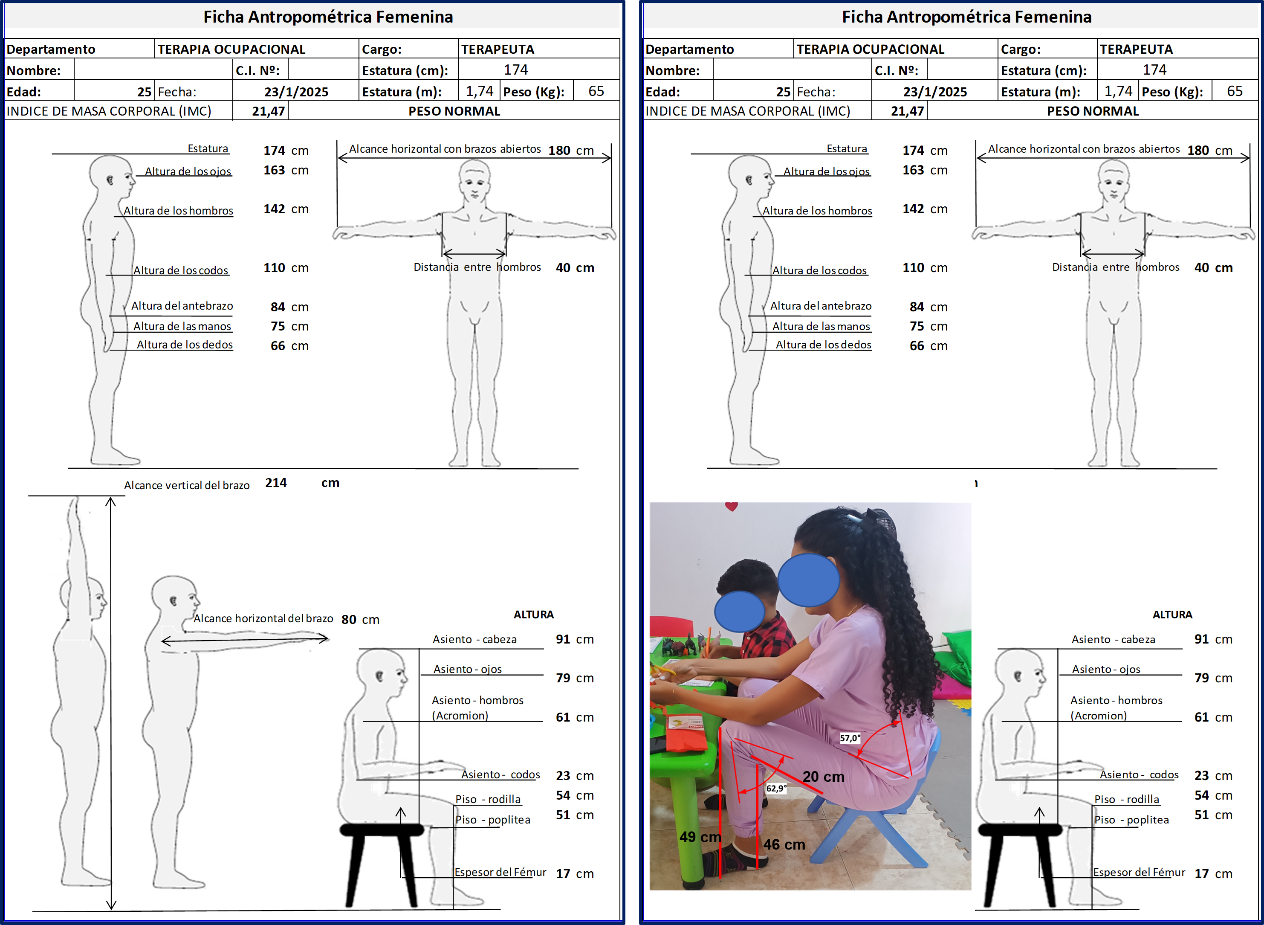
To characterize the occupational therapists from a sociodemographic and labor point of view, they filled out the questionnaire of Escalona et al.(11) which contains essential information on each worker such as age, sex, position, seniority in the position, difficulties at work, among others. On the other hand, to know the anthropometric data of the workers, anthropometric measurements were taken in standing and seated positions, which were documented in the Drillis and Contini model to determine the rest of the anthropometric values based on the height in cm.(12)
Likewise, direct observation was employed as a technique, with observations recorded in an observation guide. In addition, the physical workload was determined using the Spanish INSST Technical Prevention Note 295 (NTP 295) "Assessment of the physical workload by monitoring the heart rate."(13)
The level of musculoskeletal risk was determined with the application of the OWAS Method (Ovako Work Analysis System), since with this method, the physical load derived from the postures adopted at work can be assessed; for the application of this method, special attention was given to the primary operations, postures, efforts, rhythms, repetitiveness, work organization, use of tools and work environment.(14) Table 1 shows the risk categories and the corrective action to be applied from the OWAS method.
Risk Category | Effect of the posture | Action required |
|---|---|---|
1 | Normal and natural posture with no harmful effects on the musculoskeletal system. | No action required |
2 | Posture with potential to cause damage to the musculoskeletal system | Corrective actions in the near future |
3 | Posture with harmful effects on the musculoskeletal system | Corrective actions as soon as possible |
4 | The load caused by this posture has extremely harmful effects on the musculoskeletal system. | Corrective actions immediately |
Source: OWAS method (14) | Source: OWAS method (14) | Source: OWAS method (14) |
Finally, to identify the body areas where they present pain or fatigue, the Body Scheme suggested by Escalona et al.(11) was used, where each of the workers indicated the body areas that present pain or fatigue after the workday.
The data collected were recorded in a database, processed, and later analyzed in a Microsoft Excel 2013 sheet. Absolute and percentage frequency tables were obtained from the data recorded; the analysis of the results was based on descriptive statistics.
RESULTS
Table 2 shows that 100 % of the sample are women. On the other hand, there is evidence of ages ranging from 25 to 31 years, with an average of 28 years of age, so it is a young adult population, where 25 % are overweight and 75 % have normal weight, according to the Body Mass Index (BMI), with an average length of service of 3,87 years in the Occupational Care Center, it is also observed that the average number of working hours is 6,5 hours.
Table 2. Sociodemographic, labor and anthropometric data of the Occupational Therapists of the Occupational Care Center OCUPAMOR. Aragua, Venezuela, 2025 (n=4)
Sociodemographic and occupational variables | Frequency | Percentage |
|---|---|---|
Sex | Sex | Sex |
Women | 4 | 100 |
Age groups (years) | Age groups (years) | Age groups (years) |
25 - 27 | 1 | 25 |
28 - 30 | 2 | 50 |
31 and over | 1 | 25 |
Range 25 - 31 years; x ̄= 28,5 years;± SD 2,64 Years | Range 25 - 31 years; x ̄= 28,5 years;± SD 2,64 Years | Range 25 - 31 years; x ̄= 28,5 years;± SD 2,64 Years |
Weight level according to Body Mass Index | Weight level according to Body Mass Index | Weight level according to Body Mass Index |
Normal weight | 3 | 75 |
Overweight | 1 | 25 |
Range 18,51 - 26,49; x̄ = 22,61 %;± SD 3,66 %. | Range 18,51 - 26,49; x̄ = 22,61 %;± SD 3,66 %. | Range 18,51 - 26,49; x̄ = 22,61 %;± SD 3,66 %. |
Work seniority of female workers (years) | Work seniority of female workers (years) | Work seniority of female workers (years) |
< 5 | 2 | 50 |
5 a 10 | 2 | 50 |
Range 1,5 to 6 Years; x̄ = 3,87 Years; ± SD 2,46 Years | Range 1,5 to 6 Years; x̄ = 3,87 Years; ± SD 2,46 Years | Range 1,5 to 6 Years; x̄ = 3,87 Years; ± SD 2,46 Years |
Working hours (hours) | [empty cell] | [empty cell] |
6 | 2 | 50 |
7 | 2 | 50 |
Range 6 to 7 hours; x̄ = 6,5 hours; ± SD 0,57 hours | Range 6 to 7 hours; x̄ = 6,5 hours; ± SD 0,57 hours | Range 6 to 7 hours; x̄ = 6,5 hours; ± SD 0,57 hours |
Source: research database. Individual questionnaire of Escalona et al.(11) | Source: research database. Individual questionnaire of Escalona et al.(11) | Source: research database. Individual questionnaire of Escalona et al.(11) |
Regarding the anthropometric values obtained, figure 1 shows a very noticeable difference when performing activities at the table since both the table and the chair are of an appropriate size for the patients (children), which causes a significant variation in terms of the anthropometric measurements appropriate for their height, in addition, the right angle that should be formed between the trunk and legs and knee flexion at the time of sitting is lost.
Source: Research database. Drillis and Contini's model
Figure 2 describes the work process obtained through general observation of what therapists do in their workday, i.e., it shows the activities they perform comprehensively. However, not all of them are performed in a single session, as it will always depend on the condition of each patient.
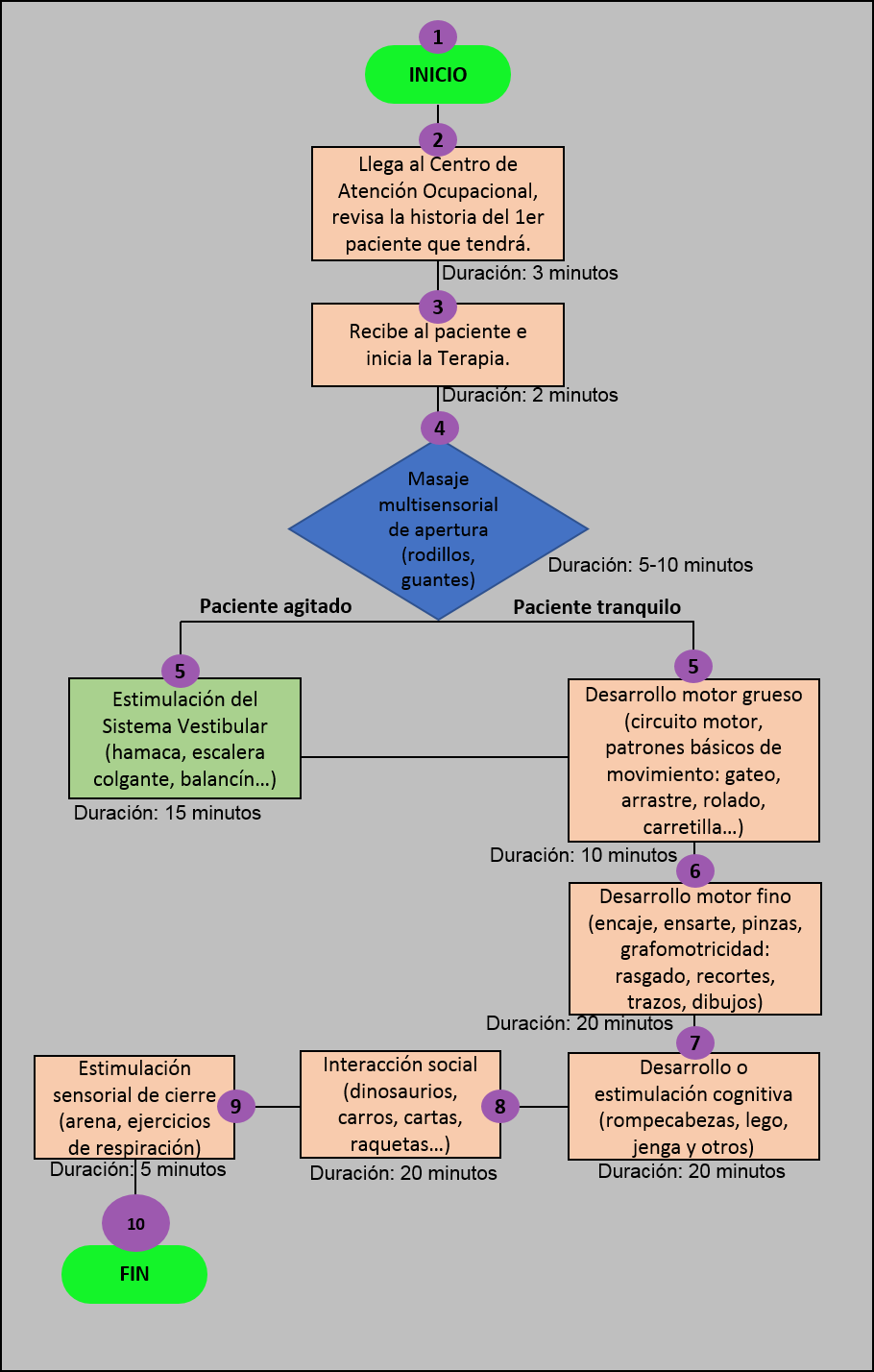
Source: Research database. Observation guide and individual questionnaire from Escalona et al.(11)
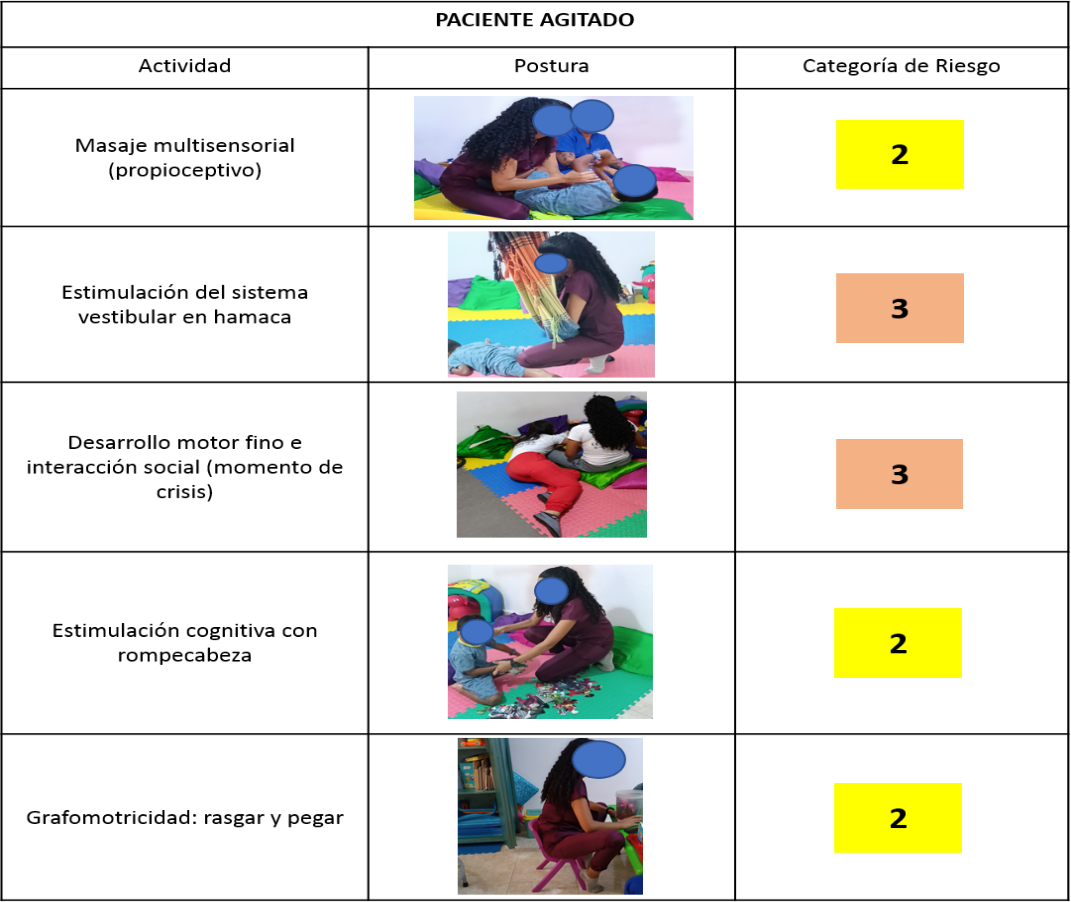
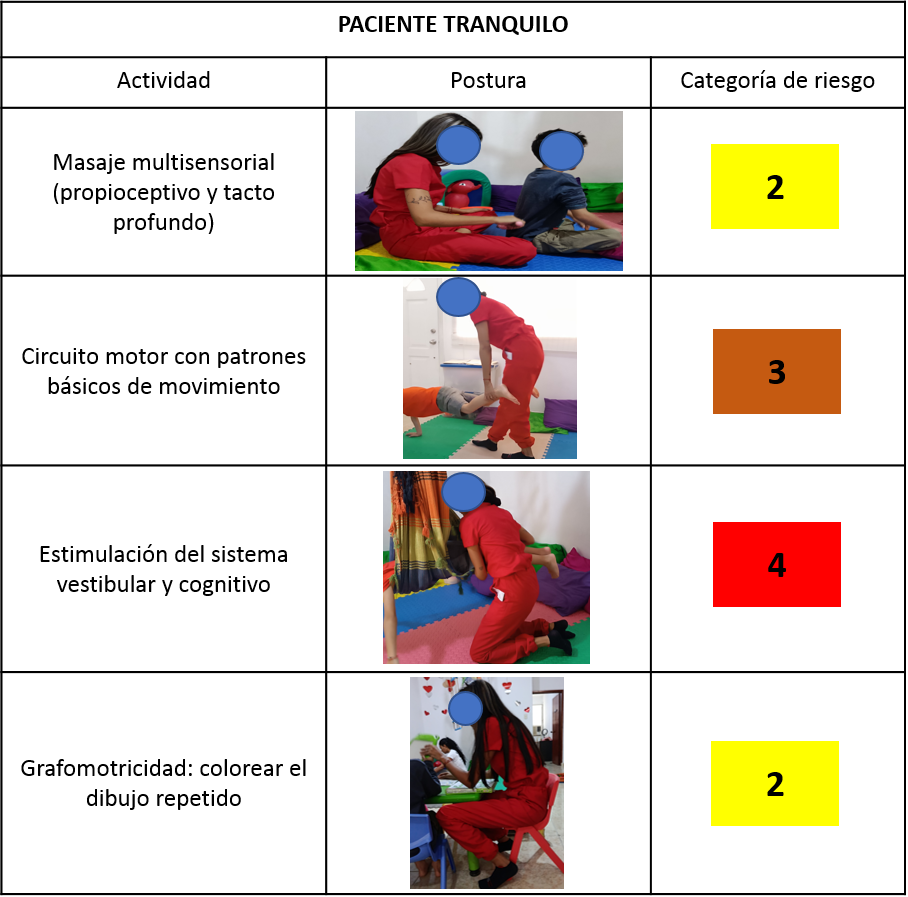
To gain a deeper understanding of the work process of occupational therapists, it is helpful to describe the systematic observations made during the application of instruments and the development of the research. To achieve this, it is necessary to describe two different scenarios presented in the occupational care center: agitated patients who have been unable to regulate their behavior and calm, regulated patients.
About the application of the OWAS method, the risk categories according to the codes of each posture for the cases of agitated patients and calm or regulated patients will be represented in figure 3; in figure 3, risk categories 2 and 3 are observed, which means that corrective actions should be carried out through the modification of said postures to avoid MSDs.
Source: Research database. Application of the OWAS method
On the other hand, figure 4 shows risk categories 2, 3 and 4 in the postures adopted when performing work activities corresponding to the care of a child with regulated behavior, which means that corrective actions should be taken immediately to avoid MSDs.
Source: Research database. Application of OWAS method
Table 3 presents the risk categories for each body segment based on the frequency of postures adopted within a 100-minute recording of the work process. In the Back body segment, risk category three is observed in back postures with a rotated back (28,5 %) and in inclined and rotated back postures (20 %); risk category two is also observed in inclined back postures (40 %). Likewise, in the Legs body segment, risk category three is evident in the posture of standing with bent knees (30,5 %) and in the posture of standing with unbalanced weight (31 %); in addition, risk category two was obtained in the kneeling posture (20,5 %); therefore, corrective measures should be taken to avoid MSDs, especially in these areas of the body.
Table 3. Risk category according to the frequency of postures, for each segment in the occupational therapists of the Occupational Care Center OCUPAMOR. Aragua, Venezuela 2025 (n=4)
Body Segment | F | % | Risk |
|---|---|---|---|
Back | Back | Back | Back |
Straight | 23 | 11,5 | 1 |
Inclined | 80 | 40 | 2 |
Rotated | 57 | 28,5 | 3 |
Inclined and rotated | 40 | 20 | 3 |
Total postures (100 minutes) | 200 | 100 | [empty cell] |
Arms | Arms | Arms | Arms |
Both below shoulder level | 174 | 87 | 1 |
One above shoulder level | 26 | 13 | 1 |
Both above shoulder level | 0 | 0 | - |
Total postures (100 minutes) | 200 | 100 | [empty cell] |
Legs | Legs | Legs | Legs |
Sitting | 19 | 9,5 | 1 |
Standing with both legs straight | 10 | 5 | 1 |
Standing, weight on one straight leg | 0 | 0 | - |
Standing with knees bent | 61 | 30,5 | 3 |
Standing with unbalanced weight | 62 | 31 | 3 |
Kneeling | 41 | 20,5 | 2 |
Walking | 7 | 3,5 | 1 |
Total postures (100 minutes) | 200 | 100 | [empty cell] |
Source: Research database. Application of the OWAS method
By NTP 295 of the INSST of Spain, the physical load of occupational therapists is evaluated by monitoring their heart rate during sessions with each patient. This analysis aims to determine whether the cardiac demand is significant, considering the physical demands associated with the work postures, whether dynamic or static.
Table 4 shows the results obtained when applying NTP 295. In the case of caring for an agitated patient, the following results were obtained: according to Frimat criteria, the physical demand is minimal, while the cardiac demand is bearable, and according to Chamoux criteria, the result is a slight increase in heart rate. On the other hand, the rest of the therapists working with regulated or calm patients obtained normal values for the three criteria. It is essential to point out that during the therapy sessions, on three occasions, the therapists started with a slightly elevated resting frequency. As the therapy progressed, the values decreased.
Table 4. Assessment of the physical load or demand through heart rate monitoring in occupational therapists of the Occupational Care Center OCUPAMOR. Aragua, Venezuela 2025 (n=4)
Worker | Activity | Frimat Criteria | Cardiac Demand | Chamoux Criteria |
|---|---|---|---|---|
1 | Agitated patient | 5 | Supportable | Slight |
2 | Calm patient | 3 | Acceptable | Very light |
3 | Quiet patient | 3 | Acceptable | Very light |
4 | Quiet patient | 3 | Acceptable | Very light |
Source: Research database. Application of NTP 295
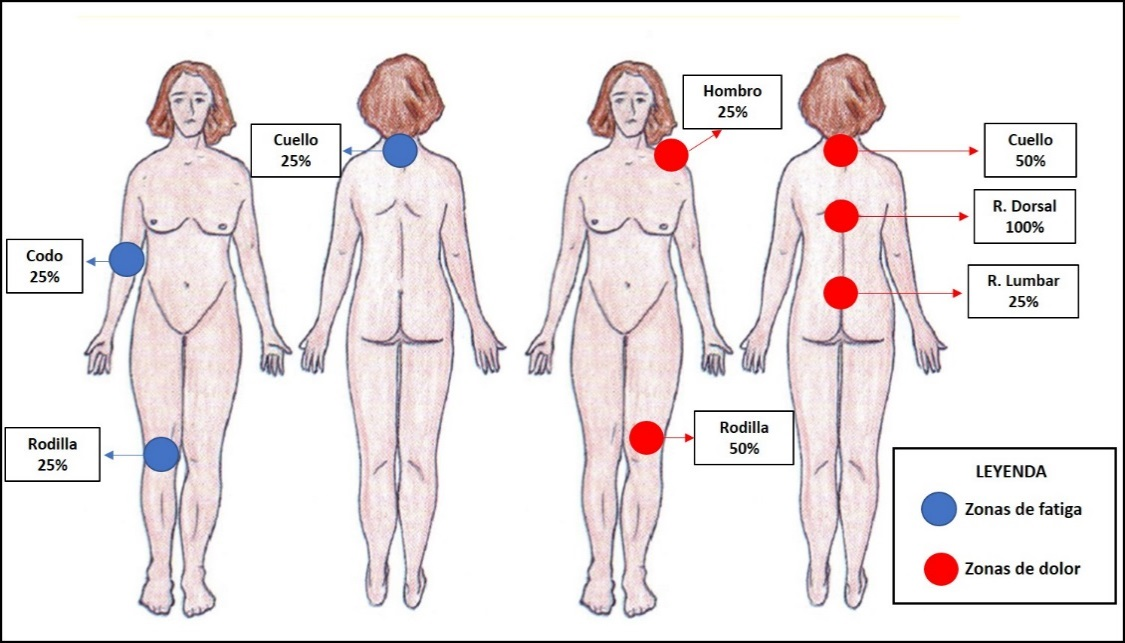
On the other hand, according to the results obtained after applying the body schema, shown in figure 5, 100 % of the therapists reported experiencing fatigue or pain in at least one area of the body at the end of the working day. The body areas with the highest frequency of fatigue and pain reported by the occupational therapists are the dorsal region of the spine (100 %), knee joint (75 %), and neck (75 %), and pain is predominant in the following areas: dorsal region of the spine (100 %), knee (50 %) and cervical region (50 %), and a lower percentage of workers reported pain in the shoulders and lumbar region (25 %). Fatigue in the neck, elbows, and knees was also reported, with a frequency of 25 % in each case.
Source: Research database. Application of the Body Schema (11)
DISCUSSION
100 % of occupational therapists are women, coinciding with the findings of Santos (7), who states that this sex is predominant in the occupational therapy profession, which leads to an increased risk of developing MSDs in women. The population is young adults with an age range of 25 to 31 years and 28,5 years of age on average, in the same way as the ages found by Morales et al.(5). describes that the existence of MSDs seems to increase with the years of work, and also expresses that there is a crossover of variables between the age of the workers and their work seniority, making it difficult to determine whether the risk is due to age, seniority, or both.(15)
The occupational therapists of the OCUPAMOR Occupational Care Center work an average of 6,5 hours during their working day, which is very similar to that reported by Muguruza et al.(16) since, in their research, 92,1 % of the sample worked a range of 6 to 8 hours. On the other hand, 25 % of the occupational therapists are overweight, which, associated with the forced postures they adopt during the working day, leads to body overload, especially at the knee and lumbosacral spine level.(17)
When applying the OWAS method to the postures accumulated during 100 minutes of recording, risk categories 2 and 3 were obtained in the body segments "back and legs," so it is possible to determine that the postures of the back (inclined, rotated, and inclined/rotated) and legs (standing with bent knees, unbalanced weight, and kneeling) may cause a greater postural load for the workers. In the study by Javier et al.(18) a category three risk level of 32,2 % was determined, mainly in the back (bending) and legs (standing with bent knees).
On the other hand, the results obtained through the application of the body schema subjectively support the findings obtained through the OWAS method. This is because the pain and fatigue referred to in the knees, as well as in the dorsal and lumbar regions of the spine, are directly related to risk categories 2 and 3 identified by OWAS in these same body segments. These results indicate increased postural loading in these areas of the body.
CONCLUSION
It is concluded that the occupational therapists of the Occupational Care Center OCUPAMOR are exposed to dysergonomic conditions in their workplace with risk categories 2, 3, and 4 with specific analysis of postures using OWAS and risk categories 2 and 3 in the global study of accumulated postures with the same method, directly related to forced postures, These postures are directly related to the forced postures that workers must adopt when performing activities related to the care of children during occupational therapy sessions, which most of the time are constant and static, being necessary to take corrective actions as soon as possible to reduce the risk of presenting musculoskeletal pathologies. Prolonged exposure to these conditions could be affecting the therapists' health as they often present with pain or fatigue at the end of their working day in at least one area of the body.
References
- 1 Organización Internacional del Trabajo. Entornos seguros y saludables [Internet]. Ginebra: Organización Internacional del Trabajo; 2020. https://www.ilo.org/sites/default/files/wcmsp5/groups/public/@ed_dialogue/@act_emp/documents/publication/wcms_764111.pdf
- 2 Comisión Venezolana de Normas Industriales. Principios ergonómicos de la concepción de los sistemas de trabajo. Norma COVENIN 2273-91. Venezuela; 1991.
- 3 Ley Orgánica de Prevención, Condiciones y Medio Ambiente de Trabajo. Gaceta Oficial N.º 38.236 (Extraordinario). Caracas; 2005 jul 26.
- 4 Candela D. Relación entre riesgos ocupacionales ergonómicos y el confort musculoesquelético en los fisioterapeutas del Instituto Nacional de Rehabilitación “Adriana Rebaza Flores” Amistad Perú-Japón [Internet]. 2022. https://cybertesis.unmsm.edu.pe/backend/api/core/bitstreams/325303fa-bd0c-40f5-8c7b-c4c894a36001/content
- 5 Morales X, Bonilla E, Roldan M. Evaluación del riesgo ergonómico por posturas forzadas en fisioterapeutas del Hospital de Especialidades Carlos Andrade Marín. Revista Médica Cambios. 2021;20(1):67-73.
- 6 Instituto Nacional de Seguridad y Salud en el Trabajo. Posturas de trabajo: factores que las determinan. Riesgos derivados de las posturas de trabajo y su prevención. Criterios para la evaluación de las posturas de trabajo. Métodos de evaluación de las posturas de trabajo basados en la observación. El método OWAS y el método REBA e ISO 11226. Tema 7. España: Instituto Nacional de Seguridad y Salud en el Trabajo; 2024.
- 7 Santos K. Efectos de las posturas forzadas en el aparecimiento de trastornos músculo-esqueléticos en terapistas ocupacionales de tres centros de rehabilitación privados [tesis de maestría]. Ecuador: Universidad Andina Simón Bolívar; 2020.
- 8 Chavarría R. La carga física de trabajo: definición y evaluación. Nota Técnica de Prevención 177. España: Instituto Nacional de Seguridad y Salud en el Trabajo; 1986.
- 9 Terán N. Nivel de riesgo asociado a carga postural y síntomas musculo-tendinosos en trabajadores de dos centros gerontológicos, Ibarra y Atuntaqui [tesis de maestría]. Ecuador: Universidad Técnica del Norte; 2024.
- 10 Cabezas H, Torres M. Prevalencia de trastornos musculoesqueléticos relacionados con el trabajo en profesionales de los servicios de rehabilitación y unidades de fisioterapia. Fisioterapia. 2018;40(3):112-121.
- 11 Escalona E, Young M, González, Chatigny C, Seifert A. La ergonomía como herramienta para trabajadoras y trabajadores. Valencia (Venezuela): Universidad de Carabobo; 2002.
- 12 Santiago A, Valenzuela I. Ergonomía de miembro superior. México: Universidad Nacional Autónoma de México; 2005.
- 13 Solé M. Valoración de la carga física mediante la monitorización de la frecuencia cardíaca. Nota Técnica de Prevención 295. España; 2019. https://www.insst.es/documentacion/colecciones-tecnicas/ntp-notas-tecnicas-de-prevencion/8-serie-ntp-numeros-261-a-295-ano-1992/ntp-295-valoracion-de-la-carga-fisica-mediante-la-monitorizacion-de-la-frecuencia-cardiaca
- 14 Diego-Mas J. Evaluación postural mediante el método OWAS. Ergonautas. Universidad Politécnica de Valencia; 2015, 2025. https://www.ergonautas.upv.es/metodos/owas/owas-ayuda.php
- 15 Padilla D, Trigueros R, Aguilar J, López R. Investigación en salud y desarrollo. España: Editorial Universidad de Almería; 2020.
- 16 Muguruza L, Oropeza L, Vidal L, Camacho T. Dolor musculoesquelético en fisioterapeutas pediátricos. Revista Herediana de Rehabilitación. 2020;3(1):3-12. https://doi.org/10.20453/rhr.v3i1.3715
- 17 Viguria A, Tapia M, Rojas T, Mena S. Los problemas y síntomas del sobrepeso y padecimientos musculoesqueléticos a lo largo de la vida. Revista Et Vita. 2022;15(1). http://161.132.207.136/ojs/index.php/etvita/article/view/650
- 18 Javier L, Escalante Y, Canté X, Kent M. Prevalencia de lesiones musculoesqueléticas en estudiantes de fisioterapia. Revista Transdisciplinaria de Estudios Sociales y Tecnológicos. 2023;3(1):80-87. https://doi.org/10.58594/rtest.v3i1.67
Declarations
Funding
None.
Conflict of interest
Authors declare that there is no conflict of interest. AUTHORSHIP CONTRIBUTION Conceptualization: Marynes Quiroz Márquez, Evelin Escalona, Misael Ron. Data curation: Marynes Quiroz Márquez, Evelin Escalona, Misael Ron. Formal analysis: Marynes Quiroz Márquez, Evelin Escalona, Misael Ron. Drafting - original draft: Marynes Quiroz Márquez, Evelin Escalona, Misael Ron. Writing - proofreading and editing: Marynes Quiroz Márquez, Evelin Escalona, Misael Ron.
Authorship contributions
Drafting – original draft: Marynes Quiroz Márquez, Evelin Escalona, Misael Ron.
Writing–review and editing: Marynes Quiroz Márquez, Evelin Escalona, Misael Ron.