
Abstract
Staying healthy in today's world can be a considerable challenge due to the difficulty of accessing personalized meal plans, the lack of tools for habit tracking, and the limited availability of information about the foods we consume. Although technology has advanced significantly, there is no platform that combines nutritional plans comparable to those designed by a professional nutritionist with detailed information about consumed foods and tools that facilitate evaluating the user's progress. For this reason, a mobile application was developed to provide meal plans generated by artificial intelligence, based on the Dietary Guidelines for the Argentine Population. This application adapts to each user's dietary preferences, personal data, and objectives, featuring functionalities such as food scanning and a section where users can track their progress.This project was developed thanks to the knowledge acquired during the Software Engineering program, encompassing stages such as identifying and analyzing the problem and designing a proposal that incorporates transformative technologies like artificial intelligence and augmented reality, reflecting the integration of technical and analytical skills from the conception of the idea to the implementation of the system.
Keywords
dietary planning, artificial intelligence, augmented reality, healthy habits, mobile application
INTRODUCTION
It is common that the organization and planning of meals does not receive the necessary attention. However, the Honorary Commission for Cardiovascular Health (1) stated that "certain eating habits and some components of the food and products we consume increase the risk of developing diseases such as diabetes, hypertension, cardiovascular diseases, cancer, excess weight, high cholesterol, among others". In view of this, a dietary plan takes on special relevance, as it is fundamental for health care. However, not everyone has access to one, and making a long-term commitment to a plan can be complicated, leading to a loss of consistency. In addition, most of the time, people did not have enough information about what they consume.
Due to this problem, the need arose to develop a food organization application, designed to follow the guidelines of the Dietary Guidelines for the Argentine Population. This application allows users to record data such as age, measurements and goals, and receive appropriate meal plans. In addition, it has the functionality to scan food to receive nutritional information and record daily consumption, to later evaluate their progress, encouraging the commitment to maintain good habits.
The present study was developed in the Province of Córdoba, Argentina, and its objective was to facilitate the care of the eating habits of people in the region.
Background
According to figures from the World Health Organization (WHO), between 1975 and 2016 the global prevalence of obesity has almost tripled, affecting adults as well as children and adolescents.(2) In response to this issue, technology has begun to play a crucial role in promoting a healthier and more balanced lifestyle.
Currently, various applications combine technology and health to simplify people's lives. An example of this is El CoCo, an application that allows you to scan supermarket products, providing detailed information for more conscious and healthier shopping. Similarly, MyFitnessPal (3) focuses on health and fitness tracking, offering a calorie counter and physical activity log for its users.
Another notable app is Fitia, which provides personalized meal plans based on the user's needs and goals, such as weight loss, maintenance or muscle mass gain. Fitia calculates the calories needed and suggests food combinations, making it easy for users to track their diet and nutritional goals.
These apps demonstrate how technology can be a valuable tool for addressing nutrition-related health issues, making information more accessible and improving adherence to a personalized eating plan. However, the need remains for more integrated solutions that combine different technologies to provide an even more complete experience.
How can a mobile application, based on artificial intelligence and augmented reality, contribute to improve food organization and promote healthy eating habits in the population of Cordoba, Argentina?
Objective
To develop a mobile application that provides healthy eating plans using trained Artificial Intelligence, based on user data such as measurements, goals and personal preferences, with the functionality of scanning food using Augmented Reality to promote conscious eating and the possibility of observing a weekly progress after performing daily follow-ups where the user can mark their compliance.
METHODS
The development of the project is carried out under the agile methodology Scrum to facilitate its organization with Sprint of 2 weeks, and the Trello Software. According to Redacción APD (2024) "In this work method what is intended is to achieve the best result of a given project."
Tools Used
The development of the mobile application was carried out using SwiftUI as the main framework, allowing the construction of modern and adaptive user interfaces in a declarative way, which simplifies the development process and improves the user experience.(4) For the organization of the application logic, the MVVM (Model-View-ViewModel) architecture was used, which facilitates the separation between the user interface and the business logic, ensuring a more modular and maintainable code.(5)
On the backend, Node.js, a JavaScript platform that provides an efficient environment for building servers, was used. Thanks to its ability to handle multiple requests simultaneously, a seamless integration with artificial intelligence and augmented reality services, essential aspects of the project, was achieved.(6) In addition, the MongoDB database was chosen for its NoSQL nature, allowing large volumes of data to be stored in a JSON-like document format. This facilitates the management of user data, food plans and consumption records, offering a flexible and scalable structure.(7)
The use of SwiftUI together with the MVVM architecture allowed the interface to be automatically updated with data managed from the backend, providing a seamless and efficient user experience. Communication between the mobile application and the server developed in Node.js ensured constant data updates, while MongoDB took care of storing all the necessary information in a fast and accessible way.
Data Collection
Data collection for this project is carried out using two techniques:
Observation: observations were conducted with family, friends and acquaintances to identify how they manage their eating habits, the difficulties they face, and how they interact with technological tools for diet planning.
Documentation review: the Dietary Guidelines for the Argentine Population were analyzed in order to support the characteristics of the application and ensure that the recommendations are aligned with official nutritional standards.
Activity Planning
The following is a Gantt chart, which shows how the project time was organized and distributed.
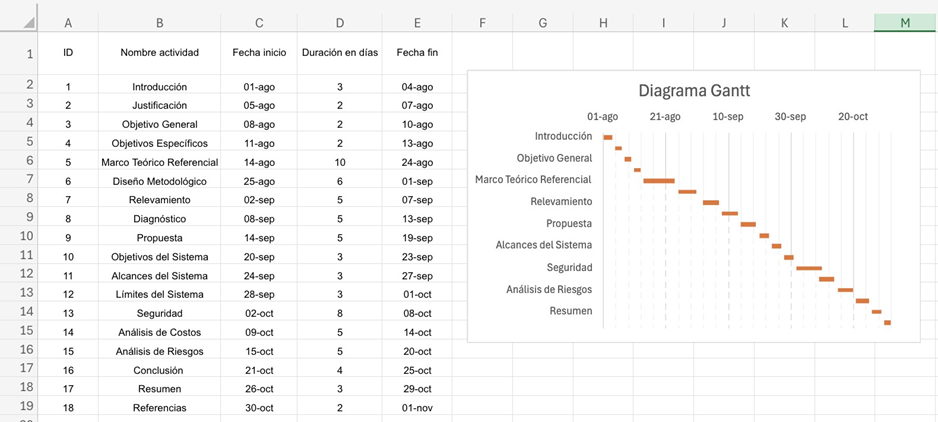
Survey
Structural Survey
Since this is a project aimed at people seeking to improve their eating habits, there is no specific geographical location for it, since it depends on the place where the main actors interact: patients and nutritionists. These actors are usually found in environments such as private or clinical offices or virtual environments. It was found that, in addition to face-to-face communication between patient and nutritionist, tools such as video-call platforms, instant messaging to solve doubts or e-mails to share meal plans or recipes are also used.
Functional Survey
After analyzing the data collected through observation, it is concluded that currently no formal structure is used for the functional processes related to the improvement of eating habits. Therefore, this survey is based on people who face difficulties in improving their diet and the agents that surround them, such as:
Nutritionists: professionals who provide personalized dietary plans and monitor patients' progress usually in monthly consultations.
Patients: Individuals who seek nutritional guidance, but often face barriers to maintaining consistency in the recommended plans.
The processes surveyed are detailed below:
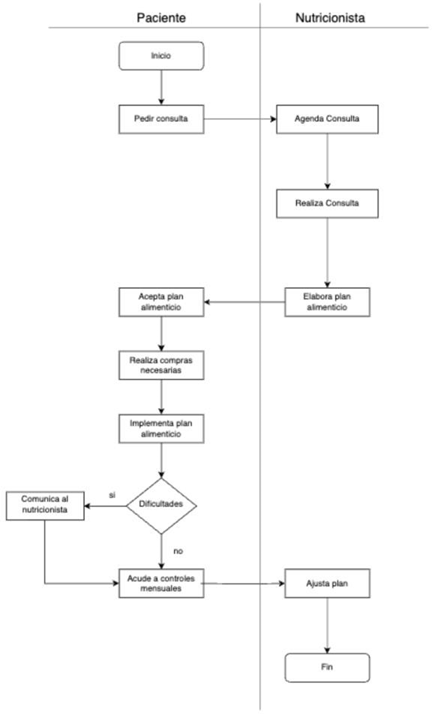
Process: Visit to the Nutritionist
Roles Involved: Nutritionist, Patient. Steps:
Search and appointment scheduling: the patient searches for a nutritionist and schedules a consultation (face-to-face or remote).
Initial consultation: the nutritionist conducts an interview to collect data such as weight, height, mass index and body measurements.
Design of the dietary plan: the nutritionist prepares a personalized plan considering the caloric needs, food preferences and goals of the patient.
Follow-up: the patient implements the plan and attends periodic consultations (usually monthly) to evaluate progress.
The nutritionist adjusts the plan according to the results and difficulties reported.
Process: Implementation of the Meal Plan
Roles Involved: Patient, Nutritionist (indirectly). Steps:
Review of the dietary plan: patient studies the indications provided by the nutritionist.
The patient makes the necessary food purchases.
Communication of difficulties: If the patient encounters barriers to following the plan, he/she communicates these difficulties to the nutritionist in the follow-up consultation.
Business Process
The following shows how the processes will be carried out in the system.
RESULTS AND DISCUSSION
Diagnosis
Visit to the nutritionist | Visit to the nutritionist |
|---|---|
Problems | Causes |
1. Searching for and scheduling the consultation can be a slow process, which discourages patients. | 1. The lack of centralized information about nutritionists makes efficient selection and scheduling difficult. |
2. The design of the meal plan may not fully reflect the patient’s needs. | 2. Consultation time may be limited, leading to incomplete collection of information about the patient’s habits and preferences. |
3. Follow-up consultations are often missed or delayed. | 3. Lack of automated reminders and monitoring tools for patients. |
Implementation of the Meal Plan | Implementation of the Meal Plan |
|---|---|
Problems | Causes |
1. The patient may face difficulties implementing the meal plan due to logistical barriers or lack of motivation. | 1. Lack of practical tools such as automated shopping lists or specific suggestions. |
2. The patient’s difficulties are not always communicated to the nutritionist in real time. | 2. Communication channels are neither standardized nor optimized to solve problems quickly. |
Proposal
A comprehensive mobile application for planning and monitoring eating habits was developed that addressed the problems identified, with the aim of providing users with personalized food plans, facilitating access to clear nutritional information through real-time food scanning with augmented reality, and ensuring continuous monitoring of their eating habits.
Key features of the system included:
Automation of personalized meal plans: an artificial intelligence-based algorithm was implemented that generated meal plans adapted to the personal data and objectives of each user. These plans were dynamically adjusted according to the progress recorded by the user.
Food scanning with AR: the application integrated augmented reality technology, allowing users to scan food products and receive detailed nutritional information in real time. This information was presented in an understandable way, with clear recommendations on consumption.
Continuous monitoring of eating habits: the application incorporated a system for recording food consumed, to encourage consistency in following the plan.
This digital solution solved the problems of accessibility, personalization and consistency in eating habits, providing an intuitive, practical and technologically advanced tool to promote healthy and sustainable eating over time.
Objectives, Limits and Scope of the Prototype
Objective
To develop a prototype system that allows planning, tracking and personalizing healthy eating habits, through the integration of artificial intelligence and augmented reality, providing personalized food plans and facilitating the scanning of food to obtain nutritional information in real time.
Limits
From the moment the user enters their personal data and sets their dietary goals, until a personalized meal plan is generated and progress is tracked through the recording of food consumed and product scanning.
Scopes
Within these limits, the prototype will cover the following business processes:
Personal data entry and dietary goals.
Generation of personalized food plans.
Food scanning with augmented reality to obtain nutritional information.
Daily record of food consumed.
Dynamic adjustment of the meal plan based on the user's progress.
System Description
The following is the description of the system developed for the planning and monitoring of eating habits through a mobile application. The Product Backlog is presented, which contains the user stories necessary for the development of the system, each one of them with its priority and effort estimation (Story Points).
Product Backlog
Table 3. Product Backlog
ID | User Story (US) | Priority | Story Points | Dependency |
|---|---|---|---|---|
HU-001 | User registration in the application. | High | 13 | - |
HU-002 | User login. | High | 3 | HU-001 |
HU-003 | User password recovery. | Medium | 8 | HU-001, HU-002 |
HU-004 | Display of user information. | Low | 3 | HU-002 |
HU-005 | Editing user information. | Low | 3 | HU-004 |
HU-006 | Generation of personalized meal plans. | High | 13 | HU-002 |
HU-007 | Food scanning with augmented reality. | High | 21 | HU-002, HU-006 |
HU-008 | Daily record of consumed foods. | Medium | 8 | HU-002, HU-006 |
HU-009 | Daily consumption progress charts. | Medium | 5 | HU-008 |
HU-010 | Reminder notifications to record consumption. | Low | 3 | HU-008 |
HU-011 | Weekly meal-plan progress reports. | Low | 5 | HU-009 |
HU-012 | Configuration of personalized notifications. | Low | 3 | HU-010 |
HU-013 | Security and encryption of sensitive data. | High | 8 | HU-001, HU-002 |
HU-014 | Cloud data synchronization. | Medium | 13 | HU-001, HU-002, HU-013 |
HU-015 | Onboarding and tutorial for new users. | Medium | 5 | HU-001 |
User Stories
Table 4. User Story 1
ID | HU-001 |
|---|---|
Name | User registration in the application |
Description | As a user, I want to register in the application so that I can access my personalized meal plans. |
Acceptance criteria | • Given an email address that is already registered, when the user enters it, the system will display an error message. • Given an alphanumeric password shorter than 6 characters, when it is entered, the system will warn the user about the restriction. • Given an incomplete field when the user attempts to register, the system will indicate that all fields are required. • Given an email address from an account that has been deleted, when the user attempts to register, the system will ask whether the user wants to restore the account data. |
Priority | High |
Estimated story points | 13 |
Table 5. User Story 2
ID | HU-002 |
|---|---|
Name | User login |
Description | As a registered user, I want to log in to the application to access my account and view my meal plans. |
Acceptance criteria | • Given that I am a registered user, when I enter my access credentials (email and password) correctly, I should be able to access my account and view my personal information. • Given that I enter an incorrect password, when I try to access my account, the system will display an error message indicating that the credentials are invalid. • Given that I forgot my password, when I select the recovery option, I should receive an email to reset it. |
Priority | High |
Estimated story points | 3 |
Table 6. User Story 3
ID | HU-003 |
|---|---|
Name | Password recovery |
Description | As a user, I want to recover my password if I have forgotten it so that I can access the application again. |
Acceptance criteria | • Given that I am a registered user, when I select “Forgot my password”, I should receive an email to reset my password. • Given that I enter an email address that is not registered, when I try to recover my password, the system will display a message indicating that the account does not exist. • Given that I follow the link in the email, when I reset my password, I should be able to log in with the new password. |
Priority | Medium |
Estimated story points | 8 |
Table 7. User Story 4
ID | HU-004 |
|---|---|
Name | Display of user information |
Description | As a user, I want to view my personal information to verify that my data are correct and up to date. |
Acceptance criteria | • Given that I am logged in to the application, when I select “My Profile”, I should be able to view my personal data and current meal plans. • Given that my data were recently updated, when I access “My Profile”, I should be able to view the updated information. |
Priority | Low |
Estimated story points | 3 |
Table 8. User Story 5
ID | HU-005 |
|---|---|
Name | Editing user information |
Description | As a user, I want to edit my personal information to keep my data up to date. |
Acceptance criteria | • Given that I am viewing my profile, when I select the option to edit my information, I should be able to modify my personal data and save the changes. • Given that I modified a field in my personal information, when I save the changes, I should receive confirmation that the data were updated correctly. |
Priority | Low |
Estimated story points | 3 |
Table 9. User Story 6
ID | HU-006 |
|---|---|
Name | Creation of a personalized meal plan |
Description | As a user, I want to create a personalized meal plan based on my personal data so that I can follow a diet suited to my needs. |
Acceptance criteria | • Given that I am logged in and have registered my personal data, when I select “Create Meal Plan”, I should receive a personalized meal plan based on my profile. • Given that I updated my personal data, when I request a new plan, the system should generate an updated meal plan according to the new information. |
Priority | High |
Estimated story points | 13 |
Table 10. User Story 7
ID | HU-007 |
|---|---|
Name | Food scanning |
Description | As a user, I want to scan a food item using my device’s camera to obtain detailed nutritional information about the product. |
Acceptance criteria | • Given that I am in the scanning view, when I scan a food item with the camera, I should receive complete nutritional information about the scanned product. • Given a product with an unrecognized barcode, when I try to scan it, the system should display a “Product not found” message. |
Priority | High |
Estimated story points | 21 |
Table 11. User Story 8
ID | HU-008 |
|---|---|
Name | Tracking dietary progress |
Description | As a user, I want to record my daily intake to track my dietary progress and stay aligned with my plan. |
Acceptance criteria | • Given that I am following a meal plan, when I enter the foods I consume each day, I should be able to view my progress based on the established goals. • Given that I recorded my foods incompletely, when I try to save my progress, the system should display a message asking me to complete the information. |
Priority | Medium |
Estimated story points | 8 |
Table 12. User Story 9
ID | HU-009 |
|---|---|
Name | Generation of dietary-habits report |
Description | As a user, I want to generate a report of my eating habits to view my progress and make adjustments if necessary. |
Acceptance criteria | • Given that I recorded my daily intake, when I select the option to generate a report, I should receive a detailed report of my consumption compared with my meal plan. • Given that I have not recorded sufficient intake, when I try to generate a report, the system should indicate that the recorded information is insufficient for a detailed analysis. |
Priority | Medium |
Estimated story points | 5 |
Table 13. User Story 10
ID | HU-010 |
|---|---|
Name | Daily reminder notifications to record consumption |
Description | As a user, I want to receive daily notifications to record my consumption so that I do not forget to keep a consistent record of my eating habits. |
Acceptance criteria | • Given that I configured notifications in the application, when the notification time arrives, I will receive an alert to record the day’s consumption. • Given that I disabled notifications, when a meal time arrives, I should not receive any reminder notification. |
Priority | Low |
Estimated story points | 3 |
Table 14. User Story 11
ID | HU-011 |
|---|---|
Name | Weekly meal-plan progress reports |
Description | As a user, I want to receive weekly reports on my progress with the meal plan so that I know whether I am meeting my nutritional goals. |
Acceptance criteria | • Given that I recorded my foods daily, when the week ends, I will receive a visual report of my progress comparing what I consumed with the meal plan. • Given that I did not record my consumption completely, when I try to view the report, the system should display a message indicating that the information is insufficient for a detailed analysis. |
Priority | Low |
Estimated story points | 5 |
Table 15. User Story 12
ID | HU-012 |
|---|---|
Name | Configuration of personalized notifications |
Description | As a user, I want to personalize notifications so that they fit my needs and schedule, helping me follow my meal plan flexibly. |
Acceptance criteria | • Given that I am on the notification settings screen, when I customize my notification preferences, I will receive reminders adjusted to the schedules and frequencies I defined. • Given that I did not configure personalized preferences, when the application sends notifications, the system’s default schedules will be used. |
Priority | Low |
Estimated story points | 3 |
Table 16. User Story 13
ID | HU-013 |
|---|---|
Name | Security and encryption of sensitive data |
Description | As a user, I want my sensitive data, such as personal and health information, to be encrypted to guarantee privacy and security. |
Acceptance criteria | • Given that I entered my personal data in the application, when the data are sent to the server or stored locally, they will be encrypted using appropriate security standards. • Given that the data are encrypted, when a third party attempts to access them without authorization, the system will prevent access and protect the integrity of the information. |
Priority | High |
Estimated story points | 8 |
Table 17. User Story 14
ID | HU-014 |
|---|---|
Name | Cloud data synchronization |
Description | As a user, I want my data to synchronize automatically in the cloud so that I can access them from any device. |
Acceptance criteria | • Given that I enter or update my information in the application, when it synchronizes with the cloud, I will be able to access my updated data from any registered device. • Given that synchronization fails because of connection problems, when the application detects that Internet access is available again, it will automatically attempt to synchronize the data. |
Priority | Medium |
Estimated story points | 13 |
Table 18. User Story 15
ID | HU-015 |
|---|---|
Name | Onboarding and tutorial for new users |
Description | As a new user, I want an interactive tutorial that teaches me how to use the application so that I can understand its main functions from the beginning. |
Acceptance criteria | • Given that this is the first time I access the application, when I go through onboarding, I will be shown a tutorial explaining how to record foods, generate plans, and use other key app functions. • Given that I completed the tutorial, when I access the application again, the system will not show it again unless I request it from settings. |
Priority | Medium |
Estimated story points | 5 |
Sprint Backlog
Table 19. Sprint Backlog
Sprint | User Story | ID | Tasks | Priority | Estimate | Status |
|---|---|---|---|---|---|---|
1 | User registration in the application | HU-001 | • Design diagrams corresponding to user registration • Code the registration module • Design the graphical interface of the registration module • Implement and integrate the registration module into the system • Perform unit tests of the registration module | High | 3 days | Done |
1 | User login | HU-002 | • Design diagrams corresponding to user login • Code the user login module • Design the graphical interface of the login module • Implement and integrate the login module into the system | High | 3 days | Done |
1 | Password recovery | HU-003 | • Design diagrams corresponding to password recovery • Code the password-recovery module • Design the graphical interface of the password-recovery module • Implement and integrate the password-recovery module into the system • Perform unit tests of the password-recovery module | Medium | 3 days | Done |
1 | Display of user information | HU-004 | • Design diagrams corresponding to the display of user information • Code the information-display module • Design the graphical interface of the information-display module • Implement and integrate the display module into the system • Perform unit tests of the display module | Medium | 3 days | Done |
1 | Editing user information | HU-005 | • Design diagrams corresponding to editing user information • Code the information-editing module • Design the graphical interface of the information-editing module • Implement and integrate the editing module into the system • Perform unit tests of the editing module | Low | 2 days | Done |
2 | Creation of a personalized meal plan | HU-006 | • Design diagrams corresponding to the generation of personalized meal plans • Code the personalized meal-plan generation module • Design the graphical interface of the personalized plan module • Implement and integrate the plans module into the system • Perform unit tests of the personalized meal-plan generation module | High | 3 days | Done |
2 | Food scanning | HU-007 | • Design diagrams corresponding to food scanning with augmented reality • Code the food-scanning module with augmented reality • Design the graphical interface for food scanning • Implement and integrate the scanning module into the system • Perform unit tests of the food-scanning module | High | 3 days | Done |
2 | Tracking dietary progress | HU-008 | • Design diagrams corresponding to the daily food record • Code the daily consumed-food record module • Design the graphical interface of the daily food record • Implement and integrate the daily record module into the system • Perform unit tests of the daily food-record module | Medium | 3 days | Done |
2 | Generation of dietary-habits report | HU-009 | • Design diagrams corresponding to daily consumption progress charts • Code the daily-consumption progress chart module • Design the graphical interface of the progress charts • Implement and integrate the progress charts into the system • Perform unit tests of the progress charts | Medium | 3 days | Done |
2 | Daily reminder notifications to record consumption | HU-010 | • Design diagrams corresponding to daily reminder notifications • Code the daily reminder-notification module • Design the graphical interface of daily notifications • Implement and integrate daily notifications into the system • Perform unit tests of the daily notification module | Low | 2 days | Done |
3 | Weekly meal-plan progress reports | HU-011 | • Design diagrams corresponding to weekly progress reports • Code the weekly progress-report module • Design the graphical interface of weekly reports • Implement and integrate weekly reports into the system • Perform unit tests of the weekly report module | Low | 3 days | Done |
3 | Configuration of personalized notifications | HU-012 | • Design diagrams corresponding to personalized notification settings • Code the personalized notification-settings module • Design the graphical interface of notification settings • Implement and integrate personalized notification settings • Perform unit tests of the personalized notification module | Low | 3 days | Done |
3 | Security and encryption of sensitive data | HU-013 | • Design diagrams corresponding to data security and encryption • Code the sensitive-data encryption module • Implement the backend security and encryption system • Perform security and vulnerability tests on the data • Document the security and encryption system for users and developers | High | 3 days | Done |
3 | Cloud data synchronization | HU-014 | • Design diagrams corresponding to cloud data synchronization • Code the cloud data synchronization module • Implement synchronization functionality in the backend • Perform synchronization and cloud-data management tests • Document the synchronization implementation for use and maintenance | High | 3 days | Done |
3 | Onboarding and tutorial for new users | HU-015 | • Design diagrams corresponding to the onboarding process for new users • Code the onboarding and tutorial module for new users • Design the graphical interface of the onboarding and tutorial process • Implement and integrate onboarding into the system • Perform usability tests of onboarding and tutorial | Medium | 2 days | Done |
Data Structure
The following is the data structure of the system, which includes the diagrams necessary to represent the organization and management of the data used in the project. These are fundamental to understand how information is structured and stored, ensuring that design decisions are consistent with the needs of the project.
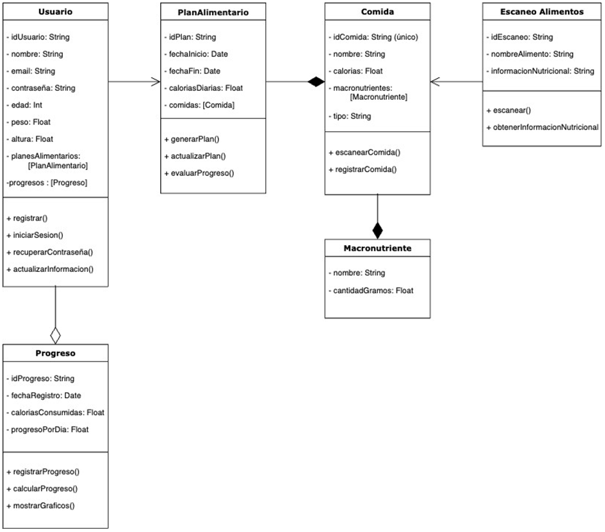
Class Diagram
Since the system was developed in Swift, an object-oriented programming language, a class diagram was used to show the characteristics of the objects and their relationships within the system. This diagram allows visualizing how the entities are structured and related in the context of the application development.
NoSQL Database Diagram
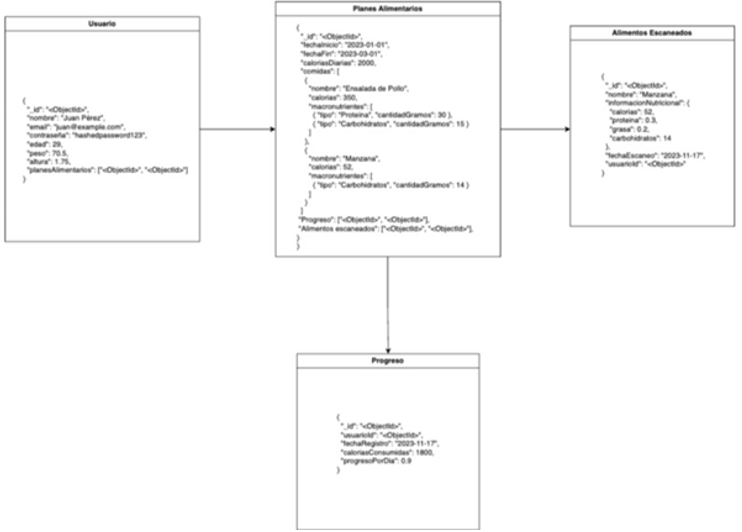
Since MongoDB was used as a NoSQL database management system, a NoSQL database diagram is included. This diagram represents the organization of data in collections and documents, reflecting the flexibility and scalability of this type of non-relational storage systems.
Screen interface prototypes
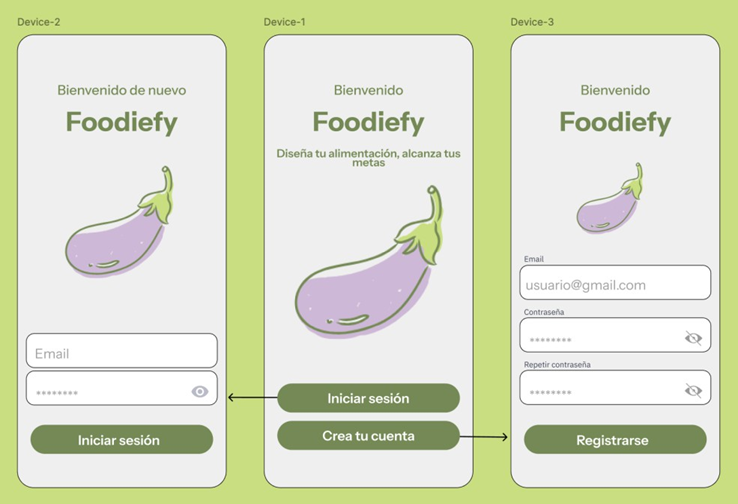
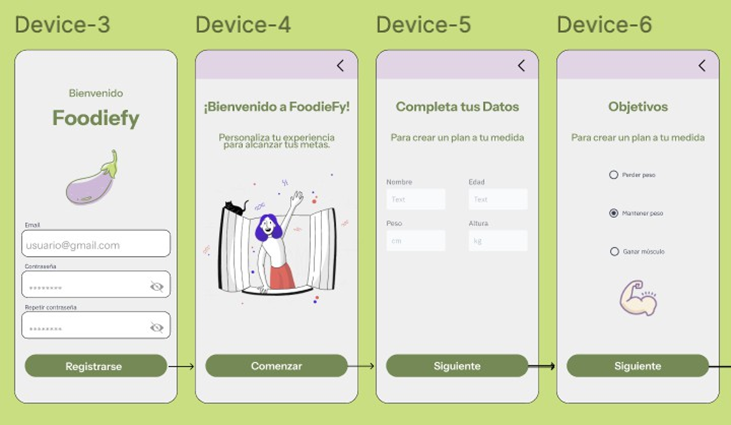
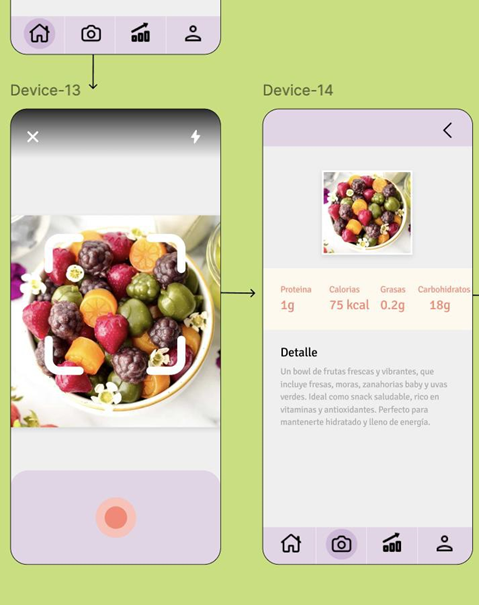
The prototype developed for the application shows a series of screens that guide the user through the main functions and navigation flow of the tool. The user experience begins with a welcome screen, where a choice is made between logging in or creating an account.
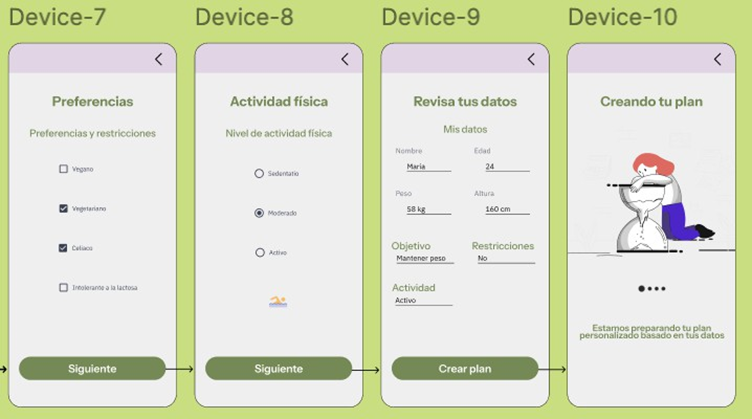
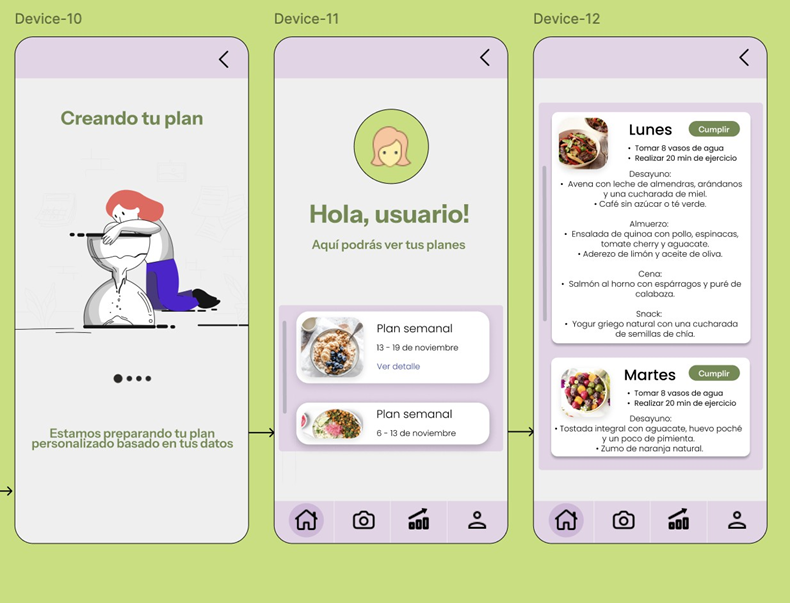
In the case of creating an account, the user goes through an onboarding where data entry is performed, requesting basic information such as age, gender, weight and dietary goals. These data are essential to customize the plans that the application will generate, adapting them to the needs of each individual. After these steps, the home screen is displayed with the generated plan.
In the case of logging in, the user is directed directly to the home screen. This displays their meal plan as well as a Tab Bar to navigate between the other screens to scan food, view profile and view progress.
The food scanning function is designed to allow users to obtain nutritional information from the products they consume. From the scanning screen, the device's camera is activated.
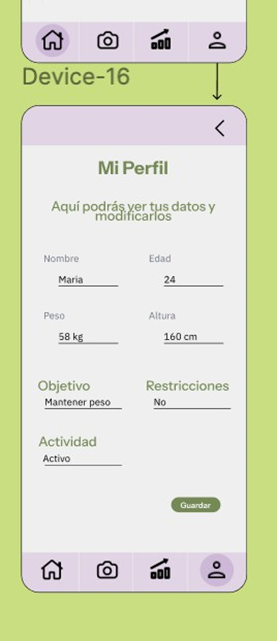
In the my profile section, the user can view and edit their data entered at onboarding.
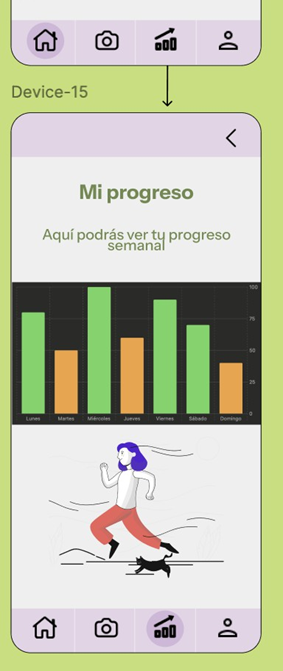
In the view progress session, the user can visualize their progress. Through clear and simple graphics, which helps the user to monitor his progress and make the necessary adjustments.
Architecture Diagram
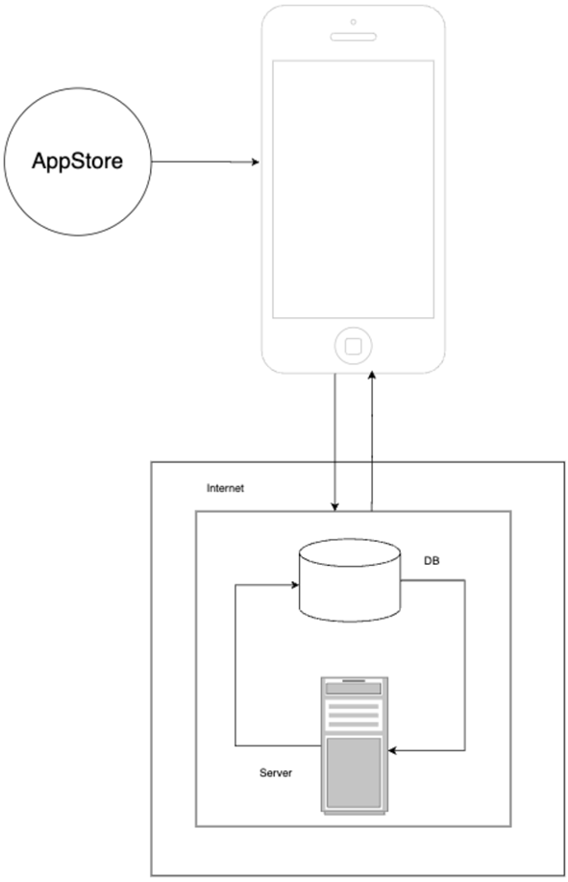
The architecture diagram shows the general operation of the mobile application for planning and monitoring eating habits. The application is downloaded from the AppStore to the users' mobile devices, allowing them to access its main functionalities, such as the registration of personal data and the creation of personalized food plans.
From the mobile device, users interact with the application to send requests for data or updates, such as querying nutritional information by scanning food. These requests are sent to a server, which acts as an intermediary between the application and the database. The server processes the requests and, if necessary, queries the database, which stores user information, meal plans, and consumption records.
Communication between the mobile device, the server and the database takes place over the Internet, ensuring that data remains synchronized and accessible to users from any location. Once the server processes the information or performs an update, it sends the response back to the mobile device, allowing the user to view the results in real time.
Security
Two fundamental aspects related to system security are detailed below: access control and information backup policy.
Access to the Application
The following table details the security policies implemented for access to the mobile food planning application. These policies aim to protect users' personal information and ensure secure access to the application.
Table 20. Table of application access policies
Policy | Description |
|---|---|
1. Unique users | Each user is uniquely identified through their email address, which must be verified when registering to prevent duplicate use in the database. |
2. Password requirements | Passwords must contain at least 8 characters, including one uppercase letter, one lowercase letter, one number, and one special character to ensure greater security. |
3. Two-factor authentication | An additional security measure. It requires users to enter a temporary code sent to their email address or registered phone number, in addition to their password, when logging in. |
4. Temporary lockout after failed attempts | After 5 failed login attempts, the account is temporarily locked for 15 minutes to protect access from unauthorized users. |
5. Password encryption | Passwords are stored securely using the bcrypt encryption function, which protects data in case of unauthorized access to the database. |
6. Password recovery | If the password is forgotten, users can request a password-recovery link to their registered email address to reset it securely. |
7. Access with basic authentication | Users can log in only using their email address and password, ensuring controlled and secure access. |
8. Protection of personal data | All personal information entered by the user, such as health data and meal plans, is stored in encrypted form to guarantee privacy. |
9. TLS protocol version | The system uses the latest stable version of the TLS (Transport Layer Security) protocol to guarantee security in data transfer between client and server. This protocol ensures encryption of information and protection against attacks such as interception of data. |
10. HTTPS protocol | Communications between the client and server are protected through HTTPS, which combines HTTP with TLS encryption. This ensures that sensitive data, such as user passwords and data, are transmitted securely, preventing access by unauthorized third parties. |
Information backup policy
The information backup policy for the food planning application was developed to protect and ensure the continued availability of user data. The information, including personal data, food plans and consumption records, was mainly stored in the cloud using MongoDB Atlas, which ensured fast and reliable access from anywhere.(8,9)
Data backups are performed daily at 03:00 a.m., a time when low user activity is expected, to minimize any potential service disruption. These backups are stored both in the cloud and in a local location on the server, which provides redundancy and facilitates data recovery in case of loss or damage.(10,11)
As for local storage, the backups are stored in a secure directory on the backend server configured with Node.js, protected using advanced encryption (AES- 256). This approach ensures that even if the local system is compromised, the data will be protected against unauthorized access. In addition, each backup copy has a 30-day retention, after which it is automatically deleted to optimize the use of storage space.
To ensure the integrity of the backups, automatic consistency checks are performed after each backup process. If errors are detected, the system generates immediate alerts to the technical team, who can take action to correct the problem and prevent any data loss.(12)
This robust approach guarantees data security and availability, ensuring that users can rely on the platform to manage their power supply without interruption or risk.
Cost Analysis
To represent the costs of the project, the effort required for its execution (human resources), licensing costs and necessary equipment were considered. The values shown are expressed in Argentine pesos as of the year 2024.
Development costs
The following table shows the remuneration of personnel, whose values were obtained from the Recommended Fees page, updated by IPIM index.(8)
Table 21. Development Costs Table
Role | Monthly fees ARS | Months | Subtotal ARS |
|---|---|---|---|
Backend Developer | 1,985,445.87 | 4 | 7,941,783.48 |
Frontend Developer | 1,883,828.08 | 4 | 7,535,312.32 |
Functional Analyst Senior | 1,323,791.79 | 3 | 3,971,375.37 |
Tester (QA) | 1,625,876.52 | 4 | 6,503,506.08 |
UI/UX Designer | 1,481,837.93 | 1 | 1,481,837.93 |
Total Development | [empty cell] | [empty cell] | 27,433,815.18 |
Analysis of operating costs
The operating costs are presented below, taking into account the resources necessary to guarantee the operation of the system, initial investments and monthly expenses.
Table 22. Table of Operating Costs
Resource | Quantity | Source | Initial Subtotal ARS | Monthly Subtotal ARS |
|---|---|---|---|---|
Dedicated Server (purchase) | 1 | https://www.dell.com/ | 1,200,000 | n/a |
MongoDB License (annual) | 1 | https://www.mongodb.com/pricing | 300,000 | n/a |
Test Devices (iPhone and Mac) | 2 | https://www.apple.com/ | 1,200,000 | n/a |
Internet Connection | 1 | https://www.cablevisionfibertel.com.ar/ | n/a | 3,500 |
Summary
Table 23. Summary Table
Description | Initial ARS | Monthly Recurring ARS |
|---|---|---|
Total costs for purchasing all hardware | 3,700,000 | 3,500 |
The total initial cost of purchasing all the hardware is $3 700 000, while the monthly recurring cost is $3500. This initial investment allows the project to have the necessary infrastructure from the beginning, with lower operating costs in the long term.
Risk Analysis
The following table details the risks identified that affect the project. The following is a matrix of possible risks for the project.
Table 24. Identified risks
Risk | Cause | Probability of occurrence | Impact |
|---|---|---|---|
Optimistic planning | Underestimation of the time required to develop and integrate features. | 80% | 4 |
Inconsistencies in AI and AR integration | Technical complexity when integrating artificial intelligence and augmented reality. | 70% | 3 |
Performance problems | Excessive use of resources due to advanced functionalities or high user demand. | 70% | 4 |
Difficulty obtaining beta users | Limited outreach to interested users to test the application. | 70% | 3 |
Appearance of a similar application | Competition in the market with similar or better features. | 70% | 3 |
Data loss | Failures in backups, cyberattacks, or human errors. | 30% | 5 |
Team disagreements | Lack of alignment in project objectives or differences in technical execution. | 50% | 3 |
Once the risks affecting the project have been identified, their impact is analyzed by means of a risk matrix.
Table 25. Risk matrix
Very low (1) | Low (2) | Medium (3) | High (4) | Very high (5) | |
|---|---|---|---|---|---|
Very high (90%-0.9) | 0.9 | 1.8 | 2.7 | 3.6 | 4.5 |
High (70%-0.7) | 0.7 | 1.4 | 2.1 | 2.8 | 3.5 |
Medium (50%-0.5) | 0.5 | 1.0 | 1.5 | 2.0 | 2.5 |
Low (30%-0.3) | 0.3 | 0.6 | 0.9 | 1.2 | 1.5 |
Very low (10%-0.1) | 0.1 | 0.2 | 0.3 | 0.4 | 0.5 |
By applying the risk matrix to the identified risks, the risk exposure is obtained exposure to risk.
Table 26. Risks identified
Risk | Exposure level | Relative percentage | Cumulative percentage |
|---|---|---|---|
Optimistic planning | 3.6 | 25.35 | 25.35 |
Inconsistencies in AI and AR integration | 2.1 | 14.79 | 40.14 |
Performance problems | 2.8 | 19.72 | 59.86 |
Difficulty obtaining beta users | 2.1 | 14.79 | 74.65 |
Appearance of a similar application | 2.1 | 14.79 | 89.44 |
Data loss | 1.5 | 10.56 | 100.0 |
Using the values obtained for risk exposure and applying the Pareto principle, it is possible to identify and differentiate between the few vital risks and the many trivial risks.
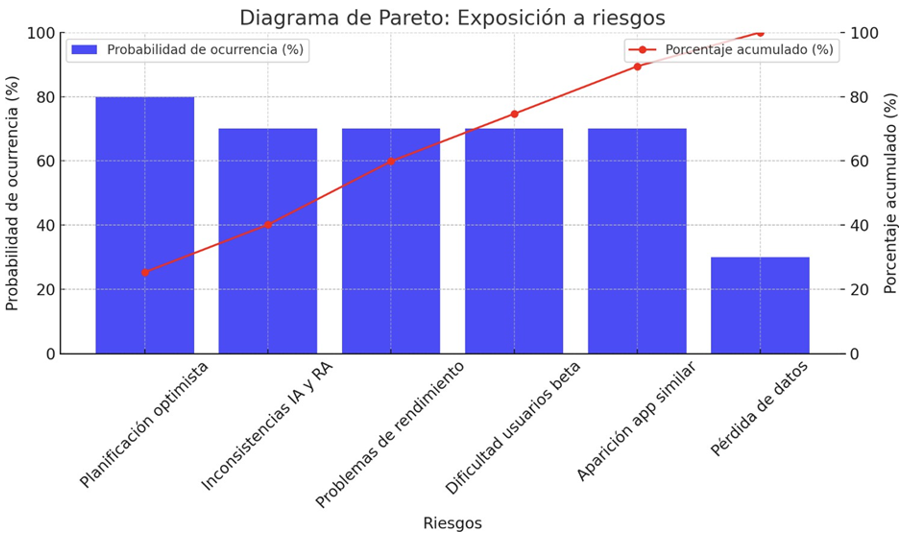
The contingency plan is shown below, based on the risks shown in the risk matrix.
Table 27. Contingency Plan
Risk | Contingency Plan |
|---|---|
Optimistic planning | Make time estimates more conservative and update the schedule after each review. |
Inconsistencies in AI and AR integration | Plan testing from the outset and consult experts in each phase. Document recurring problems and adjust solutions. |
Performance problems | Use resource-monitoring tools and optimize application memory and processing usage. |
Difficulty obtaining beta users | Search for beta-testing channels and adjust expectations regarding the number of users. |
Appearance of a similar application | Focus on the system’s own strengths and adjust the marketing strategy to highlight differentiating features. |
Data loss | Implement frequent automatic backups and recovery functionality. |
Team disagreements | Hold team-building meetings or workshops to build consensus. |
CONCLUSIONS
The project was developed with the objective of providing users with a tool that facilitates the adoption of healthy eating habits, using artificial intelligence for the personalization of meal plans and augmented reality for food scanning. The main motivation for carrying out this project was the need to provide an accessible and effective solution for those who wish to improve their diet, but face difficulties in following a plan due to lack of information and continuous support.
Throughout the development, the objectives were achieved: an application was designed and programmed that allows users to record their data, receive personalized plans and track their progress by recording food diaries and obtaining nutritional information in real time.
This project not only allowed me to apply and deepen knowledge acquired during my degree, such as the development of mobile applications and the integration of advanced technologies, but also gave me the opportunity to improve my skills in project management and teamwork. Personally, the process was enriching, as it required me to overcome my own limits and acquire new technical and analytical skills, which fills me with satisfaction and better prepares me to face future professional challenges.
References
- 1 An R, Perez-Cruet J, Wang J. We got nuts! use deep neural networks to classify images of common edible nuts. Nutrition and Health 2024;30:301–7. https://doi.org/10.1177/02601060221113928..
- 2 Apple Developer. SwiftUI documentation. Apple Developer; s.f. https://developer.apple.com/documentation/swiftui
- 3 Aveiro-Róbalo TR, Pérez-Del-Vallín V. Gamification for well-being: applications for health and fitness. Gamification and Augmented Reality 2023;1:16. https://doi.org/10.56294/gr202316..
- 4 Braga BC, Nguyen PH, Tran LM, Hoang NT, Bannerman B, Doyle F, et al. Feasibility of Using an Artificial Intelligence-based Telephone Application for Dietary Assessment and Nudging to Improve the Quality of Food Choices of Female Adolescents in Vietnam: Evidence from a Randomized Pilot Study. Current Developments in Nutrition 2024;8. https://doi.org/10.1016/j.cdnut.2023.102063..
- 5 Brown HM, Collins CE, Bucher T, Rollo ME. Evaluation of the effectiveness and usability of an educational portion size tool, ServARpreg, for pregnant women. Journal of Human Nutrition and Dietetics 2019;32:719–27. https://doi.org/10.1111/jhn.12660..
- 6 Castillo-Gonzalez W, Lepez CO, Bonardi MC. Augmented reality and environmental education: strategy for greater awareness. Gamification and Augmented Reality 2023;1:10. https://doi.org/10.56294/gr202310..
- 7 Chotwanvirat P, Hnoohom N, Rojroongwasinkul N, Kriengsinyos W. Feasibility Study of an Automated Carbohydrate Estimation System Using Thai Food Images in Comparison With Estimation by Dietitians. Frontiers in Nutrition 2021;8. https://doi.org/10.3389/fnut.2021.732449..
- 8 Comisión Honoraria para la Salud Cardiovascular. Comisión Honoraria para la Salud Cardiovascular; s.f. https://www.cardio.com.uy
- 9 Davies T, Louie JCY, Scapin T, Pettigrew S, Wu JHY, Marklund M, et al. An innovative machine learning approach to predict the dietary fiber content of packaged foods. Nutrients 2021;13. https://doi.org/10.3390/nu13093195..
- 10 Fernández AA. Alimentación consciente: principios y prácticas. Revista de Nutrición Integral. 2022.
- 11 Gómez Cano CA, Sánchez Castillo V. Systematic review on Augmented Reality in health education. Gamification and Augmented Reality 2023;1:28. https://doi.org/10.56294/gr202328..
- 12 Zmora N, Elinav E. Harnessing smartphones to personalize nutrition in a time of global pandemic. Nutrients 2021;13:1–10. https://doi.org/10.3390/nu13020422..
- 13 Heydarian H, Adam M, Burrows T, Collins C, Rollo ME. Assessing eating behaviour using upper limb mounted motion sensors: A systematic review. Nutrients 2019;11. https://doi.org/10.3390/nu11051168..
- 14 Honorarios Recomendados. Honorariosprofesionales.com; 2024. https://www.honorariosprofesionales.com
- 15 IBM. IBM Documentation. IBM; s.f. https://www.ibm.com/docs/en
- 16 Kelly JT, Collins PF, McCamley J, Ball L, Roberts S, Campbell KL. Digital disruption of dietetics: are we ready? Journal of Human Nutrition and Dietetics 2021;34:134–46. https://doi.org/10.1111/jhn.12827..
- 17 Kusuma JD, Yang H-L, Yang Y-L, Chen Z-F, Shiao S-YPK. Validating Accuracy of a Mobile Application against Food Frequency Questionnaire on Key Nutrients with Modern Diets for mHealth Era. Nutrients 2022;14. https://doi.org/10.3390/nu14030537..
- 18 Lem DW, Gierhart DL, Davey PG. Can Nutrition Play a Role in Ameliorating Digital Eye Strain? Nutrients 2022;14. https://doi.org/10.3390/nu14194005..
- 19 Li X, Yin A, Choi HY, Chan V, Allman-Farinelli M, Chen J. Evaluating the Quality and Comparative Validity of Manual Food Logging and Artificial Intelligence-Enabled Food Image Recognition in Apps for Nutrition Care. Nutrients 2024;16. https://doi.org/10.3390/nu16152573..
- 20 Lo FP-W, Sun Y, Qiu J, Lo B. Food volume estimation based on deep learning view synthesis from a single depth map. Nutrients 2018;10. https://doi.org/10.3390/nu10122005..
- 21 Lozano CP, Canty EN, Saha S, Broyles ST, Beyl RA, Apolzan JW, et al. Validity of an Artificial Intelligence-Based Application to Identify Foods and Estimate Energy Intake Among Adults: A Pilot Study. Current Developments in Nutrition 2023;7. https://doi.org/10.1016/j.cdnut.2023.102009..
- 22 Mezgec S, Seljak BK. Nutrinet: A deep learning food and drink image recognition system for dietary assessment. Nutrients 2017;9. https://doi.org/10.3390/nu9070657..
- 23 MongoDB. MongoDB Pricing. MongoDB Inc.; s.f. https://www.mongodb.com/pricing
- 24 MyFitnessPal. MyFitnessPal; s.f. https://www.myfitnesspal.com
- 25 Nguyen PH, Tran LM, Hoang NT, Truong DTT, Tran THT, Huynh PN, et al. Relative validity of a mobile AI-technology-assisted dietary assessment in adolescent females in Vietnam. American Journal of Clinical Nutrition 2022;116:992–1001. https://doi.org/10.1093/ajcn/nqac216..
- 26 Node.js. About Node.js. Node.js; s.f. https://nodejs.org/en/about
- 27 Organización Mundial de la Salud. WHO.int; 2017. https://www.who.int
- 28 Organización Mundial de la Salud. WHO.int; 2024. https://www.who.int
- 29 Orte S, Migliorelli C, Sistach-Bosch L, Gómez-Martínez M, Boqué N. A Tailored and Engaging mHealth Gamified Framework for Nutritional Behaviour Change. Nutrients 2023;15. https://doi.org/10.3390/nu15081950..
- 30 Papathanail I, Abdur Rahman L, Brigato L, Bez NS, Vasiloglou MF, van der Horst K, et al. The Nutritional Content of Meal Images in Free-Living Conditions—Automatic Assessment with goFOODTM. Nutrients 2023;15. https://doi.org/10.3390/nu15173835..
- 31 Pervanidou P, Chatzidaki E, Nicolaides NC, Voutetakis A, Polychronaki N, Chioti V, et al. The Impact of the ENDORSE Digital Weight Management Program on the Metabolic Profile of Children and Adolescents with Overweight and Obesity and on Food Parenting Practices. Nutrients 2023;15. https://doi.org/10.3390/nu15071777..
- 32 Reščič N, Mayora O, Eccher C, Luštrek M. Food Frequency Questionnaire Personalisation Using Multi-Target Regression. Nutrients 2022;14. https://doi.org/10.3390/nu14193943..
- 33 Rollo ME, Bucher T, Smith SP, Collins CE. ServAR: An augmented reality tool to guide the serving of food. International Journal of Behavioral Nutrition and Physical Activity 2017;14. https://doi.org/10.1186/s12966-017-0516-9..
- 34 Sakal C, Li T, Li J, Yang C, Li X. Association Between Sleep Efficiency Variability and Cognition Among Older Adults: Cross-Sectional Accelerometer Study. JMIR Aging 2024;7:1–7. https://doi.org/10.2196/54353..
- 35 Seok M, Kim W. Sarcopenia Prediction for Elderly People Using Machine Learning: A Case Study on Physical Activity. Healthcare (Switzerland) 2023;11. https://doi.org/10.3390/healthcare11091334..
- 36 Serra M, Alceste D, Hauser F, Hulshof PJM, Meijer HAJ, Thalheimer A, et al. Assessing daily energy intake in adult women: validity of a food-recognition mobile application compared to doubly labelled water. Frontiers in Nutrition 2023;10. https://doi.org/10.3389/fnut.2023.1255499..
- 37 Sheng G, Min W, Zhu X, Xu L, Sun Q, Yang Y, et al. A Lightweight Hybrid Model with Location-Preserving ViT for Efficient Food Recognition. Nutrients 2024;16. https://doi.org/10.3390/nu16020200..
- 38 Shilo S, Godneva A, Rachmiel M, Korem T, Kolobkov D, Karady T, et al. Prediction of Personal Glycemic Responses to Food for Individuals With Type 1 Diabetes Through Integration of Clinical and Microbial Data. Diabetes Care 2022;45:502–11. https://doi.org/10.2337/dc21-1048..
- 39 Starkoff BE, Nickerson BS. Emergence of imaging technology beyond the clinical setting: Utilization of mobile health tools for at-home testing. Nutrition in Clinical Practice 2024;39:518–29. https://doi.org/10.1002/ncp.11151..
- 40 SwiftBeta. SwiftBeta; 2023. https://www.swiftbeta.com
- 41 Tahir GA, Loo CK. A comprehensive survey of image-based food recognition and volume estimation methods for dietary assessment. Healthcare (Switzerland) 2021;9. https://doi.org/10.3390/healthcare9121676..
- 42 Tay W, Kaur B, Quek R, Lim J, Henry CJ. Current developments in digital quantitative volume estimation for the optimisation of dietary assessment. Nutrients 2020;12. https://doi.org/10.3390/nu12041167..
- 43 Tragomalou A, Moschonis G, Manios Y, Kassari P, Ioakimidis I, Diou C, et al. Novel e-health applications for the management of cardiometabolic risk factors in children and adolescents in greece. Nutrients 2020;12. https://doi.org/10.3390/nu12051380..
- 44 Universidad Valle del Grijalva. Universidad Valle del Grijalva; s.f. https://www.uvg.edu.mx
- 45 Vandeputte J, Herold P, Kuslii M, Viappiani P, Muller L, Martin C, et al. Principles and Validations of an Artificial Intelligence-Based Recommender System Suggesting Acceptable Food Changes. Journal of Nutrition 2023;153:598–604. https://doi.org/10.1016/j.tjnut.2022.12.022..
- 46 Vasiloglou MF, Lu Y, Stathopoulou T, Papathanail I, Faeh D, Ghosh A, et al. Assessing mediterranean diet adherence with the smartphone: The medipiatto project. Nutrients 2020;12:1–15. https://doi.org/10.3390/nu12123763..
- 47 Wilson-Barnes S, Gymnopoulos LP, Dimitropoulos K, Solachidis V, Rouskas K, Russell D, et al. PeRsOnalised nutriTion for hEalthy livINg: The PROTEIN project. Nutrition Bulletin 2021;46:77–87. https://doi.org/10.1111/nbu.12482..
- 48 Wu J, Dong L, Sun Y, Zhao X, Gan J, Wang Z. The Effectiveness of Artificial Intelligence in Assisting Mothers with Assessing Infant Stool Consistency in a Breastfeeding Cohort Study in China. Nutrients 2024;16. https://doi.org/10.3390/nu16060855..
- 49 Wymelbeke-Delannoy VV, Juhel C, Bole H, Sow A-K, Guyot C, Belbaghdadi F, et al. A Cross-Sectional Reproducibility Study of a Standard Camera Sensor Using Artificial Intelligence to Assess Food Items: The FoodIntech Project. Nutrients 2022;14. https://doi.org/10.3390/nu14010221..
- 50 Yang Y-L, Yang H-L, Kusuma JD, Shiao S-YPK. Validating Accuracy of an Internet-Based Application against USDA Computerized Nutrition Data System for Research on Essential Nutrients among Social-Ethnic Diets for the E-Health Era. Nutrients 2022;14. https://doi.org/10.3390/nu14153168..
- 51 Young A, Johnson MJ, Beattie RM. The use of machine learning in paediatric nutrition. Current Opinion in Clinical Nutrition and Metabolic Care 2024;27:290–6. https://doi.org/10.1097/MCO.0000000000001018..
- 52 Zahid M, Sughra U, Mumtaz S, Hassan M. Improving nutritional status of children using artificial intelligence-based mobile application postsurgery: Randomised controlled trial. BMJ Nutrition, Prevention and Health 2023;6:367–73. https://doi.org/10.1136/bmjnph-2023-000645..
- 53 Zhang Q, He C, Qin W, Liu D, Yin J, Long Z, et al. Eliminate the hardware: Mobile terminals-oriented food recognition and weight estimation system. Frontiers in Nutrition 2022;9. https://doi.org/10.3389/fnut.2022.965801..
Declarations
Funding
None.
Conflict of interest
The authors declare that there is no conflict of interest. AUTHORSHIP CONTRIBUTION Conceptualization: María Julieta Rabozzi Orelo. Data curation: María Julieta Rabozzi Orelo. Formal analysis: María Julieta Rabozzi Orelo. Research: María Julieta Rabozzi Orelo. Methodology: María Julieta Rabozzi Orelo. Project Management: María Julieta Rabozzi Orelo. Resources: María Julieta Rabozzi Orelo. Software: María Julieta Rabozzi Orelo. Supervision: María Julieta Rabozzi Orelo. Validation: María Julieta Rabozzi Orelo. Visualization: María Julieta Rabozzi Orelo. Writing - original draft: María Julieta Rabozzi Orelo. Writing - proofreading and editing: María Julieta Rabozzi Orelo.
Authorship contributions
Drafting – original draft: María Julieta Rabozzi Orelo.
Writing–review and editing: María Julieta Rabozzi Orelo.