
Abstract
Introduction: Type 2 Diabetes Mellitus (T2DM) represents a substantial and expanding global health burden, with well-documented impairment of Health-Related Quality of Life (HRQoL) — an effect that is often amplified in low- and middle-income, conflict-affected settings such as Palestine. Aim: This study set out to characterize the determinants and consequences of glycemic control for quality of life among Palestinian adults with T2DM, with particular attention to the satisfaction, impact, and worry dimensions of the disease experience. Methods: A cross-sectional survey enrolled 249 adult T2DM patients drawn from diabetes outpatient clinics across Palestine. A structured, self-administered questionnaire captured demographic and clinical information alongside the Arabic-language Revised Diabetes Quality of Life Questionnaire (RVDQOL-13). Patients were classified as glycemically controlled (HbA1c ≤ 7%) or uncontrolled (HbA1c > 7%). Group comparisons relied on non-parametric procedures (Mann–Whitney U, Kruskal–Wallis H), and Spearman correlations examined continuous associations with QoL. Results: Participants averaged 61.17 years of age, and just over half (54.2%) had uncontrolled glycemia. Overall QoL was moderately compromised (M = 3.31), driven mainly by the Impact domain, which captures fatigue and pain. Uncontrolled glycemia emerged as an independent predictor of poorer QoL (Mean Rank 136.17 vs. 111.78, p = 0.008), a pattern reinforced by a positive correlation between HbA1c and QoL scores (rho = 0.209, p = 0.001). Female sex, physical inactivity, and low monthly income were likewise linked to diminished QoL. Conclusion: Among Palestinian adults with T2DM, quality of life is meaningfully eroded by poor glycemic control together with being female, physically inactive, and of limited income. Improving outcomes will require care that extends beyond medication management to structured self-management education, gender-responsive support, and strategies that address practical barriers to physical activity and self-efficacy in this setting.
Keywords
Type 2 Diabetes Mellitus, Glycemic Control, Quality of Life, RVDQOL-13, Palestine, Self-Efficacyc
INTRODUCTION
Type 2 Diabetes Mellitus (T2DM) is a long-term metabolic condition marked by chronic hyperglycemia arising from a combination of insulin resistance and inadequate insulin secretion, and it now ranks among the most pressing global health concerns.(1,2) Its significance stems largely from a trajectory of rising case numbers; the International Diabetes Federation forecasts that the disease will continue to expand its footprint of morbidity and mortality in the decades ahead.(1,3) Glycated hemoglobin (HbA1c) serves as the principal marker used to gauge glycemic control, and keeping this value within target range is essential for postponing the microvascular and macrovascular damage diabetes can inflict.(4,5) Reaching and sustaining this control, however, hinges on consistent diabetes self-management education (DSME) and day-to-day self-care behaviors — dietary discipline, physical activity, and glucose monitoring — all of which are empowering in principle but frequently hard to sustain in practice.(6) When glycemic levels drift out of range, patients contend with disabling physical symptoms, psychological strain, and diminished functional capacity, all of which erode Health-Related Quality of Life (HRQoL).(7) The downstream societal and economic costs are considerable, as poor QoL and unmanaged diabetes translate into more frequent hospitalizations, lost productivity, and mounting healthcare expenditure.(1,8) This study centers on adult patients with T2DM specifically, given that this group shoulders the heaviest burden of disease-related complications and must sustain complex self-management routines over time, leaving them particularly susceptible to declining QoL.(9)
At the global level, the link between diabetes management and quality of life is well documented, and the evidence consistently shows that unmanaged glycemia takes a measurable toll on patient well-being. Studies from around the world confirm that self-care behaviors — notably routine physical activity and dietary control — go hand in hand with better glycemic outcomes and richer HRQoL.(1,6,10) International research further shows that diabetes distress and health-related anxiety commonly travel alongside T2DM, undermining self-efficacy and adherence to medication, which in turn drags down both clinical results and quality of life.(11) More recently, digital tools such as online DSME platforms have shown potential for boosting self-care autonomy and lowering HbA1c, especially when they incorporate interactivity and real-time feedback.(12,13) Instruments to measure self-efficacy, including the Diabetes Management Self-Efficacy Scale, have likewise been developed and validated to support these interventions.(14) Cross-sectional evidence from Thailand, for instance, identifies younger age, greater income, regular exercise, and freedom from complications as strong predictors of favorable quality of life.(15)
Within the Middle East, T2DM prevalence is among the highest anywhere in the world, and yet glycemic control frequently remains poor despite the availability of pharmacological treatment.(5) Research conducted across the region points to socio-cultural obstacles, limited health literacy, and insufficient self-management education as major reasons patients struggle to reach target HbA1c levels.(9,16) Lifestyle and clinical variables specific to the region further shape glycemic outcomes.(17) Low health literacy in particular has been flagged as an obstacle to glycemic control in Middle Eastern populations.(18) Regional studies also converge on the finding that women, those with multiple complications, and patients with poor glycemic control report markedly lower HRQoL.(16) In Saudi cohorts, disease duration beyond 10 years and the presence of diabetic foot or renal complications have each been shown to independently erode physical functioning and general health domains of QoL.(7,19) DSME programs have proven their worth in this region by measurably improving clinical outcomes and self-efficacy,(5) while in neighboring Pakistan, cognitive behavioral therapy has been effective at easing diabetes distress and lifting QoL.(11) Notably, Jordanian research identifies self-efficacy as the single strongest predictor of diabetes self-management, functioning as a key mediator between patient characteristics and health outcomes.(20)
In low- and middle-income countries (LMICs) such as Palestine, managing T2DM is complicated further by severe socio-economic and political pressures. Palestine's healthcare system contends with persistent resource shortages, military occupation, and recurring violence — conditions that interrupt continuity of care, restrict access to medication, and curtail patients' freedom of movement.(21,22) These structural threats make it exceptionally difficult to sustain self-care behaviors, particularly physical activity and dietary adherence, which in turn directly jeopardizes glycemic control.(1) Recent Palestinian evidence documents that nurses and nursing students themselves face substantial violence, checkpoint delays, and psychological strain — a reflection of the broader systemic instability touching every corner of the healthcare system, diabetes clinics included.(23,25) Compounding this, critical care and emergency units across Palestine report weak alarm-management practices, inadequate CPR training, and unreliable electronic medical records, all of which threaten patient safety and continuity of chronic disease follow-up.(26,27) A comparative cross-sectional study conducted in Palestine similarly found moderately impaired QoL among diabetic patients, with the impact domain — capturing physical and social burden — the most severely affected, and complications significantly worsening QoL.(21,28) This study draws implicitly on Self-Efficacy Theory, which holds that a patient's confidence in their own capacity to carry out self-management behaviors directly shapes both clinical outcomes (glycemic control) and psychosocial well-being (QoL). Evidence from elsewhere reinforces this framework, showing self-efficacy to be a robust predictor of self-management, communication, and disease activation,(29) and that validated self-efficacy measures correlate negatively with HbA1c.(30) The theory holds more broadly that cognitive processes shape behavior, with self-efficacy beliefs acting as powerful drivers of self-management action.(31)
Despite the breadth of existing literature, meaningful gaps persist. Much of the available research is descriptive, zeroes in on isolated demographic or clinical variables, and leans on generic QoL instruments that miss the disease-specific burdens of satisfaction, impact, and worry that are unique to T2DM.(32) Qualitative and mixed-methods work remains scarce, particularly in conflict-affected settings, which limits the field's ability to design context-appropriate interventions. The pathway connecting glycemic control to disease-specific QoL dimensions — while accounting for the compounding socio-political pressures of LMIC life — remains largely unexplored. Critically, no prior Palestinian study has systematically examined how glycemic control specifically affects the satisfaction, impact, and worry domains of QoL among T2DM patients, nor has any integrated local realities of economic hardship and restricted mobility to explain why poor glycemic control so profoundly undermines this population's physical and psychosocial well-being.
Accordingly, this study set out to investigate the determinants and consequences of glycemic control for quality of life among Palestinian adults with T2DM. Specifically, it aims to (a) characterize the demographic, clinical, and behavioral profile of T2DM patients; (b) assess quality of life across the satisfaction, impact, and worry domains; (c) identify the socio-demographic and clinical factors linked to QoL; and (d) establish the impact of glycemic control on QoL, guided by the premise that self-efficacy and contextual barriers together shape clinical and psychosocial outcomes.
METHODS
Design and setting
A cross-sectional design was chosen for this study, a method widely used in public health research for examining behaviors and associations across populations. Data collection took place in Palestine, drawing participants from diabetes outpatient clinics and primary healthcare centers that deliver routine follow-up and management for people with Type 2 Diabetes Mellitus (T2DM).
Population and sampling
Eligible participants were adults diagnosed with T2DM attending diabetes outpatient clinics or primary healthcare centers. Since the true size of this patient population was unknown, sample size was estimated with the Raosoft calculator using a 95% confidence level, a 5% margin of error, and a conservative 50% response distribution given the lack of prior local estimates; this yielded a minimum target of 384 participants. Recruitment during the study period ultimately secured 249 eligible participants, enrolled through convenience sampling.
Inclusion and exclusion criteria
Eligibility required participants to be adults (≥ 18 years) with a clinical T2DM diagnosis who could read and write in Arabic, allowing independent completion of the questionnaire. Individuals were excluded if they had type 1 diabetes, cognitive impairment, severe psychiatric illness, or any communication barrier that would compromise the reliability of their responses.
Instrumentation
Data collection relied on a structured, paper-based, self-administered questionnaire with two components: demographic/health-related characteristics, and the RVDQOL-13 scale.
The first component covered demographic factors (age, gender, marital status, education, monthly income, smoking status) together with clinical and behavioral factors (diabetes duration, Body Mass Index [BMI], glycemic control status, and physical activity frequency). Glycemic control was classified using the most recent HbA1c reading: controlled (≤ 7%) versus uncontrolled (> 7%). Physical activity was self-reported and grouped into four tiers: regularly (planned activity ≥ 3 times weekly), sometimes (1–2 times weekly), rarely (< 1 time weekly), and never.
Quality of life was measured with the Arabic version of the Revised Diabetes Quality of Life Questionnaire (RVDQOL-13), originally developed by Bujang et al.(32) The 13-item instrument spans three domains — satisfaction (6 items), impact (4 items), and worry (3 items). Satisfaction items used a 5-point scale from "very satisfied" (1) to "very dissatisfied" (5), producing a domain range of 6–30. Impact and worry items were scored from "never" (1) to "always" (5), yielding ranges of 4–20 and 3–15 respectively. Across all three domains, total scores ranged from 13 to 65, with higher totals denoting worse QoL.
Validity and reliability
The instrument's original validation study reported strong reliability across domains, with composite reliability spanning 0.794 (worry) to 0.922 (satisfaction).(32) The Arabic translation, previously validated by Eshtaya et al. following WHO's standard translation protocol (forward translation, back-translation, expert review), achieved a Cronbach's alpha of 0.88. For the current study, a pilot test involving thirty patients outside the final sample assessed clarity, comprehension, and completion time; the questionnaire was found clear and required 15–20 minutes to complete, so no revisions were made.
Data collection process
Following ethics committee approval, the research team secured permission from relevant health authorities and clinic administrators before visiting each site during routine hours to recruit eligible patients attending follow-up appointments. Patients were briefed on the study's purpose, procedures, and voluntary nature; those who agreed provided written consent before completing the questionnaire. Confidentiality and anonymity were assured, and participants were informed they could withdraw at any time without affecting their healthcare access. Questionnaires were completed independently in a private clinic area, with research staff on hand to clarify questions without steering responses. Completed forms were checked for completeness, stored securely, and later entered into statistical software.
Data analysis
Analyses were conducted in IBM SPSS Statistics. Descriptive statistics (frequencies, percentages, means, standard deviations) summarized participant characteristics and QoL scores. Because the data departed from normality, non-parametric tests were used throughout: Mann–Whitney U for dichotomous comparisons (e.g., gender, glycemic control), and Kruskal–Wallis H for variables with three or more categories (e.g., physical activity, income, education). Spearman rank-order correlation assessed relationships between continuous variables (age, BMI, HbA1c) and QoL scores. Across all analyses, higher mean ranks or coefficients denoted worse QoL, and statistical significance was set at p < 0.05.
Ethical consideration
The Palestine Ministry of Health granted ethical clearance prior to data collection. the study adhered to the principles of the Declaration of Helsinki. Participants received complete information on the study's purpose, procedures, risks, and benefits, and all provided written consent. Participation was entirely voluntary, with the right to withdraw at any point without penalty. No identifying information was collected; each questionnaire was tracked using a numerical code instead. All data were stored in password-protected form on a drive accessible only to the research team, in keeping with international standards for data protection and research ethics.
RESULTS
Demographic and Clinical Characteristics
Table 1 summarizes the 249 participants who took part in this study. The cohort skewed older, with a mean age of 61.17 years (SD = 13.89), and was predominantly female (60.6%, n = 151) and married (87.6%, n = 218). Average BMI reached 30.65 kg/m² (SD = 6.60), placing the typical participant in the obese range.
From a socioeconomic standpoint, the sample was marked by limited schooling and modest income: 59.0% (n = 147) had completed only elementary education, and 58.2% (n = 145) earned under 2,000 NIS per month. Most participants did not smoke (73.9%, n = 184), yet physical activity levels were concerning, with 35.8% (n = 89) reporting rare or no exercise at all.
Clinically, disease burden was substantial: 56.6% (n = 141) had lived with diabetes for more than a decade, and the majority (54.2% (n = 135)) had uncontrolled glycemia (HbA1c > 7%), leaving only 45.8% (n = 114) within target range.
Variable | Category / Statistic | n (%) or Mean ± SD |
|---|---|---|
Age (years) | Mean ± SD | 61.17 ± 13.89 |
BMI (kg/m²) | Mean ± SD | 30.65 ± 6.60 |
Gender | [empty cell] | [empty cell] |
[empty cell] | Male | 98 (39.4%) |
[empty cell] | Female | 151 (60.6%) |
Marital Status | [empty cell] | [empty cell] |
[empty cell] | Single | 21 (8.4%) |
[empty cell] | Married | 218 (87.6%) |
[empty cell] | Other | 10 (4.0%) |
Educational Level | [empty cell] | [empty cell] |
[empty cell] | Elementary | 147 (59.0%) |
[empty cell] | Secondary | 68 (27.3%) |
[empty cell] | Bachelor's degree | 25 (10.0%) |
[empty cell] | Above Bachelor's | 9 (3.6%) |
Monthly Income (NIS) | [empty cell] | [empty cell] |
[empty cell] | < 2,000 | 145 (58.2%) |
[empty cell] | 2,000–4,000 | 90 (36.1%) |
[empty cell] | > 4,000 | 14 (5.6%) |
Smoking Status | [empty cell] | [empty cell] |
[empty cell] | Non-smoker | 184 (73.9%) |
[empty cell] | Current smoker | 50 (20.1%) |
[empty cell] | Former smoker | 15 (6.0%) |
Physical Activity Level | [empty cell] | [empty cell] |
[empty cell] | Regularly | 80 (32.1%) |
[empty cell] | Sometimes | 80 (32.1%) |
[empty cell] | Rarely | 42 (16.9%) |
[empty cell] | Never | 47 (18.9%) |
Duration of Diabetes | [empty cell] | [empty cell] |
[empty cell] | < 1 year | 11 (4.4%) |
[empty cell] | 1–5 years | 58 (23.3%) |
[empty cell] | 6–10 years | 39 (15.7%) |
[empty cell] | > 10 years | 141 (56.6%) |
Glycemic Control (HbA1c) | [empty cell] | [empty cell] |
[empty cell] | Controlled (HbA1c ≤ 7%) | 114 (45.8%) |
[empty cell] | Uncontrolled (HbA1c > 7%) | 135 (54.2%) |
Note. BMI = Body Mass Index; NIS = New Israeli Shekel; HbA1c = Glycated Hemoglobin. Physical activity categories are self-reported. Percentages may not sum to 100% due to rounding.
Quality of Life
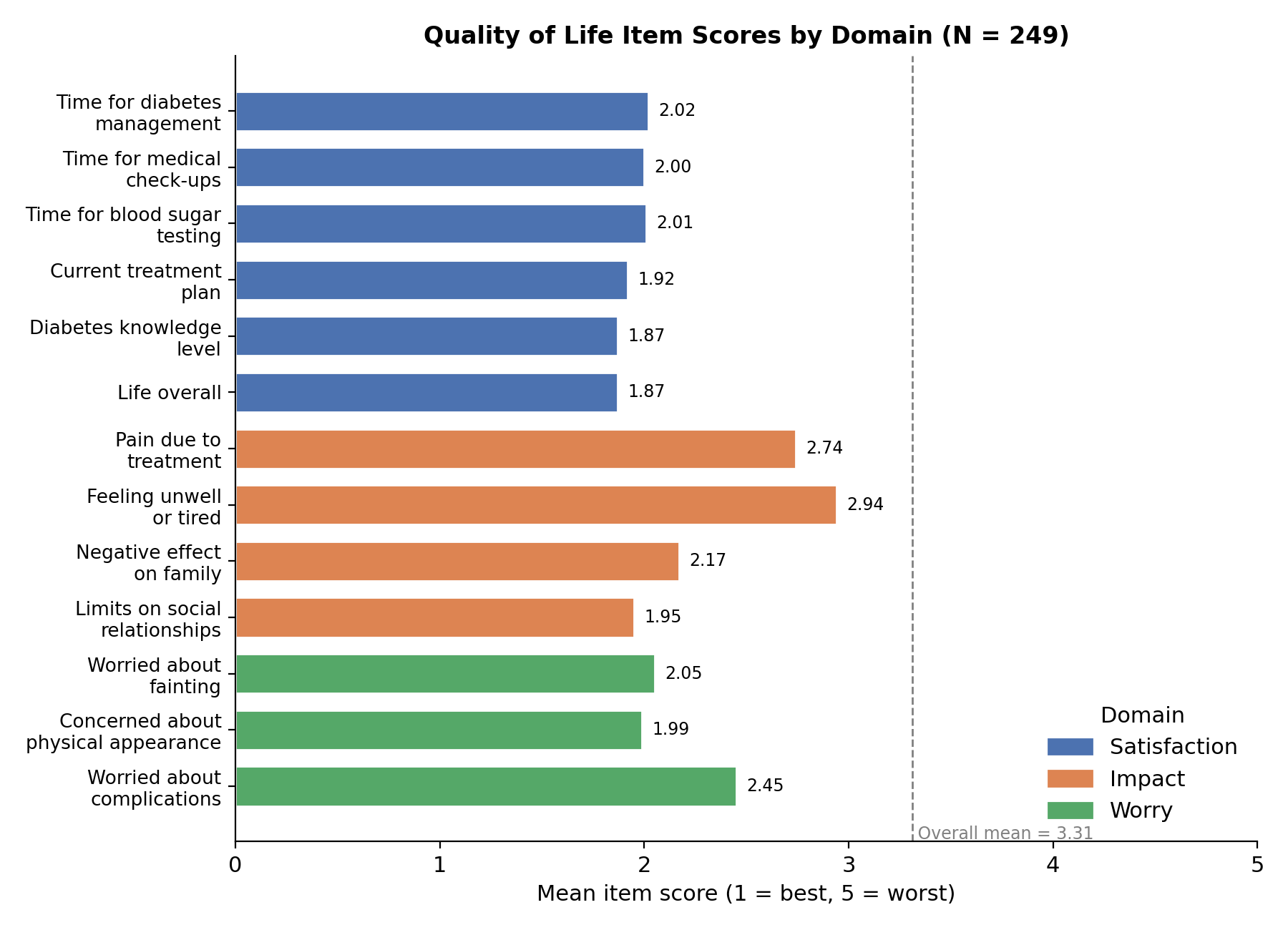
Quality of life was measured across three subscales — Satisfaction, Impact, and Worry — on a 1–5 scale where higher values reflect worse QoL. The overall mean score of 3.31 (SD = 1.03) points to a moderately negative effect of diabetes on participants' quality of life (Figure 1).
Within the Satisfaction subscale, scores ran comparatively low, signaling relatively better satisfaction overall. The greatest dissatisfaction centered on time spent managing diabetes (M = 2.02), whereas participants were most content with their life in general and their diabetes-related knowledge (both M = 1.87).
The Impact subscale produced the highest — and therefore most concerning — scores of the three domains. Physical well-being bore the brunt of this burden: "feeling unwell or tired" registered the single highest item mean in the entire instrument (M = 2.94), closely trailed by "pain due to diabetes treatment" (M = 2.74). Social effects were comparatively muted, with "diabetes limiting social relationships" the lowest-scoring item in this subscale (M = 1.95).
In the Worry subscale, apprehension about future health decline stood out as the dominant concern. "Worried about complications" posted the highest score among worry items (M = 2.45), a finding consistent with the high rate of uncontrolled glycemia (54.2%) observed in this sample. Concerns about fainting (M = 2.05) and physical appearance (M = 1.99) were present but less pronounced.
Factors Associated with Quality of Life
Non-parametric tests — Mann–Whitney U for dichotomous variables and Kruskal–Wallis H for those with three or more categories — were used to identify factors linked to QoL, with higher mean ranks throughout denoting worse QoL (Table 3, Figure 3).
Gender proved to be a significant determinant, with women reporting markedly worse QoL (Mean Rank = 135.04) than men (Mean Rank = 109.54; U = 5883.5, p = 0.006). Physical activity emerged as the single strongest associated factor (H = 17.046, p = 0.001), following a clear dose–response gradient: patients who never exercised fared worst (Mean Rank = 158.59), while regular exercisers fared best (Mean Rank = 104.43). Monthly income was also significantly associated with QoL (H = 6.896, p = 0.032), with the highest earners (> 4,000 NIS) reporting the best outcomes (Mean Rank = 79.46). Glycemic control likewise proved to be a significant predictor (U = 6187.5, p = 0.008): uncontrolled patients fared worse (Mean Rank = 136.17) than controlled patients (Mean Rank = 111.78).
Educational level approached but did not reach statistical significance (H = 7.734, p = 0.052), with higher education trending toward better QoL. Marital status (H = 2.789, p = 0.248), smoking status (H = 2.080, p = 0.353), and diabetes duration (H = 3.740, p = 0.291) showed no significant association with QoL.
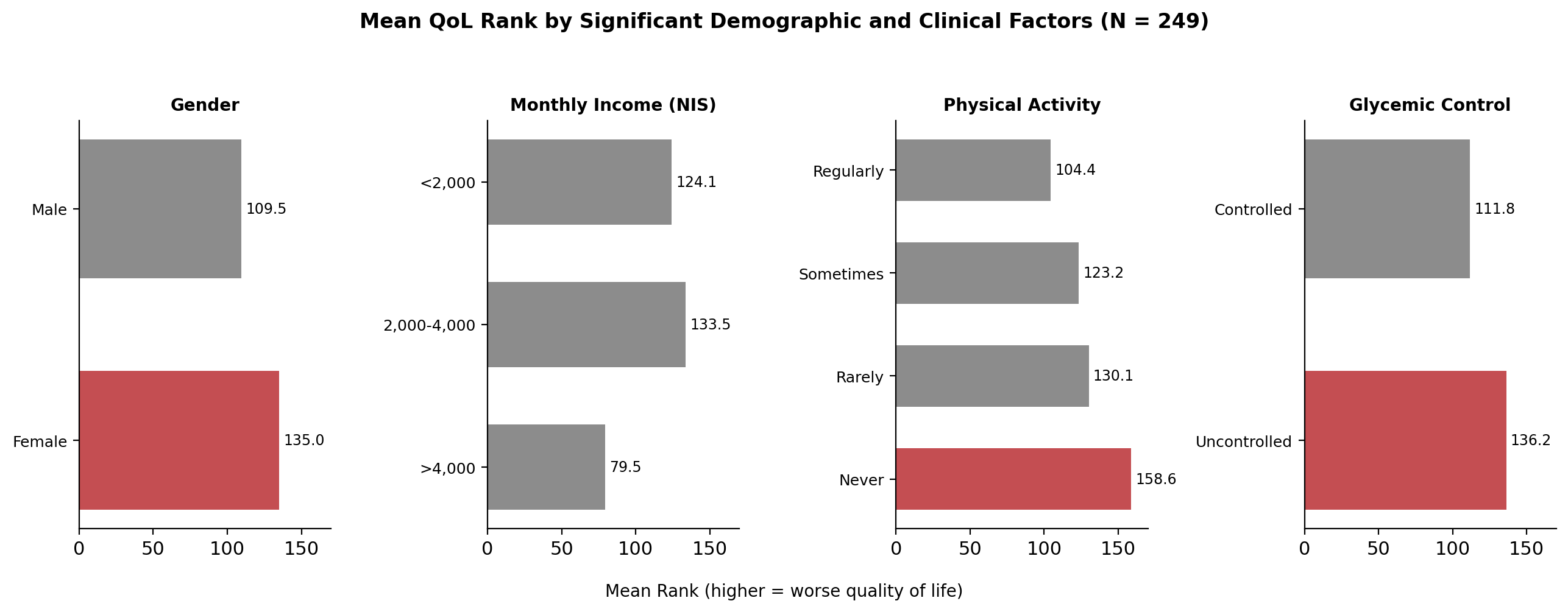
Table 2. Association Between Demographic and Clinical Factors and Quality of Life (N = 249)
Variable | Category | N | Test Statistic | p-value |
|---|---|---|---|---|
Gender | Male | 98 | U = 5883.500 | 0.006** |
[empty cell] | Female | 151 | [empty cell] | [empty cell] |
Marital Status | Single | 21 | H = 2.789 | 0.248 |
[empty cell] | Married | 218 | [empty cell] | [empty cell] |
[empty cell] | Other | 10 | [empty cell] | [empty cell] |
Educational Level | Elementary | 147 | H = 7.734 | 0.052 |
[empty cell] | Secondary | 68 | [empty cell] | [empty cell] |
[empty cell] | Bachelor's degree | 25 | [empty cell] | [empty cell] |
[empty cell] | Above Bachelor's | 9 | [empty cell] | [empty cell] |
Monthly Income (NIS) | < 2,000 | 145 | H = 6.896 | 0.032* |
[empty cell] | 2,000–4,000 | 90 | [empty cell] | [empty cell] |
[empty cell] | > 4,000 | 14 | [empty cell] | [empty cell] |
Smoking Status | Non-smoker | 184 | H = 2.080 | 0.353 |
[empty cell] | Current smoker | 50 | [empty cell] | [empty cell] |
[empty cell] | Former smoker | 15 | [empty cell] | [empty cell] |
Physical Activity | Regularly | 80 | H = 17.046 | 0.001** |
[empty cell] | Sometimes | 80 | [empty cell] | [empty cell] |
[empty cell] | Rarely | 42 | [empty cell] | [empty cell] |
[empty cell] | Never | 47 | [empty cell] | [empty cell] |
Duration of Diabetes | < 1 year | 11 | H = 3.740 | 0.291 |
[empty cell] | 1–5 years | 58 | [empty cell] | [empty cell] |
[empty cell] | 6–10 years | 39 | [empty cell] | [empty cell] |
[empty cell] | > 10 years | 141 | [empty cell] | [empty cell] |
Glycemic Control | Controlled | 114 | U = 6187.500 | 0.008** |
[empty cell] | Uncontrolled | 135 | [empty cell] | [empty cell] |
Note. QoL = Quality of Life, scored such that higher mean ranks indicate worse quality of life. Mann–Whitney U test applied for dichotomous variables; Kruskal–Wallis H test applied for variables with ≥ 3 categories. * p < 0.05. ** p < 0.01.
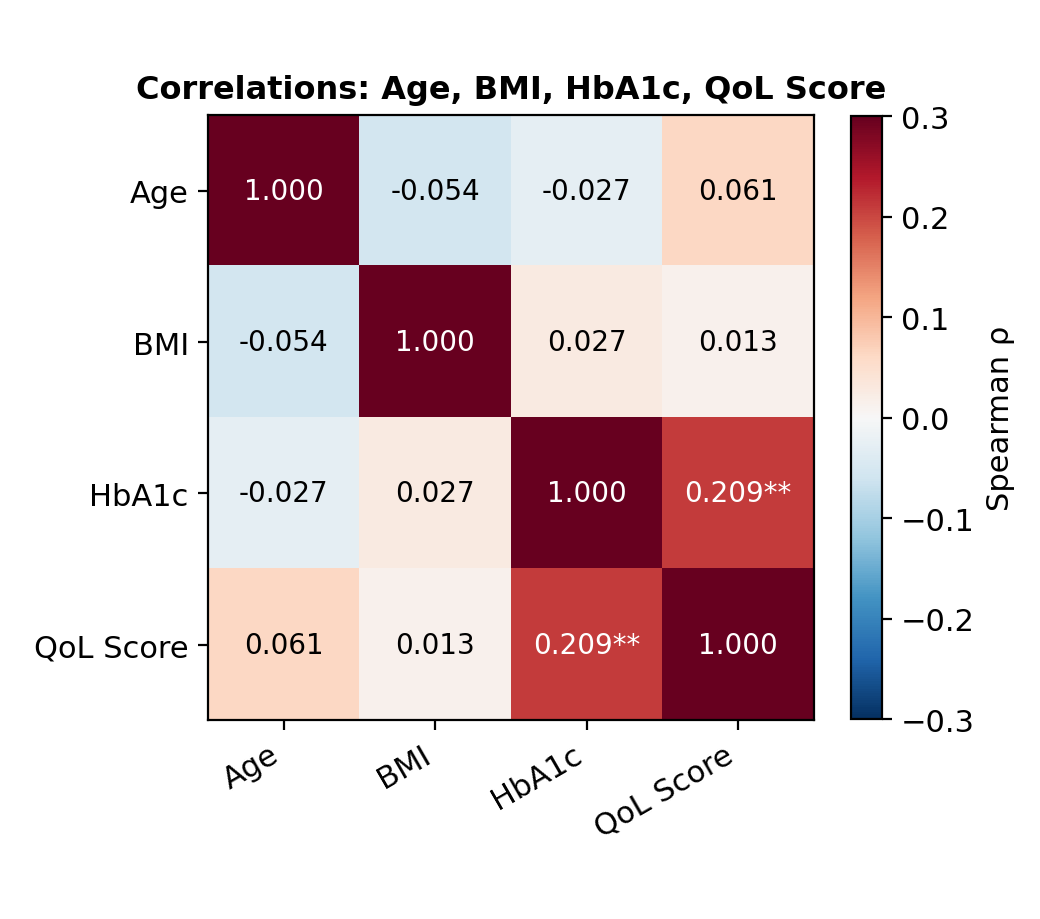
Spearman correlations examined relationships between continuous variables and QoL (Figure 2). Neither age (rho = 0.061, p > 0.05) nor BMI (rho = 0.013, p > 0.05) correlated significantly with QoL. HbA1c, by contrast, showed a significant positive correlation with QoL score (rho = 0.209, p = 0.001), confirming that higher — less controlled — blood glucose tracks with worse quality of life.
Impact of Glycemic Control on Quality of Life
The central research question — whether glycemic control meaningfully shapes QoL — was tested through both categorical and continuous approaches, and both converge on the same conclusion. The Mann–Whitney U test confirmed a statistically significant difference in QoL by glycemic control status (U = 6187.5, p = 0.008), with uncontrolled patients reporting substantially worse QoL (Mean Rank = 136.17) than controlled patients (Mean Rank = 111.78).
This categorical finding is echoed by the Spearman correlation between HbA1c and QoL scores (rho = 0.209, p = 0.001). Because higher QoL scores signal worse outcomes, these two lines of evidence together point firmly to the conclusion that poor glycemic control functions as a significant, independent predictor of diminished quality of life among patients with Type 2 diabetes.
Discussion
This study set out to examine the demographic, clinical, and behavioral factors shaping Quality of Life (QoL) among Palestinian adults with Type 2 Diabetes Mellitus, with particular attention to the role of glycemic control. What emerges is a population marked by high rates of obesity, socioeconomic disadvantage, and troublingly poor glycemic control. QoL overall was moderately impaired, and the physical toll of diabetes — fatigue and pain in particular — stood out as the most severely affected dimension. Poor glycemic control, female sex, physical inactivity, and low income all surfaced as independent predictors of diminished quality of life.
The sample's demographic profile points to a vulnerable, aging group: a mean age of 61.17 years alongside a high prevalence of obesity (BMI = 30.65 kg/m²). The predominance of women in the sample (60.6%) mirrors regional patterns of higher T2DM prevalence and poorer QoL among women across the Middle East.(16) Socioeconomically, the group faces considerable disadvantage — 59% had only elementary schooling, and 58.2% earned under 2,000 NIS monthly. This combination of limited income and limited health literacy is a well-recognized obstacle to diabetes self-care throughout LMICs, where patients struggle simply to afford nutritious food, monitor their glucose, and access consistent care.(1,9,33) Clinically, the fact that 54.2% remain uncontrolled despite more than half the sample living with diabetes for over a decade points to a fundamental shortfall in reaching therapeutic targets. In Palestine specifically, structural obstacles compound this problem: restricted freedom of movement limits clinic access, while chronic stress and infrastructural instability disrupt routine self-management and medication adherence.(21) Research on Palestinian healthcare workers similarly shows that checkpoints, exposure to violence, and chronic stress erode quality of life and professional functioning — pressures that inevitably ripple outward into diabetes care delivery.(23) The strikingly low rates of physical activity in this sample (35.8% rarely or never exercising) are less a matter of lifestyle choice than a reflection of living in an environment where outdoor movement is often restricted and unsafe, a pattern that echoes findings from Sub-Saharan Africa, where structural barriers similarly constrain self-management.(34) Viewed through Self-Efficacy Theory, these environmental constraints erode patients' confidence in their own ability to manage their condition, feeding a downward spiral toward poorer clinical outcomes.(20,30,35)
The QoL results show the "Impact" subscale carrying the heaviest burden, with "feeling unwell or tired" (M = 2.94) and "pain due to diabetes treatment" (M = 2.74) as the most prominent complaints. This closely tracks findings from Alshahrani et al.,(7) who similarly identified physical functioning and general health as the most compromised domains among diabetic patients, especially as disease duration lengthens. The fatigue and pain reported by this Palestinian cohort likely reflect the accumulated physiological cost of long-standing, poorly controlled hyperglycemia combined with obesity, as prolonged disease duration tends to accelerate beta-cell decline and treatment resistance, further complicating management.(36) By contrast, the "Satisfaction" domain scored lowest — indicating comparatively better satisfaction — particularly regarding diabetes knowledge (M = 1.87) and overall life satisfaction (M = 1.87). This apparent contentment may reflect a degree of resignation or adaptation to chronic illness, or perhaps diminished expectations shaped by the broader socio-political hardships of daily life in Palestine.(28) Within the "Worry" domain, fear of future complications ranked highest (M = 2.45) — an understandable response given that more than half the sample has uncontrolled HbA1c and over 73% already live with diabetes-related complications. This pervasive worry parallels global evidence identifying diabetes distress and health anxiety as major psychological burdens that undermine treatment adherence.(11) Easing this worry likely calls for structured psychological support, similar to the cognitive behavioral approaches shown to work in neighboring Pakistan,(11) or digital tools offering reassurance and self-management guidance.(12,13) Yet in Palestine, the considerable academic and occupational stress already documented among nursing students and nurses suggests that even existing mental health resources may be stretched thin, with knock-on effects for diabetes education and patient support.(25)
The non-parametric analyses point to several key determinants of QoL. Mirroring regional evidence from Saudi Arabia, women in this sample reported significantly worse QoL than men (Mean Rank = 135.04 vs. 109.54, p = 0.006) — a gap often linked to biological differences in complication risk, higher rates of depression, and socio-cultural gender norms that constrain women's capacity to prioritize self-care in the Middle East.(16,37) Monthly income also proved significant (p = 0.032), with participants earning above 4,000 NIS reporting notably better QoL (Mean Rank = 79.46), reinforcing the broader pattern in LMICs where economic hardship directly obstructs self-management by limiting access to healthy food, glucose-testing supplies, and transportation to clinics.(1,9,38)
Physical activity stood out as the strongest predictor of QoL overall (p = 0.001), following a clear dose-response gradient: patients who never exercised reported the worst QoL (Mean Rank = 158.59), while regular exercisers reported the best (Mean Rank = 104.43). This finding aligns closely with Tamornpark et al.,(15) who similarly identified regular exercise as a key correlate of good QoL. In the Palestinian context, where the occupation and associated security constraints heavily restrict physical movement, involuntary inactivity becomes a structural determinant of disease burden rather than simply a personal choice. Through the lens of Self-Efficacy Theory, an inability to exercise chips away at patients' belief in their own capacity to manage their condition, feeding a decline in both clinical and psychological outcomes.(20,29) Interestingly, and in contrast to Alshahrani et al.,(7) diabetes duration showed no significant relationship with QoL in this sample (p = 0.291) — suggesting that in Palestine, acute socio-economic and behavioral pressures such as income and inactivity may outweigh the sheer chronological length of illness in shaping day-to-day well-being.
The central finding of this study — that poor glycemic control independently and significantly predicts reduced QoL — rests on converging evidence. Patients with uncontrolled glycemia reported markedly worse QoL (Mean Rank = 136.17) than their controlled counterparts (Mean Rank = 111.78; U = 6187.5, p = 0.008), a pattern reinforced by the significant positive correlation between continuous HbA1c values and worse QoL scores (rho = 0.209, p = 0.001). This aligns with Mikhael et al.,(5) who identified reaching target HbA1c as the single most critical factor for improving both clinical and patient-reported outcomes across the Middle East. Uncontrolled hyperglycemia appears to directly drive the physical symptoms captured in the Impact subscale — fatigue, pain, and general malaise — which then feed into the psychological worry surrounding future complications. This self-reinforcing cycle, in which poor metabolic control fuels physical decline and psychological distress, aligns with the core premise of Self-Efficacy Theory, whereby unfavorable clinical feedback erodes a patient's confidence in managing their own condition.(30) These findings confirm that, in Palestine as elsewhere, suboptimal HbA1c is not merely a laboratory value but a pervasive disruptor of functional, social, and emotional life.(11,21,39) Consequently, interventions need to extend beyond pharmacological prescribing to include structured DSME programs (6) and to confront the contextual barriers — economic hardship, restricted mobility, and diminished self-efficacy — that stand between patients and the glycemic control needed for a tolerable quality of life. The considerable stress and trauma documented among Palestinian healthcare workers further suggest that the healthcare system as a whole is under strain, which may compromise the quality of diabetes education and support patients receive.(23) Bolstering the resilience of the healthcare workforce through targeted mental health support and improved working conditions could yield secondary benefits for chronic disease management more broadly.(24)
Limitations
Several limitations warrant consideration when interpreting these findings. The reliance on convenience sampling may have introduced selection bias and constrained how representative the sample is of the broader population; because participants were recruited from outpatient clinics, the experience of individuals with limited healthcare access — particularly those most affected by movement restrictions in Palestine — may be underrepresented. The cross-sectional design also precludes causal conclusions; while glycemic control and QoL were clearly associated, the direction and timing of that relationship cannot be established from these data. Reliance on self-reported measures for physical activity, dietary habits, and QoL introduces the possibility of recall bias and socially desirable responding. Important psychosocial confounders — mental health status (depression, anxiety), social support, and formal self-efficacy scores — were not directly measured, raising the possibility of residual confounding. Finally, excluding patients with severe cognitive or psychiatric impairment may have led to an underestimate of the true QoL burden across the broader T2DM population. Despite these constraints, the study offers valuable insight into disease-specific QoL burdens within an under-researched, conflict-affected setting.
Recommendations and Implications
Organizational/Healthcare Level
Build routine, disease-specific QoL screening (e.g., RVDQOL-13) into diabetes clinic workflows to inform individualized, patient-centered care plans.
Strengthen multidisciplinary diabetes care by embedding structured Diabetes Self-Management Education (DSME) programs focused on self-efficacy, dietary adherence, and safe physical activity.
Develop targeted support services for high-risk groups — particularly women and lower-income patients — to address the socio-cultural and financial barriers that limit self-care.
Given the documented stress burden among Palestinian healthcare workers,(23) provide mental health support for diabetes educators and nurses to guard against burnout and preserve the quality of patient education.
Individual/Practice Level
Support patient-centered goal-setting around achievable glycemic targets (HbA1c ≤ 7%) to ease both the physical toll (fatigue, pain) and the psychological worry (fear of complications) that most degrade QoL.
Reinforce self-management and treatment adherence through tailored education and motivational support, incorporating digital health tools where feasible.
Address psychosocial needs directly, whether through cognitive behavioral strategies or referral to mental health services, to reduce diabetes distress and health anxiety.
Policy/Societal Level
Advocate for equitable access to diabetes medications, monitoring supplies, and nutritious food, with particular attention to low-income populations in conflict-affected areas.
Direct funding toward community-based, safe physical activity programs designed around the environmental restrictions and safety concerns specific to the Palestinian context.
Support national surveillance of QoL and glycemic outcomes to inform future health planning and resource allocation across the satisfaction, impact, and worry domains.
Address systemic barriers such as checkpoints and travel restrictions that impede regular access to diabetes care, consistent with international humanitarian guidance.(22)
CONCLUSION
This study demonstrates that quality of life among Palestinian adults with Type 2 Diabetes Mellitus is significantly compromised, with patients facing substantial physical burdens — chiefly fatigue and pain — alongside considerable worry about future complications. Poor glycemic control stands out as a central, independent predictor of diminished QoL, compounding both physical and psychological distress. The overlapping pressures of female gender, physical inactivity, and economic hardship further concentrate disease burden among an already vulnerable subgroup. Taken together, these findings point to the need for diabetes care in Palestine to move beyond a narrowly biomedical model toward a multi-dimensional, person-centered approach — one that pursues strict glycemic control while simultaneously strengthening self-efficacy, expanding safe and accessible physical activity, and dismantling the socio-economic and structural barriers that stand in the way of self-management. Future work should adopt longitudinal and interventional designs to clarify causal pathways and to test the effectiveness of culturally tailored DSME programs in improving both clinical outcomes and overall quality of life in this population.
Conflicting Interest
The author declares no potential conflicts of interest with respect to the research, authorship, or publication of this article.
References
- 1 Ahmad F, Joshi SH. Self-Care Practices and Their Role in the Control of Diabetes: A Narrative Review. Cureus. 2023;15(7):e41409. doi:10.7759/cureus.41409
- 2 Abdul Basith Khan M, Hashim MJ, King JK, Govender RD, Mustafa H, Al Kaabi J. Epidemiology of type 2 diabetes—global burden of disease and forecasted trends. J Epidemiol Glob Health. 2020;10(1):107–111. doi:10.2991/jegh.k.191028.001
- 3 Saeedi P, Petersohn I, Salpea P, et al. Global and regional diabetes prevalence estimates for 2019 and projections for 2030 and 2045: results from the International Diabetes Federation Diabetes Atlas. Diabetes Res Clin Pract. 2019;157:107843. doi:10.1016/j.diabres.2019.107843
- 4 Stratton IM, Adler AI, Neil HAW, et al. Association of glycaemia with macrovascular and microvascular complications of type 2 diabetes (UKPDS 35): prospective observational study. BMJ. 2000;321(7258):405–412. doi:10.1136/bmj.321.7258.405
- 5 Mikhael EM, Hassali MA, Hussain SA. Effectiveness of Diabetes Self-Management Educational Programs For Type 2 Diabetes Mellitus Patients In Middle East Countries: A Systematic Review. Diabetes Metab Syndr Obes Targets Ther. 2020;13:117–138. doi:10.2147/DMSO.S232958
- 6 Ernawati U, Wihastuti TA, Utami YW. Effectiveness of diabetes self-management education (DSME) in type 2 diabetes mellitus (T2DM) patients: Systematic literature review. J Public Health Res. 2021;10:2240. doi:10.4081/jphr.2021.2240
- 7 Alshahrani J, Alshahrani A, Alshahrani A, et al. The Impact of Diabetes Mellitus Duration and Complications on Health-Related Quality of Life Among Type 2 Diabetic Patients in Khamis Mushit City, Saudi Arabia. Cureus. 2023;15(8):e44216. doi:10.7759/cureus.44216
- 8 Ali SN, Dang-Tan T, Valentine WJ, Hansen BB. Evaluation of the clinical and economic burden of poor glycemic control associated with therapeutic inertia in patients with type 2 diabetes in the United States. Adv Ther. 2020;37:869–882. doi:10.1007/s12325-019-01199-8
- 9 RobatSarpooshi D, Mahdizadeh M, Alizadeh Siuki H, Haddadi M, Robatsarpooshi H, Peyman N. The Relationship Between Health Literacy Level and Self-Care Behaviors in Patients with Diabetes. Patient Relat Outcome Meas. 2020;11:129–135. doi:10.2147/PROM.S243678
- 10 Norris SL, Lau J, Smith SJ, Schmid CH, Engelgau MM. Self-management education for adults with type 2 diabetes: a meta-analysis of the effect on glycemic control. Diabetes Care. 2002;25(7):1159–1171. doi:10.2337/diacare.25.7.1159
- 11 Abbas Q, Latif S, Habib HA, et al. Cognitive behavior therapy for diabetes distress, depression, health anxiety, quality of life and treatment adherence among patients with type-II diabetes mellitus: A randomized control trial. BMC Psychiatry. 2023;23:86. doi:10.1186/s12888-023-04546-w
- 12 Usefi S, Davoodi F, Alizadeh A, Mohebi Far M. Online Diabetes Self-Management Education Application for Reducing Glycated Hemoglobin Level among Patients with Type 1 Diabetes Mellitus: Systematic Review and Meta-Analysis. Clin Diabetes Endocrinol. 2024;10:48. doi:10.1186/s40842-024-00201-9
- 13 Albuquerque JHM, Torres RAM, Moreira RMM, Dupim MICN. Technologies for promoting self-care in young people with type I diabetes mellitus: A scope review. Rev Enferm Atual In Derme. 2025;99(3):e025125. doi:10.31011/reaid-2025-v.99-n.3-art.2506
- 14 Bijl JV, Poelgeest-Eeltink AV, Shortridge-Baggett L. The psychometric properties of the diabetes management self-efficacy scale for patients with type 2 diabetes mellitus. J Adv Nurs. 1999;30(2):352–359. doi:10.1046/j.1365-2648.1999.01077.x
- 15 Tamornpark R, Utsaha S, Apidechkul T, Panklang D, Yeemard F, Srichan P. Quality of life and factors associated with a good quality of life among diabetes mellitus patients in northern Thailand. Health Qual Life Outcomes. 2022;20:81. doi:10.1186/s12955-022-01986-y
- 16 Alshayban D, Joseph R. Health-related quality of life among patients with type 2 diabetes mellitus in Eastern Province, Saudi Arabia: A cross-sectional study. PLoS ONE. 2020;15(1):e0227573. doi:10.1371/journal.pone.0227573
- 17 Alramadan MJ, Magliano DJ, Almigbal TH, et al. Patient-related determinants of glycaemic control in people with type 2 diabetes in the Gulf Cooperation Council countries: A systematic review. J Diabetes Res. 2018;2018(1):9389265. doi:10.1155/2018/9389265
- 18 Tefera YG, Ayele AA, Megersa A, Gebresillassie BM. Diabetic health literacy and its association with glycemic control among adult patients with type 2 diabetes mellitus attending the outpatient clinic of a university hospital in Ethiopia. PLoS One. 2020;15(4):e0231291. doi:10.1371/journal.pone.0231291
- 19 Al Hayek AA, Robert AA, Al Saeed A, Alzaid AA, Al Sabaan FS. Factors associated with health-related quality of life among Saudi patients with type 2 diabetes mellitus: a cross-sectional survey. Diabetes Metab J. 2014;38(3):220–229. doi:10.4093/dmj.2014.38.3.220
- 20 Salem A, Masadeh A, Nofal B, Othman E, Saleh AM, Darawad MW. Self-Care Management and Its Predictors Among Jordanian Patients with Type 1 Diabetes Mellitus: Cross-Sectional Study. SAGE Open Nurs. 2025;11:1–10. doi:10.1177/23779608251322603
- 21 Farajalla F, Salameh A, Halahla A, Talahmmeh M, Al-Allama M, Rasras M. Determinants of quality of life in type 1 and type 2 diabetes patients in Palestine: a comparative cross-sectional study. BMC Prim Care. 2026;27:205. doi:10.1186/s12875-026-03319-0
- 22 United Nations. The Question of Palestine. Right to health barriers to health and attacks on health care in the OPT, 2019 to 2021 – WHO report. 2023.
- 23 Farajalla F. Military checkpoint exposure and predictive factors of quality of life among nurses during the 7th of October war in Palestine: a cross-sectional observational study. Confl Health. 2025;19(1):79. doi:10.1186/s13031-025-00721-w
- 24 Haddad RH, Abuejheisheh AJ, Farajalla F. Mental health status and its correlates among emerging adults living in the West Bank experiencing prolonged conflict: a study on depression, anxiety, war-related stress, and resilience. BMC Public Health. 2026. doi:10.1186/s12889-026-28798-9
- 25 Mesk Z, Alqaisi N, Amro A, et al. Academic Stress and Its Effect on the Psychological, Emotional, and Behavioral Health of Nursing Students. Int J Body Mind Cult. 2025;12(7):147–156. doi:10.61838/ijbmc.v12i7.917
- 26 Farajalla F. Nurses' work satisfaction with electronic medical record use and associated facilitators and barriers in Palestine. SAGE Open Nurs. 2026;12:1-10. doi:10.1177/23779608261418586..
- 27 Farajalla F, Halahla A, Abuejheisheh AJ, Salameh A, Al-Allama M, Rasras M. Predictors of diabetes self-management and glycemic control among patients with diabetes mellitus in conflict-affected Palestine. BMC Prim Care. 2026;27:123. doi:10.1186/s12875-026-03423-1..
- 28 Dreidi MM, Asmar IT, Jaghama MK, Tawil K. Health-related quality of life among Palestinians with diabetes. J Diabetes Nurs. 2021;25(1):1–6.
- 29 Tuohy E, Gallagher P, Rawdon C, et al. Parent-adolescent communication, self-efficacy, and self-management of type 1 diabetes in adolescents. Sci Diabetes Self Manag Care. 2025;51(1):73–84. doi:10.1177/26350106241304424
- 30 Villaécija J, Luque B, Cuadrado E, Vivas S, Tabernero C. Psychometric Properties of the Revised Self-Efficacy for Diabetes Self-Management Scale among Spanish Children and Adolescents with Type 1 Diabetes. Children. 2024;11:662. doi:10.3390/children11060662
- 31 Bandura A. Social foundations of thought and action: a social cognitive theory. Englewood Cliffs, NJ: Prentice Hall; 1986.
- 32 Bujang MA, Adnan TH, Mohd Hatta NKB, Ismail M, Lim CJ. A Revised Version of Diabetes Quality of Life Instrument Maintaining Domains for Satisfaction, Impact, and Worry. J Diabetes Res. 2018;2018:1–10. doi:10.1155/2018/5804687
- 33 Dedefo MG, Abate SK, Ejeta BM, Korsa AT. Predictors of poor glycemic control and level of glycemic control among diabetic patients in West Ethiopia. Ann Med Surg. 2020;55:238–243. doi:10.1016/j.amsu.2020.05.026
- 34 Fina Lubaki JP, Omole OB, Francis JM. Poor glycemic control in type 2 diabetes in the South of the Sahara: the issue of limited access to an HbA1c test. Diabetol Metab Syndr. 2022;14(1):134. doi:10.1186/s13098-022-00910-4
- 35 Noroozi A, Tahmasebi R. The diabetes management self-efficacy scale: Translation and psychometric evaluation of the Iranian version. Nurs Pract Today. 2014;1(1):9–16.
- 36 Fekadu G, Bula G, Bayisa G, et al. Challenges and factors associated with poor glycemic control among type 2 diabetes mellitus patients at Nekemte referral hospital, Western Ethiopia. J Multidiscip Healthc. 2019;12:963–974. doi:10.2147/JMDH.S218491
- 37 Moeineslam M, Amiri P, Karimi M, Jalali-Farahani S, Shiva N, Azizi F. Diabetes in women and health-related quality of life in the whole family: a structural equation modeling. Health Qual Life Outcomes. 2019;17:1–9. doi:10.1186/s12955-019-1121-7
- 38 Wondmkun YT. Obesity, insulin resistance, and type 2 diabetes: associations and therapeutic implications. Diabetes Metab Syndr Obes. 2020;13:3611–3616. doi:10.2147/DMSO.S275898
- 39 Dehesh T, Dehesh P, Gozashti MH. Metabolic factors that affect health-related quality of life in type 2 diabetes patients: a multivariate regression analysis. Diabetes Metab Syndr Obes. 2019;12:1181–1188. doi:10.2147/DMSO.S202847
Declarations
Funding
The author received no financial support for the research, authorship, and/or publication of this article.
Conflict of interest
None.
Authorship contributions
Drafting – original draft: Ahmad Bisawi.
Writing–review and editing: Ahmad Bisawi.