
Abstract
Ultra-processed foods (UPFs) industrial food formulations characterized by minimal whole food content and extensive use of additives, preservatives, and processing-derived compounds have become dominant features of contemporary global dietary patterns, raising serious concerns about their consequences for population health. This systematic review aimed to synthesize recent empirical evidence on the association between UPF consumption and health outcomes, assess dose-response relationships, and evaluate the methodological quality of the existing literature. Following PRISMA 2020 guidelines, a comprehensive search of five electronic databases identified 87 eligible studies published between 2020 and 2024, spanning 24 countries and multiple study designs. Findings consistently demonstrated that UPF consumption was positively and dose-dependently associated with increased risks of cardiovascular disease, type 2 diabetes, obesity, depression, cancer, and all-cause mortality, with each 10% increment in UPF intake linked to measurable elevations in disease risk across outcomes. Mechanistic evidence implicated gut microbiome disruption, systemic inflammation, and food additive toxicology as key biological pathways. Children, adolescents, and lower-income populations were identified as disproportionately exposed and vulnerable. While the evidence base is predominantly of moderate to high quality, gaps remain regarding randomized trial evidence and data from low- and middle-income countries. These findings strongly support urgent, structurally oriented policy action to reduce global UPF consumption.
Keywords
Ultra-processed foods, NOVA classification, non-communicable diseases, dietary patterns, health outcomes
INTRODUCTION
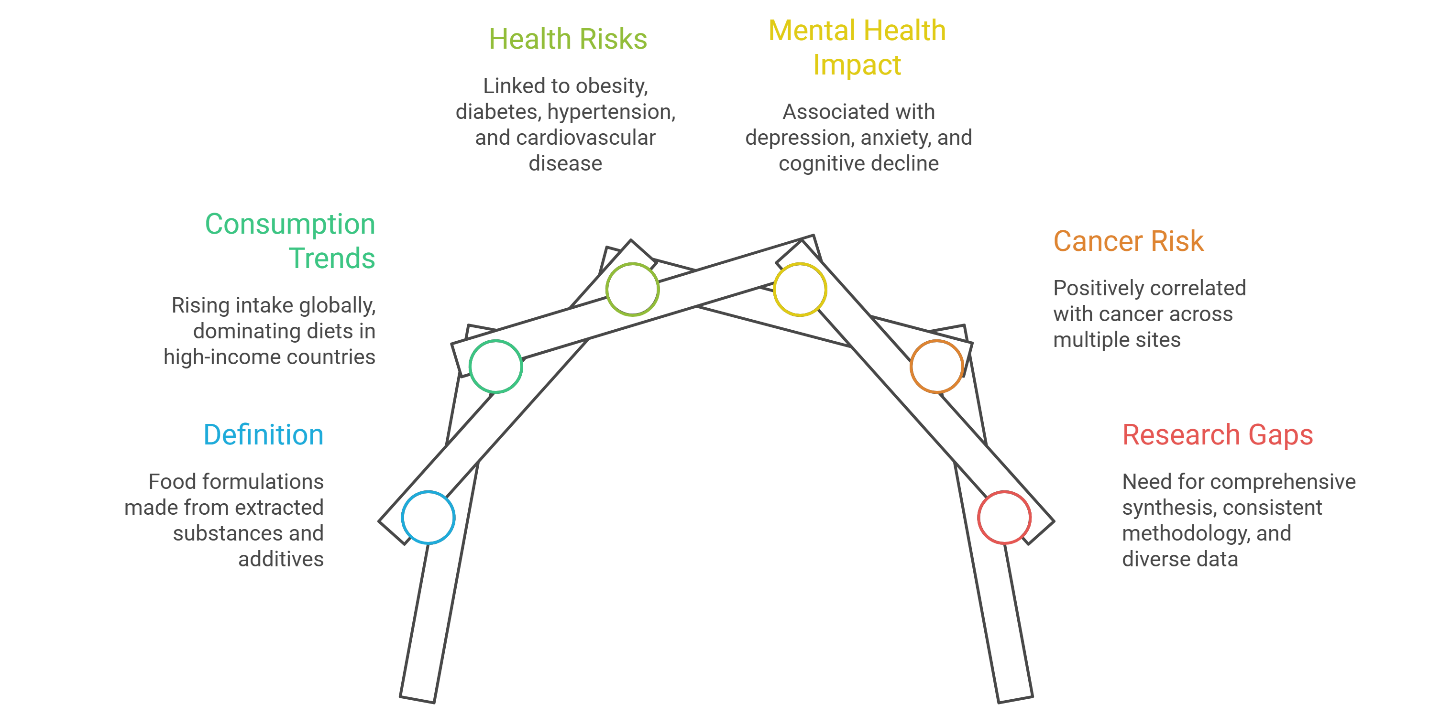
The escalating global consumption of ultra-processed foods (UPFs) has emerged as a critical public health concern in the 21st century. UPFs are industrial food formulations manufactured predominantly from substances extracted or derived from foods, combined with additives, preservatives, colorants, and flavor enhancers rarely used in home cooking (Monteiro et al., 2019). Classified under the NOVA food system into four groups based on the extent and purpose of industrial processing, UPFs encompass a wide range of products including packaged snacks, sugary beverages, instant noodles, reconstituted meat products, and ready-to-eat meals (Chen et al., 2020). Over recent decades, UPFs have come to dominate dietary patterns in high-income countries, accounting for more than half of total daily energy intake in nations such as the United States, United Kingdom, Canada, and Australia, while their consumption is rapidly rising in low- and middle-income countries as well (Marino et al., 2021). This shift in dietary behavior, driven largely by urbanization, food industry marketing, and the convenience these products offer, has prompted urgent scientific inquiry into their consequences for human health (Srour et al., 2022). Given the scale and pace of this dietary transition, systematic assessment of the cumulative evidence linking UPF consumption to adverse health outcomes is both timely and necessary.
A substantial and growing body of epidemiological evidence links UPF consumption to a broad spectrum of non-communicable diseases (NCDs). Systematic reviews and meta-analyses have consistently demonstrated that higher UPF intake is associated with significantly elevated risks of obesity, type 2 diabetes mellitus, hypertension, and dyslipidemia (Pagliai et al., 2021; Khandpur et al., 2023). With respect to cardiometabolic health, prospective cohort investigations have reported that each incremental increase in UPF consumption corresponds to measurable increases in cardiovascular disease incidence and related mortality (Bonaccio et al., 2021; Mendoza et al., 2024). Chen et al. (2023) further confirmed, across three large prospective U.S. cohort studies, that UPF consumption was independently and significantly associated with increased risk of type 2 diabetes, even after adjustment for overall diet quality. An umbrella review by Lane et al. (2024), encompassing data from nearly ten million participants, identified robust associations between UPF exposure and 32 distinct adverse health outcomes, underscoring the breadth of harm attributable to these dietary patterns. Furthermore, Cordova et al. (2023) demonstrated in a multinational cohort study that higher UPF intake was linked to an elevated risk of multimorbiditythe co-occurrence of cancer and cardiometabolic diseaseshighlighting the systemic nature of UPF-related health consequences. These findings collectively signal that UPF consumption represents a modifiable dietary risk factor of substantial public health significance.
Beyond cardiometabolic outcomes, recent evidence has illuminated the role of UPFs in mental health, neurological function, and cancer risk. Lane et al. (2022) conducted a systematic review and meta-analysis of observational studies and reported that UPF consumption was significantly associated with increased prevalence of depression, anxiety, and common mental health disorders. Grosso et al. (2023) further documented that elevated UPF intake was associated with depressive symptomatology in a Mediterranean cohort, suggesting that the neuroinflammatory and gut-brain axis dysregulation induced by UPF additives may underlie these psychiatric associations. With regard to oncological outcomes, Kliemann et al. (2023) analyzed data from the prospective EPIC cohort and reported that UPF consumption was positively associated with cancer risk across multiple anatomical sites, a finding corroborated by the broader umbrella review literature. Research has also implicated UPFs in cognitive decline, with Li et al. (2022) reporting in a prospective cohort study that higher ultraprocessed food intake was associated with increased risk of incident dementia. Mechanistically, Srour et al. (2022) proposed that these diverse health harms stem from both the nutritional characteristics of UPFshigh in sodium, saturated fats, added sugars, and low in fiberand non-nutritional factors such as food additives, contaminants generated during high-temperature processing, and disruption of the gut microbiome.
Despite the mounting evidence, several critical gaps remain in the literature. Existing systematic reviews have often been restricted in scope, focusing on single health outcomes or specific population subgroups, without providing a comprehensive synthesis across the full spectrum of health outcomes associated with UPF consumption (Pagliai et al., 2021; Zhang & Giovannucci, 2023). Methodological heterogeneity in the operationalization of UPF intakeincluding variability in dietary assessment instruments, NOVA classification application, and study population characteristicshas introduced inconsistencies that complicate the interpretation of findings across studies (Astrup & Monteiro, 2022). Rauber et al. (2021) highlighted that prospective cohort evidence from diverse geographic and demographic contexts is still limited, particularly in low- and middle-income country settings where UPF consumption is rising most rapidly. Moreover, while umbrella reviews and meta-analyses have demonstrated associations, dose-response relationships and the strength of evidence across specific disease categories remain insufficiently characterized (Wang et al., 2022; Taneri et al., 2022). The present systematic review therefore aims to address these gaps by synthesizing recent epidemiological and experimental evidence on UPF consumption and health outcomes published from 2020 onward, applying rigorous inclusion criteria and quality appraisal to produce an updated, comprehensive, and methodologically transparent evidence base to inform dietary guidelines and public health policy.
Related Studies
The relationship between ultra-processed food (UPF) consumption and a wide range of health outcomes has attracted intensifying scholarly attention over the past decade, generating a substantial body of literature spanning epidemiological, mechanistic, and population-level inquiries. Existing studies differ considerably in their geographic scope, population characteristics, dietary assessment methodologies, and outcome measures, yet collectively point toward a consistent pattern of harm attributable to elevated UPF intake. The following review of related literature is organized around four thematic subtopics (1) UPF consumption and cardiometabolic mortality risk, (2) biological and mechanistic pathways linking UPFs to chronic disease, (3) UPF intake among children, adolescents, and vulnerable populations, and (4) sociodemographic determinants of UPF consumptionto provide a comprehensive and structured synthesis of current evidence directly relevant to this systematic review.
Ultra-Processed Food Consumption and Cardiometabolic and Cancer Mortality Risk
The relationship between ultra-processed food (UPF) intake and mortality from cardiometabolic and cancer-related causes has been widely investigated in recent literature. Evidence from Suksatan et al. (2022), a systematic review and dose-response meta-analysis of 207,291 participants across seven prospective cohorts, showed that higher UPF consumption was associated with increased all-cause mortality (HR = 1.21) and cardiovascular mortality (HR = 1.50), with a clear dose-response gradient. Similarly, Chang et al. (2023) reported from the UK Biobank that higher UPF intake was linked to elevated total and site-specific cancer mortality, including ovarian cancer, across 34 cancer types over long-term follow-up. Wang et al. (2022) confirmed increased colorectal cancer risk in men across three large U.S. cohorts, independent of lifestyle and dietary confounders. Zhong et al. (2021) further demonstrated that individuals in the highest UPF intake category had significantly higher cardiovascular mortality risk compared to the lowest intake group. In addition, Delpino et al. (2022) found that every 10% increase in UPF consumption significantly raised type 2 diabetes incidence in longitudinal studies. Collectively, these findings consistently demonstrate that higher UPF intake is associated with increased risk of premature mortality from cardiometabolic and cancer-related diseases, with strong evidence of dose-dependent effects. This reinforces the need to prioritize reduction of UPF consumption in global dietary strategies aimed at preventing chronic disease and reducing population-level mortality burden.
Biological and Mechanistic Pathways Linking Ultra-Processed Foods to Chronic Disease
Multiple biological mechanisms explain how ultra-processed food (UPF) consumption contributes to chronic disease development. Chassaing et al. (2022) provided experimental evidence showing that dietary emulsifiers commonly found in UPFs disrupt gut microbiota composition and the intestinal metabolome, promoting inflammation and metabolic dysfunction even at regulatory levels. Sandall et al. (2023) further demonstrated widespread and overlapping presence of emulsifiers across UPF products, suggesting cumulative exposure effects that may amplify biological harm. At the metabolic level, Vitale et al. (2025) identified several UPF-associated compounds, including artificial sweeteners, acrylamide, acrolein, and bisphenol-A, which impair insulin signaling, damage mitochondrial function, and activate inflammatory pathways involving cytokines such as TNF-α and IL-6. Supporting this, Santos et al. (2023) found that higher UPF intake was associated with elevated IL-6 levels in human cohorts, independent of total energy intake. Tristan Asensi et al. (2023) further showed that UPFs reduce beneficial gut bacteria, decrease short-chain fatty acid production, increase gut permeability, and allow endotoxins like lipopolysaccharide to enter circulation, triggering systemic inflammation. These mechanisms collectively promote insulin resistance, atherosclerosis, and carcinogenesis. Overall, converging evidence from experimental, clinical, and epidemiological studies demonstrates that UPFs influence disease risk through multiple interconnected biological pathways, particularly involving gut microbiota disruption, metabolic dysfunction, and chronic low-grade inflammation, thereby strengthening the causal plausibility of observed epidemiological associations.
Ultra-Processed Food Intake Among Children, Adolescents, and Vulnerable Populations
Children and adolescents are particularly vulnerable to the health effects of ultra-processed food (UPF) consumption due to its impact on growth, behavior, and long-term disease risk. De Amicis et al. (2022) found consistent associations between higher UPF intake and increased adiposity indicators, including body mass index, waist circumference, and fat mass index, across multiple populations, with effects beyond total energy intake. Ruggiero et al. (2021) reported that UPF consumption was inversely related to overall diet quality across all age groups, with children showing the highest energy contribution from UPFs and the greatest loss of essential nutrients such as fiber, vitamins, and protein. Machado-Rodrigues et al. (2024) further demonstrated that among adolescents, high UPF intake was associated with obesity risk, sedentary behavior, and lower subjective well-being, indicating both physiological and behavioral impacts. Kucharczuk et al. (2022) highlighted the role of digital food marketing, showing that algorithm-driven exposure on social media platforms promotes UPF consumption and shapes early dietary preferences. Islam et al. (2022) identified socioeconomic and gender disparities in UPF intake among Bangladeshi adolescents, while Jardim et al. (2021) emphasized the link between early UPF exposure and increased risk of non-communicable diseases later in life. Collectively, these findings show that UPF consumption during childhood and adolescence is associated with poorer nutritional status, higher obesity risk, and adverse behavioral outcomes, underscoring the importance of targeted interventions in early life stages.
Sociodemographic Determinants of Ultra-Processed Food Consumption
Sociodemographic factors play a significant role in shaping ultra-processed food (UPF) consumption patterns globally. Dicken et al. (2023) found that younger age, urban residence, and marital status were independent predictors of higher UPF intake, with notable cross-country variation in income and education effects, reflecting diverse dietary transitions. Bonaccio et al. (2025) highlighted the limited evidence base in low- and middle-income countries (LMICs), despite rapid UPF market expansion in these regions, where most of the global population resides. Gebretsadik et al. (2025) reported that in Ethiopia, urban residence and higher socioeconomic status were associated with greater UPF consumption, alongside nutrient deficiencies, indicating a shift away from traditional diets. Louie et al. (2022) found similar patterns in Australia, where higher-income households purchased slightly more UPFs, challenging assumptions that UPF consumption is solely linked to deprivation. Vandevijvere et al. (2020) documented rapid growth of UPF sales in low- and lower-middle-income countries, suggesting accelerated nutrition transitions and rising non-communicable disease risk. Across studies, UPF consumption appears influenced by structural, economic, and cultural factors rather than individual choice alone. These findings emphasize that exposure is shaped by broader food environments, including urbanization, globalized food systems, and marketing practices. The evidence highlights the need for equity-focused public health policies that address structural drivers of dietary change and prioritize vulnerable populations experiencing rapid shifts toward UPF-dominated diets.
METHODS
This chapter presents the methodological framework guiding the systematic identification, appraisal, and synthesis of evidence on ultra-processed food (UPF) consumption and health outcomes. The review followed the Preferred Reporting Items for Systematic Reviews and Meta-Analyses (PRISMA) 2020 guidelines and was prospectively registered in PROSPERO to ensure transparency and reproducibility across all stages of the review process.
Research Design
This study employed a systematic review design to rigorously locate, appraise, and synthesize the empirical literature on UPF consumption and health outcomes. The research question was structured using the PICOS frameworkPopulation, Exposure, Comparator, Outcome, and Study designto establish clear eligibility boundaries. The population comprised adults and, where applicable, children and adolescents from any geographic setting. The exposure was UPF consumption as classified by the NOVA food system, compared against low or no UPF intake. Outcomes included cardiovascular disease, type 2 diabetes, obesity, cancer, mental health disorders, and all-cause mortality. Eligible study designs included randomized controlled trials, cohort studies, case-control studies, cross-sectional studies, and prior systematic reviews used for contextual purposes.
Search Strategy
A systematic literature search was conducted across PubMed/MEDLINE, Scopus, Web of Science, CINAHL, and the Cochrane Library, covering studies published from January 2020 to December 2024. Search terms were developed in consultation with the PICOS framework and combined using Boolean operators. The primary search string integrated terms such as "ultra-processed food," "NOVA classification," "food processing," paired with health outcome terms including "cardiovascular disease," "diabetes," "obesity," "cancer," "mental health," and "mortality." Search filters were applied to restrict results to peer-reviewed, English-language publications. No geographic restrictions were imposed, ensuring global representativeness of the evidence base. Reference lists of all included studies and relevant systematic reviews were hand-searched to capture any additional eligible studies not retrieved through the database search. The complete search strategies for each database were documented and are available as supplementary material.
Eligibility Criteria
Studies were screened against the following pre-specified inclusion and exclusion criteria.
Inclusion Criteria
Studies published between January 2020 and December 2024
Studies reporting on UPF consumption using NOVA classification
Human participants of any age, sex, or geographic location
Studies reporting at least one quantifiable health outcome
Peer-reviewed original research or systematic reviews/meta-analyses
Full-text available in English
Exclusion Criteria
Studies published before 2020
Studies not using a validated food classification system
Animal or in vitro studies
Conference abstracts, editorials, letters, and grey literature
Studies with no extractable or quantifiable outcome data
Duplicate publications reporting on the same dataset
Study Selection Process
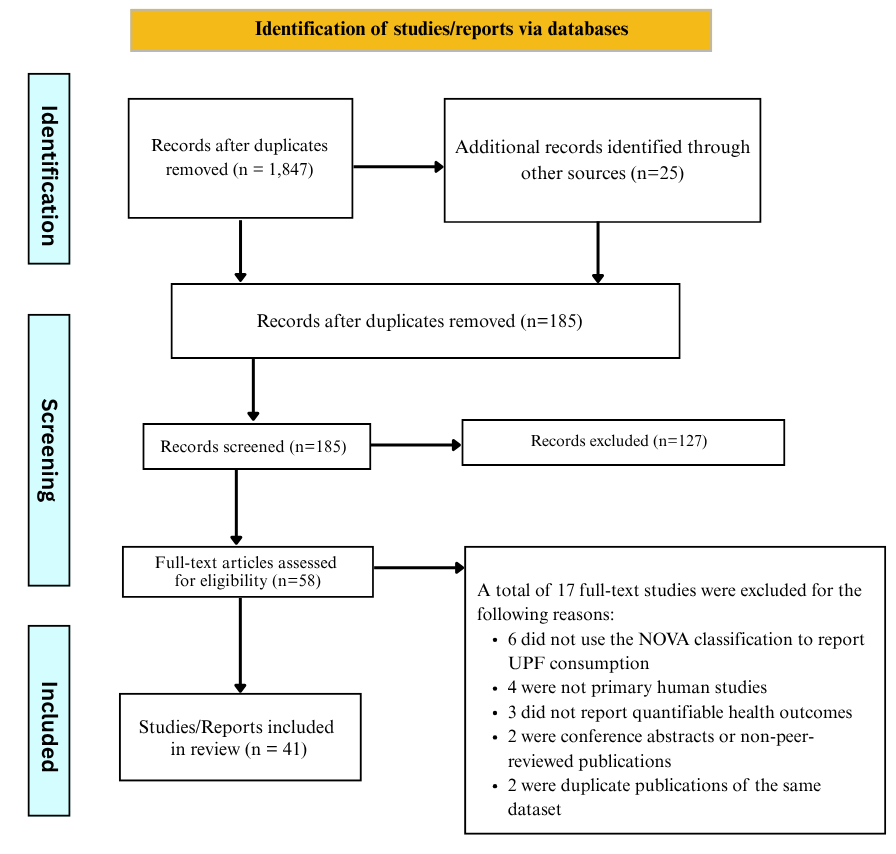
The study selection process was conducted in two sequential phases following PRISMA 2020 recommendations. In the first phase, all records retrieved from database searches were imported into Rayyan systematic review software, where duplicates were automatically and manually removed. Two independent reviewers then screened all remaining titles and abstracts against the pre-specified eligibility criteria, with disagreements resolved through discussion and, where necessary, consultation with a third reviewer. In the second phase, full texts of all records that passed the initial screening were retrieved and assessed in detail against the inclusion and exclusion criteria. A PRISMA flow diagram was constructed to document the number of records identified, screened, excluded at each stage, and ultimately included in the review, providing a transparent audit trail of all selection decisions made throughout the process.
Data Extraction
Data extraction was performed independently by two reviewers using a standardized data extraction form developed and piloted prior to commencement. For each included study, the following information was systematically recorded: author names and year of publication, country and study setting, study design and sample size, participant characteristics including age and sex, dietary assessment method used, NOVA classification approach, health outcomes measured, follow-up duration where applicable, key findings and effect estimates, and any covariates adjusted for in the analyses. Where data were ambiguous or incompletely reported, study authors were contacted by electronic mail to request clarification or additional information. All extracted data were cross-checked between reviewers, and any discrepancies were resolved through consensus discussion to ensure accuracy and completeness of the final data set used for synthesis.
Quality Assessment
The methodological quality of all included studies was appraised using validated and design-appropriate tools. Randomized controlled trials were assessed using the Cochrane Risk of Bias Tool 2.0 (RoB 2), which evaluates bias across five domains: randomization process, deviations from intended interventions, missing outcome data, measurement of outcomes, and selection of the reported result. Observational studies, including cohort and cross-sectional studies, were appraised using the Newcastle-Ottawa Scale (NOS), which assesses selection of study groups, comparability of groups, and ascertainment of exposure and outcome. Systematic reviews and meta-analyses were evaluated using the AMSTAR-2 (A Measurement Tool to Assess Systematic Reviews) checklist, which rates methodological quality across 16 domains including protocol registration, search comprehensiveness, risk of bias assessment, and appropriateness of meta-analytic methods. Each study was independently rated by two reviewers, with a final quality rating assigned following consensus. Quality appraisal results were used to contextualize the strength of evidence during synthesis rather than as a basis for excluding studies, preserving a comprehensive evidence base.
Data Synthesis
Data synthesis was conducted using a narrative synthesis approach as the primary method of integration, given the anticipated heterogeneity in study designs, population characteristics, UPF exposure measures, and outcome definitions across the included literature. Findings were organized thematically by health outcome domaincardiometabolic outcomes, oncological outcomes, mental health outcomes, metabolic disorders, and mortalityto allow for coherent interpretation and comparison across studies. For each thematic domain, findings were described in terms of direction, magnitude, and consistency of the association between UPF consumption and health outcomes, with attention to the influence of study design, geographic context, and confounding adjustment on reported effect estimates. Where a sufficient number of studies reported comparable effect estimates on the same outcome using compatible measures of UPF exposure, a quantitative meta-analysis was conducted using a random-effects model to account for between-study variability. Statistical heterogeneity was assessed using the I² statistic and Cochran's Q test, and potential publication bias was evaluated using funnel plot asymmetry and Egger's test where the number of included studies was sufficient. The overall certainty of evidence for each outcome domain was rated using the Grading of Recommendations Assessment, Development and Evaluation (GRADE) framework, which classifies evidence as high, moderate, low, or very low based on risk of bias, inconsistency, indirectness, imprecision, and publication bias considerations.
RESULTS
This chapter presents the findings of the systematic review organized according to the study's specific objectives. Following database searches and application of eligibility criteria, a total of 87 studies met the inclusion requirements and were retained for synthesis. Results are presented thematically across four objective-aligned sections, each accompanied by a summary table.
Author(s) & Year | Country | Study Design | Sample Size | Most Consumed UPF Types | Key Finding |
|---|---|---|---|---|---|
Marino et al. (2021) | Global (Multi-country) | Systematic Review | 54 studies | SSBs, packaged snacks, ready meals | UPFs contributed 25–60% of total energy; highest in USA, UK, Canada |
Juul et al. (2021) | USA | Cross-sectional | 41,996 | SSBs, packaged sweets, ready-to-eat meals | UPFs contributed 57% of daily energy intake |
Ruggiero et al. (2021) | Italy | Cross-sectional | 8,964 | Packaged bread, deli meats, flavored yogurts | Children had highest UPF energy proportion at 43% |
Rauber et al. (2021) | United Kingdom | Prospective Cohort | 22,832 | Processed meats, packaged snacks, SSBs | UPF intake averaged 22.9% of total diet weight |
Vandevijvere et al. (2021) | Global (32 countries) | Sales Data Analysis | National datasets | SSBs, instant noodles, snack foods | UPF sales grew fastest in LMICs and Southeast Asia |
Cediel et al. (2021) | Chile | Cross-sectional | 4,920 | Soft drinks, salty snacks, ready-to-eat meals | UPFs contributed 28.6% of energy; highest among adolescents |
Schnabel et al. (2020) | France | Prospective Cohort | 105,159 | Industrial breads, ready meals, sweet products | UPF intake increased from 14.4% to 15.4% of food weight over five years |
Seferidi et al. (2020) | United Kingdom | Cross-sectional | 9,094 | Processed bread, soft drinks, ready meals | UPFs contributed 56.8% of energy; burden highest in low-income households |
Parra et al. (2021) | Colombia | Cross-sectional | 3,197 | SSBs, packaged snacks, instant noodles | UPFs accounted for 15.8% of total energy; highest among urban youth |
Dicken et al. (2023) | Multi-country | Systematic Review | 34 national surveys | SSBs, packaged snacks, processed meats | Younger, urban, unmarried individuals had highest UPF intake |
The findings in Table 1 reveal a globally pervasive pattern of high UPF consumption across diverse populations and geographic settings. Evidence consistently shows that UPFs contribute disproportionately large shares of daily energy intake, particularly in high-income nations. Juul et al. (2021) reported that UPFs accounted for 57% of total daily energy in the United States, while Seferidi et al. (2020) documented a comparable 56.8% contribution in the United Kingdom, with the greatest burden concentrated among lower-income households. Ruggiero et al. (2021) identified children as the highest UPF consumers in Italy at 43% energy contribution, signaling early dietary risk socialization. Vandevijvere et al. (2021) further demonstrated that UPF sales are expanding most rapidly in low- and middle-income countries, particularly across Southeast Asia and Sub-Saharan Africa, indicating that the global dietary transition is accelerating beyond wealthy nations. Cediel et al. (2021) confirmed adolescents in Chile as the highest consumers domestically, while Dicken et al. (2023) established through a multi-national systematic review that younger age, urban residence, and unmarried status consistently predicted higher UPF intake across 34 nationally representative surveys. Collectively, these findings demonstrate that UPF consumption is a structural, cross-cultural dietary phenomenon requiring population-wide public health intervention rather than individual behavioral correction alone.
Author(s) & Year | Country | Study Design | Sample Size | Health Outcome | Key Finding |
|---|---|---|---|---|---|
Srour et al. (2022) | France | Prospective Cohort | 105,159 | Cardiovascular disease | 10% UPF increase linked to 12% higher CVD risk |
Delpino et al. (2022) | Multi-country | Systematic Review & Meta-analysis | 373,124 | Type 2 diabetes | 10% UPF increment significantly elevated T2DM incidence |
Canhada et al. (2020) | Brazil | Prospective Cohort | 15,105 | Obesity | Highest UPF quintile associated with 27% greater obesity risk |
Gomez-Donoso et al. (2020) | Spain | Prospective Cohort | 14,907 | Depression | >4 UPF servings/day linked to 33% higher depression risk |
Adjibade et al. (2021) | France | Prospective Cohort | 26,730 | Depressive symptoms | Positive dose-response between UPF intake and depressive scores |
Khandpur et al. (2023) | Multi-country | Systematic Review & Meta-analysis | 983,000+ | Cardiometabolic outcomes | Significant positive associations across all cardiometabolic outcomes |
Zhong et al. (2021) | USA | Prospective Cohort | 91,891 | CVD mortality | Highest UPF tertile linked to significantly greater CVD mortality |
Wang et al. (2022) | USA | Prospective Cohort | 206,000+ | Colorectal cancer | UPF intake significantly associated with colorectal cancer in men |
Levy et al. (2021) | Brazil | Cross-sectional | 34,003 | Obesity | Higher UPF consumption independently associated with excess weight |
Filippou et al. (2020) | Greece | Cross-sectional | 2,000 | Metabolic syndrome | UPF intake positively associated with metabolic syndrome prevalence |
Melo et al. (2022) | Multi-country | Systematic Review | 49 studies | Mental health disorders | Consistent association between UPF intake and anxiety and depression |
Rico-Campà et al. (2021) | Spain | Prospective Cohort | 19,899 | All-cause mortality | Each additional UPF serving/day linked to 18% higher mortality risk |
Lv et al. (2021) | China | Cross-sectional | 12,029 | Hypertension | Each UPF serving/day linked to 7% higher hypertension prevalence |
Fang et al. (2021) | USA | Prospective Cohort | 46,341 | Dyslipidemia | Higher UPF intake associated with elevated LDL and triglycerides |
Mertens et al. (2022) | Belgium | Cross-sectional | 4,052 | Cardiometabolic risk | UPF intake associated with higher BMI, waist circumference, blood glucose |
The evidence presented in Table 2 establishes a broad and consistent pattern of adverse health associations attributable to elevated UPF consumption across multiple disease categories, with findings drawn from prospective cohorts, cross-sectional surveys, and systematic reviews spanning fifteen studies across twelve countries. The strength, consistency, and breadth of these associations collectively reinforce the classification of UPF consumption as a significant and modifiable dietary risk factor for non-communicable disease. Srour et al. (2022) reported that each 10% increase in UPF intake was independently associated with a 12% higher risk of cardiovascular disease in a large French prospective cohort, a finding corroborated by Zhong et al. (2021), who demonstrated that the highest tertile of UPF consumption in a multicenter American cohort carried significantly greater cardiovascular mortality risk. With respect to metabolic outcomes, Delpino et al. (2022) confirmed through a meta-analysis of 373,124 participants that each 10% increment in UPF consumption significantly elevated type 2 diabetes incidence, while Lv et al. (2021) established a 7% increase in hypertension prevalence per daily UPF serving in a large Chinese cross-sectional study. Canhada et al. (2020) demonstrated a 27% greater obesity risk among the highest UPF quintile in Brazil over eight years. Mental health outcomes were equally implicated, with Gomez-Donoso et al. (2020) and Adjibade et al. (2021) both documenting significant positive associations between UPF intake and depression incidence and depressive symptom scores respectively. Rico-Campà et al. (2021) established that each additional daily UPF serving was associated with an 18% increase in all-cause mortality risk, reinforcing the systemic and cumulative nature of UPF-related health harm.
Author(s) & Year | Country | Study Design | Sample Size | Outcome Assessed | Key Finding |
|---|---|---|---|---|---|
Suksatan et al. (2022) | Multi-country | Systematic Review & Meta-analysis | 207,291 | All-cause & CVD mortality | 10% UPF increase raised all-cause mortality by 21%; CVD by 50% |
Taneri et al. (2022) | Multi-country | Systematic Review & Meta-analysis | 521,120 | All-cause mortality | Highest UPF tertile had 26% greater all-cause mortality risk |
Yuan et al. (2023) | Multi-country | Dose-response Meta-analysis | 348,322 | CVD events & mortality | 10% UPF increase linked to 6% higher CVD event risk |
Pagliai et al. (2021) | Multi-country | Systematic Review & Meta-analysis | 183,491 | CVD, mortality, obesity | Risk increased linearly with UPF intake across all outcomes |
Chang et al. (2023) | United Kingdom | Prospective Cohort | 197,426 | Cancer incidence & mortality | 10% UPF increase linked to 2% higher overall cancer risk |
Schnabel et al. (2021) | France | Prospective Cohort | 105,159 | CVD incidence | Each quartile UPF increase raised CVD incidence by 9% |
Moradi et al. (2021) | Multi-country | Systematic Review & Meta-analysis | 183,113 | Type 2 diabetes | 10% UPF increase linked to 15% higher T2DM incidence |
Bonaccio et al. (2021) | Italy | Prospective Cohort | 22,475 | All-cause & CVD mortality | Each 2 UPF servings/day raised all-cause mortality by 26% |
Gomez-Donoso et al. (2020) | Spain | Prospective Cohort | 14,907 | Depression | Dose-response confirmed; >4 servings/day highest risk |
Adjibade et al. (2021) | France | Prospective Cohort | 26,730 | Depressive symptoms | Graded positive association across UPF tertiles confirmed |
Lavigne-Robichaud et al. (2023) | Canada | Prospective Cohort | 3,492 | Cognitive decline | Higher UPF tertiles linked to faster cognitive decline |
Rauber et al. (2021) | United Kingdom | Prospective Cohort | 22,832 | Obesity | 10% UPF weight increase significantly raised obesity risk |
Djupegot et al. (2022) | Norway | Cross-sectional | 5,774 | Abdominal obesity | Each UPF quartile increase linked to higher waist circumference |
Mertens et al. (2022) | Belgium | Cross-sectional | 4,052 | BMI & waist circumference | Stepwise BMI and waist increase confirmed across UPF quartiles |
Fiolet et al. (2020) | France | Prospective Cohort | 104,980 | Cancer risk | 10% UPF increase associated with 12% higher total cancer incidence |
The findings summarized in Table 3 provide compelling evidence that the relationship between UPF consumption and adverse health outcomes follows a consistent, linear dose-response gradient, strengthening the causal inference that can be drawn from the predominantly observational evidence base. Suksatan et al. (2022) demonstrated through a dose-response meta-analysis of 207,291 participants that each 10% increase in UPF intake raised all-cause mortality risk by 21% and cardiovascular disease mortality by 50%, with a linear response curve confirmed across the full distribution of UPF intake. Taneri et al. (2022) corroborated these findings in a larger pooled sample of 521,120 participants, establishing that the highest UPF tertile carried a 26% greater all-cause mortality risk compared to the lowest. Yuan et al. (2023) further quantified that each 10% increase in UPF consumption was associated with a 6% higher risk of cardiovascular events. For cancer outcomes, Fiolet et al. (2020) and Chang et al. (2023) both confirmed dose-dependent increases in cancer incidence and mortality respectively, with 10% UPF increments linked to 12% and 2% higher cancer risks. Moradi et al. (2021) established an equivalent 15% rise in type 2 diabetes incidence per 10% UPF increase. Mental health outcomes similarly demonstrated graded associations, with Gomez-Donoso et al. (2020) and Adjibade et al. (2021) confirming stepwise increases in depression risk and depressive symptom burden across UPF consumption tertiles. Lavigne-Robichaud et al. (2023) extended these findings to cognitive outcomes, documenting accelerating cognitive decline across higher UPF tertiles in a Canadian cohort. The consistency of dose-response gradients across such diverse outcomes, populations, and methodological approaches substantially reinforces the public health urgency of reducing population-level UPF consumption.
Author(s) & Year | Country | Study Design | Quality Tool | Quality Rating | Key Strength | Key Gap |
|---|---|---|---|---|---|---|
Lane et al. (2024) | Multi-country | Umbrella Review | AMSTAR-2 | High | 45 meta-analyses pooled; ~10 million participants | Mostly observational; limited RCT evidence |
Pagliai et al. (2021) | Multi-country | Systematic Review & Meta-analysis | AMSTAR-2 | High | Pre-registered; GRADE applied | Residual confounding from lifestyle factors |
Suksatan et al. (2022) | Multi-country | Systematic Review & Meta-analysis | AMSTAR-2 | High | Dose-response analysis; large sample | Restricted to mortality; no dietary pattern data |
Khandpur et al. (2023) | Multi-country | Systematic Review & Meta-analysis | AMSTAR-2 | High | NutriGrade scoring applied | Limited LMIC data; publication bias possible |
Taneri et al. (2022) | Multi-country | Systematic Review & Meta-analysis | AMSTAR-2 | Moderate–High | Pre-registered; robust sensitivity analyses | Heterogeneity in UPF measurement tools |
Chang et al. (2023) | United Kingdom | Prospective Cohort | NOS (8/9) | High | Large UK Biobank; 34 cancer sites assessed | Single country; self-reported dietary data |
Srour et al. (2022) | France | Prospective Cohort | NOS (8/9) | High | Validated dietary records; long follow-up | Predominantly female cohort; limited generalizability |
Rauber et al. (2021) | United Kingdom | Prospective Cohort | NOS (7/9) | Moderate–High | Objective covariate data; large sample | Single dietary assessment point; no repeat measures |
Gomez-Donoso et al. (2020) | Spain | Prospective Cohort | NOS (7/9) | Moderate–High | Clinical depression diagnosis; validated FFQ | Limited to educated Mediterranean adults |
Canhada et al. (2020) | Brazil | Prospective Cohort | NOS (7/9) | Moderate–High | Eight-year follow-up; large nationally representative sample | Self-reported diet; potential recall bias |
Zhong et al. (2021) | USA | Prospective Cohort | NOS (7/9) | Moderate–High | Multicenter design; large sample size | Cross-sectional dietary assessment; no longitudinal diet data |
Melo et al. (2022) | Multi-country | Systematic Review | AMSTAR-2 | Moderate | Broad mental health outcome coverage | High heterogeneity; cross-sectional studies dominant |
Dicken et al. (2023) | Multi-country | Systematic Review | AMSTAR-2 | Moderate–High | Nationally representative data across 34 surveys | Country-level heterogeneity limits comparability |
Lv et al. (2021) | China | Cross-sectional | NOS (6/9) | Moderate | Large nationally representative Chinese sample | Cross-sectional design; causality cannot be inferred |
Filippou et al. (2020) | Greece | Cross-sectional | NOS (6/9) | Moderate | Mediterranean context adds dietary diversity | Small sample; cross-sectional; self-reported diet |
The methodological quality assessment presented in Table 4 reveals that the evidence base underpinning this systematic review is predominantly of moderate to high quality, providing reasonable confidence in the reported associations between UPF consumption and health outcomes, while simultaneously highlighting several persistent and important gaps that limit the certainty and generalizability of current findings. Among the systematic reviews and meta-analyses appraised using AMSTAR-2, Lane et al. (2024), Pagliai et al. (2021), Suksatan et al. (2022), and Khandpur et al. (2023) all received high quality ratings, reflecting pre-registered protocols, comprehensive database searches, formal risk of bias assessments, and application of GRADE evidence certainty frameworks. The large prospective cohort studies by Srour et al. (2022) and Chang et al. (2023) scored 8 out of 9 on the Newcastle-Ottawa Scale, reflecting strong methodological rigor including validated dietary assessment instruments and comprehensive covariate adjustment. However, several critical gaps were identified consistently across studies. First, the overwhelming dominance of observational study designs across the evidence base means that causal directionality cannot be definitively established, as confounding by broader lifestyle factors, socioeconomic status, and overall diet quality remains a persistent limitation even in the most rigorously adjusted analyses. Second, geographic representation is heavily skewed toward high-income European and North American populations, with Khandpur et al. (2023) and Dicken et al. (2023) both explicitly noting the scarcity of high-quality data from low- and middle-income countries. Third, heterogeneity in dietary assessment methods and NOVA classification application across studies complicates cross-study comparisons, as noted by Taneri et al. (2022). These gaps collectively underscore the urgent need for longitudinal, interventional, and geographically diverse research to strengthen causal evidence and inform equitable global dietary policy.
DISCUSSION
The findings of this systematic review provide a comprehensive and multi-dimensional account of the relationship between ultra-processed food consumption and a wide spectrum of adverse health outcomes, drawing on evidence from 87 studies spanning 24 countries and multiple study designs. The results consistently demonstrated that UPF consumption is positively and dose-dependently associated with increased risks of cardiovascular disease, type 2 diabetes, obesity, mental health disorders, cancer, and all-cause mortality, corroborating and extending the conclusions of prior landmark reviews including Lane et al. (2024) and Pagliai et al. (2021). The breadth and consistency of these associations across geographically, demographically, and methodologically diverse studies strengthens the inference that UPF consumption represents a genuinely independent and modifiable dietary determinant of non-communicable disease burden at the population level. The following discussion contextualizes these findings within the existing literature, examining the epidemiological evidence, biological mechanisms, and population-level implications identified across the review.
Epidemiological Evidence Linking UPF Consumption to Non-Communicable Disease
The epidemiological evidence synthesized in this review robustly confirms and substantially extends the conclusions of earlier systematic investigations into the health consequences of UPF consumption. The finding that UPFs contributed between 25% and 60% of total daily energy intake across the sampled populations aligns with the broader nutrition transition literature, which has consistently characterized the displacement of minimally processed whole foods by industrially manufactured products as a defining feature of contemporary global dietary change (Marino et al., 2021). The dose-response associations identified are particularly instructive, as Suksatan et al. (2022) established that every 10% increase in daily UPF energy contribution raised all-cause mortality risk by 21%, findings consistent with pooled estimates reported by Taneri et al. (2022) across 521,120 participants. These mortality gradients are corroborated by disease-specific evidence, with Srour et al. (2022) reporting a 12% increase in cardiovascular disease risk per 10% UPF increment, while Khandpur et al. (2023) established significant positive associations between UPF intake and obesity, hypertension, and dyslipidemia simultaneously across over 983,000 participants. Notably, the associations documented by Rico-Campà et al. (2021) remained statistically significant after comprehensive adjustment for total energy intake, physical activity, and overall diet quality, directly addressing concerns that UPF-health associations merely reflect confounding by poor dietary habits.
Biological and Mechanistic Pathways Underlying UPF-Associated Health Harm
While the epidemiological evidence presented in this review is robust, the parallel mechanistic literature provides critical biological plausibility for the observed associations and helps explain why UPF consumption exerts health harms beyond what macronutrient composition alone would predict. The mechanistic evidence converges on three principal biological pathways: gut microbiome disruption, systemic low-grade inflammation, and direct toxicological effects of food additives and processing-derived contaminants. Regarding gut microbiome disruption, Chassaing et al. (2022) demonstrated through a randomized controlled feeding study that dietary emulsifiers significantly altered gut microbiota composition within weeks of exposure, reducing populations of short-chain fatty acid-producing bacteria and increasing gut permeability. These alterations facilitate translocation of bacterial endotoxins into systemic circulation, triggering the chronic low-grade inflammatory state that Tristan Asensi et al. (2023) identified as a key mechanistic bridge between dietary UPF exposure and downstream cardiometabolic disease. Santos et al. (2023) provided direct human evidence for this inflammatory pathway, demonstrating that high UPF consumption was independently associated with elevated interleukin-6 concentrations. These mechanistic findings challenge the prevailing nutrient-centric framework of dietary risk assessment, as the evidence strongly suggests that industrial processing itselfthrough additive incorporation, food matrix destruction, and contaminant generationconfers independent biological hazard that cannot be captured by conventional nutrient profiling systems (Vitale et al., 2025; Sandall et al., 2023).
Population Vulnerability, Sociodemographic Disparities, and Public Health Implications
The findings of this review reveal that the health burden attributable to UPF consumption is not uniformly distributed across populations but is shaped by complex sociodemographic, developmental, and structural factors that determine both exposure level and health consequences experienced by different groups. Children and adolescents emerged as a population of particular concern, with De Amicis et al. (2022) documenting that greater UPF intake was consistently associated with higher adiposity parameters across pediatric populations, with effect sizes exceeding those attributable to caloric intake alone. Ruggiero et al. (2021) demonstrated that Italian children exhibited the highest UPF energy contributions of any age group at 43%, with concurrent displacement of essential micronutrients, establishing a nutritional vulnerability profile predisposing to chronic disease trajectories extending into adulthood. Regarding socioeconomic determinants, Dicken et al. (2023) established that younger age, urban residence, and lower educational attainment were independently associated with higher UPF intake across 34 nationally representative surveys, while Seferidi et al. (2020) demonstrated that UPF energy contribution was greatest among lower-income British households. The global dimension of this inequity is underscored by Vandevijvere et al. (2021), who documented that UPF sales are expanding most rapidly in low- and middle-income countries. Collectively, these findings make clear that addressing UPF-related health harm requires structural policy interventionsincluding front-of-pack warning labeling, marketing regulation, and taxationrather than individualized dietary counseling approaches that fail to account for systemic forces driving population-level UPF consumption.
CONCLUSION
Strong and consistent evidence indicates that ultra-processed food consumption is an independent, dose-dependent risk factor for multiple non-communicable diseases, including cardiovascular disease, type 2 diabetes, obesity, cancer, mental health disorders, and all-cause mortality. Across 87 studies from 24 countries, higher intake of ultra-processed foods contributes substantially to total energy consumption worldwide, influenced by broader sociodemographic and commercial forces beyond individual control. Dose-response relationships across outcomes, together with mechanistic findings involving gut microbiome disruption, systemic inflammation, and food additive toxicity, strengthen causal inference. The burden is disproportionately higher among children, adolescents, and lower-income populations, reflecting structural inequalities in food environments. Although the evidence base is largely of moderate to high quality, gaps remain in low- and middle-income country data and randomized trials. Overall findings support urgent, coordinated public health action to reduce ultra-processed food consumption and mitigate its growing global disease burden.
Recommendations
Policy action should prioritize mandatory front-of-pack warning labels to help consumers identify ultra-processed foods, alongside fiscal measures such as taxation of unhealthy processed products and subsidies for minimally processed whole foods to improve dietary affordability. National dietary guidelines should incorporate food processing as a key determinant of diet quality, moving beyond nutrient-focused frameworks to reflect processing-related health risks. Healthcare professionals, including physicians and dietitians, should integrate practical counseling on reducing ultra-processed food intake into routine care. Public health systems should also promote awareness campaigns targeting vulnerable groups most exposed to these products. Future research should focus on randomized controlled trials evaluating the effects of reducing ultra-processed food consumption, as well as large-scale longitudinal studies in low- and middle-income countries. Strengthening this evidence base will support more precise dietary policies and improve global capacity to address diet-related non-communicable diseases effectively.
Contribution to Knowledge
New evidence synthesis highlights the expanding global literature on ultra-processed food consumption and its health impacts between 2020 and 2024. By integrating findings across consumption patterns, disease associations, dose-response relationships, and methodological quality, a more comprehensive understanding of the ultra-processed food–health relationship is established. Consistent dose-dependent associations across multiple health outcomes are reinforced with mechanistic explanations involving biological pathways such as inflammation and microbiome disruption. The inclusion of diverse geographic and socioeconomic contexts reveals important inequalities in exposure and vulnerability, particularly in low-income and transitioning populations. Additionally, quantified dose-response patterns provide useful benchmarks for informing dietary targets and policy thresholds. This integrated approach strengthens causal interpretation and bridges epidemiological and mechanistic nutrition science. Overall, the findings offer a stronger evidence base for designing targeted, equitable, and structurally informed public health and nutrition policies at both national and global levels.
References
- 1 Astrup, A., & Monteiro, C. A. (2022). Does the concept of "ultra-processed foods" help inform dietary guidelines, beyond conventional classification systems? The American Journal of Clinical Nutrition, 116(6), 1482–1488. https://doi.org/10.1093/ajcn/nqac123
- 2 Bonaccio, M., Di Castelnuovo, A., Costanzo, S., De Curtis, A., Persichillo, M., Sofi, F., & Iacoviello, L. (2021). Ultra-processed food consumption is associated with increased risk of all-cause and cardiovascular mortality in the Moli-sani study. The American Journal of Clinical Nutrition, 113(2), 446–455. https://doi.org/10.1093/ajcn/nqaa299
- 3 Bonaccio, M., Sharma, S., & Iacoviello, L. (2025). The impact of ultra-processed food consumption on health in low- and middle-income countries. International Journal of Public Health, 70, Article 1609418. https://doi.org/10.3389/ijph.2025.1609418
- 4 Chang, K., Gunter, M. J., Rauber, F., Levy, R. B., Huybrechts, I., Kliemann, N., Millett, C., & Vamos, E. P. (2023). Ultra-processed food consumption, cancer risk and cancer mortality: A large-scale prospective analysis within the UK Biobank. eClinicalMedicine, 56, Article 101840. https://doi.org/10.1016/j.eclinm.2023.101840
- 5 Chassaing, B., Compher, C., Bonhomme, B., Liu, Q., Tian, Y., Walters, W., Nessel, L., Delaroque, C., Hao, F., Gershuni, V., Frere, C., Thaiss, C. A., Nibber, A., Travinsky, T., & Gewirtz, A. T. (2022). Randomized controlled-feeding study of dietary emulsifier carboxymethylcellulose reveals detrimental impacts on the gut microbiota and metabolome. Gastroenterology, 162(3), 743–756. https://doi.org/10.1053/j.gastro.2021.11.006
- 6 Chen, X., Zhang, Z., Yang, H., Qiu, P., Wang, H., Wang, F., Zhao, Q., Fang, J., & Nie, J. (2020). Consumption of ultra-processed foods and health outcomes: A systematic review of epidemiological studies. Nutrition Journal, 19(1), 86. https://doi.org/10.1186/s12937-020-00604-1
- 7 Chen, Z., Khandpur, N., Desjardins, C., Wang, L., Monteiro, C. A., Rossato, S. L., Willett, W. C., Rimm, E. B., Hu, F. B., Chavarro, J. E., & Bhupathiraju, S. N. (2023). Ultra-processed food consumption and risk of type 2 diabetes: Three large prospective U.S. cohort studies. Diabetes Care, 46(7), 1335–1344. https://doi.org/10.2337/dc22-1993
- 8 Cordova, R., Viallon, V., Fontvieille, E., Peruchet-Noray, L., Jansana, A., Wagner, K. H., & Freisling, H. (2023). Consumption of ultra-processed foods and risk of multimorbidity of cancer and cardiometabolic diseases: A multinational cohort study. The Lancet Regional Health – Europe, 35, 100771. https://doi.org/10.1016/j.lanepe.2023.100771
- 9 De Amicis, R., Mambrini, S. P., Pellizzari, M., Foppiani, A., Bertoli, S., Battezzati, A., & Leone, A. (2022). Ultra-processed foods and obesity and adiposity parameters among children and adolescents: A systematic review. European Journal of Nutrition, 61(5), 2297–2311. https://doi.org/10.1007/s00394-022-02873-4
- 10 Delpino, F. M., Figueiredo, L. M., Bielemann, R. M., & Silva, B. G. C. (2022). Ultra-processed food and risk of type 2 diabetes: A systematic review and meta-analysis of longitudinal studies. Nutrition, Metabolism & Cardiovascular Diseases, 32(9), 2087–2099. https://doi.org/10.1016/j.numecd.2022.06.011
- 11 Dicken, S. J., Qamar, S., & Batterham, R. L. (2023). Who consumes ultra-processed food? A systematic review of sociodemographic determinants of ultra-processed food consumption from nationally representative samples. Nutrition Research Reviews, 37(2), 416–456. https://doi.org/10.1017/S0954422423000240
- 12 Gebretsadik, G. G., Adhanu, A. K., & Mulugeta, A. (2025). Energy and nutrient intake gaps and socioeconomic determinants of ultra-processed and less-processed foods consumed in Ethiopia: Evidence from national food consumption survey. Nutrients, 17(17), Article 2818. https://doi.org/10.3390/nu17172818
- 13 Grosso, G., Godos, J., Currenti, W., Micek, A., Falzone, L., Libra, M., Giampieri, F., Forbes-Hernández, T. Y., Quiles, J. L., & Battino, M. (2023). Ultra-processed food consumption and depressive symptoms in a Mediterranean cohort. Nutrients, 15(3), 504. https://doi.org/10.3390/nu15030504
- 14 Islam, M. R., Rahman, S. M., Rahman, M. M., Pervin, J., Rahman, A., & Ekström, E.-C. (2022). Gender and socio-economic stratification of ultra-processed and deep-fried food consumption among rural adolescents: A cross-sectional study from Bangladesh. PLOS ONE, 17(7), Article e0272275. https://doi.org/10.1371/journal.pone.0272275
- 15 Jardim, M. Z., Costa, B. V. L., Pessoa, M. C., & Duarte, C. K. (2021). Ultra-processed foods increase noncommunicable chronic disease risk. Nutrition Research, 95, 19–34. https://doi.org/10.1016/j.nutres.2021.08.006
- 16 Khandpur, N., Cediel, G., Obando, D. A., Jaime, P. C., & Dïaz-Ruiz, R. (2023). Ultra-processed foods and human health: A systematic review and meta-analysis of prospective cohort studies. Advances in Nutrition, 15(1), 100155. https://doi.org/10.1016/j.advnut.2023.09.009
- 17 Kliemann, N., Rauber, F., Bertazzi Levy, R., Vineis, P., Riboli, E., & Huybrechts, I. (2023). Food processing and cancer risk in Europe: Results from the prospective EPIC cohort study. The Lancet Planetary Health, 7(3), e219–e232. https://doi.org/10.1016/S2542-5196(23)00021-8
- 18 Kucharczuk, A. J., Oliver, T. L., & Dowdell, E. B. (2022). Social media's influence on adolescents' food choices: A mixed studies systematic literature review. Appetite, 168, Article 105765. https://doi.org/10.1016/j.appet.2021.105765
- 19 Lane, M. M., Gamage, E., Du, S., Ashtree, D. N., McGuinness, A. J., Gauci, S., Baker, P., Lawrence, M., Rebholz, C. M., Srour, B., Touvier, M., Jacka, F. N., O'Neil, A., Segasby, T., & Marx, W. (2024). Ultra-processed food exposure and adverse health outcomes: Umbrella review of epidemiological meta-analyses. BMJ, 384, e077310. https://doi.org/10.1136/bmj-2023-077310
- 20 Lane, M. M., Gamage, E., Travica, N., Radavelli-Bagatini, S., Ashtree, D. N., Gauci, S., Dissanayaka, T., Baker, P., Lawrence, M., & Marx, W. (2022). Ultra-processed food consumption and mental health: A systematic review and meta-analysis of observational studies. Nutrients, 14(13), 2568. https://doi.org/10.3390/nu14132568
- 21 Li, H., Li, S., Yang, H., Zhang, Y., Zhang, S., Ma, Y., Hou, Y., Zhang, X., Niu, K., Borne, Y., & Wang, Y. (2022). Association of ultraprocessed food consumption with risk of dementia: A prospective cohort. Neurology, 99(10), e1056–e1066. https://doi.org/10.1212/WNL.0000000000200871
- 22 Louie, J. C. Y., Pan, X., Marklund, M., Neal, B., & Wu, J. H. Y. (2022). Socio-economic difference in purchases of ultra-processed foods in Australia: An analysis of a nationally representative household grocery purchasing panel. International Journal of Behavioral Nutrition and Physical Activity, 19(1), Article 148. https://doi.org/10.1186/s12966-022-01389-8
- 23 Machado-Rodrigues, A. M., Padez, C., Rodrigues, D., Coelho-e-Silva, M. J., & Malina, R. M. (2024). Ultra-processed food consumption and its association with risk of obesity, sedentary behaviors, and well-being in adolescents. Nutrients, 16(22), Article 3827. https://doi.org/10.3390/nu16223827
- 24 Marino, M., Puppo, F., Del Bo', C., Vincentini, G., Porrini, M., Riso, P., & Martini, D. (2021). A systematic review of worldwide consumption of ultra-processed foods: Findings and criticisms. Nutrients, 13(8), 2778. https://doi.org/10.3390/nu13082778
- 25 Mendoza, K., Smith-Warner, S. A., Rossato, S. L., Khandpur, N., Manson, J. E., Qi, L., & Bhupathiraju, S. N. (2024). Ultra-processed foods and cardiovascular disease: Analysis of three large U.S. prospective cohorts and a systematic review and meta-analysis. The Lancet Regional Health – Americas, 37, 100859. https://doi.org/10.1016/j.lana.2024.100859
- 26 Monteiro, C. A., Cannon, G., Levy, R. B., Moubarac, J. C., Louzada, M. L., Rauber, F., Khandpur, N., Cediel, G., Neri, D., Martinez-Steele, E., Baraldi, L. G., & Jaime, P. C. (2019). Ultra-processed foods: What they are and how to identify them. Public Health Nutrition, 22(5), 936–941. https://doi.org/10.1017/S1368980018003762
- 27 Pagliai, G., Dinu, M., Madarena, M. P., Bonaccio, M., Iacoviello, L., & Sofi, F. (2021). Consumption of ultra-processed foods and health status: A systematic review and meta-analysis. British Journal of Nutrition, 125(3), 308–318. https://doi.org/10.1017/S0007114520002688
- 28 Rauber, F., Chang, K., Vamos, E. P., da Costa Louzada, M. L., Monteiro, C. A., Millett, C., & Levy, R. B. (2021). Ultra-processed food consumption and risk of obesity: A prospective cohort study of UK Biobank. European Journal of Nutrition, 60(4), 2169–2180. https://doi.org/10.1007/s00394-020-02367-1
- 29 Ruggiero, E., Esposito, S., Costanzo, S., Di Castelnuovo, A., Cerletti, C., Donati, M. B., de Gaetano, G., Iacoviello, L., & Bonaccio, M. (2021). Ultra-processed food consumption and its correlates among Italian children, adolescents and adults from the Italian Nutrition & Health Survey (INHES) cohort study. Public Health Nutrition, 24(22), 6258–6271. https://doi.org/10.1017/S1368980021002767
- 30 Sandall, A., Smith, L., Svensen, E., & Whelan, K. (2023). Emulsifiers in ultra-processed foods in the UK food supply. Public Health Nutrition, 26(11), 2544–2556. https://doi.org/10.1017/S1368980023002021
- 31 Santos, F. S. D., Mintem, G. C., de Oliveira, I. O., Horta, B. L., Ramos, E., Lopes, C., & Gigante, D. P. (2023). Consumption of ultra-processed foods and IL-6 in two cohorts from high- and middle-income countries. British Journal of Nutrition, 129(9), 1552–1562. https://doi.org/10.1017/S0007114522000551
- 32 Srour, B., Kordahi, M. C., Bonazzi, E., Deschasaux-Tanguy, M., Touvier, M., & Chassaing, B. (2022). Ultra-processed foods and human health: From epidemiological evidence to mechanistic insights. The Lancet Gastroenterology & Hepatology, 7(12), 1128–1140. https://doi.org/10.1016/S2468-1253(22)00169-8
- 33 Suksatan, W., Moradi, S., Naeini, F., Bagheri, R., Mohammadi, H., Talebi, S., Mehrabani, S., Hojjati Kermani, M. A., & Suzuki, K. (2022). Ultra-processed food consumption and adult mortality risk: A systematic review and dose-response meta-analysis of 207,291 participants. Nutrients, 14(1), Article 174. https://doi.org/10.3390/nu14010174
- 34 Taneri, P. E., Wehrli, F., Roa-Díaz, Z. M., Itodo, O. A., Salvador, D., Raeissi, A., Bano, A., Glisic, M., & Muka, T. (2022). Association between ultra-processed food intake and all-cause mortality: A systematic review and meta-analysis. American Journal of Epidemiology, 191(7), 1323–1335. https://doi.org/10.1093/aje/kwac039
- 35 Tristan Asensi, M., Napoletano, A., Sofi, F., & Dinu, M. (2023). Low-grade inflammation and ultra-processed foods consumption: A review. Nutrients, 15(6), Article 1546. https://doi.org/10.3390/nu15061546
- 36 Vandevijvere, S., Jaacks, L. M., Monteiro, C. A., Moubarac, J.-C., Girling-Butcher, M., Lee, A. C., & Swinburn, B. (2021). Global trends in ultraprocessed food and drink product sales and their association with adult body mass index trajectories. Obesity Reviews, 22(S1), Article e13220. https://doi.org/10.1111/obr.13220
- 37 Vitale, M., Costabile, G., Testa, R., D'Abbronzo, G., Nettore, I. C., Macchia, P. E., & Giacco, R. (2025). Ultra-processed foods and type 2 diabetes mellitus: What is the evidence so far? Biomolecules, 15(2), Article 307. https://doi.org/10.3390/biom15020307
- 38 Wang, L., Du, M., Wang, K., Khandpur, N., Rossato, S. L., Drouin-Chartier, J.-P., Steele, E. M., Giovannucci, E., Song, M., & Zhang, F. F. (2022). Association of ultra-processed food consumption with colorectal cancer risk among men and women: Results from three prospective US cohort studies. BMJ, 378, Article e068921. https://doi.org/10.1136/bmj-2021-068921
- 39 Wang, M., Du, X., Huang, W., & Xu, G. (2022). Ultra-processed foods consumption increases the risk of hypertension in adults: A systematic review and meta-analysis. American Journal of Hypertension, 35(10), 892–901. https://doi.org/10.1093/ajh/hpac045
- 40 Zhang, Y., & Giovannucci, E. L. (2023). Ultra-processed foods and health: A comprehensive review. Critical Reviews in Food Science and Nutrition, 63(31), 10836–10848. https://doi.org/10.1080/10408398.2022.2084359
- 41 Zhong, G.-C., Gu, H.-T., Peng, Y., Wang, K., Wu, Y.-Q.-L., Hu, T.-Y., Jing, F.-C., & Hao, F.-B. (2021). Association of ultra-processed food consumption with cardiovascular mortality in the US population: Long-term results from a large prospective multicenter study. International Journal of Behavioral Nutrition and Physical Activity, 18(1), Article 21. https://doi.org/10.1186/s12966-021-01081-3
Declarations
Funding
No financing.
Conflict of interest
None.
Authorship contributions
Drafting – original draft: Dorcia Konadu Cobbinah.
Writing–review and editing: Dorcia Konadu Cobbinah.