
Abstract
Reading difficulties and dyslexia affect schoolchildren across Latin America, and digital tools are proposed to support them in Spanish and Portuguese. This narrative review synthesized 37 reports published between 2013 and 2025 from eight Latin American countries. Twenty-two reports evaluated a tool against reading-related outcomes, whereas 15 described design, requirements or usability only. Games and non-game programs were evaluated in 11 reports each, and authors reported improvement in 10 of 11 games and 9 of 11 non-game tools. Portuguese-language settings supplied 20 reports and 9 comparison-group designs, and Spanish-language settings supplied 17 reports and 4 such designs, and 8 of the 10 conference papers were Spanish-language. Dyslexia was the stated population in 15 reports, but only 3 reported outcomes, all by repeated measures without a control group. Only one report gave a standardized effect size. The reported direction was favorable, but small samples, scarce control groups and abstract-based extraction limit what can be concluded about size. Adult mediation, explicit letter-sound content and shared outcome measures emerge as priorities for tools and for trials in the region.
Keywords
dyslexia, reading, video games, software, phonological awareness, Latin America
INTRODUCTION
Dyslexia is a neurodevelopmental disorder characterized by slow and inaccurate word recognition, and it has been reported in every culture studied.(1) Its definition has shifted over the years, and the loosening of diagnostic criteria has been argued to have produced diagnostic confusion.(2) Across languages, reading depends on phonological awareness, while the consistency of the orthography changes the grain size at which children read and the way dyslexia shows itself.(3) Spanish is described as a transparent orthography in a Chilean GraphoGame study and in a Spanish remediation trial, both of which treat letter-sound knowledge as the entry point to word reading.(4,5)
Prevalence figures from Latin American school samples differ widely, and so do the instruments behind them. A representative sample of second to sixth graders from four regions of Brazil gave 7.5% for reading impairment under DSM-5 criteria.(6) A stratified sample of 1,228 fourth and sixth graders in Ecuador gave 25.8% for dyslexia, with higher figures in public than in private schools.(7) The two estimates are not directly comparable. A regional study assessed reading in third and sixth grade in 15 countries.(8)
Outside the region, technology-based reading interventions have a sizeable evidence base. A multilevel meta-analysis of 67 studies with 10,734 primary school children found an average effect size of 0.36 for computer-supported word reading interventions,(9) whereas a best-evidence synthesis of 20 studies with struggling readers found 0.14 for educational technology applications.(10) GraphoGame, a game that trains grapheme-phoneme connections and was first developed for Finnish,(11,12) has been implemented in more than 20 countries, yet a synthesis of 28 studies found no meaningful overall effect on word reading (g = −0.02).(13) Serious games for children with learning disorders improved reading and metaphonological skills in a systematic review, although few had evidence of efficacy.(14)
Latin America teaches reading mainly in Spanish and Portuguese, and the studies on digital tools appear in both languages. A scoping review identified 13 studies of dyslexia interventions in Brazil, one theme of which was computerized technology.(15) An integrative review of information and communication technologies applied to dyslexia included 21 articles, of which 20 were international.(16) A systematic review of 14 articles examined digital games for phonological awareness in literacy teaching.(17) A comparison of the Spanish-language and Portuguese-language settings, of games and other programs, and of designed and tested tools is informative because agreement across independent traditions weighs more than agreement within one.
The aim of this narrative review was to synthesize published reports on digital games and computer-based interventions for reading difficulties and dyslexia that were developed or evaluated with Latin American children. The review pursued four objectives: to map the tools by country, language and design; to contrast the reading outcomes reported for game-based and non-game computer interventions; to contrast the evidence from Spanish-language and Portuguese-language settings; and to identify gaps in design, validation and reporting.
METHODS
Design and reporting guide
The review followed a narrative design and was reported against the SANRA criteria.(18) It followed no systematic protocol and makes no claim of exhaustiveness. The core corpus consists of reports published between 2013 and 2025. Background literature on dyslexia, orthographic depth and international evaluations of digital reading tools was not limited by a lower year.
Selection criteria
A report was retained when it described the development or the evaluation of a digital game or of a computer-based intervention (software, mobile or web application, augmented-reality application, or a computer program delivered remotely) for children with reading difficulties or dyslexia, for children at risk of them, or for children in early literacy instruction when the tool targeted reading precursors. The setting, the sample or the affiliation of the authors had to be in a Latin American country, and the language of instruction had to be Spanish or Portuguese. Reports about adults, about assessment instruments without an intervention component, and candidates whose abstract could not be retrieved for verification were not retained. Reviews on the topic were kept as context for the evidence base. Conference papers, repository documents and journal articles were eligible, and the document type is visible in the reference list.
Extraction and comparability
For each report the country, language, type of tool, population, design, sample size and the direction of the reported reading outcome were taken from the abstract and the bibliographic record; full texts were not systematically read. Four definitions kept the contrasts homogeneous. A game was any tool that its authors called a game, serious game or video game or that used explicit game mechanics; any other software was a computer program, and applications delivered on phones, tablets or the web were coded as apps. A report with outcome data gave pre- and post-intervention or between-group measures of letter knowledge, phonological awareness, decoding, word or text reading, fluency, comprehension or writing level. The direction of the outcome was coded as improvement, mixed, or no outcome in the abstract, following the authors' statements, and effect sizes were extracted only when reported. Populations were grouped as dyslexia, reading difficulties or risk, and early literacy instruction without a declared difficulty.
Synthesis
The synthesis was organized along contrast axes: tools developed versus tools evaluated, games versus non-game programs, Spanish-language versus Portuguese-language settings, and dyslexia versus reading difficulties versus general early literacy. Counts were computed by a script from the extraction table, and they refer to reports, not to independent studies: two reports described EstimuGame,(19,20) two described TitíApp,(21,22) and the number of distinct tools is therefore lower than the number of reports. No risk-of-bias instrument was applied because the corpus mixed design reports, case studies and trials; design and sample size are shown for each evaluated report instead. Coding of study characteristics was assisted by an AI language model and requires verification by the authors against the full texts.
DEVELOPMENT
Developed tools and evaluated tools
The corpus held 37 reports from eight countries: Brazil (20 reports), Ecuador (7), Chile, Colombia, Mexico and Peru (2 each), and Argentina and Panama (1 each). Spanish was the language of 17 reports and Portuguese of 20. Reports from 2020 onward numbered 26, against 11 from 2013 to 2019, and the corpus comprised 26 journal articles, 10 conference papers and 1 conference abstract published on a web portal.
Reports that tested a tool against reading-related outcomes numbered 22 (Table 1), whereas 15 described design, requirements, prototypes or usability without a reading outcome (Table 2).
Report | Country | Tool | Population | Design (n) | Reported outcome |
|---|---|---|---|---|---|
(23) | Chile | Computer game, explicit phonics | Grade 1, at risk | Control and experimental groups (87) | Letter-sound recognition improved in low SES; naming speed improved in high SES |
(4) | Chile | GraphoGame, Spanish | Kindergarten and grade 1, DLD and typical | Pre-post, 6 weeks (59) | Letter, pseudoword and PA gains in all groups; less progress with comprehension difficulties |
(24) | Brazil | GraphoGame Brazil | Elementary school | Quasi-experimental, active control | Word reading accuracy higher than control |
(25) | Brazil | Escribo Play, 20 games | Preschool | Randomized classrooms (749) | Reading +68% versus control (d = 0.40); writing +48% (d = 0.20) |
(26) | Brazil | Pocoloto serious game | Elementary school | Control and experimental (29) | Phonological working memory and reading and writing tasks improved |
(27) | Brazil | Digital games for PA | Grades 3 and 4, literacy difficulties | Quasi-experimental (14) | Contribution to literacy reported |
(28) | Brazil | Joy e as Letrinhas | Early school years | Pre-post | Improvement in children's skills reported |
(29) | Brazil | Pedro no Parque de Diversões | Age 4 to 5, pre-syllabic writing | Study and control groups (12) | Syllable and phoneme PA and writing hypothesis improved |
(30) | Peru | Augmented-reality phonological app | Age 5 | Quasi-experimental, control (64) | PA increased |
(31) | Peru | Adaptive serious game | Age 7 to 12, reading difficulties | Pre-post, 2 weeks | Word and pseudoword reading, discrimination and error detection improved |
(32) | Brazil | Computerized metaphonological and reading program | Grades 3 to 5, with and without learning difficulties | Intervention and control (600) | Post-test performance higher after intervention |
(33) | Brazil | Educational software, PA activities | Learning below expected | Randomized groups, 10 hours | Effective, most for lowest pre-test scores |
(34) | Brazil | LEGERE software | Grades 3 and 4, school lag | Experimental and control (30) | No significant group difference after training; larger gains with more sessions (r = 0.672) |
(21) | Ecuador | TitíApp | Reading and writing difficulties | Intervention (98) and control (57) | Moderate and severe errors fell in the intervention group |
(22) | Ecuador | TitíApp | Primary school | Pre-post (234) | Fewer letter, syllable and word errors; better comprehension |
(35) | Brazil | Computerized reading program | Elementary school | Experimental and control (11) | Comprehension higher; fluency did not differ between groups |
(36) | Argentina | Remote delivery of a cognitive reading program | Dyslexia, grades 1 to 3 | Virtual and in-person delivery (26) | PA, fluency and decoding improved in both formats |
(19) | Brazil | EstimuGame | Dyslexia | Pre-post reading tests | Efficacy reported |
(20) | Brazil | EstimuGame, 9 months | Grade 6, dyslexia | Weekly sessions | Fluency and self-correction improved; phonemic errors fell |
(37) | Brazil | GameAlfa | Grade 2 | Action research | PA skills developed in most students |
(38) | Brazil | Soletrando app | Grade 5, reading and writing difficulty | Qualitative intervention | Interest and results improved |
(39) | Brazil | Menino Curioso | One child with school complaints | Case study (1) | Discrimination of most letters, more autonomy |
Note: DLD = developmental language disorder; PA = phonological awareness; SES = socioeconomic status.
Whereas 12 of the 22 evaluated reports used a comparison group, 7 followed the same children before and after use, 2 relied on action research or a qualitative intervention, and 1 was a single case. Ten of the 12 reports with a comparison group stated the number of children, and the median was 47 (range 11 to 749). Two reports randomized: the Escribo Play trial assigned 62 classrooms from 17 schools,(25) and the software comparison of Santos randomized children to two groups for 10 hours of use.(33)
Reported exposure varied from 2 weeks to 9 months. The adaptive game in Peru ran for 2 weeks,(31) GraphoGame in Chile for 6 weeks,(4) and the randomized software comparison for 1 month at 30 minutes a day.(33) Escribo Play ran for 3 months with 20 games,(25) as did the augmented-reality program in Peru,(30) and EstimuGame was applied weekly for 9 months.(20) Pocoloto used ten sessions of 45 minutes, three times a week.(26) GraphoGame Brazil was played by children who were taking online classes during school closures.(24)
A standardized effect size appeared in the abstract of one report only. Escribo Play classrooms gained 68% more in reading than control classrooms (d = 0.40) and 48% more in writing (d = 0.20).(25) The other 21 evaluated reports stated significance, direction or no statistic at all.
The 15 reports without a reading outcome covered requirements, prototypes, heuristic inspections and expert ratings. In Sonata, a heuristic inspection by three evaluators identified 32 usability and accessibility problems before any test with children.(40) The hospital prototype for pre-reading fluency was rated by 274 experts and piloted with 4 children.(41)
Report | Country | Tool | Evaluation described |
|---|---|---|---|
(42) | Mexico | Computer-assisted remedial instruction | Detection test and monitoring system for dyslexia |
(41) | Mexico | Serious game prototype for pre-reading fluency | Experts (274) and pilot with 4 children |
(43) | Brazil | Gamified narrative for dyslexia | Motivation, engagement and learning perceptions |
(40) | Brazil | Sonata mobile game | Heuristic inspection, 32 problems |
(44) | Brazil | EasyReader serious game | Preliminary rating by teachers and students |
(45) | Brazil | Android game for dyslexia | Requirements |
(46) | Brazil | Alfaba tangible device | Rating by professionals and teachers |
(47) | Ecuador | Helpdys app | MARS rating and school test |
(48) | Ecuador | Accessible serious games | Accessibility guidelines and two games |
(49) | Ecuador | PA serious game | Usability study of the prototype |
(50) | Ecuador | Garabato multimedia tool | Comparison with other teaching materials described; reading outcome not stated |
(51) | Panama | SEDI platform | Seven intervention and seven control students; outcome not stated |
(52) | Ecuador | Gamification tools in tele-assistance | Perceptions of 13 tutors |
(53) | Colombia | GDevelop platform game | Construction of the game |
(54) | Colombia | Tool for foreign-language reading in dyslexia | Description of the tool |
Note: Panama and Ecuador reports describe the platform or app; usability and expert ratings are the evaluation described.
Design reports from Ecuador covered four tools. The Helpdys app was rated with the Mobile App Rating Scale for engagement, functionality, aesthetics and information, and it was tested in a rural school.(47) A companion report proposed accessibility guidelines for dyslexia and two serious games that collect data on cognitive areas.(48) The phonological awareness game let therapists create linguistic exercises, and its usability was studied with a prototype.(49) Garabato, built in Unity, used drawing as the catalyst for exercises in the treatment of dyslexia and dyscalculia.(50)
Brazilian design reports followed a similar pattern with different tools. EasyReader, a serious game with speech synthesis for the grapheme-phoneme relation and the OpenDyslexic font, was rated preliminarily by teachers and students, and the font was the feature least known to them.(44) Alfaba, a tangible solution built with low-cost hardware, was rated by professionals and teachers.(46) A gamified narrative prototype measured motivation, engagement and learning through scales and interviews,(43) and a requirements paper described an Android game aimed at attention and learning in children with dyslexia.(45)
In Colombia, a platform game built with GDevelop supported the recognition, reading and writing of basic words,(53) and a tool for reading in a foreign language was proposed for children with dyslexia aged 6 to 8.(54) In Mexico, a remedial instruction project began with a detection test that fed a monitoring system, and its authors noted smooth tendencies without clear relationships between variables.(42)
Games and non-game computer programs
Games accounted for 20 of the 37 reports, computer programs for 10, apps for 4, and an augmented-reality application, a remote delivery of a reading program and a tangible device for 1 each. Among the 22 evaluated reports, games and non-game tools were balanced at 11 each. Authors reported improvement for 10 of the 11 games and for 9 of the 11 non-game tools, and mixed results for 1 game and 2 non-game tools (Table 3).
Contrast axis | Term A | Term B | Evaluated reports (A, B) | Improvement reported (A, B) |
|---|---|---|---|---|
Purpose | Tools evaluated with outcomes (22) | Tools described without outcomes (15) | 22, 0 | 19, 0 |
Tool type | Games (20) | Non-game tools (17) | 11, 11 | 10, 9 |
Language | Spanish (17) | Portuguese (20) | 7, 15 | 6, 13 |
Population | Dyslexia (15) | Reading difficulty, risk or DLD (12) | 3, 11 | 3, 9 |
Population | Early literacy (10) | Reading difficulty, risk or DLD (12) | 8, 11 | 7, 9 |
The one game with mixed results illustrates why the label matters less than the target. A computer game for explicit phonics training raised letter-sound recognition in the low-SES experimental group (56 low-SES children took part in total), whereas the high-SES experimental group (31 high-SES children in total) improved naming speed.(23) In the Brazilian GraphoGame study, children who played the game improved word reading accuracy compared with an active control that played a numeracy game.(24) GraphoGame in Spanish produced gains in letter recognition, pseudoword recognition and phonological awareness in all 59 children after 6 weeks, although children with developmental language disorder and comprehension difficulties made less progress in the game and none of the second-grade poor readers reached the highest levels of the game.(4)
Brazilian game reports used varied evaluation routes. Joy e as Letrinhas was assessed in two ways: children's skills were measured before and after use with a t test, and pedagogues rated its technical and pedagogical usability.(28) GameAlfa went through two rounds of application in a second-grade class in Manaus, the second after changes suggested by the students and the teacher, and its authors reported phonological awareness development in most students.(37) Pocoloto trained phonological working memory rather than phonological awareness directly, and reading and writing tasks improved in parallel.(26) The Soletrando app, tested with fifth graders who had difficulty with reading and writing, was credited with raising interest and improving results, with the teacher as mediator.(38)
Non-game programs showed the same range. The Brazilian computerized metaphonological and reading program, applied to 600 schoolchildren, produced post-test differences in both intervention groups, with and without learning difficulties.(32) By contrast, the LEGERE software did not yield a significant between-group difference after training in 30 children, and gains correlated with the number of sessions (r = 0.672).(34) A computerized program for reading with comprehension raised text comprehension in the experimental group of an 11-child sample, but fluency scores did not differ between groups.(35)
In Ecuador, the TitíApp tool reduced moderate and severe errors in the intervention group of 98 children compared with 57 controls,(21) and a second report with 234 students described fewer letter, syllable and word errors and better comprehension.(22)
Spanish-language and Portuguese-language settings
Portuguese-language reports exceeded Spanish-language reports by 20 to 17, and the gap widened among evaluated reports, 15 against 7. Comparison groups appeared in 9 Portuguese-language reports and 4 Spanish-language reports, whereas design and usability reports made up 8 of the 17 Spanish-language reports and 5 of the 20 Portuguese-language reports. Improvement was reported in 13 of 15 evaluated Portuguese-language reports and in 6 of 7 evaluated Spanish-language reports (Figure 1, Figure 2).
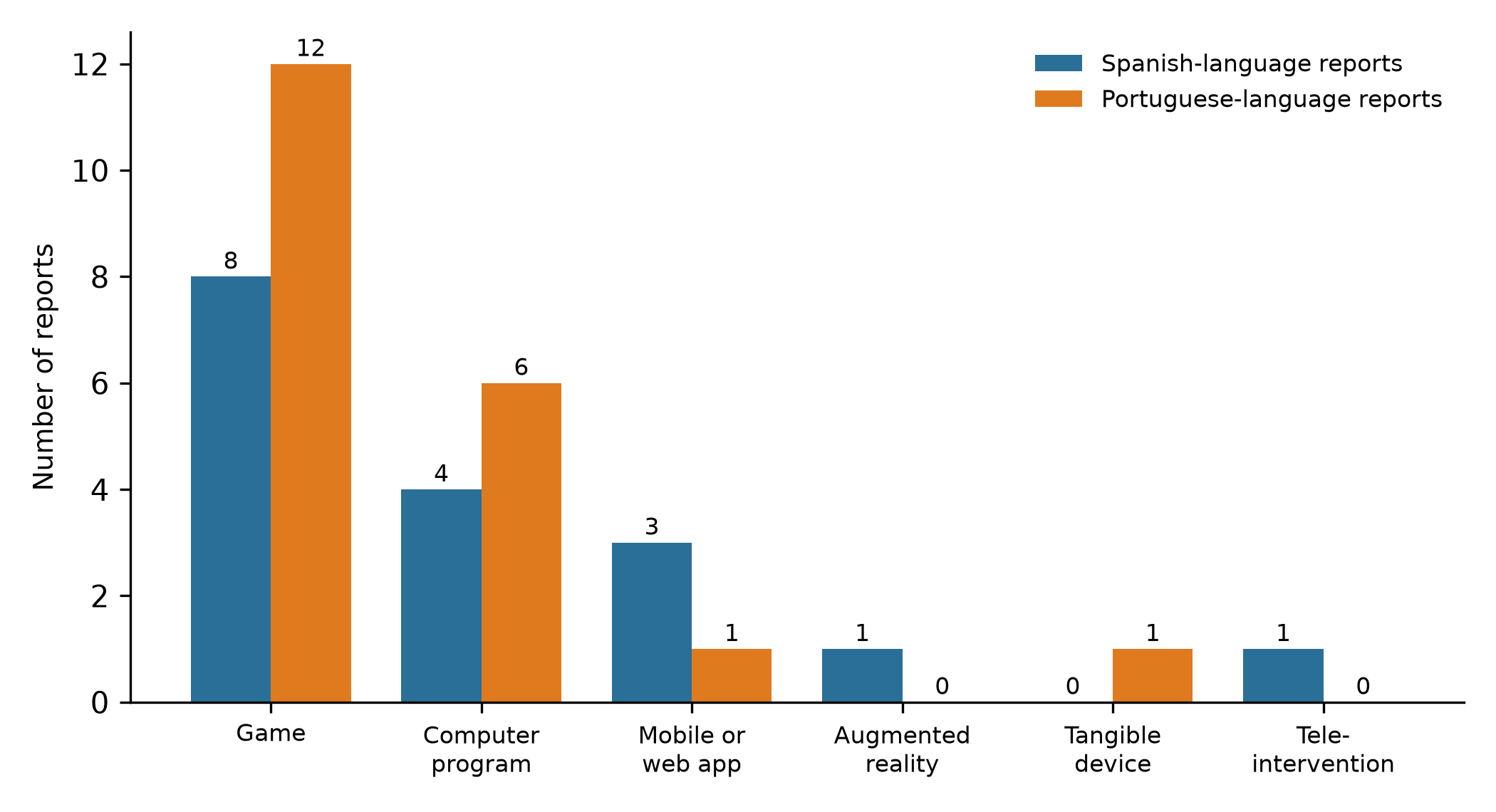
Figure 1. Reports by type of tool and language of the setting.
Note: Counts of the 37 reports; apps include mobile and web applications.The type of document also separated the two languages: 8 of the 10 conference papers were Spanish-language, and 17 of the 20 Portuguese-language reports were journal articles. Game-based work dominated the Portuguese-language literature, with 12 games among 20 reports, compared with 8 games among 17 Spanish-language reports. Spanish-language reports spread over more formats: 3 apps, 4 programs, an augmented-reality application and a remotely delivered program, whereas Portuguese-language reports held 6 programs, 1 app and 1 tangible device besides the games.
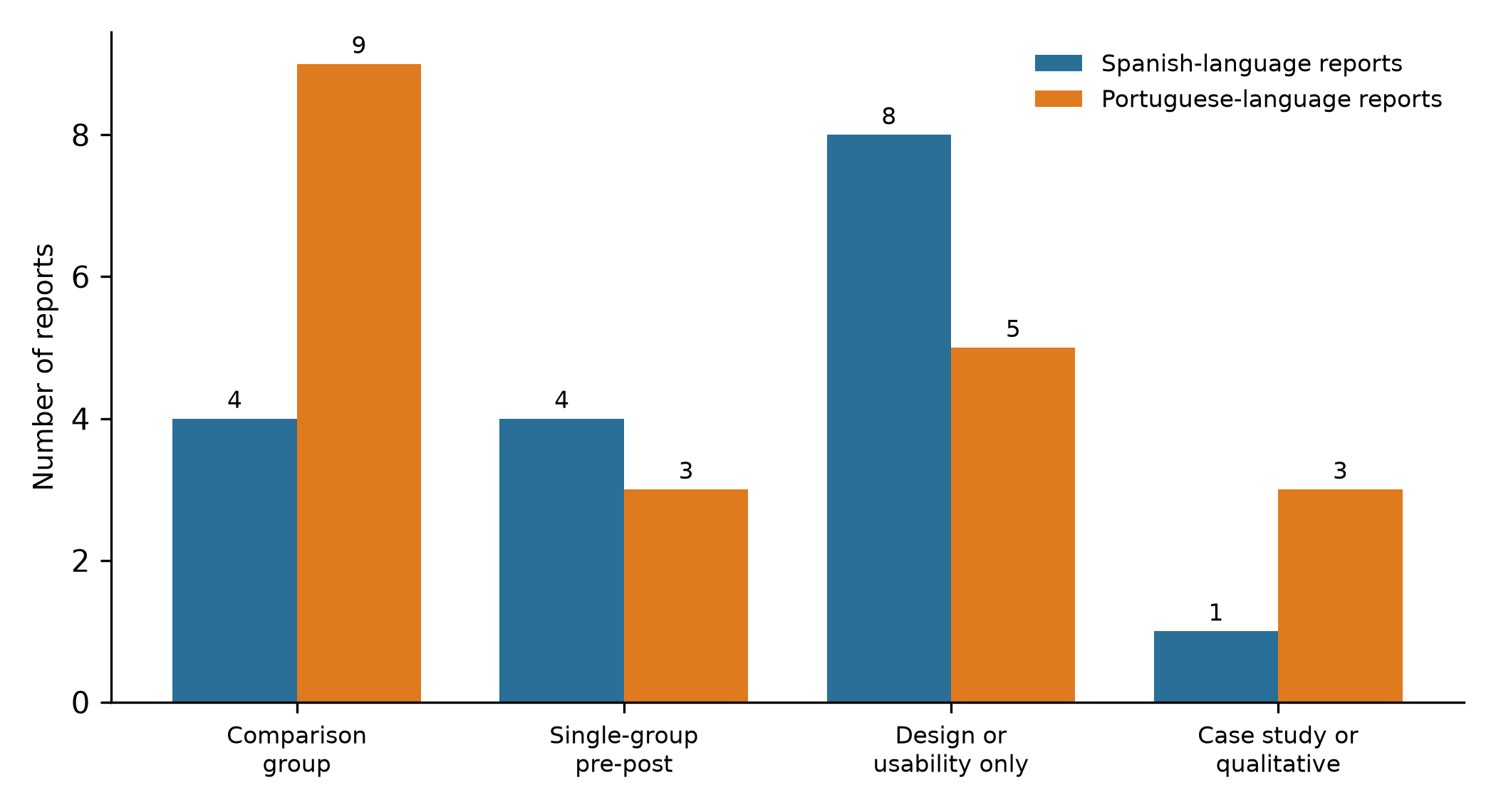
Figure 2. Reports by study design and language of the setting.
Note: Comparison group includes randomized and quasi-experimental designs; case study or qualitative includes action research.In Peru, the quasi-experimental study with 64 five-year-olds reported a significant increase in phonological awareness after 3 months with an augmented-reality application,(30) and the adaptive serious game for children aged 7 to 12 with reading difficulties improved word reading, pseudoword reading, word discrimination and error detection in 2 weeks.(31) In Brazil, 12 children aged 4 and 5 improved syllable and phoneme awareness after ten sessions with the Pedro software, and the change in writing hypothesis coincided with that gain.(29)
Remote delivery gained a place after the pandemic in both languages. Argentine children with dyslexia improved phonological skills, fluency and decoding in virtual and in-person formats alike,(36) and GraphoGame Brazil was tested during school closures with children in online classes.(24)
Dyslexia, reading difficulties and early literacy
Dyslexia was the stated population in 15 reports, reading difficulties in 10, early literacy instruction in 10, risk of reading difficulties in 1 and developmental language disorder in 1. Among the 15 dyslexia reports, 3 reported outcomes, all by repeated measures without a control group, whereas 9 of the 10 reading-difficulty reports and 8 of the 10 early-literacy reports did so.
The population that motivated most development work had the thinnest outcome record. The EstimuGame software, applied to students with dyslexia in Cerro Largo, was reported effective in weekly sessions,(19) and in a nine-month application with sixth graders it was associated with gains in reading fluency, self-correction and fewer phonemic errors.(20) The Argentine comparison included 26 children with dyslexia.(36) The Panamanian SEDI platform enrolled 7 intervention and 7 control students, but its abstract gave no outcome.(51)
Sample sizes did not follow the population. The largest samples came from Escribo Play, with 749 preschool children,(25) and from a Brazilian program applied to 600 schoolchildren, half of whom had learning difficulties.(32) The two dyslexia reports that stated a sample enrolled 26 and 14 children,(36,51) and the reading-difficulty reports ranged from 12 children in the Pedro study(29) to 155 in the TitíApp study.(21)
Brazil and the other seven countries
Brazil contributed 20 reports, of which 15 evaluated a tool and 9 used a comparison group. The other seven countries together contributed 17 reports, of which 7 evaluated a tool and 4 used a comparison group, one each in Chile, Panama, Peru and Ecuador. Mexico and Colombia contributed 2 reports each, and none reported a reading outcome.
The Brazilian group also held the most varied evaluation designs. It included the cluster-randomized Escribo Play trial,(25) the randomized comparison of two educational programs,(33) a quasi-experimental study with 14 children in two public schools of Florianópolis,(27) an action-research study with a game created during the investigation in Manaus,(37) and a case study of one child.(39) Chile supplied two reports on game-based training of letter-sound skills, one with control and experimental groups of at-risk first graders(23) and one with children with developmental language disorder and typically developing classmates.(4)
Ecuador supplied the largest group among the Spanish-language reports. Two of its seven reports evaluated TitíApp with reading and writing tests,(21,22) and the other five described apps, games and tools at the design stage or reported perceptions of tutors.(47-50,52) The tutor report added that Genially and PowerPoint presentations were the gamification tools most used during tele-assistance with schoolchildren who had reading difficulties.(52)
Targeted skills and reported outcomes
Letter-sound knowledge and phonological awareness were the most common targets. Three evaluated reports measured phonological awareness or writing level without a reading measure.(29,30,37) Word or text reading, fluency or comprehension appeared among the outcomes of the adaptive game in Peru,(31) the TitíApp study with 234 students,(22) the computerized comprehension program,(35) EstimuGame(20) and GraphoGame Brazil.(24)
Among earlier syntheses, the integrative review of dyslexia technologies observed that Brazilian output was scarce against the international literature,(16) and the systematic review of digital games for phonological awareness found most studies to be experimental with experimental and control groups.(17) A systematic review of technologies for literacy in neurodevelopmental disorders retained 17 studies, and for students with dyslexia the focus was on phonological awareness and word reading.(55) The mapping of educational software for literacy identified 60 programs in 56 articles,(56) and a review of digital technologies in the schooling of students with dyslexia retained 18 productions.(57) A review of phonological awareness training in Brazil found 27 intervention studies for students with special educational needs, 2 with dyslexia.(58)
International and regional reviews pointed the same way. A systematic review of ICT for phonological awareness in preschoolers retained 24 articles and framed them as computer-assisted learning and instruction,(59) and a critical review of 22 articles reported a positive effect of technology on phonological awareness together with a call for more rigorous research.(60) The literature review on serious games for the literacy of children with disabilities, drawn from 25 studies, concluded that games contribute to literacy when they are easy to use, challenging and provide feedback.(61) A review on ICT and gamification in reading, covering 2013 to 2023, concluded that gamification can raise interest in reading while access remains unequal.(62)
DISCUSSION
The corpus was expected to hold its strongest evidence where the need is stated most often, in children with dyslexia, and the opposite occurred. Tool building outpaced tool testing, and the gap was widest for the population that motivated the work. Reports on reading difficulties and on early literacy supplied most of the outcome data, so the evidence base answers a broader question than the title of many reports suggests.
The direction of the reported outcomes was favorable in nearly every evaluated report, and the international literature explains why that direction should not be read as size. Pooled estimates for computer-supported reading interventions range from 0.36 across 67 studies(9) to 0.14 for struggling readers,(10) and the GraphoGame synthesis found no overall effect on word reading (g = −0.02) until adult interaction was considered, when studies with high interaction averaged 0.48.(13) Against that background, the single standardized effect in the Latin American corpus, d = 0.40 for reading in Escribo Play, lies slightly above the pooled average of 0.36, in preschool children and with a different outcome set.(25)
The control condition separates comparable from non-comparable findings. In the meta-analysis of word reading interventions, effect sizes were higher when the control was education as usual and lower when the control received a reading treatment.(9) Where the abstracts described the comparison, as in the Pedro study, controls received usual instruction,(29) whereas the Brazilian GraphoGame study used an active numeracy control.(24) That design matches the Portuguese, French and Indian GraphoGame and GraphoLearn trials, which reported benefits for spelling and phonological awareness,(63) phoneme awareness, orthographic choice and fluency (effect sizes 0.23, 0.27 and 0.18),(64) and letter-sound knowledge.(65)
Orthography offers a plausible account of why letter-sound and phonological training dominate the Spanish-language and Portuguese-language tools. Phonological awareness contributes to reading in every language studied, while the grain size of lexical representations varies with the consistency of the orthography,(3) and its predictive weight varies along a continuum of orthographic depth.(66) In a transparent orthography, GraphoGame was built to train letter-sound connections first.(11,12) Spanish children with reading disabilities who trained with phoneme and syllable units on a computer improved word recognition compared with untrained controls,(5) which coincides with the gains in letter-sound recognition among Chilean first graders at risk(23) and with the benefit of computer-based letter training for Finnish school beginners at risk.(67)
For dyslexia, the contrast with the international record is sharper. A meta-analysis of 22 randomized trials identified phonics instruction as the only approach whose efficacy for reading and spelling was statistically confirmed.(68) The Argentine report, with its explicit and systematic program, fits that pattern,(36) but the Latin American game reports for dyslexia mostly described a tool without testing phonics content. Action video games offer an alternative route, with improvements in reading found in a meta-analysis of nine experiments with 238 children,(69) in a randomized comparison(70) and in English-speaking children with dyslexia.(71) None of the abstracts reviewed here mentioned action video games.
Games and non-game programs reported similar directions, and the more informative difference lies in what they were asked to deliver. Serious games improved reading and metaphonological skills in a systematic review, but progress generalized poorly to untrained skills,(14) and the GraphoLearn game raised word reading without transfer to fluency, comprehension or spelling.(72) The Latin American reports that measured comprehension showed the same limit: comprehension rose with a computerized program while fluency did not differ between groups.(35) A meta-analysis of digital game-based training in neurodevelopmental disorders found that both task content and game features contributed to effects, and that training could be delivered remotely.(73)
Adult mediation recurs across the Latin American reports and matches the moderator found in the GraphoGame synthesis. The Pedro software was effective with the speech-language pathologist as mediator.(29) The Soletrando study stressed the role of the teacher in mediating software use,(38) and the Argentine report recommended an initial in-person bond before remote work.(36) In Norway, an adaptive and a non-adaptive computer component, each embedded in teacher-led instruction, produced similar reading and spelling gains,(74) which suggests that instruction around the tool may weigh more than the game format. Best-evidence reviews found the largest effects for applications integrated with small-group instruction.(10)
Proximal measures flatter a tool. Three evaluated reports measured phonological awareness or writing level without a reading measure, and when a game trains the same skill that the test measures, improvement is the expected result. The international trials add the distal check: GraphoLearn sped word reading but did not transfer to fluency, comprehension or spelling,(72) and serious games generalized poorly to untrained skills.(14) A report that pairs a proximal measure with a transfer measure, as the Peruvian adaptive game did with word, pseudoword and error-detection tasks,(31) gives readers more than one view of the same effect.
Engagement is the usual argument for games, and the Latin American reports recorded it but rarely linked it to gains. Pocoloto kept children motivated during classroom use,(26) the case study of the Menino Curioso software observed more autonomy and motivation,(39) and a gamified narrative prototype measured motivation and engagement with scales.(43) In the GraphoLearn trial, children judged more cognitively engaged by parents and teachers gained more in word reading, whereas emotional engagement related to playing time but not to gains.(72) Motivation recorded in a design report predicts neither exposure nor learning until outcome data are attached.
Dose and duration varied from 2 weeks to 9 months, and the meta-analysis of word reading interventions found that treatment length moderated effect sizes.(9) The Latin American reports seldom crossed duration with outcome, so that moderator could not be examined, and the two shortest applications, 2 weeks in Peru and 6 weeks in Chile, reported gains in different skills.(4,31) Dutch first graders who played about 28 sessions gained letter knowledge across the classroom and a small benefit in fluency.(75) Session counts, rather than calendar length, are the unit that future Latin American reports could add.
The Chilean study of GraphoGame in Spanish deserves separate mention because it linked intervention to prognosis. Performance at the first level of the game correlated mildly with reading fluency assessed one year later, and none of the children classified as poor readers in second grade reached the highest levels.(4) Whereas the Brazilian version was judged by word reading accuracy against an active control,(24) the Chilean version served as both an intervention and a marker of later reading status. The Dutch trial also exploited data generated by the game itself to evaluate the intervention.(75)
Equity shapes how these tools can be used. The Chilean game improved different skills in low-SES and high-SES first graders,(23) the Ecuadorian prevalence study found higher rates in public schools and pointed to poverty and limited access to educational materials,(7) and a review of ICT and gamification flagged unequal access to technology.(62) The authors of TitíApp presented the tool as a way to narrow the digital divide.(22) Tools that require devices and connectivity compete with the need they serve, and low-cost designs such as Alfaba address that tension while having been rated only by professionals and teachers.(46)
Terminology complicates the synthesis. Reports used dyslexia, reading difficulties, learning difficulties and literacy delay for overlapping groups, and the definition of dyslexia itself has been argued to have loosened, which risks diagnostic confusion.(2) The Brazilian systematic review of phonological awareness training counted 13 studies with learning difficulties against 2 with dyslexia among its 27 intervention studies.(58) A tool tested on children with learning difficulties cannot be assumed to work for dyslexia, and the corpus rarely gave the diagnostic criteria needed to tell them apart.
The geographic contrast sharpens the same point. Brazil supplied most comparison-group designs in the corpus, 9 of 13, and the review of dyslexia interventions in Brazil found a body of studies in which phonological interventions, computerized technology, auditory training and visuomotor training coexisted.(15) In the other countries, a single comparison-group study per country could not be set against another from the same setting, so agreement between independent teams, which would count most, was not testable. The Chilean and Brazilian GraphoGame studies are the closest pair, as both used the same game family in different languages, yet their outcomes (letter, pseudoword and phonological gains versus word reading accuracy) cannot be compared directly.(4,24)
Contextual factors help to read the differences between languages. Portuguese-language evidence came mostly from journals and included more comparison groups, whereas almost half of the Spanish-language evidence appeared in engineering conference proceedings, and Spanish-language reports included more design reports. A review of phonological awareness training in Brazil found that the number of intervention studies was small relative to the variety of populations and the demand from graduate programs.(58) The Brazilian scoping review concluded that most interventions agreed with international theory but showed methodological problems that would strengthen practice if addressed.(15) These patterns describe where reports are published and how they are designed. They do not show that tools in one language work better.
A research agenda follows from these contrasts, and each element answers a limitation. Cluster-randomized trials with an active control, as in Escribo Play and the GraphoGame studies, would separate tool effects from instruction effects.(25,64) Follow-up measures, like the second-grade reading status used in Chile, would show whether gains persist.(4) Common outcome sets would let trials in both languages be pooled, as meta-analyses of computer-assisted word reading already do.(9) Trials in children with dyslexia should state the diagnostic criteria and test phonics content explicitly, because phonics instruction is the approach with confirmed efficacy.(68)
Comparisons with trials outside the region show where Latin American evidence could grow. A Finnish study of 166 school beginners at risk compared computer-assisted remedial reading with regular remedial reading and mainstream instruction, and the computer-assisted arm was highly beneficial.(67) In Norway, 744 first graders were screened and 140 at risk received one of two interventions.(74) In India, 30 third graders reading below first-grade level played GraphoLearn or a math game for 8 weeks and improved letter-sound knowledge.(65) Each of these abstracts names a risk criterion, a control and a duration, and Latin American reports could meet that standard with the same three declarations.
The regional mapping of educational software for literacy points the same way: of the 60 programs it identified, evaluation focused mostly on usability and pedagogical aspects, with experiments, observation of use and user tests as the commonest methods.(56) That profile matches the 15 design-only reports found here. It also matches the Brazilian systematic review of technologies for literacy in neurodevelopmental disorders, in which all experimental studies reported improved repertoires while reports of experience described promising tools and difficulties of school implementation.(55)
Associations in the corpus should not be read as causal. Single-group pre-post designs cannot separate a tool effect from maturation or from regular classroom teaching, and the dose relation in the LEGERE study (r = 0.672) is a correlation within the experimental group.(34) Comparison groups of 11 to 30 children cannot support precise estimates. Large samples, such as the 600 schoolchildren of the Brazilian computerized program, stated significance without an effect size in the abstract.(32)
The review has strengths: it searched five sources in three languages, kept grey literature visible through document types, and computed every count by script from an extraction table. Its limitations are specific. Extraction relied on abstracts, so details of design, dosage and measures may be missing; the authors should verify each row against the full text before submission. Candidates without a retrievable abstract could not be verified and were not retained, which may under-represent conference literature; a systematic update with full-text retrieval would close that gap. Outcomes were heterogeneous, from letter knowledge to comprehension; a shared minimum set of measures, with effect sizes and confidence intervals, would make future reports poolable. Dyslexia reports lacked control groups; cluster trials with an active control, as in the GraphoGame studies, would fit school settings. Indigenous languages and bilingual Spanish-English contexts fell outside the scope, and a separate review should treat them.
For schools and developers, the corpus supports pairing a tool with adult mediation, targeting letter-sound and phonological content explicitly in transparent orthographies, and reporting usability together with outcomes. Open distribution of the tools, including the app designed for rural schools in Ecuador,(47) would let teachers compare them. A framework of accessibility guidelines for dyslexia, as proposed for serious games,(48) gives developers a shared checklist. For policy, regional learning assessments could incorporate the reading outcomes of piloted tools, so that school-level trials report on the same scale as national tests.(8)
CONCLUSIONS
The mapped tools were mostly games, were concentrated in Brazil and Ecuador, and divided between reports that tested a tool and reports that only described its design.
Game-based and non-game computer interventions both received mostly favorable reports from their authors, with no visible difference in direction between them and with scarce effect sizes.
Portuguese-language settings contributed more evaluated reports and more comparison groups, whereas Spanish-language settings contributed more design reports, and conference proceedings made up almost half of the Spanish-language reports.
The main gaps are outcome evidence for children with dyslexia, shared outcome measures, reported effect sizes and independent replication of the tools.
References
- 1 Peterson RL, Pennington BF. Developmental dyslexia. The Lancet. 2012;379(9830):1997-2007. doi: 10.1016/s0140-6736(12)60198-6
- 2 Snowling MJ, Hulme C, Nation K. Defining and understanding dyslexia: past, present and future. Oxford Review of Education. 2020;46(4):501-513. doi: 10.1080/03054985.2020.1765756
- 3 Ziegler JC, Goswami U. Reading Acquisition, Developmental Dyslexia, and Skilled Reading Across Languages: A Psycholinguistic Grain Size Theory. Psychological Bulletin. 2005;131(1):3-29. doi: 10.1037/0033-2909.131.1.3
- 4 Martínez C, Maurits N, Maassen B. Graphogame intervention as a tool for early diagnosis of reading difficulties in Spanish-speaking children with developmental language disorder. Child Language Teaching and Therapy. 2023;39(1):16-38. doi: 10.1177/02656590221139232
- 5 Jiménez JE, Hernández-Valle I, Ramírez G, Ortiz MDR, Rodrigo M, Estévez A, et al. Computer Speech-Based Remediation for Reading Disabilities: The Size of Spelling-to-Sound Unit in a Transparent Orthography. Span J Psychol. 2007;10(1):52-67. doi: 10.1017/s1138741600006314
- 6 Fortes IS, Paula CS, Oliveira MC, Bordin IA, de Jesus Mari J, Rohde LA. A cross-sectional study to assess the prevalence of DSM-5 specific learning disorders in representative school samples from the second to sixth grade in Brazil. Eur Child Adolesc Psychiatry. 2016;25(2):195-207. doi: 10.1007/s00787-015-0708-2
- 7 Vélez-Calvo X, Lacruz-Pérez I, Pastor-Cerezuela G, Tárraga-Mínguez R, Peñaherrera-Vélez MJ. Dyslexia and dyscalculia in Ecuador. Prevalence study in school children. RevLatPsi. 2025;57:213-221. doi: 10.14349/rlp.2025.v57.20
- 8 Laboratorio Latinoamericano de Evaluación de la Calidad de la Educación (LLECE). Informe de resultados del Tercer Estudio Regional Comparativo y Explicativo (TERCE) / Results Report of the Third Regional Comparative and Explanatory Study (TERCE). REICE. 2016;14.4(2016). doi: 10.15366/reice2016.14.4.001
- 9 Verhoeven L, Voeten M, Segers E. Computer-assisted word reading intervention effects throughout the primary grades: A meta-analysis. Educational Research Review. 2022;37:100486. doi: 10.1016/j.edurev.2022.100486
- 10 Cheung ACK, Slavin RE. Effects of Educational Technology Applications on Reading Outcomes for Struggling Readers: A Best‐Evidence Synthesis. Reading Research Quarterly. 2013;48(3):277-299. doi: 10.1002/rrq.50
- 11 Ronimus M, Richardson U. Digital game-based training of early reading skills: overview of the GraphoGame method in a highly transparent orthography / Entrenamiento de habilidades de lectura tempranas basado en un juego digital: visión general del método GraphoGame en una ortografía altamente transparente. Estudios de Psicología. 2014;35(3):648-661. doi: 10.1080/02109395.2014.974424
- 12 Ojanen E, Ronimus M, Ahonen T, Chansa-Kabali T, February P, Jere-Folotiya J, et al. GraphoGame – a catalyst for multi-level promotion of literacy in diverse contexts. Front Psychol. 2015;6:671. doi: 10.3389/fpsyg.2015.00671
- 13 McTigue EM, Solheim OJ, Zimmer WK, Uppstad PH. Critically Reviewing GraphoGame Across the World: Recommendations and Cautions for Research and Implementation of Computer‐Assisted Instruction for Word‐Reading Acquisition. Reading Research Quarterly. 2020;55(1):45-73. doi: 10.1002/rrq.256
- 14 Marinelli CV, Nardacchione G, Trotta E, Di Fuccio R, Palladino P, Traetta L, et al. The Effectiveness of Serious Games for Enhancing Literacy Skills in Children with Learning Disabilities or Difficulties: A Systematic Review. Applied Sciences. 2023;13(7):4512. doi: 10.3390/app13074512
- 15 Signor R, Claessen M, Leitão S. Interventions for dyslexia in Brazil: a scoping review discussed within the perspective of international best practice. Australian Journal of Learning Difficulties. 2020;25(1):1-30. doi: 10.1080/19404158.2019.1709216
- 16 Cidrim L, Madeiro F. Tecnologias da Informação e da Comunicação (TIC) aplicadas à dislexia: revisão de literatura. Rev CEFAC. 2017;19(1):99-108. doi: 10.1590/1982-021620171917916
- 17 Ramos DK, Ribeiro do Prado LA. Os jogos digitais para o desenvolvimento da consciência fonológica na alfabetização: uma revisão sistemática de literatura. RevEducLings. 2020;9(17):433-452. doi: 10.33871/22386084..433-452
- 18 Baethge C, Goldbeck-Wood S, Mertens S. SANRA—a scale for the quality assessment of narrative review articles. Res Integr Peer Rev. 2019;4(1):5. doi: 10.1186/s41073-019-0064-8
- 19 Batista JDF, Gonçalves ACT, Ziesmann CI. O jogo computacional como ferramenta de ensino e aprendizagem para alunos com dislexia – uma experiência nas salas multifuncionais de Cerro Largo – RS. ELO. 2020;9:1-17. doi: 10.21284/elo.v9i.10508
- 20 Link CT, Gonçalves ACT, Ziesmann CI, Batista JDF. EstimuGame: um software educativo como instrumento de auxílio para estimular a leitura em crianças com dislexia [Internet]. 2025. Available from: https://portaleventos.uffs.edu.br/index.php/JORNADA/article/view/24059
- 21 Pérez PP, Jimenez JJ, Muñoz IF, Pérez LI. Impact of the TitíApp Tool on the Recovery of Reading and Writing Processes in Schoolchildren in the City of Quito. 2024 IEEE 4th International Conference on Advanced Learning Technologies on Education & Research (ICALTER). 2024:1-4. doi: 10.1109/icalter65499.2024.10819209
- 22 Pérez PP, López AC. Application of the Tití App Technological Tool in Reading and Writing Comprehension. 2025 IEEE Ninth Ecuador Technical Chapters Meeting (ETCM). 2025:1-6. doi: 10.1109/etcm67548.2025.11304422
- 23 Rosas R, Escobar JP, Ramírez MP, Meneses A, Guajardo A. Impact of a computer-based intervention in Chilean children at risk of manifesting reading difficulties / Impacto de una intervención basada en ordenador en niños chilenos con riesgo de manifestar dificultades lectoras. Infancia y Aprendizaje. 2017;40(1):158-188. doi: 10.1080/02103702.2016.1263451
- 24 Marques de Souza JG, Weissheimer J, Buchweitz A. Well Played! Promoting Phonemic Awareness Training Using EdTech—GraphoGame Brazil—During the COVID-19 Pandemic. Brain Sciences. 2022;12(11):1494. doi: 10.3390/brainsci12111494
- 25 Amorim AN, Jeon L, Abel Y, Felisberto EF, Barbosa LNF, Dias NM. Using Escribo Play Video Games to Improve Phonological Awareness, Early Reading, and Writing in Preschool. Educational Researcher. 2020;49(3):188-197. doi: 10.3102/0013189x20909824
- 26 Olalla C, Lukasova K. Avaliação de um jogo digital com treino de memória de trabalho para alfabetização em crianças no ensino fundamental. Inform educ. 2019;22(2). doi: 10.22456/1982-1654.87070
- 27 Augusta Ribeiro do Prado L, Ramos DK. O uso de jogos digitais no desenvolvimento da consciência fonológica no processo de alfabetização: intervenções no contexto escolar. RIEOEI. 2021;85(1):185-204. doi: 10.35362/rie8514110
- 28 Colpani R, Faria M. Joy e as Letrinhas: um Serious Game como ferramenta de auxílio no processo de alfabetização de crianças do ensino fundamental. RBIE. 2017;25(02):61. doi: 10.5753/rbie.2017.25.02.61
- 29 Farias CC, Costa AC, Santos RM. Eficácia do uso de um software para estimulação de habilidades de consciência fonológica em crianças. Audiol, Commun Res. 2013;18(4):314-320. doi: 10.1590/s2317-64312013000400013
- 30 Soto MR. Programa de Desarrollo de Conciencia Fonológica (PDCF) basada en el uso de una aplicación informática en niños de 5 años. Apunt cienc soc. 2017;07(02). doi: 10.18259/acs.2017021
- 31 Paz MRV, Cruz HAQ. Adaptative Serious Game as a Support Tool for Children with Reading and Writing Difficulties. 2025 IEEE CHILEAN Conference on Electrical, Electronics Engineering, Information and Communication Technologies (CHILECON). 2025:1-8. doi: 10.1109/chilecon66915.2025.11476149
- 32 Marques de Oliveira A, Donadon Germano G, Aparecida Capellini S. Desempenho de escolares com dificuldades de aprendizagem em programa computadorizado de intervenção metafonológica e leitura. PsicolArgum. 2017;33(80). doi: 10.7213/psicol.argum.33.080.ao01
- 33 Santos CS, Guaresi R. Avaliação de softwares educacionais indicados ao aprendizado inicial da leitura e da escrita. Letronica. 2016;9(2):226. doi: 10.15448/1984-4301.2016.2.23566
- 34 Silva DV. A consciência fonológica em escolares com defasagem/atraso escolar nos anos iniciais de educação formal: avaliação do software LEGERE. Rep Dig PPGLin/UESB Tes e Dis. 2019;7(1). doi: 10.54221/rdtdppglinuesb.2019.v7i1.167
- 35 Teixeira Bertini M, Muchon de Melo C. Avaliação de um programa informatizado para promoção do repertório de ler com compreensão. Inter Psicol. 2021;25(1). doi: 10.5380/riep.v25i1.64669
- 36 Pearson R, Juárez M, Lucero M, Rose L, Méndez Jurado MA, Aime MM, et al. Impacto de una Intervención Virtual en Lectura en Niños Disléxicos: ¿Es Distinta la Eficacia Respecto de una Intervención Presencial?. RPSI. 2023;19(37):67-87. doi: 10.46553/rpsi.19.37.2023.p67-87
- 37 Santos AQD, Nicolette Sodré Oliveira A, Anglada Rivera J. GAMEALFA: recurso tecnológico para alunos em processo de alfabetização. Educitec. 2020;6:e097720. doi: 10.31417/educitec.v6ied.especial.977
- 38 Silva RMDO, Andrade AND, Negrão FDC. Jogo digital educativo no universo da leitura e escrita de crianças. Labor. 2022;1(27):384-398. doi: 10.29148/labor.v1i27.72058
- 39 Sengik AS, Valentini CB, Timm JW. Uso de "software" como mediador na aprendizagem da leitura: estudo de caso. Psicol Esc Educ. 2017;21(3):629-637. doi: 10.1590/2175-353920170213111139
- 40 Costa GAD, Aguiar YPC, Silva LFLD, Cardins DVDA. Desenvolvimento e Avaliação de Usabilidade e Acessibilidade do Sonata: um Aplicativo para Auxiliar Crianças com Dislexia Auditiva. RBIE. 2022;30:135-156. doi: 10.5753/rbie.2022.2193
- 41 Tacoronte-Sosa JP, Peña-Hita MÁ. Design and Evaluation of a Serious Game Prototype to Stimulate Pre-Reading Fluency Processes in Paediatric Hospital Classrooms. MTI. 2025;9(9):90. doi: 10.3390/mti9090090
- 42 Cardona JP, Velazquez C, Dominguez G, Munoz J, Alvarez F. Computer-assisted Remedial Instruction Structured to reduce Dyslexia in children. 2020 3rd International Conference of Inclusive Technology and Education (CONTIE). 2020:51-56. doi: 10.1109/contie51334.2020.00018
- 43 Campos JDSUB, Almeida AMP. Mecânica de jogo em narrativa para apoio de alunos com dislexia: percepções de discentes e docentes. RPE. 2021;17(45):1-24. doi: 10.22481/praxisedu.v17i45.8345
- 44 Bitencourt Fernandes AL, Costa Santana K, Pagotto Batista W, Pinto Pereira C. EasyReader. RevPro. 2020;3(2):22-39. doi: 10.15210/rp.v3i2.20387
- 45 Shimada Pinto F, Farinazzo Martins V, De La Higuera Amato CA, Amelia Eliseo M. Requirements for the Development of Digital Serious Games for Dyslexics. 2019 14th Iberian Conference on Information Systems and Technologies (CISTI). 2019;2019-June:1-6. doi: 10.23919/cisti.2019.8760627
- 46 Jurgina LQ, Aquini LG, Iankowski RS, da Rosa LS, de Aguiar MS, Primo TT. Alfaba: A Tangible Solution to Support Brazilian Dyslexic Students in their Literacy Process. 2023 IEEE Global Engineering Education Conference (EDUCON). 2023;2023-May:1-9. doi: 10.1109/educon54358.2023.10125140
- 47 Larco A, Carrillo J, Chicaiza N, Yanez C, Luján-Mora S. Moving beyond Limitations: Designing the Helpdys App for Children with Dyslexia in Rural Areas. Sustainability. 2021;13(13):7081. doi: 10.3390/su13137081
- 48 Jaramillo-Alcázar A, Venegas E, Criollo-C S, Luján-Mora S. An Approach to Accessible Serious Games for People with Dyslexia. Sustainability. 2021;13(5):2507. doi: 10.3390/su13052507
- 49 Toledo S, Astudillo-Rodriguez C, Verdugo P, Cedillo S, Verdugo J. Educational game to stimulate phonological awareness in elementary school children. AHFE International. 2023;109:11-21. doi: 10.54941/ahfe1003146
- 50 Ripalda D, Piedra M, Cobos M. Multimedia tool for the treatment of dyslexia and dyscalculia. AHFE International. 2021;21. doi: 10.54941/ahfe1001209
- 51 Diaz-Quintero M, Rodriguez-Martinez K, Quintero-Fuentes N. Impact of the Use of Virtual SEDI Platform in the Reeducation of Children with Dyslexia in a Primary Educational Center. 2022 8th International Engineering, Sciences and Technology Conference (IESTEC). 2022:337-341. doi: 10.1109/iestec54539.2022.00058
- 52 Marín-Balcázar S, Atamaint-Torres G. Experiencias Aprendizaje-Servicio en intervenciones para el mejoramiento de las habilidades lectoras en escolares de Unidades Educativas de la ciudad de Cuenca. MSKN. 2022;13(2):36-42. doi: 10.18537/mskn.13.01.05
- 53 Chanchí GE, Campo Muñoz WY, Muñoz Sanabría LF. A videogame as a support tool for dyslexia therapy using the GDevelop platform. Proceedings of the 5th Workshop on ICTs for improving Patients Rehabilitation Research Techniques. 2019:162-166. doi: 10.1145/3364138.3364172
- 54 Cruz Micán EO, Zapata Cifuentes EP, Ruíz López J, Morales Pulido V. El aprendizaje de la lectura en una lengua extranjera en niños entre 6 y 8 años con dislexia, a través de una herramienta tecnológica. Revista Investigación, Desarrollo, Educación, Servicio, Trabajo. 2022. doi: 10.31876/idest.v1i2.13
- 55 Rocca JZ, Freitas LABD, Campos Junior RF, Martins GRR, Pinheiro HGAVA, Souza LC. Revisão sistemática de estudos de avaliação de tecnologias educacionais para letramento e alfabetização de estudantes com Transtornos do Neurodesenvolvimento no contexto brasileiro. RBIE. 2020;28:1151-1180. doi: 10.5753/rbie.2020.28.0.1151
- 56 Martins A, Freire E, Dantas Rebouças A. Softwares Educativos para Apoiar a Alfabetização: Um Mapeamento Sistemático. RENOTE. 2022;20(1):368-378. doi: 10.22456/1679-1916.126684
- 57 Ferraz M, Pedro KM. Tecnologias digitais na escolarização de estudantes com dislexia uma revisão de literatura. DEVIR. 2023;7(1). doi: 10.30905/rde.v7i1.614
- 58 Ferreira LMDS, Bandini CSM, Bandini HHM. Treinamento de consciência fonológica para pessoas com necessidade educacionais especiais no Brasil: uma revisão sistemática. Rev Educ Espec. 2021. doi: 10.5902/1984686x43678
- 59 Fernández-Otoya FA, Raposo-Rivas M, Halabi-Echeverry AX. A Qualitative Systematic Literature Review on Phonological Awareness in Preschoolers Supported by Information and Communication Technologies. Education Sciences. 2022;12(6):382. doi: 10.3390/educsci12060382
- 60 Martinez-Figueira ME, Borda-Valderrama J, Montes-Betancourt M, Falla-Ortiz J. ICT in the development of phonological awareness: A critical literature review. DER. 2023;(44):125-132. doi: 10.1344/der.2023.44.125-132
- 61 Malaquias RF, Malaquias FFDO. A literature review on the benefits of serious games to the literacy process of children with disabilities and learning difficulties. TAD. 2021;33(4):273-282. doi: 10.3233/tad-210339
- 62 Herrera Cano NJ, Díaz Téllez AS, Mejía Ríos J. Exploring the benefits of information and communication technologies (ICT) and gamification in strengthening reading skills: a systematic review. Multidiscip Rev. 2023;6(1):2023003. doi: 10.31893/multirev.2023003
- 63 Carvalhais L, Limpo T, Richardson U, Castro SL. Effects of the Portuguese GraphoGame on Reading, Spelling, and Phonological Awareness in Second Graders Struggling to Read. Journal of Writing Research. 2020;12(vol. 12 issue 1):9-34. doi: 10.17239/jowr-2020.12.01.02
- 64 Lassault J, Sprenger-Charolles L, Albrand JP, Alavoine E, Richardson U, Lyytinen H, et al. Testing the Effects of GraphoGame Against a Computer-Assisted Math Intervention in Primary School. Scientific Studies of Reading. 2022;26(6):449-468. doi: 10.1080/10888438.2022.2052884
- 65 Patel P, Torppa M, Aro M, Richardson U, Lyytinen H. GraphoLearn India: The Effectiveness of a Computer-Assisted Reading Intervention in Supporting Struggling Readers of English. Front Psychol. 2018;9:1045. doi: 10.3389/fpsyg.2018.01045
- 66 Ziegler JC, Bertrand D, Tóth D, Csépe V, Reis A, Faísca L, et al. Orthographic Depth and Its Impact on Universal Predictors of Reading. Psychol Sci. 2010;21(4):551-559. doi: 10.1177/0956797610363406
- 67 Saine NL, Lerkkanen MK, Ahonen T, Tolvanen A, Lyytinen H. Computer-Assisted Remedial Reading Intervention for School Beginners at Risk for Reading Disability. Child Development. 2011;82(3):1013-1028. doi: 10.1111/j.1467-8624.2011.01580.x
- 68 Galuschka K, Ise E, Krick K, Schulte-Körne G. Effectiveness of Treatment Approaches for Children and Adolescents with Reading Disabilities: A Meta-Analysis of Randomized Controlled Trials. PLoS ONE. 2014;9(2):e89900. doi: 10.1371/journal.pone.0089900
- 69 Puccio G, Gazzi G, Bertoni S, Franceschini S, Mancarella M, Gori S, et al. Action Video Games Training in Children with Developmental Dyslexia: A Meta-Analysis. International Journal of Human–Computer Interaction. 2024;40(22):6829-6844. doi: 10.1080/10447318.2023.2267297
- 70 Peters JL, Crewther SG, Murphy MJ, Bavin EL. Action video game training improves text reading accuracy, rate and comprehension in children with dyslexia: a randomized controlled trial. Sci Rep. 2021;11(1):18584. doi: 10.1038/s41598-021-98146-x
- 71 Franceschini S, Trevisan P, Ronconi L, Bertoni S, Colmar S, Double K, et al. Action video games improve reading abilities and visual-to-auditory attentional shifting in English-speaking children with dyslexia. Sci Rep. 2017;7(1):5863. doi: 10.1038/s41598-017-05826-8
- 72 Ronimus M, Eklund K, Pesu L, Lyytinen H. Supporting struggling readers with digital game-based learning. Education Tech Research Dev. 2019;67(3):639-663. doi: 10.1007/s11423-019-09658-3
- 73 Ren X, Wu Q, Cui N, Zhao J, Bi HY. Effectiveness of digital game-based trainings in children with neurodevelopmental disorders: A meta-analysis. Research in Developmental Disabilities. 2023;133:104418. doi: 10.1016/j.ridd.2022.104418
- 74 Solheim OJ, Frijters JC, Lundetræ K, Uppstad PH. Effectiveness of an early reading intervention in a semi-transparent orthography: A group randomised controlled trial. Learning and Instruction. 2018;58:65-79. doi: 10.1016/j.learninstruc.2018.05.004
- 75 Glatz T, Tops W, Borleffs E, Richardson U, Maurits N, Desoete A, et al. Dynamic assessment of the effectiveness of digital game-based literacy training in beginning readers: a cluster randomised controlled trial. PeerJ. 2023;11:e15499. doi: 10.7717/peerj.15499
Declarations
Funding
No financing
Conflict of interest
None
Authorship contributions
Drafting – original draft: Carlos Alberto Gómez Cano, Berneides de Jesus Marmol Maestre.
Writing–review and editing: Carlos Alberto Gómez Cano, Berneides de Jesus Marmol Maestre.