
Abstract
Introduction: Serious games are widely used to teach the prevention of dengue and other vector-borne diseases in Latin America, but their effect on knowledge, attitudes and practice has not been appraised systematically. Methods: This systematic review followed PRISMA 2020 and searched Scopus, PubMed, OpenAlex, Crossref and Semantic Scholar with 33 queries in English, Spanish and Portuguese for primary reports published from 2012 to 2024 with participants in Latin America. Results: Among 1,863 records screened, 23 studies were included, all from Brazil, with a median of 45 participants. Of the 12 studies that measured knowledge or practice, 8 reported an improvement (66.7%; 95% CI 39.1% to 86.2%), the other 4 stated no direction, and none reported a decline. Only 4 studies had a comparison condition, 11 raised high methodological concerns, and none was judged to have low concern. Conclusions: Games were well accepted and the studies that reported knowledge outcomes found gains, but the evidence rests on small, mostly uncontrolled studies from one country, so the effect on preventive practice remains unproven.
Keywords
serious games, dengue, vector-borne diseases, health education, Latin America
INTRODUCTION
Dengue is a systemic viral infection transmitted by Aedes mosquitoes, and a modelling study estimated 390 million infections worldwide in a single year, of which 96 million were apparent.(1) Vector control has not stopped its spread.(1) In Nicaragua and Mexico, a cluster randomized trial showed that community mobilization lowered the risk of recent dengue infection in children by 29.5% (95% CI 3.8% to 55.3%) beyond conventional control.(2) Health education that engages people in removing breeding sites therefore sits at the centre of prevention. The same logic applies to Chagas disease, where knowledge about the disease was low among rural residents of Ecuador.(3)
Serious games and gamified activities are a common route to that engagement. Meta-analyses of serious and digital games report learning advantages over conventional instruction, with standardized effects near 0.3.(4,5) Reviews of games on Aedes-borne diseases in Brazil identified 12 eligible papers in one mapping(6) and 18 studies in another,(7) and an integrative review of 81 works found an emphasis on transmitting information.(8) Those reviews catalogued games more than they appraised participant outcomes or study quality. This review therefore aimed to synthesize the evidence from Latin American studies on whether serious and educational games improve knowledge, attitudes and preventive practices about dengue and other vector-borne diseases, and how acceptable they are to users.
Within that objective, we limited the review to primary reports with participant data, published from 2012 to 2024, from studies carried out in Latin America. We searched in English, Spanish and Portuguese, because much of the regional work appears in Portuguese-language journals. The review followed PRISMA 2020 and used a narrative synthesis, since the reported outcomes could not be pooled.(9)
METHODS
Analysis and synthesis
The main estimate was the proportion of studies, among those that measured knowledge or practice before and after a game or against a comparison condition, whose authors reported an improvement. We computed its 95% confidence interval with the Wilson method. The Wilson interval was chosen because it behaves better than the Wald interval with small denominators. Secondary estimates were the proportion of all included studies that reported acceptability or a positive appraisal, the distribution of designs and formats, and the number of participants. Outcomes appeared as scores, proportions of correct answers and p values from different instruments, so we did not pool effect sizes or estimate heterogeneity. Results were grouped by outcome domain and design and described narratively.
The review followed the PRISMA 2020 statement.(9)
Eligibility criteria
Eligible reports described a primary study with participant data. Participants were children, adolescents, students, adults or health workers recruited in a Latin American country, whether the game was developed locally or abroad. The intervention was a serious, educational, board, card, role-playing, digital or gamified game that addressed dengue or another vector-borne disease: Zika, chikungunya, Chagas disease, leishmaniasis or malaria. Comparators could be absent, usual teaching, non-game material or another version of the game. Outcomes were knowledge, attitudes, preventive practice, acceptability, usability, motivation or game quality. We accepted controlled and uncontrolled quantitative studies, qualitative studies and mixed-methods studies published in English, Spanish or Portuguese from 2012 to 2024. We excluded reviews, reports that described game design without any user evaluation, and activities in which the game was not the main component. The year window applied to the year of publication, and a report published inside the window was eligible even when part of its data had been collected earlier. Reports in Portuguese were read in the original language, and their results were translated into English by the AI-assisted process, so the quoted wording is a translation.
Information sources
We searched Scopus, PubMed, OpenAlex, Crossref and Semantic Scholar. The window covered publication years 2012 to 2024: the Scopus queries carried the year limits inside the query string, and the other sources were filtered by publication year when records were retrieved. Scopus was queried in title, abstract and keywords, PubMed in all fields, and the other three sources by free text; the retrieval limit was 100 records per query and 200 for the main Scopus query. Abstracts came from the bibliographic records of PubMed, OpenAlex, Crossref and Semantic Scholar. For selected supporting literature, abstracts missing from the record were completed from Semantic Scholar or OpenAlex. We report no search dates, in line with the editorial policy of the journal, and describe coverage only by publication years.
Search strategy
We ran 33 queries in total, and 18 of them used Spanish or Portuguese terms. The main English Scopus query was TITLE-ABS-KEY(("serious game" OR "educational game" OR gamification OR "game-based" OR "video game" OR "board game" OR "mobile game*") AND (dengue OR "vector-borne" OR Chagas OR malaria OR Zika OR chikungunya OR "Aedes" OR leishmaniasis OR "vector control")) AND PUBYEAR > 2011 AND PUBYEAR < 2025. Two further Scopus queries used Spanish and Portuguese game terms such as juego serio, jogo sério and gamificação, or combined jogo OR jogos OR juego OR juegos OR game OR games OR gamified with disease and education terms. A fourth Scopus query combined game terms with disease terms, the names of eight Latin American countries and the phrase Latin America. Free-text queries such as jogo educativo dengue, juego educativo dengue and jogo educativo doença de Chagas were run in OpenAlex, Crossref and Semantic Scholar, and a PubMed query combined game terms with the disease names.
Selection process
Screening had two stages and was carried out by one AI-assisted process that applied the eligibility criteria; no human reviewer duplicated the decisions. At title and abstract level, we read individually every record that combined a game term with a vector-borne disease term, and we excluded the remaining records by rule. For records that passed, we sought full texts through open-access links. When no open full text could be obtained, we used the complete abstract of the bibliographic record if it allowed an eligibility decision, and we flag those reports in the tables. Reports with neither full text nor abstract were counted as not retrieved. Reports that described one study in two languages were counted once. All decisions remain pending verification by the authors of the review.
Data extraction
For each study we extracted the country and city, the participants and sample size, the game name and format, the disease, the design, the outcomes measured, the main reported result and the basis of assessment. Extraction used the full text or the abstract and was coded by the same AI-assisted process; we did not contact the authors of the studies. When a record did not state a value, we recorded it as not reported and did not infer it. We coded a study as reporting an improvement only when its authors stated an increase in a knowledge or practice measure after the game or relative to a comparison condition.
Outcome definitions and coding
We defined an improvement as a stated increase in a knowledge or practice measure after the game, or relative to a comparison condition, as reported by the study authors. Acceptability was coded when users expressed approval, satisfaction or willingness to play again, or when a standardized game-quality instrument supported the game. Study design was coded as controlled when any comparison group or comparison version was present, before-and-after when one group was measured at two time points, post-only when users were assessed once after exposure, qualitative when focus groups, narratives or case-study methods were used, and descriptive for activity reports with observation only. Format was coded as digital when the game ran on software, an app or an online platform, as non-digital for board, card, role-playing and contest games, and as not stated when the record did not say. Educational level followed the Brazilian school system and was grouped as basic education, mixed school levels, high school, university students or adults, special education, or not specified.
Reproducibility and ethics
Only published reports were used, and no data were collected from participants. All coding decisions are stored in a structured extraction table, and the counts, proportions, tables and figures of this article are generated from that table by a script. Study-level judgements that depend on interpretation, such as the direction of a result or the level of methodological concern, are listed in the tables so that the authors can revise any of them.
Risk of bias
Methodological concerns were judged with criteria adapted from the Mixed Methods Appraisal Tool, which covers qualitative, quantitative and mixed-methods designs.(10) Each study received one of three judgements: high concern, some concerns, or not assessable when only an abstract was available. Missing information never produced a low-concern judgement, and we did not sum the judgements into scores. We did not grade the certainty of the evidence with a formal framework because outcomes could not be pooled.
Regional coverage
Research on games for health in Latin America appears largely in Portuguese and Spanish, so the queries were run in both languages in Scopus, OpenAlex, Crossref and Semantic Scholar. OpenAlex and Crossref index many SciELO journals. We did not query LILACS, Redalyc or SciELO directly, and the regional coverage should be read as partial. Theses, conference papers and extension reports were eligible when the searched sources indexed them.
RESULTS
Among the 12 studies that measured knowledge or practice, 8 reported an improvement (66.7%; 95% CI 39.1% to 86.2%).(11-18) The other 4 did not state a direction.(19-22) No study reported a decline. Scores, proportions and p values came from different instruments, so no pooled estimate was computed.
Second, 4 studies had a comparison condition (Table 1). The board game group in the Belo Horizonte study gave more correct answers than controls on 12 of 18 questions.(18) Attitudes changed in that group (p < 0.05) on all questions but one. A digital game raised knowledge of Aedes aegypti and its diseases in players relative to non-players.(11)
Study | Main reported result |
|---|---|
(23) | Students reported new knowledge and prevention activities; no baseline measure |
(24) | The activity promoted participation and interaction; adolescents already had good knowledge of dengue |
(25) | Both versions were well rated; the individual version suited quick consultation and the pair version was slightly more motivating |
(18) | Attitudes changed in the game group (p < 0.05) on all questions but one, and the game group gave more correct answers than controls on 12 of 18 questions |
(26) | Strong interest of participants was observed; no structured outcome measure |
(21) | Authors concluded the game enlarged students' knowledge, which was already satisfactory |
(12) | Practical activity score rose in 12 of 16 children; questionnaire performance did not change in 15 of 16 |
(11) | Significant increase in knowledge of Aedes aegypti and the diseases it transmits in the group that had played |
(13) | All children in the game and advertisement groups raised or kept questionnaire scores above 80%; practical activity scores rose in all but one child in the advertisement group and one in the control group |
(19) | Girls scored higher than boys on three of four knowledge axes; boys' scores rose in high school but stayed lower |
(22) | Participants approved the game and it showed potential as a learning facilitator |
(14) | Chikungunya had more errors than dengue and Zika at the first round (p = 0.008); at the second round the diseases no longer differed (p = 0.2687) and correct answers rose across categories (p < 0.0144) |
(27) | Some difficulty with game phases; students recalled items discussed during the activity, such as the product used only by adults |
(16) | Authors judged the intervention efficient and reported active participation |
(17) | 81% named the vector correctly after the game and the answer 'do not know' fell from 34% to 5%; all 38 students thought the game taught concepts |
(15) | Correct answers rose in more than half of participants after the activities |
(28) | Good acceptance, with several positive opinions |
(29) | MEEGA+ ratings supported the viability of the cooperative board game as an awareness tool; no knowledge outcome |
(30) | Questionnaires on game elements and content relevance; authors judged the game suitable for spreading information on Chagas disease |
(20) | Students ranked electronic games first among preferred game types; the direction of the knowledge change is not stated in the record |
(31) | 94.5% found the game easy to play, 98.5% enjoyed it and 99.2% thought they learned about the diseases |
(32) | Players judged that the role-playing game promotes dialogue on biological, political, educational and socioeconomic aspects of Aedes aegypti control |
(33) | Authors concluded that building the app supported access to knowledge and collaborative work |
Note: Basis of assessment indicates whether the full text or only the abstract was available.
Among 14 children allocated by draw, all in the game group and the advertisement group raised or kept questionnaire scores above 80%.(13) Practical activity scores rose in every child except one in the advertisement group and one in the control group. The individual and pair versions of Sherlock Dengue both received good ratings in 73 participants.(25)
A single-group before-and-after design was used in 8 studies. After one session of a Chagas disease card game, 81% of 38 students named the vector correctly.(17) Answers of "do not know" fell from 34% to 5%. In 16 children who played a dengue board game championship, the practical activity score rose in 12.(12) Questionnaire performance did not change in 15 of the 16.
At the first round of the Caça Mosquito quiz game, chikungunya produced more errors than dengue and Zika (p = 0.008).(14) After 30 days, the three diseases no longer differed (p = 0.2687), and correct answers rose in all categories (p < 0.0144). A lecture and a booklet followed the first round.
To a lesser extent, other before-and-after studies reported outcomes without a numerical contrast. Correct answers on the post-test rose in more than half of 164 pupils aged 7 to 10 years who took part in a knowledge contest with home tasks.(15) Authors of a study of 45 sixth graders judged a board game efficient within lessons.(16)
Girls scored higher than boys on three of four knowledge axes in five public schools.(19) Boys' scores rose in high school but stayed below those of girls. In Alagoas, 98 students ranked electronic games first among the types of game they liked.(20)
Acceptability or a positive appraisal was reported in 13 of the 23 studies (56.5%; 95% CI 36.8% to 74.4%; Figure 1). In a survey of 255 students, 94.5% found a snakes-and-ladders game easy to play and 99.2% thought they had learned about dengue and leishmaniasis.(31) All 38 students in the Chagas disease study believed that the game taught concepts.(17)
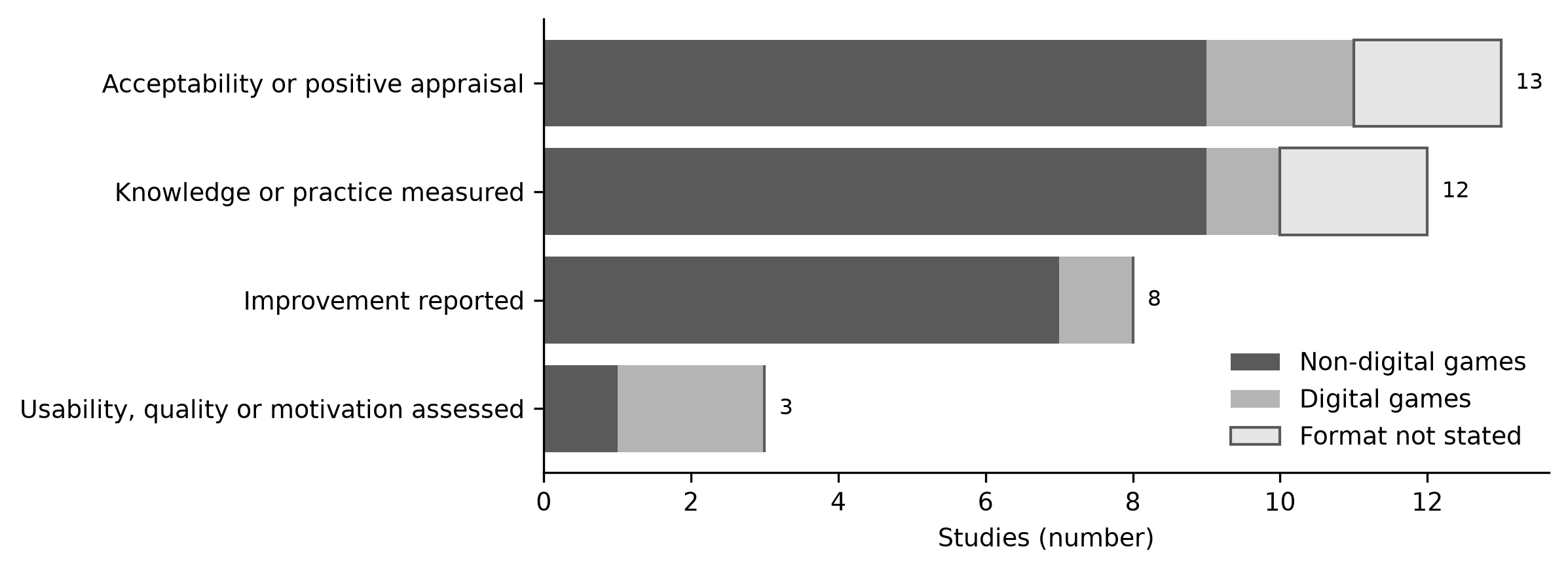
Figure 1. Included studies by outcome domain and game format.
Note: A study can appear in more than one outcome domain.Three studies assessed usability, game quality or motivation.(11,25,29) In 33 respondents, MEEGA+ ratings supported the viability of Dengueside Survival as an awareness tool.(29) Pair play was slightly more motivating than individual play in Sherlock Dengue, whereas individual play suited quick consultation.(25)
Qualitative and descriptive reports gave narrower evidence. Biology undergraduates in two focus groups judged that the role-playing game Karapanã promotes dialogue on political and socioeconomic aspects of Aedes aegypti control.(32) Ten students with Down syndrome met some difficulty with the phases of Dengue Zero, yet they recalled items discussed during the activity, such as the product used only by adults.(27)
Observation of about 260 students in nine classes in Natal recorded strong interest in four educational games.(26) A contest with 75 adolescents in Sobral promoted participation, and the adolescents already had good knowledge of dengue.(24) The AEDESPLAY case study concluded that building the app supported access to knowledge.(33)
Five further reports described approval of a game. Students rated their experience with a board game in a post-exposure questionnaire (74 students).(23) Twenty-two undergraduates accepted the Chagas disease game Barbeiragem.(28) A prototype board game on six neglected diseases won approval from 45 students and three teachers.(22) In 94 high-school students, written narratives before and after a board game were analysed qualitatively.(21) Questionnaires on ChaGame judged its elements and content relevance.(30)
Methodological concerns were high in 11 studies, some in 3, and not assessable in 9 because only an abstract was available (Table 2). No study was judged to have low concern. Single-group designs, samples below 50 participants and co-interventions such as lectures and booklets accounted for the high concerns.
Judgement | Studies (n) | Typical reasons |
|---|---|---|
High concern | 11 | Single-group or post-only design, very small samples, co-interventions, self-reported outcomes without validated instruments |
Some concerns | 3 | Comparison or structured instrument present but convenience sampling, unclear allocation or no knowledge outcome |
Not assessable | 9 | Only the abstract was available, so design details could not be verified |
Low concern | 0 | No study met the criteria |
Note: Judgements are qualitative and were not summed into scores.
All 23 studies were conducted in Brazil (Table 3). Publication years ran from 2013 to 2024, with 7 reports up to 2018 and 16 from 2019 onward. The full text was assessed for 14 studies and the abstract alone for 9.
Study | Setting | Participants | Game (format) | Disease | Design |
|---|---|---|---|---|---|
(23) | Brazil (Belo Horizonte) | 74 students in grades 5 and 6 | Jogando em Saude: Dengue (non-digital) | Dengue | Post-exposure acceptability questionnaire |
(24) | Brazil (Sobral) | 75 adolescents aged 12 to 15 years in grade 6 | Contest with a board game on dengue (non-digital) | Dengue | Descriptive activity report |
(25) | Brazil | 73 participants in the between-subject experiment (113 players in the extended analysis) | Sherlock Dengue (individual and pair versions) (digital) | Dengue | Between-subject comparison of individual versus collaborative versions |
(18) | Brazil (Belo Horizonte) | 134 pupils in grade 5 (75 board game, 59 control), aged 10 to 13 years | Jogando em Saude: Dengue (non-digital) | Dengue | Two schools assigned to board game or standard information, before and after |
(26) | Brazil (Natal) | About 260 students in nine classes of elementary and high school | Sequence of four Ministry of Health educational games (non-digital) | Aedes aegypti, Zika, chikungunya, dengue | Descriptive extension report with observation |
(21) | Brazil (Perola d'Oeste) | 94 high-school students | Combate ao Mosquito Invasor (non-digital) | Aedes aegypti, Aedes albopictus | Written narratives before and after the game, discursive textual analysis |
(12) | Brazil | 16 schoolchildren and their parents | Nossa Turma Contra a Dengue (non-digital) | Dengue | Single-group before and after, with parent interviews |
(11) | Brazil | Groups of users; n not reported in the record | Serious game against Aedes aegypti (digital) | Aedes aegypti, dengue | Two-group comparison (answers without playing versus after playing) |
(13) | Brazil | 14 children aged 8 to 9 years (5 game, 6 advertisement, 3 control) | Nossa Turma Contra a Dengue (non-digital) | Dengue | Three groups allocated by draw (game, advertisements, control), before and after |
(19) | Brazil (Belo Horizonte and Sete Lagoas) | Students of five public schools; n not reported in the record | Jogo da Dengue (not stated) | Dengue | Single-group questionnaire before and after the game, analysed by sex |
(22) | Brazil (Rio de Janeiro state) | 45 students in grade 11 and 3 biology teachers | Infectando (prototype on six neglected diseases) (non-digital) | Dengue, malaria, leishmaniasis, Chagas disease, tuberculosis, leprosy | Prototype tested with questionnaires on prior knowledge, acquired knowledge and opinions |
(14) | Brazil (Duque de Caxias) | 30 students in grades 7 and 8 | Caca Mosquito (non-digital) | Dengue, Zika, chikungunya | Single-group repeated team quiz game after 30 days, with lecture and booklet |
(27) | Brazil (Espirito Santo) | 10 students with Down syndrome | Dengue Zero (mobile) (digital) | Dengue | Observation of one session |
(16) | Brazil (Guarapuava) | 45 students in grade 6 | Batalha Viral (non-digital) | Aedes aegypti, dengue | Single-group pre-test and post-test around lessons that included the game |
(17) | Brazil | 38 students in integrated high school | DIV&AP Chagas disease (non-digital) | Chagas disease | Single-group questionnaire before (Q1) and after (Q2) one game session |
(15) | Brazil (Belo Horizonte) | 164 pupils aged 7 to 10 years | Knowledge contest (gincana) with home activities (non-digital) | Dengue | Single-group pre-test and post-test |
(28) | Brazil (Minas Gerais) | 22 undergraduates in rural education teaching | Barbeiragem (not stated) | Chagas disease | Post-exposure opinion collection |
(29) | Brazil | 33 respondents aged 18 to 28 years (university students and symposium attendees) | Dengueside Survival (non-digital) | Aedes aegypti, dengue | Descriptive validation with the MEEGA+ questionnaire |
(30) | Brazil (Amazon region) | Elementary-school children (target users); n not reported in the record | ChaGame (not stated) | Chagas disease | Descriptive evaluation by questionnaires |
(20) | Brazil (Girau do Ponciano) | 98 students in grades 8 and 9 (exploratory phase) | Educational game on visceral leishmaniasis (in development; online flashcards and quiz used) (not stated) | Visceral leishmaniasis | Action research with knowledge quiz before and after a presentation |
(31) | Brazil | 255 students in grade 9 and high school | Snakes and Ladders on dengue and leishmaniasis (non-digital) | Dengue, leishmaniasis | Post-exposure opinion survey |
(32) | Brazil | Undergraduates in biological sciences, two focus groups | RPG Karapana (non-digital) | Aedes aegypti, dengue | Qualitative evaluation by focus groups |
(33) | Brazil (Salvador) | High-school students; n not reported in the record | AEDESPLAY (app) (digital) | Dengue | Intrinsic case study with observation and document analysis |
Note: All studies were conducted in Brazil. Participant numbers are those stated in each report.
Disease focus was dengue alone in 10 studies and Aedes-borne diseases together in 7. Chagas disease was the topic in 3, visceral leishmaniasis in 1, dengue with leishmaniasis in 1 and six neglected diseases in 1. Sample size was stated in 17 studies and totalled 1,220 participants. The median was 45, with a range from 10 to 255. Sample size was missing in 5 studies.
The searches returned 2,392 records, of which Scopus supplied 185, PubMed 151, OpenAlex 1,056, Crossref 700 and Semantic Scholar 300, and 529 duplicates were removed (Figure 2). Of 1,863 records screened, 1,811 were excluded on title or abstract. Full texts were sought for 52 reports, and 7 had neither full text nor abstract. Of 45 reports assessed, 22 were excluded: 12 had no evaluation data, nine described activities that were not game-based and one reported an outcome unrelated to game users. That left 23 included studies.
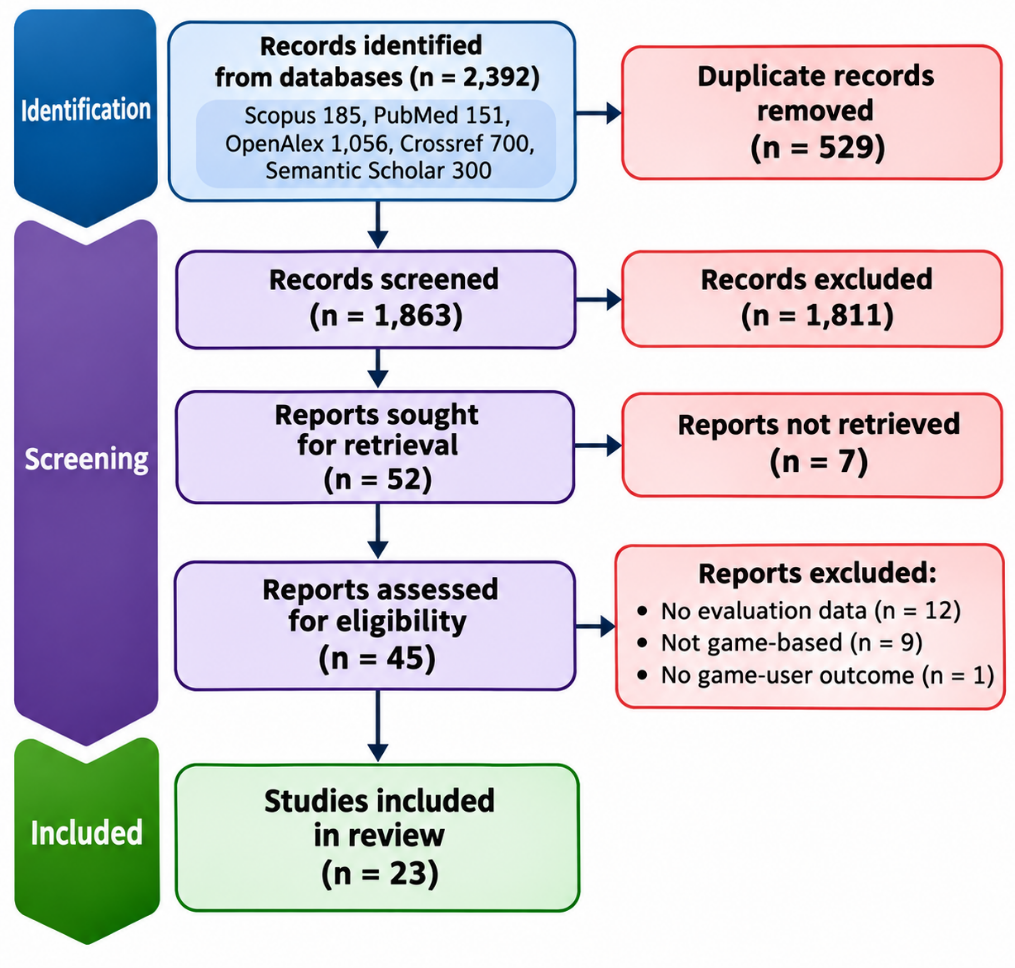
Figure 2. Flow of records through identification, screening and inclusion.
Participants were pupils in basic education in 10 studies, mixed school levels in 4, high-school students in 4 and university students or adults in 3. One study enrolled students with Down syndrome,(27) and one did not specify the users.(11)
Games were non-digital in 15 studies and digital in 4, and 4 reports did not state the format. Board games appeared in 11 studies, contests or quiz games in 2, a role-playing game in 1 and a sequence of ministry games in 1. Two papers examined the same board game in different designs, a post-exposure survey and a comparison with a control school.(18,23) Two others used the game Nossa Turma Contra a Dengue.(12,13)
No study measured entomological indices, infection or illness. Practice was assessed in 2 studies and attitudes in 1.(12,13,18) MEEGA+ was the only standardized instrument named in the records we assessed.(29) Follow-up beyond one session was described in two studies: a post-test seven days after the game(18) and a second quiz round 30 days after the first.(14)
Dengueside Survival was a cooperative board game for one to six players, who acted as health agents on five initial missions with 34 easy-to-moderate and 25 moderate-to-hard question cards.(29) Sherlock Dengue existed in an individual version and a pair-based version with matching content.(25) In DIV&AP, groups received an envelope with the board, the manual and cards named Azar and Responda.(17) The Aedes game Combate ao Mosquito Invasor had an urban board, question cards at high-school level and a fifth participant who played the female mosquito.(21)
Caça Mosquito was a team quiz with three difficulty levels and four categories: etiology and epidemiology, signs and symptoms, transmission, and prevention.(14) In the Sobral contest, teams judged ten statements on dengue as true or false and then played a final board game in which correct habits advanced and wrong habits set teams back.(24) The Natal activity used four games from the Ministry of Health, among them a truth-or-myth game and a spot-the-seven-differences game.(26) The snakes-and-ladders game covered transmission, prevention, treatment and symptoms of dengue and leishmaniasis.(31)
Digital formats included the mobile game Dengue Zero,(27) the app AEDESPLAY built by high-school students on tablets to help remove mosquito breeding foci,(33) and the digital versions of Sherlock Dengue.(25) The role-playing game Karapanã asked players to solve a dengue epidemic in a fictional city.(32) Barbeiragem stressed the social role of scientists and health agents in addition to Chagas disease prevention.(28) Infectando, the prototype for six neglected diseases, was shaped by the opinions of its 45 student players.(22)
The excluded design-only reports described games for dengue, Chagas disease and Aedes control developed in Brazil and Costa Rica, among them a tower-defence game and a mixed-reality game, and they reported no data from users.
No eligible study came from a Spanish-speaking country or from outside Brazil. Records from Argentina, Costa Rica and Ecuador described games or game-based activities, but each lacked outcomes for game users or could not be retrieved.
DISCUSSION
The main implication is that game sessions on dengue and other vector-borne diseases in Brazil are linked to reported knowledge gains in the studies that measured them, yet the signal cannot guide decisions about effectiveness. Every study that stated a direction reported improvement and none reported harm, a pattern that is also compatible with reporting bias in small uncontrolled studies. Games received positive appraisals wherever users were asked. The evidence supports using games as an engaging complement to teaching, not as proof of changed practice at home or in the community.
Earlier reviews reached similar conclusions about Aedes games in Brazil. A mapping of 18 studies reported that all the games applied were effective for health education,(7) and an integrative review of 81 works describing 72 games found an emphasis on transmitting information about the vector life cycle and prevention.(8) A mapping of 12 papers on game-based methods for dengue awareness identified only a small set of eligible studies.(6) An analysis of five board-game studies concluded that the proposals prioritized memorization of factual and procedural content.(34) Our review adds an appraisal of participant outcomes and shows that the label of effective rests on small studies.
The proportion of studies reporting gains needs a cautious reading. It counts reports, not participants, and it has a wide interval because only 12 studies measured knowledge or practice. Four of those studies did not state a direction, and positive appraisals by users do not show learning. Ceiling effects may also limit what a game can add. Adolescents in Sobral already had good knowledge of dengue,(24) and high-school students in Paraná started from satisfactory knowledge.(21) In Singapore, 84.2% of participants were willing to be vaccinated at baseline, and the game did not change that willingness more than web information did.(35)
Knowledge and practice did not move together in the studies that measured both. In the Brazilian championship with 16 children, the practical activity score rose in 12 children while questionnaire performance did not change in 15.(12) In Singapore the game outperformed web information only on daily practice.(35) These findings caution against using knowledge tests as a stand-in for behaviour, and they support the behavioural-analysis approach of observing what children do. Programs aiming at breeding-site removal should include a practice measure, such as a checklist of household containers or an entomological index, next to any questionnaire.
Games address knowledge, whereas the strongest dengue evidence from Latin America concerns community mobilization. In a cluster randomized trial with 75 intervention and 75 control clusters in Nicaragua and Mexico, mobilization lowered recent infection in children and reduced house, container and Breteau indices.(2) The cost-effectiveness analysis of the same trial repeated reductions of 29.5% in infections and 24.7% in self-reported cases.(36) A systematic review of community participation found lower vector density and higher knowledge, attitudes and behaviour.(37) None of the games in our review measured vector indices or infection. Games might supply the engagement that mobilization needs, but this remains a hypothesis.
Game studies outside Latin America used larger and more controlled designs. In a randomized trial of 400 adults in Singapore, a serious game and web-based information both raised knowledge, attitude and practice scores, and the game gave a larger gain only in daily practice (mean difference 1.0 versus 0.3, p = 0.009).(35) A quasi-experimental study of 92 Indonesian children reported higher knowledge in the board game group than in controls.(38) In Nigeria, 400 volunteers who received a mobile quiz game showed higher malaria awareness, correct perceptions and appropriate practices than controls (p < 0.001).(39) Brazilian studies, with a median of 45 participants, rarely matched those designs. The Singapore trial also used an active web comparator, which may explain why its differences were smaller than the gains reported in Brazilian single-group studies.
Games for other neglected diseases reported behavioural outcomes more often than the Brazilian studies did. In 100 Nigerian schoolchildren, a board game on schistosomiasis raised knowledge (68.0% versus 8.0%) and lowered reported visits to dam water (18.0% versus 40.0%, p = 0.048).(40) A redesigned version raised awareness of praziquantel to 67.9% against 1.1% in controls.(41) Among 275 adolescent girls in Iran, a game and an animation produced similar behaviour scores for cutaneous leishmaniasis prevention (82.58 and 80.66), both above controls (69.79).(42) Only two Brazilian studies measured practice, and each enrolled fewer than 20 children.(12,13)
Scarce formal evaluation is not unique to Latin America. A Cochrane review of educational games for health professionals found two randomized trials among 84 potentially eligible citations.(43) A review of 16 serious video games on vaccination found that two had been formally evaluated.(44) User testing of ResistanceSim exposed usability problems that blocked engagement until the tool was revised,(45) which shows why acceptability needs testing before effectiveness. In a game-based course for vector control staff in Ethiopia and Zambia, knowledge and self-efficacy rose in the short term.(46)
Meta-analytic evidence suggests why session design matters. Serious games improved learning more than conventional instruction (d = 0.29), and the gains were larger when games were supplemented with other instruction, played over several sessions or played in groups.(4) Digital games enhanced learning relative to non-game conditions, with a standardized effect of 0.33 (95% CI 0.19 to 0.48).(5) A review of 40 articles on serious games in child and adolescent health education reached a favourable conclusion on the quality of learning.(47) Several Brazilian studies delivered the game inside a package of lectures, booklets, lessons or home tasks, so the effect cannot be attributed to the game alone.(14-16)
Non-game education programs offer a benchmark for design. A cluster randomized trial in coastal Kenya found caregiver knowledge 69 percentage points higher (adjusted risk difference 0.69, 95% CI 0.56 to 0.82) after a household and school intervention, although container counts did not differ significantly.(48) Health education in Jeddah schools raised mean knowledge scores from 7.86 to 10.94,(49) and a trial in southern Iran based on the Health Belief Model improved preventive behaviour among 320 people.(50) Game studies in Brazil would need to reach that level of design before their effects could be set against such programs.
Most participants were schoolchildren, which differs from the evidence on dengue elsewhere. The Singapore trial enrolled adults in a primary care clinic,(35) and Camino Verde reached 85,182 residents in 18,838 households.(2) Brazilian game studies seldom reached adults, health workers or families, who decide whether water containers are covered, emptied or discarded. Children can carry messages home, an idea that two included authors endorsed,(20,21) but no study measured whether parents or households changed behaviour. Studies that follow children into their homes, or that bring games to community meetings and health units, would test that pathway directly.
Subgroup patterns were rarely analysed. The only sex-disaggregated analysis found that girls scored higher than boys on three of four knowledge axes, and boys narrowed but did not close the gap in high school.(19) A game that engages girls more than boys, or the reverse, would widen differences in prevention at home. Other equity dimensions, such as rural residence, school type or disability, appeared only once: an exploratory session with ten students with Down syndrome showed that game phases can need adaptation.(27) Reports should present results by sex, grade and school type.
Format and play structure deserve attention. Dengueside Survival is cooperative, and Sherlock Dengue compared individual with pair play.(25,29) The meta-analysis of serious games found larger learning gains when players worked in groups,(4) which suggests that cooperative formats are a sensible default for schools. Digital games were rare in our set, although students in Alagoas ranked electronic games first.(20) In Singapore, 78.5% of the intervention group completed the digital game and the mean System Usability Scale score was 61.8,(35) so digital games bring their own completion and usability limits.
Game design as an interactive system is a further concern, one that human-computer interaction has studied for years. Only one study used a standardized game-quality instrument,(29) and one reported a standard usability scale in related work outside the region.(35) Usability testing led to major revisions in a vector control simulator.(45) Latin American teams that develop apps and digital games should adopt shared instruments for usability, quality and motivation, and they should test games in the target classroom before measuring learning. Such steps would link the engineering reports of the region with its education studies.
Sustainability is a further issue that few studies addressed. The co-creation of a board game for malaria education in Ghana generated high interest and adherence, yet attrition of health workers and irregular clinic attendance threatened its continuation.(51) Several Brazilian studies came from university extension projects or student theses,(21,26,31) and such projects end when the team leaves. Low-cost board games that teachers can reproduce have an advantage here, whereas apps require maintenance and devices. Reports should state who ran the sessions, how long they lasted and whether the school adopted the game afterwards.
Follow-up was short. The Belo Horizonte study retested pupils after seven days,(18) and the Duque de Caxias study repeated the quiz after 30 days.(14) Non-game programs elsewhere followed participants for three months in Jeddah(49) and for 12 months in coastal Kenya.(48) Knowledge measured at the end of a session mostly reflects recall, and the studies cannot show whether pupils retained the information or acted on it during the next rainy season. Retests at three and twelve months would show whether gains persist.
Measurement quality limits comparison across studies. Several reports described questionnaires designed for the study,(17,18) and some gave results as counts or percentages of correct answers without confidence intervals.(12,17,31) The Brazilian behavioural-analysis studies went further by observing a practical activity in which children performed preventive actions against mosquito proliferation,(12,13) a design that could be scaled to larger groups. Standard instruments, such as MEEGA+ for game quality, were used in one study.(29) Shared knowledge, attitude and practice items would let future studies be compared and pooled.
Local epidemiology shaped what pupils knew. In Duque de Caxias, pupils made more errors on chikungunya than on dengue and Zika at the first quiz round, and the authors linked the pattern to endemic dengue and to the Zika outbreak in 2016.(14) A first game round can therefore serve as a cheap diagnosis of local knowledge gaps before teaching. It also shows why games that mention only dengue may leave other Aedes-borne diseases unaddressed, since the same mosquito is the vector of dengue, Zika and chikungunya.(34)
Disease coverage was narrow. Chagas disease appeared in 3 studies and leishmaniasis in two, and malaria only inside the six-disease prototype.(22) Evaluated malaria games exist elsewhere, among them a mobile quiz game in Nigeria and a game-based course for vector control staff in Ethiopia and Zambia.(39,46) Neither has a Latin American counterpart in our set, although malaria remains a regional problem. Researchers who work in endemic areas of Colombia, Peru or Venezuela could adapt these designs and evaluate them with local participants.
Chagas disease games met a different educational need. Education on Chagas disease has been criticized for staying within the biomedical frame, and a systematic review of 35 works called for multidimensional and dialogical approaches.(52) The three Chagas games here taught vector, parasite and prevention content, and one of them also addressed the social role of scientists and health agents.(17,28,30) In Argentina, a local program raised the share of residents at knowledge level III from 56.6% to 66.2%.(53) Rural residents of Ecuador had low knowledge and health literacy,(3) which defines audiences beyond schoolchildren that Brazilian game studies have not reached.
The absence of studies from Spanish-speaking countries needs a careful reading. Spanish-language queries retrieved game reports from Argentina, Costa Rica and Ecuador, but none had user outcomes that we could verify. A direct search of LILACS and Redalyc may find evaluations that the indexes we used do not carry. The same applies to Mexico, where the Camino Verde trial was run,(2) and to countries where Chagas disease and leishmaniasis are endemic. Until such studies are located, conclusions apply to Brazil, and extrapolation to other Latin American settings would be speculative.
National school-health policy gives a context for these results. One Chagas disease report noted that the School Health Programme created a need to address diseases that affect the Brazilian population in the classroom.(17) Games fit that need because they are cheap, short and curriculum-friendly, which explains their frequency in extension projects. The same features make them easy to deploy without evaluation. Funding agencies and journals could ask for a minimum evaluation package, with a comparison group, a baseline measure and a follow-up, before an educational game is promoted as effective.
Reporting could improve at low cost. Each study should state the number of participants per group, the instrument and its source, the duration and facilitator of the sessions, and the results with confidence intervals. Games should be named and described so that others can reproduce them, and the studies that evaluated the same game, as in the two reports on Jogando em Saúde, should be linked.(18,23) Such details would let a future review pool results by game, age group and disease instead of describing studies one by one.
Strengths of this review are a search across five sources with 33 queries, 18 of them in Spanish or Portuguese, and open reporting of which studies were assessed from abstracts alone. Every count was computed by script from one extraction table, and excluded reports are described by reason.
The review has limits, and each has a remedy. Screening and extraction were assisted by an AI model without a second human reviewer, so independent duplicate screening of the full record set should follow. For nine studies only the abstract was available, which blocked risk-of-bias judgement, and retrieval of full texts from publishers or authors would resolve them. LILACS, Redalyc and SciELO were not searched directly, so a direct search would test whether the thin coverage outside Brazil is real. Outcomes were heterogeneous and seldom reported with effect sizes, which prevented pooling, and future studies should report group means, standard deviations and confidence intervals.
For practice, teachers and health services in Brazil can use games as an engaging complement, with a short pre-test and post-test to document local gains. For research, the next studies should compare a game with an active control, pre-specify knowledge and practice outcomes, follow participants beyond a single session, use validated instruments and register their protocols. Studies in Spanish-speaking countries and on Chagas disease and malaria would widen a base that is now almost entirely Brazilian and dengue-focused.
CONCLUSIONS
The evidence base on serious games for dengue and other vector-borne disease education in Latin America is small, entirely Brazilian, dominated by board and card games and concentrated on dengue and other Aedes-borne diseases. Among studies that measured knowledge or practice, most reported gains and none reported a decline, but few used a comparison condition and effects on preventive practice were measured only in very small groups. Games were well accepted, and the methodological concerns were high, so the findings justify controlled trials rather than routine adoption on the basis of current evidence.
References
- 1 Bhatt S, Gething PW, Brady OJ, Messina JP, Farlow AW, Moyes CL, et al. The global distribution and burden of dengue. Nature. 2013;496(7446):504-507. doi: 10.1038/nature12060
- 2 Andersson N, Nava-Aguilera E, Arosteguí J, Morales-Perez A, Suazo-Laguna H, Legorreta-Soberanis J, et al. Evidence based community mobilization for dengue prevention in Nicaragua and Mexico ( Camino Verde, the Green Way): cluster randomized controlled trial. BMJ. 2015:h3267. doi: 10.1136/bmj.h3267
- 3 Caridi TL, Mariño-Polo F, Farra CG, Mingus AM, Memon A, Grijalva MJ, et al. Health literacy & Chagas disease knowledge: A cross-sectional study in Southern Loja Province, Ecuador. PEC Innovation. 2024;4:100287. doi: 10.1016/j.pecinn.2024.100287
- 4 Wouters P, van Nimwegen C, van Oostendorp H, van der Spek ED. A meta-analysis of the cognitive and motivational effects of serious games. Journal of Educational Psychology. 2013;105(2):249-265. doi: 10.1037/a0031311
- 5 Clark DB, Tanner-Smith EE, Killingsworth SS. Digital Games, Design, and Learning. Review of Educational Research. 2016;86(1):79-122. doi: 10.3102/0034654315582065
- 6 Lima TFM, Davis CA. A Systematic Mapping of Game-Based Methods to Tackle a Public Health Problem. In: Lecture Notes in Computer Science. Springer International Publishing; 2018. p. 317-323. doi: 10.1007/978-3-319-99426-0_37
- 7 Delela FCL, Barbosa DNF. Mapeamento sistemático de jogos digitais como ferramenta de auxílio no processo de educação em saúde no contexto das arboviroses. Cad Pedagógico. 2023;20(4):555-582. doi: 10.54033/cadpedv20n4-008
- 8 Pimentel AG, Spiegel CN, Morel APM, Ribeiro CCM, Gomes SAO, Alves GG. Concepções de educação em saúde nos jogos didáticos sobre Aedes aegypti no brasil: uma revisão integrativa. IENCI. 2021;26(1):285. doi: 10.22600/1518-8795.ienci2021v26n1p285
- 9 Page MJ, McKenzie JE, Bossuyt PM, Boutron I, Hoffmann TC, Mulrow CD, et al. The PRISMA 2020 statement: an updated guideline for reporting systematic reviews. BMJ. 2021:n71. doi: 10.1136/bmj.n71
- 10 Hong QN, Gonzalez‐Reyes A, Pluye P. Improving the usefulness of a tool for appraising the quality of qualitative, quantitative and mixed methods studies, the Mixed Methods Appraisal Tool ( MMAT ). Evaluation Clinical Practice. 2018;24(3):459-467. doi: 10.1111/jep.12884
- 11 Falcao IWS, da S. Souza D, Araujo FPO, dos S. Fernandes JG, Pires YP, Cardoso DL, et al. Usability and Cognitive Benefits of a Serious Game to Combat Aedes Aegypti Mosquito. 2019 IEEE 32nd International Symposium on Computer-Based Medical Systems (CBMS). 2019;2019-June:720-725. doi: 10.1109/cbms.2019.00145
- 12 Do Nascimento AR, Borloti E, Haydu VB. Prevenção da dengue na infância: efeitos da participação em um campeonato com um jogo educativo. perspectivas. 2018;9(1):90-109. doi: 10.18761/pac.2017.014
- 13 Carneiro L, Haydu VB, Borloti EB, De Souza SR. Prevenção da dengue: efeitos de propagandas e de um jogo de tabuleiro. REBAC. 2019;15(1). doi: 10.18542/rebac.v15i1.7919
- 14 Ferreira FA, Maniero VC, Rangel PSC, De Azevedo ALP, Cardozo TSF, Vasconcellos RFRR, et al. Estratégias educativas para combater a dengue, zika e chikungunya no ensino fundamental ii. ESA. 2020;13(1). doi: 10.22409/resa2020.v13i1.a21657
- 15 Abreu GJ, Queiroz CM, Soares FV, Fernandes ILDS, Carvalho NAD, Cruz BLSD, et al. Educação em saúde para crianças: estratégia de combate a dengue. RSD. 2021;10(1):e2110110864. doi: 10.33448/rsd-v10i1.10864
- 16 Ryzy CR, Crisostimo AL. Um jogo didático como proposta de intervenção pedagógica na abordagem sobre o mosquito Aedes aegypti. R bras Ens Ci Tecnol. 2020;13(2). doi: 10.3895/rbect.v13n2.8712
- 17 Dias LP, Rocha GK, Werneck JMCDF. O Ensino da Doença de Chagas através de Ferramenta Pedagógica Lúdica. Revista Vértices. 2020;22(1):46-58. doi: 10.19180/1809-2667.v22n12020p46-58
- 18 Beinner MA, de Morais ÉAH, Reis IA, Reis EDAF, de Oliveira SR. O uso de jogo de tabuleiro na educação em saúde sobre dengue em escola pública [Internet]. Revista de Enfermagem UFPE on line; 2015. Available from: https://periodicos.ufpe.br/revistas/revistaenfermagem/article/download/13587/16397
- 19 Freitas MDA, Azevedo TGD, Teixeira ABM. Ações lúdico-educativas para o enfrentamento da doença dengue em cinco escolas públicas da grande Belo Horizonte: uma análise a partir da categoria sexo. RIAEE. 2019;14(4):2222-2243. doi: 10.21723/riaee.v14i4.9938
- 20 Almeida EIAD, Silva ED, Araujo MGS, Silva YKCD, Silva DCDOLD. Enfrentamento da leishmaniose visceral utilizando tecnologia inovadora: Construção de um game educativo a partir da pesquisa-ação. RSD. 2023;12(8):e3312842880. doi: 10.33448/rsd-v12i8.42880
- 21 da Silva EH. A proposta de jogo didático no combate aos mosquitos Aedes aegypti e Aedes albopictus [Internet]. Seminário de Ensino, Pesquisa e Extensão da UFFS; 2017. Available from: https://portaleventos.uffs.edu.br/index.php/SEPE-UFFS/article/view/6515
- 22 Silva-Pires FDES, Trajano VDS, Araújo-Jorge TCD. Construindo o protótipo do jogo “Infectando”: o papel do anti-herói aplicado no conceito de doenças. REnCiMa. 2019;10(1):65-84. doi: 10.26843/rencima.v10i1.1547
- 23 Beinner MA, de Morais ÉAH, de Oliveira SR. Análise qualitativa do alcance de um instrumento educativo sobre dengue para escolares [Internet]. Revista de Enfermagem UFPE on line; 2013. Available from: https://periodicos.ufpe.br/revistas/revistaenfermagem/article/download/12381/15136
- 24 de Castro JBR, Filgueira ADA, Lima ER, da Silva CM, Rocha FAA, Sousa IO. Jogo de tabuleiro: brincando e aprendendo como prevenir a dengue [Internet]. 11º Congresso Internacional da Rede Unida; 2014. Available from: http://conferencias.redeunida.org.br/ocs/index.php/redeunida/RU11/paper/view/2097
- 25 Buchinger D, Hounsell MDS. A Comparison Between an Individual and a Collaborative Versions of a Serious Game to Learn About Dengue Fever. Inform educ. 2015;18(1). doi: 10.22456/1982-1654.49126
- 26 Santos DCMD, Silva APLD, Costa IASD, Andrade Souza GPVD. Interação universidade-escola: uso de jogos didáticos para conhecer e prevenir o Aedes aegypti. Rev E&S. 2017;8(1):57-68. doi: 10.21680/2178-6054.2017v8n1id11958
- 27 Andrade GDO, Moreira SAS, Brandão NS. Aprendizagem por meio de jogo educativo: uma experiência com crianças, jovens e adultos com síndrome de Down. RSD. 2020;9(6):e07963309. doi: 10.33448/rsd-v9i6.3309
- 28 Mota Piancastelli A, Garzedim de Araújo B, Quintaneiro Mota J, Pedro Vianey J, Sales de Oliveira F. A formação inicial de professores e a educação do campo: uma proposta de jogo para o ensino da parasitologia. Rev Bras Educ Camp. 2021;6:e9362. doi: 10.20873/uft.rbec.e9362
- 29 Azevedo GSD, Lima LS, Barbosa IC, Sarinho VT. Dengueside Survival: Providing a serious board game to fight against the Aedes aegypti mosquito. JIS. 2022;13(1):1-14. doi: 10.5753/jis.2022.1881
- 30 Pontes PAI, De Oliveira LLC, De Souza DDSM, Costa FAR, Miranda FC, Eliasquevici M, et al. ChaGame: A Serious Game for Educational Information About Chagas Disease in the Brazilian Amazon. 2023 International Wireless Communications and Mobile Computing (IWCMC). 2023:357-362. doi: 10.1109/iwcmc58020.2023.10183053
- 31 Kito BK, Matarazo JGA, Lordelo ADSDB, Oliveira RCH, Moris DV, Carvalho TB, et al. Snakes and ladders in infectious diseases: creation and acceptance of a game to disseminate knowledge about dengue and leishmaniasis. CLIUM. 2023;23(21):161-172. doi: 10.53660/clm-2429-23s34
- 32 Pimentel AG, Spiegel CN, Coutinho RC, Alves GG, Gomes SAO. Desenvolvimento de um jogo de RPG sobre o controle do aedes aegypti e as contribuições dos alunos de ciências biológicas [Internet]. Revista Eletrônica Ludus Scientiae (Ludus) 2024;8:138-157; 2024. Available from: https://revistas.unila.edu.br/relus/article/view/4542
- 33 Pinto MP, Fontoura JRDA, Albuquerque JCMD, Silva MC. O uso de um aplicativo digital para aprendizagem gamificada no combate a Dengue: AEDESPLAY. R G Secr. 2024;15(7):e3757. doi: 10.7769/gesec.v15i7.3757
- 34 Bruno RV, Carvalho AVEV, Monteiro-Maia R. Playful Pedagogical Analysis of Studies with Board Games in Arboviruses. Educ Real. 2022;47:e110239. doi: 10.1590/2175-6236110239vs02
- 35 Tan A, Koh E, Sankari U, Tang J, Goh CK, Tan NC. Effects of a serious game on knowledge, attitude and practice in vector control and dengue prevention among adults in primary care: A randomised controlled trial. DIGITAL HEALTH. 2022;8:205520762211290. doi: 10.1177/20552076221129099
- 36 Tschampl CA, Undurraga EA, Ledogar RJ, Coloma J, Legorreta-Soberanis J, Paredes-Solís S, et al. Cost-effectiveness of community mobilization (Camino Verde) for dengue prevention in Nicaragua and Mexico: A cluster randomized controlled trial. International Journal of Infectious Diseases. 2020;94:59-67. doi: 10.1016/j.ijid.2020.03.026
- 37 Arfan I, Sulistyorini L, Sulistyowati M, Syahrul F, Junaidi H, Rizky A. Benefits and barriers of community participation in dengue control: A systematic review. AJRH. 2024;28(10s):482-498. doi: 10.29063/ajrh2024/v28i10s.49
- 38 Amelia VL, Setiawan A, Sukihananto. Board game as an educational media for dengue prevention knowledge for school-aged children. Enf Global. 2019;18(4):254-272. doi: 10.6018/eglobal.18.4.336611
- 39 Chukwuocha U, Ashinze O, Iwuoha G, Dozie IN. Development and evaluation of a mobile digital quiz game for the promotion of malaria awareness, positive perceptions and appropriate practices. International Journal of Infectious Diseases. 2020;101:204. doi: 10.1016/j.ijid.2020.09.545
- 40 Ejike CU, Oluwole AS, Mogaji HO, Adeniran AA, Alabi OM, Ekpo UF. Development and testing of Schisto and Ladders™, an innovative health educational game for control of schistosomiasis in schoolchildren. BMC Res Notes. 2017;10(1):236. doi: 10.1186/s13104-017-2545-5
- 41 Ejike CU, Oluwole AS, Omitola OO, Bayegun AA, Shoneye IY, Akeredolu-Ale BI, et al. Schisto and Ladders version 2: a health educational board game to support compliance with school-based mass drug administration with praziquantel – a pilot study. Int Health. 2021;13(3):281-290. doi: 10.1093/inthealth/ihaa057
- 42 Alidosti M, Shahnazi H, Heidari Z, Zamani-Alavijeh F. Design and evaluation of two educational media in the form of animation and games to promote the cutaneous leishmaniasis prevention behaviors in adolescent female. BMC Public Health. 2022;22(1):2288. doi: 10.1186/s12889-022-14772-8
- 43 Akl EA, Sackett KM, Erdley WS, Mustafa RA, Fiander M, Gabriel C, et al. Educational games for health professionals. Cochrane Database Syst Rev. 2013;2013(3):CD006411. doi: 10.1002/14651858.cd006411.pub4
- 44 Ohannessian R, Yaghobian S, Verger P, Vanhems P. A systematic review of serious video games used for vaccination. Vaccine. 2016;34(38):4478-4483. doi: 10.1016/j.vaccine.2016.07.048
- 45 Thomsen EK, Hemingway C, South A, Duda KA, Dormann C, Farmer R, et al. ResistanceSim: development and acceptability study of a serious game to improve understanding of insecticide resistance management in vector control programmes. Malar J. 2018;17(1):422. doi: 10.1186/s12936-018-2572-2
- 46 Dormann C, Duda K, Hamainza B, Yewhalaw D, Hemingway C, Coleman M, et al. Evaluation of a game-based training course to build capacity for insecticide resistance management in vector control programmes. PLoS ONE. 2020;15(10):e0240514. doi: 10.1371/journal.pone.0240514
- 47 Ancona A, Corea F, Lombardo C, Gentili D, Mistretta A. Serious games in child and adolescent health education campaigns: a systematic review [Internet]. Annali dell'Istituto superiore di sanita; 2024. Available from: https://pubmed.ncbi.nlm.nih.gov/39699981/
- 48 Forsyth JE, Kempinsky A, Pitchik HO, Alberts CJ, Mutuku FM, Kibe L, et al. Larval source reduction with a purpose: Designing and evaluating a household- and school-based intervention in coastal Kenya. PLoS Negl Trop Dis. 2022;16(4):e0010199. doi: 10.1371/journal.pntd.0010199
- 49 Usman HB, AlSahafi A, Abdulrashid O, Mandoura N, Al Sharif K, Ibrahim A, et al. Effect of Health Education on Dengue Fever: A Comparison of Knowledge, Attitude, and Practices in Public and Private High School Children of Jeddah. Cureus. 2018;10(12):e3809. doi: 10.7759/cureus.3809
- 50 Yari A, Mohseni S, Ezati Rad R, Hosseini Z, Shahabi N, Aghamolaei T. The Effectiveness of Educational Intervention in Promoting Preventive Behaviors of Dengue Fever in Southern Iran: Applying Health Belief Model (HBM). Health Science Reports. 2024;7(12):e70198. doi: 10.1002/hsr2.70198
- 51 Boateng MA, Agyei-Baffour E, Angel S, Asare O, Prempeh B, Enemark U. Co-creation and prototyping of an intervention focusing on health literacy in management of malaria at community-level in Ghana. Res Involv Engagem. 2021;7(1):55. doi: 10.1186/s40900-021-00302-0
- 52 Sanmartino M, Mateyca C, Pastorino IC. What are we talking about when we talk about education and Chagas? A systematic review of the issue. Biochimica et Biophysica Acta (BBA) - Molecular Basis of Disease. 2020;1866(5):165691. doi: 10.1016/j.bbadis.2020.165691
- 53 Genero S, Zorzo LR, Chaparro RM. Impacto de un programa de educación sanitaria sobre los conocimientos básicos de la Enfermedad de Chagas en una población del Noreste argentino. Rev Fac Cien Med Univ Nac Cordoba. 2018;75(3):168-175. doi: 10.31053/1853.0605.v75.n4.20004
Declarations
Funding
No financing
Conflict of interest
None
Authorship contributions
Drafting – original draft: Norma Beatriz Ríos, Erik Ricardo Condori.
Writing–review and editing: Norma Beatriz Ríos, Erik Ricardo Condori.