

Abstract
Introduction: The composition of game-based learning articles published in Latin American journals indexed in SciELO, and the change in their emphasis on digital and augmented technologies, had not been described. Methods: Cross-sectional bibliometric study with trend analysis of SciELO ArticleMeta records of 2012 to 2024. Candidates located in OpenAlex by journal ISSN were linked to ArticleMeta records, a core corpus was defined by dictionary rules and audited, articles were tagged by level, area and technology, topics were extracted with non-negative matrix factorization, and tag trends were estimated with logistic regression. Results: The core corpus had 478 articles in 187 journals (53.3% Spanish, 26.2% Portuguese, 20.5% English). Annual output climbed from 12 articles in 2012 to 90 in 2024. Higher education (24.5%) and health (21.1%) led. Gamification rose from 2.2% to 44.3% of the articles (odds ratio per year 1.32, 95% CI 1.21 to 1.44), digital technology stayed near 49% (odds ratio 0.98), and augmented or virtual reality appeared in 2.3% of the articles (odds ratio 1.36, 95% CI 0.98 to 1.89). The audit judged 87% of core records relevant. Conclusions: The growth of the regional literature came through gamification and not through digital or immersive technology, and the corpus rests on linked records with limits that the authors must verify.
Keywords
game-based learning, gamification, serious games, SciELO, Latin America, augmented reality
INTRODUCTION
Game-based learning, serious games and gamification form a family of approaches that bring games, play or game mechanics into teaching with an educational purpose. Meta-analyses of digital game-based interventions in schools reported a medium effect on overall learning (Hedges g = 0.54),(1) and a meta-analysis of digital games in science, technology, engineering and mathematics reported a medium to large effect over conventional instruction (g = 0.624, 95% CI 0.457 to 0.790).(2) A synthesis of 33 studies in kindergarten to higher education arrived at a similar moderate estimate,(3) and a meta-analysis of eighteen studies in primary schools found positive effects of digital game-based learning, particularly in mathematics, language and science.(4) Evidence on gamification and serious games also points to attitude, enjoyment and usefulness as the main predictors of the intention to use them.(5) These estimates sit next to conceptual uncertainty, because the field has not settled on a consistent definition of educational video games (6) and the psychological accounts of gamification remain fragmented.(7) A bibliometric analysis of gamification-based learning found that most research originated in the United States, followed by Spain and Britain,(8) so the part contributed by Latin American journals is less well described.
Two developments suggest that the emphasis of the regional literature on digital and augmented technologies changed over the last decade. A systematic review reported that publications on augmented reality applications in education doubled between 2016 and 2020,(9) and a scoping review of augmented reality in Latin American engineering education began from the observation that little was known about its use in the region before charting 36 papers.(10) In parallel, university students in Chile, Venezuela and Ecuador went through emergency remote teaching during the pandemic,(11) within a longer regional history of web-based and interactive distance education.(12) The pattern anticipated for regional journals was therefore a rise of digital and gamified formats after 2020, with augmented and virtual reality appearing later and in a minority of articles. This expectation framed the analysis and was not registered as a hypothesis.
SciELO keeps open-access collections of national, peer-reviewed journals and operates in 14 countries.(13,14) Portuguese and Spanish together are the second most frequent publication language in Web of Science,(15) although Colombian researchers describe added costs when they publish in English,(16) and educational research published in Latin American journals concentrates in higher education.(17) Reviews of game-based learning in the region have addressed a single game type, such as role-playing games in Ibero-America,(18) a single country, such as digital games in Brazilian education,(19) or gamification across several databases at once.(20) The composition of the SciELO-indexed literature as a whole, by language, journal, subject and technology, has not been described in those reviews. This study aimed to describe which topics dominate game-based learning articles in Latin American journals indexed in SciELO between 2012 and 2024 and how the emphasis on digital and augmented technologies changed over that period.
METHODS
Design and reporting
A cross-sectional bibliometric study of article metadata and abstracts was combined with a retrospective trend analysis over publication years. Reporting followed the STROBE items that apply to descriptive studies of bibliographic records. A written protocol (question, unit, outcome, exposure, coding rules and sensitivity analyses) preceded the analysis and was amended twice before the final estimates: the inclusion rules were tightened after random samples of included records showed low precision for generic game terms, and the technology and area dictionaries were revised after a first pass because the digital category matched incidental words. Trend estimates from the first pass were therefore seen before the coding rules were fixed.
Data source and article identification
The unit of analysis was a journal article or review published between 2012 and 2024 in a journal of a Latin American national collection of SciELO: Argentina, Bolivia, Brazil, Chile, Colombia, Costa Rica, Cuba, the Dominican Republic, Ecuador, Mexico, Paraguay, Peru, Uruguay and Venezuela. The journal list (1,787 titles, 2,628 ISSN) and the full records of the articles were obtained from the SciELO ArticleMeta API.(21) The collections of Spain, Portugal and South Africa and the thematic collections were not used. ArticleMeta cannot be searched by keyword, so candidate articles were located with OpenAlex,(22) restricted to the ISSN of those journals, to publication years 2012 to 2024 and to the types article and review, with a title and abstract search. The search combined specific terms in English, Spanish and Portuguese (game-based learning, serious games, educational games, video games, gamification and their Spanish and Portuguese equivalents, board games, escape rooms and role-playing games) with a second, generic query that paired game words with learning words. This produced 3,377 candidate records.
Each candidate was linked to its ArticleMeta record through the DOI listed in the ArticleMeta identifier index, through the SciELO identifier contained in a landing page or in the Crossref resource address, or, for articles without a DOI in the index, through an identical normalized title in the same journal and a publication year within one year. A total of 1,856 candidates were linked and 1,346 were not, mostly because the article was hosted outside SciELO or because its record carried no DOI in the index. For each linked record the titles, abstracts and keywords in every available language, the language of the text, the document type, the publication year, the number of authors, the affiliation countries and the number of references were retained. Publication year came from the ArticleMeta record and not from OpenAlex.
Eligibility and inclusion rules
Editorials, letters and commentaries were excluded, as were records published outside 2012 to 2024 and records with noise terms that signal other meanings of game, such as Olympic games, gambling, game theory or sport games, unless a specific educational game term was also present. The core corpus contained the records whose title or keywords carried a specific game-for-learning term together with an educational term (strict criterion), or a video game, digital game or electronic game term with an educational term in the title or keywords and no addiction, screen time, aggression, obesity or psychometric terms (weak criterion). Specific terms were game-based learning, serious games, educational games, learning games, didactic games, gamification, game-based teaching, board and card games, escape rooms, role-playing games and teaching games for understanding, in the three languages. Two broader sets were kept for sensitivity analysis: generic game or play words in the title or keywords with a learning term, and mentions of a specific term at least twice in an abstract.
The relevance of the core corpus was audited on 100 records drawn at random with a fixed seed. Each record was read by title, keywords and abstract and judged as game-based learning, serious games or gamification with an educational, training or learning purpose. The audit was done by the language model used to prepare this manuscript (Claude, Anthropic) and requires independent verification by the authors.
Coding of level, area and technology
Every record received tags from dictionaries of terms in the three languages, after lowercasing and removal of accents. A tag was assigned when a term matched in the title or keywords, or when at least two matches appeared in the abstract in one language. Educational level had six categories (early childhood, primary, secondary, higher education, teacher training and professional training) and a record could carry several. Each record received one primary disciplinary area, chosen as the area with the highest weighted count (title and keyword matches weighed three, abstract matches one); when no area reached two points the record was labelled as having no specific area. Nine technology tags were defined: digital technology, augmented reality, virtual or immersive reality, mobile devices, artificial intelligence or adaptive systems, gamification, serious games, simulation and non-digital games. A combined category of augmented or virtual reality was added. Dictionary coding was checked on a second random sample, described in the Results.
Topic model
The English title, English keywords and English abstract of each record were joined (the original language was used when no English text existed), and the title was counted twice. Terms were weighted with TF-IDF (unigrams and bigrams, at least five documents, at most 35% of documents, English stop words plus a list of study words and country names). Non-negative matrix factorization(23) was fitted for 5 to 12 topics with a fixed seed. The number of topics was chosen as the one with the highest mean normalized pointwise mutual information of the ten top terms, a coherence measure from a framework that was evaluated against human judgements of topic interpretability.(24) Matrix factorization was chosen because comparisons with other topic models found coherent topics for niche corpora(25) and meaningful topics for short texts,(26,27) although its solutions depend on initialization;(28) stability was therefore measured by refitting the model with ten random initializations and averaging, for each refit, the best cosine similarity between each topic vector and the refitted topics. Each record was assigned to the topic with the highest weight. Topic labels were assigned after reading the ten top terms and the highest-weight titles of each topic.
Statistical analysis and construction of figures
Counts and percentages were computed over the core corpus, with 2012 to 2016, 2017 to 2020 and 2021 to 2024 as periods that separate the early years, the years before the pandemic and the years that include it. The change in each tag across publication years was estimated with a logistic regression of the tag on year ( centred at 2012), reported as an odds ratio per year with a Wald 95% confidence interval; p values were adjusted across the tags with the Benjamini-Hochberg procedure. Differences among periods were tested with the chi-square test, the association of year with annual output and with the number of authors with Spearman correlation, and the proportions were given with Wilson intervals. Topic weights were correlated with year (Spearman) and adjusted in the same way. Three sensitivity analyses repeated the trend models with the strict criterion only, with the broad corpus and with the years 2015 to 2024 only.
RESULTS
The linkage of 3,377 OpenAlex candidates to ArticleMeta records produced 1,856 SciELO records, of which 478 met the core criteria (390 strict and 88 weak); the broad set added 214 records. Of 100 core records audited, 87 were judged relevant (87.0%, 95% CI 79.0 to 92.2). Among the records with a digital term in the title or keywords, 43 of 45 had a digital technology as the object of the study (95.6%). Of the 478 articles, 20 (4.2%) were classified as reviews.
Annual output climbed from 12 articles in 2012 to 90 in 2024 (Figure 1), a compound annual growth of 18.3%. The slope stayed at 13 articles a year or fewer until 2016, steepened from 20 in 2017 to 82 in 2022, and reached its peak in 2024. Annual counts and publication year coincided closely (Spearman ρ = 0.92, p <0.001). The language mix moved with the volume: Portuguese made up 54.3% of the articles in 2012-2016 and 21.1% in 2021-2024, while Spanish climbed from 13.0% to 60.7% (χ² = 38.4, 4 degrees of freedom, p <0.001). English held between 18.1% and 32.6% across periods (Table 1).
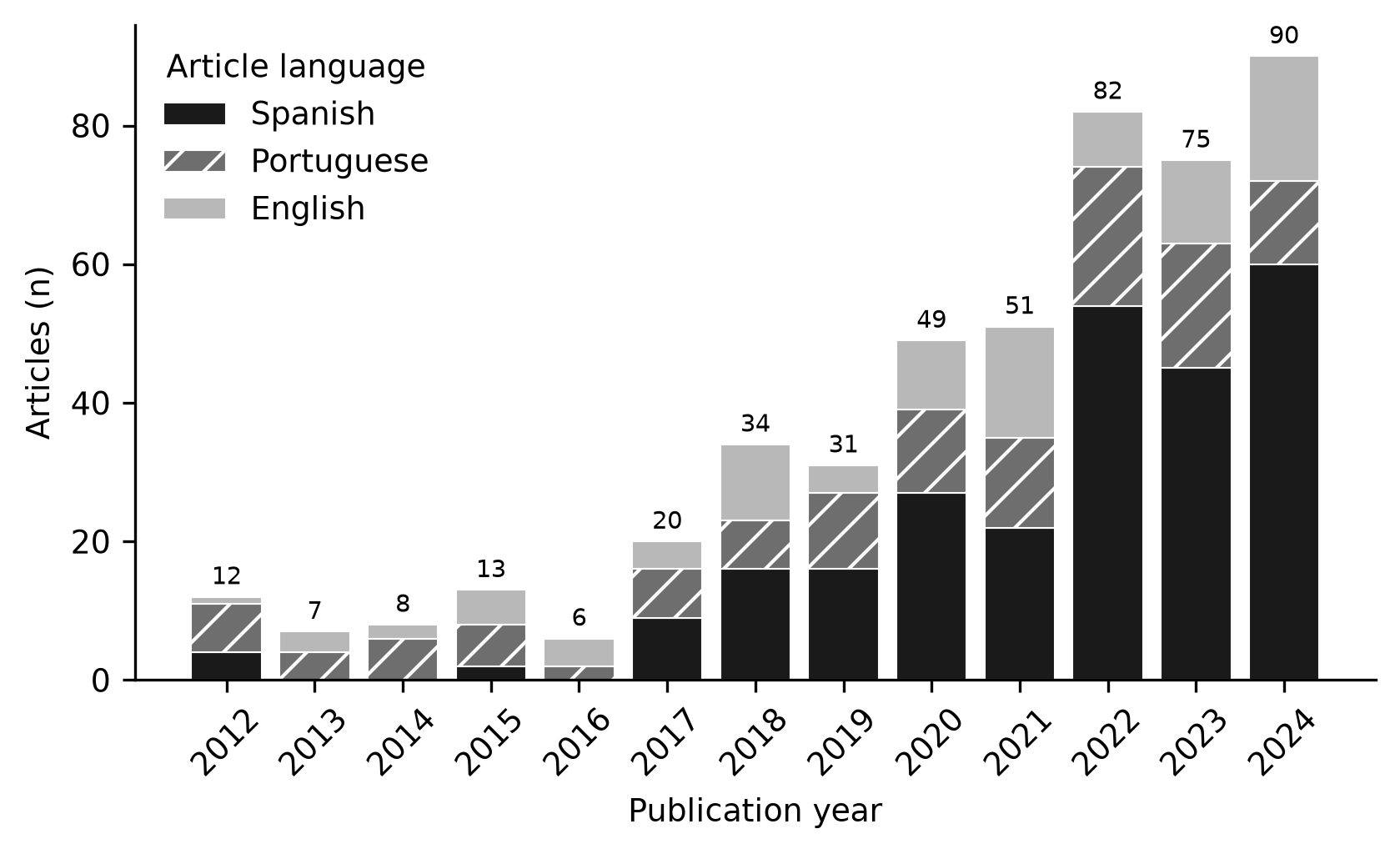
Figure 1. Game-based learning articles in Latin American SciELO journals by publication year and language of the text.
Period | Articles (n) | Spanish (%) | Portuguese (%) | English (%) | Journals (n) | Collections (n) |
|---|---|---|---|---|---|---|
2012-2016 | 46 | 13.0 | 54.3 | 32.6 | 38 | 4 |
2017-2020 | 134 | 50.7 | 27.6 | 21.6 | 87 | 9 |
2021-2024 | 298 | 60.7 | 21.1 | 18.1 | 136 | 13 |
2012-2024 | 478 | 53.3 | 26.2 | 20.5 | 187 | 13 |
The distribution by origin clustered around three collections (Figure 2). Brazil supplied 40.6% of the articles (194), Colombia 18.6% (89) and Mexico 12.6% (60), and 13 collections contributed at least one article. The language profile differed by collection: 58.8% of the Brazilian articles were in Portuguese and 33.0% in English, against 96.7% in Spanish in the Mexican collection. Journals spread widely, with 187 titles and 96 of them (51.3%) contributing a single article. The ten most frequent journals held 22.2% of the articles, and the two leading journals held 14 each (Herfindahl-Hirschman index 107 on a 10,000 scale). The journal names contained an education term in 38.1% of the articles. The median number of authors was 3 (interquartile range 2 to 4), without a trend over years (ρ = −0.05, p = 0.286).
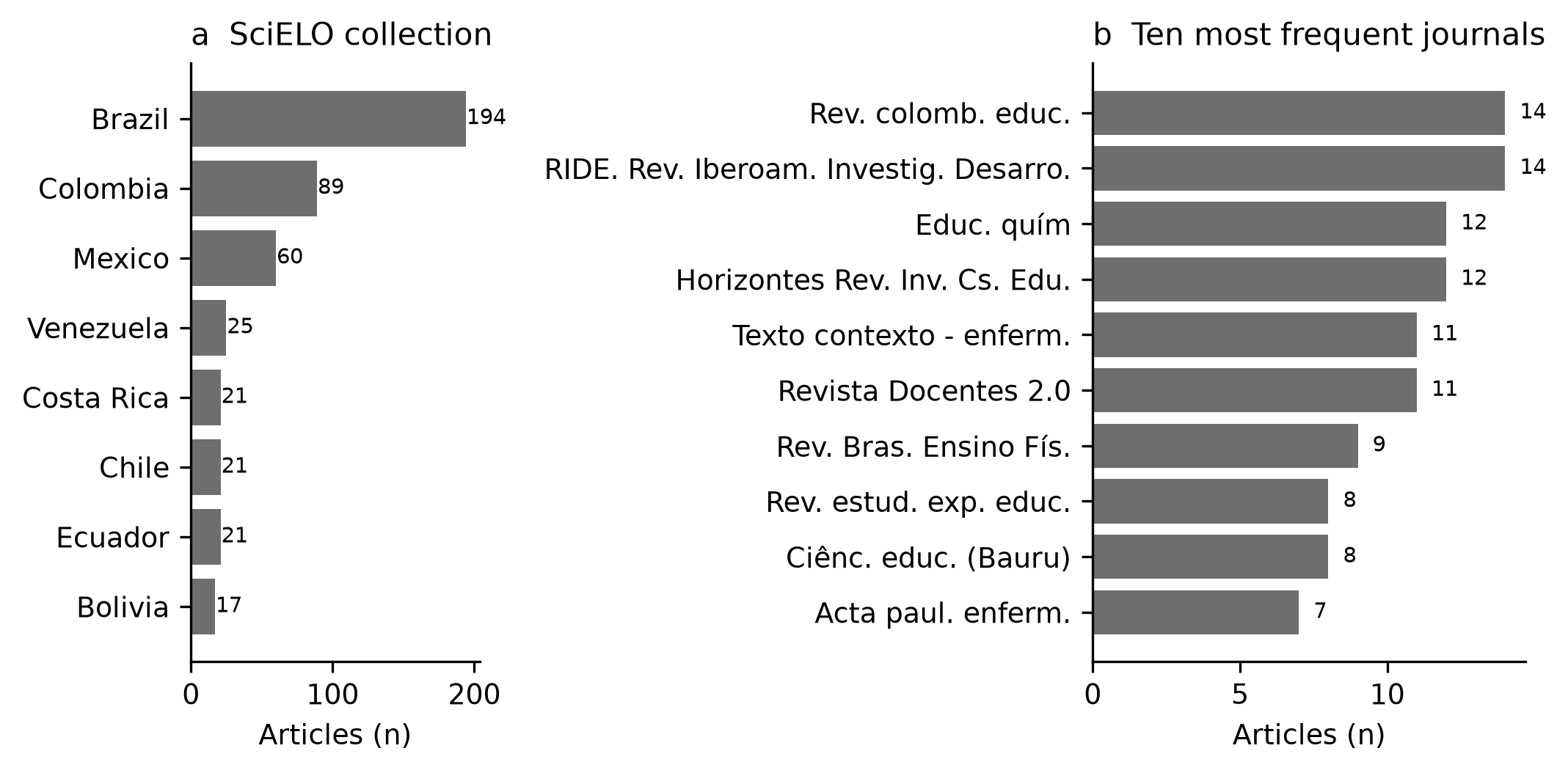
Figure 2. Articles by SciELO collection and ten most frequent journals.
Higher education and health stood at the front of the distribution by level and area (Figure 3). Higher education was the most frequent stated level, with 24.5% of the articles, ahead of secondary (8.4%) and primary education (5.4%), while 55.6% of the articles stated no level. Health led the primary areas with 21.1%, followed by natural sciences (10.7%), mathematics (8.6%), languages and literacy (8.6%) and business and management (8.4%); 23.6% had no specific area. Business and management dropped from 19.6% in 2012-2016 to 5.4% in 2021-2024 (odds ratio per year 0.84, 95% CI 0.77 to 0.92, adjusted p = 0.003), and physical education dropped from 10.9% to 4.0% without a significant trend. Natural sciences rose from 4.3% to 11.4%, and higher education from 13.0% to 26.2%, also without a significant trend after adjustment.
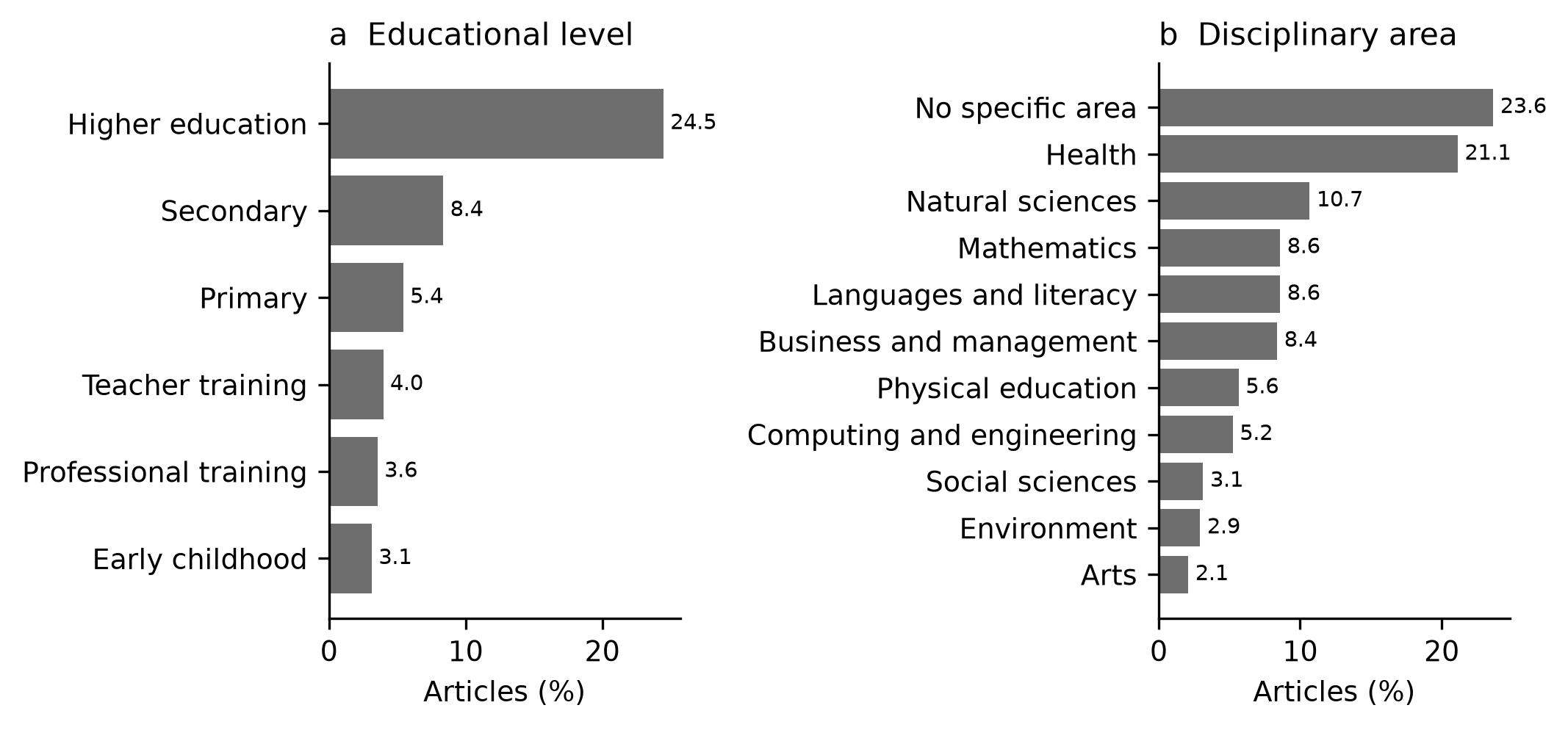
Figure 3. Articles by educational level and primary disciplinary area.
The slope of gamification dominated the technology trend (Figure 4). Gamification appeared in 2.2% of the articles of 2012-2016, in 29.9% of 2017-2020 and in 44.3% of 2021-2024, which corresponded to an odds ratio of 1.32 per year (95% CI 1.21 to 1.44, adjusted p <0.001). The line of digital technology stayed level near 49% in the three periods (50.0%, 49.3% and 48.7%; odds ratio per year 0.98, 95% CI 0.92 to 1.04, adjusted p = 0.714), and non-digital games stayed between 15.8% and 17.4%. Mobile devices peaked in the windows ending in 2018 and 2020, and their share was 5.0% in 2021-2024. Serious games reached 14.9% in 2017-2020 and 9.1% in 2021-2024 (Table 2).
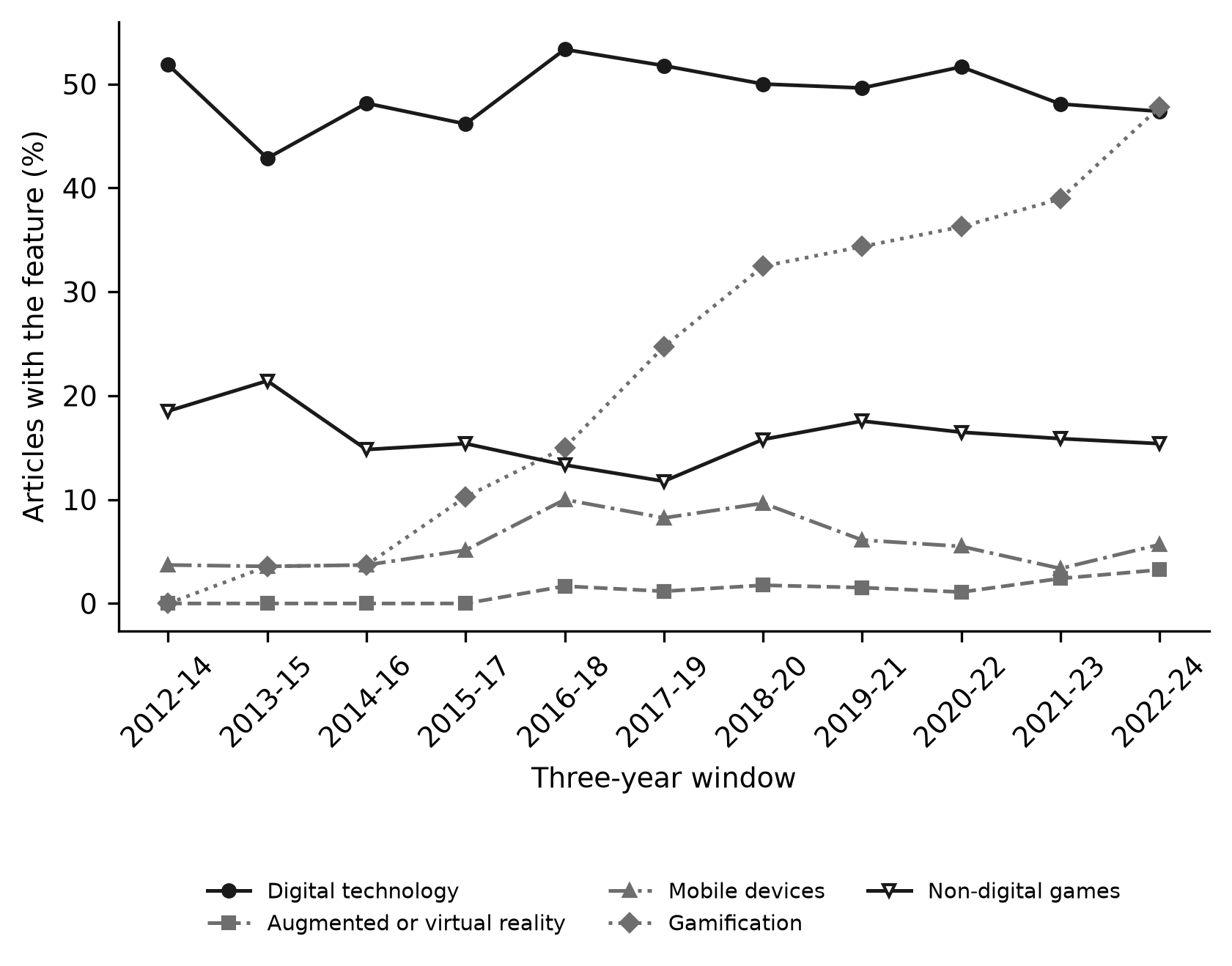
Figure 4. Share of articles carrying each technology tag in three-year windows of publication year.
Category | 2012-2016, n (%) | 2017-2020, n (%) | 2021-2024, n (%) | OR per year (95% CI) | Adjusted p |
|---|---|---|---|---|---|
Digital technology | 23 (50.0) | 66 (49.3) | 145 (48.7) | 0.98 (0.92-1.04) | 0.7 |
Digital terms in title or keywords | 20 (43.5) | 61 (45.5) | 131 (44.0) | 0.98 (0.93-1.04) | 0.7 |
Augmented or virtual reality | 0 (0.0) | 2 (1.5) | 9 (3.0) | 1.36 (0.98-1.89) | 0.2 |
Augmented or virtual reality in title or keywords | 0 (0.0) | 2 (1.5) | 7 (2.3) | 1.35 (0.94-1.94) | 0.2 |
Augmented reality | 0 (0.0) | 2 (1.5) | 4 (1.3) | 1.17 (0.82-1.65) | 0.6 |
Virtual or immersive reality | 0 (0.0) | 0 (0.0) | 5 (1.7) | 1.94 (0.90-4.20) | 0.2 |
Mobile devices | 2 (4.3) | 12 (9.0) | 15 (5.0) | 1.00 (0.89-1.14) | 1.0 |
Artificial intelligence or adaptive | 0 (0.0) | 1 (0.7) | 1 (0.3) | NA | NA |
Gamification | 1 (2.2) | 40 (29.9) | 132 (44.3) | 1.32 (1.21-1.44) | <0.001 |
Serious games | 3 (6.5) | 20 (14.9) | 27 (9.1) | 0.98 (0.89-1.08) | 0.8 |
Non-digital games | 8 (17.4) | 21 (15.7) | 47 (15.8) | 1.00 (0.92-1.09) | 1.0 |
Note: OR = odds ratio per publication year from a logistic regression centred at 2012; CI = confidence interval; p values adjusted across categories by the Benjamini-Hochberg procedure. NA = not estimated because fewer than five articles carried the tag.
Augmented and virtual reality stayed marginal. No article of 2012-2016 carried the tag, 1.5% of the articles of 2017-2020 did and 3.0% of those of 2021-2024 did, so 11 articles in total carried it (6 for augmented reality and 5 for virtual or immersive reality). The first augmented reality article was published in 2018 and the first virtual reality article in 2021. The odds ratio per year was 1.36 (95% CI 0.98 to 1.89, adjusted p = 0.195). Artificial intelligence or adaptive systems appeared in 2 articles. The sensitivity analyses gave similar estimates. With the strict criterion only, the odds ratios per year were 1.00 for digital technology (95% CI 0.93 to 1.07) and 1.32 for augmented or virtual reality (95% CI 0.91 to 1.92). In the broad set the values were 1.01 (95% CI 0.97 to 1.07) and 1.18 (95% CI 0.95 to 1.47), and with the years 2015 to 2024 only they were 0.98 (95% CI 0.91 to 1.06) and 1.34 (95% CI 0.95 to 1.89).
The topic model with 5 topics reached the highest mean coherence in the range tested (normalized pointwise mutual information 0.202), and the refits with other initializations returned topics with a mean best cosine similarity of 1.000 (477 of 478 articles had an English abstract). Dominant topics clustered in two blocks (Figure 5). Motivation, strategies and academic performance in university courses (topic 1) held 33.3% of the articles and climbed from 19.6% in 2012-2016 to 36.9% in 2021-2024 (Spearman ρ of weight with year 0.16, adjusted p <0.001). Video games, children and social skills (topic 3) held 23.2% and dropped from 28.4% in 2017-2020 to 20.1% in 2021-2024 (ρ = −0.18, adjusted p <0.001). Digital and didactic practice in schools, with teachers, mathematics and physical education (topic 5), held 24.3% without a trend (ρ = −0.03, adjusted p = 0.563). Health education technologies, content validation and board games (topic 2) held 12.3% (ρ = −0.11, adjusted p = 0.020), and foreign-language learning (topic 4) held 6.9% (ρ = −0.01, adjusted p = 0.825). The labels refer to the highest-weight terms: motivation, strategy and university (topic 1); health, nursing, content, validation and board (topic 2); video, videogames, children and design (topic 3); language, English and foreign (topic 4); and digital, school, pedagogical and didactic (topic 5).
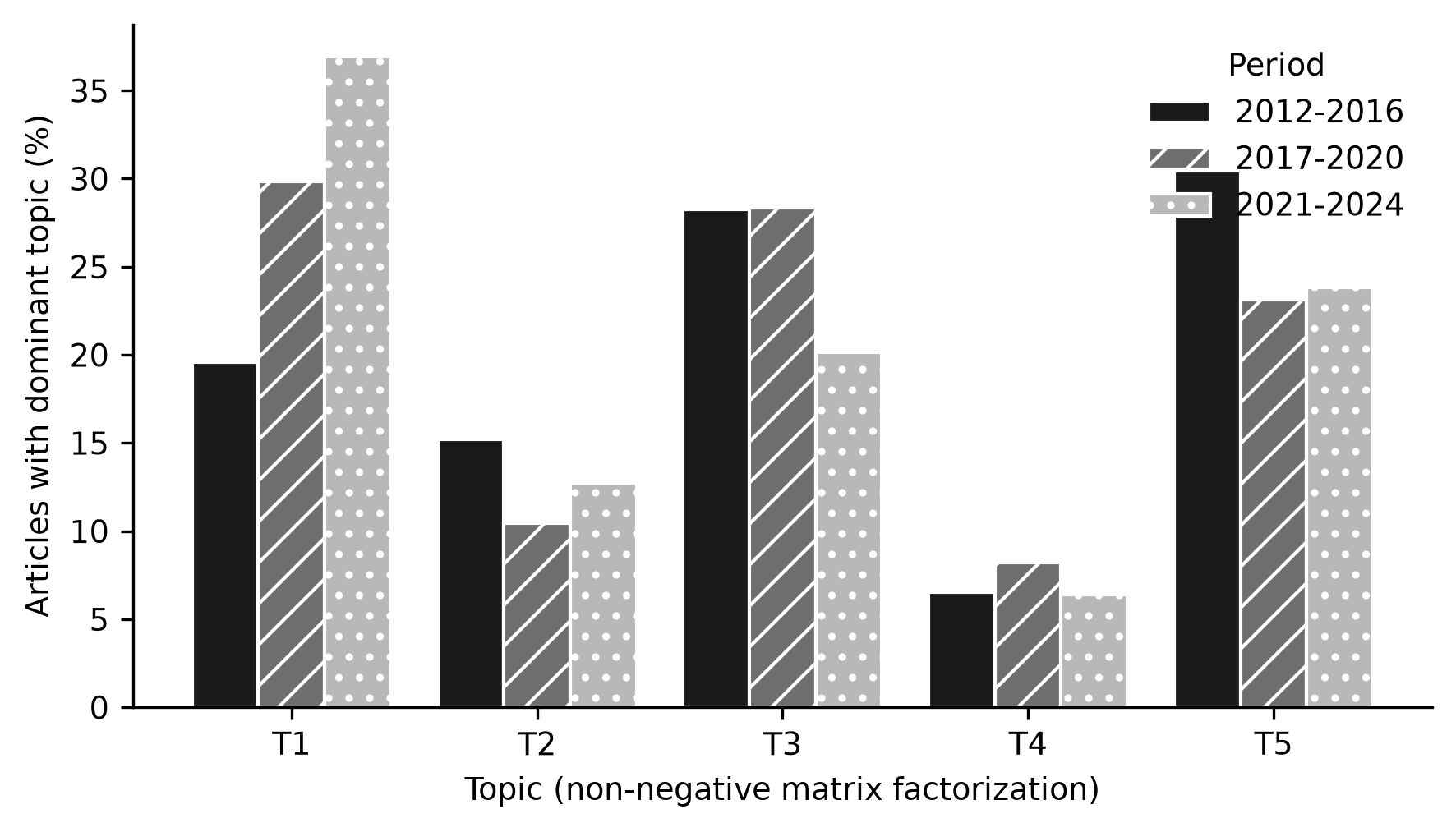
Figure 5. Articles by dominant topic and period.
DISCUSSION
The main finding is that the growth of game-based learning in Latin American SciELO journals came through gamification and not through digital or immersive technology. Output multiplied several times over the period, gamification went from a rarity to a feature of more than a third of the articles, and the share of articles with a digital technology as object stayed level. The expectation that digital formats would rise after 2020 and that augmented and virtual reality would follow was therefore not met: the rise was in a vocabulary and a pedagogical approach, and immersive technologies stayed a small minority. The discussion follows the order of the figures.
The pattern of volume and language places these journals within a wider regional movement. Portuguese and Spanish together are the second publication language in Web of Science,(15) and the 2012-2024 corpus is dominated by the same two languages, with English near a fifth of the articles. The English share of the Brazilian collection, about a third, is consistent with a stated SciELO policy of adopting English alone or together with Portuguese to improve the contribution of multilingualism.(14) The change in the language mix between periods needs care, because the number of collections that contributed articles grew from four to thirteen, and the rise of Spanish partly reflects the entry of Spanish-speaking collections. Researchers in Spanish-speaking countries who publish in English face costs of writing and translation,(16) which gives a reason for national journals to remain an outlet for pedagogical work close to local classrooms. SciELO describes itself as a database of national journals with open access to full text,(13) a design that fits the high share of local-language articles found here.
The distribution by origin and journal repeats a known concentration with a dispersed tail. Brazil, Colombia and Mexico supplied most articles, a trio close to the three countries (Brazil, Mexico and Chile) that concentrated three quarters of the empirical educational research articles of 2014 to 2016 in Latin American journals.(17) Half of the journals published a single article, and the two leading journals held no more than fourteen articles each, so no single venue defined the field. A bibliometric analysis of gamification-based learning found that two journals focused primarily on the field,(8) and the contrast suggests that regional game-based learning is a topic published across general education, nursing and physical education journals. A bibliometric study of Portuguese-language educational research in the SciELO Citation Index analysed 7,448 documents published between 2002 and 2021,(29) which gives the scale of the educational literature in which these articles sit.
The pattern by level and area agrees with the weight of higher education in regional educational research, where it accounted for 43.1% of the empirical papers of 2014 to 2016.(17) A systematic review of gamification in higher education also described it as an increasingly used alternative to traditional classroom strategies.(30) The leading position of health in our primary areas departs from that review, in which health sciences obtained the lowest score of the fields compared, whereas engineering and architecture obtained the highest.(30) Two differences probably explain the discrepancy: their indicator compared bibliographic production across nine databases, and the SciELO corpus carries several nursing journals among its most frequent venues, whose articles in the audited sample often build and validate educational games. Primary and secondary education together reached about one article in seven, whereas reviews restricted to school settings centre on them: primary students were the most common participants in game-based language learning for K-12,(31) and primary lessons were the object of a whole review.(32) Because more than half of the articles did not state a level, the school share is probably underestimated. Digital games in mathematics, programming and early childhood have been the object of Brazilian reviews,(33-37) and the modest and stable share of mathematics here suggests that this interest has not been matched by a rising share of articles in SciELO journals. The decline of business and management is a relative change; a shrinking share does not mean fewer articles, and the growth of other areas can account for it.
The slope of gamification matches the literature that links gamification, motivation and performance. A systematic review of 37 studies selected from 1,706 Web of Science records found that gamification had a positive effect on students' motivation and performance,(38) and a review of gamification strategies in the Ibero-American context reported teacher interest and a positive influence on academic level.(20) The rise of the university motivation and performance topic in the topic model coincides with that body of work. Gamification is also a technology-neutral label: an article can gamify a course with paper cards, a learning platform or an application. This feature explains why gamification could climb while the share of articles with a digital object stayed level, and it warns against reading the gamification trend as a digital trend. The pandemic left no visible step: the share of digital technology did not increase in 2021-2024 even though university students in Chile, Venezuela and Ecuador went through emergency remote teaching(11) on top of a long regional history of web-based distance education.(12) A possible reading is that digital delivery became the background of teaching and ceased to be a distinguishing feature of articles, but the data cannot separate that reading from a true absence of change.
The marginal place of augmented and virtual reality departs from the international trend, where publications on augmented reality applications in education doubled between 2016 and 2020.(9) A scoping review of augmented reality in Latin American engineering education noted that the regional literature leans on conference papers, which journal indexes miss.(10) The same logic probably applies here: immersive work may circulate in engineering and computing conferences, and the SciELO journals of education and health capture little of it. Studies of digital games in Brazilian physical education journals showed a preference for active games such as exergames and augmented reality games,(39) which agrees with the presence of exergames in several articles of the corpus. The few augmented reality articles appeared in 2018 and the first virtual reality article in 2021, and with so few cases the odds ratios were imprecise; the data are compatible with a slow rise as well as with no change. Non-digital games, in contrast, kept a stable share near a sixth of the articles. The stability agrees with reviews that describe role-playing games as of educational interest in Ibero-America, even if of little impact,(18) with Latin American video game studies that combine physical and digital environments in pedagogy,(40) and with the description of game-production events in Latin America as collaborative learning experiences.(41)
The topics point to a field that moved from games as objects to strategies as practice. The decline of the video games, children and social skills topic and the rise of the university motivation topic echo the two lexical worlds that a review of 49 articles on digital games in Brazilian education distinguished, one theoretical and social and one practical, which treats games as a teaching tool.(19) Foreign-language learning kept a small and steady share, in line with a review in which English as a foreign language was the most common language in game-based language learning in K-12.(31) The fit of the topic model should be read with the limits of matrix factorization in mind: it produces coherent topics for niche corpora(25) but depends on the initialization,(28) which the repeated refits addressed.
The strengths of the study are the use of a fixed list of journals and of the full ArticleMeta record, the reproducible coding, the audit of relevance and the sensitivity analyses that gave the same direction of effects. Limitations are specific. First, ArticleMeta cannot be searched by keyword, so discovery relied on OpenAlex and on a linkage that left 1,346 candidates without a record, more often in the first years; a harvest of all records of the identified journals, with local text search, would remove this dependence. Second, the dictionary coding was checked on a sample with a relevance precision of 87% and left more than half of the articles without a level; a double human coding of a stratified sample would give agreement statistics. Third, the first period contained 46 articles, so period shares are imprecise and a replication should report intervals and use additional years. Fourth, the audit was done by the language model that drafted the manuscript, and an independent human audit is required. Fifth, the corpus covers national collections of Latin America and excludes journals indexed elsewhere, so the findings do not describe the whole regional literature; a comparison with Redalyc or Scopus would delimit that gap. Sixth, topics depended on English text and on the number of topics, and a complementary method with human review would test their stability.
The findings have practical meaning for editors and authors. A journal that wants to receive immersive technology studies could state that scope in its calls, given the thin presence found here. Authors who work with games benefit from the definition of educational video games proposed in recent scholarship,(6) which would help indexing and comparison, and from the explicit statement of the educational level, which was missing in most articles. For indexing bodies, the weight of Portuguese and Spanish and the persistence of English support continuing multilingual policies.(14,15)
CONCLUSIONS
The articles on game-based learning in Latin American SciELO journals grew steadily in number, were written mostly in Spanish and Portuguese with English in a minority, and were spread across many journals of general education, nursing and physical education.
Higher education and health were the dominant level and area, and the topic model separated motivation and performance strategies in university courses, children and video games, school didactic practice, health education technologies and foreign-language learning.
Gamification was the technology feature that rose across the period, whereas the share of articles with a digital technology as object stayed level and augmented and virtual reality remained marginal.
References
- 1 Barz N, Benick M, Dörrenbächer-Ulrich L, Perels F. The Effect of Digital Game-Based Learning Interventions on Cognitive, Metacognitive, and Affective-Motivational Learning Outcomes in School: A Meta-Analysis. Review of Educational Research. 2024;94(2):193-227. doi: 10.3102/00346543231167795
- 2 Gui Y, Cai Z, Yang Y, Kong L, Fan X, Tai RH. Effectiveness of digital educational game and game design in STEM learning: a meta-analytic review. IJ STEM Ed. 2023;10(1):36. doi: 10.1186/s40594-023-00424-9
- 3 Wang LH, Chen B, Hwang GJ, Guan JQ, Wang YQ. Effects of digital game-based STEM education on students’ learning achievement: a meta-analysis. IJ STEM Ed. 2022;9(1):26. doi: 10.1186/s40594-022-00344-0
- 4 Behnamnia N, Kamsin A, Hayati S. Impact of Digital Game-Based Learning on STEM education in primary schools: a meta-analysis of learning approaches. IJTEI. 2024;10(2):113-140. doi: 10.24310/ijtei.102.2024.19694
- 5 Baptista G, Oliveira T. Gamification and serious games: A literature meta-analysis and integrative model. Computers in Human Behavior. 2019;92:306-315. doi: 10.1016/j.chb.2018.11.030
- 6 Cole C, Parada RH, Mackenzie E. Why and How to Define Educational Video Games?. Games and Culture. 2024;19(8):981-999. doi: 10.1177/15554120231183495
- 7 Krath J, Schürmann L, von Korflesch HFO. Revealing the theoretical basis of gamification: A systematic review and analysis of theory in research on gamification, serious games and game-based learning. Computers in Human Behavior. 2021;125:106963. doi: 10.1016/j.chb.2021.106963
- 8 Al-Hafdi FS, Alhalafawy WS. Ten Years of Gamification-Based Learning: A Bibliometric Analysis and Systematic Review. Int J Interact Mob Technol. 2024;18(07):188-212. doi: 10.3991/ijim.v18i07.45335
- 9 Koumpouros Y. Revealing the true potential and prospects of augmented reality in education. Smart Learn Environ. 2024;11(1):2. doi: 10.1186/s40561-023-00288-0
- 10 Bellido García RS, Rejas Borjas LG, Cruzata-Martínez A, Sotomayor Mancisidor MC. The Use of Augmented Reality in Latin-American Engineering Education: A Scoping Review. EURASIA J Math Sci Tech Ed. 2022;18(1):em2064. doi: 10.29333/ejmste/11485
- 11 Lobos K, Cobo-Rendón R, García-Álvarez D, Maldonado-Mahauad J, Bruna C. Lessons Learned from the Educational Experience during COVID-19 from the Perspective of Latin American University Students. Sustainability. 2023;15(3):2341. doi: 10.3390/su15032341
- 12 Miralrio A, Muñoz-Villota J, Camacho-Zuñiga C. From flexibility to adaptive learning: a pre-COVID-19 perspective on distance education in Latin America. Front Comput Sci. 2024;6:1250992. doi: 10.3389/fcomp.2024.1250992
- 13 Meneghini R. SciELO, Scientific Electronic Library Online, a Database of Open Access Journals. High Learn Res Commun. 2013;3(3):3. doi: 10.18870/hlrc.v3i3.153
- 14 Packer AL. Multilingualism in Scientific Literature Communicated by Journals from the SciELO Brazil Collection. European Review. 2024;32(S1):S124-S144. doi: 10.1017/s1062798724000103
- 15 Gradim A, Piñeiro-Naval V. Policies for portuguese and spanish: the world's second publication language in Web of Science. I&S. 2019;29(2). doi: 10.22478/ufpb.1809-4783.2019v29n2.38279
- 16 Ramírez-Castañeda V. Disadvantages in preparing and publishing scientific papers caused by the dominance of the English language in science: The case of Colombian researchers in biological sciences. PLoS ONE. 2020;15(9):e0238372. doi: 10.1371/journal.pone.0238372
- 17 Murillo FJ, Martínez-Garrido C. Una Mirada a la Investigación Educativa en América Latina a partir de sus Artículos. REICE. 2019;17(2). doi: 10.15366/reice2019.17.2.001
- 18 Grande-de-Prado M, Baelo R, García-Martín S, Abella-García V. Mapping Role-Playing Games in Ibero-America: An Educational Review. Sustainability. 2020;12(16):6298. doi: 10.3390/su12166298
- 19 Azevedo LCPD, Amante L. Os jogos digitais na educação brasileira: uma análise de artigos científicos. Rev UFG. 2021;21. doi: 10.5216/revufg.v21.69810
- 20 Guillén García J, Hermann Acosta A. Estrategias metodológicas en gamificación: revisión sistemática de literatura en educación en el contexto iberoamericano. SuplementoCICA. 2023;7(15). doi: 10.60100/scicam.v7i015.98
- 21 SciELO. ArticleMeta API [Internet]. 2024. Available from: https://articlemeta.scielo.org
- 22 Priem J, Piwowar H, Orr R. OpenAlex: A fully-open index of scholarly works, authors, venues, institutions, and concepts [Internet]. 2022. Available from: https://arxiv.org/abs/2205.01833
- 23 Lee DD, Seung HS. Learning the parts of objects by non-negative matrix factorization. Nature. 1999;401(6755):788-791. doi: 10.1038/44565
- 24 Röder M, Both A, Hinneburg A. Exploring the Space of Topic Coherence Measures. Proceedings of the Eighth ACM International Conference on Web Search and Data Mining. 2015:399-408. doi: 10.1145/2684822.2685324
- 25 O’Callaghan D, Greene D, Carthy J, Cunningham P. An analysis of the coherence of descriptors in topic modeling. Expert Systems with Applications. 2015;42(13):5645-5657. doi: 10.1016/j.eswa.2015.02.055
- 26 Albalawi R, Yeap TH, Benyoucef M. Using Topic Modeling Methods for Short-Text Data: A Comparative Analysis. Front Artif Intell. 2020;3:42. doi: 10.3389/frai.2020.00042
- 27 Egger R, Yu J. A Topic Modeling Comparison Between LDA, NMF, Top2Vec, and BERTopic to Demystify Twitter Posts. Front Sociol. 2022;7:886498. doi: 10.3389/fsoc.2022.886498
- 28 Belford M, Mac Namee B, Greene D. Stability of topic modeling via matrix factorization. Expert Systems with Applications. 2018;91:159-169. doi: 10.1016/j.eswa.2017.08.047
- 29 Isabel Pinho, Eduardo Amadeu Dutra Moresi, Mário de Oliveira Braga Filho. Pesquisa em educação: Um panorama bibliométrico de publicações em Língua Portuguesa, no Scielo, no período de 2002 a 2020. NTQR. 2021;7:247-257. doi: 10.36367/ntqr.7.2021.247-257
- 30 Universidad Cooperativa de Colombia, Lozada Ávila C, Betancur Gómez S, Corporación Centro de ciencia y tecnología de Antioquia. La gamificación en la educación superior: una revisión sistemática. revingunivMedellin. 2017;16(31):97-124. doi: 10.22395/rium.v16n31a5
- 31 Yang L, Li R, Zhou Y. Research trends of game‐based language learning in K‐12 education: A systematic review of SSCI articles during 2009–2022. Computer Assisted Learning. 2024;40(3):1218-1230. doi: 10.1111/jcal.12944
- 32 Guan X, Sun C, Hwang GJ, Xue K, Wang Z. Applying game-based learning in primary education: a systematic review of journal publications from 2010 to 2020. Interactive Learning Environments. 2024;32(2):534-556. doi: 10.1080/10494820.2022.2091611
- 33 Ferreira SS, Rocha ACB. CONTRIBUIÇÃO DE JOGOS DIGITAIS NO ENSINO DE MATEMÁTICA: REVISÃO SISTEMÁTICA DA LITERATURA. Rev Foco. 2024;17(8):e2193. doi: 10.54751/revistafoco.v17n8-011
- 34 Farias VDS, Almeida MBDL, Sá ACD, Silva GMVDL, Silva KND. Jogos digitais no ensino de probabilidade: uma revisão sistemática da literatura dos últimos cinco anos. Cuad Ed Desar. 2024;16(10):e6062. doi: 10.55905/cuadv16n10-146
- 35 Jesus Medeiros T, Reis da Silva T, Henrique da Silva Aranha E. Ensino de programação utilizando jogos digitais: uma revisão sistemática da literatura. RENOTE. 2014;11(3). doi: 10.22456/1679-1916.44363
- 36 Cruz Araújo L, Andryê Galvão Madeira C. Jogos Educacionais Digitais no Ensino Infantil: Uma Revisão Sistemática da Literatura. RENOTE. 2021;18(2):286-295. doi: 10.22456/1679-1916.110238
- 37 Castro PÍD, Marinho CM. Jogos digitais gamificados aplicados na educação infantil: uma revisão integrativa. Cad Cajuína. 2024;9(5):e249502. doi: 10.52641/cadcajv9i5.815
- 38 Prieto-Andreu JM, Gómez-Escalonilla-Torrijos JD, Said-Hung E. Gamificación, motivación y rendimiento en educación: Una revisión sistemática. Rev Electr Educare. 2022;26(1):1-23. doi: 10.15359/ree.26-1.14
- 39 Ferreira JRL, Pimentel FSC. A produção científica sobre jogos digitais na educação física escolar: o que dizem os periódicos nacionais?. INTERSABERES. 2021;16(37):352-366. doi: 10.22169/revint.v16i37.2043
- 40 Merchant PR, Pitman T, King E. Navigating Physical and Digital Environments: Latin American Video Game Studies in Practice. Bull Latin American Res. 2024;43(3):263-276. doi: 10.1111/blar.13578
- 41 Torres-Toukoumidis A, Salgado Guerrero JP, Peñalva S, Carrera P. Global Game Jam in Latin-America, a Collaborative Videogame Learning Experience. Social Sciences. 2020;9(3):28. doi: 10.3390/socsci9030028
Declarations
Funding
No financing
Conflict of interest
None
Authorship contributions
Drafting – original draft: Erica Cecilia Delbon, Dulce Aleli Modesto de la Rosa, Juan Ernesto Pérez-Pérez.
Writing–review and editing: Erica Cecilia Delbon, Dulce Aleli Modesto de la Rosa, Juan Ernesto Pérez-Pérez.