

Abstract
Introduction: Digital tools can support antiretroviral adherence and retention in care, but the trials registered with Latin American sites have not been described. Methods: This descriptive cross-sectional study analysed ClinicalTrials.gov records of interventional HIV trials that started in 2012-2024 and had at least one site in 21 Latin American and Caribbean countries and territories. Trials of digital adherence or retention interventions for people living with HIV were identified by keyword screening and adjudication. Channel and behaviour-change components were coded from registry text, and outcome registration was appraised. Proportions are reported with Wilson 95% confidence intervals. Results: Of 277 registered trials, 8 (2.9%; 95% CI 1.5-5.6) tested a digital adherence or retention intervention, and none started before 2017. Text messaging or WhatsApp carried the intervention in 5 trials, and gamification was named in 1. An adherence outcome was registered in 6 trials, with an explicit threshold in 3. A viral load outcome was registered in 5 trials. Conclusions: Digital adherence interventions formed a small share of HIV trials registered with Latin American sites and were concentrated in small randomised trials of messaging. Thresholds for adherence and viral load, and results posting, were incomplete. Registrants should define adherence and viral load outcomes explicitly and post results.
Keywords
HIV infections, medication adherence, text messaging, telemedicine, Latin America, registries
INTRODUCTION
Access to antiretroviral therapy in Latin America has expanded, with about 600,000 people on treatment, yet the care continuum from diagnosis to viral suppression remains uneven, and stigma, administrative barriers and economic limits impede linkage and retention.(1) In a regional cohort, retention in care rose from 63% to 77% between 2003 and 2012, and viral suppression rose from 53% to 82%, although women and people who inject drugs stayed behind.(2) Adherence and retention therefore remain active targets for intervention.
Mobile and web tools are a plausible route to those targets. Among 359 men who have sex with men and transgender women living with HIV in Lima, 86% had daily access to a cell phone, and interest in medication reminders averaged 3.2 on a five-point scale.(3) Globally, text messaging improved adherence over standard care in a network meta-analysis of 85 trials (odds ratio 1.48),(4) but later syntheses found mixed results, and positive findings were less frequent for retention than for adherence.(5,6) Regional evidence includes a randomised trial of text messages in an NGO clinic in Lima(7) and reviews of telephone and communication technologies that searched Latin American and Caribbean databases.(8,9) Gamified HIV tools, in turn, have been studied mostly in the United States.(10,11) It is unknown how many digital adherence trials have been registered with Latin American sites, which components they contain, and how completely they register adherence and viral load outcomes. This study aimed to characterise the registered trials of digital adherence interventions for people living with HIV with Latin American sites between 2012 and 2024.
The study used trial registrations, which record the planned design and outcomes before results exist. Registration of trials in Latin America and the Caribbean has increased, and ClinicalTrials.gov is the registry used most often.(12) With that aim, we examined registry records with a cross-sectional design and report on what was registered, not on what the trials found.
METHODS
Analysis plan
The primary estimate was the proportion of registered HIV interventional trials with Latin American sites that tested a digital adherence or retention intervention in people living with HIV. We computed the Wilson 95% confidence interval for this proportion, because it keeps adequate coverage when counts are small.(13) Secondary analyses counted trials by start period (2012-2016, 2017-2020 and 2021-2024), by channel and by registered component, and summarised enrolment as the median with quartiles.
A single unadjusted Fisher exact test compared the share of eligible trials that started in 2021-2024 with the share that started earlier. We designated this test as exploratory, with a two-sided significance level of 0.05 and no correction for multiplicity. A sensitivity analysis removed trials with sites only in Puerto Rico from the denominator. The unit of analysis was the trial, counted once regardless of the number of sites. The frame was the complete set of records returned by the registry query, so no sample size was calculated, and the intervals describe the uncertainty of the proportion when the registry is taken as a draw from the underlying set of trials. Registry fields left empty were reported as not registered and were never imputed. The reporting followed the cross-sectional items of the STROBE statement, applied to registry records.(14)
Data source and eligibility
Records came from the ClinicalTrials.gov data API version 2.(15) The query combined the condition terms HIV, human immunodeficiency virus and AIDS with interventional study type, a start date between 2012 and 2024, and a location in Argentina, Bolivia, Brazil, Chile, Colombia, Costa Rica, Cuba, the Dominican Republic, Ecuador, El Salvador, Guatemala, Haiti, Honduras, Mexico, Nicaragua, Panama, Paraguay, Peru, Puerto Rico, Uruguay or Venezuela. We kept Puerto Rico and Haiti because both are part of the Latin America and the Caribbean region. Other Caribbean territories were not searched.
Before the analysis we ran three checks on the downloaded records. The registry matches locations as free text, so we confirmed at site level that every record listed a country from the list above. We confirmed that the registry identifiers were unique, and that every start date and first posting date fell inside the window. Records failing a check would have been removed, and the removals are reported in the Results.
Three criteria defined the trials of interest. Participants had to be people living with HIV. At least one intervention component had to be delivered through a digital channel directed at participants: text messaging, a messaging application, a mobile application, a web platform, an electronic pill device, tablet software, or an application operated by a clinician during consultations. Adherence to antiretroviral therapy, retention in care or viral load had to be registered as an outcome or a stated aim.
Trials were excluded when the digital element served only for provider training, randomisation or data capture, when participants did not have HIV, or when the digital target was another outcome. The scope was set at digital adherence and retention interventions, so that trials of other digital health applications in HIV were counted in the flow but not analysed.
Variable definitions
An adherence outcome was any registered outcome, at any level, whose measure name contained adherence, medication possession ratio, the questionnaire acronym SMAQ, or tenofovir in urine. A viral load outcome was any outcome whose name referred to viral load, viraemia or HIV-1 RNA, with one exception: a trial that registered only the timeliness of viral load testing was not counted, because that outcome describes a care process and not a virological result. A retention outcome was any outcome whose name referred to retention, retained participants, loss to follow-up or continuous care.
The level of an outcome was primary, secondary or other, as labelled by the registrant. The start year, the allocation, the masking, the lead sponsor class and the intervention types were taken as recorded. Enrolment was the registry count, labelled actual or estimated by the registrant. A phone requirement was coded when the eligibility criteria required ownership of a phone or access to one.
Appraisal of outcome registration
For each included trial we recorded the highest level, from primary to other, at which adherence, viral load and retention appeared among the registered outcomes. We noted the adherence measure, whether the record stated a threshold that defined adherence, and whether a viral load threshold defined suppression.
Registration was classed as on or before the start month when the first submission preceded or matched the month of the start date. The appraisal followed concerns about outcome specificity in registry entries and about discrepancies between registered and published outcomes.(17,18) Only registry fields were examined: publications, protocols and results papers were not matched to the records.
RESULTS
Interventions that used a digital channel to support adherence or retention in people living with HIV represented 8 of 277 registered trials (2.9%; 95% CI 1.5-5.6). Excluding Puerto Rico, the proportion stood at 3.5% of 230 trials. Among the 50 trials with a behavioural intervention, the share reached 16.0% (95% CI 8.3-28.5).
No eligible trial started in the first period, which held 119 registrations (95% CI of the proportion 0.0-3.1). The first eligible trial started in 2017. The 2017-2020 period contributed 2 of 79 trials (2.5%), and the 2021-2024 period contributed 6 of 79 (7.6%; 95% CI 3.5-15.6) (Figure 1). Compared with earlier years, the share was 7.6% against 1.0% (p = 0.008).
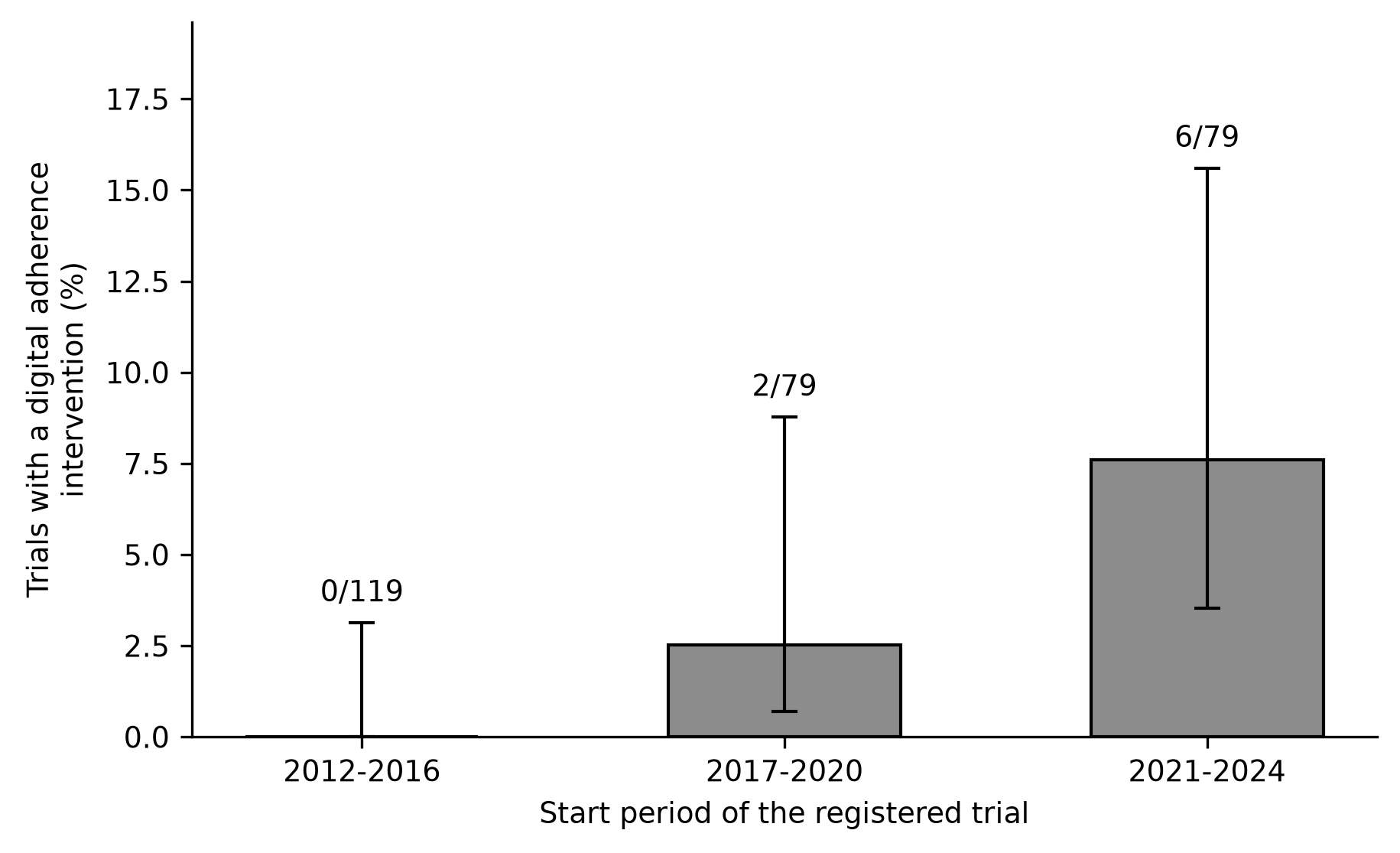
Figure 1. Share of registered HIV trials with a digital adherence intervention, by start period.
Note: Bars show the percentage of registered HIV trials with Latin American sites in each period. Whiskers show Wilson 95% confidence intervals. Labels give eligible trials over all trials in the period.Text messaging or WhatsApp carried the intervention in 5 trials (Table 1). Second, mobile applications were used in 3 trials, one of them linked to a smart pill bottle. Educational or motivational content appeared in 7 trials and reminders in 4. Two-way contact with providers was registered in 4.
To a lesser extent, the records stated self-monitoring in 2 trials, peer or professional support in 2 and problem solving in 2. Habit formation appeared in 1 trial. Gamification was named in 1 record, without a description of its elements. The 2 trials with peer or professional support combined it with the digital channel.
Trial | Digital channel | Reminder or prompt | Educational or motivational content | Two-way provider contact | Self-monitoring or feedback | Habit formation | Peer or professional support | Problem solving | Gamification stated |
|---|---|---|---|---|---|---|---|---|---|
NCT03410680 | Web platform and mobile app | No | Yes | Yes | No | Yes | Yes | Yes | Yes |
NCT03862196 | Text messaging (SMS) | Yes | Yes | Yes | No | No | No | No | No |
NCT04564209 | Clinician-operated mobile app | No | Yes | No | No | No | No | No | No |
NCT05187741 | Text messaging | Yes | Yes | No | No | No | No | No | No |
NCT05227417 | Text messaging (SMS) through a web system | No | Yes | Yes | No | No | No | No | No |
NCT05398185 | Mobile app linked to a smart pill bottle | Yes | No | No | Yes | No | No | No | No |
NCT06056037 | Text messaging (SMS) | Yes | Yes | No | No | No | Yes | Yes | No |
NCT06500013 | WhatsApp messaging | No | Yes | Yes | Yes | No | No | No | No |
Note: Yes = component stated in the record; No = not stated. Coding by an AI model, pending verification by the authors.
An adherence outcome appeared in 6 of 8 trials (75.0%; 95% CI 40.9-92.9), and it was primary in 4 (Table 2). A threshold that defined adherence appeared in 3 of those 6 records. The measures ranged from a single self-report scale to pharmacy dispensing records, the Simplified Medication Adherence Questionnaire and a urine tenofovir immunoassay.
A viral load outcome appeared in 5 trials (62.5%; 95% CI 30.6-86.3) and was primary in 1. Below that count, only 1 record defined suppression, at 40 copies/mL or less. Both adherence and viral load featured in 5 trials, and retention in care featured in 5. The minimum age in the eligibility criteria was 18 years in 8 trials.
Primary outcomes covered four domains. Adherence was primary in 4 trials and retention in 2, and those 2 registered no adherence outcome at any level. A CD4 count was primary in 2 trials and viral load in 1.
Trial | Adherence outcome level | Adherence measure | Explicit threshold | Viral load outcome level | Retention outcome level | Registered on or before start month |
|---|---|---|---|---|---|---|
NCT03410680 | Secondary | Medication possession ratio; ACTG-based questionnaire | Yes | Primary | Not registered | No |
NCT03862196 | Not registered | - | - | Not registered | Primary | Yes |
NCT04564209 | Secondary | Simplified Medication Adherence Questionnaire | Yes | Secondary | Not registered | Yes |
NCT05187741 | Primary | Pharmacy unit count | No | Secondary | Secondary | Yes |
NCT05227417 | Not registered | - | - | Not registered | Primary | Yes |
NCT05398185 | Primary | Single-item self-report scale (0-100) | No | Secondary | Not registered | Yes |
NCT06056037 | Primary | Urine tenofovir immunoassay; pharmacy dispensing records | No | Secondary | Secondary | Yes |
NCT06500013 | Primary | Simplified Medication Adherence Questionnaire | Yes | Not registered | Secondary | No |
Note: Level = highest level at which the outcome was registered. Registration on or before the start month was compared at month resolution.
The registry search returned 281 records, and 4 were first posted after 2024, which left 277. The keyword screen flagged 118 records, and 17 of them had a digital channel directed at participants. Of those, 7 enrolled people without HIV and 2 targeted other outcomes, which left 8 eligible trials (Table 3).
The trials without HIV in participants addressed PrEP (3), HIV testing (1), risk reduction (2) and care navigation (1). The registry location fields confirmed a Latin American site in all 277 frame records, and no identifier was duplicated.
All 8 trials were randomised, and 3 registered no masking. Registered eligibility restricted participants to men in 4 trials and allowed all sexes in 4. Enrolment had a median of 154 participants (quartiles 118 and 190; range 30 to 241), and 2 registered an estimated count. Across all 277 registered trials the median enrolment stood at 155 (quartiles 59 and 463).
Lead sponsors were academic institutions, hospitals or non-governmental organisations in all 8 trials, and none was led by industry. Industry led 88 of the 277 registered trials (31.8%). The registry typed the interventions as behavioural in 5 trials, as device in 2 and as other in 1.
Eligibility required or confirmed phone access in 6 trials, and 2 of them supplied or accepted a study phone. The trials listed sites in Peru (3 of 46 registered trials in that country), Mexico (2 of 57), the Dominican Republic (2 of 22) and Brazil (1 of 88), and 2 also had sites in the United States. At registry level, 4 were completed, 2 were active and not recruiting, and 2 had an unknown status.
Trial | Latin American site (other sites) | Start year | Lead sponsor | Design | Enrolment (type) | Participants |
|---|---|---|---|---|---|---|
NCT03410680 | Mexico | 2017 | Instituto Nacional de Salud Publica, Mexico | Randomized, parallel; masking none | 184 (actual) | Men who have sex with men starting ART |
NCT03862196 | Peru | 2018 | NGO Via Libre | Randomized, parallel; masking single | 144 (estimated) | Men linked to HIV care and starting ART |
NCT04564209 | Dominican Republic (and United States) | 2021 | University of Colorado, Denver | Randomized, parallel; masking single | 164 (actual) | Adults with adherence risk or detectable viral load |
NCT05187741 | Mexico | 2022 | Hospital Civil de Guadalajara | Randomized, parallel; masking none | 80 (actual) | Adults starting or restarting ART who own a mobile device |
NCT05227417 | Peru | 2022 | Universidad Peruana Cayetano Heredia | Randomized, parallel; masking single | 208 (actual) | Men who have sex with men living with HIV |
NCT05398185 | Dominican Republic (and United States) | 2023 | Columbia University | Randomized, parallel; masking single | 241 (actual) | Spanish-speaking adults with HIV-1 RNA above 50 copies/mL |
NCT06056037 | Brazil | 2023 | Brown University | Randomized, parallel; masking double | 30 (actual) | Sexual and gender minority youth aged 18-24 |
NCT06500013 | Peru | 2024 | Universidad Peruana Cayetano Heredia | Randomized, parallel; masking none | 131 (estimated) | Young adults aged 18-29 |
Note: ART = antiretroviral therapy. Enrolment is the registry total and includes participants at sites outside Latin America where listed.
DISCUSSION
Digital adherence interventions are a small part of the HIV trials registered with Latin American sites, and the implication is that regional decisions on digital adherence support still lean on evidence generated elsewhere. The strongest summaries of text messages and apps for HIV adherence come from trials in other regions; an umbrella review of mobile phone interventions, for example, found highly suggestive effects on medication adherence among people with HIV in sub-Saharan Africa.(19) Few registered trials in Latin America are available to confirm or contradict those estimates. The first eligible trial started in 2017, and most started after 2020, which suggests a young field.
The channel mix in the registry fits what the meta-analyses can support. Text messaging or WhatsApp carried five of the eight interventions, and text messaging is the channel with the most consistent signal, with pooled odds ratios of 1.48 to 1.59 for adherence in two syntheses.(4,20) A synthesis of text message reminders also reported fewer missed appointments.(21) Other reviews temper that signal. In a review of 19 mobile phone trials, none had a low risk of bias, and text messages showed no significant pooled effect on the risk ratio scale,(22) and a review of low- and middle-income countries found a positive adherence result in 41% of studies and a positive retention result in 12%.(5) The registered Latin American trials are therefore testing a channel with uncertain but plausible benefit.
Regional trials that already reached publication show the same mixed pattern. In Lima, an NGO clinic randomised 166 patients to six months of text messages and found more frequent attendance (RR 1.89), with no difference in viral load or CD4 count.(7) A multinational trial of two-way phone messaging, which included sites in the Americas, did not raise suppression at week 48 (66% against 62%) but lowered virological failure.(23) We cannot say whether either study corresponds to a trial in our set, because we did not link registrations to publications. The pattern still suggests that adherence gains do not always translate into viral load changes, and that registered viral load outcomes deserve explicit definitions.
Two-way contact appeared in four of the eight trials, which is in line with evidence that interactivity matters. Interactive or bidirectional messages increased adherence in a meta-analysis (OR 1.69), whereas one-way messages did not.(24) Scheduled messages worked better than triggered ones in another synthesis,(20) and messages that linked to support, allowed interaction or used at least three behaviour change techniques improved adherence.(22) A quasi-experimental study in Malawi found higher 12-month retention with proactive two-way texting (91% against 76%), although only 44% of clients were eligible and many lacked a phone.(25) In Lima, bidirectional messages between counsellors and newly diagnosed men carried mental health symptoms and care coordination, which suggests that two-way messaging is used for more than reminders.(26) Message content also needs development work: in Mexico, a set of 108 messages written by clinicians was reduced to 41 after expert and patient feedback.(27) In Fortaleza, Brazil, nurses sent eight messages over four months through an instant messaging application to 102 patients in a descriptive study.(28)
Combination approaches are rare in the set. A network meta-analysis found that multiple interventions had additive effects on adherence,(4) and a review of digital health reported that combined approaches gave more promising results than single ones.(6) In the registry, only 2 of the eight trials paired the digital channel with peer, professional or group support, and the rest relied on messaging or an application alone. The same meta-analysis showed that effects waned once the intervention was withdrawn,(4) which makes the follow-up period after the end of messaging a design decision that registrants should state.
The components that the registry text named are narrower than the taxonomies used elsewhere. Reminders and prompts, present in four trials, are also among the three techniques applied most often in digital interventions for habit formation in physical activity, together with self-monitoring and goal setting.(29) No registered Latin American trial named goal setting. This gap may reflect brevity of registry text more than absence in practice, because a record rarely lists every active ingredient. The coding therefore measures what was declared, and a fuller description in protocols would raise the counts, because the taxonomy was built to specify intervention content precisely.(16)
Gamification was named in one trial, and its elements were not described. Gamified HIV tools have been built for young men who have sex with men in the United States, with points, challenges and a medication tracker,(30) and for young people in Nigeria, with a design grounded in social cognitive theory.(31) In Ghana, young people interviewed about a proposed game-based text-message intervention rated gamification components as useful but raised concerns about privacy and literacy.(32) Reviews place most gamified HIV research in the United States,(10,11) and one found no randomised trial of a gamified intervention on ART initiation among men who have sex with men.(10) A Mexican trial that names gamification therefore stands outside the United States-centred evidence base.
Primary outcome choices matter for how the gap in evidence will close. Adherence was the primary domain in 4 trials, and two Peruvian text-message trials took retention in care as primary, with no adherence outcome. Retention has the weaker evidence: the low- and middle-income review reported positive findings in 12% of studies for retention against 41% for adherence,(5) while text message reminders reduced non-attendance in a synthesis of seven studies.(21) The registered retention trials in Lima therefore address the less secure outcome, and their results will be informative in either direction.
Adherence was registered in six trials, but the measures differ widely and only three records defined a threshold. That diversity matters, because self-reported adherence exceeded indirect measures by about 16% at group level in a meta-epidemiological analysis, and most self-report and indirect tools gave higher values than electronic monitoring.(33) A South African study found that a urine tenofovir assay agreed better with viral load than self-reported missed doses (kappa 0.50 against 0.16).(34) Only one registered trial used a urine assay. The comparison of effects across trials will therefore depend on which measure each trial chose, and threshold definitions will be needed to pool them.
Funders could ask applicants for a harmonised adherence outcome set. Self-report overestimates adherence relative to indirect measures,(33) and a point-of-care urine assay agreed better with viral load than recall did,(34) so a trial that pairs a self-report scale with an objective measure and states a threshold for each will be easier to pool. The same logic applies to viral load, where a registered cut-off removes the ambiguity of a mean change.
Trial size and sponsorship shape what these records can deliver. The median enrolment of the eight trials was 154, close to the 155 of all registered HIV trials in the frame, and in line with the average of about 190 participants per trial in the network meta-analysis (16,271 participants in 85 trials)(4) and of about 170 in the text message meta-analysis of chronic disease (2,742 patients in 16 trials).(35) Trials of this size are typical for adherence research, but a registry entry does not allow a statement on power. All eight sponsors were non-industry, so the pipeline of digital adherence trials depends on academic and non-governmental sponsors.
Viral load was registered in five trials, and only one defined suppression. Entries that lack a metric are common in the registry: in an early sample, 61% of outcome measures were not specific enough to describe the planned analysis.(17) Vague outcomes leave room for later changes. Among adequately registered randomised trials, 31% showed discrepancies between registered and published primary outcomes,(18) and 62% of trials in another cohort changed, added or dropped at least one primary outcome.(36) The incomplete definitions seen here are not evidence of such changes, but they would make them hard to detect.
Prospective registration, measured at month resolution, applied to six of eight trials, and two were registered after their start month. In a regional study of published trials, 59.9% were registered and 51.7% of those prospectively,(12) so the digital adherence trials look somewhat better, although the denominators differ. Prospective registration has been linked to lower risk of bias and better reporting.(37)
Participant sex is another gap. Four of the eight trials restricted eligibility to men as registered, and the other four allowed all sexes, so no registered trial focused on women. In the regional cohort, female sex was associated with lower retention (risk ratio 0.97),(2) and the Lima survey of mobile health acceptance included only men who have sex with men and transgender women.(3) The registry therefore offers little guidance on digital adherence support for women with HIV in Latin America, although the trials open to all sexes may still have enrolled women. Registrants could report enrolled participants by sex when they post results.
Reach is a design issue that the registry makes visible. Eligibility required or confirmed phone access in 6 of the eight trials, and 2 supplied a device or accepted a study phone. People without a phone were therefore excluded by design in several trials. In Malawi, lack of a phone accounted for 61% of the clients ineligible for two-way texting, and 44% of screened clients were eligible.(25) In Lima, 86% of the surveyed men and transgender women had daily phone access, so up to 14% would lack the channel for a messaging trial.(3) Supplying a device, as the WiseApp trial does in the Dominican Republic, can narrow that gap.
Digital tools also appear outside care. Of the 17 trials with a digital channel directed at participants, 7 enrolled people without HIV, for prevention, testing or PrEP, and 10 enrolled people living with HIV. A pilot of a peer and mobile navigation intervention for young trans women in Rio de Janeiro covered testing, PrEP and HIV care in the same programme.(38) The split shows that registered digital HIV research with Latin American sites addresses prevention nearly as often as care.
Reporting of the digital interventions themselves also deserves attention. Only four of sixteen randomised trials of mobile applications for ART adherence reported more than 70% of the items of a WHO reporting checklist for mobile health interventions.(39) None of the eight registry records mentioned privacy or confidentiality of the messages, although a four-country microbicide trial that included Peru found that most men who have sex with men and transgender women had no privacy concerns when safeguards were in place.(40) Ethical guidance for technology-based interventions with sexual and gender minority youth discusses confidentiality, privacy and data security first among its issues.(41) Three of the eight trials enrolled men who have sex with men or sexual and gender minority youth, so this omission is relevant.
The design has strengths that offset some of these limits. The frame was a complete census of the registry query and not a sample of published reports, so ongoing and unpublished work was included, and two records still carried an unknown status. Every code was tied to a literal phrase of the record, which makes the coding auditable. A fixed script reproduced all figures, and the sensitivity analysis without Puerto Rico gave a similar proportion, which argues against the result depending on one territory.
Several limitations qualify these findings, and each points to a specific step. First, one registry was searched, and trials registered only in national or other registries were missed; searching the WHO International Clinical Trials Registry Platform and national registries would close this gap. Second, registry text describes the planned intervention, not the delivered one, and linking each record to its protocol and publications, as exists for the WiseApp trial,(42) would allow a fuller coding. Third, screening and coding were done by an AI model against written criteria, so independent coding by two reviewers should verify them. Fourth, the denominator is small and the intervals are wide, and the period comparison was exploratory, so it should not be read as a trend test.
Fifth, the registry returns the latest version of each record, and a version history would show whether outcomes were edited after registration. Sixth, enrolment counts include participants at sites outside Latin America for two trials, which inflates regional sample sizes; site-level counts should be requested from sponsors. Finally, the regional definition included Puerto Rico, which contributed many records, although excluding it moved the estimate only modestly.
The findings suggest practical steps for registrants and funders. Records of digital adherence trials should state the adherence measure, the threshold, the time frame and the viral load cut-off, name any gamification element, and describe privacy safeguards. Sponsors should post summary results, even for pilot trials. Regional research networks could use the registry as a map of gaps: all eight trials set a minimum age of 18 years, so none registered adolescent or paediatric participants. Peru offers a base for the next trials, since mobile access was high among the Lima participants of a communication survey (3) and a review of mobile projects in the country described their potential to widen access to health services.(43)
CONCLUSIONS
Trials of digital interventions for adherence and retention formed a small share of the HIV trials registered with Latin American sites and appeared only from 2017 onward. The registered trials were small randomised studies, most delivered by text messaging or WhatsApp, with sites in Peru, Mexico, the Dominican Republic and Brazil. Registry text described reminders, educational content and two-way contact, and it named gamification only once.
References
- 1 Piñeirúa A, Sierra-Madero J, Cahn P, Guevara Palmero RN, Martínez Buitrago E, Young B, et al. The HIV care continuum in Latin America: challenges and opportunities. The Lancet Infectious Diseases. 2015;15(7):833-839. doi: 10.1016/s1473-3099(15)00108-5
- 2 Rebeiro PF, Cesar C, Shepherd BE, De Boni RB, Cortés CP, Rodriguez F, et al. Assessing the HIV Care Continuum in Latin America: progress in clinical retention, cART use and viral suppression. Journal of the International AIDS Society. 2016;19(1):20636. doi: 10.7448/ias.19.1.20636
- 3 Krishnan A, Ferro EG, Weikum D, Vagenas P, Lama JR, Sanchez J, et al. Communication technology use and mHealth acceptance among HIV-infected men who have sex with men in Peru: implications for HIV prevention and treatment. AIDS Care. 2015;27(3):273-282. doi: 10.1080/09540121.2014.963014
- 4 Kanters S, Park JJH, Chan K, Socias ME, Ford N, Forrest JI, et al. Interventions to improve adherence to antiretroviral therapy: a systematic review and network meta-analysis. The Lancet HIV. 2017;4(1):e31-e40. doi: 10.1016/s2352-3018(16)30206-5
- 5 Demena BA, Artavia-Mora L, Ouedraogo D, Thiombiano BA, Wagner N. A Systematic Review of Mobile Phone Interventions (SMS/IVR/Calls) to Improve Adherence and Retention to Antiretroviral Treatment in Low-and Middle-Income Countries. AIDS Patient Care and STDs. 2020;34(2):59-71. doi: 10.1089/apc.2019.0181
- 6 Che Pa MF, Makmor-Bakry M, Islahudin F. Digital Health in Enhancing Antiretroviral Therapy Adherence: A Systematic Review and Meta-Analysis. AIDS Patient Care and STDs. 2023;37(11):507-516. doi: 10.1089/apc.2023.0170
- 7 Condori Lizárraga IRA, Menacho Alvirio LA, Pérez-Lu JE, Cárcamo Cavagnaro C. Envío de mensajes de texto para mejorar la adherencia de pacientes en TARGA: ensayo aleatorizado controlado. Rev Peru Med Exp Salud Publica. 2019;36(3):400. doi: 10.17843/rpmesp.2019.363.4139
- 8 Santos VDF, Costa AKB, Lima ICVD, Alexandre HDO, Gir E, Galvão MTG. Uso do telefone para adesão de pessoas vivendo com HIV/AIDS à terapia antirretroviral: revisão sistemática. Ciênc saúde coletiva. 2019;24(9):3407-3416. doi: 10.1590/1413-81232018249.31112017
- 9 Lima ICVD, Galvão MTG, Alexandre HDO, Lima FET, Araújo TLD. Information and communication technologies for adherence to antiretroviral treatment in adults with HIV/AIDS. International Journal of Medical Informatics. 2016;92:54-61. doi: 10.1016/j.ijmedinf.2016.04.013
- 10 Luo Q, Zhang Y, Wang W, Cui T, Li T. mHealth-Based Gamification Interventions Among Men Who Have Sex With Men in the HIV Prevention and Care Continuum: Systematic Review and Meta-Analysis. JMIR Mhealth Uhealth. 2024;12(1):e49509-e49509. doi: 10.2196/49509
- 11 Jitmun W, Palee P, Choosri N, Surapunt T. The Success of Serious Games and Gamified Systems in HIV Prevention and Care: Scoping Review. JMIR Serious Games. 2023;11(1):e39915. doi: 10.2196/39915
- 12 García-Vello P, Smith E, Elias V, Florez-Pinzon C, Reveiz L. Adherence to clinical trial registration in countries of Latin America and the Caribbean, 2015. Rev Panam Salud Publica. 2018;42:1-9. doi: 10.26633/rpsp.2018.44
- 13 Brown LD, Cai TT, DasGupta A. Interval Estimation for a Binomial Proportion. Statist Sci. 2001;16(2):101-133. doi: 10.1214/ss/1009213286
- 14 von Elm E, Altman DG, Egger M, Pocock SJ, Gøtzsche PC, Vandenbroucke JP, et al. The Strengthening the Reporting of Observational Studies in Epidemiology (STROBE) Statement: Guidelines for Reporting Observational Studies. PLoS Med. 2007;4(10):e296. doi: 10.1371/journal.pmed.0040296
- 15 U.S. National Library of Medicine. ClinicalTrials.gov data API (version 2) [Internet]. n.d. Available from: https://clinicaltrials.gov/data-api/api
- 16 Michie S, Richardson M, Johnston M, Abraham C, Francis J, Hardeman W, et al. The Behavior Change Technique Taxonomy (v1) of 93 Hierarchically Clustered Techniques: Building an International Consensus for the Reporting of Behavior Change Interventions. ann behav med. 2013;46(1):81-95. doi: 10.1007/s12160-013-9486-6
- 17 Zarin DA, Tse T, Williams RJ, Califf RM, Ide NC. The ClinicalTrials.gov Results Database — Update and Key Issues. N Engl J Med. 2011;364(9):852-860. doi: 10.1056/nejmsa1012065
- 18 Mathieu S, Boutron I, Moher D, Altman DG, Ravaud P. Comparison of Registered and Published Primary Outcomes in Randomized Controlled Trials. JAMA. 2009;302(9):977-984. doi: 10.1001/jama.2009.1242
- 19 Sun S, Simonsson O, McGarvey S, Torous J, Goldberg SB. Mobile phone interventions to improve health outcomes among patients with chronic diseases: an umbrella review and evidence synthesis from 34 meta-analyses. The Lancet Digital Health. 2024;6(11):e857-e870. doi: 10.1016/s2589-7500(24)00119-5
- 20 Amankwaa I, Boateng D, Quansah DY, Akuoko CP, Evans C. Effectiveness of short message services and voice call interventions for antiretroviral therapy adherence and other outcomes: A systematic review and meta-analysis. PLoS ONE. 2018;13(9):e0204091. doi: 10.1371/journal.pone.0204091
- 21 Mayer JE, Fontelo P. Meta-analysis on the effect of text message reminders for HIV-related compliance. AIDS Care. 2017;29(4):409-417. doi: 10.1080/09540121.2016.1214674
- 22 Shah R, Watson J, Free C. A systematic review and meta-analysis in the effectiveness of mobile phone interventions used to improve adherence to antiretroviral therapy in HIV infection. BMC Public Health. 2019;19(1):915. doi: 10.1186/s12889-019-6899-6
- 23 Gross R, Ritz J, Hughes MD, Salata R, Mugyenyi P, Hogg E, et al. Two-way mobile phone intervention compared with standard-of-care adherence support after second-line antiretroviral therapy failure: a multinational, randomised controlled trial. The Lancet Digital Health. 2019;1(1):e26-e34. doi: 10.1016/s2589-7500(19)30006-8
- 24 Sun L, Qu M, Chen B, Li C, Fan H, Zhao Y. Effectiveness of mHealth on Adherence to Antiretroviral Therapy in Patients Living With HIV: Meta-analysis of Randomized Controlled Trials. JMIR Mhealth Uhealth. 2023;11:e42799. doi: 10.2196/42799
- 25 Feldacker C, Klabbers RE, Huwa J, Kiruthu-Kamamia C, Thawani A, Tembo P, et al. The effect of proactive, interactive, two-way texting on 12-month retention in antiretroviral therapy: Findings from a quasi-experimental study in Lilongwe, Malawi. PLoS ONE. 2024;19(8):e0298494. doi: 10.1371/journal.pone.0298494
- 26 Bayona E, Menacho L, Segura ER, Mburu G, Roman F, Tristan C, et al. The Experiences of Newly Diagnosed Men Who Have Sex with Men Entering the HIV Care Cascade in Lima, Peru, 2015–2016: A Qualitative Analysis of Counselor–Participant Text Message Exchanges. Cyberpsychology, Behavior, and Social Networking. 2017;20(6):389-396. doi: 10.1089/cyber.2016.0435
- 27 Pérez-Sánchez IN, Candela Iglesias M, Rodriguez-Estrada E, Reyes-Terán G, Caballero-Suárez NP. Design, validation and testing of short text messages for an HIV mobile-health intervention to improve antiretroviral treatment adherence in Mexico. AIDS Care. 2018;30(sup1):37-43. doi: 10.1080/09540121.2018.1524115
- 28 Lima ICVD, Galvão MTG, Pedrosa SC, Farias OO, Silva CAC, Cunha GHD. Instant messaging application for the care of people living with HIV/aids. Rev Bras Enferm. 2019;72(5):1161-1166. doi: 10.1590/0034-7167-2017-0698
- 29 Zhu Y, Long Y, Wang H, Lee KP, Zhang L, Wang SJ. Digital Behavior Change Intervention Designs for Habit Formation: Systematic Review. J Med Internet Res. 2024;26:e54375. doi: 10.2196/54375
- 30 Hightow-Weidman L, Muessig K, Knudtson K, Srivatsa M, Lawrence E, LeGrand S, et al. A Gamified Smartphone App to Support Engagement in Care and Medication Adherence for HIV-Positive Young Men Who Have Sex With Men (AllyQuest): Development and Pilot Study. JMIR Public Health Surveill. 2018;4(2):e34. doi: 10.2196/publichealth.8923
- 31 Ahonkhai AA, Pierce LJ, Mbugua S, Wasula B, Owino S, Nmoh A, et al. PEERNaija: A Gamified mHealth Behavioral Intervention to Improve Adherence to Antiretroviral Treatment Among Adolescents and Young Adults in Nigeria. Front Reprod Health. 2021;3:656507. doi: 10.3389/frph.2021.656507
- 32 Tarantino N, Lartey M, Arnold T, Brown L, Kwara A, Guthrie K. Preferences for a Game-Based SMS Adherence Intervention Among Young People Living with HIV in Ghana: A Qualitative Study. AIDS Behav. 2022;26(7):2169-2181. doi: 10.1007/s10461-021-03562-9
- 33 Liao R, Tang Z, Zhang N, Hu L, Chang Z, Ren J, et al. Discrepancies between self-reported medication in adherence and indirect measurement adherence among patients undergoing antiretroviral therapy: a systematic review. Infect Dis Poverty. 2024;13(1):51. doi: 10.1186/s40249-024-01221-4
- 34 Phillips T, Gomba Y, Myer L. Comparing a point‐of‐care urine tenofovir lateral flow assay to self‐reported adherence and their associations with viral load suppression among adults on antiretroviral therapy. Tropical Med Int Health. 2024;29(2):96-103. doi: 10.1111/tmi.13953
- 35 Thakkar J, Kurup R, Laba TL, Santo K, Thiagalingam A, Rodgers A, et al. Mobile Telephone Text Messaging for Medication Adherence in Chronic Disease. JAMA Intern Med. 2016;176(3):340. doi: 10.1001/jamainternmed.2015.7667
- 36 Chan AW, Hróbjartsson A, Haahr MT, Gøtzsche PC, Altman DG. Empirical Evidence for Selective Reporting of Outcomes in Randomized Trials. JAMA. 2004;291(20):2457. doi: 10.1001/jama.291.20.2457
- 37 Silva S, Singh S, Kashif S, Ogilvie R, Pinto RZ, Hayden JA. Many randomized trials in a large systematic review were not registered and had evidence of selective outcome reporting: a metaepidemiological study. Journal of Clinical Epidemiology. 2024;176:111568. doi: 10.1016/j.jclinepi.2024.111568
- 38 Wilson EC, Jalil EM, Jalil CM, Castro CRV, Ferreira ALN, Martinez NF, et al. Results from a peer-based digital systems navigation intervention to increase HIV prevention and care behaviors of young trans women in Rio de Janeiro, Brazil. Journal of Global Health Reports. 2021;5:e2021077. doi: 10.29392/001c.28347
- 39 Babatunde AO, Olawuyi DA, Olajuwon FA, Ekundayo IO, Akano OS, Awosiku OV. Compliance with reporting standards in Mobile App interventions for ART Adherence among PLHIV. AIDS Res Ther. 2024;21(1):85. doi: 10.1186/s12981-024-00666-9
- 40 Giguere R, Brown III W, Balán IC, Dolezal C, Ho T, Sheinfil A, et al. Are participants concerned about privacy and security when using short message service to report product adherence in a rectal microbicide trial?. Journal of the American Medical Informatics Association. 2018;25(4):393-400. doi: 10.1093/jamia/ocx081
- 41 Cascalheira CJ, Pugh TH, Hong C, Birkett M, Macapagal K, Holloway IW. Developing technology-based interventions for infectious diseases: ethical considerations for young sexual and gender minority people. Front Reprod Health. 2023;5:1303218. doi: 10.3389/frph.2023.1303218
- 42 Olaya F, Brin M, Caraballo PB, Halpern M, Jia H, Ramírez SO, et al. A randomized controlled trial of the dissemination of an mHealth intervention for improving health outcomes: the WiseApp for Spanish-speakers living with HIV study protocol. BMC Public Health. 2024;24(1):201. doi: 10.1186/s12889-023-17538-y
- 43 Ruiz EF, Proaño Á, Ponce OJ, Curioso WH. Tecnologías móviles para la salud pública en el Perú: lecciones aprendidas. Rev Peru Med Exp Salud Publica. 2015;32(2):364. doi: 10.17843/rpmesp.2015.322.1634
Declarations
Funding
No financing
Conflict of interest
None
Authorship contributions
Drafting – original draft: Berneides de Jesus Marmol Maestre, Norma Beatriz Ríos.
Writing–review and editing: Berneides de Jesus Marmol Maestre, Norma Beatriz Ríos.