

Abstract
Introduction: Virtual reality is used to train balance in Parkinson's disease, yet the trials registered with Latin American sites have not been described. This study characterized their designs, sample sizes and registered outcomes. Methods: Registry-based cross-sectional study of interventional records in ClinicalTrials.gov that listed Parkinson disease as a condition, had at least one site in a Latin American country and were first submitted between 2012 and 2024. Records testing a virtual reality or exergame intervention were included. The proportion with a registered balance outcome was estimated with a Wilson 95% confidence interval, and design, enrollment, sites, platforms, primary outcome domains and results posting were described. Results: Of 88 eligible Parkinson disease records, 12 (13.6%) tested virtual reality. A balance outcome was registered in 4 of 12 (33.3%; 95% CI, 13.8-60.9), as a primary outcome in 3. Median registered enrollment was 30 participants (P25-P75, 20 to 46). Brazil hosted 11 registrations and Chile 1; 9 were randomized, and results were posted for 1. Conclusions: Registered virtual reality research for Parkinson's disease in Latin America consisted of small, mostly single-site trials concentrated in Brazil, and about one third registered a balance outcome. Prospective registration with explicit balance measures would make the regional portfolio easier to evaluate.
Keywords
Parkinson disease, virtual reality, postural balance, clinical trials as topic, Latin America
INTRODUCTION
Parkinson's disease affects an estimated 472 per 100,000 people in Latin America, and older adults with the disease face higher risks of dependency and death than those without it.(1,2) Postural instability turns this burden into falls. About one in two people with the disease fall at least once during follow-up, and gait and balance disorders, together with earlier falls, are the most consistent predictors of new ones.(3,4) Falls and fear of falling can be reduced when prevention and management are effective, which makes balance a priority target for rehabilitation research.( 5)
Virtual reality and console-based exergames are widely tested for balance training because they deliver repeated practice with feedback in a controlled setting. Meta-analyses of randomized trials report better balance scores after virtual reality than after conventional exercise or no intervention, although gains in gait, daily activities and quality of life are less consistent.(6-9) The pooled trials are modest in size: one meta-analysis combined 14 trials with 524 participants, and a network meta-analysis combined 51 trials with 2095.(6,7) What the Latin American trial portfolio contains is unknown, and registry records are a source that includes initiated, ongoing, completed and terminated studies, published or not.(10) This study aimed to describe the designs, sample sizes and registered outcomes of virtual reality trials in Parkinson's disease with Latin American sites and to estimate how many of them registered a balance outcome.
The analysis covers interventional records in ClinicalTrials.gov first submitted between 2012 and 2024 that listed Parkinson disease as a condition and a site in a Latin American country. The design is a descriptive cross-sectional study of registry records, reported following the STROBE statement.( 11) Registry-based portfolio analyses have been done for the region before, for COVID-19 trials,( 12) and the same approach is applied here to rehabilitation technology. No individual participant data and no trial publications were analyzed.
METHODS
Design and reporting
The study is a cross-sectional analysis of trial registrations. Registry records were treated as the units of analysis, and no trial publications were searched or linked to them. Reporting followed the STROBE statement, adapted to registry records.( 11)
Statistical analysis
The main estimate was the proportion of included registrations that listed at least one balance outcome among their primary, secondary or other registered outcomes. Its 95% confidence interval was computed with the Wilson score method, which keeps the limits inside 0% to 100% in small samples. A second proportion, restricted to balance outcomes registered as primary, was computed in the same way.
Continuous variables were summarized as median and 25th to 75th percentile (P25-P75), calculated by linear interpolation. Categorical variables were summarized as counts and percentages of the included registrations. No hypothesis tests were applied, because the number of registrations was too small for the comparison of subgroups to be informative.
Data source
Records came from the ClinicalTrials.gov application programming interface, version 2, which is open and requires no login.(13) The snapshot available from the public API was queried for interventional studies with Parkinson as the condition term and with a location in any of 20 Latin American countries or territories: Argentina, Bolivia, Brazil, Chile, Colombia, Costa Rica, Cuba, the Dominican Republic, Ecuador, El Salvador, Guatemala, Honduras, Mexico, Nicaragua, Panama, Paraguay, Peru, Puerto Rico, Uruguay and Venezuela.
The query also returned records that were not about Parkinson disease, so records whose condition field did not list it were removed after download. A second, independent query started from the intervention side. It searched all interventional records with a Latin American location for the terms virtual reality, exergame, exergaming, video game, Kinect, Nintendo Wii, augmented reality and serious game, and the Parkinson records it returned were compared with those from the first query. The limits of the registry as a research source, including its dependence on what sponsors choose to enter, were considered when the variables were defined.( 10)
Each query was a single request to the studies endpoint with a page size of 1000 records, which exceeded the number of matching records, so pagination was not needed. The returned JSON was stored unchanged, and every later step was scripted. The fields extracted were the identifier, conditions, interventions, arm groups, outcome lists, design information, enrollment, locations, status, lead sponsor, date of first submission and start date.
Eligibility and selection
A registration was eligible if it listed Parkinson disease among its conditions, had at least one site in the countries above and was first submitted to the registry between 2012 and 2024. The year of first submission was used as the registration year because it is available for every record and does not change with later updates.
Eligible records were screened in two steps. A text search of the title, conditions, arms, interventions and descriptions flagged records that mentioned virtual reality, exergames, console video games, motion-sensing controllers or head-mounted displays. The flagged records were then read one by one, and a record was included when the intervention under study, or the task that carried it, was delivered through such a system. Records in which a motion-sensing device served only to assess movement were excluded; one such record, from Mexico, was identified. A broader exploratory text search for game, simulation, avatar, motion capture, biofeedback and dance terms was also read, and it did not add any record that delivered an intervention through a virtual reality or exergame system.
Variables
The primary outcome of the study, a registered balance outcome, was defined as any listed outcome measure whose name referred to balance or to one of three instruments: the Berg Balance Scale, the Balance Evaluation Systems Test (BESTest) or the Rapid Turns Test. Outcomes were classified by the position in which the sponsor entered them (primary, secondary or other).
Registered enrollment was taken as entered, whether the type was actual or estimated. Allocation, intervention model and masking were taken from the design fields. The number of arms was counted from the arm groups. Countries and sites came from the location field, and overall status and the presence of posted results came from the status fields. A registration was marked as having a start year earlier than its registration year when the recorded start date fell in an earlier calendar year than the first submission, a comparison of years only, because the registry stores some start dates by month.
Four further descriptors were extracted. Comparator type was read from the arm groups and grouped as active exercise or physiotherapy, a second virtual reality variant, sham stimulation, healthy controls or no comparator. The lead sponsor class and the city of each Brazilian site came from the sponsor and location fields, and cities were grouped into the macro-regions of Brazil. Outcome instruments were identified by keyword in the outcome measure names: the Unified Parkinson's Disease Rating Scale, quality of life, the Montreal Cognitive Assessment, gait or walking tests, falls or fear of falling, simulator sickness, usability, hand function tests, and adverse events or safety. The full text of arms, interventions and summaries was searched for terms indicating home-based or remote delivery, and every match was read.
Missing values were not imputed. A field left empty by the sponsor was counted as not registered, and every count uses the number of included registrations as its denominator, except where the text states a different denominator.
Coding of records
Two variables required judgment and were coded from the registry text: the delivery platform and the domain of the primary outcome. Platforms were grouped as console motion sensing (Xbox Kinect and Nintendo Wii), hand tracking (Leap Motion), head-mounted display, or not specified. A registration that tested two displays was assigned to hand tracking in the platform groups and was also counted as a head-mounted display registration. For the domain, each registration received the construct that dominated its primary outcomes, for example balance and gait, upper limb function or falls. This coding was done by an AI assistant (Claude, Anthropic) working from the registry text and has not yet been verified by the authors.
Ethics
The study used only publicly available registry records. It did not involve contact with participants or access to individual data.
RESULTS
The proportion of registrations that listed a balance outcome stood at 33.3% (95% CI, 13.8-60.9), which corresponds to 4 of 12 trials (Table 1). Balance was a primary outcome in 3 registrations (25.0%; 95% CI, 8.9-53.2). One further registration listed it only as a secondary outcome. All 4 registrations with a balance outcome registered randomized allocation and a Brazilian site. A time frame was stated for the balance outcome in 4 registrations, and 1 included a follow-up after the end of training.
Registration | Year | Enrollment (n) | Primary outcome domain | Balance outcome |
|---|---|---|---|---|
NCT02023034 | 2013 | 20 | Functional exercise capacity | Not registered |
NCT02622737 | 2015 | 79 | Falls | Secondary |
NCT02680522 | 2016 | 30 | Autonomic function | Not registered |
NCT02786433 | 2016 | 20 | Disease severity and quality of life | Not registered |
NCT03235284 | 2017 | 45 | Balance and gait | Primary |
NCT03774225 | 2018 | 49 | Balance and gait | Primary |
NCT04527809 | 2020 | 54 | Motor skill | Not registered |
NCT04796246 | 2020 | 20 | Upper limb function | Not registered |
NCT04717271 | 2021 | 40 | Balance and gait | Primary |
NCT05403788 | 2022 | 9 | Neurophysiological signal | Not registered |
NCT05687773 | 2022 | 30 | Upper limb function | Not registered |
NCT05922046 | 2023 | 16 | Upper limb function | Not registered |
Three instruments carried the balance outcomes. The BESTest appeared in 3 registrations, the Rapid Turns Test in 2 and the Berg Balance Scale in 1. Registrations with a balance outcome appeared in both halves of the period (Figure 1). Two of the 5 registrations submitted in 2012 to 2017 listed one, and so did two of the 7 submitted in 2018 to 2024.
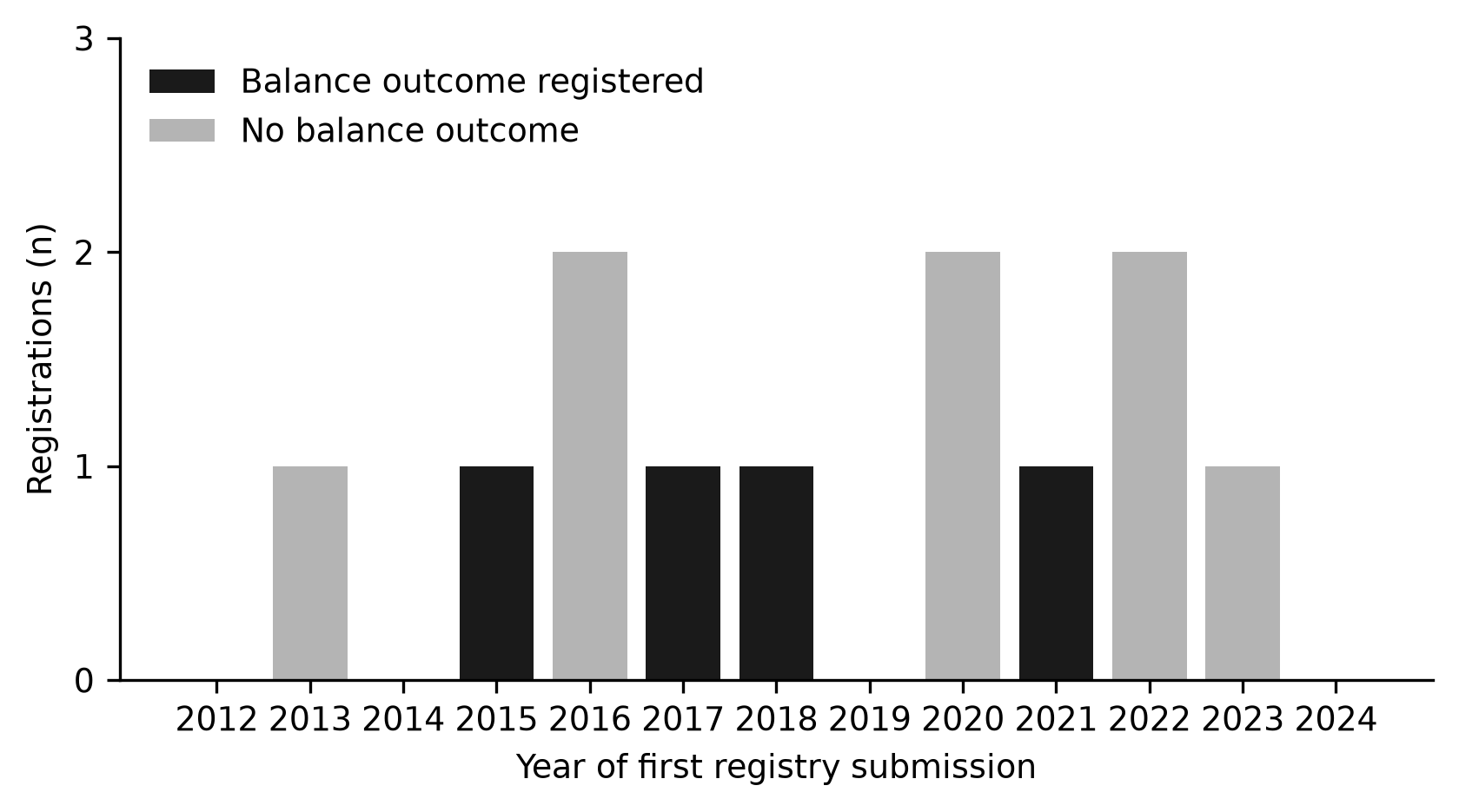
Figure 1. Registrations per year of first submission, by presence of a balance outcome.
Second, the primary outcome domain differed across registrations. Balance and gait was the domain of 3 registrations and upper limb function of 3 (25.0%). The remaining 6 each covered a different domain: falls, functional capacity, disease severity, autonomic function, a neurophysiological signal and motor skill. Falls were the primary outcome of 1 registration.
Registered enrollment had a median of 30 participants (P25-P75, 20 to 46) and reached 79 at most (Table 2). The smallest registration planned 9 participants. The 12 registrations together planned 412 participants. Registrations with a balance outcome had a median of 47, against 20 in the others. Below 30 participants fell 5 registrations. By platform, median enrollment was 42.5 for console registrations, 20 for hand tracking and 30 for the other platforms. The medians were 30 for registrations submitted in 2012 to 2017 and 30 for 2018 to 2024.
Characteristic | Value |
|---|---|
Registered enrollment, median [P25-P75] | 30 [20-46] |
Registered enrollment, range | 9-79 |
Estimated enrollment, n (%) | 1 (8.3) |
Randomized allocation, n (%) | 9 (75.0) |
Parallel-group model, n (%) | 10 (83.3) |
Crossover model, n (%) | 1 (8.3) |
Single-group model, n (%) | 1 (8.3) |
No masking, n (%) | 3 (25.0) |
Single masking, n (%) | 7 (58.3) |
Double or quadruple masking, n (%) | 2 (16.7) |
Site in Brazil, n (%) | 11 (91.7) |
Site in Chile, n (%) | 1 (8.3) |
Console motion sensing, n (%) | 6 (50.0) |
Hand tracking, n (%) | 3 (25.0) |
Other or unspecified platform, n (%) | 3 (25.0) |
Completed status, n (%) | 8 (66.7) |
Results posted, n (%) | 1 (8.3) |
Note: P25-P75 = 25th to 75th percentile. Percentages use 12 registrations as denominator.
Randomized allocation was registered for 9 of 12 trials, and 2 were non-randomized. One single-group study reported no allocation. Parallel-group models represented 10 trials, a crossover model 1 and a single-group model 1. Two-arm designs accounted for 8 registrations and three-arm designs for 3.
Masking was absent in 3 registrations and single in 7. At the same time, 2 registrations declared double or quadruple masking.
Control conditions varied. An active exercise or physiotherapy comparator was registered for 6 registrations, and a second virtual reality variant for 2. Sham stimulation served as the comparator in 1 registration and a healthy control group in 1. No comparator was listed for 2. Among registrations with a balance outcome, 3 used an active exercise or physiotherapy arm.
The median number of primary outcomes was 1, with a maximum of 6. More than one primary outcome was listed by 5 registrations.
Secondary and other outcomes totaled 42, with a median of 3 per registration and a maximum of 10. No secondary outcome was listed by 3 registrations. The Unified Parkinson's Disease Rating Scale appeared in 4 registrations, and a quality-of-life measure in 5. The Montreal Cognitive Assessment was listed by 4, gait or walking tests by 4 and a falls or fear-of-falling measure by 3.
Hand function tests were registered by 3 registrations, all of them with Leap Motion. Simulator sickness was assessed in 2 and usability in 2. No registration listed adverse events or safety as an outcome. None described home-based or remote delivery of its own intervention.
Brazil hosted 11 registrations and Chile 1. No other country appeared, and every registration listed a single country. One registration listed more than one site.
Within Brazil, registrations were spread over 6 cities. The South region contributed 4 registrations, the Southeast 3, the Northeast 3 and the North 1. São Paulo alone listed 3. The Chilean site was in Punta Arenas. All 12 lead sponsors were classified by the registry as other, the class that excludes industry and government agencies.
Console motion sensing was the platform of 6 registrations, Xbox Kinect in 4 and Nintendo Wii in 2. Hand tracking with Leap Motion accounted for 3, and head-mounted displays for 2.
Completed status was recorded for 8 registrations, unknown status for 3 and terminated status for 1. Results were posted for 1 registration. A start year earlier than the registration year was recorded for 8 registrations. Registration years ran from 2013 to 2023.
The query retrieved 242 records, of which 144 listed Parkinson disease as a condition. Of these, 132 had a Latin American site and 88 were first submitted between 2012 and 2024. Virtual reality interventions accounted for 12 of the 88 (13.6%; 95% CI, 8.0-22.3).
Two further virtual reality registrations fell outside the window, 1 submitted before 2012 and 1 after 2024. The intervention-side query returned the same 12 eligible registrations. It added none.
DISCUSSION
The balance outcome is registered in a minority of virtual reality trials for Parkinson's disease in Latin America, and this limits what the regional registry can say about the clinical question that motivates the technology. Where balance is the stated target, the registry tells the reader which instrument, which time frame and which comparator to expect. Where it is absent, the reader must wait for a publication, if one appears. The first implication is therefore practical: registration quality, rather than the number of trials, is the constraint on judging this portfolio.
The balance share found here is not out of line with the wider registry. A review of United States registrations in Parkinson disease found that balance problems and falls were the primary outcome of 16.3% of 766 trials, with a rising trend over the decade.(14) In this study, 3 of 12 virtual reality registrations named balance and gait as the primary domain, which is higher, as expected when balance training is a stated use of the intervention. The two figures are not directly comparable, since the denominators differ, but both indicate that balance is a recognized target that remains a minority outcome.
Instrument choice adds to the picture. The BESTest was the instrument in 3 of the 4 registrations with a balance outcome, and the Berg Balance Scale in 1. The meta-analyses that support virtual reality for balance rely largely on the Berg Balance Scale and balance confidence scales,(6,8) and a network meta-analysis reported pooled balance scale scores.(7) The BESTest reports balance by domain, and it has been used to compare balance across neurodegenerative diseases.(15) It also correlated with force-platform measures in 20 older men with Parkinson's disease, which supports its use where posturography is unavailable.(16) A Kinect pilot study from Brazil already included the BESTest among its clinical outcomes,(17) and the same instrument appears in 3 of the registrations here. A registry dominated by one instrument and a literature dominated by another will not pool easily.
Sample sizes are the clearest point of agreement with the published literature. The median registered enrollment sits between early feasibility work and larger published trials. A Kinect feasibility study in seven patients at a Brazilian rehabilitation center was an early example,(17) and a protocol for a Kinect feasibility trial planned 32 participants.(18) Immersive exergame studies have enrolled 12 participants,(19,20) and a home-based Kinect exergame trial randomized 23.(21) Larger designs exist, with 60 participants in a three-arm trial and 97 in a multicenter telerehabilitation trial of the Italian Neuroscience and Rehabilitation Network.(22,23) Only one Latin American registration exceeded 60 planned participants.
The mean registered enrollment of 34.3 participants is close to the average size of the randomized trials behind the pooled estimates. Dividing the reported totals by the number of trials gives 37.4 participants per trial in one meta-analysis and 41.1 in another.(6,7) The regional portfolio is therefore comparable in scale to the trials that support the pooled estimates, and small size is a feature of the field, not only of the region.
Small registered samples have a design consequence that registrations rarely address. A systematic review of 18 randomized trials of virtual reality for balance and gait found a pooled dropout of 5.6% and advised that this figure enter sample size calculations.(24) The registry fields studied here do not show whether the registered targets of 9 to 79 participants incorporate such an allowance. This is a discrepancy between what the literature recommends and what the registry makes visible, and it cannot be resolved from registry data alone.
Control conditions give the portfolio its comparative value. Registrations comparing virtual reality with active exercise or physiotherapy numbered 6, which is the contrast behind the meta-analytic statements on balance.(6,7) A trial that compared virtual reality, motor imagery and routine physical therapy in three arms shows how a design can separate the contribution of the technology from that of the practice it delivers.(22) Registrations that compared two virtual reality variants, as the two with guidance or display differences did here, answer a different question and do not inform the balance effect of the technology itself.
The concentration of registrations in Brazil, and the near absence of other countries, contrasts with the epidemiological picture. Prevalence of Parkinson's disease in Latin America was estimated across studies from 13 countries, and the burden in older adults was documented in six.(1,2) The registry shows only two countries. Similar patterns have been described for other registries in the region: trials registered for COVID-19 in Latin America and the Caribbean tended to be small and repetitive,(12) and a scoping review of trials with ethnic minorities in the region found a limited set of 24 trials, of which only 15 mentioned ethics approval.(25) Single-country concentration of this kind weakens regional generalization. All lead sponsors were classified as other, a class that includes universities, hospitals, associations and individual investigators, and the registrations came from 6 cities in the South, Southeast, Northeast and North of Brazil and from one city in Chile. Older people with the disease in the region may have limited access to health services,(2) and none of the registrations planned remote delivery, although a multicenter telerehabilitation trial elsewhere has shown that a non-immersive virtual reality design can reach patients at home.(23)
Secondary outcomes cover the domains in which the evidence disagrees. One meta-analysis found no significant differences in gait, daily activities, motor function or quality of life, while an umbrella review reported moderate improvements in daily activities and quality of life.(6,9) Quality-of-life measures were registered by 5 registrations and motor severity scales by 4, so the registered portfolio could in principle contribute to settling that disagreement if its results are reported.
Platform choice followed the outcome. Console motion sensing dominated, and every registration with a balance outcome used Kinect or Wii, whereas hand tracking was used for upper limb outcomes. The upper limb trials coincide with pilot work in which Leap Motion serious game scores were correlated with clinical scales of upper limb function.(26) Head-mounted displays appeared in two registrations, although fully immersive exergames have been tested in small feasibility studies that also tracked cybersickness.(19) In this registry, immersive hardware was not paired with a balance outcome.
Engagement was not registered either. No registration listed adherence, motivation, enjoyment or attendance as an outcome (0 of 12). The registry text shows that the games were console games adapted to rehabilitation, such as a set of Wii Balance Board games and four balance games on Xbox Kinect. Published trials of virtual reality for balance and gait pooled a dropout of 5.6%.(24) Attrition was counted in those trials and was not registered as an outcome here. Usability was the only user-side outcome, and it was registered for 2 registrations.
Safety was the least registered domain. No registration listed adverse events or safety as an outcome, and simulator sickness was assessed in 2. Published work shows what is feasible: a Kinect pilot in Brazil reported adverse events as a feasibility outcome and found none,(17) a later protocol listed the proportion of participants with intervention-related adverse events as a process outcome,(18) and a fully immersive study applied a simulator sickness questionnaire.(19) Safety measures matter more as head-mounted displays enter rehabilitation.
Falls, the clinical event that balance training is meant to prevent, were the primary outcome of a single registration. This agrees with the registry review in the United States, where falls and balance combined were a minority of primary outcomes, and with the burden documented in prospective cohorts, in which about half of people with the disease fall.(3,14) Because gait and balance disorders are the most consistent predictors of falls, a balance outcome is a defensible surrogate,(4) yet falls themselves remain the target of prevention and management programs.(5)
Timing of registration was the weakest point of the portfolio. A recorded start year earlier than the registration year applied to 8 of the 12 registrations, a coarse indicator that nonetheless indicates retrospective registration. Retrospective registration is not unique to this field. In malaria trials registered over a decade, 36.6% were registered retrospectively,(27) and in a Cochrane review of exercise for low back pain only 23.3% of 361 trials were prospectively registered.(28) A study of behavioral health trials summarized earlier work in which one third to two thirds of registered trials were registered after the study had started.(29) Retrospective registration weakens the main function of the registry, which is to fix outcomes in advance.
Registered outcomes matter because the outcomes reported later sometimes differ from them. Among gastroenterology trials, 26.7% showed at least one discrepancy between registered and published primary outcomes, usually in assessment times or in omitted outcomes.(30) In neurology trials registered in India, the primary outcome differed from the registered one in 28.3% of published trials, and only 31.4% were published at all.(31) One registration here listed 6 primary outcomes. Such breadth leaves wide room for later selection, and the registry cannot show whether it happened.
The reporting of results in the registry was almost absent, with a single registration that posted results. This coincides with the low dissemination found in the United States Parkinson registrations, where 40.9% of completed trials had no published manuscript,(14) and with malaria trials, in which 81.6% missed the World Health Organization standard for posting summary results within 12 months.(27)
The network meta-analysis searched ClinicalTrials.gov among its sources,(7) so the registrations described here can be found by the same route. Reviewers who rely on the registry will find that only 4 of the 12 state a balance outcome, which makes outcome-specific screening difficult and increases the chance that eligible trials are overlooked.
A registered balance outcome is useful only if it is specific. The instrument should be named, because balance scales differ in what they cover; the BESTest, for example, reports several domains of balance control.(15,16) The time frame should state whether the assessment follows the end of training or a later follow-up. When falls are the clinical target, they should be a primary outcome and not a secondary one, since they are the event that postural training is meant to reduce.(3,5)
Three features strengthen the study. The data came from an open interface and every step from download to table was scripted, so the extraction can be repeated. Two queries entered from different sides, the condition and the intervention, and they returned the same set of eligible registrations. The outcome definition and the eligibility rules were written down before the script was run, which limits flexibility in how the main proportion could be calculated.
The analysis has limits that readers should weigh. First, only ClinicalTrials.gov was searched, and trials registered solely in regional registries or in the WHO platform would be missed; the count of 12 is therefore a lower bound, and a joint search of the regional registries and the platform would size the gap. Second, registrations were not linked to publications, so the match between registered and published outcomes is unknown; linking each identifier to its publication would allow this to be measured. Third, the confidence interval around the balance proportion spans 47 percentage points, which reflects the small number of registrations, and a repeated extraction at fixed intervals would show whether the proportion is stable.
Fourth, the coding of platforms and primary domains was done by a single AI assistant and has not been checked by the authors; independent double coding with a reconciliation step would estimate the error. Fifth, a trial is found only if it lists Parkinson disease in the conditions field and a Latin American country in the locations field, so incomplete entries are lost; a supplementary search by sponsor country and by free-text description would recover some of them. Sixth, Latin America was defined by the 20 countries and territories listed in the query, so Haiti and the French and Dutch overseas territories were not searched, and a site in one of them would not have been retrieved. Seventh, the definition of virtual reality was broad and included console exergames, so the findings apply to this wider category and not to immersive systems alone.
For investigators and registrars in the region, three practices follow from these findings. Trials of virtual reality for balance should be registered before enrollment, list a validated balance measure as the primary outcome, state the time frame, and give a justification for the planned sample that includes expected attrition. Posting results in the registry should be treated as part of the study, since it is the only record that survives when a manuscript is never written. For reviewers and funders, the portfolio described here points toward collaborative, multi-site designs in place of repeated single-site trials of similar size.
CONCLUSIONS
Registered virtual reality trials for Parkinson's disease with Latin American sites formed a small portfolio, concentrated in Brazil and made up of single-country, mostly randomized trials of modest size, in which a balance outcome was registered in about one third. Platforms were mainly console-based or hand-tracking systems, primary outcomes covered many domains, and results were almost never posted. Prospective registration with an explicit balance measure, a justified sample size and posted results would make the regional evidence on virtual reality and balance in Parkinson's disease easier to assess.
References
- 1 Kim DJ, Isidro‐Pérez AL, Doering M, Llibre‐Rodriguez JJ, Acosta I, Rodriguez Salgado AM, et al. Prevalence and Incidence of Parkinson's Disease in Latin America: A Meta‐Analysis. Movement Disorders. 2024;39(1):105-118. doi: 10.1002/mds.29682
- 2 Kim DJ, Rodriguez-Salgado AM, Llibre-Rodriguez JJ, Acosta I, Sosa AL, Acosta D, et al. Burden of Parkinsonism and Parkinson’s Disease on Health Service Use and Outcomes in Latin America. Journal of Parkinson’s Disease. 2023;13(7):1199-1211. doi: 10.3233/jpd-230114
- 3 Van Bladel A, Herssens N, Bouche K, Cambier D, Maes L, Lefeber N. Proportion of falls reported in persons with Parkinson's disease: A meta-analysis. Clin Rehabil. 2023;37(9):1260-1277. doi: 10.1177/02692155231158565
- 4 Murueta-Goyena A, Muiño O, Gómez-Esteban JC. Prognostic factors for falls in Parkinson’s disease: a systematic review. Acta Neurol Belg. 2024;124(2):395-406. doi: 10.1007/s13760-023-02428-2
- 5 Liu W, Tung T, Zhang C, Shi L. Systematic review for the prevention and management of falls and fear of falling in patients with Parkinson's disease. Brain and Behavior. 2022;12(8):e2690. doi: 10.1002/brb3.2690
- 6 Kwon SH, Park JK, Koh YH. A systematic review and meta-analysis on the effect of virtual reality-based rehabilitation for people with Parkinson’s disease. J NeuroEngineering Rehabil. 2023;20(1):94. doi: 10.1186/s12984-023-01219-3
- 7 Yau CE, Ho ECK, Ong NY, Loh CJK, Mai AS, Tan E. Innovative technology‐based interventions in Parkinson's disease: A systematic review and meta‐analysis. Ann Clin Transl Neurol. 2024;11(10):2548-2562. doi: 10.1002/acn3.52160
- 8 Hussain F, Farooqui S, Khan AA, Khan MU, Khan MA, Hasan A. Effects of nonimmersive virtual reality using Wii-Fit exercises on balance and cognition in Parkinson disease: A meta-analysis. Medicine (Baltimore). 2024;103(30):e38940. doi: 10.1097/md.0000000000038940
- 9 Yu J, Wu J, Lu J, Wei X, Zheng K, Liu B, et al. Efficacy of virtual reality training on motor performance, activity of daily living, and quality of life in patients with Parkinson's disease: an umbrella review comprising meta-analyses of randomized controlled trials. J NeuroEngineering Rehabil. 2023;20(1):133. doi: 10.1186/s12984-023-01256-y
- 10 Tse T, Fain KM, Zarin DA. How to avoid common problems when using ClinicalTrials.gov in research: 10 issues to consider. BMJ. 2018;361:k1452. doi: 10.1136/bmj.k1452
- 11 von Elm E, Altman DG, Egger M, Pocock SJ, Gøtzsche PC, Vandenbroucke JP, et al. The Strengthening the Reporting of Observational Studies in Epidemiology (STROBE) Statement: Guidelines for Reporting Observational Studies. PLoS Med. 2007;4(10):e296. doi: 10.1371/journal.pmed.0040296
- 12 Carracedo S, Palmero A, Neil M, Hasan-Granier A, Saenz C, Reveiz L. The landscape of COVID-19 clinical trials in Latin America and the Caribbean: assessment and challenges. Rev Panam Salud Publica. 2020;44:1. doi: 10.26633/rpsp.2020.177
- 13 National Library of Medicine. ClinicalTrials.gov API version 2 (study data) [Internet]. 2024. Available from: https://clinicaltrials.gov/data-api/api
- 14 Wyant KJ, Yasuda E, Kotagal V. The 10‐year Landscape of United States‐Registered Parkinson Disease Clinical Trials: 2007–2016. Movement Disord Clin Pract. 2018;5(5):512-518. doi: 10.1002/mdc3.12665
- 15 Tueth LE, Duncan RP, Crowner BE, Earhart GM. Comparing balance using the BESTest in Alzheimer, Huntington and Parkinson disease. Neurodegenerative Disease Management. 2024;14(3-4):87-96. doi: 10.1080/17582024.2024.2388507
- 16 Luna NMS, Bobbio TG, de Graaf M, Greve JMD, Ernandes RDC, Dias AS, et al. The decline in postural balance has a negative impact on the performance of functional tasks in individuals with Parkinson's Disease. Clinics. 2024;79:100382. doi: 10.1016/j.clinsp.2024.100382
- 17 Pompeu JE, Arduini LA, Botelho AR, Fonseca MBF, Pompeu SMAA, Torriani-Pasin C, et al. Feasibility, safety and outcomes of playing Kinect Adventures!™ for people with Parkinson's disease: a pilot study. Physiotherapy. 2014;100(2):162-168. doi: 10.1016/j.physio.2013.10.003
- 18 Silva KG, De Freitas TB, Doná F, Ganança FF, Ferraz HB, Torriani-Pasin C, et al. Effects of virtual rehabilitation versus conventional physical therapy on postural control, gait, and cognition of patients with Parkinson’s disease: study protocol for a randomized controlled feasibility trial. Pilot Feasibility Stud. 2017;3(1):68. doi: 10.1186/s40814-017-0210-3
- 19 Yun SJ, Hyun SE, Oh BM, Seo HG. Fully immersive virtual reality exergames with dual-task components for patients with Parkinson’s disease: a feasibility study. J NeuroEngineering Rehabil. 2023;20(1):92. doi: 10.1186/s12984-023-01215-7
- 20 Cancela-Carral JM, Campo-Prieto P, Rodríguez-Fuentes G. The IntegraPark Study: An Opportunity to Facilitate High-Intensity Exercise with Immersive Virtual Reality in Parkinson’s Disease Patients. JFMK. 2024;9(3):156. doi: 10.3390/jfmk9030156
- 21 Skrzatek A, Nuic D, Cherif S, Beranger B, Gallea C, Bardinet E, et al. Brain modulation after exergaming training in advanced forms of Parkinson’s disease: a randomized controlled study. J NeuroEngineering Rehabil. 2024;21(1):133. doi: 10.1186/s12984-024-01430-w
- 22 Kashif M, Albalwi AA, Zulfiqar A, Bashir K, Alharbi AA, Zaidi S. Effects of virtual reality versus motor imagery versus routine physical therapy in patients with parkinson’s disease: a randomized controlled trial. BMC Geriatr. 2024;24(1):229. doi: 10.1186/s12877-024-04845-1
- 23 Goffredo M, Baglio F, De Icco R, Proietti S, Maggioni G, Turolla A, et al. Efficacy of non-immersive virtual reality-based telerehabilitation on postural stability in Parkinson's disease: a multicenter randomized controlled trial. Eur J Phys Rehabil Med. 2024;59(6):689-696. doi: 10.23736/s1973-9087.23.07954-6
- 24 Parra AG, Gonzalez-Medina G, Perez-Cabezas V, Casuso-Holgado MJ, Vinolo-Gil MJ, García-Muñoz C. Dropout Rate of Participants in Randomized Clinical Trials That Use Virtual Reality to Train Balance and Gait in Parkinson’s Disease. A Systematic Review With Meta-analysis and Meta-regression. J Med Syst. 2023;47(1):46. doi: 10.1007/s10916-023-01930-7
- 25 Herrera-Añazco P, Benites-Meza JK, Caira-Chuquineyra B, Fernandez-Guzman D, Hernandez-Bustamante EA, Benites-Zapata VA. Ethnic Minority Participation in Clinical Trials from Latin America and the Caribbean: A Scoping Review. J Immigrant Minority Health. 2024;26(3):604-622. doi: 10.1007/s10903-023-01578-y
- 26 Bissolotti L, Artiles-Sánchez J, Alonso-Pérez JL, Fernández-Carnero J, Abuín-Porras V, Sinatti P, et al. Virtual Reality-Based Assessment for Rehabilitation of the Upper Limb in Patients with Parkinson’s Disease: A Pilot Cross-Sectional Study. Medicina. 2024;60(4):555. doi: 10.3390/medicina60040555
- 27 Pool L, Ruiz del Portal Luyten C, van der Pluijm RW, Soentjens P, Hanscheid T, Grobusch MP, et al. Dissemination and outcome reporting bias in clinical malaria intervention trials: a cross-sectional analysis. Malar J. 2024;23(1):293. doi: 10.1186/s12936-024-05115-6
- 28 Silva S, Singh S, Kashif S, Ogilvie R, Pinto RZ, Hayden JA. Many randomized trials in a large systematic review were not registered and had evidence of selective outcome reporting: a metaepidemiological study. Journal of Clinical Epidemiology. 2024;176:111568. doi: 10.1016/j.jclinepi.2024.111568
- 29 Taylor NJ, Gorman DM. Registration and primary outcome reporting in behavioral health trials. BMC Med Res Methodol. 2022;22(1):41. doi: 10.1186/s12874-021-01500-w
- 30 Shang BH, Yang FH, Lin Y, Bialka S, Rensburg DCJV, Tonelli AR, et al. Discrepancies between pre-specified and reported primary outcomes: A cross-sectional analysis of randomized controlled trials in gastroenterology and hepatology journals. PLoS ONE. 2024;19(11):e0305027. doi: 10.1371/journal.pone.0305027
- 31 Mishra B, Agarwal A, Nilima N, Srivastava MVP, Vishnu VY. Publication of neurology clinical trials registered with clinical trial registry of India: A cross‐sectional study. Acta Neuro Scandinavica. 2022;146(5):475-484. doi: 10.1111/ane.13669
Declarations
Funding
No financing
Conflict of interest
None
Authorship contributions
Drafting – original draft: Analía Ortigoza, Lucía Gerez.
Writing–review and editing: Analía Ortigoza, Lucía Gerez.