

Abstract
Introduction: Immersive virtual reality (VR) trials are multiplying, but the clinical areas they address in Latin America and the completeness of their registry entries are unknown. This study described their clinical areas and populations and appraised the registration of primary outcomes, sample size justification, timing and results. Methods: Cross-sectional registry study of interventional ClinicalTrials.gov records with a VR intervention, at least one Latin American site and a start year from 2011 to 2023. Immersive trials documented a head-mounted display or explicit immersive wording. Counts, medians, Wilson 95% confidence intervals and crude Fisher exact tests were used; no adjusted model was fitted. Results: Of 62 records, 61 had a Latin American site and 14 were immersive VR trials, all single-site, from 5 countries. Procedural pain and anxiety (4 trials) and neurological rehabilitation (3) predominated, and median registered enrollment was 50. All trials registered primary outcomes with measure, description and time frame, 6 of 14 were registered prospectively, 1 stated a sample size justification and 1 of 8 closed trials posted results. No indicator differed from the 47 other VR-labelled trials. Conclusions: Registered immersive VR trials with Latin American sites were few, small and concentrated in pain, anxiety and neurological rehabilitation. Primary outcome fields were complete, but prospective registration, sample size justification and results posting were limited.
Keywords
virtual reality, clinical trials as topic, registries, Latin America, research design
INTRODUCTION
Head-mounted displays have moved virtual reality (VR) from laboratories into hospital wards, rehabilitation units and dental clinics. Immersive VR reduced self-reported pain in a meta-analysis of 122 randomized trials, with similar effects in acute, chronic and procedural pain.(1) In children undergoing needle procedures and other medical interventions, VR distraction lowered pain and anxiety.(2,3) Head-mounted systems have also been applied to neurological rehabilitation, where scoping and systematic reviews describe uses in stroke, Parkinson disease and multiple sclerosis,(4,5) and to anxiety disorders, in which 16 of 17 randomized trials in one meta-analysis relied on head-mounted displays.(6) Reviews of this evidence repeatedly point to low methodological quality, to the impossibility of blinding participants and staff, and to incomplete reporting of adverse effects.(3,7,8) A CONSORT appraisal of nine VR exposure studies for posttraumatic stress disorder likewise found variable methodological quality.(9) Cybersickness is the best-known adverse effect of head-mounted displays, and a systematic review identified 88 studies on techniques to reduce it;(10) among older adults, most of 39 studies reported only minor cybersickness but relied on a single session and had weak sample generalizability.(11)
Whether these weaknesses can be traced and corrected depends on the registration of trials. The International Committee of Medical Journal Editors requires prospective registration, yet most trials in a sample of journals were registered retrospectively,(12) and only 41.7% of randomized trials published in 2018 complied with prospective registration.(13) Registered entries are often too vague to detect later changes: in registry records from 2008 and 2009, more than half of the trials were registered after recruitment of the first participant and only 34.9% of reported outcomes were specific measures with a meaningful time frame,(14) and a repeated assessment of registry records found that 57.6% of primary outcomes were specific measures with a meaningful time frame, an improvement over 38.2% in the earlier sample.(15) In physiotherapy, 34% of randomized trials published in 2009 were registered and registration was adequate in 2.5%.(16) Results are frequently missing, with 29% of large registered trials unpublished and most of them lacking results in the registry.(17) Sample size justification is another reporting gap in several specialties,(18,19) and outcome switching has been documented in both general and specialty journals.(20,21) Psychiatry journals have been examined for correct prospective registration and selective outcome reporting,(22) and cross-sectional analyses of registry records have characterized trials in fields as different as COVID-19, neuropsychiatric mobile health and sepsis,(23-25) but no comparable analysis has addressed immersive VR.
Latin America offers a distinct setting for this question. Globally, the annual number of registered trials rose from 3,294 in 2004 to 23,384 in 2013.(26) In Latin America and the Caribbean, registration increased between 2007 and 2013, with Brazil leading South America,(27) and a later survey of trials published in 2015 found that 59.9% were registered, half of them prospectively.(28) More accessible and affordable head-mounted systems have appeared in recent years,(5) and methodological guidance for VR trials now exists.(29) What clinical areas and populations the region's registered immersive VR trials address, and how completely they are registered, remains undescribed. The objective of this study was to describe the clinical areas and populations of registered immersive VR trials with Latin American sites and to appraise the completeness of their registration of primary outcomes, sample size justification, timing of registration and results.
METHODS
Study design
A cross-sectional, registry-based meta-research study was conducted on public records of interventional trials. The report follows the STROBE statement for cross-sectional studies, adapted to registry records, and the unit of analysis was the registered trial. The protocol, which fixed the definition of immersive VR, the indicators of registration completeness and the statistical plan, was written before any analysis and is summarized below. Two rules were refined after reading the records: a keyword pattern for sample size justification was corrected after reviewing its hits, and one record was reassigned to the comparison group, as described below.
Setting
The study covered interventional trials with at least one listed site in a Latin American country and a start year between 2011 and 2023. Latin American countries were Argentina, Bolivia, Brazil, Chile, Colombia, Costa Rica, Cuba, the Dominican Republic, Ecuador, El Salvador, Guatemala, Haiti, Honduras, Mexico, Nicaragua, Panama, Paraguay, Peru, Uruguay and Venezuela, plus Puerto Rico. Coverage is described by start year only, and the records reflect the snapshot available from the public interface of the registry.
Participants
Records were eligible when the study type was interventional, the intervention search matched virtual reality, at least one site listed in the location field belonged to one of the countries above, and the start year ranged from 2011 to 2023. The location search matched country names as text, so the country field of every returned record was checked individually, and records without a Latin American site were excluded at that point.
Among eligible records, immersive VR trials were those whose title, summaries, arm and intervention descriptions, keywords or primary outcome descriptions documented a head-mounted display, VR glasses, goggles, lenses, headset or helmet, or used the word immersive for the intervention. Records documenting only sensor-based or screen-based systems (such as Kinect, Wii, Xbox, Leap Motion, projectors or touchscreens), mixed reality devices, or no display at all formed the comparison group of other VR-labelled trials. One record in which the word immersive described a previous version of the software, without naming a display, was assigned to the comparison group. Reference lists and eligibility criteria were not used for classification, to avoid counting devices mentioned only as background or as exclusion criteria.
Variables
Exposure was the documented immersive display. Descriptive variables were the clinical area and population, the countries and number of listed sites, the start year, the allocation, intervention model, masking and primary purpose, the registered enrollment and its type (actual or estimated), the lead sponsor class, the eligible age groups and the overall status. Clinical areas were coded from the conditions, summary and eligibility fields into seven categories: procedural pain and anxiety, neurological rehabilitation, mental health and psychosocial, musculoskeletal conditions, cardiovascular conditions, palliative and oncology care, and healthy ageing.
Registration completeness was appraised with seven indicators defined in the protocol. Prospective registration was defined as a first submission no later than the month in which the trial started. A primary outcome entry was complete when the measure, the description and the time frame were all filled in, and the indicator required this for every primary outcome of the record. Sample size justification was recorded when the free-text fields stated how the sample size was calculated or why a given sample was chosen, by searching for terms such as sample size, a priori and power analysis and reading each hit. Results posting and a linked publication of results were evaluated among trials with a completed or terminated status, because only those trials can be expected to have results. The presence of a plan to share individual participant data was recorded when the field stated yes, no or undecided.
Data sources
Records were obtained from the ClinicalTrials.gov interface version 2,(30) by programmatic requests that did not require registration or login. The intervention search used the phrase virtual reality. The location search listed the country names above. The filter kept interventional studies with a start date from January 2011 to March 2023. The structured fields used were the identification, status, design, eligibility, outcomes, sponsor, location, reference and data sharing modules, and the free-text fields were the titles, summaries and descriptions. A sensitivity search added terms such as head-mounted display, VR headset, immersive, virtual environment, 360 video, goggles and glasses to identify records not captured by the main phrase. The data were saved as a single file and processed with a script that reproduces every figure in this report.
Study size
No sample size calculation was made, since the study included every eligible record. The number of immersive trials fixed the precision of the estimates, and Wilson intervals were reported to make that precision explicit.
Statistical analysis
Categorical variables were summarized as counts and percentages. Continuous variables were summarized as median with 25th and 75th percentiles because enrollment was skewed. Percentages for each registration indicator carried Wilson 95% confidence intervals. Immersive trials were compared with the other VR-labelled trials by two-sided Fisher exact tests for proportions and a Mann-Whitney test for enrollment, at a 5% significance level and without correction for multiplicity, and all comparisons were treated as exploratory. Estimates were crude. No adjusted model was fitted, because the number of immersive trials did not allow stable estimation with covariates. The denominator of each indicator is shown in the table. The analysis was written in Python with SciPy for the tests and Matplotlib for figures, and it was run twice with identical output.
RESULTS
Participants
The search returned 62 records, of which 1 listed no Latin American site and was excluded (Figure 1). The remaining 61 records started between 2011 and 2023, and 14 of them (23.0%) documented an immersive display.
The other 47 records were screen or sensor based in 31 cases, used mixed reality in 2 cases, or did not state the display in 14 cases. The sensitivity search returned 36 records, of which 20 had Latin American sites and were not in the main set. Headset or goggle terms matched 7 of them, in each case as protective eyewear or a headset for music during a photobiomodulation or similar procedure, and 0 of the 20 mentioned virtual reality.

Figure 1. Flow of ClinicalTrials.gov records from the search to the immersive virtual reality trials.
Note: VR = virtual reality. Records not documented as immersive formed the comparison group.Descriptive data
Among the 14 immersive trials, sites were listed in 5 countries: Brazil (5), Chile (5), Argentina (2), Colombia (1) and Ecuador (1). Every trial listed a single site. Start years ranged from 2016 to 2023, with a median of 2022, and 10 trials started from 2021 onward (Table 1).
Characteristic | Immersive VR trials (n = 14) |
|---|---|
Start year, median (range) | 2022 (2016-2023) |
Start year 2011-2017, n (%) | 1 (7.1) |
Start year 2018-2020, n (%) | 3 (21.4) |
Start year 2021-2023, n (%) | 10 (71.4) |
Site country: Brazil, n (%) | 5 (35.7) |
Site country: Chile, n (%) | 5 (35.7) |
Site country: Argentina, n (%) | 2 (14.3) |
Site country: Colombia, n (%) | 1 (7.1) |
Site country: Ecuador, n (%) | 1 (7.1) |
Single listed site, n (%) | 14 (100.0) |
Randomized allocation, n (%) | 11 (78.6) |
Single-group design, n (%) | 4 (28.6) |
Masking: none, n (%) | 6 (42.9) |
Masking: single, n (%) | 5 (35.7) |
Masking: double or more, n (%) | 3 (21.4) |
Enrollment, median (P25-P75) | 50 (25.5-79.5) |
Enrollment type actual, n (%) | 8 (57.1) |
Child participants eligible, n (%) | 3 (21.4) |
Lead sponsor class other than industry or government, n (%) | 14 (100.0) |
Status completed, n (%) | 7 (50.0) |
Status unknown, n (%) | 6 (42.9) |
Status terminated, n (%) | 1 (7.1) |
Note: n (%) unless stated. P25-P75 = 25th to 75th percentile. Percentages use the 14 immersive trials as denominator.
Procedural pain and anxiety was the most frequent clinical area (4 trials), followed by neurological rehabilitation (3), mental health and psychosocial conditions (2) and musculoskeletal conditions (2). Cardiovascular conditions, palliative and oncology care, and healthy ageing contributed one trial each (Table 2).
Among participants, adults were the eligible population in 11 trials, and 3 trials admitted children or adolescents, 2 of them restricted to children. The adult populations included people with Parkinson disease, stroke, fibromyalgia, heart failure and advanced cancer, blood donors, women undergoing breast biopsy, university students and older adults.
Registry identifier | Country | Clinical area | Population | Start year | Enrollment (type) | Status |
|---|---|---|---|---|---|---|
NCT05596292 | Brazil | Cardiovascular conditions | Hospitalized adults with heart failure | 2022 | 66 (estimated) | unknown |
NCT05535088 | Argentina | Healthy ageing | Older adults | 2022 | 35 (actual) | completed |
NCT05393596 | Chile | Mental health and psychosocial | University students (adults) | 2022 | 122 (actual) | completed |
NCT06219642 | Ecuador | Mental health and psychosocial | Older adults with anxiety or depression symptoms | 2023 | 84 (actual) | completed |
NCT05950100 | Brazil | Musculoskeletal conditions | Adolescents after scoliosis surgery | 2023 | 56 (estimated) | unknown |
NCT06606132 | Chile | Musculoskeletal conditions | Adults with fibromyalgia | 2023 | 20 (actual) | completed |
NCT05403788 | Chile | Neurological rehabilitation | Adults with Parkinson disease | 2021 | 9 (actual) | completed |
NCT05687773 | Brazil | Neurological rehabilitation | Adults with Parkinson disease | 2021 | 30 (estimated) | unknown |
NCT07086365 | Chile | Neurological rehabilitation | Adults with early-stage stroke | 2023 | 11 (actual) | completed |
NCT05603767 | Argentina | Palliative and oncology care | Hospitalized adults with advanced cancer | 2022 | 60 (estimated) | unknown |
NCT03202433 | Chile | Procedural pain and anxiety | Adult blood donors | 2016 | 240 (estimated) | unknown |
NCT03877094 | Brazil | Procedural pain and anxiety | Adults undergoing breast biopsy | 2019 | 24 (actual) | terminated |
NCT03902158 | Brazil | Procedural pain and anxiety | Children aged 5 to 9 years in dental care | 2019 | 44 (estimated) | unknown |
NCT03985930 | Colombia | Procedural pain and anxiety | Children aged 3 to 5 years undergoing needle procedures | 2020 | 122 (actual) | completed |
Note: Enrollment gives the registered number of participants and whether it was recorded as actual or estimated. Clinical areas were coded from the conditions, summary and eligibility fields.
The registered design was randomized in 11 trials and single-group in 4 trials. Masking was absent in 6 trials, single in 5 and double or higher in 3. Treatment was the primary purpose in 11 trials, supportive care in 2 and another purpose in 1.
The registered enrollment totaled 923 participants, with a median of 50 per trial (25th to 75th percentile 25.5 to 79.5) and a range from 9 to 240. Fewer than 30 participants were registered for 4 trials, and enrollment was recorded as actual in 8 trials and as estimated in 6.
The overall status was completed in 7 trials, unknown in 6 and terminated in 1. All 14 lead sponsors belonged to the category other, which comprises universities, hospitals and individual investigators.
Main results
The immersive share of VR-labelled trials changed with the start period. In the crude comparison by period, 3.3% of the 30 trials started in 2011-2017 were immersive, against 21.4% of 14 in 2018-2020 and 58.8% of 17 in 2021-2023 (Figure 2).
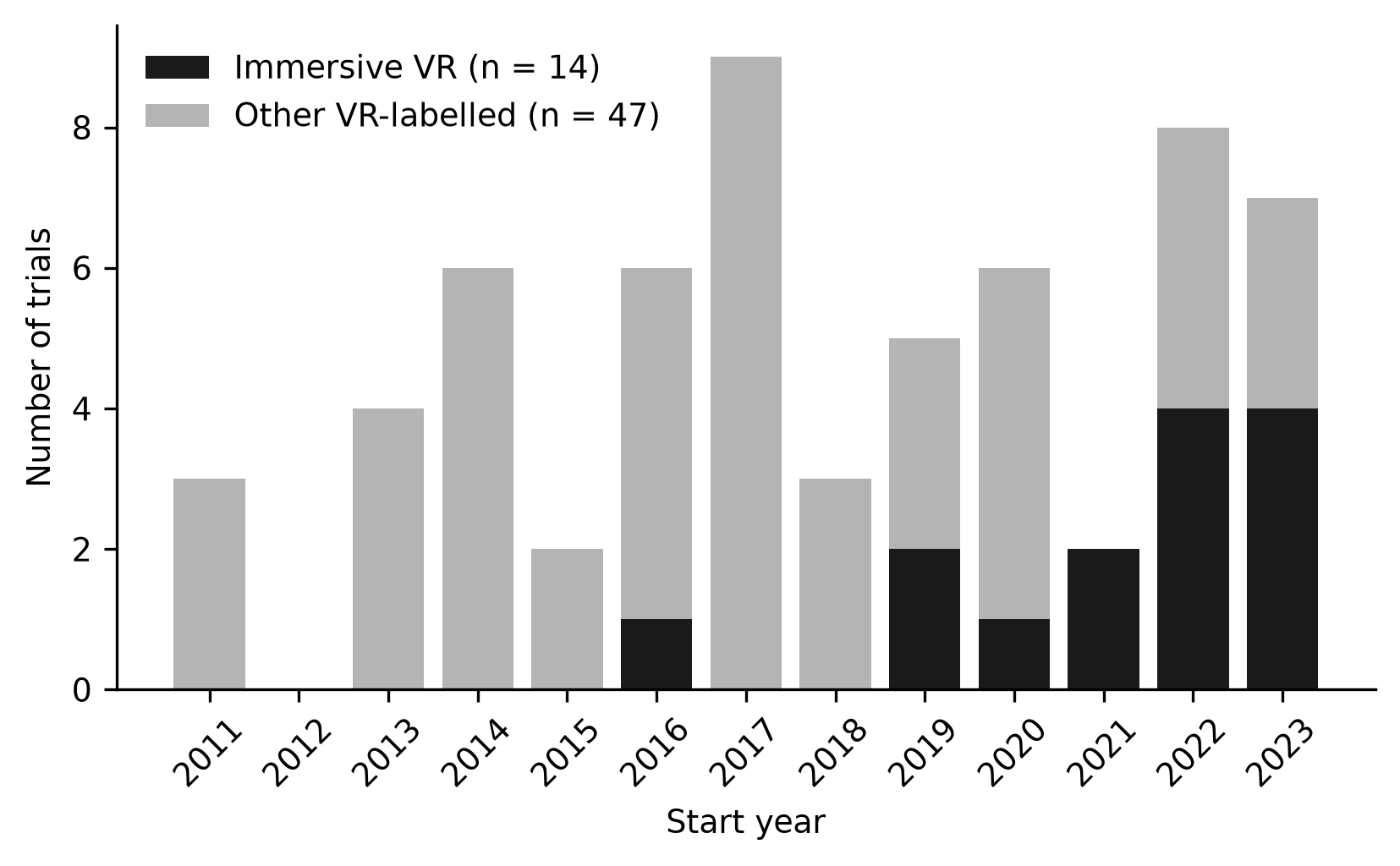
Figure 2. Virtual reality trials with Latin American sites by start year and type of display.
Note: Immersive VR trials documented a head-mounted display or explicit immersive wording. Other VR-labelled trials were screen or sensor based, mixed reality or did not state the display.For the registration of primary outcomes, every immersive trial had at least one primary outcome (14 of 14, 95% CI 78.5 to 100.0), and every record filled the measure, the description and the time frame of all its primary outcomes (14 of 14). The 14 trials listed 25 primary outcomes, and 7 of them registered two or more (Table 3).
Indicator | Immersive VR trials, n/N (%; 95% CI) (n = 14) | Other VR-labelled trials, n/N (%; 95% CI) (n = 47) | p (Fisher exact) |
|---|---|---|---|
Prospective registration (first submitted no later than the start month) | 6/14 (42.9; 21.4-67.4) | 18/47 (38.3; 25.8-52.6) | 0.77 |
At least one primary outcome registered | 14/14 (100.0; 78.5-100.0) | 47/47 (100.0; 92.4-100.0) | 1.00 |
All primary outcomes with measure, description and time frame | 14/14 (100.0; 78.5-100.0) | 45/47 (95.7; 85.8-98.8) | 1.00 |
Sample size justification stated in the record | 1/14 (7.1; 1.3-31.5) | 3/47 (6.4; 2.2-17.2) | 1.00 |
Results posted in the registry (completed or terminated trials) | 1/8 (12.5; 2.2-47.1) | 0/30 (0.0; 0.0-11.4) | 0.21 |
Publication of results linked in the record (completed or terminated trials) | 1/8 (12.5; 2.2-47.1) | 5/30 (16.7; 7.3-33.6) | 1.00 |
Individual participant data sharing plan stated | 10/14 (71.4; 45.4-88.3) | 30/47 (63.8; 49.5-76.0) | 0.75 |
Note: Cells show n/N (percentage; Wilson 95% CI). Other VR-labelled trials were screen or sensor based, mixed reality or did not state the display. p values come from two-sided Fisher exact tests and are exploratory without correction for multiplicity. CI = confidence interval; IPD = individual participant data.
Prospective registration was documented for 6 of 14 trials (42.9%, 95% CI 21.4 to 67.4). The 8 remaining trials were first submitted a median of 10 months after their start month, with delays from 1 to 26 months.
A sample size justification was found in the free text of 1 of 14 trials (7.1%, 95% CI 1.3 to 31.5).
Among the 8 completed or terminated trials, results were posted in the registry for 1 (12.5%, 95% CI 2.2 to 47.1) and a publication of results was linked in the record for 1 (12.5%, 95% CI 2.2 to 47.1). A plan on individual participant data sharing was stated by 10 of 14 trials (71.4%, 95% CI 45.4 to 88.3).
Other analyses
In the crude analysis, the immersive trials did not differ from the other 47 VR-labelled trials in any indicator (Table 3). Prospective registration was documented for 42.9% of immersive trials and 38.3% of the others (p = 0.77), and a sample size justification for 7.1% and 6.4% (p = 1.00). None of the 30 closed comparison trials posted results, against 1 of 8 immersive trials (p = 0.21). No adjusted estimates were produced.
The 47 comparison trials were listed in Brazil in 39 cases and in Chile in 5, with a median start year of 2017. Randomized allocation was registered for 37 of them, and 29 were completed and 16 had an unknown status. Their median registered enrollment was 48 (25th to 75th percentile 27.0 to 64.0), similar to the immersive trials (p = 0.86).
When the cohort was restricted to records first submitted by 2023, 11 immersive trials and 56 records in total remained, and 6 of the 11 immersive trials were registered prospectively. The restriction removed 3 immersive trials, first submitted after the end of the window, and 5 records overall.
Some findings were unexpected. One immersive trial recorded a randomized allocation together with a single-group intervention model, which are contradictory entries. Among the 14 immersive trials, 6 kept an unknown status, and 3 described feasibility, usability or a pilot design in their titles.
DISCUSSION
Key results
Registered immersive VR trials with Latin American sites were few, since only 14 of 61 VR-labelled trials documented a head-mounted display, and they were small, single-site and concentrated in procedural pain and neurological rehabilitation. Their registry entries were complete in the fields that every record is required to fill, but the elements that allow a reader to judge validity were less often present: prospective registration was documented in fewer than half of the trials, almost none stated how the sample size was chosen, and results were posted for a single completed trial.
With respect to the three objectives, the registry shows a small and recent group of trials, mostly from Brazil and Chile and mostly in adults, a registered design that is randomized in most cases but modest in size, and a registration profile in which the fields that describe the measurement of the primary outcome are filled in while the fields that document planning and dissemination are not. None of these indicators differed in the crude comparison with the other VR-labelled trials, so the gaps appear to belong to the registration culture of the region and the field more than to the immersive technology.
Interpretation and comparison with other studies
The distribution of clinical areas matches the areas in which immersive VR has the most published evidence. Procedural pain and anxiety was the largest group, and meta-analyses show that immersive VR lowers pain across acute, chronic and procedural conditions(1) and that distraction lowers pain and anxiety in children undergoing needle procedures.(2,3) In this group, 2 of the 4 trials enrolled children, which is consistent with the pediatric focus of those reviews. The neurological rehabilitation trials, which involved Parkinson disease and stroke, correspond to the applications described in reviews of head-mounted displays in physical rehabilitation(4,5) and to the stroke literature summarized in an overview of 58 systematic reviews.(8) Safety work with head-mounted displays in Parkinson disease(31) provides the clinical background for these trials.
Fewer registered trials addressed anxiety disorders than the international literature would suggest, since 16 of 17 randomized trials in a recent meta-analysis of anxiety treatments used head-mounted displays.(6) The two mental health trials in our set targeted stigma among university students and anxiety or depression symptoms in older adults, which are psychosocial rather than disorder-specific questions. The older-adult trials in the set, a balance study in healthy older people among them, align with a review of 54 studies of immersive technologies for exercise in older people, which found good acceptability and a small increase in simulator sickness scores,(32) and with a synthesis of 39 studies of cybersickness in older adults.(11) The palliative care and cancer trial agrees with the symptom-management emphasis of VR applications in palliative care(33) and with trials of immersive VR in chemotherapy patients.(34) The rise of the immersive share from 3.3% to 58.8% of VR-labelled trials suggests a shift away from screen or sensor based systems, which account for 31 records in this cohort and which in the international literature are used for unsupervised rehabilitation at home.(35)
Design features of the immersive trials reflect the practical constraints of VR research. Masking was absent in 6 of the 14 trials and single in 5, which is plausible given that participants and staff can hardly be blinded to a head-mounted display, a limitation already highlighted in trials of VR distraction during needle procedures.(3) Randomized allocation was recorded for 11 trials, a larger share than in a systematic review of VR for unilateral spatial neglect, in which 42.3% of the studies had a control group and 19.2% were randomized trials.(36) The registry shows who was masked, not whether a sham or neutral VR condition was used, and that detail plausibly matters for outcomes such as pain, anxiety and stigma that depend on expectation. One record combined randomized allocation with a single-group model, an inconsistency that a validation rule in the registry could prevent.
The small, single-site profile of the trials is typical of an emerging technology. Registered enrollment ranged from 9 to 240 participants, and the trials of VR distraction during needle procedures in one meta-analysis ranged from 15 to 220 participants.(3) Sponsorship by universities, hospitals and individual investigators, together with the feasibility or usability designs in some titles, places part of these trials in the early phases of a framework that separates content development, feasibility testing and efficacy trials.(29) Registration should therefore state which phase a trial represents, because an efficacy claim from a trial of 50 participants carries a different weight than a usability result.
The 42.9% prospective registration in the immersive trials is close to the 41.7% compliance reported for randomized trials published in 2018,(13) higher than the 31% found in BMC journals,(12) and clearly above the 18% reported for physiotherapy trials published in 2019.(37) It is also lower than the 51.7% of registered trials published in 2015 by authors in Latin America and the Caribbean.(28) These figures use different denominators, because published trials were assessed in those studies and registry records in this one, and the month-level definition used here is more lenient than a comparison with the date of first enrollment. Retrospective registration close to the time of publication has been interpreted as selective registration bias.(13) The delays of up to 26 months in the retrospectively registered trials were measured from the start month, and this study cannot say whether they were linked to submission to a journal.
The completeness of primary outcome fields was higher here than in older audits. Registry records sampled in 2012 contained specific measures with a meaningful time frame for 57.6% of primary outcomes,(15) and only 30% of registered physiotherapy trials in 2019 had unambiguous primary outcomes.(37) Adequate registration, meaning prospective with unambiguous primary outcomes, was found for 2.5% of physiotherapy trials published in 2009.(16) The comparison is not exact, because our indicator checked that the measure, the description and the time frame were filled in, not that they were unambiguous. Registry fields therefore appear to be used more fully than before, and the next step is to judge their precision and to compare them with published reports, as studies of outcome switching do.(20,21) The frequency of switching depends on the field and the method, since 88% of plastic surgery trials had discrepancies between registered and published outcomes(21) while no overt switching was observed in 84 of 86 registered trials with available protocols in Indian journals,(38) so complete fields do not guarantee stable outcomes. Entries that repeat the same primary outcome name several times appeared in 2 trials, and a reader cannot distinguish them without the time frame, so such entries deserve a check in future audits.
The scarcity of sample size justification in the immersive trials needs careful reading. ClinicalTrials.gov has no dedicated field for it, so the justification was observed only when authors wrote it in the description. Audits of published trials find sample size reporting more often: the sample size items were adequately reported in 53% of surgical trials,(18) a calculation was reported in 91.7% of trials in anaesthesia journals,(39) in 57.3% of rehabilitation trials in 2008(40) and for 64.1% of nursing trials,(19) and reporting in non-pharmacological rehabilitation trials has been reviewed separately.(41) These results describe papers, so the 7.1% found here should not be read as a failure of the trials. It does show that the registry, by itself, does not allow a reader to see whether the 4 trials with fewer than 30 registered participants were designed as pilot studies or as confirmatory trials, a distinction that frameworks for VR research place at the center of trial phases.(29) Feasibility, usability or pilot designs appeared in the titles of 3 immersive trials, which fits the early phases of that framework.
Results posting was rare. One of eight completed or terminated immersive trials posted results and none of the 30 comparison trials did, in contrast with the 57.4% of US-based depression studies that posted some results(42) and the 18.5% of neuropsychiatric mobile health trials with results in any public location.(24) In a registry analysis of sepsis trials, results underreporting reached 91.6% and was more likely for trials registered outside the United States.(25) Because results posting is mandatory for some trials in the United States,(42) low posting rates in trials from other regions are expected. The absence of linked publications for most closed trials should be interpreted with care, since a publication may exist without being linked, and non-publication of registered trials is documented elsewhere.(17) The 6 immersive trials with an unknown status illustrate a related problem: registry status was outdated or wrong, or delayed by more than a year, for 31% of sampled trials in another study.(43)
Immersive displays raise safety questions that registry entries rarely answer. Techniques to reduce cybersickness with head-mounted displays have been catalogued in a systematic review,(10) 45 of 73 psychiatric VR studies did not mention adverse effects at all,(7) and the studies of fully immersive VR in older adults mostly used a single session and scored the Simulator Sickness Questionnaire in variable ways.(11) In the registry, adverse events become visible only when results are posted, which happened for 1 of the 14 immersive trials, so the safety experience of the remaining trials cannot be read from ClinicalTrials.gov. For Parkinson disease, the safety of longer walking bouts in a head-mounted display has been evaluated in older adults and patients,(31) and the Parkinson disease trials in this set could adopt comparable measures.
Registration of trials in Latin America has been studied mainly through publications and the WHO platform.(27,28) The concentration of immersive trials in Brazil and Chile fits the leading position of Brazil in regional registration and the use of ClinicalTrials.gov by most of the registered Latin American trials in the 2015 survey.(28) At the global level, the number of registered trials rose fivefold relative to publications between 2004 and 2013.(26) A registry analysis from sub-Saharan Africa found results posted for 16.5% of completed trials in ClinicalTrials.gov,(44) a figure of the same order as the proportion found here, although the immersive estimate rests on 8 trials. These parallels suggest that the pattern described here may reflect regional research capacity and registry practice as much as VR itself.
Limitations
Trials registered only in regional registries were not seen, and a search that adds the WHO platform and the Brazilian registry would show how much of the region's activity is missed.(28)
The number of trials: with 14 immersive trials the intervals are wide, comparisons had little power, and no adjusted model was possible, so the absence of differences should not be read as equivalence. A pooled analysis of registrations from several regions, or a repetition after more trials accumulate, would give narrower estimates.
Registry entries were examined at a single point in their history. Changes to primary outcomes after registration could not be detected, and the comparison between registered and published outcomes that detects outcome switching(20,21) requires the version history and the publications, which future studies should extract.
The indicator for sample size justification, which relied on keywords in free text and on reading each hit and may miss other wordings. The sixth is that the window was defined by start year, so records created after 2023 entered the cohort. Three immersive trials were first submitted after 2023, and the sensitivity analysis restricted to earlier submissions gave a similar picture; future work could fix the window by registration year as well.
Registry audits describe what is declared before and after a trial, while CONSORT appraisals of published reports, such as the one made for VR exposure therapy trials,(9) describe what is reported; both approaches are needed and neither replaces the other.
Generalizability
The results describe registered interventional trials in ClinicalTrials.gov with at least one Latin American site, and they cannot be extended to unregistered studies, to observational VR research, or to trials registered in other platforms. They also say nothing about the effectiveness of immersive VR, since no outcome data were analyzed. Within these limits, the findings are relevant to trial teams, registries, funders and journals in the region. Teams planning immersive VR trials can register them before enrollment, state the display device and the sample size rationale in the description, and update status and results. Registries can add a structured field for the display modality and prompt for sample size justification. Funders and journals that require registration can verify that the record is complete and current at the time of publication. Hospitals and universities that sponsor most of these trials could add an institutional check of registration, and ethics committees could request the registry number and the sample size rationale at approval. Studies that read the registered records together with their publications would give the next level of detail on how immersive VR trials are conducted and reported in the region, and a repetition of this analysis in five years would show whether the share of prospective registration and of posted results changes as the technology matures.
CONCLUSIONS
Registered immersive virtual reality trials with Latin American sites were few, single-site and small, and addressed mainly procedural pain and anxiety and neurological rehabilitation in adults, with a minority enrolling children or adolescents.
The designs were mostly randomized, enrollment was modest, and half of the trials had a completed status while most of the rest had an unknown status.
The registration of primary outcomes was complete in the required fields, whereas prospective registration, sample size justification and posting of results were limited, and crude comparisons showed no difference from other virtual reality trials in the region.
References
- 1 Lier EJ, de Vries M, Steggink EM, ten Broek RPG, van Goor H. Effect modifiers of virtual reality in pain management: a systematic review and meta-regression analysis. Pain. 2023;164(8):1658-1665. doi: 10.1097/j.pain.0000000000002883
- 2 Tas FQ, van Eijk CAM, Staals LM, Legerstee JS, Dierckx B. Virtual reality in pediatrics, effects on pain and anxiety: A systematic review and meta‐analysis update. Pediatric Anesthesia. 2022;32(12):1292-1304. doi: 10.1111/pan.14546
- 3 Lluesma-Vidal M, Carcelén González R, García-Garcés L, Sánchez-López MI, Peyro L, Ruiz-Zaldibar C. Effect of Virtual Reality on Pediatric Pain and Fear During Procedures Involving Needles: Systematic Review and Meta-analysis. JMIR Serious Games. 2022;10(3):e35008. doi: 10.2196/35008
- 4 Saldana D, Neureither M, Schmiesing A, Jahng E, Kysh L, Roll SC, et al. Applications of Head-Mounted Displays for Virtual Reality in Adult Physical Rehabilitation: A Scoping Review. American Journal of Occupational Therapy. 2020;74(5):1107-1122. doi: 10.5014/ajot.2020.041442
- 5 Schiza E, Matsangidou M, Neokleous K, Pattichis CS. Virtual Reality Applications for Neurological Disease: A Review. Front Robot AI. 2019;6:100. doi: 10.3389/frobt.2019.00100
- 6 Schröder D, Wrona KJ, Müller F, Heinemann S, Fischer F, Dockweiler C. Impact of virtual reality applications in the treatment of anxiety disorders: A systematic review and meta-analysis of randomized-controlled trials. Journal of Behavior Therapy and Experimental Psychiatry. 2023;81:101893. doi: 10.1016/j.jbtep.2023.101893
- 7 Lundin RM, Yeap Y, Menkes DB. Adverse Effects of Virtual and Augmented Reality Interventions in Psychiatry: Systematic Review. JMIR Ment Health. 2023;10:e43240. doi: 10.2196/43240
- 8 Bargeri S, Scalea S, Agosta F, Banfi G, Corbetta D, Filippi M, et al. Effectiveness and safety of virtual reality rehabilitation after stroke: an overview of systematic reviews. eClinicalMedicine. 2023;64:102220. doi: 10.1016/j.eclinm.2023.102220
- 9 Motraghi TE, Seim RW, Meyer EC, Morissette SB. Virtual Reality Exposure Therapy for the Treatment of Posttraumatic Stress Disorder: A Methodological Review Using CONSORT Guidelines. J Clin Psychol. 2014;70(3):197-208. doi: 10.1002/jclp.22051
- 10 Ang S, Quarles J. Reduction of cybersickness in head mounted displays use: A systematic review and taxonomy of current strategies. Front Virtual Real. 2023;4:1027552. doi: 10.3389/frvir.2023.1027552
- 11 Drazich BF, McPherson R, Gorman EF, Chan T, Teleb J, Galik E, et al. In too deep? A systematic literature review of fully‐immersive virtual reality and cybersickness among older adults. J American Geriatrics Society. 2023;71(12):3906-3915. doi: 10.1111/jgs.18553
- 12 Harriman SL, Patel J. When are clinical trials registered? An analysis of prospective versus retrospective registration. Trials. 2016;17(1):187. doi: 10.1186/s13063-016-1310-8
- 13 Al-Durra M, Nolan RP, Seto E, Cafazzo JA. Prospective registration and reporting of trial number in randomised clinical trials: global cross sectional study of the adoption of ICMJE and Declaration of Helsinki recommendations. BMJ. 2020;369:m982. doi: 10.1136/bmj.m982
- 14 Viergever RF, Ghersi D. The Quality of Registration of Clinical Trials. PLoS ONE. 2011;6(2):e14701. doi: 10.1371/journal.pone.0014701
- 15 Viergever RF, Karam G, Reis A, Ghersi D. The Quality of Registration of Clinical Trials: Still a Problem. PLoS ONE. 2014;9(1):e84727. doi: 10.1371/journal.pone.0084727
- 16 Pinto RZ, Elkins MR, Moseley AM, Sherrington C, Herbert RD, Maher CG, et al. Many Randomized Trials of Physical Therapy Interventions Are Not Adequately Registered: A Survey of 200 Published Trials. Physical Therapy. 2013;93(3):299-309. doi: 10.2522/ptj.20120206
- 17 Jones CW, Handler L, Crowell KE, Keil LG, Weaver MA, Platts-Mills TF. Non-publication of large randomized clinical trials: cross sectional analysis. BMJ. 2013;347(oct28 9):f6104-f6104. doi: 10.1136/bmj.f6104
- 18 Speich B. Adequate reporting of the sample size calculation in surgical randomized controlled trials. Surgery. 2020;167(5):812-814. doi: 10.1016/j.surg.2019.10.011
- 19 Tam W, Lo K, Woo B. Reporting sample size calculations for randomized controlled trials published in nursing journals: A cross-sectional study. International Journal of Nursing Studies. 2020;102:103450. doi: 10.1016/j.ijnurstu.2019.103450
- 20 Kampman JM, Sperna Weiland NH, Hollmann MW, Repping S, Hermanides J. High incidence of outcome switching observed in follow-up publications of randomized controlled trials: Meta-research study. Journal of Clinical Epidemiology. 2021;137:236-240. doi: 10.1016/j.jclinepi.2021.05.003
- 21 Hudson AS, Morzycki AD, Samargandi OA, Williams JG. Discrepancies between Registered and Published Primary and Secondary Outcomes in Randomized Controlled Trials within the Plastic Surgery Literature: A Systematic Review. Plastic & Reconstructive Surgery. 2020;145(1):245-255. doi: 10.1097/prs.0000000000006370
- 22 Scott A, Rucklidge JJ, Mulder RT. Is Mandatory Prospective Trial Registration Working to Prevent Publication of Unregistered Trials and Selective Outcome Reporting? An Observational Study of Five Psychiatry Journals That Mandate Prospective Clinical Trial Registration. PLoS ONE. 2015;10(8):e0133718. doi: 10.1371/journal.pone.0133718
- 23 Jones CW, Woodford AL, Platts-Mills TF. Characteristics of COVID-19 clinical trials registered with ClinicalTrials.gov: cross-sectional analysis. BMJ Open. 2020;10(9):e041276. doi: 10.1136/bmjopen-2020-041276
- 24 Minen MT, Reichel JF, Pemmireddy P, Loder E, Torous J. Characteristics of Neuropsychiatric Mobile Health Trials: Cross-Sectional Analysis of Studies Registered on ClinicalTrials.gov. JMIR Mhealth Uhealth. 2020;8(8):e16180. doi: 10.2196/16180
- 25 Hu H, Wang X, Huang P. Result reporting and early discontinuation of sepsis trials registered on ClinicalTrials.gov. J Evidence Based Medicine. 2023;16(2):186-193. doi: 10.1111/jebm.12543
- 26 Viergever RF, Li K. Trends in global clinical trial registration: an analysis of numbers of registered clinical trials in different parts of the world from 2004 to 2013. BMJ Open. 2015;5(9):e008932. doi: 10.1136/bmjopen-2015-008932
- 27 Rodríguez-Feria P, Cuervo LG. Progress in trial registration in Latin America and the Caribbean, 2007–2013. Rev Panam Salud Publica. 2017;41:1. doi: 10.26633/rpsp.2017.31
- 28 García-Vello P, Smith E, Elias V, Florez-Pinzon C, Reveiz L. Adherence to clinical trial registration in countries of Latin America and the Caribbean, 2015. Rev Panam Salud Publica. 2018;42:1-9. doi: 10.26633/rpsp.2018.44
- 29 Birckhead B, Khalil C, Liu X, Conovitz S, Rizzo A, Danovitch I, et al. Recommendations for Methodology of Virtual Reality Clinical Trials in Health Care by an International Working Group: Iterative Study. JMIR Ment Health. 2019;6(1):e11973. doi: 10.2196/11973
- 30 National Library of Medicine (US). ClinicalTrials.gov API version 2: study data structure and query interface [Internet]. ClinicalTrials.gov; 2023. Available from: https://clinicaltrials.gov/data-api/api
- 31 Kim A, Darakjian N, Finley JM. Walking in fully immersive virtual environments: an evaluation of potential adverse effects in older adults and individuals with Parkinson’s disease. J NeuroEngineering Rehabil. 2017;14(1):16. doi: 10.1186/s12984-017-0225-2
- 32 Doré B, Gaudreault A, Everard G, Ayena JC, Abboud A, Robitaille N, et al. Acceptability, Feasibility, and Effectiveness of Immersive Virtual Technologies to Promote Exercise in Older Adults: A Systematic Review and Meta-Analysis. Sensors. 2023;23(5):2506. doi: 10.3390/s23052506
- 33 Vasudevan AV, Cao Y, Gough P, Ahmadpour N. Enrichment through virtual reality for palliative care: A scoping review. Proceedings of the 35th Australian Computer-Human Interaction Conference. 2023:280-293. doi: 10.1145/3638380.3638389
- 34 Gautama MSN, Huang TW, Haryani H. A systematic review and meta-analysis of randomized controlled trials on the effectiveness of immersive virtual reality in cancer patients receiving chemotherapy. European Journal of Oncology Nursing. 2023;67:102424. doi: 10.1016/j.ejon.2023.102424
- 35 Rüth M, Schmelzer M, Burtniak K, Kaspar K. Commercial exergames for rehabilitation of physical health and quality of life: a systematic review of randomized controlled trials with adults in unsupervised home environments. Front Psychol. 2023;14:1155569. doi: 10.3389/fpsyg.2023.1155569
- 36 Salatino A, Zavattaro C, Gammeri R, Cirillo E, Piatti ML, Pyasik M, et al. Virtual reality rehabilitation for unilateral spatial neglect: A systematic review of immersive, semi-immersive and non-immersive techniques. Neuroscience & Biobehavioral Reviews. 2023;152:105248. doi: 10.1016/j.neubiorev.2023.105248
- 37 Silva NS, Elkins MR, Lemes ÍR, Stubbs PW, Franco MR, Pinto RZ. Clinical trial registration has become more prevalent in physical therapy but it is still inadequate: A meta-research study. Musculoskeletal Science and Practice. 2023;67:102854. doi: 10.1016/j.msksp.2023.102854
- 38 Warrier K, Jayanthi CR. Completeness of reporting and outcome switching in trials published in Indian journals from 2017 to 2019: A cross-sectional study. Perspectives in Clinical Research. 2022;13(2):77-81. doi: 10.4103/picr.picr_64_20
- 39 Abdulatif M, Mukhtar A, Obayah G. Pitfalls in reporting sample size calculation in randomized controlled trials published in leading anaesthesia journals: a systematic review. British Journal of Anaesthesia. 2015;115(5):699-707. doi: 10.1093/bja/aev166
- 40 Abdul Latif L, Daud Amadera JE, Pimentel D, Pimentel T, Fregni F. Sample Size Calculation in Physical Medicine and Rehabilitation: A Systematic Review of Reporting, Characteristics, and Results in Randomized Controlled Trials. Archives of Physical Medicine and Rehabilitation. 2011;92(2):306-315. doi: 10.1016/j.apmr.2010.10.003
- 41 AMIRI M, KUMBHARE D. Randomized controlled trials in non-pharmacological rehabilitation research: a scoping review of the reporting of sample size calculation, randomization procedure, and statistical analyses. Eur J Phys Rehabil Med. 2021;56(6). doi: 10.23736/s1973-9087.20.06451-5
- 42 Schmaling KB, Landon HS, Nguyen TB, Kaplan RM. Transparency of results reporting for depression treatment studies in ClinicalTrials.gov: a cross-sectional study. BMJ EBM. 2022;27(1):27-32. doi: 10.1136/bmjebm-2020-111641
- 43 Jones CW, Safferman MR, Adams AC, Platts-Mills TF. Discrepancies between ClinicalTrials.gov recruitment status and actual trial status: a cross-sectional analysis. BMJ Open. 2017;7(10):e017719. doi: 10.1136/bmjopen-2017-017719
- 44 Edem B, Onwuchekwa C, Wariri O, Nkereuwem E, Nkereuwem OO, Williams V. Trends in clinical trial registration in sub-Saharan Africa between 2010 and 2020: a cross-sectional review of three clinical trial registries. Trials. 2021;22(1):472. doi: 10.1186/s13063-021-05423-1
Declarations
Funding
No financing
Conflict of interest
None
Authorship contributions
Drafting – original draft: Oscar Alfredo Cabrera, Medardo Rodríguez López, Reyna Mendoza Ramírez.
Writing–review and editing: Oscar Alfredo Cabrera, Medardo Rodríguez López, Reyna Mendoza Ramírez.