

Abstract
Introduction: Additive manufacturing (3D printing) resins have expanded rapidly in restorative dentistry, and in the United States they reach the market through the FDA 510(k) pathway based on substantial equivalence to a predicate device. The number of such clearances and the pathways used have not been quantified. Methods: Cross-sectional analysis of the openFDA 510(k) database. All clearances with decision dates from 2018-01-01 to 2026-12-31 in the dental resin product codes for denture base (EBI), permanent tooth-shade (EBF) and temporary crown-and-bridge (EBG and POW) resins were included and classified as additively manufactured or conventionally fabricated using the FDA 510(k) summaries. Results: Of 249 clearances, 84 (33.70%) were additively manufactured resins, comprising 48 denture base, 19 permanent, 16 temporary and 1 long-term temporary resins. Additive clearances rose from 2 in 2018 to between 12 and 14 per year from 2020 onward. The Traditional pathway accounted for 74 clearances (88.10%), the Abbreviated pathway for 9 (10.70%) and the Special pathway for 1 (1.20%); 14 clearances (16.70%) used third-party review. A primary predicate was identifiable for 66 clearances (78.60%), most often NextDent Denture 3D+, Dentca Denture Base II and an early additive CAD/CAM system. Conclusions: Between 2018 and 2026, 3D-printable resins for dental restorations obtained 84 FDA 510(k) clearances, concentrated in denture bases and dominated by the Traditional predicate pathway, with a predicate cascade anchored in early additive-manufacturing devices.
Keywords
printing, three-dimensional, dental materials, denture bases, dental crowns, device approval, United States Food and Drug Administration
INTRODUCTION
Additive manufacturing, commonly called three-dimensional printing, has moved from rapid prototyping into clinical restorative dentistry within a single decade. Vat photopolymerization now fabricates removable denture bases, printed denture teeth, provisional crowns and bridges, occlusal devices and, more recently, definitive single crowns, veneers and inlays from light-cured methacrylate resins.(1,2) The workflow differs from both conventional and subtractive routes in a consequential way: a printable resin is a liquid photopolymerized layer by layer in a printer, whereas a conventional denture acrylic is a powder-liquid system polymerized under heat or at room temperature, and a milling material is a pre-polymerized blank shaped by subtraction.(3) The technology shortens laboratory time and reduces material waste, which is why additive manufacturing is now treated as an industrial transformation that extends well beyond dentistry.(4) Reviews published in the past two years situate printed resins for definitive restorations among the fastest-growing material classes in digital dentistry, and they describe the same progression from diagnostic models to load-bearing restorations that the regulatory records analyzed here reflect.(5,6)
In the United States, these materials are Class II devices that reach the market through the premarket notification pathway of section 510(k) of the Food, Drug, and Cosmetic Act. A 510(k) submission does not require a clinical trial; the manufacturer demonstrates substantial equivalence to a legally marketed predicate device through one of three clearance types. The Traditional type compares the device with any predicate, the Special type applies to a modification of the applicant's own predicate, and the Abbreviated type relies on a predicate together with FDA guidance, special controls or consensus standards.(7) The clearance records are published in the openFDA device database, which exposes the product code, decision date, clearance type and third-party review flag but not the identity of the cited predicate.(8) That predicate information resides in the public 510(k) summaries and statements of the FDA premarket notification database.(9)
Two positions coexist on whether this framework suits a manufacturing technology that is new. Defenders emphasize speed and predictability: the 510(k) route has enabled an expanding portfolio of dental resins without the years of premarket approval, and third-party review is associated with shorter review duration, which lowers the cost of market entry.(7,10) They argue that a resin is a material-limited device whose safety profile rests on chemistry and standards rather than on device-specific trials, so a predicate comparison is the appropriate level of evidence. Critics reply that substantial equivalence can propagate unvalidated assumptions along long predicate chains and that devices cleared through 510(k) carry a higher recall risk than devices cleared through premarket approval.(11,12) For digital-health devices, reconstructed predicate networks showed that more than a third of first-generation clearances derived from devices that did not share the new technology, a pattern with direct relevance to a resin whose fabrication route differs from its conventional predecessor.(13,14)
That debate has been mapped for other device families but not for dental resins. Artificial-intelligence-enabled devices have been inventoried by clearance pathway and specialty.(15) Orthopedic work traced knee arthroplasty clearances to interconnected predicate ancestors and showed how equivalence chains concentrate risk in founding devices.(16) Neurointerventional devices have been characterized over two decades with the same logic.(17) Whether the adoption of vat photopolymerization in restorative dentistry follows a similar pattern is unknown, because no analysis has counted the clearances, identified their indications or reconstructed the pathways through which equivalence was established. The dental resin record is well suited to such an analysis because the product codes are stable, the clearances are numerous and the public summaries state the fabrication technology, so the evidence needed to resolve the debate is available but has not yet been assembled.
The material evidence supplies the clinical counterpart of the regulatory question. Laboratory studies report that printed provisional and definitive resins achieve flexural strength, hardness and accuracy comparable to milled or conventionally polymerized counterparts, although residual monomer release, color stability and cytotoxicity depend on composition, layer thickness and post-curing.(18-21) Provisional resins were the natural first application because their mechanical demands are lower and their service life is short, and the literature treats them as the entry point from which printed definitive materials were later derived.(18,22) A material class that expands quickly, performs well on the bench and shows variable biological behavior makes the regulatory question consequential: how many resins were cleared, for which indications, and through which predicates.
This study aimed to quantify the FDA 510(k) clearances of additively manufactured resins for dental restorations issued between 2018 and 2026, and to characterize their annual volume, intended indication and predicate pathway. The analysis used the complete population of eligible clearances rather than a sample, which allows the counts to be read as the actual regulatory output of the period rather than as estimates.
METHODS
Design and data source
A cross-sectional descriptive analysis of regulatory records was conducted and reported following STROBE and its RECORD extension for studies that use routinely collected data.(23) The primary source was the openFDA application programming interface for the 510(k) device clearances dataset, which exposes the structured fields of each premarket notification: product code, decision date, clearance type, third-party review flag, applicant, country and trade name.(8,(9) This second source states, in the manufacturer's own wording, the intended use, the technological characteristics and, when a summary is public, the primary and secondary predicate devices.
The openFDA endpoint was queried separately for each product code with a decision-date filter, the returned records were consolidated and deduplicated by 510(k) number, and the eligible set was stored as a single table of 249 records. For every record, the corresponding summary or statement document was retrieved from the FDA database and its text extracted; 215 records had a public summary and 34 had a statement or no public text, which determined the coverage available for the predicate analysis. The primary predicate device was extracted with a sequence of pattern rules that covered the formats used across summaries: a labeled primary predicate table, an inline phrase marking the primary predicate, a predicate number or predicate 510(k) label, and a predicate device heading. When none of the patterns matched, the record was recorded as not extractable. The extraction was performed once by script and is reproducible from the stored documents.
Study population
All 510(k) clearances with a decision date from 1 January 2018 to 31 December 2026 in the dental panel resin product codes for restorative indications were eligible. The codes were EBI (resin for denture relining, repairing and rebasing, which is the code under which denture base resins are cleared; 21 CFR 872.3760), EBF (tooth-shade resin material, the code for permanent and crown-and-bridge resins; 21 CFR 872.3690), EBG (temporary crown-and-bridge resin; 21 CFR 872.3770) and POW (long-term temporary crown-and-bridge resin; 21 CFR 872.3770). The four codes map onto the three indications named in the research question: denture base resins, permanent crown-and-bridge resins and temporary resins, with POW distinguishing the long-term temporary variant that shares the same regulation. A fifth code, PZY (additively manufactured, preformed, resin denture tooth; 21 CFR 872.3590), was screened because it is the only dental code whose regulation name states additive manufacturing explicitly; it yielded no clearances within the window and is reported as absent. Non-restorative dental resin codes, such as orthodontic adhesives, root canal sealers, impression trays and resin applicators, were excluded because they do not describe resins for restorations.
Classification of fabrication route
Each clearance was classified as additively manufactured or conventionally fabricated. A record was classified as additively manufactured when the trade name or the text of the 510(k) summary or statement indicated vat photopolymerization for a three-dimensional printer, evidenced by language such as additive manufacturing, 3D printing, 3D-printed, printed, printing, stereolithography, digital light processing, vat, 3D printer, printable, or fabrication in conjunction with extra-oral light-curing equipment of a liquid resin. Records without such evidence, whose summaries described milling or CAD/CAM blanks, self-curing or heat-curing systems, powder-liquid materials or injection molding, were classified as conventionally fabricated. The distinction is visible in the wording of the summaries: a denture base resin described as a light-cured resin for additive manufacturing of denture bases was classified as additively manufactured, whereas a PMMA material described as milling blanks or as a powder-liquid heat-curing system was classified as conventional, even when both carried the same product code. The classification was verified record by record against the summary text, and the complete per-record classification is provided as an audited table so that the count can be reproduced or corrected. The rule operationalizes the study question on the basis of the fabrication technology stated in the regulatory record rather than on the material chemistry alone, which is the criterion needed to separate a printed resin from a milled or heat-cured resin of the same chemical family.
Variables
The indication was the product code together with its regulation name. The predicate pathway was operationalized as the 510(k) clearance type recorded by the FDA, Traditional, Special or Abbreviated, which reflects the evidentiary route through which substantial equivalence to a predicate device is demonstrated, together with the third-party review flag that indicates whether an FDA-accredited third party performed the review. Because openFDA does not expose predicate identity, the primary predicate device was extracted from the summary or statement and recorded by its 510(k) number when available; records for which no primary predicate could be extracted were counted as not extractable rather than imputed. Year of decision, applicant and country were taken from the openFDA record. The decision code was noted but not analyzed as an outcome because every included clearance carried the substantially equivalent decision.
Statistical analysis
Frequencies and percentages describe the total and additively manufactured clearances overall, by indication, by clearance type, by third-party review, by manufacturer and by year. The annual share of additively manufactured clearances was computed against the total resin clearances of the same year. No inferential testing was performed because the study analyzes the complete population of eligible clearances rather than a sample, so confidence intervals and hypothesis tests are not applicable to these counts. Analyses were written in Python 3.14 with reproducible scripts that generate the tables, the figures and the metrics file; the script was executed twice and produced identical metrics. All figures are two-dimensional, in grayscale and at 300 dots per inch, and they were generated by the same script that produces the metrics file.
Two sensitivity considerations guided the analysis. First, the fabrication classification was audited record by record, and the per-record evidence is exposed in the audited table so that any reclassification can be propagated to the counts. Second, the predicate extraction was run only on the primary predicate, and secondary or reference predicates, which several summaries also list, were not counted; the lineage described in the results is therefore a conservative estimate of the true chain depth. Missing predicate information was never imputed, and the share of records with an extractable predicate is reported alongside every predicate result.
Ethical aspects
The study used public, de-identified regulatory records in the public domain. No ethical approval or informed consent was required.
RESULTS
Between 2018 and 2026, 249 510(k) clearances met the inclusion criteria, of which 68 were denture base resins, 136 permanent tooth-shade resins, 43 temporary crown-and-bridge resins and 2 long-term temporary resins (Table 1). Of these, 84 clearances (33.70%) were classified as additively manufactured and 165 as conventionally fabricated. Every included clearance received a substantially equivalent decision code.
Product code | Indication | Total clearances | AM clearances | AM (%) |
|---|---|---|---|---|
EBI | Denture base resin (21 CFR 872.3760) | 68 | 48 | 70.6 |
EBF | Permanent / tooth-shade resin (21 CFR 872.3690) | 136 | 19 | 14.0 |
EBG | Temporary crown-and-bridge resin (21 CFR 872.3770) | 43 | 16 | 37.2 |
POW | Long-term temporary crown-and-bridge resin (21 CFR 872.3770) | 2 | 1 | 50.0 |
Note: AM = additive manufacturing (3D printing). Percentages are the share of each product code classified as AM. Source: openFDA device/510(k) endpoint, retrieved 2026-10-25 (dataset updated 2026-10-12).
The annual volume of additively manufactured clearances rose from 2 in 2018 and 3 in 2019 to between 12 and 14 in each year from 2020 onward (Table 2; Figure 1). The share of additively manufactured clearances within all dental resin clearances of the same year grew from 8.30% in 2018 to 44.40% in 2026. The cumulative number of additively manufactured clearances reached 84 by the end of the window (Figure 2). No additively manufactured clearance was recorded in the PZY denture tooth code during the study period.
Year | Total clearances | AM clearances | AM (%) |
|---|---|---|---|
2018 | 24 | 2 | 8.3 |
2019 | 27 | 3 | 11.1 |
2020 | 35 | 12 | 34.3 |
2021 | 20 | 8 | 40.0 |
2022 | 31 | 12 | 38.7 |
2023 | 23 | 9 | 39.1 |
2024 | 32 | 14 | 43.8 |
2025 | 30 | 12 | 40.0 |
2026 | 27 | 12 | 44.4 |
Note: AM = additive manufacturing. The 2026 count includes decisions available through the dataset update of 2026-10-12. Source: openFDA device/510(k) endpoint, retrieved 2026-10-25.
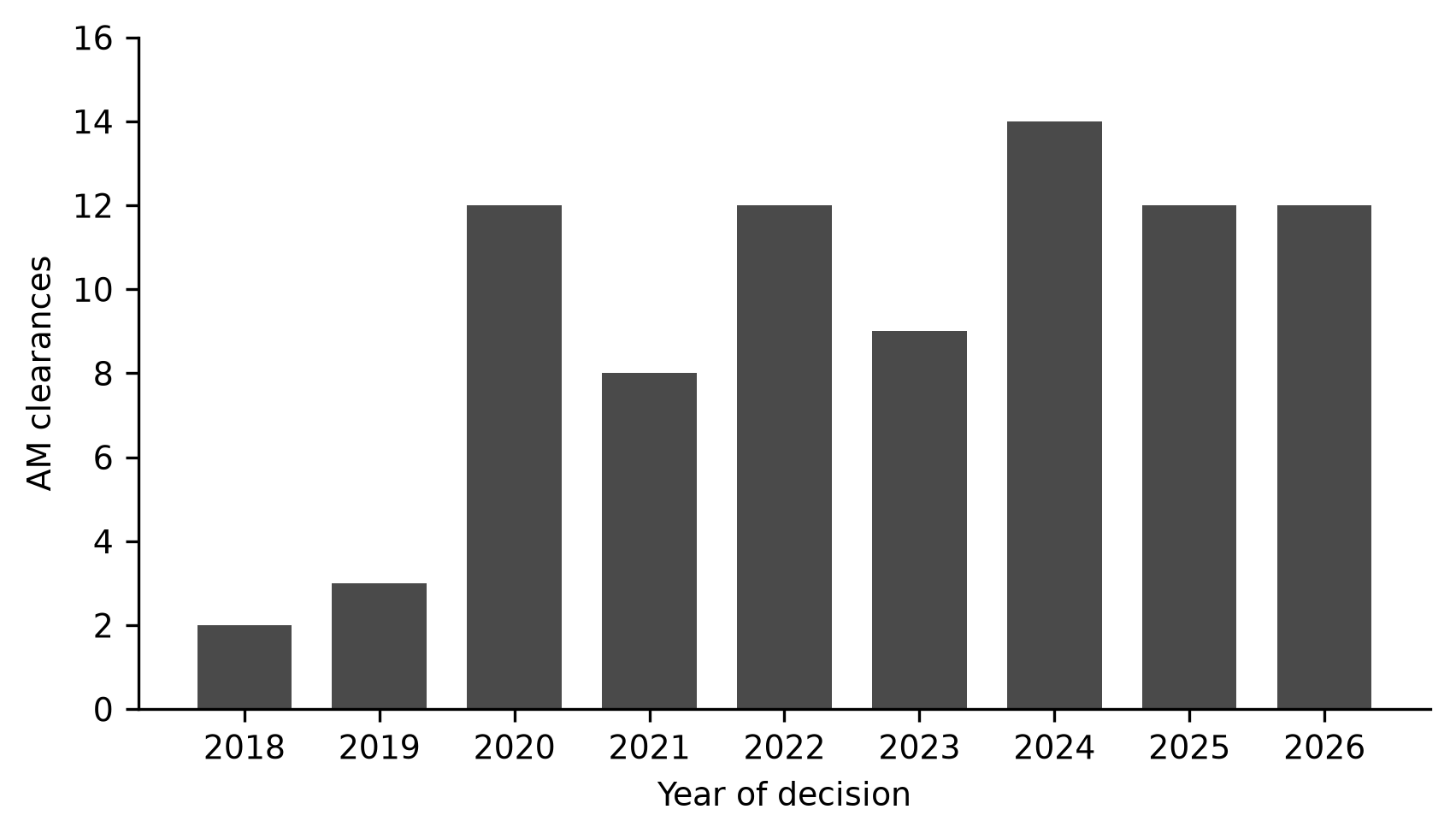
Figure 1. Annual additively manufactured FDA 510(k) clearances of dental restorative resins, 2018-2026.
Note: The 2026 count includes decisions available through the dataset update of 2026-10-12. Source: Elaboración propia a partir de openFDA.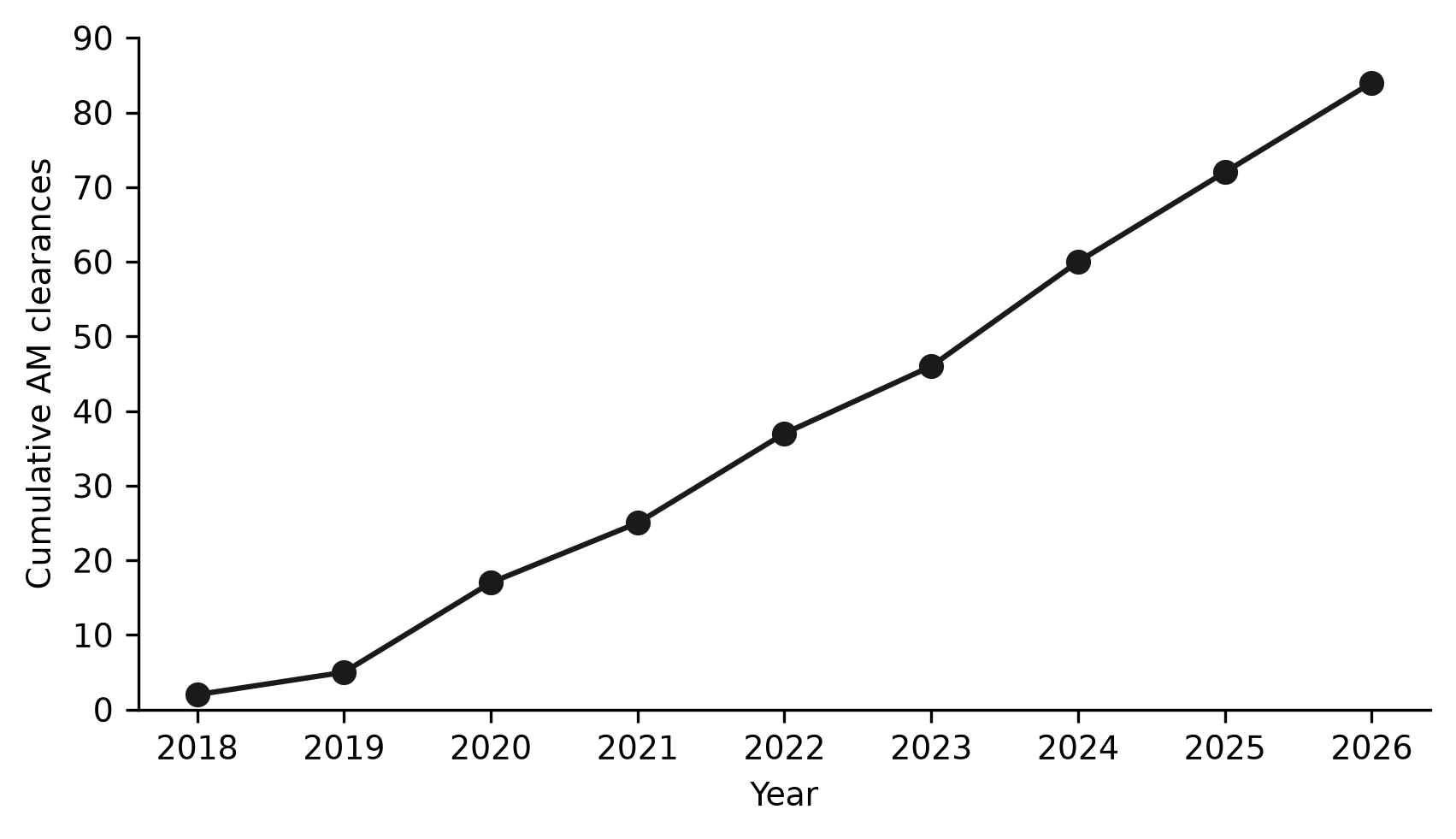
Figure 2. Cumulative additively manufactured FDA 510(k) clearances of dental restorative resins, 2018-2026.
Note: The curve accumulates clearances from 2018 onward. Source: Elaboración propia a partir de openFDA.By indication, denture base resins accounted for 48 of the 84 additively manufactured clearances, permanent tooth-shade resins for 19, temporary crown-and-bridge resins for 16 and long-term temporary resins for 1 (Figure 3). The product code with the highest proportion of additively manufactured records was EBI, where 48 of 68 clearances were additively manufactured. The permanent resin code, by contrast, remained dominated by conventional composites, with 19 additively manufactured records among 136 clearances. The first additively manufactured clearances appeared in the denture base and temporary codes in 2018; the permanent tooth-shade code followed in 2020 and the single long-term temporary clearance arrived in 2023 (Table 3).
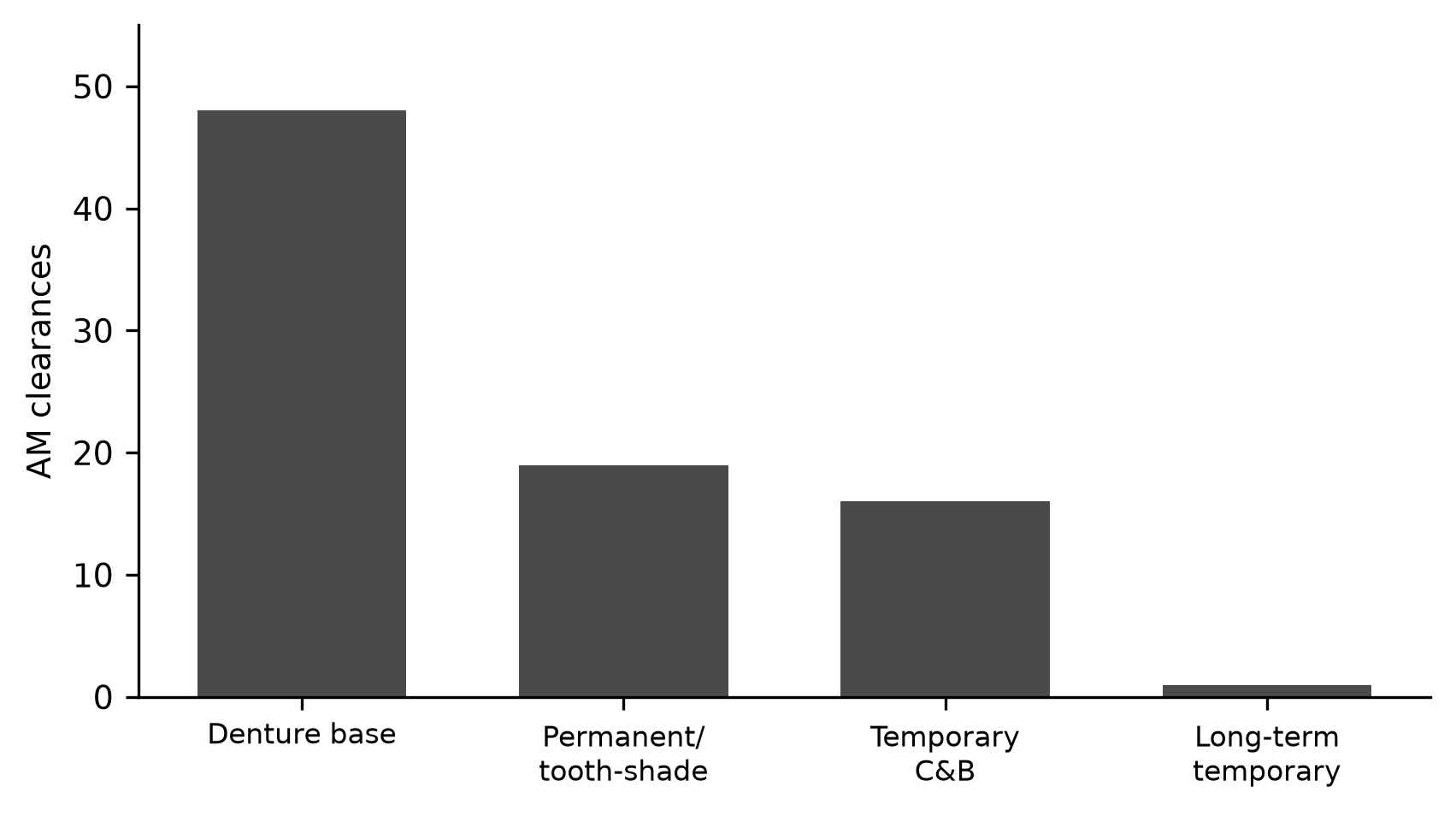
Figure 3. Additively manufactured FDA 510(k) clearances of dental restorative resins by indication, 2018-2026.
Note: EBI denture base resin; EBF permanent/tooth-shade resin; EBG temporary crown-and-bridge resin; POW long-term temporary resin. Source: Elaboración propia a partir de openFDA.The Traditional pathway accounted for 74 of the 84 additively manufactured clearances (88.10%), the Abbreviated pathway for 9 (10.70%) and the Special pathway for 1 (1.20%) (Table 4; Figure 4). The single Special clearance was a shade extension of a permanent crown resin, and the Special pathway was absent from the denture base, temporary and long-term temporary codes. The Abbreviated clearances fell within the denture base and permanent resin codes (Table 4). Fourteen clearances (16.70%) were reviewed by an FDA-accredited third party, of which 12 fell within the Traditional pathway. Across the full frame of 249 resin clearances, the Traditional pathway accounted for 219, the Abbreviated pathway for 17 and the Special pathway for 13, so the pathway profile of the additively manufactured subset resembled that of dental resins as a whole.
Indication | Traditional | Abbreviated | Special | Total |
|---|---|---|---|---|
Denture base resin (21 CFR 872.3760) | 41 | 7 | 0 | 48 |
Permanent / tooth-shade resin (21 CFR 872.3690) | 16 | 2 | 1 | 19 |
Temporary crown-and-bridge resin (21 CFR 872.3770) | 16 | 0 | 0 | 16 |
Long-term temporary crown-and-bridge resin (21 CFR 872.3770) | 1 | 0 | 0 | 1 |
Note: Predicate pathway = 510(k) clearance type: Traditional (substantial equivalence to a predicate device), Special (modification of the applicant's own predicate) or Abbreviated (predicate plus guidance or special controls). Source: openFDA device/510(k) endpoint, retrieved 2026-10-25.
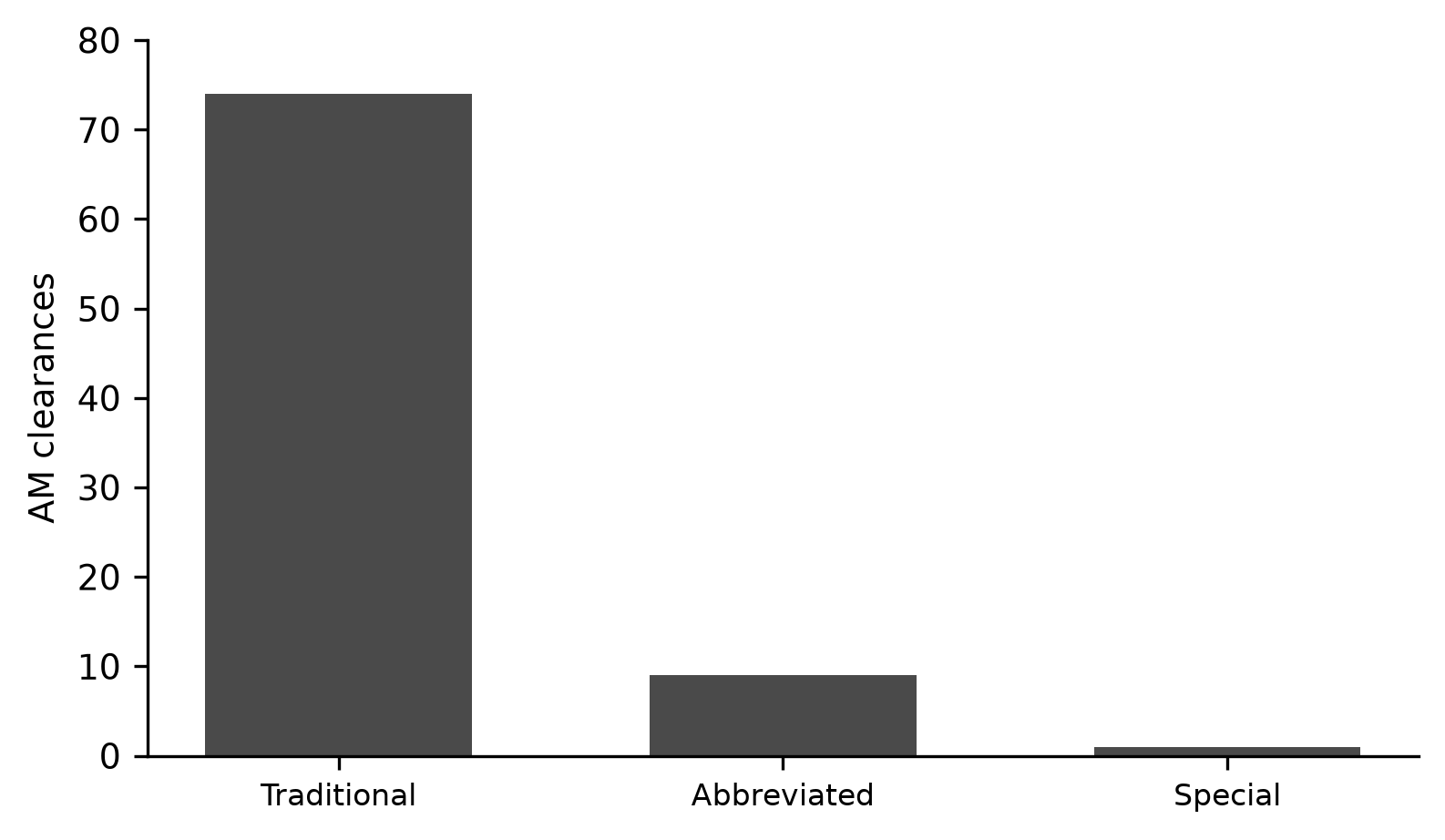
Figure 4. Additively manufactured FDA 510(k) clearances of dental restorative resins by predicate pathway, 2018-2026.
Note: Predicate pathway = 510(k) clearance type. Source: Elaboración propia a partir de openFDA.The 84 additively manufactured clearances were held by 41 distinct manufacturers, but the volume was concentrated. SprintRay held 8 clearances, followed by SHINING3D with 5, and Dentsply Sirona, Graphy, Deltamed and Prismatik Dentalcraft with 4 each (Table 5). Thirty-two clearances named a manufacturer located in the United States, 19 in Germany, 13 in China and 8 in South Korea. The United States and Germany together accounted for more than half of the additively manufactured clearances, and the Chinese volume was concentrated in denture base resins from SHINING3D and several specialty suppliers (Table 5).
Manufacturer | AM clearances |
|---|---|
SprintRay | 8 |
Hangzhou SHINING3D Dental Technology Co. | 5 |
Deltamed | 4 |
Dentsply Sirona | 4 |
Prismatik Dentalcraft | 4 |
Graphy | 4 |
Vertex-Dental B.V. | 3 |
EnvisionTEC | 3 |
Dentca | 3 |
Guangzhou Heygears IMC. | 3 |
Saremco Dental | 2 |
Enlighten Materials Co. | 2 |
Detax GmbH & Co. | 2 |
Keystone Industries | 2 |
Asiga Pty | 2 |
Note: AM = additive manufacturing. Source: openFDA device/510(k) endpoint, retrieved 2026-10-25.
A primary predicate device was extractable from the public summary or statement for 66 of the 84 additively manufactured clearances (78.60%). Three primary predicates were each cited by 5 additively manufactured clearances: NextDent Denture 3D+ (K191497), Dentca Denture Base II (K162044) and an early extra-oral additive CAD/CAM system (K102776). NextDent Denture/E-Denture (K162572) followed with four citations (Table 6). Five of the twelve most cited predicates were themselves additively manufactured resins cleared within the study window, and three predated the window. The clearances without an extractable predicate were statements that did not publish a public summary rather than summaries that failed to name a predicate.
Primary predicate (510(k)) | Predicate device | AM clearances citing it | Predicate category |
|---|---|---|---|
K162044 | Dentca Denture Base II (Dentca) | 5 | Pre-2018 |
K191497 | NextDent Denture 3D+ (Vertex-Dental) | 5 | AM (2018-2026) |
K102776 | Extra-oral additive CAD/CAM system (Deltamed) | 5 | Pre-2018 |
K162572 | NextDent Denture/E-Denture (Vertex-Dental) | 4 | Pre-2018 |
K180657 | Resin for temporary crown and bridge (Dentis) | 3 | AM (2018-2026) |
K221678 | SprintRay High Impact Denture Base (SprintRay) | 3 | AM (2018-2026) |
K250617 | Apex Flex (SprintRay) | 3 | AM (2018-2026) |
K202846 | TERA HARZ (Graphy) | 3 | AM (2018-2026) |
K210977 | E-Dent 1000 (EnvisionTEC) | 3 | AM (2018-2026) |
K213343 | Saremco Print CROWNTEC (Saremco) | 2 | AM (2018-2026) |
K213765 | Glidewell 3DP Denture Base Resin (Prismatik) | 2 | AM (2018-2026) |
K222623 | Digital Crown (SprintRay) | 2 | AM (2018-2026) |
Note: Predicate category: AM (2018-2026) = additively manufactured resin cleared within the study window; Pre-2018 = device cleared before the study window. Predicates were extractable for 66 of 84 AM clearances. Source: FDA 510(k) summaries/statements (accessdata.fda.gov), retrieved 2026-10-25; openFDA device/510(k) endpoint.
The audited list of the 84 additively manufactured clearances, with trade name, applicant, year, pathway and third-party flag, is provided in Table 6 (Supplementary material – table3).
DISCUSSION
Additively manufactured resins for dental restorations obtained 84 FDA 510(k) clearances between 2018 and 2026, a volume that rose from two clearances in 2018 to a sustained rate of twelve to fourteen per year after 2020 and reached almost half of annual dental resin clearances by 2026. The clearances concentrated in denture base resins and flowed almost entirely through the Traditional predicate pathway, with a lineage that recurrently cited a small set of early additive-manufacturing devices. These results place the regulatory expansion of printed dental resins within the same pattern described for other technology-driven device families, while the material literature explains why the equivalence route, rather than the special or abbreviated routes, dominated.
The dominance of the Traditional pathway is consistent with how the 510(k) framework behaves when a technology is new. Most printed resins entered as new materials from manufacturers that did not own a prior printed-resin predicate, so they could not use the Special pathway, which is reserved for modifications of the applicant's own device; the single Special clearance was a shade extension of a permanent crown resin. This mirrors the observation that artificial-intelligence-enabled devices cleared overwhelmingly through Traditional 510(k) submissions and that first-generation devices frequently cited predicates that did not share the new technology.(13,15) In the dental resins studied here the lineage was more self-referential than in that literature: five of the twelve most cited predicates were themselves additively manufactured resins cleared within the window, and the roots of the chain, Dentca Denture Base II and NextDent Denture/E-Denture, were printed-resin devices from 2016. A self-referential predicate cascade of this kind has been documented for knee arthroplasty, where modern devices trace to interconnected predicate ancestors, and it carries the same implication: equivalence is demonstrated against a moving reference that increasingly resembles the new device.( 16)
The shape of the cascade is visible in the predicate table. Three devices, NextDent Denture 3D+, Dentca Denture Base II and an extra-oral additive CAD/CAM system cleared in 2011, anchor five clearances each, and the in-window resins they enabled, such as SprintRay High Impact Denture Base, Apex Flex, E-Dent 1000 and TERA HARZ, went on to serve as predicates for later submissions. This differs from the first-generation pattern reported for artificial-intelligence devices, where early clearances leaned on predicates outside the new technology; after an initial reliance on pre-2018 founding devices, the printed-resin category began reproducing itself as its own reference.(13,14) The regulatory consequence is that the evidentiary burden of the whole category rests on a small number of founding clearances and on the first in-window resins, and any weakness in those references propagates forward through the chain. That concentration, rather than the number of clearances itself, is the finding that should guide postmarket attention.
The concentration in denture bases has a material explanation. Denture base resin is the indication in which vat photopolymerization substitutes most directly for a labor-intensive analog workflow, and the material literature supports clinical adoption through flexural strength and accuracy comparable to conventional and milled polymethyl methacrylate.(1,2,24) Studies of printed denture base resins reinforced with polyetheretherketone or titanium dioxide report mechanical properties that exceed those of the unmodified resin, which may explain why manufacturers extended a code originally written for relining resins to full printed denture bases.(25,26) The slower uptake of printed permanent crown resins, nineteen clearances, aligns with the more demanding requirements of definitive restorations, where ceramic-filled printable resins are still consolidating mechanical evidence and where wear resistance against milled resin-ceramics remains under comparison.(27-29) Temporary crown-and-bridge resins occupy an intermediate position, consistent with their shorter service life and lower mechanical demand, although printing orientation and layer thickness still modify their fracture behavior, accuracy and biofilm accumulation.(18,19,22,30)
The temporal order of entry follows the same logic. Printed denture bases and temporary resins were the first to be cleared, which is expected for indications whose failure mode is less consequential and whose mechanical demands are lower; printed permanent resins arrived only after the provisional and denture materials had demonstrated that the vat-photopolymerization workflow was reproducible. This sequence, provisional and removable indications before definitive fixed restorations, is the same adoption ladder described in reviews of digital prosthetic dentistry and suggests that the permanent-resin share of the category will keep growing as ceramic-filled formulations mature.( 1,28)
The pathway distribution also reflects how regulators weigh evidence for these materials. The Abbreviated pathway, used in nine clearances, anchors equivalence in guidance, special controls or consensus standards rather than in performance data alone, and its concentration among denture base and permanent resins is plausible because those indications have more mature test standards. The 16.7% rate of third-party review exceeds the overall medical device rate and is consistent with evidence that third-party review is selected for lower-risk, well-characterized submissions and shortens review duration.(10) Critics of the 510(k) framework argue that equivalence-based clearance can propagate unvalidated assumptions and has been associated with higher recall risk than premarket approval, a concern that the global regulatory community also voices when comparing the United States with the European system.(11,12,31) The present data do not resolve that argument, but they show that the predicate foundation for printed dental resins is narrow, which concentrates the consequences of any error in the founding predicates.
A comparative reading of the regulatory context places these findings in perspective. The United States route for printed dental resins remains the 510(k) notification, whereas the same materials in the European Union fall under the Medical Device Regulation with notified-body conformity assessment, a divergence that complicates market access for manufacturers and has been discussed as a general challenge for medical device innovation.(31) The predominance of the Traditional pathway in this study means that most printed resins entered the United States market with a predicate comparison rather than with the guidance-anchored or modification-based routes that the framework also offers; whether the European route produces a different portfolio of printed resins is an open question that the present data cannot answer but that the comparison invites.
The biological evidence frames what is at stake. Printed resins can release residual monomers, and cytotoxicity, color stability, translucency and surface characteristics depend on composition, photoinitiator chemistry, printing parameters and post-curing.(20,32-35) Comparative studies nevertheless report that printed provisional and definitive resins perform within the range of milled and conventional materials, including for permanent crown resins compared with subtractive resin-ceramics.(21,36,37) Recent formulation work on dual-cured denture base resins and on nanofiller-reinforced printable resins suggests that the mechanical ceiling of the material class is still rising, which could accelerate the next wave of permanent-resin clearances.(38) The regulatory pattern observed here, rapid clearance through equivalence with limited clinical data, is therefore coherent with the bench evidence but leaves long-term intraoral performance to postmarket observation.
On balance, the evidence indicates that the equivalence route has served printed dental resins in the narrow sense of enabling market entry while leaving the safety case on a thin evidentiary spine. The bench literature supports interchangeability of printed and milled resins for provisional and, increasingly, definitive use,(27,37) yet the biological variability documented across compositions means that equivalence to a predicate does not by itself guarantee equivalent biological behavior.(32,33) A proportionate response would not abandon the 510(k) route but would direct the most demanding postmarket scrutiny to the founding predicates and to the first in-window resins from which the rest of the category descends.
This study has strengths. It used the complete openFDA population of eligible clearances rather than a sample, verified the fabrication classification record by record against FDA summaries, and reproduced all figures from an executable script. The full per-record classification is published as an audited table, which makes the count falsifiable. The combination of a structured registry with the narrative summaries of the same submissions is unusual in the dental regulatory literature and allowed the fabrication route and the primary predicate to be recovered for the large majority of records, which would not be possible from the structured fields alone. Limitations follow from the data themselves. First, openFDA does not expose predicate identity, so the predicate analysis relied on the subset of summaries from which a primary predicate could be extracted; eighteen clearances, mostly statements without a public summary, lacked this information, and the pathway results therefore rest on the clearance type rather than on the complete predicate chain. Linking the records to recall and adverse-event data would strengthen the safety interpretation, and future work should perform that linkage as has been done for other device families.( 11) Second, the fabrication classification depends on the technology language stated in each record, and a material that is printable but described without additive-manufacturing terms would be misclassified as conventional; the audited table allows reclassification if such cases are identified. Third, 2026 is a partial year, so the apparent plateau between twelve and fourteen clearances after 2020 could understate the full-year total, and the trajectory should be re-estimated once the complete year is available. Fourth, the analysis is descriptive and cannot attribute causal effects to the clearance type; a comparative design linking pathway to postmarket outcomes is required for that inference. Fifth, the operationalization of the predicate pathway as the clearance type, forced by the fields that openFDA exposes, captures the evidentiary route but not the identity of every predicate in the chain, so the cascade described here is a lower bound on the true lineage depth. Sixth, the fabrication classification was applied by a single analyst using a documented rule and audited evidence rather than by independent coders; the audited table exposes every decision for verification, but inter-coder reliability was not measurable and a small number of records whose summaries were silent on fabrication technology remain judgment calls.
For regulators, the concentration of equivalence in a few founding predicates suggests that the accuracy of those early clearances deserves particular scrutiny and that guidance specific to printable resins could widen the currently narrow use of the Abbreviated route, which in turn would diversify the evidentiary anchors beyond a handful of devices. For manufacturers, the underused Special and Abbreviated pathways represent efficiency that is currently unavailable to first entrants but could reduce burden for established printed-resin portfolios, and the dominance of the Traditional route signals that most entrants are still paying the full cost of a predicate comparison. For clinicians, the audited list identifies which printed resins carry a clearance and for which indication, which is the minimal information required to select a material with a documented regulatory history, and it shows that a clearance, not a marketing claim, is the reliable signal of a documented regulatory review. For researchers, the reproducible count and classification provide a baseline against which future years and other jurisdictions can be compared.
CONCLUSIONS
The annual number of additively manufactured dental resin clearances grew from a small initial volume to a sustained rate after 2020 and to a substantial share of annual resin clearances by the end of the window. Denture base resins represented the largest share of these clearances, followed by permanent tooth-shade resins and temporary crown-and-bridge resins, while the long-term temporary indication contributed a single clearance. The Traditional predicate pathway dominated, the Abbreviated and Special pathways were used sparingly, and third-party review was applied to a minority of clearances. The predicate lineage was anchored in a small set of early additive-manufacturing devices, which subsequent printed resins repeatedly cited as their reference, so the evidentiary foundation of the category rests on a narrow group of founding clearances.
References
- 1 Schweiger J, Edelhoff D, Güth JF. 3D Printing in Digital Prosthetic Dentistry: An Overview of Recent Developments in Additive Manufacturing. JCM. 2021;10(9):2010. doi: 10.3390/jcm10092010
- 2 JOCKUSCH J, ÖZCAN M. Additive manufacturing of dental polymers: An overview on processes, materials and applications. Dent Mater J. 2020;39(3):345-354. doi: 10.4012/dmj.2019-123
- 3 Javaid M, Haleem A. Current status and applications of additive manufacturing in dentistry: A literature-based review. Journal of Oral Biology and Craniofacial Research. 2019;9(3):179-185. doi: 10.1016/j.jobcr.2019.04.004
- 4 Niño Peña GA, [email protected], Guerrero RR, [email protected]. Free software and the 3D printing revolution: educational and practical implications. SAP Gamification and Augmented Reality. 2026;5:169. doi: 10.62486/gr2026169
- 5 Elhadad A, Cañete R, Mena D, Saad M, Mogassabi W, Dawoud A, et al. Advanced additive manufacturing and printing technologies for dental applications: a narrative review. Int J Adv Manuf Technol. 2026;143(1-2):1-27. doi: 10.1007/s00170-025-17220-0
- 6 Özberk T, Karakaya İ. The Use of Additive Manufacturing Technologies in Restorative Dentistry. cjms. 2024;9(2):76-83. doi: 10.4274/cjms.2023.2023-76
- 7 Kothwala DK, Bhatt C, Dey D. Evaluating FDA regulatory pathways for medical devices: A comparative analysis of the 510(k) and premarket approval (PMA) processes. Int J Appl Res. 2025;11(10):50-53. doi: 10.22271/allresearch.2025.v11.i10a.12917
- 8 U.S. Food and Drug Administration. openFDA 510(k) device clearances application programming interface [Internet]. 2026. Available from: https://open.fda.gov/apis/device/510k/
- 9 U.S. Food and Drug Administration. 510(k) premarket notification database: summaries and statements [Internet]. 2026. Available from: https://www.accessdata.fda.gov/scripts/cdrh/cfdocs/cfpmn/pmn.cfm
- 10 Tadesse B. Institutional Mediation of Medical Device Innovation: The Role of Regulatory Capability in FDA 510(k) Review Duration. Sci. 2026;8(7):174. doi: 10.3390/sci8070174
- 11 Dubin JR, Simon SD, Norrell K, Perera J, Gowen J, Cil A. Risk of Recall Among Medical Devices Undergoing US Food and Drug Administration 510(k) Clearance and Premarket Approval, 2008-2017. JAMA Netw Open. 2021;4(5):e217274. doi: 10.1001/jamanetworkopen.2021.7274
- 12 Zhalechian M, Saghafian S, Robles O. Harmonizing Safety and Speed: A Human-Algorithm Approach to Enhance the FDA’s Medical Device Clearance Policy. Management Science. 2026:mnsc.2024.06477. doi: 10.1287/mnsc.2024.06477
- 13 Muehlematter UJ, Bluethgen C, Vokinger KN. FDA-cleared artificial intelligence and machine learning-based medical devices and their 510(k) predicate networks. The Lancet Digital Health. 2023;5(9):e618-e626. doi: 10.1016/s2589-7500(23)00126-7
- 14 Benjamens S, Dhunnoo P, Meskó B. The state of artificial intelligence-based FDA-approved medical devices and algorithms: an online database. npj Digit Med. 2020;3(1):118. doi: 10.1038/s41746-020-00324-0
- 15 Joshi G, Jain A, Araveeti SR, Adhikari S, Garg H, Bhandari M. FDA-Approved Artificial Intelligence and Machine Learning (AI/ML)-Enabled Medical Devices: An Updated Landscape. Electronics. 2024;13(3):498. doi: 10.3390/electronics13030498
- 16 Zhu A, Ying X, Pean CA, Sheth NP, Cross MB, Gonzalez Della Valle A, et al. The Complex Process of Using the Interconnected Knee Arthroplasty Device Clearance Pathway. HSS Journal®: The Musculoskeletal Journal of Hospital for Special Surgery. 2022;18(4):462-468. doi: 10.1177/15563316221099014
- 17 Bhenderu LS, Hardigan T, Roa J, Philbrick BD, Hoang A, Faraji AH, et al. United States regulatory approval of medical devices used for endovascular neurosurgery: A two-decade review of FDA regulatory files. J NeuroIntervent Surg. 2024;16(12):1216-1219. doi: 10.1136/jnis-2023-020703
- 18 Park SM, Park JM, Kim SK, Heo SJ, Koak JY. Flexural Strength of 3D-Printing Resin Materials for Provisional Fixed Dental Prostheses. Materials. 2020;13(18):3970. doi: 10.3390/ma13183970
- 19 Farkas AZ, Galatanu SV, Nagib R. The Influence of Printing Layer Thickness and Orientation on the Mechanical Properties of DLP 3D-Printed Dental Resin. Polymers. 2023;15(5):1113. doi: 10.3390/polym15051113
- 20 Bayarsaikhan E, Lim JH, Shin SH, Park KH, Park YB, Lee JH, et al. Effects of Postcuring Temperature on the Mechanical Properties and Biocompatibility of Three-Dimensional Printed Dental Resin Material. Polymers. 2021;13(8):1180. doi: 10.3390/polym13081180
- 21 Intarak N, Prommanee S, Somkana S, Srijunbarl A, Kamnoedboon P, Khan AS, et al. Comparative analysis of monomer elution, polymerization efficiency, mechanical properties and biocompatibility of 3D-printed provisional and permanent dental resins. Journal of Dentistry. 2026;175:106833. doi: 10.1016/j.jdent.2026.106833
- 22 Alshamrani AA, Raju R, Ellakwa A. Effect of Printing Layer Thickness and Postprinting Conditions on the Flexural Strength and Hardness of a 3D‐Printed Resin. BioMed Research International. 2022;2022(1):8353137. doi: 10.1155/2022/8353137
- 23 Benchimol EI, Smeeth L, Guttmann A, Harron K, Moher D, Petersen I, et al. The REporting of studies Conducted using Observational Routinely-collected health Data (RECORD) Statement. PLoS Med. 2015;12(10):e1001885. doi: 10.1371/journal.pmed.1001885
- 24 Karasan D, Legaz J, Boitelle P, Mojon P, Fehmer V, Sailer I. Accuracy of Additively Manufactured and Milled Interim 3‐Unit Fixed Dental Prostheses. Journal of Prosthodontics. 2022;31(S1):58-69. doi: 10.1111/jopr.13454
- 25 Chen SG, Yang J, Jia YG, Lu B, Ren L. TiO2 and PEEK Reinforced 3D Printing PMMA Composite Resin for Dental Denture Base Applications. Nanomaterials. 2019;9(7):1049. doi: 10.3390/nano9071049
- 26 Hata K, Ikeda H, Nagamatsu Y, Masaki C, Hosokawa R, Shimizu H. Development of Dental Poly(methyl methacrylate)-Based Resin for Stereolithography Additive Manufacturing. Polymers. 2021;13(24):4435. doi: 10.3390/polym13244435
- 27 Pot GJ, Van Overschelde PA, Keulemans F, Kleverlaan CJ, Tribst JPM. Mechanical Properties of Additive-Manufactured Composite-Based Resins for Permanent Indirect Restorations: A Scoping Review. Materials. 2024;17(16):3951. doi: 10.3390/ma17163951
- 28 CCComposites Laboratory, Universidad de Antioquia, Calle 67 No. 53–108, Medellín, Antioquia, 050010, Colombia, Ochoa AO, New Stetic S.A., Cra. 53 #50-09, Guarne, Antioquia, 054050, Colombia, Colorado HA, CCComposites Laboratory, Universidad de Antioquia, Calle 67 No. 53–108, Medellín, Antioquia, 050010, Colombia. Progress in Ceramic Reinforced Dental Resins for Long-Term Restorations using Vat Polymerization Additive Manufacturing. ES Mater Manuf. 2025. doi: 10.30919/mm1895
- 29 Güntekin N, Tunçdemir AR. Comparison of volumetric loss and surface roughness of composite dental restorations obtained by additive and subtractive manufacturing methods. Heliyon. 2024;10(4):e26269. doi: 10.1016/j.heliyon.2024.e26269
- 30 Mazurek-Popczyk J, Nowicki A, Arkusz K, Pałka Ł, Zimoch-Korzycka A, Baldy-Chudzik K. Evaluation of biofilm formation on acrylic resins used to fabricate dental temporary restorations with the use of 3D printing technology. BMC Oral Health. 2022;22(1):442. doi: 10.1186/s12903-022-02488-5
- 31 Amaral C, Paiva M, Rodrigues AR, Veiga F, Bell V. Global Regulatory Challenges for Medical Devices: Impact on Innovation and Market Access. Applied Sciences. 2024;14(20):9304. doi: 10.3390/app14209304
- 32 Kim GT, Go HB, Yu JH, Yang SY, Kim KM, Choi SH, et al. Cytotoxicity, Colour Stability and Dimensional Accuracy of 3D Printing Resin with Three Different Photoinitiators. Polymers. 2022;14(5):979. doi: 10.3390/polym14050979
- 33 Tincea TA, Cârstea AE, Vasilescu VG, Cucuruz A, Banciu A, Nicoară AI, et al. In Vitro Cytotoxicity of Three Dimethacrylate-Based Photopolymer Resins for 3D-Printed Dental Restorations: A Qualitative Morphological Screening on Human Fibroblasts. J Funct Biomater. 2026;17(8):421. doi: 10.3390/jfb17080421
- 34 Chander NG, Prakash HG, Deshmukh AS, Swetha TVS. Effect of glycerol-assisted ultraviolet postcuring duration on residual monomer release from 3D-printed denture base resins. J Indian Prosthodont Soc. 2026;26(3):245-251. doi: 10.4103/jips.jips_19_26
- 35 Espinar C, Bona AD, Pérez MM, Tejada-Casado M, Pulgar R. The influence of printing angle on color and translucency of 3D printed resins for dental restorations. Dental Materials. 2023;39(4):410-417. doi: 10.1016/j.dental.2023.03.011
- 36 Koseoglu M, Bhatia H, Takoudis CG, Akca G, Altindis M, Bayindir F, et al. Comparison of microhardness, surface roughness, retain-->Candida albicans adhesion, and color stability among TiO₂-coated and uncoated conventional, milled, and 3D printed denture base materials. The Journal of Prosthetic Dentistry. 2026;136(4):1223-1231. doi: 10.1016/j.prosdent.2026.07.019
- 37 Peskersoy C, Oguzhan A. Evaluation of the Mechanical and Adhesion Characteristics of Indirect Restorations Manufactured with Three-Dimensional Printing. Polymers. 2024;16(5):613. doi: 10.3390/polym16050613
- 38 Qin L, Liu X, Ma T, Li Q, Zhang C, Meng W, et al. Advanced dual-cured resin with excellent mechanical properties, printing accuracy, and biocompatibility for the application of 3D printing denture base. Dental Materials. 2026. doi: 10.1016/j.dental.2026.07.010
Declarations
Funding
No financing
Conflict of interest
None
Authorship contributions
Drafting – original draft: Rigel Ramirez Fritze.
Writing–review and editing: Rigel Ramirez Fritze.