
Abstract
Dental caries and periodontal disease remain among the most prevalent non-communicable conditions, and their redefinition as biofilm dysbiosis opened the door to probiotics and, more recently, postbiotics as preventive agents. This narrative review reconstructs the trajectory of mechanistic and clinical evidence on both classes between 2019 and 2026. OpenAlex, PubMed and Crossref were searched for studies on probiotics and postbiotics in caries and periodontal prevention, and the synthesis was organized chronologically in three periods: consolidation (2019-2021), refinement and emergence of postbiotics (2022-2024), and the current inflection toward standardization (2025-2026). Mechanistically, probiotics act through competitive exclusion, secreted antimicrobials, inhibition of glucan synthesis and immunomodulation, and postbiotics retain these activities in inactivated or cell-free form. Clinical evidence evolved from small trials of live strains that reduced Streptococcus mutans toward lesion-level outcomes; a 2026 trial reported progression to cavitated lesions in 26.8% of children receiving Lactobacillus rhamnosus SP1 versus 46.3% of controls. In periodontitis, meta-analyses consistently show improvements in probing depth and bleeding that are statistically significant but modest, and postbiotic candidates show bone-protective effects in preclinical models. The field has shifted from proving that live probiotics work to standardizing strain, dose and vehicle, and postbiotics now represent the most active frontier because of their safety and stability.
Keywords
probiotics, postbiotics, dental caries, periodontal diseases, oral microbiome, prevention
INTRODUCTION
Dental caries and periodontal disease remain among the most prevalent non-communicable conditions of the human mouth, and both are now understood as consequences of a biofilm that has drifted away from homeostasis. For most of the twentieth century caries was attributed to specific acidogenic organisms and was managed by mechanical removal and broad antimicrobial agents. That view gave way to the ecological plaque hypothesis, which described disease as a disruption of microbial homeostasis driven by environmental pressure, chiefly repeated exposure to fermentable carbohydrate, rather than by the arrival of a single pathogen.(1) Sequencing-based surveys later confirmed that oral disease arises from a dysbiotic shift of a resident biofilm and not from an exogenous invader.(2) The reframing changed the therapeutic target from eradication to restoration of a balanced community, and it also reclassified caries as a non-communicable disease that shares risk factors with other chronic conditions, with consequences for how prevention is organized across health systems.(3,4) Both diseases impose heavy and unequal burdens, concentrated in childhood for caries and in adult life for periodontitis, and both are now approached as preventable conditions rather than as problems to be repaired after they appear.(4)
Probiotics, defined as live microorganisms that confer a health benefit when administered in adequate amounts, entered dentistry as a direct extension of this ecological reasoning.(5) Early reviews catalogued strains, mostly lactobacilli, bifidobacteria and streptococci, with anticariogenic or anti-gingivitis potential in vitro and in small clinical studies, and they already warned that the effect tends to fade once administration stops.(6,7) The oral microbiota is nonetheless highly resilient, and exogenously administered strains tend to colonize only transiently, which set an early limit on the durability of any benefit.(8)
A second conceptual turn arrived with postbiotics, defined in 2021 by the International Scientific Association for Probiotics and Prebiotics as preparations of inanimate microorganisms and/or their components that confer a health benefit on the host.(9) Postbiotics bypass the viability and colonization constraints of live cells while retaining many bioactive fractions, from cell wall components to secreted metabolites, and they carry practical advantages in shelf life and safety.(10,11) The definition and its scope continue to be discussed and clarified, in part because the boundary between an inactivated cell and its secreted products remains a matter of debate.(12)
The clinical literature on both classes accumulated rapidly between 2019 and 2026, but it remains scattered across caries and periodontal endpoints, in vitro mechanisms and heterogeneous trials, and its conclusions diverge.(13,14) A synthesis that traces the trajectory of the field, rather than cataloguing individual studies, is therefore timely; recent consensus work stresses that the microbiome can act both as an actor and as a stage for these interventions, although the practical translation is still unsettled.(15)
The objective of this review is to synthesize the evolution of the mechanistic and clinical evidence on probiotics and postbiotics for the prevention of dental caries and periodontal disease. The synthesis is organized chronologically in three periods, consolidation (2019-2021), refinement and emergence of postbiotics (2022-2024), and the current inflection toward standardization (2025-2026), to identify what changed, what persisted, and the gaps that define the research agenda.
METHODS
This narrative review was planned and reported according to the main SANRA items, without simulating exhaustiveness or systematic procedures. A literature search was run in October 2026 in OpenAlex, PubMed and Crossref with combinations of the terms probiotics, postbiotics, dental caries, periodontal disease, gingivitis, periodontitis, Streptococcus mutans, Lactobacillus, and clinical trial. No lower date limit was applied to supporting literature, while 2019 to 2026 was set as the window for the core studies that sustain the synthesis. The reference lists of recent systematic reviews were used to complete the selection, and each selected reference was verified against its digital object identifier before inclusion.
Studies were eligible when they addressed mechanisms of action or clinical effects of probiotics, synbiotics or postbiotics on caries or periodontal outcomes in humans, animals or in vitro systems. Studies limited to unrelated oral conditions, oral cancer, halitosis or wound healing were excluded unless they informed a mechanistic point. Peer-reviewed reviews, randomized trials, systematic reviews with meta-analysis and preclinical studies were included; abstracts and theses were not. The search was restricted to English-language databases, which is acknowledged as a limitation.
The development is organized chronologically into three periods delimited by explicit criteria: consolidation of mechanisms and first-generation trials (2019-2021), refinement of strain specificity and emergence of postbiotics (2022-2024), and the current inflection toward postbiotics and standardization (2025-2026). The boundaries were chosen because the postbiotic concept gained traction in the early 2020s and lesion-level outcomes appeared only at the end of the window, so the periods capture genuine changes in the questions the field was asking rather than arbitrary cuts. The foundations published before 2019 are summarized in the Introduction with classic references. For each period the evidence was grouped by mechanism, caries outcomes and periodontal outcomes, and a working matrix linked each claim to the studies that support or contradict it and to their design and limitations. Four tables and two figures synthesize the mechanisms, the representative clinical studies and the trajectory of the field. The catalogue of the target publisher was also searched for pertinent articles; none addressed the topic directly, so none is cited here.
DEVELOPMENT
The evidence is presented in the three periods that structure the review (Figure 1). Across the window, the number of core studies per year reflects a field that grew steadily and then concentrated its output in the most recent years, in parallel with the consolidation of the postbiotic concept (Figure 2).
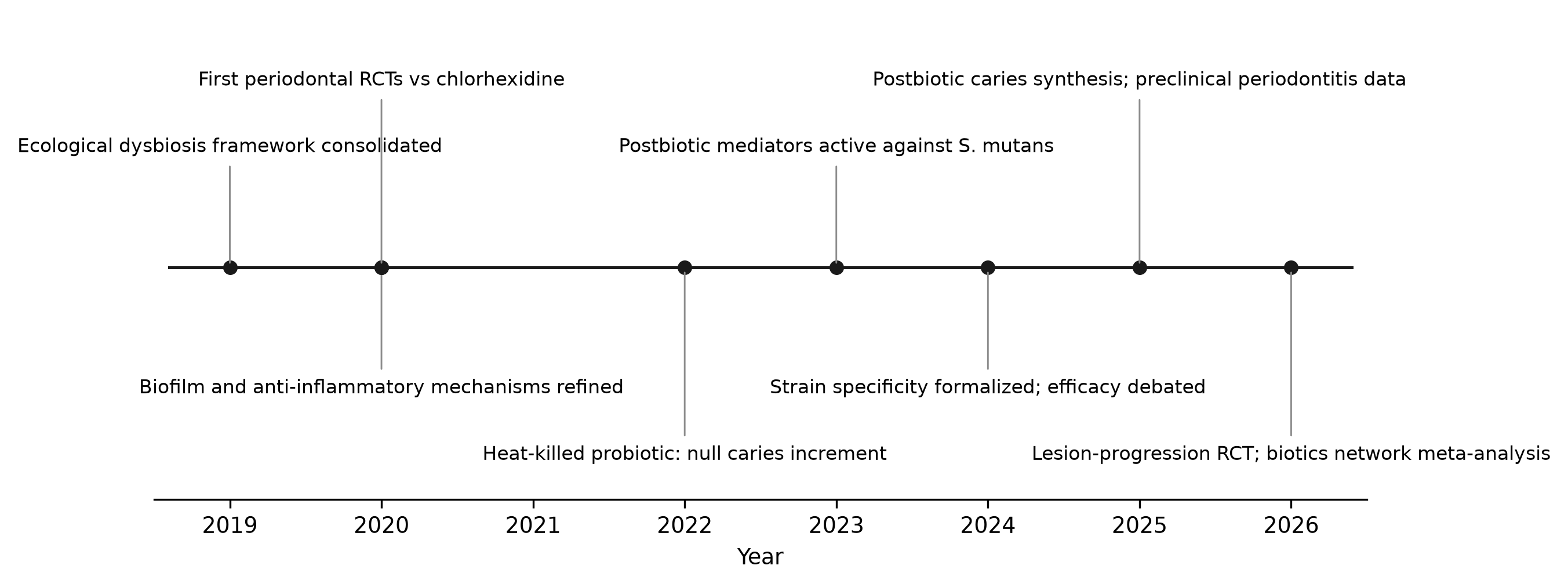
Figure 1. Timeline of inflection points in probiotic and postbiotic research for oral health, 2019-2026.
Note: The vertical position of each label separates adjacent events and does not convey magnitude. Source: Own elaboration from the studies synthesized in this review.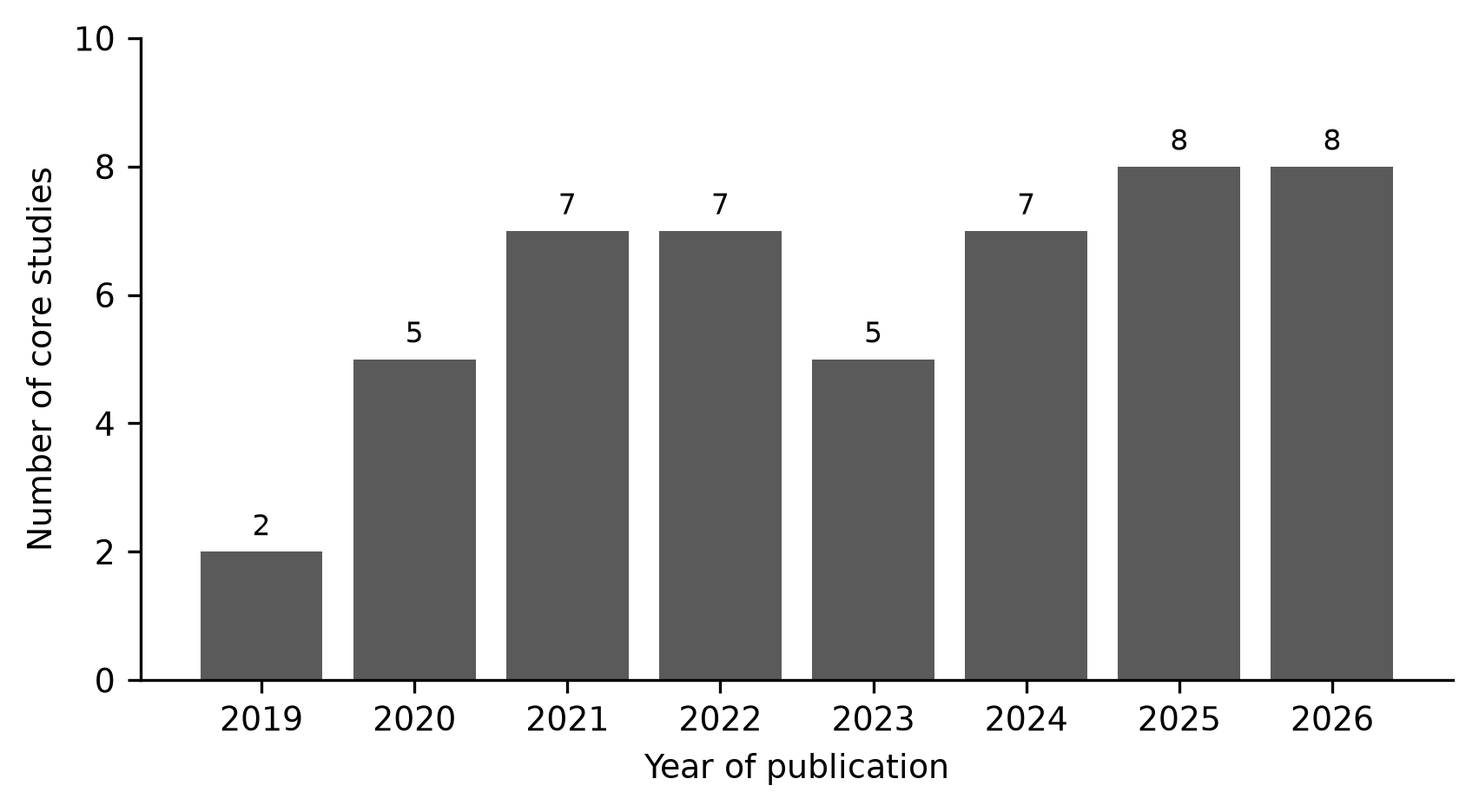
Figure 2. Number of core studies per year of publication, 2019-2026.
Note: Core studies are those cited to sustain the synthesis in this section. Source: Own elaboration from the reference library of this review.Consolidation of mechanisms and first-generation trials (2019-2021)
The opening period consolidated the conceptual basis of the field. Critical appraisals published at the start of the window made explicit that caries prevention no longer aims to eradicate a specific microorganism and that probiotic trials should be judged against the restoration of a health-associated community; they also cautioned that confidence in the effect estimate was limited by risk of bias in the available school-based milk and lozenge programs.(4,16) The same ecological reading was extended to the polymicrobial aetiology of caries, in which Streptococcus mutans acts within a consortium and interacts with fungi and other aciduric species rather than in isolation.(3)
Mechanistic work in this period characterized how candidate strains interfere with cariogenic biofilms (Table 1). Culture-supernatant studies showed that Lactobacillus reuteri and Streptococcus oligofermentans reduce the survival and lactate production of Streptococcus mutans in an environment-dependent manner; under glycerol-enriched conditions L. reuteri supernatant lowered viability by 6.1 to 7.1 log10, while lactate production fell from a control value of 6.00 to 4.46 mM under one medium condition.(17) A Lactobacillus reuteri isolate was found to secrete a compound that weakens the stickiness of mutans glucans without killing the bacterium, through changes in the gtfB and gtfC genes.(18) Synbiotic combinations of Lacticaseibacillus rhamnosus GG and arginine suppressed Streptococcus mutans growth and biofilm biomass in vitro, with the highest probiotic viability at 2% arginine.(19) Lactobacilli were also positioned as general anti-biofilm agents against oral pathogens through coaggregation and secreted antimicrobials directed at both cariogenic and periodontal species.(20)
Mechanism | Probiotic (live cells) | Postbiotic (inactivated or cell-free) |
|---|---|---|
Competitive exclusion and coaggregation | Present | Absent or limited to surface components |
Secreted antimicrobials (bacteriocins, H2O2, reuterin, organic acids) | Present | Present in cell-free supernatant |
Inhibition of glucan synthesis (gtfB downregulation) | Reported | Reported |
pH buffering and alkalinization | Strain dependent | Reported |
Immunomodulation (cytokine balance, M1/M2 polarization) | Present | Present |
Modulation of osteoclastogenesis | Present in preclinical models | Present in preclinical models |
Note: H2O2 = hydrogen peroxide; gtfB = glucosyltransferase B gene; M1/M2 = macrophage polarization phenotypes. Source: Own elaboration from the studies cited in this review.
Alongside strain-level mechanisms, the period revisited the boundary between probiotics and prebiotics. Zaura and Twetman pointed out that caries-relevant prebiotics include alkali-generating substrates such as arginine and urea, which health-associated bacteria metabolize into ammonia, and that synbiotic products combining a probiotic with such a substrate deserved dedicated evaluation.(16) The four-factor view of caries aetiology, integrating microorganism, environment, host and time, supplied the framework within which these ecological interventions were tested.(3)
For the periodontium, the molecular evidence accumulated around two complementary actions: direct inhibition of anaerobic pathogens and modulation of the host inflammatory response. A synthesis of four in vitro and ten preclinical studies concluded that probiotics alter biofilm gene expression and the host response to inflammation, while warning that any manipulation of the biofilm could also displace beneficial residents.(21) In vitro assays showed that Streptococcus salivarius M18 and K12 and L. reuteri inhibit periodontal anaerobes, and that combinations of strains can act in concert, an observation that pointed toward multi-strain formulations rather than single-strain products.(22) Reviews of the period concluded that the clinical translation was still immature but biologically plausible, and noted that recent meta-analyses had questioned the effect size in gingivitis and periodontitis.(23)
Host-directed actions complemented the antimicrobial ones. The preclinical corpus reviewed by Nguyen and colleagues showed that probiotic strains modulate inflammatory mediators in gingival tissues rather than only suppressing pathogens, and it flagged the risk that reshaping the biofilm could also perturb beneficial residents.(21) This dual reading, antimicrobial and immunomodulatory, would later be transferred almost unchanged to postbiotic products.
Two further questions framed the early trials. The first was delivery, because the same strain may behave differently in milk, powder, lozenges or drops, and because candidates isolated from the oral cavity were preferred over intestinal species for future work.(16) The second was the outcome, since early studies relied on salivary Streptococcus mutans counts and biofilm acidogenicity rather than on lesion progression.(24) Both choices conditioned the results that the trials were able to obtain.
Caries trials of the window produced divergent results. A randomized study in 201 children showed that Lactobacillus rhamnosus SD11 delivered either as fermented milk or as milk powder reduced salivary Streptococcus mutans and the number of newly developed lesions over nine months, with no clear advantage of one vehicle over the other and with practical arguments favoring the powder for shelf life.(25) In contrast, a three-week trial of L. reuteri drops in 28 orthodontic patients reduced the pH fall in the biofilm but did not change salivary Streptococcus mutans or lactobacillus counts.(24) These two studies illustrate a pattern that would persist through the decade: microbiological surrogates respond more consistently than hard lesion outcomes, and three-week regimens proved too brief to shift the resident community.
Periodontal trials in the same years were more encouraging. Among 72 sailors examined during a deployment at sea, 42 days of L. reuteri lozenges improved bleeding on probing, gingival index and plaque scores compared with baseline and with a placebo group whose parameters deteriorated over the same period, all differences reaching p < 0.001.(26) A three-arm trial in 60 patients compared chlorhexidine-based toothpaste with probiotic toothpaste with or without probiotic chewing gum after scaling and root planing; most clinical indices did not differ between groups, although the probiotic arms showed reductions in the orange complex and in Prevotella intermedia and Fusobacterium nucleatum at six months.(27) The juxtaposition indicates that probiotic benefit in periodontitis depends on the comparator and on the outcome selected (Table 2) (Table 3).
Period | Study and design | Population | Intervention | Main result |
|---|---|---|---|---|
2019-2021 | Piwat et al. 2019 (RCT) | 201 children | L. rhamnosus SD11 in fermented milk or milk powder | Reduced S. mutans and new lesions with both vehicles |
2019-2021 | Alforaidi et al. 2021 (RCT) | 28 orthodontic patients | L. reuteri drops for 3 weeks | Reduced pH fall; no change in S. mutans counts |
2022-2024 | Staszczyk et al. 2022 (RCT) | 140 children aged 3-6 years | Thermally inactivated L. salivarius tablets for 2 weeks | Lower caries incidence (p < 0.001) at 12 months |
2022-2024 | Hasslof et al. 2022 (RCT) | 38 preschool children | L. reuteri drops for 12 months | No significant between-group difference in recurrence |
2022-2024 | Porksen et al. 2023 (RCT) | 288 children, 21,888 surfaces | Arginine plus LGG and L. paracasei lozenge | Marked but non-significant RRR; PF 81.6% |
2025-2026 | Ibacache et al. 2026 (cluster RCT) | 205 children aged 2-3 years | L. rhamnosus SP1 milk for 10 months | Progression to cavitated lesions 26.8% vs 46.3% |
Note: RCT = randomized controlled trial; PF = preventive fraction; RRR = relative risk reduction; ICDAS = International Caries Detection and Assessment System. Source: Own elaboration from the studies cited in this review.
Period | Study and design | Population | Intervention | Main result |
|---|---|---|---|---|
2019-2021 | Schlagenhauf et al. 2020 (RCT) | 72 sailors | L. reuteri lozenges for 42 days | All clinical parameters improved (p < 0.001) |
2019-2021 | Butera et al. 2020 (RCT) | 60 patients | Probiotic toothpaste or toothpaste plus chewing gum vs chlorhexidine | No difference in most indices; some pathogen reductions |
2022-2024 | Hardan et al. 2022 (meta-analysis) | 21 studies | Probiotics as adjunct to SRP | PPD, CAL and BOP improved; plaque did not |
2022-2024 | Gheisary et al. 2022 (meta-analysis) | Multiple studies | Probiotic supplementation | Reduced P. gingivalis and MMP-8 |
2025-2026 | Mensi et al. 2025 (RCT) | 44 patients | L. reuteri lozenges with SPT | No additional PPD reduction; less bleeding at plaque sites |
2025-2026 | Jeon et al. 2026 (RCT) | 80 adults | Weissella cibaria CMU for 8 weeks | GI -0.19 vs -0.08; BOP -7.74 vs -2.82 |
Note: RCT = randomized controlled trial; SRP = scaling and root planing; PPD = probing pocket depth; CAL = clinical attachment level; BOP = bleeding on probing; GI = gingival index; SPT = supportive periodontal therapy. Source: Own elaboration from the studies cited in this review.
By the end of 2021 the field had a coherent mechanistic story and a scattered clinical record. The laboratory literature converged on strain-specific and environment-dependent effects, while the trials differed in population, vehicle and outcome, so the direction of the benefit was clear but its size and durability were not.(23) That gap between mechanism and clinical translation became the organizing tension of the period that followed.
Strain specificity, standardization, and the emergence of postbiotics (2022-2024)
The second period shifted attention from whether probiotics work to which strain, at what dose and through which vehicle. Reviews of the polymicrobial interactions behind caries stressed that the effect of any single strain must be read within the surrounding community, and that species such as Lactobacillus plantarum exert strain-dependent anti-caries activity across caries, periodontal and apical disease.(28,29) A comprehensive mechanistic account of probiotics, prebiotics, synbiotics and postbiotics framed caries prevention as microbiota management rather than pathogen elimination, and traced the field across three decades of microbial preparations.(30)
The prebiotic and synbiotic arm also widened. Mechanistic syntheses catalogued how prebiotic substrates selectively feed health-associated residents and how synbiotics couple a live strain with its preferred substrate to extend persistence, a logic that the arginine-based studies had already exploited.(19,30) This broadening blurred the original probiotic definition and prepared the ground for the inactivated and cell-free products that followed.
Caries trials in this period were heterogeneous in a way that is itself informative. A randomized trial of thermally inactivated Lactobacillus salivarius in 140 preschool children reported lower caries incidence and prevalence in the probiotic group after twelve months, with the primary endpoint reaching p < 0.001 for incidence, an early clinical signal that viability is not indispensable for anticaries benefit.(31) A placebo-controlled trial of L. reuteri drops in 38 children after restorative treatment found a high recurrence rate of 67% with no significant difference between groups, and the authors attributed the null result to insufficient power after recruitment losses during the pandemic.(32) A larger trial combining arginine with two lactobacilli in 288 children and 21,888 tooth surfaces reported relative risk reductions in caries transitions that were marked but did not reach statistical significance, and a preventive fraction of 81.6% for the combined formulation against 24.9% for fluoride toothpaste alone.(33) A systematic review of nine randomized trials in preschool children concluded that probiotics were effective but that the level of evidence remained inadequate.(34)
In parallel, postbiotics emerged as a distinct category. Postbiotic mediators from Lacticaseibacillus rhamnosus GG and L. reuteri inhibited Streptococcus mutans biofilm, metabolic activity and gtfB gene expression in vitro, with gtfB downregulation reaching p = 0.01, positioning cell-free products as biofilm-destruction agents.(35) A comprehensive review integrated probiotics and postbiotics into a single oral health framework and described the range of postbiotic components, from short-chain fatty acids to cell wall fragments.(36) A clinical evaluation of heat-killed probiotic and postbiotic lozenges reported enhanced oral immunity, inhibition of oral pathogens and enrichment of beneficial residents after oral use.(37) These developments anticipated the definitional consolidation of the postbiotic concept that was taking place in the broader microbiome literature at the same time.
The effector logic of postbiotics deserves a closer reading. Cell-free fractions retain the molecules that the live cell exports, from short-chain fatty acids and bacteriocins to cell wall fragments and exopolysaccharides, and these components act on the biofilm and on the host epithelium without requiring colonization.(36) The in vitro data with Lactobacillus-derived mediators showed that the activity is concentration dependent and strain specific, which is why the field moved toward characterizing the fraction rather than administering crude lysates.(35) This is the mechanistic bridge that the later preclinical periodontitis studies would cross.
Periodontal evidence matured through meta-analyses. A synthesis of 21 studies found that probiotics as adjuncts to scaling and root planing improved probing depth, clinical attachment level and bleeding on probing, but did not improve plaque index, with p values of < 0.001, < 0.001 and 0.005 for the three favorable outcomes and 0.16 for plaque.(38) A second meta-analysis reported reductions in Porphyromonas gingivalis, Fusobacterium nucleatum and Tannerella forsythia counts, with standardized mean differences of 0.402 for P. gingivalis, together with lower levels of the inflammatory markers MMP-8 and IL-6, while noting that the preventive role of probiotics could not be assessed for lack of studies.(39) Overviews emphasized that the choice of species and strain conditions the periodontal result,(40) and a systematic review comparing probiotics with antibiotics for periodontal therapy supported the probiotic option where antimicrobial resistance is a concern.(41) A critical clinical perspective on forty studies cautioned that benefits concentrate in severe cases and that longer follow-up shows variability and potential regression of the effect.(42)
The same period generated a healthy skepticism about delivery. Analyses of commercial formulations noted that lyophilization can compromise viability to the point that a product ceases to meet the probiotic definition, and asked whether oral probiotics deliver what they promise.(43) Reviews of the oral microbiome in periodontitis insisted that any intervention must be evaluated against the resilience of the resident community rather than against pathogen counts alone.(44) Preclinical work with a four-strain combination confirmed anticaries activity in vitro and in a rat caries model,(45) and a randomized trial of probiotics and kefir in 36 patients with periodontitis examined whether fermented vehicles could reinforce the effect of scaling and root planing on the oral microbiota.(46)
The meta-analytic picture also began to separate gingivitis from periodontitis. For periodontitis the adjunctive benefit over scaling and root planing was reproducible across syntheses, whereas for plaque-induced gingivitis the effect was smaller and less consistent, a distinction that later syntheses would confirm and that complicates any single recommendation for periodontal disease as a whole.(38-40) The same syntheses flagged high statistical heterogeneity, driven by strain, dose and follow-up, which the critical clinical perspective translated into a caution against expecting uniform results.(42)
Postbiotics and the search for standardized preventive agents (2025-2026)
The most recent period concentrates on postbiotics and on the standardization of outcomes. Systematic reviews confirmed that Lactobacillus reuteri and L. rhamnosus reduce salivary Streptococcus mutans in children aged six months to twelve years, with effects that are strain-specific and context-dependent and that extend to lesion indices in some syntheses.(47,48) A network meta-analysis quantified probiotic effects on Streptococcus mutans across formulations and delivery routes,(49) and a pilot randomized trial extended the microbiological evidence to multi-strain preparations in children.(50)
A methodological shift accompanied the clinical one. The 2025-2026 syntheses applied graded certainty assessments and network methods rather than simple vote counting, which is why their conclusions are more measured than those of the first period.(49,51) The strain-specific reviews made the context dependence of the effect explicit, distinguishing children from adolescents and caries increment from Streptococcus mutans counts.(48) This tightening of standards belongs to the same standardization impulse visible in the postbiotic literature.
A lesion-level trial of the window marked an inflection point. In a cluster-randomized trial, 205 children aged 2 to 3 years from ten nursery schools received milk supplemented with Lactobacillus rhamnosus SP1 or standard milk for ten months; progression to cavitated lesions occurred in 26.8% of children in the probiotic group and in 46.3% of the control group, with no intervention-related adverse events.(52) This outcome moved the field beyond surrogate counts of Streptococcus mutans and toward the clinically meaningful endpoint of lesion progression, which previous trials had only begun to address.
Head-to-head comparisons of the biotic classes followed. A network meta-analysis concluded that probiotics, particularly L. rhamnosus and L. reuteri delivered in lozenges or dairy, show moderate-certainty evidence for modest caries prevention in children, and that prebiotics, synbiotics and postbiotics require larger validation with standardized clinical endpoints.(51) A systematic review of postbiotics for caries reported inhibition of Streptococcus mutans growth, biofilm and virulence gene expression through direct antimicrobial activity, adhesion blockade and pH buffering, and noted that human trials in that review documented reduced salivary counts and increased pH after postbiotic exposure, with advantages in safety, stability and incorporation into oral care products over live cells.(53) A comprehensive review of synbiotic and postbiotic supplements, spanning five caries and twelve periodontal reports, found low-certainty evidence that lozenges reduce caries incidence in children and that they enhance scaling and root planing in adults with periodontitis.(54)
Safety data accumulated in parallel with efficacy. The network meta-analysis recorded adverse events that were mild and infrequent across the biotic classes,(51) and the lesion-progression trial reported no intervention-related adverse events over twelve months.(52) This profile, together with the absence of viable cells in postbiotic products, supports the feasibility of postbiotics in populations for which live bacteria are discouraged, a point the postbiotic reviews make explicitly.(53,54)
Preclinical periodontology began to supply the missing mechanistic link for postbiotics. Postbiotics derived from Lactococcus lactis and Streptococcus thermophilus suppressed pro-inflammatory M1 macrophage markers, promoted M2 markers, inhibited osteoclast differentiation and reduced alveolar bone loss in a ligature-induced mouse model.(55) Live Ligilactobacillus salivarius CCFM1332 and its postbiotics both reduced alveolar bone resorption and attachment loss in a rat model of periodontitis through antibacterial and anti-inflammatory pathways, with the live form improving bone volume fraction by 49.5% and the postbiotic reducing bone loss by 32.7%.(56) These findings extended the bone-protective rationale from live cells to their inactivated derivatives.
The translation of these preclinical postbiotic effects into oral products is now the explicit goal. The postbiotic reviews frame the transition as one from live-cell products, whose activity depends on viability and formulation, to characterized inactivated or cell-free fractions with reproducible composition.(36,53) The contrast with the heterogeneous live-cell products of the first period is the clearest sign that the field has entered a standardization phase.
Novel agents and precision strategies closed the trajectory. A randomized trial of Weissella cibaria CMU in 80 adults with gingivitis reported significantly greater reductions in gingival index and bleeding on probing than placebo, with gingival index changes of -0.19 versus -0.08 and bleeding on probing changes of -7.74 versus -2.82, together with lower counts of Porphyromonas gingivalis, Treponema denticola and Prevotella intermedia.(57) Streptococcus dentisani was reviewed as an oral probiotic with an arginine deiminase pathway that generates ammonia and buffers pH, a mechanism complementary to the antimicrobial route.(58) A systems-biology account proposed combining postbiotics with phages to target Streptococcus mutans within engineered biofilms, extending the precision agenda beyond live bacteria.(59) The confluence of these approaches indicates that the field no longer treats the biotics as a single category but as a toolbox from which strain, fraction and delivery can be selected.
Across the 2025-2026 publications, the two diseases converge on a common agenda. For caries, the goal is now lesion-level prevention with standardized biotics;(51,52) for the periodontium, the goal is to convert reproducible but small adjunctive gains into protocols with defined strain, dose and follow-up.(60,61) In both cases the postbiotic form is positioned as the vehicle through which standardization is most likely to be achieved.(54)
Periodontal maintenance studies tempered the enthusiasm. In supportive periodontal therapy, three weeks of L. reuteri lozenges added no reduction in probing depth or residual pockets and no durable change in the subgingival biofilm, although bleeding was lower at plaque-covered sites.(61) A pilot trial in 120 women with periodontitis combined probiotics with dietary counseling and reported clinical benefits of the combined approach over conventional treatment alone.(62) A meta-analysis of probiotics for gingivitis and periodontitis found improvements in plaque index and bleeding on probing that became significant only in analyses restricted to shorter follow-up, with a confidence interval of -0.77 to -0.07 and p = 0.019.(60) The synthesis of the three periods is summarized in (Table 4).
Period | Key findings | Inflection point | Level of evidence |
|---|---|---|---|
Foundations (up to 2018) | Ecological plaque hypothesis; probiotic concept defined | Baseline framework | Conceptual and classic |
2019-2021 | Mechanisms refined; first mixed randomized trials | Consolidation of live probiotics | Preclinical and small trials |
2022-2024 | Strain specificity; postbiotics emerge; meta-analyses | Shift toward inactivated forms | Trials and meta-analyses |
2025-2026 | Lesion-level outcomes; biotic comparisons; precision strategies | Postbiotic and standardization agenda | Network meta-analyses and lesion trials |
Note: The foundations period is covered in the Introduction with classic references. Source: Own elaboration from the studies synthesized in this review.
DISCUSSION
The trajectory reconstructed here runs from live probiotics to postbiotics, and the most consistent finding is also the most sobering: the mechanisms are reproducible, but the clinical effects are modest and unevenly distributed across outcomes. Reductions in Streptococcus mutans, in probing depth and in bleeding on probing recur across trials, whereas hard lesion outcomes were measured only at the end of the window and remain rare. The field therefore changed in its object, from proving that beneficial microbes can shift the oral biofilm to standardizing which preparation, at which dose and for which endpoint.
What changed is easiest to describe. The mechanistic basis grew from the ecological plaque hypothesis(1) into a catalogue of strain-specific actions, including secreted antimicrobials, inhibition of glucan synthesis and immunomodulation.(63,64) Early oral reviews that compiled candidate strains(6,7) were progressively replaced by syntheses organized around dysbiosis restoration.(13,65) The decisive conceptual change was the formal definition of postbiotics,(9) which legitimized inactivated and cell-free preparations and redirected attention from colonization, which the oral cavity resists,(8) to the bioactive fractions themselves.(66,67)
What persisted is the heterogeneity. Trial-level results in caries range from significant reductions in incidence with thermally inactivated Lactobacillus salivarius(31) to null recurrence in a small L. reuteri trial,(32) and the meta-analytic evidence describes the pooled benefit as modest.(51) In periodontitis, meta-analyses agree on improvements in probing depth and bleeding,(38,39) but a clinical perspective on forty studies documented variability and regression with longer follow-up.(42) The disagreement is explained less by biology than by design: populations differ in age and baseline risk, strains and vehicles are rarely comparable, doses are unstandardized, and outcomes range from microbial counts to ICDAS transitions. This is the same diagnosis reached by reviews of commercial viability and delivery.(43,48)
The two diseases also followed different trajectories. Caries research adopted microbial counts early but reached lesion-level outcomes late, whereas periodontal research adopted clinical probing outcomes from the outset and then enriched them with microbiological and inflammatory markers.(38,39) This asymmetry explains why the caries literature is dominated by Streptococcus mutans surrogates while the periodontal literature already sustains meta-analytic estimates of clinical benefit, and it cautions against reading the two bodies of evidence with the same yardstick.
The gap between laboratory and clinic deserves emphasis. In vitro and animal models reproduce the mechanisms faithfully, from glucan inhibition(18) to macrophage polarization,(55) yet clinical trials repeatedly settle at modest effects. Part of the gap is ecological, because the resident biofilm resists replacement and an exogenous strain must act within its brief window of persistence.(8,44) Part is measurement, because surrogate endpoints are sensitive but do not capture the clinical event that matters.
The emergence of postbiotics does not resolve the heterogeneity, but it changes the risk calculus. Because postbiotics are inanimate, they avoid the safety concerns attached to live cells in immunocompromised or very young patients and simplify storage and formulation.(53,54) Mechanistically, cell-free products retain the antibiofilm activity of the parent strain,(35) and preclinical periodontitis models show that postbiotics can suppress macrophage-driven inflammation and alveolar bone loss.(55,56) Whether this advantage translates into lesion-level prevention in humans is the open question that the 2026 trial of L. rhamnosus SP1 began to answer for live cells.(52)
Compared with prior reviews, this synthesis is distinctive in treating time as the organizing variable. Earlier comprehensive accounts listed mechanisms and studies without periodization,(14,68) whereas the chronological reading reveals that the field crossed two thresholds: the demonstration that viability is not essential for anticaries effect, which appeared as early as 2022,(31) and the adoption of lesion progression as an outcome, which arrived only in 2026.(52) The first threshold explains the current prominence of postbiotics; the second is the prerequisite for regulatory and clinical acceptance.
The meta-analytic record also contains internal tensions worth naming. Preschool reviews read the evidence as encouraging,(34) while the network meta-analysis downgrades the same benefit to moderate certainty and modest size.(51) The difference is not a contradiction: it reflects the inclusion window, the outcome selected and the strictness of the certainty assessment, which is exactly the heterogeneity that standardization is meant to reduce.
The practical implications follow from this reading. Probiotics and postbiotics are adjuncts, not substitutes: they do not replace fluoride, sugar restriction or mechanical biofilm control, and in periodontitis they add value to scaling and root planing rather than replacing it.(38,61) Strain selection should be deliberate, because Lactobacillus reuteri and L. rhamnosus carry the largest evidence base.(51) For patients in whom live cells are undesirable, postbiotic formulations offer a lower-risk alternative with emerging support.(53,54)
These conclusions translate differently across patient groups. In children, the evidence supports probiotic milk or lozenges as a low-risk adjunct to fluoride and dietary control, with the strongest data for L. rhamnosus and L. reuteri.(47,52) In orthodontic patients, where plaque accumulates around fixed appliances, probiotic drops reduce the acidogenic challenge but not necessarily the microbial load.(24) In adults under periodontal maintenance, the role is narrower and should be reserved for patients with poor plaque control or residual bleeding.(61) In all groups the recommendation depends on strain, dose and follow-up, which the standardized trials of the coming years are expected to specify.(60)
The clinical meaning of these effect sizes should be stated plainly. A reduction in bleeding on probing of a few points, or a difference in cavitation of about 20 percentage points in one trial, does not abolish the need for conventional prevention, but it represents a real, low-risk increment for patients who already perform daily biofilm control.(52,60) Expectations are therefore best framed as adjunctive rather than curative.
Safety considerations reinforce the postbiotic turn. Live probiotics are generally regarded as safe, but they are avoided in severely immunocompromised hosts, and their viability through storage and formulation is uncertain.(43) Inactivated preparations remove both concerns while preserving the effector fractions, which is why the most recent syntheses frame postbiotics as the safer and more stable member of the biotics family.(53,54)
This review has limitations that condition its conclusions. The search was not systematic and did not apply a formal risk-of-bias instrument to every study; a future systematic review with PRISMA reporting and graded certainty would complement this account. The selection was restricted to English-language databases, so studies published in other languages may be missing; widening the search would test the robustness of the trajectory described here. Publication bias probably inflates the positive signals, because null trials in this field are less visible; registration-based searches would address it. Finally, several of the findings that anchor the trajectory rest on single trials or preclinical models, particularly for postbiotics, and the pooled estimates depend on short follow-up; primary lesion-level trials with standardized dose, vehicle and follow-up are the most direct remedy.
The evidence base also skews geographically. Most of the trials summarized here were conducted in European, Asian and Latin American pediatric settings, and the transferability of the effect to other populations and oral health systems is assumed rather than demonstrated.(52,62) Studies in low-income settings, where the caries burden is concentrated, are scarce, and the delivery-vehicle work suggests that formulation and local infrastructure will condition real-world uptake.(25)
The research agenda that follows is concrete. Trials should report progression of non-cavitated and cavitated lesions rather than Streptococcus mutans counts alone, following the 2026 precedent.(52) Head-to-head comparisons of live and inactivated forms of the same strain would isolate the contribution of viability. Dose-response and vehicle standardization would reduce the heterogeneity that currently limits meta-analytic certainty.(60) Postbiotic candidates that show bone protection in animals(55,56) should advance to human periodontal trials with lesion and attachment endpoints.
The next trials will also have to resolve three design questions. Whether the primary outcome should be cavitation, as in the 2026 trial,(52) or a continuous measure of lesion activity remains open, and the choice determines sample size. Whether probiotics should be compared against placebo, against fluoride, or head-to-head against their own postbiotic derivative also remains unresolved, and each comparison answers a different question.(51) The follow-up must extend beyond twelve months, because the periodontal record shows that effects can regress once administration stops.(42)
CONCLUSIONS
The mechanistic foundations of probiotics against caries and periodontal disease were consolidated between 2019 and 2021 through competitive exclusion, secreted antimicrobials, inhibition of glucan synthesis and immunomodulation. Between 2022 and 2024 the field refined strain specificity, showed that viability is not essential for anticaries benefit, and established postbiotics as inactivated or cell-free alternatives with retained antibiofilm activity. Between 2025 and 2026 the evidence moved toward lesion-level outcomes and head-to-head comparisons, with probiotics showing modest preventive effects and postbiotics emerging as the most active frontier because of their safety and stability. Throughout the trajectory, clinical effects remained statistically significant but modest, concentrated on surrogate and short-term endpoints, and constrained by heterogeneity in strain, dose, vehicle and follow-up. That persistent gap between a reproducible mechanism and a modest clinical effect, more than any single trial result, defines the standardization agenda that should guide the next generation of trials.
References
- 1 Marsh PD. Microbial Ecology of Dental Plaque and its Significance in Health and Disease. Adv Dent Res. 1994;8(2):263-271. doi: 10.1177/08959374940080022001
- 2 Morrison AG, Sarkar S, Umar S, Lee STM, Thomas SM. The Contribution of the Human Oral Microbiome to Oral Disease: A Review. Microorganisms. 2023;11(2):318. doi: 10.3390/microorganisms11020318
- 3 Chen X, Daliri EBM, Kim N, Kim JR, Yoo D, Oh DH. Microbial Etiology and Prevention of Dental Caries: Exploiting Natural Products to Inhibit Cariogenic Biofilms. Pathogens. 2020;9(7):569. doi: 10.3390/pathogens9070569
- 4 Pitts NB, Twetman S, Fisher J, Marsh PD. Understanding dental caries as a non-communicable disease. Br Dent J. 2021;231(12):749-753. doi: 10.1038/s41415-021-3775-4
- 5 Hill C, Guarner F, Reid G, Gibson GR, Merenstein DJ, Pot B, et al. The International Scientific Association for Probiotics and Prebiotics consensus statement on the scope and appropriate use of the term probiotic. Nat Rev Gastroenterol Hepatol. 2014;11(8):506-514. doi: 10.1038/nrgastro.2014.66
- 6 Seminario-Amez M, Lopez-Lopez J, Estrugo-Devesa A, Ayuso-Montero R, Jane-Salas E. Probiotics and oral health: A systematic review. Med Oral. 2017;22(3):0-0. doi: 10.4317/medoral.21494
- 7 Allaker RP, Stephen AS. Use of Probiotics and Oral Health. Curr Oral Health Rep. 2017;4(4):309-318. doi: 10.1007/s40496-017-0159-6
- 8 Wade WG. Resilience of the oral microbiome. Periodontology 2000. 2021;86(1):113-122. doi: 10.1111/prd.12365
- 9 Salminen S, Collado MC, Endo A, Hill C, Lebeer S, Quigley EMM, et al. The International Scientific Association of Probiotics and Prebiotics (ISAPP) consensus statement on the definition and scope of postbiotics. Nat Rev Gastroenterol Hepatol. 2021;18(9):649-667. doi: 10.1038/s41575-021-00440-6
- 10 Teame T, Wang A, Xie M, Zhang Z, Yang Y, Ding Q, et al. Paraprobiotics and Postbiotics of Probiotic Lactobacilli, Their Positive Effects on the Host and Action Mechanisms: A Review. Front Nutr. 2020;7:570344. doi: 10.3389/fnut.2020.570344
- 11 Liang B, Xing D. The Current and Future Perspectives of Postbiotics. Probiotics & Antimicro Prot. 2023;15(6):1626-1643. doi: 10.1007/s12602-023-10045-x
- 12 Vinderola G, Sanders ME, Cunningham M, Hill C. Frequently asked questions about the ISAPP postbiotic definition. Front Microbiol. 2024;14:1324565. doi: 10.3389/fmicb.2023.1324565
- 13 Yu X, Devine DA, Vernon JJ. Manipulating the diseased oral microbiome: the power of probiotics and prebiotics. Journal of Oral Microbiology. 2024;16(1):2307416. doi: 10.1080/20002297.2024.2307416
- 14 Inchingolo F, Inchingolo AM, Malcangi G, De Leonardis N, Sardano R, Pezzolla C, et al. The Benefits of Probiotics on Oral Health: Systematic Review of the Literature. Pharmaceuticals. 2023;16(9):1313. doi: 10.3390/ph16091313
- 15 Sanders ME, Hill C. The microbiome: An actor or stage for the beneficial action of probiotics, prebiotics, synbiotics, and postbiotics?. Cell Host & Microbe. 2025;33(6):777-789. doi: 10.1016/j.chom.2025.04.017
- 16 Zaura E, Twetman S. Critical Appraisal of Oral Pre- and Probiotics for Caries Prevention and Care. Caries Res. 2019;53(5):514-526. doi: 10.1159/000499037
- 17 Yu H, Ganas P, Schwendicke F. Environment-Specific Probiotic Supernatants Modify the Metabolic Activity and Survival of Streptococcus mutans in vitro. Front Microbiol. 2020;11:1447. doi: 10.3389/fmicb.2020.01447
- 18 Noda M, Sugihara N, Sugimoto Y, Hayashi I, Sugimoto S, Danshiitsoodol N, et al. Lactobacillus reuteri BM53-1 Produces a Compound That Inhibits Sticky Glucan Synthesis by Streptococcus mutans. Microorganisms. 2021;9(7):1390. doi: 10.3390/microorganisms9071390
- 19 Bijle MN, Neelakantan P, Ekambaram M, Lo ECM, Yiu CKY. Effect of a novel synbiotic on Streptococcus mutans. Sci Rep. 2020;10(1):7951. doi: 10.1038/s41598-020-64956-8
- 20 Giordani B, Parolin C, Vitali B. Lactobacilli as Anti-biofilm Strategy in Oral Infectious Diseases: A Mini-Review. Front Med Technol. 2021;3:769172. doi: 10.3389/fmedt.2021.769172
- 21 Nguyen T, Brody H, Radaic A, Kapila Y. Probiotics for periodontal health—Current molecular findings. Periodontology 2000. 2021;87(1):254-267. doi: 10.1111/prd.12382
- 22 Jansen PM, Abdelbary MMH, Conrads G. A concerted probiotic activity to inhibit periodontitis-associated bacteria. PLoS ONE. 2021;16(3):e0248308. doi: 10.1371/journal.pone.0248308
- 23 Schlagenhauf U, Jockel-Schneider Y. Probiotics in the Management of Gingivitis and Periodontitis. A Review. Front Dent Med. 2021;2:708666. doi: 10.3389/fdmed.2021.708666
- 24 Alforaidi S, Bresin A, Almosa N, Lehrkinder A, Lingström P. Effect of drops containing Lactobacillus reuteri (DSM 17938 and ATCC PTA 5289) on plaque acidogenicity and other caries-related variables in orthodontic patients. BMC Microbiol. 2021;21(1):271. doi: 10.1186/s12866-021-02310-2
- 25 Piwat S, Pahumunto N, Srisommai P, Mapaisansin C, Teanpaisan R. Effect of probiotic delivery vehicles for probiotic Lactobacillus rhamnosus SD11 in caries prevention: A clinical study. J Food Process Preserv. 2019;43(10). doi: 10.1111/jfpp.14147
- 26 Schlagenhauf U, Rehder J, Gelbrich G, Jockel‐Schneider Y. Consumption of Lactobacillus reuteri‐containing lozenges improves periodontal health in navy sailors at sea: A randomized controlled trial. Journal of Periodontology. 2020;91(10):1328-1338. doi: 10.1002/jper.19-0393
- 27 Butera A, Gallo S, Maiorani C, Molino D, Chiesa A, Preda C, et al. Probiotic Alternative to Chlorhexidine in Periodontal Therapy: Evaluation of Clinical and Microbiological Parameters. Microorganisms. 2020;9(1):69. doi: 10.3390/microorganisms9010069
- 28 Zhu Y, Wang Y, Zhang S, Li J, Li X, Ying Y, et al. Association of polymicrobial interactions with dental caries development and prevention. Front Microbiol. 2023;14:1162380. doi: 10.3389/fmicb.2023.1162380
- 29 Huang X, Bao J, Yang M, Li Y, Liu Y, Zhai Y. The role of Lactobacillus plantarum in oral health: a review of current studies. Journal of Oral Microbiology. 2024;16(1):2411815. doi: 10.1080/20002297.2024.2411815
- 30 Luo SC, Wei SM, Luo XT, Yang QQ, Wong KH, Cheung PCK, et al. How probiotics, prebiotics, synbiotics, and postbiotics prevent dental caries: an oral microbiota perspective. npj Biofilms Microbiomes. 2024;10(1):14. doi: 10.1038/s41522-024-00488-7
- 31 Staszczyk M, Jamka-Kasprzyk M, Kościelniak D, Cienkosz-Stepańczak B, Krzyściak W, Jurczak A. Effect of a Short-Term Intervention with Lactobacillus salivarius Probiotic on Early Childhood Caries—An Open Label Randomized Controlled Trial. IJERPH. 2022;19(19):12447. doi: 10.3390/ijerph191912447
- 32 Hasslöf P, Granqvist L, Stecksén-Blicks C, Twetman S. Prevention of Recurrent Childhood Caries with Probiotic Supplements: A Randomized Controlled Trial with a 12-Month Follow-Up. Probiotics & Antimicro Prot. 2022;14(2):384-390. doi: 10.1007/s12602-022-09913-9
- 33 Pørksen CJ, Ekstrand KR, Markvart M, Larsen T, Garrido LE, Bakhshandeh A. The efficacy of combined arginine and probiotics as an add-on to 1450 ppm fluoride toothpaste to prevent and control dental caries in children – A randomized controlled trial. Journal of Dentistry. 2023;137:104670. doi: 10.1016/j.jdent.2023.104670
- 34 Panchbhai AS, Khatib MN, Borle RM, Deolia SS, Babar VM, Vasistha AH, et al. Efficacy and Safety of Probiotics for Dental Caries in Preschool Children: A Systematic Review and Meta-analysis. Contemporary Clinical Dentistry. 2024;15(1):10-16. doi: 10.4103/ccd.ccd_40_23
- 35 Banakar M, Pourhajibagher M, Etemad-Moghadam S, Mehran M, Yazdi MH, Haghgoo R, et al. Antimicrobial Effects of Postbiotic Mediators Derived from Lactobacillus rhamnosus GG and Lactobacillus reuteri on Streptococcus mutans. Front Biosci (Landmark Ed). 2023;28(5):88. doi: 10.31083/j.fbl2805088
- 36 Homayouni Rad A, Pourjafar H, Mirzakhani E. A comprehensive review of the application of probiotics and postbiotics in oral health. Front Cell Infect Microbiol. 2023;13:1120995. doi: 10.3389/fcimb.2023.1120995
- 37 Lin CW, Chen YT, Ho HH, Kuo YW, Lin WY, Chen JF, et al. Impact of the food grade heat-killed probiotic and postbiotic oral lozenges in oral hygiene. Aging. 2022;14(5):2221-2238. doi: 10.18632/aging.203923
- 38 Hardan L, Bourgi R, Cuevas-Suárez CE, Flores-Rodríguez M, Omaña-Covarrubias A, Nicastro M, et al. The Use of Probiotics as Adjuvant Therapy of Periodontal Treatment: A Systematic Review and Meta-Analysis of Clinical Trials. Pharmaceutics. 2022;14(5):1017. doi: 10.3390/pharmaceutics14051017
- 39 Gheisary Z, Mahmood R, Harri shivanantham A, Liu J, Lieffers JRL, Papagerakis P, et al. The Clinical, Microbiological, and Immunological Effects of Probiotic Supplementation on Prevention and Treatment of Periodontal Diseases: A Systematic Review and Meta-Analysis. Nutrients. 2022;14(5):1036. doi: 10.3390/nu14051036
- 40 Zhang Y, Ding Y, Guo Q. Probiotic Species in the Management of Periodontal Diseases: An Overview. Front Cell Infect Microbiol. 2022;12:806463. doi: 10.3389/fcimb.2022.806463
- 41 Puzhankara L, Banerjee A, Chopra A, Venkitachalam R, Kedlaya MN. Effectiveness of probiotics compared to antibiotics to treat periodontal disease: Systematic review. Oral Diseases. 2024;30(5):2820-2837. doi: 10.1111/odi.14781
- 42 Baddouri L, Hannig M. Probiotics as an adjunctive therapy in periodontitis treatment—reality or illusion—a clinical perspective. npj Biofilms Microbiomes. 2024;10(1):148. doi: 10.1038/s41522-024-00614-5
- 43 Van Holm W, Lauwens K, De Wever P, Schuermans A, Zayed N, Pamuk F, et al. Probiotics for oral health: do they deliver what they promise?. Front Microbiol. 2023;14:1219692. doi: 10.3389/fmicb.2023.1219692
- 44 Di Stefano M, Polizzi A, Santonocito S, Romano A, Lombardi T, Isola G. Impact of Oral Microbiome in Periodontal Health and Periodontitis: A Critical Review on Prevention and Treatment. IJMS. 2022;23(9):5142. doi: 10.3390/ijms23095142
- 45 Zhang J, Wang Q, Duan Z. Preventive effects of probiotics on dental caries in vitro and in vivo. BMC Oral Health. 2024;24(1):915. doi: 10.1186/s12903-024-04703-x
- 46 ŞAHİN T, AKCA G, ÖZMERİÇ N. The role of probiotics for preventing dysbiosis in periodontal disease: a randomized controlled trial. Turkish Journal of Medical Sciences. 2024;54(1):357-365. doi: 10.55730/1300-0144.5798
- 47 Caiza-Rennella A, Ordoñez-Balladares A, Caicedo-Quiroz R, Gómez-Capote I, Jiménez-Quintana Z. Effects of Oral Probiotics on Streptococcus mutans in Children: A Systematic Review and Meta-Analysis. Dentistry Journal. 2026;14(2):87. doi: 10.3390/dj14020087
- 48 Rodriguez G, Fernández Godoy E, Chaple Gil A, Contador R, Bersezio Miranda C, Cabello R. Probiotic supplementation and dental caries prevention in children and adolescents: a systematic review of strain-specific and context-dependent effects. Clin Oral Invest. 2026;30(2):82. doi: 10.1007/s00784-026-06752-8
- 49 Chaple Gil AM, Pereda Vázquez L, Santiesteban Velázquez M, Menendez JJ. Effect of Probiotic Supplementation on Cariogenic Streptococcus mutans Levels: A Systematic Review and Network Meta‐Analysis. Australian Dental Journal. 2026;71(2):119-135. doi: 10.1111/adj.70036
- 50 Starck E, Machado V, Botelho J, Proença L, Barroso H, Ascenso C, et al. Effects of Probiotic Short-Term Regiment on Oral Health Parameters in Children: A Pilot Randomized Controlled Trial. Nutrients. 2025;17(22):3604. doi: 10.3390/nu17223604
- 51 Lu C, Zhang S, Hong G. Comparative effectiveness of probiotics, prebiotics, synbiotics, and postbiotics in preventing dental caries: a meta-analysis from an oral microbiota modulation perspective. BMC Oral Health. 2026;26(1):342. doi: 10.1186/s12903-026-07707-x
- 52 Ibacache RC, Faleiros S, Díaz‐Dosque M, Ruiz B, Contador R, Moreno B, et al. Effect of probiotic supplementation on the progression of non‐cavitated carious lesions in children: A 12‐month randomized controlled trial. European J Oral Sciences. 2026;134(2):e70061. doi: 10.1111/eos.70061
- 53 Heidari F, Heboyan A, Rokaya D, Fernandes GVO, Heidari M, Banakar M, et al. Postbiotics and Dental Caries: A Systematic Review. Clinical &amp; Exp Dental Res. 2025;11(1):e70114. doi: 10.1002/cre2.70114
- 54 Twetman S, Belstrøm D. Effect of Synbiotic and Postbiotic Supplements on Dental Caries and Periodontal Diseases—A Comprehensive Review. IJERPH. 2025;22(1):72. doi: 10.3390/ijerph22010072
- 55 Park HJ, Kim MK, Heo SC, Hong DK, Park SD, Kim Y, et al. Postbiotics Derived from Lactococcus lactis and Streptococcus thermophilus Attenuate Experimental Periodontitis by Modulating Macrophage Polarization and Osteoclastogenesis. Nutrients. 2025;17(16):2638. doi: 10.3390/nu17162638
- 56 Hong Q, Ren Y, Tang X, Mao B, Zhang Q, Zhao J, et al. Impact of Live Ligilactobacillus salivarius CCFM1332 and Its Postbiotics on Porphyromonas gingivalis Colonization, Alveolar Bone Resorption and Inflammation in a Rat Model of Periodontitis. Microorganisms. 2025;13(7):1701. doi: 10.3390/microorganisms13071701
- 57 Jeon HW, Yang KI, Yu SJ, Kang MS, Lee WP. Clinical Efficacy of the Probiotic Weissella cibaria CMU in Adults with Gingivitis: A Randomized, Double-Blind, Placebo-Controlled Clinical Trial. Journal of Medicinal Food. 2026;29(6):319-331. doi: 10.1177/1096620x261430298
- 58 Pérez-Leal M, Nakhle M, Estornut C, Sánchez-Herrera G, Ribera P, Roger I, et al. Streptococcus dentisani as an oral probiotic: a systematic review of clinical evidence on the pH modulation and microbiota shifts. Journal of Oral Microbiology. 2026;18(1):2605796. doi: 10.1080/20002297.2025.2605796
- 59 Radhamanalan G. Postbiotics and phage synergy in precision oral microbiome engineering: systems biology strategies targeting Streptococcus mutans in dental caries. Front Mol Biosci. 2026;13:1766853. doi: 10.3389/fmolb.2026.1766853
- 60 Benavides-Reyes C, Cabello I, Magán-Fernández A, Rodríguez-Barranco M, Usta SN, Mesa F. Clinical effects of probiotics on the treatment of gingivitis and periodontitis: a systematic review and meta-analysis. BMC Oral Health. 2025;25(1):490. doi: 10.1186/s12903-025-05888-5
- 61 Mensi M, Scotti E, Marchetti S, Sordillo A, Garzetti G, Calza S, et al. Clinical and microbiological effectiveness of limosilactobacillus reuteri in supportive periodontal therapy: randomized clinical trial. Clin Oral Invest. 2025;29(9):422. doi: 10.1007/s00784-025-06508-w
- 62 Yilmaz FÇ, Görgin NÇ. The role of probiotics and dietary interventions in the treatment of periodontitis: a pilot randomized controlled clinical trial. BMC Oral Health. 2025;25(1):1287. doi: 10.1186/s12903-025-06510-4
- 63 Plaza-Diaz J, Ruiz-Ojeda FJ, Gil-Campos M, Gil A. Mechanisms of Action of Probiotics. Advances in Nutrition. 2019;10(suppl_1):S49-S66. doi: 10.1093/advances/nmy063
- 64 Yeşilyurt N, Yılmaz B, Ağagündüz D, Capasso R. Involvement of Probiotics and Postbiotics in the Immune System Modulation. Biologics. 2021;1(2):89-110. doi: 10.3390/biologics1020006
- 65 Deandra FA, Ketherin K, Rachmasari R, Sulijaya B, Takahashi N. Probiotics and metabolites regulate the oral and gut microbiome composition as host modulation agents in periodontitis: A narrative review. Heliyon. 2023;9(2):e13475. doi: 10.1016/j.heliyon.2023.e13475
- 66 Wegh CAM, Geerlings SY, Knol J, Roeselers G, Belzer C. Postbiotics and Their Potential Applications in Early Life Nutrition and Beyond. IJMS. 2019;20(19):4673. doi: 10.3390/ijms20194673
- 67 Ma L, Tu H, Chen T. Postbiotics in Human Health: A Narrative Review. Nutrients. 2023;15(2):291. doi: 10.3390/nu15020291
- 68 Araujo LDC, Furlaneto FAC, da Silva LAB, Kapila YL. Use of the Probiotic Bifidobacterium animalis subsp. lactis HN019 in Oral Diseases. IJMS. 2022;23(16):9334. doi: 10.3390/ijms23169334
Declarations
Funding
No financing
Conflict of interest
None
Authorship contributions
Drafting – original draft: Arlin Castro Diaz.
Writing–review and editing: Arlin Castro Diaz.