

Abstract
Introduction: Dentists are a leading source of outpatient antibiotic prescriptions in the United States, yet their prescribing for Medicare beneficiaries is rarely described at national scale. Methods: This ecological time series analyzed the 2018 to 2023 files of the Medicare Part D Prescribers by Provider and Drug dataset, restricted to prescriber type dentist. Annual antibiotic claims, beneficiaries, agents and state-level volumes were tabulated and tested with Poisson and Cochran-Armitage trend models. Results: Dentists generated 4,450,465 antibiotic claims in 2018 and 5,780,560 in 2023 (increase of 29.9%; incidence rate ratio per year 1.058, 95% CI 1.057 to 1.058, p < 0.001), while the antibiotic share of dental claims remained stable (65.3% to 64.6%). Amoxicillin was the leading agent in every year, rising from 75.6% to 80.7% of antibiotic claims. The ten highest-volume states accounted for 56.5% of claims in 2023 (Gini coefficient 0.53). Conclusions: Antibiotic prescribing by dentists in Medicare Part D increased between 2018 and 2023, was dominated by amoxicillin and remained concentrated in a minority of states, which identifies concrete targets for dental antimicrobial stewardship.
Keywords
anti-bacterial agents, dentists, drug prescriptions, Medicare Part D, antimicrobial stewardship, United States
INTRODUCTION
Systemic antibiotics are among the most frequently prescribed drug classes in dentistry, although most dental infections resolve with local measures and a narrow spectrum of agents.(1,2) The clinical indications that justify them are limited: spreading odontogenic infection, selected surgical prophylaxis and the prevention of infective endocarditis in a small group of at-risk patients, whereas localized infection, pain and routine extraction generally do not require them.(3,4) Dentistry contributes between seven and ten percent of community antibiotic prescribing in several health systems, and a substantial share of those courses is judged unnecessary because antibiotics do not cure toothache or localized infection without drainage.(5,6) Inappropriate prescribing selects for antimicrobial resistance, which the World Health Organization ranks among the principal threats to global health, and this pressure extends to dental practice through both therapeutic and prophylactic use.(7,8) Antimicrobial stewardship in dentistry therefore targets the volume and the appropriateness of prescriptions rather than the restriction of all antibiotic use.
Dentists occupy a distinct position in outpatient prescribing. United States dentists write approximately one in ten outpatient antibiotic prescriptions and have been described as the leading specialty prescriber of antibiotics in the ambulatory setting, a position that makes their prescribing patterns relevant to national antimicrobial resistance policy.(9,10) Cross-national data confirm that dental prescribing is concentrated in a small set of agents, principally amoxicillin, clindamycin and azithromycin, and that prophylactic prescriptions for procedures account for a substantial fraction of the volume.(11,12) Estimates of appropriateness vary by setting, but between one third and three quarters of dental antibiotic prescriptions have been classified as unnecessary in recent United States samples, and prophylaxis remains the indication with the widest gap between guideline and practice.(3,4,13) Stewardship efforts in dentistry have drawn on audit and feedback and on educational interventions, which have produced measurable but incomplete reductions in prescribing.(14)
Medicare beneficiaries represent a population in which antibiotic exposure carries particular consequences. They are older, carry more comorbidities and receive dental care from a mix of general dentists and specialists, so the safety margin for unnecessary antibiotics is narrower than in younger adults, and adverse events such as Clostridioides difficile infection occur more readily after antibiotic exposure in this group.(15,16) The Part D program nonetheless covers outpatient prescriptions written by dentists, which makes the public prescriber-level file a complete and underused window onto dental antibiotic use in this population. Previous national analyses have described dental antibiotic prescribing in the United States up to 2019 and among oral and maxillofacial surgeons up to 2022, but no study has quantified how antibiotic prescribing by dentists for Medicare Part D beneficiaries evolved across the 2018 to 2023 period with simultaneous detail on agents and states.(17-19) This gap limits the capacity of stewardship programs to set priorities for the agents and regions that concentrate the volume.
Three observations from the available literature justify the hypotheses tested here. Outpatient antibiotic prescribing in the United States declined modestly before the COVID-19 pandemic, and dental prescribing followed a similar direction in several jurisdictions, which supports an expectation of a downward temporal trend.(17,20) Guideline concordance studies consistently identify amoxicillin as the dominant dental agent, so its leading position should persist across the study period.(21,22) Prescribing behavior also varies widely across regions and is associated with provider-level characteristics, which suggests that a minority of states concentrates a disproportionate share of the national volume and that state-level surveillance can locate the markets where stewardship would have the greatest reach.(23,24)
The objective of this study was to describe the evolution of antibiotic prescribing by dentists for Medicare Part D beneficiaries in the United States between 2018 and 2023 and to identify the antibiotic agents and states that concentrated the prescribing volume. Four hypotheses were tested: H1, the annual number of antibiotic prescription claims by dentists declined over the period; H2, the antibiotic share of all dental prescription claims decreased over the period; H3, amoxicillin was the most frequently prescribed antibiotic agent in every year; and H4, the ten states with the highest antibiotic claim volume accounted for more than half of national antibiotic claims in 2023.
METHODS
Design and data source
A retrospective ecological time series and cross-sectional analysis was performed with the Centers for Medicare and Medicaid Services Medicare Part D Prescribers by Provider and Drug dataset, a public file that aggregates prescription drug event records at the prescriber and drug level for each calendar year.(25) The dataset covers all Medicare Part D prescription claims paid for beneficiaries nationwide, is published annually by the Centers for Medicare and Medicaid Services, and is released under the United States government public domain terms, so no registration or license was required for access. The 2018 to 2023 annual files were downloaded through the data.cms.gov Data API, version 1, filtering records to prescriber type dentist, which is the specialty code under which the Centers for Medicare and Medicaid Services groups all dental prescribers in this file. Each annual version was queried with the equals filter on the prescriber type field and paginated in blocks of five thousand rows, selecting only the columns required for the analysis. The study follows the RECORD statement, the extension of STROBE for research conducted with routinely collected administrative data.
Each row represents one prescriber-drug pair per year and contains the prescriber national provider identifier, the state abbreviation of the prescriber, the generic and brand drug names, the number of original prescription claims, the number of 30-day fills, the days of supply, the total drug cost in United States dollars and the number of beneficiaries. All values are aggregated counts supplied by the source; no record-level prescribing event was accessed. The raw files were reduced to the columns required for the analysis and stored locally, numeric fields were parsed from the string format in which the API returns them, and completeness and range checks were applied to row counts, distinct prescribers, negative values and records without a state before tabulation. The six annual files contained between 213,486 and 243,376 dentist-drug rows, and no negative claim counts or missing state values were detected.
Identification of antibiotics
Antibiotic drugs were identified from the generic drug name using a prespecified list of name substrings. The list comprised penicillins (amoxicillin, amoxicillin-clavulanate, penicillin V, ampicillin), cephalosporins (cephalexin, cefadroxil, cefdinir, cefuroxime, cefaclor, cefpodoxime, cefixime, cefprozil, ceftriaxone, cefazolin), macrolides (azithromycin, clarithromycin, erythromycin), clindamycin, tetracyclines (doxycycline, minocycline, tetracycline), metronidazole, fluoroquinolones (ciprofloxacin, levofloxacin, moxifloxacin, ofloxacin), sulfamethoxazole-trimethoprim, and other systemic antibacterials (nitrofurantoin, vancomycin, linezolid, gentamicin, neomycin, bacitracin). Topical antiseptics such as chlorhexidine, antifungals and antivirals were not classified as antibiotics. The generic name field was used because it is standardized across brands and dosage forms. The classification was checked by listing the distinct generic names that matched the rule; the resulting list contained the expected dental agents and no antiseptic, antifungal or antiviral drug, and the most frequent non-antibiotic drugs were chlorhexidine, ibuprofen and opioid-acetaminophen combinations, as expected for dental prescribing.
Variables and hypothesis operationalization
The primary outcome was the annual number of antibiotic prescription claims by dentists. Secondary outcomes were the annual number of antibiotic beneficiaries, the days of supply, the total antibiotic drug cost and the antibiotic share of all dental prescription claims. For H1, the variable was the annual count of antibiotic claims, measured each calendar year, and the decision criterion was a Poisson regression of annual claims on calendar year with a two-sided p value below 0.05 for the yearly incidence rate ratio. For H2, the variable was the annual antibiotic share, and the criterion was a Cochran-Armitage test for linear trend across the six calendar years. For H3, the variable was the agent-specific claim count, with amoxicillin defined as the combined group of amoxicillin and amoxicillin-clavulanate, and the criterion was that this group ranked first in claim volume in every year. For H4, the variables were the state-specific claim counts in 2023, summarized as the share of national volume accounted for by the ten highest-volume states and by the Gini coefficient, with a decision criterion of more than 50% for the top ten share.
Statistical analysis
Annual totals were tabulated directly from the source counts after the quality checks described above. The temporal trend in antibiotic claims was estimated with a Poisson generalized linear model of the annual counts on calendar year, expressed as the incidence rate ratio per year with its 95% confidence interval, and complemented by a Mann-Kendall test of trend as a distribution-free sensitivity analysis that does not rely on the magnitude of the counts. Because the Poisson model is fitted to six annual observations, its confidence interval reflects sampling uncertainty rather than any uncertainty about the completeness of the administrative counts, and the estimate is interpreted as a description of the observed annual growth in this fixed series. The trend in the antibiotic share was tested with the Cochran-Armitage test for linear trend across the six calendar years, with a two-proportion comparison between 2018 and 2023 as a sensitivity analysis. Agent-specific volumes were ranked within each year, and the amoxicillin share of antibiotic claims in 2018 and 2023 was estimated with Wilson 95% confidence intervals. Geographic concentration was described with the share of national claims held by the ten highest-volume states and with the Gini coefficient, a summary of inequality ranging from zero when claims are equally distributed to one when a single state holds all claims, computed across the 50 states and the District of Columbia, with Lorenz curves for 2018 and 2023. States outside the 50 states and the District of Columbia were excluded from the geographic analysis but retained in national totals. All tests were two-sided with alpha of 0.05, and analyses were performed with Python 3.14 using pandas, NumPy, SciPy and statsmodels; the analysis script is reproducible from the stored files.
Ethical considerations
The source is a public, de-identified and aggregated administrative dataset released by the United States government; no individual patient data were accessed and institutional review board approval was not required. The reduced files used for the analysis and the analysis script are retained in the project workspace so that the tabulations and tests can be reproduced without re-downloading the source.
RESULTS
Annual volume and temporal trend (H1)
Between 2018 and 2023, dentists generated 4,450,465 antibiotic prescription claims in Medicare Part D in the first year of the series and 5,780,560 in the last, an increase of 29.9% (Table 1; Figure 1). The trajectory was not monotonic. Claims rose to 4,675,958 in 2019, contracted to 4,386,683 in 2020 during the first year of the COVID-19 pandemic, and then expanded to 5,232,463 in 2021, 5,439,395 in 2022 and 5,780,560 in 2023. The 2020 trough therefore interrupted, rather than reversed, the underlying growth of the series, and the final year exceeded the pre-pandemic peak by a wide margin, which indicates that the recovery was followed by continued expansion rather than a return to the previous level.
The Poisson model estimated an incidence rate ratio of 1.0577 per calendar year (95% CI 1.057-1.058; p < 0.001), indicating an increase rather than the decline stated in H1, which was therefore rejected. The Mann-Kendall sensitivity test returned a tau of 0.73 (p = 0.056), a marginal result attributable to the six available time points and the 2020 trough. The growth extended across the secondary outcomes. Antibiotic beneficiaries rose by 33.9% from 3,267,269 to 4,374,828, days of supply rose by 29.4% from 30,184,041 to 39,050,669, and antibiotic drug cost rose by 16.2% from 24,054,945.95 to 27,948,901.04 United States dollars, although cost declined transiently in 2020 alongside the fall in claims. The number of dentists with at least one antibiotic claim rose by 8.4% from 97,227 to 105,401, and claims per dentist increased from 45.8 to 54.8, which indicates that part of the growth reflected higher prescribing intensity per prescriber rather than enrollment growth alone (Table 1).
Year | Antibiotic claims | All dental claims | Antibiotic share (%) | Antibiotic beneficiaries | Antibiotic days of supply | Antibiotic drug cost (USD) | Prescribing dentists | Claims per dentist |
|---|---|---|---|---|---|---|---|---|
2018 | 4450465 | 6816765 | 65.3 | 3267269 | 30184041 | 24054946 | 97227 | 45.8 |
2019 | 4675958 | 7149230 | 65.4 | 3462819 | 31590033 | 24393346 | 99005 | 47.2 |
2020 | 4386683 | 6736715 | 65.1 | 3270568 | 30353634 | 21974516 | 95239 | 46.1 |
2021 | 5232463 | 8061547 | 64.9 | 3918676 | 35631884 | 24659316 | 102595 | 51.0 |
2022 | 5439395 | 8380291 | 64.9 | 4086386 | 36921097 | 28043947 | 103379 | 52.6 |
2023 | 5780560 | 8942168 | 64.6 | 4374828 | 39050669 | 27948901 | 105401 | 54.8 |
Note: USD = United States dollars; claims per dentist = antibiotic claims divided by the number of dentists with at least one antibiotic claim. Source: Elaborated from the CMS Medicare Part D Prescribers by Provider and Drug dataset.
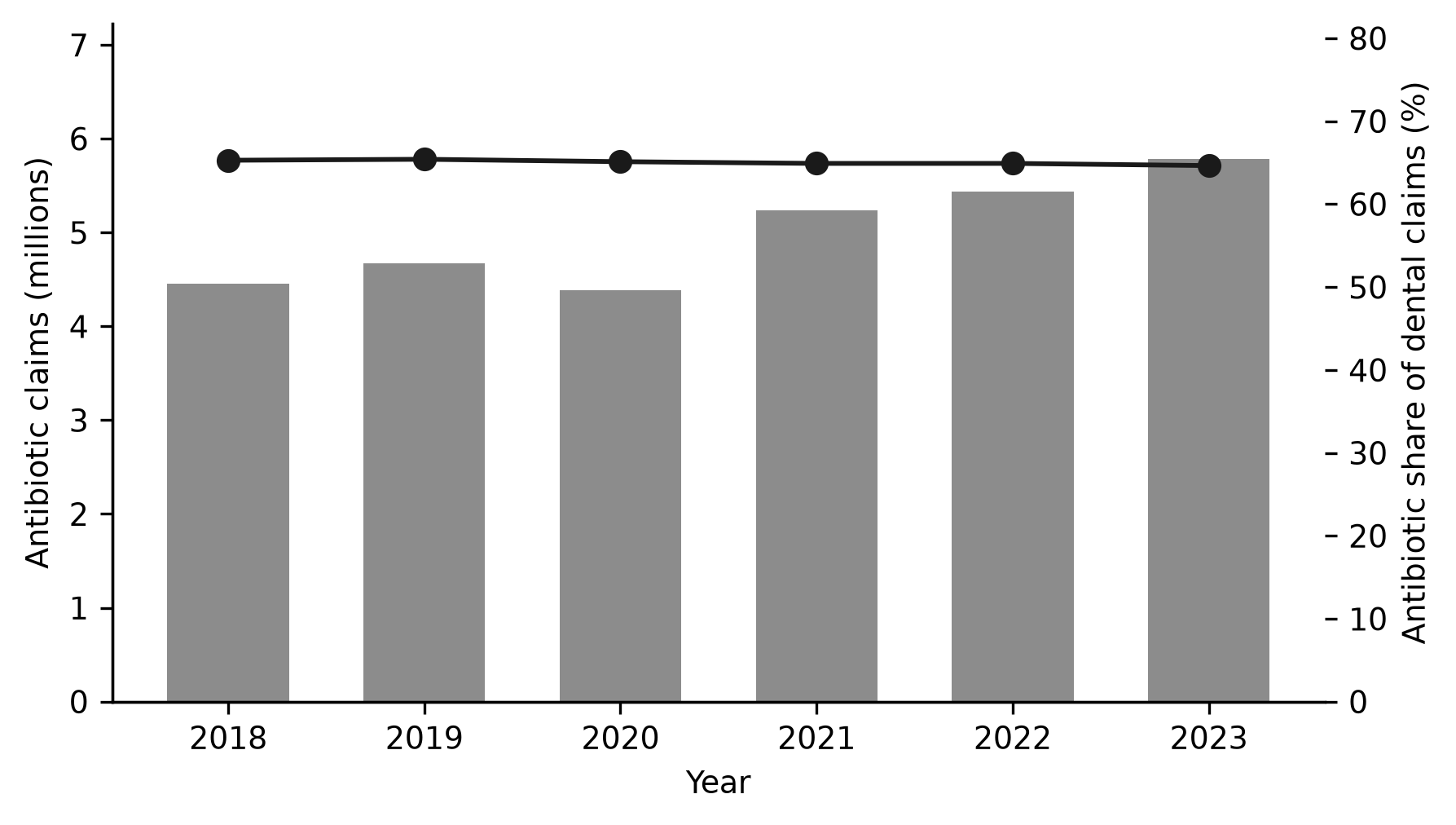
Figure 1. Annual antibiotic claims and antibiotic share of dental claims by dentists in Medicare Part D, 2018-2023.
Note: Bars, antibiotic claims; line, antibiotic share of all dental claims. Source: Elaborated from the CMS Medicare Part D Prescribers by Provider and Drug dataset.Antibiotic share of dental claims (H2)
The antibiotic share of all dental claims was 65.3% in 2018 and 64.6% in 2023, a relative decrease of −1.0% (Table 1). The share remained above 64% in every year, reaching its maximum of 65.4% in 2019 and its minimum of 64.6% in 2023. The Cochran-Armitage test for linear trend was significant (z = −34.71; p < 0.001), as was the two-proportion comparison between 2018 and 2023 (p < 0.001). H2 was therefore sustained in direction, although the absolute change of less than one percentage point describes a stable share rather than a clinically meaningful reduction in the proportion of dental claims that were antibiotics. In practical terms, roughly two of every three dental prescription claims in every study year were for an antibiotic, a proportion that stewardship programs should treat as the baseline against which future change is measured.
Antibiotic agents (H3)
Amoxicillin, with or without clavulanate, ranked first in claim volume in every year of the period, which confirms H3 (Table 2; Figure 2). Its combined share of antibiotic claims rose from 75.6% in 2018 to 80.7% in 2023 (Wilson 95% CI 80.67-80.73). Amoxicillin alone accounted for 77.9% of antibiotic claims in 2023, followed by clindamycin (8.8%), penicillin V (3.8%), azithromycin (3.2%), amoxicillin-clavulanate (2.8%) and cephalexin (2.4%). The ten leading agents together accounted for 99.9% of antibiotic claims in 2023, and no other systemic antibacterial reached 0.1% of the volume. The largest relative increases between 2018 and 2023 were recorded for amoxicillin-clavulanate (163.0%) and azithromycin (131.1%), whereas penicillin V decreased by 22.8%, ciprofloxacin by 25.2% and ampicillin by 48.6% (Table 2). Doxycycline decreased by 10.8% and metronidazole increased by 72.1%, from a small base, which indicates that the growth was concentrated in the aminopenicillins and one macrolide rather than spread across all classes (Table 2). The ranking was stable over time: the same three agents led the list in 2018 and in 2023, and the changes in rank occurred only among agents with small claim volumes.
Agent | Claims 2018 | Claims 2023 | Change (%) | Share of antibiotic claims 2023 (%) |
|---|---|---|---|---|
Amoxicillin | 3302380 | 4504278 | 36.4 | 77.9 |
Clindamycin | 524266 | 506172 | -3.5 | 8.8 |
Penicillin V | 283678 | 219091 | -22.8 | 3.8 |
Cephalexin | 134936 | 139605 | 3.5 | 2.4 |
Azithromycin | 80396 | 185759 | 131.1 | 3.2 |
Amoxicillin-clavulanate | 61026 | 160504 | 163.0 | 2.8 |
Doxycycline | 41671 | 37177 | -10.8 | 0.6 |
Metronidazole | 10091 | 17365 | 72.1 | 0.3 |
Ciprofloxacin | 4584 | 3430 | -25.2 | 0.1 |
Ampicillin | 2112 | 1085 | -48.6 | 0.0 |
Note: Share = percentage of all antibiotic claims in 2023; amoxicillin-clavulanate is reported separately from amoxicillin. Source: Elaborated from the CMS Medicare Part D Prescribers by Provider and Drug dataset.
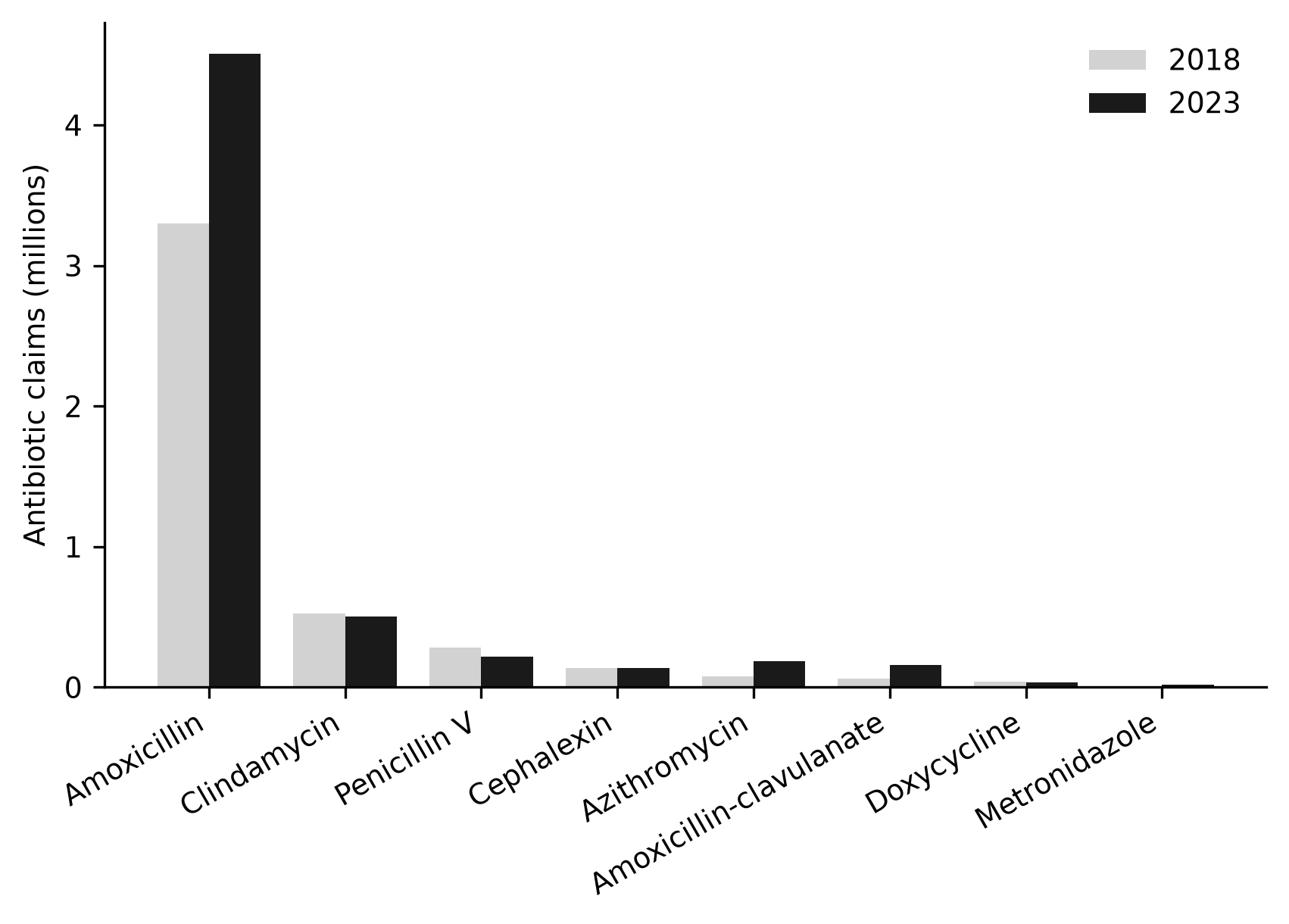
Figure 2. Antibiotic claims for the eight most prescribed agents, 2018 and 2023.
Geographic concentration (H4)
Prescribing volume was geographically concentrated across the 50 states and the District of Columbia (Table 3; Figure 3; Figure 4). The ten states with the highest volume accounted for 56.5% of national antibiotic claims in 2023, and the Gini coefficient was 0.53, both of which support H4. Concentration changed little over the period: the top ten share was 55.9% in 2018 and the Gini coefficient 0.52. California and Florida led the ranking and together contributed close to one fifth of the national volume, while the fifteen leading states were spread across the country. Claims per dentist varied substantially among those fifteen states, and the change from 2018 to 2023 was positive in every one of them, whereas each state outside the fifteen shown in the table contributed less than 2% of the national volume (Table 3). The hypothesis tests are summarized in Table 4.
State | Antibiotic claims 2023 | Share of national volume (%) | Claims per dentist | Change 2018-2023 (%) |
|---|---|---|---|---|
CA | 537535 | 9.4 | 43.5 | 32.0 |
FL | 527508 | 9.3 | 69.7 | 42.0 |
NY | 405219 | 7.1 | 63.1 | 31.2 |
TX | 395573 | 6.9 | 49.6 | 42.3 |
PA | 284771 | 5.0 | 65.0 | 28.0 |
OH | 255975 | 4.5 | 67.9 | 21.2 |
IL | 231363 | 4.1 | 50.4 | 30.2 |
MI | 228573 | 4.0 | 59.4 | 18.2 |
NC | 185305 | 3.3 | 59.1 | 25.9 |
NJ | 168402 | 3.0 | 49.1 | 27.4 |
GA | 162452 | 2.9 | 58.1 | 40.7 |
MA | 145771 | 2.6 | 50.1 | 34.5 |
IN | 138262 | 2.4 | 66.2 | 36.9 |
TN | 131933 | 2.3 | 67.2 | 23.0 |
AZ | 115653 | 2.0 | 51.8 | 31.4 |
Note: Share = percentage of national antibiotic claims in 2023; claims per dentist = claims divided by the number of prescribing dentists in the state. Source: Elaborated from the CMS Medicare Part D Prescribers by Provider and Drug dataset.

Figure 3. Fifteen states with the highest antibiotic claim volume, 2023.
Hypothesis | Metric | Estimate | 95% CI | p |
|---|---|---|---|---|
H1 | IRR per year | 1.0577 | 1.0575 to 1.0579 | <0.001 |
H1 (sensitivity) | Mann-Kendall tau | 0.733 | 0.056 | |
H2 | Trend in antibiotic share | z = -34.71 | <0.001 | |
H2 (sensitivity) | Two-proportion 2018 vs 2023 | z = 26.51 | <0.001 | |
H3 | Amoxicillin share 2023 (%) | 80.7 | 80.67 to 80.73 | |
H4 | Top-10 state share 2023 (%) | 56.5 | ||
H4 | Gini coefficient 2023 | 0.532 |
Note: IRR = incidence rate ratio per calendar year; CI = confidence interval; H3 estimate is the Wilson 95% CI for the amoxicillin share. Source: Elaborated from the CMS Medicare Part D Prescribers by Provider and Drug dataset.
Additional analyses
The 2020 contraction was visible across every secondary outcome. Antibiotic beneficiaries fell from 3,462,819 in 2019 to 3,270,568 in 2020, days of supply fell from 31,590,033 to 30,353,634, and antibiotic drug cost fell from 24,393,345.74 to 21,974,515.84 United States dollars, before all three recovered and exceeded their 2019 values by 2023. The geographic distribution remained stable in shape rather than in level: the top ten share moved from 55.9% in 2018 to 56.5% in 2023, and the Gini coefficient from 0.52 to 0.53, which indicates that the growth was broadly proportional across states rather than concentrated in a few growing markets.
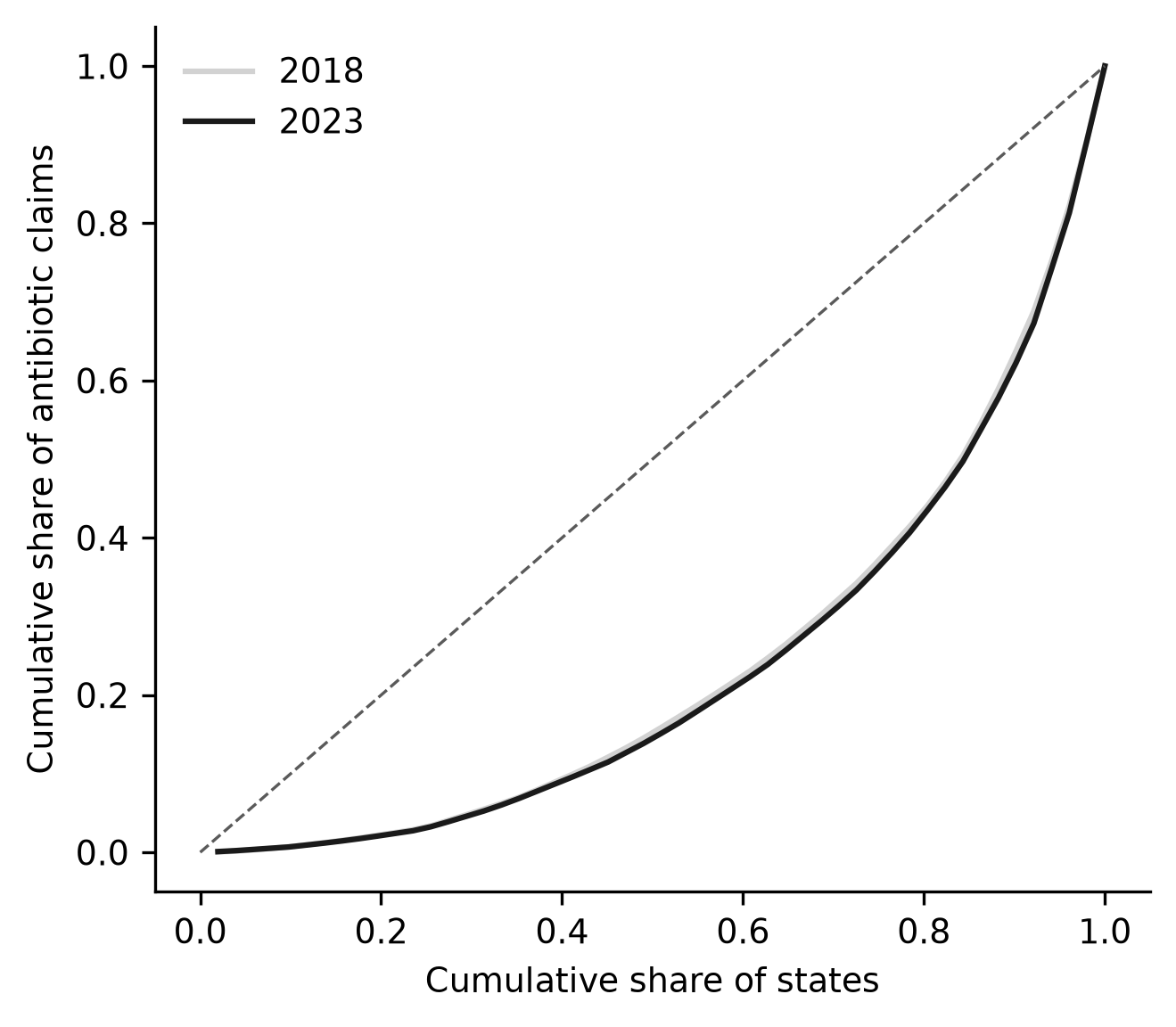
Figure 4. Lorenz curves of antibiotic claims across states, 2018 and 2023.
Note: The diagonal indicates equality of claims across states. Source: Elaborated from the CMS Medicare Part D Prescribers by Provider and Drug dataset.DISCUSSION
This national analysis of Medicare Part D shows that antibiotic prescribing by dentists did not decline between 2018 and 2023. It grew by approximately one third in claim volume while the antibiotic share of dental claims held steady near two thirds. Amoxicillin intensified its already dominant position and the geographic pattern remained concentrated, with the ten leading states accounting for more than half of national claims. The contrast between this increase and the expectation of a downward trend derived from earlier studies is the central finding of the present work, and it cautions against assuming that gains observed in the broader outpatient setting translate automatically to dental prescribing in an aging insured population.
The direction of the temporal trend differs from reports that described declining dental antibiotic prescribing in the United States before 2019(17) and in England.(20) Part of the discrepancy reflects the population studied: the present series is restricted to Medicare Part D beneficiaries, an older population that grew during the study years as the baby-boom cohort aged into Medicare, and dental claims rose in parallel with antibiotic claims. The observed increase in beneficiaries and in claims per dentist indicates that both enrollment growth and higher prescribing intensity per prescriber contributed, so the trend cannot be dismissed as a purely demographic artifact. The growth also reflects a pandemic pattern, in which prescribing contracted in 2020 and then rebounded strongly from 2021 onward, a trajectory consistent with deferred dental care and its later catch-up described for general dentists in the United States(19) and with the rising Medicare prescribing documented for oral and maxillofacial surgeons through 2022.(18) International series reinforce that dental antibiotic trends are not uniformly downward: prescribing increased in British Columbia over two decades,(26,27) while Australia and Germany reported mixed patterns by agent,(28-30) and national data from Japan described stability with a shift toward narrower agents.(31)
The near-constant antibiotic share indicates that growth was proportional across drug classes rather than specific to antibiotics, and it contrasts with the modest declines in the share of prescriptions that were antibiotics reported in earlier United States analyses.(9,32) In this older population, antibiotics represent a larger fraction of all dental prescribing than in younger cohorts, which is plausible given the higher frequency of surgical and endodontic procedures and the narrower indications for chronic medications in dental practice. The share also suggests that the absolute increase in antibiotic volume was driven by more dental prescribing overall and by a larger beneficiary pool, not by a substitution of antibiotics for other drug classes. This pattern is consistent with the observation that dental antibiotic use in the Veterans Affairs system is dominated by a handful of indications and that most of it is prophylaxis, which implies that the denominator of all dental prescribing matters as much as the antibiotic numerator when stewardship targets are defined.(10,33)
The agent profile is consistent with the literature in direction but more extreme in magnitude. Amoxicillin, with or without clavulanate, accounted for four fifths of antibiotic claims, a concentration higher than the approximately two thirds reported for dental prescribing in Australia and England(11,34) and above the shares documented in Belgium and Croatia.(35,36) Clindamycin ranked second, as in prior United States studies,(15,21) while the sharp rises in azithromycin and amoxicillin-clavulanate merit attention because both are broad-spectrum or combination agents whose increased use is harder to justify for routine dental indications and whose expansion runs against the preference for narrow-spectrum penicillins expressed in dental guidelines.(22) The relative decline of penicillin V is consistent with the long-standing substitution of amoxicillin as the preferred aminopenicillin. The near-doubling of azithromycin claims is particularly relevant for stewardship because macrolides carry a larger adverse event and resistance selection profile than narrow-spectrum penicillins for the indications in which dentists use them, and similar concerns have been raised for the growing combination products.(8) The heavy concentration in amoxicillin is, in one respect, favorable: narrow-spectrum aminopenicillins are the recommended first-line agent for most dental indications, so a high amoxicillin share is consistent with guideline concordance even though the underlying appropriateness of the prescriptions themselves cannot be measured here.(13,22) The stewardship concern therefore centers less on the choice of the dominant agent and more on the volume, the prophylaxis indications and the expanding macrolide and combination products.
The geographic concentration is equally informative for stewardship. The Gini coefficient of roughly 0.5 and the top ten states holding more than half of the volume imply that a small number of state-level markets determine a large part of national dental antibiotic exposure, and this pattern persisted from 2018 to 2023. It aligns with evidence that prescribing intensity clusters in specific counties and among identifiable provider groups,(12,23) with the wide variation in guideline concordance documented across dental settings,(22,37) and with differences across academic dental institutions in the United States.(24) The fact that the leading states are also the most populous ones indicates that concentration partly tracks the distribution of beneficiaries, but the marked spread in claims per dentist among those same states shows that population alone does not explain the pattern. State-level differences in the mix of surgical dental care, in prescriber density and in local prescribing culture are plausible contributors, although the administrative data cannot resolve their relative weight, and the observed concentration should not be read as evidence that any single state is an outlier in appropriateness.
Several mechanisms can guide interpretation. Audit and feedback and education interventions have reduced dental antibiotic prescribing in randomized and observational studies, which suggests that part of the current volume is modifiable with tools already available.(14,38) Systematic reviews of dental stewardship interventions and of their measurement conclude that programs combining several components outperform single-component approaches,(39,40) and targeted strategies such as academic detailing and audit feedback have reduced prophylaxis prescribing in veteran and private practice populations.(41,42) Governmental guidance has also been associated with reduced dental prescribing in some jurisdictions.(43) Stewardship programs grounded in the core elements for outpatient settings and tailored to dentistry offer a framework for prioritizing amoxicillin prophylaxis and the growing macrolide share.(44,45) Barriers and facilitators identified in qualitative work, including time pressure, patient expectations and uncertainty about guidelines, help explain why prescribing intensity varies so widely across practices,(37,46) and knowledge gaps documented among dentists underline the role of education.(47) The persistence of antibiotics after nonsurgical root canal treatment in practice-based networks illustrates how routine habits can diverge from guidance even for common procedures.(48) Finally, the volume observed here matters for safety, given the association between dental antibiotic exposure and preventable harms such as Clostridioides difficile infection and the adverse events reported for prophylaxis in vulnerable patients,(16,49) and given that prophylaxis before dental visits remains common in veteran populations despite narrow indications.(33)
This study has several strengths. It uses complete, publicly available administrative counts rather than a sample, covers six consecutive years with consistent definitions, and reports agents and states alongside volume, which is the level of detail stewardship programs require. The inclusion of beneficiaries and prescribers as denominators distinguishes growth from enrollment change from growth in prescribing intensity, and the analysis is reproducible from the stored files. The public and non-proprietary nature of the source also means that the estimates can be updated annually and audited by third parties, which is uncommon among studies of dental prescribing that rely on commercial dispensing data.(17) These properties make the approach well suited to repeated surveillance as stewardship programs mature.
The limitations are those inherent to routinely collected dispensing data. First, the file records dispensed claims, not clinical indications, so appropriateness cannot be judged directly and the analysis cannot separate therapeutic from prophylactic prescribing or link antibiotics to specific procedures.(12) Second, the prescriber type groups all dental specialties under a single code, and separate analyses of oral and maxillofacial surgeons show that their Medicare prescribing behaves differently;(18,50) the present estimates therefore describe dentists in aggregate and may conceal specialty-specific patterns. Third, state-level analyses use claims rather than population denominators because state-specific Part D enrollment was not linked, which limits causal interpretation of geographic differences and means that the state ranking partly reflects the size of the beneficiary population. Fourth, the six annual points reduce the power of trend tests, as reflected in the marginal Mann-Kendall result, so the Poisson estimate should be read as a description of magnitude rather than as proof of a monotonic trend. Fifth, the pandemic disruption of 2020 and the incomplete treatment of the most recent year may inflate the apparent post-pandemic growth. Sixth, the findings describe an older, Medicare-insured population and should not be extended to children or to younger privately insured adults, whose dental antibiotic patterns differ in both volume and indication. Future work could link claims to beneficiary denominators and dental procedure codes, and could evaluate the state policies associated with the observed variation.
For practice and policy, the results identify three priorities for dental antimicrobial stewardship in the Medicare population: prophylaxis with amoxicillin, the growth of broad-spectrum macrolides, and the states in which prescribing is most intense. Targets derived from administrative data of this kind can inform audit and feedback programs and educational outreach where the expected benefit is largest, and a shared core outcome set for dental stewardship would make such programs comparable across settings.(51) The alignment between this study and recent scoping reviews of Canadian dental prescribing suggests that the same priorities generalize beyond the United States.(52) For clinicians caring for older adults, the findings also underline the value of re-examining prophylaxis habits and of preferring the narrowest effective agent, because the safety margin in this population is thinner and the aggregate volume is large enough that even small relative reductions in unnecessary prescribing would translate into substantial numbers of avoided antibiotic courses.
CONCLUSIONS
Antibiotic prescribing by dentists for Medicare Part D beneficiaries increased between 2018 and 2023, contrary to the hypothesis of decline. The pandemic trough of 2020 was followed by sustained growth in claims, beneficiaries, days of supply and prescribing dentists, which indicates that the pre-pandemic direction in this population was upward rather than downward and that the 2020 contraction was a transient interruption of a longer trajectory.
The antibiotic share of dental claims remained essentially stable near two thirds throughout the period, which shows that the growth was proportional across drug classes rather than specific to antibiotics and that it reflected an expanding volume of dental prescribing overall, with no substitution of antibiotics for other drug classes over the six years studied.
Amoxicillin, with or without clavulanate, was the dominant agent in every year and increased its share of antibiotic claims, while azithromycin and amoxicillin-clavulanate recorded the largest relative growth and merit attention in stewardship programs.
Prescribing volume remained concentrated in a minority of states, with ten states accounting for more than half of national claims in 2023. This stable geographic concentration, together with the dominance of a single agent, defines a practical and measurable target for dental antimicrobial stewardship in the Medicare population and supports the use of state-level surveillance as a monitoring tool.
References
- 1 Sweeney LC. Antibiotic resistance in general dental practice--a cause for concern?. Journal of Antimicrobial Chemotherapy. 2004;53(4):567-576. doi: 10.1093/jac/dkh137
- 2 Stein K, Farmer J, Singhal S, Marra F, Sutherland S, Quiñonez C. The use and misuse of antibiotics in dentistry. The Journal of the American Dental Association. 2018;149(10):869-884.e5. doi: 10.1016/j.adaj.2018.05.034
- 3 Dar-Odeh N, Abu-Hammad, Al-Omiri, Khraisat, Shehabi. Antibiotic prescribing practices by dentists: a review. TCRM. 2010;6:301. doi: 10.2147/tcrm.s9736
- 4 Lockhart PB, Thornhill MH, Zhao J, Baddour LM, Davis J, McKnight PE, et al. Prophylactic antibiotic prescribing in dental practice. The Journal of the American Dental Association. 2020;151(10):770-781.e6. doi: 10.1016/j.adaj.2020.04.027
- 5 Sukumar S, Martin F, Hughes T, Adler C. Think before you prescribe: how dentistry contributes to antibiotic resistance. Australian Dental Journal. 2020;65(1):21-29. doi: 10.1111/adj.12727
- 6 Oberoi SS, Dhingra C, Sharma G, Sardana D. Antibiotics in dental practice: how justified are we. International Dental Journal. 2015;65(1):4-10. doi: 10.1111/idj.12146
- 7 Thompson W, Williams D, Pulcini C, Sanderson S, Calfon P, Verma M. Tackling Antibiotic Resistance: Why Dentistry Matters. International Dental Journal. 2021;71(6):450-453. doi: 10.1016/j.identj.2020.12.023
- 8 Nizami MZI, Yin IX, Niu JY, Yu OY, Chu CH. Antibiotic Resistance in Dentistry: A Review. Antibiotics. 2025;14(12):1259. doi: 10.3390/antibiotics14121259
- 9 Durkin MJ, Hsueh K, Sallah YH, Feng Q, Jafarzadeh SR, Munshi KD, et al. An evaluation of dental antibiotic prescribing practices in the United States. The Journal of the American Dental Association. 2017;148(12):878-886.e1. doi: 10.1016/j.adaj.2017.07.019
- 10 Suda K, Fitzpatrick M, Gibson G, Jurasic M, Miskevics S, McGregor JC, et al. Antibiotic Use Metrics to Guide Antibiotic Stewardship Priorities: Dental Antibiotic Prescribing in the U.S. Veterans Affairs (VA) System. Open Forum Infectious Diseases. 2017;4(suppl_1):S252-S253. doi: 10.1093/ofid/ofx163.545
- 11 Thompson W, Teoh L, Hubbard CC, Marra F, Patrick DM, Mamun A, et al. Patterns of dental antibiotic prescribing in 2017: Australia, England, United States, and British Columbia (Canada). Infect Control Hosp Epidemiol. 2022;43(2):191-198. doi: 10.1017/ice.2021.87
- 12 Hubbard CC, Evans CT, Calip GS, Zhou J, Rowan SA, Suda KJ. Appropriateness of Antibiotic Prophylaxis Before Dental Procedures, 2016–2018. American Journal of Preventive Medicine. 2022;62(6):943-948. doi: 10.1016/j.amepre.2021.11.004
- 13 Murphy AM, Patel UC, Wilson GM, Suda KJ. Prevalence of unnecessary antibiotic prescriptions among dental visits, 2019. Infect Control Hosp Epidemiol. 2024;45(7):890-899. doi: 10.1017/ice.2024.13
- 14 Elouafkaoui P, Young L, Newlands R, Duncan EM, Elders A, Clarkson JE, et al. An Audit and Feedback Intervention for Reducing Antibiotic Prescribing in General Dental Practice: The RAPiD Cluster Randomised Controlled Trial. PLoS Med. 2016;13(8):e1002115. doi: 10.1371/journal.pmed.1002115
- 15 Koppen L, Suda KJ, Rowan S, McGregor J, Evans CT. Dentists’ prescribing of antibiotics and opioids to Medicare Part D beneficiaries. The Journal of the American Dental Association. 2018;149(8):721-730. doi: 10.1016/j.adaj.2018.04.027
- 16 De Lima FE, Laube GE. <i>Clostridioides difficile</i>: relationship with previous use of antibiotics, risk factors and preventive measures to reduce transmission. South Health and Policy. 2025;4:220. doi: 10.56294/shp2025220
- 17 Ramanathan S, Yan CH, Hubbard C, Calip GS, Sharp LK, Evans CT, et al. Changes in antibiotic prescribing by dentists in the United States, 2012–2019. Infect Control Hosp Epidemiol. 2023;44(11):1725-1730. doi: 10.1017/ice.2023.151
- 18 Liang L, Wang TT, Lee CC, Choi DD, Peacock ZS. Trends in Antibiotic Prescriptions by Oral and Maxillofacial Surgeons to Medicare Beneficiaries, 2013-2022. Journal of Oral and Maxillofacial Surgery. 2026;84(3):363-371. doi: 10.1016/j.joms.2025.11.002
- 19 Huynh CVT, Gouin KA, Hicks LA, Kabbani S, Neuburger M, McDonald E. Outpatient antibiotic prescribing by general dentists in the United States from 2018 through 2022. The Journal of the American Dental Association. 2025;156(5):382-389.e2. doi: 10.1016/j.adaj.2024.12.003
- 20 Thornhill MH, Dayer MJ, Durkin MJ, Lockhart PB, Baddour LM. Oral antibiotic prescribing by NHS dentists in England 2010-2017. Br Dent J. 2019;227(12):1044-1050. doi: 10.1038/s41415-019-1002-3
- 21 Ioannidou E, Geurs N, Lipman R, Araujo MWB, Elkareh J, Engebretson S, et al. Antibiotic prescription patterns among US general dentists and periodontists. The Journal of the American Dental Association. 2022;153(10):979-988. doi: 10.1016/j.adaj.2022.06.013
- 22 Carlsen DB, Durkin MJ, Gibson G, Jurasic MM, Patel U, Poggensee L, et al. Concordance of antibiotic prescribing with the American Dental Association acute oral infection guidelines within Veterans’ Affairs (VA) dentistry. Infect Control Hosp Epidemiol. 2021;42(12):1422-1430. doi: 10.1017/ice.2021.16
- 23 Evans CT, Fitzpatrick MA, Poggensee L, Gonzalez B, Gibson G, Jurasic MM, et al. High prescribing of antibiotics is associated with high prescribing of opioids in medical and dental providers. Pharmacotherapy. 2022;42(9):716-723. doi: 10.1002/phar.2720
- 24 Tungare S, Yansane AI, Gantela S, Kookal KK, McCurdy S, Krause TM, et al. Factors Associated with Opioid and Antibiotic Prescribing at US Academic Dental Institutions: 2011 to 2020. JDR Clinical & Translational Research. 2026;11(1):28-39. doi: 10.1177/23800844251320335
- 25 Centers for Medicare & Medicaid Services. Medicare Part D Prescribers - by Provider and Drug [Internet]. 2026. Available from: https://data.cms.gov/provider-summary-by-type-of-service/medicare-part-d-prescribers/medicare-part-d-prescribers-by-provider-and-drug
- 26 Marra F, George D, Chong M, Sutherland S, Patrick DM. Antibiotic prescribing by dentists has increased. The Journal of the American Dental Association. 2016;147(5):320-327. doi: 10.1016/j.adaj.2015.12.014
- 27 Stenlund S, Huynh J, Pau C, Chuang E, Lishman H, Patrick DM. Dental antibiotic use in British Columbia from 1996 through 2023. The Journal of the American Dental Association. 2025;156(1):37-45.e7. doi: 10.1016/j.adaj.2024.10.001
- 28 Walsh L, Ford P, McGuire T, van Driel M, Hollingworth S. Trends in Australian dental prescribing of antibiotics: 2005–2016. Australian Dental Journal. 2021;66(S1):S37-S41. doi: 10.1111/adj.12846
- 29 Teoh L, Stewart K, Marino R, McCullough M. Current prescribing trends of antibiotics by dentists in Australia from 2013 to 2016. Part 1. Australian Dental Journal. 2018;63(3):329-337. doi: 10.1111/adj.12622
- 30 Halling F, Neff A, Heymann P, Ziebart T. Trends in antibiotic prescribing by dental practitioners in Germany. Journal of Cranio-Maxillofacial Surgery. 2017;45(11):1854-1859. doi: 10.1016/j.jcms.2017.08.010
- 31 Hirayama K, Kanda N, Hashimoto H, Yoshimoto H, Goda K, Mitsutake N, et al. Antibiotic Prescription Trends in Dentistry: A Descriptive Study Using Japan's National Database. J Public Health Dent. 2025;85(2):153-159. doi: 10.1111/jphd.12663
- 32 Okunseri C, Zheng C, Steinmetz CN, Okunseri E, Szabo A. Trends and racial/ethnic disparities in antibiotic prescribing practices of dentists in the United States. J Public Health Dent. 2018;78(2):109-117. doi: 10.1111/jphd.12245
- 33 Suda KJ, Fitzpatrick MA, Gibson G, Jurasic MM, Poggensee L, Echevarria K, et al. Antibiotic prophylaxis prescriptions prior to dental visits in the Veterans’ Health Administration (VHA), 2015–2019. Infect Control Hosp Epidemiol. 2022;43(11):1565-1574. doi: 10.1017/ice.2021.521
- 34 Ford P, Saladine C, Zhang K, Hollingworth S. Prescribing patterns of dental practitioners in Australia from 2001 to 2012. Antimicrobials. Australian Dental Journal. 2017;62(1):52-57. doi: 10.1111/adj.12427
- 35 Mainjot A, D’Hoore W, Vanheusden A, Van Nieuwenhuysen J‐. Antibiotic prescribing in dental practice in Belgium. Int Endodontic J. 2009;42(12):1112-1117. doi: 10.1111/j.1365-2591.2009.01642.x
- 36 Šutej I, Lepur D, Božić D, Pernarić K. Medication Prescribing Practices in Croatian Dental Offices and Their Contribution to National Consumption. International Dental Journal. 2021;71(6):484-490. doi: 10.1016/j.identj.2021.01.004
- 37 Ramanathan S, Yan C, Suda KJ, Evans CT, Khouja T, Hershow RC, et al. Barriers and facilitators to guideline concordant dental antibiotic prescribing in the United States: A qualitative study of the National Dental PBRN. J Public Health Dent. 2024;84(2):163-174. doi: 10.1111/jphd.12611
- 38 Goff DA, Mangino JE, Trolli E, Scheetz R, Goff D. Private Practice Dentists Improve Antibiotic Use After Dental Antibiotic Stewardship Education From Infectious Diseases Experts. Open Forum Infect Dis. 2022;9(8):ofac361. doi: 10.1093/ofid/ofac361
- 39 Teoh L, Löffler C, Mun M, Agnihotry A, Kaur H, Born K, et al. A Systematic Review of Dental Antibiotic Stewardship Interventions. Comm Dent Oral Epid. 2025;53(3):245-255. doi: 10.1111/cdoe.13009
- 40 Teoh L, Sloan AJ, McCullough MJ, Thompson W. Measuring Antibiotic Stewardship Programmes and Initiatives: An Umbrella Review in Primary Care Medicine and a Systematic Review of Dentistry. Antibiotics. 2020;9(9):607. doi: 10.3390/antibiotics9090607
- 41 Wojtowicz J, Bennett J, Woodland W, Berkely S, Thomas-Gosain N. Impact of stewardship intervention on antibiotic prescribing prior to dental procedures in a veteran population. Journal of the American Pharmacists Association. 2024;64(2):380-385. doi: 10.1016/j.japh.2023.11.010
- 42 Portman DB. Utilizing academic detailing to take a bite out of antibiotic prophylaxis prior to dental procedures. Journal of the American Pharmacists Association. 2025;65(3):102351. doi: 10.1016/j.japh.2025.102351
- 43 Lund B, Cederlund A, Hultin M, Lundgren F. Effect of governmental strategies on antibiotic prescription in dentistry. Acta Odontologica Scandinavica. 2020;78(7):529-534. doi: 10.1080/00016357.2020.1751273
- 44 Sanchez GV, Fleming-Dutra KE, Roberts RM, Hicks LA. Core Elements of Outpatient Antibiotic Stewardship. MMWR Recomm Rep. 2016;65(6):1-12. doi: 10.15585/mmwr.rr6506a1
- 45 World Dental Federation F. Antibiotic stewardship in dentistry. International Dental Journal. 2020;70(1):9-10. doi: 10.1111/idj.12553
- 46 Schneider-Smith EG, Suda KJ, Lew D, Rowan S, Hanna D, Bach T, et al. How decisions are made: Antibiotic stewardship in dentistry. Infect Control Hosp Epidemiol. 2023;44(11):1731-1736. doi: 10.1017/ice.2023.173
- 47 Vázquez-Cancela O, Zapata-Cachafeiro M, Herdeiro MT, Figueiras A, Rodríguez-Fernández A. Dentists' knowledge, attitudes and perceptions of antibiotic prescribing: A systematic review. Preventive Medicine. 2024;185:108043. doi: 10.1016/j.ypmed.2024.108043
- 48 Law AS, Coro Nguyen Q, Funkhouser E, Mungia R, Nixdorf DR, Lam EWN, et al. Antibiotics after non-surgical root canals: National Dental Practice-Based Research Network findings. Journal of Dentistry. 2026;174:106891. doi: 10.1016/j.jdent.2026.106891
- 49 Ramanathan S, Evans CT, Hershow RC, Calip GS, Rowan S, Hubbard C, et al. Guideline concordance and antibiotic-associated adverse events between Veterans administration and non-Veterans administration dental settings: a retrospective cohort study. Front Pharmacol. 2024;15:1249531. doi: 10.3389/fphar.2024.1249531
- 50 Liang L, Wang TT, Lee CC, Burris BJ, Choi DD, Peacock ZS. Is Oral and Maxillofacial Surgeon Experience Associated With Antibiotic Prescribing to Medicare Beneficiaries?. Journal of Oral and Maxillofacial Surgery. 2026;84(10):1645-1652. doi: 10.1016/j.joms.2026.04.018
- 51 Thompson W, Teoh L, Pulcini C, Sanderson S, Williams D, Carter V, et al. International Consensus on a Dental Antibiotic Stewardship Core Outcome Set. International Dental Journal. 2023;73(3):456-462. doi: 10.1016/j.identj.2023.03.006
- 52 Gupta V, Ouanounou A. Antibiotic Prescribing in Canadian Dentistry: A Scoping Review of Alignment with Guidelines and Opportunities for Stewardship Improvement. JCDA. 2026:q7. doi: 10.66515/jcda.92.q7
Declarations
Funding
No financing
Conflict of interest
None
Authorship contributions
Drafting – original draft: Rigel Ramirez Fritze.
Writing–review and editing: Rigel Ramirez Fritze.