

Abstract
Introduction: Periodontitis and tooth loss have been associated with cognitive decline, but the independent contribution of each exposure across cognitive domains in older adults remains uncertain. Methods: This cross-sectional study analyzed adults aged 60 years and older in the National Health and Nutrition Examination Survey 2011-2014 with a complete full-mouth periodontal examination, tooth count and cognitive assessment. Periodontitis was classified with the CDC/AAP surveillance case definition; missing teeth were counted among 28 teeth. Outcomes were CERAD immediate and delayed recall, Animal Fluency and the Digit Symbol Substitution Test. Survey-weighted linear regression estimated beta coefficients with 95% confidence intervals, adjusted for age, sex, race/ethnicity, education, income, smoking, diabetes, body mass index and hypertension. Results: Among 2,198 participants (weighted mean age 68.9 years, 52.2% women), 35.2% had moderate and 7.3% severe periodontitis. Periodontitis severity was associated with lower scores in unadjusted models but not after adjustment. Each additional 8 missing teeth was associated with lower CERAD immediate recall (beta −0.22, 95% CI −0.43 to −0.01), CERAD delayed recall (beta −0.13, 95% CI −0.23 to −0.03), Animal Fluency (beta −0.46, 95% CI −0.69 to −0.23) and Digit Symbol Substitution Test (beta −1.84, 95% CI −2.41 to −1.28) after full adjustment. Conclusions: In older US adults, the number of missing teeth, but not periodontitis severity, was independently associated with lower cognitive performance across all assessed domains. Tooth loss may be a useful marker of cognitive vulnerability.
Keywords
periodontitis, tooth loss, cognition, cognitive dysfunction, aged, cross-sectional studies
INTRODUCTION
Severe periodontitis affected an estimated 1.1 billion people worldwide in 2019, and its age-standardized prevalence rises steeply after the age of 60 years, making it one of the most common chronic inflammatory diseases of later life.(1) Untreated periodontal disease is the leading cause of tooth loss in adults, and the Global Burden of Disease study ranks severe tooth loss and edentulism among the oral conditions with the largest contribution to years lived with disability in aging populations.(2) Cognitive decline and dementia impose a parallel burden, with prevalence rising sharply at the same ages and projected to grow as populations age. Because oral disease and cognitive impairment concentrate in later life and share socioeconomic, behavioural and vascular determinants, the possibility that oral health contributes to cognitive aging carries direct implications for prevention and for the coordination of dental and geriatric care. As the population ages, the number of people living with cognitive impairment grows, and preventive approaches depend on identifying determinants that can be measured and modified in routine care. Whether oral diseases act as treatable risk factors for cognitive decline, or merely mark a shared underlying vulnerability, is therefore a question with practical consequences for how preventive services are designed and for whether dental care should be integrated into dementia risk reduction.
Observational evidence links poor oral health with cognitive decline, but the strength of the association differs by exposure. Longitudinal studies in Japan, Ireland and China have reported that a lower number of remaining teeth predicts incident cognitive impairment independently of measured confounders,(3-5) and a dose-response meta-analysis quantified a graded increase in the risk of cognitive impairment and dementia with each additional lost tooth.(6) For periodontitis, systematic reviews and meta-analyses report higher risks of cognitive decline and dementia among people with the disease,(7-10) but the estimates weaken when the case definition is standardized and when cardiovascular and sociodemographic confounders are controlled.(11,12) Proposed mechanisms include the low-grade systemic inflammation sustained by periodontal bacteria, the hematogenous or neural translocation of periodontal pathogens toward the central nervous system, and the masticatory and nutritional consequences that follow tooth loss.(13-16) Experimental studies extend this rationale by showing that periodontal bacteria can reach the brain and that periodontitis-related immune signalling can activate neuroinflammatory pathways,(17,18) yet the translation of these mechanisms into a consistent clinical association has been incomplete. The evidence is therefore stronger and more consistent for tooth loss than for clinical periodontitis, a distinction that motivates measuring both exposures together in the same study rather than treating them as interchangeable markers of oral health.
What remains unsettled is whether periodontitis severity and the number of missing teeth each contribute independently to cognitive performance across specific domains, and whether periodontitis severity retains an association once the confounders shared by both exposures are accounted for. These two exposures are frequently analysed separately, which makes it difficult to know whether an observed periodontitis effect simply reflects the tooth loss that the disease produces, or whether tooth loss acts through pathways unrelated to current inflammation. Many prior studies relied on global screening instruments such as the Mini-Mental State Examination rather than domain-specific tests, classified periodontal status with partial-mouth protocols that underestimate disease, or did not measure the two exposures together in the same population-based sample.(19) The aim of this study was to examine whether periodontitis severity and the number of missing teeth are associated with lower scores on four domain-specific cognitive tests in a nationally representative sample of adults aged 60 years and older in the United States.
METHODS
Study design and setting
This was a cross-sectional analysis of two consecutive cycles, 2011-2012 and 2013-2014, of the National Health and Nutrition Examination Survey (NHANES), a stratified, multistage probability survey of the civilian, noninstitutionalized population of the United States conducted by the National Center for Health Statistics. The survey oversamples Hispanic, non-Hispanic Black and Asian persons, older adults and low-income persons to obtain reliable estimates in these subgroups, and the sampling weights restore national representativeness. The two cycles administered a full-mouth periodontal examination to adults aged 30 years and older and a cognitive assessment battery to adults aged 60 years and older, which permits the study question to be addressed in a single nationally representative sample. Because the periodontal examination and the cognitive battery are both conducted in the mobile examination center, the two exposures and the four outcomes can be measured in the same individuals without relying on self-report. The study is reported in accordance with the Strengthening the Reporting of Observational Studies in Epidemiology (STROBE) statement.
Data source
NHANES data are public and deidentified. Demographic, examination and questionnaire files, together with documentation and codebooks, were downloaded programmatically from the National Center for Health Statistics portal (https://wwwn.cdc.gov/Nchs/Data/Nhanes/Public/).(20) For each cycle the following components were used: demographics; oral health periodontal examination; oral health dentition; cognitive functioning; smoking cigarette use; diabetes; body measures; and blood pressure. The documentation for each component describes the target population, the examination protocol and the data quality procedures, and it was consulted to confirm variable definitions and value codes before the analysis. Participants in each component were linked with the unique survey sequence number.
Participants
From the two cycles combined, participants were eligible if they were aged 60 years or older, had a complete full-mouth periodontal examination, had complete tooth-count data from the dentition examination, had complete scores on the four cognitive tests, and had complete data on the covariates used in the adjusted models. Participants with a zero or missing examination weight were excluded. The selection of the analytic sample is shown in Figure 1.
Variables
Periodontitis was classified from full-mouth measurements of probing pocket depth and clinical attachment loss recorded by trained and calibrated dental examiners at six sites per tooth, mesio-buccal, mid-buccal, disto-buccal, mesio-lingual, mid-lingual and disto-lingual, on 28 teeth excluding third molars. Examiners probed each site with a standardized periodontal probe in a dental chair, and measurements were rounded to the nearest millimetre. Attachment loss was computed by the examination as the sum of gingival recession and pocket depth. Periodontitis severity was defined with the Centers for Disease Control and Prevention/American Academy of Periodontology surveillance case definition.( 21) Severe periodontitis required at least two interproximal sites with clinical attachment loss of 6 mm or more, not on the same tooth, and at least one interproximal site with probing depth of 5 mm or more. Moderate periodontitis required at least two interproximal sites with clinical attachment loss of 4 mm or more, not on the same tooth, or at least two interproximal sites with probing depth of 5 mm or more, not on the same tooth. Mild periodontitis required at least two interproximal sites with clinical attachment loss of 3 mm or more and at least two interproximal sites with probing depth of 4 mm or more, not on the same tooth, or one site with probing depth of 5 mm or more. Sites coded as not assessable were treated as missing. Because mild periodontitis was rare, the categories none and mild were combined as the reference group, and moderate and severe periodontitis were compared with this group.
The number of missing teeth was counted from the dentition examination as the number of teeth coded as not present among the 28 non-third-molar teeth; dental implants and retained root fragments were considered present. The count was modelled per 8 additional missing teeth, an increment equivalent to one dental arch and therefore clinically interpretable.
Four cognitive outcomes were analyzed. The Consortium to Establish a Registry for Alzheimer's Disease (CERAD) word-list immediate recall was computed as the sum of three 10-word learning trials, with a possible range of 0 to 30, and the CERAD delayed recall score, with a possible range of 0 to 10, was taken from the delayed trial administered after a short interference interval.(22) In the CERAD task the examiner reads a list of ten unrelated words aloud and the participant recalls as many as possible after each of three presentations, and the delayed trial is administered after a brief delay. The Animal Fluency test was scored as the number of animals named in 60 seconds, a measure of verbal fluency and semantic memory. The Digit Symbol Substitution Test, a measure of processing speed and executive attention, was scored as the number of correct symbol-digit matches completed within the allotted time. All tests were administered by trained interviewers in the mobile examination center with a standardized protocol, and scores were recorded directly into the survey database.
Covariates were selected a priori as factors associated with both oral health and cognition. They comprised age in years, sex, race and ethnicity, educational attainment, the family income-to-poverty ratio, smoking status, self-reported diabetes, body mass index, and self-reported hypertension. Each of these variables has been associated with periodontal disease, tooth loss or cognitive performance in previous studies, and their omission could produce spurious associations between the exposures and the outcomes. Race and ethnicity was categorized as Mexican American, other Hispanic, non-Hispanic White, non-Hispanic Black, and other. Education was categorized as less than high school, high school graduate or equivalent, some college, and college graduate or higher. Smoking was classified as never, former or current from the smoking questionnaire, diabetes was defined by a physician diagnosis, and hypertension was defined by a physician diagnosis of high blood pressure.
Study size
The study size was determined by the available survey data rather than by a formal sample-size calculation. The two cycles together provided a large number of adults aged 60 years and older with a complete periodontal examination and cognitive assessment, which yields stable design-based estimates for the moderate and severe categories and for the continuous tooth-count exposure. The sample also provides adequate precision to detect moderate between-group differences in each cognitive score.
Bias
Selection bias could arise because the periodontal examination and cognitive tests were restricted to participants able to attend the mobile examination center and to complete the assessments, and because the analytic sample required complete data. Information bias is limited by the standardized examination protocols, the training and calibration of examiners, and the use of objective counts and test scores. Measurement error in the self-reported covariates, particularly diabetes and hypertension, could attenuate the adjusted estimates, although such misclassification is unlikely to differ systematically by periodontal status. Confounding by age, socioeconomic position and cardiometabolic factors was addressed by adjustment, although residual confounding by unmeasured variables remains possible in an observational design.
Statistical analysis
All analyses accounted for the complex survey design. The two cycles were combined with a four-year examination weight computed as the two-year mobile examination center weight divided by two, following the National Center for Health Statistics guidance for merged cycles. Strata and primary sampling units were used to obtain design-based variance estimates.
Survey-weighted linear regression estimated the association of periodontitis severity, modeled as indicators for moderate and severe versus none/mild, and of the number of missing teeth, modeled per 8 teeth, with each cognitive score. Point estimates were obtained by weighted least squares, and standard errors were computed by Taylor-series linearization of the weighted regression estimator, a method that accounts for the clustering induced by the multistage design. Confidence intervals and p values were derived from a t distribution with degrees of freedom equal to the number of primary sampling units minus the number of strata. Unadjusted models and models adjusted for all covariates were fitted for each exposure. Trend across severity categories was tested by entering severity as an ordered variable in the adjusted model. The same covariate set was used for both exposures so that their coefficients are directly comparable, and the tooth-count coefficient is interpreted per 8 teeth rather than per single tooth to avoid reporting trivially small units. Age, the income-to-poverty ratio and body mass index were entered as continuous terms, and race, education and smoking were entered as indicator variables. Statistical significance was set at a two-sided alpha of 0.05, and the analysis was restricted to complete cases without imputation. Analyses were performed with Python 3.14 using pandas and NumPy, with the design-based estimators implemented in a reproducible analysis script that was executed twice to confirm identical results.
Ethics
NHANES protocols were approved by the National Center for Health Statistics research ethics review board, and participants provided written informed consent. The present analysis used only deidentified public data files and required no additional ethical approval.
RESULTS
Participants
Of 3,632 adults aged 60 years and older identified in the two cycles, 819 lacked a complete full-mouth periodontal examination, 393 lacked complete scores on the four cognitive tests, and 222 lacked complete covariates or a valid examination weight, leaving an analytic sample of 2,198 participants (Figure 1). The weighted mean age was 68.9 years and 52.2% were women. By race and ethnicity, 79.8% were non-Hispanic White, 8.2% non-Hispanic Black, 3.2% Mexican American, 3.7% other Hispanic and 5.1% other race.

Figure 1. Selection of the analytic sample.
Note: Participants were excluded sequentially for a missing complete periodontal examination, incomplete tooth count, missing cognitive scores, and missing covariates or examination weight. Source: Elaboration based on NHANES 2011-2012 and 2013-2014.Descriptive data
Periodontitis was absent in 1,095 participants and mild in 13; moderate periodontitis was present in 856 and severe periodontitis in 234, corresponding to weighted prevalences of 57.6% for none/mild, 35.2% for moderate and 7.3% for severe. The weighted mean number of missing teeth was 9.1 (standard deviation 9.9), and the weighted mean scores were 19.8 for CERAD immediate recall, 6.3 for CERAD delayed recall, 18.3 for Animal Fluency and 52.5 for the Digit Symbol Substitution Test. The severe periodontitis group had a higher proportion of men, of non-Hispanic Black participants and of current smokers, and a lower proportion of college graduates, than the none/mild group, whereas age and body mass index were similar across categories (Table 1). Current smoking rose from 12.2% overall to a higher proportion in the severe group, and the mean income-to-poverty ratio was lower in the moderate and severe groups than in the none/mild group. The mean number of missing teeth was 9.1 overall, was highest in the none/mild group and was similar in the moderate and severe groups; substantial tooth loss was present in every severity category.
Characteristic | Overall (n = 2198) | None/mild (n = 1108) | Moderate (n = 856) | Severe (n = 234) |
|---|---|---|---|---|
Age, years (mean, SD) | 68.9 (6.6) | 68.7 (6.5) | 69.6 (6.7) | 67.0 (5.9) |
Female (%) | 52.2 | 57.7 | 48.0 | 28.6 |
Mexican American (%) | 3.2 | 2.0 | 4.0 | 8.4 |
Other Hispanic (%) | 3.7 | 2.6 | 4.9 | 6.0 |
Non-Hispanic White (%) | 79.8 | 85.0 | 74.7 | 63.3 |
Non-Hispanic Black (%) | 8.2 | 6.5 | 9.2 | 17.5 |
Other race (%) | 5.1 | 3.9 | 7.1 | 4.8 |
Less than high school (%) | 15.5 | 14.3 | 16.4 | 20.3 |
High school graduate (%) | 21.9 | 21.4 | 20.3 | 33.9 |
Some college (%) | 32.3 | 32.4 | 32.6 | 29.0 |
College graduate (%) | 30.3 | 31.8 | 30.7 | 16.8 |
Income-to-poverty ratio (mean, SD) | 3.1 (1.6) | 3.3 (1.6) | 3.0 (1.5) | 2.6 (1.6) |
Current smoker (%) | 12.2 | 9.3 | 13.6 | 28.7 |
Former smoker (%) | 39.0 | 37.8 | 41.8 | 34.9 |
Diabetes (%) | 19.4 | 17.0 | 23.4 | 18.6 |
Hypertension (%) | 57.0 | 57.4 | 55.7 | 60.6 |
Body mass index, kg/m2 (mean, SD) | 29.0 (6.2) | 29.0 (6.1) | 28.9 (6.3) | 28.9 (6.2) |
Missing teeth, count (mean, SD) | 9.1 (9.9) | 10.2 (11.5) | 7.2 (6.9) | 9.1 (6.3) |
Note: Values are weighted mean (SD) for continuous variables and weighted percentage for categorical variables. Periodontitis severity by the CDC/AAP case definition. Source: Elaboration based on NHANES 2011-2012 and 2013-2014.
Periodontitis severity and cognitive test scores
Unadjusted cognitive scores showed a graded pattern across severity categories for most tests (Table 2). The Digit Symbol Substitution Test mean fell from 54.2 in the none/mild group to 47.9 in the severe group (p for trend = <0.001), and Animal Fluency declined from 18.6 to 17.3 (p for trend = 0.043). CERAD immediate recall differed less across categories (p for trend = 0.049), and CERAD delayed recall showed no clear gradient (p for trend = 0.085).
Cognitive score | None/mild (mean, SE) | Moderate (mean, SE) | Severe (mean, SE) | p for trend |
|---|---|---|---|---|
CERAD immediate recall | 20.1 (0.25) | 19.4 (0.31) | 19.6 (0.48) | 0.049 |
CERAD delayed recall | 6.4 (0.10) | 6.1 (0.16) | 6.3 (0.21) | 0.085 |
Animal Fluency | 18.6 (0.29) | 18.0 (0.27) | 17.3 (0.47) | 0.043 |
Digit Symbol Substitution Test | 54.2 (0.74) | 50.8 (0.61) | 47.9 (1.61) | <0.001 |
Note: Values are weighted mean (standard error). p for trend from a survey-weighted linear regression with severity coded as an ordered variable (none/mild = 0, moderate = 1, severe = 2). Source: Elaboration based on NHANES 2011-2012 and 2013-2014.
In unadjusted regression models, moderate periodontitis was associated with a −3.47-point lower Digit Symbol Substitution Test score (95% CI, −5.07 to −1.88) and a −0.73-point lower CERAD immediate recall score (95% CI, −1.31 to −0.14). Severe periodontitis was associated with a −6.29-point lower Digit Symbol Substitution Test score (95% CI, −9.89 to −2.68) and a −1.28-point lower Animal Fluency score (95% CI, −2.55 to −0.02). The unadjusted associations for CERAD delayed recall were small and crossed the null. The unadjusted deficits were consistently largest for the Digit Symbol Substitution Test, a pattern that persisted, in attenuated form, after adjustment.
After adjustment for age, sex, race and ethnicity, education, income, smoking, diabetes, body mass index and hypertension, all associations of periodontitis severity with cognitive scores attenuated toward the null and none remained statistically significant (Table 3). The adjusted difference for severe versus none/mild periodontitis was −0.70 points for the Digit Symbol Substitution Test (95% CI, −3.78 to 2.38; p = 0.645), 0.30 points for CERAD immediate recall (95% CI, −0.61 to 1.22), −0.33 points for Animal Fluency (95% CI, −1.61 to 0.96) and 0.15 points for CERAD delayed recall (95% CI, −0.24 to 0.55). The adjusted coefficient for moderate versus none/mild periodontitis was −0.12 points for the Digit Symbol Substitution Test (95% CI, −1.50 to 1.26), close to zero, and the coefficients for the remaining tests were similarly small. Adjusted tests for trend across severity categories yielded p values of 0.669 for the Digit Symbol Substitution Test, 0.938 for CERAD immediate recall, 0.771 for Animal Fluency and 0.928 for CERAD delayed recall. The adjusted pattern for severe versus none/mild periodontitis is summarized in (Figure 2).
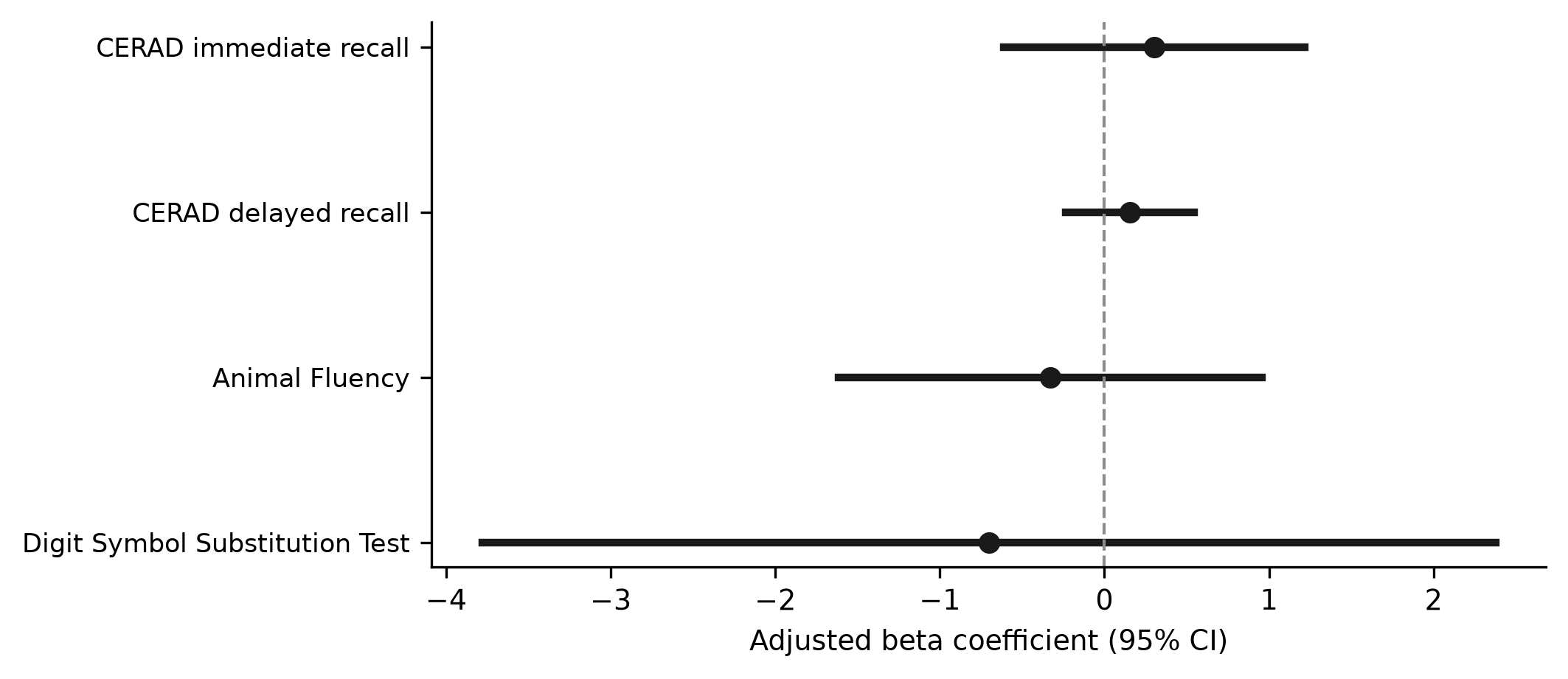
Figure 2. Adjusted association of severe versus none/mild periodontitis with cognitive test scores.
Note: Adjusted beta coefficients and 95% confidence intervals from survey-weighted linear regression. The vertical dashed line marks the null value. Source: Elaboration based on NHANES 2011-2012 and 2013-2014.Cognitive score | Moderate vs none/mild, unadjusted beta (95% CI) | Moderate vs none/mild, adjusted beta (95% CI) | Severe vs none/mild, unadjusted beta (95% CI) | Severe vs none/mild, adjusted beta (95% CI) | Adjusted p for trend |
|---|---|---|---|---|---|
CERAD immediate recall | -0.73 (-1.31 to -0.14) | -0.15 (-0.68 to 0.39) | -0.51 (-1.46 to 0.45) | 0.30 (-0.61 to 1.22) | 0.938 |
CERAD delayed recall | -0.33 (-0.67 to 0.01) | -0.07 (-0.40 to 0.26) | -0.19 (-0.61 to 0.23) | 0.15 (-0.24 to 0.55) | 0.928 |
Animal Fluency | -0.63 (-1.41 to 0.16) | 0.02 (-0.68 to 0.72) | -1.28 (-2.55 to -0.02) | -0.33 (-1.61 to 0.96) | 0.771 |
Digit Symbol Substitution Test | -3.47 (-5.07 to -1.88) | -0.12 (-1.50 to 1.26) | -6.29 (-9.89 to -2.68) | -0.70 (-3.78 to 2.38) | 0.669 |
Note: Beta coefficients (mean difference in score) and 95% confidence intervals. Reference category: none/mild periodontitis. Adjusted models include age, sex, race/ethnicity, education, family income-to-poverty ratio, smoking status, diabetes, body mass index and hypertension. p for trend from the adjusted model with severity coded as an ordered variable. Source: Elaboration based on NHANES 2011-2012 and 2013-2014.
Missing teeth and cognitive test scores
The number of missing teeth was inversely associated with all four cognitive scores in unadjusted models, with deficits of roughly one point or more per 8 teeth for the word-list and fluency tests and a larger deficit for the Digit Symbol Substitution Test, and the associations persisted, attenuated but statistically significant, after full adjustment (Table 4). In unadjusted models the Digit Symbol Substitution Test showed the steepest decline, of −5.43 points per 8 teeth (95% CI, −6.05 to −4.80), which was reduced to −1.84 points after adjustment. Each 8 additional missing teeth was associated with a −1.84-point lower Digit Symbol Substitution Test score (95% CI, −2.41 to −1.28; p = <0.001), a −0.46-point lower Animal Fluency score (95% CI, −0.69 to −0.23; p = <0.001), a −0.22-point lower CERAD immediate recall score (95% CI, −0.43 to −0.01; p = 0.045) and a −0.13-point lower CERAD delayed recall score (95% CI, −0.23 to −0.03; p = 0.012). The adjusted coefficients were smallest for the two CERAD memory measures and largest for the processing-speed test, a graded pattern consistent with the unadjusted estimates. The adjusted associations for missing teeth are shown in (Figure 3).
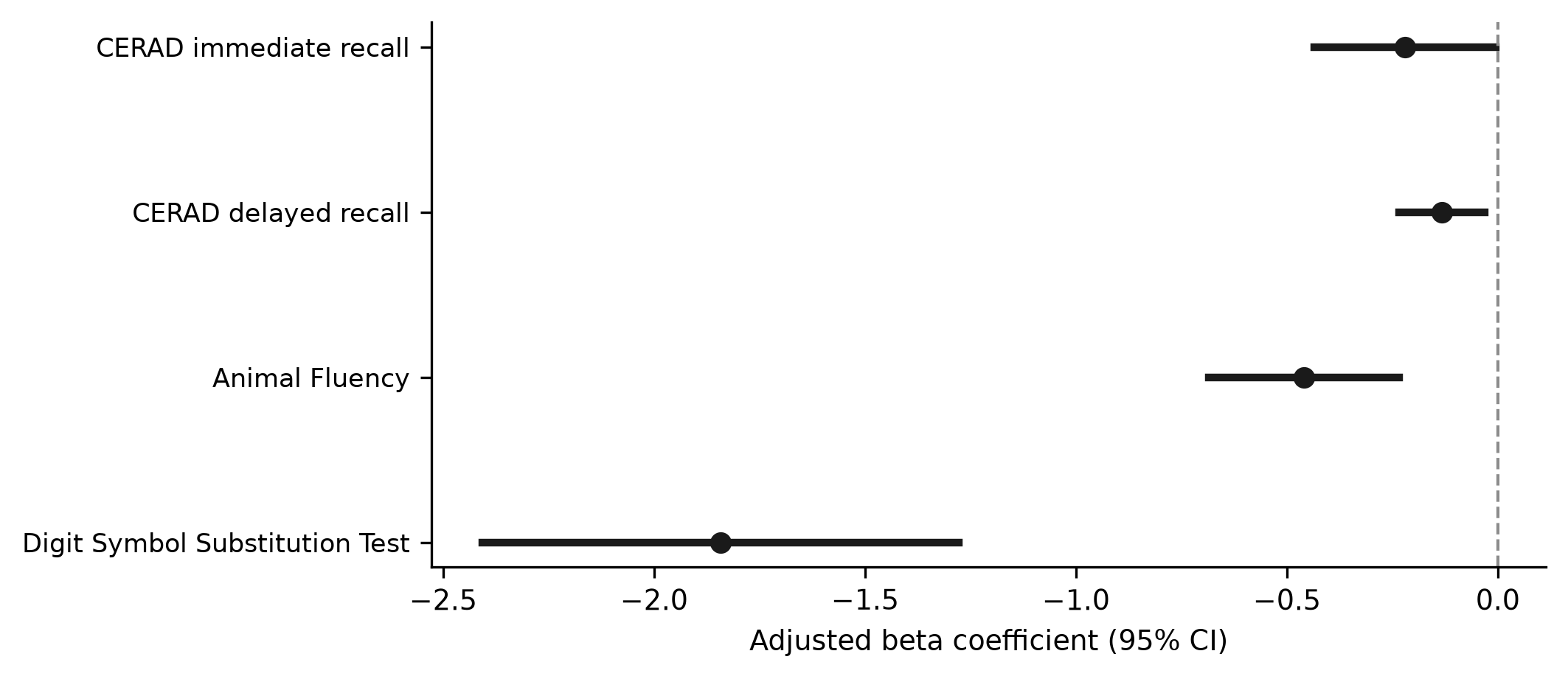
Figure 3. Adjusted association of each 8 additional missing teeth with cognitive test scores.
Note: Adjusted beta coefficients and 95% confidence intervals from survey-weighted linear regression. The vertical dashed line marks the null value. Source: Elaboration based on NHANES 2011-2012 and 2013-2014.Cognitive score | Unadjusted beta (95% CI) | Adjusted beta (95% CI) | Adjusted p value |
|---|---|---|---|
CERAD immediate recall | -0.86 (-1.08 to -0.64) | -0.22 (-0.43 to -0.01) | 0.045 |
CERAD delayed recall | -0.38 (-0.48 to -0.28) | -0.13 (-0.23 to -0.03) | 0.012 |
Animal Fluency | -1.36 (-1.60 to -1.11) | -0.46 (-0.69 to -0.23) | <0.001 |
Digit Symbol Substitution Test | -5.43 (-6.05 to -4.80) | -1.84 (-2.41 to -1.28) | <0.001 |
Note: Beta coefficients (mean difference in score) and 95% confidence intervals. Missing teeth counted among 28 non-third-molar teeth. Adjusted models include age, sex, race/ethnicity, education, family income-to-poverty ratio, smoking status, diabetes, body mass index and hypertension. Source: Elaboration based on NHANES 2011-2012 and 2013-2014.
DISCUSSION
Main findings
In this nationally representative sample of US adults aged 60 years and older, periodontitis severity was associated with lower cognitive test scores in unadjusted analyses, but these associations disappeared after adjustment for sociodemographic, behavioural and metabolic confounders. The number of missing teeth, in contrast, remained independently associated with lower scores on all four cognitive tests after the same adjustment, with the largest per-unit deficit observed for the Digit Symbol Substitution Test. These results indicate that tooth loss, rather than the severity of current periodontal attachment loss, carried the independent signal for poorer cognition in this population.
Several features of the design strengthen confidence in these estimates. The sample is nationally representative and large, periodontal status was measured with a full-mouth clinical examination rather than self-report or a partial-mouth protocol, and the four cognitive tests cover memory, verbal fluency and processing speed rather than a single global score. Because periodontitis severity and tooth loss were measured in the same participants and entered in models with an identical covariate set, the contrast between the two exposures is not attributable to differences in the study population or in the adjustment strategy.
Interpretation and comparison with other studies
The null adjusted association for periodontitis severity is consistent with the heterogeneity documented in systematic reviews, which repeatedly note that periodontitis-cognition associations weaken or disappear when sociodemographic and cardiovascular confounders are included.(11,12) In the Health 2000/2011 Finnish surveys, clinical and radiographic markers of periodontal status were not associated with 11-year cognitive decline after adjustment, whereas tooth count predicted incident dementia, a pattern closely parallel to the present results.(23,24) Several meta-analyses nevertheless report an elevated dementia risk associated with periodontitis.(7,10,25) The difference from the present null finding is plausibly explained by the broader disease definitions and the unadjusted or minimally adjusted estimates pooled in those syntheses, and by reliance on global cognitive instruments that cannot isolate domain-specific associations.(11) Small clinic-based studies have also reported correlations between periodontal inflammation, salivary cytokines and cognitive status,(26) but such samples cannot separate the contributions of shared confounders to the degree possible in a population survey.
For tooth loss, the independent association observed here agrees with prospective evidence from Japan, Ireland and China showing that fewer teeth predict cognitive decline after adjustment.(3-5,27) The graded relationship is compatible with a dose-response meta-analysis that estimated an increasing risk of cognitive impairment with each lost tooth,(6) and with umbrella-level evidence in which tooth loss showed a more robust independent effect than periodontitis.(28) In periodontitis patients specifically, tooth loss has also been linked to mild cognitive impairment in a recent meta-analysis, which emphasizes the clinical relevance of retaining teeth once disease is present.(29) The per-domain pattern, strongest for the Digit Symbol Substitution Test, is biologically plausible because this test is sensitive to processing speed and executive function, domains affected early by vascular and neurodegenerative pathology, and comparable domain-specific associations have been described in clinic-based samples.(30,31) Oral frailty indicators that include tooth loss were likewise associated with late-life cognitive disorders in a systematic review.(32)
The relationship between oral health and cognition is probably not unidirectional. Older adults with cognitive impairment perform oral hygiene less effectively, attend dental services less often, and accumulate periodontal disease and tooth loss as a consequence, so part of the association observed here and in other cross-sectional studies may reflect reverse causation.(19,33) This does not diminish the clinical utility of tooth count as a marker, but it does caution against interpreting the present coefficients as the causal effect of tooth loss on cognition. The two-directional nature of the association also implies that dental care for people with cognitive impairment deserves attention in its own right, beyond any hypothetical protective effect on cognition.
The divergent behaviour of the two exposures deserves interpretation. Periodontitis severity and tooth loss share determinants such as age, smoking and socioeconomic position, and once these are controlled the independent contribution of current attachment loss to cognition appears small.(33) Tooth loss may capture the cumulative history of past periodontal disease and dental care across the life course, and it acts on cognition through pathways beyond current inflammation, including reduced masticatory function, changes in diet and nutrition, and loss of the sensory input that accompanies a complete dentition.(13,16,34) Mastication itself has been proposed to maintain cerebral blood flow and hippocampal activity, so the loss of occlusal surfaces may deprive the ageing brain of a form of ongoing sensory stimulation.(16) Prosthetic rehabilitation appears to attenuate the cognitive consequences of tooth loss, which supports a functional rather than a purely inflammatory explanation.(35,36) Periodontal pathogens can still reach the central nervous system and promote neuroinflammation in susceptible individuals,(14,15,17,37) and subgingival microbiota has been related to brain grey matter volume in imaging studies,(18) but in this cross-sectional sample that pathway did not translate into a measurable severity gradient for current attachment loss.
This study adds to NHANES-based evidence in two ways. Previous analyses of the same 2011-2014 cycles reported that periodontitis mediated part of the association between smoking and cognition and that folate status modified the periodontitis-cognition link,(38,39) whereas the present analysis contrasts severity and tooth loss within one population across four domains. The results are also consistent with an earlier NHANES III analysis in which antibodies against periodontal pathogens, rather than clinical periodontitis itself, were associated with cognition,(40) reinforcing the view that clinical attachment loss measured at a single time point is a weak exposure for cognitive outcomes in this population.(33) Because NHANES combines standardized oral examinations with domain-specific cognitive testing in a representative sample, it remains well suited to monitor these associations across future cycles, and the addition of longitudinal linkage would strengthen the inferences that can be drawn.
Limitations
This study has several limitations. First, the cross-sectional design prevents any inference about the direction or temporality of the associations; tooth loss could precede or follow cognitive decline, and older adults with impaired cognition may retain poorer oral health. Longitudinal designs with repeated oral and cognitive measures are needed to separate these directions.(33) Second, the case definition combined none and mild categories because mild periodontitis was rare in this age group, which limits resolution at the lower end of the severity spectrum, and the surveillance definition itself was developed for population monitoring rather than for clinical staging; future studies could apply the 2017 classification of periodontitis to the same examinations to test whether finer staging improves discrimination of cognitive outcomes. Third, the cognitive battery, although domain-specific, does not constitute a clinical diagnosis of mild cognitive impairment or dementia, so the findings describe performance rather than disease. Fourth, residual confounding cannot be excluded, particularly by unmeasured factors such as dental care use, diet quality, depression and lifetime socioeconomic circumstances, which could be collected in cohort designs with richer life-course data. Fifth, the analysis was restricted to participants with complete data, and those with missing cognitive tests or covariates may differ from the analytic sample; inverse probability weighting or multiple imputation could be used to assess this selection. Sixth, the findings reflect community-dwelling US adults and may not generalize to institutionalized populations, in whom both tooth loss and cognitive impairment are more severe. Seventh, the cognitive tests were administered in a single language version to participants who could complete them, so the estimates may not apply to people with sensory or motor limitations that preclude testing.
Generalization
Within the limits of a cross-sectional survey, these results support a targeted public health message: monitoring tooth retention may identify older adults at higher risk of cognitive decline, independent of their current periodontal status. Tooth count is inexpensive to record and is already part of routine oral examinations, which makes it a practical candidate for risk stratification in geriatric and primary care settings, and it can be obtained without the specialized equipment required for full-mouth periodontal charting. The absence of an independent gradient for periodontitis severity should not be read as evidence that periodontal treatment is irrelevant to cognition, because periodontitis is a major driver of the tooth loss that did show robust associations. Clinicians treating older adults should therefore regard the retention of a functional dentition, through periodontal therapy and prosthetic rehabilitation where indicated, as part of comprehensive care for ageing patients. Longitudinal studies that separate the effects of preventing periodontitis, retaining teeth and rehabilitating the dentition are required to determine whether these relationships are modifiable.
CONCLUSIONS
Periodontitis severity was associated with lower cognitive test scores in unadjusted analyses but not after adjustment for sociodemographic, behavioural and metabolic confounders. The number of missing teeth was independently associated with lower scores on all four cognitive tests after the same adjustment. In this population of US adults aged 60 years and older, tooth loss rather than current periodontitis severity carried the independent association with cognitive performance, and the association was graded across memory, fluency and processing-speed domains. Tooth retention may therefore serve as a practical marker of cognitive vulnerability in clinical and public health settings, although longitudinal confirmation of the direction of these associations is required.
References
- 1 Chen MX, Zhong YJ, Dong QQ, Wong HM, Wen YF. Global, regional, and national burden of severe periodontitis, 1990–2019: An analysis of the Global Burden of Disease Study 2019. J Clinic Periodontology. 2021;48(9):1165-1188. doi: 10.1111/jcpe.13506
- 2 GBD 2017 Oral Disorders Collaborators, Bernabe E, Marcenes W, Hernandez CR, Bailey J, Abreu LG, et al. Global, Regional, and National Levels and Trends in Burden of Oral Conditions from 1990 to 2017: A Systematic Analysis for the Global Burden of Disease 2017 Study. J Dent Res. 2020;99(4):362-373. doi: 10.1177/0022034520908533
- 3 Saito S, Ohi T, Murakami T, Komiyama T, Miyoshi Y, Endo K, et al. Association between tooth loss and cognitive impairment in community-dwelling older Japanese adults: a 4-year prospective cohort study from the Ohasama study. BMC Oral Health. 2018;18(1):142. doi: 10.1186/s12903-018-0602-7
- 4 Winning L, Naseer A, De Looze C, Knight SP, Kenny RA, O'Connell B. Tooth loss and cognitive decline in community dwelling older Irish adults: A cross-sectional cohort study. Journal of Dentistry. 2022;119:104077. doi: 10.1016/j.jdent.2022.104077
- 5 Chen JT, Tsai S, Chen MH, Pitiphat W, Matangkasombut O, Chiou JM, et al. Association between oral health and cognitive impairment in older adults: Insights from a Six-year prospective cohort study. Journal of Dentistry. 2024;147:105088. doi: 10.1016/j.jdent.2024.105088
- 6 Qi X, Zhu Z, Plassman BL, Wu B. Dose-Response Meta-Analysis on Tooth Loss With the Risk of Cognitive Impairment and Dementia. Journal of the American Medical Directors Association. 2021;22(10):2039-2045. doi: 10.1016/j.jamda.2021.05.009
- 7 Nadim R, Tang J, Dilmohamed A, Yuan S, Wu C, Bakre AT, et al. Influence of periodontal disease on risk of dementia: a systematic literature review and a meta-analysis. Eur J Epidemiol. 2020;35(9):821-833. doi: 10.1007/s10654-020-00648-x
- 8 Asher S, Stephen R, Mäntylä P, Suominen AL, Solomon A. Periodontal health, cognitive decline, and dementia: A systematic review and meta‐analysis of longitudinal studies. J American Geriatrics Society. 2022;70(9):2695-2709. doi: 10.1111/jgs.17978
- 9 Dibello V, Custodero C, Cavalcanti R, Lafornara D, Dibello A, Lozupone M, et al. Impact of periodontal disease on cognitive disorders, dementia, and depression: a systematic review and meta-analysis. GeroScience. 2024;46(5):5133-5169. doi: 10.1007/s11357-024-01243-8
- 10 KIM DH, HAN GS. PERIODONTITIS AS A RISK FACTOR FOR DEMENTIA: A SYSTEMATIC REVIEW AND META-ANALYSIS. Journal of Evidence-Based Dental Practice. 2025;25(2):102094. doi: 10.1016/j.jebdp.2025.102094
- 11 Larvin H, Gao C, Kang J, Aggarwal VR, Pavitt S, Wu J. The impact of study factors in the association of periodontal disease and cognitive disorders: systematic review and meta-analysis. Age Ageing. 2023;52(2):afad015. doi: 10.1093/ageing/afad015
- 12 Dziedzic A. Is Periodontitis Associated with Age-Related Cognitive Impairment? The Systematic Review, Confounders Assessment and Meta-Analysis of Clinical Studies. IJMS. 2022;23(23):15320. doi: 10.3390/ijms232315320
- 13 Loos BG, Van Dyke TE. The role of inflammation and genetics in periodontal disease. Periodontology 2000. 2020;83(1):26-39. doi: 10.1111/prd.12297
- 14 Visentin D, Gobin I, Maglica Ž. Periodontal Pathogens and Their Links to Neuroinflammation and Neurodegeneration. Microorganisms. 2023;11(7):1832. doi: 10.3390/microorganisms11071832
- 15 Jungbauer G, Stähli A, Zhu X, Auber Alberi L, Sculean A, Eick S. Periodontal microorganisms and Alzheimer disease – A causative relationship?. Periodontology 2000. 2022;89(1):59-82. doi: 10.1111/prd.12429
- 16 Wang X, Hu J, Jiang Q. Tooth Loss-Associated Mechanisms That Negatively Affect Cognitive Function: A Systematic Review of Animal Experiments Based on Occlusal Support Loss and Cognitive Impairment. Front Neurosci. 2022;16:811335. doi: 10.3389/fnins.2022.811335
- 17 Zhou Y, Xie X, Chen H, Xu L, Qiu C, Shen H, et al. Stat3-mediated Th17 pathogenicity induced by periodontitis contributes to cognitive impairment by promoting microglial M1 polarization. Front Immunol. 2025;16:1590665. doi: 10.3389/fimmu.2025.1590665
- 18 Wang W, Tao Y, Zhu W, Gao Z, Li Y, Ye W, et al. Periodontitis and Subgingival Plaque Microbiota Associated With Brain Grey Matter Volume and Cognitive Impairment. J Clinic Periodontology. 2025;52(9):1327-1337. doi: 10.1111/jcpe.14196
- 19 Saji N, Matsushita K, Takeda A, Sakurai T. Association between periodontal disease and age-related cognitive impairment: a narrative review. BMC Oral Health. 2025;25(1):373. doi: 10.1186/s12903-025-05632-z
- 20 Centers for Disease Control and Prevention, National Center for Health Statistics. National Health and Nutrition Examination Survey 2011-2014: demographics, oral health and cognitive functioning data files [Internet]. 2017. Available from: https://wwwn.cdc.gov/Nchs/Nhanes/continuousnhanes/default.aspx
- 21 Eke PI, Page RC, Wei L, Thornton‐Evans G, Genco RJ. Update of the Case Definitions for Population‐Based Surveillance of Periodontitis. Journal of Periodontology. 2012;83(12):1449-1454. doi: 10.1902/jop.2012.110664
- 22 Morris JC, Heyman A, Mohs RC, Hughes JP, van Belle G, Fillenbaum G, et al. The Consortium to Establish a Registry for Alzheimer's Disease (CERAD). Part I. Clinical and neuropsychological assesment of Alzheimer's disease. Neurology. 1989;39(9):1159-1159. doi: 10.1212/wnl.39.9.1159
- 23 Asher S, Suominen AL, Stephen R, Ngandu T, Koskinen S, Solomon A. Clinical and Radiological Markers of Periodontal Status and Risk of Cognitive Decline and Incident Dementia. J Clinic Periodontology. 2025;52(8):1082-1098. doi: 10.1111/jcpe.14173
- 24 Asher S, Suominen AL, Stephen R, Ngandu T, Koskinen S, Solomon A. Association of tooth count with cognitive decline and dementia in the Finnish adult population. J Clinic Periodontology. 2023;50(9):1154-1166. doi: 10.1111/jcpe.13851
- 25 Hu X, Zhang J, Qiu Y, Liu Z. Periodontal disease and the risk of Alzheimer's disease and mild cognitive impairment: a systematic review and meta‐analysis. Psychogeriatrics. 2021;21(5):813-825. doi: 10.1111/psyg.12743
- 26 Leander MA, Karimah Z, Kuswandani SO, Lessang R, Masulili SLC, Sulijaya B, et al. The Association of Periodontal Status, Salivary Flow Rate, Salivary Cortisol Levels, and Cytokine Levels with Cognitive Status in Elderly Subjects. Geriatrics. 2025;10(5):127. doi: 10.3390/geriatrics10050127
- 27 Xu S, Huang X, Gong Y, Sun J. Association between tooth loss rate and risk of mild cognitive impairment in older adults: a population-based longitudinal study. Aging. 2021;13(17):21599-21609. doi: 10.18632/aging.203504
- 28 Qadir BH, Mahmood MK, Amin YMM, Kurda HA, Rasheed TA, Noori AH, et al. Periodontitis and Tooth Loss Are Associated With Higher Risks of Cognitive Disorders: A Systematic Umbrella Meta‐Analysis. Clinical &amp; Exp Dental Res. 2025;11(6):e70240. doi: 10.1002/cre2.70240
- 29 Agarwal B, Bizzoca ME, Musella G, De Vito D, Lo Muzio L, Ballini A, et al. Tooth Loss in Periodontitis Patients—A Risk Factor for Mild Cognitive Impairment: A Systematic Review and Meta—Analysis. JPM. 2024;14(9):953. doi: 10.3390/jpm14090953
- 30 Wu SY, Wu CY, Lin YS, Lin CS, Lee WJ, He SJ, et al. Oral health variables associated with factors across the Alzheimer's disease continuum: from subjective cognitive decline to dementia. Journal of Dentistry. 2025;160:105862. doi: 10.1016/j.jdent.2025.105862
- 31 Gao C, Larvin H, Bishop DT, Bunce D, Pavitt S, Wu J, et al. Oral diseases are associated with cognitive function in adults over 60 years old. Oral Diseases. 2024;30(5):3480-3488. doi: 10.1111/odi.14757
- 32 Dibello V, Solfrizzi V, Lozupone M, Vertucci V, Santarcangelo F, Pace C, et al. Targeting oral frailty indicators of late-life cognitive disorders and depression: a systematic review. Age Ageing. 2025;54(7):afaf182. doi: 10.1093/ageing/afaf182
- 33 Thomson WM, Barak Y. Tooth Loss and Dementia: A Critical Examination. J Dent Res. 2021;100(3):226-231. doi: 10.1177/0022034520957233
- 34 Nakamura H, Noguchi-Shinohara M, Ishimiya-Jokaji M, Kobayashi Y, Isa M, Ide K, et al. Brain atrophy in normal older adult links tooth loss and diet changes to future cognitive decline. npj Aging. 2024;10(1):20. doi: 10.1038/s41514-024-00146-4
- 35 Chou YC, Weng SH, Cheng FS, Hu HY. Denture Use Mitigates the Cognitive Impact of Tooth Loss in Older Adults. The Journals of Gerontology, Series A: Biological Sciences and Medical Sciences. 2024;80(1):glae248. doi: 10.1093/gerona/glae248
- 36 Qi X, Zhu Z, Pei Y, Wu B. Denture use and a slower rate of cognitive decline among older adults with partial tooth loss in China: A 10‐year prospective cohort study. Aging Medicine. 2024;7(6):781-789. doi: 10.1002/agm2.12383
- 37 Gil-Montoya JA, Gerez-Muñoz MJ, Triviño-Ibáñez E, Carrera-Muñoz I, Bravo M, Rashki M, et al. Periodontal disease and brain amyloid pathology in mild cognitive impairment. Neurología (English Edition). 2025;40(7):641-650. doi: 10.1016/j.nrleng.2025.07.008
- 38 Luan X, Jin Z, Xia S, Li J, An Y, Gao J, et al. Smoking impairs cognitive function through the mediating effect of periodontitis in older adults. BMC Psychiatry. 2025;25(1):292. doi: 10.1186/s12888-025-06699-2
- 39 Liu F, Liu Y, Feng Y, Zhao J, Wang M, Ye M, et al. Folate mediates cognitive impairment of aged people with periodontitis. Nutritional Neuroscience. 2025;28(12):1619-1631. doi: 10.1080/1028415x.2025.2536038
- 40 Merchant AT, Zhao L, Bawa EM, Yaseri AF, Lohman M, Zhang J, et al. Apolipoprotein E4 allele, antibodies against periodontal microorganisms, and cognition in older adults. Journal of Alzheimer's Disease Reports. 2025;9:25424823251370770. doi: 10.1177/25424823251370770
Declarations
Funding
No financing
Conflict of interest
None
Authorship contributions
Drafting – original draft: Arlin Castro Diaz.
Writing–review and editing: Arlin Castro Diaz.