

Abstract
Introduction: Retraction is the principal mechanism for removing unreliable findings from the scientific record, and retractions have increased worldwide. Dentistry has received less systematic attention than medicine, particularly for time to retraction and post-retraction citations. Methods: Cross-sectional study of all records in the Retraction Watch database tagged as dentistry with a retraction date up to 2025. Reasons were described as recorded, time to retraction was computed in months, and post-retraction citations, defined as citations received in the year of retraction or later, were obtained from OpenAlex. Groups were compared with the Mann-Whitney and Kruskal-Wallis tests. Results: A total of 498 retracted dental publications were identified between 2002 and 2025. The most frequent reasons were investigation by the journal or publisher, unreliable results and concerns about data. Median time to retraction was 20 months and fell from 27.5 months in 2002-2019 to 17 months in 2020-2025. Of 447 publications matched in OpenAlex, 86.1% were cited at least once after retraction and 52.7% of all citations were received after retraction. Conclusions: Dental retractions are driven mainly by reliability and peer-review concerns, occur faster in recent years, and remain widely cited after retraction, which warrants clearer labeling of retracted status and reference checks before citation.
Keywords
retraction of publication, dentistry, scientific misconduct, bibliometrics, time factors
INTRODUCTION
Retraction removes from the scientific record an article whose findings can no longer be trusted; it is the last corrective instrument editors have once an erratum or an expression of concern proves insufficient. The number of retracted articles has risen steeply over the past two decades, from a few dozen each year at the turn of the century to several hundred annually in recent years, although part of this growth reflects more rigorous detection, better databases and greater editorial willingness to act rather than a worsening of research conduct.(1,2) A comprehensive survey of the scholarly literature found that fraud or suspected fraud, duplicate publication and plagiarism account for most retractions and that biomedical journals concentrate the majority of cases, while a smaller but important share is withdrawn because of honest error or administrative reasons.(3) Retraction is therefore not a rare event but a structural feature of the correction of the record, with measurable consequences for the evidence on which clinicians and researchers build and for the careers of the authors involved.(4) Understanding why publications are withdrawn, how quickly that happens, and whether the withdrawn work keeps circulating through citations is thus a research integrity question with direct clinical implications. This is especially true in dentistry, where the evidence base rests heavily on materials science, implantology and rapidly evolving techniques whose retracted studies can linger in systematic reviews and clinical guidelines long after their withdrawal.
In dentistry, retractions have been described in several field-specific surveys, which consistently report data problems, plagiarism and duplicate publication among the leading causes and a growing number of dental retractions over time.(5-7) A 23-year review of dental retractions and a systematic synthesis of the dental retraction literature reached broadly similar conclusions, although their observation windows ended before the acceleration of paper mills and machine-generated manuscripts that now occupy a visible share of biomedical retraction notices.(7,8) Two problems remain underexplored. First, retracted dental articles continue to be cited as if they were still valid, frequently without any indication of their retracted status in the citing reference list, which can propagate unsupported conclusions into reviews, guidelines and clinical decisions.(9,10) Second, dental studies rarely quantify how long retraction takes or how much of the citation record accrues after the notice, and they have not jointly analyzed reasons, time to retraction and post-retraction citation using registry data that capture the paper-mill and AI-generated content phenomena now dominant in biomedicine.(11,12) Meta-research in dentistry has expanded considerably but has not yet combined these three outcomes in a single cohort, which limits the field's ability to design targeted prevention.(13)
The present study therefore aimed to characterize retractions of dental publications recorded up to 2025 in terms of reasons, time to retraction and post-retraction citations. Three questions were addressed. (P1) What are the main reasons for retraction of dental publications? (P2) How long does retraction take, and does this vary by reason category and period? (P3) How often are retracted dental publications still cited after retraction? Each question was operationalized against a public registry and an open citation index so that the answers could be reproduced by others and updated as new retractions are recorded.
METHODS
Design and data sources
This was a retrospective cross-sectional study of retractions recorded in the Retraction Watch database, the largest openly available registry of retractions, corrections and expressions of concern, currently distributed as a comma-separated file by Crossref.(14) The study is reported in accordance with the STROBE recommendations for observational studies using routinely collected registry data, in which the unit of analysis is the retraction record rather than an individual participant. The file downloaded on 25 October 2026 contained 73,356 records, each describing one affected publication with its title, journal, publisher, country, article type, retraction nature, retraction date, original publication date, original DOI and reason labels. The registry was chosen because it is curated, covers retractions worldwide across all publishers, and records both the affected publication and its retraction notice, which is the information required to compute time to retraction. Citation data were obtained from the OpenAlex API, a fully open scholarly index that aggregates citation counts by year for each indexed work, which was queried on the same date.(15) The study used only public, de-identified registry data and therefore required no ethical approval.
Eligibility criteria (P1)
Records were included when the subject field carried the label "(HSC) Medicine - Dentistry", the retraction nature was "Retraction", and the retraction date fell between 1 January 2002, the earliest dental retraction in the registry, and 31 December 2025, the predefined end of the observation window. Corrections, expressions of concern and reinstatements were excluded because they do not represent full retractions, as were records lacking a retraction date or an original publication date, which are required to answer P2. No records were excluded for missing country, journal or author information, since these fields were not part of the eligibility rule and their absence affected only the descriptive tables. This selection produced a census of retracted dental publications rather than a sample, and the resulting cohort is described in the first paragraph of Results.
Reasons and time to retraction (P1 and P2)
Reasons were taken verbatim from the Reason field of the database, which records the justification stated in each retraction notice. Because one record can carry several reasons, reasons are reported as non-exclusive counts and percentages, and no single reason was assumed to summarize a notice. To answer P2 by reason, the verbatim labels were grouped into ten categories, namely data integrity and reliability, peer review and paper mills, image manipulation, AI-generated content, duplication, plagiarism, ethical approval and consent, authorship and objections, referencing and attribution, and other; each record was then assigned a single primary category according to the priority order shown in the note of Table 3, so that every publication contributes once to the stratified analysis and no record is double counted. Time to retraction was computed in months as the difference between the retraction date and the original publication date, with zero months indicating a retraction issued in the same month as publication.
Citation outcomes (P3)
For each record with an original digital object identifier (DOI), citation counts by year were retrieved from OpenAlex, after normalizing the DOI to lowercase and removing URL prefixes. DOIs were queried in batches of 50, and a publication was considered matched when its DOI resolved to an OpenAlex work. Post-retraction citations were defined as citations received in the year of retraction or later; citations received in earlier years were treated as pre-retraction, and the share of the total citation record that accrued after the retraction was used to answer P3. Records whose DOI could not be matched in OpenAlex were excluded from the citation analysis and are reported as non-matched, so the citation estimates refer to the matched subset only. Citation counts were captured as of the extraction date and therefore reflect the state of OpenAlex at a single point in time.
Data management and coding
Data management was performed in Python. The Reason field was split on semicolons into individual labels, and each label was assigned to one of the ten categories through a documented keyword mapping; labels that matched no keyword, together with procedural labels such as investigation notices, were assigned to the category other. Article types were grouped from the ArticleType field into research articles, reviews and other formats. Countries and journals were taken as recorded in the registry without further normalization, so the counts of distinct countries and journals should be read as registry labels rather than as normalized geographic or editorial units. The cohort extracted from the registry was saved as a separate file so that the analysis could be reproduced without re-downloading the full registry.
Statistical analysis
Continuous variables are summarized as median with interquartile range (P25-P75) because their distributions were right-skewed, and categorical variables as counts and percentages. Time to retraction was compared between the two predefined periods, 2002-2019 and 2020-2025, with the Mann-Whitney U test, and across primary reason categories with the Kruskal-Wallis test, using a two-sided alpha of 0.05. The observation window was divided at 2020 because the first paper-mill retractions in this cohort appeared around that year and because the split creates two periods of comparable size, which permits a simple comparison of detection speed before and during the recent editorial-screening era. No sample-size calculation was needed because the analysis used a census of registry records rather than a sample, and no multiplicity adjustment was applied because the comparisons were prespecified and few in number. Analyses were performed in Python 3.14 with pandas, NumPy, SciPy and Matplotlib, and the analysis script was run twice with identical results to confirm reproducibility.
RESULTS
Between 2002 and 2025, 498 dental publications with a retraction nature of Retraction were identified in the Retraction Watch database (Table 1). The annual number of retractions was low and intermittent until the early 2010s, with 19 cases in 2012, then rose to 55 in 2016 and 42 in 2019, peaked at 86 in 2,023, and fell back to 42 in 2024 and 25 in 2025 (Figure 1). Research articles accounted for 268 of the 498 records (53.8%) and reviews for 126 (25.3%), with case reports, clinical studies, letters and other formats making up the remaining 104 (20.9%); the records were spread across 204 journals and 125 countries (Table 1). The predominance of research articles indicates that the withdrawn material was, in most cases, primary evidence rather than commentary or secondary synthesis, and primary evidence is the material that secondary syntheses and clinical guidance documents reuse. The most frequent journals were Cochrane Database of Systematic Reviews (73 retractions), BioMed Research International (22) and Clinical Oral Implants Research (21), and the most frequent countries were China (112), India (65) and United Kingdom (33) (Table 1). The largest single journal, the Cochrane Database of Systematic Reviews, contributed 73 records, all of them reviews; these correspond to the systematic withdrawal of outdated or unreliable Cochrane dental reviews over several years. A total of 488 records carried an original DOI, and 447 of these were matched in OpenAlex for the citation analysis (Table 1).
Characteristic | Value |
|---|---|
Retracted publications, n | 498 |
Period of retraction | 2002-2025 |
With original DOI, n (%) | 488 (98.0) |
Matched in OpenAlex, n (%) | 447 (89.8) |
Research articles, n (%) | 268 (53.8) |
Reviews, n (%) | 126 (25.3) |
Most frequent journals | Cochrane Database of Systematic Reviews (73); BioMed Research International (22); Clinical Oral Implants Research (21) |
Most frequent countries | China (112); India (65); United Kingdom (33) |
Note: DOI = digital object identifier. Source: Own elaboration from the Retraction Watch database (Crossref) and OpenAlex (accessed 25 October 2026).
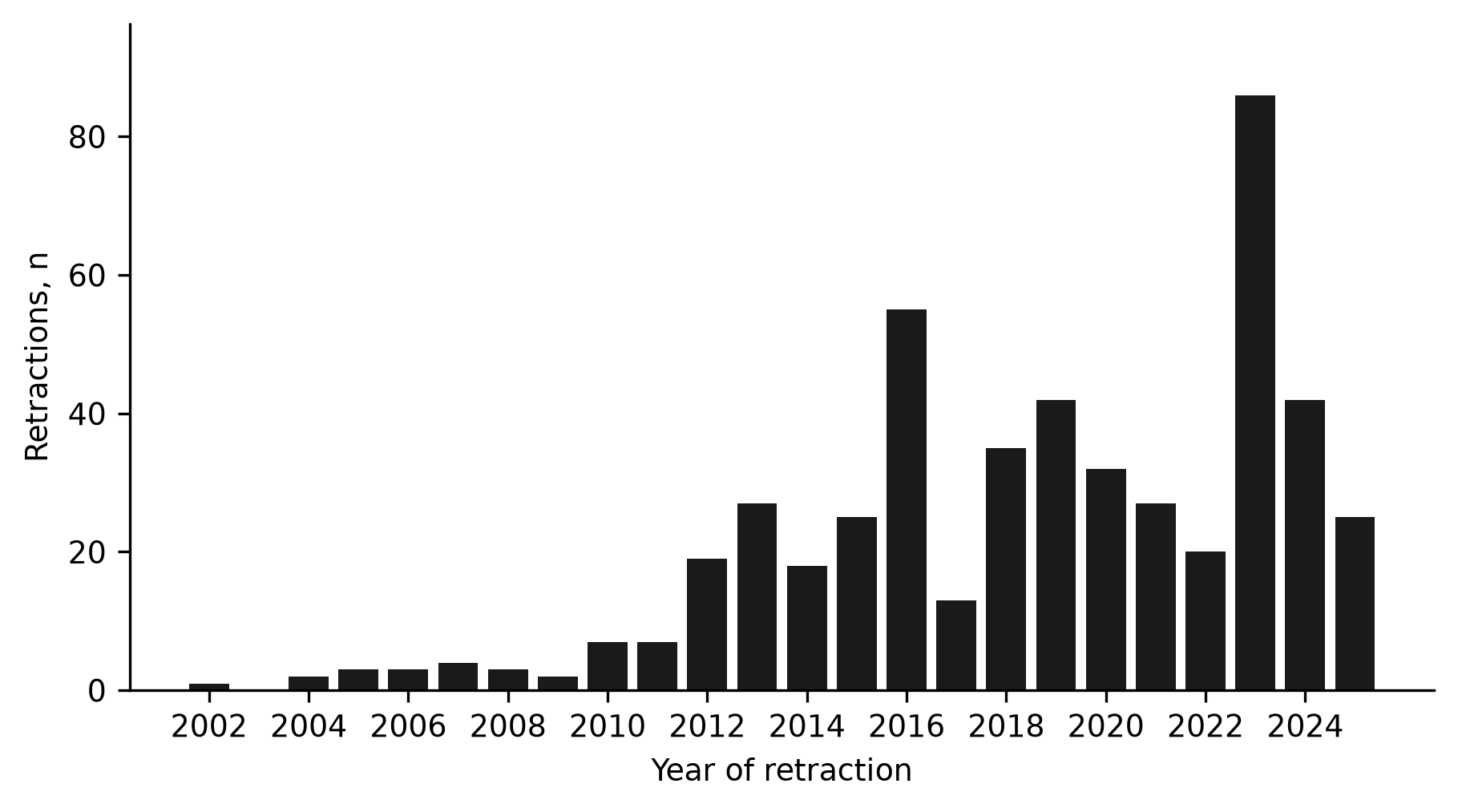
Figure 1. Retracted dental publications by year of retraction, 2002-2025.
Source: Own elaboration from the Retraction Watch database (Crossref).Reliability and peer-review concerns dominated the reasons for retraction
The most frequent reason was investigation by the journal or publisher, recorded in 174 publications (34.9%), followed by unreliable results and conclusions (135, 27.1%) and concerns about data (118, 23.7%); the ten most frequent reasons are listed in Table 2 (Table 2; Figure 2). The two investigation labels describe who carried out the inquiry rather than the underlying misconduct, and they co-occur with substantive reasons, which is why the grouped categories reported below overlap. When the verbatim labels were grouped into categories, data integrity and reliability affected 207 publications (41.6%), and concerns about peer review together with paper mills affected 111 (22.3%). Plagiarism was recorded in 72 (14.5%), duplication in 66 (13.3%), referencing and attribution problems in 86 (17.3%), ethical approval and consent issues in 57 (11.4%), authorship problems in 66 (13.3%), and AI-generated content in 50 (10.0%). The reason profile changed across the observation window: concerns about peer review and paper mills affected 1 publication in 2002-2019 (0.4%) but 110 in 2020-2025 (47.4%), and AI-generated content, absent before 2020, was recorded in 50 publications (21.6%) in the recent period.
Reason | n | % |
|---|---|---|
Investigation by Journal/Publisher | 174 | 34.9 |
Unreliable Results and/or Conclusions | 135 | 27.1 |
Concerns/Issues about Data | 118 | 23.7 |
Investigation by Third Party | 102 | 20.5 |
Concerns/Issues about Referencing/Attributions | 86 | 17.3 |
Concerns/Issues about Peer Review | 77 | 15.5 |
Paper Mill | 68 | 13.7 |
Concerns/Issues about Results and/or Conclusions | 64 | 12.9 |
Withdrawn as Out of Date | 58 | 11.6 |
Computer-Aided Content or Computer-Generated Content | 50 | 10.0 |
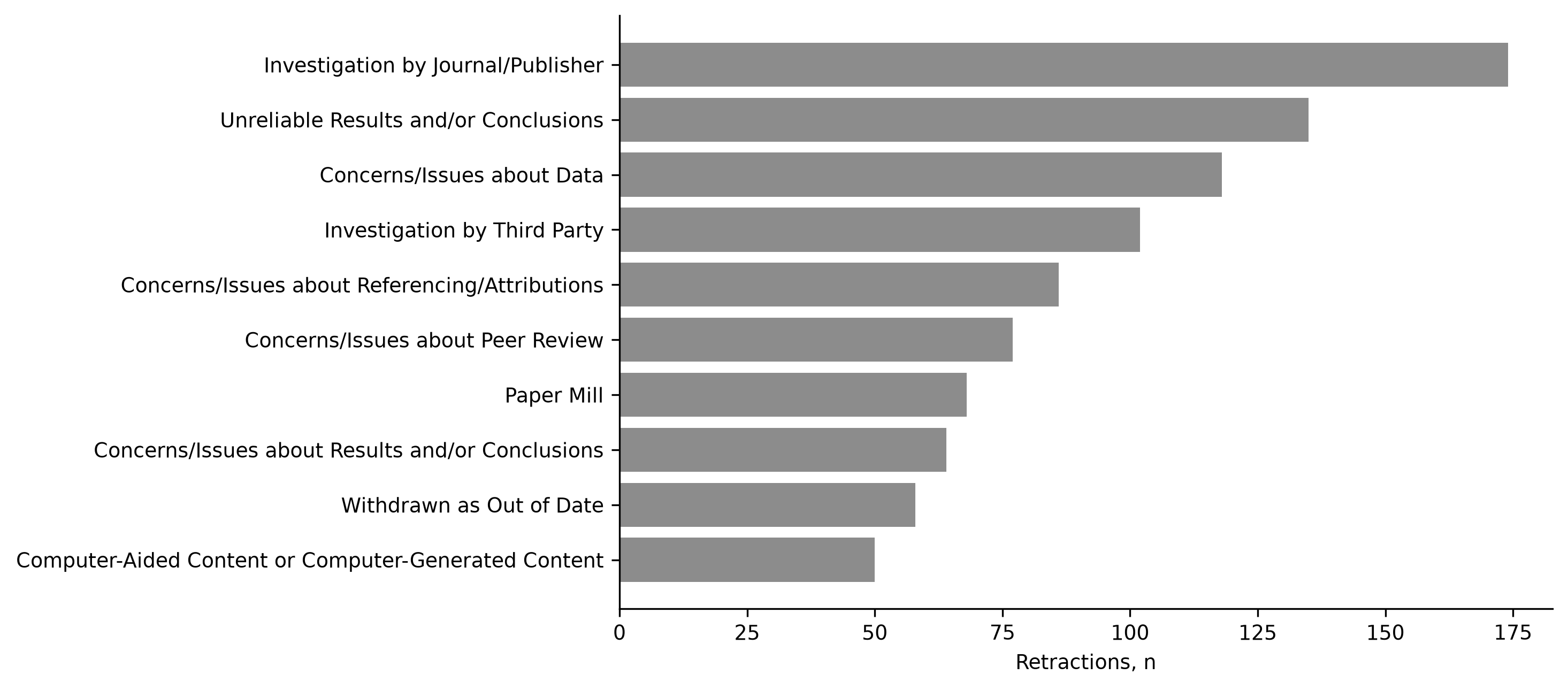
Figure 2. Ten most frequent reasons for retraction of dental publications.
Note: Reasons are not mutually exclusive. Source: Own elaboration from the Retraction Watch database (Crossref).Median time to retraction was 20 months and shortened after 2019
Across all 498 publications, median time to retraction was 20 months (IQR 10-63), with a range of 0 to 238 months (Figure 3). The distribution was right-skewed, with a mean of 42.2 months; 33.5% of retractions occurred within one year of publication, 56.6% within two years and 74.1% within five years. The histogram in Figure 2 shows that the largest single group of retractions occurred within the first year, with progressively fewer publications withdrawn at longer intervals and a thin tail of cases detected more than a decade after publication. Median time to retraction fell from 27.5 months in 2002-2019 (n = 266; IQR 8-85.20) to 17 months in 2020-2025 (n = 232; IQR 11-37; Mann-Whitney p = 0.018), and the interquartile range narrowed considerably, indicating more uniform detection in the recent period (Table 3). By primary reason category, time to retraction differed significantly (Kruskal-Wallis p <0.001); it was shortest for authorship and objections and longest for administrative reasons, with image manipulation also showing a long delay (Table 3).
Group | n | Median (months) | P25-P75 |
|---|---|---|---|
Overall | 498 | 20.0 | 10.0-63.0 |
2002-2019 | 266 | 27.5 | 8.0-85.2 |
2020-2025 | 232 | 17.0 | 11.0-37.0 |
Data integrity and reliability | 207 | 19.0 | 12.0-37.0 |
Peer review and paper mills | 14 | 14.0 | 12.0-18.2 |
Image manipulation | 12 | 36.5 | 13.8-96.0 |
Duplication | 53 | 15.0 | 5.0-42.0 |
Plagiarism | 65 | 17.0 | 7.0-39.0 |
Ethical approval and consent | 21 | 24.0 | 9.0-62.0 |
Authorship and objections | 14 | 7.0 | 1.5-15.0 |
Referencing and attribution | 7 | 10.0 | 7.0-14.0 |
Other | 105 | 91.0 | 16.0-138.0 |
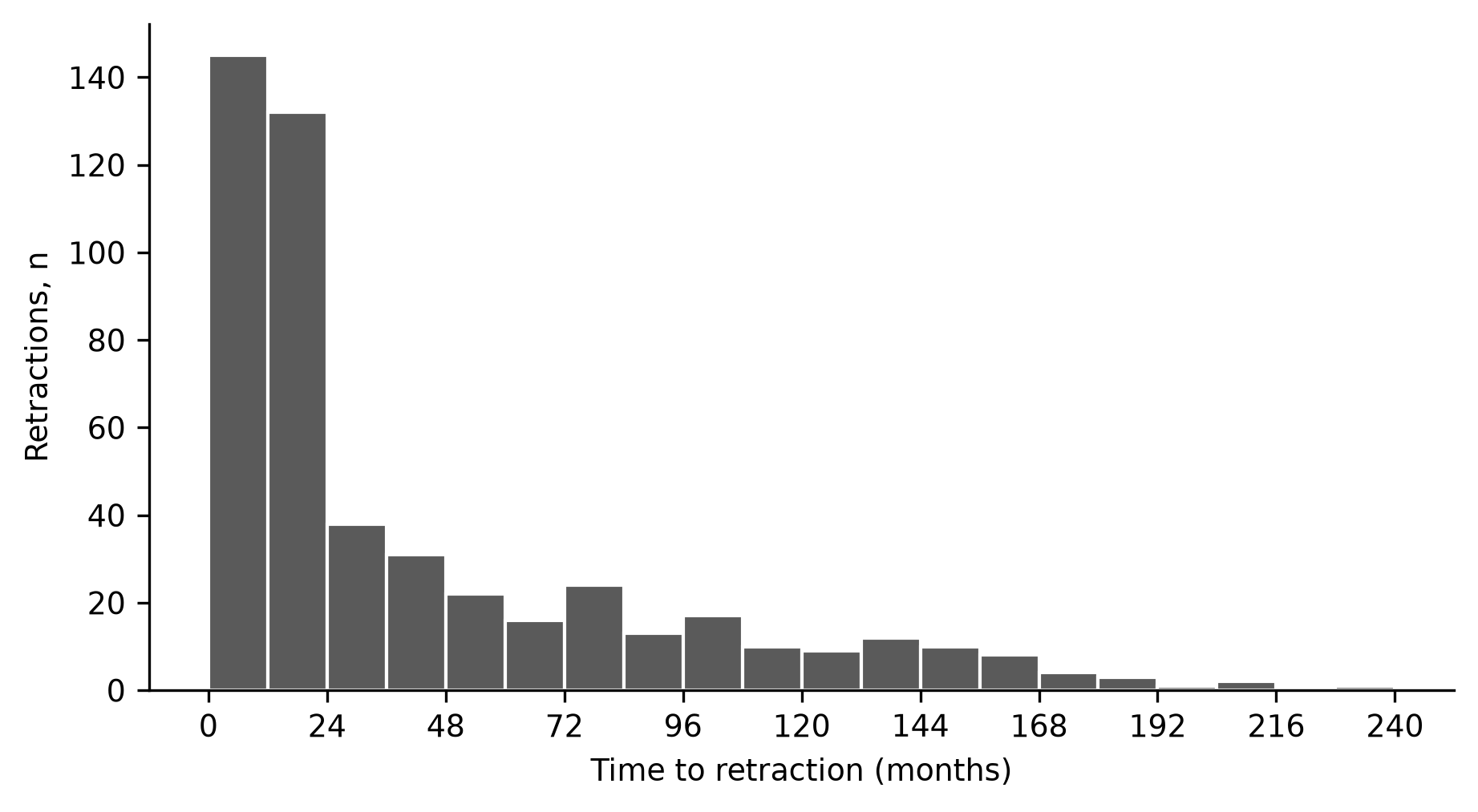
Figure 3. Distribution of time to retraction (months) among 498 retracted dental publications.
Source: Own elaboration from the Retraction Watch database (Crossref).Most retracted publications continued to be cited after retraction
Of the 447 publications matched in OpenAlex, 86.1% were cited at least once after retraction (Table 4). The matched publications received a median of 7 citations in total, of which a median of 4 (IQR 1-12) were post-retraction; in aggregate, 5,314 of the 10,080 citations received by the matched cohort, 52.7%, accrued in the year of retraction or later (Table 4). A total of 62 publications received no citation after retraction, while the rest concentrated between one and five post-retraction citations, with a small group receiving more than ten (Figure 4). Because 52.7% of citations were post-retraction, the complementary share accrued before the notice, indicating that these publications had already entered the citation network before their withdrawal and that the retraction did not stop their circulation. A sensitivity analysis that counted as post-retraction only citations received in years strictly after the retraction year, thereby excluding any citation in the retraction year itself, still attributed 4,204 citations (41.7%) to the post-retraction period, confirming that the pattern did not depend on how the retraction year was assigned.
Metric | Value |
|---|---|
Matched publications, n | 447 |
Cited at least once after retraction, n (%) | 385 (86.1) |
Post-retraction citations per publication, median [P25-P75] | 4.0 [1.0-12.0] |
Total citations (all years) | 10080 |
Total post-retraction citations | 5314 |
Citations received after retraction, % | 52.7 |
Note: Post-retraction citations = citations received in the year of retraction or later. Source: Own elaboration from the Retraction Watch database (Crossref) and OpenAlex.
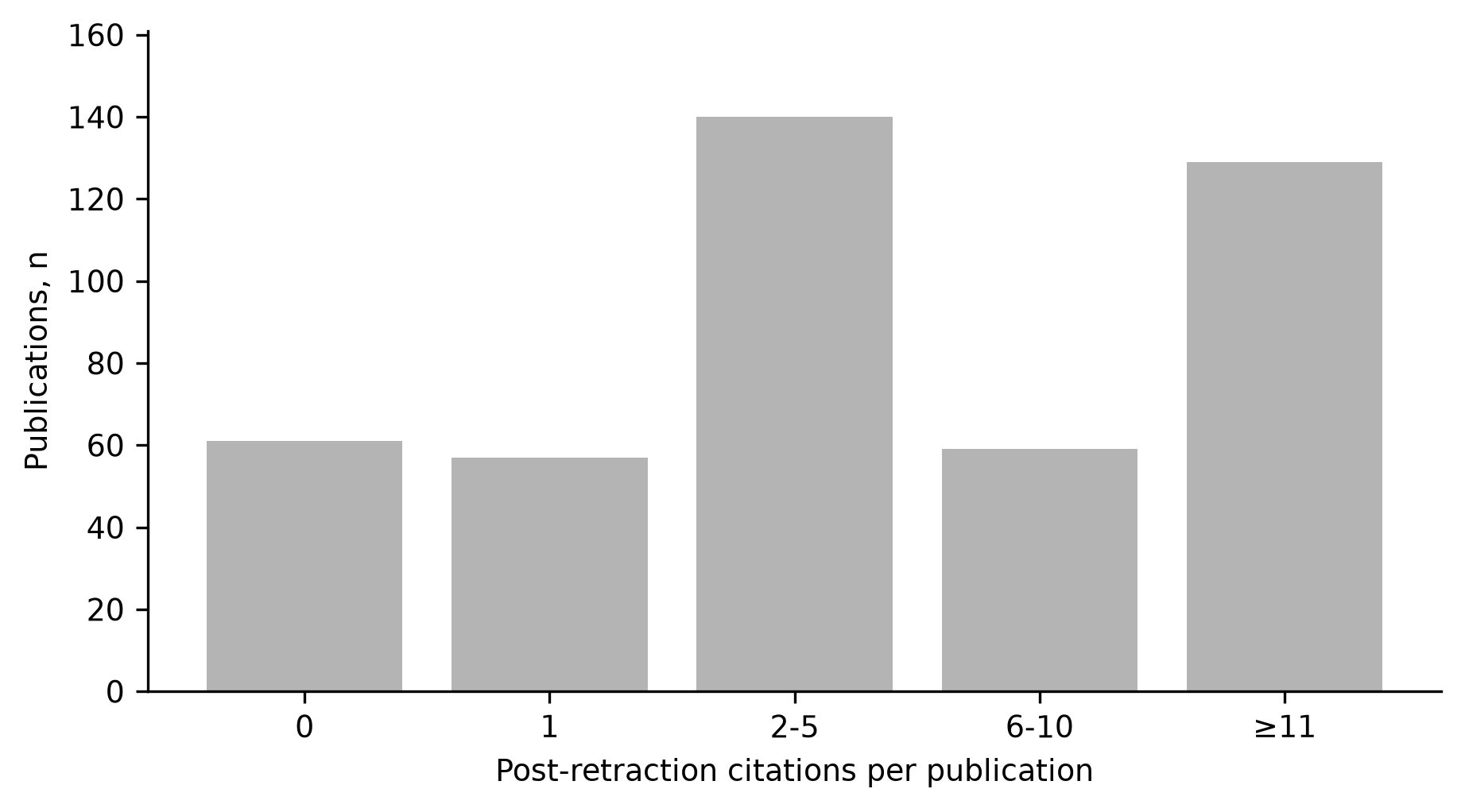
Figure 4. Post-retraction citations per retracted dental publication.
Source: Own elaboration from the Retraction Watch database (Crossref) and OpenAlex.DISCUSSION
This census of the Retraction Watch registry identified 498 dental publications retracted between 2002 and 2025, and shows that retraction in dentistry is dominated by reliability concerns and by the processes used to investigate them. The analysis joins, in a single cohort, the three outcomes that previous dental studies treated separately, namely reasons, time to retraction and post-retraction citation, using registry data up to 2025 and an independent citation index rather than the notice texts alone. The estimates are therefore directly comparable across the three questions, and they provide a baseline against which future dental cohorts can measure whether retraction practice continues to improve. Because the cohort is defined by a registry subject tag rather than by journal, it captures dental content published in general and specialty venues alike, which broadens the picture beyond what a journal-list approach would show.
Regarding P1, the most frequent reasons were investigations by the journal or publisher and by third parties, unreliable results and conclusions, and concerns about data. This pattern is consistent with the biomedical literature, in which misconduct and data problems are the leading causes of retraction,(1) and with studies of retraction notices that identify error and fraud as the commonest triggers.(16,17) Earlier dental surveys also found data problems, plagiarism and duplicate publication among the main reasons, although they relied on smaller samples and could not capture paper mills or AI-generated content.(5,6,8) The presence of paper mills and compromised peer review in 111 publications and of AI-generated content in 50 reflects a newer phenomenon that has spread across biomedicine over the past few years and that earlier dental cohorts predate.(11,18) Plagiarism, recorded in 72 publications, was proportionally less frequent than in some earlier dental reports, which may reflect a shift in notice language toward data reliability and third-party investigation rather than a true decline in textual misconduct.(7,19) The distribution of reasons in dentistry also resembles that reported for neighboring specialties such as anesthesiology, pain research and rehabilitation, and for analyses of the same registry in infectious diseases.(20-23) Analyses of cardiovascular and surgical retractions describe a similar mixture of error and misconduct, which suggests that the dental pattern reflects general biomedical dynamics rather than a field-specific pathology.(24,25) The prominence of data and reliability labels is also consistent with the observation that retraction notices increasingly invoke reproducibility rather than the classic categories of plagiarism and duplication, a shift that editors should keep in mind when they design notice templates that readers will later mine for reasons. The large share of investigation labels is itself informative, because it indicates that journals often cannot attribute a single cause until an inquiry concludes, a procedural feature also noted in studies of retraction notices.(26) The reason profile also changed markedly across the observation window: data integrity concerns rose from 18.0% of early retractions to 68.5% of recent ones, and paper mills together with peer-review concerns went from a negligible presence to 47.4% of retractions in 2020-2025. Part of this shift reflects the improving coverage and finer labeling of the registry in recent years rather than a change in the underlying misconduct alone, a limitation shared by all registry-based studies and one that should temper any reading of the trend as purely behavioral.(11)
Regarding P2, the median time from publication to retraction was 20 months, with wide variation across reason categories and a right-skewed distribution in which one third of retractions occurred within a year and three quarters within five years. This estimate is shorter than the median reported for genetics articles, where retraction took considerably longer, and longer than the accelerated retractions observed for COVID-19 papers during the pandemic.(12,27) Time to retraction shortened from 27.5 to 17 months between the two periods, consistent with faster editorial handling, the spread of image screening and post-publication review, and the coordinated detection of paper mills.(28,29) Retractions driven by image manipulation and by administrative reasons took the longest, whereas authorship problems were detected fastest, in line with the view that institutional investigations, rather than simple author request, delay the correction of the record.(24,25) The long delay for administrative reasons reflects withdrawals such as retraction because an article is out of date, which journals process slowly and which do not imply misconduct, an important distinction when readers interpret time to retraction as a marker of institutional inefficiency.(27) The absolute number of dental retractions remains a small fraction of the dental literature, consistent with the retraction rate of roughly two to four per ten thousand articles reported in biomedicine, so the findings describe a rare but consequential tail of the literature rather than a pervasive defect.(12) Together with the narrowing interquartile range, the shorter median suggests that detection has become both faster and more consistent, a pattern that would be expected from standardized editorial screening rather than from sporadic whistleblowing alone.
Regarding P3, post-retraction citation remains widespread: 86.1% of matched publications were cited at least once after retraction, and more than half of all citations were received after the retraction. Continued citation after retraction has been documented since the earliest studies of the phenomenon(30) and persists in medicine and dentistry alike.(9,10,31) The magnitude observed here is comparable to that reported in the medical sciences, where a substantial share of citations accrue after retraction.(32,33) Part of this persistence is structural: citing authors are often unaware of the retraction because databases and reference managers propagate the original record slowly, and many retraction notices remain incomplete or unlabeled, which makes the withdrawn status easy to miss.(34,35) The finding that half of the citation record accumulates after retraction shows the practical risk of building clinical or research conclusions on withdrawn evidence, and it is consistent with case studies in which retracted clinical trials continued to be cited for years.(36,37) The conclusion is robust to the counting convention, because even when the retraction year itself is excluded, 41.7% of citations were still post-retraction, so the persistence is not an artifact of assigning the retraction year to the post-retraction side.
The concentration of 73 retractions in a single journal, the Cochrane Database of Systematic Reviews, is a distinctive feature of the dental record. These records are almost exclusively withdrawn Cochrane dental reviews, many of them removed as out of date or because the underlying data could no longer be relied upon, and their presence shows how one editorial program can dominate a specialty's retraction count without implying a concentration of misconduct. The rest of the cohort is spread across 204 journals and 125 country labels, which indicates that the problem is diffuse rather than confined to a few venues, and it argues against attributing dental retractions to any single publisher or region. This diffuse distribution also matters for the consumers of dental evidence: because a retracted article's citation record continues to grow after its withdrawal, systematic reviewers and guideline panels cannot rely on citation counts or on the age of a reference to detect withdrawn work, and they need to check each included study against a retraction registry at the time of synthesis and again before publication.
Several mechanisms may explain this picture. Faster retractions in recent years probably reflect the professionalization of research integrity screening, whereas the continued citation of retracted work is better explained by the lag with which retraction status propagates through indexes and citation managers than by deliberate misuse by citing authors.(28,34) The coexistence of paper mills with classic data problems also means that retractions can arrive in batches when a coordinated network is uncovered, which is visible in the registry as clusters of records from the same journals and periods. The increase in retractions over time is also consistent with the view that rising retraction counts signal better detection rather than worsening science, although the two explanations are not mutually exclusive.(2,38) The decline from the peak of 86 retractions in 2,023 to 42 in 2024 and 25 in 2025 should be interpreted with similar caution, because registry entries lag behind the events they record and notices for recent publications may not yet have been filed. The same truncation affects the apparent shortening of time to retraction, since publications retracted quickly in 2025 necessarily appear in the registry sooner than slow retractions that are still pending, which would bias the recent median downward.
From a preventive standpoint, the modern profile of dental retractions, in which paper mills and machine-generated text coexist with classic data problems, implies that screening tools designed for image duplication are no longer sufficient on their own. Editorial workflows now need to combine plagiarism detection, image forensics and the identification of templated or machine-generated prose, and dental journals with limited editorial resources may be especially exposed to these organized threats, for which collective screening initiatives offer a realistic response.
The study has several strengths. It uses a census of a widely used open registry rather than a convenience sample, applies explicit eligibility criteria, and derives citation outcomes from an independent and reproducible index, with a deterministic analysis script that yields identical results on repeated runs. The use of the Retraction Watch database, which compiles notices from multiple sources and standardizes their reason labels, also reduces dependence on any single publisher's reporting practices, while the OpenAlex citation counts provide an external, publisher-independent measure of how the literature actually used the withdrawn work. Its limitations should be weighed against these strengths. The cohort depends on the subject tagging of the Retraction Watch database, which assigns the dentistry label at the record level, so some dental publications in general journals may be missed and a few records tagged as dentistry concern adjacent topics such as oral surgery or materials; journal-based sampling would quantify this boundary. Reasons are recorded as free-text labels that mix substantive reasons with procedural information such as the investigating party, and the grouping used here, although documented in Table 3, necessarily simplifies the underlying notices; text mining of the retraction notices themselves would refine the classification. Reason labels also vary in wording across journals and over time, and the database standardizes them only partially, so some labels that seem distinct may describe the same underlying problem; the grouped categories were designed to absorb this heterogeneity, but residual misclassification is possible. Forty-one publications with a DOI could not be matched in OpenAlex, and citation counts capture only works indexed there, so the citation estimates may be conservative and the post-retraction share may differ in other indexes; a sensitivity analysis against another citation index would test their robustness. Finally, the design is descriptive and cannot establish why authors continue to cite retracted work; citation-context studies would clarify whether retracted findings are still cited affirmatively or are being discussed as retracted. A further limitation specific to the citation outcomes is that citations accrue over time, so publications retracted near the end of the window have had less time to accumulate post-retraction citations than older ones; the post-retraction share reported here is therefore a snapshot at one date, and a follow-up measurement would show whether it continues to grow.
For editors and indexers, these findings support clearer, machine-readable labeling of retracted status in bibliographic databases and reference managers, and prompt validation of reference lists before publication, measures that would reduce the inadvertent propagation of withdrawn findings. Because retracted dental evidence has at times informed subsequent reviews and clinical syntheses, journals and databases could also flag citing articles retroactively when they cite withdrawn work, a practice some indexes have begun to explore. For dental researchers and clinicians, the persistence of post-retraction citation argues for checking the retraction status of every article that supports a clinical or methodological claim, particularly when the citation carries the weight of a treatment recommendation, and for treating the retraction date rather than the citation count as the more relevant quality signal.(39,40) Editors of dental journals can support this habit by including retraction status in the metadata they distribute and by requiring authors to certify that their reference lists have been screened against a retraction registry. What remains open is whether the faster detection of recent years will be sustained, whether mandatory retraction alerts reduce post-retraction citation, and whether the post-retraction citation rate falls as retraction alerts become standard in reference managers; all three questions require longitudinal follow-up.
CONCLUSIONS
Retractions of dental publications were driven mainly by concerns about data reliability and by investigations and peer-review problems, with plagiarism, duplication and AI-generated content accounting for a smaller share, and this profile shifted after 2019 toward paper mills and machine-generated content. Time to retraction shortened over the study period, became more uniform, and differed across reason categories, with administrative withdrawals taking the longest. Most retracted dental publications continued to be cited after retraction, and a large part of their citation record accumulated after the retraction notice, which shows the need to check the retraction status of references before citing them.
References
- 1 Fang FC, Steen RG, Casadevall A. Misconduct accounts for the majority of retracted scientific publications. Proc Natl Acad Sci USA. 2012;109(42):17028-17033. doi: 10.1073/pnas.1212247109
- 2 Steen RG, Casadevall A, Fang FC. Why Has the Number of Scientific Retractions Increased?. PLoS ONE. 2013;8(7):e68397. doi: 10.1371/journal.pone.0068397
- 3 Grieneisen ML, Zhang M. A Comprehensive Survey of Retracted Articles from the Scholarly Literature. PLoS ONE. 2012;7(10):e44118. doi: 10.1371/journal.pone.0044118
- 4 Stern AM, Casadevall A, Steen RG, Fang FC. Financial costs and personal consequences of research misconduct resulting in retracted publications. eLife. 2014;3:e02956. doi: 10.7554/elife.02956
- 5 Nogueira TE, Gonçalves AS, Leles CR, Batista AC, Costa LR. A survey of retracted articles in dentistry. BMC Res Notes. 2017;10(1):253. doi: 10.1186/s13104-017-2576-y
- 6 Faggion Jr CM, Ware RS, Bakas N, Wasiak J. An analysis of retractions of dental publications. Journal of Dentistry. 2018;79:19-23. doi: 10.1016/j.jdent.2018.09.002
- 7 Wadgave U, Khairnar MR. Evaluation of retracted publications in Dentistry: A systematic review. IJME. 2022;7(3):212-218. doi: 10.20529/ijme.2022.021
- 8 Samuel S, Cherian JM, Thomas AM. Comprehensive Analysis of Retracted Publications in Dentistry: A 23-Year Review. International Journal of Dentistry. 2020;2020:1-8. doi: 10.1155/2020/8881352
- 9 Theis-Mahon NR, Bakker CJ. The continued citation of retracted publications in dentistry. jmla. 2020;108(3):389-397. doi: 10.5195/jmla.2020.824
- 10 Rapani A, Lombardi T, Berton F, Del Lupo V, Di Lenarda R, Stacchi C. Retracted publications and their citation in dental literature: A systematic review. Clinical & Exp Dental Res. 2020;6(4):383-390. doi: 10.1002/cre2.292
- 11 Hwang SY, Yon DK, Lee SW, Kim MS, Kim JY, Smith L, et al. Causes for Retraction in the Biomedical Literature: A Systematic Review of Studies of Retraction Notices. J Korean Med Sci. 2023;38(41):e333. doi: 10.3346/jkms.2023.38.e333
- 12 Dal-Ré R, Ayuso C. Reasons for and time to retraction of genetics articles published between 1970 and 2018. J Med Genet. 2019;56(11):734-740. doi: 10.1136/jmedgenet-2019-106137
- 13 Faggion CM, Listl S, Smits KPJ. Meta‐research publications in dentistry: a review. European J Oral Sciences. 2021;129(1):e12748. doi: 10.1111/eos.12748
- 14 Crossref / Retraction Watch. Retraction Watch database (CSV data dump distributed by Crossref) [Internet]. 2025 [cited 2026 Oct 25]. Available from: https://gitlab.com/crossref/retraction-watch-data/-/raw/main/retraction_watch.csv
- 15 OpenAlex / OurResearch. OpenAlex API: citation metadata for scholarly works [Internet]. 2025 [cited 2026 Oct 25]. Available from: https://api.openalex.org/
- 16 Wager E, Williams P. Why and how do journals retract articles? An analysis of Medline retractions 1988–2008. J Med Ethics. 2011;37(9):567-570. doi: 10.1136/jme.2010.040964
- 17 Moylan EC, Kowalczuk MK. Why articles are retracted: a retrospective cross-sectional study of retraction notices at BioMed Central. BMJ Open. 2016;6(11):e012047. doi: 10.1136/bmjopen-2016-012047
- 18 Kocyigit BF, Zhaksylyk A, Akyol A, Yessirkepov M. Characteristics of Retracted Publications From Kazakhstan: An Analysis Using the Retraction Watch Database. J Korean Med Sci. 2023;38(46):e390. doi: 10.3346/jkms.2023.38.e390
- 19 Mehrotra D. Plagiarism in dentistry. Journal of Oral Biology and Craniofacial Research. 2016;6(2):83. doi: 10.1016/j.jobcr.2016.04.002
- 20 Nair S, Yean C, Yoo J, Leff J, Delphin E, Adams DC. Reasons for article retraction in anesthesiology: a comprehensive analysis. Can J Anesth/J Can Anesth. 2020;67(1):57-63. doi: 10.1007/s12630-019-01508-3
- 21 Ferraro MC, Moore RA, de C Williams AC, Fisher E, Stewart G, Ferguson MC, et al. Characteristics of retracted publications related to pain research: a systematic review. Pain. 2023;164(11):2397-2404. doi: 10.1097/j.pain.0000000000002947
- 22 Bordino M, Ravizzotti E, Vercelli S. Retracted articles in rehabilitation: just the tip of the iceberg? A bibliometric analysis. Arch Physiother. 2020;10(1):21. doi: 10.1186/s40945-020-00092-w
- 23 Zilberman T, Margalit I, Yahav D, Tau N. Retracted publications in infectious diseases and clinical microbiology literature: an analysis using the retraction watch database. Clinical Microbiology and Infection. 2023;29(11):1454.e1-1454.e3. doi: 10.1016/j.cmi.2023.07.022
- 24 Audisio K, Robinson NB, Soletti GJ, Cancelli G, Dimagli A, Spadaccio C, et al. A survey of retractions in the cardiovascular literature. International Journal of Cardiology. 2022;349:109-114. doi: 10.1016/j.ijcard.2021.12.021
- 25 King EG, Oransky I, Sachs TE, Farber A, Flynn DB, Abritis A, et al. Analysis of retracted articles in the surgical literature. The American Journal of Surgery. 2018;216(5):851-855. doi: 10.1016/j.amjsurg.2017.11.033
- 26 Redman BK, Yarandi HN, Merz JF. Empirical developments in retraction. J Med Ethics. 2008;34(11):807-809. doi: 10.1136/jme.2007.023069
- 27 Schonhaut L, Costa-Roldan I, Oppenheimer I, Pizarro V, Han D, Díaz F. Scientific publication speed and retractions of COVID-19 pandemic original articles. Revista Panamericana de Salud Pública. 2022;46:1. doi: 10.26633/rpsp.2022.25
- 28 Bar-Ilan J, Halevi G. Temporal characteristics of retracted articles. Scientometrics. 2018;116(3):1771-1783. doi: 10.1007/s11192-018-2802-y
- 29 Grey A, Avenell A, Bolland M. Timeliness and content of retraction notices for publications by a single research group. Accountability in Research. 2022;29(6):347-378. doi: 10.1080/08989621.2021.1920409
- 30 Budd JM, Sievert M, Schultz TR. Phenomena of Retraction. JAMA. 1998;280(3):296. doi: 10.1001/jama.280.3.296
- 31 Candal-Pedreira C, Ruano-Ravina A, Fernández E, Ramos J, Campos-Varela I, Pérez-Ríos M. Does retraction after misconduct have an impact on citations? A pre–post study. BMJ Glob Health. 2020;5(11):e003719. doi: 10.1136/bmjgh-2020-003719
- 32 Khademizadeh S, Danesh F, Esmaeili S, Lund B, Santos-d’Amorim K. Evolution of retracted publications in the medical sciences: Citations analysis, bibliometrics, and altmetrics trends. Accountability in Research. 2024;31(8):1182-1197. doi: 10.1080/08989621.2023.2223996
- 33 Bar-Ilan J, Halevi G. Post retraction citations in context: a case study. Scientometrics. 2017;113(1):547-565. doi: 10.1007/s11192-017-2242-0
- 34 Bakker CJ, Reardon EE, Brown SJ, Theis-Mahon N, Schroter S, Bouter L, et al. Identification of retracted publications and completeness of retraction notices in public health. Journal of Clinical Epidemiology. 2024;173:111427. doi: 10.1016/j.jclinepi.2024.111427
- 35 Dinh L, Sarol J, Cheng Y, Hsiao T, Parulian N, Schneider J. Systematic examination of pre‐ and post‐retraction citations. Proceedings of the Association for Information Science and Technology. 2019;56(1):390-394. doi: 10.1002/pra2.35
- 36 Bolland MJ, Grey A, Avenell A. Citation of retracted publications: A challenging problem. Accountability in Research. 2022;29(1):18-25. doi: 10.1080/08989621.2021.1886933
- 37 Schneider J, Ye D, Hill AM, Whitehorn AS. Continued post-retraction citation of a fraudulent clinical trial report, 11 years after it was retracted for falsifying data. Scientometrics. 2020;125(3):2877-2913. doi: 10.1007/s11192-020-03631-1
- 38 Fanelli D. Why Growing Retractions Are (Mostly) a Good Sign. PLoS Med. 2013;10(12):e1001563. doi: 10.1371/journal.pmed.1001563
- 39 Breaking the stigma of retraction. Nat Hum Behav. 2021;5(12):1591-1591. doi: 10.1038/s41562-021-01266-7
- 40 Vuong QH, La VP, Ho MT, Vuong TT, Ho MT. Characteristics of retracted articles based on retraction data from online sources through February 2019. Sci Ed. 2020;7(1):34-44. doi: 10.6087/kcse.187
Declarations
Funding
No financing
Conflict of interest
None
Authorship contributions
Drafting – original draft: Leodanis Hernández Cabrera, Maikro Osvaldo Chávez Moya, Neisy Pérez Ramos.
Writing–review and editing: Leodanis Hernández Cabrera, Maikro Osvaldo Chávez Moya, Neisy Pérez Ramos.