
Abstract
Introduction: Clear aligner systems are widely used for orthodontic treatment, but the patient injuries and device problems captured in postmarketing surveillance have not been organized into a structured framework. Methods: Descriptive retrospective analysis of adverse event reports for sequential clear aligners (product code NXC) received by the FDA MAUDE database between 2015 and 2023, retrieved through the openFDA device adverse events API. Device problems, patient injuries, event type, reporter occupation and aligner system were described, and a co-occurrence matrix linked device problem categories to patient injury categories. Results: A total of 2,467 reports were analyzed and 99.1% recorded an injury. Reports rose from 43 in 2015 to a peak of 929 in 2021. SmileDirectClub and Invisalign accounted for 66.5% and 17.8% of reports. Tooth fracture (919 reports, 37.3%), necrosis (251) and hypersensitivity or allergic reaction (167) were the most frequent patient injuries; patient-device incompatibility (169) and inadequacy of device shape or size (123) were the most frequent specific device problems. In the framework, device misfit was linked to allergic reactions, oral soft-tissue injury and pain, and biocompatibility or rejection was linked almost exclusively to allergic reactions. Conclusions: Adverse event reports for clear aligners concentrate on tooth fracture and soft-tissue or allergic injuries, associated largely with device misfit and biocompatibility. The framework provides a structured basis for clinical monitoring and postmarketing surveillance.
Keywords
clear aligners, orthodontic appliances, adverse events, patient safety, medical device reporting
INTRODUCTION
Clear aligner systems are removable thermoplastic trays that move teeth through a programmed sequence of stages, and their use has expanded rapidly among adults who seek an aesthetic and removable alternative to fixed appliances.(1) In the United States these devices are regulated as class II medical devices, which places them under general and special controls that include performance standards and postmarket reporting obligations.(2) Aligners are now among the most requested orthodontic options in many markets, and their clinical popularity has grown faster than the evidence that supports their safety and effectiveness.(3) The market has also diversified from the original clinician-delivered systems into a broad range of laboratory-fabricated and remotely delivered trays, a substantial share of which are provided through direct-to-consumer models with limited or no in-person clinical supervision.(4) This expansion has generated specific concerns about the harms that may occur outside a supervised treatment plan.(5)
The controlled clinical literature has established that aligners achieve acceptable tooth movement for many malocclusions, although the predictability of individual movements such as rotations, expansion, distalization and torque control remains incomplete.(6-8) The aligner material and design, including tray thickness and the presence of attachments, influence the force delivered and therefore the movement actually achieved.(9,10) Prospective studies have also quantified the expected burden of treatment, particularly transient pain and the temporary impairment of oral health related quality of life, which appear lower with aligners than with fixed appliances during the initial phase of treatment.(11-13) These studies, however, are designed around planned and supervised treatment in selected patients, and they rarely capture uncommon or severe harms that emerge only when a device is used at scale outside a trial.
Postmarketing surveillance complements clinical research because it collects harms that occur outside studies and across the entire marketed range of devices. The FDA Manufacturer and User Facility Device Experience (MAUDE) database aggregates mandatory manufacturer reports and voluntary reports of device related injuries and malfunctions, and it is a widely used source for characterizing device problems and patient harms.(14,15) Because the database is populated continuously and coded with controlled vocabularies, it allows the same device class to be followed over time and compared across manufacturers without the selection criteria that constrain clinical studies. The window from 2015 to 2023 covers the period in which clear aligners transitioned from a niche clinician-delivered product to a mass market that includes remote treatment models, so it is the natural period in which to examine the harms that accompanied that transition. Two prior analyses of this database examined adverse events during Invisalign treatment and among direct-to-consumer sequential aligners and described tooth related injuries and periodontal complaints.(5,16) Neither study, however, articulated a structured mapping between the device problems that are reported and the patient injuries that follow, and neither covered the full clear aligner class over the period in which these devices reached mass use.
Beyond movement predictability, questions have been raised about the biological safety of the thermoplastic materials used in aligners, including the release of bisphenol-A and the potential for cytotoxicity and estrogenic effects.( 17) These concerns matter because aligners are worn for many hours a day over months, in direct contact with mucosa and enamel. Clinical reviews have reported allergic reactions attributed to orthodontic materials in general,( 18) but the frequency and nature of such reactions across the aligner market have not been quantified from surveillance data.
The absence of such a framework limits the clinical use of surveillance data. Device problems and patient injuries are stored as independent coded vocabularies in the database, so a reader of a single report cannot easily see which device failure tends to precede which injury, and a clinician cannot convert a list of codes into a monitoring sequence. A framework that maps the two vocabularies onto each other would make these reports actionable for the clinician who supervises aligner treatment and for the manufacturer who investigates complaints.
The aim of this study was to characterize the patient injuries and device problems described in adverse event reports involving clear aligner systems submitted to the FDA MAUDE database between 2015 and 2023, and to build a framework that links the principal device problems to the resulting patient injuries.
METHODS
Design and data source
This was a descriptive, retrospective, cross-sectional analysis of spontaneous adverse event reports for clear aligner systems, reported in accordance with the STROBE statement and its RECORD extension for research using routinely collected administrative data. The design is descriptive rather than analytic because the database contains reports rather than exposed patients and provides no denominator of devices in use, so the objectives are limited to the characterization of reported problems and injuries and to the construction of the framework that connects them.
Reports were retrieved from the device adverse events endpoint of the openFDA application programming interface, which provides public access to the FDA MAUDE database.( 14) The query selected every report whose device product code was NXC (Aligner, Sequential), a class II device regulated under 21 CFR 872.5470,( 2) with a date of receipt between 1 January 2015 and 31 December 2023. The product code NXC was preferred over the related codes ECQ (Aligner, Bracket, Orthodontic) and EHA (Aligner, Beam, X-Ray) because it corresponds specifically to sequential clear aligners rather than bracket positioners or radiographic equipment. The download was performed programmatically in five pages of 500 records without any login requirement, and the five files were checked against the total count returned by the interface, which confirmed that all records had been retrieved. Every report returned by the query was included; none was excluded. Duplicate report numbers were checked and no duplicate was found, and each download was registered with its uniform resource locator, size and cryptographic hash to allow exact reproduction of the analysis.
Variables and recoding
For each report the following fields were extracted: date of receipt, event type (injury, malfunction or death), adverse event flag, report source, initial reporter occupation, device brand name, product problem codes and patient problem codes, together with patient age and sex when available. The event type indicates whether the report described a patient injury, a device malfunction, a death or another category, and the adverse event flag records whether the submitter classified the event as an adverse event. A single report may list several devices, several product problem codes and several patient problem codes, and each distinct code was counted once per report. Device problems and patient injuries are coded in MAUDE with standardized vocabularies; the codes were analyzed as reported, without reinterpreting the terms. Non-informative generic codes, such as adverse event without identified device or use problem and no code available, were retained and reported separately but were excluded from the conceptual framework because they carry no mechanistic information.
Initial reporter occupation is recorded in MAUDE partly as text labels and partly as legacy numeric codes; the numeric codes 003 and 501 were decoded with the public FDA MAUDE query interface as non-healthcare professional and administrator or supervisor, respectively, and the occupation was then grouped into health care professional, non-healthcare professional, patient or family, and other or unknown.(15) Brand names were normalized to a canonical aligner system from the recorded device brand name: variants of SmileDirectClub were combined, the Invisalign system was distinguished from its manufacturer, and reports without an identifiable brand were grouped as other or not specified.
Analysis
Categorical variables were summarized as absolute frequencies and percentages computed over the 2467 reports. Age was summarized as median and interquartile range. Before the descriptive analysis, data quality checks were applied: the number of records in each downloaded page was verified against the total returned by the interface, report numbers were screened for duplicates, and the ranges of the coded fields were reviewed for implausible values. Age is recorded in free text with units, so only the numeric portion was used, and an age of zero recorded for patients younger than one year was retained as reported. Missing fields were treated as missing and were never imputed.
To build the framework, informative device problem codes were grouped into four categories. Device misfit or mechanical problem comprised patient-device incompatibility, inadequacy of device shape and/or size, fitting problem, failure to align, device operates differently than expected, unintended movement, sharp edges, material fragmentation and pressure problem. Biocompatibility or rejection comprised biocompatibility and device appears to trigger rejection. Use or procedural problem comprised improper or incorrect procedure or method, use of device problem and patient device interaction problem. Therapeutic failure comprised unexpected therapeutic results and therapeutic or diagnostic output failure.
Patient problem codes were grouped into five categories. Tooth injury comprised tooth fracture, tooth loss and sensitivity of teeth. Allergic or hypersensitivity reaction comprised hypersensitivity/allergic reaction, anaphylactic shock, reaction, rash, itching sensation and urticaria. Oral soft-tissue injury comprised necrosis, deformity/disfigurement, inflammation, swelling and swelling/edema. Infection comprised wound infection and unspecified infection. Pain and systemic symptoms comprised pain, chest pain, headache, sore throat, burning sensation, nausea and fatigue.
The number of reports in which at least one code of each pair of categories co-occurred was tabulated in a report-level matrix, and the matrix was rendered as a conceptual framework figure in which the strength of each link corresponds to its co-occurrence count. In the figure, only links with ten or more co-occurring reports were drawn, so that the visual model presents the associations that are sufficiently recurrent to be clinically meaningful while omitting sporadic pairings. The matrix itself, by contrast, reports every cell, including the empty ones, so that the reader can inspect the full structure. Analyses were performed with Python 3.14 using pandas and NumPy, and figures were produced with Matplotlib at 300 dots per inch in grayscale. The analysis script is deterministic and was executed twice with an identical result.
Ethical aspects
The study used public, de-identified data from a regulatory postmarketing surveillance system and did not involve human participants, so no ethical approval was required and no identifiable information was accessed.
RESULTS
Reports and reporting characteristics
A total of 2,467 adverse event reports for sequential clear aligners were received between 2015 and 2023. The annual volume increased from 43 reports in 2015 to 41 in 2016, 47 in 2017, 67 in 2018, 127 in 2019 and 175 in 2020, reached a peak of 929 in 2021 and then declined to 605 in 2022 and 433 in 2023 (Figure 1). Injuries accounted for 2,444 reports (99.1%), malfunctions for 20 (0.8%) and death for one report (Table 1). The adverse event flag was positive in 2,424 reports (98.3%); the small remainder carried a negative flag, which corresponds to device problems recorded without a reported patient harm. Most reports were submitted by manufacturers (2,268, 91.9%) and the remainder were voluntary reports (199, 8.1%).
The initial reporter was a non-healthcare professional in 1,687 reports (68.4%), a health care professional in 541 (21.9%) and a patient or family member in 151 (6.1%) (Table 2). Patient age was available for 2,170 reports with a median of 36 years (interquartile range 28 to 49). Patient sex was female in 148 reports and male in 43 reports and was unknown or not disclosed in the remainder.
SmileDirectClub accounted for 1,640 reports (66.5%), Invisalign for 438 (17.8%) and Byte for 180 (7.3%), with ClearCorrect (33), SureSmile (16), Spark (13) and Candid (8) accounting for smaller numbers (Table 3). A total of 141 reports could not be assigned to a specific system.
Device problems
At least one device problem code was recorded in 2,462 reports (Table 4). The generic code adverse event without identified device or use problem appeared in 1,583 reports, no device problem code was available in 357 and the recorded information was insufficient in 122. Among the specific codes, patient-device incompatibility was recorded in 169 reports (6.9%) and inadequacy of device shape or size in 123 (5.0%); a device that appears to trigger rejection was recorded in 41 reports, patient device interaction problem in 26 and fitting problem in 11. The remaining specific codes appeared in small numbers, including unexpected therapeutic results (15), biocompatibility (15), improper or incorrect procedure or method (13), therapeutic or diagnostic output failure (10), product quality problem (8), device operates differently than expected (8) and failure to align (6). Overall, a specific, non-generic device problem was recorded in 391 reports (15.8%).
Patient injuries
Patient injuries were coded in all 2,467 reports (Table 5). Tooth fracture was the most frequent injury (919 reports, 37.3%), followed by necrosis (251, 10.2%) and hypersensitivity or allergic reaction (167, 6.8%). Pain was recorded in 135 reports and swelling in 97. Wound infection (87), tooth loss (76), sore throat (71) and deformity or disfigurement (71) formed a further group of less frequent injuries, and anaphylactic shock was recorded in 56 reports. Additional codes reported in smaller numbers included reaction (50), chest pain (49), sensitivity of teeth (43), headache (38), swelling or edema (33), inflammation (29) and itching sensation (29). Generic or non-specific codes, including appropriate clinical signs not available (347), no code available (88) and insufficient information (39), accounted for a substantial minority of the injury codes.
Framework linking device problems to patient injuries
When specific device problems were grouped into four categories, device misfit or mechanical problems were recorded in 320 reports, biocompatibility or rejection in 55, use or procedural problems in 43 and therapeutic failure in 25 (Table 6). These four categories together account for the 391 reports that carried a specific device problem, whereas the remaining reports carried only generic codes. Grouping patient injuries into five categories placed tooth injury first (1,021 reports), followed by oral soft-tissue injury (477), allergic or hypersensitivity reaction (295), pain and systemic symptoms (284) and infection (114) (Figure 2). The sums of the injury categories exceed the number of reports because a single report may list codes from several categories.
The co-occurrence matrix showed that the categories did not distribute evenly across the injury groups. Device misfit was linked in the largest number of reports to allergic or hypersensitivity reactions (115 reports), followed by oral soft-tissue injury (99), pain and systemic symptoms (79) and tooth injury (55); infection was co-reported with misfit in 12 reports. Biocompatibility or rejection was linked almost exclusively to allergic or hypersensitivity reactions (49 of 55 reports), with negligible co-occurrence with tooth injury (1), oral soft-tissue injury or infection. Use or procedural problems were linked to allergic reactions in 13 reports and to tooth injury in 6, and therapeutic failure was linked to tooth injury in 11 and to pain in 9.
Characteristic | Reports (n) | Percentage (%) |
|---|---|---|
Total reports | 2467 | 100.0 |
Event type | ||
Injury | 2444 | 99.1 |
Malfunction | 20 | 0.8 |
Death | 1 | <0.1 |
Adverse event flag | ||
Yes | 2424 | 98.3 |
No | 43 | 1.7 |
Report source | ||
Manufacturer report | 2268 | 91.9 |
Voluntary report | 199 | 8.1 |
Note: Percentages are computed over the 2467 reports. Death (<0.1%) corresponds to one report. Source: Own elaboration from the FDA MAUDE database (openFDA, product code NXC).
Initial reporter occupation | Reports (n) | Percentage (%) |
|---|---|---|
Health care professional | 541 | 21.9 |
Non-healthcare professional | 1687 | 68.4 |
Patient or family | 151 | 6.1 |
Other or unknown | 88 | 3.6 |
Note: Numeric legacy codes were decoded with the FDA MAUDE query interface: 003 = non-healthcare professional; 501 = administrator or supervisor. Source: Own elaboration from the FDA MAUDE database (openFDA, product code NXC).
Aligner system (brand) | Reports (n) | Percentage (%) |
|---|---|---|
SmileDirectClub | 1640 | 66.5 |
Invisalign | 438 | 17.8 |
Byte | 180 | 7.3 |
ClearCorrect | 33 | 1.3 |
SureSmile | 16 | 0.6 |
Spark | 13 | 0.5 |
Candid | 8 | 0.3 |
Other or not specified | 141 | 5.7 |
Note: Brand names were normalized from the device.brand_name field; reports without an identifiable brand were grouped as other or not specified. Source: Own elaboration from the FDA MAUDE database (openFDA, product code NXC).
Device problem | Reports (n) | Percentage (%) |
|---|---|---|
Adverse Event Without Identified Device or Use Problem | 1583 | 64.2 |
Appropriate Device Problem Term/Code Not Available | 357 | 14.5 |
Patient-Device Incompatibility | 169 | 6.9 |
Inadequacy of Device Shape and/or Size | 123 | 5.0 |
Insufficient Device Problem Information | 122 | 4.9 |
Device Appears to Trigger Rejection | 41 | 1.7 |
Patient Device Interaction Problem | 26 | 1.1 |
Unexpected Therapeutic Results | 15 | 0.6 |
Biocompatibility | 15 | 0.6 |
Improper or Incorrect Procedure or Method | 13 | 0.5 |
Fitting Problem | 11 | 0.4 |
Therapeutic or Diagnostic Output Failure | 10 | 0.4 |
Product Quality Problem | 8 | 0.3 |
Device Operates Differently Than Expected | 8 | 0.3 |
Failure to Align | 6 | 0.2 |
Note: A report may contain more than one device problem code; percentages are computed over the 2467 reports. Source: Own elaboration from the FDA MAUDE database (openFDA, product code NXC).
Patient injury | Reports (n) | Percentage (%) |
|---|---|---|
Tooth Fracture | 919 | 37.3 |
Appropriate Clinical Signs, Symptoms and Conditions Term/Code Not Available | 347 | 14.1 |
Necrosis | 251 | 10.2 |
Hypersensitivity/Allergic reaction | 167 | 6.8 |
Pain | 135 | 5.5 |
Swelling | 97 | 3.9 |
No Code Available | 88 | 3.6 |
Wound Infection | 87 | 3.5 |
Tooth Loss | 76 | 3.1 |
Sore Throat | 71 | 2.9 |
Deformity/ Disfigurement | 71 | 2.9 |
Anaphylactic Shock | 56 | 2.3 |
Reaction | 50 | 2.0 |
Chest Pain | 49 | 2.0 |
Sensitivity of Teeth | 43 | 1.7 |
Insufficient Information | 39 | 1.6 |
Headache | 38 | 1.5 |
Swelling/ Edema | 33 | 1.3 |
Note: A report may contain more than one patient problem code; percentages are computed over the 2467 reports. Source: Own elaboration from the FDA MAUDE database (openFDA, product code NXC).
Device problem category | Tooth injury | Allergic or hypersensitivity reaction | Oral soft-tissue injury | Infection | Pain and systemic symptoms | Total device category |
|---|---|---|---|---|---|---|
Device misfit or mechanical problem | 55 | 115 | 99 | 12 | 79 | 320 |
Biocompatibility or rejection | 1 | 49 | 2 | 0 | 2 | 55 |
Use or procedural problem | 6 | 13 | 3 | 1 | 5 | 43 |
Therapeutic failure | 11 | 0 | 2 | 0 | 9 | 25 |
Total patient injury category | 1021 | 295 | 477 | 114 | 284 |
Note: Cells indicate the number of reports in which at least one code of each category was present. Categories exclude non-informative generic codes. Source: Own elaboration from the FDA MAUDE database (openFDA, product code NXC).
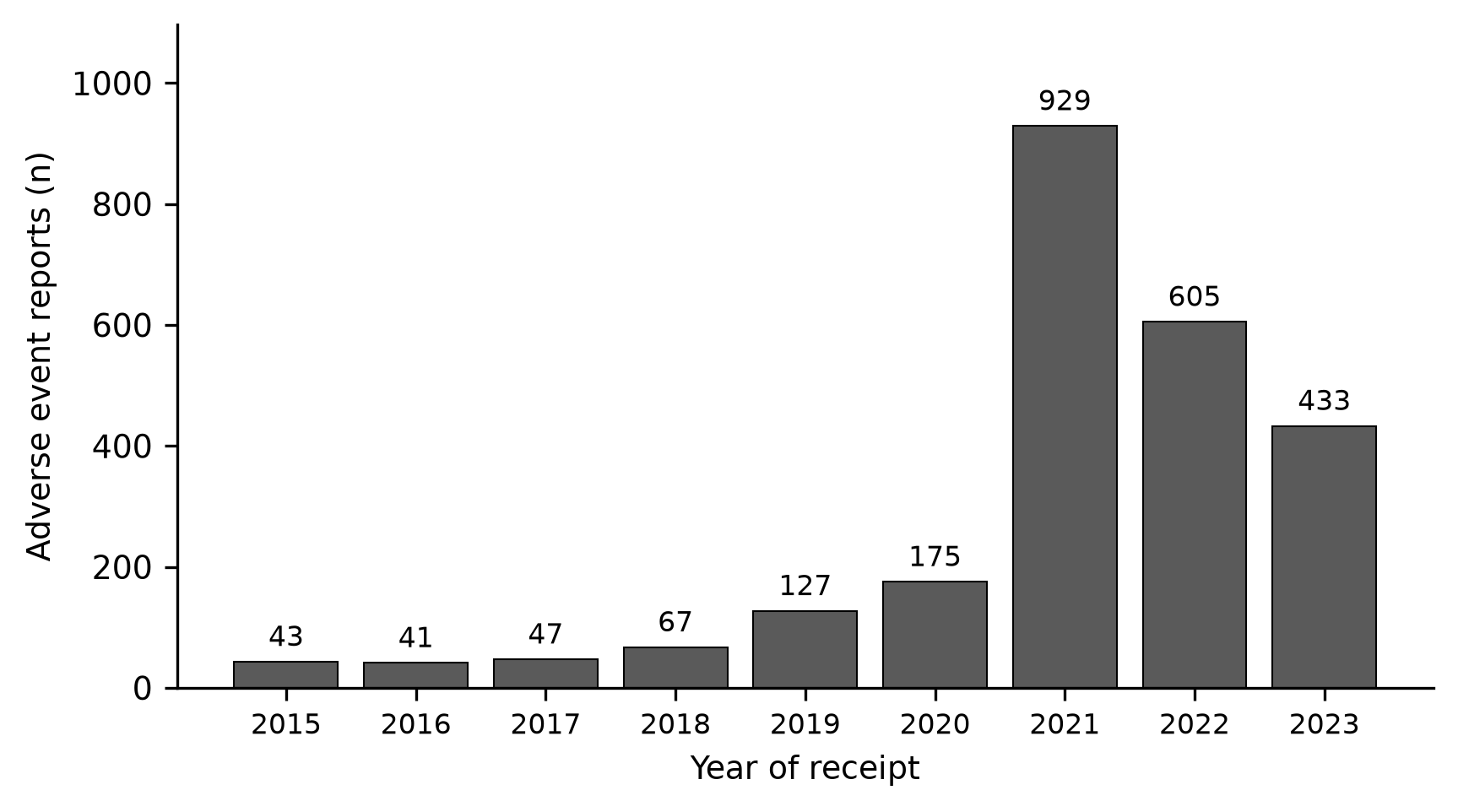
Figure 1. Annual number of adverse event reports for clear aligner systems received by the FDA MAUDE database, 2015-2023.
Note: The vertical axis shows the number of reports per year of receipt. Source: Own elaboration from the FDA MAUDE database (openFDA, product code NXC).
Figure 2. Framework linking device problem categories to patient injury categories in adverse event reports for clear aligner systems.
Note: Arrows connect device problem categories (left) with patient injury categories (right); the number on each arrow is the count of reports in which the two categories co-occurred (arrows shown for counts of ten or more). Source: Own elaboration from the FDA MAUDE database (openFDA, product code NXC).DISCUSSION
The adverse event reports submitted for clear aligner systems between 2015 and 2023 describe a profile in which tooth fracture dominates the recorded patient injuries, allergic or hypersensitivity reactions and oral soft-tissue injury form a substantial second tier, and the few informative device problems concentrate on misfit and biocompatibility. The framework proposed here organizes these dispersed codes into a structure that clinicians and surveillance analysts can use, and it shows that the device problem categories do not distribute evenly across patient injuries: misfit is associated with allergic, soft-tissue and pain outcomes, whereas biocompatibility or rejection is associated almost exclusively with allergic reactions.
The predominance of direct-to-consumer systems in the reports is consistent with the only prior analysis of this population. Belgal et al. examined direct-to-consumer sequential aligners in MAUDE and found that tooth related events and periodontal complaints were frequent and that most reports involved a single manufacturer.(5) The present study extends that finding across the whole aligner class and across a longer window, and it shows that the reporting volume tracked the expansion of the direct-to-consumer market, with the peak in 2021 coinciding with the period in which these services reached their widest public use. The earlier analysis of Invisalign reports by Allareddy et al., by contrast, documented a smaller number of events concentrated on tooth sensitivity, periodontal and mucosal problems in a supervised treatment population.( 16) The difference between the two bodies of reports suggests that the harms recorded for unsupervised aligner use are not identical to those recorded for professionally managed treatment, a distinction that matters for patient counseling.
The concentration of reports on remote treatment models also has a direct clinical implication. In a supervised setting the clinician examines the patient, checks the fit of each tray and detects incipient mucosal or occlusal problems before they escalate; in a remote model this examination is replaced by photographs submitted by the patient, which cannot reveal the internal fit of an aligner or the early signs of soft-tissue injury. The reporting pattern observed here, in which non-healthcare professionals and patients were the initial reporters in most cases, is consistent with a population that detects problems late and reports them to the manufacturer rather than to a treating clinician.( 15) This does not by itself demonstrate that remote treatment is unsafe, but it identifies the fit of the tray and the integrity of the tooth as the points that remote models are least able to monitor.
The high frequency of tooth fracture in the present data requires careful interpretation. Spontaneous reports record the coded term chosen by the reporter, and tooth fracture in this context probably conflates genuine crown or cusp fractures with the enamel cracks and adhesive related damage that are well documented after orthodontic treatment.(19) Clinical trials of aligners do not rank tooth fracture among their expected outcomes, and systematic reviews of aligner effectiveness emphasize the unpredictability of certain movements rather than hard-tissue damage.(6,10) Remote monitoring in direct-to-consumer models relies on patient-submitted photographs, which can show a fractured crown but not the early enamel cracks or the fit problems that precede it, so the high frequency of this code may reflect late detection as much as a high event rate. The discrepancy between surveillance data and trials is explained by the nature of the two sources: trials measure planned tooth movement in selected patients, whereas MAUDE captures patient and manufacturer reports of adverse outcomes that trials are not powered to detect. This finding should therefore be read as a surveillance signal rather than as an estimate of incidence, a caution that applies to every percentage reported here.
Pain and sensitivity appeared frequently, which appears to contradict controlled comparisons showing that aligners cause less pain than fixed appliances during the initial phase of treatment.( 11,12,20) The contradiction is more apparent than real. Clinical studies measure expected, transient pain in the first weeks of treatment and show that aligners improve oral health related quality of life relative to fixed appliances,( 13) whereas reports to MAUDE describe pain that was severe or persistent enough to prompt a report to a regulator, often in combination with misfit or soft-tissue injury. The threshold for reporting also matters: a pain level that is tolerated within a trial is not reported to a regulator, so the reports analyzed here represent the tail of the distribution rather than the typical treatment experience. The same reasoning applies to the soft-tissue findings: prospective work indicates that the aligner margin can affect gingival health,(21) and systematic reviews conclude that aligners are associated with better periodontal parameters and fewer white-spot lesions than fixed appliances overall.(22) Reports therefore concentrate on the subset of patients in whom an ill-fitting tray produced ulceration, swelling or discomfort, which is consistent with biomechanical analyses showing that aligner force and fit are sensitive to thickness and fabrication.(23,24) Oral hygiene is also relevant, because thermoplastic aligners modify the intraoral environment differently from fixed appliances and can alter biofilm accumulation.(25)
The allergic and hypersensitivity cluster, including the anaphylactic shock reports, is biologically coherent with what is known about the materials used in these devices. Aligners and their attachments are thermoplastic polymers, and reviews of their biocompatibility have documented bisphenol-A release, cytotoxicity and allergic potential.( 17) The thermoplastic materials of aligners can release residual monomers into the oral environment, and these monomers have documented cytotoxic and allergenic potential, so a material-mediated reaction is biologically plausible. Allergic reactions to orthodontic materials in general are recognized and range from local contact reactions to systemic manifestations.(18) The material of the aligner also determines the force system and, together with the attachment design, the predictability of the movement.(8,9) The present framework adds a clinically useful observation: when a report assigns a biological cause such as biocompatibility or device rejection, the injury that follows is almost always allergic, which strengthens the mechanistic interpretation of the allergic cluster rather than weakening it.
The necrosis and tooth loss codes also require caution, because pulp necrosis and periodontal tissue necrosis are not distinguished by the coded vocabulary. A systematic review found limited evidence that orthodontic movement alone induces pulp necrosis,(26) and prospective studies describe transient reductions in pulp sensitivity that recover during treatment.(27) Root resorption after aligner treatment is measurable but small and comparable to fixed appliances.(28,29) The necrosis reports in MAUDE therefore probably aggregate pulp and soft-tissue events of very different clinical significance, and this lack of granularity is a limitation of the coded data rather than a finding about the devices themselves.
The framework proposed here differs from how the aligner literature usually organizes harms. Clinical reviews classify adverse effects by anatomical site or by material property, listing periodontal, dental, mucosal and systemic problems as parallel categories.(17,22) The surveillance data suggest instead that the more useful axis is causal: a small number of device level failures, chiefly misfit and biocompatibility, precede the clinical events, and the clinical events then distribute across sites according to which failure occurred. This causal axis is what the framework encodes, and it is what makes the model testable. A future study could verify it by checking whether reports that mention misfit are followed, in narrative text, by the soft-tissue and allergic outcomes that the matrix predicts, or whether better seated and better fitting trays reduce the rate of those outcomes.
Methodologically, the present analysis follows the descriptive approach used in other device specific MAUDE studies, which count coded device problems and patient harms and rank them by frequency.(30,31) Those studies typically stop at ranking. The framework adds a second analytical step, the co-occurrence matrix, which converts a list of independent frequencies into a model of how the codes relate. This step is feasible whenever the database carries both a device problem vocabulary and a patient problem vocabulary, and it could be applied to other orthodontic or dental devices with minimal adaptation. Because the coding vocabularies are shared across device classes in MAUDE, the approach transfers to other dental devices without any change to the underlying method.
The study has strengths. It is based on the complete national postmarketing database rather than a sample, it covers every aligner system reported to the FDA over nine years, and the analysis is reproducible from a public application programming interface with a stated query and date of access. The public availability of the source data means that the results can be re-derived by independent investigators without special permissions. The framework was built from the codes themselves rather than from prior assumptions, and it therefore reflects how reporters actually describe these events.
The limitations are equally specific. First, MAUDE is a passive surveillance system with known underreporting and no denominator of devices in use, so the frequencies cannot be converted into incidence rates; future work should link these reports to sales or usage data for each system. Second, a large share of reports carries only generic codes such as adverse event without identified device or use problem, which blunts the resolution of the framework; the recommendation is to improve the specificity of device problem coding for orthodontic devices. Third, the reporter occupation field mixes legacy numeric codes and text labels, and the recoding used here, although based on the public FDA query interface, may misclassify some reports.( 15) Fourth, patient sex was unknown or not disclosed in most reports and patient age was absent in a substantial minority, so the demographic profile of the affected population could not be characterized in detail; future analyses should encourage complete demographic fields in device reports. Fifth, reports describe association, not causation, and the co-occurrence matrix only shows which codes travel together; it cannot prove that a given device problem produced a given injury. Finally, the data reflect the United States regulatory context and the direct-to-consumer market that is specific to it, so the framework should be validated in other surveillance systems before it is generalized, as has been recommended for device analyses of this type.( 30,31)
For clinical practice, the framework suggests a concrete monitoring sequence: when an aligner does not seat or fit, the clinician should look for soft-tissue injury, pain and allergic symptoms in that order, and when a patient reports mucosal or systemic symptoms without an obvious mechanical cause, biocompatibility should be considered. For the patient, the model also clarifies which symptoms merit early review: new sensitivity, mucosal soreness or swelling in a patient whose trays still seat well should raise suspicion of a material response rather than a mechanical one. The same sequence can inform informed consent, which should mention the possibility of tooth fracture and allergic reaction rather than presenting aligners as free of relevant risks. For regulators and manufacturers, the concentration of reports on a small number of systems, most of them direct-to-consumer, and the recurrent pairing of misfit with soft-tissue and allergic injury provide a target for postmarket review and for clearer labeling of the limits of unsupervised aligner treatment.( 1,4)
CONCLUSIONS
Adverse event reports for clear aligner systems in the FDA MAUDE database increased from 2015 to a peak in 2021 and were dominated by injury reports submitted by manufacturers, with direct-to-consumer systems accounting for most of the volume; the reported volume was concentrated in the final three years of the period.
The most frequent specific device problems were patient-device incompatibility and inadequacy of device shape or size, although generic codes remained the single largest category and limited the information available for a substantial share of the reports.
The most frequent patient injuries were tooth fracture, necrosis and hypersensitivity or allergic reaction, with pain, swelling and infection also commonly recorded and with a further subset of reports carrying only non-specific injury codes.
The proposed framework links device misfit to allergic, soft-tissue and pain outcomes and links biocompatibility or rejection to allergic reactions, providing a structured basis for clinical monitoring, for the design of more specific postmarket surveillance and for testing against the narrative text of future reports.
References
- 1 Johal A, Bondemark L. Clear aligner orthodontic treatment: Angle Society of Europe consensus viewpoint. J Orthod. 2021;48(3):300-304. doi: 10.1177/14653125211006423
- 2 U.S. Food and Drug Administration. Code of Federal Regulations Title 21, Section 872.5470: Orthodontic plastic brackets and aligners [Internet]. 2023. Available from: https://www.accessdata.fda.gov/scripts/cdrh/cfdocs/cfcfr/cfrsearch.cfm?fr=872.5470
- 3 MENDES RIBEIRO SM, ARAGÓN MLSDC, ESPINOSA DDSG, SHIBASAKI WMM, NORMANDO D. Orthodontic aligners: between passion and science. Dental Press J Orthod. 2023;28(6):e23spe6. doi: 10.1590/2177-6709.28.6.e23spe6
- 4 Weir T. Clear aligners in orthodontic treatment. Australian Dental Journal. 2017;62(S1):58-62. doi: 10.1111/adj.12480
- 5 Belgal P, Mhay S, Patel V, Nalliah RP. Adverse Events Related to Direct-To-Consumer Sequential Aligners—A Study of the MAUDE Database. Dentistry Journal. 2023;11(7):174. doi: 10.3390/dj11070174
- 6 Rossini G, Parrini S, Castroflorio T, Deregibus A, Debernardi CL. Efficacy of clear aligners in controlling orthodontic tooth movement: A systematic review. The Angle Orthodontist. 2015;85(5):881-889. doi: 10.2319/061614-436.1
- 7 Koletsi D, Iliadi A, Eliades T. Predictability of rotational tooth movement with orthodontic aligners comparing software-based and achieved data: A systematic review and meta-analysis of observational studies. J Orthod. 2021;48(3):277-287. doi: 10.1177/14653125211027266
- 8 Inchingolo AM, Inchingolo AD, Carpentiere V, Del Vecchio G, Ferrante L, Di Noia A, et al. Predictability of Dental Distalization with Clear Aligners: A Systematic Review. Bioengineering. 2023;10(12):1390. doi: 10.3390/bioengineering10121390
- 9 Alam MK, Kanwal B, Shqaidef A, Alswairki HJ, Alfawzan AA, Alabdullatif AI, et al. A Systematic Review and Network Meta-Analysis on the Impact of Various Aligner Materials and Attachments on Orthodontic Tooth Movement. JFB. 2023;14(4):209. doi: 10.3390/jfb14040209
- 10 Fiori A, Minervini G, Nucci L, d’Apuzzo F, Perillo L, Grassia V. Predictability of crowding resolution in clear aligner treatment. Prog Orthod. 2022;23(1):43. doi: 10.1186/s40510-022-00438-z
- 11 Li Q, Du Y, Yang K. Comparison of pain intensity and impacts on oral health-related quality of life between orthodontic patients treated with clear aligners and fixed appliances: a systematic review and meta-analysis. BMC Oral Health. 2023;23(1):920. doi: 10.1186/s12903-023-03681-w
- 12 Gao M, Yan X, Zhao R, Shan Y, Chen Y, Jian F, et al. Comparison of pain perception, anxiety, and impacts on oral health-related quality of life between patients receiving clear aligners and fixed appliances during the initial stage of orthodontic treatment. European Journal of Orthodontics. 2021;43(3):353-359. doi: 10.1093/ejo/cjaa037
- 13 AlSeraidi M, Hansa I, Dhaval F, Ferguson DJ, Vaid NR. The effect of vestibular, lingual, and aligner appliances on the quality of life of adult patients during the initial stages of orthodontic treatment. Prog Orthod. 2021;22(1):3. doi: 10.1186/s40510-020-00346-0
- 14 U.S. Food and Drug Administration. openFDA Device Adverse Events API (Manufacturer and User Facility Device Experience, MAUDE) [Internet]. 2023. Available from: https://open.fda.gov/apis/device/event/
- 15 Kavanagh KT, Brown Jr RE, Kraman SS, Calderon LE, Kavanagh SP. <p>Reporter’s occupation and source of adverse device event reports contained in the FDA’s MAUDE database</p>. PROM. 2019;Volume 10:205-208. doi: 10.2147/prom.s212991
- 16 Allareddy V, Nalliah R, Lee MK, Rampa S, Allareddy V. Adverse clinical events reported during Invisalign treatment: Analysis of the MAUDE database. American Journal of Orthodontics and Dentofacial Orthopedics. 2017;152(5):706-710. doi: 10.1016/j.ajodo.2017.06.014
- 17 Yazdi M, Daryanavard H, Ashtiani AH, Moradinejad M, Rakhshan V. A systematic review of biocompatibility and safety of orthodontic clear aligners and transparent vacuum-formed thermoplastic retainers: Bisphenol-A release, adverse effects, cytotoxicity, and estrogenic effects. Dental Research Journal. 2023;20(1):41-41. doi: 10.4103/1735-3327.372658
- 18 Alencar LBBD, Sousa SCAD, Silva IL, Araújo VFD, Oliveira EBD, Fonseca-Filho DTA, et al. Allergic Reactions in Orthodontic Patients: A Review. Int J Odontostomat. 2021;15(1):132-136. doi: 10.4067/s0718-381x2021000100132
- 19 Peng S, Sang T, Wang H, Guan Y, Deng Y, Wang P, et al. Bioinspired Anti-demineralization Enamel Coating for Orthodontics. J Dent Res. 2022;101(13):1620-1627. doi: 10.1177/00220345221129806
- 20 Antonio-Zancajo L, Montero J, Albaladejo A, Oteo-Calatayud MD, Alvarado-Lorenzo A. Pain and Oral-Health-Related Quality of Life in Orthodontic Patients During Initial Therapy with Conventional, Low-Friction, and Lingual Brackets and Aligners (Invisalign): A Prospective Clinical Study. JCM. 2020;9(7):2088. doi: 10.3390/jcm9072088
- 21 FAVERO R, LIBRALATO L, BALESTRO F, VOLPATO A, FAVERO L. Edge level of aligners and periodontal health: a clinical perspective study in young patients. Dental Press J Orthod. 2023;28(1):e2321124. doi: 10.1590/2177-6709.28.1.e2321124.oar
- 22 Llera-Romero AS, Adobes-Martín M, Iranzo-Cortés JE, Montiel-Company JM, Garcovich D. Periodontal health status, oral microbiome, white-spot lesions and oral health related to quality of life-clear aligners versus fixed appliances: A systematic review, meta-analysis and meta-regression. Korean J Orthod. 2023;53(6):374-392. doi: 10.4041/kjod22.272
- 23 Seo JH, Eghan-Acquah E, Kim MS, Lee JH, Jeong YH, Jung TG, et al. Comparative Analysis of Stress in the Periodontal Ligament and Center of Rotation in the Tooth after Orthodontic Treatment Depending on Clear Aligner Thickness—Finite Element Analysis Study. Materials. 2021;14(2):324. doi: 10.3390/ma14020324
- 24 SHIOGAMA M, NAKANO H, SAWAMURA M, YAMAGUCHI N, TAKANO N, MAKI K. Measurement of elastic strain recovery in an orthodontic aligner as a driving force for orthodontic treatment. Dent Mater J. 2022;41(5):688-697. doi: 10.4012/dmj.2021-339
- 25 Sifakakis I, Papaioannou W, Papadimitriou A, Kloukos D, Papageorgiou SN, Eliades T. Salivary levels of cariogenic bacterial species during orthodontic treatment with thermoplastic aligners or fixed appliances: a prospective cohort study. Prog Orthod. 2018;19(1):25. doi: 10.1186/s40510-018-0230-4
- 26 Weissheimer T, Silva EJNL, Pinto KP, Só GB, Rosa RA, Só MVR. Do orthodontic tooth movements induce pulp necrosis? A systematic review. Int Endodontic J. 2021;54(8):1246-1262. doi: 10.1111/iej.13523
- 27 Briseño-Marroquín B, López-Murillo H, Kuchen R, Casasa-Araujo A, Wolf TG. Pulp sensitivity changes during orthodontic treatment at different time periods: a prospective study. Clin Oral Invest. 2021;25(5):3207-3215. doi: 10.1007/s00784-020-03651-4
- 28 Toyokawa-Sperandio KC, Conti ACDCF, Fernandes TMF, Almeida-Pedrin RRD, Almeida MRD, Oltramari PVP. External apical root resorption 6 months after initiation of orthodontic treatment: A randomized clinical trial comparing fixed appliances and orthodontic aligners. Korean J Orthod. 2021;51(5):329-336. doi: 10.4041/kjod.2021.51.5.329
- 29 Brezniak N, Wasserstein A. Root Resorption Following Treatment with Aligners. The Angle Orthodontist. 2008;78(6):1119-1124. doi: 10.2319/112807-562.1
- 30 Bennett J, MacGuire J, Novakovic E, Huynh H, Jones K, Gendreau JL, et al. Characterizing Complications of Deep Brain Stimulation Devices for the Treatment of Parkinsonian Symptoms Without Tremor: A Federal MAUDE Database Analysis. Cureus. 2021;13(6):c46-c46. doi: 10.7759/cureus.15539
- 31 Rayess HM, Svider PF, Hanba C, Patel VS, DeJoseph LM, Carron M, et al. A Cross-sectional Analysis of Adverse Events and Litigation for Injectable Fillers. JAMA Facial Plast Surg. 2018;20(3):207-214. doi: 10.1001/jamafacial.2017.1888
Declarations
Funding
No financing
Conflict of interest
None
Authorship contributions
Drafting – original draft: Maria Fernanda Escalante Freitez.
Writing–review and editing: Maria Fernanda Escalante Freitez.