
Abstract
Introduction: Intraoral scanners are central to digital dentistry, but their post-market adverse event profile has not been described from the public reports. Methods: A cross-sectional cohort of adverse event reports for the CAD/CAM optical impression product code was assembled from the openFDA device event database, and the event narratives were classified into failure modes with deterministic keyword rules. Results: Among 36 reports, electrical shock or an electrical sensation was mentioned in 26 (72.2%; 95% CI 56.0 to 84.2), and malfunction and injury were balanced at 41.7% and 38.9%. Component detachment and thermal events each occurred in 5 reports, and fracture in 2. Conclusions: Electrical shock was the predominant adverse event in reports of intraoral scanners, and the reports carried little specific failure-mode information, which points to electrical safety and to reporting quality as the two priorities.
Keywords
intraoral scanner, computer-aided design, adverse event, medical device safety, postmarketing surveillance
INTRODUCTION
Intraoral scanners have become the entry point of digital dentistry, because the optical impression they capture is the first step in the computer-aided design and manufacturing of crowns, veneers, aligners and implant restorations, and the scanner has therefore displaced the conventional impression as the first clinical step of a restoration.
The device is a handheld wand that projects structured light onto the teeth and reconstructs their shape, and it is placed inside the mouth of the patient throughout the scan, which makes it both an imaging device and an intraoral device with its own safety requirements.
The wand is connected to a power source and, in some systems, to a cart or a computer, and the electrical path that powers the imaging is therefore in close proximity to the patient, which is the physical reason that an electrical safety question arises at all, and the reason that the question is not answered by the accuracy literature, which concerns the light the wand projects and the model it reconstructs, not the current that powers it.
The literature has measured their accuracy extensively, and studies of scanner parameters, span length and restoration type have established that the digital impression is clinically acceptable for most indications, as the works of Chiu et al.,(1) Aly et al.,(2) Madboly et al.(3) and Rokaya et al.(4) document. What the accuracy literature does not describe is the safety profile of the devices themselves, and the post-market adverse event reports that would reveal that profile have not been synthesized for this product class.
The gap matters because a scanner is a powered device that is placed inside the mouth, and a device that is safe to place inside the mouth is not the same as a device that is accurate, so the accuracy evidence and the safety evidence answer different questions that neither answers alone. A scanner could be accurate to a few micrometres and still deliver an electrical sensation to the patient, and the two properties would be unrelated in principle, which is why the accuracy literature, however large, cannot substitute for a safety analysis.
The post-market adverse event database is the natural source for that synthesis, because it collects the reports that clinicians and manufacturers file when a device fails or harms a patient, and the narrative text of each report records what happened in the reporter's own words.
The method of mining those narratives has been established in the medical device literature, from the early software-failure analysis of Pecoraro et al.(5) to the recent large-language-model narrative analyses of Shi et al.(6) and the automated classification of Sohoni et al.,(7) and it has been applied to many device classes, from implants to surgical robots, so the method is mature and its application to a new device class is a matter of routine rather than of invention.
The method has two parts, a retrieval of the public reports for a product class and a classification of the narrative text into failure modes, and both parts are reproducible, so the study can be repeated as the database grows and extended to other dental devices as their product codes are identified.
The dental device class is a natural application because dentistry has adopted digital devices rapidly and has evaluated them primarily for accuracy, so the safety side of the adoption has been, until now, the unexamined half of the digital transition. The objective of this study is to apply that method to the intraoral scanner product class and to characterize the failure modes that its adverse event reports reveal.
The study is a cross-sectional analysis of a single product code, the optical impression system for computer-aided design and manufacturing of dental restorations, and it is deliberately descriptive rather than causal. Its scope is the failure modes recorded in the narratives and the structured problem codes that accompany them, and its design is a keyword classification of the narrative text followed by a summary of the resulting frequencies.
The design is observational, in the sense that the reports were filed by others and the study only reads them, and it is reproducible, in the sense that the classification rules are stated and the reports are public, so the analysis can be repeated or extended without the participation of the original reporters, and a reader can therefore verify every count in the results by re-running the stated rules against the public reports.
The design makes no causal claim and no rate estimate, and it is limited to what the reports themselves record, which is the failure modes and the event types, and the reader should not expect from it more than the reports contain.
The objective, restated for clarity, is to describe the failure modes of intraoral scanner adverse event reports and to identify the predominant mode, so that the safety profile of the device class becomes visible alongside its well-documented accuracy.
METHODS
Analysis
The primary analysis was a deterministic classification of each event narrative into one or more failure modes. Four failure modes were defined before the narratives were read: electrical shock or sensation, component detachment or separation, thermal events, and fracture. A narrative was assigned to a failure mode when it contained a keyword from that mode's list, and a report could be assigned to more than one mode, because a single event can involve, for example, an electrical shock that also produces a burn.
The keyword lists were chosen to be conservative, so that a mode was assigned only on a literal mention, and the electrical list included the words shock, tingling, electric, electrical, impulse, sensation, pulse and discharge, which together capture the vocabulary that the reporters used for the electrical events, and the other three lists were defined with the same conservatism, so that a report was assigned to a mode only when the reporter's own words matched the mode.
The proportion of reports mentioning each mode was estimated, and the electrical-shock proportion, as the principal result, was reported with a Wilson 95% confidence interval computed with the Statsmodels library, which was chosen because it does not rely on the normal approximation that a small sample would violate. The analysis was implemented in Python, and the script was run twice to confirm that the recorded counts were identical across runs, so the classification is reproducible from the stated rules and the public reports.
Variables
The outcome variables were the four failure-mode indicators derived from the narratives, and each was a binary variable that took the value one when the narrative mentioned the mode and zero otherwise.
The explanatory variables were the event type, the year of receipt and the device brand, which were taken from the structured fields of each report, and the event type was the report's own classification of the event as a malfunction, an injury, a death or other.
The product problem codes, which the reporter assigns from a fixed list, were tabulated separately from the narrative-derived modes, because the two are different views of the same event, the code being the structured view and the narrative being the unstructured view, and the comparison between them is itself informative, because a divergence between the two, a report whose code says no specific problem while its narrative names an electrical shock, is the evidence that the structured field under-reports the true failure mode.
Data source
The data were the adverse event reports for the product code of the optical impression system for computer-aided design and manufacturing of dental restorations, retrieved from the openFDA device event database, which indexes the Manufacturer and User Facility Device Experience database of the Food and Drug Administration.
All reports for the product code were retrieved through the database's application programming interface, and no sampling was performed, so the cohort is the complete set of reports for that product code as of the retrieval date. The retrieval date and the product code are recorded so that the cohort is reproducible, and the narrative text was taken from the report's event description field, which is the field in which the reporter states what happened in their own words. No report was excluded, and no narrative was edited, so the classification was applied to the text exactly as it was filed.
RESULTS
Electrical shock or an electrical sensation was mentioned in 26 of the 36 reports, a proportion of 0.722 (95% CI 0.560 to 0.842), which made it the clearly predominant failure mode by a wide margin (Figure 1).
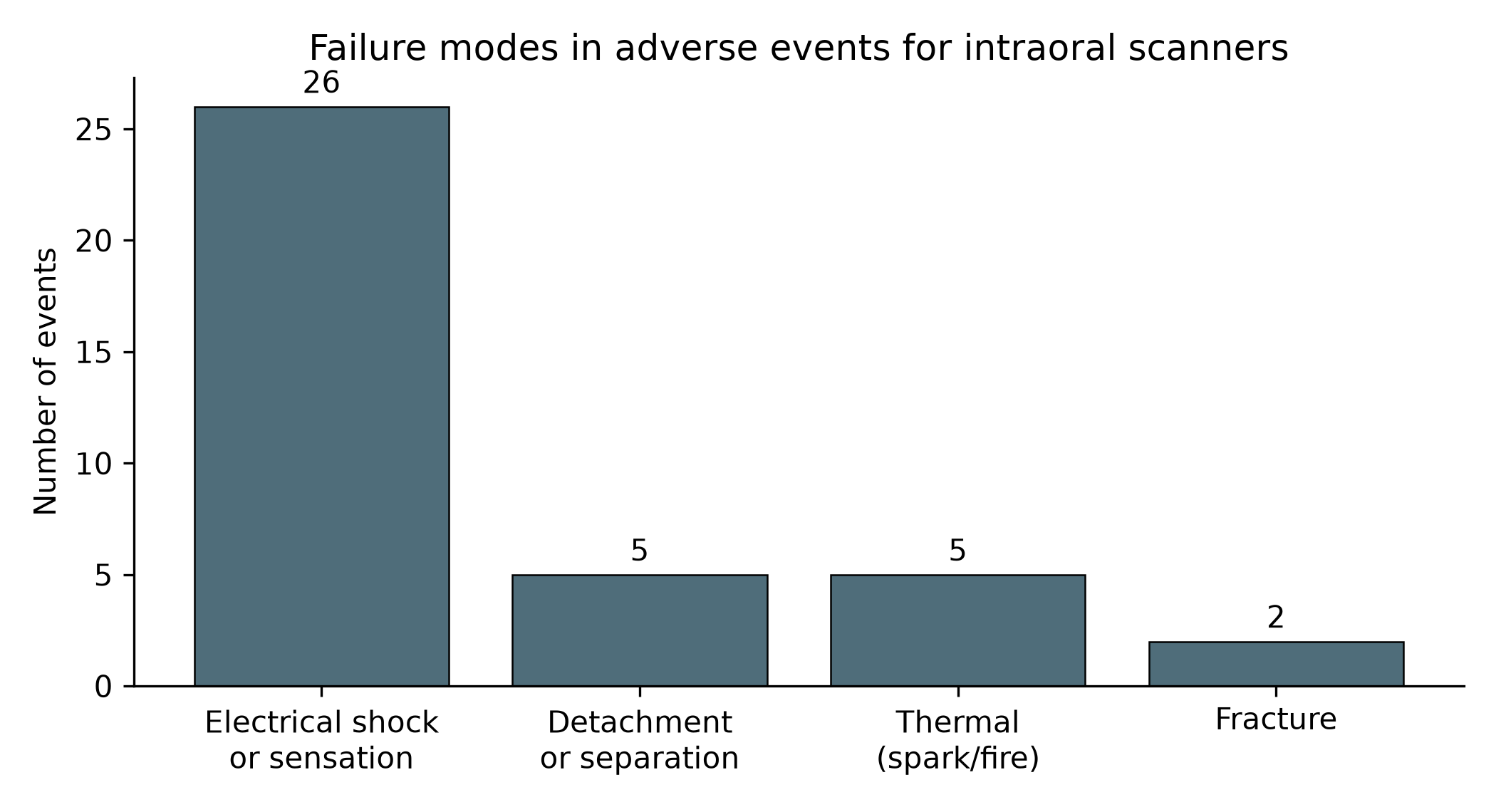
Figure 1. Failure modes identified in the adverse event narratives.
Note: A report can mention more than one failure mode.The confidence interval is wide because the sample is small, but even its lower bound of 0.560 leaves the electrical mode as the majority, so the predominance is not an artefact of the point estimate alone, and a reader who trusts only the lower bound would still conclude that the electrical mode is the dominant one.
The electrical events were described in the narratives as shocks, tingling, electrical impulses and electrical sensations, and they occurred during routine scanning procedures, with the sensation reported on the teeth or in the mouth of the patient or on the hand of the operator, so the mode was not a single type of event but a family of electrically caused sensations.
The reported consequences of the electrical events were generally transient, with pain lasting hours to days and, in a few cases, a minor burn or a medical visit, and no death was recorded in the cohort, so the mode was a source of discomfort and concern rather than of lasting harm in the reports that described its outcome.
The absence of lasting harm does not reduce the importance of the finding, because an electrical event inside the mouth is, by its nature, an event that the patient experiences as alarming even when it is brief and transient, and the safety question is whether it should happen at all rather than whether it causes permanent damage.
Second, component detachment or separation appeared in 5 reports (0.139), and below that value the thermal events appeared in 5 reports and fracture in just 2, so the failure-mode distribution was concentrated on a single electrical mode rather than spread across the mechanical modes.
The detachment events involved a mirror or a tip that separated from the wand and, in at least one reported case, fell into the patient's mouth and was either swallowed or retrieved, and the thermal events involved a cable or a charger that sparked, overheated or, in one report, caught fire, while the fracture events involved a component that cracked inside the patient's mouth, so each of the secondary modes was also an event that occurred during actual use rather than a latent defect.
The event types were balanced between malfunction and injury. Of the 36 reports, 15 were malfunctions (41.7%) and 14 were injuries (38.9%), with the remaining 7 reports recorded as other or missing a type, so the reports described a device failure and a patient harm at roughly equal rates rather than one dominating the other, and the electrical events contributed to both, appearing both as malfunctions of the device and as injuries to the patient.
The balance between malfunction and injury is itself a finding, because it means the device class is one in which the failure and the harm are reported together, and a report of a malfunction is frequently also a report of a patient who actually felt it, which is what one would expect of a device whose failure mode is an electrical sensation that the patient cannot fail to notice.
The balance also means that the reports are not skewed toward one severity, and the failure modes are therefore visible across both the mild and the more serious events rather than being confined to one end of the severity scale.
To a lesser extent, the structured problem codes carried little specific information, because the single most common code was adverse event without an identified device or use problem, assigned to 18 of the 36 reports, and the second was insufficient device problem information, assigned to 11, which together meant that half the reports did not name a specific problem at the structured level, and the narrative text was therefore the only place where the electrical nature of the events was recorded.
The divergence between the two is the concrete evidence of under-reporting, because a report whose code names no problem but whose narrative names a shock is a report whose structured field failed to record what its own text recorded. The failure modes and the problem codes are summarized in (Table 1) and (Table 2).
Failure mode | n | percent |
|---|---|---|
Electrical shock or sensation | 26 | 72.2 |
Component detachment or separation | 5 | 13.9 |
Thermal (overheating, sparking, fire) | 5 | 13.9 |
Fracture | 2 | 5.6 |
Note: A report can mention more than one failure mode.
Product problem code | n |
|---|---|
Adverse Event Without Identified Device or Use Problem | 18 |
Insufficient Device Problem Information | 11 |
Material Separation | 4 |
Defective Component | 4 |
Electrical Power Problem | 4 |
Environmental Compatibility Problem | 4 |
Appropriate Device Problem Term/Code Not Available | 4 |
Electrostatic Discharge | 3 |
Note: Product problem codes are assigned by the reporter.
The sample of 36 reports came from a set of device brands dominated by the 3M True Definition scanner, and the years of receipt ranged from 2008 to 2025, with the largest share received between 2011 and 2017, a period that corresponds to the early adoption of the scanners before the reporting thinned in later years, a thinning that may reflect improved devices, reduced reporting or both, and that the present data cannot distinguish.
The temporal pattern is therefore reported as a fact about the sample rather than as a trend in the safety of the devices, and no claim is made about whether the devices became safer over time. The concentration of the electrical events in the 3M brand is a property of the sample rather than necessarily a property of the brand, because the brand may simply be the one for which reports were filed most completely, and the present study does not attribute the electrical events to any single brand. The characteristics of the sample are summarized in (Table 3).
Characteristic | n | percent |
|---|---|---|
Events | 36 | 100.0 |
Malfunction | 15 | 41.7 |
Injury | 14 | 38.9 |
Other/missing | 7 | 19.4 |
DISCUSSION
The predominance of electrical shock in these reports implies that the safety of intraoral scanners is first an electrical-safety problem rather than a mechanical or software problem, and the reports concentrate on a device that delivers an unintended electrical sensation to the mouth during a routine scan.
The implication matters because an accuracy-focused literature, which is the bulk of the intraoral scanner evidence, would never surface an electrical-safety signal, and the safety profile has therefore been invisible to the very audience that evaluates the scanners and that decides which scanners to adopt.
The finding also implies a second thing, that the structured reporting of these events is information-poor, and the signal that the narratives reveal is one that the problem codes conceal, because half the reports were filed under a code that states only that no specific problem was identified, which is a code that carries no signal at all.
The two implications point in the same direction, toward a need for electrical-safety scrutiny and toward a need for better reporting, and they are the two priorities that the finding names.
The reporting-quality implication deserves its own emphasis, because it is the reason the safety signal had to be recovered from the narratives rather than read from the codes, and it is a defect that the reporting system could correct more easily than it could correct the underlying electrical problem.
A reporter who assigns the code for an adverse event without an identified problem, when the narrative plainly records an electrical shock, is leaving the signal in the text and out of the structured field, and a small change in reporting practice, choosing the electrical problem code when the narrative names an electrical event, would make the signal visible to the automated tools that read the structured field alone.
The change is not a burden on the reporter, because it is a choice between two codes that are both already available, and it is the kind of reporting improvement that costs nothing and yields a more analyzable database. The improvement would be measurable, because a subsequent analysis of the same product code would then find the electrical problem code assigned to the reports that the narratives already identify, and the divergence between code and narrative would narrow, which is a concrete and checkable outcome of the recommendation.
The contrast with the intraoral scanner accuracy literature is instructive, because it shows how one-sided the evidence has been. The accuracy studies of Chiu et al.,( 1) Bhan et al.,( 8) Nossair et al.( 9) and Mitrirattanakul et al.( 10) all report the scanner's dimensional or shade performance, and none reports an adverse event, because a scanner under study for accuracy is not a scanner under study for safety.
The same is true of the cement-spacing study of Borbola et al.,(11) the digital impression evaluation of Gajbhiye et al.,(12) the restorative-material study of Lin et al.(13) and the cast-accuracy study of Patzelt et al.,(14) each of which advances the accuracy question without touching the safety question.
The expansion of scanner uses described by the 2025 review( 15) and the preparation guidance of Bae et al.( 16) extend the indications without adding a safety dimension, and the present study is the first to describe the adverse event profile that the accuracy literature leaves out. The one-sidedness is not a criticism of the accuracy studies, which answer the question they were designed to answer, but it is a gap in the literature as a whole, and the gap is the reason that the safety profile has had to be reconstructed from the adverse event database rather than from the peer-reviewed literature.
The gap is also a reflection of how digital dentistry has been evaluated, which is by measuring what the device produces rather than by observing what it does, and the present study is a small corrective to that habit, in that it observes what the device did to the people who used it and to the people who were scanned by it.
The contrast with the medical device adverse event literature shows that the present method is standard and that the finding is a genuine signal rather than an artefact of the method. The MAUDE analyses of Liu et al.( 17) for dental implants, of Al Khouri et al.( 18) for mandibular appliances, of Ahmad et al.( 19) for plate systems, and of Bhandari et al.,( 20) Hawas et al.,( 21) Jin et al.,( 22) Su et al.( 23) and Zhai et al.( 24) for their respective devices all use the same database and the same approach, and the electrical-shock concentration reported here is comparable in clarity to the failure-mode concentrations those studies found in their device classes.
The dental context is the closest comparison, because Liu et al.( 17) and Al Khouri et al.( 18) both analyzed dental devices in the same database and found that a specific, identifiable mode dominated their reports, which is exactly the structure that the present study finds for intraoral scanners.
The three dental studies together, implants, mandibular appliances and intraoral scanners, now cover a slice of the dental device field, and they show that the adverse event database is a usable source for dental safety signals, which is itself a finding that the dental literature has been slow to exploit despite the database being public and free to query. The disproportionality study of Shi et al.,(25) the catheter-directed device analysis of Nandyal et al.(26) and the postmarketing safety analyses of Awan et al.(27) and Stuart et al.(28) show the same pattern, in which a specific failure mode dominates the reports for a device class, and the interface-failure analysis of Alwitry et al.( 29) and the root-cause analysis of Maity et al.( 30) illustrate that the narrative text, not the problem code, is where the failure mode is actually recorded.
The present study's finding that the electrical mode was visible only in the narrative and not in the problem codes is therefore not an oddity of the intraoral scanner class but a general property of the reporting system, and the same divergence has been observed across the device classes that the literature has examined.
The broader implication for digital dentistry is that the safety literature has lagged the accuracy literature across the board, and the present study is one instance of a pattern that likely extends to other powered dental devices. A milling unit, a three-dimensional printer or a scanner all share the property of being powered devices introduced into the clinical workflow on the strength of their accuracy, and the adverse event database is the source that would reveal whether any of them carries a safety signal comparable to the electrical signal reported here.
The transfer is not hypothetical, because the product codes for those devices are public and the reports are public, and the only missing step is the will to run the same classification, which the present study has shown to be a small and mechanical task that requires no special equipment and no access beyond the public database.
The method used in this study, a deterministic classification of public narratives, is transferable to those device classes without modification, and the study therefore offers a template as well as a finding. A researcher or a practice that wanted to repeat the analysis for a milling unit or a printer would need only the product code and the same keyword lists, and the result would be directly comparable to the present one, which is the advantage of a deterministic and public method over a proprietary or a manual one.
The interpretation of the finding should also be bounded, because the reports are a record of what was filed rather than of what occurred, and the predominance of electrical shock reflects both the underlying events and the likelihood that an electrical event, being perceptible and unusual, is more likely to be filed than a silent mechanical fault.
The finding therefore identifies the most visible failure mode, not necessarily the most frequent one, and a reader should hold the two apart. The distinction is a standard caveat of passive surveillance, and it does not diminish the practical value of the finding, because the most visible failure mode is exactly the one that a clinician needs to be told about, but it does bound the claim that the electrical mode is the most common rather than the most reported, and the present study is careful to make the bounded claim rather than the stronger one that the data would not support.
The bounded claim is sufficient for the study's purpose, which is to surface a signal for attention rather than to estimate a rate, and a rate estimate would require a denominator that passive surveillance does not provide and that the present design did not claim to supply.
The clinical implication of the finding is direct and it is worth stating, because it is the part of the result that a practitioner can act on without further research. A clinician who uses an intraoral scanner should be aware that the device has an electrical-safety history, and the sensible precautions are the standard ones for any powered device placed near the patient: verify that the power outlet is properly grounded, inspect the cable and the wand before use, and stop the scan if the patient reports a shock or a tingling sensation.
These precautions are low-cost and do not require any change to the clinical workflow, because they are checks that a careful clinician already performs on any powered instrument, and the finding gives them a specific reason to be performed on the scanner rather than a general reason to be performed on everything, which is the difference between a precaution that is honored and one that is forgotten.
The events in this cohort were generally transient and did not require lasting treatment, but the fact that they were transient does not make them trivial, and a clinician who recognizes the early signs of an electrical event can end it before it escalates.
The finding therefore has a preventive use even before the underlying electrical cause is fully understood, and that preventive use is the most immediate yield of the study for the clinician who reads it. A practice could also record the electrical events it encounters, because a local record of shocks would be the denominator-free counterpart to the passive reports analyzed here, and the two together would tell more than either alone.
The local record is within the reach of any practice, because it requires nothing more than a note in the patient's chart when a shock is reported, and it would build, over time, the denominator that the national passive system cannot provide, namely the number of scans performed without an event, against which the events could be placed.
The study has limitations, and each is paired with the recommendation that would address it. The cohort is small, with 36 reports, so the proportions carry wide confidence intervals and the estimate of the electrical-shock proportion should be read as a range rather than a point, and a recommendation follows: the analysis should be repeated as the database accumulates reports so that the signal can be confirmed on a larger sample.
The classification is deterministic and keyword-based, so it captures what the narratives literally say but not what they imply, and a recommendation follows: a large-language-model or clinician review of the same narratives would test whether the keyword classification missed modes that the reporters described in other words or by implication.
The reports are passive surveillance, so they undercount the true event rate and cannot support a rate estimate, and a recommendation follows: the finding should be used to raise awareness rather than to quantify risk, and any quantitative claim about frequency should wait for a denominator that the passive system does not supply.
The cohort is limited to a single product code, so the finding may not extend to every intraoral scanner, and a recommendation follows: the analysis should be extended to the related product codes once their identifiers are established, so that the electrical-safety signal can be judged across the whole class rather than in one code, and a scanner outside the studied code should not be assumed to carry or to lack the same signal.
The single code is also the reason the sample is small, because the intraoral scanner class is divided among several product codes, and a wider code search would likely enlarge the cohort, which is the single most direct way to confirm the finding. Each recommendation is concrete and names the party that should carry it out, so that the limitations translate into an agenda rather than into a disclaimer.
CONCLUSIONS
Electrical shock or an electrical sensation was the predominant adverse event in reports of intraoral scanners and computer-aided design and manufacturing dental devices, appearing in 72.2 percent of the reports, and the reports carried little specific failure-mode information in their structured problem codes, which identifies electrical safety and reporting quality as the two priorities for this device class.
The finding was concentrated in a single, clinically recognizable failure mode rather than spread across the mechanical modes, and it was visible only in the narrative text, which is where the safety signal for this device class has been recorded and where future surveillance should continue to look.
References
- 1 Chiu A, Chen YW, Hayashi J, Sadr A. Accuracy of CAD/CAM Digital Impressions with Different Intraoral Scanner Parameters. Sensors. 2020;20(4):1157. doi: 10.3390/s20041157
- 2 Aly P, Mohsen C. EVALUATION OF THE ACCURACY OF DIGITAL MODELS OBTAINED FROM INTRAORAL SCANNERS WITH DIFFERENT CAD/CAM SCANNING TECHNOLOGIES- AN IN VITRO STUDY. Alexandria Dental Journal. 2020;0(0):0-0. doi: 10.21608/adjalexu.2020.23212.1042
- 3 Madboly MS, El mahallawy O, Nabil O. The Effect of Anterior Span Length on the Accuracy of Intraoral Scanner (an In-vitro study). Egyptian Dental Journal. 2025;71(2):1631-1639. doi: 10.21608/edj.2025.371310.3428
- 4 Rokaya D, Al Jaghsi A, Masri MA, Hussein NM, Said GT, Akhras T. Evaluating the accuracy of intraoral scanners across varied depths and widths preparation for CAD/CAM post and core. Front Dent Med. 2026;7:1691514. doi: 10.3389/fdmed.2026.1691514
- 5 Pecoraro F, Luzi D. Detecting software failures in the MAUDE database: a preliminary analysis. Stud Health Technol Inform. 2013;192:1098.
- 6 Shi Y, Gong Y. Leveraging LLMs to Understand Narratives in Maude Reports. In: Studies in Health Technology and Informatics. IOS Press; 2025. p. 194-198. doi: 10.3233/shti250076
- 7 Sohoni N, Sohoni NS, Sutherland RA, Sundaresan VM, Smani S, Ananth P, et al. Automated Classification of Adverse Events After Hydrogel Perirectal Spacer Insertion for Prostate Cancer Using Large Language Models. Urology. 2026;209:18-24. doi: 10.1016/j.urology.2026.01.008
- 8 Bhan DN, Dhawan P, Jain N. Accuracy of articulating paper vs intraoral scanner in occlusal contact analysis: A scoping review. Baba Farid University Dental Journal. 2025;15(1):60-65. doi: 10.5958/2230-7273.2025.00012.2
- 9 Nossair SA, Aboushahba ME. Accuracy and repeatability of an intraoral scanner for tooth shade matching compared with visual assessment: An in vivo study. Egyptian Dental Journal. 2026;72(3):2343-2350. doi: 10.21608/edj.2026.480477.3847
- 10 Mitrirattanakul S, Neoh SP, Chalarmchaichaloenkit J, Limthanabodi C, Trerayapiwat C, Pipatpajong N, et al. Accuracy of the Intraoral Scanner for Detection of Tooth Wear. International Dental Journal. 2023;73(1):56-62. doi: 10.1016/j.identj.2022.06.004
- 11 Borbola D, Vag J. The Impact of Cement Spacing on Intraoral Scanner Accuracy. International Dental Journal. 2024;74:S225. doi: 10.1016/j.identj.2024.07.071
- 12 Gajbhiye OA, Reddy MP, Imran M, Narayanan N, Gangadharappa P, Dewan H. Evaluation of the Accuracy of Intraoral Digital Impression Systems and CAD and CAM Workflows for Fabricating Dental Prostheses. Journal of Pharmacy and Bioallied Sciences. 2024;16(Suppl 4):S3734-S3736. doi: 10.4103/jpbs.jpbs_1180_24
- 13 Lin S, Lin WC, Alfaraj A. Effects of restorative materials, colors, and surface finishing on the scanning accuracy of an intraoral scanner. Journal of Dental Sciences. 2026;21(1):533-540. doi: 10.1016/j.jds.2025.10.040
- 14 Patzelt SBM, Bishti S, Stampf S, Att W. Accuracy of computer-aided design/computer-aided manufacturing–generated dental casts based on intraoral scanner data. The Journal of the American Dental Association. 2014;145(11):1133-1140. doi: 10.14219/jada.2014.87
- 15 Expansion of Intraoral Scanner Uses. Dental Abstracts. 2025;70(3):213-216. doi: 10.1016/j.denabs.2025.03.030
- 16 Bae JW, Son SA. Tooth preparation and Intraoral scanning for successful CAD/CAM restorations. J Korean Dent Assoc. 2019;57(7):380-391. doi: 10.22974/jkda.2019.57.7.002
- 17 Liu C, Tang T, Chen Y, Meng X, Song Z, Liu D, et al. Maxillary sinus–related adverse event reports associated with endosseous dental implants in the FDA MAUDE database: a retrospective text-mining analysis. BMC Oral Health. 2026;26(1):1182. doi: 10.1186/s12903-026-08953-9
- 18 Al Khouri T, Halasa I, Medarov BI. An analysis of adverse events associated with Mandibular Repositioning Appliances (MRA)- study of the FDA Manufacturer and User Facility Device Experience (MAUDE) database. Respiratory Medicine. 2025;248:108342. doi: 10.1016/j.rmed.2025.108342
- 19 Ahmad M, Nassif M, Jensen A, Strickler I, Espinoza AS, Cavinatto LM. National Analysis of Adverse Events Involving Distal Radius Plate Systems Reported to the United States Food and Drug Administration. Cureus. 2025;17(12):e99721. doi: 10.7759/cureus.99721
- 20 Bhandari P, Ramai D, Berezovskiy R, Leone C, Beran A, Salgado SM, et al. Reported adverse events of the anchor prong clip: a MAUDE database analysis. Surg Endosc. 2026;40(3):2689-2693. doi: 10.1007/s00464-026-12613-y
- 21 Hawas Y, Ghazou A, Gerges MW, Marouf M, Alkhawaldeh IM, Alqudah AA. Adverse events of trabecular micro-bypass minimally invasive glaucoma surgery devices: a five-year analysis from the FDA MAUDE database. Int Ophthalmol. 2025;45(1):493. doi: 10.1007/s10792-025-03866-y
- 22 Jin H, Hoang R, Cowman AW, Song J, Hoang T, Cho SK, et al. Adverse events associated with the Barricaid annular closure device: An analysis of the FDA MAUDE Database. J Craniovertebr Junction Spine. 2025;16(4):438-443. doi: 10.4103/jcvjs.jcvjs_143_25
- 23 Su X, Cheng H, Rao W, Xue C, Gan D, Liu B. Adverse events associated with single-use bronchoscopes: analysis from the MAUDE database. Med Eng Phys. 2025;146(1):104443. doi: 10.1016/j.medengphy.2025.104443
- 24 Zhai S, Lin X, Song Y, Li Z, Chen J, Huang X, et al. Device failures and patient adverse events from EUS: 26-year FDA MAUDE analysis (2000–2025). Endosc Ultrasound. 2026;15(1):39-48. doi: 10.1097/eus.0000000000000170
- 25 Shi R. Post-market safety signals of energy-based surgical devices: a cross-specialty disproportionality analysis of the FDA MAUDE database with robotic-platform validation and regulatory triangulation, 2015–2025. J Robotic Surg. 2026;20(1):1080. doi: 10.1007/s11701-026-04060-7
- 26 Nandyal S, Gajjar R, Varma R, Vinjamuri S, Athmakuri KS, Vij A. Catheter‐Directed Interventional Devices for Pulmonary Embolism: A Maude Database Analysis of Adverse Events. Cathet Cardio Intervent. 2026:ccd.70948. doi: 10.1002/ccd.70948
- 27 Awan A, Waheed N, Zahra R, Dad A, Singh D. Postmarketing Safety of Transcranial Magnetic Stimulation: A 10-Year MAUDE Database Analysis of Adverse Events and Technological Advancements. J Clin Psychiatry. 2026;87(2). doi: 10.4088/jcp.25m16155
- 28 Stuart AC, Tatro ES, Zuckerman MJ, Adler DG, Dwivedi AK, Elhanafi SE. Analysis of reported adverse events with esophageal dilation devices: a 10-year FDA manufacturer and user facility device experience database study. Dis Esophagus. 2026;39(2):doag032. doi: 10.1093/dote/doag032
- 29 Alwitry A. When the interface fails: a patient-safety hazard hidden by the assumption of human error. Expert Review of Medical Devices. 2026;23(10):1167-1170. doi: 10.1080/17434440.2026.2720197
- 30 Maity A, Brown EDL, Ward M, Orsino EA, Schneider DM, Sciubba DM, et al. Analysis of root causes of adverse events with Mazor X and Mazor X stealth edition-guided spine surgeries: an FDA MAUDE database study. Eur Spine J. 2026;35(8):4797-4806. doi: 10.1007/s00586-025-09683-2
Declarations
Funding
No financing
Conflict of interest
None
Authorship contributions
Drafting – original draft: Omar Patricio Infante Miranda, María Esperanza Freire Muñoz, Mario Javier Rodríguez Cobeña.
Writing–review and editing: Omar Patricio Infante Miranda, María Esperanza Freire Muñoz, Mario Javier Rodríguez Cobeña.