
Abstract
Introduction: Artificial intelligence-enabled dental devices are entering clinical practice through regulatory authorization by the US Food and Drug Administration (FDA), but the pathways and intended uses that characterize them have not been summarized for the dental field. Methods: We identified AI-enabled dental devices in the FDA list of artificial intelligence and machine learning-enabled medical devices with a final decision from 2018 to 2025, and characterized their clearance pathways, intended uses, and validation evidence using the FDA list and openFDA 510(k) records. Results: Fourteen AI-enabled dental devices were authorized, of which 13 (92.9%) were cleared through the 510(k) pathway and one through the De Novo pathway. All 13 510(k) devices used the traditional clearance type with a substantially equivalent decision, and none used third-party review. Devices addressed caries detection (n = 5), dental radiograph analysis (n = 6), orthodontic monitoring (n = 1), orthodontic software (n = 1), and surgical navigation (n = 1). Ten devices were reviewed under the Radiology panel and four under the Dental panel. Conclusions: AI-enabled dental devices are authorized predominantly through the traditional 510(k) pathway with substantial equivalence, concentrated in dental radiograph analysis and caries detection.
Keywords
artificial intelligence, dentistry, United States Food and Drug Administration, device approval, 510(k), De Novo
INTRODUCTION
Artificial intelligence has moved from experimental prototypes to authorized medical products across clinical specialties, and dentistry is no exception. The US Food and Drug Administration (FDA) regulates software that performs an artificial intelligence or machine learning function as a medical device, and it maintains a public list of AI/ML-enabled devices that have received marketing authorization. Analyses of this list have documented rapid growth in radiology, cardiology, and other specialties, together with a consistent reliance on the 510(k) pathway of premarket notification rather than the De Novo or premarket approval routes.(1-3) Early discussions of artificial intelligence as a medical device centered on radiology, where the first authorized algorithms emerged and where the regulatory and ethical questions were first articulated.(4) Within this market, the dental segment has received less attention, even though several artificial intelligence products for caries detection and radiograph interpretation have entered the US market.
The trajectory of dental artificial intelligence has been slower than that of radiology in general medicine, but it has accelerated in the past several years. The earliest dental applications were rule-based and narrow, and the field has since converged on deep learning for image interpretation, driven by the availability of large radiographic archives and by the clinical need for reproducible caries assessment.(5,6) The emergence of commercial products backed by regulatory authorization marks the transition from an experimental literature to a market, and it is this transition that motivates a systematic account of what has actually been authorized.
For the dental clinician, the regulatory characterization of these devices is not an abstract matter. The phrase "FDA-cleared" is often taken as evidence of clinical validation, but the actual meaning depends on the pathway. A dentist deciding whether to adopt an artificial intelligence caries detection tool needs to know whether the clearance reflects equivalence to a predicate, a novel De Novo determination, or a higher standard of premarket approval, because these alternatives imply different strengths of evidence about safety and effectiveness in real patients. The distinction is sharpened by the fact that much of the public-facing literature on dental artificial intelligence reports performance on curated image datasets that may not represent the unselected populations and equipment of everyday practice.( 7,8)
The regulatory distinction between pathways matters for what a device authorization actually certifies. A 510(k) clearance certifies that a new device is substantially equivalent to a legally marketed predicate device; it does not, by itself, require new clinical data unless the device raises novel questions.(9) A De Novo grant, by contrast, establishes a new device classification for a novel moderate-risk device and typically requires evidence that the device is safe and effective for its intended use.(10) The primary outcome of interest for understanding the dental artificial intelligence market is therefore the distribution of clearance pathways, because it determines the strength and nature of the evidence that supported each authorization.
The regulatory framework for these products is itself evolving. The FDA has proposed a regulatory framework for modifications to AI/ML-based software as a medical device, recognizing that learning algorithms may change after authorization, and it has moved toward a total product lifecycle approach.(9,11) Most of the devices analyzed here, however, were authorized under the traditional device framework, because the authorized dental products to date are largely locked rather than continuously learning. This distinction between the regulatory future being designed and the regulatory present in which these devices were actually cleared is itself part of the picture that a descriptive census can document.
Secondary to the pathway question are the intended uses that these devices serve. Artificial intelligence in dentistry has been applied to caries detection on bitewing and panoramic radiographs, to the interpretation of dental radiographs for multiple findings, to orthodontic monitoring, and to surgical navigation.(12-14) The accuracy of deep learning for caries detection has been examined in systematic reviews that report high diagnostic performance, although most underlying studies are retrospective and use curated image sets.(7,8,15) The evidence base extends beyond intraoral radiographs: artificial intelligence has been evaluated for detecting caries on clinical photographs and for identifying periapical disease, and bibliometric work shows a rapidly expanding literature on automated caries detection.(16-18) Reviews of the field further describe the maturation of caries detection as the dominant dental use case.(19) Understanding which intended uses have actually reached the market, and under which panels and product codes, clarifies where clinical adoption is real rather than prospective.(5,20)
The scope of artificial intelligence in dentistry, as described in the literature, is broader than radiograph interpretation: it extends to natural language processing of records, decision support, robotics, and educational tools.(5,12) Yet the regulatory record shows a narrower reality, and the difference between what the literature imagines and what the FDA has actually authorized is precisely what a census can reveal. If most authorized devices are radiographic, then the clinical deployment of dental artificial intelligence is, for the moment, mostly a radiographic phenomenon, whatever the laboratory literature might otherwise suggest.
The objective of this study was to characterize the AI-enabled dental devices authorized by the FDA from 2018 through 2025, together with their regulatory validation evidence. The primary outcome is the clearance pathway (510(k) versus De Novo) and, within the 510(k) route, the clearance type. The secondary outcomes are the intended use categories, the device types by product code, the reviewing panel, the applicants, and the temporal trend. An exploratory outcome describes the evidence pathway through the decision code and the use of third-party review.
METHODS
This study followed the Strengthening the Reporting of Observational Studies in Epidemiology (STROBE) statement.( 21) It is a descriptive cross-sectional analysis of a regulatory database.
Data sources
The primary source was the FDA list of Artificial Intelligence and Machine Learning (AI/ML)-Enabled Medical Devices, downloaded from the FDA website. This list records, for each authorized device, the date of final decision, the submission number, the device name, the applicant, the lead review panel, and the primary product code. The list is compiled from devices whose submissions identify an artificial intelligence or machine learning function and is updated by the FDA as new authorizations occur. The analysis was restricted to decisions from 1 January 2018 to 31 April 2025 to match the study window. Each 510(k) device was then linked to its record in the openFDA application programming interface to obtain the clearance type, the decision code, and the third-party review flag. Product code descriptions and device class were obtained from the FDA product classification database. The De Novo device was identified from its DEN submission prefix and its product code description.
The three principal regulatory routes differ in their evidentiary burden. The 510(k) route requires demonstration of substantial equivalence to a predicate device and may rely on performance testing rather than new clinical studies; it has clearance types that reflect the degree of change from the predicate, with Traditional 510(k) for new devices, Special 510(k) for modifications to the applicant's own cleared device, and Abbreviated 510(k) for devices that conform to recognized standards.(9) The De Novo route classifies a novel moderate-risk device and establishes a new product code, and it generally requires evidence of safety and effectiveness for the stated indication.(10) Premarket approval, the most burdensome route, applies to high-risk class III devices and is rare for software. For each device in this study, the pathway was assigned from the submission number prefix (K for 510(k) and DEN for De Novo) and confirmed against the openFDA record where available.
Cohort
Devices were eligible if they appeared in the FDA AI/ML list with a Dental lead panel, or if their device name indicated a dental application (including the terms dental, tooth, caries, periodontal, orthodontic, implant, panoramic, or CBCT). The device name keyword criterion was applied to capture dental imaging software that the FDA reviewed under the Radiology panel, because dental radiograph interpretation products are routinely assigned to radiology rather than to a dental advisory committee. We excluded devices with a final decision outside 2018-2025, devices for non-dental indications such as obstructive sleep apnea, and a premarket approval device from 1998. This produced a final analytical cohort of 14 AI-enabled dental devices. Every device was classified as class II, the moderate-risk category.
Outcomes
The primary outcome was the clearance pathway, defined as 510(k) or De Novo from the submission number prefix (K or DEN), and, among 510(k) devices, the clearance type (Traditional, Special, or Abbreviated). The secondary outcomes were the intended use category, the device type by primary product code, the lead review panel, the applicant, and the year of final decision. The intended use category was assigned from the device name and the product code description into five mutually exclusive classes: caries detection, dental radiograph analysis, orthodontic monitoring, orthodontic software, and surgical navigation. The exploratory outcome was the regulatory evidence pathway, characterized by the decision code and the third-party review flag, both extracted from the openFDA 510(k) record.
Analysis
Frequencies and percentages were computed directly from the cohort. No inferential statistics were applied, because the cohort is a complete census of a defined registry rather than a sample drawn from a larger population, and descriptive enumeration is the appropriate analytic approach for a census. The device-level data are tabulated in full, and the pathway, intended use, and temporal distributions are summarized in tables and figures. Applicant names were normalized to a canonical form to avoid double-counting companies that appear with slight variations in punctuation across submissions. The device-level table was compared against the source list line by line as a quality check, and every 510(k) device was matched to its openFDA record to confirm the clearance type, decision code, and third-party review flag.
The detailed performance evidence contained in the 510(k) summary documents was not programmatically accessible and is therefore characterized at the level of the regulatory pathway rather than the reported sensitivity or specificity of each device, and no performance value is asserted anywhere in this report. The openFDA 510(k) record returns only a label indicating that a summary exists rather than the full summary text, and the summary documents themselves are published as files that are not addressable through a stable application programming interface at the time of analysis. This is documented as a limitation rather than estimated, in keeping with the principle that unverified performance figures must not be reported.
RESULTS
Cohort and characteristics
Fourteen AI-enabled dental devices received FDA authorization between 2018 and 2025 (Table 1). They were submitted by nine applicants, led by Overjet (n = 5) and VideaHealth (n = 3), with the remaining devices distributed across seven other applicants, each with a single device. Ten devices were reviewed under the Radiology panel and four under the Dental panel (Table 1). Device class was class II for all 14 devices. The first device in the cohort was orthodontic software cleared in 2018, and the remaining 13 devices were authorized from 2021 onward.
Device | Applicant | Year | Panel | Pathway | Product code | Intended use |
|---|---|---|---|---|---|---|
CEREC Ortho Software | Dentsply Sirona | 2018 | Dental | 510(k) | PNN | Orthodontic software |
Overjet Dental Assist | Overjet | 2021 | Radiology | 510(k) | LLZ | Dental radiograph analysis |
Videa Caries Assist | VideaHealth | 2022 | Radiology | 510(k) | MYN | Caries detection |
Overjet Caries Assist | Overjet | 2022 | Radiology | 510(k) | MYN | Caries detection |
Overjet Caries Assist | Overjet | 2023 | Radiology | 510(k) | MYN | Caries detection |
Videa Dental Assist | VideaHealth | 2023 | Radiology | 510(k) | MYN | Dental radiograph analysis |
X-Guide Surgical Navigation System | X-Nav Technologies | 2024 | Dental | 510(k) | QRY | Surgical navigation |
Overjet Caries Assist-Pediatric | Overjet | 2024 | Radiology | 510(k) | MYN | Caries detection |
RAYDENT SW | RAY Co. | 2024 | Dental | 510(k) | PNN | Dental radiograph analysis |
DentalMonitoring | Dental Monitoring SAS | 2024 | Dental | De Novo | SBC | Orthodontic monitoring |
Better Diagnostics Caries Assist | Better Diagnostics AI | 2025 | Radiology | 510(k) | MYN | Caries detection |
Videa Dental AI | VideaHealth | 2025 | Radiology | 510(k) | MYN | Dental radiograph analysis |
Second Opinion Panoramic | Pearl | 2025 | Radiology | 510(k) | MYN | Dental radiograph analysis |
Overjet CBCT Assist | Overjet | 2025 | Radiology | 510(k) | QIH | Dental radiograph analysis |
Note: The lead panel reflects the FDA review panel (Radiology or Dental). Product codes: MYN = analyzer, medical image; PNN = orthodontic software; SBC = dental image analyzer; QRY = dental navigation system; LLZ = system, image processing, radiological; QIH = automated radiological image processing software. Source: FDA AI/ML-enabled medical devices list and openFDA 510(k) records.
Primary outcome: clearance pathways
Of the 14 devices, 13 (92.90%) were authorized through the 510(k) pathway and one (7.10%) through the De Novo pathway (Table 2). All 13 510(k) devices used the Traditional clearance type; no device used the Special or Abbreviated 510(k) types. The single De Novo authorization was the DentalMonitoring orthodontic monitoring device, cleared in 2024, which established a new product code for dental image analysis. None of the devices used third-party review. The 510(k) devices were distributed across eight applicants, while the De Novo device was granted to a single applicant.
Characteristic | N | % |
|---|---|---|
Total AI-enabled dental devices | 14 | 100.0 |
510(k) pathway | 13 | 92.9 |
Traditional 510(k) | 13 | 92.9 |
De Novo pathway | 1 | 7.1 |
Note: Percentages are of the 14-device cohort. No device used the Special or Abbreviated 510(k) clearance type. Source: FDA AI/ML-enabled medical devices list and openFDA 510(k) records.
Secondary outcomes: intended uses and device types
The most frequent intended use was dental radiograph analysis (n = 6), followed by caries detection (n = 5), orthodontic monitoring (n = 1), orthodontic software (n = 1), and surgical navigation (n = 1) (Table 3).
Intended use | N | % |
|---|---|---|
Dental radiograph analysis | 6 | 42.9 |
Caries detection | 5 | 35.7 |
Orthodontic monitoring | 1 | 7.1 |
Orthodontic software | 1 | 7.1 |
Surgical navigation | 1 | 7.1 |
Note: Percentages are of the 14-device cohort. Source: Device names and product code descriptions from the FDA AI/ML-enabled medical devices list.
By primary product code, eight devices were classified as an analyzer for medical images, two as orthodontic software, and one each as a dental image analyzer, a dental navigation system, a system for radiological image processing, and automated radiological image processing software (Table 1). The distribution of devices by intended use is illustrated in Figure 2 (Figure 1).
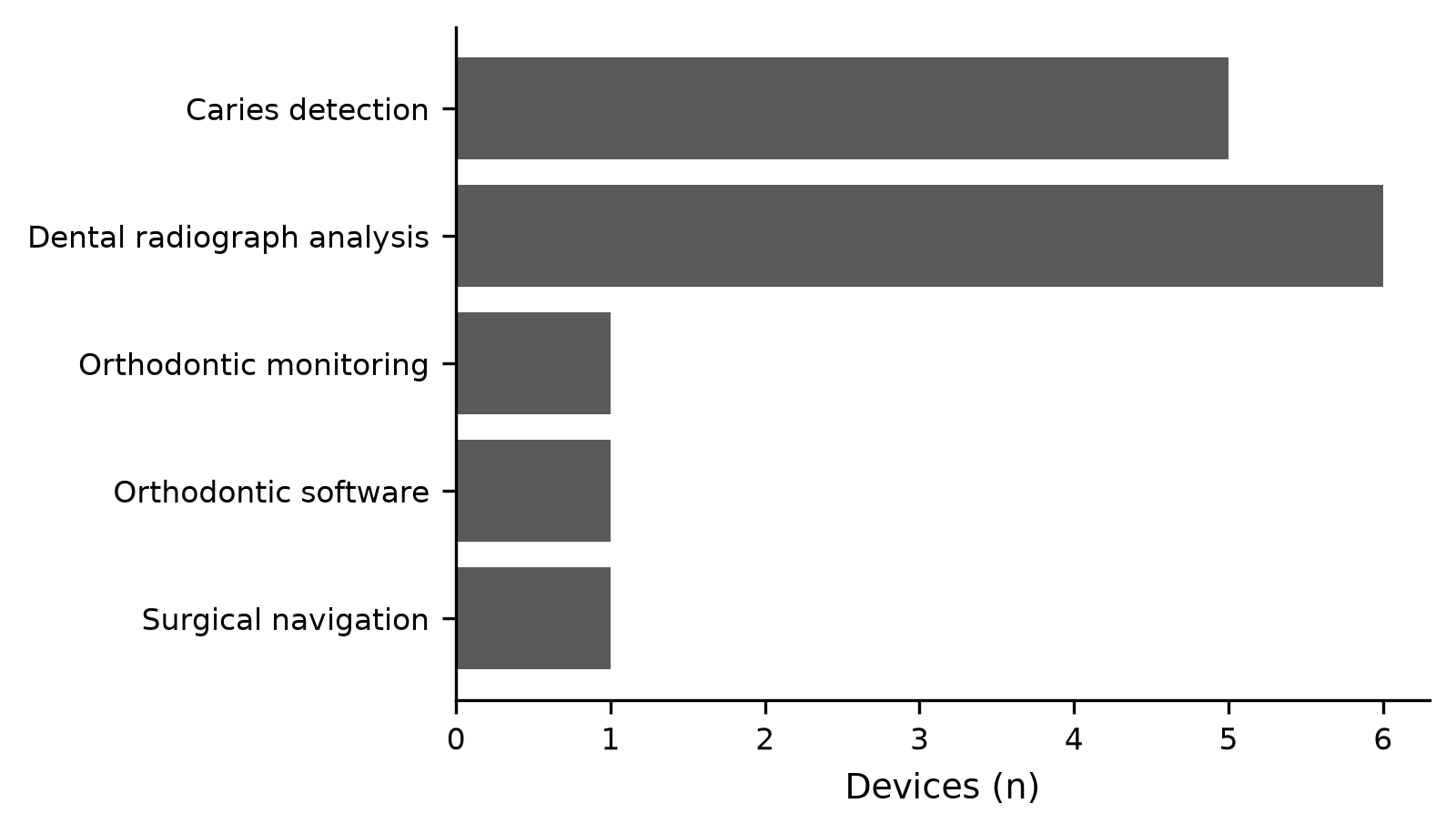
Figure 1. Distribution of AI-enabled dental devices by intended use.
Source: Device names and product code descriptions.Several of the 14 devices are successive versions of a single underlying product. Overjet obtained clearances for Overjet Dental Assist in 2021, for Overjet Caries Assist in 2022 and 2023, for a pediatric indication in 2024, and for a CBCT analysis product in 2025, so that five of the fourteen devices originate from one applicant. VideaHealth similarly obtained clearances for Videa Caries Assist in 2022, Videa Dental Assist in 2023, and Videa Dental AI in 2025. This means that the count of authorized devices overstates the number of independent products, because iterative clearances for an evolving platform are counted as separate authorizations.
The division of the cohort between the Radiology and Dental panels is itself a descriptive finding. The ten radiology-panel devices are all radiograph interpretation products, reviewed under the same medical image analyzer product code that governs general radiology software, while the four dental-panel devices are distributed across the orthodontic software, dental navigation, and dental image analyzer product codes. This split means that most dental artificial intelligence, although used in dentistry, is regulated as radiology software, a fact that may be invisible to dental users who encounter these products as dental tools.
Secondary outcome: temporal trend
The annual number of authorized devices was one in 2018, one in 2021, two in 2022, two in 2023, four in 2024, and four in 2025 (Figure 2). No device was authorized in 2019 or 2020, and none in the first three years of the window apart from the initial orthodontic software clearance. The increase in 2024 and 2025 was driven by caries detection and dental radiograph analysis devices reviewed under the Radiology panel, including successive generations of the Overjet and VideaHealth platforms.
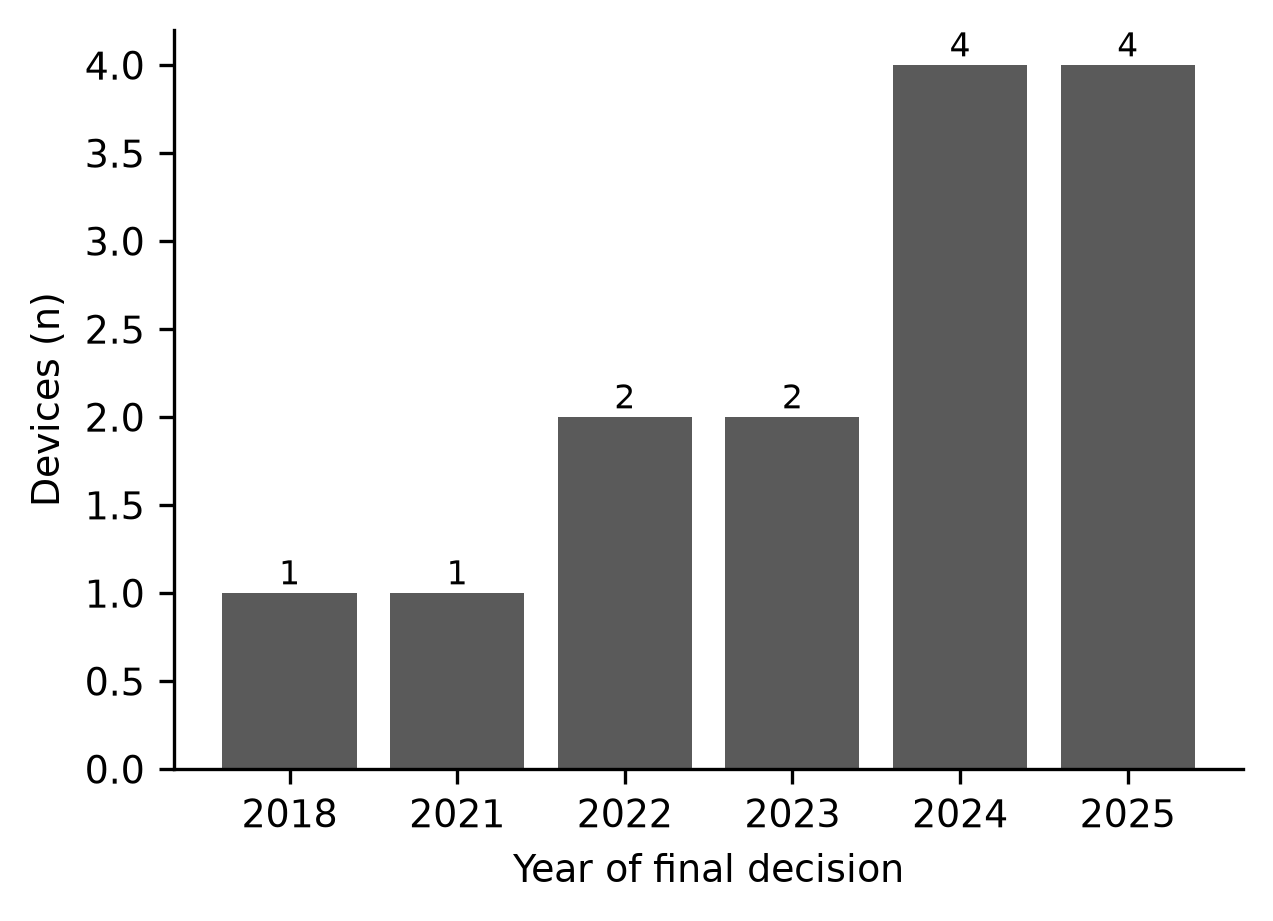
Figure 2. AI-enabled dental devices authorized per year, 2018-2025.
Note: No devices were authorized in 2019 or 2020. Source: FDA AI/ML-enabled medical devices list.Exploratory outcome: validation evidence pathway
All 13 510(k) devices carried a substantially equivalent decision code, indicating that each was cleared on the basis of substantial equivalence to a predicate device. The third-party review flag was negative for every device, meaning that all reviews were conducted by the FDA rather than by an accredited third-party reviewer, a finding that differs from some other device categories in which third-party review is common. The detailed performance data supporting each clearance reside in the individual 510(k) summaries, which were not accessible programmatically for this analysis.
DISCUSSION
The primary finding is that AI-enabled dental devices reached the US market almost entirely through the traditional 510(k) pathway, with a substantially equivalent decision and no third-party review. This means that the marketing authorization of nearly every dental artificial intelligence device rests on a demonstration of equivalence to an existing predicate device, rather than on a De Novo or premarket approval pathway that would require novel evidence of safety and effectiveness. The single exception, DentalMonitoring, was granted De Novo status, which established a new product classification for remote orthodontic monitoring.
This concentration in the traditional 510(k) route mirrors the broader market of AI/ML-enabled medical devices. National analyses of the FDA list have consistently reported that the large majority of authorized AI devices are cleared through 510(k), with radiology accounting for the largest share.( 1-3) Radiology-specific analyses document the same pattern, with nearly all cleared radiology algorithms following the 510(k) route and only a small minority using De Novo or premarket approval.(22,23) The dental segment, although smaller, reproduces this structure almost exactly. The reliance on substantial equivalence is efficient for manufacturers because it shortens time to market, but it also means that the validation underlying many devices is anchored to the predicate rather than to independent clinical evidence.(9) A recent analysis of benefit-risk reporting for FDA-cleared AI devices observed that publicly available evidence of performance is often limited, which is consistent with what we found for the dental devices, whose detailed performance data sit in individual 510(k) summaries rather than in an accessible aggregated form.(24) The dental result therefore extends a regulatory observation that has been made repeatedly for radiology and confirms that dentistry has not followed a different path.(25)
The concentration of the market in imaging is consistent with where the underlying technology is most mature. Deep learning for caries detection has been evaluated across bitewing, panoramic, and periapical radiographs, with systematic reviews reporting pooled sensitivity and specificity that exceed those of unaided visual inspection in many, though not all, comparisons.(8,15) Primary studies report strong segmentation and classification performance for caries and periapical lesions, although they typically use curated datasets and expert annotations rather than consecutive clinical samples.(17,26,27) The commercial devices authorized in the study period therefore rest on a research base that is encouraging but narrower than the breadth of clinical deployment might imply. The presence of orthodontic monitoring and surgical navigation among the authorized devices shows that dental artificial intelligence has begun to diversify beyond radiograph interpretation, but these remain a minority of the market.
The secondary finding on intended uses shows a market concentrated in imaging. Ten of 14 devices fall into dental radiograph analysis or caries detection, and all of those were reviewed under the Radiology panel using the medical image analyzer product code. This concentration reflects the maturity of deep learning for radiographic caries detection, which has a substantial research literature reporting high sensitivity and specificity on curated datasets.(7,8,15) Individual studies have demonstrated deep learning for caries detection and segmentation on bitewing and panoramic radiographs.(26-30) The commercial products mirror this literature, with multiple generations of caries detection software from Overjet and VideaHealth cleared between 2021 and 2025.(14) The presence of a dedicated dental image analyzer and a dental navigation system product code indicates that the dental device classification system has begun to accommodate artificial intelligence, although most dental imaging AI still routes through the Radiology panel.(13)
The temporal trend is secondary but informative. Authorizations grew from one device in 2018 to four in 2024 and four in 2025, with an interruption in 2019 and 2020 that is consistent with the timing of early product development and, possibly, the pandemic period. The acceleration in 2024-2025 was driven by caries detection and dental radiograph analysis products, several of which are iterative generations of the same platforms rather than entirely new device types. A prior survey of FDA-cleared dental artificial intelligence reached a broadly consistent picture, noting the dominance of imaging applications and the concentration among a small set of developers.( 14) This pattern of iterative 510(k) clearances for successive versions of the same software is characteristic of the AI medical device market overall and raises a practical question about how much each new clearance adds to the public evidence base.( 23,31)
The product code distribution carries its own regulatory meaning. Eight of fourteen devices were cleared under the generic medical image analyzer code shared with general radiology, rather than under dental-specific codes. This reuse of a broad radiology predicate is exactly the kind of equivalence-based clearance that the 510(k) pathway enables, and it means that a dental caries detector and a general radiology triage algorithm can share a regulatory predicate despite very different clinical tasks. The existence of dedicated dental codes for image analysis and navigation, in turn, shows that the classification system can distinguish dental devices when a De Novo or a dental-panel submission warrants it. Whether dental artificial intelligence should more consistently use dental-specific classifications is a regulatory design question that this census surfaces but does not resolve.
A comparative note is warranted, because the regulatory route shapes not only evidence but also geography. Analyses that examined both the United States and Europe found that many AI/ML devices were authorized on both sides of the Atlantic, but through different frameworks, the US 510(k) route and the European CE-marking route under the Medical Device Regulation.(2,3) The dental devices studied here are US authorizations; their European counterparts, where they exist, would have followed a different evidentiary process. This divergence means that a dental practice evaluating the same product in two jurisdictions may be looking at two different evidentiary standards behind the same marketing claim, a fact that is easy to overlook when a device is described simply as authorized or cleared.
The findings also carry implications beyond the United States. The authorized devices are developed by United States, European, and East Asian companies and are cleared for the US market, but the underlying clinical problems, dental caries and the interpretation of dental radiographs, are global. Work on artificial intelligence for dental diagnosis in Latin America describes a field that remains concentrated in imaging and largely dependent on models developed and validated elsewhere, with limited locally representative data.(20) The structure documented here, a small number of companies iterating on a single use case through equivalence-based clearances, is therefore the context into which most health systems will import these tools, and it raises questions about whether the validation evidence will transfer across populations and equipment.(6) This is a concern of equity as much as of regulation, because performance that is established on one population and image-acquisition standard may not hold on another.
The exploratory finding that no device used third-party review, and that every 510(k) carried a substantially equivalent decision, completes the characterization of the evidence pathway. It suggests that the dental artificial intelligence market has so far followed the most conservative and least evidence-intensive route available, relying on predicates and internal FDA review. This observation should be interpreted with caution, because the exploratory nature of this outcome and the absence of accessible performance data prevent any conclusion about the actual validity of the devices, which may nonetheless be well supported by the studies summarized in their 510(k) submissions.( 25)
The study has several strengths. It is, to our knowledge, a complete census of FDA-authorized AI-enabled dental devices through 2025, drawn from the authoritative FDA list and cross-checked against openFDA records. The device-level table allows verification of every device included. The outcome hierarchy was pre-specified, separating the primary pathway outcome from secondary descriptive outcomes and exploratory evidence-pathway proxies. The analysis is reproducible from the downloaded list and the public API, and it uses no synthetic or estimated data. Every count reported in the results can be recomputed by re-downloading the list, re-running the openFDA queries, and applying the same inclusion rules, and the device-level table provides a line-by-line audit trail against the source. For a journal concerned with the convergence of clinical dentistry and artificial intelligence engineering, the study contributes a regulatory grounding: it establishes, device by device, what has actually been authorized, under what evidentiary standard, and for which clinical purpose, which is the starting point for any engineering or clinical evaluation of these systems.
It is worth distinguishing the accuracy of the underlying technology from the strength of the regulatory evidence that authorized it. The published literature on deep learning for caries and periapical detection reports promising performance, but the studies are heterogeneous in design, image source, and reference standard, and many are at risk of overfitting to the datasets on which they were developed.(8,12) A device cleared by substantial equivalence may be built on sound algorithms and yet have little publicly accessible evidence that those algorithms perform well on the populations and equipment of a given practice. The present study does not measure device accuracy and makes no claim about it; it documents instead that the regulatory route through which the devices arrived does not, by itself, guarantee that such evidence is publicly available. This separation between regulatory clearance and clinical validation is the central caution the findings raise for adoption decisions.
For clinicians and regulators, the findings frame how dental artificial intelligence has entered practice: through a pathway optimized for speed and equivalence rather than for novel evidence generation, concentrated in radiographic interpretation, and dominated by a small number of companies iterating on a common use case.(6) The gap between the volume of authorized devices and the accessibility of their validation evidence is the most actionable finding, and it argues for improved public reporting of device performance.(11) Several directions follow. Regulators could make the summary documents that accompany 510(k) clearances available through a stable machine-readable interface, which would allow researchers and clinicians to audit the evidence behind each authorization. Professional bodies could issue guidance on what constitutes sufficient independent validation before a device is adopted into a practice. And investigators could replicate the performance of authorized dental artificial intelligence devices on external, unselected populations, since the published accuracy literature and the commercial products may not align.( 9,31)
Study Limitarions
The cohort depends on the FDA AI/ML list, which is compiled from FDA submissions that self-identify an AI/ML function; devices that use AI but were not flagged as such could be missed, and the list is updated over time, so the census reflects a single download date rather than a continuously synchronized registry. The assignment of intended use from device names and product codes is a simplification that may not capture the full indications for use recorded in each submission. The most important limitation is that the detailed validation evidence, the reported sensitivity and specificity in the 510(k) summaries, was not accessible programmatically, so the study characterizes the regulatory evidence pathway rather than the magnitude of device performance; any statement about the accuracy of the devices themselves would therefore be unsupported. The device-name keyword criterion could in principle include a device whose name contains a dental term but whose indication is not dental, although the manual review of the device-level table mitigates this risk. Finally, the small number of devices precludes any statistical comparison and confines the analysis to description, so the trends reported here should not be over-interpreted as a forecast.
CONCLUSIONS
AI-enabled dental devices were authorized by the FDA predominantly through the traditional 510(k) pathway with substantial equivalence, with a single De Novo authorization for orthodontic monitoring. The authorized devices concentrated in dental radiograph analysis and caries detection, reviewed mostly under the Radiology panel using the medical image analyzer product code, and their number grew markedly in 2024 and 2025, driven by successive versions of a small number of platforms. No device used third-party review, and the detailed performance evidence underlying the clearances was not publicly accessible in aggregated form. The dental artificial intelligence market therefore mirrors the broader medical device market in its regulatory structure, while remaining small, imaging-centered, and concentrated among a few developers. These characteristics define the evidence environment into which dentists are adopting artificial intelligence and should inform both clinical evaluation and regulatory reporting going forward. Clinicians who understand this structure are better positioned to ask the right questions of vendors, namely which pathway a device followed, which predicate it relied on, and what independent evidence supports its use in their own patient population.
References
- 1 Benjamens S, Dhunnoo P, Meskó B. The state of artificial intelligence-based FDA-approved medical devices and algorithms: an online database. npj Digit Med. 2020;3(1):118. doi: 10.1038/s41746-020-00324-0
- 2 Muehlematter UJ, Daniore P, Vokinger KN. Approval of artificial intelligence and machine learning-based medical devices in the USA and Europe (2015–20): a comparative analysis. The Lancet Digital Health. 2021;3(3):e195-e203. doi: 10.1016/s2589-7500(20)30292-2
- 3 Muehlematter UJ, Bluethgen C, Vokinger KN. FDA-cleared artificial intelligence and machine learning-based medical devices and their 510(k) predicate networks. The Lancet Digital Health. 2023;5(9):e618-e626. doi: 10.1016/s2589-7500(23)00126-7
- 4 Pesapane F, Volonté C, Codari M, Sardanelli F. Artificial intelligence as a medical device in radiology: ethical and regulatory issues in Europe and the United States. Insights Imaging. 2018;9(5):745-753. doi: 10.1007/s13244-018-0645-y
- 5 Garcia Contino T. Artificial Intelligence in Dentistry: Toward a New Architecture of Clinical Knowledge. SAP Artificial Intelligence in Dentistry. 2025;1:12. doi: 10.62486/aid2025100
- 6 González Herrera M, Murguia Martínez J, Andrade Santos F. Critical and Structured Analysis of AI Development in Dentistry. SAP Artificial Intelligence in Dentistry. 2025;1:25. doi: 10.62486/aid202525
- 7 ABBOTT LP, SAIKIA A, ANTHONAPPA RP. ARTIFICIAL INTELLIGENCE PLATFORMS IN DENTAL CARIES DETECTION: A SYSTEMATIC REVIEW AND META-ANALYSIS. Journal of Evidence-Based Dental Practice. 2025;25(1):102077. doi: 10.1016/j.jebdp.2024.102077
- 8 Mohammad-Rahimi H, Motamedian SR, Rohban MH, Krois J, Uribe SE, Mahmoudinia E, et al. Deep learning for caries detection: A systematic review. Journal of Dentistry. 2022;122:104115. doi: 10.1016/j.jdent.2022.104115
- 9 Aboy M, Crespo C, Stern A. Beyond the 510(k): The regulation of novel moderate-risk medical devices, intellectual property considerations, and innovation incentives in the FDA’s De Novo pathway. npj Digit Med. 2024;7(1):29. doi: 10.1038/s41746-024-01021-y
- 10 Gupte T, Nitave T, Gobburu J. Regulatory landscape of accelerated approval pathways for medical devices in the United States and the European Union. Front Med Technol. 2025;7:1586070. doi: 10.3389/fmedt.2025.1586070
- 11 Meskó B, Görög M. A short guide for medical professionals in the era of artificial intelligence. npj Digit Med. 2020;3(1):126. doi: 10.1038/s41746-020-00333-z
- 12 Khanagar SB, Alfouzan K, Awawdeh M, Alkadi L, Albalawi F, Alfadley A. Application and Performance of Artificial Intelligence Technology in Detection, Diagnosis and Prediction of Dental Caries (DC)—A Systematic Review. Diagnostics. 2022;12(5):1083. doi: 10.3390/diagnostics12051083
- 13 Putra RH, Doi C, Yoda N, Astuti ER, Sasaki K. Current applications and development of artificial intelligence for digital dental radiography. Dentomaxillofacial Radiology. 2022;51(1):20210197. doi: 10.1259/dmfr.20210197
- 14 Naved N, Adnan S, Umer F. Development trend of Artificial Intelligence (AI) in dentistry: exploring FDA-cleared dental devices. BMC Oral Health. 2025;26(1):11. doi: 10.1186/s12903-025-07302-6
- 15 Negi S, Mathur A, Tripathy S, Mehta V, Snigdha NT, Adil AH, et al. Artificial Intelligence in Dental Caries Diagnosis and Detection: An Umbrella Review. Clinical & Exp Dental Res. 2024;10(4):e70004. doi: 10.1002/cre2.70004
- 16 Moharrami M, Farmer J, Singhal S, Watson E, Glogauer M, Johnson AEW, et al. Detecting dental caries on oral photographs using artificial intelligence: A systematic review. Oral Diseases. 2024;30(4):1765-1783. doi: 10.1111/odi.14659
- 17 Endres MG, Hillen F, Salloumis M, Sedaghat AR, Niehues SM, Quatela O, et al. Development of a Deep Learning Algorithm for Periapical Disease Detection in Dental Radiographs. Diagnostics. 2020;10(6):430. doi: 10.3390/diagnostics10060430
- 18 Lui JCL, Lam WYH, Chu CH, Yu OY. Global Research Trends in the Detection and Diagnosis of Dental Caries: A Bibliometric Analysis. International Dental Journal. 2025;75(2):405-414. doi: 10.1016/j.identj.2024.08.010
- 19 Al-Khalifa KS, Ahmed WM, Azhari AA, Qaw M, Alsheikh R, Alqudaihi F, et al. The Use of Artificial Intelligence in Caries Detection: A Review. Bioengineering. 2024;11(9):936. doi: 10.3390/bioengineering11090936
- 20 Wong Silva J, González Cruz A, Auza Santiváñez JC. Artificial intelligence for dental diagnosis and decision support in Latin America. SAP Artificial Intelligence in Dentistry. 2025;1:18. doi: 10.62486/aid202518
- 21 von Elm E, Altman DG, Egger M, Pocock SJ, Gøtzsche PC, Vandenbroucke JP. The Strengthening the Reporting of Observational Studies in Epidemiology (STROBE) statement: guidelines for reporting observational studies. The Lancet. 2007;370(9596):1453-1457. doi: 10.1016/s0140-6736(07)61602-x
- 22 Sivakumar R, Lue B, Kundu S. FDA Approval of Artificial Intelligence and Machine Learning Devices in Radiology. JAMA Netw Open. 2025;8(11):e2542338. doi: 10.1001/jamanetworkopen.2025.42338
- 23 Clark P, Kim J, Aphinyanaphongs Y. Marketing and US Food and Drug Administration Clearance of Artificial Intelligence and Machine Learning Enabled Software in and as Medical Devices. JAMA Netw Open. 2023;6(7):e2321792. doi: 10.1001/jamanetworkopen.2023.21792
- 24 Lin JC, Jain B, Iyer JM, Rola I, Srinivasan AR, Kang C, et al. Benefit-Risk Reporting for FDA-Cleared Artificial Intelligence−Enabled Medical Devices. JAMA Health Forum. 2025;6(9):e253351. doi: 10.1001/jamahealthforum.2025.3351
- 25 Fraser AG, Biasin E, Bijnens B, Bruining N, Caiani EG, Cobbaert K, et al. Artificial intelligence in medical device software and high-risk medical devices – a review of definitions, expert recommendations and regulatory initiatives. Expert Review of Medical Devices. 2023;20(6):467-491. doi: 10.1080/17434440.2023.2184685
- 26 Bayrakdar IS, Orhan K, Akarsu S, Çelik Ö, Atasoy S, Pekince A, et al. Deep-learning approach for caries detection and segmentation on dental bitewing radiographs. Oral Radiol. 2022;38(4):468-479. doi: 10.1007/s11282-021-00577-9
- 27 Oztekin F, Katar O, Sadak F, Yildirim M, Cakar H, Aydogan M, et al. An Explainable Deep Learning Model to Prediction Dental Caries Using Panoramic Radiograph Images. Diagnostics. 2023;13(2):226. doi: 10.3390/diagnostics13020226
- 28 Vinayahalingam S, Kempers S, Limon L, Deibel D, Maal T, Hanisch M, et al. Classification of caries in third molars on panoramic radiographs using deep learning. Sci Rep. 2021;11(1):12609. doi: 10.1038/s41598-021-92121-2
- 29 Bui TH, Hamamoto K, Paing MP. Deep Fusion Feature Extraction for Caries Detection on Dental Panoramic Radiographs. Applied Sciences. 2021;11(5):2005. doi: 10.3390/app11052005
- 30 Dayı B, Üzen H, Çiçek İB, Duman ŞB. A Novel Deep Learning-Based Approach for Segmentation of Different Type Caries Lesions on Panoramic Radiographs. Diagnostics. 2023;13(2):202. doi: 10.3390/diagnostics13020202
- 31 CHO T, GOWDA V, SCHULZRINNE H, MILLER BJ. Integrated Devices: A New Regulatory Pathway to Promote Revolutionary Innovation. Milbank Quarterly. 2024;102(2):367-382. doi: 10.1111/1468-0009.12692
Declarations
Funding
No financing
Conflict of interest
None
Authorship contributions
Drafting – original draft: Rigel Ramirez Fritze.
Writing–review and editing: Rigel Ramirez Fritze.